Devotional – Acts 10.44

Devotional:

Acts 10.44

While Peter was still speaking, the Holy Spirit fell upon all who heard the word.

Weekly Devotional Image

Far too much of the church is calibrated for a world that no longer exists, and hasn’t for some time. Whether it’s the ways we worship, or the types of books we use in Sunday school, or even the debates that happen in the parking lot; sometimes the church feels like it’s stuck in 1982.

When I drive through town and see church marquees that read: “Church – The Way It Used To Be” I cringe. I cringe because no one even really knows what that means, and just because it used to be a certain way doesn’t mean that it needs to be that way today. The church is (supposed to be) alive! It is not some memorial to days long ago.

As God’s church we are called to two realities: We pass the tradition from one generation to another AND we open our eyes and ears to the winds of the Holy Spirit by which the tradition comes alive for each generation. That doesn’t necessarily mean that adding something like projectors and screens in worship will make everything better, but it does mean that the Spirit loves to interrupt our lifelessness with new life.

forgotten_church_by_gaudibuendia-d6pu2zm

In Acts we read about how Peter was in the middle of preaching when the Holy Spirit fell upon all who heard the word. Notice: the verse does not say that the Spirit fell on Peter to give him the words to say, but that while he was speaking the Spirit landed on all who heard what he was saying.

The Spirit loves flipping upside down our expectations and priorities. The Spirit shows up when we least expect it and it lands in ways we can scarcely imagine. The Spirit interrupts our ways of understanding the church as if to say: “Behold! I am doing a new thing!”

However, sometimes the Holy Spirit has a hard time getting through our stubborn desire to stay where we are. We can read all the right books, and pray all the right prayers, but it takes a willingness to know and believe that the Spirit moves to respond to that Spirit with new understandings of reality.

Time and time again, from Acts until today, the Spirit loves interrupting our sensibilities with new ways of moving forward. The Spirit is the one who has a story to tell, but the way we tell the story is changing.

We might think we know how the world works, and what the church is supposed to look like, but that’s usually when the Spirit shows up in the middle of our conversations to grab us by the collar and says, “Follow me!”

The Uninvited Guest

Acts 2.1-4

When the day of Pentecost had come, they were all together in one place. And suddenly from heaven there came a sound like the rush of a violent wind, and it filled the entire house where they were sitting. Divided tongues, as of fire, appeared among them, and a tongue rested on each of them. All of them were filled with the Holy Spirit and began to speak in other languages, as the Spirit gave them ability.

i-will-pour-out-my-spirit-on-all-my-people-marianne-gonzales-sims

I only have three opportunities left to proclaim God’s Word in this place. After preaching for 4 years from the Old and New Testaments, after listening for the Spirit’s movement for more than 250 sermons, I only have 3 left.

It’s hard not to think about what my final thoughts should be. I’ve been the pastor of St. John’s for some incredible mountaintop moments, and some frighteningly deep valleys. I’ve gone on a bunch of mission trips, taught lots of bible studies, and implored us to do some pretty strange things in this sanctuary all under the auspices of “worship.”

What do I want to leave with all of you? Should I try to whittle the entirety of the gospel down to an easily digestible sentence like “do unto others as you would have them do unto you”? Should I use my last three sermons to build you up with stories of love and grace and generosity? Should I use these final sermons to break you down with talk of sin, evil, and repentance?

I’ve got to admit that over the last few weeks I’ve found myself far more concerned with what I want to say than with what God wants to say.


Here we are my friends, today is Pentecost, the so-called birthday of the church. I know some pastors who will spend part of this morning in worship gathering their congregations around a giant birthday cake and will encourage an off-key rendition of “Happy Birthday.” Others will spend the service talking about how it is our responsibility to offer gifts to the church for her birthday and will then not-so-subtly move to the time of tithes and offerings. And others will use the church’s birthday as an opportunity to talk about inviting others to celebrate and make the whole thing into a guilt trip about evangelism and church growth.

All of which don’t have much to do with what God is saying in the text.

But, of course, Pentecost seems like a party. There are people gathered together in one place, the house is filled with something that propels the guests to do something, and everyone leaves with a gift.

But if Pentecost is a party, how long had God planned it? Who was on the guest list? Is it the kind of party we would hope to be invited to?

Pentecost may be the birthday of the church, the beginning of the gathering of disciples to worship the living God, but it is NOT the birthday of the Spirit.

In the beginning, when God created the heavens and the earth… sound familiar? When nothing existed but chaos the Spirit of God swept across the waters and brought forth order. The Spirit is not new, it was there in the creation of all things, it rested on the likes of Abraham, Isaac, Jacob, Moses, David, Solomon, and the prophets. By the day of Pentecost in the upper room the Spirit had already overshadowed Mary’s womb, and called Jesus forth from the tomb. It was there at Jesus’ baptism, it compelled him to preach his first sermon, it fed the 5,000, it healed the sick, Jesus even breathed it on the disciples in the upper room shortly after his resurrection.

The story of Pentecost is not about the arrival of some previously unknown force that we call the Spirit; the entire bible is the story of the Spirit of God made manifest in and among God’s people.

What happened on Pentecost began long before that day, and will continue long after we’re gone.

Near the beginning, the people of God had grown restless. They wanted something more than life was offering, they wanted answers to their questions, and they began work on a giant tower. With brick and mortar, sweat and tears, they cut through the horizon in an attempt to reach God, and become like God. And God saw what we humans were doing and decided to confuse our language and scatter us across the earth. The unity and connection at the heart of our species was ripped apart and never again would we so brazenly attempt to reach and control our Lord.

Or so we thought.

Later, while Moses was on top of the mountain with God, at a place called Sinai, the people down in the valley grew restless. They wanted something more than life was offering, they wanted answers to their questions, and they began forming a golden calf to worship. With a gathering of precious gems, with kneeling and praising, they chose a new god to put their hope in. And God saw what we humans were doing and decided to wipe us from the face of the earth. But Moses pleaded with the Lord and instead only 3,000 were killed for worshipping the golden calf.

The Tower of Babel in Genesis and the Golden Calf in Exodus are stories we’d like to explain away. Not just for their strange and supernatural elements, but also because they don’t match with our anachronistic and modern sensibilities. We’d rather talk about what we think the text means than what it is actually saying.

But the stories of Babel and the Golden Calf do not end with a division of language or in a slaughter.

Pentecost is the undoing of Babel with God’s magnificent power reuniting God’s people under a common tongue: the Gospel.

            Pentecost is the undoing of the episode with the Golden Calf where, instead of 3,000 being killed, 3,000 were added to the budding church in order to redeem what happened in the valley long ago.

            The Spirit at Pentecost is the one who brings forth life out of death, hope out of despair, and a beginning out of an ending.

perfectchurch

We here in church like everything nice and orderly, or at least I do. I want to have a bulletin that is clear and organized, I want a theme that stretches throughout the entirety of the service, I want people like you to get exactly what you want and what you need.

But the Spirit is not one for white linens, and perfect bulletins, and calm consciences. On Pentecost the Spirit did not come with manners and a polite disposition. No, the Spirit comes with power that could knock someone to the ground, fill a room as if with fire, and even turn the world upside down.

The Spirit shows up at Pentecost like an uninvited guest.

During the height of segregation, there was a well-known church in the heart of Durham that was filled with proper looking white families every Sunday. They all made sure their children were quiet in worship, knew when to bow their heads, and stood to sing the hymns. Their clothes were always clean and coordinated, they always had plans for lunch after worship, and to them the church was perfect.

On one particular communion Sunday however, a young black man showed up at the main door and attempted to walk in. The ushers promptly blocked his path and used a few choice words to explain what they thought about his presence.

The next month he showed up with a few of his friends and there were even more ushers blocking the entrance.

Finally, in the deep heat of the summer, the young black community members decided to wait until the service started before walking in. They waited for the ushers to head inside and stand in the back and then they made their way through the doors precisely when the preacher stepped forward with the bread and with the cup and invited everyone forward.

At that cue the group pushed through the back pews and made their way down to the altar to receive the body and blood of Jesus.

I wish I could tell you in that holy moment the white people of the church were filled by the grace of God to receive their black brothers and sisters in love.

I wish I could tell you that the whole congregation stood to sing Amazing Grace and gather with their new friends at the altar.

I wish I could tell you that the whole white community of Durham came to their senses in that profound moment and began working to end segregation.

            But that’s not what happened.

The nice people sitting in the pews with their perfect families and their perfect worship service saw the young black men and women as uninvited guests, and they did what some people do when the unwanted show up, they kicked them out.

A fight broke out that Sunday in the aisles and in the pews, clothes were torn, blood was spilt, and windows were broken.

The police were called to break up the fight, which made matters even worse, and the church was evacuated before anyone even got communion.

The Spirit does not always arrive as a still small voice or a faint stirring of the heart. Sometimes the Spirit is electric, atomic, volcanic, and even violent.

img_mouseover3

The human community divided by God at Babel, and punished at Sinai, was brought back together in the upper room on Pentecost. Instead of overwhelming confusion there was a new cooperation. At Babel and at Sinai the people of God wanted to move vertically to become like God. At Pentecost, God connected the people of God horizontally through the kingdom.

God, on Pentecost, offered us a new way, but sometimes we fall back to the Babels and the Golden Calves of the past. At that church in Durham, they believed that one’s skin pigmentation meant more than just about anything. And it took a fight between the pews to show them how far they had fallen.

For some of us we care more about what political party we’re affiliated with than anything else. We therefore ignore or even attack those who disagree with us.

For others we divide ourselves over ethnicity, race, sexual preference, age, socio-economic status, and a great slew of other factors.

But at Pentecost God did what God had to do to unite humanity back together. Like an uninvited guest God arrived as a violent wind rushing throughout the room and filled the entire house. Divided tongues like fire appeared among the disciples and a new tongue rested on each of them. All of them were filled with the Holy Spirit, the same Spirit that was there at the creation of existence, there in the virgin’s womb, and there in the empty tomb.

God interrupted the sensibilities and the gathering of the first disciples to offer a new way, a way filled with a frightening and powerful Spirit. God united the people under a common tongue of the gospel of His Son through the power of His Spirit and it forever altered the way we understand the world.

For at Pentecost we discover that WE are the church, and that “we” often includes people we can’t imagine; people who do not look like us, think like us, speak like us, or even worship like us.

Don’t get me wrong; I love the way we worship. I love our hymns and our prayers and even the way our sanctuary looks. I love the way we greet each other as we enter the building, I love the way we share signs of Christ’s peace, I even love how many of us are wearing red this morning in honor of Pentecost.

But the church should be a disruptive thing because that’s precisely what God’s Spirit did at Babel, at Sinai, at Pentecost, and it’s precisely what the Spirit did at that church in Durham, and frankly it’s what the Spirit is going to do to the youth of this church on our mission trip this week. The Spirit will upend our expectations and our hopes and our dreams. The Spirit is the one who will show us that WE are the church, all of us, and all of the people that we can’t imagine, they and we are the church, whether we like it or not. Amen.

Now What?

1 Peter 1.3-9

Blessed be the God and Father of our Lord Jesus Christ! By his great mercy he has given us a new birth into a living hope through the resurrection of Jesus Christ from the dead, and into an inheritance that is imperishable, undefiled, and unfading, kept in heaven for you, who are being protected by the power of God through faith for a salvation ready to be revealed in the last time. In this you rejoice, even if now for a little while you have had to suffer through various trials, so that the genuineness of your faith – being more precious than gold that, though perishable, is tested by fire – may be found to result in praise and glory and honor when Jesus Christ is revealed. Although you have not seen him, you love him; and even though you do not see him now, you believe in him and rejoice with an indescribable and glorious joy, for you are receiving the outcome of your faith, the salvation of your souls.

The existence of the church is a miracle. We live in a world so steeped in the need for scientific, historical, and verifiable fact that the existence of a community based on a person we have never seen is nothing short of a miracle. Blessed be the God and Father of our Lord Jesus Christ indeed!

However, this profound miracle is not limited to our contemporary world’s desire for things seen and observed.

According to the New Testament, only a scattering of people ever saw the resurrected Jesus after the first Easter. The disciples in the upper room, a smallish crowd heard his teachings, a handful of people saw the ascension. And from them, from their witness, the church was born.

They were filled by the power of the Spirit to live out the resurrection in their lives and it shined brightly wherever they went. They went on to tell their friends and families what they had experienced. They wrote letters to different communities. They traveled around sharing the Good News.

And today, I am sure that each of us can think about someone in our lives who was like those first disciples; we can remember someone whose faith shined brightly wherever they went. It is in large part because of them that people like you and me are receiving the outcome of our faith, the salvation of our souls.

Today is a strange day in the life of the church; Clergy and church folk often call today “Low Sunday.” It is a terrible name. People refer to it as such because, traditionally, the first Sunday after Easter has the lowest attendance of any Sunday in the year. And there is almost an unavoidable feeling of lowness after the highness of a packed church on Easter only to be filled with the likes of us one week later.

The resurrection of Jesus was not like that. No, it grabbed hold of people in a way never seen before. The inexplicable, unexplainable, and uncontainable event of the resurrection resulted in glorious joy. Like dancing in the streets, laughing on the floor, tears in the eyes kind of joy; a contagious joy that forever changed the fabric of our reality.

now what


Years ago I read a book by Donald Miller titled Blue Like Jazz and in it he describes his relationship with jazz music: “I never liked jazz music because jazz music doesn’t resolve. But I was outside a theater in Portland one night when I saw a man playing the saxophone. I stood there for fifteen minutes and he never opened his eyes. After than I loved jazz music. Sometimes you have to watch somebody love something before you can love it yourself. It’s as if they are showing you the way.”

Sometimes you have to watch somebody love something before you can love it yourself.

Similarly, I love jazz music. To me, there are few things as wonderful as sitting down and listening to an old Dave Brubeck LP. But I used to hate jazz. I hated how confusing it was, how unmelodic it could be, and how indefinable it was. I hated jazz until I started playing jazz.

12 year ago my high school jazz band needed a drummer and I signed up. I played Christian rock songs every Sunday for my church and I thought, “How hard could it be to play jazz?”

It was hard.

But every day I sat behind the drum-kit until my fingers were blistered and calloused. I watched my peers hold back smiles while blowing into their horns and while their fingers were flying over the keys. In response to their love for the craft I started listening to jazz in my spare time and tapped along on my thighs and countertops. I immersed myself into the strange new world of jazz, and before long I fell in love. I fell in love with the wonderful solo runs that were never the same, I fell in love with the strange time signatures and rhythms, I fell in love with the genre of music I hated because I watched others love it.

How many things in life are like that? How many of our hobbies and cultural obsessions were born out of someone else’s love and obsession?

More than four years ago I received the phone call about coming here. I was with Lindsey in New York visiting my, at the time, soon-to-be sister-in-law when a familiar voice on the other side of the phone said, “The bishop has discerned that your gifts and graces will be most fruitful at St. John’s UMC in Staunton, VA.” To which I said, “I think it’s pronounced STAUNton.

I never made that mistake again.

So I looked up the website, searched for any information I could find on Google, and started praying. And I’ll admit, after checking the statistical data and other relevant materials I thought, “How am I going to love these people? I don’t know anything about Staunton, the community, or the church.”

And then at the end of June in 2013 I showed up for my first Sunday. I smiled at all of you and led us through worship, I almost forgot to take up the offering, and when I walked down the aisle after my first benediction I let out an unnecessarily loud and deep sigh.

I knew nothing about what it meant to be a pastor, or even what it meant to serve God in this place. But then I started watching you. Like a saxophone player on the street corner, I watched you close your eyes and make beautiful music in your lives.

I saw your love of God through Marshall Kirby bear-hugging every person that walked into this church, whether they wanted it or not. Through Pam Huggins’ never-ending, and forever-repeating, stories about how God has showed up in her life. Through Alma Driver’s limitless knowledge of who came to this church, where they sat, and what they were like. Through George Harris’ insistence on standing next to me after church to say goodbye to everyone as if he were the associate pastor. Through Dianne Wright keeping Hallmark in business by sending people cards for no reason other than the fact that she wants them to know that God loves them. Through Grace Daughtrey spilling grape juice all over herself while attempting to serve communion. Through Rick Maryman’s brilliant use of timing and rhythms through the hymns we sing and the anthems we hear. Through Dick Pancake’s joining the church after refusing to become a United Methodist for decades. Through Jerry Berry’s theologically probing comments offered after nearly every sermon. Through Ken Wright crawling on his hands and needs to pick the weeds. Through Eric Fitzgerald and Mike Hammer’s willingness to be dressed up like fools for a children’s message. Through Sue Volskis’ continued calls to make sure that everything was going well. Through Leah Pack’s pats on the back after the good, and the bad, sermons. Through Bob Pack mocking me from the back every week. Through Dave Fitzgerald offering to preach a better sermon than I have ever offered.

Through every rolled sleeve to clean dishes; through every casserole provided for a family in grief. Through every committee meeting, every bible study, every Circle gathering. Through every mission trip, hospital visit, and picnic.

I literally could go on and on with the myriad of ways that I’ve seen God’s love through your love but I would break my rule of keeping sermons under fifteen minutes.

What I’m trying to say is this: I learned what it means to love God through all of you. For the last four years I have been blown away by your remarkable capacity to love one another and the Lord.

All of you are the reason that, even though I have not seen Jesus, I love him, because I see his love manifest in you. That is why I rejoice with an indescribable and glorious joy. You practice resurrection daily, you are receiving the outcome of your faith, and salvation is here.

17861909_10208403916446472_6677489642886390845_n

You have taught me what it means to be Easter people. As Easter people there is a “not yet” to the fullness of God’s salvation, but there is also a “now” to the anticipation and joy of that fullness. That alone is reason enough for us to sing and praise the Lord. That alone is reason enough to be filled with a hope that does not disappoint. That alone is reason enough to believe that God truly does make all things new.

By the Lord’s great mercy he has given us a new birth into a living hope through the resurrection of Jesus Christ from the dead, and into an inheritance that is imperishable, undefiled, and unfading.

In the last four years I have watched people who were spiritually dead be resurrected into new life through your faithfulness. I have seen you surrounded people in the midst of sorrow when they needed it most. I have witnessed your faith through all the crazy things I’ve asked you to do in responding to the Word, like reconciling with people with whom you were angry, like burning palm branches as a commitment to leaving behind our broken identities, like even dancing in the pews to a Justin Timberlake song in anticipation of the joy of our promised resurrection.

God has brought this church back to life through you. Blessed be the God and Father of our Lord Jesus Christ!

In the United Methodist Church clergy people like me make a vow to go where the Spirit leads us. When I was finishing seminary I lived into that promise when I received that phone call about coming here and I embraced it. I came here not knowing what it would look like, how it would feel, or whether or not it would be fruitful.

And I can say to you today with joy that serving this church has been the greatest privilege of my life.

But the Spirit is moving. Over the last few months the leadership of the church and I have been in prayer and we have discerned the time has come for me to respond to the Spirit yet again in a new place, and that the Spirit is calling a new pastor to serve St. John’s. And in response to that prayer and discernment, our Bishop has projected to appoint me to different church at the end of June: Cokesbury UMC in Woodbridge.

I am grateful beyond words for the many ways you have showed me how to love God, and that I get to share your love of God in a strange new place. I have nothing but hope and faith that this church will continue to pour out God’s love on the last, the least, and the lost, because that is who you are. I rejoice in the knowledge that God is doing a new thing for this community.

By the Lord’s great mercy he has given us a new birth into a living hope through the resurrection of Jesus Christ from the dead. This is a time of new birth for St. John’s; a new pastor, a new chapter, a new beginning. On this side of the resurrection we are bold to proclaim our joy in God making all things new. Amen.

Devotional – Philippians 4.7

Philippians 4.7

And the peace of God, which surpasses all understanding, will guard your hearts and your minds in Christ Jesus.

Weekly Devotional Image

How do you think people would respond if there was something that, if consumed once a week, would improve mental and physical health and reduce mortality by 20-30% over a 15-year period? What if this miraculous elixir was in reach of millions of people in America and research has proven that it truly does make a tremendous difference in the lives of people who consume it? How quickly do you think it would become the most popular remedy in the country?

Last week, under the “Breaking News” tab on USA Today Online, was a story detailing the availability of this particular product and the research to back up the claims. And, believe it or not, the “miracle drug” is regular church attendance.

Generic Background Image

After 20 years of research, a group of colleagues from Harvard University published their work suggesting that regularly attending religious services brings about better physical and mental health. Regarding physical health, the researchers claim that, “Adults who attend a service at least once a week versus not at all have been shown to have significantly lower risk of dying over the next decade and a half.” Beyond physical health, participating in regular worship leads to “greater optimism and lower rates of depression.”

After reading the article, one would think that every house of worship would be filled to the brim every weekend!

However, the article begs the question: Why do people worship?

Do we gather together because we want the physical and mental health benefits? Are we so consumed by the fear of death that we will sit in uncomfortable pews once a week just so we can live longer? Do we understand and value worship the same we that we understand and value the prescriptions in our medicine cabinets?

Or, do we worship because in worship we encounter the living God? Are we so consumed by the love of God that we cannot understand a way of life without gathering together once a week? Have we been transformed by the Lord who knows us and calls us by name?

The peace of God, which surpasses all understanding, will guard our hearts and our minds in Christ Jesus. We encounter the peace of God whenever we gather together, whenever we proclaim God’s Word, whenever we respond to that Word, and whenever God’s sends us into the world to be the light that shines in the darkness.

Worship, though apparently beneficial for our mental and physical health, is not about what we get out of it. Instead, worship is about what God gets out of us.

10 Things I Learned From My Third Year Of Ministry

10 Things I Learned From My Third Year Of Ministry

Screen Shot 2016-06-20 at 3.19.17 PM

  1. The Holy Spirit Moves in Mysterious Ways

At the end of last summer our youth leaders resigned from their position and we were in need of new leadership. After putting out the job description in a number of places, and receiving zero responses, I decided to take over the position for a limited basis. We restarted the youth group as a discipleship adventure whereby we would meet every Wednesday night from 7-8pm for communion, fellowship, and bible study. Each week I planned out activities for the bible study, and prayed over bread and grape juice, but the youth taught me more about God than I ever taught them. Throughout the year they wrestled with topics like being Christian and political, violence, bigotry, and identify; and not because I brought the subjects up, but because they initiated the dialogue. I often make the false assumption that I am bringing God to other people as a pastor, but the youth reminded me that the Holy Spirit moves in mysterious ways. I never anticipated leading the youth at St. John’s UMC, but now I can see that it has been one of the most rewarding parts of my ministry.


  1. Time = Trust

After 3 years in ministry, I am starting to feel the trust that has formed because of the amount of time we’ve had together. Of course I felt trusted from the beginning, but we are now at a place in our relationship as church and pastor whereby we can move in new and exciting ways because of our history. At first it was a hard sell for the church to participate in something like a free community cookout, but because we have seen the fruit that comes from providing food and fellowship for the community, the church is now pushing for the event to grow. Similarly, the church has a preschool that went underappreciated for too many years. Because I have taken the time to work with the preschool, and share stories about it in worship, the church now believes in the importance of connecting with the preschoolers and their families. The trust within the church has grown because of the good time we have spent growing together in faithfulness.


  1. The Job Is Big

The list of things I’ve had to do under the auspices of being a pastor gets longer every week. In seminary they prepare pastors for the work of preaching, teaching, praying, and visiting, but they are a fraction of what I actually do. On any given day I am: an office manager answering phones and responding to emails; a property manager changing light bulbs, working on the plumbing, tinkering with the boiler, and climbing up into the attic for the HVAC system; a sound technician addressing the speakers and microphones in the sanctuary; a babysitter watching over children from the preschool and the greater community; a spiritual guru answering questions about faith from strangers and friends alike; a social media ninja overseeing our Facebook, Twitter, and YouTube accounts; a webmaster maintaining the church website and internet presence; an animal control specialist removing birds that got into the social hall through the chimney; and an assortment of other jobs. To be a pastor is to wear many hats with many responsibilities.


  1. It’s Hard to Let Go

My wife gave birth to our first child at the end of April and I was able to take 4 weeks of paternity leave to be at home with them. Those 4 weeks were an absolute blessing to be there to comfort both of them during those difficult first weeks, and it also allowed me to bond with my son in a way that I will always cherish. However, taking that time off from the pulpit was really hard. After preaching nearly every Sunday for three years I grew accustomed to knowing the people of the church and how to faithfully proclaim God’s Word to them. In taking a month off, I had to trust that the Lord would provide even in my absence. I am thankful for the time away not only because of what it meant for my family, but also because it reminded me of the truth about the church; it belongs to God and not to me.


  1. If You Build It They Might Come

Just because you create a new program, or offer a new class, it does not necessarily mean that people will come. We’ve had a number of new things develop and become successful at St. John’s including a weekly lectionary bible study, weekly youth meeting, and occasional fellowship events. But for every successful venture we’ve developed, there have been an equal number of opportunities for discipleship that failed. I attempted to lead a weekly evening bible study on the book of James, and by the third week no one came. I tried to start a monthly gathering for fellowship on the first Sundays of the month and by the third month I was the only one in the fellowship hall. There is a temptation to take these kinds of failures too personally, so it is good to reflect on the times that even Jesus’ or Paul’s or Peter’s ministries were not successful. When we put our effort into something that doesn’t bear fruit, we do well to cut it off and let the vine remain strong instead of draining away its resources.


  1. A Phone Call Can Make All The Difference

I once heard a professor say that 90% of the church will show up for church on Sunday, so working on worship and sermon preparation should demand 90% of a pastor’s time. Though this is true on one level, it also neglects to account for those who either can no long come to church, or haven’t for some time. On a whim last fall I decided to go through the entire church directory and call every person that was not in church the previous Sunday. A number of people were simply out of town, or had not been to the church in a number of years, but every single person was grateful for the phone call nonetheless. I did not call in order to guilt the people into coming back to church, or with some other ulterior motive, but simply to say “hello” and the response has been incredible. For those who have fallen captive to loneliness they were reminded that the church still cares about them, and for those on the edge of regular church attendance they were reminded that the church knows them and wants to stay connected. All it takes is lifting up a phone and dialing a number and it can make all the difference.


  1. People Remember

It amazes me how people can remember a phrase from a sermon or a prayer from a year ago and demonstrate how it has developed into fruit in their daily lives. I’ll be sitting in a lectionary bible study and one of the people in the room will quote a sermon I offered on the text from three years ago. Or I will be sitting with a family in my office planning for a funeral and one of the family members will ask me to preach on a text they once heard me mention from the pulpit. Or I will be in the midst of concluding a chapel time lesson with the preschoolers when one of them will connect the message to a different lesson from earlier in the year (we were talking about the power of communion and I was holding the loaf of bread when one of our four-year-olds shouted out, “so Jesus was born in the house of bread (Bethlehem) and then he gives us the bread of life? Cool!”). Seeing and experiencing how people remember what I have said in the past is remarkably affirming, but it is also indicative of the power of our words.

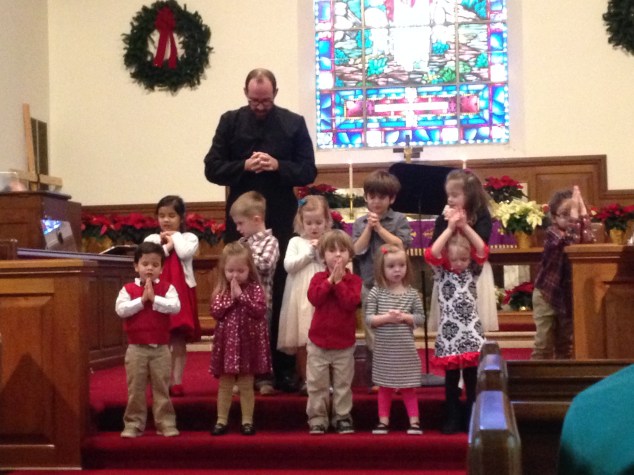
12304502_10204993990640458_5137127778263361305_o (1)


  1. Thankfulness Breeds Generosity

For a long time the church I serve was in a difficult financial situation. They had not paid their apportionments in full for the better part of two decades and they regularly struggled making sure they had enough to keep the church open from month to month. As a congregation they became accustomed to hearing about the financial disparities and the need for them to sacrifice for the greater church. When I arrived we attempted to look at our financial situation from a completely different perspective and instead of talking about sacrifice, we talked about generosity. Little by little, as the church saw the tangible fruit from our ministries developing throughout the year, our offering started to increase which in turn allowed us to focus on more opportunities for ministry and not just keeping the church open from month to month. It took some time, but we were able to move from a maintenance model of the church to a missional model for the church. Last fall, after it was clear that we would be able to pay our apportionments in full for the third year in a row, I hand wrote a letter to everyone who gave to the church during the previous year. It took a long time, but I wanted everyone to know how thankful the church was for each person’s continued generosity and commitment to building God’s kingdom. What I never anticipated was the fact that our weekly offering grew almost immediately after the letters went out. I believe that knowing how our gifts have been used for God’s kingdom, and that the church is grateful for those gifts, has reshaped our church’s identity from scarcity to generosity.


  1. Though We May Not Think Alike…

John Wesley once famously said, “Though we may not think alike, may we not love alike? Without all doubt we may.” At the heart of Methodism is a commitment to think and let think. Which is to say, we are a church of differing opinions and somehow we can continue to do the work of the church because we are united in our love. This kind of commitment to radical love amidst disagreements has been evident in the way people have responded to my preaching. Over the last year I have been able to speak toward a variety of subjects that we are clearly divided over. I have addressed homosexuality, the pervasiveness of violence, divorce, and other subjects. I have made jokes about Bernie Sanders, Hillary Clinton, and Donald Trump. I have tried to comfort the afflicted and afflict the comfortable. And people keep showing up to church. Even though they let me know that might not agree with anything I said on a particular Sunday, they will be sitting in one of the pews the following week. Though we may not think alike, we are still loving alike in this strange and beautiful thing we call the church.


  1. I Still Have The Best Job In The World

Ordained ministry is an odd and wondrous calling. There are days that feel like I am carrying the weight of the world on my shoulders and I become frighteningly anxious over the future of the church. I will pull out my phone and learn about another person’s death, or I will receive an email about a divorce that is about to be finalized, or someone will show up at my office looking for any sense of hope in an otherwise hopeless situation. But most of the time, it is the greatest job in the world. Where else could I spend time deep in God’s Word reflecting on how the Lord continues to speak to us today? What job would give me the opportunity to preside over something as precious as the water dripping on a child’s head in baptism or breaking off a piece of bread for a faithful disciple? What vocation would bring me to the brink of life and death on such a regular basis? It is a privilege to serve God’s kingdom as the pastor of St. John’s and more rewarding than I could have ever imagined.

Devotional – 1 Corinthians 12.7

Devotional:

1 Corinthians 12.7

To each is given the manifestation of the Spirit for the common good.

Weekly Devotional Image

When I was younger, the bishop of the Virginia Annual Conference appointed a Korean man to serve as the pastor of my home church in Alexandria. MJ Kim is a gifted pastor and served the church faithfully during his appointment, though it was challenging. I was too young to understand it at first, but as I matured I started to witness people at the church complain about his accent and heritage. I would hear adults in the narthex express frustration about not understanding what he was saying from the pulpit, or growing tired of hearing anecdotes about Korea. Yet, from my young vantage point, I loved having him as my pastor. His accent was powerful in the pulpit as it continuously reminded me that God is the God of all peoples, and his stories about Korea and growing into his faith were exciting and dynamic.

Year later, after MJ was appointed somewhere else, I was talking with one of the ushers at my home church about all the pastors that had served the church. This particular usher, though kind and faithful, was one of the people who were notorious for complaining about MJ during his time at our church. As we stood together before worship, comparing all of the pastors of the past, the usher sighed deeply and said, “MJ was such a gift. I wish I had appreciated him while he was here.” I stood speechless as this usher had apparently changed his entire perspective around our former pastor and then finally asked what had led to this shift in opinion. His response was simple and to the point: “Sometimes I couldn’t understand him, and sometimes his stories felt so far away, but whenever MJ was in that pulpit, I felt the Spirit with us.”

photo

Paul is quick to remind the church in Corinth that each person is given the manifestation of the Spirit for the common good of the community. While so many of us are quick to judge and complain about the people in the pews next to us, Paul beckons us to see them as gifted and blessed people who can help transform us for the kingdom of God. MJ Kim was indeed a blessing to that church precisely because he was different than most of us; his gift of the Spirit challenged us to be more like Christ every single day of our lives.

How has God blessed you with gifts? What are your strengths for the common good? Are you faithfully using the blessings God has given you to make the community better for everyone? Are you thankful for the people in whom you experience the manifestation of the Spirit? What can you do to contribute to the common good?

The Gifts of God – Hope

Isaiah 12.2-6

Surely God is my salvation; I will trust, and will not be afraid, for the Lord God is my strength and my might; he has become my salvation. With joy you will draw water from the wells of salvation. And you will say in that day: Give thanks to the Lord, call on his name; make known his deeds among the nations; proclaim that his name is exalted. Sing praises to the Lord, for he has done gloriously; let this be known in all the earth. Shout aloud and sing for joy, O royal Zion, for great in your midst is the Holy One of Israel.

hope-hero

Over the last few weeks we have been going through a sermon series on The Gifts of God. This has been particularly fitting considering the fact that Advent is usually a time when we fret about what we will be purchasing for everyone else. However, this Advent, we have been reflecting on what God has given us. Today we continue the sermon series with God’s gift of Hope.

When I was a kid, even when I was as young as some of our preschoolers, I loved Star Wars. We had the old VHS versions of “A New Hope” “The Empire Strikes Back” and “Return of the Jedi.” The covers were so worn from use that you could barely read the writing, and the film inside the VHS tapes was starting to crackle from excessive usage. But I loved them nonetheless.

Some of the themes were lost on me as a child but I loved the light saber fights, the fundamental battle of Good vs. Evil (The Darkside vs. The Light), and that a kid from a Tatooine moisture farm could go from bulls-eyeing womp rats in T-16 to saving the entire galaxy.

Star Wars taught me that, with the right cause, even the weak could triumph. Star Wars taught me that we are not defined by our past and are given opportunities to change. And Star Wars taught me about hope.

In the beginning of Episode IV, aptly titled “A New Hope”, the galaxy is in disarray and the evil Empire continues to exert its power over the powerless. For a generation, people of all shapes and sizes cowered under the rule of the emperor and started to forget the way things used to be. However, a group of people held onto the hope of a new future, they called themselves The Rebel Alliance, and they believed that things could change.

Isaiah 12 is about hope for the future. Like the rebels from the Star Wars universe, Isaiah fundamentally believed that a day would come when everything would be turned upside down and salvation would be delivered.

With confidence, Isaiah declared a profound trust in the Lord, a trust without fear. With hope, Isaiah envisioned that future day when all of God’s people would give thanks to the Lord and make God’s deeds known among the nations. With joy, Isaiah could hear the songs of the future praising the mighty works of the Lord, for he would have done gloriously.

And on that day, God’s people will draw water from the wells of salvation.

IMG_4568

The man felt empty; like something was missing from his life. He had parents who loved him, he had gone to the right school, he had a good job, but things didn’t feel right. Whenever the holiday seasons came around he did not have the energy the call his parents, he resented the happy families at department stores purchasing gifts, and he abstained from the holiday radio channels.

He couldn’t explain it but one day he lost his patience with his family when they kept asking him about whether or not he was happy. One day at work he screamed at a customer after losing his patience. And one night, while he sat in his apartment, he realized how empty and lonely he felt.

He continued like this for some time. Living a dry and empty life, until he met her. She was everything he could have hoped for; smart, pretty, funny. They immediately hit it off, and in her he believed he found the solution for his emptiness, in her he thought he found the one thing that could fill him again.

The beginning of their marriage was wonderful; they saw the world with hope and expectation. They both were not filled, but they had more than they had in a long time. But it started to fade. Arguments with the in-laws, shouting matches in the living room, and nights spent sleeping in other rooms emptied them of the joy and hope they once felt.

They were at a crossroads in their relationship and were unsure of how to move forward. Both of them were too proud to try counseling, and definitely too proud to apologize, so they just continued with the thinly veiled frustration with one another. But then they had an idea: “Maybe if we have a child, it will fix all our problems, it will bring us closer together.”

They had some stability after the first, but when things reverted back to the pre-baby days, they decided to have a second child, and then a third. What they didn’t know, but what many of should know, is that even the perfect child cannot fill the emptiness within us. No child should be expected to make up for our baggage, and no child should be expected to heal our brokenness.

But this habit and rhythm in the family didn’t stop. After the kids, the parents tried to fill themselves with experiences and material possessions. They went on vacations they couldn’t afford, they took out a loan on a house they could never pay back, and every Christmas had to be better (and filled with more gifts) than the last. But all of these things failed to fill the emptiness they felt.

And on that day, God’s people will draw water from the wells of salvation.

IMG_4571

Jesus once met a woman at a well and confronted her emptiness. She had attempted to fill her life with man after man and yet there was something missing. Jesus said to her, “Everyone who drinks of this water will be thirsty again, but those who drink of the water that I give them will never be thirsty. The water that I will give will become in them a spring of water gushing up to eternal life.

Many of us are broken. Actually, the truth is, we are all broken. Most of us just don’t want to admit it. We have good days, but there are times that we feel dry and empty inside. We seek out the wrong objects to validate our lives: a spouse, a career, a child. And none of those things are strong enough to hold our identity together.

Yet, God offers us this living water, water from a well that never runs dry. When we start to see the hope that God has given us, when we rest our identity on the fact that we are first a child of God, when we drop our buckets into God’s well of salvation things starts to change.

God knows our thoughts and minds. God witnesses our brokenness and sinfulness. And God still loves us anyway. God’s love is truly unconditional. God’s love is unmerited. God’s love is filled with hope for our futures.

I’ve only been doing this whole pastor thing for two and a half years, but two and a half years is long enough to know that most of us, if not all of us, are looking for love and validation in all the wrong places. We expect our children to makes our lives better, we expect the presents under the tree to make our lives fuller, and we expect our spouses to fix all of our problems.

Jesus offers us something totally and wonderfully different. Jesus offers us hope from the well of salvation. A hope in a future not defined by our past. A future not limited by the mistakes we make here and now. A future not corrupted by the powers of death.

Jesus offers us hope, a hope unlike any other, a hope that can truly fill us.

An-so-Lord-where-do-it-put-my-hope

When we find our hope in the Lord, we can stand up to the intolerance and injustice in our midst because we know God’s sees the world differently.

When we find our hope in the Lord, the presents under the tree will not leave us looking for the next fix because we will know that the greatest gift we’ve ever received is Jesus.

When we find our hope in the Lord, we can confront the brokenness in the world and know that life here on earth is not the end.

Isaiah had hope, hope for a day when God would show up, hope for a time when God would make all things new. Isaiah prayed for a future where people would sing praises for the glorious power of the Lord. Isaiah dreamed about a day when God would offer the wells of salvation to the world.

That hope became real on the first Christmas, and that hope is still real and available to you and to me.

Jesus calls to each of us today and says, “I can fill you. I can fill you with the living water that never runs dry. I can bring you to the well of salvation. I can fill you with hope, and love, and validation. I can fill you with joy, and peace, and purpose. I can fill you and turn your life around.

Amen.


(With thanks to the Tamed Cynic, Jason Micheli, for inspiring parts of this sermon)

Who Are You? – Sermon on James 1.17-27

James 1.17-27

Every generous act of giving, with every perfect gift, is from above, coming down from the Father of lights, with whom there is no variation or shadow due to change. In fulfillment of his own purpose he gave us birth by the word of truth, so that we would become a kind of first fruits of his creatures. You must understand this, my beloved: let everyone be quick to listen, slow to speak, slow to anger; for your anger does not produce God’s righteousness. Therefore rid yourselves of all sordidness and rank growth of wickedness, and welcome with meekness the implanted word that has the power to save your souls. But be doers of the word, and not merely hearers who deceive themselves. For if any are hearers of the word and not doers, they are like those who look at themselves in a mirror; for they look at themselves and, on going away, immediately forget what they were like. But those who look into the perfect law, the law of liberty, and persevere, being not hearers who forget but doers who act — they will be blessed in their doing. If any think they are religious, and do not bridle their tongues but deceive their hearts, their religion is worthless. Religion that is pure and undefiled before God, the Father, is this: to care for orphans and widows in their distress, and to keep oneself unstained by the world.

who-am-i


The small town sheriff was frustrated when he received a phone-call from the station that interrupted his Sunday supper. A report had come in that a group of young boys were throwing water balloons at strangers walking along Main Street. Reluctantly, the sheriff changed out of his Sunday best into his uniform and went to find the hooligans.

Just as the report noted, a group of young boys were standing on a street corner with a bucket of water balloons and were striking anyone within distance. As he approached in his patrol car, he expected to hear the boys laughing and hollering, but they were rather silent as he inched his way forward. He recognized all the boys from his local church, and dreaded the phone calls he would be making to all of their parents, but he knew their behavior had to stop.

The boys were smart enough not to throw a balloon at the police car, but the sheriff was still nervous to roll down his window in case a wayward throw made it inside. “What do you think you’re doing?” he yelled to the boys. In unison they all solemnly replied, “we’re working for the Lord.” He was mystified by their response, after all how could throwing water balloons at strangers be equated with the almighty? So the sheriff sat in his car with one eyebrow raised and motioned for them to explain.

The ringleader then stepped forward and said, “Didn’t you hear the preacher this morning sheriff? He told us to go out baptizing in the name of the Father, Son, and Holy Spirit. We’ve got Holy Water Balloons and we’ve done already made 45 Christians.”

Every good thing in our lives, every generous act of giving, every perfect gift, every blessing, every compliment, is from above.

Throughout our days, the Lord nurtures, guides, and provides all that we need. More often than not, God uses the people around us to do so, but nevertheless God supplies the goodness in our lives.

The letter of James is beautiful, and it begins with a quick assessment of the discipled life and what it means to live into this identity.

James knew how to notice the small things, because the small acts of life are the nuts and bolts of existence. It is the little things, the small actions and the tiny compliments, that hold together the fabric of our lives and give us the power to build and shape community. What we say and how we act are more important than we can possibly imagine.

The Lord has given us new life by the Word of truth and the power of scripture so that we would become a kind of first fruits. We have been given the great blessings of God’s presence, scripture, and Jesus Christ and now we have the responsibility to let those blessings bear fruit in our lives, and in the lives around us.

We must understand this, children of God, we should be quick to listen, slow to speak, and slow to anger, because our anger does not produce God’s righteousness. How many times have we jumped to a conclusion, or said something without thinking it through and immediately regretted it? How valuable is James’ advice: be quick to listen, slow to speak, and slow to anger?

Our contemporary conversations are filled with “uhhs” “buts” “likes” and other verbal bridges because we are afraid of silence. Rather than actually listening to others, or at least giving them the chance to speak, we fill up every ditch between our words out of fear that someone else will jump in with something else to say. Imagine how much our relationships would change if we only heeded James’ words in our conversations? Can you picture how different our identities would be if we were quick to listen, slow to speak, and slow to anger?

If we have the strength to change the way we converse, then we will begin to welcome with meekness the implanted word that has the power to change the world. Instead of relying on our own words at all times and places, with patience we can remember the great Word of God in Jesus Christ and put all our trust in him. Instead of believing that we are alone in the world and in our situations, we will come to see that God is with us, and has carried God’s people through this before and will again.

But it’s not just about the words we use and speak, as Christians we are invited to be doers of the Word and not merely hearers who deceive themselves.

Have you ever departed from church on a Sunday morning, after hearing a particularly convicting message, only to believe that it had nothing to do with you? Have you ever picked up the bible and started reading only to think about the other people the scripture should apply to instead of you?

For if we are hearers of the word and not doers, then we are like those who look at a mirror and as soon as we walk away immediately forget who we are. Our identities are rooted in the scriptures we read, and in the water of our baptism. But too often, we leave from church, or we put down the bible, or the water dries from our hair, and we immediately forget who we are and whose we are.

If church is supposed to accomplish anything on a regular basis, it is to act like a giant mirror so that we catch a glimpse of who God is calling us to be, and then never forget what we have seen.

who-am-i-1024x575

It was New Year’s Eve 1999 and Javier was afraid. For months news pundits and writers speculated about the “end of the world” coming with the year 2000. In addition to some strange and warped biblical prophecies, technologically proficient workers warned about the change that might come with the digits 99 changing to 00 and the blackouts that could ensue. For weeks people throughout the world prepared for the worst, and the rhetoric about the end times increased.

So Javier found himself getting ready to attend a worship service with his family and friends in El Salvador on the eve of the new millennium and he was afraid. The service itself was fine; it proclaimed the word of God’s faithfulness in spite the warnings about the new millennium, yet Javier could not rid himself of the fear that was shaking him to his core. Before the service came to a close, Javier stood up, walked to the front and asked to be baptized. He did not know what the New Year would bring, he did not know what would happen to the world, but he figured that a little water on his head couldn’t hurt.

Except, that simple affirmation that God was bigger than himself, that simple humbled moment of reverence to God’s power to save was enough to change Javier’s life forever. Of course, the year 2000 did not bring about the end of the world, but it did bring about Javier’s new identity in Jesus Christ. From that night forward he saw himself as a disciple and has lived into that ever sense.

My own baptism took place when I was 19 days old. Other than some strange blurry photographs of my mother and father standing at the front of the church, I have no idea what it was like or what happened. But it came to shape my very identity. The people who were present in worship that day 27 year ago took seriously the commitment to raise me in faith, and helped me hold on to my identity in Jesus.

The Sunday before I became the pastor at St. John’s I stood before my home congregation and thanked them for nurturing me in the faith all these years and said goodbye. But while I stood in the narthex shaking hands after the service, a much older woman came up with a very worn bible in her hands. Without saying much she turned to the back inside cover and showed me my name and the date of my baptism. For decades she had written down the name and date of every person baptized in her presence and made a point to pray for every single one of them, every single day. Her prayers shaped me into who I am.

Those of us to look in the mirror and remember who we are when we walk away, those of us who are doers of the word will be blessed in our actions. Our religion is pure when we, like the disciples from long ago, actually live into the Word of God and start caring about the people in our midst. Our religion is pure when we clasp our hands together and pray for the world. Our religion is pure when we remember our baptisms and are thankful.

tumblr_m8lkq3H8zQ1rqn80jo1_500

Who are you?

What defines your identity?

Perhaps we’ve forgotten who we are and whose we are. Instead of seeing disciples of Jesus Christ in the mirror, we only see fathers, mothers, brothers, sisters. Instead of holding on the image of God in our hearts, we turn away from the mirror of church and we immediately forget what God is speaking into our lives.

Do you remember your baptism? Can you recall the details of what eventually led you to yearn for the water of a new identity? Were you, like Javier, led to baptism out of fear? Were you, like me, led to baptism before you even had a chance to know what was happening?

Baptism is not about quantity; we’re not interested in throwing Holy Water Balloons at everyone within distance. Baptism is instead about discovering our fullest identity in Christ through a covenant by water and the Spirit.

Today, we are all invited to remember our baptisms and be thankful. In a few moments I will pray over our baptismal font, and everyone may come forward to remember and give thanks. The mirror behind the water is there for us to take a good look, so that when we turn around we will not forget who we are.

Disciples of Jesus Christ: Remember that every good thing is from above, that God has given us the word of truth so that we may bear fruit in our lives. Remember to be quick to listen, slow to speak, and slow to anger. Remember that we are called to be doers of the Word. Remember your baptism and be thankful. Remember who you are. Amen.

Strange Stories From Scripture: A Week In The Word – Sermon on Judges 3.12-23

Judges 3.12-23

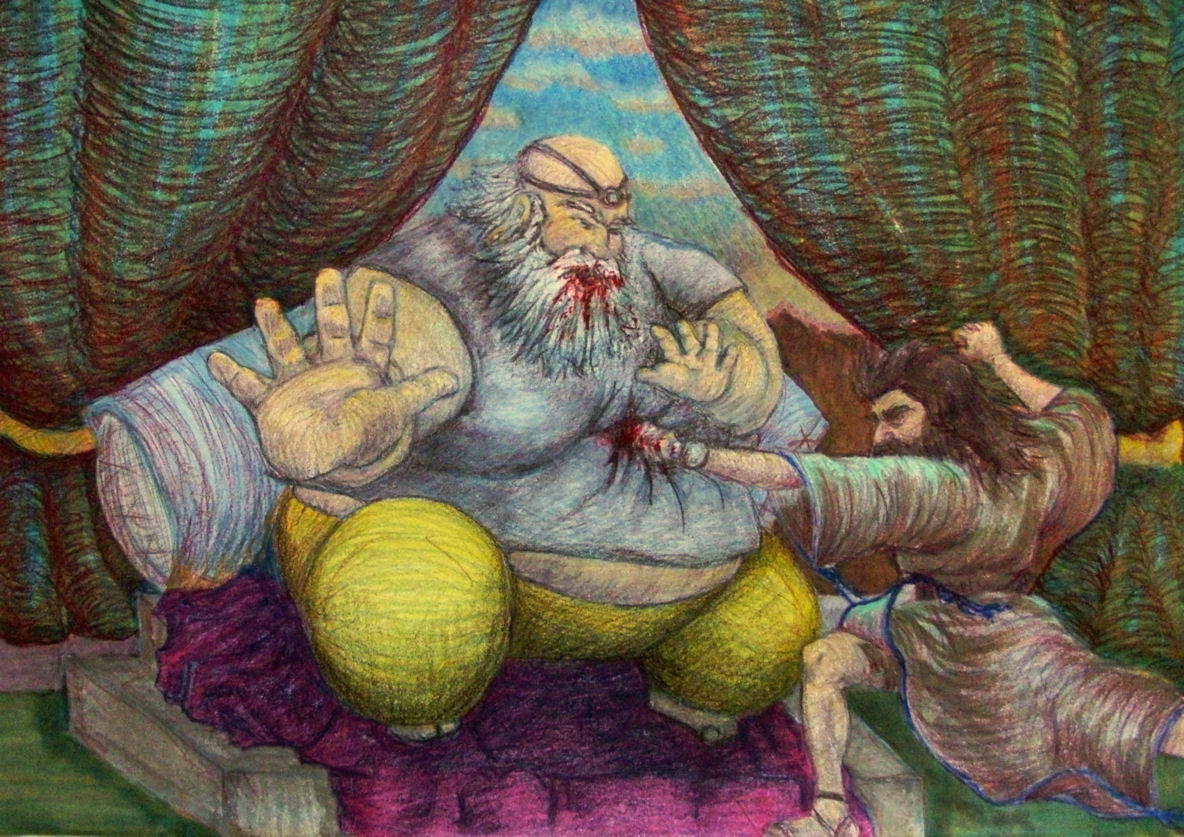
The Israelites again did what was evil in the sight of the Lord; and the Lord strengthened King Eglon of Moab against Israel, because they had done what was evil in the sight of the Lord. In alliance with the Ammonites and the Amalekites, he went and defeated Israel; and they took possession of the city of palms. So the Israelites served King Eglon of Moab eighteen years. But when the Israelites cried out to the Lord, the Lord raised up for them a deliverer, Ehud son of Gera, the Benjaminite, a left-handed man. The Israelites sent tribute by him to King Eglon of Moab. Ehud made for himself a sword with two edges, a cubit in length; and he fastened it on his right thigh under his clothes. Then he presented the tribute to King Eglon of Moab. Now Eglon was a very fat man. When Ehud had finished presenting the tribute, he sent the people who carried the tribute on their way. But he himself turned back at the sculptured stones near Gilgal, and said, “I have a secret message for you, O king.” So the king said, “Silence!” and all his attendants went out from his presence. Ehud came to him, while he was sitting alone in his cool roof chamber, and said, “I have a message from God for you.” So he rose from his seat. Then Ehud reached with his left hand, took the sword from his right thigh, and thrust it into Eglon’s belly; the hilt also went in after the blade, and the fat closed over the blade, for he did not draw the sword out of his belly; and the dirt came out. Then Ehud went out into the vestibule, and closed the doors of the roof chamber on him, and locked them.

Today marks the second part of our series on Strange Stories from Scripture. As a church we are taking time to look at those wonderful moments from the bible that they never talked about during Sunday school. These are the stories that make us blush, raise our eyebrows, and leave us scratching our heads.

Many of us are familiar with the well-known stories of Moses leading the Israelites through the wilderness, we know all about King David and his kingdom, we can even recall the miracles of Jesus, but the bible is also full of tales that are just begging to be used in worship and our daily lives.

Our first story was from the book of Numbers regarding the foolish prophet Balaam and his talking donkey. We explored how the donkey attempted to steer Balaam in the right direction, and pondered about the donkeys in our lives.

Today we are talking about Ehud and King Eglon from the book of Judges.

Ehud-and-Eglon (1)

Monday.

I’m sitting in my office, going over the emails from the weekend when I pull out the list of all the scriptures from now until Christmas Eve. I reread the plan for the sermon series on Strange Stories from Scripture, I wonder if people felt convicted by the sermon on Balaam and his donkey yesterday. I check the email once again to see if anyone took the time to send me a complaint about the sermon. The only one I receive makes a comment about seeing such a “smart… donkey” in the pulpit, but I file it away for later.

The A.C. is pumping out cold air, and I open up my bible to Judges 3 to read the scripture for Sunday. The story of Ehud and Eglon. As the words flow past my eyes, I can’t help myself from giggling in the office: Ehud stabs him in the belly, and Eglon was so fat that the blade disappeared and the dirt came out. I quickly scan through a number of other translations to see what they do with the vague “dirt” description. Some call it dirt, most call it dung, but at least one calls it poop.

When I see the word poop in the bible, it just makes me laugh.

I wonder if people will let me get away with saying poop from the pulpit on Sunday morning. I quickly make a note to pray about it during the week, before deciding whether or not to put “poop” in the sermon.

This has got to be one of the funniest and strangest stories in the bible, but before I dive into sermon writing, I decide to leave the word document open on my computer, and get to some of my other daily tasks before returning.

Tuesday.

The screen stares back at me empty. So I decide to get the mental juices flowing and rewrite the story in my own words:

The Israelites messed up again. Whether they were grumbling for more food, or worshipping false idols, they messed up, and the Lord decided to raise up King Eglon of Moab against God’s people, because they were continually messing up. King Eglon, with the help of God, went and defeated Israel and ruled over God’s people for 18 years.

But then, of course, the Israelites started to cry out to the Lord for delivery, perhaps they had seen the error of their ways, so God decided to provide their savior, Ehud, a left-handed man.

The Israelites, at the time, were in the habit of sending their taxes to King Eglon, and Ehud used this delivery to make his attack. He fashioned himself a double-edged sword, and attached it to his thigh under his clothes.

King Eglon was a very fat man.

ehud2

When Ehud finished delivering the money, he sent his compatriots away, and teased the King with the promise of a secret message from God. Eglon sent away all of the people from his inner court and invited Ehud to share this secret. But as Ehud leaned in to deliver the precious secret, he removed the hidden dagger and thrust it into Eglon’s belly.

Strangely enough, the further Ehud pushed, more of Eglon fat rolled over the blade until it disappeared from view, and Eglon’s poop came out. Then Ehud snuck out of the chamber and locked the doors behind him.

I rewrite the story, looking for sermonic inspiration that would drop down from heaven like manna in the wilderness, but I just sit in my office wondering what in the world God is trying to say through the text. Throughout the day the phone and doorbell continue to ring at church, and I welcome the distractions.

Wednesday.

I pull out some commentaries on the text, and decide to see what other people think God was saying. A few of them go into remarkable detail about the significance of Ehud being left-handed, while others address how detailed the descriptions were, and a few even propose a sexually metaphorical interpretation.

The more I read, the less the story makes me laugh. Instead of looking at the story like a cartoon with poop on the floor, I see human beings driven by enough anger and fear to conquer a nation, and murder a king.

Reluctantly, I start searching online for other sermons about Ehud and Eglon. Do people preach about this? What in the world do they say?

One of the sermons is titled, “Lefty vs. Hefty” and it is all about the differences between the two central characters. The writer emphasizes Ehud’s cunning against Eglon’s girth.

One of the sermons is titled, “Salvation” and it goes into profound detail regarding how, supposedly, God ordains the killing of people even today who get what they deserve. The preacher calls for the people to commit themselves to a radical system of justice, where they take matters into their own hands, just like Ehud did.

One of the sermons is titled, “The Power of Praise” and it focuses on how Ehud was able to trick Eglon into giving him the opportunity to strike. It ends with a reminder for the listeners to be careful about the promises they hear and the compliments offered their way, because a dagger might be lurking in the corner.

The more I read from God’s Word and from other sermons the more I regret picking the scripture for the series:

Eglon, the fat king, is now less a caricature, and more like the punishment God ordained for the people for messing up.

Ehud, the people’s deliverer, is now less a righteous judge, and more like a murderer.

Months ago I thought it would be perfect and hilarious to use this text during a series on Strange Stories, but now I worry about what I will actually say about it when the time comes.

Thursday.

Sitting in a coffee shop in attempts to begin crafting a sermon, I continue to stare at a blank screen. I have started at least three different sermons but before I am able to start really crafting a deep response to the Word, I highlight the text and pressed “delete.” Nothing feels good enough, all of the attempts feel flat.

How is this story speaking anything into our world today? What does the death of Eglon at the hand of Ehud have anything to do with the life of St. John’s and the community of disciples?

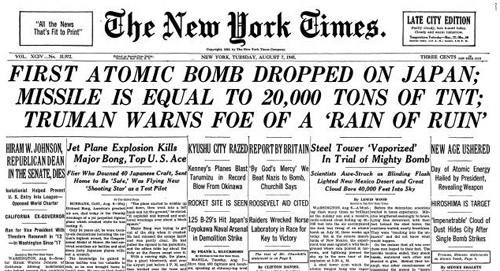
I close the computer and grab a nearby newspaper in hopes to distract myself from the seemingly endless flicker of the cursor on my computer. The top article says “US drops Atomic Bomb on Japan 70 years ago today.

1945-08-07-New-York-Times-headline

Before I realize it, I am sucked into the article, and the sermon floats away from the forefront of my mind. The writer has reproduced the original texts used the Associated Press the day the Atomic Bomb was first reported:

“An atomic bomb, hailed as the most terrible destructive force in history and as the greatest achievement of organized science, has been loosed upon Japan… The atomic bomb destroyed more than 60 percent – 4.1 square miles – of Hiroshima, city of 343,000 and radio Tokyo reported “practically every living thing” there was annihilated… Secretary of War Henry Stimson said, “If they do not now accept our terms, they may expect a rain of ruin from the air the like of which has never been seen on this earth.” (From the original AP article http://bigstory.ap.org/urn:publicid:ap.org:3fd267ba7b3c40479382189c99172d61)

I read the article and tears begin to form and fall down my face. Normally I would hide my face from the other patrons, but I am so struck by the words that I forget where I am and what I’m doing. 70 years ago we dropped the most powerful weapon we had ever created on a nation and virtually wiped out an entire city in a matter of seconds.

I start to remember where I am, and the sermon that needs to be written. The connections between the article and the scripture start to form:

Did Ehud leave the sword in Eglon because he wanted the effects to be devastating? Did he want to leave his mark in such a way that death was not the only consequence? Was the Atomic Bomb our sword that we had hidden under our clothes? Did we attack Japan in such a way that death was only the beginning of what we wanted to accomplish?

I wonder what people will think if I try to draw a connection between the anniversary of the Atomic Bomb with the death of Eglon at the hand of Ehud. Did Ehud do the right thing? Did we do the right thing? I have no idea where the sermon is heading.

Friday

I sigh deeply in front of my computer. Picking the Ehud and Eglon story was a bad idea. I explore an idea about dressing up like Ehud with a sword in church but it feels trite, impractical, and vaguely irreligious. I start writing a poem about how the Lord calls people to do extraordinary things during extraordinary times, but then it feels like I’m telling people its okay to murder and steal.

I sit in silence with my hands outstretched praying for the Lord’s will to be done, and for the sermon to be written. And I wait.

Saturday

The Community Cook-Out is going well; children are running around, adults are being fed, and conversations are flowing all over the place. I am thankful for the distraction the cook-out has provided, though I’m also worried about tomorrow morning. What will I say when the time comes? What is God’s Word speaking into our lives right now?

I watch the community in action. Not just the church, but all the people who make Staunton what it is and I think about Jesus. I remember the call to live radically transformed lives based on love and forgiveness, not on fear and retribution. I see people breaking bread for the first time, and I see Jesus in the midst of the people providing hope, the Holy Spirit giving life to our words and relationships, and God making new and lasting connections.

I think about Jesus and the new life he invites his disciples to experience. I think about the lengths God was willing to go to to respond to the cries of God’s people, raising up prophets and judges. I think about God finally offering the most precious gift he ever could, his Son, to die for all the people out on the front lawn of the church, and for the world.

I wonder if the story of Ehud and Eglon isn’t so much about how we react when the world pushes us into a corner, but about the trajectory of God’s gifts to the world. That at one time God would raise up a judge to save Israel, but that now God raised up his Son to save us from ourselves and from death.

Sunday

I stand in the sanctuary before disciples hungry for the Word of God and I say: I offer this to you in the name of the Father, and the Son, and the Holy Spirit. Amen.

How The Dishwasher Taught Me To Pray – Sermon on Ephesians 3.14-21

Ephesians 3.14-21

For this reason I bow my knees before the Father, from whom every family in heaven and on earth takes its name. I pray that, according to the riches of his glory, he may grant that you may be strengthened in your inner being with power through his Spirit, and that Christ may dwell in your hearts through faith, as you are being rooted and grounded in love. I pray that you may have the power to comprehend, with all the saints, what is the breadth and length and height and depth, and to know the love of Christ that surpasses knowledge, so that you may be filled with all the fullness of God. Now to him who by the power at work within us is able to accomplish abundantly more than all we can ask or imagine, to him be glory in the church and in Christ Jesus to all generations, forever and ever. Amen.

pray

I loved my college roommates. Some of us knew each other from high school, and others were grafted in along the way, but nevertheless, when we lived together it felt like a little family. We tried our best to communicate needs within the domicile, we kept it quiet when someone had a midterm the next morning, and we quickly learned to share common appliances for the betterment of the entire living situation.

Between us we would come to earn Bachelor degrees in Philosophy, Religion, Biology, Communications, and History. I always kind of imagined that we would be a awesome group Jeopardy team with the wealth of knowledge spread between us. Living together in college was great, but it wasn’t always easy.

There was the time we discovered mice in the house. We did our best to keep the kitchen clean, and spread mouse traps throughout the house, but during the cold winter months they came back like clockwork.

There was the time a huge snow storm came through, trapping all of our cars, and we ran out of heating oil to keep the house warm.

There was the time that we all contracted swine flu at different intervals. As one person became sicker and sicker, those of us who were well shared the responsibility of caretaker, until we started displaying our own symptoms.

Part of the beauty of living with other people was the sharing of life experiences. We celebrated each others successes, and grew to really rely on one another. Part of the challenge of living with other people was learning how to change our habits and needs based upon the habits and needs of other people.

Ephesians 3.14-21 is a prayer. Paul is writing to this new faith community in the hopes that his prayers will be answered by the Lord of hosts. He prays for the congregation because he knows that he cannot give them what they need in order to grow, but through prayer the church will learn to fully rely upon God.

The beginning of the prayer establishes the main focus: Paul prays for the church to be strengthened in its inner being, from the inside out, by the power of God. He hopes that the individuals that make of the community will see the vital importance of letting Christ into their lives and then change accordingly.

If Christ dwells in the hearts of the people, if they are rooted and grounded in love, then they may have the power to comprehend what is the breadth and length and height and depth of Christ’s love that surpasses all knowledge.

During college, I was the only person from the house that went to church. While my roommates enjoyed the comfort of their beds on Sunday mornings, I was making my way out the door to worship the Lord. I learned to accept their priorities, and on some level they learned to accept mine.

For instance: I made them pray with me whenever we ate dinner that I had prepared. I felt that if I was willing to go through all of the steps necessary to make a dinner for all of us, then they could bow their heads with me in prayer. So once a week, we would sit in our living room, eating on paper plates with plastic silverware, and they would listen to me pray.

prayer (1)

It is difficult for many of us to hear about God’s unending love, particularly a group of college-age men who just wanted to eat. It may seem so obvious to us that it no longer strikes at the core of our being. We hear “God is love,” and “love is patient, love is kind,” and “Love you neighbor as yourself,” and “God’s love knows no bounds” and instead of that love becoming clearer, it just floats around in the air.

Faithful love is even harder to grasp for those of us who do come to church because we hear about all these beautiful and wonderful things, we look around at a church filled with people who appear to have their lives figured out, when in reality we are all struggling with a myriad of secrets, private disappointments, lost hopes, and frustrations.

It’s hard to hear about love, when we don’t feel love in our lives.

Paul’s prayer for the church in Ephesus is all about letting Christ in to change lives: I pray that, according to the riches of his glory, he may grant that you may be strengthened in your inner being with power through his Spirit, and that Christ may dwell in your hearts through faith, as you are being rooted and grounded in love.

Letting Christ into our hearts is like moving in with a new roommate. At first, we spend a lot of joyful time getting to know one another, discovering common likes and interests. We do a great job putting all the dishes away and keeping the house clean, but then we have to start making compromises, whether we want to or not.

I learned about this type of faithful living the right way through my wife Lindsey. When we were dating, and I was getting ready to ask her to marry me, I dreamed about what it would be like to live together. I imagined the way we would set up our living room, where we would put the record player, and even where we would dance to all of our old jazz 33s.

After the wedding, while we were still giddy from the honeymoon, we decided to tackle the challenge of combining all of our possessions in the kitchen. We debated the value of keeping our plates in one cabinet versus putting the coffee cups near the coffee pot. We worried about the safety of keeping our knives in a drawer or right on the counter top. And we experimented with the location of the microwave in relation to the toaster and whether or not we would blow the fuse if they were both on at the same time.

praying_hands_clean_dirty_dishwasher_magnet-rcfdd698c86904ddaa1e6594a1d17e547_x7qgu_1024

The real challenge came to the precipice over the dishwasher. I was of the opinion that it did not matter where dishes and cups were placed in the dishwasher, so long as we could fit as many things as possible. Lindsey was not of the same opinion. For the first few weeks, whenever I put a plate away, she would come behind me and rearrange the dishwasher. It got to a point that I started purposely putting items wherever I wanted because I didn’t think it mattered, but sweet Lindsey would watch me live out my frustration, and then when I left the room, she would bring order to the dishwasher.

I don’t know how long this continued, but I do know when it stopped. Lindsey was working late one night, and the dishwasher was almost full. I saw my opportunity to prove that the dishwasher works fine no matter where the dishes are placed. So with a mischievous grin on my face I rearranged the order into chaos, I started the dishwasher. I couldn’t wait to see her face when she got home, I imagined the apology she would offer me regarding her wrong interpretation of dishwasher etiquette, it was going to be something beautiful.

But when the dishwasher cycle finished, I knew I was in trouble.

How could this have happened? Whenever Lindsey ran the dishwasher, everything came out all nice and clean and ready to use. But this time, there was still food on a few of the dishes, and some of the utensils looked worse than when I put them in!

I was wrong, and I learned to change. Now I will freely admit that sometimes I still place something in the wrong place, but after my passive-aggressive experiment, I have learned to alter my focus because Lindsey was right.

prayer_2014_02_07-13

The incident with the dishwasher taught me that prayer is about change. When I forced my roommates to pray in college, was I doing it because I was concerned about them, or was I doing it because I thought I was better than them? Did I earnestly pray to the Lord during that time, or did I just want them to hear the sound of my voice?

The beauty of prayer comes to fruition when we let Christ in to change us, and when we are willing to give up some of our space for the Lord. The dishwasher taught me that if prayer is only about myself, that if I am only concerned with my thoughts and actions, then I am neglecting to let God in to make some important changes.

Faithful living is about giving up those habits and behaviors that are no longer fruitful, reprioritizing and reorganizing our lives, so that God can make us clean.

In a few moments we are going to end our service not here in the sanctuary, but outside on the front lawn. We are going to gather in a group and we are going to pray.

First we will pray for God to give us the strength to give up some room, and let Christ in. That instead of focusing on just our needs and wants that we will begin to comprehend the love of Christ and the fullness of God.

Then we will face the sanctuary and we are going to pray for our church. So many of us, myself included, get caught up in such a tunnel-visioned view of prayer that we neglect to pray, like Paul did, for the community of faith.

And finally we will turn to face the community around us and pray once more. Prayer is not just about you and me, and it is not just about the church, prayer is about communing with the Lord about the very fabric of life.

If we want our lives to change, if we want our church to change, if we want to let God’s love reign, then we have to be willing to give up some space. We have to learn to rearrange the dishwashers of our lives so that everything can be made clean.

Amen.