God Is God And We Are Not

Psalm 8

O Lord, our Sovereign, how majestic is your name in all the earth! You have set your glory above the heavens. Out of the mouth of babes and infants you have founded a bulwark because of your foes, to silence the enemy and the avenger. When I look at your heavens, the work of your fingers, the moon and the stars that you have established; what are human being that you are mindful of them, mortals that you care for them? Yet you have made them a little lower than God, and crowned them with glory and honor. You have given them dominion over the works of your hands; you have put all things under their feet, all sheep and oxen, and also the beasts of the field, the birds of the air, and the fish of the sea, whatever passes along the paths of the seas. O Lord, our Sovereign, how majestic is your name in all the earth!

Christmas Pageant stories are a dime a dozen.

I, myself, stood in a different pulpit helping narrate a particular pageant when one of the shepherds turned his staff upside down and ignited it like a lightsaber. Were it not for a daring dive from the aforementioned pulpit, the shepherd would’ve beheaded a wiseman, an angel, and at least three sheep.

There was another pageant when a kid dressed as a donkey decided to take a nap on the chancel steps in the middle of the drama, and remained there until after the applause died down at the end and everyone heard him say, “Mom?”

There’s a wonder and a beauty to the way children lead us in worship. Whether it’s the theological daring answers during a Children’s message, to the way they give themselves over completely to the movement of the Spirit, to the various pageant pronouncements, the glory of the Lord is revealed.

There’s a story that passes around this time of year every year about a certain pageant and the child who played the innkeeper. For weeks and weeks all the children practiced their positions and their lines, they were ready. But when Christmas Eve arrived, and the little Mary, Joseph, and plastic Jesus arrived at the cardboard cut out entrance to the inn, they knocked on the door and the innkeeper froze. Little Mary kept repeating her line, “Please let us in. We’re cold and we really need a place to stay!” Getting louder with each repetition. Until, finally, the innkeeper looked out into the congregation and said to the pageant coordinator, “I know I’m supposed to say, ‘No,’ but can I let them in anyway?”

Kids get it.

The Psalmist declares, “O Lord, our Sovereign, how majestic is your name in all the earth! You have set your glory above the heavens. Out of the mouth of babes and infants you have founded a bulwark because of your foes, to silence the enemy and the avenger.”

There’s a better than good chance that every one of us here has a story in which a child or a kid or a youth pointed us to a greater reality about the kingdom, than we could come to on our own. For instance, I was with my family in Alexandria this last week, celebrating the holidays, and we decided to go visit my grandmother’s grave on the anniversary of her death. She died last year at this time. 

And as we were dressing the kids and getting them into our various cars, my nephew asked, “Where are we going?” And I said, “We’re going to see Omi.” And he gave me this puzzled look and said, “But Omi’s with Jesus now.”

Kids get it.

But then the psalmist drops this on our dozing heads: “When I look at your heavens, the work of your fingers, the moon and the stars that you have established; what are human being that you are mindful of them, mortals that you care for them?”

What a brutal question!

That God considers us, at all, is beyond our deserving. That God listens to our prayers is downright ridiculous. We tend to look at all we’ve done and said with such pride and glory, but compared to the works of God we are a bunch of ants. 

The God who called the universe into being out of nothing, who brought forth order out of chaos, who breathed life into creation, is probably not very impressed with the Lego set I built a few days ago, or the meal I cooked for my family, or even this sermon I crafted.

All things considered, there’s nothing terribly special about humanity. We’re a bunch of creatures who often make a mockery of the creation that God has given to us. 

Sure, we can point to some of our achievements, save for the fact that some of the worst things we’ve ever done as a species were done in the name of progress. 

What makes us unique isn’t what we can, or can’t, do, but the fact that God becomes one of us. God did not become a penguin, God became a human, a particular human in the person of Jesus Christ. And, notably, God did not just show up as a fully formed adult human being – God shows up as a baby!

That’s the message of the incarnation. And it is so bewildering that people like us decorate trees, and exchange gifts, and light candles year after year to celebrate God’s unwavering commitment to us. 

But the only reason we, that is Gentiles, even know about this enough to celebrate it is because of what we call Epiphany, the feast that marks the visit of the Magi and the expansion of the kingdom to those outside the people Israel. 
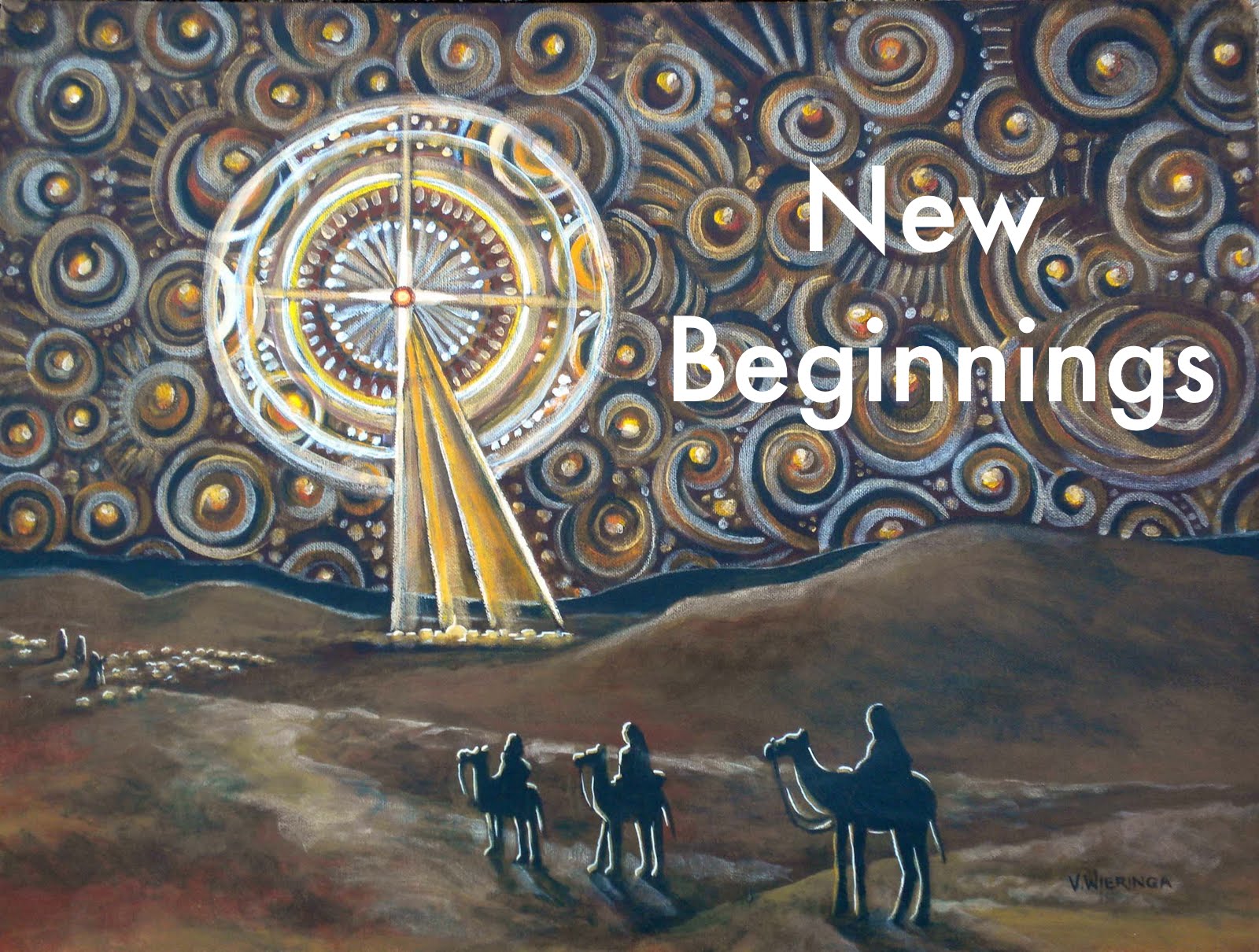
According to Matthew’s Gospel, after Jesus’ birth wise men/magi from the East come to Jerusalem looking for the king of the Jews because they observed a rising star and came to pay their respect. There’s a frightening plot by King Herod to put to an end any threat to his power, but the magi make haste to Bethlehem where they discover the star leading them to the location of the baby Jesus. 

When they encounter the baby born king they do something strange. It would be one thing to bring gifts to a king, stranger still to give those gifts to a baby born to a poor Jewish woman and her soon-to-be husband. But scripture says that when the magi saw Jesus, they knelt down and worshipped him and were overwhelmed with joy.

Epiphany is the celebration of that moment. We mark it on the liturgical calendar because it both points to the wild character of the incarnation, God in the flesh as a baby, but also to the way in which the glory of Jesus’ birth stretches beyond the confines of Israel.

Jesus will certainly grow to enact miracles and make various proclamations about the ever widening nature of the kingdom, but this is the radical beginning of that expansion. 

Jesus comes for a lot of reasons – to save us, to show us how the kingdom works, to reveal the nature of God. But one of the things we often overlook is that Jesus helps us to become fully human.

That’s a strange claim to make. You might expect to hear that Jesus helps us to become better Christians, or fuller Christians. And yet, if Herbert McCabe is right, we can only be fully human as we are incorporated into the fullness of humanity named Jesus Christ. Jesus, McCabe argues, “was the first true human for whom to live was simply to love – for this is what human beings are for.”

The kingdom of God, therefore, isn’t just for certain sets of people in particular places. The kingdom of God is for everyone. When we say that Jesus is fully human and fully divine, we mean that he is the fullness of humanity and the fullness of God. If we want to know what it means to be human, we need not look further than Jesus Christ, for his life was love. 

Maybe that’s why the magi fell to their knees and worship. Not because they intellectually understood the proclamation of the incarnation, of because they rationally deduced the momentous moment in front of them, but because they encountered love in the flesh, true and full humanity in a baby.

The presence of the magi in the manger means that the love that is God is for people even like us. And whenever we encounter that total radical love, whether it’s here in church, or at school, or at work, or around the dinner table, we can’t help but worship. It is nothing short of amazing that God, author of the cosmos, loves us and is as close to us as a baby being rocked in our arms or the bread and cup at the table.

An important theological claim is that God is God and we are not. It keeps things squarely where they are supposed to be. What are human beings that God is mindful of us, and all that.

But then, in the incarnation, everything takes on a strange and wondrous dimension. Because even though God is God and we are not, God willingly choose to become us, that we might discover who we are and whose we are.

Which, in the end, is why the psalmist can sing: “O Lord, our Sovereign, how majestic is your name in all the earth!” Amen.

Water Is Thicker Than Blood

This week on the Strangely Warmed podcast I speak with Alan Combs about the readings for Baptism of the Lord Sunday [A] (Isaiah 42.1-9, Psalm 29, Acts 10.34-43, Matthew 3.13-17). Alan is the lead pastor of First UMC in Salem, VA. Our conversation covers a range of topics including Pulp Fiction, adult mission trips, tiredness, the NT in the OT, expectations, flames of fire, the voice of the Lord, Dogma, passivity, Jayber Crow, baptism, Karl Barth, and good questions. If you would like to listen to the episode or subscribe to the podcast you can do so here: Water Is Thicker Than Blood

Welcome To Humanity

1 Corinthians 12.12-14

For just as the body is one and has many members, and all the members of the body, though many, are one body, so it is with Christ. For in the one Spirit we were all baptized into one body – Jews or Greeks, slaves or free – and we were all made to drink of one Spirit. Indeed, the body does not consist of one member but of many.

1 Thessalonians 5.11

Therefore encourage one another and build up each other, as indeed you are doing. 

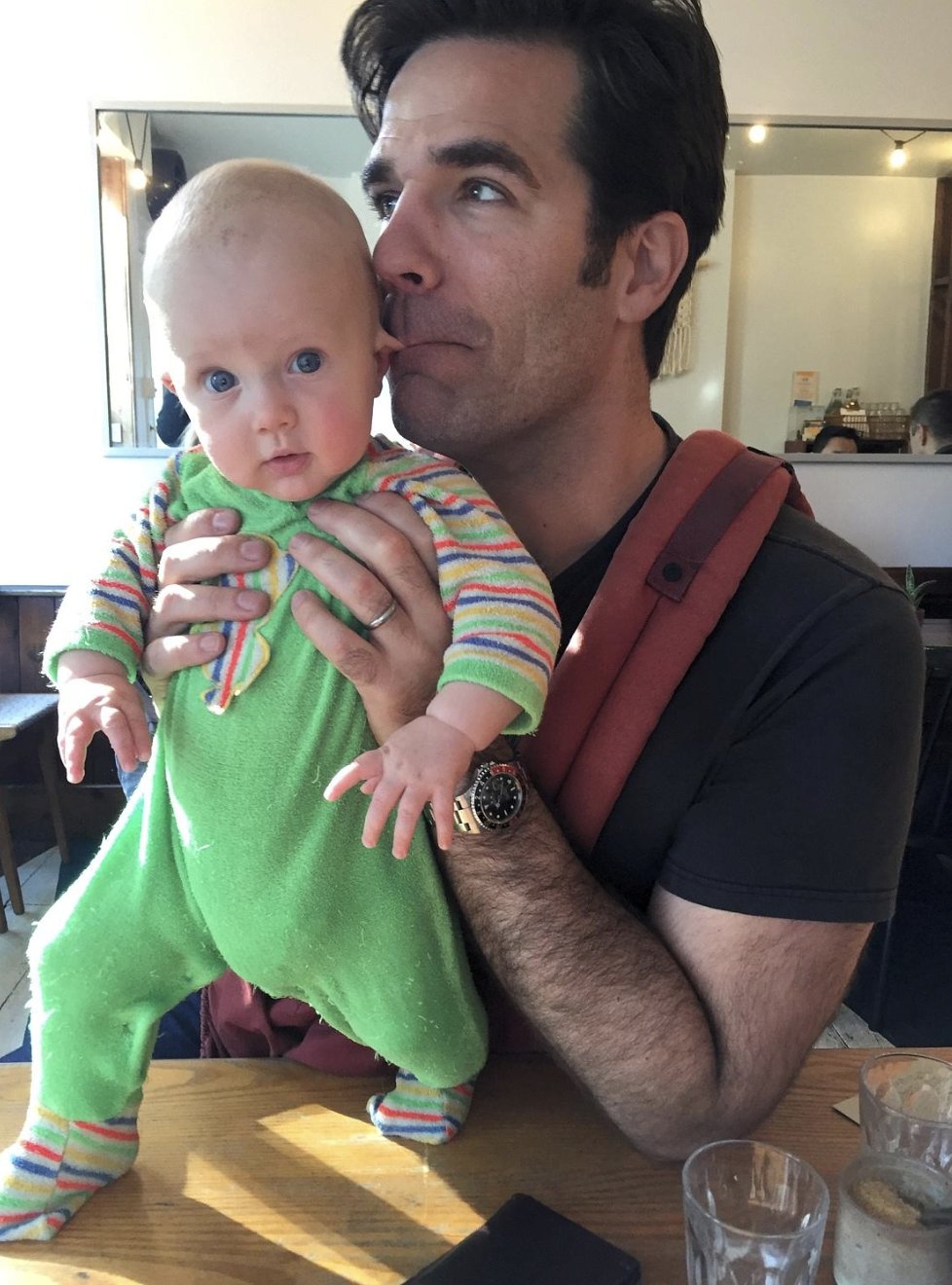
Dear Finley,

I have a confession to make. I have a long standing habit of writing homiletical epistles on the occasion of one’s baptism – it’s a way of cutting across time such that, one day, you can look back and find out why you were baptized. You will have no memory of this but, your life will be decisively different because of it.

And yet, before God and family, I must confess that the idea is not original to me. I stole it from one of your other uncles: Jason

He knows that the proclamation of the Word is essential to the sacrament that is your baptism, because, as Barth put it, “Preachers dare to talk about God.”

Otherwise, there’s a temptation to make your baptism all about you. When, in fact, it’s actually all about the One in whose life and death you are being baptized. 

Your uncle taught that to me.

I wonder what your life will be like, having two of the smartest pastors ever called by God as some of your uncles. Perhaps it will be a gift and a curse, for you are doomed to hear the same things over and over again.

At the very least, you’re likely to hear a lot about Karl Barth, Stanley Hauerwas, and Jesus.

And yet, repetition is all anyone can ever hope for.

I pray you never tire of hearing, “I love you.”

Similarly, I hope you rejoice in being told to remember your baptism and be thankful. Of course, you won’t remember any of this, but the ripples of it will impact every part of your life.

Finley, today you become a human. I know that is a strange thing to say. You might expect to hear that today you become a Christian

And yet, if Herbert McCabe is right, we can only be fully human as we are incorporated into the fullness of humanity named Jesus Christ. Jesus, McCabe argues, “was the first true human for whom to live was simply to love – for this is what human beings are for.”

Our lives are made up of various loves. Your father, for instance, loves tractors and chainsaws. Your mother loves ceramics and plants. One set of your grandparents sit around their phones everyday waiting to see you smile on FaceTime. The other set was so excited about your arrival into the world that they bought a house in Harrisonburg, just to be close to you.

And you have a whole set of aunts, uncles, and cousins who are obsessed with you.

On and on and on.

And the claim made in your baptism is that God loves you.

You will come to find that God’s love is both wonderful and awful. It’s why we sing of the hopes and fears of all the years being met in the person of Jesus Christ. It is wonderful and awful to be loved by God because God really know us, and loves us anyway.

To be human is to love, and to be loved in return.

Another thing you will hear over and over again throughout your life, is something your uncle and I get to declare every time people gather at the Lord’s table: “Christ died for us while we were yet sinners, and that proves God’s love toward us. In the name of Jesus Christ, you are forgiven.”

The baptism into which you are baptized sets you on a course of being surrounded and caught up in the adventure called church, in which you will be forgiven over and over again. 

Hence the first scripture passage your parents chose for this occasion: For just as the body is one and has many members, and all the members of the body, though many, are one body, so it is with Christ. For in the one Spirit we were all baptized into one body – Jews or Greeks, slaves or free – and we were all made to drink of one Spirit.

The water of your baptism incorporates you into something seen and unseen. It connects you with others across time and space. Or, as Stanley Hauerwas is oft to quip: Whatever Christianity is, it is at least the discovery of friends you did not know you had.

This is true not only for the church, but for you in particular. Without Jesus your parents never would’ve met. The smattering of family and friends we call family who gather for your baptism would not be possible without Jesus. 

I hope and pray you discover that nothing is more precious in the world than the gift of a friend. Friendship takes time and requires forgiveness. Forgiveness and patience are deeply connected. But God has given us all the time we need to become friends with one another. And, of course, learning how to become friends with others also teaches us what it means to be friends with God.

In short, we have all the time in the world to learn how to forgive and, perhaps more importantly, how to be forgiven.

Thankfully, Jesus, the one in whose baptism you share today, is in the forgiveness business. 

Which leads to the second text your parents chose for the occasion of your baptism.

“Therefore, encourage one another and build up each other, as indeed you are doing.”

Another thing your uncle taught me is that, whenever you encounter a therefore in scripture, you need to know what the therefore is there for. 

If you look just two verses before you will encounter these all too important words: God has destined us not for wrath but for obtaining salvation through our Lord Jesus Christ, who died for us, so that whether we are awake or asleep we may live with him… Therefore encourage one another and build up each other, as indeed you are doing.

In other words, the forgiveness that makes friendship possible is only possible because of Jesus Christ and him crucified. 

We are called to build one another up not because it makes the world a better place, though it certainly might. We are called to encourage one another because God has already made the world a better place in Jesus. We are called to forgive one another because God is the great forgiver.

In your baptism your sins are forgiven. Not just the ones committed before your baptism, which up to this point mostly amount to waking your parents up in the middle of the night over and over again, but also all of the sins yet to come. 

Again, Christ died for us while we were yet sinners.

The timing of your baptism is important – not only because it allowed for most of your family to be present, but also because it is Christmastide, the wonderful time between Christmas and Epiphany. A strange and wondrous witness to the infancy of the Lord, and the expansive extent of the kingdom of God.

The timing of your baptism also points to the fact that you are a baby. It is important that we baptize you as an infant. For, at this very moment, there is absolutely nothing you can do to earn, accept, or even believe in the forgiveness that your baptism imparts. In baptizing you we, the church, declare that you already have it. 

We are baptizing you into a different life, a human life, a life of love and friendship that will set you at odds with the world. 

It will set you at odds with the world because the world will tell you there is always more to be done, whereas your baptism says, “It is finished.” The world will tell you to be careful with your love, whereas your baptism points to the fact that God is reckless with God’s love. 

Right here and right now you are beloved. Not because you have done anything or deserve anything, but because the Lamb of God has taken away the sins of the world, even yours.

So welcome to the strange new world that is your life. You might never have been but you are because the family called church wouldn’t have been complete without you. Beautiful and terrible things will happen to you, but you needn’t be afraid. God is with you. Nothing can ever take that away. Amen. 

The Reason For The Season

Isaiah 9.2-7

The people who walked in darkness have seen a great light; those who lived in a land of deep darkness on them light has shined. You have multiplied the nation, you have increased its joy; they rejoice before you as with joy at the harvest, as people exult when dividing plunder. For the yoke of their burden, and the bar across their shoulders, the rod of their oppressor, you have broken as on the day of Midian. For all the boots of the tramping warriors and all the garments rolled in blood shall be burned as fuel for the fire. For a child has been born for us, a son given to us; authority rests upon his shoulders; and he is named Wonderful Counselor, Mighty God, Everlasting Father, Prince of Peace. His authority shall grow continually, and there shall be endless peace for the throne of David and his kingdom. He will establish and uphold it with justice and with righteousness from this time onward and forevermore. The zeal of the Lord of hosts will do this. 

I don’t know if I’ve ever heard a good Christmas sermon. I certainly haven’t preached one. No commentary, no anecdote, no perfectly delivered joke can ever come close to the outrageously wonderful news of the Christmas story. 

The story is better than any sermon and yet, I wonder what you were thinking as the scriptures were read and the notes from the songs were lifted up… 

Perhaps some of you have heard the Christmas story so many times before that it flew right over your hears. Maybe some of you think it a mere fairy tale, far removed from the realities of life. Perhaps some of you were transported to Christmases past and remembered hearing the story from other people in other ways. Maybe some of you drifted off to the dream-like space where the boundaries of reality become fuzzy.

And then BOOM! Christmas! The angel of the Lord appears and shakes us up. The angel shows up in the Gospel, just as much as the angel of the Lord is present with us right now, downright shouting the Good News for all to hear: “For to you is born this day in the city of David, a Savior, who is the Messiah, the Lord.”

Notice, the angel does not say, “For us is born.”

The angel says, “For you.”

That’s so strange. Which is really saying something because the strange new world of the Bible was plenty strange before this angel showed up with glad tiding to tell.

You see, the Christmas story is not meant for certain people in particular places. This news is for you. You! Regardless of who you are, whether or not you understand it, or even believe it, whether you are on the nice list or the naughty list this year. There are no qualifications for who should receive this news because this news, the Good News, is for you!

And what, exactly is the Good News?

God took on flesh to liberate us from sin and death.

In other words, the Good News is Jesus.

Jesus is the reason for the season. All of the other trimmings and trappings and traditions serve only to point to the One who arrives for you.

And yet, we could just as well say that the reason for the season is the joy of giving.

Indeed, it is true that Jesus says it is better to give than to receive. It is true that our brains release more endorphins when we do something for someone else, than if someone does something for us. 

But Christmas, at least according to the strange new world of the Bible, isn’t about what we’re supposed to do for others. It’s about what God does for us. For you.

Many of us love Christmas because we believe, whether or not it’s true, that Christmas brings out the best in us. Christmas has the power to reform even the Scroogiest among us. Dickens’ A Christmas Carol has probably done more to form our notions about this night than Luke’s story of the manger. Luke gives all the agency to God, reminds us through shepherd and song that Christmas is about God’s gift to us, whereas Dickens tell us about how we can give to others.

But that betrays the necessity of the incarnation. God does not take on flesh to help us see that we have the power to save and fix ourselves. God takes on flesh to save us. Full stop.

The Gospels go to great lengths, through various stories, to demonstrate how we can’t help ourselves, how utterly dependent we are on the God who comes to us. 

The great joy of Christmas is that we do nothing to make it happen – Christmas happens to us. Even the biblical characters that we read and were singing about, they are all so wildly passive in the story. They are recipients of God’s grace made manifest in the manger.

This is often the way God loves us. Not with a drill-master attitude of begging us to see our potential if we would only work harder. But with strange gifts that we did not know we needed, gifts that transform us into people we don’t necessarily want to be. 

Christmas is about the great gift given to us, to you. And that gift has a name: Jesus.

The angel address us personally, individually, with the gift of the one born. But, at the same time, the angel’s proclamation ties all of us together. For in receiving the gift, in receiving the news, no one is first and no one is last. 

The Christian life is one great communion, the great fellowship that transcends all things.

Christmas created and creates a new community called church. At any given time and place we have no idea what it will look like, except we know it will be filled with people whom we would not have chosen if we were not friends with Jesus.

Put another way, through the gift of Jesus Christ, God has also given us each other.

Look around. You might not know it, or even believe it, but these are the people God has chosen for you to be with this Christmas. Men and women. Old and young. Conservative and liberal. Gay and straight. Courageous and cowardly. Stupid and smart. Hideous and handsome. Saints and sinners. 

All sorts of people who are only here because of Jesus.

Jesus is the Good News, Jesus is our only hope, Jesus is the reason for the season.

There’s this thing that we do every Christmas Eve, in addition to the drama and the lines and the songs, we end worship same way every year: with the lighting of candles and the singing of Silent Night. It’s a tradition. Some of my earliest memories are of standing up on the seat of a pew on Christmas Eve, holding up my little candle, and watching wax fall onto the floor. 

But last year, as we rounded out our worship, I came forward with my tiny little candle, and brought it up to the Christ Candle. From that one candle the light spreads throughout the church. And I’ve done this countless times. But last year something happened to me. I brought the light down to the first person sitting in the first pew, I don’t even remember who it was, but I remember their eyes. I remember seeing the light of the candle flickering in their eyes, and I remember them crying. And right then, and it hit me hard in the chest, a sensation I can’t quite describe with words, I was overwhelmed by the conviction that it’s true. All of it. The light of God’s love outshines the darkness.

In the candlelight spreading across the sanctuary, I saw and felt the Good News of Jesus Christ.

God in Christ, born to us, has brought us salvation. God is our helper, liberator, and redeemer. God rescues and delivers us. We live because God is with us.

God in Christ, born to us, has brought salvation to all, without reservation or exception, simply because that is who God is.

God in Christ, born to us, has changed the cosmos free of charge, without our earning or deserving. The only thing we are asked to do is stretch out our hand, receive the gift, and be thankful.

To you is born this day in the city of David a Savior, who is the Messiah, the Lord. 

Merry Christmas.

Good News!

Luke 2.8-14

In that region there were shepherds living in the fields, keeping watch over their flock by night. Then an angel of the Lord stood before them, and the glory of the Lord shone around them, and they were terrified. But the angel said to them, “Do not be afraid; for see — I am bringing you good news of great joy for all the people: to you is born this day in the city of David a Savior, who is the Messiah, the Lord. This will be a sign for you: you will find a child wrapped in bands of cloth and lying in a manger.” And suddenly there was with the angel a multitude of the heavenly host, praising God and saying, “Glory to God in the highest heaven, and on earth peace among those whom he favors!”

It was my first Christmas Eve service as a pastor. I was standing by the main doors welcoming the last stragglers in for worship. And just as the organist began to play the opening hymn, during which I was supposed to walk down the center aisle looking like I knew what I was doing, one final car pulled into the parking lot.

So I had a choice – either get the show on the road and parade down the aisle or stay by the door and greet the one last, and perhaps lost, sheep.

I chose the sheep.

I could feel the organist’s eye like daggers cutting through me as the song went on without a pastor, but I waited.

And I waited.

Out of the car stepped an old little man who shuffled across the lot with the help of a walker and a decisively Ebenezer Scrooge scowl across his face. By the time he made it to the door the organist had started the hymn over again, much to the surprise of the congregation. So I very quickly, but politely, offered him hand and started to make a break for the sanctuary but the man grabbed me by the robe, pulled me down and said, “Listen son – I only come to church once a year so the Good News better be good.”

That man’s quick quip has stayed with me over the years because, I think, we all feel that way. We want, in fact we need, Good News. We need good news because it feels like all we ever encounter is bad news. We can’t turn on our TVs, or turn to our phones, without being bombarded by all that is wrong with the world.

But then we come to a place like this at a time like this. 

Chances are most of us, if not all of us, know the story we’re about to hear through scripture, drama, and song.

We know how the holy family traveled to Bethlehem with a pregnant Mary riding on the back of a donkey. We know how they were turned away by a greedy innkeeper. We know how Jesus was born in a stable, laid in a manger, surrounded by farm animals, admired by shepherds, and sung to by angels.

Never mind the fact that half of these details aren’t actually in the strange new world of the Bible! But we’re ready to remember it that way!

Indeed, it is a tradition to remember the story with these details. We sing the songs, we read the scriptures, we get out the pipe cleaner halos, and the plastic baby Jesus.

Tradition is one of those words that we either love or hate. Some of us rejoice in traditions, the habits and practices passed on to us. Others of us find those things to be constrictive, or even oppressive.

And yet, traditions serve to root us in the world. Traditions teach us who we are and, more importantly, whose we are.

The tradition of Christmas, of gathering with others for the worship of God, locates us in a community constituted by hope, peace, joy, and love.

Which is why we need things like child-led dramas, Christmas pageants, because they brings great godly things down to earth. Often, in church, the things we talk about seem so far away, removed, and distant. Even preachers fall prey to the stained glass language that flies over the heads of our dozing congregations.

And then Christmas! This is the Good News! It is a story that is down to earth because God comes down to us. It has all the hallmarks of real life: birth, death, marriage, relatives, taxes, babies, work.

It was into this world that God arrived as one of us. And, oddly and wonderfully, the great joy of Christmas is that we do nothing to make it happen – Christmas happens to us. Notice, during our pageant, how wildly passive all the biblical characters are. They, like us, are recipients of God’s grace made manifest in the manger.

The story itself, as I noted before, is so warm and familiar that the shock of it all has dimmed. And yet, Christmas is absolutely astonishing!

God, the author of the cosmos, chose a young woman from a forgotten village to birth God’s very self in a sleepy little town in a tucked away corner of the empire. The first to know of God’s birth were shepherds, those relegated to the margins of society and ignored by most. 

Jesus, fully God and fully human, grew into an adult who had a brief public ministry that was spent among the riff-raff and the elite, announced God’s forgiveness of sin for a world undeserving, and in whose death and resurrection, we are made holy.

And it doesn’t matter who are you or what you’ve done. This all happens for you.

The world will tell us again and again and again that we are not worthy, that there is always more to do. Christmas tells us the opposite. God makes us worthy. There is nothing we have to do, except open our hands to the gift that is Jesus Christ. 

That is how the Good News works, it’s good news.

Christmas is the end of the beginning and its the story we are about to receive through pageant and song, but before I hand it over, I want to share one final thought:

There’s this thing that we do every Christmas Eve, in addition to the drama and the lines and the songs, we end worship same way every year: with the lighting of candles and the singing of Silent Night. It’s a tradition. Some of my earliest memories are of standing up on the seat of a pew on Christmas Eve, holding up my little candle, and watching wax fall onto the floor. 

But last year, as we rounded out the pageant, I came forward with my tiny little candle, and brought it up to the Christ Candle. From that one candle the light spreads throughout the church. And I’ve done this countless times. But last year something happened to me. I brought the light down to the first person sitting in the first pew, I don’t even remember who it was, but I remember their eyes. I remember seeing the light of the candle flickering in their eyes, and it hit me hard in the chest, a sensation I can’t quite describe with words, I was overwhelmed by the conviction that it’s true. All of it. The light of God’s love outshines the darkness.

In the candlelight spreading across the sanctuary, in the little children in their costumes, I saw and felt that the Good News really is good.

God in Christ, born to us, has brought us salvation. God is our helper, liberator, and redeemer. God rescues and delivers us. We live because God is with us.

God in Christ, born to us, has changed the cosmos free of charge, without our earning or deserving. The only thing we are asked to do is stretch out our hand, receive the gift, and be thankful.

God in Christ, born to us, has brought salvation to all, without reservation or execution, simply because that is who God is.

To you is born this day in the city of David a Savior, who is the Messiah, the Lord. 

Merry Christmas.

The Mother of God

Isaiah 7.10-16

Again the Lord spoke to Ahaz, saying, Ask a sign of the Lord your God; let it be deep as Sheol or high as heaven. But Ahaz said, I will not ask, and I will not put the Lord to the test. Then Isaiah said: “Hear then, O house of David! Is it too little for you to weary mortals, that you weary my God also? Therefore the Lord himself will give you a sign. Look, the young woman is with child and shall bear a son, and shall name him Immanuel. He shall eat curds and honey by the time he knows how to refuse the evil and can choose the good. For before the child knows how to refuse the evil and choose the good, the land before whose two kings you are in dread will be deserted.

Gender-inclusive language. 

That’s a strange way to start a sermon. 

The practice of using gender-inclusive language for the divine has been around for awhile but it really came into vogue shortly before I arrived in seminary. It’s a willingness to confront the masculine pronouns often attributed to God: God as he. 

The reason being that God is not a he, unless we’re talking about Jesus. 

Of course, scripture and grammar lends itself to this. We pray to God as Father and all of that. But there are actually plenty of moments in the Old Testament when God is given feminine attributes, and even Jesus uses feminine attributes for God in the New Testament, we just rarely talk about them.

Again, what’s at stake here is the fact that God is not like us. God is, to use an expression of Barth’s, totally other. Therefore, to use human attributes, particularly gendered attributes for God, makes God like us.

And so there began a push while I was in school to stop referring to God as he. True story: we would have one point taken away per gendered reference to God in our papers, which taught us how to adapt quickly. 

Perhaps you have noticed, but maybe not, when I preach I try my best to not masculinize God. In other words, I try to avoiding pronoun-ing God. And sometimes it makes for a strange sentence. But it’s important. God is not a man. God is God.

Of course there are some, who in order to offer a corrective to the masculinity of God rendered in church, will feminize God and refer to God as she, or mother. Which, I think, can be helpful. God is both paternal and maternal. But it still puts God in our own terms, rather than letting God speak to us about who God is.

And yet, there is a more radical notion about the identity of God that we often overlook or downright ignore. 

You know what’s more radical than talking about God as our mother? The fact that God has one. 

700 years before the Advent of Christ, the people of God were in a time of war and fear. The city of Jerusalem was besieged during the reign of Ahaz and there seemed to be no hope on the horizon. And in the midst of this terror, the Lord asks Ahaz if he would like a sign of God’s power. And, inexplicably, Ahaz refuses! Which leave the prophet Isaiah to lament, “Is it not enough to weary everyone else, now you’ve moved to wearying God?”

And the Lord offers this sign whether Ahaz wants it or not: “Look, the young woman is with child and shall bear a son, and shall name him Immanuel.”

Notably, Isaiah does not say that “a” young woman will bear a child named Immanuel. Isaiah says “the” young woman will do so. “The” is the definite article indicating that not just anyone will give birth to this Promised One, but someone in particular would do it. We, of course, did not know who the “the” would be until Mary was singled out to be the Mother of God, the mother of Jesus. Not just any young Jewish girl would do. The one to carry and birth Jesus is Mary.

It’s difficult, I fear, for us to imagine the bewildered reception of Isaiah’s proclamation. We are so storied by the story of Christmas, moved by its majesty, that we can scarcely fathom the oddity of the prophet’s promise.

The city is under siege, hope is lost, and the Lord says, “A baby is coming.”

A baby? What about a ruthless warrior, or a fearsome king, or a charismatic leader? Surely that’s what God people needed! And yet, God says the sign is the woman who will bear a child named Immanuel.

That God chooses the woman as the sign, that God enacts God’s purposes through this young woman is so confounding. 

  What we dare to proclaim about God is that God willingly gets involved in the flesh and blood and bone of human life. The God we worship is en-wombed in Mary.

There’s a reason we don’t talk much about Mary. There are a lot of reasons actually. Most of them stem from our patriarchal renderings of existence. Some of them stem from the fact that we are Protestant and don’t want to be associated with the Mary-worship that happens in the Catholic Church. And yet, to ignore Mary, is to ignore the radical notion of the Incarnation. 

The ignorance of Mary results in a form of Christendom in which men continue to feel as if they are superior to women.

Patriarchy is real, the unjust rule of men over women exists and its wrong. And not just because of our modern sensibilities of equality, it’s wrong because of the fact that God is born of Mary!

Listen – Mary, as we say in certain theological circles, is the THEOTOKOS, the God-bearer. And, so named, she safeguards the fleshiness of God. Without her the God we worship remains aloof, but with her, the God we worship becomes one of us.

There is something almost outrageously particular about the fact that God’s fleshy presence in the world is localized in the womb of an unmarried teenage girl from Nazareth. Which is made all the more wild when we realize that Isaiah told God’s people this would happen 700 years before it did.

We tend to lob all these titles and distinctions upon God. God is almighty, omnipotent, omniscient, or whatever big seminary word we want to use. And all of that is fine. God is the author of the cosmos after all. But to claim God as enfleshed, that God has a birth and a death, is at the heart of the scandal that makes our faith, faith.

Even Martin Luther, who so famously broke away from the Roman Catholic Church, (which was simply called church until Luther started something different), Luther was wary of the church’s veneration of Mary and how close it was coming to idolatry. But even Luther was quick to note, “Mary breastfed God, rocked God to sleep, prepared broth and soup for God.”

Have you ever thought about the Gospel that way before?

If we take the strange new world of the Bible seriously, then Mary also changed God’s diapers, taught God songs to sing, taught God the stories of the faith, even the promise of the coming Messiah who was rocking in her arms the entire time.

Similarly, Charles Wesley praised Mary as one, “Who gave all things to be, what a wonder to see, God born of this creature, and nursed on her knee.”

Mary, an ordinary young woman from Nazareth, keeps the incarnation scandalous. 

Artist: Scott Erickson

Not to jump too solidly into the New Testament, but, Mary’s “Let it be” opens the way for a new eruption of grace into the world. We might call “Let it be” the Gospel according to Paul McCartney, but its actually the Gospel according to Mary!

Mary writes the best (can we say that?) song in the Gospels, a song we refer to as the Magnificat. It demonstrates her profound knowledge and love of the scriptures, and is perhaps the must frequently sung song throughout all of church history. 

Mary is present and is also the instigator of Jesus’ first miracle at the wedding in Cana of Galilee (water to wine). And she and others are present at the cross when the disciples flee.

Moreover, Mary is in the upper room at Pentecost, the only woman present who is named, and she receives the same Spirit that sets the church in motion.

But wait, there’s more: Throughout the early history of the church up through the Middle Ages, there were more paintings done of Mary than of Jesus!

The young woman with child of Isaiah’s proclamation is Mary, the flesh and blood Mother of God. Mary is not an idea, she is not a myth. She is a real person, as real as you and me. She is a real person who made decisions upon which our faith depends. 

We often fail to embody the embodied nature of our faith because, at some point, we assume that whatever our faith is it is at least a set of ideas or slogans. Ideas that help us make sense of the world, or slogans to help us behave better and therefore fix the world. 

But the witness of the faith cannot be summarized on a bumper sticker or in a tweet. It cannot be expressed through ideas or slogans.

It cannot because our faith, oddly enough, hinges on a young Jewish woman named Mary.

Here we are, at the end of Advent, preparing to dress up the kids next week for a pageant, and perhaps we do well to remember that Mary was not only real, she was also unlikely. That God chooses her, from a forgotten town with no bright hope for tomorrow, is wild beyond imagining. 

That God chooses any of us for God’s purposes is outrageous.

We would never have chosen to do it this way.

But, then again, we are not God. Thank God we are not God.

Because of the proclamation of Mary’s womb, God has given us more than we deserve, God has given us reason to be patient because the cosmos hinges not upon what we do, but upon what has been done for us. 

Therefore, here on the last Sunday of Advent, we are given the hope that we can learn to wait. Not unlike the Israelites waited for God to keep God’s promise. Not unlike Mary waited nine months with her belly swelling. Not unlike the disciples waited three days after the crucifixion. 

Waiting is part of the discipline of learning what it means to be creatures of time.

Time is a gift and a burden. That we have time at all is nothing short of God’s grace. But our time is limited. We must be born and we must die – Advent refuses to let us pretend otherwise. And yet, at the same time, Advent stories us. That is, Advent teaches us who we are and whose we are. 

Stories, of course, come in all shapes and sizes. Some are short and some are long. Some are funny and some are not. Some are defined by all sorts of words, and others can be summarized with “Let it be.” 

We, all of us, are storied creatures.

And, strangely, the great Good News of Advent is that our time has been storied by Jesus Christ, born of Mary. Mary makes possible our stories because she bears God into the world. God takes on flesh and dwells among us which gives us the grace to be, and become, fully human. 

It’s rather extraordinary, when we can take a step back from it all, that we know the name of the Lord’s mother! And yet, even more extraordinary is the fact that God chose to come and make time for us, redeeming out time, and making possible the salvation that disrupts time forever. 

Our time is so redeemed because Mary’s son is Immanuel, God with us.

No matter what.

Whether we are on the naughty list or the nice list, God is with us.

Whether we have gobs of presents under the tree, or if we haven’t had the time to get a tree at all, God is with us.

Whether we have more Christmases ahead of us, or only a few left, God is with us. 

Behold! The young woman is with child and shall bear a son, and shall name him Immanuel. Thanks be to God. 

Water In The Desert

Isaiah 35.1-10

The wilderness and the dry land shall be glad, the desert shall rejoice and blossom; like the crocus it shall blossom abundantly, and rejoice with joy and singing. The glory of Lebanon shall be given to it, the majesty of Carmel and Sharon. They shall see the glory of the Lord, the majesty of our God. Strengthen the weak hands, and make firm the feeble knees. Say to those who are of a fearful heart, “Be strong, do not fear! Here is your God. He will come with vengeance, with terrible recompense. He will come and save you.” Then the eyes of the blind shall be opened, and the ears of the deaf unstopped; then the lame shall leap like a deer, and the tongue of the speechless sing for joy. For waters shall break forth in the wilderness, and streams in the desert; the burning sand shall become a pool, and the thirsty ground springs of water; the haunt of jackals shall become a swamp, the grass shall become reeds and rushes. A highway shall be there, and it shall be called the Holy Way; the unclean shall not travel on it, but it shall be for God’s people; no traveler, not even fools, shall go astray. No lion shall be there, nor shall any ravenous beast come up on it; they shall not be found there, but the redeemed shall walk there. And the ransomed of the Lord shall return, and come to Zion with singing; everlasting joy shall be upon their heads; they shall obtain joy and gladness, and sorrow and sighing shall flee away. 

It’s a thing that takes place, more often than I would like. Someone wanders into my office and before long they say, “Why did this happen?”

Why do Russian forces continue to attack civilians in Ukraine, killing innocents daily?

Why did my cells mutate into a cancer that is trying to kill me?

Why would my husband hurt me so much?

Those are worthy Advent questions.

Why? 

We’ve got the lights and the cocoa, some of us already have presents wrapped under the tree and are putting together the menu for when the relatives arrive. We’ve got all this other stuff going on and yet we know that not all is as it ought to be.

Even if you feel like you’ve got it all figured out, spend one minute watching the nightly news and you are likely to be bombarded with stories and images of all that is wrong with this world. 

Why is this world so broken? What can we, the church, say about all the sorrow, the waste, the vengefulness that populates the evening news and keeps us awake at night?

John the Baptist had the same questions. Sure, he prepared the way out in the wilderness, he called for the baptism for the repentance of sins, he talked about the One to follow. But his talk was incendiary, downright revolutionary, according to the powers and the principalities, and it got him locked up.

And from prison John starts to wonder about his cousin Jesus. “He sure seems like the Messiah. He walks like the Messiah, he talks like the Messiah. And yet, where is all the grand and Messianic stuff to inaugurate this time? Why isn’t Jesus more like me?”

So John sends word by way of his disciples, “Hey cuz, are you the real deal? Or are we to wait for another?”

And Jesus, in typical Jesus fashion, responds in his own weird way. He says to his own disciples, “Tell my cousin what you have seen and heard: the blind see, the lame walk, the deaf hear, the poor have good news.”

Jesus, notably, quotes the prophet Isaiah, the very text we read this morning. A text from 700 years before Jesus arrived on the scene and John got locked up.

Jesus is saying to John, by way of his disciples, that he is, indeed, the One to come and the time has already arrived. “The kingdom is breaking in, J the B, you’ve set your sights too low. You want to defeat the empire called Rome. Well, I’ve come to vanquish the empire of sin and death. It’s already begun because I am here. I am the kingdom in the flesh.”

This proclamation, this promise, of the blind seeing, the lame walking, the deaf hearing, it’s a recurring theme in scripture. Isaiah has a glimpse of it. Jesus preaches on it in his first sermon. The disciples witness it. 

It’s the ministry of divine inversion. It’s no different than Isaiah talking about streams in the desert and the hills being brought low. The work of the Lord makes a way where there is no way.

And yet, Jesus’ answer to his cousin, his pointing to the work made manifest in the flesh, is somewhat incomplete. The rugged Advent faith compels us to admit that something is amiss. Yes, Jesus did heal a few blind people, but only a few. Yes, he did feed the hungry and cure the sick. But how many?

The signs of the in-breaking kingdom, the work of the Lord then and now, is left undone.

That’s the strange tension of Advent – of living between the already but not yet, of being stuck in the time being.

The kingdom of God is mysterious. 

Mysteries are fundamentally unsatisfying. We are not content to rest under the shadow of the unexplained. So we bring our expectations and questions to Jesus over and over again, not unlike John did from behind bars, and Jesus, more often than not, gives us mystery.

Preachers like me are always looking for stories, these moments of impact where the Gospel hits us in the heart. And sometimes the stories arrive from unexpected places.

Rob Delaney is an actor and comedian, known for bit parts in various films and a short-lived British series titled Catastrophe. He’s made a career out of making people laugh. And this week Delaney has been making the day-time and late-night tv circuit promoting his new memoir titled A Heart That Works. The title comes from a song lyric: A heart that hurts, is a heart that works.

That’s a strange title for a memoir from a comedian.

The book tells of Delaney’s experience of profound loss and pain. His third son, named Henry, around the time of this 1st birthday got sick. Very sick. It took a long time to figure out what was going on, and they eventually discovered that Henry had a brain tumor. He had extremely invasive surgery and chemotherapy that left him disabled. After a year and a half of time in and out of the hospital, the tumor returned and he died.

When asked about why Delaney chose to write the memoir, again and again he has responded, “I wanted to return to humanity, and I didn’t know how other than to write about it.”

And so, day after day, Delaney has sat down for interview after interview, being forced to relive something that no one should ever have to experience. 

And this week, while sitting down for a conversation on CBS, Delaney interrupted the program and looked across the table to Gayle King and said, “Gayle, you came up to me this morning before we came out here in front of the cameras and you hugged me, and asked me genuine questions, and you cried. You offered me a beautiful and human response. And I want you to know it’s the best thing that’s happened to me in days.”

Gayle King, unflappable Gayle King, stared back at him with this bewildered look and said, “How can that be the best thing?”

And Delaney said, “You had a genuine response. I don’t want people to ask these perfunctory questions, and say ‘Oh, your grief,’ and then move on as if nothing happened. I want people to cry. My boy is dead. I won’t hold him again. I hold him in my heart and I think about him all the time. But you had a response like that and that was like water to me in the desert. It was beautiful.”

“It was like water in the desert.” The prophet Isaiah speaking through a comedian, on CBS. 

And what makes that interaction even all the more extraordinary, is that Delaney is an atheist. Except, later in the week, this time while on The Late Show with Stephen Colbert, Delaney was pushed by the host to reflect on what his grief has done to him and he said, “It’s a big problem for me that, as an atheist, my faith organ has been growing in the years after my son’s death.”

Water in the desert. 

We tend to treat grief like a plague. We stay away from it. We close our doors to it. And if we have it, we do whatever we can to get rid of it. But you know, grief is actually good. 

Grief is just unexpressed love. Grief is how love perseveres.

It’s Advent. It’s that time of year when we pull our the greenery and we sing the songs and we light the candles. Today, the pink candle is lit. It’s Gaudete Sunday, rejoice, the Sunday for joy, pink is the liturgical color for joy. It’s a bit odd, I think, that we keep lighting this pink candle year after year.

Because, how can we be joyful in a time like this?

How can someone like Rob Delaney be joyful?

Grief is like a hole that cannot be filled no matter how hard we try. No number of presents can make up for the pain that we too often encounter in this life. And yet we are bold to light that candle.

We light it not as a denial of the harsh realities of life, but because joy is something that is done to us.

Joy is what happens when we dare to trust the Lord to do for us that which we cannot do on our own.

Joy is what happens when we are able to look at what we have, and had, and know that all of it, the good and the bad, came as a gift. Something rather than nothing.

Joy is what happens whenever we encounter water in the midst of the deserts of our grief.

When we weep with others, or even rejoice with others, does it fix everything? Does it set everything right? 

What good is a cup of water in the desert? It doesn’t get rid of the desert!

And yet, the mystery of God’s activity in the world is that even the tiniest signs of faithfulness and love and mercy and hope are the pointers to the glory that will come when the Lord comes to make all things new. 

The hope of Advent, of all time really, is possible precisely because what we have now is not all there is. We have these lights, and prayers, and songs because the point us to the greater reality that beats upon our lives ever day: God loves us, and this is not the end. 

I don’t know if this was the sermon you expected to hear this morning. I can assure you, this is not the sermon I thought I would be preaching at the beginning of the week. And yet, we worship the God of the unexpected. The God who provides water in the desert. The God who lifts the valleys up and brings the mountains low. The God who takes on flesh to dwell among us. The God who mounts the hard wood of the cross for us. The God who breaks forth from the empty tomb and returns to us. 

The proclamation of the gospel is that God comes to us in the brokenness of our health, in the shipwreck of our family lives, in the loss of all possible peace of mind, even in the thick of our sins. God, oddly, saves us in our disasters, not from them. 

Isaiah says the redeemed of the Lord shall return, and come to Zion with singing; everlasting joy shall be upon their heads; they shall obtain joy and gladness, and sorrow and sighing shall flee away.

That is God’s promise to us. And until it comes to fruition, the least and the best we can do, is be water in the desert for others. Amen. 

The Love That Is The Cross

Isaiah 11.1-10

A shoot shall come out from the stump of Jesse, and a branch shall grow out of his roots. The spirit of the Lord shall rest on him, the spirit of wisdom and understanding, the spirit of counsel and might, the spirit of knowledge and the fear of the Lord. His delight shall be in the fear of the Lord. He shall not judge by what his eyes see, or decide by what his ears hear; but with righteousness he shall judge the poor, and decide with equity for the meek of the earth; he shall strike the earth with the rod of his mouth, and with the breath of his lips he shall kill the wicked. Righteousness shall be the belt around his waist, and faithfulness the belt around his loins. The wolf shall live with the lamb, the leopard shall lie down with the kid, the calf and the lion and the fatling together, and a little child shall lead them. The cow and the bear shall graze, their young shall lie down together; and the lion shall eat straw like the ox. The nursing child shall play over the hole of the asp, and the weaned child shall put its hand on the adder’s den. They will not hurt or destroy on all my holy mountain; for the earth will be full of the knowledge of the Lord as the waters cover the sea. On that day the root of Jesse shall stand as a signal to the peoples; the nations shall inquire of him, and his dwelling shall be glorious. 

“I’m going to keep this short.”

That’s an incredible way to start a speech, or even a sermon.

And 99% of the time, it isn’t true. 

To start with such a declaration puts people at ease because they’ve been duped into thinking they only have to pay attention a little. For, brevity leads to clarity, doesn’t it?

“I’m going to keep this short,” is usually the prelude to a lot of pontificating that often leaves us no wiser than when we began.

It’s usually an indication that whatever follows wasn’t thought through, and is usually off the cuff.

Which, in a place like this, is a bad idea. Who knows what kind of random theological riff-raff might come forth from a short stump speech.

And, to be clear, I’m not railing against the strange promise of a short declaration just because Fred Sistler started his sermon that way last week.

I would never do something like that.

I’m a Christian!

Stump speeches. They are a regular occurrence in the political fabric of our reality. They trace back to the 19th century during which politicians would go about from town to town “stumping” – offering brief highlights on what they planned to do in office should they get elected, usually with key words and phrases that they repeated over and over and over again.

A stump speech is like having one sermon and using it week after week.

And, of course, the “stump” part of “stump speech” comes from the practice of standing on a tree stump to get high enough for better visibility and greater oration. 

Other stumpy items from the 19th century included tables, chairs, and even whiskey barrels.

John Wesley, founder of the Methodist movement, rather famously stood on his father’s gravestone in order to proclaim the gospel since he was no longer welcome to preach in churches.

I, myself, prefer preaching from a ladder.

But even here, right in the middle of the chancel area, slightly elevated, this is somewhat of an ecclesial stump where I, and plenty others, have stumped for Jesus.

We might call it our sanctified stump for salvation.

And stump speeches, though often short and repetitive, really can make all the difference in the world. Sometimes all it takes is one story, one word even, for the skies to open up, and all of God’s grace comes pouring down.

When the Good News actually sounds like good news, it changes everything.

Even us.

My former professor Stanley Hauerwas is known for his stump speeches. He has these recurring quotes and proclamations that he goes back to over and over again. I remember a classmate asking him why he said the same thing so many times, and he said, “Because they’re true.”

Some years ago, while lecturing in Scotland, using those same stumpy proclamations, Dr. Hauerwas was asked to preach at the cathedral of Edinburgh. Massive building with a huge pulpit, hardly a stump. The pulpit there is so large, in fact, that it has its own staircase that the preacher has to ascend in order to preach. And, when the appointed time arrived, Hauerwas marched up the stairs but right before he made it to the top, he heard a small door close behind him as well as a key turning in the lock. 

Hauerwas, bewildered by the turn of events, demanded to know what was happening, when someone on the other side of the pulpit door said, “It’s a tradition in this church, dating back to the days of the Reformation. We lock the preacher in the pulpit, and we keep the preacher there until they give us the Gospel.”

Stumping for Jesus.

And yet, a stump is no glorious thing.

A stump, after all, is only possible if a tree has been chopped down. Stumps are signs of death. 

By the time the prophet Isaiah rolls around, the Davidic kingdom is nothing but a stump. All the promise, all the hope, all the dreams had fizzled out. The holy city was sacked again and again, people were sent to live in exile. There was no bright hope for tomorrow.

And Isaiah says, “A shoot shall come out from the stump of Jesse, and a branch shall grow out of his roots!”

How strange. It’s as if the prophet has lost his ever-loving mind. He looks out on failed promises, idolatry, ruin, and yet he sees something more.

Feeling stumped is, sadly, all too familiar for God’s people even today, particularly during Advent. We might rejoice in memories from years ago, but we know that things can never really be like they once were. We might sit comfortably in these pews, but there’s a better than good chance that we’re also feeling the anxiety that is all to common during this season. We might sing the songs, and purchase the presents, and drive around looking at lights, but that doesn’t automatically make this the most wonderful time of the year.

We know what it means to be stumped, to feel as if nothing good is left.

And what do we do when we’re stumped? To whom do we turn? What relief can we find?  

Netflix with the never ending assortment of holiday movies that follow the exact predictable formula over and over? Discounts at the ABC store? Scrolling through instagram seeing perfect people with their perfect lives?

Kurt Vonnegut once opined that no one should read beauty magazines because they will only make us feel ugly.

The same could be said of Instagram.

And yet, when Isaiah sees the stump, he sees hope! The roots are still pulling nutrients from the soil, a new shoot will sprout forth bringing life and life abundant. The new shoot from Jesse’s stump is the promise that God isn’t done with God’s people. 

That’s what happens when you worship the God of impossible possibility, even stumps can bring about something new.

And that something new is a person.

Listen – the Spirit will rest upon him and he will know the fear of the Lord. He will even delight in his fear! He will come with judgment and righteousness and he will make all things right.

Sounds pretty good. This new shoot will be the difference maker, a warrior. But what strange weapons! He shall slay the enemy with the Word, not with swords. He will destroy all opponents with the Spirit, not by slaying. He will wear a belt of righteousness for the battle, not Batman’s belt with gadgets and gizmos aplenty.

And with the victory comes even stranger results! The wolf will live with the lamb, the calf and the lion and the fatling together. The cow and bear shall graze. And a little child shall lead them.

Everything about this proclamation is unexpected. The line of David is nothing but a stump, forsaken and dead. And yet, from it the ruler of the cosmos will come. Animals that have no business being together shall live in peace. And a child shall lead them. 

It sounds so good and so perfect. And yet, 700 years after Isaiah’s announcement, John the Baptist arrives on the scene, preparing the way of the Lord, announcing a baptism for the repentance of sins. He calls the religious elite broods of vipers because they have lost sight of Isaiah’s vision.

John says, “Even now the ax is lying at the root of the trees!” 

The stump of Jesse, the ax at the roots. John and Isaiah together see a reality that no one else does. They see the sign of the time. “On that day the root of Jesse shall stand as a signal to the peoples.”

What is the sign?

Have you ever wondered what became of the tree that was chopped down in order to make the stump? Have you ever seen the connection between Isaiah’s proclamation and John’s declaration?

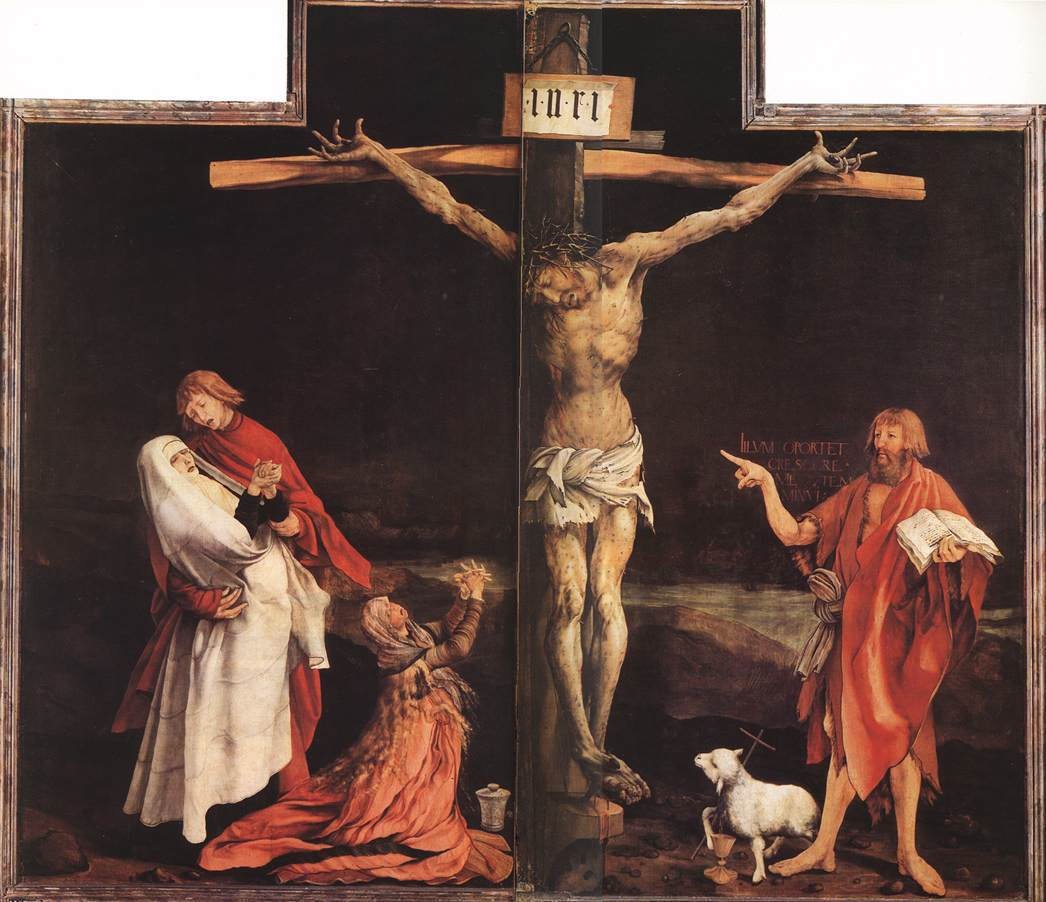
The stump is only possible because a tree was brought down. And do you know what we did with the tree? We nailed Jesus to it.

The root of Jesse is the cross. It stands on a hill far away, the emblem of suffering and shame. And it is glorious. 

Some will say, this time of year, that we need to keep Christ is Christmas. Sure. That’s fine. But if we’re going to keep Christ in Christmas, we should also consider what it might mean to keep the Cross in Christmas. 

It’s Advent. This is the time of year when we hear the most difficult, demanding, bad news to ever be called good – The Cross. Every Advent we have our worlds’ rocked, tables turned, foundations shaken, demons put to rot, and dead dreams brought back to life. 

All things are possible in Advent because we worship the God of impossible possibly. The God who delights in upending all of our expectations of how the world is supposed to work.

Jesus really is the reason for the season, as is his cross. And lest we domesticate the Lord to mere flannel graphs and perfectly manicured manger scenes, Jesus was and is still so provocative that the powers and principalities are forever trying to shut him up. But nothing can stop Jesus. He’s going to say and do things that change everything.

Not even the cross can stop him.

In fact, the cross is our salvation. It’s a stump that brings forth new life. That’s why we can call it glorious.

Therefore, whenever someone stands in this place and stumps for Jesus, we are called to do exactly that – We point to Jesus Christ, the pioneer and perfecter of our faith, the shoot from the stump of Jesse, the one who makes a way where there is no way.

The promise of Advent is that no matter what stumps us in this life, God is going to get what God wants. Predator and prey will dwell together. Peace will reign. And a child will lead us. 

The promise of Advent is that Jesus is the shoot, the branch that grows into a cruciform tree bearing the fruit that is salvation because Jesus is always stumping on our behalf, even when it costs him his life. 

The promise of Advent is that new life always starts in the dark, whether in the womb or the tomb, whether underground or the lost being found; new life starts in the dark.

Therefore, the next time you encounter a stump, take a good look at it, because you may be looking at your salvation. Amen. 

A Sermon I Didn’t Preach (or: Hopes & Fears)

What makes a sermon, a sermon?

I’ve long held that the mere writing of a sermon, words on a page, don’t actually make it much of anything. A sermon is only a sermon when it is proclaimed among and for God’s people within the context of worship. The prayers, music, and even presence of individuals make the sermon what it is because the Holy Spirit delights in making the words proclaimed from the pulpit God’s words for us.

And so, I have a sermon that is not really a sermon. I prayed over these words and put them together for the first Sunday of Advent, but became sick prior to Sunday morning and never actually preached them. Oddly enough, I am grateful that I didn’t preach this sermon because Isaiah’s insistence on God’s people beating swords into ploughshares, and my take on what that might mean today, was sure to upset quite a few in the pews. And yet, if we believe the church lives according to God’s future in the present, then perhaps every Sunday is an opportunity to proclaim the radical audacity of our hope in the God “who shall come to judge between the nations.”

Anyway, here’s the text and “sermon”…

Isaiah 2.1-5

The word that Isaiah son of Amoz saw concerning Judah and Jerusalem. In days to come the mountain of the Lord’s house shall be established as the highest of the mountains, and shall be raised above the hills; all the nations shall stream to it. Many peoples shall come and say, “Come, let us go up to the mountain of the Lord, to the house of the God of Jacob; that he may teach us his ways and that we may walk in his paths.” For out of Zion shall go forth instruction, and the word of the Lord form Jerusalem. He shall judge between the nations, and shall arbitrate for many peoples; they shall beat their swords into plowshares, and their spears into pruning hooks; nation shall not lift up sword against nation, neither shall they learn war any more. O house of Jacob, come, let us walk in the light of the Lord!

We begin at the end.

7 centuries before the Advent of Christ, before the little town of Bethlehem hosted the heavenly host, before the little Lord Jesus laid down his sweet head, the prophet Isaiah saw a word.

What an interesting turn of phrase.

The prophet doesn’t see a vision, he doesn’t hear a word, he sees the word.

In the days to come, the mountain of the Lord’s house shall be established as the highest of the mountains and all people will stream to it. A king will come and teach the ways of the Lord, the instruction will command the attention of the masses.

And what does this king teach?

An eye for an eye!

Pull yourself up by your bootstraps!

Life’s hard, get a helmet!

No.

The king will teach the way of peace. He will come to judge the living and the dead. And, in judgment, the people will beat their swords into ploughshares, their spears into pruning hooks. Their weapons of war will become instruments of agriculture.

Nation shall not lift up sword against nation, neither shall they learn war anymore.

Even if you’ve never read from the prophet Isaiah, you’ve probably heard these words before. Or, perhaps better put, you’ve seen them, or some version of them.

We’re familiar with these words because they have captivated the imaginations of the faithful for generations, just think of the famous images during protests against the Vietnam war and all the people who placed flowers inside the barrels of guns. 

And, interestingly, this prophetic proclamation from Isaiah is engraved in large letters on the wall directly across the street from the United Nations. There they rest, day after day, mocking our feeble attempts to make peace while we continue to lift up our swords against one another.

Kelly Latimore Icon

Isaiah sees the word about the days to come. He does not know when, or even how, these things will come to fruition, but the prophet catches a glimpse behind the curtain of the cosmos and he seeds the end.

It’s a bit odd that we begin at the end. Today, after all, is the first Sunday of Advent, the beginning of a new year and we start with the conclusion. But, then again, it’s only right for us to do so because we are Easter people, we’re stuck squarely between the already but the not yet. 

There’s a through line in the Gospels, frankly the whole of the strange new world of the Bible, about time. We sees these words about the past, the present, and the future, and it’s not altogether clear which ones are which. And yet, if there is a persistent proclamation, it is that we belong not to this age, but to the age to come. That’s why Paul can write in his letter to the church in Rome, do not be conformed to this world, but be transformed by the renewing of your minds.

We are a people out of time. We live in the future because we know that the tomb is empty.

But the future we live in its not a future that we bring to fruition.

There’s a temptation, every time Advent rolls around, for us to feel like it’s our responsibility to make the world come out right; that its up to us to make the word Isaiah sees real. 

To use language from Stanley Hauerwas, we play at waiting this time of year. Advent, after all, is all about patience isn’t it. And yet, for us, it isn’t. We can’t help but make ourselves the main character of the story. We rejoice in this language of getting back to God, of climbing back up the mountain, of making the world a better place.

But, when was the last time we left church jazzed up to turn our swords into ploughshares, or transform our guns into garden shovels?

Did you know that there are more guns in this country than human beings?

The word Isaiah sees is not predicated on us finally getting everything good enough that we can be good enough for God. In fact, its quite the opposite. The end is made possible only as we come to grips with our badness and how badly we need someone to do for us, and to us, that which we cannot do on our own.

Isaiah sees swords turned into ploughshares, a people willing to relinquish their forms of control for forms of sustenance, a people of peace. The strange new world of the Bible is filled with impossible possibilities just like that. The Lord will bring the hills low, and raise the valleys up. The Lord will make the last first, and the first last. The Lord turns a sign of death (the cross), into the sign of life (salvation).

The end is not yet. We Easter people are oddly stuck living in the time of Advent. We exist in the time in between, the time being as Auden put it. We make it through this mortal life waiting and hoping for things not yet seen.

That’s why we sing of the hopes and fears of all the years. We know not all is as it should be, but we also know that the future is coming, and his name is Jesus. 

“Building a better future for our children.” I saw that on a sign recently. And I hear those kind of words all the time. Here at church. The PTA. On the news. And, it’s a worthy sentiment. What can we do now to ensure a better and brighter future for the coming generations?

The only problem is, we are not creating the future, and certainly not a better one.

We know what we should and shouldn’t do, and for some reason we refuse to change.

It’s been almost ten years since the Sandy Hook Elementary School shooting. 20 children between the ages of 6 and 7, plus 6 adults were murdered. I remember being glued to the television and feeling this raw hopelessness in my heart. And yet, I also remember thinking, “This is so bad, we’re definitely going to make sure these types of things will never happen again.”

But we didn’t.

In just the last two weeks we’re seen horrific shootings in Charlottesville and Colorado Springs. Awful. And we just keep going forward as if nothing happened. We’ve become numb to the violence that we are. 

And, sadly, I had to go back and edit this sermon because in between writing it, and preaching it this morning, there was another mass shooting at a Walmart in Chesapeake.

These reports keep coming out, year after year, about how we have a problem with guns in this country. There are too many and the access is too easy. But we do nothing.

We were at the pediatrician’s office a few weeks back, patiently waiting. Talking about living into the Advent season, waiting and waiting and waiting. And what is there to do when you’re waiting in a doctor’s office? You start reading all the random posters on the wall.

Here’s the proper amount of medicine for a 6 year old. Here’s an example of a healthy diet for a ten year old. On and on.

But then I saw a word, a poster on the wall that chilled me to my core:

“Firearms are now the number one cause of death for children in the United States.”

We are not making a better future. 

But, thankfully, the future is coming to us. From God.

God is creating our future and that future is our only hope. If it were left up to us, we would continue on paths that lead to destruction. But it is not God’s will that anyone should perish. 

Isaiah sees a word that is staggering. Weapons turned into tools for food. People gathering at the mountain. And judgment.

We don’t do well with that word. It sits heavy on our hearts.

But the day of judgment that Isaiah sees is ultimately a day of hope, not of despair. It is a day of restoration, not doom. It is a day of judgment when sin will be no more. 

That’s why we pray to God for help.

We need help that is outside of us. We need something done to us. We need this because we’ve had plenty of opportunities to change ourselves, to make things better, and the world keeps going down the toilet.

No wonder God had to send God’s son into the world. We need all the help we can get.

God is in the business of making all things new; yesterday, today, and forever. And the church, as Christ’s body in the world, is not some social club or gathering that provides a distraction from all that is wrong in the world. Instead, the church exists to call a thing what it is. Or, in other words, the church exists to tell the truth. 

Advent starts in the dark. It always has and it always will. The texts, the hymns, the prayers, they all beckon our attention to the way things are knowing that that not all is as it should be. It is the season of honesty about who we are, but more importantly whose we are.

We are not making a better future but, as the church, we live according to God’s future in the present. We live, oddly enough, by grace. We practice trust and honesty and forgiveness in the midst of a time in which those things sound like fairytales. 

The church is God’s weird and wild story for a time and place that is desperate for a new narrative, albeit one that runs completely counter to everything else in the world. 

One day God is going to get what God wants. Swords will be beat into plowshares, guns will be melted into garden shovels. Peace will reign. O church, let us walk in the light of the Lord!

The End Is Here

Luke 21.5-19

When some were speaking about the temple, how it was adorned with beautiful stones and gifts dedicated to God, he said, “As for these things that you see, the days will come when not one stone will be left upon another; all will be thrown down.” They asked him, “Teacher, when will this be, and what will be the sign that this is about to take place?” And he said, “Beware that you are not led astray; for many will come in my name and say, ‘I am he!’ And, ‘The time is near!’ Do not go after them. When you hear of wars and insurrections, do not be terrified; for these things must take place first, but the end will not follow immediately.” Then he said to them, “Nation will rise against nation, and kingdom against kingdom; there will be great earthquakes, and in various places famines and plagues; and there will be dreadful portents and great signs from heaven. But before all this occurs, they will arrest you and persecute you; they will hand you over to synagogues and prisons, and you will be brought before kings and governors because of my name. This will give you an opportunity to testify. So make up your minds not to prepare your defense in advance; for I will give you words and a wisdom that none of your opponents will be able to withstand or contradict. You will be betrayed even by parents and brothers, by relatives and friends; and they will put some of you to death. You will be hated by all because of my name. But not a hair on your head will perish. By your endurance you will gain your souls.”  

A Modest Proposal For Peace: Let The Christians Of The World Agree That They Will Not Kill Each Other.

The Mennonite Central Committee came up with that slogan many years ago and started printing the words on posters. My former professor Stanley Hauerwas was quite taken by the sentiment of the poster, and hung one on his office door more than twenty years ago. 

He also hung it up because he likes to stir up controversy whenever possible.

For, over the last twenty years, countless students (and professors) knocked on his door with anger and frustration. Each of them, in their own way, would barge into his office and declare, “Your sign makes me so mad. Christians shouldn’t kill anyone.”

And Hauerwas would reply the same way every single time: “The Mennonites called it a modest proposal – we’ve got to start somewhere.”

The disciples were walking by the temple, like a bunch of tourists with their eyes in the sky, taking in the beauty, and the large stones, and the gifts dedicated to God. And Jesus said to them, “The days are coming when not one of these stone will be left upon another.”

And, of course, the rag-tag group of would-be followers follow Jesus’ proclamation with a question, “How will we know this is taking place? What signs should we look for?”

It’s easy to knock the disciples for their hard-headedness. They’ve had the benefit of hearing and seeing and witnessing Jesus day after day for three years and they still can’t get it through their thick skulls what he’s all about.

But we’re no better.

We’re still obsessed with signs that will clue us in so that we might catch a peek behind the curtain of the cosmos.

The ever-enduring “next thing” demands our attention and allegiance. The next politician. The next prophet. The next program. We hope that one day, the next big thing will finally get it right and set things right. We pour our trust into these fleeting and flawed figures and we are disappointed time and time again. And, worse, we are led astray.

And Jesus warned us this would happen!

Listen – Many will come in my name, Jesus says, and they will lead you away from the kingdom of God. They will tell you that the end is near. Do not listen to them. Nation will rise against nation, kingdom against kingdom; there will be great earthquakes, and famines, and pestilence, terror, and great signs from heaven.

We well-meaning Methodists are not necessarily familiar with this type of language, at least in the church. We can hear all about it on the news at night. But here, on a Sunday morning, no thank you. We’re accustomed to hearing about God’s love and the need to be a little kinder toward our neighbors. We’re used to hearing about the relative comfort of the present, rather than being concerned with the terror of the future.

But Jesus, when asked about the possibilities for the future, was upfront about the end. Stones will be thrown down, wars will be waged, famines and plagues. It’s right there in the Bible, and it’s on our televisions, and it’s in our doom scrolling on Twitter. 

And we can’t look away.

Paul Zimmer was 19 when the US Army sent him to Camp Desert Rock in 1955 to do something he was totally unprepared for. He wrote about his experience with these words:

“I’d seen pictures of Hiroshima, I knew it was bad, but I thought getting to watch atomic explosions would be kind of cool, a story to interest girls. I had no special training and the first time I had no idea what to expect. We traveled by bus at night out into the desert, chain smoking until we were ordered into the trenches. We wore steel helmets, and our fatigues, but nothing else. I did not become fearful until the countdown was broadcast. 

And I only became terrified when I saw the flash; a flash so bright that, even with my eyes closed, I could see the bones of my hands over my eyes. A shockwave crashed over us, and we were ordered out of the trenches. We saw the mushroom cloud, glowing purple and changing colors, rising and rising. I saw 8 atomic blasts in total. Some from the air, some from underground. Some created such massive shockwaves that we were buried in our tenches and we had to claw our way out from our own graves. When clearance was radio’d over, were were ordered to march forward into the blast area and bear witness. As far as I could tell, bearing witness was the only reason we were there. Ozone hung in the air. Maimed animals in every direction. Houses were splintered and scattered. Total devastation. We never had to write reports, nor did anyone ask us what we saw. Because, it turns out, they were watching us. They wanted to see how young men reacted to an atomic blast. Lately, I’ve begun to realize that I am one of the last people living in America to have actually experienced close up explosions of Atomic bombs. Now, in my old age, when I can conjure that brief and surreal period of my youth I try in vain to make sense of it. It has become my responsibility to share how that great flash and blast permanently reached into my young mind and heart. How the sounds still ring in my ears even today. I feel it my duty to tell of the reckless absurdity of it all. We keep threatening to use these weapons, and I am sure that one day we will. Most of us have forgotten what we are capable of, I have not.

I heard Zimmer’s story years ago, and I haven’t been able to get it out of my mind. To have experienced what he did, to turn on the news like we do every night with nothing but bad news, it’s easy to feel like the end is near.

And yet, it isn’t.

The end isn’t near, it’s already here. Our faith is predicated on the notion that we have already seen “the end,” that the world has come to a decisive crisis in the life, death, and resurrection of Jesus.

In Jesus’ death we believe that the whole history of the cosmos reached a turning point. At that moment, as the sky turned black, as the temple curtain tore in two, as he was nailed to the cross, the conflict between life and death, good and evil, was resolved in favor of Jesus’ lordship over everything. 

We know the end because we know Jesus Christ and him crucified. We read the last chapter before the introduction. We heard the postlude before the anthem. 

God establishes a new kingdom through the cross and it is not dependent on us getting everything solved, or by getting the right person elected, or by finally making the world a better place.

Do you know what the mission of the church is? Our denomination says we exist to make disciples of Jesus Christ for the transformation of the world. That’s fine. But it betrays the central claim of the Gospel. God has already transformed the world in the person of Jesus Christ!

The kingdom we live in is based upon what God has done and is doing for us, rather than upon what we do. 

The church doesn’t have a mission – we are the mission. Our being is based on the presumption that we are witnesses first and foremost to Christ who is the difference that makes all the difference. We bear the marks of his life that gives life to us and others. Jesus has already made us different.

We, then, don’t exist to make changes, but living in the world made possible by the cross will, naturally, lead to transformation. It will lead to transformation because we embody the joy that comes from being part of Jesus’ body. It will lead to transformation because we can’t rest easy while the world is flushed down the toilet. It will lead to transformation because we know the truth (his name is Jesus) and that peace comes through weakness, not violence.

Paul Zimmer was commanded to bear witness to the power of our self-made destruction. We spend our days bearing witness to the brokenness of the world around us. And yet, more often than not, we dare not question why things are the way they are!

Jesus tells the disciples they will be hated because of his name. I don’t know if any of us here today have ever felt hated because of our discipleship. But I can assure you, the world will hate us if we call into question the powers and the principalities. To question our wanton disregard of the environment, or our obsession with weapons of mass destruction, or our never ending political industrial complex, will put us at odds with the world. 

Put another way, in order to bring it a little closer to home, Thanksgiving is coming up, that hallowed occasion to gather with family and friends over a shared meal. Imagine, while seated at the table, when you are up to your elbows in mashed potatoes, what would happen if you said, “Can we have a conversation about our nuclear arsenal?”

I don’t know if you will be hated, per se, but you might not be invited back next year. And yet, to raise such a subject would be, at the very least, faithful!

Hear the Good News: the power of Jesus’ love is such that, even though we will be hated, we will be carried by his love through life. Even in distress we can trust, even in times of fear we can rejoice, because Jesus Christ is Lord.

I heard someone on the news a few weeks ago who expressed a total lack of hope for the future. They waxed lyrical about how politicians keep failing to live up to their promises, how we spend so much money on our military might all while kids go to bed hungry at night, how we willfully ignore the devastation we are wreaking on the environment, on and on.

And I thought, “No wonder they don’t have hope.” They could only imagine their hope being in us, in our ability to make things right. Let me tell you, we are hopeless. We’ve known, for longer than we care to admit, what we should and shouldn’t do, and yet we still continue to do things we shouldn’t and we avoid doing things we know we should! 

We don’t have a hope in the world, unless the hope of the world comes to dwell among us. Which is exactly what Jesus did.

Jesus says we will be hated because of his name. And yet, we should rejoice because in those moments we will be given opportunities to testify, to bear witness. Which, in the end, is nothing more than living according to the world made new in the life, death, and resurrection of the Lord. 

The old hymn is right and true: Our hope is built on nothing less than Jesus’ blood and righteousness. Christ is the solid rock upon which we stand, and all other ground is sinking sand.

Wars and rumors of wars will come. Churches will be built, and churches will crumble. Families will grow, and they will fall apart. And even though the world will change, we can hold fast to the truth, we can tell the truth, because we know how the story ends. 

When Christ shall come with trumpet sound, O may we then in him we will be found, dressed in his righteousness alone, faultless to stand before the throne… On christ the solid rock we stand, all other ground is sinking sand, all other ground is sinking sand. Amen.