Lost and Found – Easter Sermon on Luke 24.13-35

Luke 24.13-35

Now on that same day two of them were going to a village called Emmaus, about seven miles from Jerusalem, and talking with each other about all these things that had happened. While they were talking and discussing, Jesus himself came near and went with them, but their eyes kept them from recognizing him. And he said to them, “What are you discussing with each other while you walk along?” They stood still, looking sad. Then one of them, whose name was Cleopas, answered him, “Are you the only stranger in Jerusalem who does not know the things that have taken place there in these days?” He asked them, “What things?” They replied, “The things about Jesus of Nazareth, who was a prophet mighty in deed and word before God and all the people, and how our chief priests and leaders handed him over to be condemned to death and crucified him. But we had hoped that he was the one to redeem Israel. Yes, and besides all this, it is now the third day since these things took place. Moreover, some women of our group astounded us. They were at the tomb early this morning, and when they did not find his body there, they came back and told us that they had indeed seen a vision of angels who said that he was alive. Some of those who were with us went to the tomb and found it just as the women had said; but they did not see him.” Then he said to the, “Oh, how foolish you are, and how slow of heart to believe all that the prophets have declared! Was it not necessary that the Messiah should suffer these things and then enter into his glory?” Then beginning with Moses and all the prophets, he interpreted to them the things about himself in all the scriptures. As they came near the village to which they were going, he walked ahead as if he were going on. But they urged him strongly, saying, “Stay with us, because it is almost evening and the day is now nearly over.” So he went in to stay with them. When he was at the table with them, he took bread, blessed and broke it, and gave it to them. Then their eyes were opened, and they recognized him; and he vanished from their sight. They said to each other, “Were not our hearts burning within us while he was talking to us on the road, while he was opening the scriptures to us?” That same hour they got up and return to Jerusalem; and they found the eleven and their companions gathered together. They were saying, “The Lord has risen indeed, and he has appeared to Simon!” Then they told what had happened on the road, and how he had been made known to them in the breaking of the bread.

the-road-to-emmaus-daniel-bonnell

I have been a Christian for as long as I can remember.

I was baptized at 19 days old and church has been there for me my entire life. As a child I loved hearing the incredible stories from scripture: Jesus walking on water, David defeating Goliath, Moses moving through the Red Sea. Church was an exciting place that was unlike anything else I did. In worship I learned how to listen, I learned what it meant to sing my faith, and I found tremendous joy in receiving communion.

Of course, as I grew older, the perfect glow of church began to fade away. We would learn about the importance of love and forgiveness during church, and then I would see a man screaming at his wife in the parking lot after worship. We learned about God’s kingdom as a rich and diverse new reality, but I only saw privileged white people in church. We heard about how important it was to keep the faith, but I started to have doubts about what scripture revealed.

Like most Christians, I have had my doubts. I have been kept awake late at night wondering about the divine, praying for God’s presence to be made known in my life and in the lives of others, and hoping for something to cleanse my unease.

Yet, it is almost always in the midst of a question, at the precise moment that I feel most lost, that God shows up and finds me.

The two disciples on the road were filled with doubt. We don’t know anything about the two who were walking to Emmaus; they weren’t famous, and they weren’t part of the 12 – they were just common, ordinary disciples like you and me.

I can’t even begin to imagine what it must have felt like to be walking on that road on that day so long ago. They had followed Jesus throughout Galilee and heard him proclaim the Good News, they had seen him heal the sick and feed the hungry, but just days previous they saw him betrayed, arrested, and murdered.

They might have known where they we walking, but I bet they felt lost. They had put all their hope and faith in a man who was buried in a tomb and now his body was missing. They thought the world was going to change, but the dirt under their feet felt even worse than before.

Suddenly, Jesus found them on the road and he went with them. Yet, they did not recognize the Lord in their midst. “What are you two talking about?” he asked. To which one of them replied, “Have you been living under a rock? How could you not have heard about the things that have taken place in Jerusalem?”

Jesus asked, “What things?

Immediately they began to explain all that they had seen and heard. “Jesus of Nazareth, a mighty prophet, was betrayed and sent to his death. We had hoped that he was the one who would save us. And now three days have passed and some of the women from our group went to his tomb and they say his body was missing and angels appeared, but no one has seen him.”

Jesus then began interpreting the scriptures to the men on the road, from Moses through the prophets, he showed how what had come to pass was part of God’s great cosmic plan. And yet, they still did not recognize him.

Later, as they came near Emmaus, Jesus kept walking on but the men invited him to stay. When they sat down at a table to eat, Jesus took bread, blessed it, broke it, and gave it to them. With the bread in their hands their eyes were opened and they finally understood who had been with them the whole time and he vanished.

All of the sudden everything started to make sense, the encounter on the road, the strange question, the interpretation of scripture, and even the holy meal. “Were not our hearts burning within us while we were together with the Lord?” Immediately they went back to Jerusalem to declare the good news: “The Lord has risen indeed!

resurrection-2

On Friday at noon I took the cross from our sanctuary, placed it on my shoulders and started walking around Staunton. When I did the same thing last year and I was largely ignored. For hours I walked through our community and most people averted their gaze, they tried to pretend that there was no cross for them to see.

This year, the opposite happened. People would honk their horns as they passed, they would roll their windows down and give me a thumbs-up. I saw familiar faces throughout my journey and felt glad for the sense of community that I experienced.

I carried the cross around because I want to bring the Lord to people outside of church. If we continue to falsely assume that we can only experience God’s grace in a place such as this, it will never grow and give life to other people.

Anyway, I was bearing my cross through Staunton and I was walking along the sidewalk on Beverly Street when I was stopped. In front of me stood an older woman with a large shawl draped around her shoulders and she kept staring at the cross. For a period of time that felt uncomfortably long we just stared at one another without saying anything until I saw her lip quiver and she asked a question that I was not expecting: “What will happen to me when I die?

I stood there with the cross digging into my shoulder and I felt the spirit of God fall upon us in that holy moment. Instead of giving some densely theological answer, and instead of evading the depth of her question I told her what I believed: “When we die God will take care of us. I don’t know what it will feel like or what we’ll experience, but the God that has been revealed to me will take care of us.

What kind of faith do you have?” she asked.

I explained that I am a pastor in the United Methodist Church, but above all I am a disciple of Jesus Christ.

Tell me about him,” she said.

So I did. I started with Christmas and the story of God coming in the form of flesh as a baby to be in the world with us. Jesus grew and called people to know that they were loved regardless of their life circumstances. This Messiah went out and found the people who were ignored by the rest of the world and he gave them value. He preached, healed, and he loved. And then Jesus was betrayed, arrested and killed on a cross for everyone to see, and three days later he was raised from the dead. The beauty of what Jesus did is that he died so that we might live. Jesus died for you, and for me, so that we might live.

Tears began to well up in her eyes, she reached forward to hug me, thank me, and before I knew it she was gone.

I can’t tell you anything about her other than our brief interaction, but to me it felt like she was lost and then Jesus found her in the cross and in the story. Whatever she had going on in her life suddenly fell away and she felt valued and loved by the one who came to live and die for us.

Jesus came to the disciples on the road, and not the other way around. They were lost in their thoughts and doubts and were incapable of recognizing Jesus in their midst. Only through the scriptures, and through the bread and wine did Jesus reveal himself to them, he demonstrated what his life had been all about: his resurrection means our resurrection.

Those of us here in church on Easter Sunday are in the same position as those two disciples on the road. Jesus has come to us here in this place through the reading of scripture, and in a few moments we will encounter the risen Christ through the bread and cup at the table.

I don’t know what you’ve got going on in your life. Most of us are pretty good about shielding away and hiding our doubts and insufficiencies. We turn on the smiles when we need to, and we know what we have to do to keep afloat. I don’t know what you might be wrestling with right now, or even if you’re wrestling with anything at all. But I do know this: If you took the time to come to a church on Easter, you believe in something more than yourself, even if its very faint.

road_emmaus

My faith is not perfect, and there are days that I struggle. I’ll be driving in my car on the way home from the hospital after praying with a family before a desperate surgery, or I’ll be standing above a casket with dirt still clinging to my fingers after saying goodbye to a faithful friend, or I’ll be reading the news online and be bombarded with never-ending negativity. There are many days that feel as if I’m walking to Emmaus all on my own with questions in my head just like those two disciples so long ago. But that’s when Jesus shows up.

Jesus isn’t looking for people with perfect faith and blind trust. God does not want puppets that he can string along. If Jesus is looking for anyone, it’s the people who are walking toward their own Emmaus. He’s looking for people like you and me who have questions.

Faith is an exciting thing not because it provides all the answers to our questions, but because it encourages us to ask questions in the first place. 

Jesus’ resurrection from the dead is not something that can be explained from a pulpit or from a book, it defies all logic and rationality, it exceeds our expectations, and often leaves us scratching our heads. But that’s the point. It is beyond anything we could ever imagine. Only the Lord who gives us life could have come up with something so incredible to change the world.

The resurrection is real, Christ appeared to the two on the road and revealed himself through the wonders of God’s word and holy table. God died in Christ on a cross and defeated death so that we might live with him in the kingdom; Christ died so that we might live.

The Lord is risen. God is on the move in the world seeking out those who are lost. God loves showing up in the words of scripture, in the bread and wine of communion, in chance encounters on the road, and in a variety of places to help find those of us who are lost.

Do we feel our hearts burning within us while we praise the living God? Do we feel the blessed holiness that comes with receiving this meal broken and shed for us? Are we ready to be found by the living God while we make our way to Emmaus?

The good news of Easter is that Christ’s resurrection has made our resurrection possible. But until that day when we feast with him at his heavenly banquet, I think the good news can be found when we feel lost on the old roads of life and Jesus finds us. Amen.

Palms Beneath My Feet – Sermon on Mark 11.1-11

Mark 11.1-11

When they were approaching Jerusalem, at Bethphage and Bethany, near the Mount of Olives, he sent two of his disciples and said to them, “Go into the village ahead of you, and immediately as you enter it, you will find tied there a colt that has never been ridden; untie it and bring it. If anyone says to you, ‘Why are you doing this?’ just say this, ‘The Lord needs it and will send it back immediately.’ “ They went away and found a colt tied near a door, outside in the street. As they were untying it, some of the bystanders said to them, “What are you doing, untying the colt?” They told them what Jesus had said; and they allowed them to take it. Then they brought the colt to Jesus and threw their cloaks on it; and he sat on it. Many people spread their cloaks on the road, and others spread leafy branches that they had cut in the fields. Then those who went ahead and those who followed were shouting, “Hosanna! Blessed is the one who comes in the name of the Lord! Blessed is the coming kingdom of our ancestor David! Hosanna in the highest heaven!” Then he entered Jerusalem and went into the temple; and when he had looked around at everything, as it was already late, he went out to Bethany with the twelve.

palm-sunday-2

Weekly Chapel Time requires a willing and humble spirit. What we do here on Sunday mornings carries an air of sophisticated and focused liturgy. But when I bring the Preschoolers in during the week… there are no rules. When we worship together most of us have fairly decent attention spans, but the 2, 3, and 4 year-olds need to be consistently bombarded with images and ideas in order to stay focused.

I’ll freely admit that I treat our preschoolers the same way that I treat our worshippers (I’ll let you decide whether or not that is a good thing) because we are all working toward the same goal: a greater awareness of God’s love and mercy in the world.

Anyway, this week, in preparation for Palm Sunday, we gathered the children in the sanctuary for their lesson. They sat in the pews up here in the choir loft, with their little legs dangling in the air, excited and nervous to keep learning about this guy named Jesus. I love quizzing them on previous stories because they are fascinated by scripture. For instance: If I could get all of us to be as excited about Zacchaeus, the wee-little man, climbing up a sycamore tree, just imagine how faithful we would become.

I shared with the children that Jesus needed to get to a strange place called Jerusalem to do something incredible for his friends. They gathered together outside the city and Jesus sent two men to find a donkey for him to ride on. The closer the came to the gates, more and more people gathered palms from the surrounding area and waved them in the air, and placed them on the ground all while shouting “Hosanna!” which means “save us!”

I then had all the children line up with their own palm branches in the center aisle and we were going to recreate the story. I found a young boy to be Jesus and when I asked who they thought the donkey should be they all emphatically yelled, “You Pastor Taylor!” I’m not sure how I felt about them so quickly identifying me with that particular animal, but I let it go.

So there I was on my hands and knees with a child saddled across my back making our way into Jerusalem. I had instructed all the children to either wave their palms or place them on the ground and shout “save us!” to the boy on my back. The entire journey down the center aisle took longer than I thought because I did not want to drop the Jesus on my back, but as I walked forward and saw the palms beneath my feet I was struck by the Holy Spirit.

The children continued to scream and beg for their salvation, the Jesus on my back kept kicking into my rib cage to make me go faster, but all I could think about was what the donkey must have experienced when he carried Jesus into Jerusalem, what it must have been like to deliver the Lord to his death.

The following is an imaginative retelling of the story from the donkey’s perspective…

Palm-Sunday

With palms beneath my feet, Jesus, there are so many things I wish I could tell you. Carrying you while the crowds scream on our sides, I wish I could share all the things I have seen and heard. This might be the only chance I’ll get, and it already feels too late.

I was there Jesus. I was there in the manger when you were born. Your parents had come into the tiny room and your mother looked like she was about to burst. I was but a young foal back then, but I remember. They were so afraid and alone when they cuddled together holding you close. While they were filled with fear, I was filled with joy. I knew from the moment I saw you that you were special, that you were the Son of God. The other animals could feel it too, and while your family fell into the familiar rhythm of sleep, we gathered around you to share our warmth. I watched you sleep all night and I could feel that our lives were connected, and I knew that I would see you again one day.

You left from Bethlehem but as the years passed I heard stories about your life. I would be in the marketplace, or moving about the village and rumors would fall upon my ears.

When you were a child they said that you stood apart. Other children would spend their days running around and getting into mischief, but you would sit in the synagogue and teach the elders. Your command of the scriptures spread before you even started your ministry. I would watch the people while they talked about you and they were filled with such hope. Words like “messiah, lord, and savior” were used to describe you and I could tell that the Lord was among us.

Then it came to pass that you were baptized by your cousin John in the Jordan river. Witnesses said they saw the sky open up and they heard the voice of God. While others denied the claims, I knew it was true, I could feel that your ministry was about to begin and that everything would change.

You traveled throughout Galilee proclaiming the year of the Lord’s favor. You healed the sick, gave sight to the blind, and restored the outcasts to their families. Everywhere you went stories about your love and mercy traveled ahead and the crowds grew larger and larger. You fed the multitudes by the sea, you walked on water, and you brought Lazarus back from the dead. You spoke of mustard seeds, prodigal sons, and good samaritans. You ate with sinners, worked on the sabbath, and argued with the Pharisees. Some say that even just a few weeks ago you were on the mountaintop when Moses and Elijah appeared and you were transfigured.

This morning I was tied up near the door when two of your disciples came close. One of them spoke to my owner and said, “The Lord needs him” and they brought me to you. I knew the time had come when we would be reunited, but the joy I expected to feel has been mixed with trepidation.

Jesus, how I wish you could hear me, how I wish I could tell you all I have seen and heard. We departed early this morning and the crowds gathered around us. It feels as if the closer we get to Jerusalem the people grow louder and more eager to cry out. Do they know what they mean when they say, “Hosanna! Blessed is the one who comes in the name of the Lord! Blessed is the coming kingdom of our ancestor David! Hosanna in the highest heaven!”?

I’m beginning to worry Jesus. I don’t think they know who you really are. The people sound more like an angry mob waiting for you to overthrow the Romans than a faithful group waiting for the kingdom of God. They want another Moses to lead them out of physical bondage, they want another David who can lead them into battle, they want another Solomon to build a giant temple.

a_liturgyofthepalms-large

These people have suffered but they believe in you. Did you see them take off their cloaks and place them in the road? I have been walking over garments for hours. Did you see them rush into the fields for palm branches to wave them in the air and create a royal pathway? The palms beneath my feet are a sign of how much these people believe in you.

What are you going to do Jesus? I can hear people murmuring about your coming mission, some are saying that you are going to the temple and you are going to overthrow the tables. Some are saying that you are going to lead the rebellion and kill the chief priests and scribes. Some are saying that you are going to destroy the temple and then build a new one.

Jesus I’m afraid for your life! These people don’t know who you really are and what you’ve come to do. They shout “Hosanna, Hosanna!” but I fear their shouts will soon turn to “Crucify, Crucify!” They are only concerned about themselves. Even your disciples on either side of us, I can smell their fear.

Jesus, I was there when you were born. I felt God’s presence in you and I knew you would save the world. But please Jesus, let me take you away from this place. Jerusalem can only bring about your death. We still have a chance to turn around and head home.

Or is it too late? 

The crowds are starting to thin Jesus. The people are beginning to head home. We are stepping through the gate and the palms are no longer beneath my feet. I want to believe in you and what you are doing. I want to believe this is God’s will. But I’m so afraid.

Jesus, I am an old donkey and I don’t know how much further I can carry you.

It’s just us now and the sun is beginning to set.

What will happen? What are you going to do?

If this is the last time I will see you, I wish I could talk to you. I wish I could warn you about what is to come. I wish I could stop you.

You swing your legs around and are standing right before me. Your eyes contain the same hope they did the day you were born in the humble manger. As you pet my old matted fur I can feel all the people you have already touched and healed. I can feel the sick children and parents, I can feel the blind and the lame, the last, least and lost.

What a privilege it was to carry you today my Lord. I knew that we would meet again, I only wish I could do something to warn you.

You’re now leaning in close to whisper in my ear. Is this goodbye? Is this the end?

You said, “No my old friend. I know exactly what I am doing. And this is only the beginning.” Amen.

You Cannot Save Yourself – Sermon on Ephesians 2.1-10

Ephesians 2.1-10

You were dead through the trespasses and sins in which you once lived, following the course of this world, following the ruler of the power of the air, the spirit that is now at work among those who are disobedient. All of us once lived among them in the passions of our flesh, following the desires of flesh and senses, and we were by nature children of wrath, like everyone else. But God, who is rich in mercy, out of the great love with which he loved us, even when we were dead through our trespasses, made us alive together with Christ – by grace you have been saved – and raised us up with him and seated us with him in the heavenly places in Christ Jesus, so that in the ages to come he might show the immeasurable riches of his grace in kindness toward us in Christ Jesus. For by grace you have been saved through faith, and this is not your own doing; it is the gift of God – not the result of works, so that no one may boast. For we are what he has made us, created in Christ Jesus for good works, which God prepared beforehand to be our way of life.

Screen Shot 2013-06-30 at 10.08.16 AM

Our series on “Back to the Basics” continues this morning by looking at the topic of salvation. We started this series in light of the fact that many of us are deeply rooted in our faith, but some of the basics have perhaps become so routined that we no longer understand what they mean. We began with a call to return to the basics, then we looked at the Ten Commandments and today we are talking about salvation. Here we go.

My friend Josh loved the Christian camp. Every summer he looked forward to returning to the familiar space with young people all growing in their faith. From tubing on the lake, to hiking around the compound, and even just praying at night with his friends, the camp was a place unlike any other; at camp he could be fully Christian without the world judging him for his discipleship.

By the time I met Josh, camp was long in the past though he remembered most of it fondly. Having never gone to a specifically Christian camp I was fascinated by the idea of being immersed in an intentional faith community with other young people and I regularly asked him questions about his experiences. After all, it was at camp where he met his future wife, and it was years later that he made a scavenger hunt at the camp in order to propose.

As a young Christian my faith was largely formed and nurtured by my home church. I was blessed to grow up around a number of people who took their commitment to raising me in the faith seriously. Josh, however, learned a lot about what it meant to be Christian from the counselors at camp, which, like many things, can be a blessing and a curse.

The young adult counselors embodied how you could still be cool and Christian. They made faith so appealing because they regularly demonstrated what God had done for them in their lives. They made efforts to make faith approachable and were able to share the love of God with campers every summer.

Yet, some of them deeply believed it was their chief responsibility to save others and did whatever they could to make that happen.

It would come at the end of an incredible week of building new relationships and ideas when one of the counselors who begin talking about the Roman Road and I imagine it went something like this:

“Have you accepted Jesus Christ as your personal Lord and Savior? Your life might feel pretty good right now, you might have a kind family and some nice friends, but what about your eternal life? Do you want to spend life after death burning in the fires of hell? Or do you want to be saved?

“Imagine that you are standing on the edge of a cliff. Being a good person isn’t enough to save you. You can see salvation on the other side of the divide, but the only way you can get there is through Jesus Christ. Try to picture the cross being a bridge for you to safely get to the other side. You have the power to decide your everlasting fate. What’s it going to be?”

5520158

When Josh explained these experiences to me I could sense the amount of manipulation that went into the dialogues. As the summers passed at camp, the conversations remained the same only the stakes became higher: What are you doing to save the people around you? Have you explained the Roman Road to your friends?

My friends, we are now alive though we were dead. Until the great gift of God in Jesus Christ we existed like lifeless bodies wandering around. Part of this came to be because we were guilty of sinfulness though we were also victims of our environment – people and organizations who told us we can save ourselves. But God, rich in mercy, saved us.

In the early church they did not spend their time going around trying to convince people with the Roman Road argument. They did not waste time going through the in and outs of theological proofs of Christ’s divinity and resurrection. Instead the church pointed at itself to prove the miracle. Want to know about death, the cross, and the resurrection? Here they are.

The budding Christian community grew not because it’s leaders were particularly articulate in their ability to save others through words, but because they believed in the Lordship of Jesus Christ. With the new family that was created in community they experienced a new kind of life with God at the core, a new opportunity that came with the Spirit.

While the early disciples went throughout their surrounding regions, their cries of evangelism did not begin with “Save yourselves!” Instead they, like Ephesians, triumphantly declared, “God saved you, come live your new life!

If we are anything we are a people of resurrection. Not a country club of like-minded individuals, not a political organization, not a club of devoted fans, but a people of resurrection.

Since the time of Christ, those who followed him have found new life, resurrected life, with God. New life has come by many ways – repenting for the wrongs of our lives, being forgiven by God and our friends, experiencing an assurance of the eternal dimension of God’s love and care, and by a number of other life events, even hearing about the Roman Road from camp counselors. However, we must be careful when putting too much emphasis on our power in salvation. Yes, God has opened the door and we must be the ones to walk through it, but the greater act came in the opening of the door and not our power to go through it.

Resurrected life is something that will come when Jesus returns but we can also experience it here and now. Whenever I’m asked about miracles I can quickly describe some of the incredible things I have witnessed, events I attribute to God’s grace. But some of the most powerful miracles, to me, are right here in our midst. I can look out from this pulpit and see people’s lives who have been turned around through Christ’s love. I see and remember stories about things that have happened to you, sinful desires that suffocated your ability to live fully, when God offered you a new resurrected life.

I heard someone once describe their days as lifeless. They went through the familiar motions but it all felt repetitious, pointless, and directionless. This went on and on until someone invited them to a church community. Suddenly people began to care about him without knowing anything about him or his past. It was like he was being seen and treated through God’s perspective. Through a simple invitation and a new opportunity he felt resurrected from the dead, and began living again. 

Salvation is not about receiving a perfect grade that allows us to make the cut into God’s heavenly kingdom. Who among us fulfills all of the laws from the Old and New Testaments? Loving our enemies, turning the other cheek, giving away our possessions? Even the greatest commandment to love God and neighbor with our hearts, souls, minds, and strengths is incredibly difficult.

romansRd31

If salvation was about getting the right grade, I’m sad to say that most of us would be failing. It’s as if the closer we get to visions of God’s glory, the more we realize our unholiness.

We pray to God before our meals and while we look out on the feast before us we are reminded of the many who have no food to eat. We kneel in a makeshift structure in Guatemala being served food by people who have nothing in terms of our materiality but have faith that we could never imagine. We sit on the stoops of a front porch in West Virginia after painting all day and we realize we could be doing so much more.

We were dead through the sins of our lives and we have been victims of our environment. The good news amidst this unholiness is that, by the grace of God, we have been saved. That through God’s incredible act of selflessness, our sinfulness has been forgiven.

Not a forgiveness as a nice plus added to a grade for our performance as Christians, but forgiveness as a completely unearned gift – a gift extended to a prodigal son who squandered his inheritance, a gift extended to a tax collector who only cared about himself, a gift extended to a thief who hung on a cross to die, a gift extended to you, or to me.

By grace we have been saved. 

Grace is like friendship. Josh, the one who shared with me his experiences of Christian camp, is my best friend and was the best man at my wedding. I did nothing to earn his friendship.  If it had been initiated over an exchange of goods (I will be your friend if you do this for me) it would never have become the true friendship that it is today. Friendship, and I mean true friendship, is an act of faith. Learning to trust the other knowing that they could hurt you.

I know that Josh will be there for me at a moment’s notice. He will listen to me and do whatever he can to help. I also know that he doesn’t expect anything in return. That is the meaning of true friendship; a willingness to give because the well-being of someone else matters more to you than your own. My friendship with Josh is an act of faith, but one that I am remarkably thankful for.

Salvation, for us, is the beginning of a covenant of friendship between us and God; between the divine and a sinner. Grace is another way of describing an incredible love story between God and his creation.

We cannot save ourselves. We cannot save other people. No matter what the commercials, advertisements, and camp counselors tell us. Only the Lord has the power to save. Thanks be to God that he came in the form of flesh in Jesus Christ to open up the gates of heaven to people like us.Thanks be to God that we are not called to save others, but merely help them to see what God has already done, and continues to do, in their lives.

We were dead but have been made alive through the greatest gift ever given. The question for us, then, should not be, “Am I saved?” Instead we should be asking, “What am I doing with this resurrected life?

Amen.

basics

Believing > Understanding – Sermon on Isaiah 40.21-31

Isaiah 40.21-31

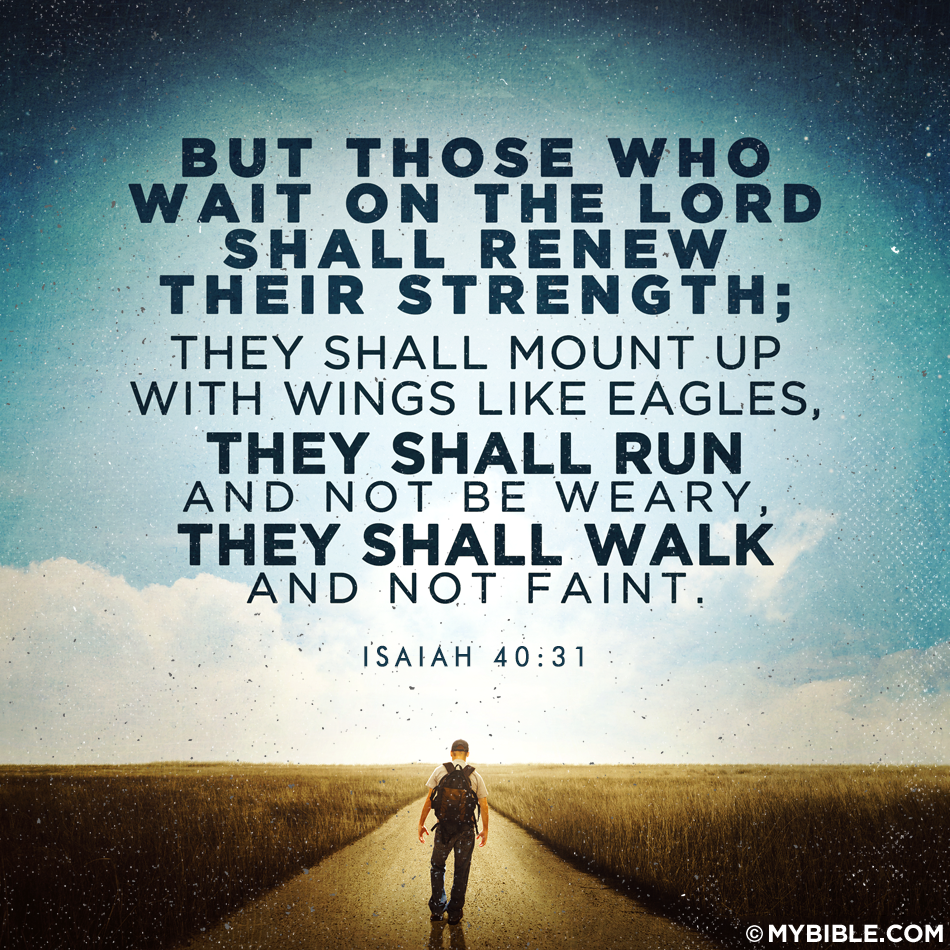
Have you not known? Have you not heard? Has it not been told you from the beginning? Have you not understood from the foundations of the earth? It is he who sits above the circle of the earth, and its inhabitants are like grasshoppers; who stretches out the heavens like a curtain, and spreads them like a tent to live in; who brings princes to naught, and makes the rulers of the earth as nothing. Scarcely are they planted, scarcely sown, scarcely has their stem take root in the earth, when he blows upon them, and they wither, and the tempest carries them off like stubble. To whom then will you compare me, or who is my equal? says the Holy One. Lift up your eyes on high and see: Who created these? He who brings out their host and numbers them, calling them all by name; because he is great in strength, mighty in power, not one is missing. Why do you say, O Jacob, and speak, O Israel, “My way is hidden from the Lord, and my right is disregarded by my God”? Have you not known? Have you not heard? The Lord is the everlasting God, the Creator of the ends of the earth. He does not faint or grow weary; his understanding is unsearchable. He gives power to the faint, and strengthens the powerless. Even youths will faint and be weary, and the young will fall exhausted; but those who wait for the Lord shall renew their strength, they shall mount up with wings like eagles, they shall run and not be weary, they shall walk and not faint.

Isaiah-40-31

I have witnessed, read, and heard lots of sermons. From as far back as I can remember I was in church on a regular basis listening to people like me stand at the front of church and talk all about the bible. During seminary, I learned about the importance of attending different churches to hear from a variety of preachers. Listening to different pastors helped to cultivate my own sermonic style, and show me what not to do.

I once heard someone preaching about the wonderful story of David and Goliath. He read the corresponding scripture, prayed for God to be with him in his preaching, and then began the sermon with these words: “The stench of war hung in the air like a pungent fart…

There was a time where I heard a young woman preach on the sacrifice of Isaac from Genesis. As a sweet and endearing theologian, she frightened everyone in the room by continuing to beat on the pulpit in rhythm; first the rhythm of Abraham’s heart as he pondered the fact that God called him to sacrifice his son, second the rhythm of Abraham’s axe falling on the wood to prepare for the fire, and then latter the frightening sound of the blade falling in Abraham’s imagination. It shook everyone to their cores.

Right before I was appointed here at St. John’s I heard a pastor from the Eastern Shore preach a sermon on one of the psalms. He stood up before the gathered body and explained that he had felt convicted by the Spirit that week to rewrite the psalm as if he was one of those slam poets, and then proceeded to perform his new rendition for all of us. I can’t remember precisely what he said, but it sounded like this: “My heart beats beats beats, O God my heart beats beats beats. I will sing along to the beat, and make the beat my melody. Awake to the rhythm of my heart beat beat beat. Give thanks for the beating heating sleeting of my heart. For his steadfast love, is like a perfect dove, in the heavens so high, up in the air where the birds fly. Listen to the beat beat beat…” He went on like that for twenty minutes.

Sermons, at their best, make the Word incarnate again so that we can live it out in the world. There are as many styles as there are preachers, but hopefully we all ground what we say in God’s Holy Word. A common rule of thumb for preaching is that the text from scripture should determine the style of sermon. For instance: If the scripture lesson is a letter from Paul to one of the early churches, the sermons should function in a similar way to the church that is listening. If the scripture is a narrative, then a story should be used to help reveal the Good News from the text. If the passage is a parable, then the sermon should leave the people scratching their heads in the same way that the first Christians probably did when Jesus said something like the kingdom of God is like a mustard seed.

Is40.28-31

Our scripture today, though from a prophet, is a poem.  The Babylonians had scattered the Israelites throughout the region and they feared for their existence. They continued to grumble about their situations and constantly blamed God for their misfortunes. Like Jesus praying before his crucifixion, the exile was their Garden of Gethsemane, in which they would pray for the cup to pass from them.

Instead of telling a harrowing tale from Israel’s past, instead of offering a parable about their situation, Isaiah speaks into their situation as a poet. It is now my challenge to do the same.

—————————

Have you not known? Have you not heard? Have you not read about this in your bibles? Have you not experienced it in worship and in your daily prayers? Has it not been told to you week after week since the very beginning of your faithful journeys?

God is the one who sits above all things, He is the one who reigns over us. All of us, the people and inhabitants of the earth, we are like insects who come and go.

God is the author of salvation, he has opened up creation for us, dwells besides us, and hopes with us. God is the one who tears governments down, and makes the rulers of the earth fall away like leaves in autumn.

Like flowers in a field they are rarely planted, their roots descend but to not take hold, and when God blows upon them they float away. Crops come and go like the seasons, new plants reach up to the heavens only to disappear, flowers bloom only to wither, but God remains everlasting.

To what, then, shall we compare the Holy One? What kind of associations, experimentations, delineations shall we use to understand the one on high? What kind of metaphor will bring God to light? What kind of story points to his glory?

Lift up your eyes and see!

Look around you at the people in your life, at the blessings of food, function, and faith, at the wonders of God’s creation. God is the author of salvation, the teller of your tale, the sower of your seeds. He brings about life for all creatures then and now. It is only because of God’s great strength and glory that not one thing is missing from your story. 

So, people of God, why do we say and believe that “God does not care about my life!” How can we even utter such an abominable accusation about the author of salvation?

Have you not known? Have you not heard? Have you not read about this in your bibles? Have you not experienced it in worship and in your daily prayers? Has it not been told to you week after week since the very beginning of your faithful journeys?

The Lord is the everlasting God, the creator of the ends of the earth. Strength will rise as we wait upon the Lord as we wait upon the Lord as we wait upon the Lord. Our God reigns forever, our hope, our strong deliverer. He will not faint. He will not grow weary. His understanding is unknowable.

The Lord is the everlasting God. He gives strength to those who are weak, he empowers the powerless, and loves the unlovable. When we look out and see destruction, God sees incarnation. When we experience death, God sees life. When we believe God is missing, He is the one carrying us through our shadow of darkness.

Even the young people, with their strength and vision for the future, they will fall and be weary. The people in church and society that we so admire will crumble. They believe that life is a sprint instead of a marathon. But those who wait for the Lord, those who believe in the power of patience, shall have their strength renewed. They shall mount up with wings like eagles, they shall soar from the highest of heights, they shall run and not be weary, they shall walk and not faint.

If you can’t fly, then run. If you can’t run, then walk. If you can’t walk, then crawl. If you can’t crawl then pray and pray and pray. But whatever you do you have to keep moving forward.

The Lord is the everlasting God.

—————————

Believing is greater than understanding. I’m not talking about the simple belief that God exists, I’m not talking about believing in God. I’m talking about believing God. Believing that He is everlasting, that he creates and commands that stars in the sky, and hopes for us when all things feel hopeless.

The captives were afraid that what they held so dear would disappear to the sands of time. Many of us fear the same thing about what we believe is precious: values, morality, ethics, the church, society, love, hope, patience. But why should we be frightened? God the everlasting remains when all others things are swept away. Kings will reign, politicians will run for office, we will live, grow, and die, but God is the one who remains.

tumblr_nfmkc6gBLv1s91yx0o1_500

We are so tempted to get caught up in the here and now that we are unable to see things from God’s perspective. Our humanity prevents us from seeing God’s divinity. We look around and see all the failures of life around us and we fling our “why?” at God; but we should first challenge ourselves. What can I do to make this world better? How can I serve the needs of my brothers and sisters? What can I do to help show people a little glimpse of heaven on earth?

To wait for the Lord requires patience. We will all spend so much of our lives in vain trying to understand all that God has done when all we are called to do is believe.

“What is the text saying?” My professor asked of our class. We had our bibles open to the corresponding verses and began to argue about what it meant.

Some people, who desperately liked hearing the sound of their own voices, waxed lyrical about the historicity of the text and mentioned elements like fragments of papyrus and the corresponding dates of discovery.

Some people, who were more evangelical than others, went on and on about the infallibility of God’s Word and declared that we must take every single word literally and live them out.

Some people, who clearly were not paying attention, skirted around the issues in the text and talked about broad subjects so as to make it appear as if they had done their reading, when in fact everyone could tell they had not.

My professor practiced his patience and let us all argue it out for a while before he raised his hand to indicate silence. “You’re all wrong,” he began, “because you are operating from a false assumption. All of you believe the bible is about you.” He then said something that I will never forget: “The bible is always primarily about God, and only secondarily about us.

This poem from Isaiah is a humbling reminder that we are not nearly as important as we think we are. We are not the center of the universe. We can strive to work as hard as we can for our church and our community, but ultimately God is the one who brings about true transformation here on earth. What we pray for and work toward is worthy of our time, we just have to learn to trust that God will bring it about according to his will. Only an everlasting God could have the patience necessary to see the world turned upside down.

We are people of faith. We are people of belief. Let us not give in to the temptations of the world’s expectations of immediate gratification, and instead believe that God is the everlasting perfecter of patience, now and forever. Amen.

The End Has No End – Easter Sermon on Mark 16.1-8

Mark 16.1-8

When the sabbath was over, Mary Magdalene, and Mary the mother of James, and Salome brought spices, so that they might go and anoint him. And very early on the first day of the week, when the sun had risen, they went to the tomb. They had been saying to one another, “Who will roll away the stone for us from the entrance to the tomb?” When they looked up, they saw that the stone, which was very large, had already been rolled back. As they entered the tomb, they saw a young man, dressed in a white robe, sitting on the right side; and they were alarmed. But he said to them, “Do not be alarmed; you are looking for Jesus of Nazareth, who was crucified. He has been raised; he is not here. Look, there is the place where they laid him. But go, tell his disciples and Peter that he is going ahead of you to Galilee; there you will see him, just as he told you.” So they went out and fled from the tomb, for terror and amazement had seized them; and they said nothing to anyone, for they were afraid.

resurrection-bonnie-bruno

In the cool of the morning, when everything seems perfect and still, the three women made their way to the tomb. They were carrying spices to anoint his body and as they walked the sun began to rise and the dew held gently to the plants and flowers along the path. I imagine the women, still in shock from the crucifixion, walking silently in a single file line, all caught up in their own thoughts; “Why did he have to die?” “Where have all the other disciples gone?” “I’ve seen him save so many others, but why not himself?

At some point, however, a conversation began between them, “Who will roll away the stone for us at the entrance to the tomb?” Yet, when they arrived, the large stone had already been rolled back. Perhaps with fear already beginning to brew within their hearts, they entered the tomb to discover a young man, dressed in white, sitting off to the side; and they were afraid. The stood shaking before the young man when he said, “Do not be afraid; you are looking for Jesus of Nazareth, who was crucified. He has been raised; he is not here. Look there is the place where they laid him. But go, tell his disciples and Peter that he is going ahead of you to Galilee; there you will see him, just as he told you.” Immediately the women went out and fled from the tomb, running for their lives, because fear and amazement had seized them; and they said nothing to anyone, for they were afraid.

women-arriving-at-the-tomb_he_qi_1999

Easter is, without a doubt, my favorite day of the year. Growing up I used to look forward to the Easter Egg hunts, the gathering for a meal at my grandmother’s house, and singing those great hymns in church. At home, Easter was a big deal. The church was always immaculately decorated with lilies and flowers of all colors, the women wore their favorite spring dresses, and the men even dared to wear ties with splashes of color. During the week leading up to Easter a large tomb would be placed on the church’s front lawn so that from Good Friday to Easter Sunday two men dressed as Roman Centurions would guard the tomb as people drove by. I remember with great joy the year I was finally tall enough to wear one of the costumes and stand out front.

169_1010929804499_155_n

One year, the pastor called me before Easter and asked for my help with the Sunrise service. “Taylor, we are going to have our sunrise service on the lawn. I want you to get here before anyone else, dressed as the angel in the tomb. There will be a fog machine in there and when I say the words “He is Risen” I want you to turn it on, so that when the time comes you will exit the tomb and tell all of the people gathered that Christ has risen and gone on to Galilee before them and so on.”

I was so excited. I arrived at the tomb while it was still dark outside, clothed in white with angel’s wings attached to my back. I knelt down in the tomb and waited. I could hear people gathering outside, exchanging pleasant Easter greetings as the sun began to rise. When the sermon started I patiently waited by the Fog machine, and when I heard the words, “He is Risen” I turned it on.

The only problem was, I turned it on too early. The tomb, being small and closed, filled with smoke rather rapidly. I tried as hard as I could but I began to cough and feel claustrophobic. I can only imagine what it looked like to the people outside: a make-shift tomb that coughed and had smoke billow out from the sides.

Without the help of light I could no longer see anything as I was covered with the thick smoke, when finally the pastor knocked on the tomb and I came out. Instead of a glorious angel glowing in white robes proclaiming the resurrection of the Lord, I tumbled out of the tomb, slipped in the mud, coughed a number of times, forgot my lines, made up something about the glories of God our king, and then quickly jogged off the lawn toward the church building. I was so nervous that in ruining the sunrise service, everyone would have laughed at me and the spectacle I had made, but the truth is, they all just stared at me with bewilderment and fear.

The story of Easter is one that we tell year after year. For centuries this story among all the others is the one that has so captivated the hearts, minds, and souls of Christians. Whether proclaimed from an elegant pulpit, or with the fumbling of an angel covered in smoke, this is a message that can both excite and terrify. The beauty of the story is in the details that open our eyes to the magnificence of God’s resurrected Son, and what it means for us.

We begin with the women who show how love does not end with death. Whereas the other disciples had abandoned the great mission to serve their Lord, these three women loved Jesus beyond the end. They marched to the location of the tomb with heavy hearts, but hearts that still loved the one that had died.

They question how they can enter the tomb with the stone still blocking the entrance. Their question is not answered by earthly means, no one gathers at the entrance to roll the stone away for them. But God had an answer; God always has an answer to the impossible. When they arrive, the stone has been rolled away.

7028203zoomed

Inside they are frightened to discover a young man dressed in white who uttered three of the most powerful words to have ever been spoken: “He is risen!” Everything that followed after this proclamation, the church of Acts, the growth of Christianity throughout the centuries, even all of you gathered here this morning bear witness to the power and transformation of the resurrection itself.

Without the resurrection, all of this is meaningless. If Jesus did not break forth from the grave, if he did not return in the flesh to share bread with his friends, if he does not appear with us through the Holy Spirit than he would have died like any other human. The resurrection changed, and changes, everything.

Christ broke out of the tomb, he destroyed the chains of death, and turned the world upside down. We cannot limit what God can do, not even in death. The women’s fear is therefore perhaps the most appropriate response to this immeasurably Good News.

The tomb was empty and the body gone. This is completely contrary to what the women expected, and anticipated. The resurrection is something totally and utterly new, something all-together without precedent, something that stuns and shocks and stupefies with its inexplicable power.

The angel tells the women, “look, there is the place where they laid him. But go, tell his disciples and Peter that he going ahead of you to Galilee; there you will see him, just as he told you.” Jesus has gone before his friends and disciples to the familiar Galilee of ordinary life. For centuries people have met God in the routine of life, our God is one on the move continually searching and waiting for us. God cannot be confined to the tomb of our limited expectations, but breaks forth in an exciting and dynamic way, out there on the move, reaching the hearts and minds of countless people. Our lives have been illumined by the triune God who lived and died and lived again.

So the women went out and fled from the tomb, for terror and amazement had seized them; and they said nothing to anyone, for they were afraid. What a very strange way to end the Gospel. The news of God’s great resurrection caused the women to run away as fast as they could from the scene in fear. Many people have debated about whether or not this is the true ending, because it doesn’t feel like one. Maybe the last page of Mark’s gospel was accidentally ripped out, or he died before he could finish it. Maybe this is just an unfinished story.

However, I believe there is something profoundly wonderful about this conclusion of the story, precisely because it has no end. The Gospel of Jesus Christ, the Son of God, is always unfinished. There is an unwritten page left for each of us to write, to record the many glorious and joyful things that Jesus has done for and through us. 

2b8baa26a479d6fd19ef0caaa3e988a1

I love this ending because the end has no end! Like the women at the tomb, the young man in white has called us to look on the places where we have buried those whom we love and recognize that the end has no end. We await our joyful reunion with all who have gone on to glory because Christ’s resurrection has become our promised resurrection. God’s story is not over because we have now become characters in the narrative. We take up where Mark’s gospel stops.

Can you imagine anything more wonderful than this? Can you imagine anything more perfect or beautiful than the resurrection of the dead? Can you imagine what joy springs forth from this immeasurably gracious gift? Actually we can scarcely begin to imagine it, for it does not come from our imaginations, but from God almighty.

My friends, today we are gripped with joy and fear. God has exceeded all of our expectations by raising his Son from the dead. God has opened up a new realm of understanding, God has defeated death, God has made himself available to you and me, God has not left us to wander through life alone but is with us in everything that we do.

At this table we get a heavenly foretaste of whats to come. Here at the table we meet God and one another through the bread and the wine. This fellowship is but the beginning of our eternal relationship and participation with God. This table is where heaven and earth meet. This table is where we discover the depth of the resurrection, here we see Christ’s sacrifice and recognize that it has been done for us.

Easter isn’t perfect. For some, it creates more questions than it provides answers. For the women at the tomb it was scary and astonishing. For the church folk gathered together when I bumbled out of the fake tomb it was strange and bizarre. Easter can both excite and terrify. After all, we’re talking about the incarnate God being resurrected from the dead. Easter is all about shattering our expectations of how the world works. Easter is the incredible moment where everything changed forever. Easter is the event the opened up an entirely new realm of possibilities for God’s creation. Easter is about God making all things new.

Where are you in your life right now? Are you looking for a little more clarity about what your world is supposed to look like? Has life lost the wonderful spark that used to bring a smile to your face everyday? Are you afraid of what tomorrow might bring?

Then let the resurrection shine brilliantly in your life today. Open your eyes to the incredible wonders of God’s actions in the world. Hear the story of Christ’s resurrection and believe that this has been made possible for you, no matter who you are, no matter what you’ve done, and no matter what you will do.

Jesus came alive so that we could come alive. Don’t let Easter just be a day that you look forward to, let it be something you experience right now.

What we read today is the end of Mark’s gospel, but the resurrection means that the end has no end. That is the Good News.

He is risen! Hallelujah!


Nicodemus and Sidewalk Chalk – Sermon on John 3.1-17

John 3.1-17

Now there was a pharisee named Nicodemus, a leader of the Jews. He came to Jesus by night and said to him, “Rabbi, we know that you are a teacher who has come from God; for no one can do these signs that you do apart from the presence of God.” Jesus answered him, “Very truly, I tell you, no one can see the kingdom of God without being born from above.” Nicodemus said to him, “How can anyone be born after having grown old? Can one enter a second time into the mother’s womb and be born?” Jesus answered, “Very truly, I tell you, no one can enter the kingdom of God without being born of water and Spirit. What is born of the flesh is flesh, and what is born of the Spirit is spirit. Do not be astonished that I said to you, ‘You must be born from above.’ The wind blows where it chooses, and you hear the sound of it, but you do not know where it comes from or where it goes. So it is with everyone who is born of the Spirit.” Nicodemus said to him, “How can these things be?” Jesus answered him, “Are you a teacher of Israel, and yet you do not understand these things? Very truly, I tell you, we speak of what we know and testify to what we have seen; yet you do not receive our testimony. If I had told you about earthly things and you do not believe, how can you believe if I tell you about heavenly things? No one has ascended into heaven except the one who descended from heaven, the Son of Man. And just as Moses lifted up the serpent in the wilderness, so must the Son of Man be lifted up, that whoever believes in him may have eternal life. For God so loved the world that he gave his only Son, so that everyone who believes in him may not perish but may have eternal life. Indeed, God did not send the Son into the world to condemn the world, but in order that the world might be saved through him.

john-3-16

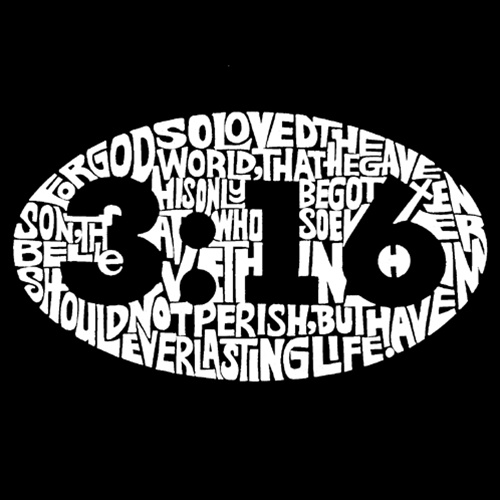
For God so loved the world that he gave his only Son, so that everyone who believes in him may not perish but have eternal life.

There was a pharisee named Nicodemus and he came to visit Jesus at night. As a leader of the Jews it was probably best to visit Jesus under the cover of darkness, and when they met together Nicodemus began to ask Jesus about all he had seen and heard. “Teacher, it is clear to us that you have come from God because no one can perform the signs that you do apart from the presence of God.” “You’re absolutely right,” Jesus replied, “No one can see the kingdom of God without being born from above.”

“Now wait a minute Jesus, how can anyone be born after having grown old? Can someone re-enter their mother’s womb and be born?” Jesus calmly answered, “Listen Nicodemus, no one can enter the kingdom of God without being born of water and Spirit. What is born of the flesh is flesh, and what is born of the Spirit is spirit. Do not be surprised that I told you that you had to be born from above. You know very well that the wind blows where it chooses, you hear the sound of it, but you do not know where it comes from or where it goes. So it is with everyone who is born of the Spirit.”

“But Jesus how can these things be?!” “Nicodemus, are you a teacher of Israel, and yet you do not understand these things? If I had told you about earthly things you would’ve believed,  but now I talk to you about heavenly things and you do not believe. No one has ascended into heaven expect the one who descended from heaven, the Son of Man. Just as Moses lifted up the serpent in the wilderness, so must the Son of Man be lifted up, that whoever believes in him may have eternal life. For God so loved the world that he gave his only Son, so that everyone who believes in him may not perish but have eternal life. Indeed, God did not send the Son into the world to condemn the world, but in order that the world might be saved through him.”

Nicodemus_Jesus

Last week we looked at one of the most well known stories from the Old Testament: Adam and Eve in the Garden. Today I could not help myself from proclaiming one of the most well known New Testament scriptures: John 3:16. In the entire biblical canon, both the Old and New Testaments, there must be few, if any, scriptures that have been so remarkably loved by so many as this text. It is simple and to the point. It opens up endless possibilities. It embodies the hope of all Christians. It is beautiful and appealing. It begins with the beginning and stretches into the far reaches of eternity. It proclaims that which is most fundamental to our faith: that God loves us. 

But the scripture today is about so much more than just that one isolated verse. I am thrilled that so many of us have memorized John 3:16, but we cannot forget about the inquisitive soon-to-be disciple named Nicodemus.

What do you make of this pharisee who came to see Jesus in the middle of the night?


On Tuesday morning, after gathering with the UMW, I made my way outside onto our back parking lot. After months of cold weather, with mounds of snow continually piling up, the Pre-School was finally able to play outside again. Now, let me be clear: I am just like those children. Having been cooped up in this church all winter I was just as, if not more, excited to run around and play outside. The children all had their plastic cars and bikes, some were running around in circles, others were using the fake gas pump to fill up the cars, (capitalism at its finest) when I saw a box of sidewalk chalk.

sidewalk-chalk

I silently made my way to the middle of the black top with the biggest piece of chalk that I could find and I began to draw. Without saying a word, or drawing attention to myself, the children began to congregate around me in a large circle. “Pastor Taylor, what are you drawing?” I heard one them mutter behind me, and I replied, “You’ll see in a moment.” As I stepped back the children moved with me, and there on the blacktop was a giant head with a wide open mouth. Why? I have no idea, but its what I drew. And without really understanding what I was doing I told the children that I was going to jump in the mouth of this mystery person made out of chalk. If I had said that to any of you, you would have thought that I lost my marbles. But with the children, they believed me, they looked into my soul, and some of them even begged me not to do it. But there I stood crouched with my hands at my side, and I jumped in. Of course I acted as if I was falling in and some of the children laughed, and when I was done, I encouraged some of them to jump in. There was a moment when the first girl stepped forward to the edge of the face. As I saw her prepare to jump in I realized she was unsure of what would happen to her. While rocking her hands back and forth I could see the sense of wonder and imagination brewing within her as she jumped right in.

Thats what Nicodemus was like. Jesus is known for having said that whoever does not receive the kingdom of God like a child shall not enter it. Nicodemus had a childlike and inquisitive faith. When confronted with the man of many wonders, Nicodemus wanted to jump right in to learn more about this new kingdom. While his contemporaries scoffed at the new teaching, Nicodemus’ imagination allowed him to see deeply into the truth of Jesus.

The other leaders of the synagogues were already muttering with irritated resentment regarding this so-called teacher who was beginning to develop a following. They disagreed with his strange ways, his strange teaching, and his strange disregard for authority. Nicodemus, however, felt there was indeed something strange about Jesus, but it could not be dismissed so easily. To Nicodemus, God was still speaking through people, and to his ears there was something in this new proclamation worth considering.

So, under the cover of night, Nicodemus went to learn more. He wanted to see for himself, he desired to hear from the man himself, to question and to learn. Instead of giving into the rumors, Nicodemus wanted to base his understanding on first hand experience. He could not settle for hearing about the man, but instead needed to jump straight into the abyss of the Son of Man.

In his willingness to question Christ we discover that Nicodemus was a great man who possessed enviable qualities. While suffocated by the surrounding culture and religions assumptions and expectations, he somehow managed to exhibit an open-mindedness that broke the chains of religious limitation. 

Moreover, Nicodemus is one of the best examples of discipleship. By the end of the gospel account Peter will have denied Jesus in a shameful panic, the rest of the disciples will have scattered or run off into hiding. For all practical purposes, the story had come to a close. But Nicodemus, this strange pharisee from our story today, openly stood forth as one of Jesus’ only remaining friends. Nicodemus dared to risk the punishment of superiors, the resentment of his peers, by paying the last loving rites to the dead body of Jesus that would have been treated as trash by anyone else.

Nicodemus is an understatedly important figure in the Gospel for us in the life of the church. He is so familiar to us, because he is just like us. He asked the kind of questions that many of us would have asked, had we been there with our Lord.

If you take a step back from the account, what Jesus was talking about sounds impossible. How can someone be born anew? Jesus simply responds to our misunderstanding and confusion; its not about being physically reborn as a child, but about being born anew in such a way that you can reorient your life. We must be born anew. Our prayer and our hope should be rooted in the desire to be recreated. Make me another kind of being from what I am. Renew a steadfast spirit within me. Create in me a clean heart. Do all this, O God, so that I can lead a different life. 

The whole point of the gospel is that God can achieve the impossible. Just as God can raise Jesus from the dead, God can achieve the impossible with you and me. And he does it! We see it happening in other peoples lives, our wayward friends who reorient their lives for the better. We have experienced it on some measure in our own lives however small or large. How does God change us? Ah, says Jesus, that is part of the great mystery. The wind comes who knows how, cleansing, refreshing, and then before we know it, its gone.

For God all things are possible. We can be born anew. We can find a new orientation for our lives no matter how young or old we may be. But even greater than this, is the promise of eternal life.

Jesus ends his conversation with Nicodemus with the, now famous, “for God so loved the world that he gave his only Son, that whoever believes in him may have eternal life.”

Martin Luther, the great protestant reformer once said, “If I were as our Lord God, and these vile people were as disobedient as they are now, I would knock the whole world to pieces!” We consistently make a mockery of God’s love by continually disobeying his commands, and by ceasing to love others as we love ourselves. How can God love us when we ruin everything he created including ourselves?

God loves us, because God is love. God loves the world; his foolish, blundering, wayward, and sin sick world. This love utterly breaks through our foolish conceptions of what love means and is; God’s love runs out to lengths that sounds incredible to our human ears because we could never return that same love.

god-god-is-love-lord-love-the-greatest-love-of-all-favim

God is like that remarkable parent who continues to love a child through all the wrong decisions and failures. Picking them up from the police station, driving them back to rehab, sitting with them night after night helping with homework, loaning them money when they fall on hard times. The only difference being that when our love for our children fails, his love for us remains steadfast.

God proves his love toward us by doing all that God can do, and giving all that God can give to help us; stretching himself even to sacrifice his only Son, and hold back nothing.

Thats what Nicodemus learned from his time with Jesus. That in the impossible mystery of God’s created order, God’s love knows no bounds, was made manifest in Christ’s death on the cross for you and for me and for the whole world.

Let us all strive to live like Nicodemus. Let our faith be inquisitive and exciting. Let us all prepare to jump into the unknown, to fearlessly step into a relationship with the triune God, and above all remember that great scripture: God so loved the world that he gave his only Son, so that everyone who believes in him may not perish but have eternal life. To God be the Glory.

Amen.


Questions: In the End… – Sermon on John 14.5-6, 1 Timothy 2.1-4, and John 13.34

(Instead of a typical ~15 minute sermon from the pulpit, I broke the following sermon up into 3 homilies. I preached the first from the pulpit, the second from the lectern, and the third from the middle)

John 14.5-6

Thomas said to him, “Lord, we do not know where you are going. How can we know the way?” Jesus said to him, “I am the way, and the truth, and the life. No one comes to the Father except through me.

1 Timothy 2.1-4

First of all, then, I urge that supplications, prayers, intercessions, and thanksgivings be made for everyone, for kings and all who are in high positions, so that we may lead a quiet and peaceable life in all godliness and dignity. This is right and is acceptable in the sight of God our Savior, who desires everyone to be saved and to come to the knowledge of truth.

John 13.34

I give you a new commandment, that you love one another. Just as I have loved you, you should also love one another.


Today we conclude our sermon series on “Questions.” After requesting responses from all of you regarding your questions about God, faith, and the church, we have, again, come to the time when I attempt to faithfully respond to those questions. Over the last two weeks we have looked at what it means to be “saved” and how the Old and New Testaments relate to one another. Today we are talking about other faiths and how they relate to Christianity. So, here we go…

xlba-00052

John 14.5-6: Thomas said to him, “Lord, we do not know where you are going. How can we know the way?” Jesus said to him, “I am the way, and the truth, and the life. No one comes to the Father except through me.

For nearly an entire semester I sat in the front row for my class on “Hindu Traditions” at JMU. My professor was a practicing Hindu and regularly lectured from the front, pacing back and forth as we covered history, beliefs, and habits. Dr. Mittal was remarkably passionate about the subject and as we came to the conclusion of the class, I was thankful for his ability to open my eyes to the wonders of a great religion.

It was during our last class session that Dr. Mittal asked if there were anything remaining questions before the Final Exam. A few hands raised, mostly questions about the actual exam; Would it be multiple choice? Would it contain essays? But, one young woman, prominently displaying her “Campus Crusade for Christ” sweater, asked a question that I’ll never forget: “If you know you’re going to hell for being a Hindu, why wouldn’t you become a Christian to save yourself?”

The room was silent. 

Dr. Mittal, having been calm and collected all semester, began to clench his fists together and flare his nostrils. “How dare you speak to me that way! I am so tired of you young foolish Christians trying to tell me what to believe in. Get out of my class!”

The disciple Thomas, ever concerned about what Jesus is really saying, questioned his Lord about the truth of where they were going. And Jesus replied, “I am the way, and the truth, and the life. No one comes to the Father except through me.” Jesus does not know the way, truth, and life; rather, he is all of these. And he is not merely a way, but THE way. Jesus is the unique and visible manifestation of God on earth. 

il_fullxfull-288241452

From the beginning of the church, this statement has been axiomatic for Christianity. If you desire to know God, to find salvation, and to experience grace in your life, you can only find it through Jesus Christ; hence the strong push for evangelism over the last 2 millennia. Not only did Jesus command the disciples to go to all the nations baptizing everyone in the name of the Father and the Son and the Holy Spirit, but we have been steeped in our tradition that affirms salvation can only come through Jesus Christ.

In the first few centuries the church agreed that outside of the church, there is no salvation. In order to experience the forgiving pardon of God you had to be taught the ways of the church, engage in acts of kindness and mercy, and be baptized in order to find your identity within the body of Christ. Even with the rise of other religions, and the interaction between them and Christianity, we affirm that the only way to God is through his Son, our Lord, Jesus Christ.

I remember feeling so uncomfortable that day in class because of what my fellow student had said to Dr. Mittal. In the moment I thought she just wanted to frustrate him, or illicit some sort of reaction from him. However, perhaps she was being remarkably genuine, concerned about his salvation, and wanted to know why he would continue on a path that would separate him from God.

After all, no one can come to the Father except through Jesus Christ.

Amen.


1 Timothy 2.1-4: “First of all, then, I urge that supplications, prayers, intercessions, and thanksgivings be made for everyone, for kings and all who are in high positions, so that we may lead a quiet and peaceable life in all godliness and dignity. This is right and is acceptable in the sight of God our Savior, who desires everyone to be saved.”

Karl Barth, the dialectic theologian of the 20th century (who I have mentioned a number of times from the pulpit) was often vague regarding his understanding of the totality of salvation. In his lectures and publications there are examples where he almost affirms a universalist understanding of God’s redemptive work. He dances around the claim that all have been, and will be, saved through Christ’s death and resurrection.

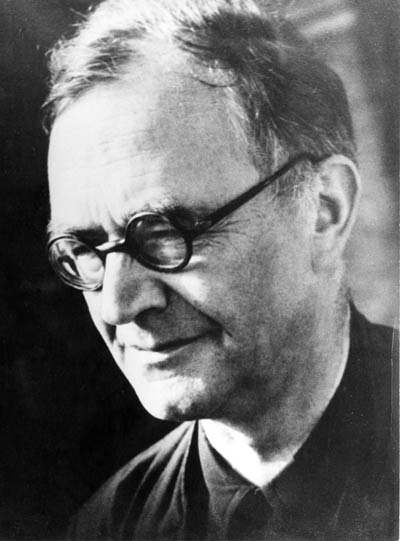
Karl Barth

Karl Barth

Once, after a series of lectures, a young theologian bravely raised his hand to ask a question. “Professor Barth, I would like to know once and for all: are you a universalist? Do you believe that everyone will go to heaven?” Barth probably crossed his arms and thought deeply about his response. After contemplating the implications of what he was about to say, Barth answered the young theologian: “That is a great question. Let me put it this way: I will not be disappointed if heaven is crowded.”

The question of universalism is remarkably relevant considering the great range of thought regarding faith and discipleship. Our world is becoming more and more diverse, with differing understandings of Christianity springing up all over the world. Was Christ’s sacrifice on the cross only for those who believe in him, or was it for all of creation?

We might think of the often quoted John 3.16: “For God so loved the world that he gave his only begotten Son” or the number of instances in scripture where individuals outside the realm of Israel (such as Rahab from Jericho, Nebuchadnezzar from Babylon, and the unnamed centurion who declared, “Truly this man was God’s Son” at the moment Christ died on the cross) who played remarkable roles in the story of God’s interaction with God’s people.

We might think of the fact that humankind was created in the image of God. Every individual has been molded from God’s image and given life through the Spirit regardless of their religious affiliation.

We might think of examples from Christ’s ministry where he did not come for the religious elite, but for the last, the least, and the lost. Jesus shared meals with the sinners, the vagrants, and the outcasts. Jesus said, “Those who are well have no need of a physician, but only those who are sick. Go and learn what this means, “I desire mercy, not sacrifice,” For I have come to call not the righteous but sinners.”

If we believe that nothing can ever separate us from the love of God in Jesus Christ, neither death, nor life, nor angels, nor rulers, not things present, nor things to comes, nor powers, nor height, nor depth, nor anything else in all creation, then God’s mercy truly knows no bounds. God’s love is so magnificent and unconditional that it extends not only to all of us gathered here, but to all creation. God’s love has been poured out through Christ’s death and resurrection onto the church, and to everyone outside of the church. Jews, Muslims, Christians, Atheists, Agnostics, and everyone in between have been caught up in God’s great cosmic victory over death.

In Barth’s response to the young theologian, he deliberately avoided answering the specific question, yet he embodied the kind of hope that all Christians should have; that God’s love is so powerful that he came to die for us, while we were yet sinners; that God’s mercy is so strong that nothing will ever separate us from God; and that God’s grace is so abundant that heaven will be crowded.

After all, “This is right and acceptable in the sight of God our Savior, who desires everyone to be saved.” Amen.


John 13.34: “I give you a new commandment, that you love one another. Just as I have loved you, you should also love one another.”

During my final year of seminary I served as an on-call chaplain at Duke University hospital. We were required to stay on the hospital property for 24 hours attending the numerous pages, calls, and deaths that occurred throughout our shift. One night, after sitting with numerous families who had just learned that someone had died, after talking with patients just diagnosed with inoperable cancer, after pacing up and down the sterile halls for hours, I found myself in the chapel. A tiny room, no bigger than our narthex, it contained numerous religious materials, a piano, an altar, and a notebook for prayers. Whenever I had a moment I would stop in and pray the prayers out loud, and most of the time it was empty. It became a place of solace for me, a space where I could remove myself from the chaos of the hospital.

Burning Bush in Duke Hospital's Chapel

Burning Bush in Duke Hospital’s Chapel

Every once and awhile I would encounter a Muslim praying on his knees in the corner. We would always politely nod toward one another and continue on with our religious responsibilities. But that night, the night that felt like it would never end, everything changed.

I was standing at the altar, while my companion prayed in the corner, we both spoke in a whisper so as to not disturb the other, when all of the sudden he stopped, stood up, and walked to my side. “Let us pray together” he said. And without discussing the details, without organizing our thoughts, without debating the theological differences and implications, we both began to pray, shoulder to shoulder, for the people we were serving. When our prayers naturally came to their conclusion, we met eye to eye, nodded, and went on our separate ways.

In compiling all of the questions for this sermon series, “What happens to people of other faiths?” appeared more than any other. Without a doubt, the existence of and interactions with other religions is, perhaps, the most significant challenge to, and opportunity for, the Christian church today. Moreover, the rise of atheism further complicates the picture into a varied mosaic whereby the church is challenged to address both those who do not believe and those who do believe, but who believe differently from us.

So, what happens to people of other faiths? I don’t know. We can take Jesus words from John, or other affirmations from scripture and receive very different answers. One of the struggles with being a Christian is that we have to paradoxically affirm both responses, that salvation can only come through the church, and that through Christ all have been saved. “What happens to people of other faiths?” is an interesting question, but in the end, God is the only one who holds the answer. However, a question that strikes at our hearts today is: “How do we relate to people of other faiths?”

Jesus commands all of us to love one another, this is the new commandment. If there is any command from Jesus to obey in our lives regarding other faiths it is this: love one another. In my own life God has used a number of people from outside the church to help teach me about what it means to be a discipleship of Jesus Christ: questions from my secular friends about why I believe, the love expressed by indigenous Mayan women in the highlands of Guatemala, one of the Muslim doctors at Duke Hospital who met me in the depth of suffering for prayer.

What has been revealed for us through Christ’s life, death, and resurrection is that God desire us to be in relationship with others. This means that we have to be willing to be vulnerable with people different from us, people whose beliefs contradict our own, and people with no beliefs at all. We are called to love one another just as God has loved us. We are not here just to minister to other Christians, but to the whole world. We are called to seek justice and mercy in the world for ALL who are oppressed regardless of age, race, sexual orientation, gender, economic status, and religious affiliation.

And so, in the great adapted words of John Wesley: Though we may not think alike, though our differences of opinion and religious understanding may vary considerably, though we may not agree on the scope of salvation, though we may not have the same opinion about the role that Jesus plays in the cosmic victory over death, may we not love alike?

Without all doubt, we may. Amen.