What A Difference A Day Makes

Genesis 1.1-5

In the beginning when God created the heavens and the earth, the earth was a formless void and darkness covered the face of the deep, while a wind from God swept over the face of the waters. Then God said, “Let there be light”; and there was light. And God saw that the light was good; and God separated the light from the darkness. God called the light Day, and the darkness he called Night. And there was evening and there was morning, the first day.


“How old is the earth?” The fifth grader looked up from his homework assignment as if to say, “Well, dude, you’re the tutor… what’s the answer?” We were sitting inside Forest View Elementary School in Durham, North Carolina, and I was in the middle of a tutoring session. Each week we would sit in the library and go through his homework together. His class was finishing up a unit on earth sciences and his worksheet was filled with questions about the subject.

“How old is the earth?” I, of course, could not remember the answer so I promptly pulled out my cell phone to Google it and the young man rolled his eyes as he opened up his textbook with dramatic emphasis. We flipped through the pages together looking for key words or pictures that would indicate we were on the right path and then we found it in big bold numbers on the bottom of a page: 4.54 billion years.

I waited patiently for my young tutee to copy the number down into the answer column on his worksheet, but he just kept looking at the textbook with a glazed-over look in his eyes. Then I heard him say, no louder than a whisper, “That can’t be right.”

“Well of course it’s right!” I said, “I mean its in the book, it has to be right.”

And then he said, “But my pastor told me the earth is only 6,000 years old…”

In the beginning there was nothing. All matter was formless. What we now know and see was a soup of nothingness, a bottomless emptiness, an inky blackness. And in the midst of nothingness, there was something: God. And God said, “Let there be light”; and there was light. God saw the light was good; and God separated the light from the darkness. God called the light Day, and the darkness he called Night. And there was evening and there was morning, the first day.

7606B94A-6E65-43BB-BFD4BD7A1485127F_source

I can think of few verses in scriptures that have created more problems with interpretation than those found at the very beginning of the book. These words have vexed and inspired, they have built up and they have destroyed, they have been the start of faith for some and the very end for others.

Genesis 1 is beginning, and not just a beginning to a story, but the beginning to the story.

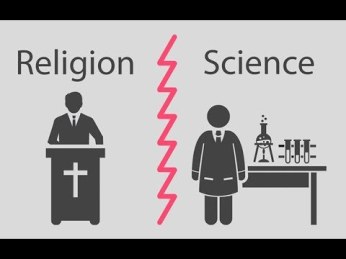
So how did this collection of sentences lead to one of the largest debates from the last few hundred years? Why are these descriptions about God’s creation at the heart of the debate between science and religion?

Centuries ago there was a man named James Ussher who set out to date the earth. He dove deep into the Old Testament and, with the help of genealogies and life spans, established the exact time and date of God’s creation as 6pm on October 22nd 4004 BC. Therefore, according to the work of Ussher, the earth is approximately 6,000 years old.

            However, with the advent of modern science, and carbon dating, and evolutionary biology, scientists have determined that the earth is rough 4.5 billion years old.

There is a huge difference between 6,000 and 4.5 billion.

For a long period of time, the Christian church established itself as the predominant distributer of information, and when that came into conflict with Science, the battle began.

The war between Science and Religion has manifested itself in a great number of ways like the fight between Galileo and the church, Darwin and the church, and even the American Government with the church.

And nowhere is the war more apparent than between the debate of creation and evolution.

            “How old is the earth?” might sound like an innocuous question without too many ramifications, but how we answer the question comes with a lot of consequences.

A couple of years back, the state of Kansas removed questions about evolution from its standardized tests. This meant that teachers were still allowed to teach evolution, but the children would not be tested on it at the end of the year. Some Christians rejoiced in the victory Creation over Evolution, and others were concerned that children from Kansas would pale in comparison to students from other states by the time they entered college.

It would seem that the church has one answer to the question, and science has another.
hqdefault

I remember learning about the theory of evolution when I was in the 8th grade. With all my hormonal angst, and pimply face, and peach fuzzed mustache, I sat in my science class and learned about how all life can trace its origins back to one single cellular being: That over millions of years that first cell grew and evolved and developed new traits; how life began in the sea, and eventually developed to live on land and in the air; how humanity is one of the last developments in a tremendously long line of evolved species.

I thought it was awesome! The science-fiction nerd within me went into overdrive and I relished in learning about where we came from, how the earth has changed, and how beautifully unique we really are. And the whole time I dove into evolution I saw God’s handiwork all over the place. Who could have brought life into that first being, who could have the imagination to force molecules and atoms together in such a way that life began, who could have moved the development of species to its zenith in humanity?

However, around that same time a number of my Christian friends stopped attending church. While learning about evolution, their faith in church disappeared. What they heard in the classroom became more important than what they heard in the sanctuary. When they learned the earth was older than what they heard from the pulpit, their faith was crushed.

            I was fortunate to have pastors and mentors who helped me to see the bonds between science and faith, but my friends saw only the battle.

A lot of you wrote questions about the relationship between science and religion. And frankly, I wasn’t surprised. The so-called war between science and religion is one that has gone on for a very long time, and frankly it’s something we rarely address in church. It’s as if we let the world of science rule our lives Monday through Saturday, and the world of faith is reserved for Sundays, and never the two shall meet.

2852667_orig

There is conflict between science and religion, and the conflict exists because of us. The fault is ours. We Christians who become defensive when scientists learn more about the world instead of rejoicing in God’s strange and creative majesty; we Christians who are too quick to jump ship when we discover there is more to the world than what we can read about in the bible; we Christians who see scientific discoveries as works of the devil, and label them as such.

But the realms of science and religion are not as mutually exclusive as we think they are.

There are Christians out there called “Young-Earth Creationists” who believe, like Ussher, that God created the earth over six 24-hr days around 6,000 years ago. They dismiss discoveries like dinosaur bones as a way for God to test our faith.

However, there are ways of looking at the biblical account of creation such that it harmonizes with science, rather than creating yet another battle.

To start, the word for “day” in Hebrew is “yom.” And it carries with it a number of definitions and interpretations. Yom is used in the Old Testament as a general term for time, like a time period of finite but unspecified length. We can also read in Psalm 90.4 “For a thousand years in your sight are like yesterday when it is past, or like a watch in the night.” What we understand the word “day” to mean is different than what it means in scripture. God’s time is not our time.

We could then read Genesis 1 to be that in the beginning God created light, and after light God created air, and after air God created earth and sky and sea. But how long it took God to do this is unknown. One day? One million years? Only God knows.

Genesis, and the rest of the bible, is not meant to be read like a science or history textbook. The bible, over and over again, rejects our desire to become masters the text and instead calls us to be servants of the Word. We might be concerned with how and when God created, but the bible only tells us the who and why of God’s creation.

Then we can look at the order of creation itself and the similarities with the theory of evolution. Though it was written thousands of years before Darwin’s On the Origins of Species the order of creation parallels Darwin’s and modern evolutionary scientist’s ideas. The first thing to exist was light and energy. Then matter began to fuse together into celestial beings like stars and planets. Eventually the earth developed an atmosphere and water and land. The first life began in the sea, eventually evolved to fly in the air and crawl on the earth, and the last life to be developed, the pinnacle of God’s creation, was us, humanity.

difference

            Knowing this, countless Christians are able to hold that evolution is real, but that God set it in motion. They are able to assert that the earth is 4.5 billion years old AND God created it in the way described in Genesis. They are able to hold together science and faith in such a way that it gives glory to God’s glorious creation.

The conflict between science and religion, between creation and evolution, exists because people like us have treated the book just like every other book. We see it as our own historical textbook, or as our scientific journal, or as our genealogical record. We import the ways we read other texts into the way we read God’s great Word.

And then many of us take it up like a weapon against anyone who disagrees with us.

But the bible is fundamentally unlike anything ever written. It is historical, and scientific, and literary, and poetic, and every other form we can think of. It is beyond our ability to fully comprehend, it breaks down and exceeds the expectations we place on it, it is the living Word of the Lord.

The bible is far less concerned with explaining how things happened, and is far more concerned with proclaiming God’s handiwork. It comforts us when we are afflicted, and it afflicts us when we are comfortable. It can make us laugh and it can make us cry. It can bring us to our knees and it can propel us to dance on our feet. It identifies God as creator and us as creature. It harmonizes with the marvelous developments in science. It humbles us and exalts us. It is who we are and whose we are. It is God’s Word for us. Amen.

All Things To All People

1 Corinthians 9.19-23

For though I am free with respect to all, I have made myself a slave to all, so that I might win more of them. To the Jews I became as a Jew, in order to win Jews. To those under the law I became as one under the law (though I myself am not under the law) so that I might win those under the law. To those outside the law I became as one outside the law (though I am not free from God’s law but am under Christ’s law) so that I might win those outside the law. To the weak I became weak, so that I might win the weak. I have become all things to all people, that I might by all means save some. I do it all for the sake of the gospel, so that I may share in its blessings.

All of us have questions. We have questions about what it means to be a Christian, what the bible is all about, and how to make sense of it all in the ways we live. In November I compiled a list of questions from the congregation and created this sermon series in which I will attempt to answer some of the questions that vex us in regard to our faith. Today we continue the series with, “How do we share the Good News?”

“When did you last speak to someone about your faith?” Throughout John Wesley’s ministry, this was a question to be answered by all people within the Methodist movement. And it’s a question most of us would rather avoid today.

It we’re honest, we don’t want to appear too evangelical (whatever that means). We don’t want to be confused with the kind of bible toting people who seek to win others for Jesus. We don’t want to leave church with tracts to pass out to people in public warning them about their imminent doom unless they accept Jesus as their Lord.

And yet, that question, the one we want to avoid, the one that makes us squirm in our pews, is perhaps one of the most important questions we can ever ask.

When I was in college, I became the de facto cook for my house. There were five young men all living under the same roof, and I tried my best to make a home cooked meal once a week so that we could all sit down and break bread with one another. When we sat around the table for the first time, with our assortment of hand-me-down plates and silverware, I asked my friends to pray with me, and they just stared at me as I bowed my head and asked for God to bless the meal and us.

Week after week we sat around that table, and the longer I prayed for them, the more they adapted to it. Such that, one night, when I inexplicably forgot to pray, they stopped me from eating and said, “Aren’t you forgetting something?!”

Around that same time I was invited to guest preach at one of the local United Methodist Churches. I, of course, invited all of my roommates to attend and they all sat together in the furthest back pew.

The service was fairly typical, and the sermon was a definite B-, but then we moved to the communion table and the pastor prayed for the Holy Spirit to make the bread and cup into the body and blood of Jesus Christ. And while the whole congregation began lining up in the center aisle, my roommates did as well with bewildered looks on their faces.

I realized, as they were walking closer to me, that none of them had received communion before, nor did they have any idea what they were doing.

When they made it to the front they all stood in front of me with wide eyes and nervous ticks. I quietly whispered, “take the bread, dip it in the cup, eat it, and I’ll explain everything at home.”

And so, they did.

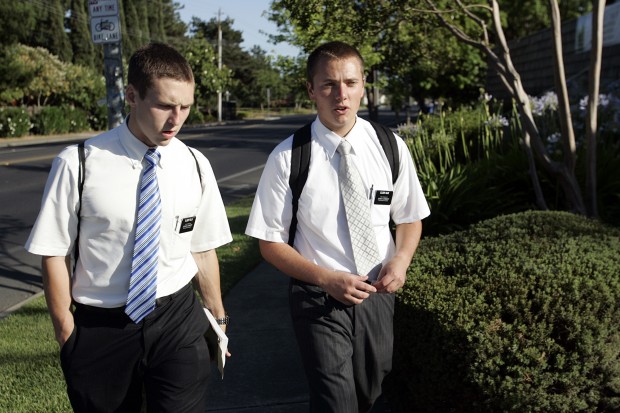
There was a time in the life of the church, when we could expect new people to show up on Sunday mornings no matter what. When Christianity was Christendom, which is to say, when Christianity was normative, the majority of people in a community could be found in church on Sunday morning. This meant that for generations, great scores of people were born into, and raised through a church, such that things did not have to be explained or proclaimed, and the work of evangelism was nothing more than standing in front of one’s own church to share what God had done.

But that time is long gone.

And because churches can no longer expect that, “if you build it they will come,” the work of evangelism has increased sharply. Congregations are told that they are in the business of saving souls, and that they must do everything within their power to share the Good News. But more often than not the good news sounds like bad news.

1Corinthians9.22-660x371

Fear mongering tactics with threats of hell and eternal damnation are hung over individual heads with hope that it will scare them into church.

            The bible is used as a weapon to attack people for the way they are living in order to shame them into coming to church.

            People are treated as numbers and objects to be placed on a worksheet and empty promises about heavenly rewards are used to get people to come to church.

            And people wonder why the church is shrinking…

When I asked for questions in November, a lot of people asked about ways to share the Good News. Behind those questions was the desire to grow the church. Growth is a good thing, I mean: Jesus sends the disciples out to make disciples of all nations, but growth for the sake of growth is problematic.

If we want to fill the sanctuary up every Sunday we could do raffles, and giveaways, we could provide financial incentives to get people to invite more people to church, but it wouldn’t be faithful. The only way the church grows is when we believe the church has something so incredible to offer that we’re willing to invite others to discover it.

The point is this: we can no longer just wait for people to magically appear on Sunday morning.

In addition to the questions we received about sharing the good news, there were an equal number of questions about why I participate in a podcast. For the last year and a half I’ve been working with two other United Methodist pastors to produce weekly podcasts (a podcast is a downloadable audio file that you can listen to on your phone and computer). We started it as a way to have conversations about theology and scripture, and as we made the episodes public, they started reaching a lot of people. And by a lot, I mean A LOT. By the end of the month, we should hit our 200,000th download.

But we didn’t start the podcast to become popular. We started it to reach the people who no longer felt comfortable in church. We wanted to provide conversations with zero commitment on behalf of the people listening so that they could encounter the church from a new perspective. Because for as much as this thing we do called worship is what being the church is all about, for some people it’s not enough.

DearChurch

We were taking a break from a live podcast event back in December when an older man walked across the room and stood right in front of me. He stared at me with a curious look and said, “You sound different in person.” Unsure of whether or not he meant it as a compliment, I inquired as to how. He said, “You sound a little more confident on the podcast than you did tonight. But I think that’s a good thing. I appreciate your vulnerability.”

We talked for a little bit about the guests we had that night, and the challenges of doing a live recording, and then before returning to his seat he said, “I left the church years ago because I felt burned. Too many sermons about what I had done wrong, too many people suffering without anything changing; too many pastors abusing their privileges. But then I discovered the podcast, and I started listening. And the more I listened, the more I heard God, and the more I realized I needed to give the church another chance…”

We live in an ever-changing world where people consume information so quickly that the church can appear archaic and irrelevant. But I believe this is a sad misjudgment. Rather, I believe church has the most important thing to offer of all, the Good News of Jesus Christ.

Therefore, like Paul, we do well to do whatever we can, by whatever means we can, to share the Good News of Jesus Christ. For Paul that meant being a Jew to the Jews, and outside the law to those outside the law, and all things to all people.

For us today, that might take on different meaning, we might be tasked dropping our political identities in order to reach people across the political spectrum, or crucifying our prejudices in order to reach people who do not look like us, or repenting of our judgmental attitudes in order to reach people who frighten us.

As Christians, we are necessarily evangelical. Evangelism means, by definition, sharing the Good News. So much of what we do and who we are is wrapped up in the story of Jesus, recognizing how the story has changed our lives, and the hope that it can change the lives of those around us.

            But, sadly, being evangelical these days often comes off like being a bad and annoying used car salesperson. When the tactics of fire insurance, and bombarding strangers is the best we have to offer others, when winning souls becomes more important than loving others, we cease to be evangelical, at least the way the word is meant to be used.

Last year, I drove up to Cokesbury on a Sunday afternoon to meet a handful of people from the church before it was announced that I would be your new pastor. We sat down in the conference room upstairs, exchanged pleasantries over fruit and cheese, and then we went around the table to introduce ourselves and describe how we are connected to the church. One by one I learned about some of you for the first time, how long you’ve been here, what you like, what you want to change, all of that stuff. And one of the last people to share was Emmett Wright, and all he said was, “I’m an evangelist.”

And, because being evangelical can be so misconstrued these days, all I could think was, “that’s just great [sarcasm].” So I asked him to elaborate and he said something memorable like, “just wait and see.”

On any given week Emmett will invite a score of people to come to experience God’s presence at our church. But he does not evangelize by attacking strangers with threats or empty promises. He meets people where they are and he gets to know them. He sees his evangelism first as a call to friendship, with all people, long before inviting them to church. And because he fosters friendship first, the people he invites to church always want to see what it’s all about.

Emmett is a lot like Paul in that he becomes all things to all people. He never presents the gospel in some stuffy forgotten way; it is always alive and exciting and friendly. Emmett meets people where they are, instead of sitting around waiting for them to show up.

Paul’s ministry was one of evangelism. Over and over again he won people for the sake of the gospel. Not to fill pews, not to frighten them, not to shame them, but because he believed the story of Jesus Christ was the most important story they would ever hear. He believed the message of salvation would change everything about the way they lived. He believed that following Jesus would make all the difference.

Paul became all things to all people because that’s precisely what God was willing to do for us. God became all things to all people in Jesus Christ. God humbled himself in the manger and took on flesh. Though God was free to as God pleased, God made himself a slave to all in Jesus in order to free us from slavery to sin and death.

            Evangelism always begins in friendship, in the intimacy of two people sharing life together. Evangelism takes place in the trust when listening becomes more important than talking. Evangelism comes to fruition when saving and winning others is more about them than us. Amen.

How Can We Be Biblically Wise?

1 Kings 3.5-12

At Gibeon the Lord appeared to Solomon in a dream by night; and God said, “Ask what I should give you.” And Solomon said, “You have shown great and steadfast love to your servant my father David, because he walked before you in faithfulness, in righteousness, and in uprightness of heart toward you; and you have kept for him this great and steadfast love, and have given him a son to sit on his throne today. And now, O Lord my God, you have made your servant king in place of my father David, although I am only a little child; I do not know how to go out or come in. And your servant is in the midst of the people whom you have chosen, a great people, so numerous they cannot be numbered or counted. Give your servant therefore an understanding mind to govern your people, able to discern between good and evil; for who can govern this your great people?” It pleased the Lord that Solomon had asked this. God said to him, “Because you have asked this, and have not asked for yourself long life or riches, or for the life of your enemies, but have asked for yourself understanding to discern what is right, I now do according to your word. Indeed I give you a wise and discerning mind; no one like you has been before you and no one like you shall arise after you.”

xlba-00052

This morning we conclude our sermon series on Questions. After polling most of you about your queries regarding faith, scripture, and the church, I compiled three of the most prevalent questions: What Are Angels? What Does The Bible Say About Divorce? And How Can We Be Biblically Wise? Though there are no simple, black and white, answers to any of these questions, we have strived during this series to bring clarity to our wonder. This morning we finish with “How Can We Be Biblically Wise?”


Three men were trapped on a deserted island. During the months of their stranded captivity they learned to rely on one another for survival. Without entertainment, they told each other stories and grew very close together. Each day one of them was responsible for making minor repairs to their shelter, one was tasked with scavenging for food, and the last one had to comb the beaches for anything helpful that might’ve washed up.

One particularly beautiful morning, the third man was walking along the beach when he discovered a strangely colored bottle sticking up in the sand. He quickly procured it with his other discoveries and brought them all back to the shelter. Later that night, while they were looking through all the goodies from the beach, one of the men accidently rubbed the bottle and a genie popped right out!

Because there were three men present, the genie explained that he could grant each of them one wish, rather than giving each of them three wishes. The first man wasted no time and declared, “I miss my family and I wish that I could be back with them!” The genie snapped his finger and poof; the man disappeared.

The second man thought for a moment and said, “You know, I was engaged before I got trapped on this island, I wish I was back with my fiancé.” The genie snapped his finger and poof; the man disappeared.

The third man was now alone with the genie and he thought long and hard about his wish. After all, it’s not like you run into a genie everyday. So he stood there with the genie thinking about all of the things he could wish for when he causally said, “Geez, I wish my friends were back here to help me make my wish.”

Be careful what you wish for…

Solomon was young, inexperienced, and about to rule the kingdom when God showed up in one of his dreams. Almost like a genie, the Lord asks Solomon to make a wish. And, like a preacher in a bad sermon, Solomon over-explains his wish: “God, you were great and loving to my father David because he walked before you in faithfulness, righteousness, and in uprightness of heart. Throughout his years you kept your great and steadfast love for him, and now you have given him a son to sit on his throne; you gave him me. But God, I am only a little child, and I don’t know the first thing about taking care of others. I am in the midst of the people you have chosen, a great people, so numerous they cannot be counted. So Lord, if I can ask for anything, give me an understanding mind to govern your people, able to discern between what is good and what is evil. Give me wisdom.

the_god_kind_of_wisdom_std_t_nv

It pleased the Lord to hear Solomon wish for wisdom. God then replied to Solomon in his dream: “Solomon, because you have asked for wisdom, and have not asked for yourself long life or riches, or for the life of your enemies, but have asked to be able to discern what is right, I now do according to your word. Indeed, I will give you a wise and discerning mind; no one like you has been for you and no one like you shall arise after you.”

Of all the things Solomon could’ve requested: wealth, prosperity, and military victory… He chose wisdom. As a young ruler of God’s chosen people he selflessly asked for the knowledge to lead God’s people in the ways that lead to life.

Godly wisdom, or biblical wisdom, pleases the Lord when it is not self-serving, but other serving. Solomon’s desire for wisdom, because it was for the betterment of others, is what inclined the Lord to dispense it generously. It is in our willingness to use wisdom for others that we begin to experience God’s grace in the world around us.

Fred Craddock is widely regarded as one of the greatest preachers in recent history. His command of scripture is evident in his sermons and he captivated anyone with ears to hear. But before he became a great preacher, he was a normal Christian just like you and me.

During the height of the Civil Rights movement, Craddock found himself driving across the country. He was making his way through northern Mississippi early one morning and needed to stop for a cup of coffee and some food. He found a no name diner in the middle of a town and made his way in for breakfast. It was early enough in the morning that Craddock was alone in the diner with the cook and he ordered his food and coffee. While he was sitting at the counter, a black man entered and sat down a couple stools away and ordered a coffee. The cook turned around and said, “Get out! We don’t serve your kind here!”

The man patiently responded, “My money is just as good as his” while pointing at Craddock. But the cook continued to point at the door and said, “The sign says ‘Whites Only’ so get out before I put you out!

The black man sighed and slowly removed himself from the stool and the diner.

Craddock continued to finish his meal, paid, and left. But right before he was about to get back in his car, in that still and quiet morning moment, he heard a rooster crow in the distance.

Are any of you feeling chills? Some of us will immediately understand the significance of this moment: Craddock, after sitting and witnessing the racism and bigotry mere feet away from him, realized that he had just denied Jesus as Peter did right before his crucifixion. But some of us did not catch the meaning; we did not have an emotional response to the conclusion of Craddock’s little narrative. If we missed the power of the rooster crowing in the distance, it is because we are unfamiliar with the ways God works in the world.

I had a number of you request, for this sermon series, that I preach about biblical wisdom. I can summarize the whole answer to the question in one sentence: “How can we be biblically wise?” “By reading our bibles!”

Image of an old Holy Bible

If Craddock was not as familiar with scripture as he was, he easily could’ve entered his car after hearing the rooster crow, and would have missed the power of what God was trying to communicate to him. God used a particular moments to speak large and powerful words to Craddock and God does the same thing in our lives. But if we are not familiar with the ways God has communicated in the past, then we will probably miss the ways God is trying to speak to us right now.

To be biblically wise implies a willingness to bring our souls into alignment with God’s ways. Yet we, as broken and flawed people, have a propensity to become out of alignment with God’s ways. To reorient ourselves, to turn back to the ways of God, we do so by reading scripture.

If we’re here in this sanctuary then we are already on the right path. It was only a few minutes ago that God’s Word was read to us in this place. By taking the time to listen to scripture in a sanctuary we are taking the first steps down the path that will bring us back to the kind of wisdom God desires for us.

But just coming to church is not enough.

We can do some incredible things in this space on Sunday morning, we can re-enter the strange new world of the bible, we can see ourselves in the biblical characters of the past, we can learn about how God uses things like roosters to shock us in the midst of our lives, but it is not enough.

One of the things that Christian people do, is read the bible. The bible is completely unlike any other book that we might read. Any of us can pick up a piece of literature and say, “This is a nice story.” However, the bible is not “a story’, it is “our story”. Our lives began with Adam, Noah, Abraham, and Moses. Our history goes back to the very beginning. When we read these stories, whether in church or in our daily lives, these stories are about our family.

A strange thing happens when we start reading our bibles and to see them as the living Word of God. When we get to the point where we can let the Holy Spirit bring us inside scripture we begin to really recognize it as our story. Suddenly all of these bizarre and exciting figures from the past look us in the eyes and we recognize our own reflections. We begin to see that we are like them and they are like us.

God is speaking to us all the time. Though not necessarily as the big booming voice we often see portrayed in movies and stories. God uses things like people, scripture, and even roosters to speak the truth into our lives. We can listen all we want, but until we are willing to become a people of the book, then God’s words will fall on deaf ears.

If we want to be biblically wise, we have to read our bibles. Amen.


What Are Angels?

Hebrews 13.1-3

Let mutual love continue. Do not neglect to show hospitality to strangers, for by doing that some have entertained angels without knowing it. Remember those who are in prison, as though you were in prison with them; those who are being tortured, as though you yourselves were being tortured.

xlba-00052

This morning marks the beginning of our sermon series on Questions. After polling all of you about your queries regarding faith, scripture, and the church, I compiled three of the most prevalent questions: What Are Angels? What Does The Bible Say About Divorce? And How Can We Be Biblically Wise? Though there are no simple, black and white, answers to any of these questions, we will strive over the next few weeks to bring clarity to our wonder. This morning we begin with “What Are Angels?”

Close your eyes. Seriously. Close your eyes. Picture, if you can, an angel. What do you see? Think about the movies you’ve watched, or the stories you’ve read about angels and try to picture one in your mind. What do you see? If you’re anything like the people I encountered this week, people who tried to picture an angel in their mind, you would describe the vision like so: “Angels are clothed in white and might be glowing.” “All angels have halos hovering above their heads.” “You can’t be an angel without wings.” “When we lose someone we love, they come back to us as angels.”

If we want to know what angels are, then we should begin with what they look like. And if we want to know what they look like, we should begin with scripture.

Angels are mentioned 273 times in the Bible. That’s a lot. They appear in both the Old and New Testaments. They appear to prophets and paupers. They minister to the wealthy and the weak.

I know many of us like the image of an angel with a halo, during our Preschool Pageant all of the angels had pipe cleaner halos hanging above their heads, but halos are never mentioned in scripture. Angels, when they do appear, are oftentimes described as having a particular shine or brightness, but they don’t have floating discs above their heads.

Some passages describe angels having wings, but others just describe them as looking like human beings. Zechariah is in the temple when an angel, who looked like a man, appeared and told him about his son John the Baptist. After Jesus was born, an angel appeared in Joseph’s dream and warmed him to get the child out of Bethlehem. Even when the disciples went to the tomb after Jesus’ crucifixion they saw two men in shining garments who told them about Jesus’ resurrection from the dead.

Well then, what do angels do? They report to God, they observe God’s people (us), they announced the birth of Jesus to the shepherds in the fields, they help God’s people when they are in need, and they rejoice in God’s creation and offering of salvation.

The descriptions and stories of angels in scripture vary and are all over the place. They certainly exist and work for God’s purposes, but that doesn’t make them any easier to understand or grasp. However, there is one thing that connects most of the angels in the bible, and it’s the way people react to their presence: fear.

the_ministry_of_angels_in_the_lives_of_believers

Before I came to St. John’s, I spent a year working as an on-call chaplain for Duke University Hospital in Durham, North Carolina. Every week I gathered with other chaplains to talk about grief, death, and suffering. We worked through our own issues with the brokenness in the world, and we were responsible for visiting people in need throughout the community.

I often met with people near the end of life who were tasked with making decisions about the way they wanted to die. Throughout my time in chaplaincy I became well versed in the topics of Do-Not-Resuscitate, Advanced Directives, and Power of Attorney. I was invited into some of the darkest moments of peoples lives and while everyone else would tell someone that they were going to be okay, that they would get better, I was one of the few people tasked with telling the truth: no one makes it out of this life alive.

During my year of chaplaincy, I had multiple 24-hour shifts at the hospital. I would put on my overly large white lab coat and respond to particular patients and their needs. More often that not I would be called to a room for someone who was lonely and just wanted another human being to be present with them. But every once in a while, I would be called to a room with a patient who needed something more.

It was 4 am, and I had been running around the hospital for my entire shift. Every time I thought I would have a moment to rest, a patient would die and I would have to meet with the grieving family. At 4am I received a page to a particular unit on the other side of the hospital with the words: We Need You.

Outside of the patient’s room I learned from the doctor and nurses that the patient was about to die; there was nothing else they could do to prolong her life and they wanted me to sit with her. Normally one of the nurses would stay in the room but they were so swamped with other patients that they could not spare another nurse. Of course, I asked about any family member that would want to be present and the staff just looked back at me with empty eyes and said, “She’s all alone.”

They left me standing there in the hallway, so I said a brief prayer and then walked right in.

Something about the hospital room was different. Whereas most are filled with machines making lots of noises, this room was quiet and peaceful. And strangely enough, I remember it being very warm; warm enough that I had to take off my lab coat and roll up my sleeves. The woman was lying in the hospital bed and was going in and out of consciousness. So I pulled up a chair and started to hold her hand.

For thirty minutes I sat there looking at the wrinkles on her skin wondering about her life, wondering about why no one else was there with her at the end, and if I should say anything. Instead, I just sat and held her hand at the minutes went by. I couldn’t even imagine the kind of pain and hurt I would’ve felt if I was in a room all by myself at the end of my life, and if I’m honest, the thought of it made me cry while I sat there holding her hand.

I don’t know how long I had been there when she started to move around a little bit more and opened her eyes to look right at me. We held one another in sight for some time when I felt like I needed to explain why I was there, so I said, “I’m the chaplain and I didn’t want you to be alone.”

            In response, she smiled her so slightly and said, “I’m not alone.”

After that holy moment, we continued holding hands in silence until her breathing started to fade away, until her heart stopped beating, until she died.

That night at the hospital, when I was afraid of the power of loneliness, when that woman was facing her final earthly moments, I believe there was an angel in the room with us. I couldn’t see it, but as soon as she told me that she wasn’t alone, I knew it was true.

If and when God sends angels to us, we are either very afraid, or are about to be afraid by their presence. It is a humbling and powerful thing to be attended to by the likes of an angel and it really puts us in our place. I have asked countless people form our church if they have ever seen or experienced an angel and I was shocked, in a good way, by how many people said yes.

I heard things like: “My grandfather had just passed away and my brother and I were driving around Staunton when we saw a man who looked exactly like our grandfather walking down the street, wearing the same type of clothes, who took out a comb just like our grandfather did to comb his hair, and we knew that even though he died, he was still with us.”

“My sister was driving in her car when she felt asleep at the wheel and veered off the road. She woke up while the car was flipping over and she said she felt time slow down and arms wrap around her to protect her. While the car tumbled and tumbled she was held tight and only after the car stopped moving did she feel the protective arms let go and she was okay.”

Big and small, dramatic and simple, angels have showed up in our lives. The writer of Hebrews tells us to be faithful in our hospitality toward others because we never know when an angel will show up in our midst. Whether it’s in a hospital room, or driving through town, or even in church, angels show up.

When I first felt God calling me to ministry I was afraid. I was afraid of how my family would respond, and what my friends would think. I was afraid of whether or not I had what it would take to be a pastor. I was afraid of how much it would change my life.

And then at 16, while walking down Ft. Hunt road in Alexandria, VA I felt pulled to my knees and I prayed and prayed. I didn’t see an angel near me, or hear an angel speak to me, but I felt an angel’s presence with me as I prayed for God’s will to be done in my life, and not my own.

I can only articulate that experience of an angel in my life and in that hospital room because the church has given me the vocabulary of divine intercession. I can only look back and say that an angel was with me, because the church taught me how to open my eyes to the ways that God actually works in the world. Others might talk about a bizarre feeling they had or a strange movement in their midst. The church taught me to understand those experiences as angelic and holy moments.

What are angels? Angels are God’s way of helping us to see and experience God’s will in our lives. Angels are God’s way of pushing and nudging us in the right direction. Angels are God’s way of bringing us peace when we feel the depth of fear. Angels are God’s way of reuniting the heavens and the earth in profound and holy moments. Angels are God’s way of rescuing us from ourselves. Angel’s are God’s way of reminding us that we are never alone.

I conclude with these words from the hymn that we will sing in a few moments. I offer these words so that they might help us to recognize and experience the angels in our midst. O Lord, Open my eyes that I may see, glimpses of truth though hast for me. Open my ears that I may hear, voices of truth thou sendest clear. Open my mouth and let me bear, gladly the warm truth everywhere. Silently now I wait for thee, ready, my God, thy will to see. Open my eyes, illumine me, Spirit divine. Amen.

Devotional – John 10.16

Devotional:

John 10.16

I have other sheep that do not belong to this fold. I must bring them also, and they will listen to my voice. So there will be one flock, one shepherd.  

Weekly Devotional Image

“What is the greatest challenge ahead for you?” This question is asked on a regular basis between myself and a number of clergy colleagues who live in the same community. Whether we are meeting for a cup of coffee, bumping into one another at a grocery store, or during an assigned clergy gathering, this question has helped us to grow as pastoral leaders and offer advice to our friends.

When I arrived at my current appointment, I assumed that other pastors would reach out and welcome me to the community. For the first few months I waited and waited and heard nothing. So one afternoon I pulled out a map and decided to visit all of the nearby churches and introduce myself as the new United Methodist pastor at St. John’s. I will never forget the look of shock on a number of pastors faces when I showed up at the door with my hand outstretched; for some of them I was the first pastor they met in our community even though many of them had been here for a number of years.

At the foundation of the United Methodist Church is our connectional system. By way of polity, and theology, we are (supposed to be) intimately connected with our brother and sister churches. We rely on one another for kingdom work and sharing resources to better live out God’s will on earth. However we also have a responsibility to connect with other churches outside of our denomination. After all, there is one true shepherd and we are all part of his one flock.

Over the last two years I have formed strong bonds with other clergy in Staunton and I believe that our willingness to grow in faith with one another has been a blessing to the greater community. Every church is different and faces unique challenges. Yet, when we spend time working with other leaders it allows us to learn and glean from one another, rather than trying to do it all on our own.

Fired-loveoneanother

Jesus told the disciples there were other sheep that did not belong to that particular fold, but there would be one flock and one shepherd. Today, many communities are peppered with varying churches and denominations representing a number of traditions. If we cannot learn to work with, and appreciate, one another then we are preventing the Church from being led by the Good Shepherd. If churches continue to view others as competition, rather than brothers and sisters, then the Church will continue to decline and no longer bear fruit in the world.

We are in this great and cosmic thing called discipleship together. We can learn from other traditions and denominations because we are all part of God’s flock and Jesus, as the shepherd, will always be here for the sheep. This week, let us challenge ourselves to really see fellow Christians as Christians, instead of seeing them as Presbyterians, Baptists, Catholics, Methodists, Anglicans, Episcopalians, etc. Let us learn to ask good and important questions so that we might all grow in faithfulness together.


Yes, No, Maybe So – Sermon on Romans 13.1-2, John 18.36, and 1 Timothy 2.1-3

(Instead of a typical ~15 minute sermon from the pulpit, I broke the following sermon up into 3 homilies. I preached the first from the pulpit, the second from the lectern, and the third from the middle)

This morning concludes our Sermon Series on Questions. After polling the gathered body regarding your questions about God, Faith, and the Church this series was created. Last week we talked about the ever sensitive topic of forgiveness and whether or not to bury or cremate the dead. This week we finish by looking at the complicated relationship between politics and church. Before we begin I wanted to share with you some the actual questions that led to this sermon: How do we reconcile the divide between what we believe and particular political positions? The Old Testament seems to celebrate violence in God’s name. Jesus seems to permit only peaceful ways; So why do we live ready to go to war with whomever our government says we should? Is it right to have an American Flag in the sanctuary?

should-the-church-be-involved-in-politics

Let every person be subject to the governing authorities; for there is no authority except from God, and those authorities that exist have been instituted by God. Therefore whoever resists authority resists what God has appointed, and those who resist will incur judgment. 

Is the church political: YES

My office is far away from the main entrance to church. I can sit comfortably in the back hallway room, weeding through emails, making phone-calls, and preparing sermons while unaware of anyone entering the church and walking into the main office. If people arrive and desire to speak with me our secretary, Ashley, will either walk with them down toward my room, or call ahead to let me know that someone is on their way. I appreciate this system because I am rarely blindsided by a visit and can usually prepare myself for whatever enters the room. Usually.

Ashley had already gone home for the day when I heard the doorbell ringing. I have learned that I have to run from my office to the entrance if I want to catch people before they give up and assume no one is at the church. So it was with a bible and hymnal tucked under my arm that I found myself sprinting to the door to welcome whoever was waiting.

She was older, painfully shy, and carrying an absurd amount of political paperwork. She stuttered after I flung the door open and it took a lot of interpretation for me to gather that she wanted to talk about an upcoming election. On most days I would politely smile and decline her invitation, but I was in the mood to debate and argue, so I welcomed her in.

In my office we went through the expected pleasantries about how long I have been here, what the church is like, and other regular questions when the stuttering disappeared, and my shy visitor became extremely passionate about the subject of conversation. “Did you know” she began, “that Christians are voting less than they ever have in the past? While the world crumbles around us under the sinful temptations of the devil, people are neglecting their Christian duty to vote for politicians that can help turn the world right-side up… (of course, all I could think about is the fact that Jesus came to turn the world upside-down) … We need your help pastor. We need you, as the leader of this church, to use the pulpit as a tool to get good Christians back to the voting booths so we can bring our country back to the good old days.” I tried to stifle the sigh that was brewing within me, but before I had a chance to rebuke some of her statements, she dropped a bomb from scripture right on top of me, “remember what Paul wrote: ‘let every person be subject to the governing authorities; for there is no authority except from God.’ We greatly appreciate your helping our cause.

For as much as I was frustrated with some of her language, and her desire for our pulpit to become a political microphone, she was absolutely right. Throughout history Christians have wrestled with the relationship between church and state, and Paul had to address these growing concerns as a major problem in the first century. Christians, since the beginning, have either granted rulers too much power and latitude, or else have refused to give up what is fully entitled to the rulers (remember give to Caesar what belongs to Caesar?). This has resulted in Christians being too subservient in some periods, while in others they have neglected their duty to the area they found themselves in.

Paul wrote these profound words to the church in Rome because he thought that if we can be good citizens, we can be good disciples. We rely on governments, including our own, to bring order to the chaos of our world. As long as people persist in making our future unpredictable, Paul’s words will remain relevant. Wars will develop, evil will manifest itself in crime and violence, and the state will be here to protect the innocent.

Is the church political? YES. We are political because we are subject to authorities over us that were instituted by God. So, in honor of the woman who begged me in my office to do something I never wanted to do, I say this: “Remember to vote.” Amen.

——————————

Church and State

Jesus answered, “My kingdom is not from this world. If my kingdom were from this world, my followers would be fighting to keep me from being handed over to the Jews. But as it is, my kingdom is not from here.”

Is the church political? NO

I loved my AP Government class in high school. First of all, it was taught by the coach of our football team which meant that he spent more time working on the Xs and Os in his notebook than he did about the legislative branch and he was quick to reward us with stellar grades regardless of our effort. But mostly, I loved the class because it embodied, for me, all of the wonderful and incredible things I was about to experience. As a 17 year old, AP Government displayed the strange new world of our American System that I would soon be able to participate in through the right to vote. I eagerly absorbed our reading material because it was enlightening and it was relevant.

Midway through our year together a serviceman showed up in our classroom, and my excitement quickly dwindled and was replaced with disappointment and fear. The marine stood at the front of our class in his uniform while most of us were still rubbing our eyes to wake up, and began to explain the Selective Service. In mere moments I quickly learned that by no choice of mine I would be registered for the Selective Service along with every other male between the ages of 18-25. The marine attempted to calm the nerves that were developing in the room by claiming that it will probably never amount to anything, but that the government needed to have us on record just in case we were ever needed for war.

I was stupefied. How could our Government expect me to go to war when I believe in the one who calls me to love and pray for my enemies? How could our political system set aside young males, just in case, when it contradicts my understanding of God’s love and grace in the world?

God’s kingdom is not of this world, our allegiances are somewhere else. Doing things liking pledging allegiance to the flag and printing “In God We Trust” on our money draws us away from the one in whom we live and forces us to choose between God and country. Those two things are not the same. Having an American flag in our sanctuary is very dangerous because it, on some level, implies that what the cross represents is equal to what the flag represents. When we let the flag, and therefore the country it represents, come too far into our discipled lives, we run the risk of blurring the lines between God’s kingdom and America. It was not that long ago that a man named Hitler was able to bring one of the most advanced and progressive nations in the world into a war through the use of religious fanaticism that started with a nationalist church structure. That kind of thing still happens in the world today.

Is the church political? NO. God’s kingdom is not of this world, we believe in something greater than our country can represent, and we are held to a higher standard than what our country fights for. When our beliefs and faith go against what America proclaims as normative, we are reminded of the fact that God’s kingdom is not of this world. Our hope is built not on political parities but on Jesus Christ and his righteousness. Amen.

——————————

Blog Header World Compassion

First of all, then, I urge that supplications, prayer, intercessions, and thanksgivings be made for everyone, for kings and all who are in high positions, so that we may lead a quiet and peaceable life in all godliness and dignity. This is right and is acceptable in the sight of God our Savior.

Is the church political? MAYBE SO

I was hunched over the computer with my notes spread out across the desk when the text messages and phone calls started coming through. I quickly hid my phone in a drawer and continued to focus on my studies, my Old Testament Final Exam was in the morning and I felt woefully unprepared. But try as I might to remove the distraction of my phone, it continued to buzz and ring in the drawer when I began to realize that something big must’ve happened. All I needed to do was see the first message for the final to disappear from my thoughts: “We killed Osama bin Laden.

I spent the rest of the evening in front of the television witnessing the reports of our nation’s triumph in killing its greatest enemy, I saw crowds of people gathering in public and in front of political buildings celebrating a great victory while waving American flags back and worth. I even received a phone call from one of my childhood friends who was drunkenly celebrating in front of the White House who wished that I could be there to throw a cold one back with him.

In the days that followed, people continued to celebrate across the American landscape and I felt confused. On some level I kept recalling what it felt like to grow up in Alexandria and really remember the fear I felt when the Pentagon was hit, I remember the devastation that weighed on military families in my neighborhood, I remember the world changing forever on 9/11 and being angry at whoever was responsible. But while I witnessed people celebrating the death of Osama bin Laden, I couldn’t help but wonder if we had accomplished anything.

For weeks I struggled with how to feel and what it meant for our country to celebrate the death of a man who celebrated death. I was lost and unsure of my faith and what it meant to follow the one who died for us. The muslims I was used to seeing on Duke’s campus quickly disappeared from the public areas and were replaced with affluent kids dressed in red, white, and blue. Overwhelmed by everything that had taken place, I confided in a friend from seminary about my struggles and asked, “What are we supposed to do?

His response was quick and deliberate: “We pray.

The problematic relationship between church and politics is complicated by the fact that the Christian always belongs to two communities and has loyalties to both. Our identities are divided between God and Country and both are constantly striving for our allegiance. Sadly, there will never be a time that both of them stand for and represent the same things, and we will always live in this paradoxical struggle.

What are we to do when politicians fight for programs that go against our faith?

What are we to do when our country goes to war with our enemies while Jesus is the one who calls us to love them?

What are we to do with a sanctuary and worship service that displays an American flag while proclaiming the empty cross of Christ’s resurrection?

What are we to do when our country no longer stands for the Christian values everyone believes it was founded upon?

First of all then, I urge that supplications, prayers, intercessions, and thanksgivings be made for everyone, for kings and all who are in high positions, so that we may lead a quiet and peaceable life in all godliness and dignity.

We pray when confronted with the troubles of our world, when we are met with the political persuasions of our nation, and when we can no longer understand the balance between God and country. Karl Barth once said that “to clasp our hands in prayer is the beginning of an uprising against the disorder of the world.

Is the church political? MAYBE SO

We are political in the sense that we recognize that we are in the world, but we are not of the world. That God has called us to be brave and radical people who see the world turned upside down and live into a new reality. That when we clasp our hands together to pray for everyone, our leaders and enemies, our nations and others, we spark the beginning of an uprising against disorder.

The challenge of the relationship between faith and politics will always remain. Since the beginning of the church it has been a concern of Christians everywhere and it will continue to be.  But if we want to truly wrestle with this problem, is we want to take steps of faith into our political culture, we begin by asking: What Would Jesus Do about government?

He would pray for the government, he would listen to all people everywhere treating them with worth, and he would love them with all that he had.

Let it be so with us. Amen.

——————————

Forgiving the Dust – Sermon on Genesis 3.19 & Matthew 6.9-15

Genesis 3.19

By the sweat of your face you shall eat bread until you return to the ground, for out of it you were taken; you are dust, and to dust you shall return.

Matthew 6.9-15

“Pray then this way: Our Father in heaven, hallowed be your name. Your kingdom come. Your will be done, on earth as it is in heaven. Give us this day our daily bread. And forgive our debts, as we also have forgiven our debtors. And do not bring us to the time of trial, but rescue us from the evil one.” For if you forgive others their trespasses, your heavenly father will also forgive you; but if you do not forgive others, neither will your Father forgive your trespasses.

xlba-00052

This morning marks the beginning of our two part Sermon Series on Questions. After polling the gathered body about the types of questions you all have about God, Faith, and the Church this series was created. We begin by looking at two of the most prevalent questions: What does it mean to forgive? Should the dead be cremated or buried?

Strange things are done for funerals. There are people who insist on placing the favorite objects or tokens from the deceased into the casket in order to bring comfort to the dead, after they’re dead. Others take the ashes of their loved ones to have them placed under high pressure and temperature and have them formed into diamonds to be worn on a finger or necklace. In some communities the location of the burial spot has less to do with geology and availability as it does regarding the direction of the grave.

In Western North Carolina almost every cemetery is organized so that the gravestone, and therefore the bodies, are facing east. While I helped a church in Bryson City, North Carolina it was not uncommon to hear stories about families standing at the graveside, deeply grieving in their loss, when a distant cousin or uncle would pull out a trusty compass and declare that they had the body facing the wrong direction. Whether built in a valley or up on a hill, EVERY grave had to face east. Part of this comes from biblical reasons, but I always heard that it was done so that when Jesus comes back with the sunrise, he wants to see smiling faces, and not rear-ends.

Because I work for the church, I have the privilege to be with people at the paramount of their suffering and help guide them through their grief and pain. Whereas most of the world refuses to talk about death and what comes with it, I relish in the opportunity to declare that even though death is real, it has been defeated. We tend to treat death as an unspeakable subject, when it is at the very heart of what it means to be human.

Even with the sorrow that death brings, I must also admit that comedy often comes along with it.

I could tell you about all the truly scandalous things I have learned about the departed when I meet with a family to plan the funeral. We share stories about the person’s life, what they were passionate about, what set them a part from others. But at some point, and it almost always happens, the friends and families begin to share stories that should not be repeated. I sit there with my pen and paper in hand, fighting the urge to write down every perfect bit of gossip I hear, until someone usually realizes who they are talking to and they politely request that I neglect to mention those parts during the sermon.

I could tell you about how nobody knew what to do with the ashes of my grandfather’s brother after he passed so they just kept him around for awhile. And when my great-grandmother died, my grandfather asked the funeral home if he could spend a few moments alone with her after the viewing. Feigning some sort of important spiritual and prayerful goodbye, he quickly walked up once the room was empty, took a gallon size zip-lox bag containing uncle Preston, and  carefully hid him in the casket with my great-grandmother.

I could tell you about how the first time I met Dick Dickerson, he shared with me all sorts of stories regarding his wife Mildred and he kept motioning over toward the kitchen. I thought that this was a sweet and precious habit that was born out of their relationship, and that Dick was habituated into remembering her being in the kitchen, but when I asked him about it, he laughed out loud and told me that he was keeping her ashes in a bag above the sink.

It is important to remember that it okay to laugh after death. That first laugh or smile often comes with a feeling of guilt, but, if I can be so bold as to speak for the people I have buried, they would be happy to know that we are happy.

Strange things are done for funerals. Sometimes they bring the best out in people; a prodigal son returns home to bury his father; a wayward daughter reconnects with her family. But other times, they bring out the worst.

There were two brothers who fiercely loved their mother. Raised by her alone after losing their father at a young age, they worshipped her and were so very thankful for all that she had given them. The time came for them to start their own families, but they never neglected to remember their wonderful mother. It came as a shock to the local community when she passed away rather abruptly, but the wake of her death was truly felt between her sons.

They met with the pastor to go over funeral arrangements when the fight began…

The older son wanted his mother to be cremated. He claimed it was what she desired and had shared the detail with him on a number of occasions.

The younger son wanted his mother to be buried. He respected her wishes, but he was utterly convinced that the bible said you have to be buried in the ground.

burial_vs_cremation

By the time I arrived in the community, no one could even remember what they wound up doing with the mother, but ever since that fight, the brothers had refused to speak to one another.

Both of them had good points when it came to taking care of their mother’s body- we should respect the wishes of the person, while at the same time remain faithful to scripture.

Some believe that we should only bury bodies. Their arguments are based on the concept that out bodies were made in the image of God and will be resurrected when Christ returns. Most of the key people people in both the Old and New Testaments were buried, including the one who was crucified on a cross. It allows us to properly mourn their loss, and even create a place, such as cemeteries, for us to visit and pay our respects to those who helped to shape and mold us. Moreover they claim that burning a body, cremating it, prevents it from being newly constituted in the resurrection.

Some believe that we should only cremate bodies. Their arguments are based on the concept that nothing is impossible with God, that God can most certainly recreate a body for the resurrection. All flesh eventually decays and returns to the earth becoming just like the dust from which we were created. If God can only resurrect those whose bodies are buried, then anyone who has perished under less than ideal circumstances would be withheld from the resurrection. They also argue that cremation can be less expensive than burial and therefore helps families to thrive and serve God and neighbor. They choose to keep the ashes in an urn or scatter them in such a way that it is done in a fruitful and honorable manner.

Bottom line: we are dust, and to dust we shall return. When we die, whether we are cremated or buried in the ground, we are gone. Our bodies remain and eventually return to the dust from which God brought us into being. Nothing is impossible for God. When the time comes for the bodily resurrection, nothing, and I mean nothing, can stop God from forming us into our new bodies, bodies that will not look like the ones we had here on earth, bodies that are brilliant and beyond our imagination. What becomes important for us is the need to be present with the friends and families for those who have died, and be loving in the way that we see to their needs, whatever they are, in order to help them grieve and mourn.

I never had a chance to talk with the brothers about their argument before the funeral. This happened long in the past. I never had a moment for a surprise intervention or reconciliation. I wish I had the opportunity because this is what I would share with them:

“One of the bravest and strangest things we do as Christians is pray the Lord’s Prayer. Asked by his disciples about the way to pray, Jesus taught his friends to say the words that each of us say every Sunday in church. We collectively pray to OUR father, not MY father, or Jesus’ Father, but OUR father. We request that our limited daily means be met, we yearn for the bread that gives us life. And then we pray for God to forgive us just as we forgive those around us. We pray this to God because we are not strong enough to do it on our own and we need the Spirit to move in us and strengthen us for the terrifically difficult work of forgiveness.

6a00d8341c019953ef019aff52e6fa970b

You two lost your mother, you lost the rock that so much of your lives were founded upon. The one who was always there for you, cared for you, and nurtured you was gone and you wanted to do everything you could for her funeral to be perfect. Yet, you let your own opinions get the better of you, and you let your selfishness blind you from the kind of love your mother made manifest here among us. Your mother is gone, I know you might not be ready to hear it, the grief might still be too difficult to bear, but she is gone. She is now with OUR heavenly father. 

What are you two going to do with the lives she gave you, what are you going to do with the lives that God gave you? Will you continue to bear grudges against each other, refuse to speak and commune, ignore the needs of your respective brother? Will you let an argument about funeral practices divide you from the only family you have left?

Forgiveness is the hardest thing in the world; to see the other and look past everything that have done to hurt you and belittle you, and act on love rather than hate. We don’t forgive because God told us to, and we don’t forgive because its what your mother would have wanted, we forgive because its the last thing worth working for. Without forgiveness we are nothing.

God’s love knows no bounds. Neither should ours. Look at each other and stop seeing the old arguments and disagreements, look at each other forgive.”

Strange things are done for funerals and they can bring out the best, or the worst, in us. It is my prayer that funerals might bring out the best in us. Instead of limiting them to a simple worship service to praise God, think about how we could truly recognize the gift of the one who has gone, and strive to live better and braver lives. Let us see those tense and vulnerable moments, like funerals, as opportunities to forgive and start anew with the people in our lives.

Forgiveness is a difficult thing. It is irrational, draining, and frightening. It requires bravery rarely seen, faith rarely developed, and hope rarely witnessed. Yet, if Christ was willing to forgive those who hung him on the cross, if God is willing to forgive us all our trespasses, just imagine how many things we can forgive in our lives, even the dust.

Amen.

Questions: In the End… – Sermon on John 14.5-6, 1 Timothy 2.1-4, and John 13.34

(Instead of a typical ~15 minute sermon from the pulpit, I broke the following sermon up into 3 homilies. I preached the first from the pulpit, the second from the lectern, and the third from the middle)

John 14.5-6

Thomas said to him, “Lord, we do not know where you are going. How can we know the way?” Jesus said to him, “I am the way, and the truth, and the life. No one comes to the Father except through me.

1 Timothy 2.1-4

First of all, then, I urge that supplications, prayers, intercessions, and thanksgivings be made for everyone, for kings and all who are in high positions, so that we may lead a quiet and peaceable life in all godliness and dignity. This is right and is acceptable in the sight of God our Savior, who desires everyone to be saved and to come to the knowledge of truth.

John 13.34

I give you a new commandment, that you love one another. Just as I have loved you, you should also love one another.


Today we conclude our sermon series on “Questions.” After requesting responses from all of you regarding your questions about God, faith, and the church, we have, again, come to the time when I attempt to faithfully respond to those questions. Over the last two weeks we have looked at what it means to be “saved” and how the Old and New Testaments relate to one another. Today we are talking about other faiths and how they relate to Christianity. So, here we go…

xlba-00052

John 14.5-6: Thomas said to him, “Lord, we do not know where you are going. How can we know the way?” Jesus said to him, “I am the way, and the truth, and the life. No one comes to the Father except through me.

For nearly an entire semester I sat in the front row for my class on “Hindu Traditions” at JMU. My professor was a practicing Hindu and regularly lectured from the front, pacing back and forth as we covered history, beliefs, and habits. Dr. Mittal was remarkably passionate about the subject and as we came to the conclusion of the class, I was thankful for his ability to open my eyes to the wonders of a great religion.

It was during our last class session that Dr. Mittal asked if there were anything remaining questions before the Final Exam. A few hands raised, mostly questions about the actual exam; Would it be multiple choice? Would it contain essays? But, one young woman, prominently displaying her “Campus Crusade for Christ” sweater, asked a question that I’ll never forget: “If you know you’re going to hell for being a Hindu, why wouldn’t you become a Christian to save yourself?”

The room was silent. 

Dr. Mittal, having been calm and collected all semester, began to clench his fists together and flare his nostrils. “How dare you speak to me that way! I am so tired of you young foolish Christians trying to tell me what to believe in. Get out of my class!”

The disciple Thomas, ever concerned about what Jesus is really saying, questioned his Lord about the truth of where they were going. And Jesus replied, “I am the way, and the truth, and the life. No one comes to the Father except through me.” Jesus does not know the way, truth, and life; rather, he is all of these. And he is not merely a way, but THE way. Jesus is the unique and visible manifestation of God on earth. 

il_fullxfull-288241452

From the beginning of the church, this statement has been axiomatic for Christianity. If you desire to know God, to find salvation, and to experience grace in your life, you can only find it through Jesus Christ; hence the strong push for evangelism over the last 2 millennia. Not only did Jesus command the disciples to go to all the nations baptizing everyone in the name of the Father and the Son and the Holy Spirit, but we have been steeped in our tradition that affirms salvation can only come through Jesus Christ.

In the first few centuries the church agreed that outside of the church, there is no salvation. In order to experience the forgiving pardon of God you had to be taught the ways of the church, engage in acts of kindness and mercy, and be baptized in order to find your identity within the body of Christ. Even with the rise of other religions, and the interaction between them and Christianity, we affirm that the only way to God is through his Son, our Lord, Jesus Christ.

I remember feeling so uncomfortable that day in class because of what my fellow student had said to Dr. Mittal. In the moment I thought she just wanted to frustrate him, or illicit some sort of reaction from him. However, perhaps she was being remarkably genuine, concerned about his salvation, and wanted to know why he would continue on a path that would separate him from God.

After all, no one can come to the Father except through Jesus Christ.

Amen.


1 Timothy 2.1-4: “First of all, then, I urge that supplications, prayers, intercessions, and thanksgivings be made for everyone, for kings and all who are in high positions, so that we may lead a quiet and peaceable life in all godliness and dignity. This is right and is acceptable in the sight of God our Savior, who desires everyone to be saved.”

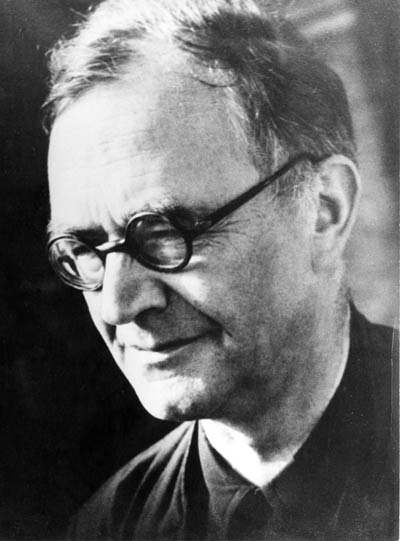
Karl Barth, the dialectic theologian of the 20th century (who I have mentioned a number of times from the pulpit) was often vague regarding his understanding of the totality of salvation. In his lectures and publications there are examples where he almost affirms a universalist understanding of God’s redemptive work. He dances around the claim that all have been, and will be, saved through Christ’s death and resurrection.

Karl Barth

Karl Barth

Once, after a series of lectures, a young theologian bravely raised his hand to ask a question. “Professor Barth, I would like to know once and for all: are you a universalist? Do you believe that everyone will go to heaven?” Barth probably crossed his arms and thought deeply about his response. After contemplating the implications of what he was about to say, Barth answered the young theologian: “That is a great question. Let me put it this way: I will not be disappointed if heaven is crowded.”

The question of universalism is remarkably relevant considering the great range of thought regarding faith and discipleship. Our world is becoming more and more diverse, with differing understandings of Christianity springing up all over the world. Was Christ’s sacrifice on the cross only for those who believe in him, or was it for all of creation?

We might think of the often quoted John 3.16: “For God so loved the world that he gave his only begotten Son” or the number of instances in scripture where individuals outside the realm of Israel (such as Rahab from Jericho, Nebuchadnezzar from Babylon, and the unnamed centurion who declared, “Truly this man was God’s Son” at the moment Christ died on the cross) who played remarkable roles in the story of God’s interaction with God’s people.

We might think of the fact that humankind was created in the image of God. Every individual has been molded from God’s image and given life through the Spirit regardless of their religious affiliation.

We might think of examples from Christ’s ministry where he did not come for the religious elite, but for the last, the least, and the lost. Jesus shared meals with the sinners, the vagrants, and the outcasts. Jesus said, “Those who are well have no need of a physician, but only those who are sick. Go and learn what this means, “I desire mercy, not sacrifice,” For I have come to call not the righteous but sinners.”

If we believe that nothing can ever separate us from the love of God in Jesus Christ, neither death, nor life, nor angels, nor rulers, not things present, nor things to comes, nor powers, nor height, nor depth, nor anything else in all creation, then God’s mercy truly knows no bounds. God’s love is so magnificent and unconditional that it extends not only to all of us gathered here, but to all creation. God’s love has been poured out through Christ’s death and resurrection onto the church, and to everyone outside of the church. Jews, Muslims, Christians, Atheists, Agnostics, and everyone in between have been caught up in God’s great cosmic victory over death.

In Barth’s response to the young theologian, he deliberately avoided answering the specific question, yet he embodied the kind of hope that all Christians should have; that God’s love is so powerful that he came to die for us, while we were yet sinners; that God’s mercy is so strong that nothing will ever separate us from God; and that God’s grace is so abundant that heaven will be crowded.

After all, “This is right and acceptable in the sight of God our Savior, who desires everyone to be saved.” Amen.


John 13.34: “I give you a new commandment, that you love one another. Just as I have loved you, you should also love one another.”

During my final year of seminary I served as an on-call chaplain at Duke University hospital. We were required to stay on the hospital property for 24 hours attending the numerous pages, calls, and deaths that occurred throughout our shift. One night, after sitting with numerous families who had just learned that someone had died, after talking with patients just diagnosed with inoperable cancer, after pacing up and down the sterile halls for hours, I found myself in the chapel. A tiny room, no bigger than our narthex, it contained numerous religious materials, a piano, an altar, and a notebook for prayers. Whenever I had a moment I would stop in and pray the prayers out loud, and most of the time it was empty. It became a place of solace for me, a space where I could remove myself from the chaos of the hospital.

Burning Bush in Duke Hospital's Chapel

Burning Bush in Duke Hospital’s Chapel

Every once and awhile I would encounter a Muslim praying on his knees in the corner. We would always politely nod toward one another and continue on with our religious responsibilities. But that night, the night that felt like it would never end, everything changed.

I was standing at the altar, while my companion prayed in the corner, we both spoke in a whisper so as to not disturb the other, when all of the sudden he stopped, stood up, and walked to my side. “Let us pray together” he said. And without discussing the details, without organizing our thoughts, without debating the theological differences and implications, we both began to pray, shoulder to shoulder, for the people we were serving. When our prayers naturally came to their conclusion, we met eye to eye, nodded, and went on our separate ways.

In compiling all of the questions for this sermon series, “What happens to people of other faiths?” appeared more than any other. Without a doubt, the existence of and interactions with other religions is, perhaps, the most significant challenge to, and opportunity for, the Christian church today. Moreover, the rise of atheism further complicates the picture into a varied mosaic whereby the church is challenged to address both those who do not believe and those who do believe, but who believe differently from us.

So, what happens to people of other faiths? I don’t know. We can take Jesus words from John, or other affirmations from scripture and receive very different answers. One of the struggles with being a Christian is that we have to paradoxically affirm both responses, that salvation can only come through the church, and that through Christ all have been saved. “What happens to people of other faiths?” is an interesting question, but in the end, God is the only one who holds the answer. However, a question that strikes at our hearts today is: “How do we relate to people of other faiths?”

Jesus commands all of us to love one another, this is the new commandment. If there is any command from Jesus to obey in our lives regarding other faiths it is this: love one another. In my own life God has used a number of people from outside the church to help teach me about what it means to be a discipleship of Jesus Christ: questions from my secular friends about why I believe, the love expressed by indigenous Mayan women in the highlands of Guatemala, one of the Muslim doctors at Duke Hospital who met me in the depth of suffering for prayer.

What has been revealed for us through Christ’s life, death, and resurrection is that God desire us to be in relationship with others. This means that we have to be willing to be vulnerable with people different from us, people whose beliefs contradict our own, and people with no beliefs at all. We are called to love one another just as God has loved us. We are not here just to minister to other Christians, but to the whole world. We are called to seek justice and mercy in the world for ALL who are oppressed regardless of age, race, sexual orientation, gender, economic status, and religious affiliation.

And so, in the great adapted words of John Wesley: Though we may not think alike, though our differences of opinion and religious understanding may vary considerably, though we may not agree on the scope of salvation, though we may not have the same opinion about the role that Jesus plays in the cosmic victory over death, may we not love alike?

Without all doubt, we may. Amen.

Questions: The Old and the New – Sermon on Genesis 11.1-9 & Acts 2.1-4

Genesis 11.1-9

Now the whole earth had one language and the same words. And as they migrated from the east, they came upon a plain in the land of Shinar and settled there. And they said to one another, “Come, let us make bricks, and burn them thoroughly.” And they had brick for stone, and bitumen for mortar. Then they said, “Come, let us build ourselves a city, and a tower with its top in the heavens, and let us make a name for ourselves; otherwise we shall be scattered abroad upon the face of the whole earth.” The Lord came down to see the city and the tower, which mortals had built. And the Lord said, “Look, they are one people, and they have all one language; and this is only the beginning of what they will do; nothing that they propose to do will now be impossible for them. Come, let us go down, and confuse their language there, so that they will not understand one another’s speech.” So the Lord scattered them abroad from there over the face of the earth, and they left off building the city. Therefore it was called Babel, because there the Lord confused the language of all the earth; and from there the Lord scattered them abroad over the face of all the earth.

Acts 2.1-4

When the day of Pentecost had come, they were all together in one place. And suddenly from heaven there came a sound like the rush of a violent wind, and it filled the entire house where they were sitting. Divided tongues, as of fire, appeared among them, and a tongue rested on each of them. All of them were filled with the Holy Spirit and began to speak in other languages, as the Spirit gave them ability.

xlba-00052

Today we continue with our sermon series on “Questions.” After requesting responses from all of you regarding your questions about God, Faith, and the Church, we have, again, come to the time when I attempt to faithful respond to those questions. Last week we looked at what it means to be saved and how we can come to understand it in our own lives. Today we are talking about the relationship between the Old and New Testaments, how can we reconcile the vengefully destructive God of the Old Testament with the loving merciful God of the New.

So, here we go…

I saw the two representatives walking up and down the street, knocking on the doors of all my neighbors. Sitting at my kitchen counter, I was at home on break from JMU working on a paper for my class called “Jesus and the Moral Life.” As I sat there, Bible and computer spread before me, I eagerly awaited any distraction.

I wondered what organization or church the two men represented. It was clear that whatever they were trying to sell was not working out for them because they were moving quickly between the houses on the other side of the street. I remember trying to focus on my assignment, but my mind wandered regarding the the possibilities of the speech the pair were giving to my neighbors.

When the doorbell finally rang, I sprinted to the front door with my bible in tow.

4fda4bd3327be.preview-620

“Good afternoon sir,” they chimed simultaneously with seemingly forced smiles that almost hurt to witness. “Have you heard about our Lord and Savior Jesus Christ?” I mumbled something in response about being a Christian, but they continued as if I wasn’t really standing there.

“Are you aware of God’s impending destruction of the earth? We have failed to be obedient, and God is surely going to rain down his wrath upon all of us. There will be earthquakes, floods, and famines. Nothing can stop God’s judgement, but we can save you.”

“Tell me more,” I replied.

“Well, Satan and his demons were cast down to earth in 1914 which initiated the End Times. Over the years he has begun to take over human governments in order to create evil on earth. God will come to destroy Satan, and this entire earth with him, but if you join us, God will protect you from his armageddon.”

Now, before I continue, I urge you to remember that I was a young and foolish biblical studies student, convinced that I knew everything there was to know about God, faith, and scripture.

And so, it came to pass that after listening to these two men describe for me the fall of Satan having occurred at the beginning of the 20th century, and their ability to save me from God’s impending destruction, I could no longer contain myself…

“Where does it say that in the Bible?”

“Well, if you look at our pamphlet, it clearly outlines…”

“Where does it say that in the Bible?”

“These charts will show how natural disasters are connected to Satan…”

“Where does it say that in the Bible? I’ve got one right here, and I would love for you to show me where your facts come from.”

At that point they slowly started to step away from the door, thanked me for my time, and continued their evangelistic work to the rest of the neighborhood.

Thinking back upon that interaction, I regret the poor Christian hospitality I showed those two men. I had a predetermined commitment to scripture that blinded me from hearing them out and kindly responding to their interpretive theology. However, I believe the interaction does point to a faulty mode of reading God’s Word that has plagued the church from the beginning.

Marcion was a Christian bishop during the first century. Like many Christians, he saw discrepancies between the actions of God in the Old Testament and during the time of the New Testament. And after wrestling with the differences, Marcion proposed completely rejecting the existence of the God described in the Jewish scriptures, and also argued for omitting the sections of the New Testament that were connected with the Old. Central for Marcion’s edited bible was the idea that the teachings of Jesus were incompatible with the actions of God as found in the Hebrew Scriptures.

After numerous debates, fights, and even scandals Marcion was declared a heretic by the early church fathers and was removed from the church.

Like the two men who came knocking on my door, Marcion (and many others) had a very tunnel-visioned understanding of scripture. If it did not agree with their beliefs, they omitted it, they ignored it, and they taught in spite of it.

Without a doubt, if you read through the stories of the Old and New Testaments you will discover a number of difficulties regarding the actions of God throughout time. Wrestling with these changes has been a part of the church’s history from the very beginning and still takes place today. To fully address these differences it would take numerous sermons series and bible studies, and certainly cannot be fully proclaimed in one sermon. If this is something that you really wrestle with we can talk about doing something in greater detail down the road, but for today’s purposes we can only accomplish so much.

One of the major problems with the inconsistency of scripture is that we tend to view chapters and narratives in isolation. We take one verse from the Old Testament and compare it to one verse in the New. I am thankful for the numbering of chapters and verses for organization, but I believe they have also stratified our understanding of scripture into tiny bits that can be reorganized for our understanding. The Bible is one thing, it is the single story of God with God’s people; it may be divided into two testaments, with numerous chapters and verses regarding a plethora of people and places, but it is nevertheless one unified collection of the living Word for God’s people.

20130115_canon

Rather than reading in isolation, we are called to understand and experience God’s word canonically, which is to say we have to understand each individual narrative in light of the entire saga of scripture. Reading, preaching, and teaching canonically opens our eyes to the many ways that God runs through both testaments like a river; the water may change with the seasons, but the water always moves.

In Genesis 10 we find the story of the tower of Babel. Humanity had one language and had gathered in the plains of Shinar to settle down. There they decided to build a giant tower into the heavens in order to make a name for themselves. God witnessed the construction of this tower, recognized that this was but one domino leading inevitably to a belief that humanity did not need God, so God confused their language and scattered the people over the face of the earth.

In Acts 2 we find the story of the disciples gathered together 50 days after Jesus’ resurrection. While they were all together a great wind came from heaven filling the entire house. All of the disciples were filled with the Holy Spirit and began to speak in other languages.

Babel and Pentecost, two stories, one from the Old Testament, one from the New. These stories are often used in church to make separate points about the identity of God and what it means to be a disciple; Babel demonstrates God’s punishment of humanity for sin and Pentecost shows God’s desire for the gospel to spread amongst all nations and languages. However, they cannot be fully understood without the other. They are not two separate stories describing two different Gods, but are instead part of the greater canonical narrative of how God is God.

Babel contains every bit of the human desire to remain self-reliant and focused on pride. Like the garden, Babel exhibits that same sense of sin whereby humanity believed it no longer needed God. Though the story clearly contains examples of God’s wrath, it also contains an abundance of grace.

In striving to build a city and a tower for themselves, humanity had lost sight of the unity under which they already enjoyed from God. The true sin evident in the story is the arrogance of thinking that humanity must take itself as one takes brick and mortar, and make themselves the lord of history. In violation of the original unity of creation, in humanity’s desire to control its own destiny, the people of Genesis 11 were no longer naturally organized under the great Shepherd, but instead were brought together by the selfish desire to live in ignorance of God’s created order.

God punishes the people gathered together by confusing their language and scattering them over the earth. His wrath is evident, but his grace also lies under the surface. God could have easily used an earthquake or another divine example of control to achieve the punishment. He could have destroyed the tower and everyone in it. But rather than destroying creation, as had been done with Noah and the flood, God merely divides humanity and confuses their language. Instead of raining down death and destruction, God limits the punishment to linguistics.

We discover God’s unyielding grace in the fact that God will continue to be our shepherd regardless of our self-righteousness. God will not abandon us to our own devices but will remain faithful even when we are not.

And remember, the story of Babel does not end in Genesis 10, it continues on throughout the Old Testament and finds reflection in the New. As Christians we are aware that God has more in store for his creation than one isolated story from the past would have us believe. In the person of Jesus Christ the previously divided world finally comes back together. It is in the story of Pentecost that we are reminded again of God’s desire for humanity to rest in unity, not division.

Pentecost tells us about the miracle of the Holy Spirit coming down to help reunite the world in order to fruitfully live into God’s kingdom. God did not abandon the people of Babel, just as God has not abandoned us while we continually act as if we can make through life on our own.

The same year I met the two men who knocked on my door, I took a group of college-age Christians to Taize, an ecumenical monastery in Burgundy, France. We camped for a week on the property, gathering together with 5,000 young Christians three times a day for prayer and reflective hymns. The Christians gathered together that week came from all over the globe, representing nearly every continent. In between the worship services, we met in small groups talking about faith, scripture, and discipleship. When the last day arrived, my group sat together and I asked us to end our week by standing in a circle to pray with each other. I asked everyone to pray the Lord’s prayer together in their native tongue, and then individually pray it so that we could hear what it sounded like. For perhaps the first time in my life, Pentecost became really for me while we prayed together in that field. Though all of us had been divided across the planet we were all brought together by Jesus Christ. Though we had been previously separated we were gathered in unity by the great “I AM.”

6613_1139875468060_4836913_n

Babel and Pentecost are intimately connected but I want to be clear that the relationship between the two testaments is not that God fixes the problems of the Old Testament with the revelations of the New. God did not change himself from wrathful to graceful. The New Testament is not the band-aid for the Old.

Yet, the incarnation of God in the person of Jesus Christ changed everything. The Old Testament tells of God’s interaction with creation and the New Testament inaugurates the event where God came to dwell among us. Jesus Christ is the lens by which we are called to read scripture, both the Old and the New Testament. God’s love of creation is woven into the fabric of scripture, consistently revealed through people like Abraham, Isaac, Jacob, Moses, Isaiah, Jeremiah, Jesus, Mary, Peter, and Paul and places like Egypt, Galilee, Samaria, and Jerusalem.

This is one great cosmic story, a story that begins with God’s creation of all things declaring them good, a story that has no end because it still taking form right now.

So, how do we reconcile the God of the Old Testament with the God of the New Testament? We read scripture knowing that it does not happen in isolation, but can only be understood within the canon of both testaments. 

We read knowing that, like all great things, God is mystery unrevealed until its proper season. We read with faith knowing that God has not abandoned us, though we struggle to find meaning in the shadow of suffering, fear, and doubt, God’s plan for us is greater than we can possibly imagine. We read knowing that God does not choose us because we are good, but because he wants us to be good.

We read scripture in the light of Jesus Christ recognizing that where we find wrath, there is also grace; when we suffer we discover our hope; and when there is death there is also resurrection. Amen.