Family and Faith: Family – Sermon on Ephesians 5.21-6.4

(preached at St. John’s UMC on 9/15/2013)

Ephesians 5.21-6.4:

Be subject to one another out of reverence for Christ. Wives, be subject to your husbands as you are to the Lord. For the husband is the head of the wife just as Christ is the head of the church, the body of which he is the Savior. Just as the church is subject to Christ, so also wives ought to be, in everything, to their husbands. Husbands, love your wives, just as Christ loved the church and gave himself up for her, in order to make her holy by cleansing her with the washing of water by the word, so as to present the church to himself in splendor, without a spot or wrinkle or anything of the kind – yes, so that she may be holy and without blemish. In the same way, husbands should love their wives as they do their own bodies. He who loves his wife loves himself. For no one ever hates his own body, but he nourishes and tenderly cares for it, just as Christ does for the church, because we are members of his body. “For this reason a man will leave his father and mother and be joined to his wife, and the two will become one flesh.” This is a great mystery, and I am applying it to Christ and the church. Each of you, however, should love his wife as himself, and a wife should respect her husband. Children, obey your parents in the Lord, for this is right. “Honor your father and mother” – this is the first commandment with a promise: “so that it may be well with you and you may live long on the earth.” And, fathers, do not provoke your children to anger, but bring them up in the discipline and instruction of the Lord.

Families of faith – part 2. Last week we looked at the role of God within the family; we talked about how our relationships with God extend out toward others, and we left with the challenge to encounter God through his Word and prayer. Today we are focusing on the family unit itself, and what it means to be a Christian family.

family_praying_hands

Have you ever heard of the lectionary? It is a great tool. Many churches and pastors use it to help orient and guide their worship throughout the year. It is a three-year cycle of scripture lessons that allows a community to make its way through the length of the Bible. At its best it forces us, and by us I mean me, to examine different parts of scripture and apply them on a weekly basis. However, at its worst it prevents us from encountering the most troubling verses in scripture because they are conveniently absent from the lectionary.

One of the other options is coming up with an authentic and exciting sermon series. A pastor or a church picks a topic, finds scripture to go along with the message and BOOM! God’s Word breathes new life from the pulpit. At its best it allows us, and by us I mean me, to speak toward and about specific issues within the community and really get at the heart of contemporary Christianity. However at its worst, sermon series reinforce the distancing of difficult texts from being proclaimed in church.

As I was putting together the sermon for this week I kept thinking about the scripture that Pam just read, the so-called “house-hold” code from Ephesians, and I was thankful that I wasn’t going to preach on that text. Its too difficult, filled with ancient patriarchal balderdash that has no place in the modern church. So instead I looked for easier passages, you know something nice from the psalms or proverbs, and maybe a narrative from the New Testament about a mother and her son, but the more I tried to pray and write, the further I felt from God’s Word. And, as the Holy Spirit is apt to do, I was pushed toward preaching on the Ephesians passage precisely because it is so difficult.

I remember once being at a magnificent wedding. The beautiful bride made her way elegantly down the center aisle to her sweetly crying soon to be husband. I can remember the groom, with excited anticipation, nervously rocking back and forth on his heels. The church was decorated perfectly, all the guests sitting with smiles on their faces, women crying, and men pretending not to cry; a truly wonderful wedding.

orlando-wedding-collage

And there was the pastor, standing before the bride and groom and all of us ready to give his homily. He probably said something about love: love is patient; love is kind; it bears all things, believes all things, hopes all things, endures all things (1 Corinthians 13.4, 7). And then all of the sudden he started quoting Ephesians: “Wives, be subject to your husbands as you are to the Lord. For the husband is the head of the wife just as Christ is the head of the church.”

I cringed.

He went on, waxed lyrically about the sanctity of marriage and the different roles the bride and the groom were to play and he ended with this: “John your job is to love your wife, and Sally your job is to respect your husband.”

I have a hard time with the text from Ephesians, or at least the way it has been used throughout the centuries to reinforce gender and sex divisions. It passages like this one that have kept women from being independent, from defining their own future, and even from standing in the pulpit. It puts forth a blueprint not only for marriage but also for simple for male-female interactions that defines the role of the woman versus the role of the man.

“Wives, be subject to your husbands as you are to the Lord. For the husband is the head of the wife just as Christ is the head of the church, the body of which he is the Savior. Just as the church is subject to Christ, so also wives ought to be, in everything, to their husbands.”

I have heard men use these words to continually suppress their wives and other women throughout the church in such an embarrassing way that I have always been afraid to preach from this text.

But then I realized something.

Most people skip over verse 21: “Be subject to one another out of reverence for Christ.”

There can be no doubt that Paul had the patriarchal family order as the backdrop in his letter because he knew no other. But the beginning of the passage touches on something that shines forth an incredible beauty within the family dynamic: Be subject to one another out of reverence for Christ.

The virtue of submission is not popular in our contemporary period. Our desire for freedom and individuality makes the practices of submitting to one another appear obsolete or even negative. Maintaining equality is too important to allow for people to submit themselves to each other. In a way, though, Christianity is committed to the doctrine of human equality in a deeper sense than the ways of the world. It’s not just about an equal playing field, but instead more about submissiveness on every side within a family.

The good news of mutual submission within a Christian family is inseparable from true love. Loving one another means accepting that other as a person, as a “you” and not an “it.” In marriage, in family, in church, and in life a person is never a mere object. We are created in the beautiful image of God, with our own desires and powers for being in relationship with one another, free to say yes and no.

(Photo Credit: Jill Nicole Photography)

(Photo Credit: Jill Nicole Photography)

When Paul addresses and calls the church in Ephesus to submit to one another out of reverence for Christ its all about reciprocity! – It does not merely call upon the less powerful to submit, it equally charges the more powerful to act with gentleness toward and concern for those around them.

When we read the rest of the passage in Ephesians, the description of the household codes for Christians, we need to keep the very first verse at the forefront of our minds – Be subject to one another out of reverence for Christ.

Think about your own families for just a moment, your marriages, your children, and your parents. In living out your Christian identity as a family have you given yourself to others out of love for Christ? How might all of our families look and feel different if we first address one another selflessly in order to mirror what Christ did for us.

Paul writes: Husbands, love your wives, just as Christ loved the church and gave himself up for her, in order to make her holy by cleansing her with the washing of the water by the word. Love your wives. This does not just mean, tell her she looks pretty, buy her flowers every once in awhile, let her hold the remote control for the television. It means loving your partner with self-sacrificial care, “just as Christ loved the church and gave himself for her.” The Christian family is so much more than love, its about sacrifice, trust, reliability, about laying down yourself for the other person out of submissiveness. And wives this goes for you too, Christian marriage and family requires us to enter into this kind of covenant together. This does not just mean, iron his shirts, cook dinner, or let him hold the remote control for the television. How many of us really love our families in the way that Christ loved the church, enough to mount the hard wood of the cross? Love is easy; what you do after love is the hard part.

And children! You’re part of this too. – Honor your father and mother because you are promised that it may be well with you and you may live long on the earth. You are called to submit yourselves to your parents out of reverence for Christ! But parents are also supposed to do the same toward you…

A household in which moral chaos rules, is a tragedy for a child. Adjusting to adult life is never easy. Think about this with me – Can a greater blessing come to a child than to see father and mother in penitent prayer? Realizing that Dad and Mom themselves are sinners! Mom and Dad confessing. When done appropriately penitence on the parents’ side will not rob the parent of their authority within the family. It will instead place obedience within a larger framework of Christian living. Just imagine what it would look like to you if you saw your mother and father on either side of you in the pew, praying and asking for forgiveness for the ways they have fallen short. How would you respond?

In our culture today, we need more than an “educational system” to help our children because secular education will not suffice. We can no longer rely on the school system to teach children everything they need to learn in order to more fully live in the world. Similarly, children need to have the space and freedom to speak the truth against us when we make mistakes because we are always growing and learning what it means to be Christian in the world. There must be admonition of the Lord.


Having a Christian family is only really possible when it mirrors the inclusive grace of the kind of love that is the supreme gift of the Holy Spirit in Jesus Christ.


I think what bothered me most about hearing that preacher during the wedding wasn’t that he used the passage from Ephesians, but how he interpreted it. There was a very clear separation of roles from the man and the woman – love and respect. However, Christian family life can no longer fit into the blueprint that is established in these verses (and they could never fit into them during the first century either).

Families today are no longer made up of only a husband and wife, 2.2 children, a dog and cat, and a white picket fence. Many children today grow up in families with only one mother, or just one father, or their raised by their grandparents, or they have two dads, or two moms, or they’re raised by adopted parents. There are stay-at-home dads as well as stay-at-home moms. Some couples choose not to have kids, and some are incapable. Those families exist not because of a blueprint that they are trying to match, but instead because they are born out of love and submissiveness to one another.

Calls for submission are on all sides – husband to wife and wife to husband – children to parents and parents to children. In our modern world, family life places demands upon mutual subjection greater than ever before.

Be subject to one another out of reverence for Christ. Living into the calling of a Christian family can no longer take place in the form of fitting into an ideal shape or box; Raising and being part of a family is tough. We are not commanded to have complete separate and isolated roles, but are instead invited to mirror the love and life of Christ in the way that we live and love others! Christ is the solid rock upon which we stand, the great and almighty “I AM”, the one in whom we live and move and have our being, the incarnate deity, the beginning and the end.

Be subject to one another out of reverence for Christ.

Amen.

Family and Faith: God – Sermon on Proverbs 3.1-8 & Ephesians 4.1-6

(Preached at St. John’s UMC on 9/8/2013. I am indebted to Will Willimon’s sermon “Don’t Think For Yourself” for inspiring parts of the following sermon (Willimon, Will. The Collected Sermons of William H. Willimon (Louisville: John Knox Press, 2010), 123-127.))


Proverbs 3.1-8

My child, do not forget my teaching, but let your heart keep my commandments; for length of days and years of life and abundant welfare they will give you. Do not let loyalty and faithfulness forsake you; bind them around your neck, write them on the tablet of your heart. So you will find favor and good repute in the sight of God and of people. Trust in the Lord with all your heart, and do not rely on your own insight. In all your ways acknowledge him, and he will make straight your paths. Do not be wise in your own eyes; fear the Lord, and turn away from evil. It will be a healing for your flesh and a refreshment for your body.

Ephesians 4.1-6

I therefore, the prisoner of the Lord, beg you to lead a life worthy of the calling to which you have been called, with all humility and gentleness, with patience, bearing with one another in love, making every effort to maintain the unity of the Spirit in the bond of peace. There is one body and one Spirit, just as you were called to the one hope of your calling, one Lord, one faith, one baptism, one God and Father of all, who is above all and through all and in all.


Is that really written in Proverbs? Trust in the Lord with all your heart, and do not rely on your own insight? I was always taught to think for myself. Haven’t we been told to do that all of our lives? We can assign you the right books, we can help you get into college, we can show you the door, but you’re the one who has to walk through it. Think for yourself! We can teach you all about God, politics, or even healthy eating habits, but freedom is important, make your own choices.

Be independent, employ your true freedom; create your own way of life. Go out and get your hands dirty, lose yourself in something beyond yourself, fight for something worth fighting for but above all think for yourself. What a perfect bumper sticker for our culture. All I need to get through this world is me, my thoughts, my opinions, and my beliefs.

When I read through our scripture for today it made me think about a time I was helping a church in Michigan. Now this church was HUGE. While I was attending the services there were easily over 1000 people in worship on Sundays between their multiple services. You could choose between different styles of worship and at different times, you could choose between preachers and types of sermons. When I started helping out, there were five pastors on the staff each working in a different area within the church. They offered activities every week from Bible Studies, to service opportunities, to Yoga classes. In fact the first week I was there I served on a panel to discuss the theological virtues of the hit series The Hunger Games for concerned parents and parishioners. They had a lot going on.

IMG_0839

Even though on the surface it seemed like everything was great at the church, there was something missing. There was basically no one in their 20s attending the church. Now, perhaps they assumed that because I was 24 I could explain this phenomenon they decided to give me the results of their recent questionnaire to make sense of it all. The church had recently done a massive survey of the congregation, the community, and members who had left the church. They asked all the typical questions: Has you attendance increased or decreased over the last year? Why or why not? Do you prefer to receive information from phone calls, text messages, mail, or email? Etc. But what they were really trying to discover was why none of the young people were in attendance.

What I discovered surprised me, and I believe it greatly reflects our current culture, and the scriptures for today.

Indeed, the 20-30 year age group was the lowest number for attending church, but they did not need to use a questionnaire to discover that fact. Do you know what surprised me the most? The largest group to decrease in attendance over the last year was the 45-55 year age group. Why?

As far as I can tell here is the common cycle for church attendance: A lot of people grow up in the church, when they go off to college they stop attending until the get married, have kids, realize they have no idea what they’re doing and so they start attending again. This cycle has been true for many people that I have met in my life but there is a newer trend developing. A significant portion of parents stop attending church once their children leave for college. That’s why they went back in the first place, they went back for their kids, and now that they’ve grown up, there’s no reason for them to keep attending. So that child comes back home for the first time, maybe at thanksgiving break: “Hey Mom and Dad, what time are we leaving for church tomorrow?” “Oh honey, we haven’t been recently, but I guess we can go tomorrow…

think-for-yourself

Think for yourself. Isn’t that what we want for our children, for our friends, for our families? We don’t want to push people too far, no indoctrination, we want everyone to be free to do anything they want… but thinking for ourselves, only for ourselves, often gets us in trouble. Thinking for ourselves has led to the current situation in Syria where we spend days and weeks debating whether or not to drop strategic bombs, thinking for ourselves has led to the growing number of impoverished people across the world and even in our own neighborhoods, thinking for ourselves has led to great numbers of people no longer attending church because they can handle life on their own…

God speaks to us through the writer of Proverbs: “My child, do not forget my teaching, but let your heart keep my commandments; for length of days and years of life and abundant welfare they will give you.” Paul similarly speaks to us in his letter to the Ephesians: “I therefore, the prisoner of the Lord, beg you to lead a life worthy of the calling to which you have been called, with all humility and gentleness, with patience, bearing with one another in love, making every effort to maintain the unity of the Spirit in the bond of peace. There is one body and one Spirit, just as you were called to the one hope of your calling, one Lord, one faith, one baptism, one God and Father of all, who is above all and through all and in all.”

In many ways, God is pleading through these verses: Do not think just for yourself. Think beyond yourself. I know that sounds drastic and remarkably contradictory when compared to the American dream, but to be followers of Jesus Christ requires us to orient ourselves and our thinking toward God, and not the other way around.

God begins by addressing us as we truly are: his children. We all have one heavenly Father who is above all and through all and in all. God has called us to lead worthy lives with humility and gentleness, patience and bearing with one another in love.

Being a part of this church community carries with it the responsibility to remember God’s teachings, and to keep his commandments. During the time of the Old Testament the Israelites were taught to remember and keep God’s commands: Deuteronomy 6.4-9: “Hear, O Israel: The Lord is our God, the Lord alone. You shall love the Lord your God with all your heart, and with all your soul, and with all your might. Keep these words that I am commanding you today in your heart. Recite them to your children and talk about them when you are at home and when you are away, when you lie down and when you rise. Bind them as a sign on your hand, fix them as an emblem on your forehead, and write them on the doorposts of your house and on your gates.” Remember these words, because they are an alternative for the world’s desire to isolate us from one another; They calls us to be in unity as a body. They call us to remember. We can maintain our individuality but we must not lose sight of our interconnectedness as the body of Christ. It’s important for us to remember how unique each of us are, but we are all in this together.

Instead of commanding us to think for ourselves, God calls us to keep his words! Teach them to your children and your friends. Live out your vocation as a Christian in your actions, words, and deeds. Trust in the Lord with all of your heart, soul, mind and strength. Do not rely on your own insight, do not think for yourself alone, do not be wise in your own eyes, fear the Lord and turn away from evil.

Where God sits in your life will extend to people outside of you. When you keep his words and live out you’re calling as Christians your families and your friends will notice. Be holy just as God is holy…

When I discovered the decrease in attendance of parents whose children had grown up, I was surprised, but it made so much sense. Think about what it says to those around you when you decide that church is no longer a priority, what it says when God is no longer at the center of your life? Our words and behavior are powerful things, not just for ourselves but also for those around us.

I met a man once, perhaps you know someone just like him. He lived a good life, came to church at Christmas and Easter, and made it through day after day by relying on himself. Sure his family was a little dysfunctional, but whose isn’t? His kids had grown up, went off to college, and had little contact with their father. He assumed everything was normal until one day, out of the blue, one of his friends invited him to a group that met before work hours at the church to pray and enjoy coffee together. He went, reluctantly, sat in the back, and kept his head down. But the more he attended the meetings, the more he started to notice little changes in his life. After reaching a certain comfort level with the other men he started to share his own prayer concerns, his own questions about the bible, and even his own disappointments in his life. His prayer life grew outside of the group and he began to regularly commune with God.

When I met him, he had been attending the group for five years; he told me that his entire disposition toward life had been transformed. He spoke with his children regularly, he found pleasure in his career, and above all he had discovered his relationship with God. “It changed everything,” he told me, “praying like this, reading scripture, opening up. It changed my work, it changed my family, but most importantly it changed me. I realized that I’m not going through life all on my own and its not up to me to do everything; God is with us.”

family_praying_hands

Families of Faith: that’s the title of this sermons series. What does it mean today to be a family of faith. One of the greatest joys of being part of a family of faith, like this church, is realizing that we have been freed from the burden of having to always and constantly think for and care for ourselves alone.

Can you imagine how truly freeing that is? Have you ever experienced that kind of relief in your lives? Having a relationship with God does not guarantee that everything will be completely turned around like the man that I met, but it can at least bring newness and a sense of peace previously undiscovered.

Families of faith contain three important priorities: God, the family itself, and others, but it must first begin with God. By heeding the words of scripture from Proverbs and Ephesians, we can teach and remind our family and friends the commandments that were first handed to us. If we write the love of God on the tablet of our hearts it will be conveyed to the people around us.

One of the ways that we can live out our relationship with God in the family is to reclaim our commitment to reading scripture and having a regular prayer life. When I was growing up the only time we ever prayed as a family was before meals, and we certainly never read the bible aloud. How can we convey faith to our children, our parents, or our friends? Unlike the families that leave their children and friends to “think for themselves” in isolation we can show how wonderful it is to trust in the Lord. It is my hope that starting this week we can all start to read a little more and pray a little more and maybe, just maybe, we’ll start to see the fruitful value of these practices in our lives.

Trusting in the Lord and not relying on our own insight is a challenge because the world has always been telling us to think for ourselves. However, there is one body and one Spirit, one Lord, one faith, one baptism, one God and Father of all, who is above all and through all and in all.

What a great God we have: the one who freed us from the loneliness of the world.

Amen.

The Power of Words – Sermon on Jeremiah 1.4-10

Jeremiah 1.4-10

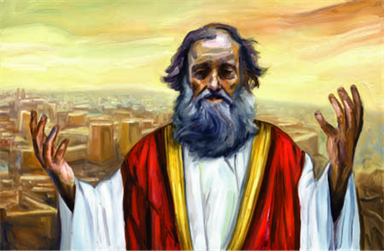
“Now the word of the Lord came to me saying, “Before I formed you in the womb I knew you, and before you were born I consecrated you; I appointed you a prophet to the nations.” Then I said, “Ah, Lord God! Truly I do not know how to speak, for I am only a boy.” But the Lord said to me, “Do not say, ‘I am only a boy’; for you shall go to all to whom I send you, and you shall speak whatever I command you. Do not be afraid of them, for I am with you to deliver you, says the Lord.” Then the Lord put out his hand and touched my mouth; and the Lord said to me, “Now I have put my words in your mouth. See, today I appoint you over nations and over kingdoms, to pluck up and to pull down, to destroy and to overthrow, to build and to plant.”

prophet-jeremiah

The Power of Words 

Words are powerful. The perfectly timed phrase or expression can carry more meaning and accomplish more than just about anything else. From the pulpit they carry even greater value because they are so connected with the Word of the Lord. At their best words can be used in a fruitful way, demonstrating the kind of building-up that the bible often refers to, in order than we can affirm one another in love. At their worst, words can be used in a destructive way, hurting those around us, and ignoring the truth of God’s role in the world.

On January 30th, 1933, Adolf Hitler became the democratically elected chancellor of Germany. This was the beginning of the Third Reich. Germany, the land that had produced the likes of Bach, Goethe, Durer was now being led by a man who consorted with criminals and was often seen carrying around a dog whip in public. Hitler was known for using his words in public propaganda for destructive purposes. Some of you here this morning can remember how the world shuddered when this began to take place.

Two days after Hitler was elected, a twenty-six year old theologian name Dietrich Bonhoeffer gave a radio address throughout the German nation. The speech was titled “The Younger Generation’s Altered Concept of Leadership.” Though the talk was itself highly philosophical, it constructively argued against the type of leadership that Hitler would use for the next twelve years, inevitably leading a nation and half the world into a nightmare of violence and misery.

Dietrich Bonhoeffer

Dietrich Bonhoeffer

Bonhoeffer spent a significant portion of his speech discussing the differences between a true leader, and the Fuhrer. He used his words in a calm and collected way, appreciating the power they held: A true leader must know the limitations of his/her authority. The good leader serves others and leads others to maturity. He puts them above himself, as a good parent does with a child, wishing to lead that child to someday be a worthy parent. Another word for this type of leadership is discipleship. “Only when we see that leadership is a penultimate authority in the face of an ultimate, indescribable authority, in the face of the authority of God, has the real situation been reached. The individual is responsible before God.”

Before Bonhoeffer could finish, the speech was cut off. Only two days after Hitler’s election, the Nazis were suppressing this young man who spoke out against the type of leadership that would come to define Germany over the coming decade.

What we find in the first chapter of Jeremiah is an encounter between the human and the divine. We discover how powerful words can be through God’s call. As the divine Word, God is a genuine and invisible otherness when compared to Jeremiah. During this particular encounter the word of the Lord came to Jeremiah and the prophet meets in faith the God who meets him through the Word.

“Jeremiah! Before I formed you in your mother’s womb, I knew you, and before you were born I consecrated you; I appointed you a prophet to the nations.” Then Jeremiah said, “Ah, Lord God! You cannot expect me to speak! I am only a boy.” But the Lord responded, “Do not say ‘I am only a boy’; for you shall go to all whom I send you, and you shall speak whatever I command you. Do not be afraid of them, for I am with you to deliver you.”

In his Word, God does not deliver a course of lectures on dogmatic theology, He does not submit the content of a creed of a confession of faith, and he does not even produce a perfectly prepared three-point sermon. Instead He makes himself accessible to us. An exchange takes place here in scripture that is beyond any analogy in the sphere of rational thinking. Instead, we have here a simple encounter, just like one between any two people, where God makes Himself available and known through relationship.

Jeremiah’s experience guides him into boundary, toward his own finitude, being reminded of his humanity, as over and against God. Jeremiah’s encounter is a reminder for us that we are not God. God is wholly other when compared with his creation. When Jeremiah meets God, his personality sinks away into the background; he feels his words being replaced by the Word of God. When we truly encounter the depth and beauty of the triune God, everything about us begins to sink away as well.

It is no wonder therefore why Jeremiah evades the commission of God. “Surely you can’t use me God, for I am only a boy.” Jeremiah protests because he is overwhelmed and intimidated by the call to set aside priests, princes, and people to become a prophet to the nations. He was afraid to proclaim the Word of God, which would go beyond the comprehension of his time.

This isn’t in scripture, but I can imagine God’s full response to Jeremiah’s evasion: “have you not seen and have you not heard what I have done with mere people? Have you forgotten the stories of Abraham, Isaac, and Jacob? What about Moses and Joshua? David was but a boy when I had him defeat the Philistines. Solomon became the wisest king to rule the nation All of the prophets, the judges, the priests? This isn’t about you Jeremiah, this is about what I am going to do through you.”

Recoiling from a divine appointment is common throughout scripture. It only takes a moment to remember Moses standing in the heat of the burning bush and then turning his face away because he was afraid to look at God.

The theologian Paul Tillich once said: “we always desire to escape God… People of all kinds, prophets and reformers, saints and atheists, believers and unbelievers, have the same experience.” It is safe to say that a person who has never tried to flee God has never experienced the truth of who God is.

God dismisses Jeremiah’s excuse; Young or old, learned or uninformed, handsome or ugly, none of things matter to God because they all pertain to our own self-centeredness: my powers, my status, my desire to have reality on my terms. Because of the power in God’s Word Jeremiah does not react in silence, nor does he step aside to let someone else take his place, instead he steps into the situation, which has in a way stepped into him. He responds to the encounter of God, feels the Word of the Lord placed on his lips, and is prepared to do God’s work.

From this point forward Jeremiah will not go forth on his own terms; God will send him, and he will move according to God’s will. It is because of God working in and through Jeremiah that he will be able to speak and act in the specific situations as they arise. The encounter has changed Jeremiah so that he will be able to narrate God’s plucking up and planting again. Jeremiah will speak the truth of the Word of God regardless of whether or not they are agreeable to his youth, ambitions, moods, or self-examination.

            It is only when it is made plainly clear to Jeremiah that the point at issue has nothing to do with his own abilities or the extent of his talents that the truth of God’s reign is made abundant and it becomes possible for Jeremiah to become a messenger.

            Like Jeremiah, the young German theologian Dietrich Bonhoeffer felt the call of God to proclaim the Word. Things became very difficult for Bonhoeffer after he made that first radio address. As the German nation descended into Fuhrer worship with the German church emphasizing politics more than theology, he struggled with how to be authentic to the Word of God as a pastor and a theologian. He trained young pastors through an underground seminary at Finkenwalde and preached about remaining faithful and obedient to God before anything else. As it became harder and harder for him to proclaim the good news in Germany, Bonhoeffer learned that war imminent and was frightened about being conscripted into the army.

dBonhoeffer

Bonhoeffer was a committed pacifist and was adamantly opposed to the Nazi regime, therefore he would never swear an oath to Hitler nor fight in his army. However, to refuse this would be a capital offense. It was at this time that Bonhoeffer accepted a position at Union Theological Seminary in New York. While in the United States Bonhoeffer had somewhat of a Jeremiah experience, because even though he had the freedom to run away from his calling in Germany, Bonhoeffer realized that his responsibility was to God with the German people. Just as God would pluck up and replant the Israelites in Jeremiah’s time, Bonhoeffer knew that the German nation would have to be destroyed in order for it to be fruitful once again. And so Bonhoeffer returned to Germany on the last scheduled steamer to cross the Atlantic before the war.

Upon arriving back in Germany, Bonhoeffer’s desire to speak powerful words against the Third Reich resulted in him being forbidden to speak publically starting in 1940 and he had to regularly report his activities to the police. Within a year he was forbidden to print or publish. And on April 5th, 1943, ten years after making his radio address, Bonhoeffer was arrested by the Gestapo for his continual Anti-Nazi remarks and involvement with the Abwehr’s plot to undermine Hitler’s regime.

            He remained in prison for two years, able to write letters and theology that were smuggled out by sympathetic guards.

0800697030h


Though he remained hopeful for the end of the war and his eventual release, he was condemned to death in April of 1945. He was killed by hanging just two weeks before the United States liberated the camp where he was being held. Before his execution, Bonhoeffer was led away as he was concluding his final Sunday service and said to one of his fellow prisoners: “This is the end – for me the beginning of life.”[1]

            I fear that whenever we hear stories of people like Jeremiah or Bonhoeffer we regard them as a special kind of people, set apart for the work God ordained for them. And to be quite honest, it is very unlikely that anyone of us in this room will ever be imprisoned, or suffer, for our Christian identity. But we are all called to be Jeremiahs and Bonhoeffers in our commitment to following Jesus Christ. Just like those two prophets God has formed us, consecrated us, and placed the Word on our lips.

            There is a power in words that we regularly underestimate. The way that we often talk about other behind their backs carries with it a great destructive energy. When we ignore the truth of our interconnected as the body of Christ in this place by speaking poorly of one another does a disservice to the God who formed you from the womb. Our words are powerful, use them wisely.

            So too, there is a power in the words that we use to affirm and address one another in love; By caring for and reaching out to those around us we continue to live out the kind of fruitful lives that God has always envisioned for us. This church is called to be a place where we understand the power of our Words and use them appropriately.

            Do not be afraid of this power that God has given to you. Jeremiah and Bonhoeffer did not go in their own strength and neither do you. They did not speak on their own authority and neither do you. God is our strength and our authority. “I am with you to deliver you, says the Lord.” The thoughts of our selfish lives can be cast away to the side so that we can assume the proper posture as messengers of God. As Paul wrote to the Galatians “Yet not I, but Christ working in me” (Gal. 2.20).

            Throughout their lives both Jeremiah and Bonhoeffer saw the collision of powers in the world. What defined them was their ability to see God’s decisive acts in history, remembering that God is the true authority over all things in spite of the powers that dominated their cultures. Jeremiah and Bonhoeffer were ordinary people. They were just like us. They were living their lives, expecting everything to be fine when God put something on their lips to say. Hearing and responding to the Word of God is a difficult thing, but God is always speaking and our response to that Word will define us as a people of faith, hope, and love.

            Do not be afraid to speak the truth, for the Lord is with you.

Amen.


[1] Bethge, Eberhard. Dietrich Bonhoeffer: A Biography (Fortress Press, 2000), 927.

Why Does Baptism Matter? – Sermon on Mark 1.1-11

(Preached at St. John’s UMC on 8/18/2013. Immediately following the sermon we responded to the proclaimed Word through participating in a Baptismal Remembrance)

Mark 1.1-11

“The beginning of the good news of Jesus Christ, the Son of God. As it is written in the prophet Isaiah, “See, I am sending my messenger ahead of you, who will prepare your way; the voice of the one crying out in the wilderness: ‘Prepare the way of the Lord, make his paths straight.’” John the baptizer appeared in the wilderness, proclaiming a baptism of repentance for the forgiveness of sins. And people from the whole Judean countryside and all the people of Jerusalem were going out to him, and were baptized by him in the river Jordan, confessing their sins. Now John was clothed with camel’s hair, with a leather belt around his waist, and he ate locusts and wild honey. He proclaimed, “The one who is more powerful than I is coming after me; I am not worthy to stoop down and untie the thong of his sandals. I have baptized you with water; but he will baptize you with the Holy Spirit. In those days Jesus came from Nazareth of Galilee and was baptized by John in the Jordan. And just as he was coming up out of the water, he saw the heavens torn apart and the Spirit descending like a dove on him. And a voice came from heaven, “You are my Son, the Beloved; with you I am well pleased.”

baptism-of-christ-1483

 Why Does Baptism Matter?

            He sat silently in his office staring at the phone. Minutes passed and the moonlight continued to spill across his desk until he mustered up the courage to dial the number. The man was well respected in the community, owned the local hardware store, and he was a good Christian who regularly attended the local Methodist church. For years he had listened to pastors preach from the bible, he had helped as an usher for longer than he could remember, and felt that he was fulfilling his Christian obligations. That was until 6th months previous when the preacher talked about baptism from the pulpit. Now the man had heard this sermon before: “Baptism is our way of being incorporated in the body of Christ, into the church. We baptize in the name of the Father and the Son and the Holy Spirit because Jesus commanded us to.” He had heard the message time and time again and frankly he didn’t see the point, if he was doing everything else the bible said he needed to, why should he get baptized?

For whatever reason he could not stop thinking about that sermon in the coming days, weeks, and months. His mind began to wander at work and at church. He neglected his obligations to perform usher duties and eventually he stopped attending church all together. The pastor had known for years that the man was not baptized, and had made a point to bring it up with him after Sunday services when they would shake hands. This went on for sometime until he eventually gave up. So when he received a phone call late one night with the man’s fervent breath on the other end of the phone, baptism was the furthest thing from his mind. So he gathered his belongings and rushed to the hardware store.

“I can’t describe it Reverend,” the man said while keeping his eyes affixed to the ground. “I never understood it, the whole baptism thing. I mean I’ve seen you up there with babies and grown men and women pouring water over their heads and I’ve always wondered: what’s the point?” The preacher scratched at his dropping eyelids and kept listening. “The problem is, I don’t understand it, but for whatever reason I know that its time for me to be baptized. I’ve been siting here all night alone and God told me its time.” “That’s fantastic!” the pastor responded, “we can have your baptism at the beginning of the service on Sunday.” “No” he said, “we’ve got to do it right now. I’ve waited far too long.”

“The beginning of the good news of Jesus Christ, the Son of God.” So begins the gospel according to St. Mark. This particular gospel is unique because it is short, direct, and unreserved in its descriptions of the life of Jesus Christ. When we discover Jesus in Mark’s gospel we are getting the real deal, nothing watered down, just straight up good news. Of the four, it’s my favorite. I love how Jesus confronts his disciples, and us, throughout the pages with their inability to recognize who he is. They witnesses miracles, healing, teachings, and divine interventions yet they continually stumble while trying to follow their Lord.

So here we are at the beginning. Mark begins by announcing that this is the beginning of the good news in order to remind the reader that, like the book of Genesis (which also means beginning), God is about to start something new. Just like God calmed the chaos in the first moments of creation, God will definitively change the world through coming in the form of Jesus Christ.

John the Baptizer, the camel hair-wearing cousin of Jesus, is out in the wilderness preaching about a baptism of repentance for the forgiveness of sins. People from all over the place start going out to him, from the Judean countryside and even some Jerusalemites. They all gather at the edge of the river Jordan and are baptized by John confessing their sins. Mark even gives us the details about John’s outfit and eating habits; at first it might seem like insignificant details, or facts that just add to the craziness of this man in the wilderness, but this is important. John is clothed in the attire of a prophet, different from everyone else. And here he is as a prophet calling the nation of Israel to repentance through a symbolic cleansing.

John is achieving something remarkable; he has succeeded in bringing a wayward people toward repentance and thus reorienting their lives in such a way as to be acceptable to God. So as the people gather on the banks of the water John addresses them: “There is someone coming after me, he is far more powerful. You think I’ve done something great? This guy coming later, I’m not even worthy to untie the straps of his sandals. Yes, I have baptized all of you with water, but he will baptize you with the Holy Spirit!”

And it came to pass in those days that Jesus came from Nazareth of Galilee and was baptized by John in the Jordan. And immediately as he was coming up from the water, he saw the heavens torn apart and the Spirit descending upon him like a dove. And a tremendous voice came from the heavens saying, “You are my Son, the Beloved; with you I am well pleased.”

Why does baptism matter? This is a question often flung around in churches and denominational disputes. If we do all of the things that the bible asks of us, why do we need to be cleansed by the waters of baptism? Why do we need to baptize babies? Have they truly sinned when they are only weeks old? Why would an unbaptized participating Christian need to participate in this sacrament?

Baptism matters because we are who God says we are.

When we examine the beauty of Jesus’ baptism as recorded in the gospel of Mark we get a glimpse of what God does with each one of us when we’re baptized: The Holy Spirit, a new creation, we are named.

Before the baptism even takes place John announces what Jesus will do: He will baptize you with the Holy Spirit. Within Jesus’ life the Spirit is present in abundance: The Spirit descends on Jesus at his baptism (1.9) and drives him into the wilderness to be tempted (1.12). Jesus casts our demons by the power of the Holy Spirit (3.22) and promises his disciples that the Holy Spirit will tell them what to say when they are brought to trial (13.11). We are baptized with the same Spirit that abided with Jesus throughout his life.

And immediately coming up from the water, he saw the heavens ripped apart. In other translations it says “he saw the heaven parting” (NKJV) or “he saw heaven open up” (New Life Version) but the Greek says: εἶδεν σχιζομένους τοὺς οὐρανοὺς literally, “he saw the heavens being ripped apart.” The use of the word σχιζομένους is particularly important considering the imagery that is attached with it. The word appears only one other time in the entirety of Mark: it is used to describe the Temple curtain being ripped apart at the moment Jesus died on the cross. In both circumstances what had been long sealed is suddenly flung open. This is the signal of a new creation, whatever was has been changed for good. God has ripped apart the heavens to declare Jesus as “the Beloved.” Every time we baptize, whenever someone is in Jesus Christ, there is a new creation.

In might seem paradoxical, but, in no Gospel is the humanity of Jesus more apparent, nor his divine authority more striking. In this one moment in Mark 1 all three members of the Godhead, Father, Son, and Holy Spirit are present with one another affirming both Jesus’ divinity and humanity.

God names Jesus in the baptism; his identity is forever sealed. For us today, the baptism of believers also establishes our identities. Jesus is who God says he is. So also we are who God says we are; in Christ Jesus we are the sons and daughters of God as Paul writes in the letter to the Galatians: “for as many of you as were baptized into Christ have put on Christ” (Gal 3.26).

Last year, 40% of United Methodist Churches did not have a new profession of faith. Nearly half of our churches did not welcome a new person into the beauty of what it means to be the body of Christ. This number is perhaps higher than we might anticipate because many of us were baptized as children and only become true disciples/members later in life in confirmation or a personal profession of faith. But when we encounter the truth of God’s holy Word in Mark 1 we are to be held accountable to our own baptisms. What we have here, this church, the Word of God, the sacraments, the relationships, they are worth sharing with the world. They are greater than any treasure on earth because they sustain, they nurture, and they are eternal.

The text of Jesus’ baptism meets us where we are and allows us to encounter the Lord in the emptiness of our own lives. We get to hear the voice of a rough yet incredible prophet named John who calls all of us to turn around and accept the greater baptism of a risen Lord. It encourages us to experience Christ in a powerful and personal way. It gives us the space to start again and find newness in our lives.

And so there, huddled in the twilight of the hardware store, two grown men knelt on the faded carpet. The preacher took water from an ordinary coffee cup and ran it through his fingers, “Holy Spirit, bless this gift of water, use it to wash away his sin, clothe him in righteousness throughout his life, that, dying and being raised with Christ, he may share in the final victory.” And with three slow movements of his hand onto the man’s head, “I baptize you in the name of the Father, and the Son, and the Holy Spirit.”

Most of the time that we think about baptism we picture the perfect family standing at the front of the church with their baby in white, a clumsy pastor trying to hold the child and say all of the right words, and smiles and happiness throughout the congregation.

778-baptism-one


Most of the time that we witness baptisms we think its all about that baby or that family up at the front, but truly I tell you baptism has little to do with us, and everything to do with God. As one of my pastors once said, “Baptism is God’s way of saying yes to us.” You might’ve been baptized as a baby, or chose to later in life, or maybe you’re not even baptized but when the water is poured over someone’s head it is all about God. In that moment God names us, he declares triumphantly: “you are my child.”

God exists neither next to us nor merely above us, but rather with us, by us and, most important of all, for us. He is our God not only as Lord but also as father, brother, friend; this relationship is seen so clearly in Jesus’ baptism, and every time someone is incorporated through water into the body of Christ. What a great God we have, the one who created the heavens and the earth, entered into covenant with his servant Abraham, wrestled Jacob on the banks of the Jabbok, called Moses from the burning bush, delivered his people Israel from captivity, sustained the nation through the judges and prophets, anointed the kings to lead his people, became incarnate in Jesus Christ, saved the world by dying on a cross, and was resurrected three days later.

Why does baptism matter? It matters because we are who God says we are: his children.

Amen.

Worship in God’s Church – Sermon on Isaiah 1.10-20

Isaiah 1.10-20

Hear the word of the Lord, you rulers of Sodom! Listen to the teaching of our God, you people of Gomorrah! What to me is the multitude of your sacrifices? says the Lord; I have had enough of burnt offerings of rams and the fat of fed beasts; I do not delight in the blood of bulls, or of lambs, or of goats. When you come to appear before me, who asked this from your hand? Trample my courts no more; bringing offerings is futile; incense is an abomination to me. New moon and Sabbath calling of convocation – I cannot endure solemn assemblies with iniquity. Your new moons and your appointed festivals my soul hates; they have become a burden to me, I am weary of bearing them. When you stretch out your hands, I will hide my eyes from you; even though you make many prayers, I will not listen; your hands are full of blood. Wash yourselves make yourselves clean; remove the evil of your doings from before my eyes; cease to do evil, learn to do good; seek justice, rescue the oppressed, defend the orphan, plead for the widow. Come now, let us argue it out, says the Lord: though your sins are like scarlet, they shall be like snow; though they are red like crimson, they shall become like wool. If you are willing and obedient, you shall eat the good of the land; but if you refuse and rebel, you shall be devoured by the sword; for the mouth of the Lord has spoken.

isaiah-1

When I was in college I tried to attend as many different worship experiences as I could. At times I gathered with high church Presbyterians, Free Church Pentecostals, non-denominational evangelicals, and southern Baptists. After having already begun to wrestle with a call to ministry, and knowing that I was a Methodist through and through, I thought it would be helpful to experience many forms of Christian liturgical worship, and discover the individual strengths and weaknesses.

There was one campus Christian organization that met every a week in one of the lecture halls at JMU in order to have their worship service. Now this group was one of the most talked about throughout the university and people always raved about the spirit, vigor, and excitement of the services. A few of my friends from the Religion department regularly attended, so one week I decided to give it a shot.

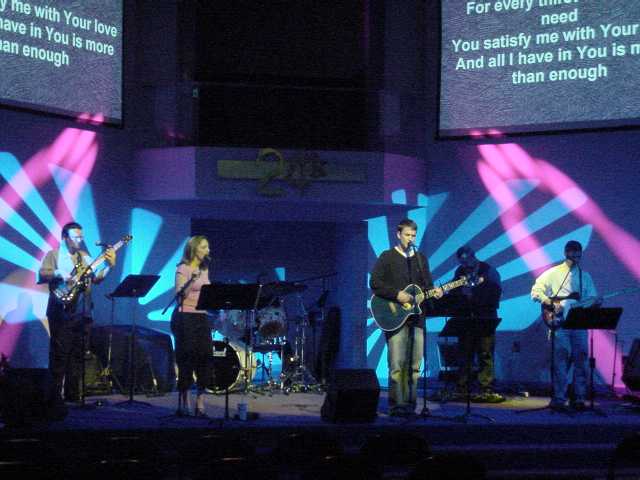
Let me tell you: those people knew how to worship. If you can imagine a full band: drum kit, 3 guitarists, bass, keyboard, and multiple singers. They had stage lighting set up that would change dramatically during the songs, and even during the sermon. They had giant projectors that displayed lyrics, prayers, and even sermonic notes. When the band was playing, everyone had their hands in the air praising. When the preacher was praying, everyone had their heads bowed in submission. It was an experience. The energy in the room was so palpable that I felt on fire for Jesus when I left.

CrossTalk_PCBC_050403

About a week later, after spending way too many hours in the library, I found myself walking back across the quad late at night toward my locked up bicycle. Across the perfectly mowed grass I saw a young man stumbling and trying desperately to maintain his balance. As our paths inevitably drove us closer and closer I recognized him from the worship service I had been in the week before, this young inebriated college student was the bass player for the worship band. It was obvious that he needed help, and remembering that I was a Christian and thinking that this would be a Christian thing to do, I offered him my arm and began to walk him back to his dorm.

“I loved your service the other night,” I said, “The music was particularly moving.” He met my statements with a suspicious eyebrow, so I awkwardly continued “It was really powerful for me.” “Look man,” he slurred, “I don’t believe in God. I just play in the band because they pay me to.”

Worship is important. As Christians we have gathered together for the last 20 centuries first in synagogues, then basements and homes, eventually we started to build churches, and then cathedrals. Worship is at the heart of what it means to be Christian because we participate in the kind of life that Jesus led with his disciples in the 1st century. You might not realize it, but the basic pattern of our worship service has its roots in the ancient practices of the Israelites, and have been handed down to Christians ever since.

First we gather together: we are brought into this place as a community, the body of Christ. We assemble together from the outside world preparing ourselves to be launched into the realm and praise of God almighty.

Second we proclaim the Word of God. We read from the scriptures of the Old and New Testaments. We remember the mighty acts of God in the world as recorded in the Bible and then a sermon is given in order to let the Word become incarnate in our hearing and living.

Third we respond to the proclaimed Word. After hearing about and remembering God’s actions in our lives and the lives of others we return to God with our own participation. Sometimes this response takes place in the form of Communion where we recommit ourselves and are welcomed to God’s table. Other weeks we respond with affirmations of our beliefs such as the Apostles’ Creed.

Finally, we conclude by being sent forth. We re-enter the world bringing with us the light of Christ. As a gathered community we recommit ourselves to life outside of the church being the body of Christ for the world.

Here’s the frightening part: All of that is meaningless unless our lives are transformed.

One of the things that we definitively learn from scripture, particularly the Old Testament is this: the children of God, the objects of divine grace, are not in any way worthy of it. Time and time again in the scriptures we learn about the people of Israel who, by way of their faithlessness, were transgressors of the commandments given to them by almighty God. Just think of some of the so-called “heroes” of the Old Testament: Noah – saved his family and all the animals in his ark and then got drunk and cursed one of his sons for all eternity. Abraham – entered into the holy covenant with God and then pretended to be his wife’s brother and nearly murdered his son. David– delivered the Israelites from the Philistines by killing Goliath, and then stole Bathsheba from her husband and tried to have him murdered. I could go on and on.

The normal sermonic response to these stories of failure and sin is that the children of God are corrupted children. However, in time, God came to dwell among his people and came in the form of a baby named Jesus, the one Israelite who took the place of the disobedient children, the faithless people, and their faithless priests and kings. The Word made flesh. It is only in the light of who Jesus is and was that we see how far humanity had fallen from the grace of God.  What we miss though is the fact that this type of behavior, this faithlessness, does not only apply to the Israelites and the people of Isaiah’s critique, but in fact acts as a mirror for all of us.[1]

Its very easy to read this passage from Isaiah and assume that the Israelites were the one’s who got it wrong, but us enlightened folk in the 21st century, we United Methodists, we’ve got our worship lives together, we are appropriately liturgical. But the Word of God has a most perturbing way of disregarding dates and making truth contemporary.

Isaiah begins, “Hear the word of the Lord, you rulers of Sodom! Listen to the teaching of our God, you people of Gomorrah!” He continues by pointing out all of the failures of their worship: “What to me is the multitude of your sacrifices? I have had enough burnt offerings!” It’s as if God were looking at us today and saying: “I don’t care about your opening Hymn, I have heard enough of the scriptures read aloud.” All these elements of worship, the types of things we take for granted every week are relatively meaningless to God unless what we do in this place translates into the way we live our lives.

“Wash yourselves, make yourselves clean, remove the evil of your doings from before my eyes; cease to do evil, learn to do good, seek justice, rescue the oppressed, defend the orphan, plead for the widow.” These are the things that are important to God. The Hebrew prophets Isaiah, Amos, Micah, Hosea, and Jeremiah each denounce worship practices that have no influence on the way we handle our lives. The prophets try again and again to demonstrate that God is far more concerned with the relationships between people than with the details of public worship.

“Wash yourselves, make yourselves clean.” It is precisely at this moment that the voice of God, through the prophet Isaiah reaches us across the centuries and bids us to look into our own hearts before we come to God. Sometimes we don’t like to admit it, but there is a relationship between corporate worship and individual character. What we believe shapes how we behave.

When I ran into the young man on campus, the bass player for the worship service, I got a glimpse into what Isaiah is getting at in this passage. You can have the “perfect” worship service, we could get the lights going with the projectors and the band and the PowerPoint and the over the ear microphones. We could get people to wave their hands in the air and sing at the top of their lungs. But, worship ceases to be true worship unless our lives are changed when we re-enter the world. Worship becomes just a routine for us if we treat it like that bass player did: just a gig.

We here, good Christian United Methodists, we might not be guilty of the same hypocrisy in our worship, but we need to face the truth that to raise no voice against the evils and injustices of the world, to remain silent in the shadow of corruption and sin, is to leave a fatal gap between the type of Worship we offer to a righteous God, and the attitudes we have toward the wrongs of the world. Throughout history there has been a deep inconsistency between the faith we proclaim on Sunday mornings in the fatherhood, justice, and holiness of God and the type of ethics and moral decisions to which we consent in our lives and particularly in our dealings with other people.

book_of_isaiah

We should ask ourselves: Is our worship changing the way we live our lives? Are we heeding the call to love the oppressed? Are we content to remain almost Christians, or are we fully embodying what it means to be disciples of Jesus Christ? Why do we gather together once a week?

All of this, gathering, proclaiming, responding, being sent forth, remains empty until we are transformed. They will continue to act only as a routine for us unless we enter the strange new world of the Bible and realize that our world has been turned upside down. We gather weekly to turn ourselves back toward God so that we can live lives that follow the teachings and practices of God in Jesus Christ. What we do in this place can function to help transform our lives if we continue to learn the grammar of discipleship and speak that new language when we go back into the world.

The only true worship worthy of God, the worship that God seeks from his people, is the time and space that reveals God’s character through justice, righteousness, unselfishness, and purity. What we are must ratify what we say. Or as one of my professors used to say: We can only live in a world we can see, and we can only see in a world we have been taught to speak. When we learn the stories of scripture, let the tunes and words of the hymns resonate deeply in our lives, we can then learn to be a new people for the world.

It is the responsibility of this church to make the love of God known and to comfort all people with the Good News of our Lord Jesus Christ. This cannot be done through worship alone, through singing hymns alone, through preaching alone, or by any other institutional method we can come up with, but only through living lives which reflect God’s loving spirit. When you walk out of church this morning I encourage you to remember that God has already transformed you through the life and death of Jesus Christ. As you interact with others remember that we have been called to love the oppressed, and seek justice in the world. I challenge you to do something this week that is truly worthy of God’s worship.

Worship in God’s church takes place right here in this space, but the results of our worship should be manifest in the way we live our lives here and in the world. Amen.


[1] Barth, Karl. Church Dogmatics V.1. (Peabody, Mass.: Hendrickson Publishing, 2004), 523.

Who Are We To Be? – Sermon on Luke 12.13-21

(preached at St. John’s UMC  on 8/4/2013)

photo-006

Luke 12.13-21

Someone in the crowd said to him, “Teacher, tell my brother to divide the family inheritance with me.” But he said to him, “Friend, who set me to be a judge or arbitrator over you?” And he said to them, “Take care! Be on your guard against all kinds of greed; for one’s life does not consist in the abundance of possessions.” Then he told a parable: “The land of a rich man produced abundantly. And he thought to himself, ‘What should I do, for I have no place to store my crops?’ Then he said, ‘I will do this: I will pull down my barns and build larger ones, and there I will store all my grain and my goods. And I will say to my soul, Soul, you have ample goods laid up for many years; relax, eat, drink, be merry.’ But God said to him, ‘You fool! This very night your life is being demanded of you. And the things you have prepared, whose will they be?’ So it is with those who store up treasures for themselves but are not rich toward God.

It was late. I had been working for Duke University Hospital for some time and I was used to getting the random alerts on my pager. They always seemed to come in waves, or at moments when you were busy with something else. It had been a trying shift already, quite a few deaths, arguments in the lobby, too many prayers to count before surgeries… I remember looking at my watch after receiving the page, reluctantly putting on my white lab coat, and heading to the room number.

You never know what to expect on the other side of a patient’s door. Sometimes it was a family celebrating good news, or a patient wanting to complain about the hospital food, or sometimes death was waiting on the other side. On that particular night I entered the room and saw two brothers on opposite sides, ignoring one another, with their no longer living mother under blankets on the hospital bed. She had died from complications following surgery, and like any death at the hospital; I was called to offer my services to the family.

I introduced myself, and expressed my condolences to both men, but they refused to stand together or even acknowledge one another’s presence. So I stood there just inside the doorway, moving my body to the left and to the right attempting to convey my deepest sympathies for their recent loss, and give them the space to experience what had occurred. After prolonged periods of awkward silence I invited the men to join me in an adjacent room so that we could meet with Decedent Care in order to fill out the necessary paperwork regarding their mother’s body.

They filled out the appropriate forms, revealed which funeral home would be receiving the body, and I got my things together to leave when the real discussion started. “Where have you been?” one said to the other, “I’ve been with mom for months, watching her die, taking care of her… if you think I’m going to let you have any of the inheritance you are sorely mistaken.” “Don’t you dare speak to me that way!” he replied, “I was her son too, I deserve my share. I know she never loved me like she loved you, but you better believe I’m going to do whatever it takes to get my money.” And he stormed out of the room. Seconds passed before the remaining brother sighed, collected his paperwork, walked our of the room and left the hospital. So there I sat, all alone, after having witnessed two brothers fight about assumed inheritance while their mother lay dead in the next room.

The ugly fight and dispute in that hospital room is all too familiar: Arguing about inheritance. We see this kind of thing on TV, read about it in books, or have experienced it in our own lives: haggling over the furniture, dishes, paintings, property, and savings accounts. Most of the time this is done without a thought or consideration about the life that was lost, and the depth of one’s selfishness and greed shines frighteningly brighter than ever before.

In Luke 12 a crowd gathered by the thousands was pushing in to hear anything they could from Jesus. Jesus triumphantly exhorts the people to confess fearlessly before God because the Holy Spirit will teach them what to say. While standing before the throngs of people Jesus is interrupted by a man and asked to judge an inheritance dispute. “Teacher,” the man says, “tell my brother to divide the family inheritance with me.” Jesus knows that he is not such a judge and he does not want to be. According to the words and actions of Jesus, these kind of specific ethical questions that judges deal with are not the ultimately important ones. When brought this vexing situation Jesus refuses to be a referee between the brothers; after all, who can judge whose greed is right?

Instead of addressing the particularities of the interrupting man, Jesus turns to the crowd: “Take care! Be on your guard against all kinds of greed; for one’s life does not consist in the abundance of possessions.” Jesus then does what he does best, he tells a story…

There once was a rich man whose property produced abundantly. And he thought to himself, “What am I to do with all these extra crops?” So he devised a solution, “I will destroy my barns and build larger ones to hold all of my excess!” Then he said to his soul, “Soul, you have ample goods laid up for many years; relax, drink, be merry!” But God said to him, “You fool! This very night your life is being demanded of you, and the things you have prepared and saved, whose will they be?” And Jesus ties it all together, “So it is with those who store up treasures for themselves but are not rich toward God.”

Upon first inspection, it seems as if the farmer has done nothing wrong. This is not some easily identifiable caricature of human desire but a truism that we can all identify with. For all intents and purposes he is careful and conservative. He is not unjust in the way that a typical parable would make him out to be. He has done what any rational and forward thinking person would do. He invests. He takes his extra surplus and puts it away so that he might reap from it for years and years.

So, if he is not unjust, then what is he? Jesus tells us very directly: He is a fool! This farmer lives completely for himself, he plans for himself, he congratulates himself, and he even speaks to himself. He is a fool because his perspective can only go as far as himself. He is a fool because he is defined by nothing short of greed. He is a fool because God is nowhere in his story. The craving desire to hoard his possessions demonstrates how the farmer foolishly believes that he can do all things without God, that he will be fine without God. The farmer’s selfishness indicates the way is life is oriented: completely and totally inward.

Jesus uses this short parable to challenge an accepted set of values: he is denying that it is possible to have security by amassing wealth and property. Instead he proclaims that one becomes secure only by being rich toward God and others.

In the story the famer’s desire to hoard his goods not only ignores the role of God in his life, but is also an act of total disregard for the needs of others. What might appear as “good business” for the farmer actually has far reaching consequences for others in his community. It’s not explicit in the story, but the man is so focused on himself that he has ignored others around him who could also greatly benefit from his surplus. What good is a banquet of food if you are the only one in attendance?

Jesus looks out at the crowd and through this story sets forth a new perspective on what it means to be in the kingdom of God. We cannot find security through an accumulation of abundance, at least not in the way the farmer believed. There is however, an abundance we do have; it is through Father, Son, and Holy Spirit that we can be in all things more than the farmer, it is only in the abundance of the mercy of God that we can be confident that neither death, nor life, nor angels, nor rulers, nor things present, nor things to come, nor powers, nor height, nor depth, nor anything else in all creation will ever be able to separate us from the love of God in Christ Jesus our Lord. To know this love in our hearts, souls, minds, and bodies, is to be rich toward God.

People are always asking me questions about what they’re supposed to do. Like the man interrupting Jesus they want to know how to handle a specific situation according to what it means to live as a Christian. To be authentically Christian the question can no longer be, “What should I do?” but instead, “who am I to be?”

When we ask ourselves who we are to be, we can live our lives in such a way that we will already know the answer to the former question. We are to be disciples of Jesus Christ. We are to be a people of gifts. We may complain about one another to one another, like the interrupting man does, but this kind of bickering will never get through to God. Before God we are confessors not complainers. God is the center of the story, not us. All of the talk in the story about the farmer has been a monologue. He talks to himself, plans for himself, celebrates himself. All these things in my life, I accomplished them, I’ve earned this; I deserve this. It is only when God finally intrudes in the story that we get a glimpse of the truth: “You fool!”

We are to be disciples of Jesus Christ, intent on doing the will of God in the world so that his kingdom can reign abundantly, so that God can continually reconcile us to himself, to one another, and to his creation, so that we can be the body of Christ for the world redeemed by his blood.

For the first time in my life, I am tithing to the church. To be honest, this is the first time I’ve ever earned a salary and had the capacity to give back to God a tenth of what I am earning. Everyday I have been in Staunton God has continued to show me that this is exactly where I’m supposed to be, doing exactly what I’m supposed to do. This is a gift; to be here as the pastor of St. John’s is a gift.

We are to be a people of gifts. This means that we are called to give back to the good God who first gave to us. This doesn’t have to just come in the form of money because we are called to give to God through our gifts, our time, and our service. For me, I give part of my salary to God as a discipline, so that I can remember from whom all of this comes from first. How often have I been guilty of the same thoughts as the farmer? I did this, I’ve earned this, I deserve this. When in fact I have done very little for this graceful life. I owe everything to the people around me, and to the God who gave me the greatest gift of Jesus Christ.

Karl Barth

Karl Barth

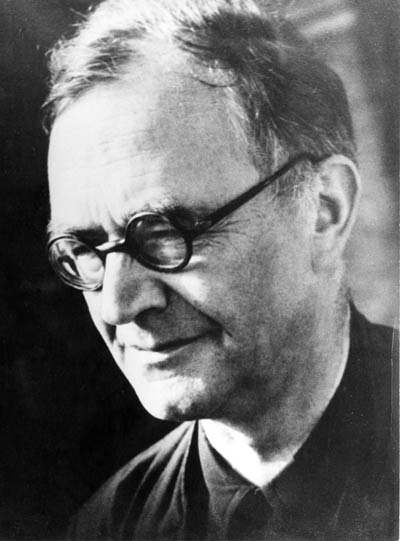
We are to be a people of gifts willing to offer ourselves to one another. Karl Barth once wrote, “When I really give anyone my time, I thereby give him the last and most personal thing that I have to give at all, namely myself.” How beautiful it is to offer ourselves to those around us, to those in need, and to those who need to feel the love of God through us.

Giving ourselves to other people is beautiful because it is exactly what God did for us through the gift of his Son Jesus Christ. God came among us, to spend time with us, just as he does every day, to give us the most precious gift in the world: himself.

lord__s_supper_by_bclary-d37hhzp

Before us this morning the table has been prepared. Like our call to share ourselves with others, God desires to share this meal with us. We are invited to receive these gifts without any merit on our part but because God loves us. God has not kept his grace stored up in a barn for eternity, but out of God’s abundant love it has been presented to us in the death of his only begotten Son and the gifts of bread and wine.

Who are we to be? We are to be disciples of Jesus Christ, willing to share with others the gifts that God has given to each one of us. We can give back to the good God who first gave us life through our tithes and offering, we can give back by serving those in need, we can give back by sharing the love of God with others, we can give back by offering prayers for our enemies. We are not called to keep the riches of our lives kept away for our own selfish enjoyment; instead we are called to be a people who are rich toward God.  Amen.

Lord, Teach Us To Pray – Sermon on Luke 11.1-13

Luke 11.1-13

He was praying in a certain place, and after he had finished, one of his disciples said to him, “Lord, teach us to pray, as John taught his disciples.” He said to them, “When you pray, say: Father, hallowed be your name. Your kingdom come. Give us each day our daily bread. And forgive us our sins, for we ourselves forgive everyone indebted to us. And do not bring us to the time of trial.” And he said to them, “Suppose one of you has a friend, and you go to him at midnight and say to him, ‘Friend, lend me three loaves of bread; for a friend of mine has arrived and I have nothing to set before him.’ And he answers from within, ‘Do not bother me; the door has already been locked, and my children are with me in bed; I cannot get up and give you anything.’ I tell you, even though he will not get up and give him anything because he is his friend, at least because of his persistence he will get up and give him whatever he needs. So I say to you, Ask, and it will be given you; search, and you will find; knock, and the door will be opened for you. For everyone who asks receives, and everyone who searches finds, and for everyone who knocks the door will be opened. Is there anyone among you who, if your child asks for a fish, will give a snake instead of a fish? Or if the child asks for an egg, will give a scorpion? If you then, who are evil, know how to give good gifts to your children, how much more will the heavenly Father give the Holy Spirit to those who ask him!”

39347_1409537169434_1007347_n

A few years ago I was given the opportunity to lead an adult mission trip to Guatemala, (nearly identical to the one Lindsey went on 2 weeks ago). It would be my responsibility to help organize the trip, make sure we had all the proper preparations taken care of, and then lead the adults while in the country. I was 19 years old at the time, and all of the adults on the trip were closer in age to my parents. “Stressed” doesn’t even come close to describing the way I felt between organizing the trip and making sure we all arrived in the country. I mean this in the best possible way, but that trip was the first time I really experienced what its like to be a shepherd herding sheep.

We had been in Guatemala for 24 hours when it was time for us to make the long bus journey to the village where we would be working. I don’t know whether it was the restlessness that accompanies an impending workweek, or if I just had trouble sleeping, but I woke up before anyone else and I walked around the town of Panajachel on the banks of lake Atitlan. By the time I made it back to our little bungalows I thought I was still the only person awake, so I made my way back to my room before breakfast. Because I was leading the trip in tandem with my home pastor, we had been assigned to the same room, and I quietly crept in so as to not wake him up. When I finally pushed the door open I saw something that stopped me in the doorway.

Jason was kneeling on the cold hard ground with his bible open on the bed praying out loud. I froze in the doorway because I had known Jason for 5 years and I had never seen him pray outside of Sunday worship. I could not hear everything he was saying, but it was one of the most beautiful things I had ever witnessed. And standing there in the doorway, watching my pastor pray on his knees, I felt convicted. In that moment I could not remember the last time I had talked to God.

38744_1412672047804_1769592_n

“Lord, teach us to pray.” On the lips of the unnamed disciple, this is one of the most revealing moments of the gospel according to Luke. From this one desire, this simple request regarding prayer, we get to take a step into the strange new world of the bible and hear Jesus speak from within the depth of his being: When you pray, say: Father, hallowed be your name. Your kingdom come. Give us each day our daily bread. And forgive us our sins, for we ourselves forgive everyone indebted to us. And do not bring us to the time of trial.”

How often have we wanted to ask Jesus the same exact thing? I can tell you, that as someone in the ministry, the only question I hear more often than “what will happen to me when I die?” is “how am I supposed to pray? Clearly this is something that gets at the heart of what it means to be a follower of Jesus Christ because even the original disciples wanted to know how to pray. In the same way that my pastor Jason’s prayer moved me to want to learn to pray, Jesus exemplified the importance of prayer for his disciples.

Throughout the gospel, Jesus is frequently in prayer and it carries an incredibly important image. At his baptism: “Now when all the people were baptized, and when Jesus also had been baptized and was praying, the heaven was opened (Lk. 3.21). As he made his way throughout Galilee “he went to the mountain to pray; and he spent the night in prayer to God. And when day came, he called his disciples and chose twelve of them, whom he also named apostles (Lk. 6.12-13). Before Peter’s confession of Jesus as the Christ, Jesus had been praying alone, with only the disciples near him (Lk. 9.18). Jesus, Peter, John, and James were heading up the mountain to pray when Jesus was magnificently transfigured in the midst of praying (Lk. 9.28-29). The importance of prayer in the life of Jesus Christ was significant enough that even his disciples, who were with him constantly, wanted to learn more about the role it played in his life. “Lord, teach us to pray.”

So our Lord looked out at his disciples and said, “When you pray, say: Father”

Father. Notice: Jesus does not pile adjectives on top of each other, its not O Great and mighty most wonderful eternal and almighty God. Instead he simply encourages his disciples to say, “Father.” This word alone helps to signify how this prayer can be both personal and communal. The disciples are to call God “Father” in an intimate and connected way while at the same time recognizing that they have one “Father” to which they can pray together. By beginning with “Father” Jesus is inviting his followers to share in his own prayer life, hoping that they will approach God in the same way that he does.

As the prayer develops it is continually a prayer of a community, “hallowed be your name. Your kingdom come. Give us each day our daily bread.” The plural language, mixed with the intimacy of the relationship with God, allows for this to be a prayer done in a communal gathering, or alone. It remarkably conveys the depth of mystery involved in a community of faith while affirming the desire for God’s kingdom on earth. Whether you pray alone every night before you fall asleep, or if the only time you pray is on Sunday mornings in church, you are connected to God, God’s people, and God’s creation

“And forgive us our sins, for we ourselves forgive everyone indebted to us. And do not bring us to the time of trial.” There is a subtle difference in the prayer at this point as compared to the one from the Gospel according to Matthew, which we say together every week. Instead of “forgive us our trespasses, as we forgive those who have trespassed against us,” Luke tells us that Jesus taught the disciples to seek God’s forgiveness of their sins as we forgive those who are indebted to us. Jesus is concerned with the way that we relate to God, one another, and to God’s creation. When we pray we are not isolated beings stratified from those around us, but we are personally connected with God through our brothers and sisters in Christ. According to Jesus, prayer is supposed to accomplish communal fellowship in such a way that we are not hindered when gathering as the body of Christ. This means that if we take seriously the words of prayer that Jesus taught us, we can’t ignore those sitting with us in worship, and everyone within the greater community.

Jesus concludes his prayer for the disciples by using a little parable to help explain true perseverance in prayer. Through the story of the friend asking for three loaves of bread in the middle of the night, we learn that prayer is to be continually asking, seeking, and knocking. “Ask, and it will be given to you; search, and you will find; knock, and the door will be opened for you.” Prayer is a learned experience, one that is continually cultivated. Prayer is not simply a release of feelings toward God, but a disciplined habit that influences the way we live our lives.

About a year ago, I was making regular visits to the shut-ins from a church in Durham, North Carolina. Every week I found myself sitting with all sorts of people learning about their pasts, and experiencing discipleship in new and exciting ways. Though most of my visits were often filled with excited dialogue there was one particular lady who never spoke. In fact, after meeting with her son, I discovered that she had not talked with anyone for some time. Whenever I saw her we would sit together, I would tell her about all the things happening at church, and I would eventually spend most of the time reading scripture. Her son was almost always with us in the room, and always politely thanked me for coming over but made it clear that there was nothing to be done. One afternoon, after reading from the Gospel according to Mark, I decided to try something new. I began to sing one of my favorite hymns: “Lord, I want to be a Christian in my heart, in my heart, Lord I want to be a Christian in my heart.” By the time I was halfway through the second verse I noticed that she started to move her head back and forth, and as I lowered my singing voice I noticed that she was humming along with me. I looked across the room to her son, and with tears in his eyes he started singing with us. This was the first time, in a long time, that he saw his mother communicating.

Before I left, the three of us held hands for prayer and when I started to say “Our Father, who art in heaven,” she joined us and said the words that Jesus taught his disciples.

It never ceases to amaze me how deeply profound our prayers can be. For that woman it was the hymns and the prayers of church life that stuck with her. They had helped to shape the life she led, and then helped to reunite her with her son that afternoon. When prayer becomes habitual in our lives, when communicating with God becomes part of who we are, our lives will be turned back to the one in whom we live, and move, and have our being.

Praying_Hands_-_Albrecht_Durer

My Christian hero, the Swiss theologian Karl Barth once said: “To clasp the hands in prayer is the beginning of an uprising against the world.” When we follow Jesus and allow prayer to shape our lives like it shaped his, we will begin to stand against the ways of the world. Prayer refocuses our perspective on the ways of God so that the kingdom can remain manifest among us. Learning to pray is much more than just learning a prayer, and we cannot simply learn to pray by learning to say specific words, but the repetition of such words are part of the discipline of prayer. Sometimes we don’t realize it, but every time we read the words of scripture we are praying. Every time we sing the words from our hymnal we are praying. Every time we greet others around us in love we are praying. Living a life of prayer is not easy, but it is more fruitful than we can possibly imagine.

Jesus’ own prayer life was obviously important to the disciples, and should be important to us. We learn from Luke 11 that prayer is about bringing to God our deepest needs and most perplexing trials and tribulations. Prayer is about waiting there in the midst of unknowing for light, love, and strength from the God who made each one of us. Prayer is the recognition and presentation of our lives before him as a holy and living sacrifice. Prayer is the understanding that true Christian living depends not so much on what we do and say, but rather what we allow God to do in and through us. Lord, teach us to pray.

Amen.

The Image of the Invisible – Sermon on Colossians 1.15-28

Colossians 1.15-28

He is the image of the invisible God, the firstborn of all creation; for in him all things in heaven and on earth were created, things visible and invisible, whether thrones or dominions or rulers or powers – all things have been created through him and for him. He himself is before all things, and in him all things hold together. He is the head of the body, the church; he is the beginning, the firstborn from the dead, so that he might come to have first place in everything. For in him all the fullness of God was pleased to dwell, and through him God was pleased to reconcile to himself all things, whether on earth or in heaven, by making peace through the blood of his cross. And you who were once estranged and hostile in mind, doing evil deeds, he has now reconciled in his fleshly body through death, so as to present you holy and blameless and irreproachable before him – provided that you continue securely established and steadfast in the faith, without shifting from the hope promised by the gospel that you heard, which has been proclaimed to every creature under heaven. I, Paul, became a servant of this gospel. I am now rejoicing in my sufferings for your sake, and in my flesh I am completing what is lacking in Christ’s afflictions for the sake of his body, that is, the church. I became its servant according to God’s commission that was given to me for you, to make the word of God fully known, the mystery that has been hidden throughout the ages and generations but has now been revealed to his saints. To them God chose to make known how great among the Gentiles are the riches of the glory of this mystery, which is Christ in you, the hope of glory. It is he whom we proclaim, warning everyone and teaching everyone is all wisdom, so that we may present everyone mature in Christ. For this I toil and struggle with all the energy that he powerfully inspires within me.

dsc03573small

A few years ago, I was with a group of people from Northern Virginia who regularly traveled into Washington D.C. to help serve food to the homeless with a group called Sunday Suppers. The team would gather together on a Sunday afternoon, prepare countless bag lunches and a large dinner and then travel into the city. The point of the mission was not so much just to provide food for the hungry, but everywhere we stopped we would set up tables so that all of us could sit and eat together.

I had gone on a few of these Sunday evening adventures, and had even gotten to the point where I recognized a few of the “regulars” and knew them by name. On one particularly cold December evening, I was with a group of youth serving food near a metro station when I struck up a conversation with one of the “regulars” named Charles and a church member who was on his first Sunday Suppers trip. Charles stood there in front of us with his hands outstretched waiting for food, his ripped navy sport-coat showed years of ware, and his curly grey and black hair was billowing outside of his knit cap. “I really appreciate this,” he said, “but you Christian types always come out around Christmas and Easter. The people out here, we have more food than we know what to do with, but where are you in July? You might not realize it, but that’s when we need you to come. I’m with these people everyday, and I know what they need.”

I was distracted for the rest of the evening. I kept thinking about how happy and pleased I was with our missional activities, and how quickly those feelings disappeared after I had talked with Charles. It wasn’t until the ride home that the young boy who I had been standing with talked to me. He was looking down at his knees when he finally began to speak: “Sometimes we feel like we’re being Jesus for people, bringing them food, sitting and eating with them. I guess it makes us feel good. But tonight, I felt like Charles was being Jesus for us.”

The gospel is for all people and all minds. Throughout the book of Acts and the epistles Paul is notorious for using the contexts of particular people to help illuminate the glory of Jesus Christ. For the Colossians, he bends to their philosophical speculations to demonstrate the importance of Christ for the world. He searches for a point of contact and then pushes there again and again until the fullness of God in Christ permeates throughout their common understanding. For the Colossians Paul relates Christ to their Natural Theology, presenting God’s unique revelation of himself in Christ in the categories of thought with which they are familiar. He exalts Christ in terms that they would understand. This is how he spread the Good News throughout the Mediterranean.

Throughout the history of the Church we have similarly tried to rediscover who Christ is for particular times and places. Pastors, preachers, and prophets have used many names and adjectives corresponding with peoples’ understandings. Jesus has been referred to as “The Good, the True, and the Beautiful, The Rabbi, The Turning Point of History, The Light of the Gentiles, The King of Kings, The Cosmic Christ, The Son of Man, The True Image, The Crucified One, The Monk Who Rules the World, The Bridegroom of the Soul, The Divine Human, The Universal Man, The Mirror of the Eternal, The Prince of Peace, The Teacher of Common Sense, The Poet of the Spirit, The Liberator, The Man Who Belongs to the World” (Chapter Titles from Jaroslav Pelikan’s Jesus Through the Centuries).

unknown-artist-christ-pantocrator-st-catherine-monastery-mount-sinai-egypt-6th-century-e1277330981153


John Henry Newton, the Anglican priest who wrote Amazing Grace, also tried to convey this searching for appropriate descriptors through one of his hymns:

“Jesus, my Shepherd, Brother, Friend,

My Prophet, Priest, King,

My Lord, my Life, my Way, my End,

Accept the praise I bring.”

We, like Paul, have continuously adapted Jesus to terms, ideas, and images acceptable to particular peoples and cultures. This has been an incredibly important element of the Christian message as we have made the Gospel approachable from many different places. And though we should continue to make the bible relevant for those outside the church, we have fallen prey to our own self-righteousness and sin. Like the group that night serving food to the homeless in DC, we often think that Jesus is walking along with us, that we are bringing Jesus to people, when in fact we should be following him because he is already there.

We always try to make Jesus look just like us. Each successive period in Christian history has found its own thoughts in Jesus, which was one of the only ways to make him live, but we have continuously created him in accordance with our own desires, hopes, and character. We don’t realize it, but most of the times we think we find Jesus, its like we are looking into the bottom of a well – all we’re really seeing is a faint reflection of ourselves.

Just look around our church, you can find all sorts of images of Jesus. Jesus with blonde hair and blue eyes, Jesus with slight stubble, and Jesus with a full-blown beard. I’ve seen pictures of Jesus wearing a black leather jacket standing in front of an American flag. I’ve seen images of an African American Jesus working in the fields in Pre-Civil War America. I’ve seen Jesus in jeans and a flannel shirt cutting down trees. I’ve even seen Jesus in a business suit speaking with clients.

All of these portrayals are important. They get at the heart of Jesus being Emmanuel: “God with us.” They help to adapt Jesus to a particular culture and set of people, making him and his message relevant for the masses. However, when we use all these different images of “God with us,” We cannot forget that Jesus’ identity begins with God.

Jesus is the image of the invisible God, the first born of all creation, fully God and fully human. In Jesus all things in heaven and on earth were created, things both visible and invisible. He himself is before all things, and in him all things hold together. For in him the fullness of God was pleased to dwell and through him God was pleased to reconcile to himself all things. He is the image of the invisible God, the word for image in Greek is εἰκών, meaning likeness or a representation. Jesus in not merely a picture of God but contains God’s likeness: literally divine.

The letter to the church in Colossae contains all sorts of information necessary for the people to align themselves with the Lord. Paul uses the language of natural theology for them, he adapts Jesus to their culture, but he is unwilling to separate the identity of Christ from almighty God. Jesus is the image of the invisible God. The letter to the Hebrews also tells us: “Jesus Christ is the same yesterday and today and for ever. Do not be led away by diverse and strange teachings; for it is well for the heart to be strengthened by grace” (Heb. 13.8-9). Jesus is God with us, made incarnate to all people, but we must remember that in him the fullness of God was pleased to dwell in order to reconcile himself to all things; the same yesterday, today and for ever.

This past week I spent two days on a retreat at the Conference Center in Blackstone Virginia. I gathered with all of the other provisional candidates from our Annual Conference as we discussed our journeys of faith and the future of the church. There were clergy present from all over the state of Virginia, some young, some old, some newly Christian, and some Christian since birth. We gather twice every year to help maintain our connectional system while working together for the future of God’s kingdom. Our Bishop, Young Jin Cho, opened our time together with a service of worship and preached to us about following Jesus. He talked about the story when Mary and Joseph had accidentally left Jesus at the Temple in Jerusalem. Mary must have been moving along, assuming that Jesus was walking right with her, and then she discovered that he was missing. She had to completely turn around until she realized that she had left without him. Bishop Cho encouraged us to continually ask ourselves these questions: Are we walking and hoping that Jesus approves what we’re doing, or are we following him? Have we turned ourselves back to the Lord like Mary? Or are we wandering around the desert? He concluded by stating: “Without spiritual disciplines in the church there can be no discipleship, without spiritual disciplines we will not be able to follow Jesus.”

Bishop’s Cho thoughts are relevant for us this morning as we consider Jesus being the image of the invisible God. We need to ask ourselves. Are we almost Christians? Do we live our lives in such a way that we assume and hope that Jesus is on board with us? Do we imagine that Jesus looks just like us, talks like us, thinks like us? Do we believe that God would be proud of the way we live our lives?

Or are we truly Christian? Do we recognize that while Jesus is just like us, he is also totally unlike us? Do we follow behind Jesus letting him lead us? Do we love him with all of our heart soul mind and strength? Are we willing to allow ourselves to recognize that Jesus is in the people we encounter rather than us bringing him to them? Do we hope in God in Jesus Christ? Are we comfortable standing in the shade of the cross while looking for the glory of the resurrection?

When I sat in the van on my way home from Washington DC the light of the gospel was made real through that young man sitting next to me. For the rest of my life I will never forget his words: “Sometimes we feel like we’re being Jesus for people, bringing them food, sitting and eating with them. I guess it makes us feel good. But tonight, I felt like Charles was being Jesus for us.”

We’re not Jesus, and that’s a good thing. We gather together here to worship the remarkable God who became flesh in the man Jesus Christ, the man who walked and talked among us pointing back toward God. We no longer need to adapt Jesus to particular settings, but instead adapt ourselves to Jesus Christ. We are here, like Paul, to make the Word of God fully known. The scripture today helps to remind us that we are not Jesus Christ, but that we have the responsibility to be shaped by the Word of God to be the body of Christ for the world. God has chosen to show us the riches and glory of this mystery, we’re not Jesus, but Jesus is in us and is leading us toward the future hope of glory.

Amen.

Shaped By The Word – Sermon on Psalm 25.1-10

(preached at St. John’s UMC on 7/14/2013)

Psalm 25.1-10

To you, O Lord, I lift up my soul. O my God, in you I trust; do not let me be put to shame; do not let my enemies exult over me. Do not let those who wait for you be put to shame; let them be ashamed who are wantonly treacherous. Make me to know your ways, O Lord; teach me your paths. Lead me in your truth, and teach me, for you are the God of my salvation; for you I wait all day long. Be mindful of your mercy, O Lord, and of your steadfast love, for they have been from of old. Do not remember the sins of my youth or my transgressions; according to your steadfast love remember me, for your goodness’ sake, O Lord! Good and upright is the Lord; therefore he instructs sinners in the way. He leads the humble in what is right, and teaches the humble his way. All the paths of the Lord are steadfast love and faithfulness, for those who keep his covenant and decrees.

wordle-psalm-251-9-advent-1-29nov09-11152009-101459-pm


I remember being really cold. I had walked out of my house in a hurry with books in one hand and my lunch box in the other. I jogged down the hill to the bus stop hoping that I would make it in time. As my feet swept over the damp and life-less leaves on the path I struggled to maintain my balance, hurrying to the sign at the bottom. After reaching my destination, and seeing my breach hanging in the air, I reached into my pocket in order to check the time on my iPhone, but my pocket was empty. In the rush out of my house that morning, I had forgotten to unplug my phone from the wall and place it in my pocket.

So there I stood, all alone at the bus stop, waiting for my transportation to arrive, with nothing to do. Every other normal day I would pull out my phone, check some emails, send a few texts messages, play some games, listen to music, examine the news; But not that day. I stood there shivering and bored. After what seemed like an hour, but was probably only a few minutes, the bus arrived and I hopped on. As I made my way to a seat, I found myself even more frustrated that I had left my phone at home, and I would have to wait a whole 7 minutes on the bus with nothing to do. So I looked around hoping to strike up a conversation with someone on the bus in order to pass the time. My eyes scanned from back to front, side to side, and literally every single person on the bus was starring at their cell phone, or had headphones in. And that’s when I noticed the silence; no one was talking to anyone else. Admittedly I remember again wishing that I had not forgotten my phone, so that, ironically, I wouldn’t have to feel so lonely on the bus.

We are increasingly moving away from a relational society, toward a functional one. We are so caught up in what we need and want that we put up blinders to those around us and we seek to serve ourselves rather than others. The advents of technological developments have benefited our society greatly, but at the same time I fear that they are actually driving us farther and farther apart. I no longer see families praying together at restaurants, but I do see families who are all on their cell phones at the same time.

modern-family-tech-use

In a similar way we no longer know how to read anymore. We become so caught up with the quantity of texts rather than the quality. Young people are no longer taught handwriting in school, but instead are given computers that can spell-check their words faster than you could say them. Our culture is moving rapidly toward an increasing fast-paced existence and the church is barely holding on. Our culture has begun to reshape what the church looks like, what is says, and what it hopes to accomplish. I took a class at school during my final year of seminary where we were actively encouraged to tweet during a few class periods, which only resulted in me no longer remembering what we covered during those days.

Now I’m not saying that any of these technological developments, or cultural shifts, are necessarily bad things, but what they say about us and how they affect us makes all the difference. When we approach something like the Bible today, it is nearly impossible to take it up in a way that rejects the pressures of our surrounding culture. We are not called to read the bible like everything else. We are called to be servants of the Word, rather than masters of the text.

What we discover in the Bible, what we read, informs what we believe. And what we believe shapes how we behave.

If we wanted to talk about Psalm 25 in the way that our culture would dictate I could deliver to you short and concise facts, so that you could become masters of the texts: Psalm 25, in its original Hebrew is an acrostic individual lament psalm. It can be attributed to the post-exilic period because of its acrostic form and its combination of hymnic and wisdom motifs. It contains three subsections: a prayer of faith, a description of the uprightness of God, and what to do when lonely or in trouble.

But, if we wanted to talk about Psalm 25 in a way that we could be shaped by the Word, we have to slow down, we have to let it rest on our souls, and we have to listen for what the text is saying to us, rather than what we can dig out of it.

To you, O Lord, I lift up my soul. O my God, in you I trust;

The psalmist did not compose these words on his own behalf, but instead constructed a form of prayer that can be used by anyone who seeks help from God during a time of fear and frustration. Above all there is a confession of trust in the midst of a plea for help. This is not done because of religious constancy of blind faith, but because the psalmist knows of God’s unchangeable character. Our stories, our past with God, confirms our trust and hope in God. In the deepest and darkest moments of our lives there has always been a shimmer of God’s light ready to break through, we have never been abandoned to our own devices, but God has always resided with us in everything that we have done. O my God, in you I trust.

Do not let me be put to shame; do not let my enemies exult over me. Do not let those who wait for you be put to shame, let them be ashamed who are wantonly treacherous.

These enemies don’t have to be just physical beings; our enemies can be spiritual as well. How helpful might it be for us to personify the impersonal, and to imagine spiritual enemies worthy to be combatted? God do not put me to shame, do not let my addictions, do not let my doubts, do not let my fears exult over me.

Some of us are terribly tempted, but all of us know what it is like to succumb to simple temptations. We make them more formidable by dwelling on them and continue to tempt ourselves. As the psalmist cries out, we should be ashamed of those easily avoided temptations. Like putting off calling your son or daughter who has been bothering you, like neglecting to reach out to those around you that truly need help, like pretending everything in your life is peachy when its really not. Do not let my enemies exult over me.

Make me to know your ways, O Lord; teach me your paths. Lead me in your truth, and teach me, for you are the God of my salvation; for you I wait all day long.

This is perhaps one of the greatest and simplest lines throughout the psalms. If there was ever an ancient prayer that should be on our lips constantly it is this: “make me to know your ways, O Lord.” If we can learn to pray this sincerely, then we first need to be willing to be taught and to be changed. With open hearts, minds, and souls we can give everything we have to give in order to answer the demands that Christ places on our lives. There are times when the darkness will seem to overshadow and encompass all things, but we can trust that the Lord our God is with us. Make me to know your ways, O Lord.

Be mindful of your mercy, O Lord, and of your steadfast love, for they have been told from old. Do not remember the sins of my youth or my transgressions; according to your steadfast love remember me, for your goodness’ sake, O Lord!

Do not remember my sins God! How bold are we to ask this of the almighty, and how blessed are we that he hears this prayer? But just because God forgets our sin, that we can be forgiven for our wrongs and nothing divides us from the love of God in Jesus Christ, the consequences from our sins can continue to affect out lives. We can be courageous enough to call God to forget our sins because we are not defined by how, and how often we fall. There is also the spark of God within each and every single one of us and while there is life – that breath of life breathed into us by God – there is hope.

Good and upright is the Lord; therefore he instructs sinners in the way. He leads the humble in what is right, and teaches the humble his way. All the paths of the Lord are steadfast love and faithfulness, for those who keep his covenant and his decrees.

It is certainly not always true that if we are good we shall necessarily be happy and prosperous. Bad things happen to good people. So how do we wrestle with this final verse: those who keep God’s testimonies remain unshaken in their confidence of the outcome for humanity as a whole, and for themselves as a part of that whole. Those who trust in the goodness of God, those who are shaped by the Word can be confident in what God will do through us and for us. The paths of the Lord are steadfast love and faithfulness so long as we remember that they come from the God who loves us.

The first ten verses of Psalm 25 open up for us the depth of God’s being and give us a glimpse of what God has done, and will continue to do for us: Psalm 25 is a prayer that we can keep close to our hearts and lips because it conveys the spectrum of feelings that we experience within the world. The words are meant to be pondered over again and again, not something merely to be read quickly for understanding, but to resonate within our own lives and bear fruit.

Being shaped by the Word allows us to enter into a state of being harmoniously in relationship with God. It gives us the capacity for praise and lament, slowing down our ways of life to remember that God is in control. It means that we cannot treat the Bible like an app on our smart phones, a website to be skimmed over, or even a 30 minute television show. If we can remember that the bible is the living Word of God then we will be thankfully open and receptive to the shaping purpose of God in all the circumstances of life, humbly yielded to being the word God speaks us forth to be for others.

If we allow our lives to reverberate the Word of God, then we can begin to experience increasing levels of wholeness in our being because to be fully human, as the psalmist conveys, is to have a profound, unshakable, elemental trust in Yahweh as reliable, present, and strong. To be fully human means acting on the basis of that confidence in God even when He is not visible and everything attests to the contrary.

I encourage you to come back to this psalm in times of distress or uncertainty. Read the words and let them sink into every fiber of your being because this psalm reminds us what it means to be shaped by the Word: to have everlasting hope, faith, and trust in God. We are called to be a people of hope, not in the sense of foolish optimism, but in the conviction that our destinies are powerfully presided over by the One who has greater plans for us than we can possibly imagine.

Amen.

The Harvest is Plentiful – Sermon on Luke 10.1-11

(preached at St. John’s UMC on 7/7/13)

Luke 10.1-11

After this the Lord appointed seventy others and sent them on ahead of him in pairs to every town and place where he himself intended to go. He said to them, “The harvest is plentiful, but the laborers are few; therefore ask the Lord of the harvest to send out laborers into his harvest. Go on your way. See, I am sending you out like lambs into the midst of wolves. Carry no purse, no bag, no sandals; and greet no one on the road. Whatever house you enter, first say, ‘Peace to this house!’ And if anyone is there who shares in peace, your peace will rest on that person; but if not, it will return to you. Remain in the same house, eating and drinking whatever they provide, for the laborer deserves to be paid. Do not move about from house to house. Whenever you enter a town and its people welcome you, eat what is set before you; cure the sick who are there, and say to them ‘The kingdom of God has come near to you.’ But whenever you enter a town and they do not welcome you, go out into its streets and say, ‘Even the dust of your town that clings to our feet, we wipe off in protest against you. Yet know this: the kingdom of God has come near.’

IMG_1753

The Harvest is Plentiful

When I was in my freshman year of college, I attended numerous on-campus Christian organizations. Every week I gathered with a different set of people intent on worshipping God in a place where God is largely absent from thoughts, conversations, and actions. On one particular Wednesday evening I found myself in a room with ~100 other students preparing for worship. From what I remember of the event, the music was sub-par, the message was flat and lacking biblical foundations, but the people we incredibly kind and welcoming. As I made my way out of the worship space that night, unsure of whether I would return the following week, a young woman walked over and presented me with a stack of papers. “Thank you so much for coming tonight!” she exclaimed with pronounced over-emphasis, “Bring these with you to the Moffet Dorm, knock on every door, and make sure the students know that they are going to hell unless they accept Jesus Christ. Thanks!”

With the packet in my hands I made my way out of the building to the nearest trashcan, dumped the papers, and never returned.

By the time we get to the tenth chapter of the gospel according to Luke, the disciples have spent enough time with Jesus to witness healings, miracles, teachings, and even the transfiguration. After a peculiar debate about who can truly follow the Lord, Jesus appointed seventy others in addition to the twelve disciples to go on ahead of him everywhere that he intended to go. It was clear at this point that the mission of Jesus Christ in the world was expanding beyond the limits of the core followers. The harvest is plentiful, but the laborers are few. The instructions to the seventy are simple and direct: Do not be overburdened by what you carry, greet each house you enter with peace, do not move about simply from house to house, eat what is offered, cure who you can, and above all say to them, “The kingdom of God has come near to you.” Jesus chose seventy people to carry out this vitally important mission to the greater area in order to spread the good news of the reign of God incarnate in the man Jesus Christ.

The choice of seventy is particularly striking considering its linkage to the time of Moses when the Israelites were wandering through the wilderness. The Lord said to Moses, “Gather for me seventy of the elders of Israel, whom you know to be the elders of the people and officers over them; bring them to the tent of meeting, and have them take their place with you.” These seventy became part of the leadership of the budding nation, and helped to carry the message of Yahweh to the people throughout their trials and tribulations, joys and celebrations. So Jesus, ever aware of the Old Testament and its ability to reveal God’s grace in the world, appointed seventy to help with his ministry in the world.

The way Jesus expanded the Gospel in the areas surrounding his ministry is relevant for how we, the church, still exist within the world today. Unlike the college ministry that I had experienced we are not called to knock on people’s doors, threatening them with hell unless they accepted Jesus Christ as their personal Lord and Savior. Jesus’ ministry rejects those kinds of tendencies and rather emphasizes three important aspect on what it means to be the body of Christ for the World

1)    Reach the Community

2)    Focus on the present and future

3)    Prayer

Community: Jesus commands the seventy to enter the communities where he will eventually reach. Ministry in the church is not supposed to be focused inwardly, but instead out there, toward the greater community. If the church is focused primarily on maintaining the status quo, and creating ministry for those already within the doors then we will wind up worshipping ourselves rather than God every Sunday. Much to the contrary of many Christian programs we are not called to move about form house to house trying to convince people to believe in God. Jesus specifically says in the passage this morning: “Do not move about from house to house.” Instead, the church is about making relationships with the community so that others can see and experience God’s love through us. Marching door to door, or just expecting people to show up on Sunday morning will never achieve the fullness of God’s kingdom on earth. The best way to help a church grow, and therefore participate in God’s glory, is to simply invite someone to worship that you are already in a solid relationship with. Our faith community will grow when we have something worth sharing, and we already do – God came in the form of flesh to dwell among us so that we might be brought back to God, God died on the cross for us so that we might never die again!

The Present: Jesus ministry was always focused on the present and the future while also remembering the past. It is important to remember what allowed Jesus to be who he was, figures like Moses and the stories of the Israelites, but its important to notice that he did not try to just merely repeat what had already been done. He used the past to help him envision a new and exciting future. Many of you have been with this church for a long time, there are things that you have experienced that have made this church what it is. We need to remember our past so that we might envision what the future can look like. That means that we simply can’t keep repeating everything we’ve always done, but use our story to help inform how we continue to participate in God’s kingdom today and in the future. Jesus’ ministry was always on the move, invigorating and exciting for everyone who participated in it. Our church is and will continue to be an exciting place where worship can bear fruit in our lives and the lives of the greater community, where our missions and service can help those in need within our building and abroad.

Prayer: Jesus consistently relied on prayer throughout his ministry and therefore demonstrated for us what can be a sustaining practice as we wrestle with what it means to be Christian in the world. Whenever Jesus faced a particular challenge throughout his life, he used prayer to return his focus to the one thing needful, and allowed him to fully embody the mercy and love of God in his thoughts, words and actions. Jesus commanded the seventy to greet every place they entered with “Peace to this house,” this is a prayer that can continue to help to bring all of us back together as the body. We, as a church, are similarly called to be a people of prayer who rely on spending time with God in order to reflect God most fully for the world. Without prayer we are just like any other organization. But with prayer we become God’s holy church.

A few months ago I was with Lindsey visiting her sister in New York when I received a phone call at 9am one morning from my home District Superintendent. “Taylor, I know you were probably not expecting this phone call so soon, but you have been appointed by the Bishop to your first church. (I remember sitting excited on the other end of the line, anxious to hear more) You will be serving St. John’s UMC in Staunton VA. The Bishop and the cabinet believe your gifts and graces fit with the church and we will be praying for you.” Like anyone else would, the first thing I did was Google the church to find out any information that I could. As I searched around on numerous websites, I looked at maps and pictures, listened to part of one of Rev. Meadows’ sermons, and even started looking around at the wonderful city of Staunton, until I finally found the church’s listing on the general United Methodist Church’s website database: “Thank you for visiting. You are always welcome. The church has many doors through which people share in serving God and others. Whether you visit in person or via the Internet, we hope you discover something here to encourage in your spiritual journey. Average worship attendance: 70.”

70. That number stuck with me for the following weeks. I began to pray for those seventy people, for you, regarding the beginning of our time together. I compared the number with fellow seminarians who were also discovering their new appointments. But there was something more about the number, something I could not quite put my finger on until I found myself reading from the tenth chapter of the gospel according to the Luke the week before I graduated.

“After this the Lord appointed seventy others and sent them on ahead of him in pairs to every town and place where he himself intended to go. He said to them, “The harvest is plentiful, but the laborers are few; therefore ask the Lord of the harvest to send out laborers into his harvest.”

IMG_1702

Here we are, nearly seventy Christians just like the ones Jesus sent out into the world. How blessed are we to have such a wonderful number of people worshipping. Jesus appointed seventy of his followers to change the world, just imagine what we can be capable of here in Staunton! Through reaching out to the greater community, focusing on the present, and relying on prayer we can be the seventy appointed by Jesus to go out sharing the good news. Jesus is calling us, calling us to be more and do more than we have in the past, he is calling us to be nothing short of the seventy described in the Luke chapter 10.

The kingdom of God has come near. God has brought this church together in order to reach the community and help share the story of God’s interaction with God’s people. We have the Lord’s Supper to help us reflect on the past while looking forward to an incredible future. And we are called to a life of prayer, of commitment to the church, and faith in the triune God.

Truly I tell you, the harvest is plentiful. Jesus is sending us to be his people in the world.

Amen.