The Shadow of the Cross – Good Friday Homily on Luke 23.32-46

Luke 23.32-46

Two others also, who were criminals, were led away to be put to death with him. When they came to the place that is called The Skull, they crucified Jesus there with the criminals, one of his right and one on his left. Then Jesus said, “Father, forgive them; for they do not know what they are doing.” And they cast lots to divide his clothing. And the people stood by, watching; but the leaders scoffed at him, saying, “He saved others; let him save himself if he is the Messiah of God, his chosen one!” The soldiers also mocked him, coming up and offering him sour wine, and saying, “If you are the King of the Jews, save yourself!” There was also an inscription over him, “This is the King of the Jews.” One of the criminals who were hanged there kept deriding him and saying, “Are you not the Messiah? Save yourself and us!” But the other rebuked him, saying, “Do you not fear God, since you are under the same sentence of condemnation? And we indeed have been condemned justly, for we are getting what we deserve for our deeds, but this man has done nothing wrong.” Then he said, “Jesus, remember me when you come into your kingdom.” He replied, “Truly I tell you, today you will be with me in Paradise.” It was now about noon, and darkness came over the whole land until three in the afternoon, while the sun’s light failed; and the curtain of the temple was torn in two. Then Jesus, crying with a loud voice, said, “Father, into your hands I commend my spirit.” Having said this, he breathed his last.

8812217-good-friday

Religious people aren’t supposed to fail, or suffer, or get arrested. They’re not supposed to hang out with vagrants, and criminals, and failures. Religious people are supposed to live good lives, surrounded by good people, doing good things. They’re supposed to have life all figured out, to be content, and to be filled with joy.

Jesus was beaten, dirtied, and was marched to his death with two criminals. While they walked along the way, the few disciples who had yet to abandon him must’ve lost all their hope; their Messiah was carrying a cross to the place called The Skull where he was to be crucified. Yet while the crowds screamed and threw their complaints into the air, Jesus calmly forged ahead with his eyes on the ground and the cross digging into his shoulder.

When they arrived on the hill, the guards nailed Jesus and the two thieves to their crosses and hung them in the air. The crowds must have grown larger the closer they came to the place and they hurled insults at the man in the air, ridiculing him for all that he had said and done. With the chaos erupting around him, Jesus bowed his head to speak with his Father: “Forgive them, for they don’t know what they’re doing.” 

In the entirety of the Christian year, Ash Wednesday and Good Friday are the least attended services. Christmas Eve and Easter are big days in the life of the church because we celebrate the incarnation and Jesus’ resurrection from the dead. But Ash Wednesday and Good Friday are all about death; “You are dust and to dust you shall return,” “Father, into your hands I commend my spirit.”

We don’t want to talk about death, we don’t want to talk about our own suffering, we don’t want to “bring other people down.

One of the things that surprises me most about funerals is our inability to confront death. When I preside over services of death and resurrection I am tasked with talking about, and affirming, the one thing that most people are afraid of: death being real. The juxtaposition between a funeral and the reception afterwards is sometimes nauseating.

Here in the sanctuary we speak the truth about death, we begin the process of grieving, we talk about what the person did with their lives and we acknowledge the void we now feel. But then I go to a reception and everyone wants to talk about everything else: March Madness brackets, the latest movies, new restaurants, and children’s activities. I’m not saying that we need to wallow in the sadness of death, but it is clear that we want to avoid death because it stinks.

goodfriday

By the time Jesus made it to the cross, the disciples had all cleared out. They had abandoned him for the same reasons that we avoid death today, it is too frightening, too heavy, and too sad.

The people began to mock the messiah in the tree: “he saved others; let him save himself if he really is the Messiah!” The soldiers taunted him with sour wine and scream out: “If you are the King of the Jews, save yourself.” And above his head they hung a sign containing his conviction: “This is the King of the Jews.”

Verbal attacks kept pouring in from the ground, but the scene now moves to the air. One of the criminals rebuked Jesus: “If you are the Messiah, save yourself and us!” But the other criminal spoke up, “we are getting what we deserve, but this man has done nothing wrong. Jesus please remember me when you come into your kingdom.

Jesus replied, “Truly I tell you, today you will be with me in paradise.

For the next three hours darkness came over the whole land and the temple curtain was town in two. Then Jesus, crying out with a loud voice, said, “Father, into your hands I commend my spirit.And he died.

For a long time I always inserted myself into the story as the forgiven criminal. I believed that even at the end I would’ve understood what Jesus was doing. As I grew older I started seeing myself as one of the disciples who abandoned the Lord and was nowhere to be found. I recognized that my faith isn’t as strong as I would like it to be, and that I would’ve been more concerned with my safety than with Jesus on the cross. But now, now I see myself as one of the bystanders who was there on Palm Sunday screaming “Hosanna” and then quickly began to scream “crucify!” a few days laters.

We sinners are lousy and fall short of God’s glory. We avoid people who are not like us, we want to shy away from common criminals, we want our lives to be perfect, and organized, and clean, and comfortable. And more often than not we enjoy witnessing the suffering of others.

But there is no shade in the shadow of the cross.

It is vitally important for us to remember that Jesus Christ was executed as a criminal among criminals! His death was made real on a cross because it warned the people about crimes agains the state and it added shame, pain, and public ridicule.

From the cross Jesus had no anger, only peace. He did not save himself, instead he saved a criminal. He did not thrash about with frustration, instead he was filled with serenity. He did not doubt God’s presence, he only trusted and kept faith.

Death is messy and ugly. I have been in enough hospitals, and stood over enough caskets to know how frightening death can be. Jesus’ death was likewise ugly. It was filled with shame and embarrassment. How did this prophetic Messiah go from the crowds cheering his name to being killed on a cross? How did he go from having faithful disciples to spending his finals moments with two criminals?

Jesus’ crucifixion was dirty and shameful. Yet, the hardest thing to comprehend is his willingness to forgive. More than the physical suffering and his literal death, his forgiving spirit is what stops us in our tracks when we read these words from so long ago.

From the cross Jesus announces forgiveness – this is the heart of the Gospel, it is the crux of the story, and it is what we are called to do if we are to follow him.

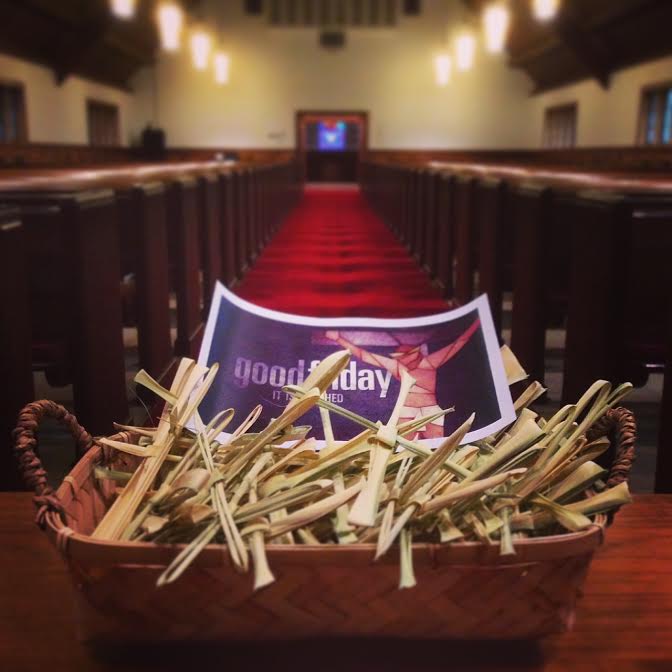
Last year I asked us to look at the cross and live. I implored us to give thanks to God for dying in Christ on our behalf to save us. I handed out crosses so that we might ponder the kind of divine love that was made real for us. I asked us to look at the cross and live.

This year I want to ask us to look at the cross and forgive. If Jesus was willing to use some of his final breaths to forgive the crowds for betraying him and bringing him to the cross, why are we so unwilling to forgive? If Jesus was so filled with love, shouldn’t we do the same?

Being a Christian is messy, ugly, and frightening if we are willing to follow Jesus. If we really want to be like him, then we have to start by forgiving others, and forgiving ourselves.

Amen.
unnamed

Washing With Tears – Maundy Thursday Homily on John 13.12-20

John 13.12-20

After he had washed their feet, had put on his robe, and had returned to the table, he said to them, “Do you know what I have done to you? You call me Teacher and Lord – and you are right, for that is what I am. So if I, your Lord and Teacher, have washed your feet, you also ought to wash one another’s feet. For I have set you an example, that you also should do as I have done to you. Very truly, I tell you, servants are not greater than their master, nor are messengers greater than the one who sent them. If you know these things, you are blessed if you do them. I am not speaking of all of you; I know whom I have chosen. But it is to fulfill the scripture, ‘The one who are my bread has lifted his heel against me.’ I tell you this now, before it occurs, so that when it does occur, you may believe that I am he. Very truly, I tell you, whoever receives one whom I send receives me; and whoever receives me receives him who sent me.”

bbo_ob_mcmca_40_slide

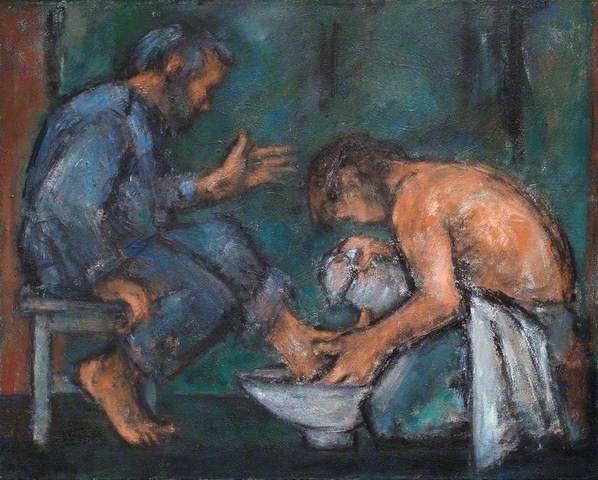
The disciples had already finished their food, they had passed around the bread and the cup, and Jesus had told them it was his body and blood. For many of them these words might’ve gone in one ear and out the other; after all Jesus was known for saying all sorts of the things that didn’t make sense right away. Perhaps some of them were picking up the crumbs from the bread when Jesus got up from the table. Others might have been refilling their cups with wine when Jesus tied a towel around his waist. But by the time he started to wash their feet the room must have been silent. 

Imagine how profound it would have been to see Jesus kneeling on the floor and using water to wash away the grime of Jerusalem. Even more amazing is the fact that Jesus doesn’t waste time explaining what he’s about to do, he just gets down on the ground and goes to work.

However, Peter, the ever vocal disciple interrupts the serene mood with a question: “Lord, are you going to wash my feet?

“Right now it won’t make sense my friend, but soon it will all come together. If you want to be in this with me, you must let me wash your feet.”

Jesus went from one disciple to the next taking as much time as necessary, holding their feet in his hands, letting the water drip upon them, until he finished.

I took a group of middle-schoolers on a mission trip a number of years ago to Winchester, Virginia. We worked in trailer parks building wooden steps up to the doors, we worked on a wheel chair ramp that took up an entire yard, and we worked on clearing out areas that had been long forgotten. All week we did everything we could to serve the needs of the people from the nearby community, and every night we gathered to sing songs and praise our Lord.

At the end of the week we were invited into the fellowship hall for a foot-washing ceremony. I don’t know if any of you have had the chance to spend a week working outside with middle-schoolers, but it begins to smell pretty bad pretty fast; the prospect of washing one another’s feet was not high on my list of priorities. The leader explained that long ago Jesus washed his disciples feet and we would be doing the same thing. Everyone was invited to participate, but if you were uncomfortable you could simply ask for a prayer instead.

A few chairs and basins were set in the middle of the space, and when the music began we were on our own.

In my work group there was a precious young girl who had worked so incredibly hard all week and there was a young boy that annoyed her every chance he had. He would begin by playfully flicking paint onto her clothes, but when she asked him to stop he became relentless. He called her names behind her back, and schemed to turn the other kids against her. Even after I pulled him aside to set him straight he continued to prey on her at every opportunity. 

As we sat in the room waiting for the first people to go forward for the foot washing, I watched the young girl stand up, and bee-line across the room for the annoying boy. For a fleeting moment I was afraid that she had finally had too much and she was about to sock him in the face, but instead she leaned over and asked if she could wash his feet.

While other people started to do the same, my gaze was transfixed on the boy and girl from my group. The boy had gone over the line time and time again yet there she was holding his foot in her hand and washing it. When I looked closer I saw that she was crying and her tears were falling on his feet. And when I looked even closer I saw that he was crying and his tears were falling in her hair.

Foot washing is a service among equals in a company where no one’s status stands out. When Jesus finished with his friends, he called them to do the same to one another. We wash and are washed by our Lord through our brothers and sisters in Christ. When we kneel before a fellow Christian and hold their feet in our hands we make our way back to the upper room so long ago. We aren’t just called to wash the feet of those whom we love, but even the ones who drive us crazy and fill us with anger. Remember: Jesus washed Judas’ feet knowing full and well what he was about to do. 

Sometimes the people we need to reconcile with most are the ones in the pews next to us. We tend to sweep under the rug all of the proverbial problems we have with our friends and family and are far more inclined to complain about strangers. If we are filled with stress regarding the closest people in our lives than this might be the best place to embark on a new beginning. Perhaps the water can bring new life for us and for the ones we love and hate.

Jesus took time after breaking bread with his friends to wash their feet. He humbled himself to the floor and showed them what faithful love looks like. With each foot he equipped them for bringing the peace of God into the world. He washed away their insufficiencies and doubts. He rid them of labels and assumptions. He showed them how important they were for the kingdom of God.

If you want to know what faithful love looks like, look no further than this time when we follow the example of Jesus and wash one another. Amen.

IMG_2100

Palms Beneath My Feet – Sermon on Mark 11.1-11

Mark 11.1-11

When they were approaching Jerusalem, at Bethphage and Bethany, near the Mount of Olives, he sent two of his disciples and said to them, “Go into the village ahead of you, and immediately as you enter it, you will find tied there a colt that has never been ridden; untie it and bring it. If anyone says to you, ‘Why are you doing this?’ just say this, ‘The Lord needs it and will send it back immediately.’ “ They went away and found a colt tied near a door, outside in the street. As they were untying it, some of the bystanders said to them, “What are you doing, untying the colt?” They told them what Jesus had said; and they allowed them to take it. Then they brought the colt to Jesus and threw their cloaks on it; and he sat on it. Many people spread their cloaks on the road, and others spread leafy branches that they had cut in the fields. Then those who went ahead and those who followed were shouting, “Hosanna! Blessed is the one who comes in the name of the Lord! Blessed is the coming kingdom of our ancestor David! Hosanna in the highest heaven!” Then he entered Jerusalem and went into the temple; and when he had looked around at everything, as it was already late, he went out to Bethany with the twelve.

palm-sunday-2

Weekly Chapel Time requires a willing and humble spirit. What we do here on Sunday mornings carries an air of sophisticated and focused liturgy. But when I bring the Preschoolers in during the week… there are no rules. When we worship together most of us have fairly decent attention spans, but the 2, 3, and 4 year-olds need to be consistently bombarded with images and ideas in order to stay focused.

I’ll freely admit that I treat our preschoolers the same way that I treat our worshippers (I’ll let you decide whether or not that is a good thing) because we are all working toward the same goal: a greater awareness of God’s love and mercy in the world.

Anyway, this week, in preparation for Palm Sunday, we gathered the children in the sanctuary for their lesson. They sat in the pews up here in the choir loft, with their little legs dangling in the air, excited and nervous to keep learning about this guy named Jesus. I love quizzing them on previous stories because they are fascinated by scripture. For instance: If I could get all of us to be as excited about Zacchaeus, the wee-little man, climbing up a sycamore tree, just imagine how faithful we would become.

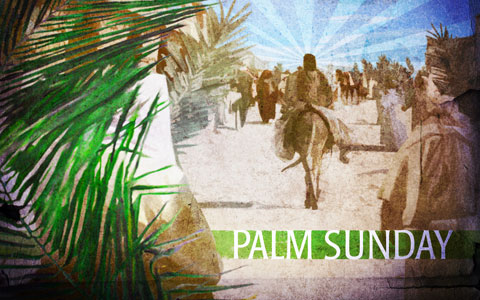
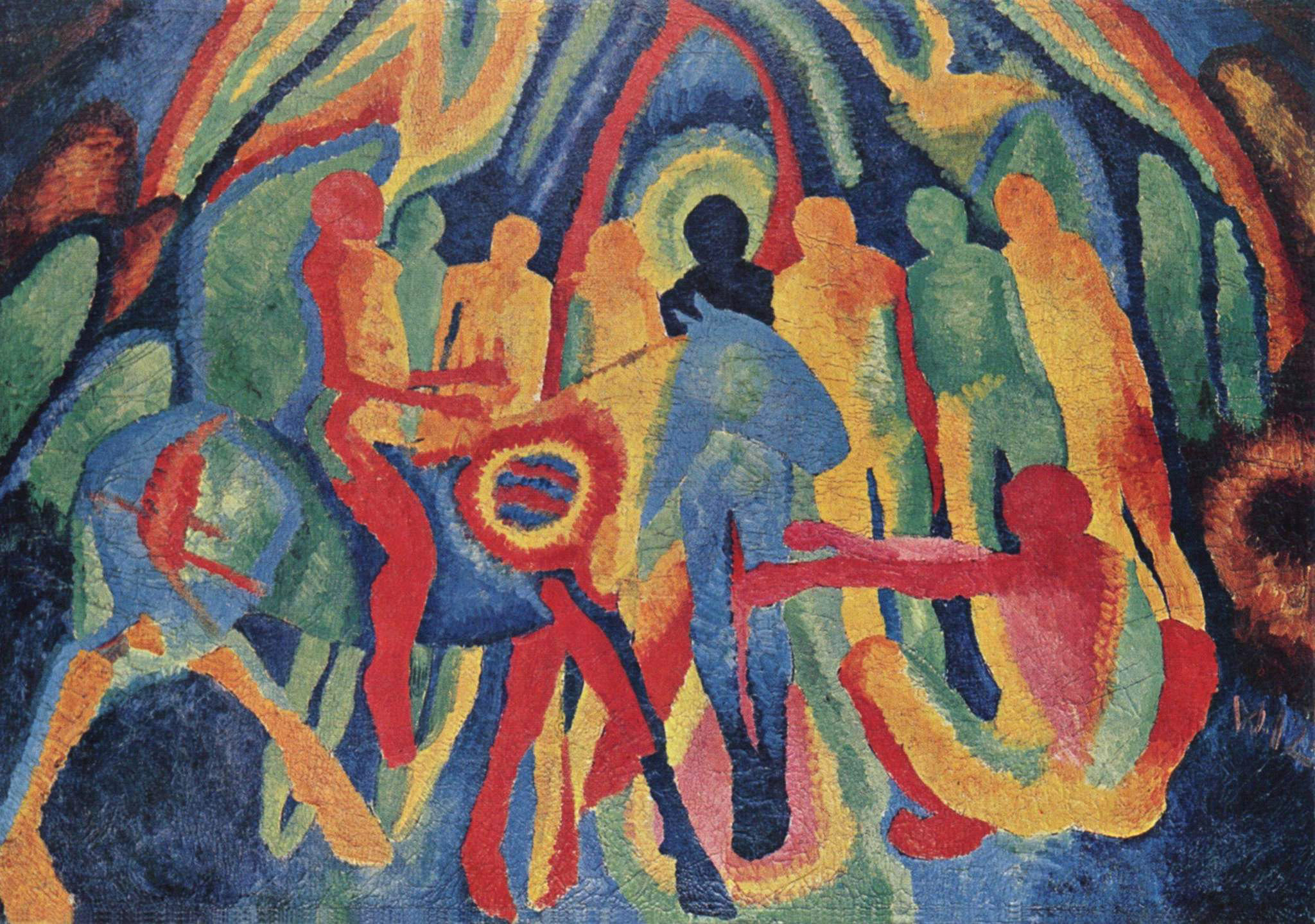
I shared with the children that Jesus needed to get to a strange place called Jerusalem to do something incredible for his friends. They gathered together outside the city and Jesus sent two men to find a donkey for him to ride on. The closer the came to the gates, more and more people gathered palms from the surrounding area and waved them in the air, and placed them on the ground all while shouting “Hosanna!” which means “save us!”

I then had all the children line up with their own palm branches in the center aisle and we were going to recreate the story. I found a young boy to be Jesus and when I asked who they thought the donkey should be they all emphatically yelled, “You Pastor Taylor!” I’m not sure how I felt about them so quickly identifying me with that particular animal, but I let it go.

So there I was on my hands and knees with a child saddled across my back making our way into Jerusalem. I had instructed all the children to either wave their palms or place them on the ground and shout “save us!” to the boy on my back. The entire journey down the center aisle took longer than I thought because I did not want to drop the Jesus on my back, but as I walked forward and saw the palms beneath my feet I was struck by the Holy Spirit.

The children continued to scream and beg for their salvation, the Jesus on my back kept kicking into my rib cage to make me go faster, but all I could think about was what the donkey must have experienced when he carried Jesus into Jerusalem, what it must have been like to deliver the Lord to his death.

The following is an imaginative retelling of the story from the donkey’s perspective…

Palm-Sunday

With palms beneath my feet, Jesus, there are so many things I wish I could tell you. Carrying you while the crowds scream on our sides, I wish I could share all the things I have seen and heard. This might be the only chance I’ll get, and it already feels too late.

I was there Jesus. I was there in the manger when you were born. Your parents had come into the tiny room and your mother looked like she was about to burst. I was but a young foal back then, but I remember. They were so afraid and alone when they cuddled together holding you close. While they were filled with fear, I was filled with joy. I knew from the moment I saw you that you were special, that you were the Son of God. The other animals could feel it too, and while your family fell into the familiar rhythm of sleep, we gathered around you to share our warmth. I watched you sleep all night and I could feel that our lives were connected, and I knew that I would see you again one day.

You left from Bethlehem but as the years passed I heard stories about your life. I would be in the marketplace, or moving about the village and rumors would fall upon my ears.

When you were a child they said that you stood apart. Other children would spend their days running around and getting into mischief, but you would sit in the synagogue and teach the elders. Your command of the scriptures spread before you even started your ministry. I would watch the people while they talked about you and they were filled with such hope. Words like “messiah, lord, and savior” were used to describe you and I could tell that the Lord was among us.

Then it came to pass that you were baptized by your cousin John in the Jordan river. Witnesses said they saw the sky open up and they heard the voice of God. While others denied the claims, I knew it was true, I could feel that your ministry was about to begin and that everything would change.

You traveled throughout Galilee proclaiming the year of the Lord’s favor. You healed the sick, gave sight to the blind, and restored the outcasts to their families. Everywhere you went stories about your love and mercy traveled ahead and the crowds grew larger and larger. You fed the multitudes by the sea, you walked on water, and you brought Lazarus back from the dead. You spoke of mustard seeds, prodigal sons, and good samaritans. You ate with sinners, worked on the sabbath, and argued with the Pharisees. Some say that even just a few weeks ago you were on the mountaintop when Moses and Elijah appeared and you were transfigured.

This morning I was tied up near the door when two of your disciples came close. One of them spoke to my owner and said, “The Lord needs him” and they brought me to you. I knew the time had come when we would be reunited, but the joy I expected to feel has been mixed with trepidation.

Jesus, how I wish you could hear me, how I wish I could tell you all I have seen and heard. We departed early this morning and the crowds gathered around us. It feels as if the closer we get to Jerusalem the people grow louder and more eager to cry out. Do they know what they mean when they say, “Hosanna! Blessed is the one who comes in the name of the Lord! Blessed is the coming kingdom of our ancestor David! Hosanna in the highest heaven!”?

I’m beginning to worry Jesus. I don’t think they know who you really are. The people sound more like an angry mob waiting for you to overthrow the Romans than a faithful group waiting for the kingdom of God. They want another Moses to lead them out of physical bondage, they want another David who can lead them into battle, they want another Solomon to build a giant temple.

a_liturgyofthepalms-large

These people have suffered but they believe in you. Did you see them take off their cloaks and place them in the road? I have been walking over garments for hours. Did you see them rush into the fields for palm branches to wave them in the air and create a royal pathway? The palms beneath my feet are a sign of how much these people believe in you.

What are you going to do Jesus? I can hear people murmuring about your coming mission, some are saying that you are going to the temple and you are going to overthrow the tables. Some are saying that you are going to lead the rebellion and kill the chief priests and scribes. Some are saying that you are going to destroy the temple and then build a new one.

Jesus I’m afraid for your life! These people don’t know who you really are and what you’ve come to do. They shout “Hosanna, Hosanna!” but I fear their shouts will soon turn to “Crucify, Crucify!” They are only concerned about themselves. Even your disciples on either side of us, I can smell their fear.

Jesus, I was there when you were born. I felt God’s presence in you and I knew you would save the world. But please Jesus, let me take you away from this place. Jerusalem can only bring about your death. We still have a chance to turn around and head home.

Or is it too late? 

The crowds are starting to thin Jesus. The people are beginning to head home. We are stepping through the gate and the palms are no longer beneath my feet. I want to believe in you and what you are doing. I want to believe this is God’s will. But I’m so afraid.

Jesus, I am an old donkey and I don’t know how much further I can carry you.

It’s just us now and the sun is beginning to set.

What will happen? What are you going to do?

If this is the last time I will see you, I wish I could talk to you. I wish I could warn you about what is to come. I wish I could stop you.

You swing your legs around and are standing right before me. Your eyes contain the same hope they did the day you were born in the humble manger. As you pet my old matted fur I can feel all the people you have already touched and healed. I can feel the sick children and parents, I can feel the blind and the lame, the last, least and lost.

What a privilege it was to carry you today my Lord. I knew that we would meet again, I only wish I could do something to warn you.

You’re now leaning in close to whisper in my ear. Is this goodbye? Is this the end?

You said, “No my old friend. I know exactly what I am doing. And this is only the beginning.” Amen.

Crucified Faith – Lenten Homily on John 14.1-7

John 14.1- 7

“Do not let your hearts be troubled. Believe in God, believe also in me. In my Father’s house there are many dwelling places. If it were not so, would I have told you that I go to prepare a place for you? And if I go and prepare a place for you, I will come again and will take you to myself, so that where I am, there you may be also. And you know the way to the place where I am going.” Thomas said to him, “Lord, we do not know where you are going. How can we know the way?” Jesus said to him, “I am the way, and the truth, and the life. No one comes to the Father except through me. If you know me, you will know my Father also. From now on you do know him and have seen him.”

image

Jesus is the way, and the truth, and the life.

I know a lot of people who want the greatest amount of reward for the least amount of effort. They have a faulty perception about how much they deserve based on how much they work.

Its like the guy who lets his grass grow and grow until you can barely see his porch because he only wants to have to mow it once. Or like the woman I recently saw at Food Lion who was using every single finger and both elbows to carry all of her bags to the car instead of making multiple trips. Or like the foolish pastor (cough *Me* cough) who believes that so long as he picks a scripture and prays about it, that God will give him a sermon to preach that will having people jumping and shouting “Amen!”

Sadly, I have come across a number of people (even myself at times) who want God without Jesus. We believe on some level that so long as we show up to church, and live a decent life, that we are doing all that the Lord would have us to do. We want salvation without suffering. We want love without expectations. We want resurrection without crucifixion.

Jesus is the way, and the truth, and the life. No one comes to the Father except through him.

way

The disciples are confused. Jesus tells them that he will go and prepare a place for them because there are many rooms in his Father’s house and they know where he is going. Then Thomas asks the question that all the other disciples are thinking: “Lord, we do not know where you are going. How can we know the way?” Jesus responds with hopeful and frightening words: I am the way.

The destiny in store for Jesus is likewise laid up for his friends, and for us. Those who want to save their life will lose it. If we want to experience the presence of God here and now, we can only do so by following the way, by following Jesus.

Sam Wells, the former dean of Duke Chapel, was appointed to a new church, and wanted to experience every single aspect of its mission. For the first few months he spent a couple of days each week going through the ins and outs of the church as if he was not the pastor; He toured the preschool like a prospective parent with a three-year old; He went to weekly prayer services and sat in the back like a stranger might if they randomly walked in off the street; He stood in line at the food pantry and patiently waited for his turn to receive some food.

One of the last things he needed to experience was the homeless shelter. He had heard that it was frequently attended because they gave out the best food and had the nicest provisions and he wanted to see it with his own eyes and taste it with his own tongue. So, for a few days before the experience, he stopped showering and shaving, he found some of his oldest and rattiest clothes, and prepared to spend a night with others in the basement of the building.

He began by waiting outside in line with everyone else. He tried to keep a low profile, but most of the people spotted his costume immediately. For whatever reason they welcomed him into their little group anyway and spent most of the night talking and learning about one another. He asked about their pasts and what had led them to where they were, most of them had normal lives until some unforeseen circumstance sent them out to the streets.

However, before the night ended one of the men shared an important perspective with the pastor. “We don’t come here for the food or for the warmth,” he said, “we come here because this is the only place where we can be with other people like us. Sure the food and shelter is nice, but the community is what we really need.

I don’t think Sam would necessarily put it this way, but I believe he encountered the living God in those homeless men and women precisely because he was acting like Jesus. I don’t think Sam actively went out with the hope that he could walk around like Jesus, but in meeting the people where they were he followed the way that Christ set up for us.

Sometimes the hardest part of being a Christian is recognizing that we cannot have resurrection without crucifixion. More often than not we need to crucify a part of our lives before we can meet and encounter the living God.

Maybe we need to crucify our false assumptions about the poor and how they wind up living on the streets. Perhaps we need to crucify our ridiculous prejudices toward people who are of a different sexual orientation. Maybe we need to crucify our faulty self-perceptions. Perhaps we need to crucify our selfish desires to crave our passions. Maybe we need to crucify a program in our church that is no longer giving life to anyone involved. Perhaps we need to crucify our willingness to hold on to a grudge from the distant past. Maybe we need to crucify our love and obsession with money.

Jesus is the way and we have been given the precious opportunity to follow him, even to the cross. If we want to encounter the living God, we can only do so by crucifying our brokenness and seeking out ways to be resurrected here and now. Amen.

You Cannot Save Yourself – Sermon on Ephesians 2.1-10

Ephesians 2.1-10

You were dead through the trespasses and sins in which you once lived, following the course of this world, following the ruler of the power of the air, the spirit that is now at work among those who are disobedient. All of us once lived among them in the passions of our flesh, following the desires of flesh and senses, and we were by nature children of wrath, like everyone else. But God, who is rich in mercy, out of the great love with which he loved us, even when we were dead through our trespasses, made us alive together with Christ – by grace you have been saved – and raised us up with him and seated us with him in the heavenly places in Christ Jesus, so that in the ages to come he might show the immeasurable riches of his grace in kindness toward us in Christ Jesus. For by grace you have been saved through faith, and this is not your own doing; it is the gift of God – not the result of works, so that no one may boast. For we are what he has made us, created in Christ Jesus for good works, which God prepared beforehand to be our way of life.

Screen Shot 2013-06-30 at 10.08.16 AM

Our series on “Back to the Basics” continues this morning by looking at the topic of salvation. We started this series in light of the fact that many of us are deeply rooted in our faith, but some of the basics have perhaps become so routined that we no longer understand what they mean. We began with a call to return to the basics, then we looked at the Ten Commandments and today we are talking about salvation. Here we go.

My friend Josh loved the Christian camp. Every summer he looked forward to returning to the familiar space with young people all growing in their faith. From tubing on the lake, to hiking around the compound, and even just praying at night with his friends, the camp was a place unlike any other; at camp he could be fully Christian without the world judging him for his discipleship.

By the time I met Josh, camp was long in the past though he remembered most of it fondly. Having never gone to a specifically Christian camp I was fascinated by the idea of being immersed in an intentional faith community with other young people and I regularly asked him questions about his experiences. After all, it was at camp where he met his future wife, and it was years later that he made a scavenger hunt at the camp in order to propose.

As a young Christian my faith was largely formed and nurtured by my home church. I was blessed to grow up around a number of people who took their commitment to raising me in the faith seriously. Josh, however, learned a lot about what it meant to be Christian from the counselors at camp, which, like many things, can be a blessing and a curse.

The young adult counselors embodied how you could still be cool and Christian. They made faith so appealing because they regularly demonstrated what God had done for them in their lives. They made efforts to make faith approachable and were able to share the love of God with campers every summer.

Yet, some of them deeply believed it was their chief responsibility to save others and did whatever they could to make that happen.

It would come at the end of an incredible week of building new relationships and ideas when one of the counselors who begin talking about the Roman Road and I imagine it went something like this:

“Have you accepted Jesus Christ as your personal Lord and Savior? Your life might feel pretty good right now, you might have a kind family and some nice friends, but what about your eternal life? Do you want to spend life after death burning in the fires of hell? Or do you want to be saved?

“Imagine that you are standing on the edge of a cliff. Being a good person isn’t enough to save you. You can see salvation on the other side of the divide, but the only way you can get there is through Jesus Christ. Try to picture the cross being a bridge for you to safely get to the other side. You have the power to decide your everlasting fate. What’s it going to be?”

5520158

When Josh explained these experiences to me I could sense the amount of manipulation that went into the dialogues. As the summers passed at camp, the conversations remained the same only the stakes became higher: What are you doing to save the people around you? Have you explained the Roman Road to your friends?

My friends, we are now alive though we were dead. Until the great gift of God in Jesus Christ we existed like lifeless bodies wandering around. Part of this came to be because we were guilty of sinfulness though we were also victims of our environment – people and organizations who told us we can save ourselves. But God, rich in mercy, saved us.

In the early church they did not spend their time going around trying to convince people with the Roman Road argument. They did not waste time going through the in and outs of theological proofs of Christ’s divinity and resurrection. Instead the church pointed at itself to prove the miracle. Want to know about death, the cross, and the resurrection? Here they are.

The budding Christian community grew not because it’s leaders were particularly articulate in their ability to save others through words, but because they believed in the Lordship of Jesus Christ. With the new family that was created in community they experienced a new kind of life with God at the core, a new opportunity that came with the Spirit.

While the early disciples went throughout their surrounding regions, their cries of evangelism did not begin with “Save yourselves!” Instead they, like Ephesians, triumphantly declared, “God saved you, come live your new life!

If we are anything we are a people of resurrection. Not a country club of like-minded individuals, not a political organization, not a club of devoted fans, but a people of resurrection.

Since the time of Christ, those who followed him have found new life, resurrected life, with God. New life has come by many ways – repenting for the wrongs of our lives, being forgiven by God and our friends, experiencing an assurance of the eternal dimension of God’s love and care, and by a number of other life events, even hearing about the Roman Road from camp counselors. However, we must be careful when putting too much emphasis on our power in salvation. Yes, God has opened the door and we must be the ones to walk through it, but the greater act came in the opening of the door and not our power to go through it.

Resurrected life is something that will come when Jesus returns but we can also experience it here and now. Whenever I’m asked about miracles I can quickly describe some of the incredible things I have witnessed, events I attribute to God’s grace. But some of the most powerful miracles, to me, are right here in our midst. I can look out from this pulpit and see people’s lives who have been turned around through Christ’s love. I see and remember stories about things that have happened to you, sinful desires that suffocated your ability to live fully, when God offered you a new resurrected life.

I heard someone once describe their days as lifeless. They went through the familiar motions but it all felt repetitious, pointless, and directionless. This went on and on until someone invited them to a church community. Suddenly people began to care about him without knowing anything about him or his past. It was like he was being seen and treated through God’s perspective. Through a simple invitation and a new opportunity he felt resurrected from the dead, and began living again. 

Salvation is not about receiving a perfect grade that allows us to make the cut into God’s heavenly kingdom. Who among us fulfills all of the laws from the Old and New Testaments? Loving our enemies, turning the other cheek, giving away our possessions? Even the greatest commandment to love God and neighbor with our hearts, souls, minds, and strengths is incredibly difficult.

romansRd31

If salvation was about getting the right grade, I’m sad to say that most of us would be failing. It’s as if the closer we get to visions of God’s glory, the more we realize our unholiness.

We pray to God before our meals and while we look out on the feast before us we are reminded of the many who have no food to eat. We kneel in a makeshift structure in Guatemala being served food by people who have nothing in terms of our materiality but have faith that we could never imagine. We sit on the stoops of a front porch in West Virginia after painting all day and we realize we could be doing so much more.

We were dead through the sins of our lives and we have been victims of our environment. The good news amidst this unholiness is that, by the grace of God, we have been saved. That through God’s incredible act of selflessness, our sinfulness has been forgiven.

Not a forgiveness as a nice plus added to a grade for our performance as Christians, but forgiveness as a completely unearned gift – a gift extended to a prodigal son who squandered his inheritance, a gift extended to a tax collector who only cared about himself, a gift extended to a thief who hung on a cross to die, a gift extended to you, or to me.

By grace we have been saved. 

Grace is like friendship. Josh, the one who shared with me his experiences of Christian camp, is my best friend and was the best man at my wedding. I did nothing to earn his friendship.  If it had been initiated over an exchange of goods (I will be your friend if you do this for me) it would never have become the true friendship that it is today. Friendship, and I mean true friendship, is an act of faith. Learning to trust the other knowing that they could hurt you.

I know that Josh will be there for me at a moment’s notice. He will listen to me and do whatever he can to help. I also know that he doesn’t expect anything in return. That is the meaning of true friendship; a willingness to give because the well-being of someone else matters more to you than your own. My friendship with Josh is an act of faith, but one that I am remarkably thankful for.

Salvation, for us, is the beginning of a covenant of friendship between us and God; between the divine and a sinner. Grace is another way of describing an incredible love story between God and his creation.

We cannot save ourselves. We cannot save other people. No matter what the commercials, advertisements, and camp counselors tell us. Only the Lord has the power to save. Thanks be to God that he came in the form of flesh in Jesus Christ to open up the gates of heaven to people like us.Thanks be to God that we are not called to save others, but merely help them to see what God has already done, and continues to do, in their lives.

We were dead but have been made alive through the greatest gift ever given. The question for us, then, should not be, “Am I saved?” Instead we should be asking, “What am I doing with this resurrected life?

Amen.

basics

God’s Top 10 – Sermon on Exodus 20.1-17

Exodus 20.1-17

Then God spoke all these words: I am the Lord your God, who brought you out of the land of Egypt, out of the house of slavery; you shall have no other gods before me. You shall not make for yourself an idol, whether in the form of anything that is in heaven above, or what is on the earth  beneath, or that is in the water under the earth. You shall not bow down to them or worship them; for I the Lord your God am a jealous God, punishing children for the iniquity of parents, to the third and the fourth generation of those who reject me, but showing steadfast love to the thousandth generation of those who love me and keep my commandments. You shall not make wrongful use of the name of the Lord your God, for the Lord will not acquit anyone who misuses his name. Remember the sabbath day, and keep it holy. Six says shall you labor and do all your work. But the seventh day is a sabbath to the Lord your God; you shall not do any work – you, your son or your daughter, your male of female slave, your livestock, or the alien residents in your towns. For in six days the Lord made heaven and earth, the sea, and all that is in them, but rested the seventh day; therefore the Lord blessed the sabbath and consecrated it. Honor your father and your mother, so that your days may be long in the land that the Lord your God is giving you. You shall not murder. You shall not commit adultery. You shall not steal. You shall not bear false witness against your neighbor. You shall not covet your neighbor’s house; you shall not covet your neighbor’s wife, or male or female slave, or ox, or donkey, or anything that belongs to your neighbor.

ten-commandments-set-free-to-live-free_27594_banner_img

As a kid, I always preferred worship to Sunday School. Sunday School meant we had to wake up earlier in order to make it on time, it rushed us as a family to get things ready, and the classrooms were filled with all of those strangely adult renditions of biblical stories. The lesson might’ve been on David fighting Goliath, but all I could ever remember was how buff and old David appeared in the pictures rather than the young and innocent version from the story. The lesson might have been focused on the importance of sacrifice, but the imagery of Abraham preparing to kill his son left most of us utterly terrified of God, rather than ready to give our lives to him. The lesson might have been about Jesus and Mary Magdalene, but the story fell a little flat when our teacher kept calling Mary a “lady of the night” which made her sound more like a vampire than a prostitute.

On the other side, worship was awesome. I loved sitting near the front and watching all sorts of different people come together for this one thing. It amazed me that old men and women would take the time to talk to me and ask me questions about my life. Oh the joy that I remember experiencing when I was invited to the front for the children’s message; we were the special ones, all the adults had to sit in their pews but we, the kids, got to go all the way to the front and get closer to God.

My adolescent faith and love for church was like a roller-coaster. I looked forward to the hymns, the bread and cup, the communal act of praying together, but I dreaded the Sunday School classroom, the 25 year old cut-out flannel-graphs, and the seemingly endless amount of Old Testament arts and crafts.

But, if I’m honest, the thing that really drove me crazy about Sunday School was the fact that it felt way too much like regular school. We had a teacher who took attendance, put us in assigned seats, gave out homework, and even proctored pop-quizzes. Now, don’t get me wrong, there is an importance to the education that comes in Sunday School, but the way that it was done for me resulted in my desire to read the bible not for its knowledge, but for the promise of receiving a piece of candy if, for instance, I was the first person who could turn to the book of Isaiah.

Sunday-School_t

I could go on and on about the things I experienced in those Sunday School classrooms, but the one that stands out the most was the day we were quizzed on the 10 Commandments. At the time I knew they were a thing, but I certainly had no idea what they were. Up to that point in my life I could not remember ever hearing them preached about in church, I had no idea where they were in the bible, but I knew you could find them in framed cross-stitch patterns at older people’s homes.

My sheet of paper remained blank for a long time. However, the teacher took pity on me and tried to help encourage some answers: “What are the ten things God wants us to do?” My mind raced through different sermons and scriptures; I tried to remember what the pastor always said about God… I think God wants us to love Him, I’m pretty sure we are supposed to do unto others as we would have them do unto us… What else? God calls us to lift up our crosses. Oh, and God wants us to give Him our money!

I don’t remember what I eventually wrote down for the quiz, but I do remember that I failed, and I did not receive a piece of candy.

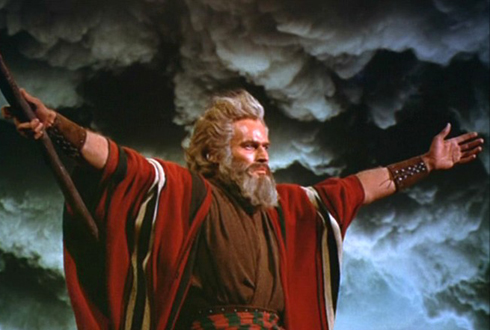
Can you recite the Ten Commandments from memory? What do you imagine when you hear about the Ten Commandments? Do you think about how the law was established to protect and bind us together? Or do you just picture Charlton Heston from the movie version of the Ten Commandments?

ten_commandments

Sadly, in our modern world we are more likely to hear about the Ten Commandments as they relate to controversies surrounding public displays than how they were written to help shape, guide, and mold our lives. Even as a child I was implicitly taught that it was more important to memorize God’s Top 10, than it was to understand them, and live accordingly.

The beginning of the commandments sets up an individual address, but the concern is not just about our private lives and welfare. The focus and thrust of the list is on protecting the health of the community in which the individual plays a pivotal role.

God graciously provided these guidelines as a way to open up our lives rather than limit them. It might not appear that way at first, but upon closer inspection they describe the outer limits of conduct rather than focusing on countless specific behaviors for every situation. At the foundation of the Ten Commandments is God’s desire for us to be protected from behaviors that have the potential to destroy.

In addition, the Ten Commandments are not a once-and-for-all declaration about the limitations of the Law. Throughout the history of Israel and the New Testament, faithful people struggled with these guidelines and amended them to be as fruitful as possible. This gives the people of God, in every age, the right and warrant to expand upon the laws.

If we can begin to see and imagine the commands as opportunities for fruitful living and malleable for our time, then they will no longer remain the stagnant list from our Sunday School memories.

I am the Lord your God, and you shall have other gods before me. You shall not create idols, nor shall your worship them

In our lives there are countless other gods fighting for our allegiances. From political parties to celebrities to businesses, it is next to impossible to be in the world without outside influences calling for us to worship them. When we find ourselves bowing to the powers in life, we neglect to honor the first two commandments. Honoring them encourages us to keep perspective about who is really in charge and the kinds of things that should be important in our lives. If we continue to worship what the media tells us, we will forget our call to love our enemies. If we spend more time catching up on all our favorite television programs, we will no longer catch up on what God is doing in our lives.

You shall not take the Lord’s name in vain

This is less about using curse words than it is about not claiming that we are doing something in the “name of the Lord” when we are really doing it in the name of ourselves. Perhaps some of us give time to serve the poor and homeless in Staunton, but if we do it to feel good about ourselves than we are taking the Lord’s name in vain. This command pushes us to commend and praise God for all the blessing of our lives, particularly when we can bless others.

Remember the Sabbath and keep it holy

Honoring the sabbath allows us to be our fullest. God rested on the sabbath, and we need rest in our lives. If we spend our days rushing through the familiar patterns of life, if we work without rest, then we will no longer be living. Or, as Ferris Bueller puts it, “Life moves pretty fast. If you don’t stop and look around once in a while, you could miss it.” Enjoying life and resting was not some external thing handed down for us to abide by, but a way in which we can be the truest form that God hopes for.

Honor your mother and father

Having parents is a gift. More and more children grow up without the vitally important guidance of parents and have to learn to live according to the tests and trials that are thrown at them. Our parents, whether biological or situational, made the choice to love us in spite of us. They gave and provided when we could not do so for ourselves. Loving our parents encourages us to be people of gratitude, instead of imagining that we are the source of all good things in our lives.

You shall not murder

Instead we should protect the innocence of life. We are called to value every single life whether belonging to someone famous, or someone nearly invisible in Staunton living on the streets. Every life has value, and God wants us to cherish the beauty in all people.

You shall not commit adultery

Instead we should love and embrace our commitments. When we covenant to be in relationship with those whom we love, we are asking for God (and others) to hold us accountable to that promise. Fighting against the temptations of adultery results in us valuing the needs and wants of the other, more than ourselves.

You shall not steal

No one should have to steal to live in our world. Instead of stealing we are called to give with glad and generous hearts. Whether through the offering in church, or to any charitable organizations, when we give we help to prevent the need for people to steal to survive. God will provide, it just might not be the way we are anticipating.

You shall not bear false witness

Instead we should speak well of our brothers and sisters. Gossip and deception only serve to destroy our community. Just imagine how we might start loving and treating and trusting each other if we believed that no one would speak falsely about anyone else. Think about how beautiful a town and a church such as ours could be if people took this commandment seriously and worked hard for it to become manifest. When we begin to speak well of others at all times, we start seeing the world through God’s perspective and not just our own.

You shall not covet

Instead we should be grateful. It is too easy to look around at all the sources of blessings in other people’s lives and begin desiring to take them for ourselves. How quickly do we begin to resent our coworkers when they are given a raise, how quickly do we begin to ignore our classmates when they receive a better grade, how quickly do we avoid our fellow church folk when everything starts going well in their lives as ours fall apart? God has given all of us gifts, large and small, seen and unseen, they are there we only need a change in perspective to realize them in our midst. God will provide in ways that are miraculous and beautiful. We need not covet what our neighbors have when we remember that God has chosen to be with all of us.

The Ten Commandments are a gift, they open up life for us rather than restrict, they call us to do more rather than simply obey, and they help to build and foster our community rather than destroy it. God’s Top 10 are part of the basics of faith, from them we learn how to grow as disciples and serve others. If we can move them from a memorized list to a practiced way of life, everything will begin to change for the better.

Amen.

Back to the Basics – Sermon on Mark 8.22-26

Mark 8.22-26

They came to Bethsaida. Some people brought a blind man to him and begged him to touch him. He took the blind man by the hand and led him out of the village; and when he had put saliva on is eyes and laid his hands on him, he asked him, “Can you see anything?” And the man looked up and said, “I can see people, but they look like trees, walking.” Then Jesus laid his hands on his eyes again; and he looked intently and his sight was restored, and he saw everything clearly. Then he sent him away to his home, saying, “Do not even go into the village.”

bokeh-lights-sunset-city-hd-wallpaper

I was shivering at the front of our sanctuary with ashes all over my fingers. Whether at 7 am or 7 pm the services were virtually the same: it was cold and dark outside, those who came huddled together for warmth, I preached the same homily, used the same ashes, and said the same words as I marked each person: you are dust, and to dust you shall return. Ash Wednesday is one of those profound moments in the regular rhythms of church life where we admit something the world tries to claim the contrary: nobody makes it out of life alive.

I began both services with a brief introduction about the importance of Ash Wednesday, and the history behind it. We all prayed together. I read a selection from Psalm 51 about God creating in us clean hearts. I preached about living out our faith in the world as marked and cleansed people, and challenged each of us to act like the cross was still on our foreheads, even when the ashes faded away. I then prayed and blessed the ashes and invited everyone to come forward. There is something profoundly frightening and intimate about having people coming up to have ashes placed on their skin. We participate in an ancient ritual that is so contrary to the ways of the world. It is a privilege to come so close to the holy presence of God with each person who stood before me; looking them in the eye, holding their shoulder, touching their skin.

Before I offered a benediction for the services I invited everyone into a time of silence. While I prayed I was struck by the Spirit in a way that I had previously not encountered. I started thinking and praying for the people who were not in the sanctuary for the service. And I don’t mean for those of you who enjoyed Ash Wednesday from the warmth of your homes. I prayed for the people who came to our last Ash Wednesday service, but not this one. Because some of the people I held in my hands one year ago, I have buried in the months since. The words: “you are dust, and to dust you shall return,” take on a truly deeper meaning when the people go from worshiping in the pews, to resting in a casket at the front.

They brought the blind man to Jesus. Perhaps they wanted to see a public demonstration of his power and so they found someone for him to cure. Or they knew the struggles and sufferings of a friend and believed that Christ was the one to heal him. Whatever the case, the crowds begged Jesus to touch the blind man.

Jesus then took the man by the hand, and led him away from the crowds and out of the village. He spit into the man’s eyes, and laid his hands upon him. “What do you see?” Jesus asked. The man looked up and said to the Messiah, “I can see people, but they look like trees walking.” Then Jesus laid his hands on the man a second time. Suddenly, the man’s vision broke through and his sight was restored and he saw everything clearly. Jesus sent him back to his home, commanding him to not even stop in the village.

healing_of_the_blind_man_jekel

Is it strange that it takes Jesus two tries to get the healing right? Throughout the gospel accounts Jesus is the main man when it comes to healing and he gets it done right away. Paralyzed? Jesus says “take up your mat and walk!” Tied up with chains outside of the village because you’re possessed by demons? Jesus commands the demons out and sends you home. Your son is epileptic? Jesus says “all things are possible for the one who believes” and makes it so. But here in Mark 8 we have a strange story, a story that can only be found here in this gospel. Jesus is asked to heal a blind man, he uses his own spit for the first part, but it doesn’t work all the way, so he has to touch the blind man a second time.

I don’t know about you, but I love this story. I love how grounded it is in the material and physical world. I love the way that Jesus ignores the crowd and brings the man outside of the village. I actually love that it takes Jesus two tries to get it right because it says so much about our relationships with God. In fact, I love this passage so much, that I used it as the New Testament reading for Lindsey’s and my wedding. If I remember the wedding sermon correctly Jason, our pastor, said this about the choice: “The walking trees do-over miracle of Jesus with the blind man is a text that only a pastor would use at his wedding.

Yet, even with its strangeness and bizarre imagery, I love this passage. I think it works well for weddings; You only really see the person you’re marrying, after you marry them. Dating and being engaged is like seeing the other as a blurred image, but in the vows and covenant of marriage the other comes into focus, and we see what our lives truly become together.

Moreover, I think this text works well for the beginning of Lent, as it reminds us that sometimes it takes two tries to get this whole discipleship-thing figured out. In fact, it often takes more than two tries to get it right.

The story with Jesus and the unnamed blind man is a reminder about what our relationship with God is like. Before we become Christians, we see and experience the world with extremely limited vision. We believe that we are the center of the universe, that our primary purpose is to love ourselves and serve our needs no matter the cost. But then a strange thing happens. Maybe it occurred when you were invited to worship for the first time, or maybe it happened on a mission trip, or maybe it happened in the middle of the night after awaking from a strange dream; whatever the experience was, God became real for you for the first time.

vision-hack-see-clearly-without-your-glasses-contacts.w654

Some might say that as soon as that event takes place, you begin to understand God and see the world with clear vision. This story however, would claim the contrary. When we initially experience God’s wonder its like seeing people as trees walking. We are given a glimpse of what the world looks like turned upside down, we begin to grasp and understand what loving God and neighbor is all about. But our vision of discipleship is still dim and incomplete.

Frankly, this distorted and obscure vision of faith is where most Christians are located, myself included. We think we understand everything that God is doing and we think we are seeing things clearly, but its not the case. How many of us can rattle off all the words to the creeds and to the Lord’s Prayer, how many of us have the hymns memorized and can sing without looking down, how many of us really know and read our bibles, yet our vision is still dim?

Lent is the time for us to turn back toward God and see things clearly. We need to see God as God is. Not just the God of our liturgical creeds and hymnals, but the Lord of our hearts and homes, of our hopes, our prayers, and our needs. We desperately need a real picture of what faith looks like. Because faith cannot just be showing up to church once a week for an hour of worship. Faith is about giving your entire life over toward loving God and others 24/7, 365.

While I was praying after our Ash Wednesday services I realized that I don’t really know any of you. At least not to the degree that we are called to know and love God in our lives. While applying the ashes to some of your foreheads I saw what you allow me to see, I saw some of your celebrations, some of your failures, some of your hopes, some of your sins. I can strive to know you as deeply and as fully as I can, but I will only see you as a blurry tree depending on what you open up.

Yet, while preparing for funerals, I start to see a clearer picture of the person. It’s like God has touched me a second time and I finally begin to understand the kind of life that someone lived. Part of it comes from the vulnerability and honesty that families and friends are willing to share, but part of it comes from my willingness to finally ask questions that I never felt brave enough to ask while they were alive.

For all of us, our discipleship and relationship with God is often perpetually caught in this state of blurred trees. We show up to church, we pray, we read our bibles, but without a sure foundation of the basics of faith, our vision will always be limited. 

basics

That’s why, throughout the season of lent, we will take time each Sunday to return to some of the basics of faith. We might come to the table once a month to partake of Jesus’ body and blood, but do we really believe and know what we are doing? We might talk about being saved and affirming Jesus Christ as Lord, but what does salvation really look like, and why do we call Jesus our Lord? We might see the other people in our pews as brothers and sisters in Christ, but why is our relationship with them limited to Sundays mornings or church activities?

It is my hope that over the next few weeks all of us will receive that second touch from the Lord; by returning back to the basics we will begin to see faithful things and then to see all things clearly: God, ourselves, and others.

But that’s where we’re going. For today I was to focus on this: Our lives are gifts. We are privileged to be surrounded by such beautiful and unique people in our lives. From our co-workers, to fellow students, to friends, and family, and even strangers, we are blessed people. Yet, do we really know any of them? Do we really see them as they truly are? I promise that for all the perfect exteriors you might encounter, there are at least a few who, on the inside, are looking for someone like you to see the real them.

If we take this two part healing seriously than it’s up to us to initiate the second touch for the people around us. We could wait for them to show up and open up, but most of the time it will never happen. Instead we are given the chance to ask deep and important questions of the people in our lives. Questions like: How is it with your soul? What are you doing right now that is saving your life? Do you feel loved?

When you find someone and bravely ask them questions, you are like the crowds bringing the blind man to Jesus; you go into the world as Christ’s body, and by learning more about the other, you discover what it means to see things clearly. 

We begin our challenge here at the Lord’s Table. After we are invited to feast and confess our sins, we will exchange signs of Christ’s peace with one another. This is the chance for us to begin opening our eyes to the truth around us; We are a church of broken people, and when we love on each other and gather at God’s table, we start putting all the pieces back together. Amen.

Marked and Cleansed – Ash Wednesday Homily on Psalm 51.1-12

Psalm 51.1-12

Have mercy on me, O God, according to your steadfast love; according to your abundant mercy blot out my transgressions. Wash me thoroughly from my iniquity, and cleanse me from my sin. For I know my transgressions, and my sin is ever before me. Against you, you alone, have I sinned, and done what is evil in your sight, so that you are justified in your sentence and blameless when you pass judgment. Indeed, I was born guilty, a sinner when my mother conceived me. You desire truth in the inward being; therefore teach me wisdom in my secret heart. Purge me with hyssop, and I shall be clean; wash me, and I shall be whiter than snow. Let me hear joy and gladness; let the bones that you have crushed rejoice. Hide your face from my sins, and blot out my iniquities. Create in me a clean heart, O God, and put a new and right spirit within me. Do not cast me away from your presence, and do not take your holy spirit from me. Restore me to the joy or your salvation, and sustain in me a willing spirit.

ash-wed-sq-300x300

How would someone know that you’re a Christian? I think this is a very important question for us to ask ourselves on a regular basis. During a normal day, how would anyone know that we affirm Jesus as Lord, that we pray to God the Father, that we believe the Spirit is with us in all things? Maybe you wear a cross around your neck, though even that symbol has become so innocuous to the general culture around us. Maybe you bring your bible with you to work or public places and you are not afraid to spend some time reading from the good book in front of other people. I personally like to wear my clerical collar when I’m out in town because it helps to show others who I am, and frankly it forces me to act like a Christian in public.

When I became a pastor I was so excited to wear my collar for the first time, to walk around Staunton, and let it speak for itself. I imagined the conversations that would begin at one of our local coffee shops: “Sir, would you please pray for my wife, she just received some tough medical news.” … “Do you mind if I pull up a chair and ask some questions? I’ve always wanted to ask a pastor about the miracles from the gospels.” … “I’m new in town, would you be able to help me find a church community?” However, after being here for some time, I can share that most of the time no one notices. I’ve gone to a local bar with the expectation that people would hide their beer bottles behind their backs, but they just keep talking like normal. I’ve been shopping at the grocery store and prepared myself for random questions, but people just keep scanning the aisles on their own. I’ve sat down at a coffee shop with my collar on, and bible open, and almost no one has made mention of my vocation.

That was the case until last week.

I was sitting at a table alone working on a sermon when two women came in, ordered coffee, and sat at the table next to me. I’m not ashamed to admit that I often eavesdrop on the conversations around me. It’s not that I intend to, or have a problem with it, but most of the time the place is quiet enough that its impossible not to hear what people are talking about. I went to grab my headphones, in order to drown out their conversation, but I heard something that peeked my interest: “Being a pastor must be the easiest job in the world

I decided then that the sermon could wait, this conversation was too good to miss.

One of them continued, “Seriously! They get paid to act like the rest of us. I mean, how hard is it to write a sermon every week and visit old people? Being a Christian is so much harder than being a pastor. It must be the easiest job in the world.

Without thinking about what I was doing, I stood up, walked over to their table, and said, “You’re absolutely right. Being a Christian is harder than being a pastor. The church has expectations about the way you are supposed to behave, and I get paid to behave appropriately, I am a professional Christian. The only difference is this, everyone knows I’m a Christian, what about you?” I then packed up my things and left.

Today, above all days, is an opportunity for us to be marked and cleansed. In a short while, each of us will be invited forward to have a cross of ashes placed on our foreheads, a sign for us to carry around for the rest of the day. Today, wherever you go, people will know who you really are. 

IMG_1957

Do you know where the ashes come from? We save some of the palm branches from Palm Sunday, and we burn them down into ashes. The same palms that some of us waved last spring to welcome Jesus in Jerusalem have been placed in the fire, and will now adorn our heads. This is done as a reminder that our shouts of “hosanna!” can quickly turn to “crucify!” I can go from being a well behaved Christian, minding my own business at a coffee shop, to walking over to strangers and letting my passive aggressive side get the better of me. We use these ashes to mark and cleanse ourselves for the coming season of lent.

All of us are sinners, the young and the old, the weak and the strong, we all fall short of God’s glory. This season of lent is an opportunity to turn back to God and reorient our perspectives about the way the world truly works. For the coming weeks our prayers should be for wisdom, for God to purge from us all wrong desires and failures. This is the time for us to be bold in our faithfulness as we enter the community around us. Lent is the time for God to create in us clean hearts, to put new and right spirits within us. We begin here with the ashes, remembering our finitude, so that God might restore us to the joy of salvation, and sustain us with a willing spirit to be faithful in the world.

How would someone know you’re a Christian? Today, everyone will know just by looking at your foreheads. But, the ashes will eventually fade away; the cross will disappear. The challenge for us is to act like it’s still there, to live full lives of discipleship so that everyone might know who we are, and whose we are. Amen.

Listen to Him! – Sermon on Mark 9.2-9

Mark 9.2-9

Six days later, Jesus took with him Peter and James and John, and led them up a high mountain apart, by themselves. And he was transfigured before them, and his clothes became dazzling white. such as no one on earth could bleach them. And there appeared to them Elijah with Moses, who were talking with Jesus. Then Peter said to Jesus, “Rabbi, it is good for us to be here; let us make three dwellings, one for you, one for Moses, and one for Elijah.” He did not know what to say, for they were terrified. Then a cloud overshadowed them, and from the cloud there came a voice, “This is my Son, the Beloved; listen to him!” Suddenly when they looked around, they saw no one with them any more, but only Jesus.

20cuaresmaB2

Two years ago, today, I woke up like every other Sunday and got ready for church. Though I was enriched with theological education Monday – Friday in seminary, I looked forward to spending time in worship with people who were not from school on Sundays. Duke Memorial UMC is a beautiful church located right on the corner of downtown Durham and serves the needs of a wide variety of people. The sanctuary is wider than it is long, with a balcony, and a raised area above the altar for the choir and the organ. The church prides itself on its ability to worship faithfully, and engage deeply in the community.

Two years ago, today, I woke up like every Sunday morning, but this one would be different. While my roommates got ready to attend their respective churches, my phone began to ring and my pastor’s name appeared on the phone. Now, many of you might not know this, but if you receive a phone call from me on Sunday morning, it usually means there’s an emergency. I nervously answered the phone and through her scratchy voice I learned that both pastors of Duke Memorial were sick, and neither one of them would be able to preach. I had a feeling that I knew were the conversation was headed and I quickly glanced over at my clock; worship would begin in one hour. She continually apologized for their sickness and then finally asked if I would be willing to preach in a very short amount of time. “Of course” I said with a chipper voice, knowing full and well that I had not the faintest idea regarding what I would preach about.

The next hour was a blur.

I obviously did not have the time to write out a manuscript, I was not able to consult numerous commentaries about the text, and I had not spent an appropriate amount of time in prayer over the passage. All I knew was that the passage was the same as today’s (Mark 9.2-9) and that it was Transfiguration Sunday.

Duke Memorial UMC

Duke Memorial UMC

I barely made it in time for the service to began with a 3×5 index card in my pocket with three key points that I wanted to make. Upon arrival I searched for a bulletin to discover what else would be going on during the service and I quickly said a prayer before entering the sanctuary. My eyes were still closed when organ began and an acolyte walked up to me and asked, “Where’s the preacher?” To which I responded, “You’re looking at him.

The next hour was also a blur.

I led us through the usual motions of worship after explaining the lack of two ordained pastors. We prayed together; we sang together; we read together; I preached; and before I knew it, the service came to a conclusion ten minutes earlier than usual.

While people departed from the sanctuary, I did as all pastors do and stood at the door to shake hands with everyone. Many made comments thanking me for my service and willingness to preach on such short notice, but most of the compliments came in the form of, “Hey thanks for getting us out early!

However, there was one older woman waiting around at the back of the line for her turn to come forward. Another thing you might not know is that if someone waits a long time to speak after a service, they usually have a critique or a criticism that they don’t want to share in front of everyone else. I waited and waited until nearly everyone was gone when she finally stepped forward and grabbed my hand; “Son,” she said, “I’ve been coming to this church my whole life to worship the Lord and hear people preach. I want you to know that you said more in 10 minutes than many could say in 45. Thank you.” And with that she left the sanctuary.

Two years ago, today, I woke up and got tapped to preach a sermon at a moment’s notice. Now, of course, I am the pastor here at St. John’s and I have plenty of time each week to work on preparing for Sunday worship. I have the time to be in prayer over the words of scripture, I have the time to consult commentaries about what’s happening in the deeper sense of the text, I have the time to write out a full manuscript of everything I will say from this pulpit. But this week, I kept thinking about what happened two years ago on Transfiguration Sunday, and I wanted to do something similar…

00027841_h

Instead of combing through numerous books highlighting the ins and outs of Mark 9, instead of doing all the things I normally do to prepare a sermon, I began by reading one verse: “Then a cloud overshadowed them, and from the cloud there came a voice, “This is my Son, the Beloved; listen to him!”” and then I felt propelled to do something radical, something that I have not done in a long time, something that I want to share with all of you right now:

I listened to Jesus.

I spend so much time talking about Jesus, that I don’t spend enough time listening to him. Now, I have had some remarkably beautiful and religious experiences in my life, but I have never literally heard the Lord speak like on the mountain during the Transfiguration. I felt called to the ministry but it did not come in the form of a voice booming down from on high saying, “Taylor you need to be a pastor!” So, this week, I put away all the books, and tried to listen to Jesus speaking in my life.

I heard Jesus during my interactions with other people: 

One of my best friends in the world found out he has cancer this week. As a young pastor, husband, and father of two young boys, he is more often on the other side of the hospital bed praying for people in the midst of suffering. I immediately wanted to shout with my clenched fists in the sky, I wanted to know why this was happening, but when he wrote to me about his diagnosis I heard Jesus telling me that I need to keep the faith. I remembered that even pastors need prayers and that all of us are called to be faithful and loving people toward those who are suffering around us.

A few days ago I visited one of our long time church members who is nearing the end of her life. Upon arrival I learned, from one of her helpers, that she had tried to get herself ready for the visit, but discovered that she did not have enough energy to get out of bed. As I made my way into her bedroom, and knelt beside her bed, I saw her smile for the first time in a long time; “It’s not everyday that I invite a young man into my bedroom” she said with a laugh. We talked together about her struggles, we reflected on the many blessings from her life, and we prayed for God’s peace to reign abundantly in the days ahead. While kneeling beside her bed I heard Jesus telling me to be thankful for my blessings. I felt convicted by her faithfulness to not wallow in my own self-pity, and strive to live my life as fully as she has.

I heard Jesus during my reading of scripture.

This might come as a shock but I am ashamed at how rarely I read my bible. Sure, I read scripture every morning as a devotional practice; Sure, I read the bible every day in preparation for sermons on Sundays. But it has been a long time since I just picked up the good book and started reading for the simple pleasure of reading. More often than not my reading of scripture is based on a requirement or using the text as a resource. Even when I tell myself that I am reading for the right reasons I find myself writing down notes about using this bit in an epistle article or weekly devotional.

So, one day this week, I carved out some time and sat down with my bible. It took a while to rid myself of the vocational tendencies I have when reading scripture, but eventually the words and pages started to flow through my mind. I read about the great acts of God during the life of Moses, I flipped ahead to the story of Samson when he toppled the pillars and destroyed the Philistines, I soaked up some of the psalms and let their words become poetry for my soul, I walked the streets of Jerusalem with Jesus as he prepared to overturn the tables in the temples, I entered the strange new world of the bible and felt it come alive. Through reading the scriptures I heard Jesus telling me to that all people are part of God’s cosmic plan. From the patriarchs in Genesis, to the crowds in Mark, to the disciples at St. John’s, God can use anyone to bring about his will on earth.

I heard Jesus in the silence. 

silent-listen

I am not a quiet person. I am as extroverted as can be. I usually have music playing in my office, or I am tapping my fingers away in some sort of percussive rhythm, or I am humming a hymn or song out loud. But this week I tried to be quiet and listen. I turned off the radio in the car, I let my turntable collect some dust, and I left my headphones at home. Silence is uncomfortable. Even a few moments of silence can drive us to fidget in our seats. Allow me to demonstrate: (1 minute of silence from the pulpit)

How did that feel? Yet, even though it makes some of us uncomfortable, silence can be beautiful. Turning off the noise this week allowed me to hear things that I normally miss: the sound of children laughing in the preschool, the crisp sound of pages turning in my bible, I even heard my heartbeat. What did you hear during our minute of silence? Maybe you heard the wind blowing against the roof of our church, perhaps you heard people breathing beside you in the pews, or maybe you heard heard the faint murmurings of your heart beating. During my time in silence this week I heard Jesus telling me that life is precious and beautiful. Only God could have imagined something like a heart to give us life, constantly thriving and pumping to bring existence to our bodies, a constant reminder of the fragility and beauty of what it means to be alive.

The disciples thought they knew everything they needed to know about Jesus. They believed they had him completely figured out. But when they made it to the top of the mountain God made it very clear that their assumptions and expectations were wrong; whenever we think we know what God is up to, its usually more about us than God. Its like looking for something at the bottom of a well, when all we really see is a faint reflection of ourselves. The Transfiguration shines brilliantly as a reminder that we are called to listen to Jesus. We need to hear him through the people in our lives, through our prayers, through our bibles, and through the silence.

Listen to Him through the words of Thanksgiving at the Lord’s table. Hear what God has done in the world for people like you and me. Listen to the Messiah that speaks to us through the bread and the cup. Hear the Lord speaking to you as you come to gather at the altar. Listen closely, and you just might hear God speak. Amen.

Believing > Understanding – Sermon on Isaiah 40.21-31

Isaiah 40.21-31

Have you not known? Have you not heard? Has it not been told you from the beginning? Have you not understood from the foundations of the earth? It is he who sits above the circle of the earth, and its inhabitants are like grasshoppers; who stretches out the heavens like a curtain, and spreads them like a tent to live in; who brings princes to naught, and makes the rulers of the earth as nothing. Scarcely are they planted, scarcely sown, scarcely has their stem take root in the earth, when he blows upon them, and they wither, and the tempest carries them off like stubble. To whom then will you compare me, or who is my equal? says the Holy One. Lift up your eyes on high and see: Who created these? He who brings out their host and numbers them, calling them all by name; because he is great in strength, mighty in power, not one is missing. Why do you say, O Jacob, and speak, O Israel, “My way is hidden from the Lord, and my right is disregarded by my God”? Have you not known? Have you not heard? The Lord is the everlasting God, the Creator of the ends of the earth. He does not faint or grow weary; his understanding is unsearchable. He gives power to the faint, and strengthens the powerless. Even youths will faint and be weary, and the young will fall exhausted; but those who wait for the Lord shall renew their strength, they shall mount up with wings like eagles, they shall run and not be weary, they shall walk and not faint.

Isaiah-40-31

I have witnessed, read, and heard lots of sermons. From as far back as I can remember I was in church on a regular basis listening to people like me stand at the front of church and talk all about the bible. During seminary, I learned about the importance of attending different churches to hear from a variety of preachers. Listening to different pastors helped to cultivate my own sermonic style, and show me what not to do.

I once heard someone preaching about the wonderful story of David and Goliath. He read the corresponding scripture, prayed for God to be with him in his preaching, and then began the sermon with these words: “The stench of war hung in the air like a pungent fart…

There was a time where I heard a young woman preach on the sacrifice of Isaac from Genesis. As a sweet and endearing theologian, she frightened everyone in the room by continuing to beat on the pulpit in rhythm; first the rhythm of Abraham’s heart as he pondered the fact that God called him to sacrifice his son, second the rhythm of Abraham’s axe falling on the wood to prepare for the fire, and then latter the frightening sound of the blade falling in Abraham’s imagination. It shook everyone to their cores.

Right before I was appointed here at St. John’s I heard a pastor from the Eastern Shore preach a sermon on one of the psalms. He stood up before the gathered body and explained that he had felt convicted by the Spirit that week to rewrite the psalm as if he was one of those slam poets, and then proceeded to perform his new rendition for all of us. I can’t remember precisely what he said, but it sounded like this: “My heart beats beats beats, O God my heart beats beats beats. I will sing along to the beat, and make the beat my melody. Awake to the rhythm of my heart beat beat beat. Give thanks for the beating heating sleeting of my heart. For his steadfast love, is like a perfect dove, in the heavens so high, up in the air where the birds fly. Listen to the beat beat beat…” He went on like that for twenty minutes.

Sermons, at their best, make the Word incarnate again so that we can live it out in the world. There are as many styles as there are preachers, but hopefully we all ground what we say in God’s Holy Word. A common rule of thumb for preaching is that the text from scripture should determine the style of sermon. For instance: If the scripture lesson is a letter from Paul to one of the early churches, the sermons should function in a similar way to the church that is listening. If the scripture is a narrative, then a story should be used to help reveal the Good News from the text. If the passage is a parable, then the sermon should leave the people scratching their heads in the same way that the first Christians probably did when Jesus said something like the kingdom of God is like a mustard seed.

Is40.28-31

Our scripture today, though from a prophet, is a poem.  The Babylonians had scattered the Israelites throughout the region and they feared for their existence. They continued to grumble about their situations and constantly blamed God for their misfortunes. Like Jesus praying before his crucifixion, the exile was their Garden of Gethsemane, in which they would pray for the cup to pass from them.

Instead of telling a harrowing tale from Israel’s past, instead of offering a parable about their situation, Isaiah speaks into their situation as a poet. It is now my challenge to do the same.

—————————

Have you not known? Have you not heard? Have you not read about this in your bibles? Have you not experienced it in worship and in your daily prayers? Has it not been told to you week after week since the very beginning of your faithful journeys?

God is the one who sits above all things, He is the one who reigns over us. All of us, the people and inhabitants of the earth, we are like insects who come and go.

God is the author of salvation, he has opened up creation for us, dwells besides us, and hopes with us. God is the one who tears governments down, and makes the rulers of the earth fall away like leaves in autumn.

Like flowers in a field they are rarely planted, their roots descend but to not take hold, and when God blows upon them they float away. Crops come and go like the seasons, new plants reach up to the heavens only to disappear, flowers bloom only to wither, but God remains everlasting.

To what, then, shall we compare the Holy One? What kind of associations, experimentations, delineations shall we use to understand the one on high? What kind of metaphor will bring God to light? What kind of story points to his glory?

Lift up your eyes and see!

Look around you at the people in your life, at the blessings of food, function, and faith, at the wonders of God’s creation. God is the author of salvation, the teller of your tale, the sower of your seeds. He brings about life for all creatures then and now. It is only because of God’s great strength and glory that not one thing is missing from your story. 

So, people of God, why do we say and believe that “God does not care about my life!” How can we even utter such an abominable accusation about the author of salvation?

Have you not known? Have you not heard? Have you not read about this in your bibles? Have you not experienced it in worship and in your daily prayers? Has it not been told to you week after week since the very beginning of your faithful journeys?

The Lord is the everlasting God, the creator of the ends of the earth. Strength will rise as we wait upon the Lord as we wait upon the Lord as we wait upon the Lord. Our God reigns forever, our hope, our strong deliverer. He will not faint. He will not grow weary. His understanding is unknowable.

The Lord is the everlasting God. He gives strength to those who are weak, he empowers the powerless, and loves the unlovable. When we look out and see destruction, God sees incarnation. When we experience death, God sees life. When we believe God is missing, He is the one carrying us through our shadow of darkness.

Even the young people, with their strength and vision for the future, they will fall and be weary. The people in church and society that we so admire will crumble. They believe that life is a sprint instead of a marathon. But those who wait for the Lord, those who believe in the power of patience, shall have their strength renewed. They shall mount up with wings like eagles, they shall soar from the highest of heights, they shall run and not be weary, they shall walk and not faint.

If you can’t fly, then run. If you can’t run, then walk. If you can’t walk, then crawl. If you can’t crawl then pray and pray and pray. But whatever you do you have to keep moving forward.

The Lord is the everlasting God.

—————————

Believing is greater than understanding. I’m not talking about the simple belief that God exists, I’m not talking about believing in God. I’m talking about believing God. Believing that He is everlasting, that he creates and commands that stars in the sky, and hopes for us when all things feel hopeless.

The captives were afraid that what they held so dear would disappear to the sands of time. Many of us fear the same thing about what we believe is precious: values, morality, ethics, the church, society, love, hope, patience. But why should we be frightened? God the everlasting remains when all others things are swept away. Kings will reign, politicians will run for office, we will live, grow, and die, but God is the one who remains.

tumblr_nfmkc6gBLv1s91yx0o1_500

We are so tempted to get caught up in the here and now that we are unable to see things from God’s perspective. Our humanity prevents us from seeing God’s divinity. We look around and see all the failures of life around us and we fling our “why?” at God; but we should first challenge ourselves. What can I do to make this world better? How can I serve the needs of my brothers and sisters? What can I do to help show people a little glimpse of heaven on earth?

To wait for the Lord requires patience. We will all spend so much of our lives in vain trying to understand all that God has done when all we are called to do is believe.

“What is the text saying?” My professor asked of our class. We had our bibles open to the corresponding verses and began to argue about what it meant.

Some people, who desperately liked hearing the sound of their own voices, waxed lyrical about the historicity of the text and mentioned elements like fragments of papyrus and the corresponding dates of discovery.

Some people, who were more evangelical than others, went on and on about the infallibility of God’s Word and declared that we must take every single word literally and live them out.

Some people, who clearly were not paying attention, skirted around the issues in the text and talked about broad subjects so as to make it appear as if they had done their reading, when in fact everyone could tell they had not.

My professor practiced his patience and let us all argue it out for a while before he raised his hand to indicate silence. “You’re all wrong,” he began, “because you are operating from a false assumption. All of you believe the bible is about you.” He then said something that I will never forget: “The bible is always primarily about God, and only secondarily about us.

This poem from Isaiah is a humbling reminder that we are not nearly as important as we think we are. We are not the center of the universe. We can strive to work as hard as we can for our church and our community, but ultimately God is the one who brings about true transformation here on earth. What we pray for and work toward is worthy of our time, we just have to learn to trust that God will bring it about according to his will. Only an everlasting God could have the patience necessary to see the world turned upside down.

We are people of faith. We are people of belief. Let us not give in to the temptations of the world’s expectations of immediate gratification, and instead believe that God is the everlasting perfecter of patience, now and forever. Amen.