Now What?

1 Peter 1.3-9

Blessed be the God and Father of our Lord Jesus Christ! By his great mercy he has given us a new birth into a living hope through the resurrection of Jesus Christ from the dead, and into an inheritance that is imperishable, undefiled, and unfading, kept in heaven for you, who are being protected by the power of God through faith for a salvation ready to be revealed in the last time. In this you rejoice, even if now for a little while you have had to suffer through various trials, so that the genuineness of your faith – being more precious than gold that, though perishable, is tested by fire – may be found to result in praise and glory and honor when Jesus Christ is revealed. Although you have not seen him, you love him; and even though you do not see him now, you believe in him and rejoice with an indescribable and glorious joy, for you are receiving the outcome of your faith, the salvation of your souls.

The existence of the church is a miracle. We live in a world so steeped in the need for scientific, historical, and verifiable fact that the existence of a community based on a person we have never seen is nothing short of a miracle. Blessed be the God and Father of our Lord Jesus Christ indeed!

However, this profound miracle is not limited to our contemporary world’s desire for things seen and observed.

According to the New Testament, only a scattering of people ever saw the resurrected Jesus after the first Easter. The disciples in the upper room, a smallish crowd heard his teachings, a handful of people saw the ascension. And from them, from their witness, the church was born.

They were filled by the power of the Spirit to live out the resurrection in their lives and it shined brightly wherever they went. They went on to tell their friends and families what they had experienced. They wrote letters to different communities. They traveled around sharing the Good News.

And today, I am sure that each of us can think about someone in our lives who was like those first disciples; we can remember someone whose faith shined brightly wherever they went. It is in large part because of them that people like you and me are receiving the outcome of our faith, the salvation of our souls.

Today is a strange day in the life of the church; Clergy and church folk often call today “Low Sunday.” It is a terrible name. People refer to it as such because, traditionally, the first Sunday after Easter has the lowest attendance of any Sunday in the year. And there is almost an unavoidable feeling of lowness after the highness of a packed church on Easter only to be filled with the likes of us one week later.

The resurrection of Jesus was not like that. No, it grabbed hold of people in a way never seen before. The inexplicable, unexplainable, and uncontainable event of the resurrection resulted in glorious joy. Like dancing in the streets, laughing on the floor, tears in the eyes kind of joy; a contagious joy that forever changed the fabric of our reality.

now what


Years ago I read a book by Donald Miller titled Blue Like Jazz and in it he describes his relationship with jazz music: “I never liked jazz music because jazz music doesn’t resolve. But I was outside a theater in Portland one night when I saw a man playing the saxophone. I stood there for fifteen minutes and he never opened his eyes. After than I loved jazz music. Sometimes you have to watch somebody love something before you can love it yourself. It’s as if they are showing you the way.”

Sometimes you have to watch somebody love something before you can love it yourself.

Similarly, I love jazz music. To me, there are few things as wonderful as sitting down and listening to an old Dave Brubeck LP. But I used to hate jazz. I hated how confusing it was, how unmelodic it could be, and how indefinable it was. I hated jazz until I started playing jazz.

12 year ago my high school jazz band needed a drummer and I signed up. I played Christian rock songs every Sunday for my church and I thought, “How hard could it be to play jazz?”

It was hard.

But every day I sat behind the drum-kit until my fingers were blistered and calloused. I watched my peers hold back smiles while blowing into their horns and while their fingers were flying over the keys. In response to their love for the craft I started listening to jazz in my spare time and tapped along on my thighs and countertops. I immersed myself into the strange new world of jazz, and before long I fell in love. I fell in love with the wonderful solo runs that were never the same, I fell in love with the strange time signatures and rhythms, I fell in love with the genre of music I hated because I watched others love it.

How many things in life are like that? How many of our hobbies and cultural obsessions were born out of someone else’s love and obsession?

More than four years ago I received the phone call about coming here. I was with Lindsey in New York visiting my, at the time, soon-to-be sister-in-law when a familiar voice on the other side of the phone said, “The bishop has discerned that your gifts and graces will be most fruitful at St. John’s UMC in Staunton, VA.” To which I said, “I think it’s pronounced STAUNton.

I never made that mistake again.

So I looked up the website, searched for any information I could find on Google, and started praying. And I’ll admit, after checking the statistical data and other relevant materials I thought, “How am I going to love these people? I don’t know anything about Staunton, the community, or the church.”

And then at the end of June in 2013 I showed up for my first Sunday. I smiled at all of you and led us through worship, I almost forgot to take up the offering, and when I walked down the aisle after my first benediction I let out an unnecessarily loud and deep sigh.

I knew nothing about what it meant to be a pastor, or even what it meant to serve God in this place. But then I started watching you. Like a saxophone player on the street corner, I watched you close your eyes and make beautiful music in your lives.

I saw your love of God through Marshall Kirby bear-hugging every person that walked into this church, whether they wanted it or not. Through Pam Huggins’ never-ending, and forever-repeating, stories about how God has showed up in her life. Through Alma Driver’s limitless knowledge of who came to this church, where they sat, and what they were like. Through George Harris’ insistence on standing next to me after church to say goodbye to everyone as if he were the associate pastor. Through Dianne Wright keeping Hallmark in business by sending people cards for no reason other than the fact that she wants them to know that God loves them. Through Grace Daughtrey spilling grape juice all over herself while attempting to serve communion. Through Rick Maryman’s brilliant use of timing and rhythms through the hymns we sing and the anthems we hear. Through Dick Pancake’s joining the church after refusing to become a United Methodist for decades. Through Jerry Berry’s theologically probing comments offered after nearly every sermon. Through Ken Wright crawling on his hands and needs to pick the weeds. Through Eric Fitzgerald and Mike Hammer’s willingness to be dressed up like fools for a children’s message. Through Sue Volskis’ continued calls to make sure that everything was going well. Through Leah Pack’s pats on the back after the good, and the bad, sermons. Through Bob Pack mocking me from the back every week. Through Dave Fitzgerald offering to preach a better sermon than I have ever offered.

Through every rolled sleeve to clean dishes; through every casserole provided for a family in grief. Through every committee meeting, every bible study, every Circle gathering. Through every mission trip, hospital visit, and picnic.

I literally could go on and on with the myriad of ways that I’ve seen God’s love through your love but I would break my rule of keeping sermons under fifteen minutes.

What I’m trying to say is this: I learned what it means to love God through all of you. For the last four years I have been blown away by your remarkable capacity to love one another and the Lord.

All of you are the reason that, even though I have not seen Jesus, I love him, because I see his love manifest in you. That is why I rejoice with an indescribable and glorious joy. You practice resurrection daily, you are receiving the outcome of your faith, and salvation is here.

17861909_10208403916446472_6677489642886390845_n

You have taught me what it means to be Easter people. As Easter people there is a “not yet” to the fullness of God’s salvation, but there is also a “now” to the anticipation and joy of that fullness. That alone is reason enough for us to sing and praise the Lord. That alone is reason enough to be filled with a hope that does not disappoint. That alone is reason enough to believe that God truly does make all things new.

By the Lord’s great mercy he has given us a new birth into a living hope through the resurrection of Jesus Christ from the dead, and into an inheritance that is imperishable, undefiled, and unfading.

In the last four years I have watched people who were spiritually dead be resurrected into new life through your faithfulness. I have seen you surrounded people in the midst of sorrow when they needed it most. I have witnessed your faith through all the crazy things I’ve asked you to do in responding to the Word, like reconciling with people with whom you were angry, like burning palm branches as a commitment to leaving behind our broken identities, like even dancing in the pews to a Justin Timberlake song in anticipation of the joy of our promised resurrection.

God has brought this church back to life through you. Blessed be the God and Father of our Lord Jesus Christ!

In the United Methodist Church clergy people like me make a vow to go where the Spirit leads us. When I was finishing seminary I lived into that promise when I received that phone call about coming here and I embraced it. I came here not knowing what it would look like, how it would feel, or whether or not it would be fruitful.

And I can say to you today with joy that serving this church has been the greatest privilege of my life.

But the Spirit is moving. Over the last few months the leadership of the church and I have been in prayer and we have discerned the time has come for me to respond to the Spirit yet again in a new place, and that the Spirit is calling a new pastor to serve St. John’s. And in response to that prayer and discernment, our Bishop has projected to appoint me to different church at the end of June: Cokesbury UMC in Woodbridge.

I am grateful beyond words for the many ways you have showed me how to love God, and that I get to share your love of God in a strange new place. I have nothing but hope and faith that this church will continue to pour out God’s love on the last, the least, and the lost, because that is who you are. I rejoice in the knowledge that God is doing a new thing for this community.

By the Lord’s great mercy he has given us a new birth into a living hope through the resurrection of Jesus Christ from the dead. This is a time of new birth for St. John’s; a new pastor, a new chapter, a new beginning. On this side of the resurrection we are bold to proclaim our joy in God making all things new. Amen.

Looking For Jesus In All The Wrong Places

John 20.11-18

But Mary stood weeping outside the tomb. As she wept, she bent over to look into the tomb; and she saw two angels in white, sitting where the body of Jesus had been lying, one at the head and the other at the feet. They said to her, “Woman, what are you weeping?” She said to them, “They have taken away my Lord, and I do not know where they have laid him.” When she had said this, she turned around and saw Jesus standing there, but she did not know that it was Jesus. Jesus said to her, “Woman, why are you weeping?” Whom are you looking for?” Supposing him to be the gardener, she said to him, “Sir, if you have carried him away, tell me where you have laid him, and I will take him away.” Jesus said to her, “Mary!” She turned and said to him in Hebrew, “Rabbouni!” (which means Teacher). Jesus said to her, “Do not hold on to me, because I have not yet ascended to the Father. But go to my brothers and say to them, ‘I am ascending to my Father and your Father, to my God and your God.’” Mary Magdalene went and announced to the disciples, “I have seen the Lord”; and she told them that he had said these things to her.


I love learning about different Easter traditions. Some families will insist on purchasing matching outfits for the family so they can get that perfect picture for the mantel. Others will spend weeks crafting the perfect Easter menu for the family following church. And still yet others will take time to dye Easter Eggs with the kids, and scatter them throughout the house.

In my family, we always had our Easter baskets to rummage through before church. I can vividly recall waking up as a child and experiencing the profound wonder and joy that the Easter bunny had come to my house, and left a basket full of goodies just for me.

But as I got older and wiser, apparently the Easter bunny did as well.

One year, probably toward the end of Elementary school, I came downstairs on Easter and there was no basket with my name on it. I know that I looked straight toward my mother with a look that said, “What happened?!”

She smiled and said, “Taylor I came downstairs early this morning and I discovered something new and something strange. The Easter bunny knows you’re getting older and decided to hide your Easter Basket.”

And thus began a wonderful and bewildering tradition in the Mertins household. Year after year the bunny became craftier with hiding spots. Once, after searching for a good fifteen minutes, I found my Easter basket in one of my sister’s closets, another time it was hidden outside on the picnic table, and still yet another time (after a very frustrating search) I found it in the attic.

But one year, I couldn’t find it. I looked and looked. I went out to the shed. I climbed up the magnolia tree. I even looked in the refrigerator. No Easter basket.

My mother, being the great mother she is, had already searched through the house and found it, but refused to participate. The only hint she gave me was this: “It’s in a place you never go to.”

I searched that house top-to-bottom, bathrooms, closets, hallways… I went over the same places with a fine-toothed comb multiple times, but I couldn’t find it. I was at the point where I was convinced the Easter bunny had forgotten about me. But my mother, being the great mother she is, saw me in agony, walked over to the laundry machine, opened the lid, and pulled out my Easter basket.

I had been looking in all the wrong places.

Easter-Sunday_no-time1920x1080-1073x604

Jesus was killed on a cross and then buried in a tomb. After three days Mary went to the tomb and was shocked to discover that the stone covering the entrance had been rolled away. So she ran to tell the disciples. Peter and John in turn ran back out to the tomb with Mary and found the linens that had covered Jesus’ body neatly folded in the corner. The gospel tells us that they saw this and believed, and then returned to their homes.

But not Mary… No, Mary stood weeping outside the tomb. And while weeping, she leaned into the tomb and saw two angels who asked her what in the world was she doing. She turned from the tomb and saw Jesus, though she did not recognize him. Jesus said to her, “What are you doing? Who are you looking for?” And supposing him to be the gardener, she said, “If you took him away please tell me where he is!”

And Jesus said, “Mary” and her eyes were opened to the resurrection.

Mary was looking for Jesus in all the wrong places. How many times had she heard him proclaim his death and resurrection? How many times had he told her what was to happen? What did she think he meant when he said “I will rise up again”?

The resurrection of the dead, Easter, it upsets and upends all expectations. Mary, this follower of Jesus, someone whose life was forever altered and transformed by the Lord, cannot even come close to it without hearing Jesus call her by name. She cannot fathom what it is she is looking for and even confuses Jesus for the gardener.

Mary gets a pretty bad rap in the church for confusing her Lord for the maintenance man. I mean, hadn’t she spent nearly every day with him since he saved her from the crowd ready to stone her? Wasn’t he the most important person in her life? And she supposes him the gardener?

But maybe Mary sees more than she knows, and more than we give her credit for. Maybe she really saw the Gardener. After all, God had given life to Adam in the Garden long ago and called him to take care of it. Perhaps in the resurrection Jesus has become all that God intended: He is the Gardener of God’s creation; He is new Adam. Maybe the bible has come full circle from the Garden of Eden to Jesus as the gardener through Mary.

            She sees and believes.

Many of you know that I have a Good Friday tradition of carrying the cross through Staunton. If you’ve ever been here with us on Easter you’ve heard stories about my experiences of carrying that large cross over my shoulder. You’ve heard about the countless people who have said, “God bless you.” I’ve shared with you my sadness about the people who shouted curse words as I walked passed.

I carry the cross through our town because I want the death of Christ to rattle them out of their complacency. I want them to know and remember what God was willing to do for them. I want them to see the cross and believe.

So on Friday, like I’ve done the last three years, I got to the sanctuary a little before noon, grabbed the cross, and started walking. Before I even made it to the Post Office, 5 cars had pulled over to thank me for what I was doing. From St. John’s to downtown I was blessed by a great number of people with honks, waves, and the occasional “Amen brother!”

17917415_10208431866985218_735490059141371209_o

But when I got to Beverley Street, something changed. I walked up toward the Valley Mission and then back toward Mary Baldwin, and no one so much as even looked at me. When I carried the cross for the first time people avoided me by jaywalking to the other side of the street and averting their gazes, as I got close. But this was different; it was like I wasn’t even there.

Now, to be clear, I’m not looking for attention or praise while walking around this town, but I was dressed in all black with rather large cross over my shoulder; I’m hard to miss. And this year, this Good Friday, people could not have cared less.

They kept talking with their friends. They walked hand in hand with their children. They continued to type on their phones. And the cross seemingly meant nothing to them.

We live in a strange new world; one in which the cross can be ignored and the message of resurrection can be limited to a basket, or a bunny, or some eggs.

So I kept walking, feeling a little hopeless about the power of the cross and the Good News. I got to the top of Beverley Street and walked passed Mary Baldwin and the Food Lion. I just wanted to get back to church and rest.

But then the Lee High bell rang and all the kids started leaving. “That’s just great,” I thought. “It’s one thing to be ignored by families downtown, but a one bunch of teenagers? C’mon God.”

I kept walking up the hill, and a great line of High School students were walking down right toward me. And when the first one got close, she stood right in front of me, coughed to get my attention, and then said, “That’s so cool!”

For the next 30 minutes I had conversations with just about every kid on that sloped section of Coulter Street. We talked about Jesus, the cross, and resurrection.

And, unlike many of us, their response was joyful. Many of them thanked me for doing what I was doing; a good number of them asked me more questions, and most of them walked away smiling.

Those high school students weren’t burdened with questions about how this could happen, or the theological ramifications of such an act, or who gets to be part of the resurrection from the dead. They heard the Good News, and that was enough.

How often do we go looking for Jesus in all the wrong places?

We purchase the latest self-help book assuming that it will fill the emptiness we feel. We look for him in the bottom of a bottle when we lose someone we love. We search for him in finite and material experiences in attempts to deny the inevitability of our lives.

When the truth is that Jesus is near us all the time and we regularly fail to recognize him: in the face of the hungry stranger standing in the median by the stop light; in the hopeful Word of a timely sermon; in the bread and the cup at this table, in the strange encounter with teenagers who are perhaps hearing the Easter story for the first time.

Sometimes we treat this story as if it’s the ending, like the whole Christian year leads up to this and we’re done, like the faithful life concludes with an empty tomb. I’m not sure why we do that, because the apostles and earliest Christians understood Easter not as the dramatic conclusion to the story. For them, as it should be for us, Easter is the beginning.

EVF-Easter_Header

It is the beginning of God making all things new. It is the beginning of the end for the powers and principalities that struggled to captivate the world. It is the beginning of a new time not under the dominion of death, but one that stands in the light of the glory of God.

It is the beginning of a new relationship between God and his people where, instead of looking for Jesus in all the wrong places, Jesus comes looking for us. Jesus meets us in the midst of life when we least expect it, on a hill outside of a high school, in the wave of a neighbor, in the words of a hymn, in a phone call from an old friend.

The resurrection of Jesus from the dead is the epitome of God’s power and grace. Through it we see how God took something like a cross, a means of death, and turned it into the joy of life-everlasting. On Easter God transformed the tomb in the same way that He did on Christmas in a virgin’s womb. God made a way where there was no way. On Easter, Jesus opened up a strange new world for people like you and me.

For some of us we might be hearing the story for the first time. For some of the high school students it was definitely the first time. Or maybe you’ve been to church every single Easter of your life and you’ve heard the story over and over. Perhaps it doesn’t strike you like it once did. Maybe this Easter you’re filled with more doubt than hope. Perhaps this Easter you can’t believe you even went to church. But that’s not a bad thing; the resurrection of Jesus Christ from the dead is a new beginning; a new beginning for those of us who have never been to church, haven’t been in awhile, or have always been here. This gift we call Easter is for all of us.

So open your eyes and look for Jesus. Discover him in the bread and in the cup, listen for him calling your name in the songs we sing. Witness the power of resurrection in the people in the pews next to you. Hear the Good News, the best news: He lives! And so do we!

Hallelujah! Amen.

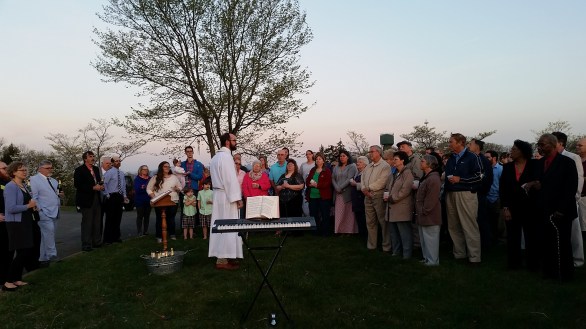
Practice Resurrection – Easter Sunrise Sermon

Mark 16.1-8

When the Sabbath was over, Mary Magdalene, and Mary the mother of James, and Salome bought spices, so that they might go and anoint him. And very early on the first day of the week, when the sun had risen, they went to the tomb. They had been saying to one another, “Who will roll away the stone for us from the entrance to the tomb?” When they looked up, they saw that the stone, which was very large, had already been rolled back. As they entered the tomb, they saw a young man, dressed in a white robe, sitting on the right side: and they were alarmed. But he said to them, “Do not be alarmed; you are looking for Jesus of Nazareth, who was crucified. He has been raised; he is not here. Look, there is the place they laid him. But go, tell his disciples and Peter that he is going ahead of you to Galilee; there you will see him, just as he told you.” So they went out and fled from the tomb, for terror and amazement had seized them; and they said nothing to anyone, for they were afraid.

17966886_10206879248298323_4940910702880605006_o


Hallelujah! Hallelujah! Hallelujah! Man it feels good to say that word! In the church I serve, we have purposely avoided saying “Hallelujah” since before Ash Wednesday. No hymns, no prayers, no sermons contained the word. And now we can shout it out with all the pent-up gusto we’ve been holding in throughout Lent. Hallelujah! He is risen!

NT Wright is quite a famous theologian and he has said on numerous occasions that on Easter Christians should break out the champagne! But, we’re good United Methodists, so we’re stuck with Welsh’s Sparkling Grape Juice, plus it’s 6:30 in the morning and a bunch of us have other church services to go to after this!

But nevertheless, it’s time to pop some bottles and celebrate! I’ve passed out bottles to all the clergy so just go to the closest pastor to receive your cup. It’s time to shout out some Hallelujah and drink some Methodist champagne!

A Toast: To the God of Grace and Glory who broke forth from the tomb; Hallelujah!

Easter: What is this day all about? For centuries people like you and me have gathered like this to remember the first Easter. But, has Easter changed throughout the centuries?

We have a lady at St. John’s who, I believe, is keeping Hallmark in business. Whenever I visit people from our church community there is a better than good chance that I will see a card from Dianne on a refrigerator, or on a countertop, just to brighten someone’s day. And, wanting to be more like Dianne, I started looking through the greeting cards at Rite-Aid the other day in the section titled, “Easter.”

I flipped through a handful, looking for something appropriate, but then I couldn’t stop myself. And before I knew it I had gone through every single Easter card. They were all filled with nice words like “renewal” and “rebirth” and “revival.” They had colorful pictures of butterflies, lilies, and baby bunnies. But not one of them contained the right word: Resurrection.

easter-sunday1120-1024x576

Easter is not the celebration of spring.

This is important! While we are bombarded with images and messages about spring being the season of rebirth and renewal, the resurrection is something entirely different.

I can assure you that the women who walked to the tomb that first Easter were not captivated by the birds singing in the air, or the new buds bursting from the trees. They, as Mark so eloquently puts it, were afraid.

But we are far removed from the strange new world of the bible, and instead we like to make Easter about the egg hunts, the bunny who comes like a thief in the night, and the rebirth of nature. Maybe then, we are actually just like the women who fled from the tomb; the message and power of the resurrection is such that we can barely bring ourselves to say anything about it at all.

I, or any of the fine preachers from Staunton, could stand before you this morning and talk all about the change of seasons, the wonder of the birds chirping as the sun rises, the call to a new life. But does any of that actually grab you? Does it terrify you? Does it fill you with such hope that you would stand against the tyranny of the Roman Empire?

Easter is not about spring. Easter is resurrection.

Resurrection is God’s penultimate Word to us, His creatures. And frankly, it should make us tremble and consider running in the other direction because recognizing this new truth and new reality means that we will, sooner or later, have to give up our dependence upon the things that the world tells us we need: beauty, security, wealth, power, careers, out loved ones, even our lives.

But since you’re here at the crack of dawn to worship the living God, you must surely get it already. You’re here because your lives have been transformed by the power of the resurrection and you can’t go back. Or maybe, just maybe, you’re like me and you’ve heard this story so many times before that you’ve become a little numb to the Good News of God bursting from the tomb. Perhaps we need to be shocked or afraid like the women who ran away. Maybe resurrection isn’t supposed to make us smile and grin. Perhaps resurrection is supposed to make us run away in bewilderment.

Resurrection changes everything.

Just shy of a year ago, my wife gave birth to our son Elijah. And at first it was terrifying. I’ll never forget pushing him in his little basinet down to the recovery room and Lindsey finally getting to rest after the draining ordeal of childbirth. My beautiful wife was sleeping soundly, and our beautiful baby boy was asleep at the foot of her bed. It was a profoundly holy moment. And then Elijah started choking.

At first I looked around for a nurse or a doctor to do something, and then remembered that we were all alone. So I got up, rushed to him, used a suction cup to clear his throat, and he promptly nuzzled into my neck.

Having a baby changed everything.

Eventually we made it home and started figuring out how to exist with another tiny little human being in the house. We got into a good rhythm. And, I decided to start reading to him every night.

He was barely a month old when I picked up my collection of the Chronicles of Narnia and began with The Lion, The Witch, and The Wardrobe. Every night I would flip through the old and worn pages that called us into the strange new land of Narnia. And, of course, it meant nothing to him, but it meant everything to Lindsey and me.

We read the entire collection in just over a month and the very last paragraph of the very last book goes like this: And for us, this is the end of all stories… But for them, it was only the beginning of the real story. All their life in this world and all their adventures in Narnia had only been the cover and the title page: now at last they were beginning chapter one of the Great Story, which no one on earth has read: which goes on forever: in which every chapter is better than the one before.

narnia1

The end of Mark’s gospel, this wonderful bit about the women running away afraid, is no ending at all. It is a great ellipsis in which the story continues through us. The women were afraid because the resurrection was unlike anything this earth had ever known. They could not comprehend the sheer magnitude of God’s dynamic and reality-altering gift in his Son breaking free from the chains of death.

But their story, and our story, does not end with the written gospel. Their story, and our story, is resurrection. The gospel of Jesus Christ, the Son of God, is always unfinished. There is an unwritten page left for each of us to write, in which we record the many glorious, joyful, and even frightening things that God has done for and through us.

Easter, resurrection, isn’t perfect like a hallmark card. We cannot contain the inexplicability of God raising Jesus from the dead in pastel colors with a simple quote about renewal. It’s strange, and complicated, and scary.

For some of us Easter creates more questions than it provides answers. For the women at the tomb it was frightening and astonishing. For all of you it probably feels uncomfortable as we passed around out Methodist champagne with shouts of Hallelujahs while gathering in a place like this: a cemetery.

Easter can be downright terrifying.

But’s its not the end of the story. Jesus came alive so that we could come alive. The resurrection forces us to not experience Easter as just a day when the seasons change, but the very life-altering, earth shaking, cosmically confusing, moment of transformation of all things.

This, what we’re doing here, is our witness to the fact that we do not know what will happen next. We do not know when the bell will toll for us. And, if we’re truly honest with ourselves, this frightens us.

But hear the Good News: resurrection is the beginning of a new story, which goes on forever, in which every chapter is better than the one before. Jesus’ story, our story, has no end.

Hallelujah! Amen.

On Rediscovering Joy At Easter

strangely-warmed-spreaker-header

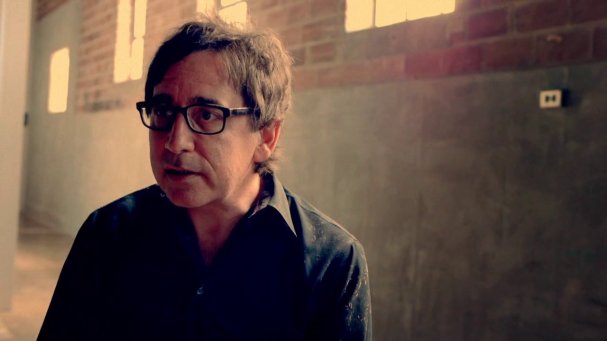
The team from Crackers & Grape Juice recently spent an afternoon interviewing Brian Zahnd (founder and lead pastor of Word of Life Church, a nondenominational congregation in St. Joseph, Missouri) for our lectionary podcast Strangely Warmed. During our time together we talked about the readings for the season of Easter during year A from the Revised Common Lectionary. For the first Sunday of Easter, Brian challenged us to make it all about joy while the world struggles under the weight of the current political climate. If you want to hear the conversation and learn more about heresy, the paradox of Easter, and destroying lilies in worship, you can check out the podcast here: Easter 1 – Year A


Brian-Zahnd

Long Live The Revolution!

Romans 8.12-17

So then, brothers and sisters, we are debtors, not to the flesh, to live according to the flesh – for if you live according to the flesh, you will die; but if by the Spirit you put to death the deeds of the body, you will live. For all who are led by the Spirit of God are children of God. For you did not receive a spirit of slavery to fall back into fear, but you have received a spirit of adoption. When we cry, ‘Abba! Father!’ it is that very Spirit bearing witness with our spirit that we are children of God, and if children, then heirs, heirs of God and joint heirs with Christ – if, in fact, we suffer with him so that we may also be glorified with him.


I love going home to visit family. There is just something special about visiting the old haunts and showing off a baby to make me really nostalgic for the past. Last week Lindsey and I spent some time up in Alexandria with my family, and it felt like nothing, and everything, had changed. For instance: When I went to the grocery store I bumped into a couple people I used to go to church with, but then when I drove out on Route 1 all the old buildings were gone and were replaced with town homes. Time, like a river, moves and though it looks the same, everything changes.

But perhaps the thing I enjoy most about going home is spending time with my grandmothers; Gran and Omi, both of whom are now great-grandmothers to Elijah. I know I’m biased, but I do have the best grandmothers in the world. One represents all the good southern hospitality that Petersburg, VA has ever had to offer and the other represents the refined qualities of old Europe with her charm and presence. They could not be more different from one another, and yet they are incredibly close.

Anyway, whenever I head home, whether it’s for a day or a week, I always plan on swinging by both of their homes unannounced. And last week was no exception.

Both visits were similar – we had the usual chit chat, we caught up on all the other family members, we shared stories about Staunton, and then we watched Elijah crawl all over the place. During our time together we learned about different health concerns, new aches and pains, and were unable to confront the reality that one day, perhaps not for some time, but nevertheless one day, they will no longer be here.

Each visit ended with both of them asking us to stay longer, while Elijah fussed for food or for a nap. And both visits ended with the exact same words from both of my grandmothers: “I just wish I had something to give you.” To which one looked around the room as if to give us something off the coffee table, and the other went upstairs and literally took a painting off the wall and put it in our hands.

I just wish I had something to give you.

“When we cry, ‘Abba! Father!’ it is that very Spirit bearing witness with our spirit that we are children of God, and if children, then heirs, heirs of God and joint heirs with Christ.”

Inheritance, being an heir, is always a complex matter. I wish it wasn’t true, but I’ve helped families prepare for funerals when more of the conversation around the table was focused on who was receiving what than what hymns or scripture would their now dead loved one want in their Service of Death and Resurrection. At the moment when a family needs to be together almost more than ever, they were already marking the territory of their hopeful inheritance.

Most of the time, we can’t choose what we inherit. Our parents or grandparents might think something has special significance for us, and therefore leave that item for us in the will, but rare are the times that we get to declare what we shall receive.

And there are others things that we have no choice about inheriting. We get the good and the bad, the responsibility and the privilege, the shame and the pride.

Frankly, three of things that determine our lives more than anything else come to us without a choice at all: We do not choose the family we are born into, we do not choose the color of our skin, and we do not choose the economic status of our families. We inherit all three without any action of our own, and those three things set us on a trajectory that we can rarely alter.

And of course there are things we inherit through the sands of time that we’d rather erase; like the celebrities who get their DNA tested for television shows about genealogy only to discover that their ancestors were part of the Nazi regime, or were slave owners, or participated in the near-eradication of the indigenous peoples in this country.

Inheritance is a complicated and confusing thing. Are we nothing more than the genes and the history we inherit? Can we break from the tyranny of expectation and what it means to be an heir? Who are we really?

St. Paul says that we are children and heirs of God!

Our inheritance, unlike that which we receive from our families, is totally different from anything that has ever existed. Moths and rust do not corrupt it; thieves cannot break in and steal it. It cannot be lost in the fall of the stock market, or burned in the night, or taken by the government in the so-called death tax.

Our inheritance is our hope while everything else appears to fail. It promises a future when we cannot imagine there being anything left for us in this life.

            It is nothing short of the glory of the Lord.

However, and this is a big however, there is more to this inheritance than smiles and rainbows and resurrection. It comforts AND it afflicts.

We receive something so remarkable and inexplicable as heirs with Christ, but it also comes with a cost. Receiving this gift puts at risk our financial security, our reputation, our social position, our friends, our family, our everything.

This is the revolution of faith.

o-REVOLUTION-FIST-facebook

We are fellow heirs with Jesus Christ, we shall receive resurrection, but we also suffer with the Lord.

The time is coming, and is indeed here, when the mighty will be brought low and the lowly will be raised high. Seek ye first the kingdom of God and do not put your trust in things that will fade away with the blowing of the wind. You need only faith the size of a mustard seed. Ask you shall receive. Those who lose their lives for the sake of the gospel will live.

Have you ever heard anything more revolutionary in your lives?

Everything about our existence changes with the inheritance of the Lord: Our finances change when we realize that all we receive first comes from the Lord. Our families change when we realize that all who do the will of God are our mothers, fathers, brothers, and sisters. Our worldviews change when we realize that God is contending against the powers and principalities here and now.

All that we held so near and dear before will wash away when the tide of life comes in. Moths will eat away at the fabric of our perspectives, thieves will steal the wealth that we think determines everything, but there is one thing that endures forever: Jesus Christ.

This is nothing short of revolutionary. And to be honest, it’s gotten a lot of people killed throughout the centuries, including the One in whom we lie and move.

That’s one of the things we struggle to remember, here in our comfortable Christianity; Jesus was a revolutionary. He was not killed for loving too much. He was killed for calling into question who was really in charge, for confronting the elite about not taking care of the poor and the marginalized, and for telling the truth.

Jesus was a revolutionary and calls us to join the revolution.

            But here in Staunton, we don’t feel very revolutionary.

We like what we have: good schools, perfectly manicured lawns, children that come home to visit, vacations, golf courses, solid retirement portfolios. We can’t imagine being called to leave our families, or go to prison, or even lose our lives for the sake of the gospel. Why do we need to risk anything when we already have everything we want?

We, the people who have this remarkable inheritance through the Lord, can take all kinds of risks that the rest of the world fears. We know where all of our gifts really come from and that we can give them away, we know that our time is a fleeting and precious thing that we can give away, we know that even our lives are worth giving away because they were first given to us.

We can, and should, be reckless with our lives because we can afford to be. We’ve been given the greatest inheritance in the history of the world. Why aren’t we doing anything with it?

There was an uncle who had amassed a great fortune throughout his life, he started his own business and invested wisely, but had no children to leave his wealth to. However, he did have a couple nieces and nephews who patiently waited with baited breath for him to die so they could reap the benefits of the inheritance. While they should have been committing themselves to their educations and their careers, they just daydreamed about what they would do with the money as soon as their uncle died.

And then he did.

The siblings all met with the family lawyer after the funeral, trying their best to appear mournful while hiding smiles of utmost glee. The lawyer took his time reading through the important legal jargon until he came to the inheritance: To my nieces and nephews I leave… they gripped the leather chairs with anticipation… my library.

“Library?” they all thought silently though one of them accidentally shouted it out loud. “What about our money?!?!”

They all left in a storm of rage angered beyond belief, but the youngest nephew waited behind, and he signed for the inheritance library, and gave the lawyer the address of his house.

For days he unpacked box after box of books and started stacking them wherever he could. It began feeling like the books were becoming the new wallpaper, and for years they just sat their collecting dust. And the longer they remained, the more the man resented the books.

His life continued on, he got married, had a few kids, got divorced, lost the job, and started spending all his time at home. As he aged he felt like the books were there to taunt him, mocking him from every corner. And then one day, it a fit of built-up rage, he ran to the nearest stack, grabbed the top-most book and threw it across the room.

WHAM! The hardback left a perfect rectangular indentation in the wall from the force of the throw while the aging man breathed heavily with his hands clenched tightly together. He then slowly walked over to the wall to pick up the remaining remnants of the book to throw them away when he noticed something strange on the floor: a couple $100 bills.

It only took a moment, the slightest measure of time, before he realized what he had just discovered. The missing fortune of his uncle was in the library of books, hidden in between the covers, hundreds of thousands of dollars.

Revolution

When we cry, ‘Abba! Father!’ it is that very Spirit bearing witness with our spirit that we are children of God, and if children, then heirs, heirs of God and joint heirs with Christ – if, in fact, we suffer with him so that we may also be glorified with him.

We are joint heirs with Christ, and have received an everlasting inheritance that is our present and future glory! Are we letting this inheritance gather dust on the bookshelves of our lives? Do we know what we’ve received?!

God is bold and generous with reckless abandon to the point of giving his only begotten Son so that we might have eternal life. God is concerned with the cries of the needy and plight of the marginalized. God brings down the mighty and raises the lowly.

And so should we.

            Long live the revolution! Amen.

On Being Mad As Hell In Church

strangely-warmed-spreaker-header

The team from Crackers & Grape Juice recently spent an afternoon interviewing the one and only Dr. Eric Hall (Archbishop Raymond G. Hunthausen Professor of Peace and Justice at Carroll College) for our lectionary podcast Strangely Warmed. During our time together we talked about the readings for the fifth Sunday of Lent during year A from the Revised Common Lectionary and Eric gave us a lot to think about (particularly regarding BBQ Chicken Pizza). If you want to hear the conversation, and learn more about first order desires and preaching from the psalms, you can check out the podcast year: Year A – Lent 5

eric-snow

stonebridge_church_pathfinders_clenched_fists

Devotional – Ezekiel 27.1-2

Devotional:

Ezekiel 37.1-2

The hand of the Lord came upon me, and he brought me out by the spirit of the Lord and set me down in the middle of the valley; it was full of bones. He led me all around them; there were very many lying in the valley, and they were very dry.

Weekly Devotional Image

I love challenging couples to pick their own wedding scripture beyond the cliché of 1 Corinthians 13 (Love is patient, love is kind…). In between premarital counseling sessions, I ask them to dive deep into their bibles in order to final a passage or a verse that really speaks to them, and I have been deeply impressed with the scriptures they’ve picked. I’ve been blessed to bring couples together into holy marriage with the stories of David being anointed by Samuel, Paul’s description of what it means to be a Christian, a prayer to the church in Ephesus, and more.

The scripture passage a couple chooses for their wedding says a lot about what their relationship is like, and what their marriage will be like.

Years ago, two of my friends from Durham were married at a local Presbyterian church that was known for the preaching of the pastor. To start the wedding homily, the pastor described the sanctity of marriage and what it means for two individuals to make this covenant, but then he began shaking his head and said, “You know that these two standing before us are devoutly faithful, because when I asked them to choose their wedding scripture, they picked the valley of the dry bones from Ezekiel.”

1509747_10155231246960627_1383507341785953622_n

I can remember sitting with my back against the pew and wondering what in the world he was going to do with the text. The valley of the dry bones is a remarkably beautiful passage, but it doesn’t naturally lend itself to a wedding sermon.

So the pastor continued on with bits of wisdom and advice, he shared stories about successful marriages and what to emulate as well as terrible marriages and what to avoid. But for the better part of ten minutes, he completely avoided the Ezekiel passage. And then, out of nowhere, the Spirit start blowing and he said, “James and Jennifer, I think you two can have a good marriage, but if you think that you can do it without the help of your friends, family, and the Lord, it will never be more than a dry valley filled with old bones. Only your friends, family, and the Lord can breathe the Spirit back into those bones and give them life.”

It was a simple sermonic twist, but it’s one that I think everyone it attendance will never forget.

What does your life look like? Is it filled with vibrancy and energy? Do you feel the Spirit moving in your midst? Or is your life like a deep valley filled with dry bones?

Thanks be to God who calls us into relationship with the Spirit, with our friends, and with our families who can breathe life into the dry bones of our lives.

On Using Bad Words In Church

Romans 6.1-11

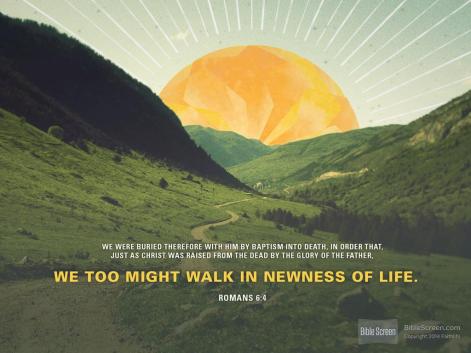
What then are we to say? Should we continue in sin in order that grace may abound? By no means! How can we who died to sin go on living in it? Do you not know that all of us who have been baptized into Christ Jesus were baptized into his death? Therefore we have been buried with him by baptism into death, so that, just as Christ was raised from the dead by the glory of the Father, so we too might walk in newness of life. For if we have been united with him in a death like his, we will certainly be united with him in a resurrection like his. We know that our old self was crucified with him so that the body of sin might be destroyed, and we might no longer be enslaved to sin. But if we have died with Christ, we believe that we will also live with him. We know that Christ, being raised from the dead, will never die again; death no longer has dominion over him. The death he died, he died to sin, once for all; but the life he lives, he lives to God. So you also must consider yourselves dead to sin and alive to God in Christ Jesus.


What’s the worst word you can imagine hearing from the pulpit? In a world where you can get away with saying and doing just about anything, is the church still a sacred place untainted by the desires of the world? There are plenty of strange and difficult and downright awful stories from scripture that we can read from the lectern, but don’t you think the pulpit should remain nice and clean?

During the season of Lent, we confront our finitude, our sinfulness, and our total dependence on the Lord. It is a tough time for us comfortable Christians, because these are exactly the types of things that many of us would rather avoid.

Gone are the days when we could expect to hear about sin and be challenged and convicted out of it. Gone are the days when we could affirm our finite lives without needing the stark reminder of ashes on our foreheads once a year.

Today, God has been reduced to a bumper-stickered and hallmarked version of love. Nothing more, nothing less, nothing else.

Today, church is not the place for judgment and for talk about sin. Regardless of their primacy in scripture, we would all be happier if we could avoid them.

The same holds true for foul language.

Right?

ec5f5b7006dc9af1fb22b9c190f5bcbb_social-etiquettepptx-on-emaze-swear-words-clipart_846-422

This is definitely not the place for someone like me to stand in front of people like you and use words that are forbidden from the radio and are relegated to rated-R movies.

As I heard someone say recently, “Preacher, there are just some things you don’t talk about it church.”

There is a seemingly endless list of things not to talk about in church; things like politics, abortion, divorce, war, sex, taxes, just to name a few. But foul language, language that results in soap-in-the-mouth discipline, is a particularly poignant thing to avoid in church.

And I have a friend in ministry who has completely ignored this accepted fact.

He loves to use foul language from the pulpit. Whether it’s the Christmas Eve sermon and the church is filled with young families who only show up for one worship service a year, or an Ash Wednesday service where only the die-hard Christians come out, he’s known for his colorful language. He’ll tell you that he uses those particular words in order to enhance the sermon in such a way that it will become more memorable and hit closer to home.

And a lot of the people at his church can’t stand it.

“Why does he feel like he has to resort to such awful language?” “The church deserves better than this.” “Does he talk to his mother that way?”

And, I think, they have a point. When the language used becomes more memorable or more important than what is being proclaimed, something has fallen a part. For instance: His recent Ash Wednesday sermon was titled “God Doesn’t Give A @#$%” I read it and listened to it online, it was phenomenal. The theology and the proclamation were remarkably faithful to the One who is faithful to us. But a few of the people from the church called me afterward and couldn’t even begin to express what the sermon was about at all; they were still hung up on the title.

However, there is a value to using some bad words in church.

During the season of Lent, this time after Epiphany but before Easter, there is a specific word that we avoid at all costs. It’s really bad. The word is… well, I’m not supposed to say it. Um, how can I do this…

Okay, there’s this great song by Ray Stevens called the Mississippi Squirrel Revival, maybe you’ve heard it, and part of it goes like this: The day the squirrel went berserk // In the First Self-Righteous Church // In the sleepy little town of Pascagoula // It was a fight for survival // That broke out in revival // They were jumpin’ pews and shoutin’ @#$%^&*!”

You know the word I’m talking about? You might not have even noticed it, but we have not said the “H” word in worship since before Ash Wednesday. It has not been read from the lectern, it has not been hidden in one of the verses from our hymns, and I certainly haven’t used it from the pulpit.

We purposely avoid the word during Lent so that when we shout it out on Easter it will mean all that much more. We specifically deprive ourselves of this important and powerful word to create a longing for the realization of all that the life, death, and resurrection of Jesus promises to us and to the world.

And there’s another bad “H” word that we need to talk about: Hell.

I don’t mean the place filled with fire and a red-toned, frighteningly tall, horned figure with a trident and a bifurcated tail. I mean using “hell” as an expression.

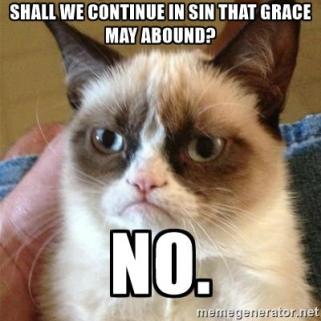
Paul writes: “What then are we to say? Should we continue in sin in order that grace may abound? By no means!” Now, what I’m about to say will probably get me in trouble, but so be it. That little ending, the “by no means” just doesn’t cut it. In Greek the expression is “me genotio” and it is way more emphatic than “by no means.” Some translations have it as “God forbid” or “Definitely not” but even both of those miss the mark.

37475703

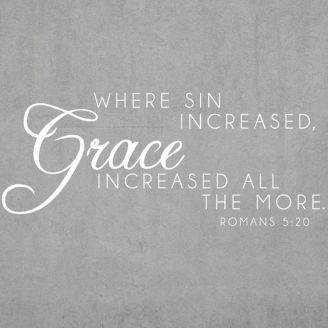
In what we read last week, Paul wrote: “When sin increased, grace abounded all the more.” And it’s as if Paul knew that people would hear those words and say, “Dude, that’s awesome! If grace abounds all the more when sin increases, then lets keep the sins rolling!”

And here is Paul’s response: “Should we continue to sin in order that grace may abound? HELL NO!

Our lives have changed forever. We can’t just retreat to the ways of the past because grace abounds. God in Christ has made in us a new creation! The gift of God in Christ on the cross was, and is, such that we are forever freed from the tyranny of sin and death. Should we continue to sin in order that grace may abound? HELL NO!

But that’s not the last bad word we’re going to talk about today. No, we still need to talk about “Sin” and “Death.” Perhaps two of the worst words that can ever be used in church. And you can tell they’re bad word precisely because of how rarely they are used in a place like this.

We need to talk about these bad words, not because they are normal parts of human experience, but because they are false powers that rule over us. That’s how Paul understood them: Sin reigns, Death has dominion.

You need only turn on the television for five minutes in the evening to see how true this really is: The nighty News hour is filled to the brim with the failures and faults and sins of other people; The Republican Party failed to procure their dream for American Healthcare. Left Wing activists went on a violent strike in another major city. Augusta County citizen receives life sentence for horrible crime. North Korea has another failed missile test but they are getting closer to developing their own weapons of mass destruction. The market fluctuated with each tweet from our president. Test scores have fallen in local school leading to speculation that it will close… All of them are negative.

And then when they go to a commercial break we are bombarded by products designed to make us believe that we can and will live forever; Use this cream and your wrinkles will disappear. Invest in this company and you will never have to worry about money. Go on this vacation and you will feel happy and healthy like the people running on the beach or tanning by the pool.

We live under the tyranny of sin and death. But Paul says this should not be so!

Ro6

We who have been baptized into Christ have been crucified with Christ. Our sinful selves are put to death on the Cross so that we will no longer be slaves to the bad words of Sin and Death.

Long ago, we would have known this without Paul having to remind us. Baptisms, long ago, were all about death. That’s where the Baptists beat us today, I’m sorry to say. When the Baptists baptize, they fully submerge people under water. And, depending on the faithfulness of the pastor, the soon-to-be-new Christian might be held under for quite a long time.

You would’ve missed the baptism to death if you were with us in Alexandria when Elijah was baptized. No, we didn’t hold him under a tub of water to embody the death to sin. No, we didn’t give him some old and tattered gown to wear. Elijah looked perfect in his little khakis, and button-up shirt, and bow-tie, and mustard-colored cardigan. Elijah was sprinkled with water, and the perfectly portioned amount of holy oil was smeared in the shape of the cross on his forehead. And, he was carried out to the congregation and held up high by the same preacher who curses too much.

We miss the death to sin in our baptisms. But we have a member of our lectionary bible study who really gets it. Judy had avoided church for decades before God grabbed her by the heart and said, “Follow me.” She brought her questions and her doubts to her preacher, and after a time she felt her heart strangely warmed and felt moved to be baptized.

Unlike babes in the United Methodist Church, Judy marched up to the giant baptismal font and prepared to jump into the all-too-cold water. And outside, through the multicolored stained glass windows, a thunderstorm was brewing.

Judy slowly descended into the water, and with cracks of thunder in the distance the preacher plunged her into the depths of death to sin. I like to imagine that if she opened her eyes underwater, even for the briefest of moments, she would have seen a flash of lighting that illuminated the entire congregation. The whole moment felt as if the rule of Sin and Death, the dominion of the devil himself, was making one final dash to keep her under their control. But alas, the grace of Jesus Christ abounded all the more, and she arose from the water dead to sin and death.

Are we to continue in sin that grace may abound? HELL NO!

God has changed us! Not just through the waters of our baptisms, not just through the bread that we break and the cup from which we drink, but also through the death of Jesus on the cross. It changes everything! This gift transforms our very lives to the point that we should feel compelled not to fall back into the old ways, to the old self, ruled by Sin and Death.

But we know the truth: we do fall back. We know that those who are sent to prison for horrible crimes have an all too high likelihood of returning one day. We know that those caught in adultery tend to habitually cheat for the rest of their lives. We know that even the strongest member of an AA group can fall off the wagon.

We know that we fall back.

We say “never again” to so many thing only to have them come right back around. We say never again to the anger, to the cigarette, to the bottle, to the cheating, to the lying, to the hatred, to the racism, to the homophobia, to the elitism, to the narcissism, to defeatism, to a great number of things.

            They never stop.

            The fact that they never stop is evidence of the power of Sin in this world, which reigns in Death.

But our lives have been changed! God has wiped away the old self and clothed us with the new. God washed away our insecurities and insufficiencies and said, “My grace is enough.” God was nailed to the hard wood of the cross to die a death that we might die in our baptism. God was raised from the dead as we were brought forth from the water to live a resurrected and holy life.

            The death Jesus died, he died to sin, once for all; but the life he lives, he lives to God. So we also must consider ourselves dead to sin and alive to God in Christ Jesus our Lord.

Should we continue in sin in order that grace may abound? HELL NO! Amen.

Devotional – Ephesians 5.14

Ephesians 5.14

Therefore it says, “Sleeper, awake! Rise from the dead, and Christ will shine on you.”

Weekly Devotional Image

On April 4th, 1742 Charles Wesley, the musically inclined younger brother of John Wesley, was invited to preach at St. Mary’s in Oxford. It was his first, and last, occasion for preaching there. His text was Ephesians 5.14 (“Sleeper, awake! Rise from the dead, and Christ will shine on you.”), and his message most likely caused a significant amount of resentment among those in attendance.

Throughout the sermon, Charles Wesley interprets the “sleep” from Ephesians as the natural state of humanity; it is the place where we are in light of Adam’s sin that has passed on to the world. But God calls each human to wake up from this dreadful sleep, repent, and live into the fullness of holiness made possible through the life, death, and resurrection of Jesus Christ.

In a sense, it did what all sermons are supposed to do: it faithfully proclaimed God’s revealed word in a way that was applicable and approachable to all with ears to hear. However, Charles made plain the point that those in attendance, the religious elite of the day, had fallen asleep to God’s commands and that it was time for them to wake up.

airbnb_wake_up_call_0

To paraphrase: “In what state is your soul? If God required you to die right now for the sake of the Gospel, would you be ready? Have you fought the good fight and kept the faith? Have you put off the old life and put on the new? Are you clothed with Christ? Do you have oil in your lamp and grace in your heart? Do you love the Lord your God with all your heart, with all your soul, with all your mind, and with all your strength? Do you believe that God is moving in a through you in all that you do? Are you really a Christian? If any of these questions offend you, be assured that you are not a Christian, nor do you desire to be one. The time has come to wake up!”

It’s no wonder he was never invited back to preach.

However, Charles’ questions still ring through the centuries and resonate in our hearts today. Are we alive to our faith? Are we clothed with Christ? Do we really love God and neighbor? Are we Christians at all?

Lent is the time to confront our true natures and ask if we have fallen asleep in our faith, or if we have been raised from the old life into the new. For Christ, the one in whom we live and move and have our being, is calling us to wake up. Christ compels us to leave the old life behind, the life defined by death and sin. Instead, Christ pushes us to clothe ourselves in our baptisms, live into the reality of resurrected life here and now, and wake up!

Stuck In The Bushes

Romans 5.12-21

Therefore, just as sin came into the world through one man, and death came through sin, and so death spread to all because all have sinned – sin was indeed in the world before the law, but sin is not reckoned when there is no law. Yet death exercised dominion from Adam to Moses, even over those whose sins were not like the transgression of Adam, who is a type of the one who was to come. But the free gift is not like the trespass. For if the many died through the one man’s trespass, much more surely have the grace of God and the free gift in the grace of the one man, Jesus Christ, abounded for the many. And the free gift is not like the effect of the one man’s sin. For the judgment following one trespass brought condemnation, but the free gift following many trespasses brings justification. If, because of the one man’s trespass, death exercised dominion through that one, much more surely will those who receive the abundance of grace and the free gift of righteousness exercise dominion in the life through the one man, Jesus Christ. Therefore just as one man’s trespass led to condemnation for all, so one man’s act of righteousness leads to justification and life for all. For just as by the one man’s disobedience the many were made sinners, so by the one man’s obedience the many will be made righteous. But law came in, with the result that the trespass multiplied; but where sin increased, grace abounded all the more, so that, just as sin exercised dominion in death, so grace might also exercise dominion in death, so grace might also exercise dominion through justification leading to eternal life through Jesus Christ our Lord.

I take a lot of pride in my ability to communicate with people of different age groups. On any given week I will spend time explaining theology to five year olds in our preschool, fifteen year olds in our youth group, 50 year olds in our bible study, and then the rest of you on Sunday morning. It is definitely a challenge taking ideas from the likes of Paul and proclaiming them in a way that can be appreciated for the here and now for the young and old.

But sometimes, I fail.

Like the time I tried to address the moral and ethical dilemmas of Capital Punishment to our youth group one night, to the times I’ve tried to proclaim the strange complexity of confronting our finitude on Ash Wednesday to our preschoolers, to the times I’ve told some of our much older adults that one must have the faith of a child to inherit the kingdom of God.

Communicating the gospel, sharing the Good News, is a challenge, and I definitely failed once when we were on our mission trip to West Virginia a couple summers back. Picture it, if you can: It is hotter than blazes outside, and I’m stuck in a tiny kitchen surrounded by teenagers who would rather be instagramming and snap chatting one another than cleaning a floor or painting a ceiling. And it was silent.

So I did what I do: I started asking questions…

“What’s your favorite story from the bible?”

One of our boys immediately said something about David defeating Goliath. The Davidic story will forever rest in the hearts of prepubescent boys who struggle with how rapidly the girls are growing while they remain the same.

A boy from another church said, “Well, I kinda like the one about, you know, Jesus feeding people?” while saliva poured out of his mouth as he stared at the cooler in the corner filled with our lunches.

A girl from a different church said, “I’ve always been rather captivated by Jesus turning water into wine at the wedding at Cana in Galilee.” To which I made a mental note to bring this up with her youth group later in the evening. No sensible teenage girl should be thinking about water turning into wine, and certainly not when Jesus has anything to do with it.

We went on and on, and then it was my turn to answer. “Well” I said, “It’s not my favorite story, but I’ve always loved this little detail at the beginning of the bible, in the book of Genesis. Adam and Eve were placed in the Garden of Eden with a choice. They could choose to live in perfect harmony with God and God’s creation, with each other, free from sin and free from death. But Adam and Eve made the wrong choice, they wanted to be like God, and as soon as they tasted the fruit from the tree of knowledge of Good and Evil, their eyes were opened, and they knew they were naked.

“But here’s the part that gets me every time. Almost as soon as they sin, they heard the sound of God walking in the garden and they both sprinted for the bushes. But God called out, ‘Where are you Adam? Where are you Eve?’ After waiting for a few moments, Adam popped his little head out of the bushes, and told God that he was hiding because he was naked and afraid.”

To which God said, ‘Who told you that you were naked?’

“Isn’t that hilarious?” – The teenagers had all stopped working while I was sharing the story, and now they were all staring at me with eyebrows askew. I could hear the paint dripping off their brushes onto the floor as if even the crickets were too concerned to chirp. One of the boys finally broke the silence to say, “Um… I don’t think it’s very funny. If I were naked and God came looking for me, I’d run for the bushes too!”

Do we know this old, old, story? Do we know what sin is? Do we know what happened to Adam and Eve in the Garden of Eden?

What kind of stories and habits and beliefs do we want to pass on to the coming generations? I feel like I am forever hearing about the good ol’ days when “we knew our bibles” and “we would’ve gone to school with snow like this when I was a kid” and “we entertained ourselves with our imaginations and not a screen in our pockets.”

Do we wish that things could go back to the way they were? Are we worried about the future that we are handing to our children?

We can talk and talk about what we want to pass on, what we hope to engender, but if we don’t know our story, if we don’t know where we came from, how in the world can we even hope to take a step in the right direction?

tumblr_nfzluvor3q1sk7sreo1_500

Just as sin came into the world through one man… Paul assumes that we know the story, that we know the details of the Garden. He does not waste lines in his letter rehashing the characters and the questions, he gets right to the point: Sin came into the world through Adam and Eve. They, and therefore we, broke the covenant with God. The transition from God’s rule to the rule of sin and death came into the world because of our rebellious and disobedient desires.

This is our condition. There is no going back. Fear and shame and anger and disappointment are our lives. We are, in a sense, stuck in the bushes for good, hoping that God will not come looking for us.

We are in the bushes. And Lent is a great time to ask the question: Why? Which of the commandments have we broken? Did we work on the Sabbath? Have we hated our mothers or our fathers? Did we covet something that did not belong to us? An object, a job, or God forbid, a person?

How would we respond if we heard God walking toward us in the middle of our sin? We, like Adam and like that boy on the mission trip, would run for the bushes.

Paul assumes that we know the story of Adam and Eve in the Garden because it is OUR story! Adam’s sin is our sin, and it not only divided us from God, but also brought death into the world, which spread like a disease. This is Paul’s point, and he says it in these few verses over and over again.

We are trapped in sin and death and we are stuck in the bushes. That’s the story of the Garden. Is this what we want to pass on?

Truly I tell you, we cannot know who we are to be, if we do not know our story. This inexhaustible, unexplainable, indescribable moment from the beginning is who we are. It is the story of how the life of order fell into disorder. But, thanks be to God, it is not the end of the story.

Adam brought the entirety of humanity down, down to the depths of death and destruction. Jesus, however, is the new way who is able to create a new humanity.

The promise of a good and remade and hopeful future comes from the old story that is forever new. The story of our death, and then the death that freed us from sin and death.

In Jesus Christ our stories are made new; God, as the author of salvation, takes up the pen and starts a new chapter through the life, death, and resurrection of his son. This is the story that those who are coming, the one who will follow us, need to hear. This is the story we need to share. We need to pray for the courage to shout this story from the rooftops as if our lives depended on it, because they do.

The only way to victory, the way to upend what was done in the Garden, is through the cross. We might think of a different way, a more efficient and less taxing way, but the way of the cross is the WAY that Christ defeated death.

08687e2b32757ff3722238f19cd727cd

But this is not an easy story to tell. The message and value of the cross comes with a cost. It is difficult, it is selfless, and frankly it is un-American. Today, we would rather surround the young with lessons that teach very different values: get the job, earn as much as you can, find the right spouse, buy the car, lose the weight, invest in the right companies, bring 2.5 children into the world, purchase the perfect house, and you will be free and life will be perfect.

That’s the story we tell. And it’s a lie! It’s all a lie! None of these things can give life. They cannot give us the identity and purpose and hope we so desire. The job will change, the money will disappear, the spouse will grow old, the body will too, the companies will falter, the car will rust, the children will not listen; Sin and Death corrupt them all.

But there is nevertheless Good News, there is a way out of the bondage that was brought into the world by the one we call Adam. We are freed through the one we call Christ.

We are stuck in the bushes of our own sin and shame. But Christ comes to us in the Garden of our own demise without a question, but a call. Jesus does not ask us who told us we were sinning, Jesus says follow me. Follow me to Galilee, follow me to Gethsemane, follow me to Calvary.

Jesus is the way and the truth and the life. Sin has increased in this world and in our lives, but God’s grace in Jesus Christ has abounded all the more.

The story, our story, began in the Garden, but it did not end there. It continued through the strange and wild wilderness in the days of Abraham, weaved through the journey to Egypt and back again in Jacob and Joseph. It rose through the power of David and Solomon, and fell through the failure of God’s people worshipping idols. It danced through the prophets who remained faithful to the Lord, it endured droughts and famines, it saw suffering and sadness. It connected the lives of the powerful with the powerless, it brought down the high and lifted up the lowly.

It was born again in a manger in a small town called Bethlehem; it trudged through the towns of Galilee and sailed over the sea. It walked through the streets of Jerusalem and turned over the tables at the Temple. It was dragged before the council and the ruling elite. It was marched up to a hill and nailed to a cross. It was silent in a tomb for three days. And it broke free from the chains of sin and death.

That is the story. It is a story worth telling over and over again; because in it we discover who we are and whose we are. In it we see ourselves stuck in the bushes being beckoned by Jesus to follow him. And in it we realize that it is not just a story, nor even our story, but THE story. Amen.


romans_feature-01