Less Preaching, More Praying

Psalm 119.33-40

Teach me, O Lord, the way of your statutes, and I will observe it to the end. Give me understanding, that I may keep your law and observe it with my whole heart. Lead me in the path of your commandments, for I delight in it. Turn my heart to your decrees, and not to selfish gain. Turn my eyes from looking at vanities; give me life in your ways. Confirm to your servant your promise, which is for those who fear you. Turn away the disgrace that I dread, for your ordinances are good. See, I have longed for your precepts; in your righteousness give me life.


I’ve mentioned The Circle in a number of recent sermons, and for good reason. Every week, our youth gather together as a witness to the loving nature of God made manifest in their lives. While others their age are consumed by that which they consume: the Internet, social media, attention from co-eds, false identities, and even politics, our kids are consumed by another thing they consume: the body and the blood of Jesus Christ.

But I don’t want to lay it on too thick. I love our youth, but they can be miserable at the same time. I have never been more self-conscious about my balding head than when one of our boys insists on bringing the subject up every single week. (Honestly, I think he does it not because he cares about my lack of follicles, but because he enjoys watching my reaction to his provocation.)

Another one of our youth will miss a meeting (too much homework, play practice, or some other obligation) only to have her brother tell me that she’s not at The Circle because a recent sermon I preached made her lose her faith.

Another one of our youth will purposely pretend like he can’t find a particular book in the bible, forcing one of us to flip through and declare the page number only to have him smile diabolically in return.

Like I said, we’ve got wonderful and miserable youth at this church.

Anyway, as I’ve mentioned on a number of occasions, we follow the same formula every week – we gather around the table for communion, fellowship, and bible study. Communion looks a lot like it does in this room whereby we pray together for God to pour out the Holy Spirit on us, and on the gifts of bread and the cup. And after we feast we go to the box.

The box contains a random assortment of questions designed to get all of us to share and reflect on what it means to be faithful. An example: “Who do you trust the most and why?” The question propels us to think about the value of our friendships, and implores us to be thankful for the people we trust.

One of the more frustrating questions is: “When was the last time you shared your faith with someone?” Everyone always sighs deeply when that one is pulled, but one by one they’ll each struggle to share a moment from the last week or so when they talked with someone about their faith.

But recently we read a new question: “If you could change one thing about the church what would it be and why?” Without hesitation, my follicle-conscious friend said, “I’d get rid of the preacher!” Another youth however, took the question seriously and said she would make the youth group larger so we could share the stories of Jesus with more people.

One by one each youth got a chance to reflect about a particular change to the church, and we ended with our adult volunteer for the evening. You see, everyone has to answer the question from the box whether you’re in the sixth grade of you’re sixty.

After giving the question some deep thought she said, “I’d get rid of the preaching… I’ve always thought that preaching in worship was okay, but it’s not the most important part of what we do. Sometimes you go on a little too long. But I would definitely increase our prayer time. In fact, what if all we did was pray?”

I got burned.

The preaching on Sunday is a little long? Seriously? You all should be grateful! I get you out of here before the Baptist churches in town every week, and we want to talk about the length of the sermon?!

I’m only teasing. But maybe she’s on to something. What if we prayed more, and I preached less?

less-is-more-blog-image

The psalmist, at least the author of Psalm 119, was a praying poet pleading with God. No preaching, no pontificating; only praying.

Teach me Lord, give me understanding, lead me in the path of your commandments, turn my heart to your decrees, turn my eyes from looking at vanities, give me life.

Where does this life of prayer come from? Praying like the psalmist requires an awareness of God’s presence. We can pray like the psalmist when we poetically plead with God, not to show that we are above anyone else, not out of arrogance, but with remarkable humility and hope – we ask God to give us what only God can give us.

And we can dispense with polite trivialities. No more do we need to start our prayers with a listing of God’s divine attributes, no more do we need a long list of adjectives before we begin to converse with the Lord. We need only pause, breathe, and then declare our faith in the Lord who hears and responds to our prayers.

Teach us, O Lord, your ways and we will follow on the path to the end. Give us understanding God, so that we can observe your will here on earth with our whole hearts. Lead us on your paths and we will delight in traveling the way that leads to life. Turn our hearts to your commandments, and not to our own selfish and arrogant ambitions. Turn our eyes from looking at vanities, the things that fade away, the things that do not give life, and instead give us life in you. Confirm to us your promises God because we are worthy when we fear you. Turn away the disgrace that we are ashamed of, for you are forgiving. O God, we have longed for your will; nothing more, nothing less, nothing else. In your righteousness, give us life.

When those words become our words, when we can utter them with true faith and humility, when we can ask for God’s will to be done and mean it, then our prayers will always mean more than my preaching. As Karl Barth said, when we clasp our hands together in prayer, it is the beginning of an uprising against the disorder of the world.

Because this is what we need God to do for us. We need God’s help to empower our uprising against the disorder of the world. We need God to teach us, to lead us, and to turn us. We cannot do this stuff on our own.

God, thank you for gathering us together in this place, at this time, with these people to call on you to make us into your people. Come to us now! Awaken us! Give us your light! Be our Teacher and our Comforter! Speak to us through the scriptures, through the prayers, through the hymns, through the sermon, so that we may hear just what we need and what will help. Preserve us by your Word; protect us from hypocrisy, error, boredom, and distraction. Give us knowledge and hope and joy.

We can pray like that. We can pray like the psalmist. We can do it from the comfort of our bedrooms when we wake up and right before we fall asleep. We can pray from the depths of our souls in this holy place whenever we gather together. Our prayers can be as long and as profound as the entirety of Psalm 119, or they can be as short and as simple as: Lord have mercy on me, a sinner.

Praying to God is a good and right thing because it actively makes us participate with the divine. Praying calls us to question the status quo, and to wonder about what could be. Praying challenges us to see ourselves for who we really are and to ask for God’s help to be better. Prayer changes things, and more often than not the thing that prayer changes is us.

prayer-changes-me

But sometimes we need to be prayed for, more than we need to pray for ourselves. Do you hear the difference? It is good and right for us to pray to the Lord like the psalmist, but at the heart of being a disciple of Jesus Christ is a willingness to share our burdens and needs with others, and to receive their prayers for us when we cannot pray on our own.

Years ago, I helped lead a mission trip to Costa Rica. We went for a week, and I was responsible for keeping track of the youth at our different work sites, and led devotions each night. A large focus of the trip was partnering with the local community in order to empower them, rather than helping with something only to disappear a few days later.

Every day, whether we were working on construction for a new school building, or we were helping young children in a day care program, the whole trip was about creating relationships with people.

Of course, for some of us, myself included, this was quite a difficult task since there was a language barrier. We quickly learned to speak with our hands and with the few words we knew of each other’s languages, and we did the best we could.

At the end of the trip I asked the youth to each pair up with someone they connected with during the week, but not someone from our own team. The kids quickly dispersed to find the friends they made over the week and I watched my sister Haley walk over to Jose. Haley and Jose were the same age; both had wonderful and loving personalities; but they couldn’t have been more different.

One grew up with all the advantages and privileges of an American who grew up outside of Washington D.C. The other lived day to day without a clear understanding of what the future held.

And yet, even though they spoke different languages, and had different hopes, and different dreams, they sat down together and prayed for each other. Haley went first, she prayed for Jose and lifted him up to the Lord. I only later realized it was the first time that Haley had ever prayed for another person out loud. And after Haley said “amen” Jose grabbed her by the hands and prayed for her.

Haley could not understand a word he uttered, but she wept as Jose prayed for her.

I know this is going to drive some of you crazy, but I am here not just to comfort the afflicted, but also to afflict the comfortable. So, in just a moment, we are going to pray for one another. You will feel tempted to find one of your friends in the congregation, someone you are comfortable with, but we all need to resist that temptation. We are going to stand up, and move about the sanctuary until we find someone we are not as familiar with, and they will be our prayer partners. And we’re going to talk to them. We’re going to listen to them. We’re going to pray for them. And they are going to do the same for us.

Remember, God does not need ornate and complicated prayers; God only needs our hearts. Pray for one another as you feel led, and then I will lead us in a congregational prayer. So, let us pray.

We are afraid, God, and we believe we can and should hide ourselves from you. We did it in the Garden, we did it in the wilderness, and we still do it today. We even think we can hide from ourselves. For better or worse, usually for worse, our desire to hide scatters and shatters our identity in you. As a result, we begin to hate ourselves, our families, our neighbors, and even You. We hate ourselves, and one another, because You refuse to believe that we are the masks we wear. God, help us learn to trust your love. Help us to learn we do not need to pretend to be something we are not. Help us accept that we are who we are because of You. Forgive us God. And as forgiven people, help us follow your Son in this world shaped by lies and deception. As your forgiven people, make us your salvation, that the world might see how good and great it is to be who we are, your children. Amen.

Devotional -Leviticus 19.1-2

Devotional:

Leviticus 19.1-2

The Lord spoke to Moses, saying: Speak to all the congregation of the people of Israel and say to them: You shall be holy, for I the Lord your God am holy.

Weekly Devotional Image

Before I became the pastor of St. John’s, I had a meeting with other clergy from the Virginia Conference who were all about to start at their first appointments. We represented a number of different seminaries and all of us were nervous in some way, shape, or form about what we were about to embark upon. A few of us were about to serve as deacons connecting the church to the world through youth ministry positions and hospital chaplaincy, a few of us were going to large churches as associate pastors, and a few of us were being sent to serve a church all by ourselves.

After a few ice-breakers designed to build bridges between us, we were all asked to answer the question: “What are you most worried about?” I remember someone jumping right in to say, “I am terrified of having to do funerals.” Another person said, “I have no idea what it takes to create and implement a church budget.” Another person said, “I’m nervous about being single and whether or not people will respect me for who I am.” And my friend Drew ended with, “I just want to be holy.”

217387_578604105493543_912821730_n

We all listened and offered advice to one another, but Drew’s comment has always stuck with me. While the rest of us were nervous and anxious about specific and practical matters, Drew was thinking about his holiness. How in the world can pastors lead people to holiness when they feel unholy? What does it even mean to be holy in the first place?

Some might say that to be holy means going to church every Sunday. Others might say that holiness comes with reading the bible every morning. And still yet others might say that you can only be holy if you pray to God every night before you fall asleep.

Holiness, however, is about living a life of total devotion to God. That might manifest itself in showing up to church, and reading the bible, and talking to God, but it also entails a fundamental commitment to the Lord in everything we do.

It means that when we encounter the stranger we see them as a brother and sister in Christ. It means that when we spend our money we reflect on whether or not it is bringing harm to someone else. It means that we strive to take nothing for granted because tomorrow is never promised.

Being a Christian is not a hobby, or something to be turned on and off whenever we choose. Being a Christian is about living a life of holiness and being totally devoted to God.

So then we must ask ourselves: What am I currently doing that is unholy? What relationships are preventing me from being totally devoted to God? What idols am I being consumed by instead of committing myself to the Lord? How can I be holy?

Devotional – Matthew 5.23-24

Devotional:

Matthew 5.23-24

So when you are offering your gift at the altar, if you remember that your brother or sister has something against you, leave your gift there before the alter and go; first be reconciled to you brother or sister, and then come and offer your gift.

Weekly Devotional Image

“I want you to write down the name of someone who is currently driving you crazy.” That’s how I chose to begin a sermon more than a year ago. Each bulletin had a blank piece of paper inside, and after writing down the name I asked everyone to crumple it up and hold it in their hands until the end of the sermon.

The sermon was focused on Isaiah 6.1-8 and I talked about how Christians, for centuries, have been called by God to confront conflict. I said that to be faithful is to meet the outcasts where they are and show them love, that to be a disciple means a willingness to forgive people when they have done something wrong, and that to follow Jesus means having the courage to ask for forgiveness when we have done something wrong.

I concluded the sermon by asking everyone to look at the names crumpled up in their hands, and seriously consider making the first move to confront the conflict with that person. I warned everyone that it might not go well, and that it might blow up in our faces, but that the longer the conflict remains, the harder it would be to hear the living God speaking in our lives.

1be9b5bd635fbd64716dbb286ad38d4d

Like a lot of sermons, I preached it and hoped the people of St. John’s took the challenge seriously. Over the next few months I occasionally heard about what happened when certain individuals confronted the conflict in their lives, but a few people told me that it was too hard and they were too afraid to face the person whose name they wrote at the beginning of the sermon.

Jesus, in the Sermon on the Mount, takes the art of reconciliation very seriously: Before you bring a gift to the altar (before you place your tithe in the offering plate during worship) you need to leave; first be reconciled to your brother or sister, and then come back to offer your gift.

I’ve often thought about what this would look like in the middle of a worship service: How would people respond if we told them to leave the church right then and there to be reconciled with the people they are quarreling with before giving their gifts to the church? Would any of them come back the next Sunday? Would anyone walk straight up to me because I’m the person they’re frustrated with?

It is easy to show up to church every week as if we have everything in our lives figured out and squared away, when the truth is that we are quarreling with people in our lives and that we don’t have everything figured out. Church, however, is the place where we learn what it means to be broken, and how God is working through us to put the pieces back together.

So, if we took Jesus’ words seriously, who would we need to reconcile with before we show up to church next Sunday?

God Said It, I Believe It, That Settles It

Deuteronomy 23.12-14

You shall have a designated area outside the camp to which you shall go. With your utensils you shall have a trowel; when you relieve yourself outside, you shall dig a hole with it and then cover up your excrement. Because the Lord your God travels along with your camp, to save you and to hand over your enemies to you, therefore your camp must be holy, so that he may not see anything indecent among you and turn away from you.

1 Corinthians 14.32-35

And the spirits of prophets are subject to the prophets, for God is a God not of disorder but of peace. As in all the churches of the saints, women should be silent in churches. For they are not permitted to speak, but should be subordinate, as the law also says. If there is anything they desire to know, let them ask their husbands at home. For it is shameful for a woman to speak in church.


We have a problem. I’m sorry that I have to use the pulpit to bring it up, but this is the best way to reach the highest number of people. We, as a church, have fundamentally broken one of God’s laws and we need to do something about it. We need to pray for forgiveness. We need to seek God’s mercy. And, we should get moving on this issue quickly in order to establish our faithfulness before the Lord.

We need to stop using the church bathrooms.

Now, some of you might be thinking: What in the world? Stop using the bathrooms? We’ve heard him say some strange stuff from the pulpit, but this has to be the strangest!

But scripture is pretty clear. We are supposed to have a designated area, outside the church, where we shall go when nature calls. We are supposed to keep a trowel with us at all times so that when we relieve ourselves outside, we can dig a hole and then cover up our excrement. We need to do this because the Lord is with us when we are in church, therefore this church must be holy and we can’t let the Lord see anything indecent among us.

So, after prayerful consideration, the trustees have voted to permanently close all the bathrooms in the church building, and we will construct some outhouses on the edge of the property for excrement disposal.

Just kidding.

lexica

Have you ever heard someone preach on Deuteronomy 23.12-14? I haven’t, nor have I even encountered it during a bible study. But in the 1880’s, churches and bathrooms were quite the topic of sermonic conversation. The advent of indoor plumbing had arrived and the question about whether or not to have bathrooms in churches started to pop up.

By the logic of the Old Testament, churches were seen just like the Israelite encampments and because of this the same rules about where people could relieve themselves were applied. Many preachers used this argument from their pulpit more than a century ago to fight the growing trend to build bathrooms in churches!

Today, when designing a new church, one of the first questions isn’t what the sanctuary should look like, or what kind of design will enhance the altar, or even how many people can fit in it, but how many bathrooms should there be, and where should they be put.

How do we understand the Word of God? Do we believe that all scriptures have been inspired by God and are useful for teaching? What does it even mean that God inspired the writing of scripture?

Years ago I was invited to participate in a bible study that met once a week. At the time we were going through the gospel of Matthew when one of the women in attendance interrupted with a dilemma for the group. Her son told her that he was thinking about getting a tattoo and she knew that God forbids this kind of behavior in the Old Testament. It was clear that she was looking for approval from the rest of us, but I opened my big mouth and said something like, “Well, I don’t think its that big of a deal” To which she replied, “If God says it in the bible, then the issue has been settled!”

I should have stopped right there, but I couldn’t help myself. “So, you don’t eat pork or shrimp? And you are going to rally the community together to stone your son to death for rebelling against you? And you didn’t mean to wear earrings today because you know the bible forbids them as well?”

This sort of extreme biblical literalism is problematic, and basically impossible. If we try to live by the Word with extreme rigidity, we would not be allowed to wear clothing with blended fabrics, we’d have to completely rethink our diets, working on the Sabbath would get us killed, and men would not be allowed to trim their beards. Ever.

            God said it, I believe it, that settles it.

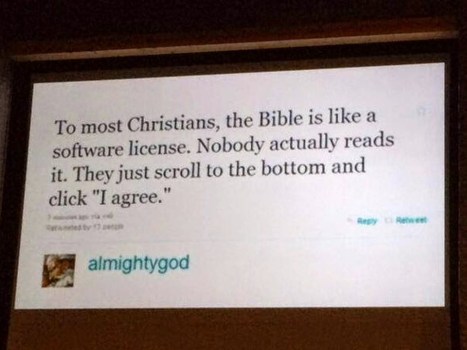
This is another one of the trite and cliché Christianisms that float around in conversation. When Christians get into an argument about a particular biblical precept, like prohibitions against tattoos or homosexuality, they will take a verse and use it like a weapon against the person they disagree with. God said it, I believe it, that settles it.

But, whether we admit it or not, rarely do we read the bible and think, “Okay, that settles it then.”

Today, no one worries about whether to build a church without a bathroom, we don’t hear preachers belabor biblical dietary restrictions, and we neglect a great number of scriptures while at the same time we use scripture to attack others.

There are all sorts of rules and regulations in scripture that, if we’re honest, we pick and choose to emphasize.

bible-and-its-interpretation

As we read earlier, Paul is clear in more than one letter that women should not speak in church. And yet, this church had a female pastor for a number of years, and our liturgist this morning just read out loud from the bible! Heaven forbid! A woman speaking in church! Can you believe it?

Of course, some churches still believe that the words about the subordination of women are the gospel truth. In those church, women are not allowed to serve in leadership positions, they are not allowed to teach Bible Studies where men are present, and they are not allowed to serve in any capacity that would require them to speak in front of the congregation.

I’ll tell you right now, this church would not be here if women kept their mouths shut. We are as faithful as we are because the women in our midst have been brave enough to speak what God has placed on their hearts, and because we have listened.

So what are we to do? We can’t just throw out the bible, but at the same time we can’t live by every single word within it.

Like the apostles and disciples before us, we read scripture and we hear God speaking through it. But we also ask questions of it. We consider context. We wonder if God really intended women to remain silent in church. We recognize that things like slavery are counter to God’s will, despite more than 200 verses that support it in the Bible. We don’t preach and teach that having bathrooms inside churches are offensive to God.

We follow Jesus’ example.

Jesus, Son of Man and Son of God, did not adhere to strict biblical literalism. He had different interpretations of the Sabbath restrictions, he had stronger opinions about divorce and adultery, and he regularly disobeyed the Law by eating with those deemed unclean.

Living as a Christian, reading the bible, it’s all about interpretation. And, to be clear, interpretation does not mean to change the text, or to ignore it, but to proclaim it for this time and for this place.

Even the Bibles in our pews are themselves a work of interpretation. Someone, and more often than not some people, made particular choices about how to translate particular words from Hebrew and Greek into English. This might not seem like a big deal, but if you take something like one of the most beloved of all scriptures: For God so loved the world that he gave his only begotten son that whosoever believe in him may not perish but have everlasting life. The word for “perish” in Greek is apollumi which can mean perish, but it can also mean to die, to be destroyed, to be lost, killed, or ruined. Each of these translations can change the meaning of the text slightly, and are therefore a product of interpretation.

So whenever we take up a bible, whenever we flip to a specific passage, the work of interpretation started long before our eyes flow over the English translation. But nevertheless, even the best translations leave us to continue the task of interpretation.

How do we do it? Well, we don’t do it in isolation. We don’t read our bibles in our living rooms never to speak about the words again, we don’t listen to a sermon only to have that be the only time we encounter the words.

We interpret God’s Word in community. We go to bible studies, we send emails to our friends and to our pastor, and we do what we need to do in order to comprehend that which is often incomprehensible.

And we let Jesus help us interpret. In the beginning was the Word and the Word was with God, and the Word was God. As the definitive Word, Jesus helps us to understand the words of scripture. We read from the Old and New Testament alike through the lens of Jesus and we begin to wrestle with how these words continue to live and breathe in our lives today.

But that requires a lot more work than “God said it, I believe it, that settles it.” It compels us to actually take up our bibles, read them, and talk about them. It challenges us to ask hard questions and produce new ideas. It requires us to believe that this book is in fact the living Word of God and that it continues to speak truth in new and exciting ways, perhaps in ways we cannot even imagine.

This last week has been filled with controversy from the Oval Office. In their first week, the new administration put forth a number of executive orders including a call to begin construction on a wall at our southern border, a gag order for the EPA, and the halting of refugee migration from a number of countries.

c3nffwbxaae5lbr

On the same day we celebrate the liberation of the concentration camps in Europe, our country said, “we don’t want them” to people fleeing persecution and destruction.

Now, no one has said that this has been done because of scripture, but the bible should have played a role in the decision if our politicians are going to keep claiming their Christian allegiance.

Moses was a refugee after fleeing from Egypt.

            Ruth was a refugee after her husband died and she followed her mother-in-law to a strange new land.

            The entire Israelite people were refugees in Babylon.

            Jesus, the one we worship here in church, was a refugee. Jesus, like people in the Middle East today, had to flee his home out of fear of violence, persecution, and even death.

And yet, we tout these certain stories from scripture and hold them over people’s heads about behavior and identity. But when we start actively preventing the oppressed from entering the country, we forget all about the story of our Lord and Savior.

People have used this book, with understandings like “God said it, I believe it, that settles it,” to attack and belittle people for far too long. It has been used to justify the horrific practice of slavery. It has been used to subjugate and relegate women’s rights. It has been used to rationalize physical violence and aggression toward people of different religions. It has been used to incite fear and terror in those who do not believe. It has been used as a weapon again and again and again.

And now we, the people of God, join together to say “no more!”

“No more!” to the use of scripture like a weapon to oppress the weak and the marginalized. “No more!” to the complacent Christianity that stands idly by as people are attacked for whom they are. “No more!” to the backwards ways of the past that lose sight of God’s grace here and now.

“No more!” to God said it, I believe it, that settles it.

Devotional – Psalm 27.4

Devotional:

Psalm 27.4

One thing I asked of the Lord, that will I seek after: to live in the house of the Lord all the days of my life, to behold the beauty of the Lord, and to inquire in his temple.

Weekly Devotional Image

Of all the questions I get asked, the one I hear the most is: “What’s heaven like?” I’ll be down in the preschool when one of the children will saunter over and randomly ask the question with their eyebrows askew. Or I’ll be sitting with a grieving family planning a funeral service when a new widow will ask the question as if she’s never really thought about it before. Or I’ll be working on a sermon in a coffee shop with my bible open on the table when a stranger will walk up to ask the question out of nowhere.

“What’s heaven like?”

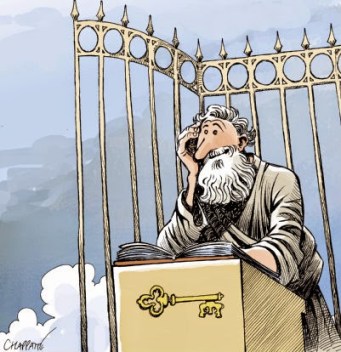
If Hallmark, the Lifetime channel, and uncles who tell bad jokes have anything to say about it, then heaven is a mysterious place in the clouds with fat little cherubic babies floating around playing harps, golden arches keeping certain people out, and Saint Peter sitting with a ledger.

st-peter-pearly-gates

If one of our preschool parents has something to say about it, then heaven (as she told her daughter) is a place filled to the brim with her favorite candy.

But if scripture has anything to say about it, then heaven is like a never-ending worship service. Which, to some people, sadly, sounds more like hell than heaven.

However, the bible is forever making connections between the worship of the Lord here and now, with the worship of the Lord in the New Kingdom. And not the announcements that always take to long to list at the beginning, and not the logistics of sitting down and then standing back up for hymns, but the beauty and wonder of encountering the beauty and wonder of the Lord.

The psalmist says the one thing worth seeking after is to live in the presence of the Lord each and every single day, to behold the beauty of the Lord, and to wonder and inquire in the house of God. In weekly worship, when we experience God’s faithful presence through a choice phrase in a prayer, or a melodic move in a hymn, or even a powerful sermon, we are catching a glimpse of heaven on earth. For when we gather in the house of the Lord, when we are confronted with God’s majesty, what could be better?

As Christians, we do well to seek out the presence of the Lord here and now as foretaste of the kingdom of heaven. We do it on Sundays when we gather together to proclaim and respond to God’s Word. We do it when we are invited to the table for communion. We do it when we sit with a friend and earnestly pray together. We do it when we hear God speak to us in the still small voice. And when we do, we receive an answer to the question, “What’s heaven like?”

Too Busy To Welcome – Advent Homily on Romans 15.7

Romans 15.7

Welcome one another, therefore, just as Christ has welcomed you, for the glory of God.

too-busy-for-christmas-1

When Bob Sharp was sent to Marquis Memorial, I know that he was welcomed because it didn’t take long for the church to paint his office burgundy and gold in honor of his dedicated devotion to the Washington Redskins.

When Courtney Joyner started at St. Paul’s, I know she was welcomed because she is a triple-threat: She can sing, she can jam, and she can preach.

When John Benson first preached at Augusta Street, I know he was welcomed because his people haven’t stopped shouting “Amen!” since his first sermon.

When Won Un showed up at Central, I know he was welcomed because their entire church community has developed an affinity for Kimchi and they know that if they can’t find Won on a nice day, it’s because he’s out riding his bike.

When Janet Knott arrived at Jollivue, I know she was welcomed because she preaches with gifts, and who doesn’t love presents?

When Clayton Payne began at Cherryvale, I know he was welcomed because people keep showing up week after week even though he keeps preaching the same sermon over and over again.

When Bryson Smith was appointed to St. Paul’s, I know he was welcomed because they know if the sermon falls flat, he can always sing a solo and get the people to shout “Praise the Lord!” and “Mercy!”

When Sarah Locke was sent to Christ, I know she was welcomed because people started showing up in her kitchen while she was still unpacking boxes. I know that because I was there!

I know the United Methodist churches of Staunton are a welcoming bunch because you have so warmly welcomed your pastors. But I wonder, do we welcome everyone to our churches in the same way we welcome the pastor when he or she first arrives? Do you really welcome one another just as Christ welcomed us?

When I arrived in Staunton, Won and I got together and thought it seemed about time to resurrect the Lenten and Advent luncheons. We were not here when they used to happen and so we were able to tweak the schedule and the organization a little bit. Important for us was the shifting of host churches and guest speakers so that everyone got a chance to welcome, and every preacher got a chance to preach.

Fun fact: As of Christmas day, I will have preached in every single United Methodist Church in Staunton. And it only took me three and a half years!

Anyway, we got the Lenten luncheons started again, and the first time I was invited to preach we were gathering at Central UMC. At the time, I was young and naive, and I thought it would be a good idea to wear my Carharrt Overalls when I preached from the pulpit in order to really drive home the message. Maybe you were there. Maybe you even remember some of the things I said.

I poured out my heart and soul from the pulpit at Central UMC and I did my best to make the people of St. John’s as proud as possible. Afterwards, during lunch, after the tenth or so person made a comment about my attire, an older woman came up to me and asked if we could talk (I won’t say which church she was from).

So we moved to the corner of the social hall, and she gingerly placed her hand on my shoulder and said, “I understand that you’re new to town you might be looking for a church home, so we’d love to have you join us for worship on Sunday.”

I remember just standing there stunned. I mean, it was a kind gesture for her to invite me to church (particular when the average person in a United Methodist Church invites someone to worship once every 33 years). But going to another church on Sunday is impossible.

She welcomed me, but she didn’t listen to me. I suspect that she was more concerned with having people in the pews, than with knowing who the people are in the pews.

Welcome one another, therefore, just as Christ welcomed you, for the glory of God.

How did Jesus welcome? Well, he certainly didn’t wait for people to just show up because he was having a service on a Wednesday afternoon, or a Sunday morning, or even on Christmas Eve. Jesus welcomed others by showing up in their lives, he met them where they were and ministered to them in terms and in ways they could understand. He told stories that connected with their daily living, stories about the soil and the birds of the air. He welcomed them in the midst of their suffering and isolation. He welcomed the very people who would abandon him to a table without cost.

At St. John’s we have a Preschool and I spend time every week leading the kids in what we call chapel time. I’ll take a lesson from scripture and try to rework it in ways that can understand and apply to their life.

Last week, after practicing the Christmas pageant for what felt like the thousandth time, I set up a small table near the altar and I invited the kids to come sit and listen. The thirty minutes prior to chapel time were filled with pushing and tripping and laughter and debauchery, but when they sat down around the table I started speaking in a soft voice, and they all started to listen.

I said, “My friends, I have something I want to share with you. This is bread and grape juice, but it is about to me much more than that. For this is a gift that Jesus gives to us. Some of you might do this in your church on Sundays, and whenever we sit at the table we are remembering Christ’s love for us. At this table, all of us are welcome no matter what. So let’s pray… God thank you for loving us so much that you welcome us no matter what we’ve done and no matter who we are. I pray that you would pour out your Spirit on us and make us more like Jesus so we can love others. Amen.”

And then one by one I called them by name, I gave each of them a piece of the bread, they dipped it into the cup, and the received communion.

Unlike us, the preschoolers have the benefit of not rushing around through this season of Advent endlessly crossing items off our to-do lists. Unlike us, the preschoolers don’t feel burdened by the tyranny of things and can sit quietly for a moment to receive a gift better than anything under the tree.

It often happens around this time of year that we feel too busy to welcome. We become more concerned with the wrapping paper and the ornaments and appearance of things than with the welcoming love of the Lord who was born into an unwelcoming town. When our sanctuaries fill up with more people than usual on Christmas Eve we are more often burdened by making sure everything is in the right place, than we are by making sure we are in the right place to welcome and be welcomed by the Lord.

And it is at the meal, the Lord’s Supper, the thing that most of us do on the first Sunday of the month, where we learn what it really means to welcome like Jesus. For Jesus is the one inviting you to the table, not merely hoping that you will show up to fill an empty place in a pew, but earnestly and truly yearning for your presence. You are invited because you are unique, you are wonderful, and you are a child of God. There is a place for you at the table no matter what.

Can you imagine what our churches would really look like if we welcomed others as Christ welcomed us?

Amen.

Devotional – Luke 19.1-2

Devotional:

Luke 19.1-2

He entered Jericho and was passing through it. A man was there named Zacchaeus; he was a chief tax collector and was rich.
Weekly Devotional Image

In a few weeks many churches will celebrate All Saints Sunday. In the United Methodist Church we use it as an opportunity to prayerfully give thanks and reflect on the lives lost in the local church over the last year. Some churches will ring bells and read off the names of the dead, others will cover their altars with belongings from the deceased, and others will invite grieving family members to come forward and offer thoughts on those who died.

But when we think of the Saints of the church, we tend to think about incredible figures from church history: Augustine, Francis of Assisi, Mother Teresa, etc. We think that to be saintly requires a life of such profound faithfulness that most of us will never come close to it. Therefore, the saints we daydream about are the ones also found in stained glass windows and famous paintings.

Saints, however, are the people who inspire us to be totally different. And more often than not, the truest saints are those who were once a lot like us, and were radically changed by an encounter with the living God.

zacchaeus-1

Zaccheaus is a beloved and often overlooked person from scripture. The wee-little tax collector, despised by the town, wanted to catch a glimpse of Jesus, so he climbed a tree. Jesus, upon seeing the man up above, called him down and invited himself over for dinner. This interaction fundamentally transformed Zacchaeus’ life and propelled him to return what he had taken “even four times as much.”

Some of God’s truest and most peculiar saints are much more like the little tax collector who recognized his weakness enough to climb a tree to catch a glimpse of the Messiah. Zacchaeus was a strange man and his interaction with Jesus was equally strange. The result of sitting together for a meal was enough to radically transform his life forever. But even in his strangeness, we catch glimpses of the truth; we begin our journeys of faith by recognizing our need, but doing something in response to that recognition, and then discover that the love and power of Jesus has transformed our lives in ways that we never could have anticipated.

Zacchaeus is the kind of saint who could inspire us to change our lives precisely because he is so much like us. If we were only inclined to confront our brokenness, climb a tree to catch a glimpse of the Lord (or walk into a church on Sunday morning), we might just hear Jesus say, “I’m going to your house today,” and our lives would be transformed.

On War

Matthew 5.43-48

“You have heard that it was said, ‘You shall love your neighbor and hate your enemy.’ But I say to you, Love your enemies and pray for those who persecute you, so that you may be children of your Father in heaven; for he makes his sun rise on the evil and the good, and sends rain on the righteous and the unrighteous. For if you love those who love you, what reward do you have? Do not even the tax collectors do the same? And if you greet only your brothers and sisters, what more are you doing than others? Do not even the Gentiles do the same? Be perfect, therefore, as your heavenly Father is perfect.”

peace_war__wallpaper__by_jackth31-d55t58i

Preachers can fall into the rut of preaching on whatever keeps the congregation pleased; keep them happy and they’ll keep coming back, or something like that. This sermon series is different. Instead of falling back to the familiar narratives that keep us smiling on our way out of the sanctuary, we are confronting some of the greatest controversies facing the church. There is a better than good chance that I will say something from this pulpit during the series that you won’t agree with, and if (and when) that happens I encourage you to stay after worship, join us for lunch, and continue the conversation. We can only grow as Christians in community, and that requires some honesty and humility and dialogue. Today we continue with the topic of War.


The airfield was remarkably dark in the middle of the night so the commanding officer turned on floodlights for posterity. There were so many people wandering around on the field that the captain had to lean out the window of the aircraft to direct the bystanders out of the way of the propellers before take off. Though he did have time to offer a friendly wave to photographers before departing.

The flight lasted six hours and they flew through nearly perfect conditions. At 8:15 in the morning they finally arrived directly above their target of Hiroshima and the bomb was released. It fell for 43 seconds before it reached the perfect height for maximum destruction and was detonated. 70,000 people were killed and another 70,000 were injured.

At about the same time the bomb was detonated, President Truman was on the battle cruiser Augusta. When the first report came in about the success of the mission, Truman turned to a group of sailors and said, “This is the greatest thing in history.”

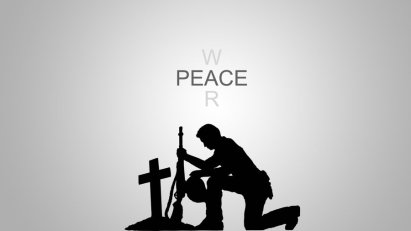
We, as American Christians, have a problem with War. Historically, the early church and Christians did not engage in war – they believed their convictions in following Christ’s commands prevented them from waging violence against others. And, frankly, they were being persecuted and killed at such a rate that they didn’t have time to think about fighting in wars, nor were militaries interested in having Christians fight for them. You know, because of the whole “praying for their enemies” thing,

But then Constantine came onto the scene, following Jesus Christ turned into Christendom, and everything changed. With Christianity as the state sanctioned religion, Rome could tell its citizens to fight, and they did.

But still, there have always been those who respond to War throughout the church differently. There are Pacifists who believe conflict is unwarranted and therefore should be avoided. There are those who believe in the Just War Theory and that there can be a moral response to war with justifiable force. And still yet there are others who believe in the “Blank Check” model where they are happy to support those in charge of the military without really questioning who they are killing and why.

We might not realize it, but most Americans believe in the “blank check” model, in that our government regularly deploys troops and drones to attack and kill people all over the world (in war zones and other places) and we rarely bat an eye. So long as we feel safe, we are happy to support those leading without question.

christianity-military-750x400

But as Christians, Jesus commands us to love our enemies and pray for the people who persecute us. Now, to be clear, this is not a nice invitation or even a call to a particular type of ministry. We like imagining the “white, blonde hair, blue eyed” Jesus with open arms who loves us and expects the minimum in return. But more often than not, Jesus commands his disciples to a radical life at odds with the status quo.

“I say to you, ‘Love your enemies and pray for those who persecute you.’ Anybody can respond to love with love, but what good does it do to only love the people who love you. Instead, be perfect as your heavenly Father in perfect.”

            This is our command.

            And it is also our dilemma.

Jesus commands us to love our enemies and love our neighbors. But what are we to do when our enemies are killing our neighbors, or vice versa? Is there really such a thing as a just war? Are we called to remain pacifists even when innocent lives are being taken? Was it okay for us to take boys from Virginia and send them to Vietnam to kill and be killed? Should we send our military to Syria to kill and be killed?

This is the controversy of War.

War, a state of armed conflict between two groups, is like an addictive drug. It gives people something worth dying and killing for. It often increases the economic wealth and prosperity in our country. It achieves for our nation all that a political ideal could ever hope for: Citizens no longer remain indifferent to their national identity, but every part of the land brims with unified life and activity. There is nothing wrong with America that a war cannot cure.

When the North and South were still economically and relationally divided after the Civil War, it was World War I that brought us back together as one country. When we were deep in the ravages of the Great Depression, it was Word War II that delivered us into the greatest economic prosperity we’ve ever experienced. When we were despondent after our failure in Vietnam (and subsequent shameful treatment of Veterans), the supposed weapons of mass destruction in Iraq gave us every reason to rally behind our country.

But we don’t like talking about death and war – that’s why the least attended worship services during the year are Ash Wednesday and Good Friday when we can do nothing but confront our finitude. But War commands and demands our allegiance, it is the fuel that turns the world, it has been with humanity since the very beginning.

And Jesus has the gall to tell us to love and pray for our enemies.

To follow Jesus, to be disciples of the living God, requires a life of pacifism. It is not just one of the ways to respond to War, it is the way. And yet, pacifism is a privilege of the powerful. It is very easy for me to stand up in this pulpit, in the beauty of the Shenandoah Valley, and preach about the virtues of pacifism. No one is dropping bombs on our picturesque community. We are not at risk for an invasion from a foreign oppressor.

It is easy to be a pacifist in America.

And we will never get anywhere near a kingdom of peace if pacifists keep perceiving themselves as superior or entitled, otherwise people in the military who return from conflict will return as those from Vietnam – to a country that did not understand.

War is complicated and ugly and addictive. It reveals our sinfulness in a way that few controversies can. War illuminates our lust for bloodshed and retribution. War offers a view into our unadulterated obsession with the hoarding of natural resources. War conveys our frightening disregard for the sanctity of human life. War is our sinfulness manifest in machine guns and atomic weapons. War is the depth of our depravity.

Even the word “War” fails to express the sinfulness of the act. We so quickly connect the word “War” with the righteous outcomes of our wars. We believe we fought the Civil War to free the slaves, when in fact it had far more to do with economic disparity. We believe we fought Word War II to save the Jews, when in fact it had more to do with seeking vengeance against the Germans and the Japanese. We believe we went to War in the Middle East with terrorism because of September 11th, but it had a lot to do with long-standing problems and an unrelenting desire for oil.

Can you imagine how differently we would remember the wars of the past if we stopped calling them wars and called them something else? Like World Massacre II, or the Vietnam Annihilation, or Operation Desert Carnage?

soldier-peace-logo

On August 6th, 1945, we dropped the first atomic bomb on the city of Hiroshima in order to end the bloodiest war the world had ever seen. With the push of a button we exterminated 70,000 people in an instant, and our president called it the greatest thing in history. Truman was a lifelong Baptist and was supported by the overwhelming majority of American Christians, most of whom expressed little misgiving about the use of the atomic bomb. But that very bomb is the sign of our moral incapacitation and the destruction of our faithful imagination.

For we Christians know, deep in the marrow of our souls, that the “greatest thing in the history of the world” is not the bomb that indiscriminately murdered 70,000 people, but the life, death, and resurrection of Jesus Christ.

Jesus Christ is, and forever will be, the greatest thing in the history of the world because Jesus broke the chains of death and sin and commands us to follow him. Jesus Christ, Son of Man and Son of God, embodied a life of non-violent pacifism that shakes us to the core of our being and convicts our sensibilities.

There is, of course, the privilege of pacifism and its ineffectiveness when combatted by the evil in the world. Pacifism pales in comparison to the immediacy of armed military conflict, but it is the closest example we have to what it means to live like Jesus. And Jesus wasn’t particularly interested in offering us the path of least resistance toward salvation. Instead, he demanded our allegiance.

So where does that leave us? What are we to do about the controversy of War?

Right now, countless innocent lives are being killed in Syria as a result and consequence of War. For years, Syrians have struggled to escape their war-torn homes and find a new beginning somewhere else, but many of them are still there. The United States has largely remained uninvolved in the conflict due to diplomatic and militaristic complications. So I thought it would be the perfect example to bring up this week in one of our bible studies regarding the moral responsibility of our country. Should we send troops into Syria in order to prevent the loss of innocent lives? Should we remain isolated from the conflict?

I turned the question on the group and asked, “What are we to do as Christians?”

“We could take in more refugees.”

“We can advocate for better responses out of our politicians.”

“We can pray about it.”

Then I said, “Well, what if the United Methodist Church announced that it was sending 5,000 missionaries to Syria? We know how to send missionaries, we do it all the time.”

And someone responded by saying, “We can’t do that; they’d be easy targets.”

I’ll admit that we can’t do that, but not because they would be easy targets. We can’t go there and do that because we no longer have a church that produces people who can do something that bold. But we once did.

God in Christ came in order to reconcile the world through the cross. The living God through the Messiah spoke difficult commands and orders to the disciples, things we still struggle with today. But God was bold enough to send his son to die in order to save us, not by storming the Temple with swords and shields, not by overthrowing the Roman Empire and instituting democracy, but with a slow and non-violent march to the top of a hill with a cross on his back. Amen.

Controversy Original

Devotional – Luke 17.5-6

Devotional:

Luke 17.5-6

The apostles said to the Lord, “Increase our faith!” The Lord replied, “If you had faith the size of a mustard seed, you could say to this mulberry tree, ‘Be uprooted and planted in the sea.’ And it would obey you.”

Weekly Devotional Image

We are a people consumed and captured by the power of instant gratification. We want the greatest reward for the smallest effort. We post a picture online and we expect people to like it right away. We show up to church on Sundays and we want to be rewarded for our effort. We pray and we assume that God will answer us quickly.

But we, if we are anything, are slaves to God’s will and that requires patience and hardwork.

We have a church member at St. John’s who wears just about every hat you can think of; Dianne Wright is the lay leader and so much more. On Sunday afternoons she walks across the front lawn with a bunch of letters from the alphabet under her arm to change the marquee. On any given day she is writing cards to, and off visiting, the shut-ins from the church community. And she is forever on the look out for “churchy” objects and images that will help others grow in faith.

A couple months ago Dianne brought a sign over to the church and hung it against the refrigerator in the kitchen. She does things like this all the time but from the moment I saw this sign, the words have percolated in my mind: “Faith can move mountains, but don’t be surprised if God hands you a shovel.”

faith-can-move-mountains-but-dont-be-surprised-if-god-hands-you-a-shovel-4

Faith and discipleship is hard work. The disciples once asked Jesus to increase their faith, as if he could snap his fingers and it would just happen. But Jesus responds by telling them that faith the size of a mustard seed could pull a mulberry bush out of the ground move it to the sea. Have you ever tried to move a mulberry bush? The roots go deep down into the earth and make the work of replanting quite difficult.

Being a slave in God’s kingdom, yielding to God’s will, means that we have to do the right kind of work to increase our faith. We can’t just ask for it and expect everything to change immediately. It takes the habits of prayer, scripture reading, and communal worship to increase our faith. When we work to follow the commands of Jesus, difficult though they may be, our faith will increase.

God owes us nothing, and yet we are still loved. God’s invites us back into the realm of grace over and over even when we do not deserve it. Christ still loved us while we were yet sinners. And God gives us the power to move mountains and uproot mulberry bushes, but only if we’re willing to work for it.

On Suicide

Isaiah 43.1-2

But now thus says the Lord, he who created you, O Jacob, he who formed you, O Israel: Do not fear, for I have redeemed you; I have called you by name, you are mine. When you pass through the waters, I will be with you; and through the rivers, they shall not overwhelm you; when you walk through fire you shall not be burned, and the flame shall not consume you.

Romans 8.35-39

Who will separate us from the love of Christ? Will hardship, or distress, or persecution, or famine, or nakedness, or peril, or sword? As it is written, “For your sake we are being killed all day long; we are accounted as sheep to be slaughtered.” No, in all these things we are more than conquerors through him who loved us. For I am convinced that neither death, nor life, nor angels, nor rulers, nor things present, nor things to come, nor powers, nor height, nor depth, nor anything else in all creation, will be able to separate us from the love of God in Christ Jesus our Lord.

suicide


It was 2003 and I was a freshman in High School. And like most High School freshman, I spent many an evening on my computer typing to my friends on Instant Messenger. This was long before Facebook’s wild popularity, Twitter’s terse communication style was far away from coming into reality, and none of us even had cameras on our cell phones. But night after night we would sit in front of our computer screens typing away about what we thought were the most important things in the entire world.

One night in the spring, I waited for my parents to go to bed and then I snuck downstairs to get back on the computer. Most of the conversations were frivolous and limited by the speed at which our fingers could move over the keyboard. I can’t remember what the topic was that evening, but I do remember a new box appearing on the screen that changed everything.

At the time, my best friend was dating a girl and things were less than perfect. They fought about all kinds of stupid things and were the epitome of every high school relationship cliché. She, the girlfriend, was the one who sent me a message that night. All it said was, “We got in a really bad fight, he told me he was going to kill himself, and I don’t know what to do.

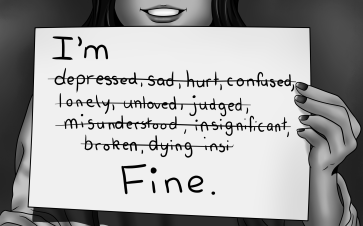
Suicide is ugly. It leaves families and friends reeling in whiplash, it creates guilt and unanswered questions, and it produces feelings of morbidity and fear.

Suicide is controversial in the church for a number of reasons. Many churches and Christians believe that suicide is ultimately sinful and worthy of eternal damnation. To have suicidal thoughts is to not have enough faith. Some pastors will even refuse to preside over funerals for those who have committed suicide.

If you look through the entirety of scripture, both Old and New Testaments, you will not find a passage that condemns suicide. None of the prophets, or priests, or kings have anything to say about suicide or what happens to those who commit suicide. However, Augustine (an important theologian from the early church) read the commandment “thou shall not kill” as a prohibition against suicide. And from Augustine’s reflection on the topic, suicide became the black sheep of sins in the church.

For a thousand years, suicide was a mortal sin and an affront against God’s goodness. Those who committed suicide were treated as criminals and refused Christian burials. By the 1500s those who attempted suicide were excommunicated by the church and were punished by the civil authorities.

And still today, suicide carries an awful stigma in the realm of the church and is one that is either referred to with eternal damnation or complete silence.

            That silence, the utter and complete darkness of a topic that is remarkably relevant for our time and reflection, is a controversy worth confronting.

According to the Center for Disease Control (CDC), on average, one person dies by suicide in the state of Virginia every 8 hours. It is the 11th leading cause of death in our state, and it is the 2nd leading cause of death for people ages 10-34.

Among high school students across the country, 17% seriously considered suicide in the last 12 months. And 8% attempted suicide one or more times in the last year.

If you’re like me, you tend to think about young people being the most susceptible to suicide attempts, but suicide rates are actually highest among people middle aged and older, by a lot. In fact, middle aged and older adults are nearly twice as likely to commit suicide as young people.

And right now, suicide has surged to its highest levels in thirty years.

yqecn1ygjymjb3igsiev

When I received that message on my computer back at the beginning of high school, I grabbed my things and was out the door before I even had a chance to really think about what I was doing. All I knew was that my friend would not just make an empty threat about suicide like that, and I had to do something about it. So I grabbed my bicycle out of the garage and I started riding as fast as I possibly could in the middle of the night. He lived a couple miles away and when I screeched into his driveway I was drenched in sweat.

I dumped the bike right there and I ran to the front door and started banging with my fist and I started yelling. Within a minute his parents were coming down the stairs in their pajamas with tired and angry looks on their faces. When they opened the door and saw me standing and sweating in the dark they were utterly bewildered and then I told them why I was there.

We immediately went to check on him in his bedroom, but he wasn’t there. We searched the house from top to bottom and we finally found him in the basement. He was sitting on the couch with tears in his eyes and he had just swallowed an entire bottle of ibuprofen.

They wound up taking him to the hospital and had his stomach pumped. They sat there and held their son while he cried and cried. And they saved his life.

Suicide is not the way any human life should end. The church, this church, has an obligation to see that all persons are grafted into a community of love and are cared for in the midst of isolation, depression, and despair.

Life is a gift, plain and simple. It is a gift from God and therefore we are called to be good stewards of this gift: our lives and the lives of others.

We cannot ignore this topic as if it has nothing to do with us. The statistics confront us with a stark reality about the prevalence of suicide in our culture. With the advent of the Internet and instant communication, young people are being bullied and attacked at a degree that few of us can even fathom. With an economy that moves up and down like a roller coaster, people in the middle of life are undergoing identity crises and are wondering how they can provide for their families. Older people who receive a grim diagnosis or the loss of a spouse struggle to justify living with such a horrible outlook for the days ahead.

We know that we are supposed to be present for and with one another, like being there for friends and family at a moment of tragedy. We rarely know what to say on such occasions, but we know we should be there. We, above all things, are called to be present for others in the midst of suffering and loneliness and depression that often lead to the contemplation of suicide. To be part of the faithful community requires us to be for one another.

i_m_fine_by_black_avenger-d60mqnl

We live because life is a gift. We are not our own creators. We Christians are the people who must learn to live by the fact that life is a gift. We therefore can live each and every day not as a survival technique, but through recognizing that each and every day is an opportunity to live and love in the service of our Lord.

When we talk about suicide, we say it is “the taking of one’s life.” But even the way we talk about suicide shows how much a problem we have with it. Our lives are not our own. As the Lord says through the Prophet Isaiah: “Do not fear, for I have redeemed you; I have called you by name and you are mine.” We belong to the Lord and to one another. God tells us to not be afraid because God will be with us as we pass through the waters, and the rivers of life shall not overwhelm us, we shall not be burned by the fires of frustration. Not because they won’t hurt or be terrifying, but because we belong to the Lord and the Lord is with us.

If we’re here in the sanctuary this morning, we have some sense of this in our lives. We know that God is with us, we feel God’s presence in this place and we know that we are not alone. It is through encountering the divine love of God in worship that we are given the strength to be God’s presence for others who sink under the waters of life and who feel burned by the world. It is our charge to be shaped and called by God’s love and to reach out to those who contemplate ending their days. We have the challenge of showing all people, even those who see no value to their lives, how our lives are not defined by what we have done with them, but by what God will do with them.

Six months after my friend had his stomach pumped, he attempted to commit suicide again. This time he did it with a hose running from his exhaust pipe into his car. But his little brother heard the car door close and it woke him up, and then he woke up his parents. In the strange and quiet time of the darkness of night they pulled their son out of the car and they got him help. It took a long time for him to move on. It took counselors and therapists, it took friends and family, it took the power of God’s grace to show him that his life could get better, that there was hope for the future, that there was something worth living for. And because people in his life were brave enough to confront his suicide attempts, he still lives today.

But there will always be some that we cannot reach. There will be people who feel so suffocated by the weight of the world that they will make that dreadful decision to end the life that God’s has given to them. And for them, for those who will die by their own hand, what will happen to them? For centuries the church saw suicide as an unpardonable sin, something that eternally damns those who do it. Will God abandon them for making such a choice? Will God refuse to love the people who felt no love in their lives? Will the God of mercy punish them until the end of time?

           No. In all these things we are more than conquerors through him who loved us. For I am convinced that neither death, nor life, nor angels, nor rulers, nor things present, nor things to come, nor powers, nor height, nor depth, nor anything else in all creation, will be able to separate us from the love of God in Christ Jesus our Lord. Amen.


Controversy Original