Devotional – 1 Corinthians 1.27

Devotional:

1 Corinthians 1.27

But God chose what is foolish in the world to shame the wise; God chose what is weak in the world to shame the strong.

Weekly Devotional Image 

When Pharaoh enslaved the descendants of Abraham, God chose a weak little baby abandoned by his mother to the Nile River to deliver the people out of bondage. When Goliath stood in front of the Philistine and Hebrew armies, God chose a foolish and weak little shepherd named David to bring him down. When the time came for the defeat of death, God chose to come in the form of a baby to die at the hands of the government in order to rise again.

Through the Old and New Testaments, God is forever subverting the expectations of the world with something foolish or weak. We can only imagine what people thought of Noah building his giant ark, or Isaiah wandering the streets naked for three years, or Jesus praying over a loaf of bread and cup of wine. God chooses what is foolish in the world to shame the wise; God chooses what is weak in the world to shame the strong.

For far too long, the world has treated an entire gender as foolish and weak. Even in this progressive land we call the United States of America, women still only make $0.80 for every $1 that men earn. The belittling of women is made manifest in a number of ways from churches that believe women do not have the right to preach, to companies that overlook hiring women because of their gender, to women who are made to feel that their fundamental role is to support their husbands.

But on Saturday, God subverted the perspective of the world through the gathering and marching of “foolish and weak” women to shame the wise and the strong. They did not need weapons and aggression and violence to achieve their goal, they did not need the tools the world values so dear, they used the foolishness and weakness of peace to say more than any weapon ever can.

632318086-dc-rally-women-march-washington

What good news it is to know that God is still upsetting and overturning the world to shame the wise and strong! How glorious to know that women all across the world can come together in such a holy way to protect those whom the world has dismissed! How beautiful to see women powerfully and deliberately march for empowerment!

God makes the first last, and the last first. The great story of scripture is the narrative of God turning the world upside down. O that God would do the same to all of our hearts who are more convicted by the ways of the world, than by the truth of the Good News.

Devotional – John 1:29

Devotional:

John 1.29

The next day [John] saw Jesus coming toward him and declared, “Here is the Lamb of God who takes away the sin of the world!”
Weekly Devotional Image

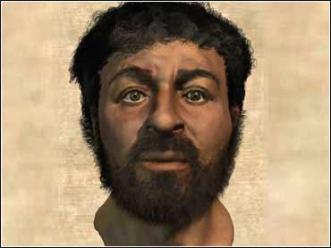
The quest for the historical Jesus, for the most authentic and true description of the man, dominated a strain of theological thought during the 19th and 20th centuries. Theologians would dissect scripture, historians would recover artifacts, and pastors practically posit who Jesus really was during the first century. In large part it was a response to the world’s obsession with historical and verifiable truth at the time, but it also captivated the minds of many Christians who sat in the pews on Sunday mornings.

Through their work Jesus was seen as a Rabbi (a teacher and prophet of first-century Judaism), a Light to the Gentiles (a philosophical mediator between differing groups), a Monk who ruled the world (a monastic example of the need to remove oneself from the world), the Prince of Peace (the divine example of pacifism), a Liberator (the opposition to economic and social injustice), and a slew of other identities.

In response to this growing trend, Albert Schweitzer famously said that going to look for the real Jesus is like looking into the bottom of a well; we know there is something down below, but what we’re really seeing is a faint reflection of ourselves.

historical-jesus

Many of us are guilty of this similar line of thought even today. We have a social cause on our radar and we twist and manipulate Jesus to defending our cause. Politically, regardless of which side we identify with, we make the assumption that Jesus is on our side when debating someone with a different position. Our churches are so sure that Jesus supports our behavior that we are suspicious of everyone outside the bubble of our experience.

John, however, saw Jesus and declared, “Here is the Lamb of God who takes away the sin of the world!”

How do we see Jesus? Do we limit Jesus to some political ideology or ethical principle? Do we believe that Jesus is our side and that we have a responsibility to convert those who disagree with us? Do we look for Jesus and only see a faint reflection of ourselves?

Or do we see Jesus like John? Do we open up scripture to enter the strange new world of the bible and encounter the Lamb of God? Do we understand Jesus as totally other and at the same time just like us? Do we believe that Jesus has not only taken away our sin (and therefore calls us to be holy) but also taken away the sins of our enemies?

How do we see Jesus?

Devotional – Isaiah 42.1

Devotional:

Isaiah 42.1

Here is my servant, whom I uphold, my chosen, in whom my soul delights; I have put my spirit upon him; he will bring forth justice to the nations.

Weekly Devotional Image

I need to apologize. At least, I need to apologize to the people of St. John’s who were present in worship on January 1, 2017. We started a new sermon series on “Dumb Things Christians Say” and I decided it would be good to start with “Everything Happens For A Reason.” It is one of those trite and cliché Christianisms that are forever being flung around without anyone thinking about the consequences of such a statement.

I began the sermon with a story and a quote from Franklin Graham, son of Billy Graham, who recently said that “It wasn’t Russia who intervened in the election of Donald Trump, it was God.” I then went on to theologically proclaim the strange tension Christians live in between and all-powerful God and a free humanity; God rules this world but gives us the freedom to act in the world.

The thrust of the end of the sermon went like this: “Sometimes there are reasons things happen, people feel tempted to go faster than they should and it means they run through red lights, they neglect to check their blind spots, or they run into icebergs. Sometimes people feel disaffected and forgotten by their government and they come out in droves and subvert the majority of polls and elect a political outsider to the most powerful position in our earthly world.

But that doesn’t mean that God made a car accident happen, or that God willed the sinking of the Titanic, or that God had a reason for making Donald Trump the next president of the United States.”

everything-happens-for-a-reason

Upon listening to the audio of the sermon, and rereading it before posting it online, I realized that I was very heavy-handed with my language about President-Elect Trump, and that I inadvertently compared his election with the suffering of innocent people in car accidents.

What I should have said was that even though Donald Trump was elected by the people of the United States of America, and not by some divine act of providence, God still uses people like Donald Trump to make God’s will incarnate on earth. The beautiful wonder of the Lord is that God works in and through individuals in ways that we can scarcely imagine; a chance conversation, a fleeting dream, a subtle nudge in the right direction. We can have hope in the Lord regardless of who sits behind the desk in the Oval Office because we know that God is the one who has the final Word. God came into the world in order to free us from the last vestige that had a hold on us, death. God broke the chains of death’s dark shadow in order to guide us into the light of resurrection.

Jesus is the servant who God upholds, the chosen one in whom the Lord delights. Jesus is the one who brings forth comfort to the afflicted and afflicts the comfortable. Therefore, as disciples of Jesus Christ, we are called to pray for our president in order that he may discern how to bring peace and justice to this world in a way that resonates with Jesus’ peace and justice.

The Humanity of God – Christmas Eve Sermon on Luke 2.1-7

Luke 2.1-7

In those days a decree went out from Emperor Augustus that all the world should be registered. This was the first registration and was taken while Quirinius was governor of Syria. All went to their own towns to be registered. Joseph also went from the town of Nazareth in Galilee to Judea, to the city of David called Bethlehem, because he was descended from the house and family of David. He went to be registered with Mary, to whom he was engaged and who was expecting a child. While they were there, the time came for her to deliver her child. And she gave birth to her firstborn son and wrapped him in bands of cloth, and laid him in a manger, because there was no place for them in the inn.

Colorful holiday lights background, defocused

Christmas Eve! No matter how old or jaded we may be, no matter what kind of year precedes this night, Christmas Eve never fails to brighten our spirits. I look forward to Christmas Eve with a kind of painful excitement: I know there are people here tonight who will not be here the rest of the year, I know this holiday carries with it more meaning than can be contained in a 15 minute sermon, and yet to share the story of salvation is one of my greatest privileges.

But then the question must be asked: Why are you here tonight? Some of you were raised in this church and can’t imagine being anywhere else. Some of you have come alone; others are with large families taking up an entire pew. Some of you have been planning to come here for weeks and some of you decided on a last-minute impulse. Some of you have been dragged here against your will, out of loyalty and guilt. And some of you are here for the first time in a very long time.

Some of you are young and are full of hope and anticipation; most of your Christmases are still in front of you. Some of you who are older are filled with memories of Christmases past that will never come again. Some of you are looking forward to getting back home to the fireplace and the presents and the tree; others dread going home. Whoever you are, and whatever you’re feeling, I’m glad you’re here tonight.


On April 26th, I woke up to the sounds of my excited wife declaring, “I think it’s happening.” The due date for our son had come and gone and each day we waited with anticipation of his coming arrival. So, being the incredible husband that I am, I started offering Lindsey all kinds of things: “Do you want me to make you breakfast? Can I massage your feet? Would you want me to call the doctor?”

She, however, was distracted from my offers by the pain she was starting to experience.

As the day progressed I must’ve checked our hospital bag no less than 42 times, I made sure we had enough clothes and snacks, I went through the 3 birthing playlists (one for calm, one for happy, one for pushing), and I asked Lindsey how she was feeling every fifteen minutes. While I was frantically going through my list over and over, Lindsey was on the couch trying to find a comfortable position to sit in until things really got going.

Mary and Joseph spent the day before their son’s birth traveling over harsh terrain while Joseph led the donkey that was carrying his pregnant fiancé. With every bump and slip, the pain Mary experienced increased and she hoped against hope they would find a place to stay in Bethlehem.

When my wife’s contractions started coming at a regular interval we called the doctor’s office and they told us to come in. Under the caring gaze of the nurses and medical staff Lindsey went through a number of tests before they told her, as kindly as they could, that it was still too early to go to the hospital, so we went home instead.

Mary’s contractions must’ve started to really ramp up as they arrived in the sleepy little town of Bethlehem. All the people they encountered were busily talking about the census that the emperor had required, how they all had to be there in Bethlehem without a choice. To the degree that no one even noticed the man escorting the pregnant woman on a donkey as they passed through the outskirts of the town.

We waited all day and finally at 9pm, the contractions we regularly occurring at such intensity that we knew the time had come. Being the good husband that I am, the car had been packed with our hospital bags for hours and all I had to do was gingerly walk Lindsey to the car and drive to the hospital with care and focus. When we were given a room time seemed to increase in speed dramatically. With every passing minute the contractions were intensifying and the nurses came in at a higher frequency to check on Lindsey and the baby.

Mary and Joseph wandered through the town at a snail’s pace hoping to find somewhere to stay, or a relative to encroach upon. But the farther they walked, the less hope they had of finding a place for the night.

At some point, my beloved wife was breathing strongly through a particularly rough contraction when the nurse said, “Honey, I think it’s time to talk about pain management.” I, watching her go through this thought to myself, “Gee, I think its time for me to have some pain management.” But, being the good husband that I am, I knew not to speak that thought out loud.

Joseph guided the donkey to their last hope, the inn, while his wife was breathing heavily through a particularly rough contraction. The innkeeper saw them walking up and went to the door to announce: “We’re full.” Being the good man that he was, Joseph then led the donkey and Mary to a stable, the only place left and helped her down into some crinkly hay.

At 7am on April 27th, Lindsey started to push. She was surrounded by a team of medical staff, machines monitoring every heartbeat and contraction, and by me trying to figure out what I could to do help.

When Mary could tell that the time had arrived, she started to push. She was surrounded by dirty animals huddled together for warmth, hay that was covered in dirt and hair from the animals, and a man who was trying to figure out what he could do to help.

And with a final push, a son was born into the world. The baby was quickly placed into his mother’s arms and for a fleeting moment nothing happened. In our hospital room the medical team waited with blankets and devices, in the stable the animals watched as the miracle of life came to fruition.

And then, with what sounded like a rush of wind, the baby sucked and breathed in air for the very first time.

From a dirty barn house to an immaculately clean hospital delivery room, the first breath of Jesus and my son Elijah highlights the fragility of this thing we call life. And don’t we take it for granted? All of us have been breathing throughout this sermon without even thinking about it, but we can only live because we can breathe.

In the beginning God’s breathed the breath of life into Adam, God breathed life into Jesus, God breathed life into my son Elijah, God breathed life into every one of you.

It is something worth celebrating because it is a miracle.

But this service, what we’re doing here tonight, is not a mere celebration of a mother and her newborn child’s arrival into the world. It is about more than the miracle of life. This is the unique story of God in the flesh. The baby placed in the manger is not us and we are not Him. He is totally other.

And yet – and this is the real mystery of Christmas – Jesus is the incarnation of the living God, but at the same time, though he is entirely other than us, he has become one of us. Nothing less than God himself has become Emmanuel, God with us.

In Jesus’ birth, God entered history in a new and strange way with the promise that in the kingdom that has no end, sadness will be turned into joy, sin will be destroyed by righteousness, and death will be defeated by resurrection.

But it all started in a tiny little stable with a couple all-alone in the world. That is the true miracle of Christmas – the fragility and humanity of God in a breath. For it is in our breathing that we constantly encounter the one thing we have to do to survive and the one thing we have from the beginning to the end of our days. And that is where God is; with every single breath we inhale the Spirit of the Lord who first breathed life into us. And in our breathing we connect with the one who breathed for the first time in the manger long ago…

And through that first breath, God emptied himself of all power and reign and might and majesty, leaving it all behind to enter our corrupted, polluted, and tragic world. Gone were the days of abandonment, gone were the times of uncertainty, and gone was the power of death. For God came into the world through a baby in a manger to save us from ourselves; to be with us in every single breath; to offer us the true gift of Christmas: God with us.

Merry Christmas. Amen.

christmascandle

The Tyranny of Titles – A Christmas Pageant Homily

Matthew 18.1-5

At that time the disciples came to Jesus and asked, “Who is the greatest in the kingdom of heaven?” He called a child, whom he put among them, and said, “Truly I tell you, unless you change and become like children, you will never enter the kingdom of heaven. Whoever becomes humble like this child is the greatest in the kingdom of heaven. Whoever welcomes one such child in my name welcomes me.”

img_2120

A father was with his four year old daughter last Christmas, and it was the first time she ever asked what the holiday meant. He explained that Christmas is all about the birth of Jesus, and the more they talked the more she wanted to know about Jesus so he bought a kid’s bible and read to her every night. She loved it.

They read the stories of his birth and his teachings, and the daughter would ask her father to explain some of the sayings from Jesus, like “Do unto others as you would have them do unto you.” And they would talk about how Jesus teaches us to treat people the way we want to be treated. They read and they read and at some point the daughter said, “Dad, I really like this Jesus.”

Right after Christmas they were driving around town and they passed by a Catholic Church with an enormous crucifix out on the front lawn. The giant cross was impossible to miss, as was the figure that was nailed to it. The daughter quickly pointed out the window and said, “Dad! Who’s that?”

He realized in that moment that he never told her the end of the story. So he began explaining how it was Jesus, and how he ran afoul of the Roman government because his message was so radical and unnerving that they thought the only way to stop his message was to kill him, and they did.

The daughter was silent.

A few weeks later, after going through the whole story of what Christmas meant, the Preschool his daughter attended had the day off in celebration of Martin Luther King Jr. The father decided to take the day off as well and treat his daughter to a day of play and they went out to lunch together. And while they were sitting at the table for lunch, they saw the local newspaper’s front-page story with a picture of Martin Luther King Jr. on it. The daughter pointed at the picture and said, “Dad! Who’s that?”

“Well,” he began, “that’s Martin Luther King Jr. and he’s the reason you’re not in school today. We’re celebrating his life. He was a preacher.”

And she said, “for Jesus?!”

The father said, “Yeah, for Jesus. But there was another thing he was famous for; he had his own message and said you should treat everyone the same no matter what they look like.”

She thought about it for a minute and said, “Dad, that sounds a lot like do unto others as you would have them do unto you.”

The dad said, “Yeah, I never thought about it like that but it’s just like what Jesus said.”

The young girl was silent again for a brief moment, and they she looked up at her dad and said, “Did they kill him too?”

img-wallpapers-christmas-eve-omohit-158401

Kids get it. They make the connections that we’re supposed to make. And even though 2016 has been a rough year with the political rhetoric and partisanship at its worst, and all the culturally significant individuals we lost (David Bowie, Leonard Cohen, Prince, Gene Wilder, John Glenn, etc.), and with the migration of refugees from the Middle East to Europe at the highest levels since the Second World War… our preschoolers have had a tremendous year.

Today, we adults live under the tyranny of titles. We want to label individuals based on a crazy assortment of criterion. He’s a Republican, she’s a Democrat, that family is poor, that family is rich, that woman is black, that man is Hispanic, that couple is gay, that couple is straight.

But the Preschoolers who gather in our basement don’t see the world and one another the way we see the world and one another.

Instead they see each other as Cruz, and Hadley, and Charlie, and Ellie Rose, and Owen, and Maddie, and Graham, and Henry. They, unlike us, do not view the world through the cynical lens that so many of us have adopted over the years. They, unlike us, see the world like Jesus.

Like that little girl with her father, they understand the cost of discipleship in a way that few us can.

I’ve been here long enough to have spent a lot of time thinking about what the Preschool should be teaching the children. I’ve had consultations with the teachers about curricula and paradigms. I’ve even met with some of you to discuss the growth and transformation of your children in response to the nurture and education they receive in the basement.

I’m guilty of the same cynicism that treats young people like objects to be molded in a factory to come out prepared for the world. When Jesus is the one who calls us not to make children into adults, but to change adults into children.

This Christmas, I have a challenge for you. Instead of being consumed by the desire to transform your little ones to fit into one of the labels of society, try to let them transform you. Try to look at the world the way they do. Try to love one another the way they do.

For it is on Christmas that we celebrate the birth of God in the flesh, born as a baby in a manger to a young couple all alone in the world. God did not come to change the world through political power or through economic wealth or through militaristic might. God changed the world through a baby, not unlike the ones we are celebrating with tonight. Amen.

Devotional – Psalm 80.3

Devotional:

Psalm 80.3

Restore us, O God; let your face shine, that we may be saved.

Weekly Devotional Image

On Sunday mornings I drive to church hours before worship so that I can properly prepare. I always begin in the sanctuary by praying by the altar and then I pray over every single pew. After I feel like have spent enough time with the Lord I will make sure the doors are unlocked and the heat is working before I step up into the pulpit to preach my sermon to an empty sanctuary. I will go through the sermon line by line and make any changes necessary before printing off the final version.

Yesterday morning I was standing in the pulpit and preaching to an empty sanctuary when I heard a soft voice say, “Hello?” My first instinct was to look up in case God was telling me to make a change to the sermon, but it was actually someone who walked into the church through the main office door. When I went to shake his hand in the hallway it was clear that he had been outside for a long time because he had very red cheeks and he kept bringing his hands up to his mouth to blow on his fingers. He explained that he was homeless and was walking down the street when he felt the need to walk into the church. He told me about various life situations that led him to where he currently is and then I invited him in the sanctuary so that we could sit down and talk some more.

I motioned for him to join me in one of the front pews and asked him to continue. But he didn’t. Instead, his eyes rapidly filled with tears and he wept. I sat stunned and unsure if I had said something wrong, and then asked him if everything was okay. He said, “I can’t remember the last time I saw a Christmas tree.”

Colorful holiday lights background, defocused

What I had neglected to think about was the overwhelming sense of joy that was radiating through our seemingly countless poinsettias and our perfectly adorned and lit Christmas trees; a sense of joy that was in sharp dissonance with what the man has experienced recently.

We talked some more and I learned all about his life, and when it felt like the conversation was coming to an end I asked how I could help him, or how the church could help him. To which he responded, “Honestly, I was just cold and lonely. All I wanted was to warm up and have some company. Thank you.” After that, we prayed together, shook hands, and he left.

This strange season of Advent is one that often leaves us filled with joy, but it can also be a time of deep sorrow. Instead of fondly remembering presents under the tree, we might remember our parents fighting and yelling at one another. Instead of recalling the smells of a delicious Christmas dinner, we might feel suffocated by the sadness of another Christmas without someone we love. Instead of humming the familiar hymns with a twinkle in our eyes, we might not even remember the last time we saw a Christmas tree.

The psalmist cries out: “Restore us, O God; let your face shine, that we may be saved.” O that the Lord would make his face to shine upon all of us through the lights of a Christmas tree, and give us the hope and the joy and the peace we so desperately need this time of year.

Kidnapping Santa Claus


Isaiah 11.1-10

A shoot shall come out of the stump of Jesse, and a branch shall grow out of his roots. The spirit of the Lord shall rest on him, the spirit of wisdom and understanding, the spirit of counsel and might, the spirit of knowledge and the fear of the Lord. His delight shall be in the fear of the Lord. He shall not judge by what his eyes see, or decide by what his ears hear; but with righteousness he shall judge the poor, and decide with equity for the meek of the earth; he shall strike the earth with the rod of his mouth, and with the breath of his lips he shall kill the wicked. Righteousness shall be the belt around his waist, and faithfulness the belt around his loins. The wolf shall live with the lamb, the leopard shall lie down with the kid, the calf and the lion and the fatling together, and a little child shall lead them. The cow and the bear shall graze, their young shall lie down together; and the lion shall eat straw like the ox. The nursing child shall play over the hole of the asp, and the weaned child shall put its hand on the adder’s den. They will not hurt or destroy on all my holy mountain; for the earth will be full of the knowledge of the Lord as the waters cover the sea. On that day the root of Jesse shall stand as a signal to the peoples; the nations shall inquire of him, and his dwelling shall be glorious.

advent_2015_screen


One Christmas, many years ago, there was one thing I wanted more than anything else: I wanted to kidnap Santa Claus.

I must’ve been 7 years old when I decided it was time to enter the world of criminal activity and I began plotting my plan. At the time, my bedroom was in the basement just down the hall from the living room and the fireplace where Santa usually entered the house. For months I eagerly anticipated that hallowed night when we would leave out the cookies and the milk, when we would deck ourselves out in matching pajamas, when we would struggle to sleep with the excitement of the morning presents so close at hand, but this time I was going to be ready.

In the days that led up to Christmas, the time we call Advent, I went through every drawer and found items that could be used for my trap. I took every tie and belt that I owned and tied them together in one long rope. It wasn’t quite enough so I started collecting random bits of string I found around the house and added them to my dress clothes accessories. I carefully laid out the entirety of it from my bed, through my room, down the hall, around the corner, and right up to the front of the fireplace.

The key to the whole operation was the last piece attached to the last tie, my plastic Fisher-Price stethoscope. You see, with the stethoscope at the very end, it would functionally wrap around Santa’s ankle so that I could pull from my end in my bedroom and bring ole Saint Nick down to the ground.

And so I practiced. I set up the elaborate trap and forced my little sister to stand by the fireplace while I ran back to my bedroom, got under the covers and pulled as hard as I could. Over and over again I yanked on the line perfecting the angles and the force necessary to bring my prey into captivity. It was perfect. Now of course, my mother was very concerned when she discovered that all of my nice belts and ties were wrapped together and when she asked what I was up to, I replied, “Don’t worry about it.”

On Christmas Eve, we went to church with everyone else and I didn’t listen to a word. All I wanted was to get back to the house and catch the red-dressed man.

Why? Well I’m not entirely sure, but why not? After all, this guy shows up in homes every year and brings overwhelming cheer to so many. I guess I just couldn’t stand all the mystery, I wanted to know what compelled him to do what he did, and I wanted to know what he would say.

And so, after setting out the milk and cookies, after being tucked into bed, I waited until my parents went back upstairs and I set the trap. For minutes, which seemed like hours, I laid in bed with my hand tightly gripping the last belt. My focus was pure and unwavering. I listened for any sound that would indicate the moment to pull, I sniffed the air for the delicious smells of peppermint that accompany those from the North Pole, I held on for the slightest vibrations in response to Santa’s boot falling perfectly into the stethoscope.

            And then I woke up.

Anticipation, expectation, patience, waiting: These are the words we can’t stand during this season we call Advent. Instead, we’d rather know what’s wrapped under the Christmas tree, we have lights hung up on the gutters before Thanksgiving, and we plan our holiday meals weeks in advance. We want to skip right to Christmas morning, and we can’t imagine it any other way.

And who can blame us? Christmas is all about the presents, and the songs, and the lights. The word “Christmas” conjures images of trees, and children ripping through wrapping paper, and squeals of delight. At least, that what Christmas means to the world.

Christmas is actually about Jesus. But with the advent of consumer driven commodities and the need for economic growth, Christmas has become the competition of corporations. Black Friday doesn’t even start on Friday anymore, but at 5pm on Thanksgiving Day. Americans will spend almost as much money on material goods from Thanksgiving to Christmas as we do the rest of the year combined. And we do all this to celebrate a homeless baby born in a stench-filled manger. Or, just take a drive around Staunton at night sometime this week, there used to be mangers and magi in yards, now you’re lucky it you can find a plastic baby Jesus behind Frosty the Snowman, Rudolf the Red-Nosed Reindeer, and giant inflatable renditions of Santa Claus.

Advent, this strange and beautiful season in the life of the church, is all about our re-participation in the season of anticipation, expectation, patience, and waiting.

It’s like planning to kidnap Santa Claus for weeks and dreaming about what might happen. Advent is a time where we are forced to wait, like the Israelites did so long ago, for so long, to find out what would happen. While the world fast-forwards to the next consumer driven holiday, while retailers are already putting out decorations for Valentine’s Day, while the world rushes on and on and on, we wait.

We wait and remember how long God’s people waited for what we have: Jesus the Christ.

A shoot shall come out of the stump of Jesse, and a branch shall grow out of his roots. Peace comes from a stump. Out of something that appears completely and utterly finished, an object that others would gloss over comes the sign of new life – a green sprig.

3f187ee188f77c511fdbb525f08307d2

This is how hope and peace begin – they emerge like a tiny tendril in unexpected places through the least likely of people. Like a child foregoing their Christmas presents so that other might rejoice in the celebration this year; hope and peace appear in this world in strange and beautiful ways.

From the line of David will come a child, and the Spirit of the Lord shall rest upon him, wisdom and understanding, counsel and might, knowledge and fear, will be his. He will not judge by what his eyes see or by what his ears hear, but with righteousness he will transform the world.

For centuries the Israelites waited for a child such as this. While new powers and principalities dominated their very existence, they prayed in anticipation of the Messiah who would come to turn the world upside-down, they proclaimed the faithfulness of the Lord in sending the shoot from the stump, and they dreamed about how reality would change.

In that day, the wolf shall live with the lamb, the leopard shall lie down with the kid, the calf and the lion and the fatling together, and a little child shall lead them.

This is not what the world looks like today. There are no predators and prey lying sweetly together in the fields. Republicans and Democrats are not skipping hand in hand down the main streets of our communities. Children are not content with Christmas trees without presents bursting from the bottom. The protestors at Standing Rock are not dancing around the fires with the leaders of the Dakota Access Pipeline while snow falls from the sky.

2016-09-16-1474044012-2676960-defend_the_sacred

Isaiah’s vision of a child leading the way to peace is strange because it is so different from what the Israelites experienced, and it is so different compared to the terror and brutality and greed that we experience.

We don’t know peace.

            We know fear and violence and pain.

We see the images of fires raging through communities and leveling places like Gatlinburg to the ground. We hear the screams of children in Aleppo on the news as they run from bombs falling out of the sky. We experience the terror of ever-shrinking bank accounts when we feel pressured to fill this particular season with as many material goods as possible.

We are a fearful people. Even today, we are just like the Israelites waiting for a better day, a day of hope, a day of peace.

I failed in my attempt to enter the criminal world by kidnapping Santa Claus because I fell asleep. I was exhausted by the insatiable desire to get precisely what I wanted. Instead of patiently waiting for the mystery, instead of living into the reality of things unseen, I fell asleep on Christmas Eve with a belt tied around my hand.

Peace and hope come from unexpected places. But when we are so consumed by our desires, when we want to skip right to Christmas morning, when our sin stands in the way of God making all things new, we become the ax resting by the roots of the stump. We become the stumbling blocks that prevent God’s peace and hope from reining in this world.

Our desire for an answer to every question propels us into a place where we no longer consider the consequences of our actions.

            Our desire for economic prosperity fuels our inability to remember those who suffer at the hand of our greed.

            Our desire for material fulfillment prevents us from ever being the people God is calling us to be.

In my attempted Christmas Eve kidnapping, I wanted to have control over the one bearing gifts. But God calls us to relinquish our control and seek the will of the Lord.

In life we want answers to all our questions, but God calls us to be the answers to our questions. If we want peace, then we have to become part of the solution, and not part of the problem.

Advent is the time for us to wait and remember. We wait for the Lord and remember our brokenness. We wait for the Lord to do a new thing, and we remember that we are called to be people of peace. We wait and remember that through God’s help, we can destroy the ax that is our sinfulness, and instead we can bear fruit in the kingdom of God.

Isaiah promises the people a future of peace, a time we cannot yet imagine, though it will be so new and strange and wonderful that it will be like predators and prey lying contently with one another. This is a vision of God’s infinite future of reconciliation when we are brought into unity with one another, with creation, and with the Lord.

But’s Isaiah’s vision of a future of peace is also a promise of peace here and now. Peace from a stump. Peace from a baby. Peace from something like a loaf of bread.

            For it is at this table, where bullies and the bullied sit together, where the weak and meek eat with the healthy and wealthy, that we catch a glimpse of the future of peace. This meal, the bread and the cup, are a foretaste of God’s heavenly banquet, this is the place where all divisions end.

God is doing a new thing whenever we feast together. It’s not just that we march up to the front and catch a glimpse of heaven only to return to our pews with thoughts of sugarplums dancing in our heads. No, we come to this table, we are consumed by that which we consume, and we are changed. The meal follows us when we leave, God works in us through the power of the Spirit and we necessarily become the people of peace that God promised so long ago.

Isaiah saw, with eyes wide open, a vision of the kingdom of God that we wait for every Advent. He had a vision of a baby being born into the world in order to transform the world. He saw the glorious dwelling of the Lord made manifest in the least likely of places.

And through this, he had hope. Hope for things yet unseen. Hope for old and backwards assumptions being lost to the sands of time. Hope for new vision and hearing to perceive the world through the power of the Spirit. Hope for peace. Amen.


Devotional – Luke 10.39

Devotional:

Luke 10.39

She had a sister named Mary, who sat at the Lord’s feet and listened to what he was saying.

Weekly Devotional Image

The last week has been filled with tragedy and senseless violence. A black man was shot and killed by a police officer after selling CDs in front of a convenience store and a black man was shot and killed after a routine traffic stop for a broken taillight. In response to their deaths, 5 law enforcement officers were murdered in Dallas during a peaceful protest and another 7 more were injured. As we talked about all that had taken place over the last week during church yesterday, all anyone could talk about was their inability to get away from the suffering; every time they got online, or turned on their television, they were bombarded with the images of terror and destruction that had taken place across the American landscape.

And honestly, right now, we need to open our eyes to these tragedies. For too long those of us who are too comfortable with our white privilege have neglected to do the Christ-like work of becoming uncomfortable and standing with our black brothers and sisters. For too long those of us who are too comfortable with our white privilege have made the false assumption that this is not our problem. It is.

But to step into this situation, as a Christian, without first sitting and listening at the feet of Jesus will only further the kinds of vitriolic violence that we’ve seen this last week.

As the events transpired in Baton Rouge, Minneapolis, and Dallas countless people jumped to social media to vent their frustrations and quickly condemn those who they believed were responsible. Without taking the time to listen and be still, many of us put up our walls to the people and opinions around us and did everything we could to make sure our voice and our opinion was heard (or read). From the comfort and safety of our computers and cell phones we engaged in social media warfare.

_90345723_mediaitem90345722

To sit and listen to Jesus is a bold and daring thing to do. It requires us to wrestle with differing opinions and perspectives. It challenges us to seek out those who we often miss and stand with them shoulder to shoulder. It implores us to seek unity in the midst of chaos, hope in the midst of terror, and resurrection in the midst of crucifixion.

So today, we pray for the Lord to crucify our prejudices that we might be resurrected into new life in Christ. That instead of rushing to make our opinion heard we might listen, learn, and love. That instead of furthering the fear and hatred, we might respond with grace. That instead of remaining comfortable with our Christianity, we might take uncomfortable steps toward making the kingdom of God manifest here on earth.

Devotional – Galatians 3.28

Devotional:

Galatians 3.28

There is no longer Jew or Greek, there is no longer slave or free, there is no longer male and female; for all of you are one in Christ Jesus.

Weekly Devotional Image

Yesterday, while countless Christians were gathering across the country to worship the Lord, reports were coming in about the horrific and tragic attack in Orlando, Florida. While Christians were sitting in the pews with their families listening to sermons about things like love and grace and mercy, families in other places were frantically calling their children hoping they were not at the club the night before. While untold sums of people continue to believe that arming the nation will prevent further attacks and loss of life, Christ speaks from scripture: “Those who live by the sword will die by the sword.”

While the nation mourned throughout the day at the news became clearer, flocks of people flew to social media in order to call for prayer. While people stretched for miles in line to donate blood, members of the LGBTQ community were prevented from offering their arms. While media outlets were quick to blame the rise of Islamic terrorism, people changed their profile pictures in solidarity with a battered community. While 50 children of God were murdered for nothing more than their sexual identity and physical location, the UMC still believes that the practice of homosexuality is incompatible with Christian teaching.

While Christian communities wrestled with how to respond to this tragedy, politicians and public figures quickly deleted online comments like “you reap what you sow” implying the victims got what they deserved. While the world watched the most powerful nation in the world fall to its knees in sadness, many Americans have grown numb to the seemingly endless onslaught of gun violence across the land. While emergency responders and police returned home to hug their children, details about the victims were made available to the public.

While we weep and mourn the loss of life, we remember the words from Paul: There is no longer Jew or Greek, there is no longer slave or free, there is no longer male and female. Or, to take it further, there is no longer gay or straight; for all of us are one in Christ Jesus. As Christians it is our responsibility to be Christ’s hands and feet for the world, we are called to stop seeing events like the one in Orlando as a call to arms, but a firm commitment to peace. There is no greater time than now to start seeing the LGBTQ community as our brothers and sisters.

screenshot_2016-06-12_at_12-2

With A Little Help From My Friends

John 20.19-29

When it was evening on that day, the first day of the week, and the doors of the house where the disciples had met were locked for fear of the Jews, Jesus came and stood among them and said, “Peace be with you.” After he said this, he showed them his hands and his side. Then the disciples rejoiced when they saw the Lord. Jesus said to them again, “Peace be with you. As the Father has sent me, so I send you.” When he had said this, he breathed on them and said to them, “Receive the Holy Spirit. If you forgive the sins of any, they are forgiven them; if you retain the sins of any, they are retained.” But Thomas (who was called the Twin), one of the twelve, was not with them when Jesus came. So the other disciples told him, “We have seen the Lord.” But he said to them, “Unless I see the mark of the nails in his hands, and put my finger in the mark of the nails and my hand in his said, I will not believe.” A week later his disciples were again in the house, and Thomas was with them. Although the doors were shut, Jesus came and stood among them and said, “Peace be with you.” Then he said to Thomas, “Put your finger here and see my hands. Reach out your hand and put it in my side. Do not doubt but believe.” Thomas answered him, “My Lord and my God!” Jesus said to him, “Have you believed because you have seen me? Blessed are those who have not seen and yet have come to believe.”

img_1433


Before I became your pastor, I was a pulpit-filler. If a pastor became sick, or was otherwise unavailable to preach, I was tapped on to come up with something to say from the pulpit. A phone call would arrive in the middle of a week, or even on Sunday morning, and I would have to whip something together right quick. For years I took the ”undesirable” Sundays: Memorial Day, Labor Day, Thanksgiving Sunday, and the Sunday after Easter; those Sundays when the regular pastor needed a break.

Every time I was tasked with preaching was an opportunity to grow in my faith while attempting to articular the faith for others.

When I was in college I got the phone call one week to preach for a Sunday evening service. I was fairly familiar with the context because I played the drums for the church every week, but this time they wanted me to come out from behind the drum set to proclaim God’s Word.

At the time I was living with a couple of roommates, but of course none of them went to church. Week after week they would rib me for waking up early on Sunday morning, they would jokingly mock me with questions about God’s presence, and they made sure I knew they thought there were better things I could be doing with my time.

So I thought this would be the perfect opportunity to get them to church.

It was on a Sunday night, so they couldn’t complain about sleeping in. We would be playing contemporary Christian rock songs, so they couldn’t complain about the music. And I was supposed to preach, so they couldn’t complain about it being archaic or a waste of time (I hoped).

I casually invited them to worship while we were having dinner one night; I shared that I was the preacher and that it would be a relatively short sermon, and I made sure to mention that it would really mean a lot to me if they would come.

Under the weight of my communal invitation and guilt, they all came to church that night and sat together in a pew near the back.

The service went well; the music balance was good, and the sermon was short and to the point, and then we moved to the communion table. Our resident pastor began talking about how whenever Jesus gathered with his friends he would breathe new life into them through his words and his presence. And on his final night he took bread, broke it, gave it to his friends and said, “Take. Eat. This is my body.” And then he took the cup and shared it with his friends saying: “Take. Drink. This is my blood.

One by one every person in the sanctuary gathered in the center aisle and started walking forward for communion. The pastor stood next to me holding the bread, and I stood next to her holding the cup and for each person that came forward we said, “The body of Christ given for you.” Or: “The blood of Christ shed for you.” Hands were outstretched penitently while people feasted on the Lord, and then the end of the line came forward, with my roommates.

Unsure of what was actually taking place, they stood up like everybody else and came forward without knowing what to do next. As they stood in front of us, and in front of the whole congregation, the pastor’s eyes darted back and forth between myself, and the ragtag roommates standing in front of us. Her eyes screamed, “Do something!”

So I did what anyone in my position would do. I whispered to my friends as quickly as possible: “I know this will sound weird… But you need to take a piece of bread, dip it in the grape juice, and eat it. Don’t worry I’ll explain it to you later.” And with that they all feasted on the body and blood of our Lord, and returned to their pews confused and bewildered.

On the day of Jesus’ resurrection, after appearing to Mary Magdalene and calling her by name, Jesus appeared before the disciples. They were locked away in a room full of fear and trembling when Jesus said, “Peace be with you.” Perhaps they were afraid of being crucified like he was by the Jews, or they were afraid of how the crowds would taunt them when they came out of hiding, or they were afraid of seeing their risen friend in their midst. But Jesus found it fitting to speak words of peace in the midst of their terror.

And immediately Jesus outlined what they were supposed to do: “Go. As the Father sent me, now I send you.” With his proclamation, Jesus empowered his friends to proclaim the Good News for everyone to hear.

But Thomas, one of the disciples, was not there to experience the resurrected Jesus. The disciples tried to explain what they had seen, heard, felt, and experienced. Yet, their eyes and fingers were not enough for Thomas. He did not trust his friends. He wanted to see and touch Jesus for himself.

09b

Sure enough, a week passed, and Jesus showed up again before the disciples and Thomas. Again Jesus greeted them by saying, “Peace be with you.” And he told Thomas to feel the scars on his hands and side, but before Thomas could even reach out he declared, “My Lord and my God!” And thus Jesus concluded the moment by saying, “Have you believed because you have seen me? Blessed are those who have not seen and yet have come to believe.

Thomas gets a pretty bad rap. Every year we follow Easter Sunday with this reading about doubting Thomas. He is the one disciple who gets a qualifier in front of his name. We don’t refer to eager Peter, or betraying Judas, but we do say doubting Thomas. For years pastors like me have used this Sunday and this story to call people like you to learn from the example of Thomas, to not doubt the Lord, to believe without seeing.

But the real problem with Thomas is not his lack of faith in the Lord, but his lack of faith in his friends. For three years he had traveled with this ragtag group of disciples, shoulder-to-shoulder they had watching Jesus perform countless miracles, and now when they tell him the Gospel, he does not believe them.

After the episode of my friends confusedly attending worship and receiving communion, I avoided the topic of church. I knew they had a strange experience through their lack of addressing the service in any way shape or form, and they stopped mocking me for going to church. At the time, I thought they thought I was nuts.

A few weeks passed and the topic of faith was still avoided like the plague until one morning I walked down the stairs and discovered one of my roommates crying on the couch. He had just received a phone call from a long time friend of ours whose father had died. The man was a staple in our community, regularly coached little league sports, and was another father figure for most of us. And when my roommate received the news, it devastated him.

I slowly made my way across the room and sat down next to him. For the longest time neither of us spoke. Finally my roommate looked up from his tears and he said, “I want you to pray for me.

I sat shocked. I didn’t know what to say. But he continued: “You know I don’t know much about God or church. But I know it’s important to you. When you were standing up before us in church I could tell that you really believed. I don’t know what I believe. And I can’t describe it, but I really feel like you need to pray for me.”

So I did.

When Thomas heard the news of the risen Lord through his friends, he didn’t believe them. Even though they were some of the people he should’ve trusted the most, he refused to accept their words.

When my friend felt the sting of death and loss, he didn’t know what to believe. But, for better or worse, he trusted me. Even though he had every reason to be suspicious and weirded out by what he had experienced in worship, he believed in God’s presence through prayer.

Thomas’ kind of radical suspicion of his friends still takes place in our lives today. We view church as a private thing, something we do on the weekends and don’t need to bring up during the week. We might know people in our lives that are suffering or are alone, but we assume that God will send them to us when they’re ready.

SnapshotImage

If we want to be faithful followers of Jesus, then me must stop distrusting our friends and neighbors. At the very least, we should stop questioning motives or thinking the worst in others when they express a difference of opinion.

To be faithful followers of Jesus requires a willingness to be sent by God to people who do not know God. It requires us to be vulnerable and uncomfortable while inviting others to discover God’s love in a place like this. It requires us to be the agents of belief for people who have not yet seen.

All of us are here because we are the product of someone influencing our faithfulness. Whether a parent or a friend or even a stranger, we were once invited to discover God through the power of church.

Friends, I promise you that the days of people showing up to church because a church is in their neighborhood are long gone. Today, people discover God’s presence, they begin to believe what they see and see what they believe when people like us are brave enough to invite them to church.

Because, for us, this table is the closest we can get to the presence of Christ. In the bread and the cup God invites us into the upper room when Christ shared the meal with his friends. When we feast on his body and blood we receive the grace necessary to be Christ’s body in the world.

This thing we call communion, whether at the table or just gathering in worship, has transformed my life. If you’re here in church, it’s probably changed your life too. So, may the God of grace and glory give us the courage to invite others to be transformed as well. Amen.