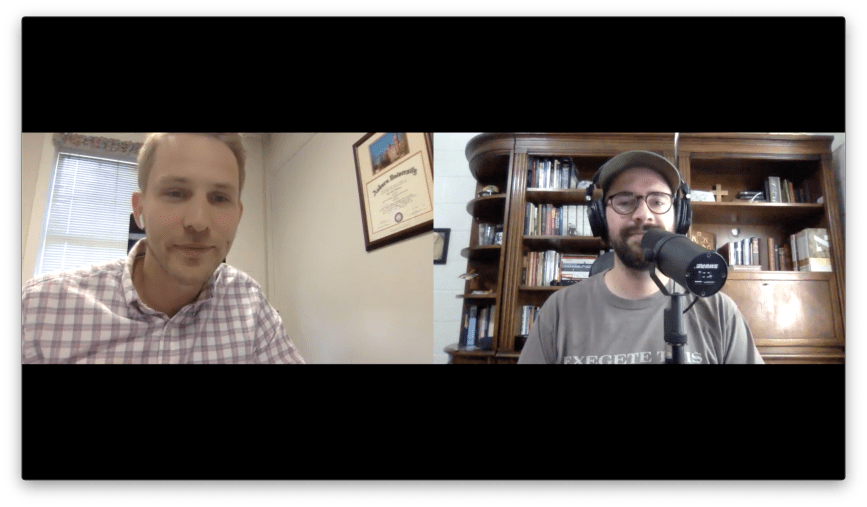
The One Thing Needful

Proverbs 3.13-14

Happy are those who find wisdom, and those who get understanding, for her income is better than silver, and her revenue better than gold. 

This is not a sermon I wanted to write, nor is it one I wanted to preach. 

I’ve been doing this pastor thing for a good while now and, full disclosure, I’ve only preached from Proverbs once and it wasn’t very good. Proverbs is one of those overlooked and forgotten books in the Bible filled with nothing but short and brief aphorisms that sound like something your great-uncle muttered under his breath while getting his third helping of mashed potatoes at Thanksgiving.

“Listen to your father’s instruction; don’t neglect your mother’s teaching.”

“Listen to me and do not deviate from the words of my mouth.”

“Happy are those who keep to my ways!”

“If you stop listening to discipline, you will wander away from words of wisdom.”

That’s all in Proverbs.

And they’re good and fine. There are plenty of times that I’d like to just look someone in the eye and say, “If you would just do what I’m telling you to do, you’d be fine.” But that’s not really the way it works.

And then we lift up this collection of sayings from the middle of the Bible and assume they can speak something new and fresh into our lives about what it means to be followers of Jesus.

I was heard someone describe Proverbs like this: “Reading from the Book of Proverbs is like being stuck on a long road trip with no one but your mother-in-law.”

The Word of God for the People of God all right.

Happy are those who find wisdom, and those who get understanding, for her income is better than silver, and her revenue better than gold.

Years ago, when I was in my first month of ministry, hot off the heels of receiving my degree, soon after arriving at my first church, I reached out to a number of other clergy people in my community. I figured, at the time, I was only 25 years old and I could use all the advice and wisdom and help I could get, and why not receive some of it from those who had been doing it as long as I had been alive.

So I drove around town and started knocking on the doors of the churches. I spoke with pastor after pastor and invited them to join me for breakfast the following week. Nothing more, less, or else. And sure enough, the next week I found myself sitting around a table with 7 other pastors, representing a variety of denominations.

At first we exchanged pleasantries, we talked about seminaries and recent sermons, I learned about different ordination procedures and different clergy robes. And eventually I got to ask the question resting most on my heart: “I am about to embark upon a lifetime of ministry and I want to know what advice you would offered to yourselves when you were my age if you could go back in time. If you could go back, what would you say?”

For a while none of them said anything. They scratched beards, and twirled hair, they furrowed brows and considered the ceiling. And then one of them said, “If I could go back and tell myself anything it would be this: start saving money.”

collection-plate-money-hands

And immediately the entire table erupted in affirmation exclaiming they all agreed with that pastor’s advice.

Maybe it was my naiveté in the moment but I assumed they would have offered me wisdom about what book from the Bible to avoid, or how to properly pray for those who were sick, or even what kind of hymns to sing at particular moments. But I was wrong. This ragtag group of pastors had only one piece of sage-like wisdom they wanted to offer: Start saving money.

I’m fairly certain that if any of us here were to encounter a genie in this life, one (if not all) of our wishes would be for more money, for gold or silver. And there’s good reason for that – economic prosperity is at the heart of the American Dream, it’s what motivates us to wake up early every morning to go to jobs we don’t really care about, it’s what keeps us awake at night as we worry about having enough of it. 

It is so dominating in fact, that I read an article recently that claimed a significant portion of younger people in this country associate George Washington first with being on the one dollar bill and only secondarily with being the first President of the United States.

I mean, for crying out loud, my three year old has a piggy bank in our house and he LOVES to put coins in it. What in the world is he going to do with 78 cents?

Money is at the heart of just about everything we do. 

On any given week we will receive upwards of 40 calls here at the church from people in our local community who are looking for only one thing: money.

I’ve counseled couples who brought unfathomable amounts of debt into the marriage without telling the other person and now they are fighting about one thing: money.

I’ve prayed with more people than I can count who have racked up so much credit card debt that they have to start making decisions about what pills and doctors they can afford all because of one thing: money. 

And then scripture has the gall to tell us that wisdom and knowledge are far greater than any measurement of wealth in this life.

Now, that’s not to say that money or wealth are inherently bad. However, the love of money really is at the root of evil and those to whom much is given, much will be expected. So, you know, be careful what you wish for. 

Which makes the Biblical witness all the more interesting because Jesus has a whole lot to say about money and its almost always bad. Which is not at all how we talk about it today. Money and Finances and Economics are all things that dominate our daily living and they are, at the same time, all but absent in church. Sure, I might stand up here week after week asking for you to consider offering more of your wealth to church, but other than that, it’s almost like we pretend money doesn’t exist when we’re in this place.

This might sounds like we’re in an unprecedented place, but we’re not really. John Wesley, the founder of the Methodist movement that eventually led to a church like this, was deeply concerned with the theology of money and what it meant for Christians to consider economic gains. 

The 18th century was a time of major economic and social change in England. The economic inequality between the comfortably wealthy and the poverty-stricken lower classes was growing larger and more tenuous. The well to do had nothing to worry about the poor had nothing but worries. The political class was dictating all of the rules and all of the power dynamics while the rest of the people were just worried about how they were going to make it to next week.

Sound familiar?

And then the very first Methodists started popping up with this crazy proclamation about God’s grace being sufficient to upend and reorient one’s life. John Wesley himself practiced a number of methodical disciplines (which is where the name Methodist came from) and he taught those who were economically desperate about what it would look like to become more responsible, better educated, and eventually prosperous. 

And it worked, so much so that John Wesley inevitably had to preach a sermon specifically about money in order to help the people called Methodist figure out what it would mean to be a people who lived under the rule of God in a world ruled by money.

He said that the right use of money is an excellent branch of Christian wisdom. It grieved him that money was a subject talked about in the world all the time, but not discussed by those whom God had called. 

And yet there are times we discuss money in church, but when we do it is almost under the auspices of another fundraiser, or helping the church meet her budget. However, for Wesley, this was not the case. His concern was not to raise more money for Methodists, but to equip the people called Methodists to manage and use their money in fruitful and effective ways. 

Wesley broke it down as simply as a Proverb: Gain all you can, save all you can, and give all you can. 

maxresdefault

If, Wesley said, if we can adopt a three-fold approach to money by gaining, saving, and giving we then will approach a Godly and faithful way of handling our finances. 

Which is an ominous and precarious place to be in the middle of a sermon. I mean, when was the last time you heard a preacher talk about money by first saying that you, the people, need to gain all you can? Doesn’t that go against the parable of the man who gained and gained so much that he had to build extra store houses for all his grain only to have it all taken away from him in the middle of the night?

This is a three-fold call but you cannot have one without the others. Earning all you can will mean nothing if some of it is not saved. And saving all you can will mean nothing if some of it is not given. And giving it all will mean nothing if you haven’t earned anything to give in the first place.

In order to approach and adopt this kind of theological discipline, we need wisdom more than anything else.

And where does wisdom come from?

Books and television shows and lecture halls can point us in the right direction, but Wisdom will, more often than not, show up when we least expect it in our daily lives. Wisdom appears in the busy streets, in the public squares, and in the bustling intersections. Wisdom arrives in our simple experiences, in the blink-and-you’ll-miss-it advice from an acquaintance. And, very rarely, wisdom can even come in a sermon.

As I look back on that moment in the earliest days of my ministry, when those pastors told me the greatest piece of advice was to save money, I am grateful for their witness as I started saving from my very first paycheck, but I’ve also thought a lot about what wisdom in the church really looks like. Sure, a good piece of Wesleyan wisdom is to earn all you can, and save all you can, and give all you can. But wisdom is about more than just what we do with our money!

Wisdom is knowing what really matters in this life. Wisdom is someone thirty years ago looking out on our community and saying, “I think we need to start a weekly Flea Market.”

Wisdom is taking stock of our own life and our own gifts and starting to consider how we might use those things to better the lives of other people.

Wisdom is knowing that despite what the cultural narrative tells us, we cannot lift ourselves by our bootstraps because we have all been blessed because someone else chose to help lift us up.

Wisdom is being able to look at the situations of our life and knowing when to stay and when to leave.

Wisdom is believing that no matter how many mistakes we make and how many sins we commit that God will never ever abandon us.

Wisdom, ultimately, is not something we arrive at on our own. Wisdom is a gift from God. Much like the gift of God’s Son. It comes to a people undeserving, in strange ways both seen and unseen. It can completely upend our lives in ways we care scarily imagine. But in the end, its the only thing that really makes a difference. 

Wisdom, much like Jesus, is the only thing we really need. Amen. 

Preach Until You Get It

strangely-warmed-spreaker-header

This week on the Strangely Warmed podcast I speak with Drew Colby about the readings for the 17th Sunday After Pentecost [C] (Lamentations 1.1-6, Psalm 137, 2 Timothy 1.1-14, Luke 17.5-10). Drew serves as the senior pastor at Grace UMC in Manassas, VA. Our conversation covers a range of topics including bad segues, Capon’s The Youngest Day, good/bad cries, the Babylonian Captivity of the Church, singing psalms, rekindling gifts, the Gospel as treasure, Last Week Tonight, and killing mustard seeds. If you would like to listen to the episode or subscribe to the podcast you can do so here: Preach Until You Get It

Screen Shot 2019-09-30 at 10.37.34 AM

Believing Is Seeing

Jeremiah 32.1-3a, 6-15

The word that came to Jeremiah from the Lord in the tenth year of King Zedekiah of Judah, which was the eighteenth year of Nebuchadnezzar. At that time the army of the king of Babylon was besieging Jerusalem, and the prophet Jeremiah was confined in the court of the guard that was in the palace of the king of Judah, where King Zedekiah of Judah had confined him. Jeremiah said, The word of the Lord came to me: Hanamel son of your uncle Shallum is going to come to you and say, “Buy my field that is at Anathoth, for the right of redemption by purchase is yours.” Then my cousin Hanamel came to me in the court of the guard, in accordance with the word of the Lord, and said to me, “Buy my field that is at Anathoth in the land of Benjamin, for the right of possession and redemption is yours; buy it for yourself” Then I knew that this was the word of the Lord. And I bought the field at Anathoth from my cousin Hanamel, and weighed out the money to him, seventeen shekels of silver. I signed the deed, sealed it, got witnesses, and weighed the money on scales. Then I took the sealed deed of purchase, containing the terms and conditions, and the open copy; and I gave the deed of purchase to Baruch son of Neriah son of Mahseiah, in the presence of my cousin Hanamel, in the presence of the witnesses who signed the deed of purchase, and in the presence of all the Judeans who were sitting in the court of the guard. In their presence I charged Baruch, saying, Thus says the Lord of hosts, the God of Israel: Take these deeds, both this sealed deed of purchase and this open deed, and put them in an earthenware jar, in order that they may last for a long time. For thus says the Lord of hosts, the God of Israel: Houses and fields and vineyards shall again be bought in this land. 

We will be watching you.

This is all wrong. I shouldn’t be up here. I should be back in school on the other side of the ocean. Yet, you all come to us young people for hope. How dare you! You have stolen my dreams and my childhood with your empty words, and yet I’m one of the lucky ones. People are suffering. People are dying. Entire ecosystems are collapsing. We are in the beginning of a mass extinction and all you can talk about is money and fairytales of eternal economic growth. How dare you!

For more than thirty years the science has been crystal clear. How dare you continue to look away. And come here saying that you are doing enough when the politics and the solutions needed are still nowhere in sight. You say you hear us and understand the urgency. But no matter how sad and angry I am, I don’t want to believe that. Because if you really understood the situation and kept on failing to act then you would be evil, and that I refuse to believe. 

You are uncomfortable with all the figures because you are still not mature enough to tell it like it is. You are failing us. But young people are starting to understand your betrayal. The eyes of all future generation are upon you. And if you choose to fail us, I say we will never forgive you. 

GettyImages_1170459426.0

16 year old Greta Thunberg addressed the UN Climate Action Summit this week and spoke those words to leaders from across the globe. She did so passionately and unflinchingly for all to see and hear.

The next day Robert Jeffress, a megachurch pastor in Texas, got on the radio to express his disappointment in Thunberg’s address. He said, “Somebody needs to read poor Greta Genesis Chapter 9, and tell her the next time she worries about global warming, just look at a rainbow. That’s God’s promise that the polar ice caps will never melt and flood the world again.”

The text read to us today from the prophet Jeremiah is long and full of interesting details. There is a lot regarding the legal rights to property to be held within families, there’s the proper procedure for procuring said property, there is even the naming of particular places and people that feel almost too specific, even for the Bible. 

But the entirety of the passage boils down to one simple thing: Jeremiah was a foolish realtor.

I mean, the whole scripture is bizarre. Jerusalem is under siege, and Jeremiah has already noted that Jerusalem will fall to Babylon and that King Zedekiah along with the people will be exiled as strangers in a strange land. Also, for what it’s worth, Jeremiah is in prison! He got locked up for declaring the time had come to put down the weapons and surrender to Babylon. Which, when the ruler was as megalomaniacal as Zedekiah was, was treated as treason. And Jeremiah chooses this moment, weird as it may be, to buy piece of land that is quite literally in the process of being taken by someone else.

So, I guess it really isn’t all that simple.

Jeremiah for reasons often beyond our ability to understand maintains a tremendous faith in the God who first called him to the task of being a prophet. While everything screamed the contrary, Jeremiah declared the steadfastness of God and implored people to see what exactly was going on. 

What Jeremiah could see, and what so many others couldn’t, was that while the destruction of Jerusalem would mean the end of all they knew and understood, it did not mean that God had abandoned them or that God had lessened God’s connection with God’s creation. 

They would always be God’s people no matter where they were and no matter how bad things became. Later Jeremiah will write a letter to the exiles as they begin seeking out what it will mean to live in a strange new world and the prophet will give them simple instructions: till the soil, marry and bear children, worship the Lord and celebrate together, for God is still God no matter what.

But what about the land that Jeremiah bought? What good was his money on wasted soil?

Redeeming the land, as scripture puts it, was not an act of foolish hope or ignorance of the obvious. Procuring the land was a sign act to the faith Jeremiah had for the future of God’s people and God’s promises. And that even in the present, God is present in catastrophe.

Which, in the end, is what the life of faith is all about. It’s about believing in impossible things, and then seeing they weren’t really impossible to begin with. It’s about believing in things not yet seen and being part of something that helps those unseen things become seen. 

In short, it’s being able to look out at a bunch of powerful and wealthy individuals knowing that their own interests have led to the imminent destruction in their midst and hoping against hope that they will hear what you are trying to say, that they will begin to shift their lives around, and that something new and beautiful can come out of their nothing.

Faith gets knocked around in the world a lot, and often for good reason. Christians have, at times, acted in ignorance of facts and figures to be moved instead by charismatic individuals who, notably, Jesus warned about during the gospel narratives. Christians have absolutely been responsible for reprehensible behavior in the world and we often brush it aside as if nothing happened.

But one of the things about the life of faith we often ignore or forget about is the willingness to open our eyes, as Jeremiah would have us do, to what has happened and is still happening with a willingness to accept responsibility. We can, of course, always look to the past and deny any wrongdoing on our own part. It’s become an all too common refrain these days, “It’s not my fault that my ancestor owned slaves,” Or, “I shouldn’t be punished for what happened to the native peoples in this country.” And yet scripture reminds us again and again and again that we, today, are not paying for the sins of our parents but for our own. This problems of the world are as much on us as they are on anyone else, now or ever.

And that is why Jeremiah is called the weeping prophet. He knew and saw and believed the truth about the people in his midst in ways that we still deny and ignore and disbelieve. It brought him to tears knowing that the people willfully choose to disobey the one in whom they moved and had their being. He wept as mothers and fathers and children were dragged off into exile leaving behind the city of Jerusalem in ruins. He wept because they refused to believe the truth.

For many years I affirmed the common expression “Seeing is believing.” And why not? I wanted proof and evidence before and prior to making an assertion of something’s relevance. And for most of my life that’s been fine to some degree. But we are all now living in a time when seeing isn’t even part of the equation. 

People and pastors like Robert Jeffress can speak of people like Greta Thunberg as if they are the ones who are ignorant of God’s movements and motives in the world. And people lap it up! They show up week after week to receive more of it because it grants them permission to keep closing their eyes to the truth around them. They are like staff on a boat telling everyone they have nothing to worry about even though there’s a gaping hole in the bottom of the boat taking on water. 

Believing-Is-Seeing-Large

And then people like Greta Thunberg stand with the courage like Jeremiah to say and do what others can not and will not. When I watched her speech this week, with all of her passion and energy and conviction, the thing that stayed with me most was her unwillingness to see others as evil. Talk about faith!

Because many of those people, and the people they represent, are categorically evil! They choose profits over people, they care about the short-term instead of the long-term, and they have drunk themselves silly with deniability about what they have done to the world. 

Greta Thunberg knows what those people do and what they care about. She knows they’ve denied the truth going on 3 decades, she knows that their interests and beliefs do not match her own, and she knows that many, if not most, of them will return to business as usual as if nothing happened.

She, like all prophets, know what we human being are really like. We choose the things we know we shouldn’t and we avoid doing the things we know we should. At the end of the day, for most of us, it doesn’t matter how many numbers and figures are placed in front of us, whether it has to do with racial profiling in this country, or the overwhelming advantage of white privilege, or CO2 emissions, we will continue to see whatever it is we want to see.

Or, to put it another way, we will act according to whatever narrative requires the least of us.

But Jeremiah believed what he could not see! He didn’t wait until the people changed their behavior, he didn’t delay until the right statistics started showing up. No, Jeremiah believed in impossible things. He believed that God would make good on God’s promises. He believed that when the time came the people would see how far they had strayed from the Good News of God’s purposes and would return to the Promised City a renewed people. 

That’s the difference between the prophet Jeremiah and someone like Robert Jeffress. Jeffress believes that God will not flood the world again like God did during the days of Noah. And we shouldn’t either. God hung up that rainbow as a promise that God would never do that to God’s creation again.

But that’s exactly the problem! God isn’t doing this global warming to us, we are doing it to ourselves! We’re drunk with petroleum and fossil fuels and unmonitored emissions. We’re writing checks that our ecosystems can’t cash. We’re walking around blind to how much our actions are fundamentally rewriting the very fabric of the planet. 

But God has not and will not abandon us. God lifts up ordinary people like Greta Thunberg and speaks a prophetic word through her to all with ears to hear. She has no reason to believe that the people listening will heed the call and change their ways. But she keeps going anyway. Christ too had no indication that the words he used and the actions he offered were dramatically reshaping the lives of the people who followed him. In the end he was all alone. But Christ still died for the ungodly. 

Faith is believing in things you cannot yet see, and then one day seeing what you believe.

Amen. 

Thinking In Hymns

strangely-warmed-spreaker-header

This week on the Strangely Warmed podcast I speak with T. Bryson Smith about the readings for the 16th Sunday After Pentecost [C] (Jeremiah 32.1-3a, 6-15, Psalm 91.1-6, 14-16, 1 Timothy 6.6-19, Luke 16.19-31). Bryson serves at Good Shepherd UMC in Richmond, VA. Our conversation covers a range of topics including ministry mistakes, wrestling references, theological mortgages, singing our faith, unknown words, deliverance, using the right tenses, cultivating community, ridiculous love, money, and the end of the game. If you would like to listen to the episode or subscribe to the podcast you can do so here: Thinking In Hymns

Screen Shot 2019-09-23 at 9.53.18 AM

Why Go To Church?

Jeremiah 8.18-9.1

My joy is gone, grief is upon me, my heart is sick. Hark, the cry of my poor people from far and wide in the land: “Is the Lord not in Zion? Is her King not in here?” (Why have they provoked me to anger with their images, with their foreign idols?”) “The harvest is past, the summer is ended, and we are not saved.” For the hurt of my poor people I am hurt, I mourn, and dismay has taken hold of me. Is there no balm in Gilead? Is there no physician there? Why then has the health of my poor people not been restored? O that my head were a spring of water, and my eyes a fountain of tears, so that I might weep day and night for the slain of my poor people!

why-go-to-church

Inviting people to church can be a strange endeavor.

It’s strange enough if you’re a lay person and you approach someone in your life, whether a friend or stranger, and say something like, “I’d love to bring you to my church on Sunday.” Or “We’ve got this crazy pastor and you’ve just got to see the strange stuff he comes up with every week.”

It’s another thing entirely when you’re the pastor inviting someone to church. It takes on a whole new level of self-righteousness when it comes off as if I’m inviting people to wake up on a Sunday morning, drive over to the church, to listen to me hammer on about grace until it finally sticks.

But we do invite people to church, or at least we feel like we’re supposed to do it whether we actually do it or not.

I know that on several other occasions I’ve shared this rather ominous statistic, but I can’t help myself from bringing it up again: The average person in a United Methodist Church invites someone else to church once every 33 years.

That’s crazy.

It’s really crazy when we consider how the overwhelming majority of us are here because someone either invited us or brought us to church. Very rare is the person who just decides to go check out what all these Christians are up to in whatever worship is supposed to be.

So we invite people, or we don’t, but we know there’s some reason we should be doing it, even if we can’t fully articulate it.

Sure, the gospel of Matthew ends with this great charge to go and make disciples of all nations baptizing them in the name of the Father, Son, and Holy Spirit. But doing it just because Jesus tells us to never really feels adequate enough.

I have the occasion to invite people to church on a regular basis simply from having to describe what I do all the time. It’s the go-to ice-breaker when you meet someone for the first time, “What do you do?”

If I say something like, “I’m a reverend.” It conjures up all sorts of things that can be good or bad or true or untrue. Therefore, for awhile I tried out different responses to the question.

What do I do? Well, I work for a global enterprise. We’ve got outlets in nearly every country in the world. We’ve got hospitals and hospices and homeless shelters, we do marriage work, feeding programs, educational opportunities. We’re involved with a lot of justice and reconciliation things. Basically we look after people from birth to death, and we deal in the area of behavioral alternation. 

And then people will always say, “What’s it called?!”

And I say, “The Church.”

But that usually rubbed people in a way that did not endear them to whatever it was I was trying to do, so now I just tell people I’m a pastor and leave it at that.

And therein lies the regular opportunity for invitation because people will start asking questions about the church I serve and then I’ll encourage them to join us on Sunday.

Just this Friday, I was working at a local Panera with my Bible out on the table in front of me and a random stranger came over and struck up a conversation. And within the first few minutes the question was asked and the invitation was made, and the man’s response to the invitation was rather interesting. He said, “I’ve got a lot of difficult things in my life right now, but once I get them sorted out I’ll come check it out some Sunday.”

I think some of us, myself included, often confuse what the church is all about, or what it is for. We make this weird assumption that we come to a place like this to feel better. Which makes sense when you think about it, because that’s why we really go anywhere. We show up in particular places with the hope and expectation that we’ll feel better on the way out than we did on the way in.

And yet, at the same time, we also weirdly feel like we have to have it all figured out before we get here. Or, at the very least, we have to make it seem like we have all our ducks in a row before we sit in one of these rows.

But if we read from the prophet Jeremiah – Jeremiah doesn’t seem like he wants us to feel better. In fact, I think he wants us to feel worse.

Or, to put it another way, if we can’t really feel what we’re feeling here, where else can we?

Let me be clear for a moment: you all look good. Best looking church this side of the Mississippi. But I know, and you know, that some of us here are going through some really tough stuff. Some of us are dealing with depression such that it feels like a dark cloud is following us wherever we go. Some of us are struggling with anxiety that keeps us awake at night while we fret over a host of subjects. Some of us are afraid, or are going through a period of grief, or loneliness, I could go on and on.

And the message of scripture today is this: God knows all of those things and grieves over them.

Woah. 

God, the God we worship and praise and adore, weeps for our weeping. Jeremiah describes God crying a fountain of tears because of the plight of God’s poor people, us.

And even if you want to pretend like your life is perfect, just look at what’s happening in the world…

Millions are marching right now in an effort to combat the devastating effects of climate change and they are largely being led by an 11 year old girl because for some reason we live in a time when adults are acting like children and the children are being forced to act like adults.

Yet another major politician is struggling under the discovery that he wore black face to a party as a twenty something.

Saudi Arabian oil facilities were allegedly attacked by Iran bringing a host a major world nations into the possibility of a conflict the likes of which haven’t been seen in decades.

And here’s one of the craziest things about all the news. We might try to block it out, it might feel simply too overwhelming, but even if we can’t avert our eyes and ears it doesn’t matter much because so many things keep happening that we just move from one horrible thing to another. 

It’s no wonder people show up on Sundays with the hope and expectation that whatever happens here will make them feel better on the way out.

However, for the overwhelming majority of the church’s history, people showed up in places like this with people like us for one reason: to make things right with God.

Christians knew deep in their bones their own sinfulness and they knew they had wronged the Lord.

And we don’t really know that anymore. We avoid the s-word (Sin) like the plague. We fear that we might run off the newcomers if we mention it too much. 

We come to the church to feel better, not to feel worse.

In other words, we’re all looking for a balm.

We were singing the words just a few minutes ago, and we read them from Jeremiah, the balm of Gilead. Gilead was known for its commercial and medicinal success with a simple apothocaric venture with balms that could close wounds and keep them closed. And Jeremiah uses this culturally known and available remedy to poke at whether or not the illness of God’s people can be handled by a spiritual balm.

God’s laments that God’s people feel deserted. And yet, it is their own behavior that has them trapped in this paradoxical feeling of isolation. It’s hard for anyone to realize how trapped they are by their choices or their decisions or their prejudices. We no longer know we are a people of sin because we’ve grown so accustomed to seeing and naming the sins of other people.

prophet-jeremiah

During the time of Jeremiah the temple was responsible for making sure the people of God upheld the covenant made with God. It was at the temple where the nation Israel was told the unvarnished truth about their behavior and the consequences of their never-ending self-interest.

But for some reason the temple stopped doing its job. The priests neglected to speak truth to power and truth to people. 

They had failed and there was no balm.

Imagine if all we ever did was pick and choose the people outside of these walls as the scapegoats for all of our problems.

Imagine if you came to a place like this, a church, week after week and all you were told is that the world is perfect, that your lives are perfect, that all is well.

Imagine hearing that knowing that all is not well, in fact it often feels like all is hell.

Today we are no less lost than the people were during the days of Jeremiah. Our own self-interests blind us to the harm we are doing to others. Greed increases because our insecurities are overflowing. Fear pushes us into such rigid postures of defense that we are no longer listening to the people we really need to be listening to. We rarely recognize how often we place other things from our lives on the altar of our worship as if those things can save us when the only hope we have in the world is a God who weeps for us.

You see that’s the whole thing right there. It would be all too easy to end a sermon like this one with a resounding refrain about how mad God is at us for all the stuff we’ve been doing and all the stuff we’ve avoided doing. I assure you there are plenty of churches out there that can meet that need if that’s what you’re looking for. But the witness of Jeremiah is not that God wants to strike us down out of loathing. 

Jeremiah reminds us of a bewildering truth that we’ve all but forgotten these days: God grieves for us and God grieves with us. 

The balm of Gilead came from the resin of a tree – cultivated and disseminated for all in need. Our balm comes from a similar place, but from a different tree, the one on which Jesus hung for you and me. 

The great witness of the church immemorial is that we know there is a balm in Gilead! The balm isn’t in us. We know we can’t fix ourselves, much to the contrary of the narrative beat into us by the world all the time. 

All we’ve got in us is sin, is selfishness, is self-righteousness. 

The balm we need comes to us from outside of ourselves. It comes to us through the one who condescended himself to know our miserable estate – he became sin who knew no sin. We might not think about our own sins, we usually don’t, but our lives are ruled by them. Its our sins that keep us awake at night and disconnected from one another and even disconnected from God.

How terribly sad.

But God says come to me all you who are heavy laden and I will give you rest. The beginning of our transformation comes not in feeling good, but strangely enough in feeling bad. That’s after all why we come to church: to bring our burdens to bring our truths to bring our shortcomings to the one who offers us the things we need the most: grace, forgiveness, mercy. 

And then maybe we do leave feeling better than we did on our way in, knowing God did for us what we could not and would not do for ourselves. Amen. 

Real Talk

strangely-warmed-spreaker-header

This week on the Strangely Warmed podcast I speak with T. Bryson Smith about the readings for the 15th Sunday After Pentecost [C] (Jeremiah 8.18-9.1, Psalm 79.1-9, 1 Timothy 2.1-7, Luke 16.1-13). Bryson serves at Good Shepherd UMC in Richmond, VA. Our conversation covers a range of topics including the bottom of the barrel, Gilead’s balms, honesty in church, dancing between time, prayer requests, assumptions, making room for lament, the real Paul, and finding grace in the parables. If you would like to listen to the episode or subscribe to the podcast you can do so here: Real Talk

Screen Shot 2019-09-16 at 2.04.40 PM

Grace Is Messy

Jeremiah 18.1-11

The word that came to Jeremiah from the Lord: “Come, go down to the potter’s house, and there I will let you hear my words.” So I went down to the potter’s house, and there he was working at his wheel. The vessel he was making of clay was spoiled in the potter’s hand, and he reworked it into another vessel, as seemed good to him. Then the world of the Lord came to me: Can I not do with you, O house of Israel, just as this potter has done? says the Lord. Just like the clay in the potter’s hand, so are you in my hand, O house of Israel. At one moment I may declare concerning a nation of a kingdom, that I will pluck up and break down and destroy it, but if that nation, concerning which I have spoke, turns from its evil, I will change my mind about the disaster that I intended to bring on it. And at another moment I may declare concerning a nation or a kingdom that I will build and plant it, but if it does evil in my sight, not listening to my voice, then I will change my mind about the good that I had intended to do to it. Now, therefore, say to the people of Judah and the inhabitants of Jerusalem: Thus says the Lord: Look, I am a potter shaping evil against you and devising a plan against you. Turn now, all of you from your evil way, and amend your ways and your doings.  

Metaphors can be messy.

And don’t get me wrong, metaphors make the world go round. We use them ALL THE TIME, even without realizing it. Some are obvious, like saying, “It’s raining cats and dogs.” And “He has a heart of gold.” We say those thing to imply something about the nature of something using words or descriptions that aren’t real or even possible.

When a big cloud rolls overhead we know that domesticated animals are not going to fall down upon us and we know that if we looked inside the chest of even a truly decent person we’ll find blood and muscle and sinew, not one of the most valuable substances on the planet.

And yet we grow comfortable with metaphors because we use them all the time. But every metaphor has a limit and every metaphor can be messy.

Jeremiah speaks of a vision and moment given to him by the Lord about the potter and the clay. This has been a beloved scriptural metaphor for millennia and communicates a lot about who God is and what God does. Like a potter with clay God knows God’s creation intimately, gently, and purposefully. God desires the best result from the work put in. God shapes and molds exactly the way God wants to.

It’s a good and fine metaphor. Like all metaphors it expresses something with words that help bring about a different or perhaps fuller understanding.

But this metaphor is really messy, in more ways than one.

Here’s the good: God as the potter harkens back to some of the earliest verses in scripture about God forming Adam out of the earth, out of dirt, perhaps even out of clay. We, as the creation of God, are formed and shaped in the image of God to live freely and fully on the earth. 

And, like clay, God’s fingers can smooth out any and all of our imperfections such that by the end of our formation, we are exactly as God intended us to be.

Moreover, God never gives up on God’s art. No matter how much we resist the shaping, God can always leave us out to dry if we are too wet, or add a little more water if we are too dry. God can even smash the clay back into a ball and start all over again if God wants.

But our God, the divine potter, will make beauty of our brokenness.

Sounds good right? 

Well, here’s the bad: God as the potter implies a total control over creation such that if there is something wrong with the world we’re left with a question: Why didn’t God fix it? We, the creation of God, formed and shaped according to God’s purposes, do all kinds of bad and horrible stuff on the regular. And even if we are met with moments of malleability, most of us continue to do things we know we shouldn’t or avoid doing things we know we should. Which means that either God isn’t a very good potter, or God desires us to be bad.

Moreover, the Jeremiah texts makes it abundantly clear that God looks specifically at our wrongness and threatens to bring evil upon us unless we amend our ways. God therefore stops seeming like a potter and instead appears like the divine torturer waiting to bring down punishments until we get in line. 

Metaphors are messy. And every metaphor has a limit. But this is the one communicated to Jeremiah by God, and by Jeremiah to us.

When we read these words, when we imagine God sitting down at the wheel fashioning each of us in our own unique way, it’s hard not to feel like we all need to shape up. The potter has seen our messed up characteristics, our choices, decisions, words, and is going to do whatever the potter can to get something out of our nothing. Which, though it sounds hopeful, is also kind of terrifying. 

It’s terrifying because the potter can destroy the clay whenever the potter wants. So, friends, we need to start behaving ourselves and hopefully prevent the destruction that God is holding over our heads.

Or, to put it in simpler terms, if we don’t fix what’s broken in us, God is going to smash us into oblivion.

Today, if we think about potters, we usually conjure them up in our minds as pensive, kind, and gentle people. My sister is a ceramicist and in her daily life she is nice and loving, but when she sits down at her pottery wheel, she is anything but. She becomes her own force of nature, throwing her whole body weight into the machine and into the clay until something comes out of all the effort. Clay splatters everywhere and she had to construct a make shift wall around the wheel just to make sure clay didn’t fly all over the room.

Working with clay is an inherently messy endeavor. You’ve got to get not just your fingers but your arms and whole body into it. And one false move can bring the whole thing down. If the clay is too dry it won’t move under your fingers, if the clay is too wet the clay won’t hold its shape, if the wheel spins too fast the structure will fall in on itself, if the wheel spins too slow it won’t remain symmetrical. 

And Jeremiah, with this metaphor, speaks to the people of God a word about their clay – they need to fix themselves. And not just themselves as individuals, but as a community. God desires the reshaping of the community such that the community can serve God’s purposes in social, political, and even economic ways. 

And God is gonna get what God wants. God means to shape us in ways that we can barely even imagine and definitely in ways that go way beyond what we typically think about in terms of church maintenance. I mean, does God care about the fact that we just celebrated 60 years as a church? Probably. But does God care about the ways we interact with the community such that everyone can hear the Good News? Definitely.

God works in our lives all the time, drying us out when we’re so soggy with our own self-centeredness, dropping the water of compassion on us whenever we feel alone, or hurt, or afraid. God even uses people like us to be the drying or watering agents for the people around us, both familiar and strange. 

potters-wheel-clay

And God has to do this work over and over again because there is something fundamentally wrong with our clay, with us. We can call it sin, or selfishness, or any other number of things. In this text Jeremiah draws attention to the fact that our clay is messed up because we can resist the hand of our potter. We can choose to align with God’s purposes or we can go against them.

But if you’ve noticed, I’ve already started to shift the metaphor around a little bit. That’s why its so messy. You see, Jeremiah makes it abundantly clear, through the threats of destruction, that we’ve got to change the condition of our condition. Jeremiah speaks about the choices being made that affect not only the present but choices that will have consequence in the far and distant future. 

The difference is this: Who is ultimately responsible for shaping the clay? Is it the clay itself, or is it the potter?

Because here’s where the metaphor gets the messiest. If the responsibility is solely on the clay, well then friends, prepare yourselves for destruction. Sure, we can make little changes in our lives, we can try to love God with our whole heart, mind, soul, and body, we can try to love our neighbors as ourselves. We can put a little more money in the offering plate than we did the week before. We can reach out to our literal neighbors and invite them over for dinner. We can volunteer at the local homeless shelter. We can donate canned goods to local food pantries. We can do all sorts of stuff, stuff that will make the world better around us. But at the end of the day, we’re still the same clay.

We will always be sinners in need of God’s grace because that’s who we are. God, in ways that are confounding, chose to make us free. Free to act with God or against God. It is a beautiful and messy gift but one that make life all the more interesting and exciting. We are not puppets being pulled along by some puppeteer up in the sky (another messy metaphor). 

We are dirt. Dirt that has been given life by God.

Should we try to be better and do all sorts of good things? Absolutely. The world would do well to have some more decent acting people in it. But, at the end of the day, we can’t change our clay. Only God can do that. And that’s where the metaphor of the messy potter with the messy clay comes into its fullest. 

God is determined to shape communities whose ways of worship and prayer and life-living bear witness to the redemptive and graceful purposes of God. This isn’t something we can, or have to, do on our own. God is God because God is the one who can always make something of our nothing. God can raise new and beautiful things even out of our ruinous self-indulgent and indifferent practices. 

It’s not up to us on our own, but it’s God who works in and through us to reshape the world around us. God speaks to us through the words of scripture, or a song, or a stranger so that we can start to imagine a new and different world. God uses people and places and things to dry us out or wet us down until we start to spin smoothly on the wheel of the potter. 

Working with clay is messy. If you’re not careful, and frankly even if you are, clay can get everywhere and into everything. It is messy. And so is grace.

1*0I0TcQ7w-DcMEg2v6c1ixA

As the unmerited gift of God, grace is given to all regardless of earning or deserving. Which means that grace is there for the best of us and for the worst of us. That’s a ridiculously messy theological proposition! In just about every other part of our lives we make it all about what we’ve done or deserved. We judge people on what job they have or what school they went to or where they go on vacation or what kind of clothes they wear. But in the reality of God’s kingdom, none of those things matter. Grace is given regardless of circumstances. It is not expensive, it’s not even cheap, it’s free.

At the end of the day, a potter will step away from the wheel covered in the art that was used in creation. Even in the world of messy metaphors there is something beautiful and strange in the knowledge that our divine potter became clay for us in the person of Jesus Christ. 

God was willing to take on exactly what makes us what we are so that the artist and the art would become inextricably tied up with each other, forever.

It doesn’t get messier than that. Amen. 

Church People Are Gonna Church People

strangely-warmed-spreaker-header

This week on the Strangely Warmed podcast I speak with John Carl Hastings about the readings for the 14th Sunday After Pentecost [C] (Jeremiah 4.11-12, 22-28, Psalm 14, 1 Timothy 1.12-17, Luke 15.1-10). John Carl serves as one of the pastors of Bluff Park UMC in Alabama. Our conversation covers a range of topics including College Football message boards, hot winds, discomfort for the Lord, pretending all is well, colloquial liturgy, praying for others, the sneakiness of works righteousness, and the impracticality of grace. If you would like to listen to the episode or subscribe to the podcast you can do so here: Church People Are Gonna Church People

Screen Shot 2019-09-09 at 7.44.18 AM

Exegete This!

strangely-warmed-spreaker-header

This week on the Strangely Warmed podcast I speak with John Carl Hastings about the readings for the 13th Sunday After Pentecost [C] (Jeremiah 18.1-11, Psalm 139.1-6, 13-18, Philemon 1.1-21, Luke 14.25-33). John Carl serves as one of the pastors of Bluff Park UMC in Alabama. Our conversation covers a range of topics including story time with Bishop Willimon, throwing on the wheel, difficult verses, being known, predestination, Philemon, reading outside the text, hating the family, kingdom catching, and uncomfortable fellowship. If you would like to listen to the episode or subscribe to the podcast you can do so here: Exegete This!

Screen Shot 2019-09-02 at 8.44.06 AM

Worthless

Jeremiah 2.4-13

Hear the word of the Lord, O house of Jacob, and all the families of the house of Israel. Thus says the Lord: What wrong did your ancestors find in me that they went far from me, and went after worthless things, and became worthless themselves? They did not say, “Where is the Lord who brought us up from the land of Egypt, who led us in the wilderness, in a land of deserts and puts, in a land of drought and deep darkness, in a land that no one passes through, where no one lives?” I brought you into a plentiful land to eat its fruits and its good things. But when you entered you defiled my land, and made my heritage an abomination. The priests did not say, “Where is the Lord?” Those who handle the law did not know me; the rulers transgressed against me; the prophets prophesied by Baal, and went after things that do not profit. Therefore once more I accuse you, says the Lord, and I accuse your children’s children. Cross to the coasts of Cyprus and look, send to Cedar and examine with care; see if there has ever been such a thing. Has a nation changed it gods, even though they are no gods? But my people have changed their glory for something that does not profit. Be appalled, O heavens, at this, be shocked, be utterly desolate, says the Lord, for my people have committed to evils: they have forsaken me, the fountain of living water, and dug out sisters for themselves, cracked cisterns that can hold no water.

One year my elementary school got the bright idea for a new program to help keep the tomfoolery down in the cafeteria. We were, as most kids are, fine in the classroom, but the minute we were allowed to mingle with friends in other classes, everything went crazy. 

So the teachers would yell, and separate certain students from others, but it never really worked. And then the front office got an epiphany… The three flowers.

One day, in the middle of every table, stood a small little vase and inside each vase were three fake flowers. The idea was that if the table became too rambunctious, a teacher or administrator would come over and remove one flower – the first warning. And, if sort of worked, the fear of losing the other two would inevitably lead most of us to quiet down and focus on our peanut butter and jelly sandwiches. But then someone would put their hand over the armpit and start making the sounds of flatulence, or someone would purposely spill milk out of their nose and then flower number two would disappear.

For most that was enough. With two flowers missing a table would eat in miserable silence waiting for the lunch period to end.

We knew the punishments for losing all three flowers: There was the possibility of extra homework, the loss of recess, and the most dreaded of all, a phone call to our parents.

So having lost two flowers, we would get our acts together and instantly mature right on the spot.

Except for one day. Because on that particular day, having already lost two flowers, one of my best friends stuck his spoon into his chocolate pudding, and rather than bringing it to his mouth, he started to arc it back with his other hands and he shot the brown blob across the table directly at the girls.

Time suspended for a moment as the entire table watched the pudding reject the laws of physics and fly in slow motion until it landed directly in the middle of the forehead of the prettiest girl in our class.

And immediately, our table and the tables around us erupted in cacophonous laughter until the cafeteria lady, as we called her, slowly sauntered over and withdrew our final remaining flower.

Our hearts sank knowing that the worst thing in the world had just taken place and our imaginations began to run wild with whatever punishment was coming our way. The cafeteria lady quickly wrote down all of our names on a piece of paper, and then she handed it to me. She said, “Lunch is about to end, and when it does, you are to take this to the office, the principal will be calling each of your parents to tell them what you did today.”

The remaining minutes were agonizing and we refused to look each other in the eyes, and when I picked up my tray to deposit my trash the lunch lady came over a final time and said, “And don’t get any funny ideas like throwing away the piece of paper before you go to the office.”

Why did she plant such a seed of mischief in mind? I will never know. 

But that’s exactly what I did.

ReflectionsJeremiah_2_plain-680x300

No wants likes getting in trouble. It’s not the trouble we mind, but its getting caught that makes all the difference. If we can avoid it, we do everything we can to avoid indictment. And then we read a scripture like the one from Jeremiah and we squirm in our pews. We squirm, precisely because it makes us uncomfortable. 

Jeremiah’s condemnation resonates with us in ways we’d care not to admit. Each of us, in our own time, can take a good hard look in the mirror and catch glimpses of our own waywardness, or lifestyle choices, or foolish decisions and know that the word from the Lord is true. 

We do the things we know we shouldn’t, and we avoid doing the things we know we should do.

Or, to put it like Isaiah puts it: People who pursue worthless things become worthless themselves.

Ouch.

The people of God during the time of Jeremiah were a people of foolish wastefulness. They had been given everything they needed: plentiful land to eat its fruits. But for them it was never enough. And, to make matters worse, it wasn’t just the people, it was the priests too. They all went off in search of the illusive “more” and they came back empty handed.

The desire in the hearts and minds and souls and bodies was so blinding that they had forgotten who they were and the story of God’s deliverance.

Which is why Jeremiah speaks of their water and their cracked cisterns. The people of Jerusalem are dying of thirst, both literally and spiritually. The faithlessness of God’s people had delivered the Babylonians to their door steps and their aid and supplies had been cut off. The cisterns scattered throughout the city are literally drying out leading to cracks and the water has stopped.

But it’s more than just the literal water that’s missing. Jeremiah has eyes to see and a word from the Lord to preach that they have lost the living water of God. Not because it dried up and disappeared, but because the people made their own cisterns and bottled their own understanding of enough instead of relying on God.

The people have lost their story. They have forgotten that God, their God, had delivered them from captivity in Egypt to the new and beautiful Promised Land, God had been faithful to the covenant struck with Abraham, but the people had listened to another song, they had followed their own thoughts and desires, and now, they are accused.

And not just them, but their children’s children!

Over and over again throughout the Bible, both in the Old and New Testaments, Israel knows itself as the people delivered by God. And still today, we are a people delivered by God from the tyranny of another sort, not from a Pharaoh in a far away land, but from the reign of sin and death. And its because we know the story of what God did that we can live fully and faithfully today.

We are the stories we tell.

It’s true. Just think about what’s important to you or to your family. Whatever the thing is, there’s probably a story that helps bring the object to light. Narratives shape the world around us and give us the means by which we can understand who we are and, in the church, whose we are.

And even though we know that we’re the stories we tell, more often than not we act like we are the things we possess. We value ourselves on the clothes we wear, the car we drive, the home we own. And all of those things are worthless. They can blow away with the wind. 

Is there a shirt that can make us happy?

Is there a car that can fix our marriage?

What good is a perfect house when you run out of water?

So Jeremiah lambasts the people of God, and even us all these centuries later. Why have you forgotten what God did for you? Why are you rushing after things that cannot bring you life? Why have you dug your own cisterns when God is the one with the living water?

And here’s the deal: Jeremiah, bless his heart, we can see what he’s going for. He’s not simply trying to make the people feel bad about themselves, he says what he says so that they can change. The prophet wants everyone to tune their hearts back to God’s frequency. 

But it’s not going to work.

Literally, it doesn’t, things just get worse for the nation Israel as she refuses to listen and continues to dig her own cisterns.

But it was never going to work out anyway.

The more prophets prophesy about the need to change, the more preachers preach about the need to change, the more things largely stay the same.

No one goes to an AA meeting because their spouse nags them to go. No child jumps at the opportunity to do their homework because their parents yelled at them to do so. 

Just think about the last time someone tried to fix you… Did it work?

Just think about the last time you listened to a sermon that told you all the things you needed to do to fix your life… Did you and did it work?

Thats the kicker about preaching – people don’t change because we tell them to repent, nor do we change because someone told us to. 

It’s infuriating, but we all have to come to our solutions on our own. Sure, we can do our due diligence and show people the door, but we can’t push anyone through it. But even that is a long shot in terms of transformation.

We like to talk about how the world is changing, how we can barely keep up with it all, and part of the reason it feels like the world is spinning out of control is because we all stay the same. We are creatures of habit and when we find a routine that seems to work we stick with it, even if the routine is a denial of God’s living water provided to us for nothing.

We’ve got the crooked and broken notion that we’ve got to dig our own wells to get what God has already given to us.

What Jeremiah points at in his indictment, the thing we almost always miss, is that this is exactly the thing he was criticizing. It’s not just that God’s people needed to be better, though it wouldn’t have hurt, the problem was they were so convinced that they could do everything they needed on their own when they couldn’t do much of anything. 

We are all works in progress – that’s absolutely the truth. And yet, this incessant desire to change others usually makes things worse.

Should we stop trying? Of course not. The point isn’t to give up, but to realize that we all need help outside of ourselves and even outside of the people closest to us. We need a savior. We need living water that will never ever run dry. We need the bread and the cup. 

We can’t do all of this on our own.

So thanks be to God, who through Jesus Christ has made us his own. Amen.