The Lord Needs It

Palm Sunday from the perspective of the donkey:

With palms beneath my feet, Jesus, there are so many things I wish I could tell you. Carrying you while the crowds scream on our sides, I wish I could share all the things I have seen and heard. This might be the only chance I’ll get, and it already feels too late.

I was there Jesus. I was there in the manger when you were born. Your parents had come into the tiny room and your mother looked like she was about to burst. I was but a young foal back then, but I remember. They were so afraid and alone when they cuddled together holding you close. While they were filled with fear, I was filled with joy. I knew from the moment I saw you that you were special, that you were the Son of God. The other animals could feel it too, and while your family fell into the familiar rhythm of sleep, we gathered around you to share our warmth. I watched you sleep all night and I could feel that our lives were connected, and I knew that I would see you again one day.

You left from Bethlehem but as the years passed I heard stories about your life. I would be in the marketplace, or moving about the village and rumors would fall upon my ears. 

When you were a child they said that you stood apart. Other children would spend their days running around and getting into mischief, but you would sit in the synagogue and teach the elders. Your command of the scriptures spread before you even started your ministry. I would watch the people while they talked about you and they were filled with such hope. Words like “messiah, lord, and savior” were used to describe you and I could tell that the Lord was among us.

Then it came to pass that you were baptized by your cousin John in the Jordan river. Witnesses said they saw the sky open up and they heard the voice of God. While others denied the claims, I knew it was true, I could feel that your ministry was about to begin and that everything would change.

You traveled throughout Galilee proclaiming the year of the Lord’s favor. You healed the sick, gave sight to the blind, and restored the outcasts to their families. Everywhere you went stories about your love and mercy traveled ahead and the crowds grew larger and larger. You fed the multitudes by the sea, you walked on water, and you brought Lazarus back from the dead. You spoke of mustard seeds, prodigal sons, and good samaritans. You ate with sinners, worked on the sabbath, and argued with the Pharisees. Some say that even just a few weeks ago you were on the mountaintop when Moses and Elijah appeared and you were transfigured

This morning I was tied up near the door when two of your disciples came close. One of them spoke to my owner and said, “The Lord needs him” and they brought me to you. I knew the time had come when we would be reunited, but the joy I expected to feel has been mixed with trepidation. 

Jesus, how I wish you could hear me, how I wish I could tell you all I have seen and heard. We departed early this morning and the crowds gathered around us. It feels as if the closer we get to Jerusalem the people grow louder and more eager to cry out. Do they know what they mean when they say, “Hosanna! Blessed is the one who comes in the name of the Lord! Blessed is the coming kingdom of our ancestor David! Hosanna in the highest heaven!”?

I’m beginning to worry Jesus. I don’t think they know who you really are. The people sound more like an angry mob waiting for you to overthrow the Romans than a faithful group waiting for the kingdom of God. They want another Moses to lead them out of physical bondage, they want another David who can lead them into battle, they want another Solomon to build a giant temple. 

These people have suffered but they believe in you. Did you see them take off their cloaks and place them in the road? I have been walking over garments for hours. Did you see them rush into the fields for palm branches to wave them in the air and create a royal pathway? The palms beneath my feet are a sign of how much these people believe in you.

What are you going to do Jesus? I can hear people murmuring about your coming mission, some are saying that you are going to the temple and you are going to overthrow the tables. Some are saying that you are going to lead the rebellion and kill the chief priests and scribes. Some are saying that you are going to destroy the temple and then build a new one. 

Jesus I’m afraid for your life! These people don’t know who you really are and what you’ve come to do. They shout “Hosanna, Hosanna!” but I fear their shouts will soon turn to “Crucify, Crucify!” They are only concerned about themselves. Even your disciples on either side of us, I can smell their fear. 

Jesus, I was there when you were born. I felt God’s presence in you and I knew you would save the world. But please Jesus, let me take you away from this place. Jerusalem can only bring about your death. We still have a chance to turn around and head home. 

Or is it too late? 

The crowds are starting to thin Jesus. The people are beginning to head home. We are stepping through the gate and the palms are no longer beneath my feet. I want to believe in you and what you are doing. I want to believe this is God’s will. But I’m so afraid. 

Jesus, I am an old donkey and I don’t know how much further I can carry you. 

It’s just us now and the sun is beginning to set. 

What will happen? What are you going to do?

If this is the last time I will see you, I wish I could talk to you. I wish I could warn you about what is to come. I wish I could stop you.

You swing your legs around and are standing right before me. Your eyes contain the same hope they did the day you were born in the humble manger. As you pet my old matted fur I can feel all the people you have already touched and healed. I can feel the sick children and parents, I can feel the blind and the lame, the last, least and lost.

What a privilege it was to carry you today my Lord. I knew that we would meet again, I only wish I could do something to warn you. 

You’re now leaning in close to whisper in my ear. Is this goodbye? Is this the end?

You said, “No my old friend. I know exactly what I am doing. And this is only the beginning.” Amen. 

Passionate Palms

This week on the Strangely Warmed podcast I speak with Alan Combs about the readings for Palm Sunday [C] (Psalm 118.1-2, 19-29, Luke 19.28-40). Alan is the lead pastor of First UMC in Salem, VA. Our conversation covers a range of topics including intergenerational trauma, the whole story, Holy Week, difficult hymns, The Wesley Bros comic, responsibility, the elected reject, singing stones, choices (or the lack thereof), and the not normed norm. If you would like to listen to the episode or subscribe to the podcast you can do so here: Passionate Palms

Beauty Will Not Save The World

John 12.1-8

Six days before the Passover Jesus came to Bethany, the home of Lazarus, whom he had raised from the dead. There they gave a dinner for him. Martha served, and Lazarus was one of those at the table with him. Mary took a pound of costly perfume made of pure nard, anointed Jesus’ feet, and wiped them with her hair. The house was filled with the fragrance of the perfume. But Judas Iscariot, one of his disciples (the one who was about to betray him), said, “Why was this perfume not sold for three hundred denarii and the money given to the poor?” (He said this not because he cared about the poor, but because he was a thief; he kept the common purse and used to steal what was put into it.) Jesus said, “Leave her alone. She bought it so that she might keep it for the day of my burial. You always have the poor with you, but you do not always have me.”

Lent is such a strange time in the life of the church. 

Yes, during Advent we re-await the baby born King in Bethlehem, which is bizarre in its own right. The author of the cosmos condescends to dwell among us through the least likely of people in the least likely of places.

But Lent? During Lent we hear about sin and shame – the need to lament and repent. We sing songs about death and crucifixion, we gaze inwardly at our wanton disregard for the good, the true, and the beautiful. 

But Lent, contrary to how we might convey it or even embody it, isn’t really about sin and it definitely isn’t about punishment. It is a time set a part to behold God, so that we might see ourselves and all in things in light of God’s devotion to us. 

In other words, Lent is a strange time of good news because in confronting the truth we are able to do away with falsehoods and trivialities. Looking at the cross, and our complicity in it, gives us the space to admit that nothing is as it should be. 

Just here in our local community we’ve seen, over the last week, an entire apartment complex being forced to vacate into a market where there are no available rentals, a student fired a gun inside a middle school bathroom, and a campsite for homeless people caught fire.

Each of these incidents, sadly, can be attributed to our own sinfulness and selfishness. When we care more about our wealth, our freedom, and our clean streets, than the wellbeing of others, we only further prove that we have behaved badly.

And it’s not even just the headlines that we can read in the paper. Lent, oddly, forces us to come to grips with the fact that even Beauty is not as it should be. 

Beauty cannot save the world, at least not in the ways we want it to be saved. 

Our cultural achievements, our aesthetic sophistications, our programs of spectacular morality cannot deliver us from the evil at work without or within us. 

It’s notable how often the strange new world of the Bible and the tradition of the church warns us about the dangers of beauty; beauty tricks us into believing that all is well when, in fact, all is hell.

Beauty is fleeting and finite, and no matter how hard we try and how much effort we put into things, they cannot save the world.

On Tuesday there was a benefit concert that featured the music of Ed Sheehan, Camila Cabello, and other artists that raised over 21 million dollars for Ukrainian refugees. It was a two-hour live streamed collection of performances during which the myriad array of musicians pleaded for an end to the war in Ukraine waged by Russia. 

21 million dollars is no small feat.

But you know what happened in Ukraine? Nothing.

The bombs kept falling. Cities continued to crumble. And families fled out of fear for their lives.

In Jesus’ prelude to his Passion, on the eve of Palm Sunday, he arrives in Bethany and goes to the home of Lazarus. Mary and Martha decide to throw a little dinner party for the Lord and while their kicking back over appetizers, Mary bends down to the floor with a pound of Chanel No.5, pours it out on Jesus feet, and then she wipes them with her hair.

Judas, of course, jumps up from his seat and puts her in her place, “Woman, what’s wrong with you? That perfume is worth $50,000, why didn’t you see it and give the proceeds to the poor?”

Jesus, ever calm, responds to his soon-to-be-betrayer, “Leave her alone. She bought it for my burial. There will always be poor people, but I won’t be here forever.”

Its Lent which means, hopefully, we’re all in a space to admit that we agree with Judas. We know we’re not supposed to identify with him, he is after all the one who gives up his Lord, but he has a point. It’s such a waste to pour out the perfume on Jesus feet when it could’ve been used to make the world a better place.

And Jesus’ words are downright offensive, “You will always have the poor with you, but you will not always have me.”

C’mon Jesus! Don’t you know being a Christian is about transforming the world? What a waste! Think about what we could’ve done with all that cash!

It’s embarrassing to hear the Lord speak in such a way.

And perhaps embarrassing isn’t the right word. It’s threatening to hear Jesus talk in such a way. His proclamation here to Judas threatens to upend everything we think we know. 

Our world is built on the assumption that whatever ails us can be fixed by us. And that’s not necessarily a bad thing. It is good and right for us to dig deep into our wallets and purses to help those in need. We do have an obligation to love our neighbors and our enemies as ourselves. We need to believe in a better world. We need hope.

But we aren’t the hope of the world. If we were then we would not longer need newspapers to tell us what’s wrong in the world because there wouldn’t be anything wrong in the world. 

Remember: some of the most horrific events in human history were done in the name of progress.

Transcendent hope, real hope for things not yet seen, can’t come from us, it has to be done to us. And that kind of hope has a name: Jesus.

The extravagant gift of the perfume poured out by Mary reveals to us that, unlike Judas, she knows that Jesus in the only hope in the world that we’ve got. She, therefore, can do something wild and reckless because she’s recognizes the wonder of the cosmos sitting at her table. She knows that true gifts, like the perfume and the incarnate One, cannot be controlled.

And, though we can’t help ourselves but agree with Judas, we also know (in some way, shape, or form) that Mary is right. We all encounter extravagant gifts that can disappear just as soon as they arrive.

A choir works for hours and hours only to stand up, sing for 4 minutes, and then it’s gone never to be heard again, at least not in that way.

A teacher does the same thing with every lesson just as a preacher does with every sermon.

Flowers are given in honor, love, memory, and respect only to die and wither shortly thereafter.

People like you and me put our money into offering plates week after week.

Even Jesus raises Lazarus from the dead, only for Lazarus to die again in the future.

Why?

Well, love is a strange thing. As is hope. But without them, we are nothing.

Judas rebukes Mary for her waste because she could’ve help the poor. And yet, Judas lacks the vision to see that Mary is helping the poor. She pours out the extravagant perfume on the poorest of all: God in the flesh who condescends to dwell among us. She gives value and worth to the very people that Judas is advocating for.

But Judas has his mind stuck on earthly things – he believes that the only real and important changes can come out of his own goodness and charity. 

Mary, however, has her mind on the divine, she perceives, somehow, that the One sitting at the table is the only One who can ever really make something of our nothing.

Does this mean that we are no bear responsibility for the last, least, lost, little, and dead? On the contrary, this dinner party disagreement is a profound declaration about the role of the church in the world. The world is an absolute mess and yet the church is a constant witness to the value and the worth of those the world throws away like trash. 

Lazarus was dead, wrapped up in a tomb. And Jesus brings him back.

The 5,000 have nothing to show for their faithfulness except the hunger in their bellies and Jesus feeds them.

The 12 disciples abandon, deny, and betray Jesus and he still breaks bread with them and returns to them on Easter.

Wherever the world sees failure and brokenness, Jesus sees value and beauty.

And beauty is a fickle thing. It is often fleeting and wasted. And it will not save the world. But it might make the world a little more bearable. 

Only the world that cannot save itself will be saved by God. And only the beauty that cannot save the world is worth saving at all.

Do you see? In God’s weird and wondrous way, Jesus himself is the nard purchased at a great price, to lavish upon the dying world. As Christ’s body in the world we are called to be symbols of broken beauty for a world that cannot and will not save itself.

We have hope because we know Jesus Christ and him crucified. Hope measures the distance between the now and the not yet. Hope is only intelligible amidst hopelessness. Were it up to us alone the world would never ever change. But it’s not up to us – Jesus is the hope of the world.

The anointing of Jesus’ feet is a reminder that, by the end of the week, those feet will be nailed to the cross. Jesus comes into a world that does not request him, nor even want him, because when push comes to shove we’d rather take matters into our own hands.

Or, put another way, when Jesus arrives with proclamations of grace and mercy and forgiveness, with announcements about a new age called the kingdom of God, we nail him to the cross. 

Things are not as they should be. 

No matter how hard we try there will always be more to do. But here’s the Good News: the one thing that needs to be done is already finished in the life, death, and resurrection of our Lord. Though we are unworthy, Christ makes us worthy. Though we have sinned, Christ offers pardon. Though we feel empty, Christ proclaims that we are enough.

We are freed from the burden of being God. We, like Mary, can do wild and reckless things because Christ is the hope of the world, not us. 

There is nothing beautiful about the cross. It is a sign of torture and death. And yet, for God, it is our salvation. Beauty will not save the world, but God does. Amen.

To The End

John 13.1

Now before the festival of the Passover, Jesus knew that his hour had come to depart from this world and go to the Father. Having loved his own who were in the world, he loved them to the end.

The synoptics (Matthew, Mark, and Luke) treat us to the scene of Jesus’ final evening with his friends as they sit around a table sharing bread and wine.

John, however, takes the scene a little bit further.

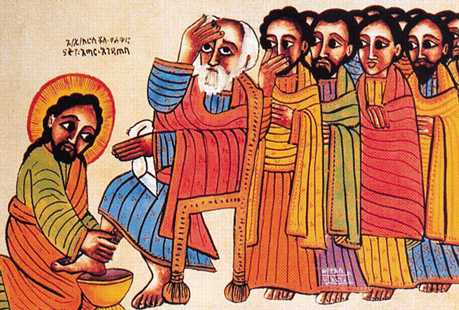
While eating at the table, Jesus gets up, takes off his outer robe, and ties a towel around himself. He begins washing all of the disciples’ feet and wipes them off with the towel around his waist.

Peter, of course, objects to the humble (read: humiliating) act of his Lord, but Jesus hits him hard with, “You do not know what I am doing, but later you will understand.”

Only after every disciple’s feet are washed does Jesus arise, and begins to teach:

“Listen, you call me Teacher and Lord which is good and fine because that is who I am. But check this out: If I, your Lord and Teacher, am willing to get down on the floor to wash your feet, you also ought to wash one another’s feet. This is what the Kingdom of God is all about – the first being last and the last being first. Things are getting flipped upside down right here and right now. And I do and say all of this knowing that one of you will betray me, it is to fulfill the scripture, ‘The one who ate my bread, has lifted his heel against me.’” Shortly thereafter, Judas leaves and sets in motion the world turned upside down. In mere hours the guards will arrive in the garden, Jesus will be arrested, put on trial, sentenced, beaten, and left to die on the cross.

The foot washing has always been a little strange and a little weird to the people called church. For one, as mentioned, the other Gospels don’t include it, and for another, it reveals the heart of God in a way that feels uncomfortable.

Not only does Jesus, God in the flesh, get down on his knees to wash the dirty feet of the disciples, one of whom will shortly betray him, another will deny him, and the rest will leave him hanging to die on a cross, but then Jesus has the gall to command us to do the same for one another.

And yet, in a way, more than being told what we are supposed to do, the whole message of this final moment is, again, about what Jesus does for us.

In the foot washing, Jesus repeats in himself the great lengths to which God was willing to go for a people undeserving – how far God was willing to go to wash us clean from our transgressions.

This moment, one that might make us cringe or, at the very least, furrow our brows, it reveals to the disciples and to us that the Lord, the Alpha and Omega, the Beginning and the End, is about to suffer and die just to rid us of the stench and dirt of sin and death that latches onto us.

And, notably, this is the final act of Jesus toward his disciples before Easter and, as John so wonderfully notes, Jesus loved his disciples to the end. Including Judas.

Do you see what this means? Even the worst stinker in the world, even the one who betrays his Lord to death, is someone for whom Christ died. While we were yet sinners, Christ died for us.

Jesus, bewilderingly, loves us to the end, loves us so much that he was willing to take our sin upon himself, mount the hard wood of the cross, and leave them there forever. Thanks be to God.

Who In The World Is Jesus?

Philippians 3.10

I want to know Christ and the power of his resurrection and the sharing of his sufferings by becoming like him in his death. 

Years ago, on one particular Good Friday, I took a large cross, lifted it onto my shoulder, and I walked around town for a few hours. It has been a habit of mine ever since I entered the ministry and it is part of my desire to bring the Lord to the people outside the church. I want people to see the sign that we see every Sunday morning in order to be reminded about what we did, and what the Lord has done for us.

Anyway, on that Good Friday I set out for my cross carrying venture and I received a variety of reactions. Some people honked their horns as they drove past. There was a man who offered me water because it was a particularly hot spring day. I even had someone spit at my feet. But mostly, people just stared at the strange sight of a man in all black carrying a cross around town.

I had almost finished my loop when I spotted a woman on the other side of the road with a perplexed look on her face. She was glaring at the cross and then she inexplicably crossed the street and demanded to know what in the world I was doing.

I calmly explained that I was carrying the cross because that’s exactly what Jesus did on Good Friday before he was crucified. And then she said something I, sadly, was completely unprepared to hear: “Who in the world is Jesus?”

I know that I, for one, take for granted the ubiquity of Christianity. That is, I assume that even people who never step foot in a church have, at least, some semblance of an idea about Jesus. But there, on that Good Friday, I encountered someone who knew nothing of the Lord.

Paul wrote to the church in Philippi, “I want to know Christ and the power of his resurrection.” Even on the other side of his Damascus experience, his desire to know the Lord was at the forefront of the apostle’s heart and mind. Even for as much as I know the Lord, from encountering God in the strange new world of the Bible, in the sacraments, in the still small silences, I too desire to know the Lord and the power of Christ’s resurrection. At the heart of the church’s gathering is a willingness to proclaim the wonders of God so that all of us come to know who Christ is and who we are in relation to Christ.

But what about those outside the church?

Or, to put it another way, how would you respond to someone who said, “Who in the world is Jesus?”

Faith is an exciting adventure not because it provides all the answers to our questions, but because it encourages us to ask questions in the first place. Here, at the tail end of Lent, with the cross hovering on the horizon, we are compelled to confront the incarnate truth. That truth has a name: Jesus. Jesus cannot be explained  from a pulpit or from a book. Jesus defies all of our expectations and often leaves us scratching our heads.

But that’s the point. God is God and we are not. The best we can do is tell the story of Christ’s death and resurrection that we’ve been telling throughout the centuries. The rest is up to God. 

Narding Out

This week on the Strangely Warmed podcast I speak with Alan Combs about the readings for the Fifth Sunday of Lent [C] (Isaiah 43.16-21, Psalm 126, Philippians 3.4b-14, John 12.1-8). Alan is the lead pastor of First UMC in Salem, VA. Our conversation covers a range of topics including record breakers, timelessness, keeping Easter in Lent, Makoto Fujimura, laughing in church, terrible testimonies, tremendous transformation, clarity (or the lack thereof), authorial soliloquies, and John Daker. If you would like to listen to the episode or subscribe to the podcast you can do so here: Narding Out

Welcome Home

Luke 15.1-3, 11b

Now all the tax collectors and sinners were coming near to listen to him. And the Pharisees and the scribes were grumbling and saying, “This fellow welcomes sinners and eats with them.” So he told them this parable: “There was a man who had two sons…”

The strange new world of the Bible is downright scandalous.

I mean, the first two human characters in it, Adam and Eve, spend most of their time in their birthdays suits before they decide to cover themselves with a handful of fig leaves.

The patriarch of the covenant, Abraham, passes off his wife as his sister on more than one occasion to save his own behind.

David, the handsome shepherd king who brings down the mighty Goliath, orders the death of one of his soldiers after an afternoon peeping session with the aforementioned solider’s wife.

And those are just the first three stories that popped in my mine.

When Jesus shows up on the scene, the scandalous nature of the Good News ramps up to eleven.

He eats with all the wrong people, he heals all the wrong people, and he makes promises to all the wrong people. 

In the beginning, Jesus attracts all kids of people. The good and the bad, the rich and the poor, the holy and the sinful, the first and the last.

But at some point along the way things start to change as do the people who find themselves listening to Jesus.

All the tax collectors and all the sinners come near to listen. The tax collectors are those who profit off their fellow Jews by upping their take for the empire’s pockets. And the sinners, well you can just imagine your favorite sinful behavior, and you can picture them near the Lord.

And so it is the last, least, lost, little, and nearly dead who hang on his every word. Not the respectable Sunday morning crowd we have at church. Not those who sleep comfortably at night knowing their padded bank accounts are safe and secure. Not the people who have all the powers and principalities at their fingertips.

No. Jesus has all the gall to hang out with the sinners.

And the Pharisees, the good religious observers (people like us), are concerned about the behavior of this would-be Messiah, and so they try to dissuade the crowds: “This Jesus is nothing but bad news! He welcomes sinners into his midst, and not only that, he eats with them! Can you imagine? And he calls himself the Son of God!”

So Jesus does what Jesus does best, he tells them a story.

There’s a man with two sons. The family business has been good to the family. The little corner grocery store is a staple in the community and the family know the names of just about every person that walks through the door. 

And the father is a good father. He loves his sons.

But one day the younger son gets it into his head that he wants his inheritance right then and there. He doesn’t have the patience to wait for his old man to buy the farm so he marches into the back office and triumphantly declares, “Dad, I want my share of the inheritance now.”

In other words, “Drop dead.” 

And the father really is a good father, so he decides to divide his assets between his sons. To the elder he gives the property and the responsibility of the family business, and to the younger he cashes out some investments and gives him his half in cold hard cash.

Only a few days pass before the younger son blows all of his money in Atlantic City. At first he is careful, a few passes at the roulette wheel, a handful of bets at black jack. But the more he loses, the more he spends on booze, girls, and more gambling,

His fall from grace happens so fast that he walks up to the closest pit boss with empty pockets and begs for a job.

“Sure,” the man says, “we’ve got an opening in janitorial services and you can start right now.”

Days pass and the younger son cleans out the trashcans throughout the casino. He’s able to stave off the hunger at first, but he hasn’t eaten in days and one particular half-consumed doughnut at the bottom of the trash can starts to look remarkably appetizing.

And that’s when he comes to himself.

He realizes, there in that moment, that he made a tremendous mistake. Even the employees back at the family grocery store have food to eat and roofs over their heads.

He drops his janitorial supplies and beelines out of the casino while working on a speech in his head, “Dad, I really messed up. I am sorry and I am no longer worthy to be called you son. If you can give me a job at the store I promise I’ll make it up to you.”

He says the words over and over again in his head the whole way home, practicing the lines like his life depends on them.

Meanwhile, the father is sitting by the window at the front of the shop, lazily glancing over the newspaper’s depressing headlines. He can hear his elder son barking out orders to his former employees, and then he sees the silhouette of his younger son walking up the street.

He sprints out the front door, spilling his coffee and leaving a flying newspaper in his wake. He tackles his son to the ground, squeezes him like his life depends on it, and he keeps kissing him all over his matted hair.

“Dad,” the son says, “Dad, I’m sorry.”

“Shut up boy,” the father roars, “We’re gonna close the shop for the rest of the day and throw a party the likes of which this neighborhood has never seen!”

He yanks his prodigal son up from the asphalt, drags him back up the block, and pushes him in front of everyone in store.

“Murph,” he yells at a man with a broom standing at the end of an aisle, “Lock the front door and go find the nicest rack of lamb we’ve got. We’ll start roasting it on the grill out back.”

“Hey Janine!” He yells at a woman behind the cash register, “Get on the PA system and call everyone to the front, and open up some beers while you’re at it. It’s time to party! This son of mine was dead and is alive again, he was lost and now is found!”

And the beer caps start flying, and the radio in the corner gets turned up to eleven, and everyone starts celebrating in the middle of the afternoon.

Meanwhile, the older son is sitting in the back office pouring over the inventory and comparing figures to make sure that none of his employees are swindling him out of his money, and he hears a commotion going on down the hallway. He sees Murph run past the door with what looks like beer foam in his mustache, and what looks like a leg of lamb under his arm, and the elder son shouts, “What in the world is going on?”

Murph skids to a stop in the hallway and declares, “It’s your brother, he’s home! And your father told us to party!” And with that he disappears around the corner to get the grill going.

The older brother’s fists tighten and he retreats back to his office chair and to his ledger books.

Try as he might he can’t focus on his work. All he can think about is his good for nothing brother and all of the frivolity going on mere feet away. His anger grows so rapidly that he grabs the closest stack of papers and flings them across the room.

And then he hears a knock at the door.

His father steps across the threshold, clearly in the early stages of inebriation. He mumbles, “Hey, what’re you doing back here? You’re missing all the fun!”

The older son is incredulous. “What do you mean, ‘What am I doing back here?’ I’m doing my job! I’ve never missed a day of work, I’ve been working like a slave for you and you never once threw me a party, you never told me I could go home early. And yet this prodigal son of yours has the nerve to come home, having wasted all your money with gambling and prostitutes, and you’re roasting him a leg of lamb!”

The father sobers up quickly, and maybe it’s the beer or maybe it’s is own frustration, that causes him to raise his voice toward his eldest son, “You big dumb idiot! I gave you all of this. You haven’t been working for me, you’ve only been working for yourself. Last time I checked, it’s your name on the back of the door, not mine.”

The elder son stands in shock.

And the father continues, “Remember when your brother told me to give him the inheritance? Well I trusted you with this, the family business. And what does your life have to show for it? You’re so consumed by numbers and figures, and doing what you think you’re supposed to do, all the while you’re chasing some bizarre fantasy of a life that doesn’t exist.”

“But Dad…”

“Don’t you, ‘But Dad’ me right now, I’m on a roll. Listen! All that matters, the only thing that matters, is that your brother is finally alive again. But look at you! You’re hardly alive at all. There’s a party going on just down the hall and you can’t even bring yourself to have a good time. Well, remember son of mine, complain all you want, but don’t forget that you’re the one who owns this place.”

The father makes to leave and rejoin the party, but he turns back one last time toward his elder son and says, “I think the only reason you’re not out there cutting up a rug with the rest of us is because you refuse to die to all your dumb rules about how your life is supposed to go. So, please, do yourself a favor, and drop dead. Forget about your life, and come have fun with us.”

The End.

And, of course, we know what we’re supposed to do with the story. 

At times we’re supposed to identify with the younger brother, having ventured off toward a handful of mistakes, and we need to repent of our wrong doings.

At times we supposed to identify with the father, with our own wayward child, or friend, or partner, and how we have to pray for them to come to their senses and receive them in love.

At times we’re supposed to identify with the elder brother, when we’re disgusted with how some people get all the good stuff even though their rotten.

And just about every time we encounter this parable, whether in worship, Sunday school, or even a book or movie, the same point is made – find yourself in the story and act accordingly.

But that ruins the story. It ruins the story because it makes the entire thing about us when the entire thing is actually about Jesus.

If it were about us it would certainly have a better ending. We would find out from the Lord whether or not the elder brother decides to join the party, if the younger brother really kept to the straightened arrow, and if the father was able to get his sons to reconcile with one another.

But Jesus doesn’t give us the ending we want. We don’t get an ending because that’s not the point.

The point is rather scandalous – no one gets what they deserve and the people who don’t deserve anything get everything!

In Jesus’ parable we encounter the great scandal of the gospel: Jesus dies and is resurrected for us whether we deserve it or not. Like the younger son, we don’t even have to apologize before our heavenly Father is tackling us in the streets of life with love. Like the older son, we don’t have to do anything to earn an invitation to the party, save for ditching our self-righteousness.

Contrary to how we might often imagine it, the whole ministry of the Lord isn’t about the importance of our religious observances, or our spiritual proclivities, or even our bumbling moral claims. It’s about God have a good time and just dying, literally, to share it with us.

That’s what grace is all about. It is the cosmic bash, the great celebration, that constantly hounds all the non-celebrants in the world. It begs the prodigals to come out and dance, and it begs the elder brothers to take their fingers out of their ears. The fatted calf is sacrificed so that the party can begin. Jesus has already mounted the hard wood of the cross so that we can let our hair down, take off our shoes, and start dancing. 

We were lost and we’ve been found. Welcome home. Amen.

Transformation By Disruption

Jesus was nothing if not zealous.

Jesus sees possibilities where we, too often, see failure.

Jesus believes in those who have quit believing in themselves.

Jesus makes a way where there is no way.

That’s exactly who Jesus is!

And, lest we ever forget, God is at least as nice as Jesus which also means that God is at least as zealous as Jesus. Because Jesus, as Paul reminds us, is the fullness of God revealed.
God is not merely sitting idly by watching the world spin down the toilet – God is showing up in places, flipping the tables of complacency, and is probing us to wonder about the ways things are so that we might move to where things can be.

Taking at step back from Jesus’ temple tantrum, with the tables overturned and the money-lenders cowering in the corner, it’s not hard to imagine the headline in the next issue of the Jerusalem Times: Jesus – The Disturber of the Peace

There have always been disruptors of the peace, those zealots who shake up the status quo.

And yet, the peace disturbed by Jesus that day, and still disturbs today, was no real peace. The weak and the marginalized were getting abused and forced into economic hardships all while God’s blessing were being construed as something to be purchased or earned.

And then God in Christ shows up to remind us there is no real transformation without disruption. Faithful following is only every possible because of disruption and dislocation – otherwise we are doomed to remain exactly as we are.

And, for some of us, that doesn’t sound too bad. Some of us would do quite well if things remained exactly as they are. But God is in the business of making something from nothing, of taking us from here to over there, of deliverance.

Change, real change, good change, is never painless. It’s why we put crosses in our sanctuaries, an ever present reminder of what happens should any of us start asking all of the right questions.

We have a method for dealing with disturbers of the peace.

And yet, it only takes a quick glance at the great stories of history to be reminded that the most important shifts from one thing to another have always come because of disruption.

We can point to the real change makers of the world, those who refused to accept things as they were, but Jesus, whether we like it or not, is the most striking example of disruption, dislocation, and painful challenge to our status quo. Ever since he showed up we’ve never really be able to return to normal because God in Christ is marching on, all while bringing us along for the ride.

“Zeal for your house will consume me,” the psalmist writes and the disciples apply to Jesus. And they were right – The zeal Jesus had for a new day did consume him. So much so that we killed him for it.

But even the grave couldn’t stop our disturber of the peace.

Ambassadors

2 Corinthians 5.20

So we are ambassadors for Christ, since God is making his appeal through us; we entreat you on behalf of Christ, be reconciled to God. 

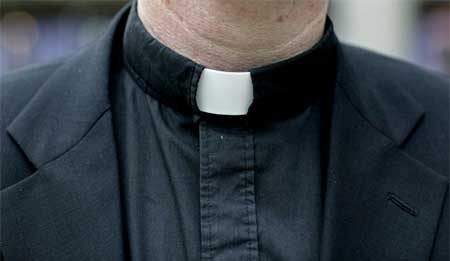
I love and loathe wearing my clergy collar when I’m out and about in public. I love the way it forces me to act like a Christian and the ways in which the faith breaks out from the walls of the church. And I loathe the awkward encounters it produces and the times in which I am compelled to defend the church from her detractors.

More often than not I don’t give much thought to what day I wear the collar or where I will be.

And sometimes I wish I was smarter about it.

When the time came for my second COVID vaccination shot I drove over to an abandoned department store and waited in line with hundreds of other people from the community. And it was only after I received the shot and sat socially distanced from the aforementioned crowds did I realize that I was wearing the collar.

And what made me realize my attire was the line that started to develop right in front of me of individuals who mistook me for a Catholic priest and asked if I would hear their confession.

Paul writes to the church in Corinth: “We are ambassadors for Christ, since God is making his appeal through us.” We, therefore, represent Christ and his church to those outside the church; we are strangers in a strange land.

And yet, with the privatization of faith, with faith often being something we do on Sundays and Sundays alone, there’s little reason to concern ourselves with ambassadorship. Unless we wear a cross around our necks, or a white collar around our throats, no one might ever know of our discipleship.

But then Paul has the nerve to remind us that some people will never see God except through us and the ways in which we exist in the world.

I have the benefit of representing the church not only because I am the pastor of one, but also because I walk around with my clergy collar. And when I dress that way I am forced to act like a Christian whether I want to or not. It is a constant and ever-ringing reminder that I am called to act, think, live, speak, and behave like a Christian.

And, though it pains me to admit, sometimes I need to wear the collar in order to live out my faith. 

Without it hanging around my neck it is all too easy to fade in among the crowd and pretend like I’m not an ambassador for anything but myself.

So when I sat in the post-apocalyptic department store and the line developed in front of me, I listened to each person rattle off their sins. I watched their eyes while they offered their pleas for pardon and assurance. I wanted to be like everyone else minding my own business. I wanted to flip through my phone for the required ten minutes of observation and then leave. But instead, I handed over the goods to each of my fellow Christians: “In the name of Jesus Christ, you are forgiven.”

Does that make me a better Christian than other Christians? Definitely not. “Reluctant” doesn’t do justice to the way I felt that day. And sadly, I know that, in large part, the only reason it happened and the only reason I responded was because of my outfit.

Which makes me wonder: What would it be like if all Christians in all places wore little white tabs around our necks? I mean, scripture does talk about “the priesthood of all believers.” Imagine how different the world would be if each and every Christian walked around knowing that everyone else had certain expectations about who we are and what we do.

It might just be the difference that makes all the difference. 

Don’t Be A Jerk

This week on the Strangely Warmed podcast I speak with Wayne Dickert about the readings for the Fourth Sunday of Lent [C] (Joshua 5.9-12, Psalm 32, 2 Corinthians 5.16-21, Luke 15.1-3, 11b-32). Wayner is the pastor of Bryson City UMC in Bryson City, NC. Our conversation covers a range of topics including fresh expressions, summer internships, stones, dis-grace, mighty waters, praying by listening, new creations, ambassadors for Christ, prodigals, and Robert Farrar Capon. If you would like to listen to the episode or subscribe to the podcast you can do so here: Don’t Be A Jerk