Devotional – Luke 9.35


Devotional

Luke 9.35

Then from the cloud came a voice that said, “This is my Son, my Chosen; listen to him!”
Weekly Devotional Image

When I was in seminary we had all sorts of assignments that were designed to get us engaged with scripture. When I took a class on the gospel according to Mark, I was required to read all 16 chapters out loud, in my spare time, at least once a week. When I was learning about biblical Greek, I was tasked with memorizing the Lord’s Prayer in Greek and I would mutter it under my breath everywhere I walked on Duke’s campus. And when I was enrolled in a class on the art of preaching, I had to work with a group to come up with a strange and exciting way to bring a scriptural text to life.

My group broke up parts of the worship service; one person would do the call to worship, one person would lead the rest of the class in singing a few hymns, one person was responsible for all of the prayers, and I was assigned the “sermon” section. Rather than waxing lyrical about the particular text (Jesus’ Transfiguration) we agreed that I should just retell the story in an exciting and dynamic way.

I prayed over the text during the days leading up to the worship service and decided that I would tell the story of Jesus’ Transfiguration from Peter’s perspective, from the future looking back on the incredible event. Like a lot of group of assignments, it felt like everything was just thrown together, but we were confident that God could make something out of our worship.

Transfiguration-3

When the day of the assignment arrived, everyone in the group nailed their respective parts and I eventually had to stand before the gathered class and give my rendition of the Transfiguration. As I went on and on as an older Peter remembering the past, I could tell that the class was starting to lose interest, so I started elevating my volume and delivery. I began building the story up through a crescendo until that pivotal moment when Jesus was clothed in white and everyone in the room went wide eyed. I, at first, thought that my command over the scripture had blown the class away, but I soon realized what had happened: While I was talking, one of my peers had slowly started to dim the lights in the room until it was rather dark (I was so focused on what I was saying that I didn’t even notice it). But then at the exact moment I described the dazzling whiteness of Jesus’ garment, she turned on the projector and I started to glow.

Transfiguration Sunday is an important event in the liturgical calendar as we bask in the glory of Christ right before we enter the season of Lent on Ash Wednesday. Important for us is a willingness to be knocked back by the dazzling power of Jesus’ life and work. We take the time to be blown away, just like Peter was, by how God’s love really knows no bounds.

This week, as we prepare to celebrate the Transfiguration, let us look for moments where God’s glory shines in our midst. We might see it in a perfect sunset, the laughter of a child, or in the still small silence of prayer. And whenever it happens, let us give thanks for the glory of the Lord.


Devotional – Luke 4.15


Devotional:

Luke 4.15

He began to teach in their synagogues and was praised by everyone.

Weekly Devotional Image

Having the favor of the people can turn on a dime. I have known too many beloved leaders in the community who took one step too far and then lost the popularity and support they once held. Preachers, politicians, and professionals alike are often at the whim of the people they serve. Jesus was widely respected and praised by everyone when he first initiated his ministry, but was then run out of town when he claimed that the scripture was being fulfilled in him. Likewise, Martin Luther King Jr. was revered and praised for the kind of prophetic proclamations he made, but it ultimately led to his assassination.

A few days ago, I was asked to speak at the community Martin Luther King Jr. service. At first I felt honored by the request, but then I felt terrified. How in the world can I possibly do justice to the man whom I have admired most of my adult life? How can I find the right words to pray in memory of a preacher who I strive to emulate on a weekly basis? How can I speak a word of hope and truth while so many people are still being persecuted for the color of their skin?

But then I remembered a few words that Martin Luther King Jr. once said; words that Jesus similarly uttered in the garden of Gethsemane: “I just want to do God’s will.”

Whatever we do in our lives, it should have less to do with what we think people will think, and more to do with striving to seek God’s will in our lives. Rather than sugarcoat messages of hope, we should continually be pushed to seek justice for the many ways we have failed to love our brothers and sisters.

download (1)

I end this devotional with a prayer from Martin Luther King Jr. Let us use these words this week to faithfully pray for God to move among us and transform the world.

“Thou Eternal God, our of whose absolute power and infinite intelligence the who universe has come into being, we humbly confess that we have not loved thee with our hearts, souls, and minds, and we have not love our neighbors as Christ loved us. We have all too often lived by our own selfish impulses rather than by the life of sacrificial love as revealed by Christ. We often give in order to receive. We love our friends and hate our enemies. We go the first mile but dare not travel the second. We forgive but dare not forget. And so as we look within ourselves, we are confronted with the appalling fact that the history of our lives is the history of an eternal revolt against you. But thou, O God, have mercy upon us. Forgive us for what we could have been but failed to be. Give us the intelligence to know your will. Give us the courage to do your will. Give us the devotion to love your will. In the name and spirit of Jesus, we pray. Amen.”

Christmas Eve – Extra(Ordinary)

Luke 2.1-14

In those days a decree went out from Emperor Augustus that all the world should be registered. This was the first registration and was taken while Quirinius was governor of Syria. All went to their own towns to be registered. Joseph also went from the town of Nazareth in Galilee to Judea, to the city of David called Bethlehem, because he was descended from the house and family of David. He went to be registered with Mary, to whom he was engaged and who was expecting a child. While they were there, the time came for her to deliver her child. And she gave birth to her firstborn son and wrapped him in bands of cloth, and laid him in a manger, because there was no place for them in the inn. In that region there were shepherds living in their fields, keeping watch over their flock by night. Then an angel of the Lord stood before them, and the glory of the Lord shone around them, and they were terrified. But the angel said to them, “Do not be afraid; for see – I am bringing you good news of great joy for all the people: to you is born this day in the city of David a Savior, who is the Messiah, the Lord. This will be a sign for you: you will find a child wrapped in bands of cloth and lying in a manger.” And suddenly there was with the angel a multitude of the heavenly host, praising God and saying, “Glory to God in the highest heaven, and on earth peace among those whom he favors!”

christmascandle

Merry Christmas! O what a time to be gathered together. Christmas is just special. The way we decorate our homes with lights and manger scenes. The presents all piled up under the trees. The advent calendars filled with mediocre pieces of chocolate.

It’s hard not to get nostalgic and reminiscent during the holidays. When you pull out the favorite ornament, you remember your grandmother who crafted it with care. When you see the cracked serving platter you remember the uncle who had a little too much nog that one year and dropped it. When you finally plug in the lights on the front of the house, you remember all the years your father mumbled under his breath as he struggled to untangle all the cords.

Christmas is the best. Among the decorations, and the songs, and the gifts, we are reminded of the great story of Jesus’ birth. This is a story we have told again and again to the point that I bet you know all the details….

Joseph went from the town of Nazareth in Galilee, to the city of David called ­­­Bethlehem. He went there to be registered with Mary, to whom he was engaged and was expecting a child. And she gave birth to her firstborn son and wrapped him in bands of cloth, and laid him in a manger, because there was no place for them in the inn.

What a story, but it could have gone like this…

Mary sat in the uncomfortable airport lounge and could not believe that she could actually no longer see her feet. Everyday her body was changing with new movements, sounds, and smells. She found herself wishing for an easier pregnancy, feet that would stop swelling, and a baby that would stop kicking her in the side every time she fell asleep.

Mary was thankful for Joseph, how much he doted on her over the last 9 months, but if he made one more comment about how beautiful she looked she was going to punch him in the face. “I know I look like a cow!” she would say, “stop pretending that I’m something that I’m not.” Mary blamed the outbursts on the hormones, but sometimes it just felt nice to speak her mind.

She sat in the airport lounge, and couldn’t believe she had agreed to travel while pregnant. Joseph had been initially suspicious of the pregnancy, but he was a good man and stuck by her side. And here they were, waiting to get on the plane, and it felt like people’s eyes were magnetized to her belly.

Is it a boy or a girl?” someone asked for the thousandth time. Mary turned to her right and tried to return the smile, but her sarcasm got the better or her, and she said, “We’re just hoping it’s a human!

Are you going to try natural child birth?” someone asked for the thousandth time. Mary turned to her left and tried to return the smile, but declared, “That’s frankly none of your business!

Finally, a woman from the airline announced that anyone with medical needs could begin boarding the plane. “One of the rare perks…” thought Mary as she pushed herself up from the seat. She wobbled over to the gate like a penguin when an older woman walked up with her hand outstretched to rub Mary’s belly. Joseph quickly jumped in front to stop the arm from making contact and instead put out his arm to on a direct course to the woman’s abdomen and said, “How would you feel if a stranger tried to rub your belly?

Mary’s seat on the airplane felt smaller than usual and, try as she might, she couldn’t sleep. Joseph sat next to her with his earmarked copy of What To Expect When You’re Expecting open to the section on child-birth. And Mary cringed when she thought about what her body would be doing in the not too distant future.

By the time they finally landed, stood in line for the rental car, and finally made it out of the airport, Mary was exhausted. Her feet felt like flippers, and she was starting to feel what she thought were contractions, but she was determined to believe it was something else.

As they drove through the empty city streets late that night, the feeling grew worse and more regular until it came with such suddenness that Mary yelled at Joseph to pull the car over. In the dimly lit alley with cats meowing behind cardboard boxes and passersby ignoring the scene right in front of them, Mary gave birth to a baby boy, wrapped him in her fiancés sweater, and grinned from ear to ear.

All the pain she had felt, all the fear of how much her life would change, all the frustrations with strangers and inappropriate comments started to fade away into the darkness. Instead she saw her little baby as the light of the world. In him she saw a better and brighter future. In him she knew the world would be turned upside down. And she named him Jesus.

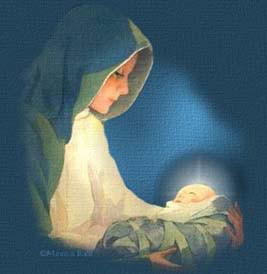
mary_and_baby_jesus

We know the story. We hear it year after year. We see it portrayed by children in church productions, and on the front lawns of countless homes. Mary and Joseph traveled to Bethlehem because the emperor believed that everyone needed to be registered. When they arrived there was no room at the inn, so Mary had her baby and placed him in a manger.

The text from Luke, rather than romanticizing the poverty of Mary and Joseph, invites us to see them as people much like us. The details are lacking and the narrative flows in a way that feels rather ordinary. Mary and Joseph were just two people trying to make their way in the world, like a couple traveling during the holidays. They were normal people; people who felt the pressures of the world and the judgments of others; people who were squeezed by rising taxes and governmental expectations; people who were weary from a variety of struggles including the fear of childbirth; people who were badly in need of hope.

And, as God would have it, the hope they so desperately needed came to them that night as a baby. In the ordinary ways of the world, something extraordinary happened. Jesus, the light of the world, was born to that struggling couple surrounded by the most ordinary of circumstances and changed the world forever.

The baby was extraordinary, God incarnate, capable of miracles and filled with Messianic hope. The baby, wrapped in swaddling clothes, God in the flesh, was born to guide the world in the ways that lead to life.

We are like Mary and Joseph and Jesus was born to us and for us. The story takes places in the ordinary but makes our lives extraordinary. So often we hear about how Jesus’ birth changed the cosmos and the very history of the world that we forget about how this wonderful and precious moment actually changed our individual lives as well. It changed us, people who are trying to understand our ordinary lives in light of the extraordinary news that God came as a baby for us.

If you haven’t spent much time in the Bible, this is how it works. If you haven’t experienced much of God’s presence, this is how God works. The extraordinary arises within the ordinary. The heavens break forth in the middle of a moment here on earth. What we usually see as normal and commonplace is often the realm of God’s marvelous work among us.

If you want to know God, you don’t have to go off on some high mountaintop, you don’t have to sink deep into the recesses of your ego. You just have to be in a place like Bethlehem, or an airport, or a rental car, or a church. You just need to be in the midst of trying to make your way in the world, getting along as best you can with what you’ve got. That’s when God loves to show up and change our lives forever.

When Jesus was born to Mary and Joseph the ordinary became extraordinary. In that tiny baby they would come to discover what it means to love God and neighbor in new and radical ways. In that tiny baby they would have their sins forgiven and salvation presented. In that tiny baby they would finally understand how much God loved them.

God loves to show up in the ordinary things of life. God shows up in the bread and juice offered to us at the table without cost. God shows up in the flicker of a flame as we sing silent night together. God shows up in the cry of a baby who came to change the world.

God shows up and makes our ordinary lives extraordinary. What a gift.

Merry Christmas.

gifts of god

Devotional – Luke 1.52

Devotional:

Luke 1.52

He has brought down the powerful from their thrones, and lifted up the lowly.

Weekly Devotional Image

Some sermons stick with us, while others fade away. I can remember interactive sermons from the church where I grew up that required congregational participation for the message to hit home. I can remember specific lines from the church I attended in college that continued to resonate in my relationships and activities. And I can definitely remember a preacher from seminary who connected the hymns in worship with the sermon better than anyone else.

After preaching steadily for the last few years, I have noticed how much I miss listening to sermons. I enjoy the art of crafting words to proclaim God’s Word in worship, but I also need to have words preached toward me as well. I will often listen to, or read, sermons online but they are no substitute for the depth of experiencing a sermon in worship.

Last advent, Clayton Payne, one of my clergy peers from Staunton, preached for a community advent service. I served as the liturgist for the service, welcoming the congregation, announcing the hymns, praying when necessary, and introducing the speaker. And then Clayton walked up in to the pulpit and brought the Word.

He preached from Mary’s Magnificat, Luke 1.46-55, a song of praise that she delivered after meeting with Elizabeth. The beginning of the sermon was striking because Clayton specifically confronted how joyful Christmas is for us, and how Mary’s song should really put us in our place. Mary proclaims that God will bring down the powerful from their thrones, and lift of the lowly. Clayton then made it very clear that most of us are not the lowly that God will be raising up. We who rest in comfort, we who have presents piled under the Christmas tree, we who always know that we will have another meal, are like the powerful that God needs to bring down from our thrones of privilege.

I remember thinking that Clayton was mighty brave for preaching such a convicting sermon, and then I realized how right he was. Christmas should be a time of great joy and celebration, but it should also be a time when we take a hard look in the mirror and recognize our place of privilege. The words of scripture around the first Christmas are filled with hope for the lowly, but they are also filled with terror for the powerful.

the-virgin-mary-cared-for-her-child-jesus-with-simplicity-and-joy-elizabeth-wang-

Some sermons stick with us, while others fade away. Though it still makes me uncomfortable, I am grateful for Clayton’s words that helped me to see another angle of the great story of God coming to change the world.

This week, as we prepare for Christmas, let us reflect on the sermons from the past that have stayed with us. Let us give thanks to the preachers who faithfully proclaimed God’s Word. And let us remember our place in the story.

Devotional – Luke 1.78-79

Devotional:

Luke 1.78-79

By the tender mercy of our God, the dawn from on high will break upon us, to give light to those who sit in darkness and in the shadow of death, to guide our feet into the way of peace.

Weekly Devotional Image

It was on my first day in seminary when a preacher said, “We spend so much time talking about Jesus that we forget to talk to Jesus.” It was a convicting truth that would come to fruition over the following months and I knew I needed to do something about it. Days would pass and, though I had been deep in scripture for particular class, I realized that I had not taken the time to pray to the Lord who was being revealed to me in the scripture. It was at that point when I committed to attend Morning Prayer in Goodson Chapel with all of the Anglicans and Episcopalians.

I was one of the token Methodists with a few of my denominational colleagues and we tried to keep up with our peers as they bowed their heads at particular times during the liturgy, as they made the sign of the cross across their bodies, and as they drank from a common cup when we had communion. It was difficult to assimilate during those first few weeks; many of the people in attendance did not even need to look at a Book of Common Prayer to say all of the right words at the right time. However, after a few months passed, I started to realize that I no longer needed to look at the book because the words and habits of Morning Prayer had sunk deep into my soul.

books-of-common-prayer

I don’t remember when it happened, but one morning while we were proclaiming the words from “The Song of Zechariah” (Benedictus Dominus Deus) the young man next to me changed some of the words. Instead of speaking in the plural, he spoke individually: “By the tender mercy of my God, the dawn from on high will break upon me, to give light to me as I sit in darkness and in the shadow of death, to guide my feet into the way of peace.” His willingness to proclaim God’s faithful words for himself, has stuck with me ever since.

During this season of Advent, it is good and right for us to recognize that God made good on his promise “to give light to those who sit in darkness and in the shadow of death” when he came in the form of flesh as a baby in a manger. We spend these weeks patiently waiting, just like the Israelites did so long ago, for the light that will shine in the darkness. But this isn’t just something that God did in the past; every Advent is an opportunity to embark on a new way of life where God’s tender mercy will guide our feet into the way of peace.

This week, let us take time to proclaim the words from The Song of Zechariah personally. Whether in the morning when we wake up, or at night before we fall asleep, or whenever we feel called to during the day, let us proclaim: “By the tender mercy of my God, the dawn from on high will break upon me, to give light to me as I sit in darkness and in the shadow of death, to guide my feet into the way of peace.”


Why We Do What We Do: Give – Sermon on Luke 12.22-34

Luke 12.22-34

He said to his disciples, “Therefore I tell you, do not worry about your life, what you will eat, or about your body, what you will wear. For life is more than food, and the body is more than clothing. Consider the ravens: they neither sow nor reap, they have neither storehouse nor barn, and yet God feeds them. Of how much more value are you than the birds! And can any of you by worrying add a single hour to your span of life? If then you are not able to do so small a thing as that, why do you worry about the rest? Consider the lilies, how they grow: they neither toil nor spin; yet I tell you, even Solomon in all his glory was not clothed like one of these. But if God so clothes the grass of the field, which is alive today and tomorrow is thrown into the oven, how much more will he clothe you – you of little faith! And do not keep striving for what you are to eat and what you are to drink, and do not keep worrying. For it is the nations of the world that strive after all these things, and your Father know that you need them. Instead, strive for his kingdom, and these things will be given to you as well. Do not be afraid, little flock, for it is your Father’s good pleasure to give you the kingdom. Sell your possessions, and give alms. Make purses for yourselves that do not wear out, an unfailing treasure in heaven, where no thief comes near and no moth destroys. For where your treasure is, there you heart will be also.

church

The receiving line following worship is vastly underrated. A lot of people make their way out of the sanctuary as quickly as possible, whereas others will wait in line just to ask that one question that popped up during the service. It never ceases to amaze me that some of the most profoundly theological and spiritual moments that take place at St. John’s happen in that line after worship on Sunday mornings.

This month’s sermon series “Why We Do What We Do” has its roots in those conversations. Week after week I will hear some of you wonder about the purpose of an acolyte carrying in the flame for worship, or you ask about the value and importance of having a time for offering and collection, or you question why we talk so much about bible study, or you remark about how difficult it is to pray. If you’ve ever left church with a question on your heart and mind, this sermon series is for you.

Today we will explore why we give.

I was in my final year of seminary when my friend asked me to preach at his church. He had labored for the past few years as a full time student and full time pastor at the same time and needed someone to fill-in. He had received tickets to a Carolina Panthers football game, though I was forbidden from telling his church that’s where he was instead of with them on a Sunday morning for worship.

When Lindsey and I arrived at the tiny United Methodist Church in the middle of nowhere North Carolina, I was a little nervous about leading worship for a congregation that I had never met, but I figured God would show up even if my sermon fell flat. The sanctuary was tiny, with white walls and bright florescent lights hanging from the ceiling, there was a cross above the altar that was draped with an American flag, and it was so quiet that I was worried we had arrived at the wrong church.

However, the lay leader was waiting by the door and greeted us as if we were first-time visitors, only to later realize that I was supposed to be the pastor for the day. He quickly led me into the sanctuary, gave me a quick and grand tour, and then informed me that he was the head usher, liturgist, organist, and treasurer.

From what I remember the service went well, though most of the congregation was utterly bewildered by my academic deconstruction of a prophecy from the book of Daniel (something I thankfully gave up doing that day), and there was an infant who wailed the entire service. I like to think that she loved my preaching so much that it drove her to tears.

When the service ended, I finally had a chance to actually look around at the sanctuary and I noticed a list on the wall behind the pulpit of the hymns for the day, the offering brought in last week, and the deficit regarding the annual budget. There in big numbers for everyone to see was how far away they were from keeping up with their plan, and it was a staggering amount.

On my way out I thanked the lay-leader/usher/organist/treasurer for the opportunity to preach and asked why they felt the need to display their deficit for everyone to see every Sunday. I’ll never forget how casually he shrugged his shoulders and said, “Guilt is the only way to get them to give.

page44_picture0_1338615554

Talking about giving, and in particular financial giving is about as awkward as it gets in the church. Money, in general, is one of the taboo subjects of normal conversations. We don’t ask how much someone makes in a year, even if we are curious. We avoid asking for financial help because it means admitting too much vulnerability. But then if we take the taboo subject of money, and put it together with religion (or the church) we have the double whammy of things we’re not supposed to talk about.

After all, money and religion are personal and private subjects aren’t they? What I do with my money and what I do with my faith should be of no concern to anyone else other than myself…

To talk about giving in the church, to address the subject of why we give, we have to get personal. It would be shameful for me to stand here each and every week calling for the gathered body to give their gifts to God if I, myself, was afraid to talk about my own giving. If we want to be a church of gifts, then we must first be a church of vulnerability and then conversion.

Before I became a pastor, I rarely gave to the church. I have vivid memories of sitting in church throughout my adolescence, and feeling waves of guilt as I passed the offering plate over my lap to whomever else was in the pew. It helped that I was a teenager and had no money to give in the first place but the guilt was still there.

By the time I made it to college and seminary, I still attended church but rarely gave to the church. I certainly volunteered my time, led mission trips, and taught bible studies, but giving money to the church was not on my radar.

Then I was appointed here to St. John’s. Now that I had a steady income, Lindsey and I decided to start tithing to the church, and honestly it was really hard. We are a young married couple with debt to the federal government for paying for my seminary education, and we are going to have a baby in April. Yet, we covenanted with God and one another to give 10%. In the first months it was harder than I thought. I would find myself thinking about those thousands of dollars that I could be spending on other things, but we got into the habit and we kept giving.

blog.the.offering

My conversion toward giving did not happen in a big shiny moment, but was a gradual transformation. The more I gave, the longer the habit continued, the easier it became, and my perspective started to change.

Instead of imagining what I could’ve have done with the money I gave to church, I started to tangibly witness and experience what the money I gave was doing for the church and the kingdom.

Giving to the church requires a conversion; it is built on a vision where we recognize how our blessings can be used to bless others. We are not called to give to St. John’s out of guilt, but out of generosity.

As John Wesley once said: “Having, first, gained all you can, and, secondly saved all you can, then give all you can.

We are called to give because we have a shared vision and are invited into the mission of God through the church. Even a seemingly small act of generosity can grow into something far beyond what we could ever ask or imagine – The creation of a community of love in this world. If we act generously, we are helping God build the kingdom here on earth.

However, we should not be expected to give, or feel inclined to give without knowing why or to what we are giving. To just stand before you and say “give give give” prevents us from developing strong relationship with the people and programs we serve. So here are just three aspects of what our church does with our gifts:

At St. John’s we believe in providing meaningful, fruitful, and life changing worship every week of the year. We plan months ahead, connect messages with the music, and look for imaginative ways to respond to God’s love in the world. This means that we have to keep our sanctuary in the best shape possible for the worship of God, and use the great gifts of all involved in the church to make it happen. As a church we regularly welcome first-time visitors to discover God’s love through this place and help to develop professions of faith in Jesus Christ.

At St. John’s we believe in nurturing those in the midst of their faith journeys. We spend a significant amount of time and resources to help disciples grow in the faith and love of God and neighbor. We have numerous classes and opportunities to study God’s Word, but one of the most profound things we offer is weekly Chapel Time to our Preschoolers. Not only do we help to provide a wonderful facility for them to learn and grow, but we also welcome them into this sanctuary every week to learn about God, Jesus, and the Holy Spirit. The Preschoolers discover how much God loves them, and they take those stories home to the families and subsequently teach them about God’s love.

And at St. John’s we believe in witnessing to our faith in service beyond ourselves. We strive to serve those in need through a mosaic of opportunities in order to be Christ’s body for the world. For the first time in a long time we have paid our Apportionments in full to benefit the greater church, and the world. Some of that money goes to pay for clergy healthcare, some of it goes to domestic and international benevolences funds, and a number of other places. Moreover, we are able to provide a tremendous amount of financial resources to SACRA (Staunton-Augusta Church Relief Association) who then distribute the money to acute needs in the local community.

thumb

We give from our blessings to bless others. Whether it’s the people in the pews next to us who gather for worship, the preschoolers who gather to be nurtured and educated, or the countless people in the local and global community who need our help. We give out of generosity, because so much has been given to us.

However I don’t want to make it sound as if giving is the easiest thing in the world, because it does require sacrifice. Living a spiritual life of generosity requires a change of heart, a conversion. It might happen in a moment, or throughout a lifetime of faith, but when the transformation occurs, we become people of generosity.

We all have blessings to offer. Some of us have been blessed by God with incredibly lucrative careers and vocations, God has clothed us with more splendor than Solomon and all his temples, and we can give back to God through our financial giving. Some of us have been blessed by God with powerful relationship skills, God has given us personalities that bring out the best in others, and we can give back to God through our willingness to serve others. And God has blessed all of us with the gift of time, which is the most precious thing we can ever offer to the church and others.

Are we grateful for what God has done for us through this place? Do we appreciate all the blessings we have receiving throughout our lives? Do we want to bless others as we have been blessed?

We give because we have a common yearning for God’s kingdom to reign on earth, and when we give we join a new communion with the people of God. We give because it is the way by which we live out our love toward the church and our brothers and sisters in faith. We give because God first gave to us.

Where our treasure is, there are hearts will be also. Amen

Why We Do What We Do: Worship – Sermon on Luke 24.13-35

Four homilies on why we worship the way we do…

church

Gather

Luke 24.13-24

Now on that same day two of them were going to a village called Emmaus, about seven miles from Jerusalem, and talking with each other about all that had happened. While they were talking and discussing, Jesus himself came near and went with them, but their eyes were kept from recognizing him. And he said to them, “What are you discussing with each other while you walk along?” They stood still, looking sad. Then one of them, whose name was Cleopas, answered him, “Are you the only stranger in Jerusalem who does not know the things that have taken place there in these days?” He asked them, “What things?” They replied, “The things about Jesus of Nazareth, who was a prophet mighty in deed and word before God and all the people, and how our chief priests and leaders handed him over to be condemned to death and crucified him. But we had hoped that he was the one to redeem Israel. Yes, and besides all this, it is now the third day since these things took place. Moreover, some women of our group astounded us. They were at the tomb early this morning, and when they did not find his body there, they came back and told us that they had indeed seen a vision of angels who said that he was alive. Some of those who were with us went to the tomb and found it just as the women had said; but they did not see him.”


The receiving line following worship is vastly underrated. A lot of people make their way out of the sanctuary as quickly as possible, whereas others will wait in line just to ask that one question that popped up during the service. It never ceases to amaze me that some of the most profoundly theological and spiritual moments that take place at St. John’s happen in that line after worship on Sunday mornings. This month’s sermon series “Why We Do What We Do” has its roots in those conversations. Week after week I will hear some of you wonder about the purpose of an acolyte carrying in the flame for worship, or you ask about the value and importance of having a time for offering and collection, or you question why we talk so much about bible study, or you remark about how difficult it is to pray.

For any of you that have left worship with a question on your heart and mind, this sermon series is for you. This morning we begin with “Why We Worship.

Over the last two thousand years, disciples of Jesus Christ have been gathering on a regular basis to praise God. From the crowded upper rooms of the first century, to the ornate and opulent cathedrals of Europe, to the modern gymnasiums and living rooms filled with folding chairs, getting together is what we do as Christians.

I would now like to ask each of you to pull out your bulletin. You will notice that our worship is divided into four parts every week: GatheringProclaimingResponding – and Sending Forth. These four parts have connections with the ancient worship practices of the Israelites, but it can be specifically drawn to the story of the two disciples on the road to Emmaus. Jesus gathers the two men on the road, later he proclaims the scriptures and interprets them, then they respond by having a meal of bread and wine, and after the disciples eyes are opened to Jesus’ presence they are sent to proclaim what they had seen and heard to the disciples. These four parts have their beginnings in scripture, and we relive them each and every week.

When does worship begin? Some would claim that it starts whenever someone stands behind the lectern and starts to speak, but worship actually begins long before the moment we are all sitting in the sanctuary. God is actively involved in gathering us together from the moment we walk out our front door, to the thoughts we have while driving, to the quick and joyful conversations in the parking lot, to the greeting in the narthex and the ushers handing out the bulletins. All of these moments are part of God gathering us, and they all have an effect on the way we worship.

Once we arrive and are present in the sanctuary, God continues to gather us together in our announcements about upcoming activities in the church. It is a time of relating to one another and sharing opportunities about how we can grow in love of God and neighbor. Immediately following the announcements, we have what might be the most important piece of the gathering: preparing our hearts and minds for worship.

Rick will play on the organ for a brief period that we use to help center ourselves for the practice of worship. Worship is practice. We do it over and over to strengthen our spirits for the work of ministry in the world. Then the choir will rise to sing a call to worship, in effect calling us to worship the living God. We have a responsive reading as we center ourselves on the theme for the day, and we start singing our first hymn.

Picking hymns is easily one of my favorite parts of being a pastor. Spending time every week deep in the hymnal humming tunes and praying about which songs best fit with what we will do. And as we sing that first hymn, the acolyte and I will walk into the sanctuary signifying how the light of Christ is here with us in worship, how the light guides us and gathers us together.

By the time I actually make it to the pulpit, God is still gathering us together as we humbly bow and begin to pray as a community. The prayers we offer are a sign of our respect for the people in the pews next to us, as well as a commitment to the world around us. Finally, we gather our gifts of tithes and offerings to present to God (but we will talk more about why we give next week).

This is how God gathers us every week, just like God (in Christ) gathered the two disciples on the road to Emmaus to change their lives forever. So let’s continue letting God gather us for worship…

407025348_640


Proclaim

Luke 24.25-27

Then he said to them, “Oh, how foolish you are, and how slow of heart to believe all that the prophets have declared! Was it not necessary that the Messiah should suffer these things and then enter into his glory?” Then beginning with Moses and all the prophets, he interpreted to them the things about himself in all the scriptures.


After the disciples and Jesus were gathered on the road, after Jesus listened to them ramble on about the things they had seen and heard in Jerusalem, he proclaims the stories of scripture and reinterprets them through his gracious work. But notice, they still do not know who they are talking and walking with on the way.

I will be the first to admit that God’s holy scriptures can be confusing. There’s nothing like a seemingly random assortment of names through a genealogical proclamation that can leave us scratching out heads. But the more we read, the more we interpret how God is still speaking to us through the scriptures, the more it begins to start fitting together.

The second part of our worship is dedicated to proclamation, speaking words about God’s Word. We do this every week by reading from the bible, singing a hymn, and then listening to a sermon. The scriptures are picked according to a list called the Revised Common Lectionary, which compiles a great assortment of readings through a three-year cycle that goes through most of the bible. However, occasionally the scriptures are picked to fit a specific theme (like us using Luke 24.13-35 to talk about worship during this sermon series). We boldly proclaim the words of scripture and pray that somehow or another God can speak through a preacher to interpret these words for our lives today.

The middle hymn of worship is usually picked in reference to the specific text and our connection with it. Today we will sing “Open My Eyes, That I May See” because Jesus’ opened the eyes of the two disciples on the road to Emmaus through the breaking of bread and the sharing of the cup, but we also call on God to open our eyes to how the text continues to speak into our lives right now.

The sermon is a little bit harder to explain, because every preacher (and therefore every sermon) is different. Some can be funny and light-hearted; others are specifically focused on the Good News, whereas others can be more convicting about how we are living as disciples. The point of preaching is to challenge us to make God’s Word incarnate by the way we live our lives; which is precisely why preaching can be so hard to hear, and so hard to do.

This is how we proclaim God’s Word every week, just like Jesus proclaimed the scriptures and interpreted them for the disciples. So let’s proclaim God’s Word in worship…


Sermon:


A one sentence sermon: Whenever we gather in this place to do what we do, we join those first disciples and our eyes are opened to Jesus in our midst. Amen.

712603724d969fe0099b9850dd17303c_f1965


Respond

Luke 24.28-32

As they came near the village to which they were going, he walked ahead as if he were going on. But they urged him strongly, saying, “Stay with us, because it is almost evening and the day is now nearly over.” So he went in to stay with them. When he was at the table with them, he took bread, blessed and broke it, and gave it to them. Then their eyes were opened, and they recognized him; and he vanished from their sight. They said to each other, “Were not our hearts burning within us while he was talking to us on the road, while he was opening the scriptures to us?”


Jesus made it look like he was going to keep walking, but the disciples invited him to stay with them. While they sat at the table together, he took the bread and the cup, gave thanks to God, and gave it to them. Only then did they realize who had been with them the whole time. It was only in responding to the words they heard on the road, in the bread and wine on the table, that Christ became real for them.

The third part of our worship is focused on responding to the proclaimed Word of God. On most Sundays we do this by reaffirming our faith using the Apostles’ Creed, we make a public confession of who we are and what we believe. Other weeks we do something unique and special like last week when we broke off into pairs and prayed for each other. But the best and most faithful response to God’s Word happens when we gather at the table like those two disciples did with Jesus.

Breaking down the multiple elements of responding with Communion demands its own sermon series, but suffice it to say that this holy meal is what being a Christian is all about. We are invited by God no matter who we are and what we’ve done, we confess how we have fallen short of God’s expectations and are forgiven, we share signs of God’s love and peace, and then we feast.

This is how we respond to God’s glory in the church and in the world by feasting at the table, just like Jesus did with those two disciples whose eyes were truly opened. So, let us respond to God’s Word in worship…

Slide-400x400


Send

Luke 24.33-35

That same hour they got up and returned to Jerusalem; and they found the eleven and their companions gathered together. They were saying, “The Lord has risen indeed, and he has appeared to Simon!” Then they told what had happened on the road, and how he had been made known to them in the breaking of the bread.


I’ve always wondered what it must have felt like to be one of those disciples discovering the truth about their encounter from the road. But then I remember that I have had similar experiences: when I see someone come up in line to receive communion with a brilliant smile on their face, I realize that I am catching a glimpse of Jesus. When I witness one of our preschoolers reach out in concern toward one of their classmates, I realize that I am catching a glimpse of Jesus. When I see you greeting one another in love before, during and after worship, I realize that I am catching glimpses of Jesus.

After their incredible and momentous discovery, the disciples ran back to Jerusalem to share all they seen and heard. When we are confronted by God’s incredible power and glory, the only thing we can do is share what it felt like with others in our lives.

The final part of our worship is all about being sent forth into the world. While the notes of the final hymns are still resonating deep in our souls, as we continue to contemplate all we have seen and heard in this place, God sends us out into the world to share what we have experienced. I stand before the congregation and offer a benediction of blessing to go with us as we leave, and then the acolyte carries the light of Christ before us, encouraging us to take Christ’s light out into the world. Lastly, the choir sends us off with one final song, blessing us to be a blessing to others.

This is how we are sent forth from God’s house, just like the disciples ran to tell their friends what had happened. So, let us prepare to be sent forth to be God’s people for the world…

Print

Devotional – Luke 24.45

Devotional:

Luke 24.45

Then he opened their minds to understand the scriptures.

Weekly Devotional Image

Seminary required a lot of reading and writing. Every week our professors would assign readings from book and articles that we would never complete in time in addition to reflective papers on a variety of subjects. At the beginning of each semester you could almost hear the collective groan from the student body with every new syllabus that detailed the amount of work that would be taking place over the coming months.

During my second year I took a class entitled “Greek Exegesis of Mark.” Throughout the semester we would be translating Mark from it’s original language into English and explore the nuances of the grammar. I remember reading the syllabus on the first day and thinking that I was in way over my head. Yet there was one particular requirement on the syllabus that I was really excited about; every week we would be required to read through the gospel of Mark in English.

At the time I realized that I was spending so much time studying God’s Word that I was no longer enjoying and absorbing God’s Word. So each week two of my fellow students and I sat on the steps of Duke Chapel and read the gospel of Mark aloud. Depending on the week we would trade off chapters and until each of us had the chance to read every chapter multiple times.

2014-10-30-10.51.11

I read more grammar and theological works on the gospel according to Mark that semester than I care to remember, but none of them compared to the importance of just reading Mark over and over again. There were insights from theologians that I never would have discovered on my own, but spending time in scripture alone every week truly opened up God’s Word in a way I had yet to experience.

After Jesus’ resurrection from the dead he appeared to the disciples and opened their minds to understand the scriptures. For the first time they were able to begin seeing faithful discipleship through the lens of the resurrection (which makes all the difference). Today we can purchase commentaries and books about the bible to help us understand what’s going on in the verses but nothing can compare to spending faithful time with God’s Word alone. It is important to remember that every time we read a book about the bible we are actually reading someone’s opinion and interpretation; we can only create our own understanding and interpretation from the source itself.

This week let us challenge ourselves to read one of the gospels out loud. Mark is the shortest so it can be finished quickly, but they are all worth exploring on their own. The point is this: the more time we spend in the Word the more we will begin to understand.

Lost and Found – Easter Sermon on Luke 24.13-35

Luke 24.13-35

Now on that same day two of them were going to a village called Emmaus, about seven miles from Jerusalem, and talking with each other about all these things that had happened. While they were talking and discussing, Jesus himself came near and went with them, but their eyes kept them from recognizing him. And he said to them, “What are you discussing with each other while you walk along?” They stood still, looking sad. Then one of them, whose name was Cleopas, answered him, “Are you the only stranger in Jerusalem who does not know the things that have taken place there in these days?” He asked them, “What things?” They replied, “The things about Jesus of Nazareth, who was a prophet mighty in deed and word before God and all the people, and how our chief priests and leaders handed him over to be condemned to death and crucified him. But we had hoped that he was the one to redeem Israel. Yes, and besides all this, it is now the third day since these things took place. Moreover, some women of our group astounded us. They were at the tomb early this morning, and when they did not find his body there, they came back and told us that they had indeed seen a vision of angels who said that he was alive. Some of those who were with us went to the tomb and found it just as the women had said; but they did not see him.” Then he said to the, “Oh, how foolish you are, and how slow of heart to believe all that the prophets have declared! Was it not necessary that the Messiah should suffer these things and then enter into his glory?” Then beginning with Moses and all the prophets, he interpreted to them the things about himself in all the scriptures. As they came near the village to which they were going, he walked ahead as if he were going on. But they urged him strongly, saying, “Stay with us, because it is almost evening and the day is now nearly over.” So he went in to stay with them. When he was at the table with them, he took bread, blessed and broke it, and gave it to them. Then their eyes were opened, and they recognized him; and he vanished from their sight. They said to each other, “Were not our hearts burning within us while he was talking to us on the road, while he was opening the scriptures to us?” That same hour they got up and return to Jerusalem; and they found the eleven and their companions gathered together. They were saying, “The Lord has risen indeed, and he has appeared to Simon!” Then they told what had happened on the road, and how he had been made known to them in the breaking of the bread.

the-road-to-emmaus-daniel-bonnell

I have been a Christian for as long as I can remember.

I was baptized at 19 days old and church has been there for me my entire life. As a child I loved hearing the incredible stories from scripture: Jesus walking on water, David defeating Goliath, Moses moving through the Red Sea. Church was an exciting place that was unlike anything else I did. In worship I learned how to listen, I learned what it meant to sing my faith, and I found tremendous joy in receiving communion.

Of course, as I grew older, the perfect glow of church began to fade away. We would learn about the importance of love and forgiveness during church, and then I would see a man screaming at his wife in the parking lot after worship. We learned about God’s kingdom as a rich and diverse new reality, but I only saw privileged white people in church. We heard about how important it was to keep the faith, but I started to have doubts about what scripture revealed.

Like most Christians, I have had my doubts. I have been kept awake late at night wondering about the divine, praying for God’s presence to be made known in my life and in the lives of others, and hoping for something to cleanse my unease.

Yet, it is almost always in the midst of a question, at the precise moment that I feel most lost, that God shows up and finds me.

The two disciples on the road were filled with doubt. We don’t know anything about the two who were walking to Emmaus; they weren’t famous, and they weren’t part of the 12 – they were just common, ordinary disciples like you and me.

I can’t even begin to imagine what it must have felt like to be walking on that road on that day so long ago. They had followed Jesus throughout Galilee and heard him proclaim the Good News, they had seen him heal the sick and feed the hungry, but just days previous they saw him betrayed, arrested, and murdered.

They might have known where they we walking, but I bet they felt lost. They had put all their hope and faith in a man who was buried in a tomb and now his body was missing. They thought the world was going to change, but the dirt under their feet felt even worse than before.

Suddenly, Jesus found them on the road and he went with them. Yet, they did not recognize the Lord in their midst. “What are you two talking about?” he asked. To which one of them replied, “Have you been living under a rock? How could you not have heard about the things that have taken place in Jerusalem?”

Jesus asked, “What things?

Immediately they began to explain all that they had seen and heard. “Jesus of Nazareth, a mighty prophet, was betrayed and sent to his death. We had hoped that he was the one who would save us. And now three days have passed and some of the women from our group went to his tomb and they say his body was missing and angels appeared, but no one has seen him.”

Jesus then began interpreting the scriptures to the men on the road, from Moses through the prophets, he showed how what had come to pass was part of God’s great cosmic plan. And yet, they still did not recognize him.

Later, as they came near Emmaus, Jesus kept walking on but the men invited him to stay. When they sat down at a table to eat, Jesus took bread, blessed it, broke it, and gave it to them. With the bread in their hands their eyes were opened and they finally understood who had been with them the whole time and he vanished.

All of the sudden everything started to make sense, the encounter on the road, the strange question, the interpretation of scripture, and even the holy meal. “Were not our hearts burning within us while we were together with the Lord?” Immediately they went back to Jerusalem to declare the good news: “The Lord has risen indeed!

resurrection-2

On Friday at noon I took the cross from our sanctuary, placed it on my shoulders and started walking around Staunton. When I did the same thing last year and I was largely ignored. For hours I walked through our community and most people averted their gaze, they tried to pretend that there was no cross for them to see.

This year, the opposite happened. People would honk their horns as they passed, they would roll their windows down and give me a thumbs-up. I saw familiar faces throughout my journey and felt glad for the sense of community that I experienced.

I carried the cross around because I want to bring the Lord to people outside of church. If we continue to falsely assume that we can only experience God’s grace in a place such as this, it will never grow and give life to other people.

Anyway, I was bearing my cross through Staunton and I was walking along the sidewalk on Beverly Street when I was stopped. In front of me stood an older woman with a large shawl draped around her shoulders and she kept staring at the cross. For a period of time that felt uncomfortably long we just stared at one another without saying anything until I saw her lip quiver and she asked a question that I was not expecting: “What will happen to me when I die?

I stood there with the cross digging into my shoulder and I felt the spirit of God fall upon us in that holy moment. Instead of giving some densely theological answer, and instead of evading the depth of her question I told her what I believed: “When we die God will take care of us. I don’t know what it will feel like or what we’ll experience, but the God that has been revealed to me will take care of us.

What kind of faith do you have?” she asked.

I explained that I am a pastor in the United Methodist Church, but above all I am a disciple of Jesus Christ.

Tell me about him,” she said.

So I did. I started with Christmas and the story of God coming in the form of flesh as a baby to be in the world with us. Jesus grew and called people to know that they were loved regardless of their life circumstances. This Messiah went out and found the people who were ignored by the rest of the world and he gave them value. He preached, healed, and he loved. And then Jesus was betrayed, arrested and killed on a cross for everyone to see, and three days later he was raised from the dead. The beauty of what Jesus did is that he died so that we might live. Jesus died for you, and for me, so that we might live.

Tears began to well up in her eyes, she reached forward to hug me, thank me, and before I knew it she was gone.

I can’t tell you anything about her other than our brief interaction, but to me it felt like she was lost and then Jesus found her in the cross and in the story. Whatever she had going on in her life suddenly fell away and she felt valued and loved by the one who came to live and die for us.

Jesus came to the disciples on the road, and not the other way around. They were lost in their thoughts and doubts and were incapable of recognizing Jesus in their midst. Only through the scriptures, and through the bread and wine did Jesus reveal himself to them, he demonstrated what his life had been all about: his resurrection means our resurrection.

Those of us here in church on Easter Sunday are in the same position as those two disciples on the road. Jesus has come to us here in this place through the reading of scripture, and in a few moments we will encounter the risen Christ through the bread and cup at the table.

I don’t know what you’ve got going on in your life. Most of us are pretty good about shielding away and hiding our doubts and insufficiencies. We turn on the smiles when we need to, and we know what we have to do to keep afloat. I don’t know what you might be wrestling with right now, or even if you’re wrestling with anything at all. But I do know this: If you took the time to come to a church on Easter, you believe in something more than yourself, even if its very faint.

road_emmaus

My faith is not perfect, and there are days that I struggle. I’ll be driving in my car on the way home from the hospital after praying with a family before a desperate surgery, or I’ll be standing above a casket with dirt still clinging to my fingers after saying goodbye to a faithful friend, or I’ll be reading the news online and be bombarded with never-ending negativity. There are many days that feel as if I’m walking to Emmaus all on my own with questions in my head just like those two disciples so long ago. But that’s when Jesus shows up.

Jesus isn’t looking for people with perfect faith and blind trust. God does not want puppets that he can string along. If Jesus is looking for anyone, it’s the people who are walking toward their own Emmaus. He’s looking for people like you and me who have questions.

Faith is an exciting thing not because it provides all the answers to our questions, but because it encourages us to ask questions in the first place. 

Jesus’ resurrection from the dead is not something that can be explained from a pulpit or from a book, it defies all logic and rationality, it exceeds our expectations, and often leaves us scratching our heads. But that’s the point. It is beyond anything we could ever imagine. Only the Lord who gives us life could have come up with something so incredible to change the world.

The resurrection is real, Christ appeared to the two on the road and revealed himself through the wonders of God’s word and holy table. God died in Christ on a cross and defeated death so that we might live with him in the kingdom; Christ died so that we might live.

The Lord is risen. God is on the move in the world seeking out those who are lost. God loves showing up in the words of scripture, in the bread and wine of communion, in chance encounters on the road, and in a variety of places to help find those of us who are lost.

Do we feel our hearts burning within us while we praise the living God? Do we feel the blessed holiness that comes with receiving this meal broken and shed for us? Are we ready to be found by the living God while we make our way to Emmaus?

The good news of Easter is that Christ’s resurrection has made our resurrection possible. But until that day when we feast with him at his heavenly banquet, I think the good news can be found when we feel lost on the old roads of life and Jesus finds us. Amen.


The Shadow of the Cross – Good Friday Homily on Luke 23.32-46

Luke 23.32-46

Two others also, who were criminals, were led away to be put to death with him. When they came to the place that is called The Skull, they crucified Jesus there with the criminals, one of his right and one on his left. Then Jesus said, “Father, forgive them; for they do not know what they are doing.” And they cast lots to divide his clothing. And the people stood by, watching; but the leaders scoffed at him, saying, “He saved others; let him save himself if he is the Messiah of God, his chosen one!” The soldiers also mocked him, coming up and offering him sour wine, and saying, “If you are the King of the Jews, save yourself!” There was also an inscription over him, “This is the King of the Jews.” One of the criminals who were hanged there kept deriding him and saying, “Are you not the Messiah? Save yourself and us!” But the other rebuked him, saying, “Do you not fear God, since you are under the same sentence of condemnation? And we indeed have been condemned justly, for we are getting what we deserve for our deeds, but this man has done nothing wrong.” Then he said, “Jesus, remember me when you come into your kingdom.” He replied, “Truly I tell you, today you will be with me in Paradise.” It was now about noon, and darkness came over the whole land until three in the afternoon, while the sun’s light failed; and the curtain of the temple was torn in two. Then Jesus, crying with a loud voice, said, “Father, into your hands I commend my spirit.” Having said this, he breathed his last.

8812217-good-friday

Religious people aren’t supposed to fail, or suffer, or get arrested. They’re not supposed to hang out with vagrants, and criminals, and failures. Religious people are supposed to live good lives, surrounded by good people, doing good things. They’re supposed to have life all figured out, to be content, and to be filled with joy.

Jesus was beaten, dirtied, and was marched to his death with two criminals. While they walked along the way, the few disciples who had yet to abandon him must’ve lost all their hope; their Messiah was carrying a cross to the place called The Skull where he was to be crucified. Yet while the crowds screamed and threw their complaints into the air, Jesus calmly forged ahead with his eyes on the ground and the cross digging into his shoulder.

When they arrived on the hill, the guards nailed Jesus and the two thieves to their crosses and hung them in the air. The crowds must have grown larger the closer they came to the place and they hurled insults at the man in the air, ridiculing him for all that he had said and done. With the chaos erupting around him, Jesus bowed his head to speak with his Father: “Forgive them, for they don’t know what they’re doing.” 

In the entirety of the Christian year, Ash Wednesday and Good Friday are the least attended services. Christmas Eve and Easter are big days in the life of the church because we celebrate the incarnation and Jesus’ resurrection from the dead. But Ash Wednesday and Good Friday are all about death; “You are dust and to dust you shall return,” “Father, into your hands I commend my spirit.”

We don’t want to talk about death, we don’t want to talk about our own suffering, we don’t want to “bring other people down.

One of the things that surprises me most about funerals is our inability to confront death. When I preside over services of death and resurrection I am tasked with talking about, and affirming, the one thing that most people are afraid of: death being real. The juxtaposition between a funeral and the reception afterwards is sometimes nauseating.

Here in the sanctuary we speak the truth about death, we begin the process of grieving, we talk about what the person did with their lives and we acknowledge the void we now feel. But then I go to a reception and everyone wants to talk about everything else: March Madness brackets, the latest movies, new restaurants, and children’s activities. I’m not saying that we need to wallow in the sadness of death, but it is clear that we want to avoid death because it stinks.

goodfriday

By the time Jesus made it to the cross, the disciples had all cleared out. They had abandoned him for the same reasons that we avoid death today, it is too frightening, too heavy, and too sad.

The people began to mock the messiah in the tree: “he saved others; let him save himself if he really is the Messiah!” The soldiers taunted him with sour wine and scream out: “If you are the King of the Jews, save yourself.” And above his head they hung a sign containing his conviction: “This is the King of the Jews.”

Verbal attacks kept pouring in from the ground, but the scene now moves to the air. One of the criminals rebuked Jesus: “If you are the Messiah, save yourself and us!” But the other criminal spoke up, “we are getting what we deserve, but this man has done nothing wrong. Jesus please remember me when you come into your kingdom.

Jesus replied, “Truly I tell you, today you will be with me in paradise.

For the next three hours darkness came over the whole land and the temple curtain was town in two. Then Jesus, crying out with a loud voice, said, “Father, into your hands I commend my spirit.And he died.

For a long time I always inserted myself into the story as the forgiven criminal. I believed that even at the end I would’ve understood what Jesus was doing. As I grew older I started seeing myself as one of the disciples who abandoned the Lord and was nowhere to be found. I recognized that my faith isn’t as strong as I would like it to be, and that I would’ve been more concerned with my safety than with Jesus on the cross. But now, now I see myself as one of the bystanders who was there on Palm Sunday screaming “Hosanna” and then quickly began to scream “crucify!” a few days laters.

We sinners are lousy and fall short of God’s glory. We avoid people who are not like us, we want to shy away from common criminals, we want our lives to be perfect, and organized, and clean, and comfortable. And more often than not we enjoy witnessing the suffering of others.

But there is no shade in the shadow of the cross.

It is vitally important for us to remember that Jesus Christ was executed as a criminal among criminals! His death was made real on a cross because it warned the people about crimes agains the state and it added shame, pain, and public ridicule.

From the cross Jesus had no anger, only peace. He did not save himself, instead he saved a criminal. He did not thrash about with frustration, instead he was filled with serenity. He did not doubt God’s presence, he only trusted and kept faith.

Death is messy and ugly. I have been in enough hospitals, and stood over enough caskets to know how frightening death can be. Jesus’ death was likewise ugly. It was filled with shame and embarrassment. How did this prophetic Messiah go from the crowds cheering his name to being killed on a cross? How did he go from having faithful disciples to spending his finals moments with two criminals?

Jesus’ crucifixion was dirty and shameful. Yet, the hardest thing to comprehend is his willingness to forgive. More than the physical suffering and his literal death, his forgiving spirit is what stops us in our tracks when we read these words from so long ago.

From the cross Jesus announces forgiveness – this is the heart of the Gospel, it is the crux of the story, and it is what we are called to do if we are to follow him.

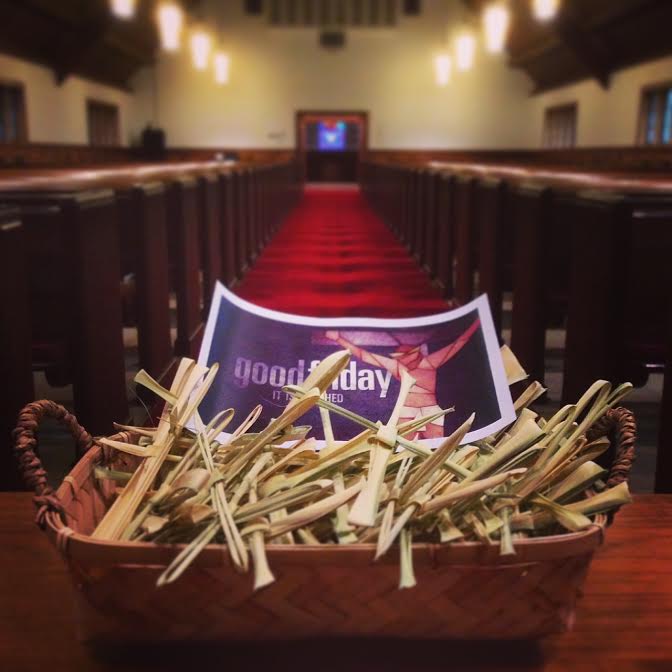
Last year I asked us to look at the cross and live. I implored us to give thanks to God for dying in Christ on our behalf to save us. I handed out crosses so that we might ponder the kind of divine love that was made real for us. I asked us to look at the cross and live.

This year I want to ask us to look at the cross and forgive. If Jesus was willing to use some of his final breaths to forgive the crowds for betraying him and bringing him to the cross, why are we so unwilling to forgive? If Jesus was so filled with love, shouldn’t we do the same?

Being a Christian is messy, ugly, and frightening if we are willing to follow Jesus. If we really want to be like him, then we have to start by forgiving others, and forgiving ourselves.

Amen.

unnamed