Devotional – Hebrews 7.23-24


Devotional:

Hebrews 7.23-24

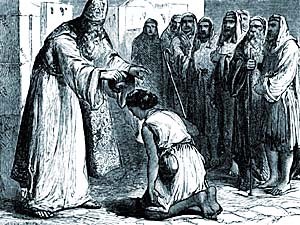
Furthermore, the former priests were many in number, because they were prevented by death from continuing in office; but he holds his priesthood permanently, because he continues forever.
Weekly Devotional Image

Full disclosure: There is temptation in ministry. There is the temptation to believe that you are the only one with the ability to save others. There is the temptation of power to control every single little element in the life of the church. And there is the temptation of becoming more important than the Lord you serve.

It happens a lot.

After weeks of a particular strong sermon series, a pastor’s ego can swell from all the compliments she hears. During the reception following a wedding, a pastor’s pride can cast a huge shadow over the guests. The habits of worship can lead to a pastor pointing to himself far more than he points to the cross. Temptation affects pastors just as much as everyone else.

Yet, pastors/priests/ministers come and go. I can remember hearing a couple of the ushers from my home church arguing about a particular pastor’s sermon and their frustration with how much longer he would remain “in charge of the church.” For weeks they spent time during every worship service venting their frustrations and they began to compare him to all of the “better pastors from the past.” They would say things like “he used to do it this way,” and “he made me feel better when I left church,” and “he used to tell the best stories.” This went on and on until one of the ushers could no longer stand to hear all of this take place during church and said, “We’re not supposed to be here for the pastor; we’re supposed to be here for Jesus.”

9.6.IsJesusSeniorPastorOfChurch_464334126

The writer of Hebrews rightly shows the difference between priests and Jesus. Ministers/Priests/Pastors are many in number because we eventually come to the end of our time, but Jesus holds his priesthood permanently and continues forever. This one line from Hebrews is a sobering reminder for all who have been called to the ministry to remember that we are called to point to the Lord who reigns forever and ever. We can do a lot of wonderful and marvelous things for the churches we serve, but we are only as good as we are willing to remember the one from whom all blessings flow.

Similarly, this passage from Hebrews is a reminder to everyone in the church about who is really “in charge.” If we are serious about the commitments and covenants we have made as Christians we will remember that Jesus is the King of kings and Lord of lords. We will listen to the words of our pastors but will always remember the distinction between their words and God’s Word. And we will remember that even minister are broken by the powers of temptation and are in need of God’s divine grace.

O To Be Wise – Sermon on Proverbs 1.20-33

Proverbs 1.20-33

Wisdom cries out in the street; in the squares she raises her voice. At the busiest corner she cries out; at the entrance of the city gates she speaks: “How long, O simple ones, will you love being simple? How long will scoffers delight in their scoffing and fools hate knowledge? Give heed to my reproof; I will pour out my thoughts to you; I will make my words known to you. Because I have called and you refused, have stretched out my hand and no one heeded, and because you have ignored all my counsel and would have none of my reproof, I also will laugh at your calamity; I will mock when panic strikes you, when panic strikes you like a storm, and your calamity come like a whirlwind, when distress and anger come upon you. Then they will call upon me, but I will not answer; they will seek me diligently, but will not find me. Because they hated knowledge and did not choose the fear of the Lord, would have none of my counsel, and despised all my reproof, there they shall eat the fruit of their way and be sated with their own devices. For waywardness kills the simple, and the complacency of fools destroys them; but those who listen to me will be secure and will live at ease, without dread of disaster.”

seek-wisdom

Wisdom is standing on the street corner shouting at anyone within distance. In all the town squares she is that preacher standing on a box yelling at the crowds to repent from their ways. At the entrance of the largest cities she is the one holding up the signs about our idiocy and the power of God’s wrath. She is all the preachers, prophets, and teachers that weep in sadness that their words are no longer heeded. Wisdom is frightening and demanding.

How long, all you simple minded people in this congregation, how long will you love to remain being so simple in your thoughts and reflections? How long will you enjoy scoffing at the events in your life and hate the knowledge that is given to you in scripture and in church?

Listen to Wisdom right now, because she is pouring out all her thoughts to you and making all of her words known in this place.

Yet, she has called and called, she has screamed and screamed, and none of us have listened. We ignored her words and demands, and now she laughs at our suffering and at us. She will relish in the calamities that come like a whirlwind, she will delight in our frustration and anger. She knows that when we are at the end of our ropes, when we have nowhere else to turn, that we will turn back to her, but it will be too late.

Because we have so consistently hated knowledge and did not fear the Lord, we will eat the fruit of our way, and be sated with our own devices.

Wisdom cries out from the streets, yells at us in our cars and in our pews: “Waywardness kills the simple, and our complacency as fools will be our undoing. But whoever listens to Wisdom will be secure and will live at ease, without dread of disaster.”

Are you feeling uncomfortable yet? When you heard me rambling up here about Wisdom’s disposition, did you squirm in your pews? This is one tough scripture precisely because Wisdom does not mince her words and comes with a clear and stern warning. We can continue in our stupidity that leads to suffering, or we can listen to Wisdom and live in peace.

For a long time, the book of Proverbs has been marginalized and forgotten in contemporary American Christianity. Similarly the church might confess that our wisdom has suffered a similar fate in culture. Many of us no longer read our bibles, we no longer know what it means to pray, and we live in fear rather than in hope.

But are we really at fault? The church has not done the best job of equipping Christians for the work of discipleship, and the world is full of other options for Wisdom. We are constantly overwhelmed with choices and advice. For instance: The front of our church right now is filled with most of the books that I was assigned to read in seminary. You can read about what it means to do church, you can read books about preaching and teaching, you can read about suffering and temptation, but none of those books taught me the true wisdom of what it means to be a pastor.

Any of us can read about the importance of praying for our enemies in scripture, but the words cannot possibly prepare us for the moment when someone grabs us by the hands and actually asks us to pray for them.

Any of us can turn on the news, or search online to hear about the refugee/migrant crisis happening in Europe right now, but all we hear and learn means very little unless we ourselves are forced to flee our home in hopes that someone else will welcome us in.

So it’s not so much that we have not been given the chance to learn and become wise, but because there are so many options out there, we run the risk of feeling like we just walked into at an all-you-can-eat-buffet prepared for people who ate before they arrived.

wisdom-large-3

Books and television shows and lecture halls can point us in the right direction, but lady Wisdom will more often show up in the places where we live our lives. She shows up in the busy streets, in the public squares, and at the bustling intersections. Wisdom appears in our simple experiences, in the blink-and-you’ll-miss-it advice from an acquaintance, and in the quick responses of our children.

On Wednesday night St. John’s hosted the first meeting of “The Circle.” It was designed as a space where the youth of the church can feel comfortable sharing reflections on their own discipleship and partake in communion with one another. Our first meeting went pretty well, the conversation flowed naturally, and I was incredibly impressed by the youth’s ability to convey how Jesus is real for them.

But toward the end of the meeting, I saw the youth really come alive. We were sitting around the table with our bibles opened to Proverbs 1.20-33. We read together about Wisdom yelling out from the streets and then I asked them to share pieces of advice they wished they could tell their parents without fear of getting in trouble.

Up to that point I thought all the youth were really enjoying The Circle, but with one question about advice for their parents, they all became animated and had more advice than I could possibly write down. We went back and forth for at least fifteen minutes before we were able to agree on a solid list that everyone agreed on and, in the true spirit of Wisdom, I am now going to share the list with all of you.

Disclaimer: Parents, your children were vulnerably honest about their responses and they knew I would be sharing them in church. I will not tell you who said what, but listen carefully, because the advice might be for you…

I wish my parents knew that nobody is perfect.

            I wish my parents knew that is not worth it to takes things so seriously all the time.

            I wish my parents knew that they could trust me; after all, I trust them.

           I wish my parents knew how much it hurts when they interrupt me.

            I wish my parents knew that patience is still a virtue, even when you’re old.

            I wish my parents knew that I am smarter than they think I am.

            I wish my parents knew that if they tell me “not to have an attitude,” I am DEFINITELY going to have an attitude.

            I wish my parents knew that I love them, but sometimes I don’t love their cooking.

Wisdom is a tough pill to swallow. But even as difficult as it is to hear Wisdom speak to us this way, whether it be the dreadful warnings in scripture or the advice from our children, it is difficult to argue with her warnings. The advice the youth offered was so profound that it not only applies to parents but to all people. We could read about how we are supposed to behave as rational human beings, but having a youth tells us that patience is a virtue, and to remember that nobody is perfect actually affects us in all the right ways.

It shocks us to hear something so right from someone we least expect. It bewilders us to hear Wisdom crying out in the streets when we would otherwise like to ignore her.

To walk in the way of Wisdom is incredibly demanding. We cannot claim to be wise by reading a lot of books and watching a lot of television, true wisdom requires us to act and move in the world.

gods-wisdom-02

When Wisdom cries out, when we hear about what our children wish they could say to us, it hurts (or at least cuts deep), but it makes sense. When we forget about who we are and whose we are, when we forget about the ways of God built on love, we often get ourselves in terrible predicaments. We say things without thinking, we act without conscience, and we believe we are smarter than the people around us.

I regularly discover wisdom in the people from this church who listen for the still small voice of God while the world is screaming and spinning. I will be in my office after a difficult phone call, or standing outside shaking hands following worship, or walking through the grocery store, when one of you will come up to me and say something that just reorients my entire being. Something like: “Remember God loves you too

Wisdom is all around us, particularly in the people in the pews next to us, calling to us to start behaving like God wants us to. Because Wisdom is finally approachable and possible as we participate in the practices of God, who is Wisdom. We start to see and hear the Wisdom around us as we search for ways to love like God, listen like God, and even laugh like God, in the complicated and ordinary places of life.

I experienced the depth of Wisdom this week when our youth spoke far beyond their ages and dropped some important knowledge on me. In them I experienced a power greater than my own, and realized that if I gave up my false assumption that I was greater than, or wiser than, those youth, I would start to recognize the true wisdom around me and actually listen.

Where do you hear Wisdom? Do you hear her in the scriptures you read? Do you find her in the worship services at St. John’s? Have you seen her shouting through a parent or a spouse or a child? Does she make you uncomfortable when she shows up?

Wisdom speaks to us all the time; we only need the patience to hear her, and the strength to respond. Amen.

Devotional – Ezekiel 2.3

Ezekiel 2.3

He said to me, Mortal, I am sending you to the people of Israel, to a nation of rebels who have rebelled against me; they and their ancestors have transgressed against me to this very day.

Weekly Devotional Image

God loves to send people where they least expect. Moses was shepherding when God spoke to him through the burning bush and told him to go back to Egypt in order to lead the people out of captivity. Jonah was minding his own business when the Lord told him to go to Nineveh. Paul was in the middle of his campaign against the early Christians when God told him to go see Ananias in Damascus.

In the United Methodist Church pastors are appointed (sent) to serve different churches. Rather than being interviewed and examined by every individual placement, a bishop (and cabinet) discern God’s will and send pastors accordingly. This style of appointments allows for churches to be challenged by their pastors (and pastors by their churches) because neither of them have a choice in the matter. Yet, I can’t help but imagine that some UM pastors feel like they are being sent to “a nation of rebels” whenever they are reappointed.

Yesterday marked the completion of my second year serving the needs of St. John’s UMC in Staunton, Virginia. I can still recall the first phone call I received detailing my appointment, and I will freely admit they I felt a little uncomfortable about where I was being sent. After all, I knew nothing about the town, the people, or the church.

I can also recall the feeling in the pit of my stomach two years ago when I approached the pulpit to preach for the first time (Between the nerves and the excitement we were lucky that I even made it through a sermon at all). I looked out from my vantage point and saw the people of God gathered together to hear the Word and respond accordingly. To this day I still thank God for blessing us with the Holy Spirit that morning who allowed us to listen, laugh, and love.

jesus-is-lord-graphic

In the beginning of my time at St. John’s I foolishly thought I was bringing something to the church that they previously lacked. I believed that I was the one who could turn the ship around. I expected that I would grow the church, have us start paying our apportionments (in full), and preach in the midst of the rebels. For a time I thought I could be the savior.

I quickly realized that my expectations were way off. Instead of being a prophet sent to the rebels, I myself was a rebel in the midst of rebels. To believe that I could save the church meant that I was putting faith in myself, rather than the Lord. To believe that I had the power to make the church start paying its apportionments meant that I did not trust God to provide. To believe that I could be the savior meant that I forgot that only Jesus is our savior.

If we have done anything to please the Lord over the last two years, it has only come because God gave us the power to do so, and only secondarily because of us (me).

We are all called to go and be Christ’s body for the world in different ways, but it is vitally important for us to remember that we have just as much to learn as we have to teach; that no matter where God’s sends us, we will be transformed just as much as we transform others; and that in the end Jesus is Lord, and we are not.

This week, let us reflect on the places the Lord has sent us to be Christ’s body, and on the people who have been sent to be Christ’s body for us.

Devotional – 2 Corinthians 4.16

Devotional:

2 Corinthians 4.16

So we do not lose heart. Even though our outer nature is wasting away, our inner nature is being renewed day by day.

Weekly Devotional Image

One day I’m going to write a book about all the hilarious, remarkable, frightening, and life-giving things that have taken place during my ministry. Being a pastor is, in my opinion, one of the greatest vocations because it is a privileged responsibility. Pastors are invited in the depth of brokenness, the height of celebration, and everything in between. Some of the stories I have accrued over the last two years who never be appropriate from the pulpit, but one day I’ll get the good ones written down.

Dick Dickerson was a source of great moments. When I received a phone call about his passing away on Saturday, I gave God thanks for putting him in my life and helping me to discover what grace really looks like. But his death did not fully hit me until I announced it from the pulpit yesterday morning and I realized that I would no longer get to see his smiling face, hear his endearing laugh, or listen to one of his great stories.

For instance: When he served during World War 2 as a Quarter-Master he would lie to his superiors when requesting certain supplies saying they were for General Patton just so he could get the equipment necessary to support his troops. Or the story about how he not so subtly attempted to make conservatives out of his friends by offering them whisky only so long as they declared allegiance to the Republican Party. His life was one great story worth telling over and over.

DoNotLoseHeart

A few weeks ago we were sitting in his apartment talking about the end. Death was not far away and Dick’s bone cancer was getting worse and worse everyday. Yet, he was completely prepared for it. He kept saying, “I’m ready for the Lord to take me.” While the pain was striking deep in his bones he kept such tremendous faith because he knew the Lord was with him and waiting to take him home.

When we lose the people we love, we are caught in a dilemma. On some level we are thankful that they are finally at peace and have gone to be with God, but at the same time we mourn losing them in our lives. Yet Dick was a witness to the kind of faith we are called to have: His outer nature was wasting away, but his faith was growing each and every day. The last thing Dick ever said to me was this: “I never knew God could love me this much.”

This week, let us reflect on what it means to keep the faith. Not a blind faith without doubt, but a willingness to see how our inner nature is being renewed even while our outer nature wastes away. Let us give thanks to God for all who have gone on before us, and pray that the Lord would give us the strength to be better witnesses for those who will come after us.

Devotional – John 20.30

Devotional:

John 20.30

Now Jesus did many other signs in the presence of his disciples, which are not written in this book.

Weekly Devotional Image

My favorite piece of scripture is Mark 10.45: For the Son of man came not to be served but to serve, and to give his life a ransom for many.” I love the idea that, like Jesus, we are called to serve the needs of others rather than focusing on ourselves all the time. One of the verses that has made the most impact in my life is from Matthew 27.46: “And about three o’clock Jesus cried with a loud voice, “Eli, Eli, lema sabachthani?” that is, ‘My God, my God, why have you forsaken me?’” Through it I began to realize the depth of Jesus’ humanity and what he went through on our behalf.

There are plenty of verses that make me laugh, like Acts 20.9: “A young man named Eutychus, who was sitting in the window, began to sink off into a deep sleep while Paul talked still longer. Overcome by sleep, he fell to the ground three floors below and was picked up dead.” And there are some passages that leave me scratching my head in confusion, like Mark 9.50: “Salt is good; but if salt has lost its saltiness, how can you season it?”

th

Last Easter my friend Jason Micheli preached his sermon on what he called “the biblical verse that really ticks [him] off, the scripture verse that irritates the you-know-what out of [him] is John 20.30: Now Jesus did many other signs in the presence of his disciples, which are not written in this book.”

And I have to agree with him.

Why in the world would John omit other stories about Jesus’ life? If there were other miracles, other teachings, other divine moments, why wouldn’t he include them in the gospel? Most of the time I read from the bible I feel very fulfilled, but when I read John 20.30 I feel like I got short-changed.

Yet, on some level, I feel like it’s quite appropriate. If Easter tells us anything it’s that the living Lord is still on the move meeting us on the roads of life. John’s gospel could never contain all of Jesus’ miracles because he is still making them happen here and now. Sometimes we believe that we can only find and discover the Lord in the sacred texts of scripture, but that’s when we need to open our eyes to the wonders around us and see how God is still moving in the world.

When was the last time you felt the presence of God? Hopefully you experienced the Spirit of the Lord during your recent Easter service, or maybe you discovered God in the breaking of bread during communion. This week, let us all take heart knowing that we can find God in the words of scripture and in our experiences in the world.

Devotional – 1 Thessalonians 2.9

Devotional:

1 Thessalonians 2.9

You remember our labor and toil, brothers and sisters; we worked night and day, so that we might not burden any of you while we proclaimed to you the gospel of God.

Weekly Devotional Image

All Saints’ Day is a strange celebration in the worship life of church. As United Methodists, we will gather together next Sunday to remember those who have gone on to glory; we will honor their lives, deaths, and promised resurrections. For a young pastor the celebration of All Saints is one that I look forward to in order to help the still grieving families mourn appropriately, but it is also a sacred day of privileged preaching that cannot be taken lightly.

I have been a pastor for 1 year and 4 months. It has been a tremendously rewarding experience thus far, and I continually feel that I am exactly where God has called me to be, and doing what God has called me to do. Throughout the first year, no one died in our church community. (They tell you in seminary to prepare yourself for a funeral your first week in the church; but for me that did not happen) We celebrated some incredibly special moments together in worship: baptisms, professions of faith, weddings, confirmation, the Eucharist. But we did not gather together for a funeral. While so many of my clergy colleagues felt fatigued under the tidal wave of death that was striking their local churches, I felt guilty for making it through a year without having to do a funeral.

all-saints-usa

Over the last few months, however, we have lost 6 church members in quick succession. While sitting with families in the deep and dark moments of planning a funeral after the loss of a loved one, I was also worried about someone that had just entered the hospital, or received a bleak diagnosis. Death, it seemed, had caught up with us.

Church is often made out to be a place of sacred happiness where people can discover an element of joy and grace that they might not otherwise find. Yet at the same time, the church is one of the last arenas of reality. It used to be that people feared having a quick death. They did so because they feared dying without having the time to be reconciled with their enemies, who were often members of their family, the church and God. Today we fear death. They feared God.

All Saints is a time for us to remember the great promise that God made with us when Jesus was resurrected from the dead: that we are not alone and that Christ has defeated death. This does not mean that we will not die, but it means that death is not the end.

As we prepare for All Saints’ Sunday, let us remember the “labor and toil” of those who have gone on to glory, those who “worked night and day, so that we might not be burdened while we learned about the gospel of God.” Let us remember our own finitude and give thanks to God for not abandoning us. And let us praise the Lord who defeated death so that we might have life.

Holy Perspective – Sermon on 1 Samuel 16.1-3

1 Samuel 16.1-13
The Lord said to Samuel, “How long will you grieve over Saul? I have rejected him from being king over Israel. Fill your horn with oil and set out; I will send you to Jesse the Bethlehemite, for I have provided for myself a king among his sons.” Samuel said, “How can I go? If Saul hears of it, he will kill me.” And the Lord said, “Take a heifer with you, and say, ‘I have come to sacrifice to the Lord.’ Invite Jesse to the sacrifice, and I will show you what you shall do; and you shall anoint for me the one whom I name to you.” Samuel did what the Lord commanded, and came to Bethlehem. The elders of the city came to meet him trembling, and said, “Do you come peaceably?” He said, “Peaceably; I have come to sacrifice to the Lord; sanctify yourselves and come with me to the sacrifice.” And he sanctified Jesse and his sons and invited them to the sacrifice. When they came, he looked on Eliab and thought, “Surely the Lord’s anointed is now before the Lord.” But the Lord said to Samuel, “Do not look on his appearance or on the height of his stature, because I have rejected him; for the Lord does not see as mortals see; they look on the outward appearance, but the Lord look on the heart.” Then Jesse called Abinadab, and made him pass before Samuel. He said, “Neither has the Lord chosen this one.” Then Jesse made Shammah pass by. And he said, “Neither has the Lord chosen this one” Jesse made seven of his sons pass before Samuel, and Samuel said to Jesse, “The Lord has not chosen any of these.” Samuel said to Jesse, “Are all your sons here?” And he said, “There remains yet the youngest, but he is keeping the sheep.” And Samuel said to Jesse, “Send and bring him; for we will not sit down until he comes here.” He sent and brought him in. Now he was ruddy, and had beautiful eyes, and was handsome. The Lord said, “Rise and anoint him; for this is the one.” Then Samuel took the horn of oil, and anointed him in the presence of his brothers; and the spirit of the Lord came mightily upon David from that day forward. Samuel then set out and went to Ramah.

tumblr_mepr3lSwsV1qhmhdfo1_500

One of the things I enjoy most about meeting with couples, and talking about weddings, is the invitation I offer for them to pick a particular scripture for their weddings. Now, I always have backups prepared just in case they are unable to come to a consensus or if they are just unfamiliar with God’s Word. But most of the time, they are willing to look around for something.

Many couples will choose the oft-mentioned 1 Corinthians 13 passage: Love is patient; love is kind; love is not envious or boastful or arrogant or rude. It does not insist on its own way; it is not irritable or resentful; it does not rejoice in wrongdoing, but rejoices in truth. It bears all things, believes all things, hopes all things, endures all things.

f6eedeff4528177d8b277fa10ab88ccf

Others will pick something along the lines of the regularly misinterpreted Ephesians 5 passage: Wives be subject to your husbands as you are to the Lord. Or that great passage from Ruth: “Where you go I will go, where you stay I will stay, your people will be my people, your God my God. Where you die I will die.”

The scripture that a couple chooses for their wedding can be quite revealing. It helps to demonstrate where their priorities are, what they expect out of marriage, and frankly, what they want to hear the pastor talk about.

So, you can imagine my surprise, when a couple recently asked me to use the scripture from today for their wedding. Preparing to enter wedded bliss, they didn’t want to hear about love, or marriage, but instead they wanted to hear about Samuel anointing David…

David & Samuel

The people of Israel had demanded a king from their God. For too long they had wandered about without leadership and they cried out for a leader they could follow. Reluctant to provide a human and fallible leader for a people that were supposed to be following their Lord, Saul eventually became king.

Handsomer and taller than any other man in the land, it quickly became clear that Saul was not the right one to rule the nation. He listened to his own heart rather than the Lord, and God eventually rejected him.

Thats where our story begins today. Samuel was sent to see Jesse the Bethlehemite, for the Lord has provided a king among his sons. The prophet took a heifer with him to cover his true actions from the vengeful Saul who might’ve killed him upon discovery.

After arriving, the elders met Samuel with fear and trembling. Turbulent events had always come in the wake of Samuel’s life and the people were responding appropriately. Great men and women always seem to stir up trouble wherever they travel. (It might be worth rediscovering this today in our own faith lives; too often has it been supposed that the role of church is to give all of us peace of mind. Truly I tell you, the greatest churches and sermons are those that challenge us to be better and do more than we already are)

So Samuel begin to evaluate all of Jesse’s sons; first Eliab, then Abinadab, than Shammah, and eventually all of Jesse’s sons had stood before the prophet. But the Lord spoke to Samuel and said, “Do not look on his appearance or on the height of his statue, because I have rejected him; for the Lord does not see as mortals see; they look on the outward appearance, but the Lord looks on the heart.”

Samuel was caught up with outward appearances. It’s like whenever I go to Alexandria to visit my grandmother, there is always a bowl of skittles out on her coffee table. I love skittles. On the outside the skittles always look delicious, the problem is that I don’t know whether they were put out that day, or six months ago. If you’ve never experienced it, trust me, you would rather have fresh skittles. The point being, you cannot tell how they will taste from the surface.

Anyway, the Lord had promised Samuel that one of Jesse’s sons would be the king, yet the Lord had passed over each one. “Are all of your sons here?” Samuel asked Jesse. “Well, there remains the youngest, but he is keeping the sheep.” David was beckoned away from his shepherding duties and brought before the prophet. He was ruddy and had beautiful eyes. The Lord commanded Samuel to anoint this boy, for he was the one. So Samuel took the horn of oil, anointed David in the presence of his brothers, and the spirit of the Lord came mightily upon David from that day forward.

I prepared for the wedding like I have for all the others, I had counseling sessions with the couple, I talked about the major issues that most couples confront once joining together, but the whole time 1 Samuel 16 hung in the back of my head. What was I going to do with the text during the ceremony? How in the world could I proclaim love and wedded bliss in the midst of David being anointed by Samuel.

I was at a shop here in Staunton when I saw a bumper sticker that illuminated the text for me. The bumper sticker said, “Marriage: betting someone half your stuff that you’ll love them forever.” In reading that, I realized what the world sees in marriage is not what God sees. We, myself included, look on marriage and all things with mortal eyes, but the Lord looks on the heart.

All of the sudden 1 Samuel 16 became the perfect wedding scripture! The Lord does not look on our cooly color coordinated outfits, not our perfect hair, not the precise flower arrangements, God looks on the heart. God does not concern himself with the pomp and circumstance of weddings but instead looks at the intentionality of the two being brought together. God does not get caught up with the minor details of all the rights words and ceremony, but cares about the love within two people sharing a life together.

On the outside, marriage looks like it can be sustained by love alone, it appears like a gamble of half of your things, it seems to be a simple agreement to live together. When we look at marital relationships through mortals eyes, we are limited to the surface appearance and we forget to look on the heart.

Marriage is a beautiful and strange thing. Like Samuel pouring oil over David’s head, it can become uncomfortable and weird. At its best, marriage is loving someone knowing that they will not be the same person tomorrow. Its entering into a dance that will evolve over the years with different tempos and time signatures. Marriage is about the inward heart and disposition of two people coming together to share this remarkable thing we call life.

The Lord looks on the heart. This, after all, was a perfect wedding scripture. As I stood before the happy couple, presiding over their marital vows I could tell that their intentions were clear, they were not caught up in all the outside elements, but were committing to their marital covenant together.

In as much as this text fit perfectly for the couple, I believe that it stands as a light in the darkness for churches and Christians today. The Lord looks on the heart – How sad is it then that most human judgments about people are almost always superficial? Those who are physically attractive have many easy advantages in life, while others, by their very appearance, seem to be severely regarded by others.

David was noted by Samuel as being handsome, with beautiful eyes, but he was still one of the least likely candidates to be anointed by the Lord. While his brothers were older and more mature, David was still young and off in the fields tending the sheep. Rather incredibly, while God anointed David to become king, he would have to mature and go through many trials and tribulations before his role would come to fruition. He would have to battle against the mighty Goliath, avoid Saul’s spear in the royal court, and flee for his life hiding in caves before he could event mount the throne of Israel.

In many ways, God ordains each of us, anoints all of our heads, for certain tasks and graces in the world. Some may have occurred already, and many more lie ahead of each of you in your futures.

God does not call the attractive and the strong to bring about his will on earth, he is not caught up with our outward appearance and physical requirements. God is concerned, above all, with our hearts, with our intentions, with our hopes.

logo

This past week, the Christian organization World Vision made national news. World Vision is a humanitarian agency dedicated to working with children, families, and their communities worldwide to reach their full potential by tackling the causes of poverty and injustice. Like many other similarly focused organizations, it can operate primarily under the radar and achieve a lot of good in the world. That was, until this past week.

In a public statement issued on Monday, the organization announced that it would begin hiring Gay Christians in legal same sex marriages. Prior to the announcement World Vision required all of its employees to maintain heterosexual practices within marriage to be considered for employment. The new policy was described as symbolic not of compromise, but of Christian unity, with the hope that it would inspire unity among other Christians as well.

After a remarkable amount of public outrage by evangelical Christians, and a significant amounts of threats regarding withdrawal of funding for the organization, World Vision reversed its decision to hire Gay christians in same sex marriages.

In only 48 hours, one of the most open, vulnerable, and incredible acts by a Christian group, devoted to helping sponsor children in need, was reversed. The mission of World Vision, the good that they do in the world, was immediately overshadowed by their hiring policy.

I don’t know what to think about all of this. I don’t know if any of the decisions have been right or wrong. What I do know is that a significant number of people who were being helped and saved by an organization were almost put in jeopardy because an agency aspired for greater Christian unity. It would seem to me, that regardless of opinion, the majority of the response was far more focused on the outward appearance of an organization, rather than their heart and intentionality.

I want to be clear that I’m not trying to say that one side was right, or that one side was wrong, but merely question how far we fallen from the idea that God looks on the heart. Every week we gather in this place to affirm our faith in the God who loves us when we don’t love back, that God listens when we run out of words, and that he desires us to be one in the Spirit when it seems as if we cannot agree on anything.

The Lord said to Samuel, and I believe the Lord is still saying to all of us: “Do not look on appearances or on height, do not look on political ideologies or past deeds, do not judge others lest ye be judged; for the Lord does not see as mortals see; they look on outward appearance, but the Lord looks on the heart.”

How do you look at others in your life? Are you caught up with outward appearances, judging others before you have an opportunity to really learn their story? Do you see the world through mortals eyes, or do you look at the world the way that God looks at us?

This is a tough Word for us to hear today. God called Samuel to look on David through God’s eyes, with holy perspective. We, in the same way, are called to radically love one another, sacrifice for the body of Christ, and be one in the Spirit with holy perspective. It is not easy, and we cannot do it on our own.

So, may God bless us enough to open our eyes to see the world, and one another, the way that God sees us. Amen.


Open My Eyes That I May See

Cross and Crown – Sermon on Jeremiah 23.1-6 and Luke 23.32-43

Jeremiah 23.1-6

Woe to the shepherds who destroy and scatter the sheep of my pasture! Says the Lord. Therefore thus says the Lord, the God of Israel, concerning the shepherds who shepherd my people: It is you who have scattered my flock, and have driven them away, and you have not attended to them. So I will attend to you for your evil doings, says the Lord. Then I myself will gather the remnant of my flock out of all the lands where I have driven them, and I will bring them back to their fold, and they shall be fruitful and multiply. I will raise up shepherds over them who will shepherd them, and they shall fear nor longer, or be dismayed, nor shall any be missing, says the Lord. The days are surely coming, says the Lord, when I will raise up for David a righteous Branch, and he shall reign as king and deal wisely, and shall execute justice and righteousness in the land. In his days Judah will be saved and Israel will live in safety. And this is the name by which he will be called: “The Lord is our righteousness.”


Luke 23.32-43

Two others also, who were criminals, were led away to be put to death with him. When they came to the place that is called The Skull, they crucified Jesus there with the criminals, one on his right and one on his left. Then Jesus said, “Father forgive them, for they do not know what they are doing.” And they cast lots to divide his clothing. And the people stood by, watching; but the leaders scoffed at him, saying, “He saved others; let him save himself if he is the Messiah of God, his chosen one!” The soldiers also mocked him, coming up and offering him sour wine, and saying, “If you are the King of the Jews, save yourself!” There was also an inscription over him, “This is the King of the Jews.” One of the criminals who were hanged there kept deriding him and saying, “Are you not the Messiah? Save yourself and us!” But the other rebuked him, saying “Do you not fear God, since you are under the same sentence for condemnation? And we indeed have been condemned justly, for we are getting what we deserve for our deeds, but this man has done nothing wrong. Then he said, “Jesus, remember me when you come into your kingdom.” He replied, “Truly I tell you, today you will be with me in Paradise.”


If you are the King of the Jews, save yourself! There was also an inscription over him, “This is the King of the Jews.

The first time I traveled to Guatemala I had no idea what to expect. Sure I had been on previous mission trips to different parts of the United States, but I had yet to serve the church in a truly different environment. Everywhere we traveled there was a sense of excitement in the air because everything was so remarkably fresh. The abundance of colors in the differing marketplaces, the worn and wrinkled faces of the elderly mayans carrying heavy loads, and the mountains scratching across the horizon.

285_1026151305027_4642_n

I had been looking forward to the trip for sometime and when we finally arrived, everything was meeting my expectations. I believed that we were truly serving God’s kingdom by serving our Guatemalan neighbors by building stoves in the indigenous highland areas. I believed that we had something to share with them, not to convert them, but to live out the gospel of Jesus Christ and demonstrate the love of God in the world.

On one of the early days of the trip, our team arrived in the town of Chichicastenango, known for its traditional K’iche’ Mayan culture. It was a pit stop for us on the way to the higher regions, and we were there for lunch and to explore the vast and dense market. Everywhere you turned you were overwhelmed by the sense of time and tradition, as if this place had remained unchanged for the last few centuries. I wandered through the winding streets, peeked in some of the different booths, but really I was just trying to soak up the culture.

6493_1147085688311_6475115_n

At some point, I became lost. I could not see anyone from my group and continued to travel aimlessly throughout the town. I tried to keep it together, not panic, and decided to find a high vantage point in order to get a bearing on my surroundings. I walked until the stones under my feet started to slant upwards and eventually found myself in front of a very old church. The stone steps were covered with Mayans, sitting and sprawling over every space, and I had to weave my way back and forth in order to reach the entrance of the church. Though I should have immediately turned around to look out at the town, something drew me inside.

6493_1147085808314_3679425_n

The church was damp, dark, and devoid of anyone else. The ground felt alive under my feet as it gave way to my weight, the walls were covered with black soot from centuries of fires, and the paintings and decorations had nearly all disappeared from view. The smell of melted wax filled my nostrils as I began to creep closer and closer toward what I imagined was the altar. It was the least church-like church I had ever entered. Without the help of lighting, I stumbled over rickety wooded seats until I finally found myself standing in the front of the church. There poised in front of me was perhaps one of the most pristine sculptures of Christ that I had ever seen. In complete contrast with the rest of the space, this Christ was unblemished, beautiful, and brilliant. Jesus stood elegantly with his robes draped over his shoulders with one hand outstretched with a remarkable golden crown resting on his forehead: Christ the King.


The celebration of Christ the King Sunday is a relatively recent addition to the Christian calendar. The greater church had celebrated the knowledge and image of Christ as king for centuries, but Pope Pius IX officially added to the Christian year in 1925. It took the church 1900 years to need this feast so bad in order to add it to the life of worship. When the first celebration of Christ the King occurred, Mussolini had been in charge of Italy for three years, the maniacal man named Hitler had been out of jail for a year and his Nazi party was growing in popularity, and the United States was preparing for the Great Depression. In such a time, when the world seemed out of control, the church asserted that, nevertheless, Jesus Christ is King of the universe.

This day, this celebration in the life of the church, became the church’s great nevertheless to the godlessness of the world. Despite the rise of dictators, wars, fear, and death, despite the widespread notion that religion was only a “private affair” for individuals, Christ the King asserted that Jesus Christ is the Lord, and he shall reign forever and ever. 

During the celebration of holy mass in the chapel of the Carmelite Monastery 6 members of the OCDS community made promises to the Order.  Dr. Jason Bourgeois and Judy Hawkins professed their temporary vows for 2 years and David Travers, Suzie Megown, Kath

On Christ the King Sunday the Lectionary provides for us scriptures that reflect the “kingliness” of Jesus. The Old Testament scripture from Jeremiah, contains a prophetic word about the coming Messiah: “The days are surely coming, says the Lord, when I will raise up for David a righteous Branch, and he shall reign as king and deal wisely, and shall execute justice and righteousness in the land. In his days Judah will be saved and Israel will live in safety. And this is the name by which he will be called: “The Lord is our righteousness.” Jeremiah reports the Word of the Lord to a people in a time of chaos: there are people who are unworthily leading and scattering God’s sheep. But nevertheless, God will bring about a righteous Branch, a king to rule all things, a king of righteousness.

What do we want out of a king? Someone who will execute justice and righteousness? Someone who has our best interests at heart? Someone who lowers our taxes? Someone who will lead us victoriously into battle?

The Israelites wanted a king like David. They so desired someone to come in the name of the Lord in order to overthrow the powers that be, and take a seat on their appointed throne. To be crowned with glorious gems and rubies, to bring about God’s kingdom on earth with power. What kind of a king do we want?


And he was led away to the place called The Skull with two others, who were criminals. There Jesus was crucified with the criminals, one on his right, the other on his left. With the blood still wet on his hands and feet, Jesus said, “Father, forgive them, for they do not know what they are doing.” those who had gathered to witness his death began to cast lots for his clothing, and people stood by watching, waiting. The leaders began to mock him, “He saved others; let him save himself if he is the Messiah of God, his chosen one!” The soldiers present also mocked him, coming up and offering him sour wine, “If you are the King of the Jews, save yourself!” And there was a sign hung over his head that read, “This is the King of the Jews.”

Crucifixion-PeterGertner

One of the criminals hung next to Christ kept deriding him and saying, “Are you not the Messiah? Save yourself AND us!” But the other criminal rebuked him, saying “Are you not afraid of God, since you are under the same punishment? And we were condemned justly, for we are getting what we deserve for our deeds, but this man has done nothing wrong.” Then he looked to the Christ, “Jesus, remember me when you come into your kingdom.” And Jesus replied, “Truly I tell you, today you will be with me in Paradise.”

That is our King.

When you really get down to it, when you hear Luke’s remembrance of the crucifixion, it is so simple and straightforward. This is in contrast with the flood of feeling-filled poetry, hymns, sermons, and images that have flowed ever since. Our King did not reign in glory according to the expectations of the world. Instead of a long flowing purple robe he was left nearly naked on the cross. Instead of a crown of rubies, diamonds, and gems, he wore a crown of thorns. Instead of a majestic throne inlaid with gold and comfort, Christ reigned from a cross.

The Romans were notorious for using crucifixion as a form of execution for common criminals because it not only warned the public about the crimes against Rome, but it also added shame, pain, and a slow death. Yet somehow, instead of being hung for shame, Jesus Christ was elevated to his throne on the cross.

In that simple moment of hanging for all to see, Christ the King reigned magnificently over God’s kingdom and demonstrated the depth of what it means to be our King. Jesus refused to test God and heed the call of his tormentors to save himself. Three separate times Jesus was mocked to “save himself,” with the one criminal adding, “and us.” In his final moments Jesus does save someone, and that the one he saved was a dying criminal fits perfectly with the greater message of God’s Good News of the world. In Jesus’ dying hour, he continued his ministry: For the Son of man came to seek and to save the lost. That is what it means to be King.


As I stood in that Guatemalan church, I was confronted for the very first time about what it really means to believe that Christ is the King. I was surrounded by decay, desolation, and disregard yet Christ stood before me as the King. In that moment I saw the paradox of the crucifixion, that the King of God’s glory was hung on a cross to die, that Christians in Guatemala can see the world slipping away from them, yet Christ is still King of the universe. I thought I was bringing something with me to Guatemala, that I was carrying God’s message. I believed I was looking for and seeking out God in my own life when God was the one looking for me; waiting to confront me in that dark and empty church.

How remarkable is it that we worship a God who loves us so much that he is continually looking for us, finding us in the differing moments of our lives to remind us who is really in charge? How beautiful is it that our God came in the form of flesh, to be the incarnate Word, and reign from a cross at the place called The Skull? How perfect is it that our King does not meet the expectations of the world, but instead turns the world upside down? How blessed are we that our King reigns not above us, but for us, beside us, and with us?

Today is the last Sunday of the Christian year, we have come to the conclusion of our liturgical calendar. We began with Christ’s birth made our way through his life death and resurrection. We have remembered the stories of the Old Testament where God made covenant with his people to be their God. We have witnessed the tragedies that have occurred in the world, we have lost loved ones, and suffered in our own lives.

Yet, nevertheless, Jesus Christ is King of all things.

christsinai

Jesus Christ, fully God and fully human, brought forth a new age in the life of humanity, ushered in a new kingdom by water and the Spirit, reigned triumphantly from the most unexpected of places. Jesus Christ, Son of Man, came not to be served but to serve and give his life as a ransom for many. Jesus Christ, Son of God, died on a cross for the world so that we might all be reunited and reconciled with God. Jesus Christ, the Holy One, taught us about how to live and love abundantly in God’s Kingdom. Jesus Christ, King of the universe, was resurrected from the grave to share life eternal with us.

Hallelujah! To God be the Glory forever and ever!

Amen.