Why Do We Pray? – Sermon on Psalm 19.7-14

Psalm 19.7-14

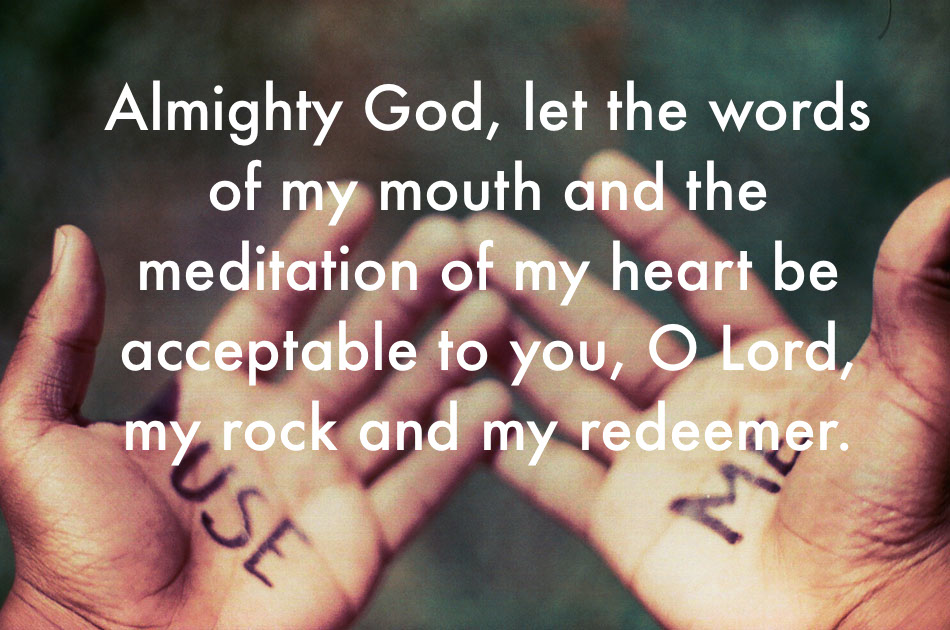
The law of the Lord is perfect, reviving the soul; the decrees of the Lord are sure, making wise the simple; the precepts of the Lord are right, rejoicing the heart; the commandment of the Lord is clear, enlightening the eyes; the fear of the Lord is pure, enduring forever; the ordinances of the Lord are true and righteous altogether. More to be desired are they than gold, even much fine gold; sweeter also than honey, and drippings of the honeycomb. Moreover by them is your servant warned; in keeping them there is great reward. But who can detect their errors? Clear me from hidden faults. Keep back your servant also from the insolent; do not let them have dominion over me. Then I shall be blameless, and innocent of great transgressions. Let the words of my mouth and the meditation of my heart be acceptable to you, O Lord, my rock and my redeemer.
use-me

There were two men. The first lived his life perfectly and blamelessly; everything was coordinated and examined. He never wasted a moment and did his utmost to plan for every contingency and minor catastrophe. If he could live his life in consistent repetition, he believed he could achieve perfection. Every morning he awoke to eat the same breakfast and spend precisely 15 minutes reading from his bible, offering up the same lifeless prayer. He wasn’t sure that he actually believed in God, but he wanted to be safe. He took the same roads to work, ordered the same lunch, used the same pencil brand. Everything was accounted for. He made his money, invested in the right companies, provided for his family. On the surface he had everything you could want. Except he did not have life.

The second man lived a life of apparent chaos as he tried desperately to cling to something solid as the world continued to spin around him. Every morning was a new and exciting, though sometimes terrifying, adventure. He would often oversleep leading him to rush off to work without his breakfast or morning coffee. He was a faithful Christian, he somehow was able to make it to church every week, his bible was often found in different places throughout his house with ear marks and underlined passages in the Old and New Testament. He believed deeply that God was a living and loving presence in his life and looked forward to his moments of silence during the day when he felt he could best commune with the divine. Speaking with God was not about rhythm or repetition, but a life-giving and humbling experience. He made his money, tried to invest, but believed that spending time with his family would be more rewarding than a large portfolio. On the surface he was missing some of the things that make up the American dream. But he had life.

It has taken me a long time to learn how to pray; and I’m still not satisfied with my prayer life. I go through waves of devoting time everyday to sitting in silence and talking with God, and then there are days when I have realized that I felt too busy to pray. I have spent weeks praying prayers that have been written in books, and I have spent months praying extemporaneous prayers from my heart and soul. I have experimented with numerous spiritual disciplines, and I’m not sure that I have found the one that is just for me, perhaps I never will.

Prayer is one of those things in the life of Christian discipleship that we expect, but rarely talk about. Whenever we get together as a church, before an activity begins, all eyes fall on me to lead us in prayer so that we can start. Sometimes those prayers feel life-giving, but oftentimes they feel like an expectation. When I am asked to pray before a meal, there are times that I feel truly genuine in expressing my thankfulness to the Lord, but there are also times when I feel that I am just going through the motions.

prayer

There was a long period in my life where I felt like the first man. I would wake up early and ride my bike to Duke Divinity School just so that I could be there for Morning Prayer with the Anglicans and Episcopalians. I even started to lead the daily worship service. But there was a time when in meant very little to me. It became so routine that I stopped listening to the words, and felt that it was more important for me to be there in body, than it was for me to be there in heart and soul.

Last week I asked us to examine a simple, yet profound, question: What is the point of Church? Why do we spend time each week gathering in this place? I attempted to proclaim God’s Word in such a way that we could begin to move away from a maintenance model of Church, to a missional model where we live as Christ’s body for the world.

Today I would like to ask an equally simple, yet profound, question: Why do we pray and read scripture? Why do we take the time to halt the busyness of our lives to read God’s Word and commune with him?

The psalmist writes that the law of the Lord is perfect, it revives the soul, it makes us wise, it allows us to rejoice in our hearts. The commandments are clear, they open our eyes. The fear of the Lord is pure and endures forever. The ordinances of the Almighty are true and righteous. The psalmist even goes on to claim that the Word of the Lord is to be desired more than gold and sweeter than honey.

You could give me a biscuit with honey on it right now, and I would tell you that is the sweetest thing in the world. Yet, as I have grown older, as I have spent more time deep in God’s Word, its sweetness has been revealed to me. In a conversation with someone during bible study, or deep in prayer about someone’s life and suffering, a new vision and understanding is presented to me out of God’s Word. It truly is a sweet gift, one that speaks to us, even today, from God.

The difference between the two men, is that the first saw his responsibility to prayer and scripture as simply that – a responsibility. He sets aside the time to read and pray, but the words on paper and the words on his lips are lifeless. He believes the first part of the psalm but expects that so long as he maintains his regular practice it will be enough. The second man, however, recognizes that he can do more, that speaking with God can be different and casual and faithful.

Psalm 19 begins to answer our question: Why do we pray and read scripture? It refreshes our souls.

When we spend time reflecting on God’s Word and going to him with our thoughts, desires, hopes, and fears we honor the living Lord who refreshes our souls for a new day. It simplifies the way we envision the world, and reminds us who we are following and why. It humbles us and rewards us.

However, even with the benefits and warnings in scripture, we cannot completely avoid hidden sins and mistakes nor can we control others around us and prevent them from doing the same.

God’s Word operates as a warning about the transgressions of life. It has not only the green light of “allowed”, and the red light of “forbidden,” but also the yellow light of “caution.” Ordinary and humble people do not normally go plowing through the red lights of life. Deliberate and precise sins come with practice and committed degeneracy. But we are all constantly taking chances with the yellow lights of behavior.

That is why the end of the psalm is so important: Who can detect all of their own errors? Who can look at their life and faithfully say I was wrong? Great God, cleanse me from my hidden faults, keep me from those who would do harm to my soul.

The greatest test of our faith is found in our willingness to seek forgiveness from our sins, particularly those no one knows about except us. When we have committed a wrong against someone, and everyone else knows about it, I believe we are more inclined to seek forgiveness. But when we do something wrong in secret, when we sin while no one is watching, I believe we are less inclined to ask for forgiveness, because it is entirely on us. God’s word and a life of prayer are therefore the ways by which we might have the strength to admit our faults, as we read about so many who have sinned before us, and seek forgiveness as we commune with the Lord in prayer. Reading and praying are as essential for us as are eating and breathing – they all give us life.

If you want to become a United Methodist Pastor, there are a number of requirements you have to meet. One of the most stressful is planning a full worship service, leading it, preaching, and having the entire thing videotaped. I was still in seminary when I asked my home church if I could “take over” for one Sunday in order to film the service and send it off to the people who would determine whether I should become a pastor or not.

I fretted about the service, overanalyzed the bulletin, worried about the hymns I selected, stressed about the scripture, and never felt the sermon was good enough. After all the weeks of planning and communication I showed up at my home church Sunday morning, and prepared to put it all on the line. I remember standing in the back, and giving my father the “thumbs up” to start recording when Jason, my friend and pastor, walked ahead of me to address the congregation.

“For those of you that don’t know,” he began “we have one of our very own here this morning to lead us through worship. Taylor is applying to be considered for an appointment in the United Methodist Church and everything we do this morning is being filmed. You and I all know that he is not really that funny, but if you could try to laugh at his jokes, I’m sure that it will help him out with the Board of Ordained Ministry.

The service was oriented around a reading from the end of James about sharing our sufferings with one another. The role of disciples in the church is to rejoice with one another at times of happiness, and weep together during times of sorrow. We are called to love one another through the good times and the bad, but we can only begin to find healing and reconciliation if we share our struggles.

When I was finally able to offer the benediction at the end of the service I breathed out a huge sigh of relief, a sigh that was so loud that you can hear it in the recording! I had made it through the whole thing without tripping and embarrassing myself, without stuttering through the scripture reading, and I even got a few laughs during the sermon though I could never tell whether they were genuine or not…

I made my way out of the sanctuary proud of the service and hopeful that it was good enough for the Board that would be viewing it. But while my mind was caught up in my own selfish reflections about the service, I saw a member of the church, someone I knew very well, crying in her pew.

She shared with me that her daughter had been suffering with bulimia through the last six months and she had refused to share it with anyone. She was embarrassed that she had failed as a mother and she felt as if she was carrying the whole world on her shoulders. She said that after hearing the scripture read, and the words of the sermon, she prayed in her pew, and she realized (for the first time) that the church was the place that she could share her burden. And while others were preparing to leave she reached out to the stranger in her pew and asked if she could share with him her struggles and pray together. With tears flowing down her face she said that this was the best she had felt in months.

prayer-bible

The Word of the Lord is greater than gold and sweeter than honey. In the moments of our reading and praying we are opened up to the strange new world of the bible and of faithful living that can change everything.

We pray and read to cleanse our souls and to give us life. It is not something that has to be strictly observed with militaristic expression, but instead something that we believe can change our lives.

The final line of the Psalm 19 is a beloved and permanent aspect of worship; they are the words I pray before preaching every single Sunday. If our words and thoughts are acceptable in the Lord’s sight we are on the path toward renewed spirits and discipled living. When those words become our truest prayer and hope then we are speaking and thinking as if Jesus was at our elbow which, after all, is the whole point of prayer.

Amen.

Hairs, Prayers, and Bears (Oh My!) – Sermon on 2 Kings 2.23-25

Strange Stories from Scripture Part 2

2 Kings 2.23-25

He went up from there to Bethel; and while he was going up on the way, some small boys came out of the city and jeered at him, saying, “Go away, baldhead! Go away, baldhead!” When he turned around and saw them, he cursed them in the name of the Lord. Then two she-bears came out of the woods and mauled forty-two of the boys. From there he went on to Mount Carmel, and then returned to Samaria.

091812_elisha

This morning we continue with the second part of our sermon series on Strange Stories from Scripture. As I mentioned last week, the drive for our sermon series comes from the wealth of scriptural treasure begging to be preached, in addition to my desire to not fall into a rut of preaching the same, favorite, and familiar texts over and over. Last week we talked about the fate of a young man named Eutychus who fell asleep during church. Today we are exploring the story of Elisha and the she-bears.


And while he was going up on the way, some small boys came out of the city and jeered at him, saying, “Go away, baldhead! Go away, baldhead!”

In my opinion, this is one of the most troubling passages in all of scripture. I can look into both the Old and New Testaments and find scriptures that challenge my faith, passages that require me to pray for understanding and discernment, there are even passages that I would rather ignore than affirm from a place such as this, but there are few stories as dramatic and frightening as the one we have read this morning.

While Elisha was on his way to Bethel, sweating under the heat of the sun, some young boys came out from the city ahead of him and began to make fun of him. “Get outta here baldy! We don’t want you and your shiny head around us!” Perhaps he tried to ignore them at first, but when the taunting became so distracting and loud, Elisha turned around to face the crowd of young boys and cursed them in the name of the Lord. As if on cue, two mama bears came barreling out of the woods and mauled 42 of the boys. From there Elisha continued on his journey to Mount Carmel, and then he returned to Samaria.

pucktoon64

Before we can even begin to address what happened on the road we need to go back, we need to get a larger picture of the story.

Elisha followed the reign of the prophet Elijah. Elijah is remembered for bringing a widow’s son back to life, for finding God in the sheer silence, and for confronting idol worshippers. Elijah was a favorite prophet for the New Testament writers who often drew the connection between the prophetic life of Elijah and the messianic life of Christ.

At the end of Elijah’s time Elisha followed him to the Jordan and watched him ascend on a whirlwind into heaven after having received a share of Elijah’s spirit. Elisha took up Elijah’s ministry, he literally took Elijah’s mantle with him, and continued to be a messenger and example of God’s Word for the people.

The story of Elisha and the she bears is one of the first things that took place during Elisha’s time as a prophet. As a young and novice messenger, he is making his way to Bethel and other parts of the land to bring the people back to their Lord.

What do you make of this passage? Is it one that you, like me, would rather ignore and pass over? Does it challenge your understanding of God and the role of the prophets? 

For centuries theologians, scholars, pastors, and Christian-disciples have attempted to make sense of this story; they have worked hard to explain what is really going on.

I could begin by telling you that there is more at work in this story than appears on the surface. In Hebrew, the designation for the “small boys” is more akin to “young men” and more particularly young men who do not want the prophet coming to their town to tell them what they have done wrong.

I could continue by showing you that, though Elisha was bald, he was in fact probably only 25 or 26 when this transpired; he was my age when he was taunted for being bald and cursed the young men!

Similarly the point can be made that the harmless teasing was in fact very troubling. They were not merely making fun of his shiny head but were denying his prophetic ability. After taking up his former prophet’s mantle, Elisha was being accosted; in so doing the crowd of young men was not only attacking a young prophet but denouncing the Lord as well.

Moreover I could share with you the simple fact that Elisha did not call out the she bears, he just pronounced judgment on the demonstrators and God decided the form of response. And even when the bears came out of the woods they did not kill 42 of the young men, they simply mauled them. Perhaps God was using the bears in a way that none of the young men would perish, but so that they would all be punished.

Yet, even with all these new details, the story still troubles me.

As I prepared for the sermon this week I consulted numerous commentaries on 2 Kings and I was shocked to discover some of the reflections regarding this passage.

One commentary claimed that Elisha was not the kind of man to summon bears from the woods. The “irreverence, lawlessness, and hoodlumism of youth are sure to result in moral disaster.” The bears function as symbols of the punishment that overtakes vicious behavior. It went on to state that the boys in the story are the prototype for thousands of youth today. Only if they are educated at home, in school, and in church will they be able to avoid the punishment of the Lord that will surely come in one form or another. (The Interpreters Bible, vol. 3)

Another commentary made the same point, but in a shorter and more direct way: Rich and poor, high and low, young and old, ALL must be punished for their transgressions… (Word Biblical Commentary, vol. 12)

I went on to consult numerous sermons on the passage and was frightened to discover that most of them, few that they are, articulate a theology that the kids got what they deserved. They might have all ended by saying, “our children, your children, will wind up like those boys because we have failed to train them as polite young people. We need to bring our children to church, and encourage them to bring their friends, so that we can shape their future to avoid the bears of God’s wrath.”

Breathe.

I am now going to do what many of my professors warned me about in seminary, I am going to preach against this text.

Whereas many scholars, pastors, and Christians believe that the children are at fault, (I agree, they are) I believe that Elisha is just as at fault for his quick curse of the bullying boys.

In 2007 Duke University did a study and found that 85% of seminary graduates leave the ministry within five years and 90% flee before retirement. Many of these pastors that run away from the ministry never return to church. (Read more here: Keeping Your Pastor)

With the rise in expectations of pastoral ministry, coupled with dying churches and lowered pay, its no wonder that many pastors abandon their flock. When many churches are running on financial fumes, while also expecting their pastors to continually go above and beyond their call, the result is a collection of pastors who are burned out and have lost sight of the Lord and their calling.

ynk22

I imagine the Elisha felt a lot like ministers in the first few years of their appointments. After all, Elisha found himself following in the steps of the renown and powerful prophet Elijah who no doubt cast a great shadow for the young prophet. Most of the people would be evaluating this young man based on the actions of his predecessors.

This wasn’t something that Elisha inherited but was called into. He could have remained a farmer, tending to the plows with the oxen, but instead he was called out of his life into something new, strange, and at times, terrible.

As a bright-eyed and bushy-tailed prophet, Elisha had everything to prove. And here in 2 Kings 2 Elisha find himself at the beginning of his ministry filled with passion for the Lord when a crowd of youngsters attack him for that very call.

I think that Elisha’s pride got the better of him when he was walking to Bethel. Unlike the Son of Man who would one day tell his disciples to turn the other cheek and love those who persecute you, Elisha immediately cursed the youngsters and they were mauled.

If this story is about what it means to be a prophet who speaks the Word of the Lord, then I would argue that the biggest take away is that we must be very careful with our prayers. God listens to our prayers and He answers them, sometimes in ways that we do not want and sometimes in ways that we do not expect. Be careful what you pray for.

When I arrived at this church I felt very much like what I imagine Elisha felt like at the beginning of his prophetic ministry. I was following in the footsteps of countless pastors who have shaped and nurtured this congregation into what it is today. I recognize that I will always live in the shadow of the likes of Fletcher Swink, Zig Volskis, and Patricia Meadows.

I sat in my office the week before my first sermon and thought about everything I had to live up to. I stewed over what my reputation would be at this place. I over-analyzed every word and sentence for that sermon, fearing how I might be received. 

I stood in this pulpit over a year ago, afraid of how all of you would respond. And, if I’m being honest, I stand here this morning still consumed by thoughts of what you think about these words, my delivery, and the connections with scripture.

Being a pastor is, at times, terrifying. Many weeks pass when I feel like I did not get enough done. There have been a number of Saturday nights that I lay awake in bed rehearsing in my head what I will be saying on Sunday. I have had many tough conversations with families, couples, and individuals about the sins in their lives. There have been countless visits when I wonder if I have actually helped at all.

And its when I reflect on all of these elements of ministry, that I realize how difficult it must have been to be Elisha. I begin to understand why he was so quick to curse those young men who spoke against his calling.

And the more I think about it, the more I see connections not only between Elisha and pastors, but also between Elisha and all of us.

How quick are we to curse those who speak against us? How inclined are we to forget our discipleship the minute our calling is called into question?

I know of an older gentleman who had not exchanged a word with one of his sons in years because of a foolish argument they had in the past. I know a woman who refuses to shop at certain stores in our town because of the color of some of the employees. I know neighbors that never wave or acknowledge one another because one of them went to Virginia Tech and the other went to UVA.

In today’s world it is too easy to put a tremendous amount of pressure on ourselves to shine brightly in the darkness. We set goals for ourselves that are lofty and unreachable. We expect greatness from our lives and the lives around us on a daily basis.

When we get caught up in the expectations of the world that we place on ourselves, we fall into the trap of quickly cursing others around us. When we fail, we jump to blame someone else. When we miss the mark we can come up with a list of excuses faster than we can come up with better solutions.

Being a pastor is hard, but being a disciple is harder. We are called to walk in the world as prophets, seeing this created place through God’s eyes. We have the unenviable task of reaching out to the last and the least and the lost. We have been baptized into a new order where the world has been turned upside down.

When we are accosted for out faith, when we are judged for our Christian allegiance, it will manifest itself in different forms. 

Elisha was made fun of for being bald.

You might be attacked for praying in public, for wearing a cross around your neck. You might be made fun of for offering up your gifts and tithes to a place like the church. You might be judged for praying to a God who often responds in silence.

But nevertheless, we are not called to respond to these threats by cursing on enemies. We have been commanded to love them.

What a crazy and wonderful thing it is to be a disciple of Jesus Christ. Amen.

Strange Stories from Scripture: Bored To Death (Almost) – Sermon on Acts 20.7-12

Acts 20.7-12

On the first day of the week, when we met to break bread, Paul was holding a discussion with them; since he intended to leave the next day, he continued speaking until midnight. There were many lamps in the room upstairs where we were meeting. A young man named Eutychus, who was sitting in the window, began to sink off into a deep sleep while Paul talked still longer. Overcome by sleep, he fell to the ground three floors below and was picked up dead. But Paul went down, and bending over him took him in his arms, and said, “Do not be alarmed, for his life is in him.” Then Paul went upstairs, and after he had broken bread and eaten, he continued to converse with them until dawn; then he left. Meanwhile they had taken the boy away alive and were not a little comforted.

SAMSUNG

This morning marks the beginning of our three part sermon series on Strange Stories from Scripture. Part of our series was born out of the immense treasure that is begging to be discovered from God’s Word in addition to the fact that it is too easy to fall into a rut with preaching the same and familiar texts over and over. Today we are talking about the fate of a young man who was bored to death (almost).


A young man named Eutychus, who was sitting in the window, began to sink off into a deep sleep while Paul talked longer. Overcome by sleep, he fell to the ground three floors below and was picked up dead.

When I have the opportunity to attend different church services, a very rare occurrence since becoming a pastor, I usually sit toward the front on the right hand side. I am of the persuasion that sitting toward the front helps the worshipper with their ability to participate fully in the service. Yet, I know that others have very different opinions on where they should sit for worship.

When I was in North Carolina, I worshipped for a long time at Duke Memorial United Methodist Church. I, like many of you, sat in nearly the exact same spot every Sunday. I grew accustomed to seeing the same heads in front of me, and the voices surrounding me during the hymns, to the degree that where I sat played a pivotal role in my worship experience. 

One Sunday morning I was surprised to discover a Duke undergraduate student sitting in my spot. I can vividly recall the wave of emotions I felt seeing someone encroaching on my sanctuary territory, but I eventually gave in and sat down next to the young man. He had all the markings of a polite and proper gentleman: his outfit had been perfectly ironed, not a wrinkle in sight, his hair was parted to the side, and he sat with precise posture. I attempted to introduce myself before the service started by I was interrupted by the beginning notes of the organ prelude.

As we made our way through the service, offering up our prayers to God, singing hymns, and reading scripture I took little notice of the young man to my left and genuinely enjoyed our morning service. However, about midway through the sermon I began to notice a sudden change in my neighbor’s disposition. Out of the corner of my eye I witnessed him participating in the age old “my-head-keeps-drooping-down-while-I’m-trying-to-stay-awake.

mr-bean-asleep

While our pastor weaved through the beauties of scripture, this young man was doing everything he could think of to stay awake: he scratched his eyes, stretched his back, and even slapped his own cheek. However, nothing was helping. His head would continue to fall down only to be slingshotted back into position every minute or so.

At this point I was so distracted by the young man that I became worried for him. What if the pastor notices him sleeping and calls him out during the sermon? What if he begins to snore and everyone starts to look at us? What if he actually fell asleep and his head crashed on the pew in front of us? So I did what any good Christian would do…

Hey bud,” I whispered while tapping on his shoulder. He quickly woke up and abruptly turned to stare at me. “If you put your hands like this (hands in the form of prayer) you can rest your head between them on the pew in front of us, you can catch some Zs and everyone will think you’re praying. If you start to snore I’ll nudge you.” With a smile he slapped me on the back and declared, a little too loudly, “thanks Bro!” and promptly fell back asleep.

Falling asleep in church can have dire consequences. What happened to Eutychus that night should be a fair warning for us about what happens when we fall asleep. Paul had come into town and would be leaving the next day. This night time gathering was the last and best opportunity for him to share the Word of the Lord with the people. It happened on the first day of the week, Sunday, when the people joined together to break bread.

This is the first reference to breaking bread as a community since the day of Pentecost in Acts 2; the budding Christian community has begun to sustain one another through the presence of God as experienced through the bread and the cup.

Paul had limited time to discuss the Good News with the church so he continued to speak until midnight. There were many lamps in the room upstairs helping to illuminate the space as Paul conveyed the depth and wonder of God with the people. A young man named Eutychus, which means “lucky,” was sitting in the window while Paul preached from the front of the room. Before too long his eyes began to feel heavy, the warmth of the lamps inviting him to rest his eyes, when he sank into a deep sleep as Paul continued to speak.

44_Ac_20_02_RG

Eutychus fell three stories from the window and was picked up dead. Paul immediately went down, bent over the young man and took him into his arms and said, “Do not be alarmed, for his life is in him.” And then Paul went back to the room upstairs and after breaking bread with his brothers and sisters, he continued to speak with them until dawn. Meanwhile the people had taken the boy away alive and were greatly comforted.

Oftentimes when we talk about the church during the time of Acts, and when we talk about our responsibility to be the church for the world, we compartmentalize the message of faith to going out of our comfort zones, opening our doors, and appealing to unbelievers. Yet this story is a sobering reminder that Christians are called to persevere through many trials, requiring the task of worship to comfort weary travelers on the journey of faith. Paul takes the time to gather with God’s people, break bread, proclaim the Word, and encourage them in faith.

Preaching is that opportunity to teach and enable disciples to discern between true and false gospels, authentic tradition, and how God’s Word continues to speak living and life-giving words into our lives today.

Even if we have the most wonderful and dedicated lives of service, we are weak without the revealed Word of God resonating deep into our souls. Watered-down, inarticulate and unexamined beliefs lead to weak disciples.

What do you want from a sermon?

preach-word

Do you want to be affirmed in your faith? Listen to words about scripture that leave you patting your back for having done a good job? Do you want to be challenged to live a better life through the proclamation of a sermon? What is it that you hope for from someone like me when I stand in the pulpit. Do you want to be kept awake? Do you want something to think about until next Sunday?

Preaching at its finest is, as Paul understood it, that remarkable time when God’s Word becomes incarnate again in our lives. We take the time to sit and listen to the incredible ways that God’s speech speaks something new and fresh in our lives. Preaching is about encouragement, challenge, love, hope, faith, recollection, and dedication. On that evening in Troas the preacher for the day went on a bit too long and it resulted in a young man falling to his apparent death from a window. What can I do to keep you awake to the faith that God has in you?

What do you want to discover in the breaking of bread?

Hands breaking open a baguette --- Image by © Beau Lark/Corbis

Paul was with the gathered church to proclaim the Word and break bread. When we gather together on the first Sunday of the month for communion, what do you want to find? Do you want to walk up to the front feeling unworthy of the gift with your head hung low? Are you hopeful for a feeling of complete joy as you dip the bread into the cup to partake in this heavenly meal?

Communion is that remarkable time when the divine and human come into contact. We come to the table to feast on Christ’s body and blood remembering what Christ did for us and for his disciples that last incredible evening. We partake of this spiritual food that sustains us for our journeys of faith. We break bread and in so doing we join together with all the saints that came before us and will follow after us.

Why do you come to church?

worship

This perhaps is the most important question for us to answer as a worshipping community. Why do we get together to do this week after week? Are we here to check up on old friends, hoping to hear about all the new and wonderful things going on in the community? Do we do church because it is what our parents did and they taught us to do the same thing?

When we hear words proclaimed in this place, when we break bread and gather at the table, God is made known to us. Much like the time when Jesus walked on the road to Emmaus with his disciples, they did not know that he was with them. It was only after he interpreted the scriptures and broke bread with them that their eyes were opened to his presence among them. We gather as Christ’s body to proclaim his Word and feast at his table so that God might become known among us. 

The church today has found itself in a strange place. Unlike the past when preachers and pastors had to worry about maintaining perfect, articulate, and sound theology (fearful of sounding heretic), today one of the greatest challenges facing the church is the ethos of boredom.   Instead of being caught up in the fear of making someone upset or angry because of something in a sermon, the contemporary church faces the incredible task on fighting against boredom, and in particular, being bored to death, at least spiritually.

In the last few weeks I have had a number of Christians from other churches in our community come to meet with me in order to vent their complaints about other pastors. “He doesn’t preach from the Bible!” “She moves too much when she preaches!” “His sermons no longer mean anything to me!” When doing church becomes boring we risk losing people, not just the young, to the temptation of falling asleep to the incredible glories of God.

If we come to church expecting it to be more like a funeral, a boring drab of an excuse to remember and anticipate God’s acts in the world, then it will remain as such. But that crazy night so long ago when Paul went on preaching until the late hours of the night, the gathered people might’ve expected their worship to turn into a funeral, yet Paul confidently broke bread, ate, continued to proclaim, and the boy was presented as alive.

The words and acts of the discipled life rehabilitates the church and the community. It brings us back to life, and transforms us from a fearful little group of people who keep our faith to ourselves to a incredible group of prophets who are able to confront the world’s ways and declare the words that Paul shouted, “there is life!”

There is life in our worship! We have encountered the living God who breathes and moves through us. We sing the hymns of our faith with resounding voices to declare the ways of God. We pray the words of our hopes, our joys, and our concerns by lifting them up to the Lord. We are called to feast at the table like all the apostles and disciples before us to be filled with the grace of God.

Is church boring you to death, or is it offering you life?

Amen.

Devotional – Isaiah 55.10-11

Isaiah 55.10-11

For as the rain and the snow come down from heaven, and do not return there until they have watered the earth, making it bring forth and sprout, giving seed to the sower and bread to the eater, so shall my word be that goes out from my mouth; it shall not return to me empty, but it shall accomplish that which I purpose, and succeed in the thing for which I sent it. 

Weekly Devotional Image

In church life we love to talk about “planting seeds of faith.” I have heard countless professors, theologians, pastors, and Christian leaders all convey something akin to “you never know how the seeds you plant might grow into beautiful lives of faith.” The point being that we must choose our words carefully because they contain enormous power; at times our words can help nurture someone in their faith, and at other times our words can destroy someone’s faith.

Dick Dickerson, a beloved man in our congregation, once told me a story about a particular Christmas Eve that he experienced while fighting in World War II. Dick had spent the previous days at the front lines frightened for his life and for the lives of his friends. Through the bitter cold they continued to push forward into enemy territory unsure of what they would discover. Without realizing it they serendipitously found themselves sleeping in the comfort of a church sanctuary on Christmas Eve enjoying a welcome reprieve from the fighting.

Dick describes that evening with vivid details: the wax from the candles spilling over onto the wooden pews, the hole in the roof letting in the tiniest snow flakes, and the huddled soldiers staying close to one another for warmth. Though he cannot explain what prompted him to speak up, he asked the young military men around him whether they would like to pray for anything. To him he seemed like the right thing to do on Christmas eve while gathered in a church sanctuary, regardless of the circumstances. One soldier prayed for his family and friends back home, another prayed for the weather to warm up, and another prayed for his fellow comrades in the fight against oppression.

The praying went on for sometime, but after a rather long pause one of the youngest soldiers spoke up: “I seem to remember Jesus saying something about praying for our enemies,” he began, “so tonight I would like to pray for the men we’re fighting against, I pray that God would be them as He is with us.” Upon hearing this man’s words Dick was worried that an argument or fight would break out between the men but he was surprised to discover that everyone was silent with their heads bowed down. With tears beginning to form in his eyes he joined his brothers and prayed for his enemies.

raining-on-yellow-daisies-natural-selection-craig-tuttle

God’s Word is mysterious, strange, and powerful. There are times when we hear or read something from scripture that will not become relevant or real for us until a later time. But like the prophet Isaiah said, “my word will not return to me empty, but it will accomplish that which I purpose.” The scriptures from both the Old and New Testaments are life-giving; they are like the blessed rain that fall from the sky in order to give new life from the earth.

Today let us all reflect on the ways that God’s Word has affected our lives.

Let us ask ourselves: What scriptures have transformed the way we see the world?

Devotional – Psalm 8.4-6

Devotional:

Psalm 8.4-6

What are human being that you are mindful of them, mortals that you care for them? Yet you made them a little lower than God, and crowned them with glory and honor. You have given them dominion over the works of your hands; you have put all things under their feet.

Weekly Devotional Image

I was sitting on an elevated deck looking out over the Great Smokey Mountains when I read the words: “Dominion is not the same thing as domination.” I had been placed in Bryson City, North Carolina for my first field-education placement during seminary and most of my ministry that summer took place outdoors. Whenever I met with a congregant for counseling I suggested that we take a hike around Deep Creek, we celebrated worship on Sunday mornings on the banks of the Nantahala River near the Appalachian Trail, and I was staying with a couple who lived on the ridge line of a mountain that overlooked Fontana Lake.

241741_1859435776618_6188631_o

During the summer, many of us seminarians stayed in contact through email and phone calls as we found ourselves in remarkably different ministerial settings. My best friend, Josh Luton, had been working on a sermon about the creation from Genesis for his field-placement and asked me to read through his first draft before he proclaimed the words. Right there on my computer screen I saw the words that I will never forget: “Dominion is not the same thing as domination.”

703913_4014919294792_1770045152_o

Josh’s sermon would go on to discuss how far we have fallen from the idea that we have been called to be good stewards of God’s creation, because we feel entitled to dominate that which God has given to us. Domination would imply that we have the right to control and have influence over creation. Instead God called us to have dominion over the works of his hands, “human dominion over the earth should contribute to the preservation and benefit of God’s creation. Dominion seeks to preserve and even benefit all of creation; not just humanity.”

Up until that point of my summer I had truly taken God’s creation for granted. I was constantly surrounded by the majesty and artistry of the created world, but my vision was limited by my selfish expectations. Creation is not just for us, but it is for all things. We have been called to be responsible for the remarkable gift so that all of creation benefits from our dominion, not just ourselves.

So, in the words of Josh Luton, “Let us recognize our own place within the divinely created world and let us take on the responsibility that comes with it so that we, with our Creator, may see that it is truly good.” Take a look around at God’s creation today, be thankful, be mindful, and be responsible; dominion is not the same thing as domination.

Devotional – 1 Peter 5.6

Devotional:

1 Peter 5.6

Humble yourselves therefore under the mighty hand of God, so that he may exalt you in due time. 

Weekly Devotional Image

I got the phone call on Thursday afternoon letting me know that Mrs. Betty Lancaster had passed away. Sitting on my couch at the parsonage I realized that I have been at St. John’s for nearly a year and this phone call meant that I was going to preside over my first funeral. I got to the Lancaster’s room at Brightview Baldwin Park as quickly as I could and I sat with the grieving family as they accepted the fact that Betty was gone.

Betty Lancaster

Betty Lancaster

Over the weekend I met with the family on different occasions learning more about the kind of life Betty lived in order that I might do justice to her life during the funeral service on Monday afternoon. The family shared with me particular stories about her life; her love to travel, her expertise in the kitchen, and her dedication to instilling important family values. I heard about how she and Ray met on a Greyhound bus on their way to Radford/Blacksburg, and how their marriage of 63 years began in a service station here in Staunton when a clerk from the court met with them to preside over their martial vows.

I made phone calls to a few of Betty’s friends that still live in the community who confirmed the family’s belief that she was one incredible woman, ready to do whatever it took for others. The more I learned about her life, the more I wished I had been able to spend more time with her myself. 

But the one thing that stuck out among all the other details was a simple comment that Ray made as soon as I made it to his room after Betty died. Sitting in his chair, barely looking up from his lap, he softly said, “To us, Betty was always a star, but she never went in for all the glitz and the glamour.

submission-to-God-500x333

Humility is a lost art in our current culture. With the need and the drive to outshine everyone else (whether for employment, college applications, or just selfish desire) we no longer appreciate the importance of remaining modest. Life, at times, seems like one giant competition where we have to make sure that we come in first place. However, the kingdom of God is not like the world we live in. Instead of cutthroat competition dominating everything we do, we are called to humble ourselves under the mighty hand of God, so that he may exalt us in due time. In life we will have opportunities to shine for God, but we must remember that when we do our best, we do so for the kingdom of God and not ourselves.

The call of discipleship today is to live like Betty Lancaster did, which is to say we are called to live like Christ did; ready to listen, prepared to love, and humble in all that we do.

Getting Stoned With Stephen – Sermon on Acts 7.54-60

Acts 7.54-60

When they heard these things, they became enraged and ground their teeth at Stephen. But filled with the Holy Spirit, he gazed into heaven and saw the glory of God and Jesus standing at the right hand of God. “Look,” he said, “I see the heavens opened and the Son of Man standing at the right hand of God!” But they covered their ears, and with a loud shout all rushed together against him. Then they dragged him out of the city and began to stone him; and the witnesses laid their coats at the feet of a young man named Saul. When they were stoning Stephen, he prayed, “Lord Jesus, receive my spirit.” Then he knelt down and cried out in a loud voice, “Lord, do not hold this sin against them.” When he had said this, he died.

the-stoning-of-stephen

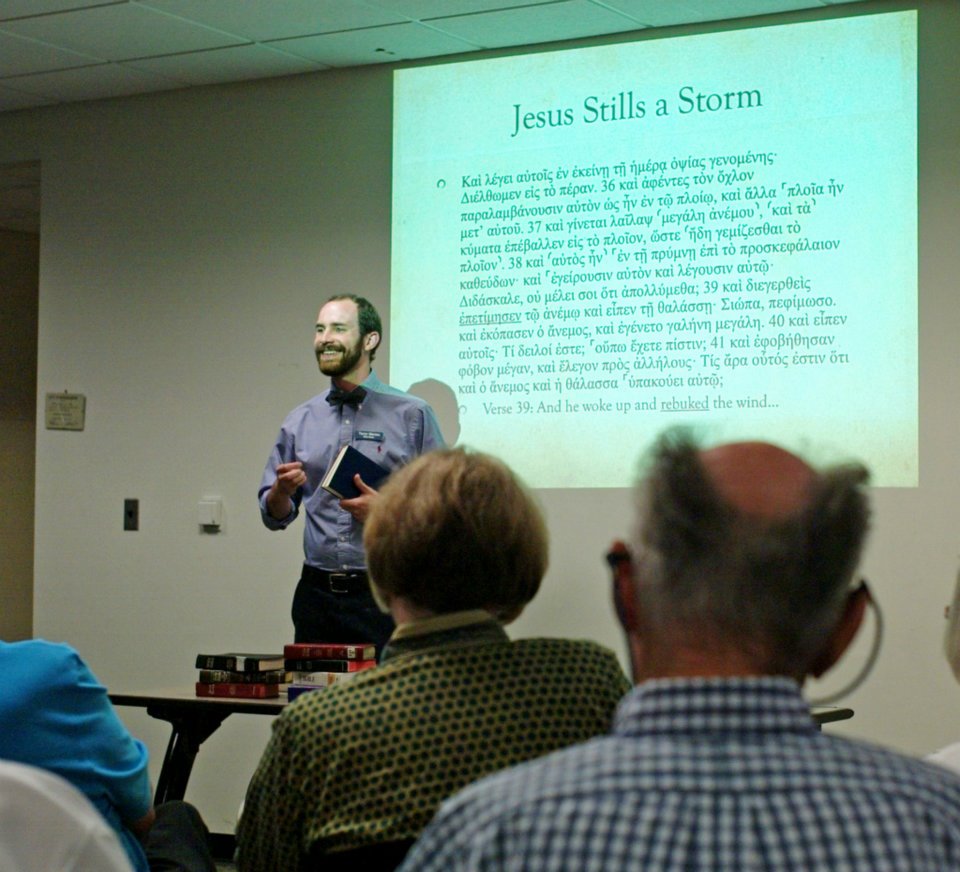
I was standing in front of a packed lecture hall, talking about Jesus according to the gospels, when I began to notice that the crowd was turning against me. For the previous three weeks I had stood in the front of that same room, a brilliantly bright powerpoint displayed on the screen behind me, making my way through the original Greek text of the gospel according to St. Mark. Each week we focused on a different element of Mark’s writing, comparing his gospel with the others, and generally reflecting on how this gospel still speaks fresh and new words into our lives.

It had seemed as if everyone was on board with what I was talking about, until the conversation moved to the cost of discipleship. I recognize now that I probably went to far, but at the time I felt the truth was worth exploring.

531711_3548371078945_1217125254_n

This is what I said: “In the gospels, particularly Mark, Jesus makes it very clear that following him, taking up our own crosses, being a disciple, will cost us our very lives.” Many people in attendance nodded. But then I continued, “Most of us here have no idea what that means. We sit in the comfort of our homes here in Michigan, sure we hear about all the bad things happening in the world, and even the bad things happening down the road in Detroit, but our lives will never be taken for our faith. We exist in such comfort with our faith that we can no longer even imagine what it would mean to give our lives for Christ, the cost of discipleship for us doesn’t cost very much at all.” “Well excuse me young man,” one of the women began, “but I go into downtown Detroit every week to serve food and give away clothing. My life is on the line for Christ every seven days. Don’t lecture me about the cost of discipleship.” This is when I should have stopped, apologized, and moved on, but I couldn’t help myself. So I asked her, “Do you go downtown every week because you believe thats the most and the best you can do as a disciple? Or do you go downtown with food and clothing every week because you feel guilty?


The early church had a problem. While the disciples were increasing in number, an argument developed over the distribution of food. Like us modern Methodists, a major conflict erupted not over proper theology, or reverence, but instead who was getting the appropriate amount of food. The twelve got together and asked for seven leaders to come forward in order to help with the organization of the early church, and to faithfully distribute the food among all the people. Stephen, described as a man full of faith and the Holy Spirit, was one of those chosen seven. 

In a short amount of time Stephen began to do great wonders and produce signs among the people. Once he stepped into the limelight of the early church, he rested under the microscope of many leaders and elders of the synagogues who argued with him. The leaders instigated some others to raise charges of heresy against Stephen and he soon found himself standing before the high-priest in order to defend his words and actions.

What followed is one of the most concise and deliberate retellings of the entire salvation story of God with God’s people. Stephen’s speech contains remembrances of Abraham, Isaac, Jacob, Joseph, Moses, and the prophets. He weaves the story in and out of the major moments; the beginning of the covenant, the flight to Egypt, Moses’ calling, the delivery from slavery to the Promised Land, the commandments being given on Sinai. In just a few short paragraphs Stephen perfectly encompassed the Old Testament for the high priest.

Though very descriptive, Stephen committed no blasphemy in his speech. He fairly repeated that which we have detailed for us in the scriptures, but before he finished speaking he had one final message to deliver: “You stiff-necked people, uncircumcised in heart and ears, you are forever opposing the Holy Spirit, just as your ancestors used to do. Which of the prophets did your ancestors not persecute? They killed those who foretold the coming of the Righteous One, and now you have become his betrayers and murderers. You are the ones that have received the law as ordained by angels, and yet you have not kept it.

It was only after hearing these words that the people became enraged and ground their teeth at Stephen. While they began to torment him, he looked up and saw the glory of God and Jesus standing along the right side, and he declared this triumphantly to the people. But instead of listening, instead of looking up to see what he could see, they covered their own ears and with a loud shout rushed forward to grab him and take him out of the city. While they stoned him, he prayed, “Lord Jesus, receive my spirit.” And with his final breath he cried out in a loud voice, “Lord, do not hold this sin against them.” When he had said this, he died.

saint-stephen-the-martyr-23

Stephen’s speech to the high priest and those gathered sealed his doom. Did he speak the kind of blasphemy against Moses and God like he was accused of? Nope. But Stephen went too far when he claimed that Jesus was at the right hand of the Lord, ready to rule. Stephen merely affirmed the same thing we claim every week when we stand and affirm the Apostles’ Creed, yet when he did it, it cost him his life. 

Some scholars and theologians claim that the climax of this episode in the book of Acts is Stephen’s death, when in fact the defining moment is the exaltation of Christ. Surrounded by his accusers and killers, Stephen continues to assert that Jesus is sitting at the right hand of God, that he is the long awaited Messiah already changing the world.

Jesus is there with Stephen at the final moments of his life, and how fitting considering the fact that Stephen utters the same words that Christ did at his own death. While the stones were flying through the air, Stephen’s prayer was not for deliverance, but a declaration of trust. Not, “Lord, save me!” but “Lord, receive my spirit.” His prayer is one that looks forward, not backward. His prayer was for his enemies, and not himself.

At his death, Stephen did what all of us are called to do in every moment of our lives: he acted like Jesus. He was serene while everyone else was going crazy; he was forgiving while the crowds were vindictive; he prayed while the people acted as if God was not among them; he loved when he saw nothing but hate; he trusted the Lord when everything was claiming the contrary; he kept on hoping when there seemed nothing left to keep hope alive. All of this to tell the truth to the high priest and the crowd. All of this to die for what he believed in. All of this as the cost for his own discipleship.

What happened to Stephen is paradigmatic for what the church was like. Thousands upon thousands of Christians have given their lives in order to speak the truth of God’s reign in the world.

In the United States we have “freedom of religion.” This was instituted during the foundation of our nation and has secured the right to practice religion, regardless of orientation or denomination. For Christians, the freedom of religion means that we are free to exercise our faith in whatever ways necessary so long as we do so within certain limits, as long as we do not become fanatical. We can pray as a family at public restaurants so long as it is not too loud to disrupt the other patrons. We can teach our children to turn the other cheek and love their enemies so long as we are still willing to let them serve in the military. We can talk about controversial issues in church so long as we limit those conversations to this building.

Yet the story that we read today, the remembrance of Stephen’s final moments, reminds us practitioners of polite, civil, and calculated religion that once there were Christians who readily and joyfully parted with possessions, family, friends, even life itself to remain faithful.

Some might call Stephen fanatical and crazy (after all he was willing to give his live for his faith) but he is presented as a very rational person who died for the same faith by which he lived.

When I stood in front of that crowded lecture hall, talking to the Methodists of Birmingham, Michigan, I could sense their desire to be affirmed in their faith. They wanted me to believe that they were willing to give their lives for Jesus, but the truth is, most of them, and most of us here, will never be in a situation like Stephen’s. Christianity has become so complacent and accepted within our culture that we no longer feel the need to be radical and controversial when considering the ways of the world versus the ways of God.

Our faith used to be a movement. The early church used to be attacked, arrested, and silenced for their dedication to the Word. The first methodists used to be ridiculed for their methodical dedications to spiritual disciplines, feeding the poor, and befriending the outcasts.

What would it take for someone to ridicule you in your faith? I’m not saying that we are all called to stand trial for our God and give our lives like Stephen, but instead we need to ask ourselves if we are living up to the potential of faith that God sees in us.

Not all of us can be Stephens, but we can all be Christians. We can all speak the truth of what God has done for us. We can reclaim our commitment to changing the world for the kingdom of God. We can discover our faith in God by opening our eyes to the kind of faith that he has in us. How far would you go to demonstrate your faith in the world? What would it take to start ruffling people’s feathers here in Staunton by living as Christ’s body?

Speaking the truth can be the most difficult thing in the world, but at the same time it can also be the most faithful thing in the world. Perhaps you know someone who has, for too long, relied on alcohol to fill an emptiness in their lives but you’re too afraid to saying anything. Maybe you know someone who treats their spouse horribly and you’re unsure how you can help the situation. Perhaps you’ve seen someone embarrass or harass their children in public. Or maybe you need to be honest with yourself about something you need to change in your own life.

Stephen was willing to speak the harsh truth to a people who desperately needed to hear it. Stephen was prepared to give his own life for a man he barely knew that died on a cross and was raised again. How far are you willing to go? Amen.


Devotional – Psalm 18.1-2

Devotional:

Psalm 18.1-2

Protect me, O God, for in you I take refuge. I say to the Lord, “You are my Lord; I have no good apart from you.”

Weekly Devotional Image

5 days. In 5 days I will be waiting at the altar of my home church, watching a beautiful bride walk down the center aisle to stand next to me as we enter holy matrimony. It has been more than a year since I asked for her Father’s blessing and placed a ring on her finger; I cannot believe the wedding weekend is so close. Words do not do justice to the love and joy that Lindsey has blessed me with, and I am so excited for us to stand before God, our families, and our friends, as we covenant together.

741111_4136006929474_543179185_o

Our journey to the wedding has been filled with both wonder and trials. At first, Lindsey did not like me nearly as much as I liked her. My planned and executed dates were met with platonic affection. As I began to back away, she stepped forward and the tables had turned. Our relationship began out of a willingness to be honest with one another and find harmony in our time spent together.

We dated throughout our time in Durham, North Carolina surrounded by friends who helped to cultivate and nourish our relationship. We were spoiled rotten by our peers from work and school who went our of their way to include us and make us better than we were.

431201_673719668650_364622628_n

When we moved to Staunton we lost the familiarity of seminary/work in addition to our social network of friends. For months Lindsey and I had to live into a community that was very different than what we left. Lindsey had to find work, and I had to adjust to the work of St. John’s. Learning and appreciating the culture of our new home has been difficult, but with the wedding so close in sight I can say, without a doubt, that we are exactly where we are supposed to be.

1012326_10151692266377840_921328894_n

From the very beginning of our relationship we have tried to keep God at the center of our focus. Some of our first conversations were about how God has revealed himself in our lives and we have strived to keep that at the forefront of our minds. As I prepare to join Lindsey in wedded life I believe that I am only where I am because God is my Lord, and I recognize that the good in my life has come from Him.

This week I encourage each of you to take a look at your lives. When have you had your trials and tribulations? When has God been revealed to you? Do you take refuge in the Lord? Do you see the goodness of your life as a gift from God?

If we are an Easter people, a people of resurrection, then God can make all things new. No matter where you are, may God bless you as he has blessed us.


Devotional – Psalm 36.7-9

Psalm 36.7-9

How precious is your steadfast love, O God! All people may take refuge in the shadow of your wings. They feast on the abundance of your house, and you give them drink from the river of your delights. For with you is the fountain of life; in your light we see light.

Weekly Devotional Image

There is something tremendously powerful about baptizing and confirming youth who are old enough to make decisions and act on their own. Over the last two months it has been my distinct privilege to walk alongside some of my younger brothers and sisters in the faith as we made our way through differing confirmation classes. Every week I was surprised, astonished, and impressed with their willingness to participate and ask deep and meaningful questions.

Adult-Confirmation-Web-Image

Yesterday morning I stood before the congregation at St. John’s and confirmed seven youth. I called them individually to kneel before our church and invited their families to lay hands on the particular confirmand. As I placed a cross necklace over their head, and placed my hands on their shoulders, I confirmed each one of them in the love and grace of God the Father, Son, and Holy Spirit. It was a tremendously powerful experience and I noticed a number of people crying throughout the sanctuary as each youth was called forward.

As we surrounded the confirmands I felt, as the psalmist writes, that each youth was “taking refuge in the shadow of God’s wings.” Over the last few months they have feasted on God’s Word in God’s house learning about what it means to be disciples of Jesus Christ. It is my hope and prayer that they have truly come to know and see the light that comes from God.

Holy Week is a strange time in the life of Christians. Over the next few days we will be encouraged to remember Jesus’ final week as he made his way closer and closer to the tomb. On this Monday of Holy Week I hope that you can find yourselves held within the warm embrace and care of God’s wings. As you re-experience the depth of Jesus’ death, and the glory of the resurrection, I encourage you to feast on God’s Word, let it nourish your souls, and believe in the Good News of Jesus Christ.

Holy Week is our time to reconfirm our faith in the God who walked the streets of Jerusalem in preparation for death and life after death. These next days are an opportunity for us to rediscover the mighty acts of God in the world. This week encompasses our need to see and hear the story of God becoming like us to save us.

May God be with each of us as we feast with Jesus on Thursday, weep with him on Friday, and wait for him on Sunday.

Nicodemus and Sidewalk Chalk – Sermon on John 3.1-17

John 3.1-17

Now there was a pharisee named Nicodemus, a leader of the Jews. He came to Jesus by night and said to him, “Rabbi, we know that you are a teacher who has come from God; for no one can do these signs that you do apart from the presence of God.” Jesus answered him, “Very truly, I tell you, no one can see the kingdom of God without being born from above.” Nicodemus said to him, “How can anyone be born after having grown old? Can one enter a second time into the mother’s womb and be born?” Jesus answered, “Very truly, I tell you, no one can enter the kingdom of God without being born of water and Spirit. What is born of the flesh is flesh, and what is born of the Spirit is spirit. Do not be astonished that I said to you, ‘You must be born from above.’ The wind blows where it chooses, and you hear the sound of it, but you do not know where it comes from or where it goes. So it is with everyone who is born of the Spirit.” Nicodemus said to him, “How can these things be?” Jesus answered him, “Are you a teacher of Israel, and yet you do not understand these things? Very truly, I tell you, we speak of what we know and testify to what we have seen; yet you do not receive our testimony. If I had told you about earthly things and you do not believe, how can you believe if I tell you about heavenly things? No one has ascended into heaven except the one who descended from heaven, the Son of Man. And just as Moses lifted up the serpent in the wilderness, so must the Son of Man be lifted up, that whoever believes in him may have eternal life. For God so loved the world that he gave his only Son, so that everyone who believes in him may not perish but may have eternal life. Indeed, God did not send the Son into the world to condemn the world, but in order that the world might be saved through him.

john-3-16

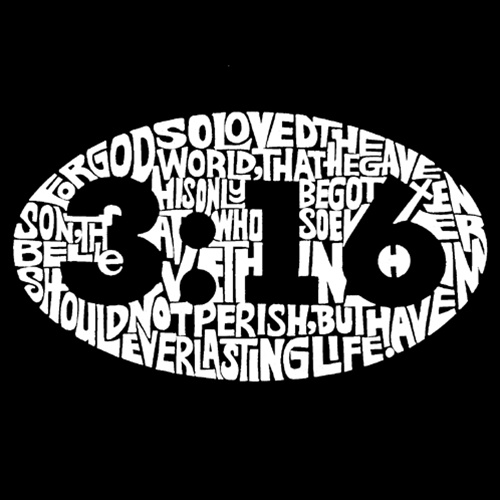
For God so loved the world that he gave his only Son, so that everyone who believes in him may not perish but have eternal life.

There was a pharisee named Nicodemus and he came to visit Jesus at night. As a leader of the Jews it was probably best to visit Jesus under the cover of darkness, and when they met together Nicodemus began to ask Jesus about all he had seen and heard. “Teacher, it is clear to us that you have come from God because no one can perform the signs that you do apart from the presence of God.” “You’re absolutely right,” Jesus replied, “No one can see the kingdom of God without being born from above.”

“Now wait a minute Jesus, how can anyone be born after having grown old? Can someone re-enter their mother’s womb and be born?” Jesus calmly answered, “Listen Nicodemus, no one can enter the kingdom of God without being born of water and Spirit. What is born of the flesh is flesh, and what is born of the Spirit is spirit. Do not be surprised that I told you that you had to be born from above. You know very well that the wind blows where it chooses, you hear the sound of it, but you do not know where it comes from or where it goes. So it is with everyone who is born of the Spirit.”

“But Jesus how can these things be?!” “Nicodemus, are you a teacher of Israel, and yet you do not understand these things? If I had told you about earthly things you would’ve believed,  but now I talk to you about heavenly things and you do not believe. No one has ascended into heaven expect the one who descended from heaven, the Son of Man. Just as Moses lifted up the serpent in the wilderness, so must the Son of Man be lifted up, that whoever believes in him may have eternal life. For God so loved the world that he gave his only Son, so that everyone who believes in him may not perish but have eternal life. Indeed, God did not send the Son into the world to condemn the world, but in order that the world might be saved through him.”

Nicodemus_Jesus

Last week we looked at one of the most well known stories from the Old Testament: Adam and Eve in the Garden. Today I could not help myself from proclaiming one of the most well known New Testament scriptures: John 3:16. In the entire biblical canon, both the Old and New Testaments, there must be few, if any, scriptures that have been so remarkably loved by so many as this text. It is simple and to the point. It opens up endless possibilities. It embodies the hope of all Christians. It is beautiful and appealing. It begins with the beginning and stretches into the far reaches of eternity. It proclaims that which is most fundamental to our faith: that God loves us. 

But the scripture today is about so much more than just that one isolated verse. I am thrilled that so many of us have memorized John 3:16, but we cannot forget about the inquisitive soon-to-be disciple named Nicodemus.

What do you make of this pharisee who came to see Jesus in the middle of the night?


On Tuesday morning, after gathering with the UMW, I made my way outside onto our back parking lot. After months of cold weather, with mounds of snow continually piling up, the Pre-School was finally able to play outside again. Now, let me be clear: I am just like those children. Having been cooped up in this church all winter I was just as, if not more, excited to run around and play outside. The children all had their plastic cars and bikes, some were running around in circles, others were using the fake gas pump to fill up the cars, (capitalism at its finest) when I saw a box of sidewalk chalk.

sidewalk-chalk

I silently made my way to the middle of the black top with the biggest piece of chalk that I could find and I began to draw. Without saying a word, or drawing attention to myself, the children began to congregate around me in a large circle. “Pastor Taylor, what are you drawing?” I heard one them mutter behind me, and I replied, “You’ll see in a moment.” As I stepped back the children moved with me, and there on the blacktop was a giant head with a wide open mouth. Why? I have no idea, but its what I drew. And without really understanding what I was doing I told the children that I was going to jump in the mouth of this mystery person made out of chalk. If I had said that to any of you, you would have thought that I lost my marbles. But with the children, they believed me, they looked into my soul, and some of them even begged me not to do it. But there I stood crouched with my hands at my side, and I jumped in. Of course I acted as if I was falling in and some of the children laughed, and when I was done, I encouraged some of them to jump in. There was a moment when the first girl stepped forward to the edge of the face. As I saw her prepare to jump in I realized she was unsure of what would happen to her. While rocking her hands back and forth I could see the sense of wonder and imagination brewing within her as she jumped right in.

Thats what Nicodemus was like. Jesus is known for having said that whoever does not receive the kingdom of God like a child shall not enter it. Nicodemus had a childlike and inquisitive faith. When confronted with the man of many wonders, Nicodemus wanted to jump right in to learn more about this new kingdom. While his contemporaries scoffed at the new teaching, Nicodemus’ imagination allowed him to see deeply into the truth of Jesus.

The other leaders of the synagogues were already muttering with irritated resentment regarding this so-called teacher who was beginning to develop a following. They disagreed with his strange ways, his strange teaching, and his strange disregard for authority. Nicodemus, however, felt there was indeed something strange about Jesus, but it could not be dismissed so easily. To Nicodemus, God was still speaking through people, and to his ears there was something in this new proclamation worth considering.

So, under the cover of night, Nicodemus went to learn more. He wanted to see for himself, he desired to hear from the man himself, to question and to learn. Instead of giving into the rumors, Nicodemus wanted to base his understanding on first hand experience. He could not settle for hearing about the man, but instead needed to jump straight into the abyss of the Son of Man.

In his willingness to question Christ we discover that Nicodemus was a great man who possessed enviable qualities. While suffocated by the surrounding culture and religions assumptions and expectations, he somehow managed to exhibit an open-mindedness that broke the chains of religious limitation. 

Moreover, Nicodemus is one of the best examples of discipleship. By the end of the gospel account Peter will have denied Jesus in a shameful panic, the rest of the disciples will have scattered or run off into hiding. For all practical purposes, the story had come to a close. But Nicodemus, this strange pharisee from our story today, openly stood forth as one of Jesus’ only remaining friends. Nicodemus dared to risk the punishment of superiors, the resentment of his peers, by paying the last loving rites to the dead body of Jesus that would have been treated as trash by anyone else.

Nicodemus is an understatedly important figure in the Gospel for us in the life of the church. He is so familiar to us, because he is just like us. He asked the kind of questions that many of us would have asked, had we been there with our Lord.

If you take a step back from the account, what Jesus was talking about sounds impossible. How can someone be born anew? Jesus simply responds to our misunderstanding and confusion; its not about being physically reborn as a child, but about being born anew in such a way that you can reorient your life. We must be born anew. Our prayer and our hope should be rooted in the desire to be recreated. Make me another kind of being from what I am. Renew a steadfast spirit within me. Create in me a clean heart. Do all this, O God, so that I can lead a different life. 

The whole point of the gospel is that God can achieve the impossible. Just as God can raise Jesus from the dead, God can achieve the impossible with you and me. And he does it! We see it happening in other peoples lives, our wayward friends who reorient their lives for the better. We have experienced it on some measure in our own lives however small or large. How does God change us? Ah, says Jesus, that is part of the great mystery. The wind comes who knows how, cleansing, refreshing, and then before we know it, its gone.

For God all things are possible. We can be born anew. We can find a new orientation for our lives no matter how young or old we may be. But even greater than this, is the promise of eternal life.

Jesus ends his conversation with Nicodemus with the, now famous, “for God so loved the world that he gave his only Son, that whoever believes in him may have eternal life.”

Martin Luther, the great protestant reformer once said, “If I were as our Lord God, and these vile people were as disobedient as they are now, I would knock the whole world to pieces!” We consistently make a mockery of God’s love by continually disobeying his commands, and by ceasing to love others as we love ourselves. How can God love us when we ruin everything he created including ourselves?

God loves us, because God is love. God loves the world; his foolish, blundering, wayward, and sin sick world. This love utterly breaks through our foolish conceptions of what love means and is; God’s love runs out to lengths that sounds incredible to our human ears because we could never return that same love.

god-god-is-love-lord-love-the-greatest-love-of-all-favim

God is like that remarkable parent who continues to love a child through all the wrong decisions and failures. Picking them up from the police station, driving them back to rehab, sitting with them night after night helping with homework, loaning them money when they fall on hard times. The only difference being that when our love for our children fails, his love for us remains steadfast.

God proves his love toward us by doing all that God can do, and giving all that God can give to help us; stretching himself even to sacrifice his only Son, and hold back nothing.

Thats what Nicodemus learned from his time with Jesus. That in the impossible mystery of God’s created order, God’s love knows no bounds, was made manifest in Christ’s death on the cross for you and for me and for the whole world.

Let us all strive to live like Nicodemus. Let our faith be inquisitive and exciting. Let us all prepare to jump into the unknown, to fearlessly step into a relationship with the triune God, and above all remember that great scripture: God so loved the world that he gave his only Son, so that everyone who believes in him may not perish but have eternal life. To God be the Glory.

Amen.