At that very time there were some present who told him about the Galileans whose blood Pilate had mingled with their sacrifices.
“I appreciate what you’re trying to do preacher, but I don’t come to church to hear about what’s going on in the world. I come to church to hear about God.”
I received that comment after worship one Sunday many years ago and I will never forget it. I can’t remember what exactly I preached about that day, nor do I remember what hymns we were singing, but I remember that comment.
It’s a notable one. On one hand, the admission that the church exists to proclaim who God is and who we are in relation to God is remarkable and downright faithful. But on the other hand, the dismissal of the world in the church is a denial of the very reality of reality.
Preaching is never done in a vacuum. A time and a place are always present in a preacher’s work, but that does not mean that the preacher notices or recognizes where they are. Even preachers who try to do the work of preaching without acknowledging their time or place cannot help but reflect time and place in their work. We preachers are reflections of the world around us whether we like it or not.
The theologian Karl Barth is known for noting that preachers should work with the Bible in one hand and the newspaper in the other. That surely sounds like good advice: what we experience helps us to understand the scriptures and the scriptures help us to understand our experiences. The only problem is the fact that the newspaper is just as likely to mislead us regarding our time and place. And that’s not even mentioning the question of which newspaper we should be reading. We, indeed, live in a strange new world, made clear to us by various headlines, but when it comes to the life of faith, the strange new world of the Bible is our world.
An atrocity has taken place in the holy city, it’s the front page headline of the Jerusalem Times – Pilate Cuts Down Galileans In The Temple. We don’t know why they were killed, or even how they were killed, only that in their executions their blood was mixed with the sacrifices they brought to the Temple.
You can imagine the commotion this caused among the faithful.
So much so that some in the crowd approached Jesus and demanded to know why such a thing took place among God’s chosen people: What had they done to deserve such an awful fate?
“Nothing,” Jesus says, “They were not greater sinners than any other Galileans.”
And then the Lord pulls out another headline, another catastrophe on the hearts and minds of the people. A tower had fallen in Jerusalem, in the neighborhood of Siloam, just south of the Temple. 18 people died in the incident. And Jesus says, “They were not greater sinners than others either.”
How pastoral.
The rain falls on the good and the bad alike, as do famines and other such things, Jesus says in another part of the Gospel. Which can sound like unmitigated bad news. And yet, it is strangely Good News. It is Good News because God is not keeping some great ledger book in the sky and then raining down blessings or curses accordingly. God is not a warden watching over the prisoners to see how well, or how poorly, we behave.
If God punished us according to the choices we make, not one of us would be left around to make any choices at all.
Instead, God arrives in the world in a totally fragile and vulnerable way so that even if a tower falls on our heads, or if our lives are taken by a dictatorial political emissary, or if we die peacefully in our sleep, that it will not be the end for us.
What we believe shapes how we behave. The cross and empty tomb give us the freedom, here and now, to live bold and faithful lives for the Lord and for others because the most important thing in the history of the world has already taken place. No headlines, bad or good, can take us away from the Love that refuses to let us go.
So, sure, take the Bible in one hand and the newspaper in the other, but never forget that the former is far more determinative than the latter.
Jesus, full of the Holy Spirit, returned from the Jordan and was led by the spirit in the wilderness, where for forty days he was tempted by the devil. He ate nothing at all during those days, and when they were over, he was famished. The devil said to him, “If you are the Son of God, command this stone to become a loaf of bread.” Jesus answered him, “It is written, ‘One does not live by bread alone.’” Then the devil led him up and showed him in an instant all the kingdoms of the world. And the devil said to him, “To you I will give their glory and all this authority; for it has been given over to me, and I give it to anyone I please. If you, then, will worship me, it will all be yours.” Jesus answered him, “It is written, ‘Worship the Lord your God, and serve only him.’” Then the devil took him to Jerusalem, and placed him on the pinnacle of the temple, saying to him, “If you are the Son of God, throw yourself down from here, for it is written, ‘He will command his angels concerning you, to protect you,’ and ‘On their hands they will bear you up, so that you will not dash your foot against a stone.’” Jesus answered him, “It is said, ‘Do not put the Lord your God to the test.’” When the devil had finished every test, he departed from him until an opportune time.
It is a long standing tradition in the church to begin the forty days of Lent with Jesus’ forty days in the wilderness. We, in a sense, mirror the journey Jesus faced with our own attempts at wrestling with temptation while abstaining from certain items, behaviors, and practices.
It’s not the easiest section of the church calendar.
The hymns are all a little too on the nose, the sermons call to question all of our wandering hearts, and even the scriptures reject our desire to look at anything but the cross.
We, then, can do lots of things as a church during this particular liturgical season, but at some point or another we will all raise the question we’ve had since the very beginning of the church: “Who, exactly, is this Jesus?”
It was just a few weeks ago that we were worshipping the baby born King in the manger, with little angels and shepherds wandering around the sanctuary. It’s easy to worship that Jesus because in infancy there isn’t much for us to come to grips with. We can confess the wonder of the incarnation, but we’re not entirely sure what that has to do with you or me.
But then, here in Lent, it’s like the Spirit wants to smack us over the head with the truth of the Truth incarnate.
And we start with Jesus’ temptations in the wilderness.
This vignette in the strange new world of the Bible tells us exactly who this Jesus is, and who he will be.
Oddly enough, it offers us a glimpse behind the curtain of the cosmos – it helps us see that the story of Christ will end just as it begins.
Jesus is baptized by his cousin John in the Jordan and then he is led by the spirit into the wilderness where for forty days he was tempted by the devil.
“Hey JC!” The devil begins, “If you are who you say you are, I’m gonna need to see some ID. No pockets in your robe? That’s fine. I’ll take your word for it, if you really are the Word. But, let me tell you, you look awful. I’m sure you’re hungry. Not a lot to eat out here in the wilderness. Why don’t you rustle up some bread from these stones. Who knows? That little parlor trick could come in handy down the road… what could be more holy than having mercy on the hungry and filling their bellies?”
And Jesus says, “It is written, we cannot and shall not live by bread alone.”
“So you know your scriptures!” The Devil says, “I’m impressed! And, frankly, I’m with you Son of Man. You can’t just give hungry people food for nothing. They’ll become dependent. No handouts in the Kingdom of God! But how about this? Would you like a little taste of power? And I mean, real power. Political power. Here’s the deal – I’ll give you the keys to the kingdoms here on earth, all of them. The only thing you have to do, and it’s really nothing when you think about it, I just need you to bow down and worship me.”
And Jesus says, “It is written, we shall only worship one God.”
“Okay, okay,” the Devil continues, “Don’t be such a buzzkill. So you won’t show compassion to the needy, even yourself, and you won’t go ahead and make the world a better place through political machinations. That’s fine with me. For what it’s worth, I can play the scripture game too, you know. So I’ll give you one more chance. Why don’t you leap from the top of the temple, give the people a sign of God’s power and might, for, doesn’t it say in the Psalms, ‘He will command his angels concerning you to guard you in all your ways. On their hands they will bear you up, so that you will not dash your foot against a stone.’ Just think about the kind of faith people will finally have if you show them one big miracle!”
And Jesus says, “It is written, you shall not put the Lord you God to the test.”
And then the devil leaves only to return at an opportune time.
That’s rather an ominous ending to a passage of scripture. But, no spoilers. Let stick with what we’ve got for now.
As I said at the beginning, we often use this story to give a little encouragement in resisting our own temptations. This is the time for someone like me to make a big pitch to people like you about whatever bad habit you need to drop. The time has come to shape up or ship out.
And, clearly, we’ve got plenty to work on. There are far too many people who fall asleep hungry at night, far too many children to have no bright hope for tomorrow, far too many communities that are falling prey to the devastating powers of loneliness.
But, if that’s all this story is supposed to do, if it merely exists as a weapon to wield against sleepy and dozing congregations about being better, then Jesus certainly could’ve been a little clear about what we should or shouldn’t be going.
Put another way: If Jesus’ temptations are really about our temptations, then it would’ve been better for him to have more lines in this passage than the devil.
Scripture is always primarily about God and only secondarily about us.
But we are vain and selfish little creatures and we assume everything is always about us, and only ever about us.
Jesus’ temptations are exactly that – Jesus’ temptations.
This isn’t a story about how we deal with our own temptations. It’s actually a story about how Jesus deals with the world – how Jesus deals with us.
Notice: the things the devil offers to the Lord, they’re all objectively good things – bread, politicalpower, miracles.
And yet, Jesus refused them. And he even used scripture to defend his refusals!
Perhaps if the devil offered Jesus an unending buffet at the golden corral, or the nuclear codes, or David Copperfield’s assortment of illusions, we could sympathize with Jesus’ dismissals. But the devil offered Jesus possibilities for transformation and Jesus said, “No, thank you.”
But here’s the real kicker, the truly wild part of this story: by the end of the Gospel Jesus will, in fact, do all of the things that the devil suggests.
Instead of turning some rocks into a nice loaf of sourdough, Jesus will feed the 5,000 with nothing more than a few slices of day old bread a handful of fresh fish.
Instead of getting caught up in all the political procedures to Make Jerusalem Great Again, Jesus reigns from the arms of the cross and eventually ascends to the right hand of the father as King of kings and Lord of lords.
Instead of pulling off a primetime Law Vegas magic special, Jesus dies, and refuses to stay dead.
For a long, long, time we’ve understood Jesus and the Devil to be figures on opposite ends of the spectrum – one good and the other bad. It even slips into out culture whenever you see a figure with an angel whispering in one ear and a red figure with a bifurcated tail whispering in the other.
And yet, at least according to this moment in scripture, the difference between the devil and Jesus isn’t the temptations themselves, but in the methods upon which those acts of power come to fruition.
And, though it might pain us to admit, the devil has some pretty decent suggestions for the Messiah – Why starve yourself Lord, when you can easily set a meal here in the wilderness? Why let these fools destroy themselves when I can give you control over everything and everyone? Why let the world continue in fear and doubt when you can prove your worth right now?
The devil, frighteningly, sounds a lot like, well, us. The devil’s ideas are some that we regularly discuss and champion.
What our community needs is another food pantry! What we need to do is make sure that we have Christians running for political offices! If only God would show us a miracle, then everyone would finally get in line and the world will finally be a better place.
But Jesus, for as much as Jesus is like us, Jesus is completely unlike us. For, in his non-answer answers he declares to the devil, and therefore to all of us, that power as we understand it doesn’t actually transform much of anything.
We can create a feeding program, but sooner or later we will introduce requirements for those who receive the food.
We can get Christians elected into the government, but at some point they will be more concerned with maintaining their power than pointing to the one from whom all things move and have their being.
We can witness miracle after miracle after miracle, but we will never be quite satisfied with what we receive.
We’ve convinced ourselves, since that fateful day with a certain fruit in a certain tree, that it’s up to us to make things come out right in the end. That, by amassing power, we can make the world a better place.
In the early days of the church, we got so cozy with the powers and the principalities that individuals were forced to be baptized in order to becomes citizens in the empire.
In the Middle Ages, the church required more and more of the resources of God’s people in order to get their loved ones out of purgatory all while cathedrals got bigger, as did the waistlines of the clergy.
And even today, our lust for power (political, theological, economic), has led to violence, familiar strife, and ecclesial schisms.
We believe, more than anything else, that if we just had a little more control, if we just won one more debate, if we could just get everyone else to be like us, that it would finally turn out for the best.
But it never does.
If we could’ve fixed the world with our goodness, we would’ve done it by now.
Or, conversely, some of the most horrific moments of history were done in the name of progress.
The devil wants to give Jesus a short cut straight to the ends that Jesus will, inevitably, bring about in his own life, death, and resurrection.
The devil wants Jesus to do what we want Jesus to do.
Or, perhaps better put: The devil wants Jesus to do what WE want to do.
But here’s the Good News, the really Good News, Jesus rejects the temptations of the devil, and our own, and instead does for us what we would not, and could not, do for ourselves.
Even at the very end, with his arms stretched out not he cross, we still tempt the Lord just as the devil did: “If you really are who you say you are, save yourself!”
And, at the end, Jesus doesn’t bother with quotes from the scriptures, nor does he provide us with a plan on how to make the world a better place, he simply dies.
They tested God in their heart by demanding the food they craved. They spoke against God saying, “Can God spread a table in the wilderness?”
Jesus spends the afternoon feeding 5,000 through his divine mercy. And, when all is said and done, bellies full to the brim, a crowd gathers to question the behavior of this God in the flesh.
Jesus’ response – “You all are looking for me but for the wrong reasons. I delight in giving you food to eat, but I also have something else to offer.”
“What must we do?” The crowds intone.
“Believe” Jesus answers.
“Okay, we get that, but how do we really know you can make good on your promise? Can you rain down from manna from heaven for us like Moses did?”
And then Jesus says, “Moses didn’t give you the manna! It was God who gave the good gift!”
“Sure,” they say, “That’s fine. We’d like some of that bread from heaven please.”
And Jesus answers them, “Have you not heard anything I’ve said? I am the bread!”
What wondrous good news it is that, when Jesus showed up proclaiming the beginning of God’s new kingdom, he did so not with sermons about the Trinity, or the atonement, or justification, or any other big and abstract theological mishmash. Instead, Jesus began by pointing right at our stomachs, to that gnawing, unsatisfied, emptiness within and then invited us to dinner.
Jesus feeds the hungry – that’s who Jesus is.
Think of the crowds during the days of Moses and during the days of Jesus, imagine how they felt while eating the bread.
Did they deserve it? Did they earn it?
No!
The Psalmist reminds us that they had done everything but deserve it! God’s wrath was kindled against them and yet God gave them the bread anyway. The 5,000 didn’t have to lay out all their good works before Jesus delighted in filling their bellies.
This is grace.
Grace plus Nothing.
Just when we, the people of God, expect to be clobbered with guilt – “You didn’t listen in the wilderness!” “You haven’t loved your neighbors enough!” – we actually get clobbered by grace.
And, when that happens, we begin to realize that whenever we’ve gone looking for peace or happiness by doing this, that, and the other we’ve actually overlooked the God who has always been looking for us.
The One who offers us the gift we simply don’t deserve.
The heart of Christianity is this – We don’t have to give or say or pay anything – In Christ it has all been given, said, and paid for us.
It is by grace and only by grace that we are accepted by God.
Can God spread a table in the wilderness?
That question is often still our question. We look at the wildness of our lives, we spend more time looking backward than forward, and whenever we encounter our own disappointments and shortcomings, we wonder if God can really do anything about it.
Frankly, it’s why some of us keep showing up to church week after week, in-person or online – we want an answer to our question. Can God make something of our nothing? Can God spread a table in the wilderness?
And the answer is, quite simply, yes.
God can and God does all the time. God is the Good Shepherd who goes after the one lost sheep, God is the Prodigal Father who rushes out to find us in the street even before we have a chance to apologize, God is the One who, rather than leaving us to our own devices, comes to dwell in the muck and mire of this life to offer us Grace plus Nothing. Amen.
Now about eight days after these sayings Jesus took with him Peter and John and James, and went up on the mountain to pray. And while he was praying, the appearance of his face changed, and his clothes became dazzling white. Suddenly they saw two men, Moses and Elijah, talking to him. They appeared in glory and were speaking of his departure, which he was about to accomplish at Jerusalem. Now Peter and his companions were weighed down with sleep; but since they had stayed awake, they saw his glory and the two men who stood with him. Just as they were leaving him, Peter said to Jesus, “Master, it is good for us to be here; let us make three dwellings, one for you, one for Moses, and one for Elijah” — not knowing what he said. While he was saying this, a cloud came and overshadowed them; and they were terrified as they entered the cloud. Then from the cloud a voice that said, “This is my Son, my Chosen; listen to him!” When the voice had spoken, Jesus was found alone. And they kept silent and in those days told no one any of the things they had seen.
He was a fisherman, and not even a very good one, when the Lord showed up and made him into a fisher of people.
And Pete, he’s seen some things, witnessed moments he can’t explain. First it was the teacher calling him to follow. That’s all it took. He and his coworkers, his fellow fishermen, left it all behind on the shore, including nets full of recently caught fish.
Then it was the episode with his mother-in-law. She was busy trying to meet the needs of the Teacher and his new disciples when he touched her and made her well.
And there was the time when the crowds grew so large, and stuck around so long, that they need to eat something and the Teacher turned scarcity into abundance, and everyone left with their bellies full.
And the stories! Mustard seeds and prodigal sons and wayward vineyard workers. That’s what Pete liked best, the stories.
It’s no wonder then, having seen all he’s seen and heard all he heard, that when the Teacher asked, “Who do you say that I am?” Pete was the first to shout, “The Messiah!”
But it’s also why, having confessed the truth of the incarnation, when the Teacher told him and the others that he was going to die, Pete was the first to rebuke him for saying what he said.
“JC, I don’t think you get it. The Messiah can’t die! You’re here to restore all the promises to Israel, which is something you can’t do from the grave.”
And do you know what the Teacher said to Pete? “Get behind me Satan, for your head is stuck on human things, and I’m here for heavenly things.”
And now, 8 days later, they’re walking up a mountain to pray. They arrive at the top, bending in humble adoration, lifting up their prayers to the Holy One, when the Teacher’s appearance changes drastically. His face isn’t the same and his clothes are whiter than the brightest light anyone of them can handle.
Suddenly, two other figures appear, its Moses and Elijah and they’re talking with the Teacher. They are glorious and they talk about his coming departure in Jerusalem, his exodus for the rest of us.
Moses and Elijah are making movements as if they’re going to leave and Pete shouts out, “Lord, it is good and right for us to be here! Let’s make dwelling places here on the mountain so that we might never leave.”
As the words leave his mouth, a cloud overshadows them completely, and the disciples are full of terror. But from the cloud comes a voice, a voice unlike any other, “This is my Son, my Chosen; listen to him!”
Suddenly they are alone again, and the Teacher says, “Say nothing to anyone about what you have seen and heard.”
The Transfiguration.
Today is a major turning point in the church year. The transfigured Jesus turns his blazing and radiant face toward a violent fate in Jerusalem at the hands of roaring crowds. This week, the church turns away from the light of Epiphany and toward the shadows of Lent.
Not all churches mark this occasion, but to ignore the Transfiguration is to miss out on the future made manifest in the present. It is a moment of transcendence that lifts the veil of all the good, true, and beautiful in the world.
The Transfiguration is part of what makes the strange new world of the Bible so new and so strange.
And it is indeed a strange story, so strange that as I referenced it with and among individuals from our church this week, more than a few confessed that they were unfamiliar with this moment in the Gospel.
Which makes sense! This story, even among the strangeness of the Bible, is quite bizarre. Jesus has just rebuked his chief disciple for missing the mark, yet again, they go up on top of a mountain during which Jesus is flanked by two of the most important figures from Israel’s history, only to have it all stop just as soon as it started.
And, notably, this is the only instance in any of the Gospels when Jesus doesn’t respond at all to something that someone has said to him.
He completely ignores Pete’s request for a motel franchise on top of the mountain.
There are so many things at stake in this triumph of transfiguration, but most of all it is a preview of the Gospel. It is the future present.
And we can’t really wrap our heads around it! Because, we confess, we don’t know what to make of moments that we can’t explain.
Our default mechanism for living in the world today is living in and by the natural and explainable rather than, and at the expense of, the supernatural.
The challenge of our being is that we are stuck living in an unthought way – we are addicted to certainty in a world that is inherently unstable and uncertain.
Our comprehension of events is such that we are convinced we no longer need a religious or mystical explanation for things that happen, or don’t happen. And yet, we are equally obsessed with self-justification, which is inherently a mystical adventure.
Put simply: We’re all on a journey for meaning in the world and more often than not we derive our sense of meaning out of what we can accomplish. Which, if we’re honest with ourselves, never amounts to much. But we keep trying and trying and trying anyway. We add new habits or we drop bad ones. We set out to create some permanence in a world that works only through impermanence. We try and try and try and find ourselves disappointed whether we work harder or not.
We, in some way, shape, or form, are looking for transcendence, but we can’t find it.
Which is odd when you consider how often, in church of all places, we try to take the strangeness of the gospel and turn it into something practical. We take the impossible possibility of God’s grace and we transform it into a list of three things to do to become a better version of yourself. We take the mount of Transfiguration and turn it into some form of moralism about what we should, or shouldn’t, be doing in the world today.
But the Transfiguration isn’t about what we are supposed to do – it’s about being in the presence of God.
Christian art is an endlessly fascinating phenomenon. And the Transfiguration has, for centuries, commanded the imagination of artists.
Here is the Transfiguration as portrayed by the Renaissance painter Raphael. It was the last painting he created before his death, and it was conceived as an altar piece for a cathedral in France.
The top of the painting depicts the scene we encounter in scripture and notably, the bottom half conveys the next part of the story when Jesus and the disciples descend from the mountain to heal a young boy.
Notice how the light of Christ’s Transfiguration is juxtaposed with the darkness of the lower scene.
And here is a modern and abstract depiction of the Transfiguration by an artist named Jaison Cianelli. Like Raphael’s, the painting conveys a hyper focused change that is wrought with lasting consequences.
And finally, this is a modern icon created by a Ukrainian artist named Ivanka Demchuk. The cowering disciples in the bottom portion stand in for all of us, who when encountered by the One who encounter us, can’t help but tremble in fear.
The Transfiguration is one of those moments in the Bible that we can never fully wrap our heads around. It’s one that we need art and music and other aspects of expression to help us come to grips with this bewildering proclamation.
It is beyond our ability to explain and certainly beyond our ability to comprehend because it transcends all modes of our being.
Without the supernatural, without transcendence, without mystery, the church becomes nothing more than a country club, or the next best self-improvement clinic, or a sub par social services agency.
And to be clear, there is nothing inherently wrong with seeking out fellowship, or trying to better one’s self, or providing needs to the last, least, lost, little, and dead. But if that’s all we have, if that’s all the church is, then we have no business calling ourselves the church.
There will always be plenty of other institutions that can bring us better friends, or help us get from where we are to where we want to be, or make substantive changes in the world. But they don’t have the one thing that we do: Jesus Christ and him crucified.
The wonderful and weird witness of the Transfiguration is that the only thing we’re told to do is listen to Jesus. From this point forward, Jesus is going to do what Jesus is going to do. He will still stir up the crowds with stories of treasure in a field, and proclamations about the signs of the times, but when push comes to shove Jesus will mount the hard wood of the cross regardless of all our goodness or lack thereof.
We can point to all these bewildering details on top of the mountain, but it’s important that we don’t miss out on the timelessness of the scene. The Transfiguration, a moment indelibly in the past, shows us a glimpse of the future.
Tell no one what you have seen or heard until the Son of Man is raised from the dead.
This moment is made indelible only by the ending that the disciples can scarcely imagine, even though Jesus just hit them up over the head with it.
They are sworn to silence because they are not yet ready for the transcending truth. They have not made it from their reality to God’s reality. They witness something remarkable and inexplicable, but it is not yet the resurrection, the great transfiguration of all things.
Today we, like the disciples, are called to live according to the wondrous nature of the Transfiguration – we can stumble around like fools grasping out in fear for comfort – and then we will hear the words, the only words we need to hear: “This is my Son, the chosen; listen to him.”
But, and it’s a big but, if we’re honest with ourselves, we don’t want to listen to Jesus. We’d rather listen to ourselves.
We’d rather listen to ourselves because we are downright addicted to control. Or, at least to thinking we’re in control.
Do you know how God responds to those who think they’re in control?
Laughter.
It is humbling to be laughed at by anyone, but when God’s laughs at us it’s another thing entirely. But perhaps we need to hear that laughter, particularly when we wake and sleep believing that it’s up to us to make the world turn out right.
The world has already turned out right. We know the future in the present. The tomb is empty!
We don’t have to be the hope of the world because Jesus already is. The only thing we have to do is live accordingly.
And that’s why Lent beckons us. It’s why Christians, for centuries have marked and observe the season that starts on Ash Wednesday because it reminds us of our inconvenient truth – we can’t make it out of this life alive. But, like the Lord in the tomb, God refuses to leave us that way.
We are a people desperate to be in control of our lives and we’re living in a world in which we are not in control. Moreover, we can scarcely imagine what it would look like to live in the light of Jesus’ transfiguration. It leaves us quaking and bewildered like those three disciples.
But if we do not reflect the glory of the One transfigured, then the world has no light to see that all is not darkness. Amen.
But someone will ask, “How are the dead raised? With what kind of body do they come?” Fool! What you sow does not come to life unless it dies. And as for what you sow, you do not sow the body that is to be, but a bare seed, perhaps of wheat or of some other grain. But God gives it a body as he has chosen, and to each kind of seed it’s own body. So it is with the resurrection of the dead. What is sown is perishable, what is raised is imperishable. It is sown in dishonor, it is raised in glory. It is sown in weakness, it is raised in power. It is sown a physical body, it is raised a spiritual body. If there is a physical body, there is also a spiritual body. Thus is is written, “The first man, Adam, became a living being”; the last Adam became a life-giving spirit. But it is not the spiritual that is first, but the physical, and then the spiritual. The first man was from the earth, a man of dust; the second man is from heaven. As was the man of dust, so are those who are of the dust; and as is the man of heaven, so are those who are of heaven. Just as we have borne the image of the man of dust, we will also bear the image of the man of heaven. What I am saying, brothers and sisters, is this: flesh and blood cannot inherit the kingdom of God, nor does the perishable inherit the imperishable.
A United Methodist Bishop received a chain saw one Christmas and quickly went to work with it. And then, on New Year’s Eve, the chainsaw slipped, grabbed ahold of his sleeve, threw him to the ground, and in a matter of seconds did some serious damage and he was rushed to the emergency room.
The bishop later reflected that, while riding in the back of the ambulance and the sirens were ringing, if he died because of blood loss, he hoped that his wife would be smart enough to tell everyone that he died chopping firewood for poor orphans.
While in reality he was really just trimming some hedges that weren’t yet in need of trimming.
However, he didn’t die.
Though at moments he wished he did.
He went through serious surgery and was stuck in the hospital for quite some time while he recovered.
And, it was during this time that a well intentioned chaplain entered the room and offered “pastoral presence.” The bishop had enough pastoral presence in his life, but he motioned for the young man to come in. The chaplain looked over the bandage wrapped around his arm and asked, “Are you a Christian?”
The bishop replied, “Sometimes.”
“Well then,” the chaplain intoned, “I suppose your accident caused you to do a lot of praying?”
And that’s when the bishop realized that throughout his whole ordeal he hadn’t felt moved to prayer in the slightest. He shared, later, that his lack of prayer was not due to a lack of faith in God’s ability to heal. The bishop was quick to note that there are scores of healing stories in scripture, that Paul considered healing a sign of God’s active grace, that the book of Acts points to the power of Christ working to heal through the disciples, and that even James the brother of Jesus calls for the people called church to pray of the sick that they might be healed.
Why then was he, a bishop in the church, so reluctant to pray?
At first he wondered if his lack of prayer could be attributed to the fact that God had better things to do with more people in need than his little chainsaw accident. But the more he thought about it, the more he thought about his aversion to the regular prayer requests he had received countless time before throughout his ministry.
That is, he was sick and tired of everyone being sick and tired in their prayers.
We’re at the tail end of what we call the season after Epiphany. Transfiguration is coming. Ash Wednesday is coming. Lent is coming. We will shortly make the journey inward to confront the condition of our own condition leading up to the cross on Good Friday, and yet, we’re still dealing with the shock of the incarnation.
Sure, most of us have packed away all the Christmas decorations weeks ago. Though, if you drive around the neighborhood around the church, you’re still likely to catch quite a few Christmas lights dangling from gutters.
But the proclamation of Christmas is one that lingers even when we move through different liturgical seasons. God, bewilderingly, refused to stay above and instead got down and dirty with us, in the flesh, and moved in next door, as it were.
Jesus, fully God and fully human, chose to be a people, a family, what we now call church.
We are the body of Christ in the world.
And how is our body faring?
Some of us we are tracking our calories constantly, or our exercising doesn’t count unless we can post it somewhere on social media. Some of us are struggling to fall asleep at night as we run through the list of things that terrify us. Some of us are making plans for the next degree, or the next job, or (heaven forbid) the next spouse.
We’re obsessed with our bodies and our physical well being. It dominates our prayers to the degree that if we ever ask someone to pray for us there’s a better than good chance that our request has to do with our, or someone else’s, body.
It dominates our waking, and sleeping life, so much so that many of us have devices strapped to our wrist that not only tell us if we move enough during the day but also if we’re getting the right kind of sleep at night.
And for those of you keeping score at home, I’m wearing one of them right now!
Our health and well being, or lack thereof, is constantly being reinforced through commercials designed to sell us on bodies that we will never have and beauty magazines that will only ever make us feel ugly.
And here’s the Christian message in the midst of all of it: it’s not up to you.
Your salvation isn’t up to you.
You can’t earn it through perfect church attendance on Sunday mornings.
You can’t earn it by giving more through the offering plate than the person next to you.
You can’t earn it from developing an 18 pack of abs.
You can’t earn your salvation because it is a gift given by the only One who can: God.
And yet, the gift of salvation, our very resurrection from the dead, means that our bodies matter today. It means that, once we come to grips with what God did and does, our being in the world changes.
The Corinthians to whom Paul writes his epistles, the Christians he derides for their foolishness, were living as if their bodies no longer mattered – they were giving in to their desires to such a degree that it was harming themselves as individuals and as a community. They were getting drunk on the wine from communion, they were trading bedfellows, they were letting their flesh and blood dictate everything about who they were.
And Paul says, “No! Listen: we’re not there yet. We’re still in our bodies in this mortal life, but the resurrected life is coming.”
Our bodies are important. As I’ve noted before – Christianity isn’t a spiritual faith, it’s an embodied one. It’s why we baptize with water, and we share bread and cup. It’s why we take seriously the needs of the hungry, and the poor, and the outcasts. And it’s why we are bold to pray for the health and well being of ourselves and others.
But all of that is a long cry from the obsessiveness that we have with our own bodies today.
None of us have the body that we really wish we had. And if we do, we resent how much work it takes to make our bodies look and feel that way. And the older we get, the more we discover that our bodies are not as trustworthy as we thought they once were.
Certain foods don’t sit like they used to. It’s harder to lose the holiday weight. No amount of lotions and creams can make our wrinkles disappear. And that’s not even mentioning the inability of our bodies to ward away sickness.
The bodies we are in can’t be, and won’t be, perfect.
Paul puts it this way: the flesh is weak.
That’s why he admonishes the Corinthians to not give in to each and every little desire while, at the same time, he reminds them (and us) that we need not beat ourselves up over whether or not we look and feel like we want to look and feel.
Certainly, there are moments during Jesus ministry when he healed those in need, but those moments are remarkably ambiguous. He didn’t heal every sick person in Judea, and even when he did heal he often told people to not tell anyone about it.
Whatever Jesus’ mission was, it was about more than physical restoration.
Consider: Each and every person that Jesus did heal eventually died.
Even Lazarus was raised from the dead only to die again.
Outside of scripture we should note that churches were the location for, and eventually created some of, the very first hospitals because taking care of the last, least, lost, little, and dead is part of the work of God.
But only recently has our obsession with our bodies come to dominate just about every aspect of life.
Including our prayers.
That’s not how Jesus prayed, nor it is how Jesus taught us to pray. Bread and trespasses are mentioned in the Lord’s prayer, but our illness and discomfort are not. I have heard prayers and I myself have prayed prayers about every medical diagnosis you can imagine, but I rarely pray for God’s strength to help me love my enemies, I’m not often asked to pray for someone to have the courage to actually forgive the person that harmed them.
Prayer is, and must be, more than bringing our wish lists to Jesus, asking him for occasional help when our bodies are no longer functioning the way they are supposed to.
Prayer, instead, is the risky attempt to let Jesus speak.
That bishop, the one who nearly cut his arm off, the one who didn’t pray in the hospital, he said he was ultimately reluctant to clasp his hands together in petition because the last thing he wanted was to risk a visit from Jesus, who usually shows up making our lives harder and not easier.
The bishop also said that one of the joys of following Jesus (and he used joy sarcastically) is that Jesus usually shows up even when we don’t pray, and sometimes because we don’t pray.
He experienced Jesus in learning how to be dependent on someone else in his healing, something that most of us avoid at all costs – we never want to be a burden.
He experienced Jesus in the reminder of his own fragility, and his destiny to return to the dirt from which he was created.
He experienced Jesus as the only hope in the world he really had, because were his salvation up to himself, he really would be a lost cause.
There was a time when health didn’t mean just freedom from pain and physical discomfort – health meant wholeness, even holiness. And sometimes holiness is nothing more than coming to the realization that what makes the Good News good is that it isn’t up to us – it’s up to God.
Which is foolishness according to the world. The world bangs us over the head every chance it gets about the need for us to be self-made creatures, to make our own destinies, to pull ourselves up by our boot straps.
Grace, from that perspective, is complete foolishness. It is everything for nothing. It is a divine lark in the midst of overwhelming frustration. It is the only thing we need and the only thing we don’t deserve.
Our bodies will fail us, but God won’t. Maybe some of us will be fortunate enough to experience some divine healing in this life, but all of us have already received the greatest healing of all – the gift of salvation.
In the end, the only thing we have to do is trust God. And when we do that, well, then we’re living in grace and by grace.
No matter what happens to us in the course of that trust – no matter how many things we do or leave undone – if we can trust that God, by death and resurrection, has made all things new, then we can rest in our gift and relax.
The whole diorama of all our mediocre performances (which is all we can ever really offer anyway) can’t stop the Love that refuses to let us go. If Jesus refused to condemn us because our works were rotten, then he certainly isn’t going to flunk us if our bodies aren’t perfect.
Do you see? That means we can fail again and again and still live in the life of grace.
Because, at the very worst, all we can be is dead and for the One who is Alpha and Omega, that’s no trouble at all. Amen.
Now if Christ is proclaimed as raised from the dead, how can some of you say there is no resurrection of the dead? If there is no resurrection of the dead, then Christ has not be raised; and if Christ has not been raised, then our proclamation has been in vain and your faith has been in vain. We are even found to be misrepresenting God, because we testified of God that he raised Christ — whom he did not raise if it is true that the dead are not raised. For if the dead are not raised, then Christ has not been raised. If Christ has not been raised, your faith is futile and you are still in your sins. Then those also who have died in Christ have perished. If for this life only we have hoped in Christ, we are of all people most to be pitied. But in fact Christ has been raised from the dead, the first fruits of those who have died.
He boarded the plane, a well dressed 6 foot 8, and hoped for an emergency exit row in which he could stretch out his already too long legs during the flight. He was a pastor and a professor of theology and he knew better than to tell people, on a plane, what he did for a living.
He loaded his carryon above his head, sighed at his average sized seat, and squeezed himself in. And, of course, on this small plane with only two seats on each side, a man equally as large lumbered down the aisle and sat down right next to him.
The preacher stuffed another small bag under his seat, and closed his eyes.
“Is that a Bible?” His seat mate intoned.
The preacher looked down and saw the spine of the Good Book sticking out for all eyes to see.
“What are you, a preacher?”
“Something like that” he responded while crossing his arms and closing his eyes, again.
“Well, I’m not a believer” the man said.
“That’s fine,” the preacher said without opening his eyes, “Frankly, it doesn’t make much of a difference what you do, or don’t believe. Jesus has already gone and done it all for you whether you like it or not.”
The preacher thought that would keep his seat mate quiet for the remained of the flight. But he was wrong. Even though he sat there with his eyes clothes and arms crossed, the man started talking, and he didn’t stop.
First it was just the usual flying-next-to-a-stranger chit chat but eventually it turned serious, and the preacher’s seat partner started talking about Vietnam.
That’s when he opened his eyes and really listened.
The man went on and one, talked the entire flight, describing all the terrible things he did and how, went he came back, his country didn’t want him to talk about what he was told to do.
Eventually, the man said, “I’ve had a terrible time living with it, living with myself.”
And then the preacher leaned over and said, “Have you confessed all the sins that have been troubling you?”
“What you mean ‘confessed’? I ain’t confessing!”
“Sure you are, it’s what you’ve been doing the whole flight. And I’ve been commanded by Jesus that whenever I hear a confession like yours, to had over the goods and speak a particular word. So, if you have any more burdening you, nows the time to hand them over.”
The man said, “I’m done, that’s the lot of them.”
And suddenly, he grabbed the preacher, grabbed him hard like he was about to fall out of the plane, and said, “But I already told you – I’m not a believer. I don’t have any faith in me.”
The preacher unbuckled his seat belt, and stood up over the man and declared, “Well, that’s no matter. Jesus says it’s what’s inside of us that’s wrong with the world. Nobody really has faith inside them – faith alone saves us because it comes from outside of us, from one person to another. And I’m going to speak faith into you.”
The fasten seat belt sign lit up and dinged for the whole cabin to hear, and a steward came over and asked the preacher to sit down. However, he ignored it, and placed his hands on the man next to him and said, “In the name of Jesus Christ, I declare the entire forgiveness of all your sins!”
“But you can’t do that,” the man whispered, while his eyes watered up.
“Oh yes I can, and I must, and I’ll keep doing it over and over again.” And he did. Only this time he said it louder, loud enough for all the other passengers to hear it, and the man became a puddle of tears and he wept over himself like a child.
The rest of the plane was silent, reverent even, knowing that something strange and holy was happening.
When the plan finally landed, the man leaned over to the preacher and asked to be absolved one more time, as if he just couldn’t get enough of the good news. So the preacher did it one more time and the man started to laugh.
He said, “If what you said is true, then it’s the best news I’ve ever heard. I don’t know if I can believe it. It’s too good to be true. It would take a miracle for me to believe something so crazy good.”
And the preacher laughed too, and said, “It takes a miracle for all of us. It’s too true to be good. That’s why we call it the Gospel.”
That’s a true story and I love it. I love it because its so good and true.
Notice, the preacher didn’t sit back and merely listen to the other man. He didn’t fill the voids of silence with drivel like, “I feel your pain,” or, “I know what you’re going through.” The preacher didn’t minimize the sadness with talk of duty or responsibility. He didn’t deflect away or even change the subject.
Instead, he offered absolution.
He, to use the language of Paul, took the man out of his sins.
It would take a miracle for me to believe something so crazy good.
If Christ has not been raised, your faith is futile and you are still in your sins.
Paul is worried about his friends in the faith, his Corinthian Christians – that’s what the whole letter is about. They’re drifting away from the path of the truth and the life and the way that Paul first shared with them.
He catches wind that they are no longer sharing the eucharist together, so he writes about the body of Christ having many members.
He learns that they are fighting constantly over who is the best and who is the worst, so he writes about Christ alone being the head of the body.
And here, in chapter 15, he gets to the heart of the matter – the resurrection of the dead.
Paul, if you can’t tell, is spitting logic through the pages of his epistle – “This is it you Corinthian Christians! It’s this or nothing! Everything, and I mean everything, depends on the truth of the One who is truth incarnate.”
He writes first of the story that he shared with them – Christ has died, Christ is Risen, Christ will come again.
It’s an announcement about things that happened – not a collection of generic religious principles, not a list of things to do or not to do.
The heart of the Gospel – the death and resurrection of Jesus Christ.
So Paul doesn’t pull any punches – If there is no resurrection from the dead, then we are all fools, and we are still in our sins.
It’s hard for us Christians, today, to hear the radical nature of Paul’s proclamation. We forget that this letter was written, sent, and read by Christians before any of the gospel stories were written down. We forget that without Paul’s witness and prayers and ministry, there’s a good chance that the Gospel would have stayed among the Jews alone and never spread to Gentiles like us.
If there is no resurrection of the dead, then the entire foundation of our faith has been in vain, and Christian preaching is nothing more than wishful delusions and empty gestures.
If there is no resurrection of the dead, then we mock ourselves with our faithless worship all while expecting people to live into a new world order that doesn’t really exist.
If there is no resurrection from the dead, then the only thing we can offer the world is a pious lie that leaves us completely and utterly hopeless.
But, let us remember: there is no such thing as “if” in the lexicon of God.
And yet, the desire for proof remains. We’re addicted to certainty, us moderns. We want clarity above all else, and we can’t imagine a world outside the binaries of our distinctions.
But what is life if not a mystery?
I can’t prove the resurrection. No one can.
Believe this, believe that, we say in the church. And somehow the genuine character of one’s belief has become the litmus test for Christianity. Which is made all the more strange when we consider the amount of doubt right smack dab in the Bible!
My former professor Stanley Hauerwas puts it this way: “What a lost people we must be to think that God really cares whether we believe in Him or not.”
You see, one of the most incredible aspects of what we call our faith is that Jesus’ resurrection from the dead is not continent on our belief. Even in the days of our greatest doubts, Jesus is still Lord.
We can’t prove it; we can only trust it – we can only point to it, and to the results of it around us.
Consider – Mark’s gospel tells us that, on Easter, the women fled from the tomb and told nothing to anyone because they were afraid.
But they told somebody something, otherwise, none of us would be here.
We experience Easter even now, all these years later. Some of us rejoice in the Good News, and some of us are terrified by it. And yet, Easter is why we are here. We’re here because, one way or another, we have heard the call of the Risen Christ, even when we may not have known that was what we heard.
Maybe some of us are here because we’re looking for proofs. I say look around, and you will begin to see it.
The women who went to the tomb that Easter morning were looking for and expecting a dead Jesus. And the angel says, “Why are you looking for the living among the dead. He ain’t here! He’s in Galilee. Go!”
When Jesus mounted the hard wood of the cross, when he drew all things unto himself, he took all of our sins, past, present, future, he nailed them to the cross and left them there forever.
Therefore we are no longer in our sins, they do not define who we are, we have been set free forever and ever.
In church speak we call that absolution.
It is the proclamation of the promise that Christ made to us through his death and resurrection.
It is the declaration that even though Paul has a lot to say about sin, the only sins he mentions are the sins for which Christ has already died – namely all of the them.
It is the conviction that Christ will keep coming back to us, banging us over the head if necessary with the only thing we really need – forgiveness.
God so loved the world that God got down from the throne and condescended to our miserable existence to reduce us from ourselves through the blood spilled on the cross.
God so loved the world that God broke forth from the tomb and left behind the chains of death so that death will never be the final word.
God so loved the world that God died and lived again in order that we might do the same and no longer live lives defined by our sins.
The preacher from the airplane absolution walked through the airport with his seat partner after their encounter with the Holy One of Israel. And right before they made for an awkward goodbye, the preacher handed the man his card and said, “You’re likely not going to believe your forgiveness tomorrow, or the next day, or even next week. When you stop having faith in it, call me, and I’ll bear witness to you all over again and I’ll keep doing it until you trust it.”
The next day the man called the preacher, and he kept calling the preacher every day thereafter just to hear the Gospel. In fact, he called the preacher once a day until the day he died. And later, when asked why he kept answered the phone, the preacher said, “I wanted the last words he heard in this life to be the first words he would hear from Jesus in the next.”
Hear the Good News: Christ died for us while we were yet sinners, and that proves God’s love toward us. In the name of Jesus Christ, you are forgiven.
And he kissed all his brothers and wept upon them; and after that his brothers talked with him.
Last week I paced through the “seasonal” aisle at the grocery store looking for the right Valentines. Was I searching for the items that would perfectly convey my love for my wife? No. Instead, I was trying to find appropriate cards/items that my son could distribute during his celebration of the holiday in his kindergarten class.
Tucked away behind the heart shaped boxes of chocolate varieties was a solitary box of Mandalorian Valentines, and I knew that Elijah would delight in giving them to all his friends.
And this morning, as I walked him to school, I asked him if he knew why he was bringing Valentines to school and he said, “I’m sure it has something to do with Jesus.”
And he wasn’t wrong!
Valentine’s Day is a particularly striking holiday because of the juxtaposition from how it started to what it looks like today.
There were numerous Christians in the early church named Valentine and many of them were martyred for their faith. That is, their commitment to the kingdom of God was such that the powers and principalities believed the only way to stop them was to kill them.
But perhaps the most famous Valentine was Valentine the Bishop of Terni during the 3rd century. The story goes that he was put under house arrest by Judge Asterius for evangelizing and the two of them eventually struck up a conversation about Jesus. The judge wanted to put Valentine’s faith to the test and brought in his blind daughter and asked for her to be healed. If Valentine was successful, the judge agreed to do whatever he asked.
Valentine, then, placed his hands on the girl’s blind eyes and her vision was restored.
Overcome by the miracle, the judge agreed to get baptized and freed all of the Christian inmates under his authority.
Later, Valentine was arrested (again) for his continued attempts to share the Good News and was sent before the Roman Emperor Claudius II. Valentine attempted to convince the Claudius to convert to the faith, but then Valentine was condemned to death unless he renounced his own faith.
Valentine refused and was beheaded on… (wait for it)… February 14th, 269.
Later additions to the story proclaim that, shortly before his execution, Valentine wrote a letter to the young girl he once healed and he signed it, “from your Valentine” which is said to have inspire the holiday we now enjoy.
So, what does a beheaded Christian martyr have to do with boxes of chocolate and bouquets of roses?
The book of Genesis is full of family betrayals and deceits. Particularly dreadful is the story of Jacob being sold into slavery by his brothers because they couldn’t handle their own jealousy. Jacob makes a name for himself in Egypt and eventually reconciles with the very brothers who abandoned/betrayed him when they come looking for food to eat.
Jacob’s love for his brothers was such that, even though they ruined his life, he “kisses them and weeps upon them.”
Love is awful like that. It can make us do crazy and bewildering things. At least, they are crazy and bewildering according to the world.
But consider what we do on Valentine’s Day: we throw away gobs of money on trivial and fleeting items. The flowers will eventually fade and the chocolate will expire.
But others will say that St. Valentine’s willingness to die for his faith, and Jacob’s willingness to forgives his brothers, is even crazier.
Love is a crazy thing.
It also happens to be how God feels about us.
God, in Christ, full of hope and grace and mercy mounts the hard wood of the cross to die for us. And then, three days later, God gives him back to us.
He came down with them and stood at a level place, with a great crowd of his disciples and a great multitude of people from all Judea, Jerusalem, and the coast of Tyre and Sidon.
Blessed are you who are poor, hungry, weeping, hated, excluded, reviled, and defamed for yours is the kingdom of God. Woe to you who are rich, full, laughing, and respected for you will mourn.
Love your enemies, pray for those who persecute you, turn the cheek, give to everyone who begs, on and on.
Jesus’ Sermon on the Plain in Luke 6 is filled with wonder and with confusion. It has attracted and bewildered Christian for centuries and centuries. For as many answers as it provides, it leaves us with even more questions.
Like the parables, the Sermon is designed to pop every circuit breaker in our minds; it doesn’t explain things to our satisfaction, but instead calls to our attention the unsatisfactoriness of all our previous explanations and understandings.
Basically, we can help but walk away from Jesus’ sermon with our minds abuzz.
In the realm of the church, explanation is not the same thing as proclamation – though most of us prefer the former rather than the latter. We like things to be nice and orderly, we want things tied up neatly in a bow.
And Jesus rejects that desire completely.
Jesus, in his Sermon, isn’t telling us what works – he’s telling us what the Kingdom of God is like.
One of my professors from seminary, Stanley Hauerwas, puts it this way:
“A common interpretation is that the Sermon is a law that presents an impossibly high ideal to drive us to a recognition of our sin. It is meant to drive us to grace. In other words, it is not really meant to tell us what to do but rather to remind us that Christian moral life is about love. This internalizes the Christian life so that what it means to be a Christian is to do whatever we do from the motive of love. “Love and do what you will” — bad advice if I have ever heard it! It has an even worse effect on christology; why would anyone ever have put Jesus to death if it is all just a matter of being loving?” – Stanley Hauerwas, A Sermon On The Sermon On The Mount
We are so very tempted to read all of Jesus’ words in his Sermon as a list of virtues that good people ought to have. We walk away thinking we’re supposed to be poor, or hungry, or persecuted because of our faith. We convince ourselves that turning the other cheek or praying for our enemies will make us righteous or blessed.
Yet, what we miss is the fact that Jesus’ words assume there are already people in the community called church who find themselves in such positions.
Being blessed, according to Jesus, does not mean, “If you do this, then you will be rewarded.”
Being blessed, according to Jesus, means, “If you find yourself in a position like this, you are blessed because you are part of a community that makes all the difference in the world.”
Again, Jesus doesn’t promise his disciples, or us, that if we just muster up the courage to love our enemies then we will no longer have enemies. He doesn’t offer these words as a formula for how to prevent bad things from happening. In fact, loving our enemies and turning the other cheek generally guarantees that we will continue to have enemies who delight in hitting us on the cheek.
Christians don’t win by winning – we win by losing.
Remember, we worship the crucified God.
Jesus offers this Sermon to us, these descriptions and admonitions not because they will change the world. He proclaims all of it because the world has been changed by Christ forever, and we can no longer act as we once did.
We Christians are a weird bunch, in the end. We believe in impossible possibilities, and we pray for people the world never would, and we refuse to believe that anyone is a hopeless case.
And yet, without us living in such strange and faithful ways, the world will have no way of ever knowing what grace, peace, and mercy actually look like.
Now I would remind you, brothers and sisters, of the good news that I proclaimed to you, which you in turn received, in which also you stand, through which also you are being saved, if you hold firmly to the message that I proclaimed to you — unless you have come to believe in vain. For I handed on to you as of first importance what I in turn had received: that Christ died for our sins in accordance with the scriptures, and that he was buried, and that he was raised on the third day in accordance with the scriptures, and that he appeared to Cephas, then to the twelve. Then he appeared to more than five hundred brothers and sisters at one time, most of whom are still alive, though some have died. Then he appeared to James, then to all the apostles. Last of all, as to one untimely born, he appeared also to me. For I am the least of the apostles, unfit to be called an apostle, because I persecuted the church of God. But by the grace of God I am what I am, and his grace toward me has not been in vain. On the contrary, I worked harder than any of them — though it was not I, but the grace of God that is with me. Whether then it was I or they, so we proclaim and so you have come to believe.
I passed on to you as of first importance what I, in turn, had received.
Jesus died for our sins.
He was buried in the tomb.
He was raised on the third day.
He appeared to Peter, and then to the twelve. Then he appeared to more than 500 brothers and sisters at once.
Then he appeared to James, then to all the apostles.
Last of all, as to one untimely born, he appeared also to me – the least of all the apostles.
And he called me (me!), the one totally and completely unfit for the church because I persecuted the church.
But by the grace of God I am what I am, and God’s grace for me has not been in vain. And all that I have done, it’s not me, but the grace of God that is with me.
To Paul, this was of first importance.
Not a list of required behavioral attributes of the people called church.
Not a top ten list of the most important beliefs to affirm if you want to join the club.
Not a dress code of what you can, or can’t, wear to church.
Not a political party’s ideologies you must identify with.
Not even a vision of how to make the world a better place.
For Paul, a story was of first importance – the story.
Jesus lived, died, and lived again and then he appeared to the disciples.
Chances are that you’re here because you have heard this story. More often that not we discover our faith not because someone gave us a list of things to believe in, but because in receiving the story we discover ourselves within it.
And let me tell you, it is one crazy story.
I mean, what was Jesus thinking?
Jesus does the most remarkable thing to ever happen in the history of the cosmos, resurrection from the dead, and what does he do first? He goes off to find Peter, you know, the one who denied him no less than three times prior to the crucifixion!
Jesus surely would’ve been better off doing something a little more effective. If Jesus really wanted to spread the Good News, he should’ve gone straight to the movers and shakers – the ones who get things done.
If Jesus came to turn the world upside down, then why in the world did he start with the people at the bottom?
Our Lord, the one we love and adore, the solid rock upon which we stand, didn’t knock on the doors of the emperor’s palace with holes in his hands, he didn’t fly up to the top of the temple and wait for the crowds to bow in humble reverence.
The resurrected Jesus appeared first and foremost to the very people to abandoned him.
Let us rest in that bewildering proclamation for a moment – Jesus breaks forth from the chains of death and shows up for the ragtag group of would-be followers who failed him, forsook him, and fled from him into the darkness.
Jesus chose, in this most profound and powerful of moments, to return to his betrayers.
Jesus returns to us.
This is why the Good News is something that has captivated the hearts and minds of many for centuries. Jesus sees us more in us than we see in ourselves… Jesus does his work, his very best work, through people like us!
People who don’t deserve it one bit.
Think about Peter and Paul – Peter was a perjurer and Paul was a murderer – a denier of the faith and a killer of the faith.
And even before all that, Peter was nothing but a dirty rotten fisherman, and he wasn’t even very good at it. Out all night and not a single fish to show for his efforts. And Paul? Paul was a tentmaker! How could that possibly help in spreading the Gospel?
It would’ve been news enough that this first century rabbi rose from the dead, but it’s Good News because he rose for them.
The church can be a lot of things. Depending on which one you enter, it can be a safe space for spiritual reflection with high vaulted ceilings and stained glass windows and incense. It can be a transformative assault on the senses with a Technicolor light show and a bumping praise band. And yet, regardless of the trimmings and the trappings, the outward appearance and the theological architecture, the church usually falls into one of two categories:
A group of good people who weekly pat themselves on the back for being gooder than everyone else.
Or a group of people who come together to cope with their failure to be good.
The first group sounds nice, and it can even be nice, but only for a short time. Because, eventually, all the shiny proclamations about all of our goodness fades away when we come to grips with the condition of our condition. One day all of the things that used to bring us comfort no longer ring true because we know ourselves and we know the world.
Basically, we discover that our goodness isn’t good enough.
We need something (read: someone) to do for us what we can’t do on our own.
The second group however, it doesn’t sell.
What do you think would happen if we put this on our church sign: “Raleigh Court UMC, we’re bad and we know it.”?
That doesn’t compel people to wake up early on a Sunday morning, and it certainly doesn’t drive people to knock on the neighbor’s doors with invitations to worship.
And yet the story of Jesus Christ, the one Paul proclaimed to the Corinthians, is that God comes to us not because we are good, but because we aren’t. And when we start to see that, not just in the strange new world of the Bible, but in our very lives, it is the difference that makes all the difference.
For a long time in the church there was an aspect of testimony, of witness. After all, that’s what Paul is doing in the letter. He shared with them how God had worked in his life. Therefore Christians, for centuries, have carved out time and space to proclaim the wonderful works of the Lord by pointing to the ways in which they had experienced the remarkable love and work of the God who refuses to abandon us.
And that’s exactly what we’re going to do right now.
I know this might be a tad uncomfortable – We’re Methodists. We like to talk about the Spirit moving, but it’s another things entirely to give ourselves over to see what the Spirit can stir up from within us.
Nevertheless, of first importance is the story that is our story. So, if you feel comfortable sharing how you have experienced the story of Christ in your life, how Christ has been the difference that has made all the difference, if you have something to share, I encourage you to come up to the microphone and proclaim that Good News…
The hand of the Lord came upon me, and he brought me out by the spirit of the Lord and set me down in the middle of a valley; it was full of bones. He led me all around them; there were very many lying in the valley, and they were very dry. He said to me, “Mortal, can these bones live?” I answered, “O Lord God, you know.” Then he said to me, “Prophesy to these bones, and say to them: O dry bones, hear the word of the Lord. Thus says the Lord God to these bones: I will cause breath to enter you, and you shall live. I will lay sinews on you, and will cause flesh to come upon you, and cover you with skin, and put breath in you, and you shall live; and you shall know that I am the Lord.”
Luke 23.32-43
Two others also, who were criminals, were led away to be put to death with him. When they came to the place that is called The Skull, they crucified Jesus there with the criminals, one on his right and one on his left. Then Jesus said, “Father, forgive them; for they do not know what they are doing.” And they cast lots to divide his clothing. And the people stood by, watching; but the leaders scoffed at him, saying, “He saved others; let him save himself if he is the Messiah of God, his chosen one!” The soldiers also mocked him, coming up and offering him sour wine, and saying, “If you are the King of the Jews, save yourself!” There was also an inscription over him, “This is the King of the Jews.” One of the criminals who were hanged there kept deriding him and saying, “Are you not the Messiah? Save yourself and us!” But the other rebuked him, saying, “Do you not fear God, since you are under the same sentence of condemnation? And wended have been condemned justly, for we are getting what we deserve for our deeds, but this man has done nothing wrong.” Then he said, “Jesus, remember me when you come into your kingdom.” He replied, “Truly I tell you, today you will be with me in Paradise.”
The first church I served after seminary had a preschool and I made it a point to be at the doors every morning welcoming the children, and their parents, to the building. I would teach a “chapel time” lessons once a week in the sanctuary, helping to convey stories from the Bible to a group of kids, many of whom had never heard of the Bible in the first place.
It was awesome.
It’s awesome teaching kids about scripture because they enter into the strange new world of the Bible with wonder and delight. They ask all the questions that adults are too afraid to ask, and they rest in the bewildering rather than dismissing it away.
Over the years I served that church I got to know a lot of those preschool families and would run into people all over the community. There’s nothing quite like walking down the aisle in a grocery store and hearing a 4 year old scream, “Pastor Taylor! What are you doing here?”
As if I wasn’t allowed out of the church or something.
Anyway. One morning, while I stood by the doors to the preschool, one of the moms approached me with mascara streaming down her face and her daughter completely oblivious.
The mom ushered the girl into the school and then asked if we had a moment to talk. We retreated into the reading room outside of earshot from everyone else and she said, “My husband died yesterday, and I don’t know how to tell our daughter. Will you tell her for me?”
Death is the one thing that guaranteed for each of us, and it also happens to be the one thing most of us deny all the time. It’s why all the ads we come across online, or the commercials we watch on tv, are all designed at selling us the idea that we get to stick around forever.
Take this pill and you’ll lose the weight you never really meant to gain.
Wear these clothes and you’ll appear like you did in high school.
Go to this vacation destination and you can look like the models in these images enjoying their time on the beach.
But the heart of the matter is this: The bell will toll for us all. We know not when, only that it will happen.
Some of us get to live good long lives. Some of us don’t. Some of us make it to the end of our days with no regrets. Some of us won’t.
When we’re dead, we’re dead.
Which is why the language of death and dying is so important, whether you’re talking to a preschooler or not.
We say things like, “so and so passed away.”
What does that mean? Where did they pass to? What does that mean about their body?
We say things like, “God just wanted another angel in heaven.”
Which makes God into a monster and the author of all suffering in the world.
After the mother retreated to her car, I walked into the sanctuary and prayed for a good long while before I went back into the preschool. I waited until they went out onto the playground and I called the little girl over to talk.
I said, “Your mom and I talked this morning and,”
“My daddy died” she interrupted.
“Yeah… but she told me you didn’t know…”
“He was sick, and he told me he was going to die. And now he’s dead.”
“How are you feeling?” I asked.
“I’m sad, I think. But it’s okay. Daddy told me that when he died he was going to be with Jesus, the guy you talk about all the time. So, it’s okay. But I am sad.”
Christian truths are delivered in Scripture through images and stories. Most of us, however, are literalists. We want clarity above all else. But that doesn’t stop us from consuming all sorts of media designed to keep us guessing. Because for as much as we might we addicted to certainty, the world, and the kingdom of heaven for that matter, run on mystery.
What happens in the end? The strange new world of the Bible has all sorts of answers about life after death, some of which we will explore shortly, but let me tell you this: that little preschool girl proclaimed the one thing we can say with certainty about death. When we die, we are with Jesus.
Everything else is a mystery.
And yet, if we’re asked to imagine what heaven is like, we will conjure in our minds all sorts of ideas and images that, frankly, come from Hallmark more than they come from scripture.
St. Peter hanging by the pearly gates discerning who makes it in or not is the center point of a good many jokes, but it’s not in the scriptural witness.
Gobs of folks clothed in robes relaxing on puffy clouds might show up in movies and television shows, but it’s not in the scriptural witness.
Among the many images for the kingdom of heaven in scripture, one of the most predominant is that heaven will be like a never ending worship service. Which, to some people, probably sounds more like hell than it does heaven.
So other than being with Jesus at the end, what else can we say about it?
What’s at stake in our two scriptures today is that the resurrection of the dead is precisely that, the bodily resurrection, the reconstitution of our bodies after our deaths. And that our experience of it will be immediate – hence Jesus’ words to the thief on the cross: today you will be with me in Paradise.
Our bodies are good gifts given to us by God and they aren’t just vessels for our souls during earthly life. This proclamation is important for the ways we experience our bodies here and now and how we treat others.
Christianity isn’t a spiritual faith, it’s an embodied one.
It’s why we baptize with water and we break bread and share from the cup.
When scripture talks about the new heaven and the new earth, they are not replacements for the old ones. We are not beamed away from here to go somewhere else. The strange new world of the Bible says that, in the eschaton, God transfigures what we have and what we are. The redeemed order is not the created order forsaken. God doesn’t look at us and all we’ve done and say, “meh, it wasn’t good enough.” Instead God will take the created order, all of it, and raise it in glory.
And for us, in our deaths, we go to be with the Lord. Our dead bodies will be cremated or buried in the ground, but our experience of it is such that, when the bell tolls, we arise.
There’s no waiting room for the kingdom of heaven with an endless supply of People magazines from the 1990’s. We don’t pull off a tab and wait for our turn like we do at the DMV.
Today, Jesus says, today you will be with me in paradise.
Robert Farrar Capon used to tell this story about how, for years, his local fire house would run the siren at exactly five minutes to 5 pm every Friday afternoon. For a while he thought it must be part of the weekly test of the system, but it was a rather odd time to do so. And then, one day, it dawned on him – rather than run the risk that the festivity of the weekend be delayed even one minute beyond the drudgery of the work week, some gracious soul had decided to proclaim the party of the weekend from the top of the fire house, five minutes ahead of schedule.
That, Capon says, is heaven.
Heaven is the party of the streaming sunlight of the world’s final afternoon. Heaven is when all the dead beats and all the success stories, all the losers who never got anything right and all the winners who finally give up on winning, simply waltz over to the judgment seat called the Kingdom of God, with nothing to show for their lives except an eternal invitation from the host of the party that goes on forever.
Heaven is a bash that has happened, that insists on happening, and will happen forever and ever.
And the celebration is so good and so loud and so fun that it drowns out all the party poopers in the world.
Which is why we should take seriously the words we say week after week in the Lord’s Prayer – thy will be done on earth as it is in heaven.
It’s also why the sharing of the Good News is really the most important thing we can ever do. Being a part of the community called church means living into the reality that we have a role to play in making people experience heaven on earth rather than hell. It’s why we sing the songs we sing and pray the prayers we pray. We received the witness and the testimony of the end, which frees us to live fully now in anticipation of the Supper of the Lamb.
We can do all sorts of wild and wonderful things right here and right now because the end has no end.
Heaven, in short, is fun.
What is, of course, the question at hand today, but the question of who is just as important. Lots of people, even Christians, think that only good people make it to heaven, whatever heaven may be. But, as I’ve noted on numerous occasions, it’s important for us to remember that the only people in heaven are forgiven sinners. You don’t go to hell for being bad, or not being good enough. You go to heaven by being bad and accepting forgiveness.
Now, does that mean that we have permission here and now to be bad? If you want to stick you hand in a meat grinder you are free to do so, but the only thing it accomplishes is making your life into one heck of a mess.
God doesn’t run the universe as a system of punishment or reward.
God has consigned all to disobedience that God might be merciful to all.
In the end, our ends aren’t up to us. That’s reason enough to rejoice because it frees us to freely live here and now. Jesus came not to reform the reformable, or teach the teachable, or fix the fixable. Jesus came to raise the dead.


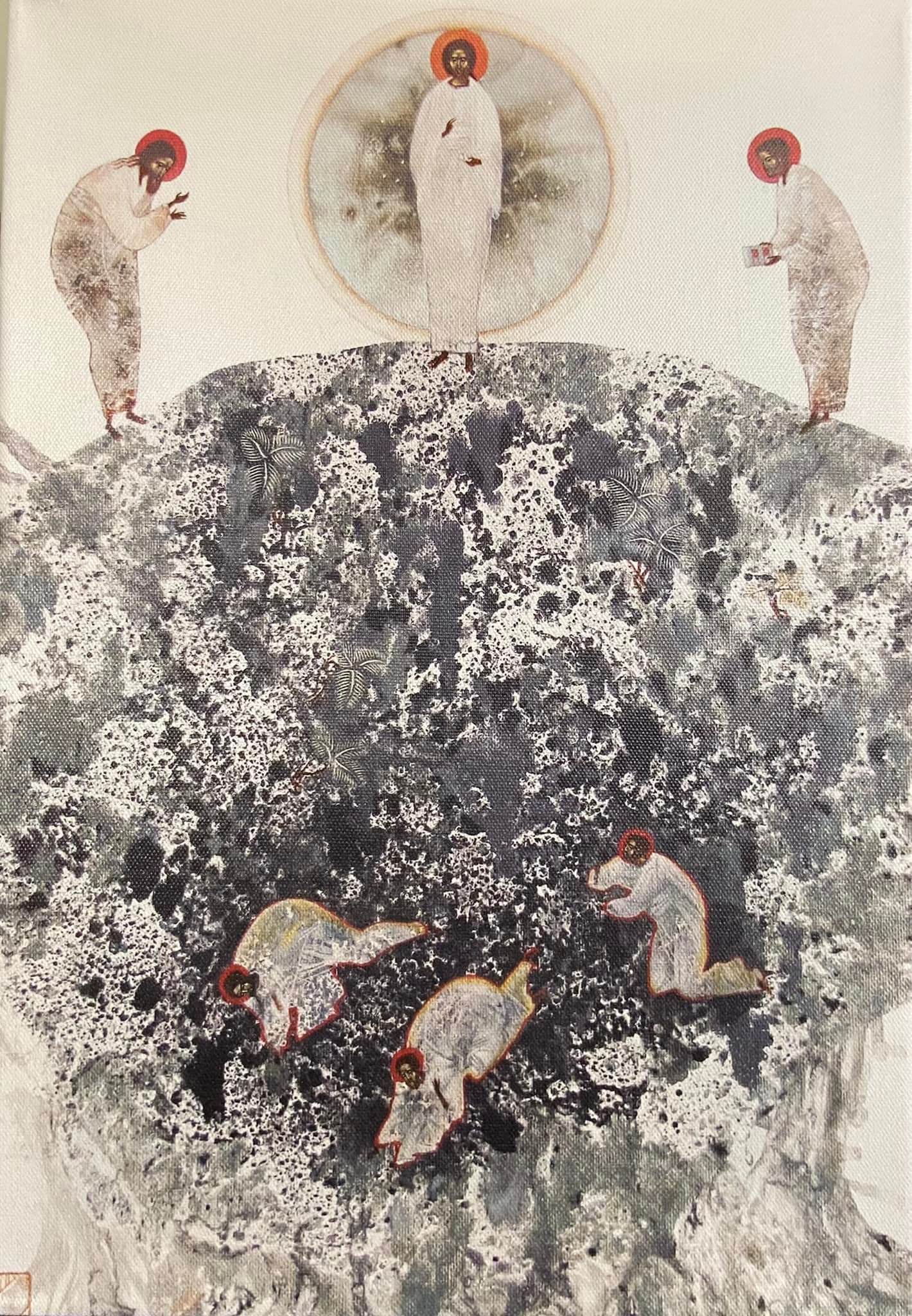
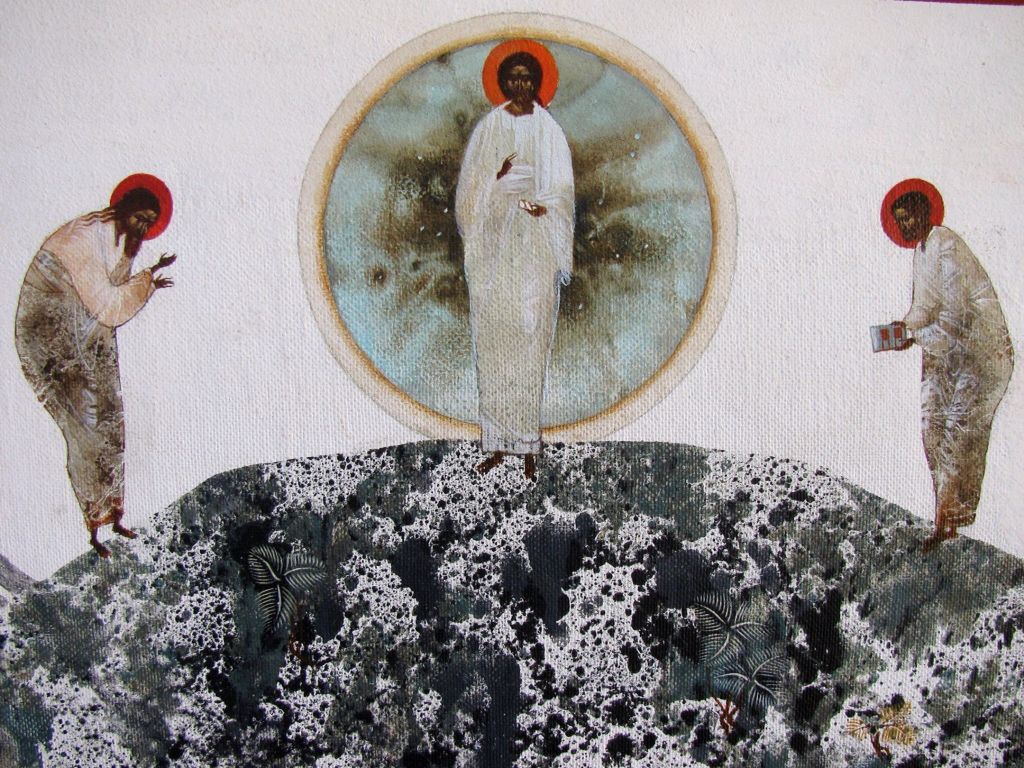








 think and let think