Jesus Saves

Psalm 118.1-2, 19-29

O give thanks to the Lord, for he is good; his steadfast love endures forever! Let Israel say, “His steadfast love endures forever.” Open to me the gates of righteousness, that I may enter through them and give thanks to the Lord. This is the gate of the Lord; the righteous shall enter through it. I thank you that you have answered me and have become my salvation. The stone that the builders rejected has become the chief cornerstone. This is the Lord’s doing; it is marvelous in our eyes. This is the day that the Lord has made; let us rejoice and be glad in it. Save us, we beseech you, O Lord! O Lord, we beseech you, give us success! Blessed is the one who comes in the name of the Lord. We bless you from the house of the Lord. The Lord is God, and he has given us light. Bind the festal procession with branches, up to the horns of the altar. You are my God, and I will give thanks to you; you are my God, I will extol you. O give thanks to the Lord, for he is good, for his steadfast love endures forever. 

Every pastor has a favorite Palm Sunday story.

Like the year when the palm branches were delivered way too early and dried out so much that when the gathered congregation shook them over their heads in worship, palm branch particles went flying in every direction resulting in sneezing and coughing fits among the people of God.

Or the time when the pastor thought it would be a great idea to dress up like a donkey and preach the sermon from the perspective of the animal that carried Jesus into Jerusalem, to which the pastor received perhaps the greatest Sunday morning comment of all time: “You know, you’re not the first donkey we’ve had in that pulpit.”

Only they used a different word for donkey.

Or the time when the children of the church processed in waving their palm branches and lifting up their hosannas only to begin smacking one another in the face with their aforementioned palms until a nearby parent had to jump in to break up the melee and mutter, a little too loudly, “Lord, save me from these kids!”

And I think the reason preachers like me like to tell a cute or funny little story about Palm Sunday is because the actual story of Jesus’ triumphal entry into Jerusalem is rather confounding.

Put another way: Palm Sunday is perhaps the strangest Sunday of the year.

For, it begins in celebration and ends in catastrophe. It starts with “Hosanna” but it finishes with “Crucify.” It begins with life and it ends with death.

At they are approaching Jerusalem Jesus sends two of his disciples to procure a colt for his entry into the holy city. He rides in a cartoonish way, with his feet nearly dragging on the ground on either side of the animal, and the people of Jerusalem comes out in droves to see the would-be Messiah. They are overcome with reverence, so much so that they begin to take their own clothing, and spread it on on the road only to be trampled upon by the colt. They make a royal carpet as they worship the King of kings.

They take leafy branches from the fields and they wave them to and fro and they shout, “Hosanna! Blessed is the one who comes in the name of the Lord! Blessed is the coming kingdom of our ancestor David! Hosanna in the highest heaven!”

Hosanna. I’ve always loved that word. It’s such a churchy word. It makes me think of my own childhood and parading around the sanctuary. It makes me things of the musical masterpiece Jesus Christ Superstar and the crowds singing, “Hey sanna Hosanna, sanna sanna Hey, sanna ho sanna hey sanna.”

Hosanna is a wonderful word. And, every Palm Sunday, we reach into the vault of churchy words, we dust off this old familiar declaration, and we proudly put it on display. We shout it in our hymns, we put the word on the lips of our children, we hear it read in the scriptures. And then, at the conclusion of worship, we wrap it up and place it back into the church vault with our other special words only to come back one year from now.

We are familiar with this word. It conjures memories and songs. Churches everywhere will join us in our shouts of Hosanna today.

But do we know what it means?

Save us.

It is a declaratory pleading. It is an emphatic demand.

Save us. Now!

Saved?

That’s a word you don’t hear much in churches like ours. We’re Methodists. We sing and we eat and we sing some more. We try to love each other. Really, we do. 

Love, peace, grace, mercy, forgiveness. Those are our words.

But saved?

How many got saved on Sunday? We don’t talk like that. 

We might make fun of those other types of church that talk in such a way. 

I remember someone once asking me if I was saved, and I said something like, I suppose so, and he said he’d been saved no less than 9 times.

Hosanna! Save us!

Really? 

Well, perhaps we should go look in the Bible for this word, where else does it appear besides Jesus’ triumphal entry into the city that will kill him?

There’s a woman, suffering from a hemorrhage for 7 years. She’s among the crowd one day and she says to herself, “If I but touch the hem of his garment I will be saved.” 

Well, in our Bible’s it says, “made well.” 

But it’s the same word for saved. The same word the crowds cry out as Jesus’ enters Jerusalem. 

And she suffers from more than just her bleeding. She’s isolated, outcast, thrown away by the likes of her family and her friends. She is a nobody with no hope in the world. Until the hope of the world walks past one day and she reaches out. She’s got nothing until she gets saved.

Jesus saves.

There’s a blind beggar sitting by the roadside. Like the woman he is unseen by all because of his inability to see. Forgotten and abandoned. And when the Lord walks by he shouts out, “Son of David have mercy on me.” The disciples are quick to shut him up. The Lord has more important things to do than to waste his time on you.

But the Lord comes anyway and says, “What do you want me to do?” 

I want to see. 

And Jesus says, “You faith has saved you.”

He has nothing to show for anything. He’s desperate. And in a moments notice, he is in the parade of the faith. Dancing and shouting for joy. 

Jesus saves.

There’s a rich man, well to do, Mr. Z they call him behind his back. While his fellows get poorer and poorer he gets wealthier and wealthier. He’s a tax collector. One day he climbs a tree to see Jesus. And the Lord calls him down and says, “Got any plans for lunch?”

They go to Zacchaeus’ house and the crowds are incensed. How dare the Lord go to eat with that sinner! What do they talk about over lunch? We don’t know. We only know that as they leave the house the tax collector is changed. He says, “I will give back everything that I have taken with interest.” 

“Salvation” Jesus says, “has come to this house.”

Jesus saves.

It’s no wonder the crowds grew and grew and grew. It’s no wonder the strange new world of the Bible talks of people leaves their plows in the field and their bread in the oven when the Messiah shows up. 

Because the Messiah is the one who saves.

And there’s no such things as being a little bit saved, or partially saved. It means a total and complete salvation. 

So when they wave their palm branches, when they place their cloaks on the road, they scream for salvation from the only one who can bring it.

Hosanna! Save us Jesus!

Save us, from what?

Jerusalem is occupied, the Roman garrison enters the holy city on the other side. Pontius Pilate comes riding in on a war course while Jesus enters on a donkey. The people of God, therefore, are living as strangers in a strange land in the very land God had promised. Their way of life is fracturing, their faith is under scrutiny, they have no bright hope for tomorrow. 

And here comes the Messiah! The one who makes everything right! He’s saved others and now he’s going to save us. He’s going to give us our city back. He’s going to bring back our way of life. He’s the new king!

The crowds grow and grow, and the shouts of Hosanna echo through the city streets, until they see the cross.

It is strange and not so strange to know that those same people who shouted Hosanna at the beginning of the week were shouting crucify by the end.

It’s all too easy for us to cast Jesus into role of our own choosing.

It’s all too easy for us to put words, our words, into Jesus’ mouth.

We would still like to see him parade around into the madness of our circumstances to champion our hopes and dreams, to disrupt and frustrate the plans of our enemies.

But Jesus doesn’t come to bring us more of the same.

Jesus comes to save us.

He doesn’t enter the holy city to establish yet another political machine that result in one group lording it over everyone else.

He doesn’t pass out swords and shields to storm the temple walls.

He doesn’t even offer programs of personal morality that will make the world a better place.

One of the craziest parts of Palm Sunday is that, according to the strange new world of the Bible, Jesus doesn’t say anything.

He merely rides into the city that will kill him.

But it’s Palm Sunday. We don’t want to have to think about Friday yet. We like the images and the sounds of our children waving palm branches high in the air. But there is no jumping from today to Easter Sunday.

Put another way, we do well to remember there is no resurrection without crucifixion.

It’s in our hymns and in our creeds and even in our prayers, but we try to stay away from the crucifixion as much as possible. And for good reason – it is the sign of our total and utmost depravity. But it’s also the heart of God. 

God, the creator of the cosmos, lays aside almightiness to come and dwell among us in the muck and mire of life, to be one of us.

God becomes vulnerable for us.

And how do we return the favor?

Crucify, Crucify!

Why? Because we want salvation on our own terms. We want to take matters into our own hands. We want to save ourselves. 

We don’t want to be saved in our sins, we’d rather lord it over other sinners who are worse than us. The only problem with that is, according to the kingdom of God, none of us is righteous, no, not one. 

You see, we crucified Jesus not because he was God, but because he was God and then failed to come up to our standards in doing so. It’s not that we weren’t looking for the Messiah; it’s just that he wasn’t the one we were looking for.

We’re fine with being saved only so long as it fits neatly into our expectations of what it means to be saved. 

The crowds wave their branches and they shout their hosannas. Save us Jesus, save us! And, by the end of the week, that’s exactly what he does, whether we deserve it or not, whether we like it or not.

Jesus saves.

O give thanks to the Lord, for he is good, for his steadfast love endures forever.

Even on the cross.

Jesus saves. Amen. 

One Week

Luke 19.28

After he had said this, he went on ahead, going up to Jerusalem. 

Fleming Rutledge, patron saint of the Crackers & Grape Juice podcast, has often waxed lyrical about the need for preachers to proclaim the Word rather than explain the Word. Explanation often leads to exhortation; the Bible says this so we have to do that. But the Good News is an announcement that God has come into the world and we now live in the light of that in-breaking.

In other words, the gospel is a story – it is the story of God’s people Israel which culminates in the life, death, and resurrection of Jesus Christ. The gospel is not a program, or a set of beliefs, or a collection of rules, or an explanation of how to wind up in the right place when you die.

The gospel is a story, in fact it is the story. 

And preachers do well to tell the story, rather than explain it.

Therefore, here just a few days before Palm Sunday and Holy Week, here is one preacher’s attempt to tell the story of Jesus’ last days before the cross and resurrection…

It was early in the morning when Jesus sent two of his disciples to a village to find a suitable farm animal: a donkey. The time had come to enter the holy city of Jerusalem for Passover, a time when the city’s population would balloon up to 200,000 for the celebration. On a Sunday morning, the crowds gathered with palm branch and shouts of “Hosanna!” they placed their cloaks on the road as a sign of their devotion to the arriving king, and Jesus entered Jerusalem. 

At the same time, on the other side of the city, Pontius Pilate (the Roman Governor of Judea) entered with at least 1,000 soldiers demonstrating the power of the empire. 

One arrived on a donkey, the other arrived on a battle horse.

With the city coming into focus, Jesus began to cry. He looked over the temple and the people of God and he wept. 

And there was evening and there was morning, the first day.

On Monday Jesus made his way to the Temple with countless other Jews. With the triumphant and parodic entry the day before, all eyes were on this so-called Messiah. As his feet walked over holy ground, Jesus encountered the moneylenders and changers who set up shop in the temple courtyard. They were profiting off those who traveled great distances to make their ritual sacrifices and boosted their prices in anticipation of economic gain.

Jesus, who spent the better part of three years berating the elite for taking advantage of the last, least, lost, little, and dead, became incensed when he saw the poor being ripped off in the name of God. He therefore walked straight over to the tables, lifted them off the ground, and went into a full blown temple tantrum. He declared for all to hear: “This is my Father’s house and you’ve made it into a den of robbers!”

The elite and the powerful now had their eyes set on Jesus. It was one thing to have a crowd with palm branches welcoming a poor rabbi into the city, but it was another thing entirely when he disrupted the status quo particularly when it came to the economic practices of the Temple. The leaders started looking for a way to discredit him, or remove him completely. 

And there was evening and there was morning, the second day.

On Tuesday, Jesus once again entered the Temple and he began to teach. If people were excited to see him enter the city, they were now even more eager for a chance to hear and see the One who had been making waves in Galilee, the One who flipped the tables the day before.

While he was teaching the Pharisees and the religious leaders began interrupting and demanded to know from whom Jesus received such authority.

And Jesus, who used parables to teach his disciples and followers, responded to their accusations with head scratching stories about mustard seeds and prodigal sons and kingly banquets. Over and over he used examples to show how those in the places of authority had lost sight of their responsibility and he labeled them hypocrites, snakes, and broods of vines.

They tried to trap him in his words, but he continued to point to the in-breaking kingdom of God.

And there was evening and there was morning, the third day.

On Wednesday Jesus left the arena of the Temple and continued his teaching on the Mount of Olives. Some of his disciples made comments about the glory of the Temple and Jesus responded with talk of destruction. He revealed images of God’s cosmic plan for the world made manifest in himself, and he called for his disciples to stay vigilant.

He continued to speak his parabolic utterances and even offered a sermon describing the great inversion of all things. 

His presence and proclamations continued to threaten those in power and they grew afraid.

And there was evening and there was morning, the fourth day.

On Thursday Jesus continued his preaching and teaching until he retreated away with the twelve for their observance of Passover. While sitting at the table they remembered God’s mighty acts for the people Israel as they were delivered from slavery to sin and death into the Promised Land. But before the supper was finished, Jesus did something rather radical. He took a loaf of bread, gave thanks to God, broke it, and gave it to his friends while saying, “This is my body, I’m giving it for you.” Later, he took the cup, gave thanks to God, and gave it to his friends while saying, “This is my blood, and I’m pouring it out for you and the world.”

He knew one of his disciples at the table would shortly betray him to the authorities, and he offered him his body and blood anyway.

Later in the evening they went to the garden of Gethsemane, and Jesus urged his disciples to stay awake while he prayed. He knelt on the ground and ended his prayer by saying, “Lord, with you all things are possible; remove this cup from me; yet, not what I want, but what you want. Let your will be done.”

At the conclusion of the prayer, Judas arrived with soldiers. They grabbed and arrested Jesus while the disciples fled into the distance. 

And there was evening and there was morning, the fifth day.

On Friday Jesus was brought to the Roman leader Pontius Pilate. The religious authorities demanded Jesus’ execution by crucifixion, but Pilate could find no fault with Jesus. Pilate then gave the gathered crowds a choice: they could free a rabble rouser named Barabbas or the messianic Jesus of Nazareth.

They chose Barabbas.

Soldiers whipped and beat Jesus nearly to the point of death and then, to mock him, they placed a robe on his shoulder and a crown of thorns on his head. They forced Jesus to carry a cross, his own instrument of death, up to a place called The Skull.

The crowds berated him from either side of the road, “If you really are the Messiah, save yourself!” “Where are all your disciples now!” “Some King of the Jews you are!”

When he made it to the top of Golgotha, the soldiers nailed his hands and feet to the cross and they hung him high to die. With some of his final breaths Jesus offered a prayer that has haunted the world ever since, “Father, forgive them, for they do not know what they are doing.” 

With two thieves on either side hanging from their own cross, while some of his disciples watched from a distance, Jesus died.

And there was evening and there was morning, the final week.

And then, three days later, God gave him back to us. But that’s another story for another day. 

The Lord Needs It

Palm Sunday from the perspective of the donkey:

With palms beneath my feet, Jesus, there are so many things I wish I could tell you. Carrying you while the crowds scream on our sides, I wish I could share all the things I have seen and heard. This might be the only chance I’ll get, and it already feels too late.

I was there Jesus. I was there in the manger when you were born. Your parents had come into the tiny room and your mother looked like she was about to burst. I was but a young foal back then, but I remember. They were so afraid and alone when they cuddled together holding you close. While they were filled with fear, I was filled with joy. I knew from the moment I saw you that you were special, that you were the Son of God. The other animals could feel it too, and while your family fell into the familiar rhythm of sleep, we gathered around you to share our warmth. I watched you sleep all night and I could feel that our lives were connected, and I knew that I would see you again one day.

You left from Bethlehem but as the years passed I heard stories about your life. I would be in the marketplace, or moving about the village and rumors would fall upon my ears. 

When you were a child they said that you stood apart. Other children would spend their days running around and getting into mischief, but you would sit in the synagogue and teach the elders. Your command of the scriptures spread before you even started your ministry. I would watch the people while they talked about you and they were filled with such hope. Words like “messiah, lord, and savior” were used to describe you and I could tell that the Lord was among us.

Then it came to pass that you were baptized by your cousin John in the Jordan river. Witnesses said they saw the sky open up and they heard the voice of God. While others denied the claims, I knew it was true, I could feel that your ministry was about to begin and that everything would change.

You traveled throughout Galilee proclaiming the year of the Lord’s favor. You healed the sick, gave sight to the blind, and restored the outcasts to their families. Everywhere you went stories about your love and mercy traveled ahead and the crowds grew larger and larger. You fed the multitudes by the sea, you walked on water, and you brought Lazarus back from the dead. You spoke of mustard seeds, prodigal sons, and good samaritans. You ate with sinners, worked on the sabbath, and argued with the Pharisees. Some say that even just a few weeks ago you were on the mountaintop when Moses and Elijah appeared and you were transfigured

This morning I was tied up near the door when two of your disciples came close. One of them spoke to my owner and said, “The Lord needs him” and they brought me to you. I knew the time had come when we would be reunited, but the joy I expected to feel has been mixed with trepidation. 

Jesus, how I wish you could hear me, how I wish I could tell you all I have seen and heard. We departed early this morning and the crowds gathered around us. It feels as if the closer we get to Jerusalem the people grow louder and more eager to cry out. Do they know what they mean when they say, “Hosanna! Blessed is the one who comes in the name of the Lord! Blessed is the coming kingdom of our ancestor David! Hosanna in the highest heaven!”?

I’m beginning to worry Jesus. I don’t think they know who you really are. The people sound more like an angry mob waiting for you to overthrow the Romans than a faithful group waiting for the kingdom of God. They want another Moses to lead them out of physical bondage, they want another David who can lead them into battle, they want another Solomon to build a giant temple. 

These people have suffered but they believe in you. Did you see them take off their cloaks and place them in the road? I have been walking over garments for hours. Did you see them rush into the fields for palm branches to wave them in the air and create a royal pathway? The palms beneath my feet are a sign of how much these people believe in you.

What are you going to do Jesus? I can hear people murmuring about your coming mission, some are saying that you are going to the temple and you are going to overthrow the tables. Some are saying that you are going to lead the rebellion and kill the chief priests and scribes. Some are saying that you are going to destroy the temple and then build a new one. 

Jesus I’m afraid for your life! These people don’t know who you really are and what you’ve come to do. They shout “Hosanna, Hosanna!” but I fear their shouts will soon turn to “Crucify, Crucify!” They are only concerned about themselves. Even your disciples on either side of us, I can smell their fear. 

Jesus, I was there when you were born. I felt God’s presence in you and I knew you would save the world. But please Jesus, let me take you away from this place. Jerusalem can only bring about your death. We still have a chance to turn around and head home. 

Or is it too late? 

The crowds are starting to thin Jesus. The people are beginning to head home. We are stepping through the gate and the palms are no longer beneath my feet. I want to believe in you and what you are doing. I want to believe this is God’s will. But I’m so afraid. 

Jesus, I am an old donkey and I don’t know how much further I can carry you. 

It’s just us now and the sun is beginning to set. 

What will happen? What are you going to do?

If this is the last time I will see you, I wish I could talk to you. I wish I could warn you about what is to come. I wish I could stop you.

You swing your legs around and are standing right before me. Your eyes contain the same hope they did the day you were born in the humble manger. As you pet my old matted fur I can feel all the people you have already touched and healed. I can feel the sick children and parents, I can feel the blind and the lame, the last, least and lost.

What a privilege it was to carry you today my Lord. I knew that we would meet again, I only wish I could do something to warn you. 

You’re now leaning in close to whisper in my ear. Is this goodbye? Is this the end?

You said, “No my old friend. I know exactly what I am doing. And this is only the beginning.” Amen. 

Passionate Palms

This week on the Strangely Warmed podcast I speak with Alan Combs about the readings for Palm Sunday [C] (Psalm 118.1-2, 19-29, Luke 19.28-40). Alan is the lead pastor of First UMC in Salem, VA. Our conversation covers a range of topics including intergenerational trauma, the whole story, Holy Week, difficult hymns, The Wesley Bros comic, responsibility, the elected reject, singing stones, choices (or the lack thereof), and the not normed norm. If you would like to listen to the episode or subscribe to the podcast you can do so here: Passionate Palms

Beauty Will Not Save The World

John 12.1-8

Six days before the Passover Jesus came to Bethany, the home of Lazarus, whom he had raised from the dead. There they gave a dinner for him. Martha served, and Lazarus was one of those at the table with him. Mary took a pound of costly perfume made of pure nard, anointed Jesus’ feet, and wiped them with her hair. The house was filled with the fragrance of the perfume. But Judas Iscariot, one of his disciples (the one who was about to betray him), said, “Why was this perfume not sold for three hundred denarii and the money given to the poor?” (He said this not because he cared about the poor, but because he was a thief; he kept the common purse and used to steal what was put into it.) Jesus said, “Leave her alone. She bought it so that she might keep it for the day of my burial. You always have the poor with you, but you do not always have me.”

Lent is such a strange time in the life of the church. 

Yes, during Advent we re-await the baby born King in Bethlehem, which is bizarre in its own right. The author of the cosmos condescends to dwell among us through the least likely of people in the least likely of places.

But Lent? During Lent we hear about sin and shame – the need to lament and repent. We sing songs about death and crucifixion, we gaze inwardly at our wanton disregard for the good, the true, and the beautiful. 

But Lent, contrary to how we might convey it or even embody it, isn’t really about sin and it definitely isn’t about punishment. It is a time set a part to behold God, so that we might see ourselves and all in things in light of God’s devotion to us. 

In other words, Lent is a strange time of good news because in confronting the truth we are able to do away with falsehoods and trivialities. Looking at the cross, and our complicity in it, gives us the space to admit that nothing is as it should be. 

Just here in our local community we’ve seen, over the last week, an entire apartment complex being forced to vacate into a market where there are no available rentals, a student fired a gun inside a middle school bathroom, and a campsite for homeless people caught fire.

Each of these incidents, sadly, can be attributed to our own sinfulness and selfishness. When we care more about our wealth, our freedom, and our clean streets, than the wellbeing of others, we only further prove that we have behaved badly.

And it’s not even just the headlines that we can read in the paper. Lent, oddly, forces us to come to grips with the fact that even Beauty is not as it should be. 

Beauty cannot save the world, at least not in the ways we want it to be saved. 

Our cultural achievements, our aesthetic sophistications, our programs of spectacular morality cannot deliver us from the evil at work without or within us. 

It’s notable how often the strange new world of the Bible and the tradition of the church warns us about the dangers of beauty; beauty tricks us into believing that all is well when, in fact, all is hell.

Beauty is fleeting and finite, and no matter how hard we try and how much effort we put into things, they cannot save the world.

On Tuesday there was a benefit concert that featured the music of Ed Sheehan, Camila Cabello, and other artists that raised over 21 million dollars for Ukrainian refugees. It was a two-hour live streamed collection of performances during which the myriad array of musicians pleaded for an end to the war in Ukraine waged by Russia. 

21 million dollars is no small feat.

But you know what happened in Ukraine? Nothing.

The bombs kept falling. Cities continued to crumble. And families fled out of fear for their lives.

In Jesus’ prelude to his Passion, on the eve of Palm Sunday, he arrives in Bethany and goes to the home of Lazarus. Mary and Martha decide to throw a little dinner party for the Lord and while their kicking back over appetizers, Mary bends down to the floor with a pound of Chanel No.5, pours it out on Jesus feet, and then she wipes them with her hair.

Judas, of course, jumps up from his seat and puts her in her place, “Woman, what’s wrong with you? That perfume is worth $50,000, why didn’t you see it and give the proceeds to the poor?”

Jesus, ever calm, responds to his soon-to-be-betrayer, “Leave her alone. She bought it for my burial. There will always be poor people, but I won’t be here forever.”

Its Lent which means, hopefully, we’re all in a space to admit that we agree with Judas. We know we’re not supposed to identify with him, he is after all the one who gives up his Lord, but he has a point. It’s such a waste to pour out the perfume on Jesus feet when it could’ve been used to make the world a better place.

And Jesus’ words are downright offensive, “You will always have the poor with you, but you will not always have me.”

C’mon Jesus! Don’t you know being a Christian is about transforming the world? What a waste! Think about what we could’ve done with all that cash!

It’s embarrassing to hear the Lord speak in such a way.

And perhaps embarrassing isn’t the right word. It’s threatening to hear Jesus talk in such a way. His proclamation here to Judas threatens to upend everything we think we know. 

Our world is built on the assumption that whatever ails us can be fixed by us. And that’s not necessarily a bad thing. It is good and right for us to dig deep into our wallets and purses to help those in need. We do have an obligation to love our neighbors and our enemies as ourselves. We need to believe in a better world. We need hope.

But we aren’t the hope of the world. If we were then we would not longer need newspapers to tell us what’s wrong in the world because there wouldn’t be anything wrong in the world. 

Remember: some of the most horrific events in human history were done in the name of progress.

Transcendent hope, real hope for things not yet seen, can’t come from us, it has to be done to us. And that kind of hope has a name: Jesus.

The extravagant gift of the perfume poured out by Mary reveals to us that, unlike Judas, she knows that Jesus in the only hope in the world that we’ve got. She, therefore, can do something wild and reckless because she’s recognizes the wonder of the cosmos sitting at her table. She knows that true gifts, like the perfume and the incarnate One, cannot be controlled.

And, though we can’t help ourselves but agree with Judas, we also know (in some way, shape, or form) that Mary is right. We all encounter extravagant gifts that can disappear just as soon as they arrive.

A choir works for hours and hours only to stand up, sing for 4 minutes, and then it’s gone never to be heard again, at least not in that way.

A teacher does the same thing with every lesson just as a preacher does with every sermon.

Flowers are given in honor, love, memory, and respect only to die and wither shortly thereafter.

People like you and me put our money into offering plates week after week.

Even Jesus raises Lazarus from the dead, only for Lazarus to die again in the future.

Why?

Well, love is a strange thing. As is hope. But without them, we are nothing.

Judas rebukes Mary for her waste because she could’ve help the poor. And yet, Judas lacks the vision to see that Mary is helping the poor. She pours out the extravagant perfume on the poorest of all: God in the flesh who condescends to dwell among us. She gives value and worth to the very people that Judas is advocating for.

But Judas has his mind stuck on earthly things – he believes that the only real and important changes can come out of his own goodness and charity. 

Mary, however, has her mind on the divine, she perceives, somehow, that the One sitting at the table is the only One who can ever really make something of our nothing.

Does this mean that we are no bear responsibility for the last, least, lost, little, and dead? On the contrary, this dinner party disagreement is a profound declaration about the role of the church in the world. The world is an absolute mess and yet the church is a constant witness to the value and the worth of those the world throws away like trash. 

Lazarus was dead, wrapped up in a tomb. And Jesus brings him back.

The 5,000 have nothing to show for their faithfulness except the hunger in their bellies and Jesus feeds them.

The 12 disciples abandon, deny, and betray Jesus and he still breaks bread with them and returns to them on Easter.

Wherever the world sees failure and brokenness, Jesus sees value and beauty.

And beauty is a fickle thing. It is often fleeting and wasted. And it will not save the world. But it might make the world a little more bearable. 

Only the world that cannot save itself will be saved by God. And only the beauty that cannot save the world is worth saving at all.

Do you see? In God’s weird and wondrous way, Jesus himself is the nard purchased at a great price, to lavish upon the dying world. As Christ’s body in the world we are called to be symbols of broken beauty for a world that cannot and will not save itself.

We have hope because we know Jesus Christ and him crucified. Hope measures the distance between the now and the not yet. Hope is only intelligible amidst hopelessness. Were it up to us alone the world would never ever change. But it’s not up to us – Jesus is the hope of the world.

The anointing of Jesus’ feet is a reminder that, by the end of the week, those feet will be nailed to the cross. Jesus comes into a world that does not request him, nor even want him, because when push comes to shove we’d rather take matters into our own hands.

Or, put another way, when Jesus arrives with proclamations of grace and mercy and forgiveness, with announcements about a new age called the kingdom of God, we nail him to the cross. 

Things are not as they should be. 

No matter how hard we try there will always be more to do. But here’s the Good News: the one thing that needs to be done is already finished in the life, death, and resurrection of our Lord. Though we are unworthy, Christ makes us worthy. Though we have sinned, Christ offers pardon. Though we feel empty, Christ proclaims that we are enough.

We are freed from the burden of being God. We, like Mary, can do wild and reckless things because Christ is the hope of the world, not us. 

There is nothing beautiful about the cross. It is a sign of torture and death. And yet, for God, it is our salvation. Beauty will not save the world, but God does. Amen.

To The End

John 13.1

Now before the festival of the Passover, Jesus knew that his hour had come to depart from this world and go to the Father. Having loved his own who were in the world, he loved them to the end.

The synoptics (Matthew, Mark, and Luke) treat us to the scene of Jesus’ final evening with his friends as they sit around a table sharing bread and wine.

John, however, takes the scene a little bit further.

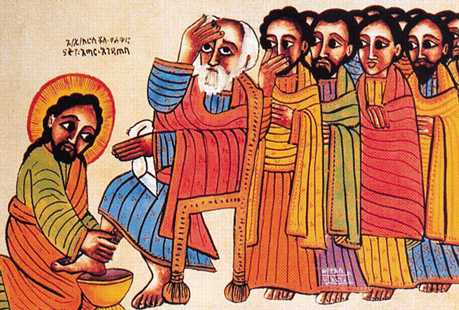
While eating at the table, Jesus gets up, takes off his outer robe, and ties a towel around himself. He begins washing all of the disciples’ feet and wipes them off with the towel around his waist.

Peter, of course, objects to the humble (read: humiliating) act of his Lord, but Jesus hits him hard with, “You do not know what I am doing, but later you will understand.”

Only after every disciple’s feet are washed does Jesus arise, and begins to teach:

“Listen, you call me Teacher and Lord which is good and fine because that is who I am. But check this out: If I, your Lord and Teacher, am willing to get down on the floor to wash your feet, you also ought to wash one another’s feet. This is what the Kingdom of God is all about – the first being last and the last being first. Things are getting flipped upside down right here and right now. And I do and say all of this knowing that one of you will betray me, it is to fulfill the scripture, ‘The one who ate my bread, has lifted his heel against me.’” Shortly thereafter, Judas leaves and sets in motion the world turned upside down. In mere hours the guards will arrive in the garden, Jesus will be arrested, put on trial, sentenced, beaten, and left to die on the cross.

The foot washing has always been a little strange and a little weird to the people called church. For one, as mentioned, the other Gospels don’t include it, and for another, it reveals the heart of God in a way that feels uncomfortable.

Not only does Jesus, God in the flesh, get down on his knees to wash the dirty feet of the disciples, one of whom will shortly betray him, another will deny him, and the rest will leave him hanging to die on a cross, but then Jesus has the gall to command us to do the same for one another.

And yet, in a way, more than being told what we are supposed to do, the whole message of this final moment is, again, about what Jesus does for us.

In the foot washing, Jesus repeats in himself the great lengths to which God was willing to go for a people undeserving – how far God was willing to go to wash us clean from our transgressions.

This moment, one that might make us cringe or, at the very least, furrow our brows, it reveals to the disciples and to us that the Lord, the Alpha and Omega, the Beginning and the End, is about to suffer and die just to rid us of the stench and dirt of sin and death that latches onto us.

And, notably, this is the final act of Jesus toward his disciples before Easter and, as John so wonderfully notes, Jesus loved his disciples to the end. Including Judas.

Do you see what this means? Even the worst stinker in the world, even the one who betrays his Lord to death, is someone for whom Christ died. While we were yet sinners, Christ died for us.

Jesus, bewilderingly, loves us to the end, loves us so much that he was willing to take our sin upon himself, mount the hard wood of the cross, and leave them there forever. Thanks be to God.

Welcome Home

Luke 15.1-3, 11b

Now all the tax collectors and sinners were coming near to listen to him. And the Pharisees and the scribes were grumbling and saying, “This fellow welcomes sinners and eats with them.” So he told them this parable: “There was a man who had two sons…”

The strange new world of the Bible is downright scandalous.

I mean, the first two human characters in it, Adam and Eve, spend most of their time in their birthdays suits before they decide to cover themselves with a handful of fig leaves.

The patriarch of the covenant, Abraham, passes off his wife as his sister on more than one occasion to save his own behind.

David, the handsome shepherd king who brings down the mighty Goliath, orders the death of one of his soldiers after an afternoon peeping session with the aforementioned solider’s wife.

And those are just the first three stories that popped in my mine.

When Jesus shows up on the scene, the scandalous nature of the Good News ramps up to eleven.

He eats with all the wrong people, he heals all the wrong people, and he makes promises to all the wrong people. 

In the beginning, Jesus attracts all kids of people. The good and the bad, the rich and the poor, the holy and the sinful, the first and the last.

But at some point along the way things start to change as do the people who find themselves listening to Jesus.

All the tax collectors and all the sinners come near to listen. The tax collectors are those who profit off their fellow Jews by upping their take for the empire’s pockets. And the sinners, well you can just imagine your favorite sinful behavior, and you can picture them near the Lord.

And so it is the last, least, lost, little, and nearly dead who hang on his every word. Not the respectable Sunday morning crowd we have at church. Not those who sleep comfortably at night knowing their padded bank accounts are safe and secure. Not the people who have all the powers and principalities at their fingertips.

No. Jesus has all the gall to hang out with the sinners.

And the Pharisees, the good religious observers (people like us), are concerned about the behavior of this would-be Messiah, and so they try to dissuade the crowds: “This Jesus is nothing but bad news! He welcomes sinners into his midst, and not only that, he eats with them! Can you imagine? And he calls himself the Son of God!”

So Jesus does what Jesus does best, he tells them a story.

There’s a man with two sons. The family business has been good to the family. The little corner grocery store is a staple in the community and the family know the names of just about every person that walks through the door. 

And the father is a good father. He loves his sons.

But one day the younger son gets it into his head that he wants his inheritance right then and there. He doesn’t have the patience to wait for his old man to buy the farm so he marches into the back office and triumphantly declares, “Dad, I want my share of the inheritance now.”

In other words, “Drop dead.” 

And the father really is a good father, so he decides to divide his assets between his sons. To the elder he gives the property and the responsibility of the family business, and to the younger he cashes out some investments and gives him his half in cold hard cash.

Only a few days pass before the younger son blows all of his money in Atlantic City. At first he is careful, a few passes at the roulette wheel, a handful of bets at black jack. But the more he loses, the more he spends on booze, girls, and more gambling,

His fall from grace happens so fast that he walks up to the closest pit boss with empty pockets and begs for a job.

“Sure,” the man says, “we’ve got an opening in janitorial services and you can start right now.”

Days pass and the younger son cleans out the trashcans throughout the casino. He’s able to stave off the hunger at first, but he hasn’t eaten in days and one particular half-consumed doughnut at the bottom of the trash can starts to look remarkably appetizing.

And that’s when he comes to himself.

He realizes, there in that moment, that he made a tremendous mistake. Even the employees back at the family grocery store have food to eat and roofs over their heads.

He drops his janitorial supplies and beelines out of the casino while working on a speech in his head, “Dad, I really messed up. I am sorry and I am no longer worthy to be called you son. If you can give me a job at the store I promise I’ll make it up to you.”

He says the words over and over again in his head the whole way home, practicing the lines like his life depends on them.

Meanwhile, the father is sitting by the window at the front of the shop, lazily glancing over the newspaper’s depressing headlines. He can hear his elder son barking out orders to his former employees, and then he sees the silhouette of his younger son walking up the street.

He sprints out the front door, spilling his coffee and leaving a flying newspaper in his wake. He tackles his son to the ground, squeezes him like his life depends on it, and he keeps kissing him all over his matted hair.

“Dad,” the son says, “Dad, I’m sorry.”

“Shut up boy,” the father roars, “We’re gonna close the shop for the rest of the day and throw a party the likes of which this neighborhood has never seen!”

He yanks his prodigal son up from the asphalt, drags him back up the block, and pushes him in front of everyone in store.

“Murph,” he yells at a man with a broom standing at the end of an aisle, “Lock the front door and go find the nicest rack of lamb we’ve got. We’ll start roasting it on the grill out back.”

“Hey Janine!” He yells at a woman behind the cash register, “Get on the PA system and call everyone to the front, and open up some beers while you’re at it. It’s time to party! This son of mine was dead and is alive again, he was lost and now is found!”

And the beer caps start flying, and the radio in the corner gets turned up to eleven, and everyone starts celebrating in the middle of the afternoon.

Meanwhile, the older son is sitting in the back office pouring over the inventory and comparing figures to make sure that none of his employees are swindling him out of his money, and he hears a commotion going on down the hallway. He sees Murph run past the door with what looks like beer foam in his mustache, and what looks like a leg of lamb under his arm, and the elder son shouts, “What in the world is going on?”

Murph skids to a stop in the hallway and declares, “It’s your brother, he’s home! And your father told us to party!” And with that he disappears around the corner to get the grill going.

The older brother’s fists tighten and he retreats back to his office chair and to his ledger books.

Try as he might he can’t focus on his work. All he can think about is his good for nothing brother and all of the frivolity going on mere feet away. His anger grows so rapidly that he grabs the closest stack of papers and flings them across the room.

And then he hears a knock at the door.

His father steps across the threshold, clearly in the early stages of inebriation. He mumbles, “Hey, what’re you doing back here? You’re missing all the fun!”

The older son is incredulous. “What do you mean, ‘What am I doing back here?’ I’m doing my job! I’ve never missed a day of work, I’ve been working like a slave for you and you never once threw me a party, you never told me I could go home early. And yet this prodigal son of yours has the nerve to come home, having wasted all your money with gambling and prostitutes, and you’re roasting him a leg of lamb!”

The father sobers up quickly, and maybe it’s the beer or maybe it’s is own frustration, that causes him to raise his voice toward his eldest son, “You big dumb idiot! I gave you all of this. You haven’t been working for me, you’ve only been working for yourself. Last time I checked, it’s your name on the back of the door, not mine.”

The elder son stands in shock.

And the father continues, “Remember when your brother told me to give him the inheritance? Well I trusted you with this, the family business. And what does your life have to show for it? You’re so consumed by numbers and figures, and doing what you think you’re supposed to do, all the while you’re chasing some bizarre fantasy of a life that doesn’t exist.”

“But Dad…”

“Don’t you, ‘But Dad’ me right now, I’m on a roll. Listen! All that matters, the only thing that matters, is that your brother is finally alive again. But look at you! You’re hardly alive at all. There’s a party going on just down the hall and you can’t even bring yourself to have a good time. Well, remember son of mine, complain all you want, but don’t forget that you’re the one who owns this place.”

The father makes to leave and rejoin the party, but he turns back one last time toward his elder son and says, “I think the only reason you’re not out there cutting up a rug with the rest of us is because you refuse to die to all your dumb rules about how your life is supposed to go. So, please, do yourself a favor, and drop dead. Forget about your life, and come have fun with us.”

The End.

And, of course, we know what we’re supposed to do with the story. 

At times we’re supposed to identify with the younger brother, having ventured off toward a handful of mistakes, and we need to repent of our wrong doings.

At times we supposed to identify with the father, with our own wayward child, or friend, or partner, and how we have to pray for them to come to their senses and receive them in love.

At times we’re supposed to identify with the elder brother, when we’re disgusted with how some people get all the good stuff even though their rotten.

And just about every time we encounter this parable, whether in worship, Sunday school, or even a book or movie, the same point is made – find yourself in the story and act accordingly.

But that ruins the story. It ruins the story because it makes the entire thing about us when the entire thing is actually about Jesus.

If it were about us it would certainly have a better ending. We would find out from the Lord whether or not the elder brother decides to join the party, if the younger brother really kept to the straightened arrow, and if the father was able to get his sons to reconcile with one another.

But Jesus doesn’t give us the ending we want. We don’t get an ending because that’s not the point.

The point is rather scandalous – no one gets what they deserve and the people who don’t deserve anything get everything!

In Jesus’ parable we encounter the great scandal of the gospel: Jesus dies and is resurrected for us whether we deserve it or not. Like the younger son, we don’t even have to apologize before our heavenly Father is tackling us in the streets of life with love. Like the older son, we don’t have to do anything to earn an invitation to the party, save for ditching our self-righteousness.

Contrary to how we might often imagine it, the whole ministry of the Lord isn’t about the importance of our religious observances, or our spiritual proclivities, or even our bumbling moral claims. It’s about God have a good time and just dying, literally, to share it with us.

That’s what grace is all about. It is the cosmic bash, the great celebration, that constantly hounds all the non-celebrants in the world. It begs the prodigals to come out and dance, and it begs the elder brothers to take their fingers out of their ears. The fatted calf is sacrificed so that the party can begin. Jesus has already mounted the hard wood of the cross so that we can let our hair down, take off our shoes, and start dancing. 

We were lost and we’ve been found. Welcome home. Amen.

Transformation By Disruption

Jesus was nothing if not zealous.

Jesus sees possibilities where we, too often, see failure.

Jesus believes in those who have quit believing in themselves.

Jesus makes a way where there is no way.

That’s exactly who Jesus is!

And, lest we ever forget, God is at least as nice as Jesus which also means that God is at least as zealous as Jesus. Because Jesus, as Paul reminds us, is the fullness of God revealed.
God is not merely sitting idly by watching the world spin down the toilet – God is showing up in places, flipping the tables of complacency, and is probing us to wonder about the ways things are so that we might move to where things can be.

Taking at step back from Jesus’ temple tantrum, with the tables overturned and the money-lenders cowering in the corner, it’s not hard to imagine the headline in the next issue of the Jerusalem Times: Jesus – The Disturber of the Peace

There have always been disruptors of the peace, those zealots who shake up the status quo.

And yet, the peace disturbed by Jesus that day, and still disturbs today, was no real peace. The weak and the marginalized were getting abused and forced into economic hardships all while God’s blessing were being construed as something to be purchased or earned.

And then God in Christ shows up to remind us there is no real transformation without disruption. Faithful following is only every possible because of disruption and dislocation – otherwise we are doomed to remain exactly as we are.

And, for some of us, that doesn’t sound too bad. Some of us would do quite well if things remained exactly as they are. But God is in the business of making something from nothing, of taking us from here to over there, of deliverance.

Change, real change, good change, is never painless. It’s why we put crosses in our sanctuaries, an ever present reminder of what happens should any of us start asking all of the right questions.

We have a method for dealing with disturbers of the peace.

And yet, it only takes a quick glance at the great stories of history to be reminded that the most important shifts from one thing to another have always come because of disruption.

We can point to the real change makers of the world, those who refused to accept things as they were, but Jesus, whether we like it or not, is the most striking example of disruption, dislocation, and painful challenge to our status quo. Ever since he showed up we’ve never really be able to return to normal because God in Christ is marching on, all while bringing us along for the ride.

“Zeal for your house will consume me,” the psalmist writes and the disciples apply to Jesus. And they were right – The zeal Jesus had for a new day did consume him. So much so that we killed him for it.

But even the grave couldn’t stop our disturber of the peace.

Ambassadors

2 Corinthians 5.20

So we are ambassadors for Christ, since God is making his appeal through us; we entreat you on behalf of Christ, be reconciled to God. 

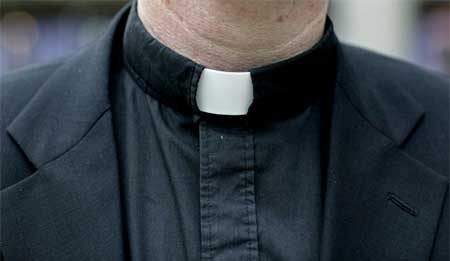
I love and loathe wearing my clergy collar when I’m out and about in public. I love the way it forces me to act like a Christian and the ways in which the faith breaks out from the walls of the church. And I loathe the awkward encounters it produces and the times in which I am compelled to defend the church from her detractors.

More often than not I don’t give much thought to what day I wear the collar or where I will be.

And sometimes I wish I was smarter about it.

When the time came for my second COVID vaccination shot I drove over to an abandoned department store and waited in line with hundreds of other people from the community. And it was only after I received the shot and sat socially distanced from the aforementioned crowds did I realize that I was wearing the collar.

And what made me realize my attire was the line that started to develop right in front of me of individuals who mistook me for a Catholic priest and asked if I would hear their confession.

Paul writes to the church in Corinth: “We are ambassadors for Christ, since God is making his appeal through us.” We, therefore, represent Christ and his church to those outside the church; we are strangers in a strange land.

And yet, with the privatization of faith, with faith often being something we do on Sundays and Sundays alone, there’s little reason to concern ourselves with ambassadorship. Unless we wear a cross around our necks, or a white collar around our throats, no one might ever know of our discipleship.

But then Paul has the nerve to remind us that some people will never see God except through us and the ways in which we exist in the world.

I have the benefit of representing the church not only because I am the pastor of one, but also because I walk around with my clergy collar. And when I dress that way I am forced to act like a Christian whether I want to or not. It is a constant and ever-ringing reminder that I am called to act, think, live, speak, and behave like a Christian.

And, though it pains me to admit, sometimes I need to wear the collar in order to live out my faith. 

Without it hanging around my neck it is all too easy to fade in among the crowd and pretend like I’m not an ambassador for anything but myself.

So when I sat in the post-apocalyptic department store and the line developed in front of me, I listened to each person rattle off their sins. I watched their eyes while they offered their pleas for pardon and assurance. I wanted to be like everyone else minding my own business. I wanted to flip through my phone for the required ten minutes of observation and then leave. But instead, I handed over the goods to each of my fellow Christians: “In the name of Jesus Christ, you are forgiven.”

Does that make me a better Christian than other Christians? Definitely not. “Reluctant” doesn’t do justice to the way I felt that day. And sadly, I know that, in large part, the only reason it happened and the only reason I responded was because of my outfit.

Which makes me wonder: What would it be like if all Christians in all places wore little white tabs around our necks? I mean, scripture does talk about “the priesthood of all believers.” Imagine how different the world would be if each and every Christian walked around knowing that everyone else had certain expectations about who we are and what we do.

It might just be the difference that makes all the difference. 

Holy Fertilizer

Luke 13.1-9

At that very time there were some present who told him about the Galileans whose blood Pilate had mingled with their sacrifices. He asked them, “Do you think that because these Galileans suffered in this way they were worse sinners than all other Galileans? No, I tell you; but unless you repent, you will all perish as they did. Or those eighteen who were killed when the tower of Siloam fell on them – do you think that they were worse offenders than all the others living in Jerusalem? No, I tell you; but unless you repent, you will all perish just as they did.” Then he told this parable: “A man had a fig tree planted in his vineyard; and he came looking for fruit on it and found none. So he said to the gardener, ‘See here! For three years I have come looking for fruit on this fig tree, and still I find none. Cut it down! Why should it be wasting the soil?’ He replied, ‘Sir, let it alone for one more year, until I dig around it and put manure on it. If it bears fruit next year, well and good; but if not, you can cut it down.’”

Interior coffee shop: early morning.

Rain falls steadily against a window.

An assortment of customers in various states of caffeination are spread out among the tables and chairs.

A preacher sits alone in the corner. Computer and Bible are on the table, a subpar sermon is coming along splendidly.

He tries to focus on the matter at hand, but he can’t help but overhear a conversation from a nearby table. 

“Can you believe he cheated on her?”

“Oh honey, that’s not the half of it. I heard he’s been living two lives between two houses with two different families.”

The preacher knows better than to eavesdrop, so he goes back to the flashing cursor on his computer. He’s able to jot a few ideas down, none of which will actually make it into the sermon. When, a few minutes later, he catches bits of different conversation at a different table.

“You know, the Ukrainians, they’re getting what they deserve. They elected that Zelensky and his liberal agenda. I think we would do well to have a leader like Putin here, someone tough who isn’t going to let anything get in his way.”

The preacher closes his computer and decides to leave before he overhears even more sinners talking about other sinners and their sin.

There are times when I like to think that we’ve come a long way since the time of our Lord, that we’ve progressed from some of our wandering recklessness.

And then I am reminded that, all things considered, not much has changed.

Do you think those Galileans suffered because they were worse sinners than other Galileans? No, I tell you; but unless you repent, you will die like them.

What a grace-filled and hopeful word from the Word!

Robert Farrar Capon wrote that good preachers, and I would say good Christians, should behave like bad kids. We ought to be mischievous enough to sneak in among dozing congregations and steal all their bottles of religion pills, and spirituality pills, and morality pills, and flush them all down the toilet.

Why? Because the church has drugged itself into believing that proper behavior is the ultimate pathway to God. We’re addicted to the certainty that, as bad as we might be, at least we’re not as bad as those other people over there.

There’s a reason reality TV is still such a favorite past time within and among the wider culture. We feel better about ourselves when we get to see other people behaving badly. It’s also why we’re quick to post photos of our perfect little families, even though they acted like animals while we were trying to get that perfect photo, so that everyone else will know, with certainty, that we have it all together.

But the sad truth is none of us know what we’re doing – some of us are better at pretending we know what we’re doing. But at the end of the day we’re all making it up along the way.

And yet, we can’t help ourselves from comparing ourselves to others in such a way that we are superior to their inferiority.

The crowds bring to Jesus their query; they want to know if people get punished for their sins – they want to know what it takes to be guilty.

And here’s the bottom line: if the God we worship punished us according to the sins we’ve already committed, the sins we’re currently committing, and even the sins we will commit in the future, then none of us would be around to worship in the first place.

Or, to put it another way: If every bad thing happens because God does it to punish us, then God isn’t worthy of our worship.

Over the centuries the church has been a place of guilt. Make em feel bad about their behavior, scare them about punishments in the hereafter, and they’ll show up in droves to hear about it all again next Sunday. And the same is true in our wider culture; we’re all keeping our little ledger books in our minds about who has done what to us.

But the strange new world of the Bible, the strange new world we talk about week after week, isn’t obsessed with guilt. No, if it’s obsessed with anything, it’s obsessed with forgiveness!

Christ died for us while we were yet sinners!

The Lamb of God has taken away the sins of the world!

What then, should we make of Jesus’ quip about repentance? “No, I tell you; but unless you repent you will die like them.”

Of course there should be repentance – a turning back, a return to the Lord. We’ve all wandered away from the Way. But repentance is supposed to be a joyful celebration, not a bargain chip we can cash in to get God to put up with us.

Repentance is a response to the goodness God has done, not a requirement to merit God’s goodness.

We can certainly feel guilty about our sins, and maybe we should. But feeling guilty about our sins doesn’t really do anything. In fact, the more we lob on guilt, the more likely we are to keep sinning because of our guilt.

The only thing we can ever really do about our sins, is admit them. It’s a great challenge to be able to see ourselves for who we really are, sinners in the hands of a loving God, and then take a courageous step in the direction of repentance. But if we ever muster up the gumption to do so, it will be because we live in the light of grace.

Grace works without requiring anything from us. No amount of self-help books, no number of piously repentant prayers, no perfect family, perfect job, perfect paycheck, perfect morality, perfect theology earns us anything.

Grace is not expensive. It’s not even cheap. It’s free.

And, according to the wondrous weirdness of the Lord, grace is like manure.

Or, perhaps we should call it holy fertilizer.

This is classic Jesus here. The crowds approach with their question and his answer to their question is a story, a parable.

A man has a vineyard and in the middle of the vineyard he planted a fig tree. But for three years it produced not a single fig. So one day the vineyard owner says to the gardener, “I can’t take it anymore. This fig tree is wasting my good soil. Cut it down.”

But the gardener looks at his employer and says, “Lord, let it be. Why not give it another year? I’ll spread some manure on it this afternoon and maybe next year it will have some fruit.”

Short and sweet as far as parables are concerned and yet, even in its simplicity there are a bunch of weird and notable details. 

For instance, why does the vineyard owner plant a fig trees among a bunch of grapes? Do you think he was trying to develop a new, and perhaps bizarre, variety of wine? Or maybe he was going to start the first Fig Newton distribution service in Jerusalem?

Strange. But perhaps nothing is stranger than the gardener. This gardener speaks in defense of a speechless fig tree.

And what does the gardener says, “Lord, let it alone for a year. Let me give it some manure.”

At least, that’s what it sort of says in our pew bibles.

But in Greek, the gardener says, “KYRIE, APHES AUTEN.”

Literally, “Lord, forgive it.”

Lord, forgive it!

These might be some of the most striking for from the strange new world of the Bible both because they proclaim the forgiveness of the Lord for not reason at all, and because they help us to see how little we can.

There’s a reason that, when we nail Jesus to the cross, he declares, “Lord, forgive them for they do not know what we are doing.”

Lent is the strange and blessed time to admit, we have no idea what we’re doing. That we are in need of all the grace and manure we can get.

The cross with this we adorn the sanctuary, in all of its ugliness, is a sign and testament to Jesus becoming sin for us – how Jesus goes outside the boundaries of respectability for us, how he is damned to the dump because of us, and how he ultimately becomes the manure of grace for us.

It’s wild that Jesus has the gall to tell this story at all, and that the divine gardener offers to spread some holy fertilizer on the fig tree, on us.

Only in the foolishness of God could something so nasty, so dirty, so grossly inappropriate, becomes the means by which we become precisely who we are meant to be. 

God’s grace gets dumped onto the fruitless fig trees of our lives and get co-mingled in the soil of our souls. It is messy and even bizarre, but without it we are nothing.

Jesus doesn’t give a flip whether we’ve got a fig on the tree or not. He only cares about forgiveness, a forgiveness we so desperately need because we have no idea what we’re doing. 

For, if we knew what we were doing, we would’ve solved all the world problems by now. But we haven’t.

We are fruitless fig trees standing alone in the middle of God’s vineyard. 

We are doing nothing, and we deserve nothing. 

And yet (!) Jesus looks at our barren limbs, all of our fruitless works, our sin sick souls, and he says the three words we deserve not at all: “Lord, forgive them.”

On Friday afternoon, the aforementioned Vladimir Putin addressed the people of Russia during a rally that was celebrating the 8th anniversary of the annexation of Crimea. While Russian forces attacked Kyiv and blockaded civilians in other parts of Ukraine, Putin assured his people that Russia was forced into this war into to get the Ukrainian people out of their misery.

And then he said, “And this is where the words from the scriptures come to mind, ‘There is no greater love than if someone gives his soul for his friends.’”

That a world leader used Jesus’ words to justify violence and bloodshed is not unusual. It’s been done again and again throughout the centuries. Even here in the US, it is a familiar refrain whenever violence is on the table. Presidents Trump, Obama, Bush, and Clinton each used the quote at one point or another during their years in office. 

But Jesus spoke those words before mounting the hard wood of the cross, not before going to war. Jesus laid down his life for his so-called friends who betrayed him, denied him, and abandoned him.

Jesus laid down his life for us.

And even with a crown of thorns adorning his head, and the cross over his shoulder, he still says, “Lord, forgive them.” Amen.