On Working The Crowd

Matthew 21.8-9

A very large crowd spread their cloaks on the road, and other cut branches from the trees and spread them on the road. The crowds that went ahead of him and that followed were shouting, “Hosanna to the Son of David! Blessed is the one who comes in the name of the Lord! Hosanna in the highest heaven!”

Romans 8.31-39

What then are we to say about these things? If God is for us, who is against us? He who did not withhold his own Son, but gave him up for all of us, will he not with him also give us everything else? Who will bring any charge against God’s elect? It is God who justifies. Who is to condemn? It is Christ Jesus, who died, yes, who was raised, who is at the right hand of God, who indeed intercedes for us. Who will separate us from the love of Christ? Will hardship, or distress, or persecution, or famine, or nakedness, or peril, or sword? As it is written, ‘For your sake we are being killed all day long; we are accounted as sheep to be slaughtered.’ No, in all these things we are more than conquerors through him who loved us. For I am convinced that neither death, nor life, nor angels, nor rulers, nor things present, nor things to come, nor powers, nor height, nor depth, nor anything else in all creation, will be able to separate us from the love of God in Christ Jesus our Lord.


Working a crowd can be an art form. Comedians walk back and forth casually across a stage making the crowds feel relaxed and ready to laugh. Martin Luther King Jr. repeatedly punctuated and staccato’d his refrains like the rhythm of a song to get the people connected to the message. Even our President, Donald Trump, knew how to work the crowds at his rallies leading up to the election. You don’t win elections by laying out the step-by-step plans to make economic, ethical, political, and militaristic changes. You don’t win elections by calmly reflecting on the days of the past and a desire for simpler times. You don’t win elections with PowerPoint projections of pie-graphs and political policies.

We all know you win elections by firing up the people with a litany of complaints about what has gone wrong. You win elections by throwing gasoline onto the fire. You win elections by working the crowd.

And Jesus, like Donald Trump, knew how to work a crowd.

Jesus-and-Donald-800x430

You spread the word and get thousands of people outside to hear the message, you keep them on the edge of their, you know, ground area, and then wait for them to salivate with under the sun and then transform a loaf of bread and a couple of fish into a buffet the likes of which had never been seen.

You get the crowds riled up about working on the Sabbath, even quote some of the prophets from the past, and then heal a cripple man and leave everyone with a rhetorical question: Is it better to heal someone on the Sabbath or let them continue to suffer?

Walk into the middle of an angry mob about to stone a woman to death and quietly write a couple choice words in the sand to let them peer deeply into their own sinful souls and then empower the woman to live a new life.

Jesus knew how to work the crowd.

And Palm Sunday, this strange occasion where we pass out palm branches at the beginning of the service, is perhaps the best example of Jesus’ perfect political ability to work the crowd. We read that many people spread their cloaks; they literally take the clothes off their backs, and placed them on the road. And still yet others even cut down palm branches to prepare the way for the king who entered Jerusalem on the back of a donkey.

We know the story. We can imagine ourselves there on the side of the road with the dust hanging in the air. We can feel the buzz of expectation around the one who will come to change it all. We can feel within ourselves that same desire to scream out “Hosanna!” “Save us!”

Christ's Entry into Jerusalem by Hippolyte Flandrin c. 1842

But, unlike the crowd, we know how the story ends.

We know what awaits us this so-called Holy Week. We know what will happen in the temple when Jesus flips the tables. We know what kind of strange sermon Jesus will offer from the mountain. We know that Jesus will get down on the floor and wash the feet of his disciples. We know that Jesus will gather his friends around a table to share bread and wine. We know that Jesus will be betrayed, arrested, beaten, mocked, and nailed to a cross. We know that before the end of the week, Jesus will die.

And because we know how the story ends, it becomes clear to us that may not have known what we were doing by joining the crowds along the road, or by joining the crowds in a place like this one that we call church.

The crowds who gathered to sing their “hosannas” wanted a king, but the only people who continue to admire him as a king at the end of the week are the sadistic soldiers who made him a crown of thorns and drove it into his skin.

Jesus, it seems, was not the right kind of king. He was not the one they, or even we, were hoping for.

Maybe Jesus wasn’t all that gifted at working the crowd. After all, it took less than a week for the shouts to go from “Hosanna” to “crucify.”

Jesus is a King unlike any other king. Other kings, who are also at times called presidents, know they have to work and manipulate the crowd to bend them according to the desires of the powerful. Kings and Presidents may even rely on the power of the sword to control and handle the crowd to bring forth their hopes and dreams.

Such is the reality of worldly power.

But Jesus, our King, does not take advantage of the crowd’s enthusiasm. Rather than a call to arms to storm the city gates or to murder the ruling elite, Jesus suffers humiliation, abandonment, and death.

Do you still want to be part of the crowd by the side of the road? Do you want a place in Jesus’ kingdom? Do you want to follow the suffering King?

9cc

Don’t be mistaken; Jesus is as political as they come. But he rules not at the head of an army, but from an old wooden cross. He rules not by filibustering particular Supreme Court nominees or demanding democratic political policies, but by laying it all down for the ungodly. He rules not by ordering his troops to use chemical weapons against innocent civilians or even sending tomahawk missiles to destroy a military base, but mounting the cross and saying, “Forgive them Father, for they do not know what they are doing.”

In America, we pride ourselves on being the ones who can defy the whims of the crowds. Freedom! We think for ourselves! Or at least, we think we can think for ourselves. But here’s the irony: The moment we are so sure that we have thought something up for ourselves, the moment we believe we are most free, is really when we’ve been co-opted by the powerful.

I know that we like to think that if we had been there, we would’ve been good disciples and that we would’ve stayed with Jesus to the very end. I know we like to think that if we had been there in Germany all those years ago, that we would’ve protected the Jews and rallied against Hitler. I know we like to think that if we had been involved in politics at the time, we would’ve voted against going to war in Iraq and Afghanistan.

But the truth is a whole lot harder to swallow: We are easily manipulated.

Which is precisely why we sing awful songs like “Ah Holy Jesus.” God will not allow us to get away with perennial self-deception and arrogance. We killed Jesus.

Who was the guilty? Who brought this upon thee? Alas, my treason, Jesus, hath undone thee! ‘Twas I, Lord Jesus, I it was denied thee; I crucified thee.

smaller-crowd-rdc-color-hi.png

We know who we want Jesus to be. We want Jesus on our side in our petty arguments with friends and neighbors. We want Jesus on our side when it comes to disagreements in the community. We want Jesus on our side when it comes to the trajectory of our country. We want Jesus on our side when it comes to politics, and Syria, and Healthcare, and Immigration. We see ourselves as Jesus in the story of his entry into Jerusalem, when in reality we are far more like the fickle crowds on the side of the road than anyone else.

And that brings us to Romans 8.

Romans 8 is an unsettling text. Sure, we’ve heard it and used it at funerals; it offers us comfort and hope in the midst of sorrow and loss. It is important for us to declare over and over again that death will not separate us from the love of God in Christ Jesus.

We know this passage. We know it just like we know the story of Palm Sunday. In fact, if you can remember, months ago I asked the congregation to imagine what scripture you would use to comfort someone on death row, and this was the overwhelming favorite.

But these words from Paul can tempt us to forget that it is not just death that threatens to separate us from the love of God. Instead, we imagine the other things in the list to be good: life, angels, rulers, powers, things present, things to come. But all of them can threaten to come between Christ and his church; between God and us.

When we are comfortable, when we can’t imagine our faith requiring us to suffer, the list remains easily ignorable. However, we become true disciples of Jesus when we are willing to take risks, when we are prepared to go against the flow, when we resist the manipulation of those in power. And risks are called risks for a reason: following Jesus is a risky thing to do because it always involves the possibility of rejection.

Many of us know that this week marked the anniversary of the death of Martin Luther King Jr. Dr. King stood firm while the waves of the status quo crashed around him. Dr. King called out the principalities and powers for being wrong. Dr. King worked the crowds to a belief in non-violent resistance. And it got him killed.

Here in Staunton, like I said last week, we don’t feel very revolutionary, we don’t equate our faith with taking risks, and we can’t even imagine having to lay down our lives for the sake of the gospel. We can’t imagine ourselves being like Dr. King or questioning what our country is doing in Syria. But if we are serious about following Jesus, we will suffer; it’s just a less glamorous and more mundane form of suffering.

You know, like being mindful of other people; not getting stuck in our own unending bubble; asking hard questions that other people would rather ignore; acting like Jesus; sacrificing our wants and needs; calling someone in the midst of grief; showing up for a funeral when we might have other things to do.

Following Jesus in this place these days might not get us killed. But it might mean reaching out to someone who is totally unlike us. It might mean having a conversation with someone who voted for the other candidate. It might mean asking our spouses to forgive us for what we did. It might mean repenting for the way we spoke to our children or our parents. It might mean confronting our friends about their addictions. It might mean asking for help regarding our addictions.

And in so doing, we will suffer.

But nevertheless (!) nothing can separate us from the love of God in Jesus Christ! Not a bitter parent who refuses our apology; not an angry child who resents us for a past decision; not a nation who indiscriminately persecutes the poor and the marginalized; not a king or a president or a politician; not standing against the powers that be; not going against the current for a strange and more loving way of life; not anything now; not anything in the future.

We will surely suffer for the sake of the kingdom, but we will never be divided from the Lord. Amen

Devotional – Ephesians 5.14

Ephesians 5.14

Therefore it says, “Sleeper, awake! Rise from the dead, and Christ will shine on you.”

Weekly Devotional Image

On April 4th, 1742 Charles Wesley, the musically inclined younger brother of John Wesley, was invited to preach at St. Mary’s in Oxford. It was his first, and last, occasion for preaching there. His text was Ephesians 5.14 (“Sleeper, awake! Rise from the dead, and Christ will shine on you.”), and his message most likely caused a significant amount of resentment among those in attendance.

Throughout the sermon, Charles Wesley interprets the “sleep” from Ephesians as the natural state of humanity; it is the place where we are in light of Adam’s sin that has passed on to the world. But God calls each human to wake up from this dreadful sleep, repent, and live into the fullness of holiness made possible through the life, death, and resurrection of Jesus Christ.

In a sense, it did what all sermons are supposed to do: it faithfully proclaimed God’s revealed word in a way that was applicable and approachable to all with ears to hear. However, Charles made plain the point that those in attendance, the religious elite of the day, had fallen asleep to God’s commands and that it was time for them to wake up.

airbnb_wake_up_call_0

To paraphrase: “In what state is your soul? If God required you to die right now for the sake of the Gospel, would you be ready? Have you fought the good fight and kept the faith? Have you put off the old life and put on the new? Are you clothed with Christ? Do you have oil in your lamp and grace in your heart? Do you love the Lord your God with all your heart, with all your soul, with all your mind, and with all your strength? Do you believe that God is moving in a through you in all that you do? Are you really a Christian? If any of these questions offend you, be assured that you are not a Christian, nor do you desire to be one. The time has come to wake up!”

It’s no wonder he was never invited back to preach.

However, Charles’ questions still ring through the centuries and resonate in our hearts today. Are we alive to our faith? Are we clothed with Christ? Do we really love God and neighbor? Are we Christians at all?

Lent is the time to confront our true natures and ask if we have fallen asleep in our faith, or if we have been raised from the old life into the new. For Christ, the one in whom we live and move and have our being, is calling us to wake up. Christ compels us to leave the old life behind, the life defined by death and sin. Instead, Christ pushes us to clothe ourselves in our baptisms, live into the reality of resurrected life here and now, and wake up!

Stuck In The Bushes

Romans 5.12-21

Therefore, just as sin came into the world through one man, and death came through sin, and so death spread to all because all have sinned – sin was indeed in the world before the law, but sin is not reckoned when there is no law. Yet death exercised dominion from Adam to Moses, even over those whose sins were not like the transgression of Adam, who is a type of the one who was to come. But the free gift is not like the trespass. For if the many died through the one man’s trespass, much more surely have the grace of God and the free gift in the grace of the one man, Jesus Christ, abounded for the many. And the free gift is not like the effect of the one man’s sin. For the judgment following one trespass brought condemnation, but the free gift following many trespasses brings justification. If, because of the one man’s trespass, death exercised dominion through that one, much more surely will those who receive the abundance of grace and the free gift of righteousness exercise dominion in the life through the one man, Jesus Christ. Therefore just as one man’s trespass led to condemnation for all, so one man’s act of righteousness leads to justification and life for all. For just as by the one man’s disobedience the many were made sinners, so by the one man’s obedience the many will be made righteous. But law came in, with the result that the trespass multiplied; but where sin increased, grace abounded all the more, so that, just as sin exercised dominion in death, so grace might also exercise dominion in death, so grace might also exercise dominion through justification leading to eternal life through Jesus Christ our Lord.

I take a lot of pride in my ability to communicate with people of different age groups. On any given week I will spend time explaining theology to five year olds in our preschool, fifteen year olds in our youth group, 50 year olds in our bible study, and then the rest of you on Sunday morning. It is definitely a challenge taking ideas from the likes of Paul and proclaiming them in a way that can be appreciated for the here and now for the young and old.

But sometimes, I fail.

Like the time I tried to address the moral and ethical dilemmas of Capital Punishment to our youth group one night, to the times I’ve tried to proclaim the strange complexity of confronting our finitude on Ash Wednesday to our preschoolers, to the times I’ve told some of our much older adults that one must have the faith of a child to inherit the kingdom of God.

Communicating the gospel, sharing the Good News, is a challenge, and I definitely failed once when we were on our mission trip to West Virginia a couple summers back. Picture it, if you can: It is hotter than blazes outside, and I’m stuck in a tiny kitchen surrounded by teenagers who would rather be instagramming and snap chatting one another than cleaning a floor or painting a ceiling. And it was silent.

So I did what I do: I started asking questions…

“What’s your favorite story from the bible?”

One of our boys immediately said something about David defeating Goliath. The Davidic story will forever rest in the hearts of prepubescent boys who struggle with how rapidly the girls are growing while they remain the same.

A boy from another church said, “Well, I kinda like the one about, you know, Jesus feeding people?” while saliva poured out of his mouth as he stared at the cooler in the corner filled with our lunches.

A girl from a different church said, “I’ve always been rather captivated by Jesus turning water into wine at the wedding at Cana in Galilee.” To which I made a mental note to bring this up with her youth group later in the evening. No sensible teenage girl should be thinking about water turning into wine, and certainly not when Jesus has anything to do with it.

We went on and on, and then it was my turn to answer. “Well” I said, “It’s not my favorite story, but I’ve always loved this little detail at the beginning of the bible, in the book of Genesis. Adam and Eve were placed in the Garden of Eden with a choice. They could choose to live in perfect harmony with God and God’s creation, with each other, free from sin and free from death. But Adam and Eve made the wrong choice, they wanted to be like God, and as soon as they tasted the fruit from the tree of knowledge of Good and Evil, their eyes were opened, and they knew they were naked.

“But here’s the part that gets me every time. Almost as soon as they sin, they heard the sound of God walking in the garden and they both sprinted for the bushes. But God called out, ‘Where are you Adam? Where are you Eve?’ After waiting for a few moments, Adam popped his little head out of the bushes, and told God that he was hiding because he was naked and afraid.”

To which God said, ‘Who told you that you were naked?’

“Isn’t that hilarious?” – The teenagers had all stopped working while I was sharing the story, and now they were all staring at me with eyebrows askew. I could hear the paint dripping off their brushes onto the floor as if even the crickets were too concerned to chirp. One of the boys finally broke the silence to say, “Um… I don’t think it’s very funny. If I were naked and God came looking for me, I’d run for the bushes too!”

Do we know this old, old, story? Do we know what sin is? Do we know what happened to Adam and Eve in the Garden of Eden?

What kind of stories and habits and beliefs do we want to pass on to the coming generations? I feel like I am forever hearing about the good ol’ days when “we knew our bibles” and “we would’ve gone to school with snow like this when I was a kid” and “we entertained ourselves with our imaginations and not a screen in our pockets.”

Do we wish that things could go back to the way they were? Are we worried about the future that we are handing to our children?

We can talk and talk about what we want to pass on, what we hope to engender, but if we don’t know our story, if we don’t know where we came from, how in the world can we even hope to take a step in the right direction?

tumblr_nfzluvor3q1sk7sreo1_500

Just as sin came into the world through one man… Paul assumes that we know the story, that we know the details of the Garden. He does not waste lines in his letter rehashing the characters and the questions, he gets right to the point: Sin came into the world through Adam and Eve. They, and therefore we, broke the covenant with God. The transition from God’s rule to the rule of sin and death came into the world because of our rebellious and disobedient desires.

This is our condition. There is no going back. Fear and shame and anger and disappointment are our lives. We are, in a sense, stuck in the bushes for good, hoping that God will not come looking for us.

We are in the bushes. And Lent is a great time to ask the question: Why? Which of the commandments have we broken? Did we work on the Sabbath? Have we hated our mothers or our fathers? Did we covet something that did not belong to us? An object, a job, or God forbid, a person?

How would we respond if we heard God walking toward us in the middle of our sin? We, like Adam and like that boy on the mission trip, would run for the bushes.

Paul assumes that we know the story of Adam and Eve in the Garden because it is OUR story! Adam’s sin is our sin, and it not only divided us from God, but also brought death into the world, which spread like a disease. This is Paul’s point, and he says it in these few verses over and over again.

We are trapped in sin and death and we are stuck in the bushes. That’s the story of the Garden. Is this what we want to pass on?

Truly I tell you, we cannot know who we are to be, if we do not know our story. This inexhaustible, unexplainable, indescribable moment from the beginning is who we are. It is the story of how the life of order fell into disorder. But, thanks be to God, it is not the end of the story.

Adam brought the entirety of humanity down, down to the depths of death and destruction. Jesus, however, is the new way who is able to create a new humanity.

The promise of a good and remade and hopeful future comes from the old story that is forever new. The story of our death, and then the death that freed us from sin and death.

In Jesus Christ our stories are made new; God, as the author of salvation, takes up the pen and starts a new chapter through the life, death, and resurrection of his son. This is the story that those who are coming, the one who will follow us, need to hear. This is the story we need to share. We need to pray for the courage to shout this story from the rooftops as if our lives depended on it, because they do.

The only way to victory, the way to upend what was done in the Garden, is through the cross. We might think of a different way, a more efficient and less taxing way, but the way of the cross is the WAY that Christ defeated death.

08687e2b32757ff3722238f19cd727cd

But this is not an easy story to tell. The message and value of the cross comes with a cost. It is difficult, it is selfless, and frankly it is un-American. Today, we would rather surround the young with lessons that teach very different values: get the job, earn as much as you can, find the right spouse, buy the car, lose the weight, invest in the right companies, bring 2.5 children into the world, purchase the perfect house, and you will be free and life will be perfect.

That’s the story we tell. And it’s a lie! It’s all a lie! None of these things can give life. They cannot give us the identity and purpose and hope we so desire. The job will change, the money will disappear, the spouse will grow old, the body will too, the companies will falter, the car will rust, the children will not listen; Sin and Death corrupt them all.

But there is nevertheless Good News, there is a way out of the bondage that was brought into the world by the one we call Adam. We are freed through the one we call Christ.

We are stuck in the bushes of our own sin and shame. But Christ comes to us in the Garden of our own demise without a question, but a call. Jesus does not ask us who told us we were sinning, Jesus says follow me. Follow me to Galilee, follow me to Gethsemane, follow me to Calvary.

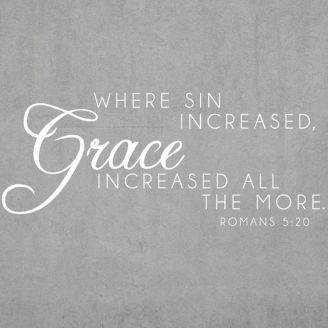
Jesus is the way and the truth and the life. Sin has increased in this world and in our lives, but God’s grace in Jesus Christ has abounded all the more.

The story, our story, began in the Garden, but it did not end there. It continued through the strange and wild wilderness in the days of Abraham, weaved through the journey to Egypt and back again in Jacob and Joseph. It rose through the power of David and Solomon, and fell through the failure of God’s people worshipping idols. It danced through the prophets who remained faithful to the Lord, it endured droughts and famines, it saw suffering and sadness. It connected the lives of the powerful with the powerless, it brought down the high and lifted up the lowly.

It was born again in a manger in a small town called Bethlehem; it trudged through the towns of Galilee and sailed over the sea. It walked through the streets of Jerusalem and turned over the tables at the Temple. It was dragged before the council and the ruling elite. It was marched up to a hill and nailed to a cross. It was silent in a tomb for three days. And it broke free from the chains of sin and death.

That is the story. It is a story worth telling over and over again; because in it we discover who we are and whose we are. In it we see ourselves stuck in the bushes being beckoned by Jesus to follow him. And in it we realize that it is not just a story, nor even our story, but THE story. Amen.


romans_feature-01

The End Of The Beginning – Ash Wednesday

Genesis 3.19

By the sweat of your face you shall eat bread until you return to the ground, for out of it you were taken; you are dust, and to dust you shall return.

If you’re here in this place, with these people, on this occasion right now, you are blessed. You are blessed because you understand, you grasp, what the church is really all about. We are a people called church, who follow Jesus and take upon ourselves the sins of the world.

However, we don’t take upon the sins of the world in the way Jesus did. We are told to take up our own crosses, but we don’t drag them up to a place called The Skull, and we don’t wait for people to nail us to them. We take upon the sins of the world in confession, a confession that God is our judge and has every right to be. Because we have failed to be the people God has called us to be over and over and over again.

The United Methodist Church has a document to help us whenever we gather together. The Book of Worship outlines the ways to serve the Lord for just about every occasion, including funerals.

The Service of Committal is brief and is reserved for the graveside. And in our Book of Worship you can find these directions for clergy: “Stand at the head of the coffin and while facing it, cast earth upon it as it is lowered into the grave. The pastor then says, ‘Almighty God, into your hands we commend your son/daughter, in sure and certain hope of resurrection to eternal life through Jesus Christ our Lord. This body we commit to the ground, earth to earth, ashes to ashes, dust to dust.’”

The last time I did a graveside burial, I held the Book of Worship in my hands like I’ve done too many times before, I read the all too familiar words, and when it came time to cast dirt upon the coffin, I couldn’t find any. I frantically looked at the area around the hole, and they had covered it with a frighteningly sharp bright green carpet of AstroTurf. So I bent down in my robe onto my knees, and I started ripping up the perfectly manicured grass on the edge of the fabricated lawn. I needed some dirt. I needed to dirty this pristine and picturesque committal service because death is ugly and disruptive. I clawed the ground and threw the grass to the side until I scraped enough bare earth with my hands to have a solid mound to drop onto the coffin.

It was a holy thing.

dirt-placeholder

I took my dirt covered hands and placed them on the coffin, I prayed the words from the Book of Worship, and then I slowly walked away giving the family time to grieve before leaving. And just as I began backing away, the funeral director motioned for the pall bearers to come forward. But they did not bend down to the hole in the ground I had just revealed. No, they took roses, the boutonnieres, from their lapels and laid them silently on the recently dirt covered coffin.

It is, of course, much nicer to throw roses than dirt. But like almost everything in the tradition of the church regarding worship, the dirt has important theological significance.

I wound venture to guess that many Christians, though they hear the words about ashes to ashes and dust to dust at funerals and at Ash Wednesday services, they have no idea where those words come from. But you do. You know where they come from because you just heard it. It is the final announcement from God to Adam and Eve as they are kicked out of the Garden of Eden.

By the sweat of your face you shall eat bread until you return to the ground, for out of it you were taken; you are dust, and to dust you shall return.

            For us humans, this is the end of the beginning.

Much has been made about the Genesis story of eating from the tree of knowledge of Good and Evil. The slithering serpent who manipulates Eve’s desire; Eve’s treachery through inviting Adam to join her in the prohibited act; Adam hiding his shame and nakedness from God when the Lord returns to the Garden. And its all pretty harsh.

By this act sin was brought into the world. Because of our ancestors’ choice, we were banished from the paradise of God’s created order and were punished. Women must suffer through childbirth. Humans must work and sweat over the earth in order to glean enough produce to survive. Families are torn apart by an individual’s choice that has ramifications far greater than they can ever imagine.

And then we come to a place like this to have ashes smeared across our foreheads in an effort to remember what happened long ago, and what will happen to all of us one day.

We will die.

But we’re content with spending the rest of our days prettying everything that we can. We bring roses to place on the coffins at graveyards. Politicians bump up statistics to make things appear better than the actually are. We do our best to cover our scars, both physical and emotional, as if they were never there. And some churches spend Ash Wednesday not in sanctuaries confessing their sins with their brothers and sisters in faith, but in their parking lots presenting “Ashes to God with a cup of Joe.”

We would rather cover the harsh realities of truth than look at them in the eye.

God’s pronouncement to Adam and Eve, that terrifying moment when they were expelled and told that they will suffer until they return to the ground, that strange and all too familiar expression you are dust and to dust you shall return, they strike fear in the hearts of us mortals.

Sometimes its good to be afraid because it reminds us what a tremendous blessing it is to be alive at all. Sometimes its good to get down on our knees and confess our sins before the Lord because it reminds us that we are not God. And sometimes we need to catch a glimpse of ourselves in the mirror on Ash Wednesday to remember who we are, and whose we are.

This day, this Ash Wednesday, is a moment for us to confess our sins, and for all the sins of the people who are not here. We bow our heads and are adorned with a sign of death, not just as a reminder to us and to others that we will die, but that God will not let death be the final Word.

And here is the hope, my brothers and sisters, the hope we need on a day like today. We know how the story ends. We know that the pronouncement at the edge of the Garden was not the final word. We know the final word is not suffering, nor death, nor dirt, nor even dust. We know that the final Word is Jesus Christ.

The ashes that will soon be on our skin are not our crosses to bear, but Christ’s who carried it to The Skull and was nailed to it for the world. Jesus Christ is God’s greatest and final Word because in him the fullness of the Lord was pleased to dwell. In Him the sin of Adam and Eve were reconciled unto the Lord. In Him we are brought back into the dwelling of God’s grace where the light always shines in the darkness.

So wear the ashes with fear and trembling, let them dirty your lives a little bit, but also remember the hope that has been available to us in the one who hung on the cross, and rose again. Amen.

maxresdefault-2

Devotional – Exodus 24.15

Devotional:

Exodus 24.15

Then Moses went up on the mountain, and the cloud covered the mountain.

Weekly Devotional Image

I like having a plan. Whether Lindsey and I are preparing to travel with Elijah, or the church is hosting an event, or even just putting together the order of worship for Sunday mornings, I like having a plan. This need for structure and planning probably began during my time in scouting (“Be Prepared”) and it has continued to manifest itself throughout my life over and over again.

When I felt God calling me to a life of ministry as a teenager, I started planning with my home church pastors about where to go to school and how to follow the guidelines of the United Methodist Church to be ordained one day.

When I experienced God calling me to spend the rest of my life with Lindsey, I started planning the perfect way to propose to her while we were dating.

When I received the call to serve St. John’s UMC, I started planning all the ways I could help move and nurture the church even before I set foot on the property.

I like knowing where the road of life is leading me. Yet, for most of the people in scripture, the way forward is more like walking into a dense cloud covering the mountain.

Abraham was told to go to a strange new land and he did not have the advantage of Googling it before he arrived. Noah was told to build an ark and fill it will animals without really knowing what life would be like on the other side of the flood. Moses’ mother placed him in a basket and let him float down the Nile River without knowing what would happen to her precious baby boy. And Moses went up on the mountain to encounter the Lord while a cloud covered everything he could see.

98c001_b

When I read these stories in scripture, they make me anxious. I think they make me anxious because in the characters I encounter a faithfulness that I rarely experience in my own life. Again and again, God’s chosen people are ready and willing to walk into the cloud of the unknown, while I insist on patiently preparing for any and every contingency.

Part of the strange and beautiful mystery of following Jesus Christ is that we do not know where He is leading us. We might have an idea based on stories from scripture and the experiences of the disciples, but the road that leads to life eternal is one that is often covered with a thick and dense cloud.

Or to put it another way, a biblical way: Do not worry about what tomorrow will bring. Rejoice in cloud of the unknown and the comfort of the living God who surrounds you with hope and grace and peace. Celebrate the mystery of not know what is about to come, but that God is with you in the midst of it. Enjoy the strange and beautiful thing we call life; a life that is strange and beautiful precisely because it is not under our control.

Devotional – Matthew 5.23-24

Devotional:

Matthew 5.23-24

So when you are offering your gift at the altar, if you remember that your brother or sister has something against you, leave your gift there before the alter and go; first be reconciled to you brother or sister, and then come and offer your gift.

Weekly Devotional Image

“I want you to write down the name of someone who is currently driving you crazy.” That’s how I chose to begin a sermon more than a year ago. Each bulletin had a blank piece of paper inside, and after writing down the name I asked everyone to crumple it up and hold it in their hands until the end of the sermon.

The sermon was focused on Isaiah 6.1-8 and I talked about how Christians, for centuries, have been called by God to confront conflict. I said that to be faithful is to meet the outcasts where they are and show them love, that to be a disciple means a willingness to forgive people when they have done something wrong, and that to follow Jesus means having the courage to ask for forgiveness when we have done something wrong.

I concluded the sermon by asking everyone to look at the names crumpled up in their hands, and seriously consider making the first move to confront the conflict with that person. I warned everyone that it might not go well, and that it might blow up in our faces, but that the longer the conflict remains, the harder it would be to hear the living God speaking in our lives.

1be9b5bd635fbd64716dbb286ad38d4d

Like a lot of sermons, I preached it and hoped the people of St. John’s took the challenge seriously. Over the next few months I occasionally heard about what happened when certain individuals confronted the conflict in their lives, but a few people told me that it was too hard and they were too afraid to face the person whose name they wrote at the beginning of the sermon.

Jesus, in the Sermon on the Mount, takes the art of reconciliation very seriously: Before you bring a gift to the altar (before you place your tithe in the offering plate during worship) you need to leave; first be reconciled to your brother or sister, and then come back to offer your gift.

I’ve often thought about what this would look like in the middle of a worship service: How would people respond if we told them to leave the church right then and there to be reconciled with the people they are quarreling with before giving their gifts to the church? Would any of them come back the next Sunday? Would anyone walk straight up to me because I’m the person they’re frustrated with?

It is easy to show up to church every week as if we have everything in our lives figured out and squared away, when the truth is that we are quarreling with people in our lives and that we don’t have everything figured out. Church, however, is the place where we learn what it means to be broken, and how God is working through us to put the pieces back together.

So, if we took Jesus’ words seriously, who would we need to reconcile with before we show up to church next Sunday?

Love The Sinner, Hate The Sin

Matthew 7.1-5

Do not judge, so that you may not be judged. For with the judgment you make you will be judged, and the measure you give will be the measure you get. Why do you see the speck in your neighbor’s eye, but do not notice the log in your own eye? Or how can you say to you neighbor, “Let me take the speck out of your eye,” while the log is in your own eye? You hypocrite, first take the log out of your own eye, and then you will see clearly to take the speck out of our neighbor’s eye.


We announced this sermon series a couple months back, and ever since then a number of you have expressed your excitement about the possibility of confronting these Christianisms. Whether you were in the middle of suffering and someone said, “God won’t give you more than you can handle” or a friend tried to explain how your struggles were given to you by the Lord because “everything happens for a reason” or any number of situations, these dumb things that Christians say are things all of us have heard.

However, some of you have also expressed your concern about today’s statement, the last one in the series, “love the sinner, hate the sin.”

It sounds so right doesn’t it? What could possibly be wrong with it?

We can all agree that Christians say a lot of dumb things, but this is a good thing to say, right?

post_image2-720x360

In my experience, when people say “love the sinner, hate the sin” they are usually referring to homosexuality. For many, it is a kind and Christian way to say, “I love my gay friends, but I hate that they’re gay.” In this post-truth, post-liberal, post-whatever period, it is a way for some of us to cover our true feelings while appearing congenial toward those whom we disagree with about sexuality.

Though recently, when I’ve heard people say it they are now using it with regard to the realm of politics. It is amazing how quickly the Christian cover-all for conversations about homosexuality has shifted to conversations about who, or who isn’t, running the country. “Well, I know she voted for that traitor Hillary Clinton, but I love her anyway.” Or “Donald Trump is ruining our country, but I love him anyway.” “I love my brother, but he can be a bleeding liberal.” “I love my sister, but she’s so conservative she’s off the political spectrum.”

Love the sinner, hate the sin.

It sounds good, but it’s pretty hard to hate another’s sin, without harming the sinner.

What is sin? We don’t talk about it anymore. Pastors like me would rather talk about God’s loving nature, than God’s judgment. We would rather tell people like you to love your neighbors, than to tell you to tell your neighbor they’re sinners. We would rather skip over the hard and strange passages about condemnation than truly proclaim that God’s scripture is still speaking to us today.

But for a long time, and I mean a LONG time, sin was THE thing that pastors talked about; sinners in the hands of an angry God, fire and brim stone, and repent or burn forever.

We’re afraid of sin. And not sin as a behavior; we’re afraid to talk about it because it makes us, and our congregations, uncomfortable. I hear again and again that people don’t want to leave church feeling miserable about their lives and their behavior, so preachers like me water down the gospel and we avoid even mentioning sin.

In fact, I had a professor in seminary who taught us to preach ten sermons about grace for every one sermon about sin. We preachers, and you Christians, can’t handle the topic of sin like we once could.

But what is it?

In both Hebrew and Greek the words for sin basically means “to wander from the path” or “to miss the mark.” Sin is any action, thought, or behavior that divides us from God. Sin can be any choice, or lack of choice, that results in failing to do something we know we should.

And here’s the thing: We all do it. All of us sin. From the guy standing before you in a white robe, to the decades long Sunday School teacher, to the child drawing on his bulletin, to the person in the pew across the aisle, to you. We are all sinners.

We think, say, and do things we should not. And we fail to think, say, and do things we should.

lovehate1-750x400

Love the sinner. Of course we are supposed to love the sinner. Jesus did it all the time. Most of his ministry was about loving sinners. The problem is that Jesus does not call his disciples to love sinners, but to love our neighbors.

This is an important difference. The difference being the starting point. If we say we are going to love sinners, we will view other people more like sinners and less like neighbors. It automatically puts us into a place of judgment where we are the righteous, and they are not.

Loving sinners also furthers the problematic identity problem where by we understand and identify others by their mistakes. We label people by their sins. Regardless of when the sin occurred, and even regardless of frequency, we still call people things like cheaters, adulterers, and liars.

Or, to put it another way: Instead of seeing our neighbors as our neighbors, we judge them and identify them by which political candidate’s name was on a sign in their front yard.

A while back one of my friends was starting a new job fresh out of college. He was understandably nervous when he entered the office building for the first time and made his way to a cubicle near the corner of the room. He quietly unloaded his boxes of pertinent materials onto his desk and set up pictures of his family and friends while other employees walked idly by.

There were signs that someone had used the cubicle before him: an accidental scratch across the desk, a piece of discarded paper in the trashcan, and finger smudges on the computer monitor. But other than that, the cubicle was empty.

He worked his first full day under the weight of focus, though a few people came by to introduce themselves. And when it was time to go home he packed his bag and opened the top drawer to grab his pen when he noticed a post-it note near the back. Without thinking much about it, he grabbed it and read three big words: DO NOT TRUST. And underneath those words were the names of five people from the office.

Can you imagine? No matter how hard he tried to forget the note, no matter how hard he tried to trust the people in spite of what he read, his entire perspective had been reshaped by those three words.

The same happens when we view others as sinners first, and neighbors second. We should always try to love them, but we can love them even more if we see them first as our brothers and sisters and less as sinners in our midst.

Jesus says, “Why do you look for the speck in your neighbor’s eye, but do not notice the log in your own eye?” We’re good at seeing the sin in others. That’s what Facebook is for! So we can vent about the sinners in our midst and all the problems they’re causing for the rest of us!

Jesus used this expression because he knew that the disciples would struggle with the tendency to judge others. So instead of loving the sinner, perhaps it’s better to say “I am a sinner, and I ‘m trying love my neighbor.”

But we still have to face the end, “hate the sin.”

Jesus spent a lot of time with sinners: drunks, prostitutes, thieves, murderers, traitors, and countless others who sinned against the Lord. Jesus routinely gathered with them to do what we will do in a few minutes, he broke bread with them. Jesus gave him the most precious gift he had to offer, his time. And then he told them to follow him.

But Jesus never, not even once, said to any of them, “I love you, but I hate your sin.”

Jesus, instead, offered forgiveness.

He encountered all kinds of people who were defined by their choices, and he saw them for who they were in spite of their sins. His love was such that it knew no bounds. It was enough.

            But we are not like Jesus. We fail to love the other as brother and the stranger as sister. We have logs in our eyes and say things like, “love the sinner, hate the sin.”

love

There was a man who died, and upon his death he arrived at the pearly gates in heaven. He looked all around and soaked up the sights of the fluffy clouds and he was so excited to see people just on the other side of the gate that he had missed for so long. He wanted to run straight to them but there was a line leading up to St. Peter. So the man got in line and waited patiently for his turn.

He knew it wasn’t the right thing to do, but as he got closer he couldn’t help eavesdropping on the conversations between St. Peter and the soon to be residents of heaven. “Oh you did so much for that soup kitchen!” “You’re the one who read scripture out loud in church every week, very good, very good.” And so on. But when the man’s turn came, St. Peter looked down in the Book of Life and then said, “Yeah you were a believer, but you skipped the ‘not being a jerk about it’ part.”

Saying, and living by, “love the sinner, hate the sin” makes us jerks. It means the log in our eye is so large that we are unable from seeing others as brothers and sisters. It means that our own sinfulness blinds us from truly loving.

There is sin in this world. People will make the wrong choice, they will choose evil. We will make sinful decisions; we will avoid doing the things we know we should do. But instead of rallying together and focusing on all the sins and problems of other people, instead of flocking to the Internet and like-minded dinner parties to declare the sins of the other, we all need to take a good hard look in the mirror. We need to recognize the log in our own eyes before we dare point out the speck in another.

Because Jesus, looks right into our hearts and says “I love you, log and all.”

God in Christ knows the prejudices we’re ashamed of, God knows the golden calves we worship instead of Him, God sees our self-righteousness and indignation and says, “I love you, log and all.”

God sees the emails we craft out of anger but are too afraid to send, God knows the ways we lie to our spouses and our children, God witnesses the depth of our depravity and says, “I love you, log and all.”

God was there with us in the voting booth, God hears the sighs we utter in response to someone on the other side of the political aisle, God knows how we really feel and says, “I love you, log and all.”

“Love the sinner, hate the sin.” We say it. We read it. We might even live by it. But we should just stop with the word “love.”

Love.

617564_1

Not Hallmark love. Not Valentine’s Day love. But love like Jesus. That might be good enough. Because loving like Jesus does not mean turning away from the sinners in our midst. It means walking up to a crowd of people who are about to do something terrible and saying, “Who among you is without sin? Let him cast the first stone!”

It means encountering the beauty of the Lord and responding with the truest words we can ever say: “Have mercy on me Lord, a sinner.”

It means being humble enough to seek out those whom we have wronged and asking for their forgiveness.

It means caring for those on the margins regardless of the decisions they’ve made or the sins they’ve committed.

It means reaching out to the people who we disagree with most not to change their mind, but to offer them the same thing Jesus offer us, time.

So the next time we say “love the sinner, hate the sin.” Let’s just stop with love. Amen.

Devotional – 1 Corinthians 1.27

Devotional:

1 Corinthians 1.27

But God chose what is foolish in the world to shame the wise; God chose what is weak in the world to shame the strong.

Weekly Devotional Image 

When Pharaoh enslaved the descendants of Abraham, God chose a weak little baby abandoned by his mother to the Nile River to deliver the people out of bondage. When Goliath stood in front of the Philistine and Hebrew armies, God chose a foolish and weak little shepherd named David to bring him down. When the time came for the defeat of death, God chose to come in the form of a baby to die at the hands of the government in order to rise again.

Through the Old and New Testaments, God is forever subverting the expectations of the world with something foolish or weak. We can only imagine what people thought of Noah building his giant ark, or Isaiah wandering the streets naked for three years, or Jesus praying over a loaf of bread and cup of wine. God chooses what is foolish in the world to shame the wise; God chooses what is weak in the world to shame the strong.

For far too long, the world has treated an entire gender as foolish and weak. Even in this progressive land we call the United States of America, women still only make $0.80 for every $1 that men earn. The belittling of women is made manifest in a number of ways from churches that believe women do not have the right to preach, to companies that overlook hiring women because of their gender, to women who are made to feel that their fundamental role is to support their husbands.

But on Saturday, God subverted the perspective of the world through the gathering and marching of “foolish and weak” women to shame the wise and the strong. They did not need weapons and aggression and violence to achieve their goal, they did not need the tools the world values so dear, they used the foolishness and weakness of peace to say more than any weapon ever can.

632318086-dc-rally-women-march-washington

What good news it is to know that God is still upsetting and overturning the world to shame the wise and strong! How glorious to know that women all across the world can come together in such a holy way to protect those whom the world has dismissed! How beautiful to see women powerfully and deliberately march for empowerment!

God makes the first last, and the last first. The great story of scripture is the narrative of God turning the world upside down. O that God would do the same to all of our hearts who are more convicted by the ways of the world, than by the truth of the Good News.

Devotional – John 1:29

Devotional:

John 1.29

The next day [John] saw Jesus coming toward him and declared, “Here is the Lamb of God who takes away the sin of the world!”
Weekly Devotional Image

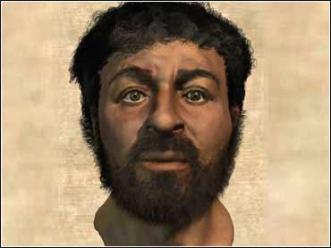
The quest for the historical Jesus, for the most authentic and true description of the man, dominated a strain of theological thought during the 19th and 20th centuries. Theologians would dissect scripture, historians would recover artifacts, and pastors practically posit who Jesus really was during the first century. In large part it was a response to the world’s obsession with historical and verifiable truth at the time, but it also captivated the minds of many Christians who sat in the pews on Sunday mornings.

Through their work Jesus was seen as a Rabbi (a teacher and prophet of first-century Judaism), a Light to the Gentiles (a philosophical mediator between differing groups), a Monk who ruled the world (a monastic example of the need to remove oneself from the world), the Prince of Peace (the divine example of pacifism), a Liberator (the opposition to economic and social injustice), and a slew of other identities.

In response to this growing trend, Albert Schweitzer famously said that going to look for the real Jesus is like looking into the bottom of a well; we know there is something down below, but what we’re really seeing is a faint reflection of ourselves.

historical-jesus

Many of us are guilty of this similar line of thought even today. We have a social cause on our radar and we twist and manipulate Jesus to defending our cause. Politically, regardless of which side we identify with, we make the assumption that Jesus is on our side when debating someone with a different position. Our churches are so sure that Jesus supports our behavior that we are suspicious of everyone outside the bubble of our experience.

John, however, saw Jesus and declared, “Here is the Lamb of God who takes away the sin of the world!”

How do we see Jesus? Do we limit Jesus to some political ideology or ethical principle? Do we believe that Jesus is our side and that we have a responsibility to convert those who disagree with us? Do we look for Jesus and only see a faint reflection of ourselves?

Or do we see Jesus like John? Do we open up scripture to enter the strange new world of the bible and encounter the Lamb of God? Do we understand Jesus as totally other and at the same time just like us? Do we believe that Jesus has not only taken away our sin (and therefore calls us to be holy) but also taken away the sins of our enemies?

How do we see Jesus?