Questions: The Old and the New – Sermon on Genesis 11.1-9 & Acts 2.1-4

Genesis 11.1-9

Now the whole earth had one language and the same words. And as they migrated from the east, they came upon a plain in the land of Shinar and settled there. And they said to one another, “Come, let us make bricks, and burn them thoroughly.” And they had brick for stone, and bitumen for mortar. Then they said, “Come, let us build ourselves a city, and a tower with its top in the heavens, and let us make a name for ourselves; otherwise we shall be scattered abroad upon the face of the whole earth.” The Lord came down to see the city and the tower, which mortals had built. And the Lord said, “Look, they are one people, and they have all one language; and this is only the beginning of what they will do; nothing that they propose to do will now be impossible for them. Come, let us go down, and confuse their language there, so that they will not understand one another’s speech.” So the Lord scattered them abroad from there over the face of the earth, and they left off building the city. Therefore it was called Babel, because there the Lord confused the language of all the earth; and from there the Lord scattered them abroad over the face of all the earth.

Acts 2.1-4

When the day of Pentecost had come, they were all together in one place. And suddenly from heaven there came a sound like the rush of a violent wind, and it filled the entire house where they were sitting. Divided tongues, as of fire, appeared among them, and a tongue rested on each of them. All of them were filled with the Holy Spirit and began to speak in other languages, as the Spirit gave them ability.

xlba-00052

Today we continue with our sermon series on “Questions.” After requesting responses from all of you regarding your questions about God, Faith, and the Church, we have, again, come to the time when I attempt to faithful respond to those questions. Last week we looked at what it means to be saved and how we can come to understand it in our own lives. Today we are talking about the relationship between the Old and New Testaments, how can we reconcile the vengefully destructive God of the Old Testament with the loving merciful God of the New.

So, here we go…

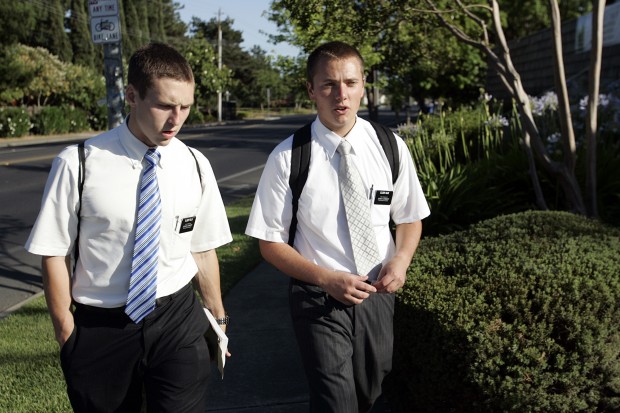
I saw the two representatives walking up and down the street, knocking on the doors of all my neighbors. Sitting at my kitchen counter, I was at home on break from JMU working on a paper for my class called “Jesus and the Moral Life.” As I sat there, Bible and computer spread before me, I eagerly awaited any distraction.

I wondered what organization or church the two men represented. It was clear that whatever they were trying to sell was not working out for them because they were moving quickly between the houses on the other side of the street. I remember trying to focus on my assignment, but my mind wandered regarding the the possibilities of the speech the pair were giving to my neighbors.

When the doorbell finally rang, I sprinted to the front door with my bible in tow.
4fda4bd3327be.preview-620

“Good afternoon sir,” they chimed simultaneously with seemingly forced smiles that almost hurt to witness. “Have you heard about our Lord and Savior Jesus Christ?” I mumbled something in response about being a Christian, but they continued as if I wasn’t really standing there.

“Are you aware of God’s impending destruction of the earth? We have failed to be obedient, and God is surely going to rain down his wrath upon all of us. There will be earthquakes, floods, and famines. Nothing can stop God’s judgement, but we can save you.”

“Tell me more,” I replied.

“Well, Satan and his demons were cast down to earth in 1914 which initiated the End Times. Over the years he has begun to take over human governments in order to create evil on earth. God will come to destroy Satan, and this entire earth with him, but if you join us, God will protect you from his armageddon.”

Now, before I continue, I urge you to remember that I was a young and foolish biblical studies student, convinced that I knew everything there was to know about God, faith, and scripture.

And so, it came to pass that after listening to these two men describe for me the fall of Satan having occurred at the beginning of the 20th century, and their ability to save me from God’s impending destruction, I could no longer contain myself…

“Where does it say that in the Bible?”

“Well, if you look at our pamphlet, it clearly outlines…”

“Where does it say that in the Bible?”

“These charts will show how natural disasters are connected to Satan…”

“Where does it say that in the Bible? I’ve got one right here, and I would love for you to show me where your facts come from.”

At that point they slowly started to step away from the door, thanked me for my time, and continued their evangelistic work to the rest of the neighborhood.

Thinking back upon that interaction, I regret the poor Christian hospitality I showed those two men. I had a predetermined commitment to scripture that blinded me from hearing them out and kindly responding to their interpretive theology. However, I believe the interaction does point to a faulty mode of reading God’s Word that has plagued the church from the beginning.

Marcion was a Christian bishop during the first century. Like many Christians, he saw discrepancies between the actions of God in the Old Testament and during the time of the New Testament. And after wrestling with the differences, Marcion proposed completely rejecting the existence of the God described in the Jewish scriptures, and also argued for omitting the sections of the New Testament that were connected with the Old. Central for Marcion’s edited bible was the idea that the teachings of Jesus were incompatible with the actions of God as found in the Hebrew Scriptures.

After numerous debates, fights, and even scandals Marcion was declared a heretic by the early church fathers and was removed from the church.

Like the two men who came knocking on my door, Marcion (and many others) had a very tunnel-visioned understanding of scripture. If it did not agree with their beliefs, they omitted it, they ignored it, and they taught in spite of it.

Without a doubt, if you read through the stories of the Old and New Testaments you will discover a number of difficulties regarding the actions of God throughout time. Wrestling with these changes has been a part of the church’s history from the very beginning and still takes place today. To fully address these differences it would take numerous sermons series and bible studies, and certainly cannot be fully proclaimed in one sermon. If this is something that you really wrestle with we can talk about doing something in greater detail down the road, but for today’s purposes we can only accomplish so much.

One of the major problems with the inconsistency of scripture is that we tend to view chapters and narratives in isolation. We take one verse from the Old Testament and compare it to one verse in the New. I am thankful for the numbering of chapters and verses for organization, but I believe they have also stratified our understanding of scripture into tiny bits that can be reorganized for our understanding. The Bible is one thing, it is the single story of God with God’s people; it may be divided into two testaments, with numerous chapters and verses regarding a plethora of people and places, but it is nevertheless one unified collection of the living Word for God’s people.

20130115_canon

Rather than reading in isolation, we are called to understand and experience God’s word canonically, which is to say we have to understand each individual narrative in light of the entire saga of scripture. Reading, preaching, and teaching canonically opens our eyes to the many ways that God runs through both testaments like a river; the water may change with the seasons, but the water always moves.

In Genesis 10 we find the story of the tower of Babel. Humanity had one language and had gathered in the plains of Shinar to settle down. There they decided to build a giant tower into the heavens in order to make a name for themselves. God witnessed the construction of this tower, recognized that this was but one domino leading inevitably to a belief that humanity did not need God, so God confused their language and scattered the people over the face of the earth.

In Acts 2 we find the story of the disciples gathered together 50 days after Jesus’ resurrection. While they were all together a great wind came from heaven filling the entire house. All of the disciples were filled with the Holy Spirit and began to speak in other languages.

Babel and Pentecost, two stories, one from the Old Testament, one from the New. These stories are often used in church to make separate points about the identity of God and what it means to be a disciple; Babel demonstrates God’s punishment of humanity for sin and Pentecost shows God’s desire for the gospel to spread amongst all nations and languages. However, they cannot be fully understood without the other. They are not two separate stories describing two different Gods, but are instead part of the greater canonical narrative of how God is God.

Babel contains every bit of the human desire to remain self-reliant and focused on pride. Like the garden, Babel exhibits that same sense of sin whereby humanity believed it no longer needed God. Though the story clearly contains examples of God’s wrath, it also contains an abundance of grace.

In striving to build a city and a tower for themselves, humanity had lost sight of the unity under which they already enjoyed from God. The true sin evident in the story is the arrogance of thinking that humanity must take itself as one takes brick and mortar, and make themselves the lord of history. In violation of the original unity of creation, in humanity’s desire to control its own destiny, the people of Genesis 11 were no longer naturally organized under the great Shepherd, but instead were brought together by the selfish desire to live in ignorance of God’s created order.

God punishes the people gathered together by confusing their language and scattering them over the earth. His wrath is evident, but his grace also lies under the surface. God could have easily used an earthquake or another divine example of control to achieve the punishment. He could have destroyed the tower and everyone in it. But rather than destroying creation, as had been done with Noah and the flood, God merely divides humanity and confuses their language. Instead of raining down death and destruction, God limits the punishment to linguistics.

We discover God’s unyielding grace in the fact that God will continue to be our shepherd regardless of our self-righteousness. God will not abandon us to our own devices but will remain faithful even when we are not.

And remember, the story of Babel does not end in Genesis 10, it continues on throughout the Old Testament and finds reflection in the New. As Christians we are aware that God has more in store for his creation than one isolated story from the past would have us believe. In the person of Jesus Christ the previously divided world finally comes back together. It is in the story of Pentecost that we are reminded again of God’s desire for humanity to rest in unity, not division.

Pentecost tells us about the miracle of the Holy Spirit coming down to help reunite the world in order to fruitfully live into God’s kingdom. God did not abandon the people of Babel, just as God has not abandoned us while we continually act as if we can make through life on our own.

The same year I met the two men who knocked on my door, I took a group of college-age Christians to Taize, an ecumenical monastery in Burgundy, France. We camped for a week on the property, gathering together with 5,000 young Christians three times a day for prayer and reflective hymns. The Christians gathered together that week came from all over the globe, representing nearly every continent. In between the worship services, we met in small groups talking about faith, scripture, and discipleship. When the last day arrived, my group sat together and I asked us to end our week by standing in a circle to pray with each other. I asked everyone to pray the Lord’s prayer together in their native tongue, and then individually pray it so that we could hear what it sounded like. For perhaps the first time in my life, Pentecost became really for me while we prayed together in that field. Though all of us had been divided across the planet we were all brought together by Jesus Christ. Though we had been previously separated we were gathered in unity by the great “I AM.”

6613_1139875468060_4836913_n

Babel and Pentecost are intimately connected but I want to be clear that the relationship between the two testaments is not that God fixes the problems of the Old Testament with the revelations of the New. God did not change himself from wrathful to graceful. The New Testament is not the band-aid for the Old.

Yet, the incarnation of God in the person of Jesus Christ changed everything. The Old Testament tells of God’s interaction with creation and the New Testament inaugurates the event where God came to dwell among us. Jesus Christ is the lens by which we are called to read scripture, both the Old and the New Testament. God’s love of creation is woven into the fabric of scripture, consistently revealed through people like Abraham, Isaac, Jacob, Moses, Isaiah, Jeremiah, Jesus, Mary, Peter, and Paul and places like Egypt, Galilee, Samaria, and Jerusalem.

This is one great cosmic story, a story that begins with God’s creation of all things declaring them good, a story that has no end because it still taking form right now.

So, how do we reconcile the God of the Old Testament with the God of the New Testament? We read scripture knowing that it does not happen in isolation, but can only be understood within the canon of both testaments. 

We read knowing that, like all great things, God is mystery unrevealed until its proper season. We read with faith knowing that God has not abandoned us, though we struggle to find meaning in the shadow of suffering, fear, and doubt, God’s plan for us is greater than we can possibly imagine. We read knowing that God does not choose us because we are good, but because he wants us to be good.

We read scripture in the light of Jesus Christ recognizing that where we find wrath, there is also grace; when we suffer we discover our hope; and when there is death there is also resurrection. Amen.

Weekly Devotional – 1/20/14

Devotional:

Psalm 27.1-2

The Lord is my light and my salvation; whom shall I fear? The Lord is the stronghold of my life; of whom shall I be afraid? When evildoers assail me to devour my flesh — my adversaries and foes — they shall stumble and fall. 

bl-martin-luther-king-jr

For the last few years I have made a point to watch one of my favorite sermons/speeches from Martin Luther King Jr. on this particular holiday. On April 3rd 1968 Dr. King delivered an address at the Church of God in Christ headquarters in Memphis Tennessee. As he makes his way eloquently through the problems facing Memphis, and addressing them as only a great preacher could do, you can feel as if you were sitting in the audience that night. He concludes with these words:


“Well, I don’t know what will happen now. We’ve got some difficult days ahead. But it really doesn’t matter with me now, because I’ve been to the mountaintop. And I don’t mind. Like anybody, I would like to have a long life; longevity has its place. But I’m not concerned about that now. I just want to do God’s will. And He’s allowed me to go up to the mountain. And I’ve looked over. And I’ve seen the Promised Land. I may not get there with you. But I want you to know tonight, that we, as a people, will get to the promised land! So I’m happy tonight. I’m not worried about anything. I’m not fearing any man! Mine eyes have seen the glory of the coming of the Lord.


The next day, Dr. Martin Luther King Jr. was shot while standing on his motel’s second floor balcony.

To be devoted to Christian faith is never easy. Maintaining faith is spite of such horrible atrocities in the world is remarkably difficult. When faith is limited to talk, its easy. Dr. King showed the world the cost of discipleship when you talk and walk the faith of Jesus Christ.

Our faith is constantly tempted by outside elements and we are called to resist those temptations by living out our faith in whatever ways we can. The psalmist writes, “The Lord is my light and my salvation; whom shall I fear?” If we take seriously the faith we affirm in Jesus Christ, if we proclaim Christ as Lord, then we really don’t have anything to fear.

So, as we all continue in our own faith journeys, let us remember the great disciples of the past, particularly Martin Luther King Jr. Let us strive to not only speak our faith, but walk it as well. Let us strive to work against injustice whenever we see it. Let us love unconditionally. Let us be the body of Christ for the world. Let us work hard to keep the faith as God has kept his faith in us.


Ordination – A Reflection on Interviewing for the UMC

In the next few weeks, a number of United Methodist seminarians will sit before their respective Board of Ordained Ministry to determine whether or not they are prepared for, or effective in, ministry. The interviews can be a terrifying process; for years these students have studied diligently and now they are being asked to demonstrate their ability to articulate their theology. After going before the Virginia Conference’s Board last year, I have been asked by a number of friends/peers to reflect on the journey and offer advice. Below I have copied my response to one such friend. Though the the reflections are largely geared toward those interested in ministry, I believe they also function to help encourage theological reflection in all forms of Christian discipleship.

bom


1) Prepare yourself to be surprised. For as much as our fellow peers have gone through the ringer of these interviews, you can never prepare yourself for EVERY question. There will come a moment that you are asked to respond and you will be completely lost for a moment because you never though they would have asked that question. So, (heres the advice part) do NOT try to just memorize particular answers to particular questions. Most of these people have read through more papers than they can count and they’ve heard all the same answers over and over. Calm yourself and let your answers be more organic than regimented. Instead of answering everything in three points (or through every avenue of the so-called “Wesleyan Quadrilateral”) try instead to relate it to YOUR experience of God in the world. The committee will then know that you are answering from Truth rather than truth. Be God’s Yes and No to the world at the same time. (which is to say: be dialectical, without confusing the committee members)


2) Scripture scripture scripture. If there is any technique or trick to help with the interviews, its to read the bible before you go. It will rest in the fabric of your being as a well from which you can draw the living water of theological and liturgical reflection. When possible, use examples from scripture to answer any of the questions you are asked. Not only will it demonstrate your commitment to the Word, but it will also show how you have a scripturally shaped imagination. For example: you might not be familiar with terrible suffering in your own life, but the lives remembered from the biblical corpus certainly have and they can be your examples to answer the questions.


3) Be Methodist (but not too Methodist). Use Wesley’s life and teaching to inform your answers, but don’t isolate yourself to ONLY thinking in a Wesleyan way. We have all been trained by a wide variety of theologians, we’ve read from the greats in church history, and we’ve experienced churches beyond the UMC. Ecumenism is not just some idealistic practice, but should instead be one of the great aims of the church. Use sources outside of your church family to answer questions, yet make sure they match up with the Theological and Doctrinal Standards of our faith.


4) Baptism, Eucharist, Sacraments (Oh MY!) – Sacramental theology is at the heart of what it means to be Christian (particularly United Methodist). Though some sacramental functions have been downplayed in the contemporary church they were CENTRAL to Wesley’s approach. Also, sacraments are what separates the laity from the clergy; they are our responsibility to maintain and provide for the people.


5) Remember: you are intimidating. (I mean this as a compliment) Most of the people in your interviews (in fact, probably all of them) will be older than you, and have a lesser theological education. You will do well to remember this. As a young and confident person, you will be viewed with suspicion by some members of the committee (I wish this wasn’t the case, but it is). Show a command of the material, but don’t overdo it. One of the things I’ve heard from a lot of our peers in different conferences was that the committees were bothered with their lack of translation between seminary and the normalcy of church life. They want to hear what you have to say IN A WAY THAT THEY CAN UNDERSTAND. For example: for as much as I love Barth, be very careful with his language and conceptions of God. They will mean little to the members on the committees.


6) Pray. Seriously. Pray before you interview. Pray between each committee room. Remember why you’re doing this and for whom (The answer is God)


7) Materials can be important. Bring your papers with you, but don’t anchor yourself to them. You might be asked to clarify a specific response that you wrote. If this is the case, don’t worry about what you wrote, but carefully respond to their question in the moment. They want to give you as many chances as they can to clarify what you mean.


8) Take your time. Before jumping to answer their questions, make sure you know what they’re asking. If they’re unclear, ask them to rephrase. Better for you to get the question right before you give a wrong answer.


9) Be humble. I know you will have an answer to every question, but showing that you still have room for growth will go a long way in reaching the hearts of the committee members. I remember being asked about death and instead of just throwing out a response I said something to the effect of “You know, thats a really difficult question. Death is one of those many things that we do not have a black and white answer to, death is something caught up in the mystery of God. Its hard for me to respond to hypothetical responses regarding death, but I can tell you that scripture says…” Owning up to the fact that you don’t have all the answers reinforces the reasons that Jesus had to come in the first place. If we had it all figured out, we never would’ve needed God to come in flesh to die, and live, for us.


10) Be yourself. Be authentic to who you are. If you’re pushed out of your comfort zone by a question, make them know they have done so. If you feel like your integrity might be compromised by giving them the answer they want to hear, rather than the one you believe, I say be true to yourself more than them. (this is debatable regarding the question) However, in my experience, they would rather see YOU answer the question as YOU perceive and understand rather than handing them over the perfectly crafted three sentence response they have been hearing all day. Theology is alive. New ideas and concepts and faith-struggles occur everyday. If we only reuse the same theologies over and over than we will never grow as a church, and the kingdom of God will remain tacit, fruitless, and stale. The Church needs imagination now, perhaps more than ever before.

1013431_4988882970842_513748431_n

Questions: I Believe; Help My Unbelief! – Sermon on Mark 9.14-24 & Ephesians 2.8-9

Mark 9.14-24

When they came to the disciples, they saw a great crowd around them, and some scribes arguing with them. When the whole crowd saw him, they were immediately overcome with awe, and they ran forward to greet him. He asked them, “What are you arguing about with them?” Someone from the crowd answered him, “Teacher, I brought you my son; he has a spirit that makes him unable to speak; and whenever it seizes him, it dashes him down; and he foams and grinds his teeth and becomes rigid; and I asked your disciples to cast it out, but they could not do so.” He answered them, “You faithless generation, how much longer must I be among you? How much longer must I put up with you? Bring him to me.” And they brought the boy to him. When the spirit saw him, immediately it convulsed the boy, and he fell on the ground and rolled about foaming at the mouth. Jesus asked the father, “How long has this been happening to him?” And he said, “From childhood. It has often cast him into the fire and into the water, to destroy him; but if you are able to do anything, have pity on us and help us.” Jesus said to him, “If you are able! — All things can be done for the one who believes.” Immediately the father of the child cried out, “I believe; help my unbelief!”

Ephesians 2.8-9

For by grace you have been saved through faith, and this is not your own doing; it is the gift of God – not the result of works, so that no one may boast.

xlba-00052

Today we begin the first part of our sermon series on “Questions.” After requesting responses from all of you regarding your questions about God, Faith, and the Church, we have come to the time where I attempt to faithfully respond to those questions. Today we are talking about faith, being saved, and doubt. So, here we go…

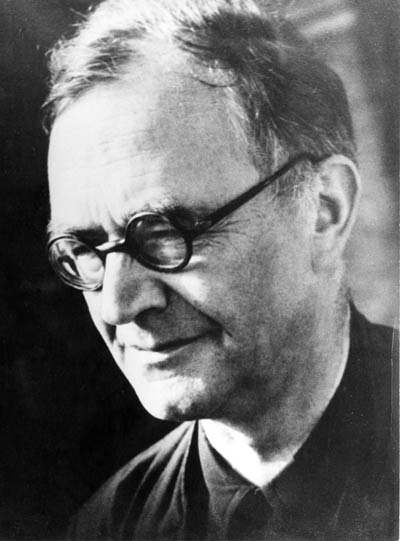
In 1962 one of the greatest theological minds of the 20th century visited the United States on a lecture tour. Karl Barth was a product of Western Theology who actively spoke against the Nazi regime rejecting their un-Christian allegiance to Adolf Hitler. His writing and influence spread throughout the world to a degree beyond his expectation.

So during the early 1960’s Barth found himself in his later years, touring around the American landscape lecturing to young, and old, Christians about the importance of God being God.

Karl Barth is my theological hero – his books line my shelves and I believe he put forth a remarkable understanding of scripture.

Karl Barth

Karl Barth

However, Barth is remarkably difficult to understand and was very longwinded in his writing. He was once approached by a young theologian declaring, “Professor Barth, you’re my hero! I’ve read everything you’ve ever written!” To which Barth replied, “Son, I haven’t even read everything I’ve written.”

Karl Barth, intellectual and as difficult to understand as any theologian I’ve ever read, lectured at Princeton, the University of Chicago, and Union Theological Seminary. After one such lecture, no doubt filled with theologisms beyond the capacity of comprehension, a young man bravely decided to ask a question.

Now, at the time, evangelical theology was beginning to take off in the United States. Churches pushed for “personal relationships with Jesus Christ.” Altar calls were all the rage. And everyone wanted to know when you got saved.

The young man, with his hand shaking in the air, waited to ask his question. I imagine that Barth was getting tired of answering the foolish questions from the audience but decided to offer one final answer. “Son, what is your question?”

“Well professor Barth, I was wondering, when were you saved?”

The young man, obviously caught up with the personal stories of individuals who accepted Jesus Christ in their hearts, moments where folk learned that they were saved, wanted to know when Barth had discovered this momentous occasion in his own life.

After responding to questions about the ineffability of God, the diminishing role of the third member of the Trinity, and the self unveiling to humanity of the God who cannot be discovered by humanity simply through its own intuition, Barth was finally asked a question with a simple answer.

“Hmm, when was I saved? Oh yes, thats easy, it was… 2,000 years ago on the cross.”

“How will I know when I’m saved?” A question I have heard time and time again. When will I know, with assurance, that heaven is my everlasting reward? How will I be able to tell that I have been saved and what happens if I ever have doubts later on, will I still go to heaven?

In many churches, being “saved” is equated with a moment when an individual accepts Jesus Christ as their “personal Lord and Savior.” We look at it as a check-off list, an accomplishment to be met in order to go to heaven. A time when they let their old self die, in order to be clothed in Christ forevermore. This often takes form in an altar call, that moment after the sermon when a preacher stands right where I am, calling out to the congregation, calling out for those who feel the call of God on their lives to come forward during the final hymn to give their lives to Jesus Christ. Sometimes it takes place in baptism, when water is used to cleanse a child or an adult from their broken ways and save them. Sometimes it takes place in the bread and wine of communion, nourishing someone’s faith in a way previously unexperienced.

In many places, being “saved” like this is worth celebrating as a rebirth, a reawakening of the soul, a definitive shift in the life of a Christian. Some of my friends celebrate their “saved” birthday every year with a cake and presents. And even though some of those people are dear to me, and even though I can trace back to a moment in my life where I committed my life to Christ, I still wonder about what it really means to be saved.

This is what I do know: The saving of anyone is something which is not within our power, but only of God. No one can be saved – by virtue of what he/she can do. Everyone can be saved — by virtue of what God can do.

After coming down from the transfiguration on the mountaintop, Jesus met back up with the disciples only to be surprised to see them arguing with scribes. Upon arrival the crowd surrounded him overcome with awe. Someone from the group stepped forward, “Teacher, I brought you my son; he has a spirit that makes him unable to speak, it makes him seize up and crash to the ground. I asked your disciples to cast it out, but they were unable.” Jesus then responded to everyone present, “You faithless generation, how much longer must I be among you? How much longer must I put up with you? Bring the boy to me.”

So the crowd brought the boy forward but he immediately began to convulse when in the presence of the Lord and he rolled on the floor foaming at the mouth. Jesus asked the father, “How long has this been happening to him?” “Its been happening since childhood,” the father responded, “but if you are able to do anything, have pity on us and help us.”

Jesus then responded, “If you are able! — All things can be done for the one who believes.” Immediately the father of the child cried out, “I believe; help my unbelief!”

unbelief

I believe; help my unbelief! The father’s reply demonstrates for us the nature of faith. It seems so paradoxical and contradictory, yet, how often has that father’s cry been the prayer on our lips? The father has shown a bit of faith by approaching Jesus in the first place, yet the move stemmed from desperation rather than confidence; “if you can do anything” shows his doubt and his faith at the same moment. The father holds his disbelief and faith in tandem with one another.

Haven’t we all had moments where, like the father, we can hold both our faith and disbelief at the same time? Periods in our life where we know that God loves us, yet our doubts begin to percolate at the same time. Perhaps confronted with a disappointment we call out to God  begging to know his ways, wondering if he’s even listening at all, yet we still call out to God. Like the father we take our burdens to God, we have enough faith to go that far, faith the size of a mustard seed, but then we struggle and limp along unsure of what God can do.

Prayer does not work like magic. Prayer is not a manipulation of God to get what we want. God does not simply grant all of our requests when we kneel and bow before him. That puts far too much power on our side of the equation. Like “knowing” we are saved because “we” have accepted Christ, it puts the burden on us to accomplish something that we cannot do on our own. If salvation can be decided on our acceptance of Christ as Lord, then God would never have had to come in the form of flesh, die on the cross, and then be raised from the dead. Prayer is more like wrestling alone in the middle of the night with a God who refuses to let go.

God is the one who saves us through Jesus Christ, God is the one who healed that father’s son through Jesus Christ. Prayer and accepting Christ is not magic, yet we are always called to pray, like that father, for more faith. We pray for more faith as trust in God’s love, grace, and power so that God in Christ can work his healing power and presence through Christ in our lives.

The story of the man bringing his son to Christ is powerful for all of us gathered here, because like that father we are fallen people incapable to saving ourselves and our loved ones. This story offers us a great glimpse of God’s glory: All things are possible to those who believe. But even greater than that is the fact that beyond our faith or prayers, God is the source of healing and salvation in our lives. Jesus is the one who calls us to brings our burdens to him, we are not left alone to try and save ourselves.

So, how do we know when we are saved? What does it mean to be saved? Are we allowed to doubt?

I like Barth’s answer to that young man, “I was saved 2,000 years ago on the cross.” I like his answer because its true and it puts the power of salvation back on God’s side of the equation. We cannot save ourselves by virtue of our own devices, but it is only God who can save us. Yet, there is something remarkably powerful about accepting Christ at the same time. Barth’s response is appropriate, but it still misses a fundamental element of what it means to follow Christ.

If being “saved” can be compartmentalized to that moment on a cross 2,000 years ago, then there is little need for us to follow Jesus in the present. Without a commitment to change our lives in accordance with the kingdom, discipleship falls to pieces. When we come to know Jesus Christ in our hearts, when we have that moment, whether its at the altar during one of our favorite hymns, or in the water of baptism, perhaps in the wine and bread of communion, its not so much they we are accepting God, but more the fact that for the first time we are realizing that God has had us the whole time. 

Faith, at its purest and deepest form, is not about “letting God into your heart” but discovering that God has been there the whole time. Being saved is not about making a choice to become a Christian, but a willingness to let God be the Lord of our lives, and not the other way around. Doubts are not something to be feared and dismissed, but to be embraced and wrestled with. Even after John Wesley felt the assurance of God’s love in his life when his heart was strangely warmed, his doubts crept back in within days.

Faith is that great dance between us and God, faith is knowing and unknowing, faith is being able to cry out “I believe; help my unbelief!”

Thats exactly why we need elements of worship such as baptism and communion. We need patterns and practices that remind us of that great event where Christ died and was risen, that incredible moment where we were saved, but we also need food and habits for our faith journeys. We need to know that we have been saved by grace through faith, not by our own doing, but by the gift of God. Yet at the same time we have to hold the mystery of salvation like the father did, we have to recognize that we continually need Christ to be the one from whom all blessings flow, we need Christ to hear our prayers and grow our faith, we need Christ to be our Lord, not just in the past but in every moment of our lives. You have been saved, and are continuing to be saved everyday.

I believe; help my unbelief!” is our confession of faith in the God who continues to breathe new life and new faith into all of us.

In a few moments we will celebrate the two great sacraments of our church. Hattie Myles Markham will be brought forth to the water to be baptized in the name of the Father, and the Son, and the Holy Spirit. She will be incorporated into God’s kingdom through the redemptive power of the trinity. And likewise all of us will then be invited to feast at Christ’s table letting the bread and the wine nourish our souls.

Here we find the gospel, in baptism and communion we find the good news of God in the world. No matter what you do, God will never love you any more, and no matter what you do God will never love you any less. God so loved the world that he gave his only son so that everyone who believes in him might not perish but have eternal life. Nothing can ever separate you from the love of God in Jesus Christ. Jesus Christ mounted the hard wood of the cross to save you and me from having to try and save ourselves. Salvation is here. Thanks be to God.

Amen.

Matthew and Haley Husband – A Wedding Sermon on 1 John 4.9-12 & Ecclesiastes 4.9-12

1 John 4.9-12

God’s love was revealed among us in this way: God sent his only Son into the world so that we might live through him. In this is love, not that we loved God but that he loved us and sent his Son to be the atoning sacrifice for our sins. Beloved, since God loved us to much, we also ought to love one another. No one has ever seen God; if we love one another, God lives in us, and his love is perfected in us.

Ecclesiastes 4.9-12

Two are better than one, because they have a good reward for their toil. For if they fall, one will lift up the other; but woe to one who is alone and falls and does not have another to help. Again, if two lie together, they keep warm; but how can one keep warm alone? And though one might prevail against another, two will withstand one. A threefold cord is not quickly broken.

1498071_10151977138149016_1228625660_o

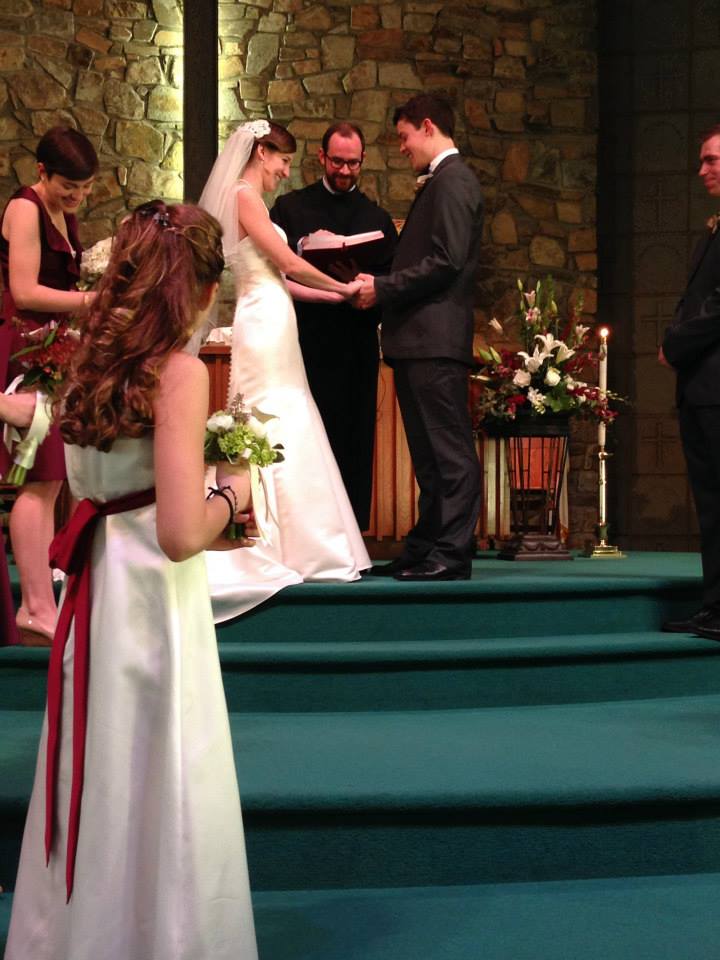
28 years. 28 years ago my parents, JT and Sarah Lynn Mertins, stood in the same position as both of you. Haley, I don’t know if you will remember all of this, but we used to watch their wedding VHS tape when we were growing up. Truly I tell you, it is a miracle that the wedding ceremony happened at all. When we would watch the tape, it appeared as if the cameraman had decided to smother vaseline all over the lens in order to achieve some sort of effect that left the viewers nauseous and confused. As my Aunt Laura made her way up the steps toward the altar she stepped on, and ripped, her dress. My uncle Bill Hanff and a friend stood over by piano the prepared to sing a wonderful rendition of “On the Wings of Love” though the pianist started the song in the wrong key and uncle Bill had to match accordingly. And then there was the hair and the dresses. There must have been enough hair spray in this church to light the whole thing on fire, but somehow, by the grace of God, our mother and father were married on this exact day, in this exact spot, 28 years ago.

Mom and Dad

Mom and Dad

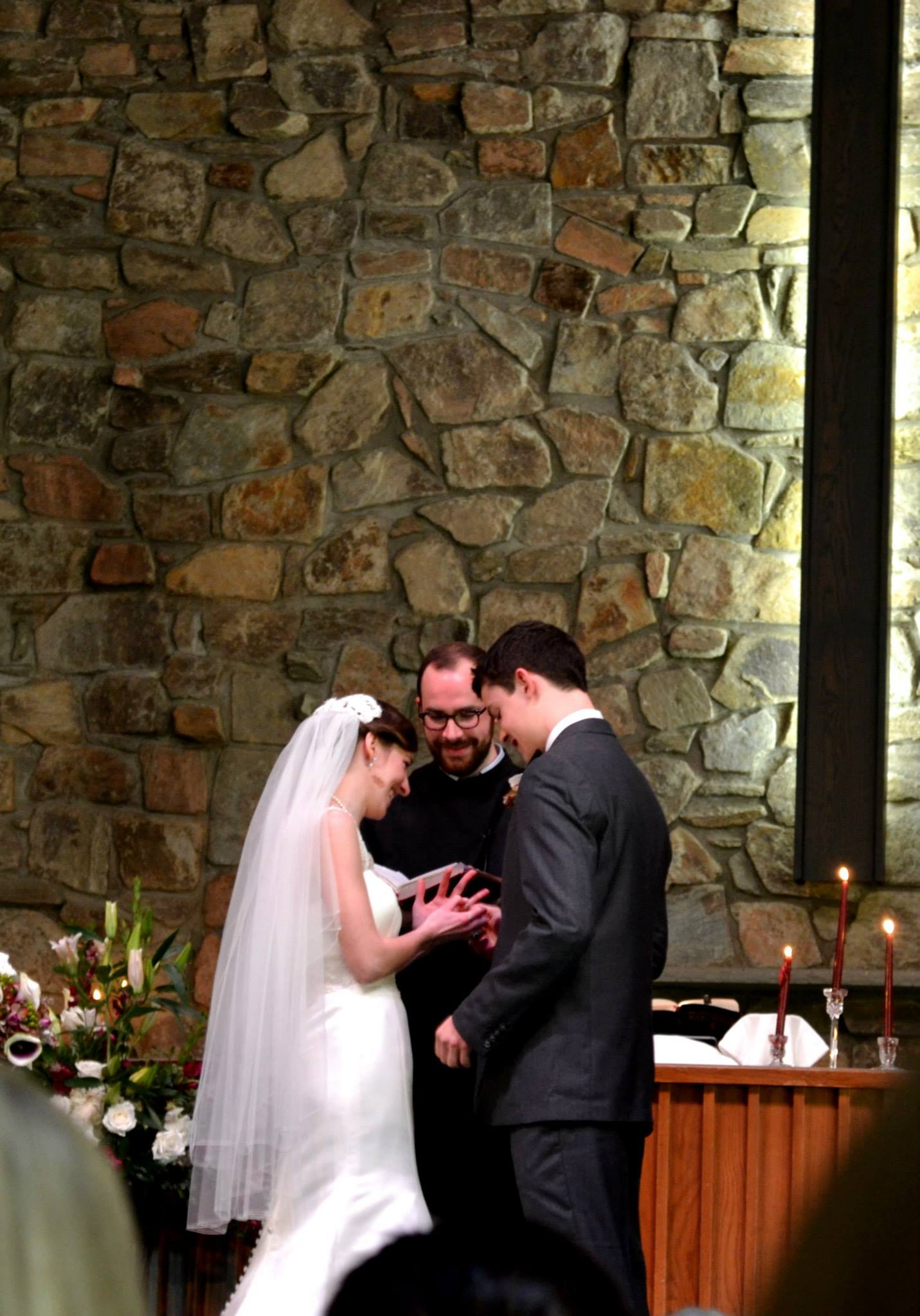
And here we are now, ready for the two of you to enter into the holy state of matrimony. As I have looked back over the totality of your relationship, and all of the little steps that led you to this altar on this day, I am convinced that I will never marry a couple that I know as well as both of you for the rest of my life. So before I continue I want to show you something.

(Turn around, look out at the sanctuary. Gathered together in this room are the people who have made you, you. Family, friends, both the foolish and the fun, but more importantly, when you look out I hope you see faith. So soak up this view for a moment, you rarely get to see anything as glorious as this)

1512792_10202004244841456_869486328_n

Faith, the people gathered together today are indicative of the kind of faith-lives that both of you are living. Everyone here has faith in both of you as individuals, and also as the married couple you are about to become. They have been there for you in every aspect of your lives, and today two families are joining together as a testament to the faith that you have in each other. They say a threefold cord in not quickly broken? Well neither is a one hundred and fifty fold cord.

However, for as much as everyone gathered together in this room are responsible for your relationship, no one can take more credit than God.

When I found out that Matthew was moving to Africa for a year, I knew that the only thing that would be able to sustain your relationship was a resounding faith in the triune God. I know it wasn’t easy. Even with the notebook Matthew left behind, even with the commitment to read through the entire bible while you were apart, even with the advantages of technological communications such as Skype and email, you would not be standing here today unless you had tremendous faith in God, but more importably, you would not be standing here unless God had tremendous faith in you.

One of the things that I love most about you two is that, even with all the planning and the suits and dresses and decorations, today will not be the greatest day of your lives. Both of you strive to discover all of the joy in life and share it with one another. You earnestly love the lives that God has given to you, and you hope to share that love with everyone with ears to hear and eyes to see. Thats what it means when we say, “If we love one another, God lives in us.” The two of you have made a commitment to loving one another so that God abides and manifests himself in the world.

Matthew Logan, I have waited 23 years for a brother, and today I’m finally getting one! You are a remarkable man with compassion, faith, and hope. I have been privileged to watch you grow up, in a way, I’ve seen the way that you create and nurture friendships, I’ve seen the way that you have selflessly served others, and I have seen the many ways that you have committed yourself to my sister. Marriage will not be easy. There will be mornings that you wake up and wonder how such a beautiful woman can drive you so crazy. There will come a time when all the love that Haley can give you will not be enough, but you will never be alone. Beyond the multitudes that have gathered here today, God almighty is with you in all that you do. As a husband, literally, you have been called to love Haley with all that you are, live into the life that God is calling you toward, and to have your relationship shine as a beacon of hope and love to all the world. I have nothing but profound respect, enduring faith, and unending love for you, my brother.

Haley Lynn, precious sister of mine, you are a beautiful woman who has truly come into her own. I have been privileged to watch you mature into your truest self as you now prepare to enter into marriage with Matthew. I love how your willingness to serve others is so central for understanding who you are and what you do. Whether its helping out your students at school, or volunteering your time and energy for church, or helping your idiot brother match his clothing when we were in high school, serving and loving others is what you do. What a blessing you are to all of us, and what a blessing you will be to all the lives you touch in the future. Marriage will not be easy. There will be mornings when you wake up and wonder how such a funny man can drive you so crazy. There will come a time when all the love that Matthew can give you will not be enough, but you will never be alone. Your family, your friends, and your father in heaven are with you in all that you do. As a wife, you have been called to love Matthew with all that you are, to live into the life that God is calling you toward, and to have your relationship shine a beacon of hope and love to all the world. I have nothing but immeasurable respect, enduring hope, and unending love for you, my sister.

Matthew and Haley, God’s love was revealed to all of us through the incarnation in Jesus Christ. In his willingness to take on human flesh, God humbled himself to be just like us, in order to help transform us. God did not mount the hard wood of the cross because we loved him, but instead he came to die and live because he first loved us. Above all things, your marriage should, and will be, a testament to God’s love in the world through the redemptive acts in our Lord Jesus Christ.

In giving yourselves to each other, you are mirroring that great act of God coming to be with us.

And so, as you prepare to take these first steps into wedded life, I call both of you to hold fast to the people that love and support your relationship, hold fast to the faith and hope that you have in one another, but most importantly, hold fast to the good God whose joy knows no bounds, whose grace extends beyond our imaginations, and whose love was made known to all of us in the gift of his Son.


904040_10101659784550458_526669923_o

Weekly Devotional – 1/6/14

Devotional:

Isaiah 42.1-4

Here is my servant, whom I uphold, my chosen, in whom my soul delights; I have put my spirit upon him; he will bring forth justice to the nations. He will not cry or lift up his voice, or make it heard in the street; a bruised reed he will not break, and a dimly burning wick he will not quench; he will faithfully bring forth justice. He will not grow faint or be crushed until he has established justice in the earth; and the coastlands wait for his teaching.

picture-1

To live is to change. One of the lost difficult elements in life is the fact that we are constantly in a state of flux while we seek to be still. During the next few weeks, many of us will continue to strive toward our New Year’s Resolutions; maintaining that new diet, exercising regularly, watching less TV, seeking to stay in touch with family and friends. As we all attempt to maintain these disciplines, many of us will fall short and our new habits will come to a halt. Creating new and sustainable practices in life can be quite difficult, and without an incredible amount of discipline and faith, they often fade before they can become routine.

One of the great problems is that as soon as we create a regime, or find a healthy balance of new habits and practices, everything changes. We try to stay healthy only to become sick. We attempt to maintain meaningful relationships only to have people move away, and eventually leave us in death. We hope to hold fast to our careers, to the rhythm that gives us meaning, only to be told one day that we are no longer needed. We strive to drop bad habits only to have them flow back in as soon as the stress becomes insurmountable. To live is to change.

Change is inevitable and inescapable. For all of the preparation we can muster, we can never fully prepare ourselves for the surprises that life throws our way.

In the 42nd chapter of Isaiah, the prophet speaks about the unchanging ways of the Lord. Whereas our lives can never rest in perfect stability, the servant of the Lord will bring forth justice without changing; he will not cry or lift his voice, he will not break a bruised reed, or quench a dimly burning wick. The servant of the Lord will remain steadfast in his willingness to achieve God’s justice in the world.

Christ is that stable root that we can hold fast to when everything else in the world starts to change. As the river of life keeps propelling us forward, Christ is the solid rock upon which we can anchor our hope and faith. If we fail to maintain the new directions of our lives, Christ will still be waiting for us and calling out to say, “I am here. Come to me.”

So, if you feel down over the next few weeks as you see your consistency start to crumble, do not fear. Christ is the solid rock of our lives, willing to wait for us and be the anchor to which we so desperately need to cling. Do not worry about what tomorrow will bring for Christ will be there with open arms, ready to bring you within his embrace. Do not beat yourself up for whatever may come for Christ’s love is unending and all powerful.


To read more about Resolutions and Faith, I strongly recommend Josh’s Luton post on the subject here: http://apprenticeinstitute.org/new-years-resolutions-its-not-too-late/

Life After Christmas – Sermon on Matthew 2.13-23

Matthew 2.13-23

Now after they had left, an angel of the Lord appeared to Joseph in a dream and said, “Get up, take the child and his mother, and flee to Egypt, and remain there until I tell you; for Herod is about to search for the child to destroy him.” Then Joseph got up, took the child and his mother by night, and went to Egypt, and remained there until the death of Herod. This was to fulfill what had been spoken by the Lord though the prophet, “Out of Egypt I have called my son.” When Herod saw that he had been tricked by the wise men, he was infuriated, and he sent and killed all the children in and around Bethlehem who were two years old or under, according to the time that he had learned from the wise men. Then was fulfilled what had been spoken through the prophet Jeremiah: “A voice was heard in Ramah, wailing and loud lamentation, Rachel weeping for her children; she refused to be consoled, because they are no more.” When Herod died, an angel of the Lord suddenly appeared in a dream to Joseph in Egypt and said, “Get up, take the child and his mother, and go to the land of Israel, for those who were seeking the child’s life are dead.” Then Joseph got up, took the child and his mother, and went to the land of Israel. But when he heard that Archelaus was ruling over Judea in place of his father Herod, he was afraid to go there. And after being warned in a dream, he went away to the district of Galilee. There he made his home in a town called Nazareth, so that what had been spoken through the prophets might be fulfilled, “He will be called a Nazorean.”

22.86

A voice was heard in Ramah, wailing and loud lamentation, Rachel weeping for her children; she refused to be consoled, because they are no more.

After the magi had spent time with the baby Jesus, presenting him with gifts of gold, frankincense, and myrrh, they left. The new parents were now alone with their relatively unexplained child, forced to fend for themselves with this baby Messiah. Christmas had come and gone in that tiny village of Bethlehem and life after Christmas was starting to settle in.

One night an angel of the Lord appeared to Joseph in a dream and called him to take Mary and Jesus and flee to Egypt, because Herod was after the child. And so, following the commands of the Lord yet again, Joseph took his family and went to the land that God had called him to travel to. There he waited until Herod died.

The wise men, on their way to meet and greet the baby Jesus had shared the news of this newborn king with Herod, who asked to learn of his location and identity after they found him. Because of a dream telling them not to return, they withheld the information regarding the baby Messiah to which Herod was infuriated. He gathered together hordes of soldiers and commanded them to travel to Bethlehem in order to kill any child under the age of two in and around the village.

Later, after the death of Herod, Joseph brought his family back to the land that had been promised to his ancestors, but traveled to the area of Galilee and settled in Nazareth, which would become the boyhood home of Jesus.

When I was 17 years old, I spent a lot of time at my home church. If I wasn’t practicing drums with the worship band, then I was at a boy scout meeting, or helping with youth group, or immersed in a bible study, or running the sound system for worship services, funerals, and weddings. Every Christmas Eve the church would hold multiple services and I would sign up for multiple shifts in order to have the sound system function properly for one of the highest attended services of the year. When I was 17 I was blessed, and I mean that ironically, to run the system for the 3pm and the 11pm services.

400x400_1266205978139-AldersgateAlter

The 3 o’clock service went as well as could have been expected. It was the family friendly service with a cacophony of children all running around and climbing over their pews while their parents attempted to listen to the sermon and not lose their place while singing the hymns. The sermon was spot on about the depth of Christmas and the graceful coming of God into the world in the form of a baby in a manger.

The 11 o’clock service was the complete opposite.

Instead of families with young children, the sanctuary was filled with older adults sitting scattered throughout the dozens of pews. Instead of children climbing over pews and dropping pencils everywhere, there was a profound silence within the worshipping body; a completely different sense of reverence. The sermon was the same, though it felt a little dull with the patterns of repetition throughout the afternoon and evening, however, you could feel a sense of wonder and awe flowing throughout the people that night, as they gathered together to celebrate God’s coming into the world.

By the time I was able to leave, it was already past midnight and I was exhausted. All I wanted to do was drive home, get in my bed, wake up, and open presents. As I drove back to my house I made my way down the George Washington Parkway with the Potomac River on my right thankful for the end of another Christmas Eve.

Right after I turned off the parkway to head up my street I saw flashing red and blue lights underneath the bridge that went over the road I had just drove on. I’m not sure why, (maybe it was the eagle scout in me) but I immediately pulled my car over and ran down to the road to see if I could help.

DSC08174

The details of what I saw there on the road that night will stay with me for the rest of my life, and there were things that I should never describe from the pulpit. Suffice it to say that, before I arrived, a terribly sad man had been standing on the edge of the bridge for sometime. The drop was nothing to speak of, maybe 13 feet, so he just kept standing there, waiting. He waited until he saw a large SUV coming toward the bridge, and when he felt that it was just the right moment, he jumped.

The SUV was carrying a family on their way home from an 11 o’clock mass from one of the Catholic churches in Old Town Alexandria, a family excited for the prospect of heading home after a wonderful service to get the milk and cookies ready for santa, a family ready to go to bed in order to wake up for Christmas morning, a family whose lives would be forever changed.

I don’t know how long I stood there, but one of the police officers made his way over to me, put his hand on my shoulder and said, “Go home, and try to forget ever seeing this.”

Life after Christmas can be one of the best, and one of the worst, times of the year. Its that strange time that often never meets our expectations. After weeks of preparation, hanging all the lights, decorating the house, wrapping all the presents, planning the meals, sending all the Christmas cards, Christmas comes and goes. We wake up and before we know it the holiday has arrived and departed. And for all the prep that we do, our expectations can almost never be met perfectly. We never receive all the gifts we want, we never have the perfect interaction with our family without fights and arguments, we never get to experience God and faith exactly the way we expect and hope for.

Life after Christmas can be a real shock if we’re not ready for it. We build up this wonderful holiday moment through the songs on the radio, through the worship services of Advent, and even with the sales promotions at all of our favorite stores.

Its no wonder therefore why there are more incidents of hospitalizations for depression, and attempts at suicide during the next few weeks, than any other time during the year. For all the joy that we muster together on Christmas Eve, life after Christmas can hit hard and low.

Life after Christmas for Jesus was filled with trial and tribulation as well. In the wake of his birth in one of the most inhospitable of places, Jesus, Mary, and Joseph had to flee to Egypt in order to avoid the wrath of Herod. It is curious that we receive little detail regarding Herod’s desire to kill all of the children in Bethlehem, only that he was infuriated by the deception of the wise men. It would seem that Herod feared for the loss of his position of power and control and he then decided to eradicate any remnant of this supposed “Messiah king” that could usurp his power.

If we only read this story on the surface, hearing about the new family’s retreat to Egypt, their patient waiting for Herod’s death, and their inevitable return, then we will be stuck with the devastating imagery of Rachel weeping for the children, the imagery of Herod killing innocents babies in Jerusalem, and a family’s terrifying experience of fear and isolation. But the story contains so much more.

In Matthew’s gospel, Jesus comes to be understood as the new Moses. He will deliver a sermon on the mount with his commands for the ways we are to live our lives, just as Moses stood on the mountaintop to deliver the ten commandments to the wandering Hebrews. It is important for Jesus to be understood through a Mosaic lens because he will also deliver the people out of slavery – not slavery in Egypt to foreign pharaohs, but out of slavery to sin and death.

Here, in this story, we get the beginnings of Jesus’ connections with Moses.

During the time of Moses’ birth, the Pharaoh in Egypt had all of the young males murdered in order to maintain the reigns over the Hebrew slaves. It was during this child massacre that Moses was saved by his mother. In a similar way, Jesus was saved from Herod’s massacre of the children because of the warning from God. Just as Moses would come to lead the Hebrew slaves out of Egypt toward the Promised Land, Jesus would eventually return to Galilee from Egypt in order to begin his ministry.

I wonder what it must have felt like for Mary and Joseph to raise that baby under such circumstances; to be told to leave all that was familiar, to enter a foreign land, because a ruler wanted to see your baby murdered. I wonder what could’ve sustained them through the days, weeks, months, and years of unknowing, the periods of fear and isolation.

I wonder what it must still feel like for that family that hit the man on their way home from church. What kind of emotional roller coaster does Christmas bring for them each year? What sustains them through that time of year when joy is so intertwined with fear?

Christmas, for us, is the reflection of that great event where God came to be with us. That time of year where we attempt to set aside all of our disappointments from the past, and look forward to that new beginning that we can hopefully emulate in our own lives.

Why is life after Christmas less ecstatic than the weeks leading up to it? Why do we let ourselves fall into states of sadness and the blues when we were just singing Joy to the World, and Angels We Have Heard On High? What is it about this time that makes it so much harder to get out of bed every morning, and get back into the routines of life?

opt-the-day-after-christmas from Life Magazine Jamie Wyeth

Life after Christmas is almost never easy; not for us now, not for that family driving home, and it certainly wasn’t easy for Jesus, Mary, and Joseph. As we continue to step forward into this uncertain time let us not hold fast to the decorations, and the pomp and circumstance, and the presents, and the meals, and all the other elements that make Christmas what it appears to be, but instead let us hold fast to the hymns we sang together as a church, let us hold fast to the fact that Christ is the light of the world that shines in the darkness, let us hold fast to the faith that we have in Jesus Christ as the Lord of all.

When you really get down to it, Christmas isn’t just a day, or even a time of year that we celebrate. As a faithful community, Christmas happens every single time we gather together. Every worship service, every bible study, every quilt for a cause, every Men’s club meeting, every UMW gathering, every youth activity, every thing we do reimagines the Christmas message for us. To be the church, to be the body of Christ for the world, means that we are continuously celebrating the fact that the greatest thing that ever came to be, came to be with us.

The fact that God humbled himself to be like us, for us, and with us, surmounts everything else in the world. For all the disappointments that we might face, for all of the ways we have fallen short of God’s glory, nothing will ever compare to the love of God in Jesus Christ manifested in a man’s life who changed the world.

It is okay to feel hurt and sad during life after Christmas. It is okay to feel the emotional tide that comes and goes while we rest in the awkward time after celebration. But we must never forget that though death, and suffering, and fear are real, they do not have the final word. God’s glory and grace surpasses all things. God’s love for you is eternal, it extends beyond all things, and is present in the ways that we love one another. Jesus, our Moses, came to deliver us from the bonds of the world, to help transform the way we live, and to share with us life eternal.

And so, If we take seriously the faith that we confess in Christ, then life after Christmas should really be the most wonderful time of the year.

Amen.


In Those Days… – Christmas Eve Sermon on Luke 2.1-20

Luke 2.1-20

In those days a decree went out from Emperor Augustus that all the world should be registered. This was the first registration and was taken while Quirinius was governor of Syria. All went to their own towns to be registered. Joseph also went from the town of Nazareth in Galilee to Judea, to the city of David called Bethlehem, because he was descended from the house and family of David. He went to be registered with Mary, to whom he was engaged and who was expecting a child. And she gave birth to her firstborn son and wrapped him in bands of cloth, and laid him in the manger, because there was no place from them in the inn. In that region there were shepherds living in the fields, keeping watch over their flock by night. Then an angel of the Lord stood before them, and the glory of the Lord stood before them, and they were terrified. But the angel said to them, “Do not be afraid; for see – I am bringing you good news of great joy for all the people: to you is born this day in the city of David a Savior, who is the Messiah, the Lord. This will be a sign for you: you will find a child wrapped in bands of cloth and lying in a manger.” And suddenly there was with the angel a multitude of the heavenly host, praising God and saying, “Glory to God in the highest heaven, and on earth peace among those whom he favors!” When the angels had left them and gone into heaven, the shepherds said to one another, “Let us go now to Bethlehem and see this thing that has taken place, which the Lord has made known to us.” So they went with haste and found Mary and Joseph, and the child lying in the manger. When they saw this, they made known what had been told them about this child; and all who heard it were amazed at what the shepherds told them. But Mary treasured all these words and pondered them in her heart. The shepherds returned, glorifying and praising God for all they had heard and seen, as it had been told them.


Do not be afraid; for see — I am bringing you good news of great joy for all the people: to you is born this day in the city of David a Savior, who is the Messiah, the Lord.

lord-jesus-christ

In those days Augustus ruled over everything. The emperor of the powerful Roman empire had true and frightening power. His authority was known from the British Isles to Asia and into Africa. His very name meant wealth, rule, and power. His face and title was printed on currency, his decrees spread throughout the lands, and he was known by all. So, in those days, in the days of Augustus, our story begins.

And then one night in a tiny and seemingly obsolete town, part of Rome’s conquest, a baby was born. It was a tucked away village of little consequence to which the mother and her soon-to-be husband were traveling, not by choice, but because Augustus wanted the world to be registered. Both of them were poor, and when they arrived in the town no one took notice of their coming, no one offered to help them find a place to stay, no one even spoke to them. They went looking for space at the Inn, but there was no room, so the only place they could find to stay was a stable; that was where their child was born, a child named Jesus.

We learn then that within the region there were shepherds living in the fields who were confronted by an angel of the Lord. The angel brought great tidings of this new child’s birth, calling him a Savior, the Messiah, the Lord. And so these unnamed shepherds traveled into the city of Bethlehem to meet this child face to face, coming into contact with the incarnate God almighty. They shared their story with anyone who would listen and continuously glorified and praised God for all they had seen.

In those days, when everyone knew and feared the power of Augustus, a baby was born. And somehow, that tiny child born in the most unlikely of places and circumstances transformed the world forever. Augustus is only remembered in history books and lecture halls, whereas that baby grew into the man that embodied hope for the world from the day he was born to this very night. Augustus had all the power and money and influence to do whatever he wanted, yet Rome still fell. But of God’s kingdom there will be no end. Why? Because the power of Christ lives on, his light and love reaches into our very hearts and changes us into something new, different, and wonderful.

This story has been told for millennia. Gatherings of the faithful have taken place over and over again to remember this particular story, this radical moment that changed the fate of the world forever. It has been dramatized in countless films, books, songs, and plays. We, whether we come to church or not, hear this story as children and again and again as we grow older.

When you think of the manger, what do you see? Do you picture the animals lying silently with adoring eyes at the baby comfortably resting in the hay? Do you envision the wise men bringing their gifts of gold, frankincense, and myrrh? Do you imagine the warmth and the glow from the angelic presence as the incarnate God was brought into the world?

I know this might not be the Christmas message you want to hear, but Luke would have us imagine a very different scene.

Nativity

The story, as was read for us, is remarkably simple. Besides the appearance of the angels in the fields there is no great miracle or display of God’s power. The manger scene is quite stark, empty, and even frightening. Mary and Joseph were completely alone after traveling to Bethlehem while Mary was pregnant. They had to retreat to a stable at the back of, or underneath, the house (perhaps even in a small cave). When Jesus was finally born he was placed inside of a feeding trough, not the comfortable and clean version we often seen depicted on the mantle. There is a bare and frightening emptiness at Jesus’ birth, while two adults crouched in a cave feeling more alone than ever before.

Luke keeps the story clean of any decorations that would remove it from the lowly, the poor, and the marginalized — the people just like Mary and Joseph.

Sadly, in many Christmas celebrations we have not resisted the temptation to run to Matthew’s gospel where the royal visitors arrived with their gifts, or imagine a soft glow coming from the manger straw, and with the air filled with cherubs and angels. Luke has a glow in the story, but it is shining somewhere else.

angelandshepherdsloop

So where does the story move? To shepherds who are living in the fields in order to watch over their flock at night. Shepherding was a despised occupation during the time of Jesus’ life. They were a homeless group of ragtag sheep watchers, worse off than even Mary and Joseph in their difficult manger. And for whatever reason the angel of the Lord appears to them in the wilderness — Not Augustus in his palace in Rome, not the chief scribes and the temple priest in Jerusalem, but the lowly shepherds in a field.

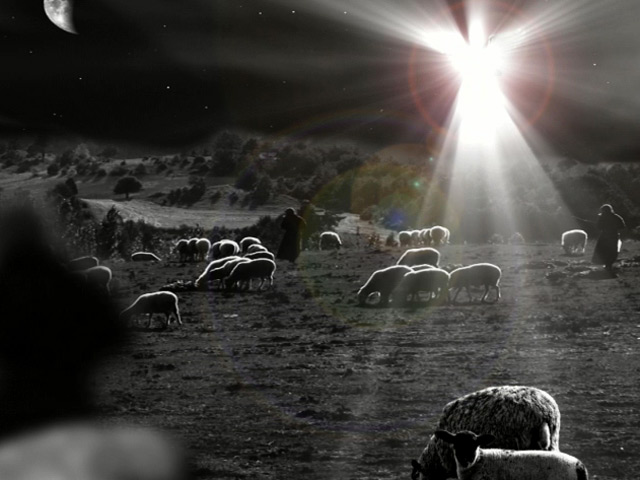
“Do not be afraid,” The angel bellowed. “for see – I am bringing you good news of great joy for all the people: to you is born this day in the city of David a Savior, who is the Messiah, the Lord. This will be a sign for you: you will find a child wrapped in bands of cloth and lying in the manger.” And without warning a multitude of the heavenly host appeared praising God and singing, “Glory to God in the highest heaven, and on earth peace among those whom he favors!”

And so the homeless shepherds traveled to Bethlehem to see this Savior, Messiah, and Lord waiting for them in a feeding trough born to an unwed couple.

So you see, Mary and Joseph were left alone that night — it was from the shepherds that they learned of the angel and the heavenly host. The two new parents, busy with the chores of childbirth in the most inhospitable of places under the most difficult of circumstances, did not get to experience heaven’s visit but instead heard about it from a group of homeless and wandering sheep watchers.

This is an unusual story, but it is precisely because of its strangeness, that it has made all the difference.

“I am bringing good news of great joy for all the people: for you is born this day in the city of David a Savior, who is the Messiah, the Lord.”

For whom is the child born? Not Augustus with all of his power, not the priests and the scribes who ruled the religious practices, not the super elite and fabulously powerful, but for those shepherds in the field, for all of you. For YOU this child has been born.

In that tiny dark manger God was born of the flesh in the baby Jesus. God became incarnate, took on our humanness. Jesus was both human and divine. Born into two worlds, from above and below, Jesus came as a new being in order to reconcile the world back to God. Though he carried the glories of God with him everywhere that he would eventually travel, he never ceased to care for our most basic needs: food, water, relationships. Wherever he went he ate with his friends and the marginalized, all of the shepherd types within the community, nurtured relationships so that all would come to know more about the love of God.

He knew that we could not truly live by earthly things alone… Do you have a Christmas tree at home filled with presents underneath but you cannot find pure joy in your life? Have you raised the perfect family with 2.5 children, a dog, a cat, and a white picket fence, but you feel like something is missing in your life? Do you find yourself searching for meaning, and even when you fill your life with all of the things that the world tells us we need, you never feel completely satisfied? Christ knows our emptiness, God came in the form of flesh to bear our emptiness, so that he could help fill us in a way that we never could on our own.

Haven’t we all had a Bethlehem moment in our lives? A time where it felt that no one knew us, no one understood what we were going through, no one reached out to help us? A period where we carried the weight of the world on our shoulders unable to share the burden with anyone else. A moment where it felt as if the darkness was too powerful for any light to shine forth. In many different ways, we have all traveled to our own Bethlehem.

How perfect is it then, that Bethlehem means “town of bread”? From a tiny manger, from an unwed couple, from the town of bread comes the incarnate God who is the bread of life. It is in this meal he came to bring us the bread of life that can and will sustain us in all things.

00029400_h

Because at this table, at Christ’s holy banquet, we are all invited into that tiny unlit manger, into the darkness and loneliness that Mary and Joseph must have felt. We are incorporated into this story because Jesus has welcomed us in. We are there, but more importantly Jesus is with us here. Christ is with us in all of our brokenness, in all the failed attempts to live perfect lives, in our fears and our frustrations, he is here because God came to be like us to help transform us.

That is Christmas! That is hope! That is grace!

That is the story worth telling over and over again, because the greatest thing to ever be, came to be with us.

Amen.


The Lord Is With You – Sermon on Luke 1.26-38

In the sixth month the angel Gabriel was sent by God to a town in Galilee called Nazareth, to a virgin engaged to a man whose name was Joseph, of the house of David. The virgin’s name was Mary. And he came to her and said, “Greetings, favored one! The Lord is with you.”But she was much perplexed by his words and pondered what sort of greeting this might be. The angel said to her, “Do not be afraid, Mary, for you have found favor with God. And now, you will conceive in your womb and bear a son, and you will name him Jesus. He will be great, and will be called the Son of the Most High, and the Lord God will give to him the throne of his ancestor David. He will reign over the house of Jacob forever, and of his kingdom there will be no end.” Mary said to the angel, “How can this be, since I am a virgin?” The angel said to her, “The Holy Spirit will come upon you, and the power of the Most High will overshadow you; therefore the child to be born will be holy; he will be called Son of God. And now, your relative Elizabeth in her old age has also conceived a son; and this is the sixth month for her who was said to be barren. For nothing will be impossible with God.” Then Mary said, “Here am I, the servant of the Lord; let it be with me according to your word.” Then the angel departed from her.

Luke-Chapter-1-The-Annunciation-to-Mary

Greetings, favored one! The Lord is with you.

In the sixth month, that is to say in the sixth month of Elizabeth’s pregnancy (from the scripture last week), the angel Gabriel was sent to another Israelite. Just as he had come to bring good news to Zechariah, Gabriel was now on a mission to find a young woman. And so it came to pass that Gabriel was sent by God to a town in Galilee called Nazareth, to a virgin engaged to a man whose name was Joseph, of the house of David. The virgin’s name was Mary.

This is a new episode in the gospel of Christ according to Luke, yet it is very clear how closely this story parallels the story of Zechariah in the Temple. Both interactions with the divine messenger are stories of God’s grace and power. Grace in that what is soon to take place will illumine God’s favor toward the world, and power in that God can work through the unable — an old childless couple, and an unmarried virgin. Both Elizabeth and Mary will become mothers because God is able, and they will have sons for our sake because God is righteous and gracious.

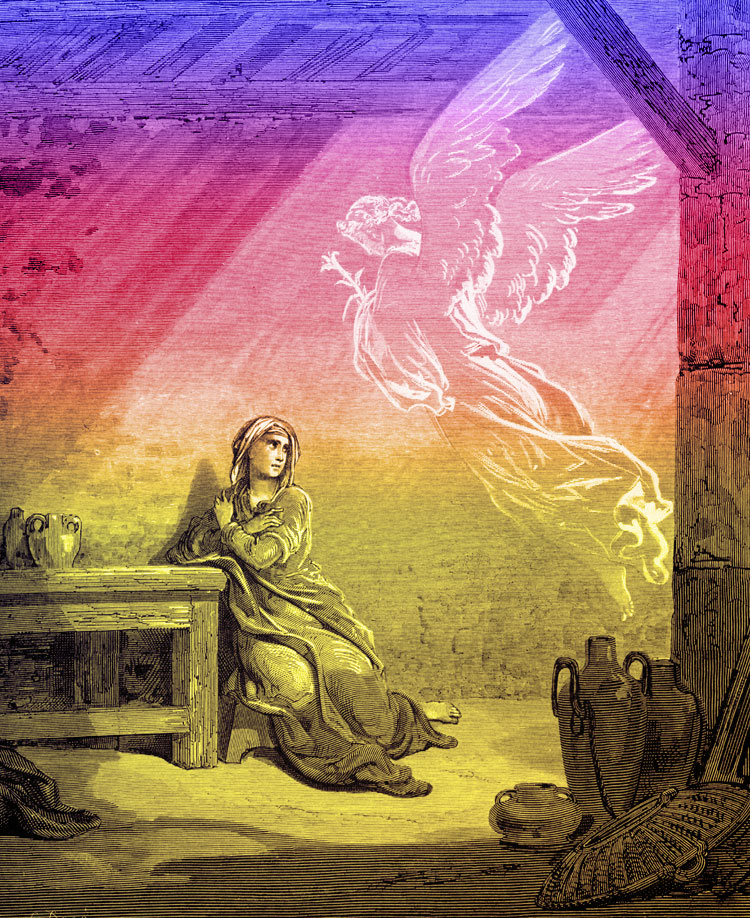
Gabriel said to her, “Greetings, favored one! The Lord is with you.” But Mary was much perplexed by his words and pondered what sort of greeting this might be. And the angel continued, “Do not be afraid, Mary, for you have found favor with God.”

Do you remember the story from last week? Do you remember how Zechariah was struck with fear when confronted by the angel in the most obvious of places, the innermost holy place of the Temple? Do you remember how his unbelief regarding the good news from Gabriel resulted in his becoming mute until the birth of John the baptist?

archangel-gabriel-struck-zechariah-mute-1824

Instead of a priest, one who should have been most familiar with the ways of God in the world and the stories from the past, Gabriel appears to a young unmarried virgin named Mary who does not respond in the same way.

Zechariah was overwhelmed with doubt and fear whereas Mary responded with awe and perplexity. Zechariah wanted to see a sign, wanted proof of the tidings brought by the angel, wanted to have his unbelief changed. Mary responds with curiosity. The messages from God speak into one’s insufficiencies, and brings good news of heavenly grace that must be trusted before its ways are known. There is great power in this story between the way Zechariah reacted, and the way Mary responded.

“And now Mary, you will conceive in your womb and bear a son, and you will name him Jesus. He will be great, and will be called the Son of the Most High, and the Lord God will give to him the throne of his ancestor David. He will reign over the house of Jacob forever, and of his kingdom there will be no end.”

This is good news. This is the kind of message that everyone had been waiting for. A new gift from God was going to come into the world through a young woman to be called the Son of the Most High. A new gracious leader is coming to take back the throne of David. The kingdom that God had always wanted for us is coming! And nothing will be able to stop God in all his majesty because this new kingdom will have no end!

“How can this be, since I am still a virgin?” Mary wondered. There is a difference here between doubt and curiosity. She believes the words from Gabriel, she understands that she will be bringing a child into the world. She is already preparing herself for God’s will in her life, but her curiosity regarding the fundamentals of God’s purposes come forth.

“The Holy Spirit will come upon you, and the power from the Most High will overshadow you; therefore the child to be born will be holy; he will be called Son of God. And even now, your relative Elizabeth in her old age has also conceived a son; and this is the sixth month for her who was said to be barren. For nothing will be impossible with God!

9

After explaining the elements of her coming conception, Gabriel ends his description with a final word of assurance. Gabriel recalls for Mary, and all of us, the creed behind all creeds, the very words spoken to Abraham and Sarah when they doubted the word that they were going to have a child in their old age: For with God nothing will be impossible.

And with perfect clarity, with willing submissiveness to God’s plans in the world, and with hope and joy, Mary responds to the calling of God: Here am I, the servant of the Lord; let it be with me according to your word. And then Gabriel departed from her.

How many times have you heard this story? Even for the so-called “unchurched” most people have heard, even just a sampling, of this story. The amount of art, Christmas decorations, and portrayals of Mary’s meeting with Gabriel are far and wide. This story is the source of great hope, frightening church schisms, and definitive reality shifts. Just as the prophet Isaiah told the Israelites, “Behold a virgin shall conceive a son and he will be called Immanuel,” the virgin Mary was met in the middle of the night by an angel to discover that she was to be the vessel of the Lord.

However, like the story of Zechariah in the temple, Mary’s midnight meeting has been told so many times that it is often difficult to discover something new and fresh when we approach the story. This week as I made my way through the first chapters of Luke, engaged in numerous conversations, and pondered over the heart of Advent, I began to wonder: Why Mary?

Why Mary? If God wanted to come into the world in a big way, with pomp and circumstance; If God wanted to come in the form of flesh to dwell among us as a king with power, he certainly could’ve picked a better mother. Why on earth did he choose her?

I’ve always had a hard time understanding what it is about Mary that made her highly favored in the eyes of the Lord. Remember Gabriel’s first words: “Greetings, favored one!” Really? How could she possibly be favored? Immediately following this episode she would presently go on a long and difficult journey to small town, not because she wanted to, but because the foreign rulers of her homeland forced her to go. She would be ridiculed, and judged, and even threatened for carrying a child conceived outside of normal circumstances, particularly before being married. She would give birth to this “son of the Most High” in one of the lowliest places, a stable. And after Bethlehem? Long years of obscurity and poverty with the world continually churning with its disapproval of the Jews, with the power from on high weighing down the life of the people. Her baby from Bethlehem would go on to become one of the most hated men in all of Israel and his life would increase in danger until the very end. The humble, marginalized, poor, and weak loved him, while the powerful and wealthy regarded him with hatred. Mary’s baby boy would be murdered on a cross, betrayed by the very people he came to serve. She would come to cradle her lifeless son’s body in her arms just as she did that first night in the manger. That was the favor of God?

Why Mary? Why an unwed, impoverished, and teenage girl?

Throughout the gospels Mary is portrayed as thoughtful, obedient, believing, worshipful and devoted to Jewish law. To us, and to all who knew her, she is the ideal Christian. However, none of these qualities are offered as reasons for God choosing her, God’s reasoning is tucked away from our view. We can guess, and we can come to our own conclusions, but the truth of God’s choice is known only to God in his eternal plan.

If Mary had wanted a perfect life on unbroken happiness, ease and pleasure in all things, then she certainly didn’t get it. If she had tried to measure up the favor of the Lord by the expectations of the world, then it would seem that the promise and salutation of the angel was only an illusion.

But the truth, and I mean real truth, is always deeper than it appears on the surface. 

The world would tell us, that God’s favor is to be found in ease, pleasure, and prosperity. God’s favor can be seen in a Christmas tree covered in perfect ornamentation with a plethora or present piled underneath. How many televangelists and “christian” writers make their millions and claim that God’s favor is with them, that God wanted them to be wealthy and powerful? Their messages always contain some sort of theologically problematic promise: If only you pray more, if you only read your bible more, if you only put more money in the offering plate, then God will make you healthy, happy, holy, and wealthy.

That is not the gospel.

It is a terrifying paradox, but, it is the lives which have been given something great to do and to bear, even though they may have been bruised and battered in the process, which have truly known the favor of God.

If God had wanted our discipleship to be easy then he would not have come into the world through the difficult situation of an unwed virgin. If God had wanted our faith to be easy then we would have no need for church, repentance, and forgiveness.

With Mary, and frankly with every single one of us, it comes down to obedience. Purely and humbly Mary put herself into the hands of God. She sacrificed so that God’s will could be done in the world. “Let it be with me according to your word.”

As the story continues, Mary meets with her relative Elizabeth, and when John leapt in his mother’s womb while in the presence of Jesus in Mary’s, she responds by praising God. She praises God even though the child in her womb will certainly make her life more difficult. And when we read the Magnificat it seems like Mary is continuing to praise God for the wrong reasons. Rather than celebrating God’s gifts to the proud, the powerful, and the rich, she offers joy that God has turned such values upside down.

I believe that we, myself included, are so often caught up with what the world defines as greatness, what the world defines as favor, that we lose sight of God’s kingdom right in front of us. We would all do well to join in with Mary’s song and magnify the Lord who lifts up the lowly and vulnerable in love. We would do well to open our eyes and ears to what God is doing in the world, what God wants to do through us, and respond with a resonating, “Here I am, let it be with me according to your word.

So, how is it with your soul? Where have you felt God tugging you in your life? Is there a pull or a nudge that has happened, perhaps you don’t know why, but you know that something is there? Have you seen a place in your life that you want to change but you’re unsure of whether or not you really can? Is God calling you to do something in your life and you, like Mary, are perplexed at how it would even be possible?

My guess is, we all have something. Whether large or small, grand or simple, God is always calling us to something new. To fix a broken relationship, to reach out to those marginalized in our own community, to shine a great light when it feels like the darkness is taking over.

As we prepare to make our way to Christ’s table let us all remember that with God nothing is impossible. An old childless couple can be given new life, a virgin can bear a child who came to save us, we can all be forgiven for the wrongs we have committed, death can be defeated, life after life after death is available through the grace of God, lives can be transformed, love can be discovered, and faith can be rekindled. Nothing will be impossible with God.

Amen.


Weekly Devotional – 12/23/13

Devotional:

Psalm 96.1-4

O sing to the Lord a new song; sing to the Lord, all the earth. Sing to the Lord, bless his name; tell of his salvation from day to day. Declare his glory among the nations, his marvelous works among all the peoples. For great is the Lord, and greatly to be praised. he is to be revered above all gods.

1535751_10202812940587494_483312224_n

I love being a pastor. I love getting to spend time each week contemplating the Word of the Lord, reading from numerous texts, spending time in prayer, and working on a sermon for Sunday. I love getting to go out into the community to visit those who are sick, alone, afraid, or no longer able to attend church. I love representing St. John’s within Staunton through various organizations and events. I love the fact that people feel comfortable enough to spend time with me and share their stories. I love getting to participate in the life of this faith community as a pastor who serves the church and its people. But one of the things that I love most about being a pastor, is the fact that our church has a Preschool.

Every morning (while the school is in session) I make my way down to the classrooms and I try to greet every child and parent that comes in. I visit each room during the day and help the children with their letters, build giant block fortresses, and ask them questions about whatever I can think of. Most of the children “know” who I am, and they call me Pastor, but I believe they think thats my first name. Some of them are often confused by this adult who comes in to play with their toys regularly, and perhaps they see me as a giant kid (which I am).

Last week the Preschool children put on a pageant for their parents and families in our sanctuary. I was blessed to be offered to the role of narrator and I dressed up as a shepherd for my role (the kids were in costume as the various animals from the manger scene). After they had remembered for us the Christmas story, and performed a number of Christmas themed songs, they went to the social hall in order to change out of costume and wait for the parents to join them for a reception. My job was to talk for 5-10 minutes to all the adults so the teachers would have enough time to get everything ready.

Now, bear in mind, that many of the people in attendance that night do not attend any church. Their children are affiliated with a Preschool from a United Methodist Church, but that night might be the only time of the year that they step forth into a sanctuary.

So, I gave a very brief sermon about the meaning of Christmas and the importance for everyone in the room to love their children; not just with presents, but with real and tangible love; caring about what they’re interested in, supporting them throughout their lives, and taking the time to show them they are loved. When it was clear that I had expended my theological and homiletical thoughts, I did what any good Methodist would do, and I picked up my hymnal.

I encouraged everyone to stand and join together with Hymn 246 “Joy to the World” and those people belted their hearts out! I couldn’t believe it. Here I was standing with a bunch of random adults, most of whom do not attend church, and they were singing Joy to the World in harmony and with gusto!

The psalmist writes, “Sing to the Lord a new song; sing to the Lord, all the earth.” For many of us, Christmas Eve is that one day where we get to sing some of our favorite hymns in church: Hark! the Herald Angels Sing, Angels We Have Heard on High, Silent Night, O Come All Ye Faithful, Joy to the World, etc.

Whether church attending or not, whether filled with faith or doubt, whether excited for Christmas or afraid, there is something about singing that allows the truth depth of our souls to break forth into the world. Wherever you are on your faith journey this year, I hope the words and the tunes of your favorite Christmas songs can help to reignite the flame of faith in all of our hearts.

“He rules the world with truth and grace, and makes the nations prove the glories of his righteousness, and wonders of his love, and wonders of his love, and wonders, wonders of his love!”

Merry Christmas!


0070=70