Why We Do What We Do: Give – Sermon on Luke 12.22-34

Luke 12.22-34

He said to his disciples, “Therefore I tell you, do not worry about your life, what you will eat, or about your body, what you will wear. For life is more than food, and the body is more than clothing. Consider the ravens: they neither sow nor reap, they have neither storehouse nor barn, and yet God feeds them. Of how much more value are you than the birds! And can any of you by worrying add a single hour to your span of life? If then you are not able to do so small a thing as that, why do you worry about the rest? Consider the lilies, how they grow: they neither toil nor spin; yet I tell you, even Solomon in all his glory was not clothed like one of these. But if God so clothes the grass of the field, which is alive today and tomorrow is thrown into the oven, how much more will he clothe you – you of little faith! And do not keep striving for what you are to eat and what you are to drink, and do not keep worrying. For it is the nations of the world that strive after all these things, and your Father know that you need them. Instead, strive for his kingdom, and these things will be given to you as well. Do not be afraid, little flock, for it is your Father’s good pleasure to give you the kingdom. Sell your possessions, and give alms. Make purses for yourselves that do not wear out, an unfailing treasure in heaven, where no thief comes near and no moth destroys. For where your treasure is, there you heart will be also.

church

The receiving line following worship is vastly underrated. A lot of people make their way out of the sanctuary as quickly as possible, whereas others will wait in line just to ask that one question that popped up during the service. It never ceases to amaze me that some of the most profoundly theological and spiritual moments that take place at St. John’s happen in that line after worship on Sunday mornings.

This month’s sermon series “Why We Do What We Do” has its roots in those conversations. Week after week I will hear some of you wonder about the purpose of an acolyte carrying in the flame for worship, or you ask about the value and importance of having a time for offering and collection, or you question why we talk so much about bible study, or you remark about how difficult it is to pray. If you’ve ever left church with a question on your heart and mind, this sermon series is for you.

Today we will explore why we give.

I was in my final year of seminary when my friend asked me to preach at his church. He had labored for the past few years as a full time student and full time pastor at the same time and needed someone to fill-in. He had received tickets to a Carolina Panthers football game, though I was forbidden from telling his church that’s where he was instead of with them on a Sunday morning for worship.

When Lindsey and I arrived at the tiny United Methodist Church in the middle of nowhere North Carolina, I was a little nervous about leading worship for a congregation that I had never met, but I figured God would show up even if my sermon fell flat. The sanctuary was tiny, with white walls and bright florescent lights hanging from the ceiling, there was a cross above the altar that was draped with an American flag, and it was so quiet that I was worried we had arrived at the wrong church.

However, the lay leader was waiting by the door and greeted us as if we were first-time visitors, only to later realize that I was supposed to be the pastor for the day. He quickly led me into the sanctuary, gave me a quick and grand tour, and then informed me that he was the head usher, liturgist, organist, and treasurer.

From what I remember the service went well, though most of the congregation was utterly bewildered by my academic deconstruction of a prophecy from the book of Daniel (something I thankfully gave up doing that day), and there was an infant who wailed the entire service. I like to think that she loved my preaching so much that it drove her to tears.

When the service ended, I finally had a chance to actually look around at the sanctuary and I noticed a list on the wall behind the pulpit of the hymns for the day, the offering brought in last week, and the deficit regarding the annual budget. There in big numbers for everyone to see was how far away they were from keeping up with their plan, and it was a staggering amount.

On my way out I thanked the lay-leader/usher/organist/treasurer for the opportunity to preach and asked why they felt the need to display their deficit for everyone to see every Sunday. I’ll never forget how casually he shrugged his shoulders and said, “Guilt is the only way to get them to give.

page44_picture0_1338615554

Talking about giving, and in particular financial giving is about as awkward as it gets in the church. Money, in general, is one of the taboo subjects of normal conversations. We don’t ask how much someone makes in a year, even if we are curious. We avoid asking for financial help because it means admitting too much vulnerability. But then if we take the taboo subject of money, and put it together with religion (or the church) we have the double whammy of things we’re not supposed to talk about.

After all, money and religion are personal and private subjects aren’t they? What I do with my money and what I do with my faith should be of no concern to anyone else other than myself…

To talk about giving in the church, to address the subject of why we give, we have to get personal. It would be shameful for me to stand here each and every week calling for the gathered body to give their gifts to God if I, myself, was afraid to talk about my own giving. If we want to be a church of gifts, then we must first be a church of vulnerability and then conversion.

Before I became a pastor, I rarely gave to the church. I have vivid memories of sitting in church throughout my adolescence, and feeling waves of guilt as I passed the offering plate over my lap to whomever else was in the pew. It helped that I was a teenager and had no money to give in the first place but the guilt was still there.

By the time I made it to college and seminary, I still attended church but rarely gave to the church. I certainly volunteered my time, led mission trips, and taught bible studies, but giving money to the church was not on my radar.

Then I was appointed here to St. John’s. Now that I had a steady income, Lindsey and I decided to start tithing to the church, and honestly it was really hard. We are a young married couple with debt to the federal government for paying for my seminary education, and we are going to have a baby in April. Yet, we covenanted with God and one another to give 10%. In the first months it was harder than I thought. I would find myself thinking about those thousands of dollars that I could be spending on other things, but we got into the habit and we kept giving.

blog.the.offering

My conversion toward giving did not happen in a big shiny moment, but was a gradual transformation. The more I gave, the longer the habit continued, the easier it became, and my perspective started to change.

Instead of imagining what I could’ve have done with the money I gave to church, I started to tangibly witness and experience what the money I gave was doing for the church and the kingdom.

Giving to the church requires a conversion; it is built on a vision where we recognize how our blessings can be used to bless others. We are not called to give to St. John’s out of guilt, but out of generosity.

As John Wesley once said: “Having, first, gained all you can, and, secondly saved all you can, then give all you can.

We are called to give because we have a shared vision and are invited into the mission of God through the church. Even a seemingly small act of generosity can grow into something far beyond what we could ever ask or imagine – The creation of a community of love in this world. If we act generously, we are helping God build the kingdom here on earth.

However, we should not be expected to give, or feel inclined to give without knowing why or to what we are giving. To just stand before you and say “give give give” prevents us from developing strong relationship with the people and programs we serve. So here are just three aspects of what our church does with our gifts:

At St. John’s we believe in providing meaningful, fruitful, and life changing worship every week of the year. We plan months ahead, connect messages with the music, and look for imaginative ways to respond to God’s love in the world. This means that we have to keep our sanctuary in the best shape possible for the worship of God, and use the great gifts of all involved in the church to make it happen. As a church we regularly welcome first-time visitors to discover God’s love through this place and help to develop professions of faith in Jesus Christ.

At St. John’s we believe in nurturing those in the midst of their faith journeys. We spend a significant amount of time and resources to help disciples grow in the faith and love of God and neighbor. We have numerous classes and opportunities to study God’s Word, but one of the most profound things we offer is weekly Chapel Time to our Preschoolers. Not only do we help to provide a wonderful facility for them to learn and grow, but we also welcome them into this sanctuary every week to learn about God, Jesus, and the Holy Spirit. The Preschoolers discover how much God loves them, and they take those stories home to the families and subsequently teach them about God’s love.

And at St. John’s we believe in witnessing to our faith in service beyond ourselves. We strive to serve those in need through a mosaic of opportunities in order to be Christ’s body for the world. For the first time in a long time we have paid our Apportionments in full to benefit the greater church, and the world. Some of that money goes to pay for clergy healthcare, some of it goes to domestic and international benevolences funds, and a number of other places. Moreover, we are able to provide a tremendous amount of financial resources to SACRA (Staunton-Augusta Church Relief Association) who then distribute the money to acute needs in the local community.

thumb

We give from our blessings to bless others. Whether it’s the people in the pews next to us who gather for worship, the preschoolers who gather to be nurtured and educated, or the countless people in the local and global community who need our help. We give out of generosity, because so much has been given to us.

However I don’t want to make it sound as if giving is the easiest thing in the world, because it does require sacrifice. Living a spiritual life of generosity requires a change of heart, a conversion. It might happen in a moment, or throughout a lifetime of faith, but when the transformation occurs, we become people of generosity.

We all have blessings to offer. Some of us have been blessed by God with incredibly lucrative careers and vocations, God has clothed us with more splendor than Solomon and all his temples, and we can give back to God through our financial giving. Some of us have been blessed by God with powerful relationship skills, God has given us personalities that bring out the best in others, and we can give back to God through our willingness to serve others. And God has blessed all of us with the gift of time, which is the most precious thing we can ever offer to the church and others.

Are we grateful for what God has done for us through this place? Do we appreciate all the blessings we have receiving throughout our lives? Do we want to bless others as we have been blessed?

We give because we have a common yearning for God’s kingdom to reign on earth, and when we give we join a new communion with the people of God. We give because it is the way by which we live out our love toward the church and our brothers and sisters in faith. We give because God first gave to us.

Where our treasure is, there are hearts will be also. Amen

Devotional – Mark 14.36

Devotional:

Mark 14.36

He said, “Abba, Father, for you all things are possible; remove this cup from me; yet, not what I want, but what you want.” 

Weekly Devotional Image

“Let us now pray the prayer that Jesus taught his disciples: Our Father, who art in heaven…” The familiar introduction to the Lord’s Prayer is a regular occurrence in most churches. At some point during worship there is an opportunity to pray the same words that countless Christians have prayed together since the days of Jesus’ ministry. Through a simple, yet profound, prayer we are connected with the church universal as we pray according to the way that Christ taught his disciples to pray.

At St. John’s we print all the words to the prayer in the bulletin for anyone who might not be familiar with it. Most of the time, however, the gathered body prays without having to look down; whether they were here the week before, or it had been years since they entered a church, the Lord’s Prayer is something that most people remember forever.

The familiarity of the prayer is a blessing and a curse. For centuries it has brought Christians closer to the Lord, though sometimes the more familiar we are with the prayer, the less we think about the actual words we are praying. To sit amidst the body of Christ and pray “thy will be done” is one of the most profound acts in a discipled life.

Wendell Berry

Wendell Berry

Wendell Berry, the gifted essayist and writer, makes a similar point in his incredible novel Jayber Crow: “This, I thought, is what is meant by ‘thy will be done’ in the Lord’s Prayer, which I had prayed time and again without thinking about it. It means that your will and God’s will may not be the same. It means there’s a good possibility that you won’t get what you pray for. It means that in spite of your prayers you are going to suffer.”

On Jesus’ final night, after he shared an incredible meal with his closest friends, he prayed alone in the garden of Gethsemane. In many ways one of his last prayers to the Lord was simply “thy will be done.”

The season of lent is an incredible reminder that life does not become perfect and easy for us the moment we become Christians. With the current abundance of Prosperity Preachers/Churches it is important to remember, as Berry puts it, praying the Lord’s Prayer means that our will and God’s will might not be the same thing.

As we come closer and closer to Holy Week, let us take time to be with God in prayer. If you find yourself at a loss for words during your time with the Lord, follow the example of Jesus and offer up one of the most profound statements you can ever utter: “thy will be done.”

Devotional – 2 Corinthians 4.5

Devotional:

2 Corinthians 4.5

For we do not proclaim ourselves; we proclaim Jesus Christ as Lord and ourselves as your slaves for Jesus’ sake. 

Weekly Devotional Image

Have you ever listened to someone discuss a topic only to realize that you learned more about the speaker than you did about the subject?

There were many times in college that I would leave a lecture knowing more about my professor’s interpretation of an event than I did the actual event. Similarly, there have been church services that taught me more about what the pastor was doing in his/her life than what I should be doing to live out God’s Word in mine. The temptation, for all of us, is to point at ourselves rather than the subject at hand.

Brian Williams, the anchor for NBC’s Nightly News, recently fell into controversy regarding comments he made about his experiences during the US invasion of Iraq. Williams stated that he was on an helicopter that was hit by an RPG and forced to land. However, reports have subsequently come to light that call his memory into question; a flight engineer who was on board one of three helicopters that were hit, reported that William’s helicopter arrived at the scene nearly an hour later to interview the crew members about the attack.

1343751252634_2x1_overlay_590_295

In the days that followed William’s false report, he has been scrutinized by a number of media outlets and veterans about his claims. He has taken a leave from his regular Nightly News  broadcast, and executives from NBC have announced there would be an internal investigation into William’s reports on Iraq and other issues. Moreover, debates are taking place regarding whether or not he will be replaced in relation to his newscast.

When we share information with our friends and family about issues facing the world, there is a strong temptation to point at our relation to the subject rather than the subject itself. Instead of talking about the issue of poverty we talk about how we have interacted with people begging on the streets. Instead of talking about what we can do to help our education system, we share stories about what we experienced in school. Instead of talking about what Jesus did for us, we talk about the many ways we are living out our Christianity on a regular basis.

Paul wrote to the church in Corinth as a reminder about who was truly at the center of the church: “We do not proclaim ourselves; we proclaim Jesus Christ as Lord and ourselves as your slaves for Jesus’ sake.” As Christians, we are called to the same proclamation.

When we feel the temptation to point to ourselves and what we have done, Paul helps us to remember to point to Jesus. We can certainly celebrate our accomplishments in our faith journeys, but we are called to serve one another as slaves for Jesus’ sake.

This week, let us point away from ourselves to Christ, and seek new ways to serve those around us.

Devotional – Psalm 139.4

Devotional:

Psalm 139.4

Even before a word is on my tongue, O Lord, you know it completely. 

Weekly Devotional Image

I was in the middle of wrapping Christmas presents when my cell phone began to ring. My fingers were covered in tape and I fumbled with answering the phone while keeping the paper pulled tight over the box. Frankly, I’m not a very good wrapper, so I welcomed the distraction of the call with hopes that it would somehow result in me taking enough time away that I would return with perfect wrapping capabilities. The season of Advent and Christmas can be very lonely for pastors as they seek to serve the needs of others so I was greatly pleased when I saw that my friend, and best man, was calling me out of the blue.

Josh and I met in seminary, and when we graduated he went out to Wichita, KS to work for the Apprentice Institute at Friends University while I became a pastor in the UMC. Josh and his wife recently welcomed their first daughter into the world (Isla Rose) and I specifically tried to not overburden him with phone calls and video-chats, even though I wanted to hear and see everything about his family and time as a father. I have known for a long time that he would be a great Dad and I was excited to hear about how things were going for him when he called. However, the phone conversation focused on a topic of conversation that I was not necessarily prepared for.

1959582_10202693843378214_739260359549815304_n

We spent the first few minutes catching up about the typical things when Josh’s tone suddenly changed and I knew he was calling for a specific reason. Instead of piling up the preliminary excuses and attempting to justify his decision he put it simply: “I am leaving my work with Apprentice, and going to work in the secular world.” At first I was completely shocked; Josh is one of the greatest disciples I have ever met, he ministered to me while we were in school together, and he would no longer be working for the church. He shared with me his reasons (all valid) and my shock quickly changed to compassion. He told me that he had been wrestling with the decision for a long time but was afraid to share it with me. He was worried that I would be disappointed or react in such a way that it would change our friendship.

I am disappointed that the Church has lost such a great and promising leader, but at the same time I recognize that the Spirit moves in mysterious ways and perhaps Josh can now be even more fruitful for the kingdom of God. I believe that God has moved in Josh’s life for this specific change and it will bring glory to the triune God here on earth. My only wish is that Josh would not have feared about my reaction, and would have known that nothing could change our friendship.

God knows our words and thoughts even before they are on our tongues and minds. God’s love remains steadfast toward us regardless of our decisions and actions. Can you imagine how differently we would interact with others if we trusted them the same way that we trust God? Can you picture what that kind of love and forgiveness would look like in your life?

This week, let us show our friends how much we love them. All it might take is a phone call, an email, or a text message, but it could make all the difference in the world.

Devotional – Philippians 1.27

Devotional:

Philippians 1.27

Only, live your life in a manner worthy of the gospel of Christ, so that, whether I come and see you or am absent and hear about you, I will know that you are standing firm in one spirit, striving side by side with one mind for the faith of the gospel.

Weekly Devotional Image

“Church Shopping” is a phenomenon in the contemporary church that I have not quite wrapped my head around. Oftentimes when a family, or an individual, moves to a new community they will try out a number of churches, regardless of denomination, until they find one that fits with their understanding of the way church is supposed to be. They will use their own rubrics and check-lists in order to determine whether the church is a good fit; Was I genuinely greeted and welcomed to church? Is the church full of people around my stage of life? Was the worship authentic and life-giving?

60_ChurchShopping_1_1139x541

In Staunton I have been struck by the more particular phenomenon of “Pastor Shopping.” When we have new visitors that become regular attendees I often ask them, in preparation for membership, where they came from and how they arrived at St. John’s. More often than I would like to admit, many of the responses have to do with a disagreement or a frustration with a pastor from their last church: He walked around too much while he preached; She wore blue jeans during worship; He doesn’t preach from the Bible; etc.

I will admit that there are plenty of churches that are detrimental to Christians’ faith. Pastors and congregations sometimes lose sight of the Gospel and become so inwardly focused that they forget to proclaim the Good News of Christ. However, I also believe that as Christians we have the responsibility to “stand firm in one spirit” with our brothers and sisters in Christ at our churches. The fact that so many are willing to leave a faithful community, after years of shared discipleship, because they disagree with a pastor is a frightening reality for the contemporary church.

It is my hope that if we have people at St. John’s who do not agree with what I preach, or how I lead, that they would be faithful enough to share their frustrations with me, and strive to continually serve “side by side for the faith of the gospel.” If we continue to commodify the church, which is to say if we make it into something that people can pick and choose like they pick and choose a cereal brand, then we will continue to have churches that are filled with people who are not challenged in their faith journeys.

Whether I’m your pastor or not, have you shared your thoughts and concerns with your pastor? Are you lovingly honest with them about their preaching? Have you prayed for them?

Perhaps today is the day that we can begin living our lives in a manner worthy of the gospel of Christ with our pastors, with our families, and with our brothers and sister in Christ.

Getting Stoned With Stephen – Sermon on Acts 7.54-60

Acts 7.54-60

When they heard these things, they became enraged and ground their teeth at Stephen. But filled with the Holy Spirit, he gazed into heaven and saw the glory of God and Jesus standing at the right hand of God. “Look,” he said, “I see the heavens opened and the Son of Man standing at the right hand of God!” But they covered their ears, and with a loud shout all rushed together against him. Then they dragged him out of the city and began to stone him; and the witnesses laid their coats at the feet of a young man named Saul. When they were stoning Stephen, he prayed, “Lord Jesus, receive my spirit.” Then he knelt down and cried out in a loud voice, “Lord, do not hold this sin against them.” When he had said this, he died.

the-stoning-of-stephen

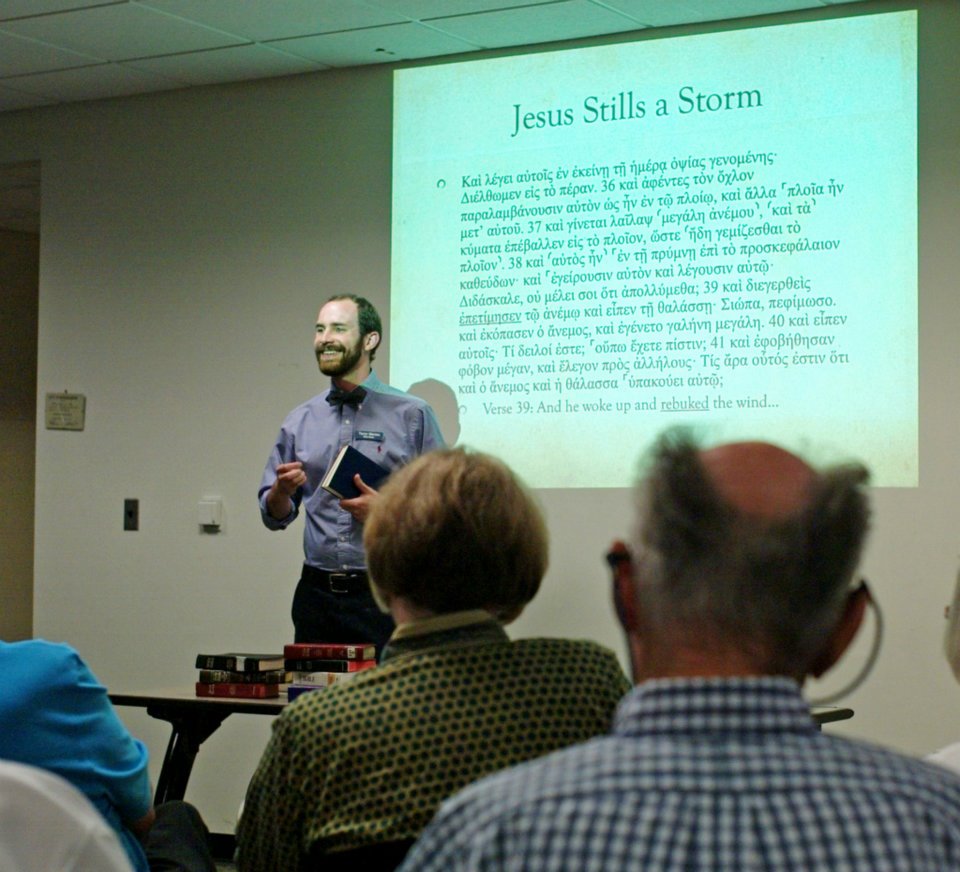
I was standing in front of a packed lecture hall, talking about Jesus according to the gospels, when I began to notice that the crowd was turning against me. For the previous three weeks I had stood in the front of that same room, a brilliantly bright powerpoint displayed on the screen behind me, making my way through the original Greek text of the gospel according to St. Mark. Each week we focused on a different element of Mark’s writing, comparing his gospel with the others, and generally reflecting on how this gospel still speaks fresh and new words into our lives.

It had seemed as if everyone was on board with what I was talking about, until the conversation moved to the cost of discipleship. I recognize now that I probably went to far, but at the time I felt the truth was worth exploring.

531711_3548371078945_1217125254_n

This is what I said: “In the gospels, particularly Mark, Jesus makes it very clear that following him, taking up our own crosses, being a disciple, will cost us our very lives.” Many people in attendance nodded. But then I continued, “Most of us here have no idea what that means. We sit in the comfort of our homes here in Michigan, sure we hear about all the bad things happening in the world, and even the bad things happening down the road in Detroit, but our lives will never be taken for our faith. We exist in such comfort with our faith that we can no longer even imagine what it would mean to give our lives for Christ, the cost of discipleship for us doesn’t cost very much at all.” “Well excuse me young man,” one of the women began, “but I go into downtown Detroit every week to serve food and give away clothing. My life is on the line for Christ every seven days. Don’t lecture me about the cost of discipleship.” This is when I should have stopped, apologized, and moved on, but I couldn’t help myself. So I asked her, “Do you go downtown every week because you believe thats the most and the best you can do as a disciple? Or do you go downtown with food and clothing every week because you feel guilty?


The early church had a problem. While the disciples were increasing in number, an argument developed over the distribution of food. Like us modern Methodists, a major conflict erupted not over proper theology, or reverence, but instead who was getting the appropriate amount of food. The twelve got together and asked for seven leaders to come forward in order to help with the organization of the early church, and to faithfully distribute the food among all the people. Stephen, described as a man full of faith and the Holy Spirit, was one of those chosen seven. 

In a short amount of time Stephen began to do great wonders and produce signs among the people. Once he stepped into the limelight of the early church, he rested under the microscope of many leaders and elders of the synagogues who argued with him. The leaders instigated some others to raise charges of heresy against Stephen and he soon found himself standing before the high-priest in order to defend his words and actions.

What followed is one of the most concise and deliberate retellings of the entire salvation story of God with God’s people. Stephen’s speech contains remembrances of Abraham, Isaac, Jacob, Joseph, Moses, and the prophets. He weaves the story in and out of the major moments; the beginning of the covenant, the flight to Egypt, Moses’ calling, the delivery from slavery to the Promised Land, the commandments being given on Sinai. In just a few short paragraphs Stephen perfectly encompassed the Old Testament for the high priest.

Though very descriptive, Stephen committed no blasphemy in his speech. He fairly repeated that which we have detailed for us in the scriptures, but before he finished speaking he had one final message to deliver: “You stiff-necked people, uncircumcised in heart and ears, you are forever opposing the Holy Spirit, just as your ancestors used to do. Which of the prophets did your ancestors not persecute? They killed those who foretold the coming of the Righteous One, and now you have become his betrayers and murderers. You are the ones that have received the law as ordained by angels, and yet you have not kept it.

It was only after hearing these words that the people became enraged and ground their teeth at Stephen. While they began to torment him, he looked up and saw the glory of God and Jesus standing along the right side, and he declared this triumphantly to the people. But instead of listening, instead of looking up to see what he could see, they covered their own ears and with a loud shout rushed forward to grab him and take him out of the city. While they stoned him, he prayed, “Lord Jesus, receive my spirit.” And with his final breath he cried out in a loud voice, “Lord, do not hold this sin against them.” When he had said this, he died.

saint-stephen-the-martyr-23

Stephen’s speech to the high priest and those gathered sealed his doom. Did he speak the kind of blasphemy against Moses and God like he was accused of? Nope. But Stephen went too far when he claimed that Jesus was at the right hand of the Lord, ready to rule. Stephen merely affirmed the same thing we claim every week when we stand and affirm the Apostles’ Creed, yet when he did it, it cost him his life. 

Some scholars and theologians claim that the climax of this episode in the book of Acts is Stephen’s death, when in fact the defining moment is the exaltation of Christ. Surrounded by his accusers and killers, Stephen continues to assert that Jesus is sitting at the right hand of God, that he is the long awaited Messiah already changing the world.

Jesus is there with Stephen at the final moments of his life, and how fitting considering the fact that Stephen utters the same words that Christ did at his own death. While the stones were flying through the air, Stephen’s prayer was not for deliverance, but a declaration of trust. Not, “Lord, save me!” but “Lord, receive my spirit.” His prayer is one that looks forward, not backward. His prayer was for his enemies, and not himself.

At his death, Stephen did what all of us are called to do in every moment of our lives: he acted like Jesus. He was serene while everyone else was going crazy; he was forgiving while the crowds were vindictive; he prayed while the people acted as if God was not among them; he loved when he saw nothing but hate; he trusted the Lord when everything was claiming the contrary; he kept on hoping when there seemed nothing left to keep hope alive. All of this to tell the truth to the high priest and the crowd. All of this to die for what he believed in. All of this as the cost for his own discipleship.

What happened to Stephen is paradigmatic for what the church was like. Thousands upon thousands of Christians have given their lives in order to speak the truth of God’s reign in the world.

In the United States we have “freedom of religion.” This was instituted during the foundation of our nation and has secured the right to practice religion, regardless of orientation or denomination. For Christians, the freedom of religion means that we are free to exercise our faith in whatever ways necessary so long as we do so within certain limits, as long as we do not become fanatical. We can pray as a family at public restaurants so long as it is not too loud to disrupt the other patrons. We can teach our children to turn the other cheek and love their enemies so long as we are still willing to let them serve in the military. We can talk about controversial issues in church so long as we limit those conversations to this building.

Yet the story that we read today, the remembrance of Stephen’s final moments, reminds us practitioners of polite, civil, and calculated religion that once there were Christians who readily and joyfully parted with possessions, family, friends, even life itself to remain faithful.

Some might call Stephen fanatical and crazy (after all he was willing to give his live for his faith) but he is presented as a very rational person who died for the same faith by which he lived.

When I stood in front of that crowded lecture hall, talking to the Methodists of Birmingham, Michigan, I could sense their desire to be affirmed in their faith. They wanted me to believe that they were willing to give their lives for Jesus, but the truth is, most of them, and most of us here, will never be in a situation like Stephen’s. Christianity has become so complacent and accepted within our culture that we no longer feel the need to be radical and controversial when considering the ways of the world versus the ways of God.

Our faith used to be a movement. The early church used to be attacked, arrested, and silenced for their dedication to the Word. The first methodists used to be ridiculed for their methodical dedications to spiritual disciplines, feeding the poor, and befriending the outcasts.

What would it take for someone to ridicule you in your faith? I’m not saying that we are all called to stand trial for our God and give our lives like Stephen, but instead we need to ask ourselves if we are living up to the potential of faith that God sees in us.

Not all of us can be Stephens, but we can all be Christians. We can all speak the truth of what God has done for us. We can reclaim our commitment to changing the world for the kingdom of God. We can discover our faith in God by opening our eyes to the kind of faith that he has in us. How far would you go to demonstrate your faith in the world? What would it take to start ruffling people’s feathers here in Staunton by living as Christ’s body?

Speaking the truth can be the most difficult thing in the world, but at the same time it can also be the most faithful thing in the world. Perhaps you know someone who has, for too long, relied on alcohol to fill an emptiness in their lives but you’re too afraid to saying anything. Maybe you know someone who treats their spouse horribly and you’re unsure how you can help the situation. Perhaps you’ve seen someone embarrass or harass their children in public. Or maybe you need to be honest with yourself about something you need to change in your own life.

Stephen was willing to speak the harsh truth to a people who desperately needed to hear it. Stephen was prepared to give his own life for a man he barely knew that died on a cross and was raised again. How far are you willing to go? Amen.