Gold Bond and The Gospel

4d46bf1bb0394b294fab8d3ea3c7ea0b-1024x1024

This week on the Strangely Warmed podcast I speak with Tripp Fuller about the readings for the 7th Sunday of Easter [A] (Acts 1.6-14, Psalm 68.1-10, 32-35, 1 Peter 4.12-14, 6.6-11, John 17.1-11). Tripp is the host of Home-brewed Christianity, and is a Religion/Science Research Fellow at the University of Edinburgh, Scotland. Our conversation covers a range of topics including homeschooling in quarantine, Process Theology, hide and seek, idiotic disciples, looking down and out, psalm problems, faithful suffering, tyrannical immediacy, thinking small, and the doneness of the Good News. If you would like to listen to the episode or subscribe to the podcast you can do so here: Gold Bond and The Gospel

Screen Shot 2020-04-29 at 2.00.37 PM

On Personal Pandemic Improvements

I wrote about this a few weeks ago, but there has been no shortage of people claiming this is the perfect time to fashion ourselves into the the best versions we can muster. From learning how to bake sourdough bread, to losing those ten extra pounds we put on at Thanksgiving, to learning a new language – now is the moment to seize the day! 

And yet, as Christians, we know better than most that telling someone to change rarely, if ever, works. 

IMG-p14RobertFarrarCapon_cropped-44-247-150-2-5

One of my favorite theological writers, Robert Farrar Capon, puts it like this:

I do not seriously expect that you would never be angry just because I lectured you about your temper. We have far less power than we think to revolutionize our behavior. The real saints among us are not, as we commonly suppose, those who have conquered their vices, but those who have not allowed vice to blunt their critical appreciation of virtue. They may go on sinning, but they don’t stop confessing. Therefore, you do not need me to urge a modest reform upon you: all reforms, as you know perfectly well, turn out automatically to be more modest than anything else. What you need is a call to immodest repentance, so that when you sin, you will at least sin boldly, honoring the law with an honest breach rather than fiddling with it until it isn’t a law.” RFC, Party Spirit

Rather than becoming the best version of ourselves, now is the time to rest in the knowledge that God loves us as we are. Which, to be clear, is astounding! That’s the best news we can ever offer anyone because it sets us free from the expectations of the world and the expectations we place on ourselves. The only thing we need to do is trust. Which, in the end, isn’t so hard after all.

Capon-1

Faith In The Time of COVID

The church has gone digital.

Frankly, it started a long time ago.

However, the recent wave of the COVID19 pandemic has forced churches across the world to adapt to the situation whether they wanted to or not.

When I first felt a call to ministry as a teenager in the early aughts, I told my pastor and he responded by telling me I would be preaching at the end of the month. He then gave me a few instructions (here’s the text, write 2,000 words, practice in front of a mirror, etc.) and the rest is history. One of the unanticipated benefits of being launched into ministry the way I was means that every sermon I’ve ever preached can be read online.

Literally through this blog.

As the years progressed I started making digital audio recordings of said sermons and now it’s not just a matter of reading the sermons online, but anyone anywhere can listen to them as well.

Therefore, to add the videocamera a few weeks ago to the typical Sunday morning experience wasn’t too much of a stretch.

It would seem, then, that going forward every sermon can be read, listened to, or watched online.

But, is it still church?

shelter-in-place-400

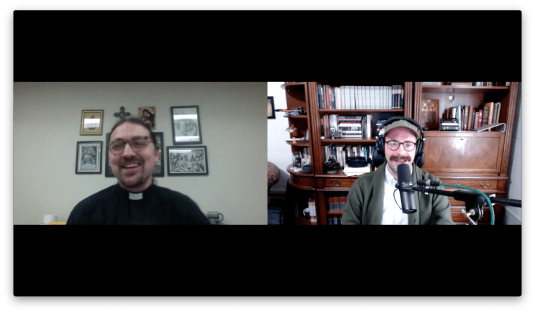
A good friend of mine, Alan Combs, recently started a new podcast called “Shelter In Place.” The idea behind the podcast is to reach out to a variety of people to discover how they are finding comfort in an inherently uncomfortable situation. I love the premise of it all and was thrilled to be invited on for a recent episode.

In it Alan, his friend Joey, and I talked about the challenges of doing ministry in the midst of the pandemic from live-streaming on Sunday mornings, to staying connected with church folk, to what kind of music we’ve been listening to.

If you would like to listen to the episode, or subscribe to the Shelter In Place podcast, you can do so here: Faith In The Time Of COVID


Thirst Trap

Screen Shot 2020-03-09 at 9.53.50 AM

This week on the Strangely Warmed podcast I speak with Alan Combs about the readings for the 3rd Sunday of Lent [A] (Exodus 17.1-7, Psalm 95, Romans 5.1-11, John 4.5-42). Alan is a United Methodist pastor serving First UMC in Salem, VA. Our conversation covers a range of topics including scriptural introductions, Christian Twitter, Old Testament preaching, the wilderness of Sin, the “back in Egypt” committee, MewithoutYou, the best parts of the communion liturgy, faith vs. faithfulness, the living water on the cross, and secret snacks. If you would like to listen to the episode or subscribe to the podcast you can do so here: Thirst Trap

https://www.spreaker.com/user/crackersandgrapejuice/lent-3a

The Grammar of Faith

Genesis 12.1-4a

Now the Lord said to Abram, “Go from your country and your kindred and your father’s house to the land that I will show you. I will make of you a great nation, and I will bless you, and make your name great, so that you will be a blessing. I will bless those who bless you, and the one who curses you I will curse, and in you all the families of the earth shall be blessed.” So Abram went, as the Lord had told him; and Lot went with him.

The people who seem to have it all just drive me crazy. 

Now, you’re good and faithful and kind people so you don’t know what’s its like to feel the way I do, but when people go about parading all of their successes and all of their perfections I just get all sorts of frustrated.

It’s even worse when the people in question are Christians.

These people are the type who get on social media and brag about all the blessings God has showered down on top of them, all the while giving you a tour of their 3.5 million dollar house. 

They are the type of people who, after experiencing some apparently divine miracle, start raking in the dough from the righteous investments and then brag about their vacation home on the other side of the world. 

They are the type of people who make it seem as if being a Christian simply means there are no problems, no fights with spouses, no disagreements with kids, no bills to be paid, no medicine to take, so long as you invite Jesus into your heart.

But what about the other Christians? 

What about the disciple who’s coping with poverty and hunger? What about the family that shows up in church only to get in the car and continue the fight they paused when they pulled into the parking lot? What about the person sitting in the pews week after week feeling less and less sure about this thing called faith?

To be clear: Miracles happen, and the less fortunate can become the most fortunate. After all, Jesus did say that the first will be last and the last will be first. It just seems like sometimes those who go from last to first want to remind everyone that they got there on their own.

Which, of course, is absurd. 

But that doesn’t stop us from consuming it with reckless abandon.

We are suckers for the supposedly self-made fortunes, and the get rich quick schemes, and the take this pill to lose all your fat babble. 

And, frankly, if we want to pour ourselves into those narratives, we are more than welcome to do so, they just don’t have much to do with the Lord.

Back-to-the-Start_LowRes-WebSlide

Every verse in the Bible is important.

That’s why, every week, we read the Word aloud in this space and we affirm the importance of that Word by responding with: The Word of God for the People of God… Thanks be to God. There are, of course, verses in the scripture for which it becomes a little harder to affirm our gratitude for something that appears confounding. But, as Christians, we believe that this book continues to speak new and fresh and good words into our lives, even today.

Every verse is important but (dare I say it?) there are some which are more important than others. What we’ve read today, the call of Abram, though short and to the point, it contains some of the most important words of all: Now the Lord said to Abram…

That might not seem like much, but it is not too strong of a statement to say that the entire structure of our faith hangs upon this foundation that we, at other times, call revelation. Now the Lord said to Abram… If this is something we believe to be true, then everything else falls into place accordingly.

Like most books, we learn to read the Bible in particular ways. Some of us learned this explicitly from a pastor or a Sunday school teacher, and others among us just picked it up along the way. There are a great many ways to read the Word and how we do it can make all the difference.

The two primary ways of coming to the text, of reading it and hearing it, are to do so anthropologically or theologically.

Now, before I lose all of you to the midmorning nap session that can come from using words like the ones I just did, bear with me. All they mean is that we can encounter the Bible as if its all about humanity (and largely only about humanity) or as if its all about God (and largely only about God).

How we read the Bible, and in particular this story near the beginning, is a big deal.

And it comes down to grammar. 

Again, I recognize that I am tempting fate by dragging out such ideas this early on a Sunday morning, on Daylight Savings no less, but the grammar we use in the life of faith communicates more about who we are and whose we are than we recognize

God is the subject of the verb right here at the beginning of Genesis 12. That means we’re not the main characters of the story – God is.

The story of the Bible is, of course, the great tale of God with God’s people’s, but (more often than not) we read it as the story of who we are, and what we’re supposed to do, or not to, and the more we focus on ourselves the less we realize that God is the subject of the verb.

But we don’t like this. 

Not one bit. 

So time and time again we change the grammar. We do it whether we’re lay or clergy, we do it in the pulpit and in the classroom, and the results can be devastating.
hands

I can vividly remember attending a college campus meeting of Christians shortly after moving away from home in which all of the faithful freshman were encouraged to gather together for a worship service in an auditorium. There was a band that played familiar songs, and we said familiar prayers, and this scripture from Genesis 12 was used by the speaker that night. 

She went on and on about how Abram was faithful in traveling to where God sent him. She talked about how Abram is an example to all of us whenever we encounter something new and strange and different. She kept returning to this singular idea that no matter how difficult college life might feel like, all of us had to keep the faith, to stay the course, and to be like Abram as strangers in a strange land.

I know she meant well, and I know that she truly believed in what she was saying, the only problem is most of us were already nervous as it was, and now it felt ten times worse. She left us with this idea that our faith was being put to the test, and that only if we held fast to our moral convictions would we remain, as she put it, sheep of His flock.

It was all about us, and it had almost nothing to do with God.

We, whether we’re college freshman or not, are all functioning narcissists. We think the world revolves around us and we want to know how everything will affect us and we act as if the entirety of the cosmos is resting on our shoulders.

And that is exhausting.

For some reason, bad theology mostly, we think this whole story from Genesis 12 is going to be about Abram as if Abram has special powers or holy characteristics that make him worthy of God’s affections. There had to be something special about Abram that led to God choosing to bless the world through him. 

But, the truth is, we don’t know anything about Abram at this point in the story. At least Noah was a good man when God told him to build the ark, but Abram’s got nothing. All we know from Genesis is that he is the son of Terrah, and his wife Sarai is barren. 

That’s it.

And yet, those skim details are everything! They are everything because these two people carry nothing significant about them or within them. What happens from this point forward is about what God does in the lives of two people who had no potential for anything on their own.

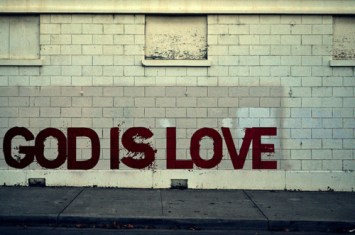
God chooses nobodies to bless the world.
god-god-is-love-lord-love-the-greatest-love-of-all-favim

I don’t know how that makes you feel, but it brings me great comfort. For, if God could bless the world through two people who had no hope in the world, then maybe God can do something even through someone like me.

Or someone like you. 

And, again, notice the grammar. God is the one who blesses the world through Abram and Sarai, not the other way around. God is the one who makes a way out of no way which, incidentally, is the entire story of the Bible.

God promises to do what is impossible for humankind, God calls into existence things that do not exist, God is the subject of the verb.

If it were all on us, if it were all up to us, we would fail. We can’t bless the world because we are far too concerned with blessing ourselves. We can’t fix the world because we are so fixated on our own problems. We can’t redeem the world because we are the ones who need redemption.

We can’t even keep our promises.

But God does. 

Always.

That’s a pretty crazy thing to think about when you hear it for the first time or the thousandth time, it just also happens to be true.

Lenny Duncan is a pastor in Brooklyn, NY at a church that has rapidly grown under his leadership. He is a gifted speaker and is sought after across the country as someone who can speak the truth of the role of church in the 21st century. He wrote a book that I’m reading right now called Dear Church.

But the fact that Lenny became a pastor is a miracle.

It’s a miracle because he had a far greater chance of ending up in prison than behind a pulpit.

He’s a former drug dealer, sex worker, homeless queer teen, and a felon.

He tried church again and again and again when he was younger, and every time he did he left feeling worse than when he arrived. He was told, explicitly and implicitly that he was not enough, that he needed to correct his ways before coming to the Lord, and that he needed to take a good hard look in the mirror to find out if he was really worthy of Jesus’ love.

That only led to more of the same in his life.

Until one day, miraculously, he entered a church just like any other church, sitting in the first pew with a backward cap on, listening to people whisper about him under their breath, but this time he heard something different. Not a different sermon or a different prayer or a different hymn, but a different invitation.

An invitation that felt like an invasion. 

“This is Jesus’ table; he made no restrictions, so come.”

There was no membership meeting, no checking of theology, no “friendly” talk with the pastor before he was invited to the table of grace. He was welcomed simply as he was, and that was revolutionary. 

He describes the moment that he heard those words and walked up the center aisle like this: 

Tears welled up in my eyes as I walked forward… this welcome to the table was something I had never experienced before. I didn’t even know what it was. It awakened the shadow side of my relationship with God that I hadn’t had the courage to look under. It was like a knife that cut instantly through years of shame and brokenness and released me from those bonds. Grace is like a knife sometimes.

That invasion of an invitation changed him forever. It changed him because instead of being invited to change or transform or get his life together, he was invited by a mighty God who works the changes that we couldn’t on our own. 

Right then and there God called him to a new and strange and different life. Not because he had any of the prerequisites or the right schooling or the right amount of faith, but simply because God loves to make something of our nothing. Amen.

Blessed

Devotional:

Matthew 5.3

Blessed are the poor in spirit, for theirs is the kingdom of God. 

On Sunday I left church after a few meetings to swing by the hospital to meet with a sick parishioner. My mind was going over all of the details from Sunday morning as I trudged across the parking lot and was surprised to be greeted with a loud, “Excuse me, Father.” Before looking up I knew that whoever was speaking had confused me for a Catholic priest since I was wearing all black with a white clergy collar, and rather than spending the new few moments trying to explain my protestantism I just said, “Yes?” and then lifted up my gaze to meet the speaker face to face.

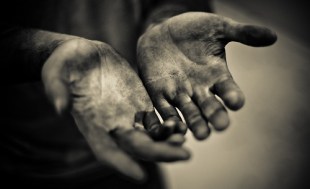
Starring back at me was a heavily bearded and ruffled looking man who was clearly carrying all of his earthly possessions in his ripped and stained backpack.

He said, “Could I bother you for a cigarette?”

I said, “Sorry, I don’t smoke.”

Then he said, “What kind of priest doesn’t smoke cigarettes?”

And I honestly had no idea how to respond, so I just shrugged my shoulders and started back toward the entrance of the hospital. Right before I passed through the doors I heard him yell at my back across the lot, “I wish your God had done more for me!” And by the time I turned around he was gone.

blessed-main-image

This coming Sunday churches across the world will hear some of Jesus’ most powerful words, the so-called Beatitudes. Blessed are those who mourn, for they will be comforted – Blessed are the meek, for they will inherit the earth – Blessed are the pure in heart, for they will see God. Of all the Beatitudes, I think my favorite is, “Blessed are the poor in spirit, for theirs is the kingdom of heaven.” And it was that particular beatitude that I found myself saying over and over while I walked through the hospital. 

We live in a world in which we reward, and are rewarded for, spiritual successes. We lift up and praise those who demonstrate their faith whether it’s showing up in church every Sunday morning, or leading those perfect corporate prayers, or even having certain Bible passages memorized. And all of that is good and fine, except for the fact that Jesus says the poor in spirit, not the strong in spirit, are blessed and the kingdom belongs to them. It’s in weakness that God’s sees strength, and in spiritual poverty that the kingdom of heaven becomes the most real.

I wish I had spent more time with that man in the parking lot, I wish that I could’ve listened to him express whatever it was that was torturing his soul, but mostly I wish I told him something that, probably, would have come as a surprise: 

“God’s kingdom belongs to you.” 

We Are (Not) Accepted

1 Corinthians 1.1-9

Paul, called to be an apostle of Christ Jesus by the will of God, and our brother Sosthenes, To the church of God that is in Corinth, to those who are sanctified in Christ Jesus, called to be saints, together with all those who in every place call on the name of our Lord Jesus Christ, both their Lord and ours: Grace to you and peace from God our Father and the Lord Jesus Christ. I give thanks to my God always for you because of the grace of God that has been given you in Christ Jesus, for in every way you have been enriched in him, in speech and knowledge of every kind just as the testimony of Christ has been strengthened among you so that you are not lacking in any spiritual gift as you wait for the revealing of our Lord Jesus Christ. He will also strengthen you to the end, so that you may be blameless on the day of our Lord Jesus Christ. God is faithful; by him you were called into the fellowship of his Son, Jesus Christ our Lord. 

Do you ever feel like things couldn’t get worse?

Natural disasters across the globe keep ravaging particular communities.

Political discourse and partisan rhetoric are dividing families and friends and churches.

It’s becoming ever more expensive to live and yet wages continue to stagnate.

Things just feel so broken.

Here in the US we are so obsessed with financial gains and economic prosperity that the rich keep getting richer and the poor just get poorer. So much so that we’ve allowed capitalism to become our religion – it is what we worship. And the evils of capitalism, of which there are many, are as real as the evils of militarism and the evils of racism.

We are currently spending more money on national defense every year than we are on all of our programs of social uplift combined – when weapons become more important than people it is clearly a sign of our imminent spiritual doom.

In ways big and small we are perpetuating a culture in which 1 out of every 3 black men can expect to go to prison at some point in their lives – the price that we must pay for the continued oppression of black bodies in this country is the price of our own destruction. 

Now, before we go on, I want to be clear that most of what I just said is not original to me, I didn’t sit down this week and pull those thoughts out of thin air. Most of what I just said actually came from another preacher named Martin Luther King Jr.

Ever heard of him?

bl-martin-luther-king-jr

Across the country, countless students will have the day off from school tomorrow in honor of Martin Luther King Jr. and rightly so. He was a man committed to a vision of the kingdom that others refused to see, and it cost him his life. But one of the things that we forget, here in 2020, is that shortly before his assassination, he was one of the most hated men in the entire country. Though he is remembered as a bastion of freedom and equality, 2/3 of the country opposed his work and words the year before his death.

It’s hard to remember this, for those of us old enough to do so, because today everybody loves Dr. King. Partly because we’ve sanitized his message, and it’s a lot easier to love someone when they’re no longer challenging, and upsetting, the status quo.

It’s easier to love a hero when they’re dead. 

Dr. King was not only an activist for the Civil Rights movement, but was also a frustrating voice to the powers and principalities in regard to the Vietnam War, capitalism, and rampant poverty. 

But we’re far more content with simply remembering his speech about having a dream of a different future. However, that future (which we are still yearning for) is not possible without transformation. His life, and death, is an ever present reminder that things cannot merely remain as they are.

Grace is messy.

1*0I0TcQ7w-DcMEg2v6c1ixA

Each of Paul’s letters begin with a blessing on the recipients of the epistles with “grace”. Even to the famously fractured Corinthians, Paul begins by saying, “Grace to you and peace from God our Father and the Lord Jesus Christ.”

Grace is one of those all too important words in the church and, frankly, it’s a word we throw around all the time without thinking or talking about what it actually means.

Sometimes when I hear about grace, and even when I talk about it, it comes off like some nebulous gas that’s floating around affecting various people as they breathe it in.

Which, to some degree, is true. But grace is about a whole lot more than that.

The arrival of Jesus Christ into the world, mediating a new reality with God and God’s creation is a gift. It is all part of this cosmic plan for unending communion and it frees us from our own slavery to sin and death. It comes in spite of of our earnings and deservings and is made available to all without cost. Grace is, in every sense of the word, a gift. 

We have been gifted with a rescue from something and regathered into something we call communion.

But this gift we call grace runs counter to how we so often think about gifts today. Namely, when we receive something for nothing we almost always respond by immediately planning how to repay the gift. We want to out-gift the gift-giver. We live under the tyrannic rule of reciprocity such that we must always make the scales even again, even if it is outside of our ability.

But in the early church, grace was not about repaying what could not be repaid – grace was a reality. 

It both named the concrete gift of Jesus for the world, along with the generosity of God who sent him. And yet, it was not confined to some idea about who Jesus was, it was a lived reality in and through the ways people lived. 

The early church community gifted among themselves things like food, and money, and clothing, and healing to those who needed it the most. And they did so without keeping some sort of ledger about who owed what – it was simply done and thats it.

So whatever the gathering of Christians looks like today, it is supposed to look like a community of grace.

The gathering of disciples we call church are called to lives of generosity that is so obvious and known that only a God generous enough to give his only Son for an evil and sinful humanity can explain it. 

Grace, understood as such, changes everything, including us.

Or, to put it another way, we can’t remain what we once were.

There’s a lot of talk in the church these days about how God loves you just the way you are. Which, though true, is a denial of the power of grace working in and through us. 

The letters of Paul and the stories of Jesus show us that there is more to grace than simply being accepted for who we are. And, no doubt, we are accepted – after all, grace abounds. But we are now in a kingdom bound by that grace which means we have been changed.

Can you imagine what Martin Luther King Jr. work would’ve have looked like without a call to change? What good is a dream of something new if only we stay committed to the past? 

Here’s where grace gets messy: Grace is a gift, given for free. We don’t have to change or do anything before receiving it. And, we don’t have to do anything or change after receiving it. Paul will remind the good Corinthians about this – grace is less about out need to change and more about how God is already in the business of changing us. 

Were it up to us alone to change, we wouldn’t do it. It is far easier to remain the same and hold on to the old visions of the past than it is to try embarking on a different journey. Our captivity to sin keeps us firmly planted instead of taking steps or leaps of faith. But, thankfully, God will not leave us to our own devices.

God is changing us.

1-cor-web-sermon

Now, if you’re anything like me, we don’t particularly like all this talk of personal development or change. All the “shoulds” and “musts” leave us exhausted. Which is why it’s of paramount importance to remember the the Kingdom of God isn’t conditional. It exists whether we participate in it or not, the empty tomb remains empty whether we change or not. And yet God is using all of the means at God’s disposal to show us that our lives are being reknit, even right now. 

The world, just like us, cannot remain as it is. God won’t allow it. God is faithful, even when we are not. God believes in us even when we can’t. God is working toward a vision of things not yet seen, and God is bringing us along for the ride.

We can resist it all we want, but God is on the move.

Which is all to say that, when properly considered, the kingdom is about more than acceptance. We are at war with the powers and principalities of this world that insist on making the last laster and the first firster. Our King of kings is fundamentally different – Jesus does not rule with an iron fist or with boots on the ground – our King rules from a cross.

What could be messier than that?

I started all of this today with talk of Martin Luther King Jr.’s forgotten quotes. He was radically committed to seeing a different world and, to some degree, knew it would cost him his life. In fact, the night before he was killed he delivered one of his most moving speeches. It was not about securing the right to vote for black individuals, nor was it on dismantling Jim Crow laws, but was actually about establishing a union for sanitation workers in Memphis, Tennessee.

He stood before a packed crowd that night and after speaking at length on the subject at hand he ended it all by saying this:

“Well, I don’t know what will happen now. We’ve got some difficult days ahead. But it really doesn’t matter with me now, because I’ve been to the mountaintop. I don’t mind. Like anybody, I would like to live a long life – longevity has its place. But I’m not concerned about that now. I just want to do God’s will. And he’s allowed me to go up to the mountain. And I’ve looked over, and I’ve seen the Promised Land. I may not get there with you, but I want you to know tonight that we as a people will get to the Promised Land. So I’m happy tonight, I’m not worried about anything, I’m not fearing any man, mine eyes have seen the glory of the coming of the Lord.”

The next day he was dead. 

God’s grace is about being part of a kingdom the world doesn’t want – it’s about how God makes a difference and that difference means we are now different.

The Good News of Jesus Christ is that we have been transformed through the waters of baptism and the meal at the table – we are made new.

God does not accept the current realities of the world, nor does God accept the banalities of evil that run all too rampant. But God believes in us, God will remain faithful, and the kingdom of God is at hand. We will get to the Promised Land.

What a strange and wondrous thing grace really is – for by grace we have been saved, and are being saved, even now. Amen. 

Instant Pot Faith

4d46bf1bb0394b294fab8d3ea3c7ea0b-1024x1024

This week on the Strangely Warmed podcast I speak with Jim Moore about the readings for the 2nd Sunday After Epiphany [A] (Isaiah 49.1-7, Psalm 40.1-11, 1 Corinthians 1.1-9, John 1.29-42). Our conversation covers a range of topics including internet friendships, counting people for the Lord, the burden of purpose, eucharistic time, miry bogs, divine requirements, call stories, acting like we believe what we say, and being surprised by Sunday. If you would like to listen to the episode or subscribe to the podcast you can do so here: Instant Pot Faith


We Didn’t Start The Fire

strangely-warmed-spreaker-header

This week on the Strangely Warmed podcast I speak with Teer Hardy about the readings for Christmas Eve [A] (Isaiah 9.2-7, Psalm 96, Titus 2.11-14, Luke 2.1-20). Our conversation covers a range of topics including breaking yokes, getting political in church, fire on the altar, Bojack Horseman and Fleabag, singing our faith, making connections, David Bentley Hart, redemptive justice, and loneliness in a connected world. If you would like to listen to the episode or subscribe to the podcast you can do so here: We Didn’t Start The Fire

Screen Shot 2019-12-17 at 3.14.07 PM

Believing Is Seeing

Jeremiah 32.1-3a, 6-15

The word that came to Jeremiah from the Lord in the tenth year of King Zedekiah of Judah, which was the eighteenth year of Nebuchadnezzar. At that time the army of the king of Babylon was besieging Jerusalem, and the prophet Jeremiah was confined in the court of the guard that was in the palace of the king of Judah, where King Zedekiah of Judah had confined him. Jeremiah said, The word of the Lord came to me: Hanamel son of your uncle Shallum is going to come to you and say, “Buy my field that is at Anathoth, for the right of redemption by purchase is yours.” Then my cousin Hanamel came to me in the court of the guard, in accordance with the word of the Lord, and said to me, “Buy my field that is at Anathoth in the land of Benjamin, for the right of possession and redemption is yours; buy it for yourself” Then I knew that this was the word of the Lord. And I bought the field at Anathoth from my cousin Hanamel, and weighed out the money to him, seventeen shekels of silver. I signed the deed, sealed it, got witnesses, and weighed the money on scales. Then I took the sealed deed of purchase, containing the terms and conditions, and the open copy; and I gave the deed of purchase to Baruch son of Neriah son of Mahseiah, in the presence of my cousin Hanamel, in the presence of the witnesses who signed the deed of purchase, and in the presence of all the Judeans who were sitting in the court of the guard. In their presence I charged Baruch, saying, Thus says the Lord of hosts, the God of Israel: Take these deeds, both this sealed deed of purchase and this open deed, and put them in an earthenware jar, in order that they may last for a long time. For thus says the Lord of hosts, the God of Israel: Houses and fields and vineyards shall again be bought in this land. 

We will be watching you.

This is all wrong. I shouldn’t be up here. I should be back in school on the other side of the ocean. Yet, you all come to us young people for hope. How dare you! You have stolen my dreams and my childhood with your empty words, and yet I’m one of the lucky ones. People are suffering. People are dying. Entire ecosystems are collapsing. We are in the beginning of a mass extinction and all you can talk about is money and fairytales of eternal economic growth. How dare you!

For more than thirty years the science has been crystal clear. How dare you continue to look away. And come here saying that you are doing enough when the politics and the solutions needed are still nowhere in sight. You say you hear us and understand the urgency. But no matter how sad and angry I am, I don’t want to believe that. Because if you really understood the situation and kept on failing to act then you would be evil, and that I refuse to believe. 

You are uncomfortable with all the figures because you are still not mature enough to tell it like it is. You are failing us. But young people are starting to understand your betrayal. The eyes of all future generation are upon you. And if you choose to fail us, I say we will never forgive you. 

GettyImages_1170459426.0

16 year old Greta Thunberg addressed the UN Climate Action Summit this week and spoke those words to leaders from across the globe. She did so passionately and unflinchingly for all to see and hear.

The next day Robert Jeffress, a megachurch pastor in Texas, got on the radio to express his disappointment in Thunberg’s address. He said, “Somebody needs to read poor Greta Genesis Chapter 9, and tell her the next time she worries about global warming, just look at a rainbow. That’s God’s promise that the polar ice caps will never melt and flood the world again.”

The text read to us today from the prophet Jeremiah is long and full of interesting details. There is a lot regarding the legal rights to property to be held within families, there’s the proper procedure for procuring said property, there is even the naming of particular places and people that feel almost too specific, even for the Bible. 

But the entirety of the passage boils down to one simple thing: Jeremiah was a foolish realtor.

I mean, the whole scripture is bizarre. Jerusalem is under siege, and Jeremiah has already noted that Jerusalem will fall to Babylon and that King Zedekiah along with the people will be exiled as strangers in a strange land. Also, for what it’s worth, Jeremiah is in prison! He got locked up for declaring the time had come to put down the weapons and surrender to Babylon. Which, when the ruler was as megalomaniacal as Zedekiah was, was treated as treason. And Jeremiah chooses this moment, weird as it may be, to buy piece of land that is quite literally in the process of being taken by someone else.

So, I guess it really isn’t all that simple.

Jeremiah for reasons often beyond our ability to understand maintains a tremendous faith in the God who first called him to the task of being a prophet. While everything screamed the contrary, Jeremiah declared the steadfastness of God and implored people to see what exactly was going on. 

What Jeremiah could see, and what so many others couldn’t, was that while the destruction of Jerusalem would mean the end of all they knew and understood, it did not mean that God had abandoned them or that God had lessened God’s connection with God’s creation. 

They would always be God’s people no matter where they were and no matter how bad things became. Later Jeremiah will write a letter to the exiles as they begin seeking out what it will mean to live in a strange new world and the prophet will give them simple instructions: till the soil, marry and bear children, worship the Lord and celebrate together, for God is still God no matter what.

But what about the land that Jeremiah bought? What good was his money on wasted soil?

Redeeming the land, as scripture puts it, was not an act of foolish hope or ignorance of the obvious. Procuring the land was a sign act to the faith Jeremiah had for the future of God’s people and God’s promises. And that even in the present, God is present in catastrophe.

Which, in the end, is what the life of faith is all about. It’s about believing in impossible things, and then seeing they weren’t really impossible to begin with. It’s about believing in things not yet seen and being part of something that helps those unseen things become seen. 

In short, it’s being able to look out at a bunch of powerful and wealthy individuals knowing that their own interests have led to the imminent destruction in their midst and hoping against hope that they will hear what you are trying to say, that they will begin to shift their lives around, and that something new and beautiful can come out of their nothing.

Faith gets knocked around in the world a lot, and often for good reason. Christians have, at times, acted in ignorance of facts and figures to be moved instead by charismatic individuals who, notably, Jesus warned about during the gospel narratives. Christians have absolutely been responsible for reprehensible behavior in the world and we often brush it aside as if nothing happened.

But one of the things about the life of faith we often ignore or forget about is the willingness to open our eyes, as Jeremiah would have us do, to what has happened and is still happening with a willingness to accept responsibility. We can, of course, always look to the past and deny any wrongdoing on our own part. It’s become an all too common refrain these days, “It’s not my fault that my ancestor owned slaves,” Or, “I shouldn’t be punished for what happened to the native peoples in this country.” And yet scripture reminds us again and again and again that we, today, are not paying for the sins of our parents but for our own. This problems of the world are as much on us as they are on anyone else, now or ever.

And that is why Jeremiah is called the weeping prophet. He knew and saw and believed the truth about the people in his midst in ways that we still deny and ignore and disbelieve. It brought him to tears knowing that the people willfully choose to disobey the one in whom they moved and had their being. He wept as mothers and fathers and children were dragged off into exile leaving behind the city of Jerusalem in ruins. He wept because they refused to believe the truth.

For many years I affirmed the common expression “Seeing is believing.” And why not? I wanted proof and evidence before and prior to making an assertion of something’s relevance. And for most of my life that’s been fine to some degree. But we are all now living in a time when seeing isn’t even part of the equation. 

People and pastors like Robert Jeffress can speak of people like Greta Thunberg as if they are the ones who are ignorant of God’s movements and motives in the world. And people lap it up! They show up week after week to receive more of it because it grants them permission to keep closing their eyes to the truth around them. They are like staff on a boat telling everyone they have nothing to worry about even though there’s a gaping hole in the bottom of the boat taking on water. 

Believing-Is-Seeing-Large

And then people like Greta Thunberg stand with the courage like Jeremiah to say and do what others can not and will not. When I watched her speech this week, with all of her passion and energy and conviction, the thing that stayed with me most was her unwillingness to see others as evil. Talk about faith!

Because many of those people, and the people they represent, are categorically evil! They choose profits over people, they care about the short-term instead of the long-term, and they have drunk themselves silly with deniability about what they have done to the world. 

Greta Thunberg knows what those people do and what they care about. She knows they’ve denied the truth going on 3 decades, she knows that their interests and beliefs do not match her own, and she knows that many, if not most, of them will return to business as usual as if nothing happened.

She, like all prophets, know what we human being are really like. We choose the things we know we shouldn’t and we avoid doing the things we know we should. At the end of the day, for most of us, it doesn’t matter how many numbers and figures are placed in front of us, whether it has to do with racial profiling in this country, or the overwhelming advantage of white privilege, or CO2 emissions, we will continue to see whatever it is we want to see.

Or, to put it another way, we will act according to whatever narrative requires the least of us.

But Jeremiah believed what he could not see! He didn’t wait until the people changed their behavior, he didn’t delay until the right statistics started showing up. No, Jeremiah believed in impossible things. He believed that God would make good on God’s promises. He believed that when the time came the people would see how far they had strayed from the Good News of God’s purposes and would return to the Promised City a renewed people. 

That’s the difference between the prophet Jeremiah and someone like Robert Jeffress. Jeffress believes that God will not flood the world again like God did during the days of Noah. And we shouldn’t either. God hung up that rainbow as a promise that God would never do that to God’s creation again.

But that’s exactly the problem! God isn’t doing this global warming to us, we are doing it to ourselves! We’re drunk with petroleum and fossil fuels and unmonitored emissions. We’re writing checks that our ecosystems can’t cash. We’re walking around blind to how much our actions are fundamentally rewriting the very fabric of the planet. 

But God has not and will not abandon us. God lifts up ordinary people like Greta Thunberg and speaks a prophetic word through her to all with ears to hear. She has no reason to believe that the people listening will heed the call and change their ways. But she keeps going anyway. Christ too had no indication that the words he used and the actions he offered were dramatically reshaping the lives of the people who followed him. In the end he was all alone. But Christ still died for the ungodly. 

Faith is believing in things you cannot yet see, and then one day seeing what you believe.

Amen.