Devotional – 1 Peter 5.6

Devotional:

1 Peter 5.6

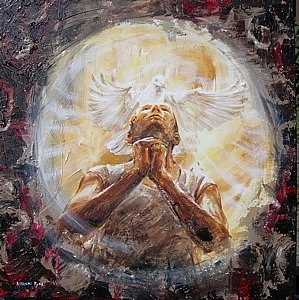
Humble yourselves therefore under the mighty hand of God, so that he may exalt you in due time. 

Weekly Devotional Image

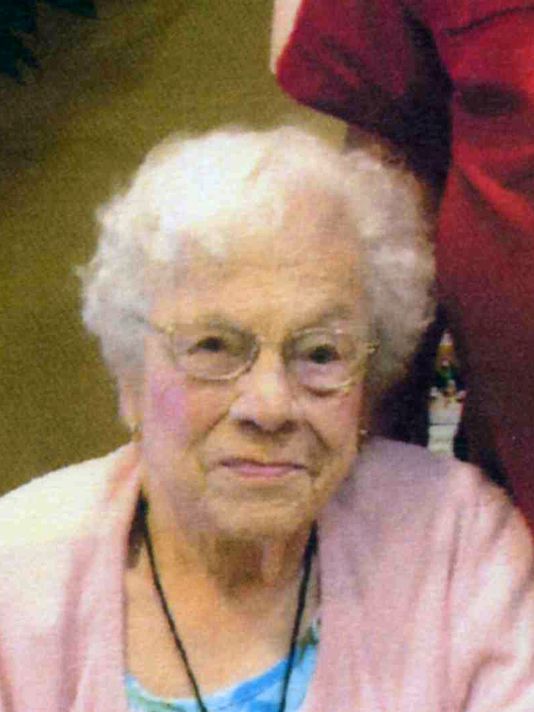
I got the phone call on Thursday afternoon letting me know that Mrs. Betty Lancaster had passed away. Sitting on my couch at the parsonage I realized that I have been at St. John’s for nearly a year and this phone call meant that I was going to preside over my first funeral. I got to the Lancaster’s room at Brightview Baldwin Park as quickly as I could and I sat with the grieving family as they accepted the fact that Betty was gone.

Betty Lancaster

Betty Lancaster

Over the weekend I met with the family on different occasions learning more about the kind of life Betty lived in order that I might do justice to her life during the funeral service on Monday afternoon. The family shared with me particular stories about her life; her love to travel, her expertise in the kitchen, and her dedication to instilling important family values. I heard about how she and Ray met on a Greyhound bus on their way to Radford/Blacksburg, and how their marriage of 63 years began in a service station here in Staunton when a clerk from the court met with them to preside over their martial vows.

I made phone calls to a few of Betty’s friends that still live in the community who confirmed the family’s belief that she was one incredible woman, ready to do whatever it took for others. The more I learned about her life, the more I wished I had been able to spend more time with her myself. 

But the one thing that stuck out among all the other details was a simple comment that Ray made as soon as I made it to his room after Betty died. Sitting in his chair, barely looking up from his lap, he softly said, “To us, Betty was always a star, but she never went in for all the glitz and the glamour.

submission-to-God-500x333

Humility is a lost art in our current culture. With the need and the drive to outshine everyone else (whether for employment, college applications, or just selfish desire) we no longer appreciate the importance of remaining modest. Life, at times, seems like one giant competition where we have to make sure that we come in first place. However, the kingdom of God is not like the world we live in. Instead of cutthroat competition dominating everything we do, we are called to humble ourselves under the mighty hand of God, so that he may exalt us in due time. In life we will have opportunities to shine for God, but we must remember that when we do our best, we do so for the kingdom of God and not ourselves.

The call of discipleship today is to live like Betty Lancaster did, which is to say we are called to live like Christ did; ready to listen, prepared to love, and humble in all that we do.

Getting Stoned With Stephen – Sermon on Acts 7.54-60

Acts 7.54-60

When they heard these things, they became enraged and ground their teeth at Stephen. But filled with the Holy Spirit, he gazed into heaven and saw the glory of God and Jesus standing at the right hand of God. “Look,” he said, “I see the heavens opened and the Son of Man standing at the right hand of God!” But they covered their ears, and with a loud shout all rushed together against him. Then they dragged him out of the city and began to stone him; and the witnesses laid their coats at the feet of a young man named Saul. When they were stoning Stephen, he prayed, “Lord Jesus, receive my spirit.” Then he knelt down and cried out in a loud voice, “Lord, do not hold this sin against them.” When he had said this, he died.

the-stoning-of-stephen

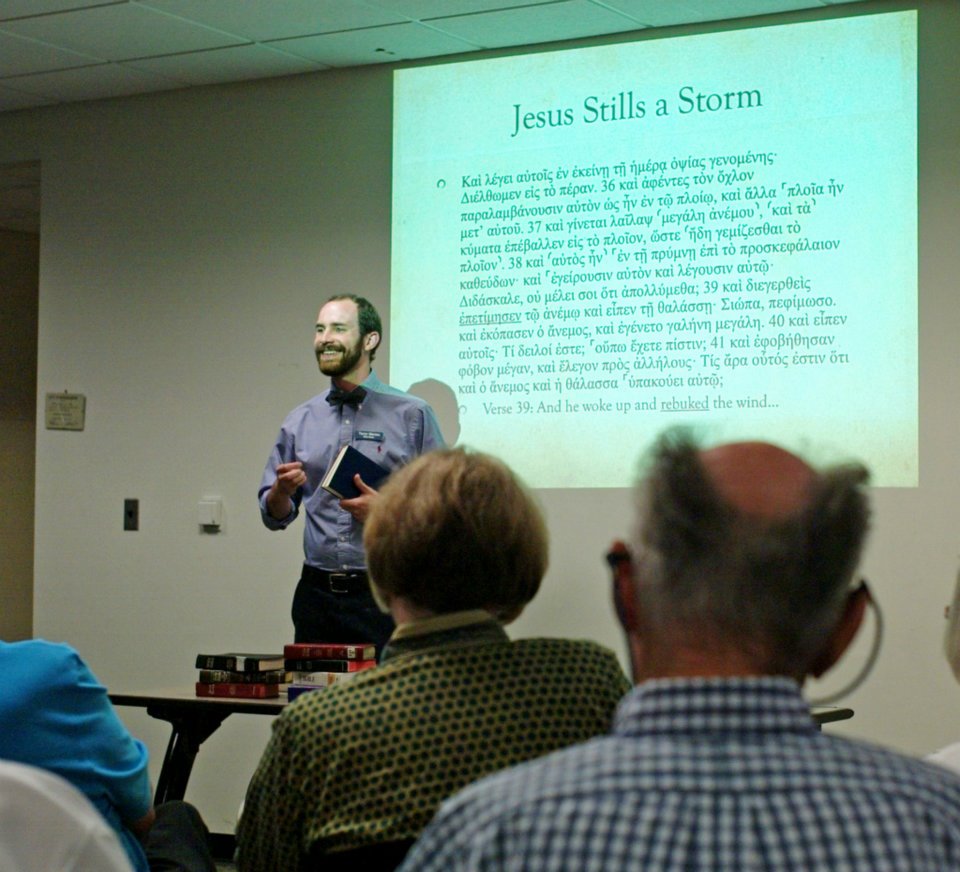
I was standing in front of a packed lecture hall, talking about Jesus according to the gospels, when I began to notice that the crowd was turning against me. For the previous three weeks I had stood in the front of that same room, a brilliantly bright powerpoint displayed on the screen behind me, making my way through the original Greek text of the gospel according to St. Mark. Each week we focused on a different element of Mark’s writing, comparing his gospel with the others, and generally reflecting on how this gospel still speaks fresh and new words into our lives.

It had seemed as if everyone was on board with what I was talking about, until the conversation moved to the cost of discipleship. I recognize now that I probably went to far, but at the time I felt the truth was worth exploring.

531711_3548371078945_1217125254_n

This is what I said: “In the gospels, particularly Mark, Jesus makes it very clear that following him, taking up our own crosses, being a disciple, will cost us our very lives.” Many people in attendance nodded. But then I continued, “Most of us here have no idea what that means. We sit in the comfort of our homes here in Michigan, sure we hear about all the bad things happening in the world, and even the bad things happening down the road in Detroit, but our lives will never be taken for our faith. We exist in such comfort with our faith that we can no longer even imagine what it would mean to give our lives for Christ, the cost of discipleship for us doesn’t cost very much at all.” “Well excuse me young man,” one of the women began, “but I go into downtown Detroit every week to serve food and give away clothing. My life is on the line for Christ every seven days. Don’t lecture me about the cost of discipleship.” This is when I should have stopped, apologized, and moved on, but I couldn’t help myself. So I asked her, “Do you go downtown every week because you believe thats the most and the best you can do as a disciple? Or do you go downtown with food and clothing every week because you feel guilty?


The early church had a problem. While the disciples were increasing in number, an argument developed over the distribution of food. Like us modern Methodists, a major conflict erupted not over proper theology, or reverence, but instead who was getting the appropriate amount of food. The twelve got together and asked for seven leaders to come forward in order to help with the organization of the early church, and to faithfully distribute the food among all the people. Stephen, described as a man full of faith and the Holy Spirit, was one of those chosen seven. 

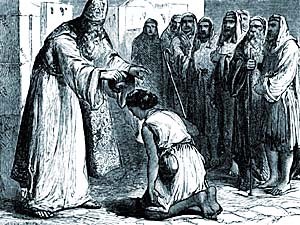
In a short amount of time Stephen began to do great wonders and produce signs among the people. Once he stepped into the limelight of the early church, he rested under the microscope of many leaders and elders of the synagogues who argued with him. The leaders instigated some others to raise charges of heresy against Stephen and he soon found himself standing before the high-priest in order to defend his words and actions.

What followed is one of the most concise and deliberate retellings of the entire salvation story of God with God’s people. Stephen’s speech contains remembrances of Abraham, Isaac, Jacob, Joseph, Moses, and the prophets. He weaves the story in and out of the major moments; the beginning of the covenant, the flight to Egypt, Moses’ calling, the delivery from slavery to the Promised Land, the commandments being given on Sinai. In just a few short paragraphs Stephen perfectly encompassed the Old Testament for the high priest.

Though very descriptive, Stephen committed no blasphemy in his speech. He fairly repeated that which we have detailed for us in the scriptures, but before he finished speaking he had one final message to deliver: “You stiff-necked people, uncircumcised in heart and ears, you are forever opposing the Holy Spirit, just as your ancestors used to do. Which of the prophets did your ancestors not persecute? They killed those who foretold the coming of the Righteous One, and now you have become his betrayers and murderers. You are the ones that have received the law as ordained by angels, and yet you have not kept it.

It was only after hearing these words that the people became enraged and ground their teeth at Stephen. While they began to torment him, he looked up and saw the glory of God and Jesus standing along the right side, and he declared this triumphantly to the people. But instead of listening, instead of looking up to see what he could see, they covered their own ears and with a loud shout rushed forward to grab him and take him out of the city. While they stoned him, he prayed, “Lord Jesus, receive my spirit.” And with his final breath he cried out in a loud voice, “Lord, do not hold this sin against them.” When he had said this, he died.

saint-stephen-the-martyr-23

Stephen’s speech to the high priest and those gathered sealed his doom. Did he speak the kind of blasphemy against Moses and God like he was accused of? Nope. But Stephen went too far when he claimed that Jesus was at the right hand of the Lord, ready to rule. Stephen merely affirmed the same thing we claim every week when we stand and affirm the Apostles’ Creed, yet when he did it, it cost him his life. 

Some scholars and theologians claim that the climax of this episode in the book of Acts is Stephen’s death, when in fact the defining moment is the exaltation of Christ. Surrounded by his accusers and killers, Stephen continues to assert that Jesus is sitting at the right hand of God, that he is the long awaited Messiah already changing the world.

Jesus is there with Stephen at the final moments of his life, and how fitting considering the fact that Stephen utters the same words that Christ did at his own death. While the stones were flying through the air, Stephen’s prayer was not for deliverance, but a declaration of trust. Not, “Lord, save me!” but “Lord, receive my spirit.” His prayer is one that looks forward, not backward. His prayer was for his enemies, and not himself.

At his death, Stephen did what all of us are called to do in every moment of our lives: he acted like Jesus. He was serene while everyone else was going crazy; he was forgiving while the crowds were vindictive; he prayed while the people acted as if God was not among them; he loved when he saw nothing but hate; he trusted the Lord when everything was claiming the contrary; he kept on hoping when there seemed nothing left to keep hope alive. All of this to tell the truth to the high priest and the crowd. All of this to die for what he believed in. All of this as the cost for his own discipleship.

What happened to Stephen is paradigmatic for what the church was like. Thousands upon thousands of Christians have given their lives in order to speak the truth of God’s reign in the world.

In the United States we have “freedom of religion.” This was instituted during the foundation of our nation and has secured the right to practice religion, regardless of orientation or denomination. For Christians, the freedom of religion means that we are free to exercise our faith in whatever ways necessary so long as we do so within certain limits, as long as we do not become fanatical. We can pray as a family at public restaurants so long as it is not too loud to disrupt the other patrons. We can teach our children to turn the other cheek and love their enemies so long as we are still willing to let them serve in the military. We can talk about controversial issues in church so long as we limit those conversations to this building.

Yet the story that we read today, the remembrance of Stephen’s final moments, reminds us practitioners of polite, civil, and calculated religion that once there were Christians who readily and joyfully parted with possessions, family, friends, even life itself to remain faithful.

Some might call Stephen fanatical and crazy (after all he was willing to give his live for his faith) but he is presented as a very rational person who died for the same faith by which he lived.

When I stood in front of that crowded lecture hall, talking to the Methodists of Birmingham, Michigan, I could sense their desire to be affirmed in their faith. They wanted me to believe that they were willing to give their lives for Jesus, but the truth is, most of them, and most of us here, will never be in a situation like Stephen’s. Christianity has become so complacent and accepted within our culture that we no longer feel the need to be radical and controversial when considering the ways of the world versus the ways of God.

Our faith used to be a movement. The early church used to be attacked, arrested, and silenced for their dedication to the Word. The first methodists used to be ridiculed for their methodical dedications to spiritual disciplines, feeding the poor, and befriending the outcasts.

What would it take for someone to ridicule you in your faith? I’m not saying that we are all called to stand trial for our God and give our lives like Stephen, but instead we need to ask ourselves if we are living up to the potential of faith that God sees in us.

Not all of us can be Stephens, but we can all be Christians. We can all speak the truth of what God has done for us. We can reclaim our commitment to changing the world for the kingdom of God. We can discover our faith in God by opening our eyes to the kind of faith that he has in us. How far would you go to demonstrate your faith in the world? What would it take to start ruffling people’s feathers here in Staunton by living as Christ’s body?

Speaking the truth can be the most difficult thing in the world, but at the same time it can also be the most faithful thing in the world. Perhaps you know someone who has, for too long, relied on alcohol to fill an emptiness in their lives but you’re too afraid to saying anything. Maybe you know someone who treats their spouse horribly and you’re unsure how you can help the situation. Perhaps you’ve seen someone embarrass or harass their children in public. Or maybe you need to be honest with yourself about something you need to change in your own life.

Stephen was willing to speak the harsh truth to a people who desperately needed to hear it. Stephen was prepared to give his own life for a man he barely knew that died on a cross and was raised again. How far are you willing to go? Amen.


Devotional – Psalm 31.3-5

Psalm 31.3-5

You are indeed my rock and my fortress; for your name’s sake lead me and guide me, take me out of the net that is hidden for me, for you are my refuge. Into your hand I commit my spirit; you have redeemed me, O Lord, faithful God. 

Weekly Devotional Image

I love making scripture jokes. This is not to say that I believe scripture is a joke, I just love to drop lines from the Bible in daily conversation in such a way that it will make people smile, chuckle, and (rarely) laugh. While in seminary this became commonplace among my friends and we always tried to out-do one another.

For example: I would ask what time a lecture was supposed to start and someone would reply “about that day or hour no one knows, neither the angels in heaven, nor the Son, but only the Father” (Mark 13.32)

normal_LaughingJesus

Behind every joke was a knowledge of scripture that allowed one of us to use verses whenever we needed to. We did not sit around in the library memorizing specific verses to use as we saw fit, but instead we so steeped ourselves in God’s Word that they naturally became a part of our regular conversations.

Becoming a Christian is like learning a new language. In order for us to learn the language of faith we must become immersed in the cultural practices of lived Christianity. Over the last century scripture has been relegated to the private sphere of our lives, resulting in the biblical illiteracy so very apparent in churches today. To rediscover the vibrancy of faith, we have to return to the beauty of the Word as it becomes our new language; not just by memorization, but by appreciation.

512ifkGrOGL

Jesus knew his scripture. If you read through the 4 gospel accounts it becomes very apparent that Jesus used phrases and images from the prophets and the psalms in his daily life. Moreover, while hanging on the cross Jesus cried out, “Into your hands I commend my spirit” using the same words from Psalm 31. If we are to be a holy people, then recovering the beauty of scripture for our lives rests at the heart of the future of the church.

Perhaps using scripture in ironic and joking ways is not the best way for learning the language of faith, but its a start. Let us all learn to take the time to value scripture, let it soak into the fabric of our lives, and become incarnate in the way that we live out God’s Word in the world.


The End Has No End – Easter Sermon on Mark 16.1-8

Mark 16.1-8

When the sabbath was over, Mary Magdalene, and Mary the mother of James, and Salome brought spices, so that they might go and anoint him. And very early on the first day of the week, when the sun had risen, they went to the tomb. They had been saying to one another, “Who will roll away the stone for us from the entrance to the tomb?” When they looked up, they saw that the stone, which was very large, had already been rolled back. As they entered the tomb, they saw a young man, dressed in a white robe, sitting on the right side; and they were alarmed. But he said to them, “Do not be alarmed; you are looking for Jesus of Nazareth, who was crucified. He has been raised; he is not here. Look, there is the place where they laid him. But go, tell his disciples and Peter that he is going ahead of you to Galilee; there you will see him, just as he told you.” So they went out and fled from the tomb, for terror and amazement had seized them; and they said nothing to anyone, for they were afraid.

resurrection-bonnie-bruno

In the cool of the morning, when everything seems perfect and still, the three women made their way to the tomb. They were carrying spices to anoint his body and as they walked the sun began to rise and the dew held gently to the plants and flowers along the path. I imagine the women, still in shock from the crucifixion, walking silently in a single file line, all caught up in their own thoughts; “Why did he have to die?” “Where have all the other disciples gone?” “I’ve seen him save so many others, but why not himself?

At some point, however, a conversation began between them, “Who will roll away the stone for us at the entrance to the tomb?” Yet, when they arrived, the large stone had already been rolled back. Perhaps with fear already beginning to brew within their hearts, they entered the tomb to discover a young man, dressed in white, sitting off to the side; and they were afraid. The stood shaking before the young man when he said, “Do not be afraid; you are looking for Jesus of Nazareth, who was crucified. He has been raised; he is not here. Look there is the place where they laid him. But go, tell his disciples and Peter that he is going ahead of you to Galilee; there you will see him, just as he told you.” Immediately the women went out and fled from the tomb, running for their lives, because fear and amazement had seized them; and they said nothing to anyone, for they were afraid.

women-arriving-at-the-tomb_he_qi_1999

Easter is, without a doubt, my favorite day of the year. Growing up I used to look forward to the Easter Egg hunts, the gathering for a meal at my grandmother’s house, and singing those great hymns in church. At home, Easter was a big deal. The church was always immaculately decorated with lilies and flowers of all colors, the women wore their favorite spring dresses, and the men even dared to wear ties with splashes of color. During the week leading up to Easter a large tomb would be placed on the church’s front lawn so that from Good Friday to Easter Sunday two men dressed as Roman Centurions would guard the tomb as people drove by. I remember with great joy the year I was finally tall enough to wear one of the costumes and stand out front.

169_1010929804499_155_n

One year, the pastor called me before Easter and asked for my help with the Sunrise service. “Taylor, we are going to have our sunrise service on the lawn. I want you to get here before anyone else, dressed as the angel in the tomb. There will be a fog machine in there and when I say the words “He is Risen” I want you to turn it on, so that when the time comes you will exit the tomb and tell all of the people gathered that Christ has risen and gone on to Galilee before them and so on.”

I was so excited. I arrived at the tomb while it was still dark outside, clothed in white with angel’s wings attached to my back. I knelt down in the tomb and waited. I could hear people gathering outside, exchanging pleasant Easter greetings as the sun began to rise. When the sermon started I patiently waited by the Fog machine, and when I heard the words, “He is Risen” I turned it on.

The only problem was, I turned it on too early. The tomb, being small and closed, filled with smoke rather rapidly. I tried as hard as I could but I began to cough and feel claustrophobic. I can only imagine what it looked like to the people outside: a make-shift tomb that coughed and had smoke billow out from the sides.

Without the help of light I could no longer see anything as I was covered with the thick smoke, when finally the pastor knocked on the tomb and I came out. Instead of a glorious angel glowing in white robes proclaiming the resurrection of the Lord, I tumbled out of the tomb, slipped in the mud, coughed a number of times, forgot my lines, made up something about the glories of God our king, and then quickly jogged off the lawn toward the church building. I was so nervous that in ruining the sunrise service, everyone would have laughed at me and the spectacle I had made, but the truth is, they all just stared at me with bewilderment and fear.

The story of Easter is one that we tell year after year. For centuries this story among all the others is the one that has so captivated the hearts, minds, and souls of Christians. Whether proclaimed from an elegant pulpit, or with the fumbling of an angel covered in smoke, this is a message that can both excite and terrify. The beauty of the story is in the details that open our eyes to the magnificence of God’s resurrected Son, and what it means for us.

We begin with the women who show how love does not end with death. Whereas the other disciples had abandoned the great mission to serve their Lord, these three women loved Jesus beyond the end. They marched to the location of the tomb with heavy hearts, but hearts that still loved the one that had died.

They question how they can enter the tomb with the stone still blocking the entrance. Their question is not answered by earthly means, no one gathers at the entrance to roll the stone away for them. But God had an answer; God always has an answer to the impossible. When they arrive, the stone has been rolled away.

7028203zoomed

Inside they are frightened to discover a young man dressed in white who uttered three of the most powerful words to have ever been spoken: “He is risen!” Everything that followed after this proclamation, the church of Acts, the growth of Christianity throughout the centuries, even all of you gathered here this morning bear witness to the power and transformation of the resurrection itself.

Without the resurrection, all of this is meaningless. If Jesus did not break forth from the grave, if he did not return in the flesh to share bread with his friends, if he does not appear with us through the Holy Spirit than he would have died like any other human. The resurrection changed, and changes, everything.

Christ broke out of the tomb, he destroyed the chains of death, and turned the world upside down. We cannot limit what God can do, not even in death. The women’s fear is therefore perhaps the most appropriate response to this immeasurably Good News.

The tomb was empty and the body gone. This is completely contrary to what the women expected, and anticipated. The resurrection is something totally and utterly new, something all-together without precedent, something that stuns and shocks and stupefies with its inexplicable power.

The angel tells the women, “look, there is the place where they laid him. But go, tell his disciples and Peter that he going ahead of you to Galilee; there you will see him, just as he told you.” Jesus has gone before his friends and disciples to the familiar Galilee of ordinary life. For centuries people have met God in the routine of life, our God is one on the move continually searching and waiting for us. God cannot be confined to the tomb of our limited expectations, but breaks forth in an exciting and dynamic way, out there on the move, reaching the hearts and minds of countless people. Our lives have been illumined by the triune God who lived and died and lived again.

So the women went out and fled from the tomb, for terror and amazement had seized them; and they said nothing to anyone, for they were afraid. What a very strange way to end the Gospel. The news of God’s great resurrection caused the women to run away as fast as they could from the scene in fear. Many people have debated about whether or not this is the true ending, because it doesn’t feel like one. Maybe the last page of Mark’s gospel was accidentally ripped out, or he died before he could finish it. Maybe this is just an unfinished story.

However, I believe there is something profoundly wonderful about this conclusion of the story, precisely because it has no end. The Gospel of Jesus Christ, the Son of God, is always unfinished. There is an unwritten page left for each of us to write, to record the many glorious and joyful things that Jesus has done for and through us. 

2b8baa26a479d6fd19ef0caaa3e988a1

I love this ending because the end has no end! Like the women at the tomb, the young man in white has called us to look on the places where we have buried those whom we love and recognize that the end has no end. We await our joyful reunion with all who have gone on to glory because Christ’s resurrection has become our promised resurrection. God’s story is not over because we have now become characters in the narrative. We take up where Mark’s gospel stops.

Can you imagine anything more wonderful than this? Can you imagine anything more perfect or beautiful than the resurrection of the dead? Can you imagine what joy springs forth from this immeasurably gracious gift? Actually we can scarcely begin to imagine it, for it does not come from our imaginations, but from God almighty.

My friends, today we are gripped with joy and fear. God has exceeded all of our expectations by raising his Son from the dead. God has opened up a new realm of understanding, God has defeated death, God has made himself available to you and me, God has not left us to wander through life alone but is with us in everything that we do.

At this table we get a heavenly foretaste of whats to come. Here at the table we meet God and one another through the bread and the wine. This fellowship is but the beginning of our eternal relationship and participation with God. This table is where heaven and earth meet. This table is where we discover the depth of the resurrection, here we see Christ’s sacrifice and recognize that it has been done for us.

Easter isn’t perfect. For some, it creates more questions than it provides answers. For the women at the tomb it was scary and astonishing. For the church folk gathered together when I bumbled out of the fake tomb it was strange and bizarre. Easter can both excite and terrify. After all, we’re talking about the incarnate God being resurrected from the dead. Easter is all about shattering our expectations of how the world works. Easter is the incredible moment where everything changed forever. Easter is the event the opened up an entirely new realm of possibilities for God’s creation. Easter is about God making all things new.

Where are you in your life right now? Are you looking for a little more clarity about what your world is supposed to look like? Has life lost the wonderful spark that used to bring a smile to your face everyday? Are you afraid of what tomorrow might bring?

Then let the resurrection shine brilliantly in your life today. Open your eyes to the incredible wonders of God’s actions in the world. Hear the story of Christ’s resurrection and believe that this has been made possible for you, no matter who you are, no matter what you’ve done, and no matter what you will do.

Jesus came alive so that we could come alive. Don’t let Easter just be a day that you look forward to, let it be something you experience right now.

What we read today is the end of Mark’s gospel, but the resurrection means that the end has no end. That is the Good News.

He is risen! Hallelujah!


Believing Is Seeing – Good Friday Homily on Mark 15.33-39

Mark 15.33-39

When it was noon, darkness came over the whole land until three in the afternoon. At three o’clock Jesus cried out with a loud voice, “Eloi, Eloi, lema sabachthani?” which means, “My God, my God, why have you forsaken me?” When some of the bystanders heard it, they said, “Listen, he is calling for Elijah.” And someone ran, filled a sponge with sour wine, put it on a stick, and gave it to him to drink, saying, “Wait, let us see whether Elijah will come to take him down.” Then Jesus gave a loud cry and breathed his last. And the curtain of the temple was torn in two, from top to bottom. Now when the centurion, who stood facing him, saw that in this way he breathed his last, he said, “Truly this man was God’s Son!”

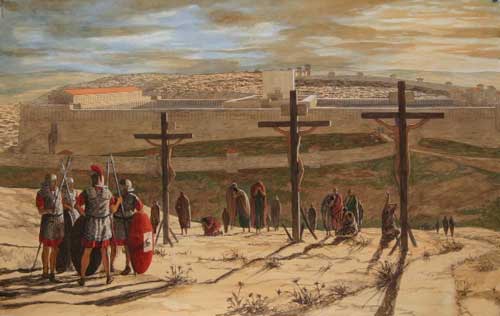
CrucifixionBaloghWeb

This is a day unlike any other. In the entire history of the world there has been nothing quite like what we remember today, and there will never be anything quite like it in the future. Millions upon millions of people have been killed unjustly and prematurely; but only this death has to do with the salvation of the world.

Look around at those who have gathered together with you tonight. Most people, of course, are not here. They are out doing what they do on any ordinary Friday night – dancing, drinking, eating, driving, laughing, loving. It has always been like this…

When Jesus was marched up to the place called Golgotha, which means the skull, most people did not even notice. Crucifixion was such a common activity that people were conditioned to avert their gaze from the bodies hanging on crosses. Many people were preoccupied with their own problems, which might help to explain why Jesus was so abandoned by his closest friends.

So, on this strange night, a night unlike any other, we gather together to remember the death of a man who was, and is, God in the flesh.

dogcollar

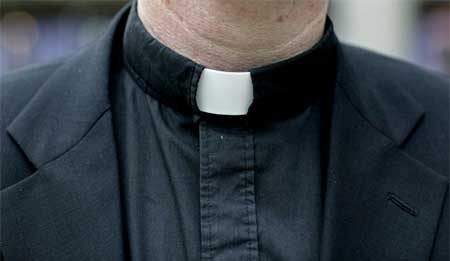
All week long I have been wearing my clerical collar. I know this might seem like a fairly Catholic thing to do, but it is traditional for all clergy to wear such things. For years I have been warned by other pastors about the dangers of wearing this collar: “No matter wear you go, people will assume that they can talk to you about all their problems.” “You can never prepare yourself for all the glares you will receive.” “It is a relic of the past, if you want to connect to people of today, ditch the collar and find something contemporary.” For me, I simply wanted to wear it this week to mark the occasion of Holy Week, and on another level I wanted to wear something that would force me to act like a Christian in public. You can’t get away with cutting in line at the grocery store when you’re dressed like this.

So I initially chose to wear it this week to honor this special time in the life of the church, but it slowly became an experiment here in Staunton. After hearing all of the stories about what this collar can bring in terms of interactions in the community, I was excited to see what might happen. I had plenty to do this week, but whenever I had the chance, I would go somewhere publicly; I worked on a sermon at a coffee shop, played drums for the Stonewall Brigade band, went to Walmart, the Staunton mall, Food Lion, I walked up and down Beverley street. I went everywhere that I could think of.

I was anxious about all the conversations and judgments people might make of my appearance, but I went out anyway. And you’ll never believe what happened… nothing.

I walked around this whole town and I received absolutely no response about my appearance. No one asked me about it, no one pointed and whispered, no one even looked at it. Now I know I’m not the best looking guy, but I’m used to people tat least taking a glance my way occasionally; its something we all do out of habit. But for the last few days I have felt largely invisible.

IMG_1279

So I decided to take it one step forward… Today, at noon, I arrived at church to begin carrying our cross all around Staunton. The cross that the confirmands so diligently decorated and created dug into my shoulders as I departed from the church and walked toward downtown. I walked from the church to Beverley Street, went up both hills on either side, and eventually made my way back toward the north end of town. I walked for two hours, and you know what happened? Nothing. 

Now, of course, walking with a 8 ft long cross will gather attention, I noticed a handful of people driving and walking who began to stare at the object on my back, but the moment I smiled, made eye contact, or waved, they diverted their attention to something else. Two couples actually switched what side of the road they were walking down in order to avoid my trajectory. For two hours I walked in silence and contemplation, every greeting I uttered was met with a blank stare, and just like with the clergy collar, I felt invisible this afternoon.

That was until I was standing next to a man waiting at the light by the library. I noticed that he kept looking at my cross, back to the ground, back to the cross, and back to the ground. Finally I heard him mutter, but loud enough for me to hear, “Jesus H. Christ.” To which I replied, “Actually its Taylor C. Mertins, but thanks for the compliment.” He did not think it was as funny as I did.

While walking across the lawn to put the cross back in the sanctuary I began to wonder if this is what Jesus felt like when he carried his cross. I wonder if what was most tragic was not the fact that he died, but that he died without anyone really caring or noticing. How strange that God chose to save us in this way, in the death of his Son abandoned by his friends on a cross.

Today, as it was in the time that Jesus died, many of us believe that we need not look at the cross at all. Here in our sanctuary all we have is this tiny cross on the altar. Many of us are far more familiar with the idea that, “God so loved the world, that everyone who believes in him may not perish but have eternal life.” In that verse we are told not to look, but merely to believe.

We so desperately want to skip over the suffering of Friday and jump straight to the glory of Sunday. Thats why more people attend church on Mother’s Day than Maundy Thursday and Good Friday combined. The cross is a harsh message. We want to divert our attention away from it. We want to hear good news. We want to laugh in church. We want to walk out feeling better about ourselves and the world. 

Yet, to ignore Christ’s death on the cross is to be tempted to believe that we are no longer in danger. But my friends, even Christ’s death does not mean we get to escape death, but only that even in death we will not be abandoned by God.

Looking on the cross and believing God are inseparable. Perhaps we have grown so accustomed to seeing the Christian cross that we now largely ignore it. Or we really know what the cross means so when we see it we, like the contemporaries of Christ, avert our gaze. But, Christ died on the cross. He hung up there for hours. He cried out to God. He suffered. He died.

This good Friday we are called to open our eyes to what Christ did, to look on the cross and live, to realize that believing is seeing.

How very strange of God to save us in this way, and how much stranger that we are to look on Jesus’ death if we are to have life.

Amen

creative stuff 020 - Copy


A Place At The Table – Maundy Thursday Homily on 1 Corinthians 11.23-26

1 Corinthians 11.23-26

For I received from the Lord what I also handed on to you, that the Lord Jesus on the night when he was betrayed took a loaf of bread, and when he had given thanks, he broke it and said, “This is my body that is for you. Do this is remembrance of me.” In the same way he took the cup also, after supper, saying, “This cup is the new covenant in my blood. Do this, as often as you drink it, in remembrance of me.” For as often as you eat this bread and drink the cup, you proclaim the Lord’s death until he comes.

BouveretLastSupper

After the worship service ended, a number of us were standing around and enjoying the fellowship when I overheard a grandson talking with his grandfather. The young boy looked puzzled about something when his grandfather finally inquired as to what had happened. “So let me get this straight, when we have communion, everybody is invited?” the boy asked. “Of course” answered the grandfather. “And did the pastor really say that when we do this we are eating Jesus’ body and drinking his blood?” The grandfather heisted for a moment but then confirmed the question. The boy stood silently for a moment, when all of the sudden a huge smile broke out on his face and he declared, “being a Christian is awesome!

body-and-blood-mark-jennings

That, my friends, is sound sacramental theology.

How strange is it, when you take a step back, that for the last two thousand years Christians have been regularly gathering around Christ’s table to partake in his body and blood. We are invited up to the altar to consume Christ just as Christ offered himself to the disciples in their last meal together, and as he offered himself on the cross. This really is an awesome thing that we do, because in doing so we remember and act into the life of Christ, committing ourselves to discipleship here and now.

For years I worshipped with a family that could’ve come from a Norman Rockwell painting. They always sat together in church, the kids dutifully listened to the sermons, and they were regarded with respect by nearly everyone in the community. Everything about the family made them seem perfect, particularly when it came to their first born son. Having cerebral palsy meant he was pushed in his chair into the sanctuary every Sunday morning. His parents were responsible for feeding him, clothing him, and changing him. And though he sometimes gathered stares from others in the congregation, to the family, he was just like everyone else.

I used to love seeing them enter church, I loved how they involved all of their children in everything they did, regardless of differences. It wasn’t until years later that I learned why they started attending our church.

They were a military family, and were moved every few years. This meant that whenever they arrived in a new place they had to lay the foundations for new relationships and social connections. After every move they would begin by finding a local church and would start participating in its ministries. They had been attending their church for sometime, creating new bonds with fellow parishioners, when the church had a communion service for the first time in a while. The family, like all the others, gathered in the center aisle and made their way toward the altar. Each child went forward and received the body and blood, but when the father pushed his eldest son forward in his wheel chair the pastor refused to serve the young man communion. “If he cannot understand what this means, I will not serve him,” was the response from the minister. That was enough for the family to never reenter that church ever again.

mixing-chairs-at-dining-table

On Jesus’ final evening with his disciples they gathered in the upper room and shared bread and wine, Jesus’ body and blood. Ironically, this sacramental meal which was intended to celebrate the unity of Christians with their Lord and one another has become the source of such division within the church.

Just imagine for a moment, that final evening the disciples had with one another; they had  come so far together. From their humble beginnings, called from their fishing boats and families in Galilee, these ragtag disciples had followed their Lord all the way to Jerusalem. They were the least likely candidates for the kind of mission that God would accomplish in the world, yet they were the ones called and invited to a new life with Christ. Around that table sat fishermen and  tax collectors, men who had abandoned everything they knew for a life of uncertainty following the light of the world. Even Judas, the one who would betray him in a number of hours was invited to the table and was given the body and the blood.

There is a place at this table for you. 

It does not matter where you’re from, who you are, what you’ve done. It does not matter how strong or weak your faith is. It does not matter whether you understand what happens here or not. Surely the disciples did not understand that first time, or they would not have abandoned their Lord the next day as he mounted the hard wood of the cross. I stand on this side of the table, and not even I completely understand what happens in the Eucharist.

It is truly an awesome thing to share this meal because it is mysterious. Somehow, in gathering together, the Holy Spirit is poured down upon us and these gifts of bread and wine so that they become for us the body and blood of Christ.

But even more mysterious than what happens here at the table, is the fact that people like you and me are invited to it. That regardless of our failures and short-comings, in spite of our desertion of Jesus at different times in our lives, and precisely because of our lack of faith, Jesus meets us here at the table.

I have to agree with my young friend from church; being a Christian is awesome


Devotional – Psalm 118.26

Devotional:

Psalm 118.26

Blessed is the one who comes in the name of the Lord. We bless you from the house of the Lord. 

Weekly Devotional Image

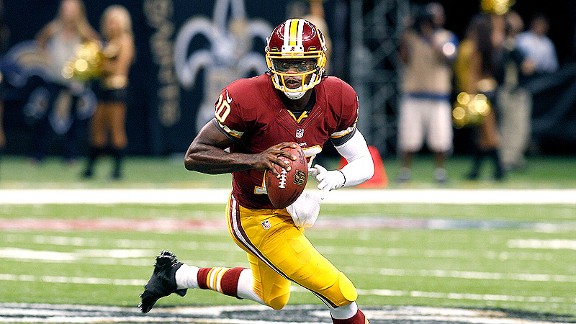
When Robert Griffin III came to Washington DC he was greeted as the new messiah of the Washington Redskins. For too long had the Redskins failed to procure a franchise quarterback, a leader that could take them to the playoffs and eventually the Superbowl. Finally, it seemed, the organization had made a bold move for a young quarterback who contained all of the qualities necessary for returning the Redskins to their former glory.

nfl_a_griffin_gb1_576

His first season behind center was remarkable. RGIII was named Offensive Player of the Week numerous times, he set records for the highest passer rating by a rookie quarterback and highest touchdown to interception ration, and he led to the team to the playoffs  after winning the NFC East Division.

After sustaining an injury toward the end of the season, many fans and sports pundits speculated whether or not RGIII would be able to compete in the same fashion during the following season. This past year, the Redskins returned to form posting an embarrassing 3-13 season, the worst record for the team since 1994. Many people, of course, blamed RGIII’s limited mobility, improper coaching decisions, and lack of enthusiasm from other players for the disappointing season.

Within a year RGIII went from being the hailed messiah, to a questionable concern. Favor and optimism was quickly replaced with skepticism and doubt. Of course some of the die-hard fans remained committed to this young quarterback, but a large portion of fan favor was quickly turned in the opposite direction from one season to another.

jesus.donkey

The crowds yelled “Blessed is the one who comes in the name of the Lord,” when Jesus enter Jerusalem on the back of a donkey. This man was their Messiah, the one they had been waiting for. They were so enthralled by this Son of Man that they pulled palm branches from the fields and placed them on the road as a sign of worship, devotion, and adoration. Incredibly, those shouts of “Hosanna! (Save us!)” changed to shouts of “crucify him!” within a week. The incredible favor of the crowds changed from dedication to destruction.

Our favor and devotion for the many messianic figures in our lives can change on a dime. How often have RGIIIs and others been hailed and rejected within such a short period of time? Yet, for us, our Messiah, the one who died for the sins of the world never gave up on us when we gave up on him. He rode on the back of the donkey knowing good and well what would take place by the end of the week, mounted the hard wood of the cross with the shouts of “crucify!” ringing in his ears, and loved us nonetheless.

Today, as we begin to approach Palm Sunday and Holy Week, I encourage you to consider the people in your life that you once supported and then gave up on. I’m not just talking about public figures such as RGIII or politicians, but also people close to your heart. Who have you given up on? Perhaps in these final weeks of Lent it is time to reach out to those who have fallen out of our favor. Maybe today is the day that you can reconcile a broken relationship and truly live into God’s love here and now.


Holy Perspective – Sermon on 1 Samuel 16.1-3

1 Samuel 16.1-13
The Lord said to Samuel, “How long will you grieve over Saul? I have rejected him from being king over Israel. Fill your horn with oil and set out; I will send you to Jesse the Bethlehemite, for I have provided for myself a king among his sons.” Samuel said, “How can I go? If Saul hears of it, he will kill me.” And the Lord said, “Take a heifer with you, and say, ‘I have come to sacrifice to the Lord.’ Invite Jesse to the sacrifice, and I will show you what you shall do; and you shall anoint for me the one whom I name to you.” Samuel did what the Lord commanded, and came to Bethlehem. The elders of the city came to meet him trembling, and said, “Do you come peaceably?” He said, “Peaceably; I have come to sacrifice to the Lord; sanctify yourselves and come with me to the sacrifice.” And he sanctified Jesse and his sons and invited them to the sacrifice. When they came, he looked on Eliab and thought, “Surely the Lord’s anointed is now before the Lord.” But the Lord said to Samuel, “Do not look on his appearance or on the height of his stature, because I have rejected him; for the Lord does not see as mortals see; they look on the outward appearance, but the Lord look on the heart.” Then Jesse called Abinadab, and made him pass before Samuel. He said, “Neither has the Lord chosen this one.” Then Jesse made Shammah pass by. And he said, “Neither has the Lord chosen this one” Jesse made seven of his sons pass before Samuel, and Samuel said to Jesse, “The Lord has not chosen any of these.” Samuel said to Jesse, “Are all your sons here?” And he said, “There remains yet the youngest, but he is keeping the sheep.” And Samuel said to Jesse, “Send and bring him; for we will not sit down until he comes here.” He sent and brought him in. Now he was ruddy, and had beautiful eyes, and was handsome. The Lord said, “Rise and anoint him; for this is the one.” Then Samuel took the horn of oil, and anointed him in the presence of his brothers; and the spirit of the Lord came mightily upon David from that day forward. Samuel then set out and went to Ramah.

tumblr_mepr3lSwsV1qhmhdfo1_500

One of the things I enjoy most about meeting with couples, and talking about weddings, is the invitation I offer for them to pick a particular scripture for their weddings. Now, I always have backups prepared just in case they are unable to come to a consensus or if they are just unfamiliar with God’s Word. But most of the time, they are willing to look around for something.

Many couples will choose the oft-mentioned 1 Corinthians 13 passage: Love is patient; love is kind; love is not envious or boastful or arrogant or rude. It does not insist on its own way; it is not irritable or resentful; it does not rejoice in wrongdoing, but rejoices in truth. It bears all things, believes all things, hopes all things, endures all things.

f6eedeff4528177d8b277fa10ab88ccf

Others will pick something along the lines of the regularly misinterpreted Ephesians 5 passage: Wives be subject to your husbands as you are to the Lord. Or that great passage from Ruth: “Where you go I will go, where you stay I will stay, your people will be my people, your God my God. Where you die I will die.”

The scripture that a couple chooses for their wedding can be quite revealing. It helps to demonstrate where their priorities are, what they expect out of marriage, and frankly, what they want to hear the pastor talk about.

So, you can imagine my surprise, when a couple recently asked me to use the scripture from today for their wedding. Preparing to enter wedded bliss, they didn’t want to hear about love, or marriage, but instead they wanted to hear about Samuel anointing David…

David & Samuel

The people of Israel had demanded a king from their God. For too long they had wandered about without leadership and they cried out for a leader they could follow. Reluctant to provide a human and fallible leader for a people that were supposed to be following their Lord, Saul eventually became king.

Handsomer and taller than any other man in the land, it quickly became clear that Saul was not the right one to rule the nation. He listened to his own heart rather than the Lord, and God eventually rejected him.

Thats where our story begins today. Samuel was sent to see Jesse the Bethlehemite, for the Lord has provided a king among his sons. The prophet took a heifer with him to cover his true actions from the vengeful Saul who might’ve killed him upon discovery.

After arriving, the elders met Samuel with fear and trembling. Turbulent events had always come in the wake of Samuel’s life and the people were responding appropriately. Great men and women always seem to stir up trouble wherever they travel. (It might be worth rediscovering this today in our own faith lives; too often has it been supposed that the role of church is to give all of us peace of mind. Truly I tell you, the greatest churches and sermons are those that challenge us to be better and do more than we already are)

So Samuel begin to evaluate all of Jesse’s sons; first Eliab, then Abinadab, than Shammah, and eventually all of Jesse’s sons had stood before the prophet. But the Lord spoke to Samuel and said, “Do not look on his appearance or on the height of his statue, because I have rejected him; for the Lord does not see as mortals see; they look on the outward appearance, but the Lord looks on the heart.”

Samuel was caught up with outward appearances. It’s like whenever I go to Alexandria to visit my grandmother, there is always a bowl of skittles out on her coffee table. I love skittles. On the outside the skittles always look delicious, the problem is that I don’t know whether they were put out that day, or six months ago. If you’ve never experienced it, trust me, you would rather have fresh skittles. The point being, you cannot tell how they will taste from the surface.

Anyway, the Lord had promised Samuel that one of Jesse’s sons would be the king, yet the Lord had passed over each one. “Are all of your sons here?” Samuel asked Jesse. “Well, there remains the youngest, but he is keeping the sheep.” David was beckoned away from his shepherding duties and brought before the prophet. He was ruddy and had beautiful eyes. The Lord commanded Samuel to anoint this boy, for he was the one. So Samuel took the horn of oil, anointed David in the presence of his brothers, and the spirit of the Lord came mightily upon David from that day forward.

I prepared for the wedding like I have for all the others, I had counseling sessions with the couple, I talked about the major issues that most couples confront once joining together, but the whole time 1 Samuel 16 hung in the back of my head. What was I going to do with the text during the ceremony? How in the world could I proclaim love and wedded bliss in the midst of David being anointed by Samuel.

I was at a shop here in Staunton when I saw a bumper sticker that illuminated the text for me. The bumper sticker said, “Marriage: betting someone half your stuff that you’ll love them forever.” In reading that, I realized what the world sees in marriage is not what God sees. We, myself included, look on marriage and all things with mortal eyes, but the Lord looks on the heart.

All of the sudden 1 Samuel 16 became the perfect wedding scripture! The Lord does not look on our cooly color coordinated outfits, not our perfect hair, not the precise flower arrangements, God looks on the heart. God does not concern himself with the pomp and circumstance of weddings but instead looks at the intentionality of the two being brought together. God does not get caught up with the minor details of all the rights words and ceremony, but cares about the love within two people sharing a life together.

On the outside, marriage looks like it can be sustained by love alone, it appears like a gamble of half of your things, it seems to be a simple agreement to live together. When we look at marital relationships through mortals eyes, we are limited to the surface appearance and we forget to look on the heart.

Marriage is a beautiful and strange thing. Like Samuel pouring oil over David’s head, it can become uncomfortable and weird. At its best, marriage is loving someone knowing that they will not be the same person tomorrow. Its entering into a dance that will evolve over the years with different tempos and time signatures. Marriage is about the inward heart and disposition of two people coming together to share this remarkable thing we call life.

The Lord looks on the heart. This, after all, was a perfect wedding scripture. As I stood before the happy couple, presiding over their marital vows I could tell that their intentions were clear, they were not caught up in all the outside elements, but were committing to their marital covenant together.

In as much as this text fit perfectly for the couple, I believe that it stands as a light in the darkness for churches and Christians today. The Lord looks on the heart – How sad is it then that most human judgments about people are almost always superficial? Those who are physically attractive have many easy advantages in life, while others, by their very appearance, seem to be severely regarded by others.

David was noted by Samuel as being handsome, with beautiful eyes, but he was still one of the least likely candidates to be anointed by the Lord. While his brothers were older and more mature, David was still young and off in the fields tending the sheep. Rather incredibly, while God anointed David to become king, he would have to mature and go through many trials and tribulations before his role would come to fruition. He would have to battle against the mighty Goliath, avoid Saul’s spear in the royal court, and flee for his life hiding in caves before he could event mount the throne of Israel.

In many ways, God ordains each of us, anoints all of our heads, for certain tasks and graces in the world. Some may have occurred already, and many more lie ahead of each of you in your futures.

God does not call the attractive and the strong to bring about his will on earth, he is not caught up with our outward appearance and physical requirements. God is concerned, above all, with our hearts, with our intentions, with our hopes.

logo

This past week, the Christian organization World Vision made national news. World Vision is a humanitarian agency dedicated to working with children, families, and their communities worldwide to reach their full potential by tackling the causes of poverty and injustice. Like many other similarly focused organizations, it can operate primarily under the radar and achieve a lot of good in the world. That was, until this past week.

In a public statement issued on Monday, the organization announced that it would begin hiring Gay Christians in legal same sex marriages. Prior to the announcement World Vision required all of its employees to maintain heterosexual practices within marriage to be considered for employment. The new policy was described as symbolic not of compromise, but of Christian unity, with the hope that it would inspire unity among other Christians as well.

After a remarkable amount of public outrage by evangelical Christians, and a significant amounts of threats regarding withdrawal of funding for the organization, World Vision reversed its decision to hire Gay christians in same sex marriages.

In only 48 hours, one of the most open, vulnerable, and incredible acts by a Christian group, devoted to helping sponsor children in need, was reversed. The mission of World Vision, the good that they do in the world, was immediately overshadowed by their hiring policy.

I don’t know what to think about all of this. I don’t know if any of the decisions have been right or wrong. What I do know is that a significant number of people who were being helped and saved by an organization were almost put in jeopardy because an agency aspired for greater Christian unity. It would seem to me, that regardless of opinion, the majority of the response was far more focused on the outward appearance of an organization, rather than their heart and intentionality.

I want to be clear that I’m not trying to say that one side was right, or that one side was wrong, but merely question how far we fallen from the idea that God looks on the heart. Every week we gather in this place to affirm our faith in the God who loves us when we don’t love back, that God listens when we run out of words, and that he desires us to be one in the Spirit when it seems as if we cannot agree on anything.

The Lord said to Samuel, and I believe the Lord is still saying to all of us: “Do not look on appearances or on height, do not look on political ideologies or past deeds, do not judge others lest ye be judged; for the Lord does not see as mortals see; they look on outward appearance, but the Lord looks on the heart.”

How do you look at others in your life? Are you caught up with outward appearances, judging others before you have an opportunity to really learn their story? Do you see the world through mortals eyes, or do you look at the world the way that God looks at us?

This is a tough Word for us to hear today. God called Samuel to look on David through God’s eyes, with holy perspective. We, in the same way, are called to radically love one another, sacrifice for the body of Christ, and be one in the Spirit with holy perspective. It is not easy, and we cannot do it on our own.

So, may God bless us enough to open our eyes to see the world, and one another, the way that God sees us. Amen.


Open My Eyes That I May See

Devotional – Psalm 130.1-2

Devotional:

Psalm 130.1-2
Out of the depths I cry to you, O Lord. Lord, hear my voice! Let your ears be attentive to the voice of my supplications!

Weekly Devotional Image

The church service went as well as could be expected. The small gymnasium was perfect for the contemporary service setting and most of the chairs were occupied. Like a lot of contemporary services, it began with a succession of three or four songs all focused on praising the glory of God; some of the lyrics included phrases such as: “Your love never fails,” “He’s been so good, so so good to me, Jesus,” and “you are amazing God!” Immediately following the collection of praise songs, there was a time of welcome, a brief reading from scripture, and then a focused sermon with images and themes being displayed on two screens hung from the ceiling.

I don’t remember much about the sermon except for the refrain: “God loves you no matter what!” The preacher’s perfectly executed contemporary outfit (Black Tee-Shirt with Blue Jeans) was matched with a consistently dynamic smile throughout the message. I wanted some of whatever he was having.

4050-rote worship.630w.tn.jpg

After another dose of positive and uplifting music to close out the service, we were all dismissed to re-enter the world. I stood in the back watching the people neatly file out of the gymnasium, observing sporadic examples of fellowship between people. In the corner I noticed an older woman, clearly frustrated with something, and trying to vent her frustrations to those around her. When it became clear that no one was listening to her, I walked over to ask if something was wrong. “I can’t stand services like this!” she nearly shouted, “Its just too happy!” And with that she threw her complimentary coffee in the trash, and left the building.

Have you ever felt that way in worship? Have you noticed the abundance of smiling faces in worship, discovered the overwhelmingly uplifting nature of some hymns, all brought together with a happy and positive sermon delivered with three primary points? Have you ever felt suffocated by the amount of joy that some worship services attempt to produce?

Christian discipleship is not a blindly happy-go-lucky journey. There should be more time and focus in worship devoted to the suffering that is present in each of our lives (however small or large). The psalmist writes, “Out of the depth I cry to you, O Lord. Lord, hear my voice!” Sometimes, the most appropriate form of worship is clenching your fists and shouting out those same words.

So, do not be conformed to the ways of so many churches that appear to say that happiness is a requirement for discipleship. If you are deep in one of the valleys of life right now, I encourage you to cry out to God. If you are on one of the mountaintops of life right now, open your eyes to the needs of those around you, and make God’s presence known through your actions.

Nicodemus and Sidewalk Chalk – Sermon on John 3.1-17

John 3.1-17

Now there was a pharisee named Nicodemus, a leader of the Jews. He came to Jesus by night and said to him, “Rabbi, we know that you are a teacher who has come from God; for no one can do these signs that you do apart from the presence of God.” Jesus answered him, “Very truly, I tell you, no one can see the kingdom of God without being born from above.” Nicodemus said to him, “How can anyone be born after having grown old? Can one enter a second time into the mother’s womb and be born?” Jesus answered, “Very truly, I tell you, no one can enter the kingdom of God without being born of water and Spirit. What is born of the flesh is flesh, and what is born of the Spirit is spirit. Do not be astonished that I said to you, ‘You must be born from above.’ The wind blows where it chooses, and you hear the sound of it, but you do not know where it comes from or where it goes. So it is with everyone who is born of the Spirit.” Nicodemus said to him, “How can these things be?” Jesus answered him, “Are you a teacher of Israel, and yet you do not understand these things? Very truly, I tell you, we speak of what we know and testify to what we have seen; yet you do not receive our testimony. If I had told you about earthly things and you do not believe, how can you believe if I tell you about heavenly things? No one has ascended into heaven except the one who descended from heaven, the Son of Man. And just as Moses lifted up the serpent in the wilderness, so must the Son of Man be lifted up, that whoever believes in him may have eternal life. For God so loved the world that he gave his only Son, so that everyone who believes in him may not perish but may have eternal life. Indeed, God did not send the Son into the world to condemn the world, but in order that the world might be saved through him.

john-3-16

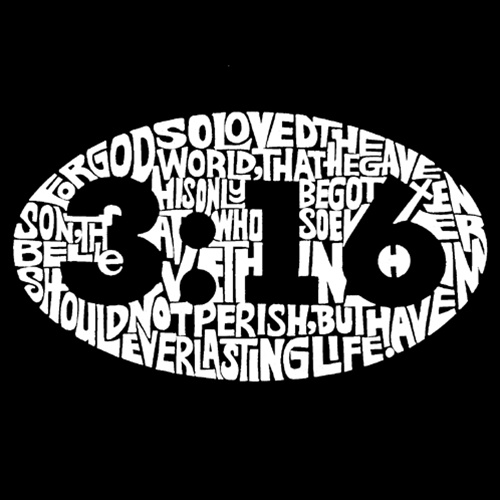
For God so loved the world that he gave his only Son, so that everyone who believes in him may not perish but have eternal life.

There was a pharisee named Nicodemus and he came to visit Jesus at night. As a leader of the Jews it was probably best to visit Jesus under the cover of darkness, and when they met together Nicodemus began to ask Jesus about all he had seen and heard. “Teacher, it is clear to us that you have come from God because no one can perform the signs that you do apart from the presence of God.” “You’re absolutely right,” Jesus replied, “No one can see the kingdom of God without being born from above.”

“Now wait a minute Jesus, how can anyone be born after having grown old? Can someone re-enter their mother’s womb and be born?” Jesus calmly answered, “Listen Nicodemus, no one can enter the kingdom of God without being born of water and Spirit. What is born of the flesh is flesh, and what is born of the Spirit is spirit. Do not be surprised that I told you that you had to be born from above. You know very well that the wind blows where it chooses, you hear the sound of it, but you do not know where it comes from or where it goes. So it is with everyone who is born of the Spirit.”

“But Jesus how can these things be?!” “Nicodemus, are you a teacher of Israel, and yet you do not understand these things? If I had told you about earthly things you would’ve believed,  but now I talk to you about heavenly things and you do not believe. No one has ascended into heaven expect the one who descended from heaven, the Son of Man. Just as Moses lifted up the serpent in the wilderness, so must the Son of Man be lifted up, that whoever believes in him may have eternal life. For God so loved the world that he gave his only Son, so that everyone who believes in him may not perish but have eternal life. Indeed, God did not send the Son into the world to condemn the world, but in order that the world might be saved through him.”

Nicodemus_Jesus

Last week we looked at one of the most well known stories from the Old Testament: Adam and Eve in the Garden. Today I could not help myself from proclaiming one of the most well known New Testament scriptures: John 3:16. In the entire biblical canon, both the Old and New Testaments, there must be few, if any, scriptures that have been so remarkably loved by so many as this text. It is simple and to the point. It opens up endless possibilities. It embodies the hope of all Christians. It is beautiful and appealing. It begins with the beginning and stretches into the far reaches of eternity. It proclaims that which is most fundamental to our faith: that God loves us. 

But the scripture today is about so much more than just that one isolated verse. I am thrilled that so many of us have memorized John 3:16, but we cannot forget about the inquisitive soon-to-be disciple named Nicodemus.

What do you make of this pharisee who came to see Jesus in the middle of the night?


On Tuesday morning, after gathering with the UMW, I made my way outside onto our back parking lot. After months of cold weather, with mounds of snow continually piling up, the Pre-School was finally able to play outside again. Now, let me be clear: I am just like those children. Having been cooped up in this church all winter I was just as, if not more, excited to run around and play outside. The children all had their plastic cars and bikes, some were running around in circles, others were using the fake gas pump to fill up the cars, (capitalism at its finest) when I saw a box of sidewalk chalk.

sidewalk-chalk

I silently made my way to the middle of the black top with the biggest piece of chalk that I could find and I began to draw. Without saying a word, or drawing attention to myself, the children began to congregate around me in a large circle. “Pastor Taylor, what are you drawing?” I heard one them mutter behind me, and I replied, “You’ll see in a moment.” As I stepped back the children moved with me, and there on the blacktop was a giant head with a wide open mouth. Why? I have no idea, but its what I drew. And without really understanding what I was doing I told the children that I was going to jump in the mouth of this mystery person made out of chalk. If I had said that to any of you, you would have thought that I lost my marbles. But with the children, they believed me, they looked into my soul, and some of them even begged me not to do it. But there I stood crouched with my hands at my side, and I jumped in. Of course I acted as if I was falling in and some of the children laughed, and when I was done, I encouraged some of them to jump in. There was a moment when the first girl stepped forward to the edge of the face. As I saw her prepare to jump in I realized she was unsure of what would happen to her. While rocking her hands back and forth I could see the sense of wonder and imagination brewing within her as she jumped right in.

Thats what Nicodemus was like. Jesus is known for having said that whoever does not receive the kingdom of God like a child shall not enter it. Nicodemus had a childlike and inquisitive faith. When confronted with the man of many wonders, Nicodemus wanted to jump right in to learn more about this new kingdom. While his contemporaries scoffed at the new teaching, Nicodemus’ imagination allowed him to see deeply into the truth of Jesus.

The other leaders of the synagogues were already muttering with irritated resentment regarding this so-called teacher who was beginning to develop a following. They disagreed with his strange ways, his strange teaching, and his strange disregard for authority. Nicodemus, however, felt there was indeed something strange about Jesus, but it could not be dismissed so easily. To Nicodemus, God was still speaking through people, and to his ears there was something in this new proclamation worth considering.

So, under the cover of night, Nicodemus went to learn more. He wanted to see for himself, he desired to hear from the man himself, to question and to learn. Instead of giving into the rumors, Nicodemus wanted to base his understanding on first hand experience. He could not settle for hearing about the man, but instead needed to jump straight into the abyss of the Son of Man.

In his willingness to question Christ we discover that Nicodemus was a great man who possessed enviable qualities. While suffocated by the surrounding culture and religions assumptions and expectations, he somehow managed to exhibit an open-mindedness that broke the chains of religious limitation. 

Moreover, Nicodemus is one of the best examples of discipleship. By the end of the gospel account Peter will have denied Jesus in a shameful panic, the rest of the disciples will have scattered or run off into hiding. For all practical purposes, the story had come to a close. But Nicodemus, this strange pharisee from our story today, openly stood forth as one of Jesus’ only remaining friends. Nicodemus dared to risk the punishment of superiors, the resentment of his peers, by paying the last loving rites to the dead body of Jesus that would have been treated as trash by anyone else.

Nicodemus is an understatedly important figure in the Gospel for us in the life of the church. He is so familiar to us, because he is just like us. He asked the kind of questions that many of us would have asked, had we been there with our Lord.

If you take a step back from the account, what Jesus was talking about sounds impossible. How can someone be born anew? Jesus simply responds to our misunderstanding and confusion; its not about being physically reborn as a child, but about being born anew in such a way that you can reorient your life. We must be born anew. Our prayer and our hope should be rooted in the desire to be recreated. Make me another kind of being from what I am. Renew a steadfast spirit within me. Create in me a clean heart. Do all this, O God, so that I can lead a different life. 

The whole point of the gospel is that God can achieve the impossible. Just as God can raise Jesus from the dead, God can achieve the impossible with you and me. And he does it! We see it happening in other peoples lives, our wayward friends who reorient their lives for the better. We have experienced it on some measure in our own lives however small or large. How does God change us? Ah, says Jesus, that is part of the great mystery. The wind comes who knows how, cleansing, refreshing, and then before we know it, its gone.

For God all things are possible. We can be born anew. We can find a new orientation for our lives no matter how young or old we may be. But even greater than this, is the promise of eternal life.

Jesus ends his conversation with Nicodemus with the, now famous, “for God so loved the world that he gave his only Son, that whoever believes in him may have eternal life.”

Martin Luther, the great protestant reformer once said, “If I were as our Lord God, and these vile people were as disobedient as they are now, I would knock the whole world to pieces!” We consistently make a mockery of God’s love by continually disobeying his commands, and by ceasing to love others as we love ourselves. How can God love us when we ruin everything he created including ourselves?

God loves us, because God is love. God loves the world; his foolish, blundering, wayward, and sin sick world. This love utterly breaks through our foolish conceptions of what love means and is; God’s love runs out to lengths that sounds incredible to our human ears because we could never return that same love.

god-god-is-love-lord-love-the-greatest-love-of-all-favim

God is like that remarkable parent who continues to love a child through all the wrong decisions and failures. Picking them up from the police station, driving them back to rehab, sitting with them night after night helping with homework, loaning them money when they fall on hard times. The only difference being that when our love for our children fails, his love for us remains steadfast.

God proves his love toward us by doing all that God can do, and giving all that God can give to help us; stretching himself even to sacrifice his only Son, and hold back nothing.

Thats what Nicodemus learned from his time with Jesus. That in the impossible mystery of God’s created order, God’s love knows no bounds, was made manifest in Christ’s death on the cross for you and for me and for the whole world.

Let us all strive to live like Nicodemus. Let our faith be inquisitive and exciting. Let us all prepare to jump into the unknown, to fearlessly step into a relationship with the triune God, and above all remember that great scripture: God so loved the world that he gave his only Son, so that everyone who believes in him may not perish but have eternal life. To God be the Glory.

Amen.