Devotional – Revelation 1.8

Devotional:

Revelation 1.8

“I am the Alpha and the Omega,” says the Lord God, who is and who was and who is to come, the Almighty.

Weekly Devotional Image

Services of Death and Resurrection are sacred moments in the life of the church. For a brief time we gather together in our grief, we praise God for the life of a friend or family member, and then we proclaim the hope of the resurrection. Dozens of people will fill the pews, some of who have not entered a church in years, and sing those beautiful hymns like “In the Garden” and “Blessed Assurance.”

As a pastor, it is a humbling thing to be tasked with leading the services and preaching a faithful word about God’s love and the life of the dead. I try to find the right stories and scriptures that shed light on the individual and pray for God to speak through my words so that they resonate with God’s Word. I try to lead the service in such a way that we can experience tears and laughter. And I try to ensure that the experience is one of profound holiness.

Yesterday, after concluding a Service of Death and Resurrection for a long-time member of St. John’s UMC, I gathered in the social hall with friends and family for a reception. Like a high school reunion, I saw groups of people gathered together to share stories and offer condolences. I spent some time wandering about the room in order to check on the members of the immediate family when someone stuck out his hand and asked to speak with me. I had never met the man before but he explained his connection to the man that had died and he thanked me for my words. He described his fear of funerals because they always remind him that death will come for him one day as well. But then he said, “However, my favorite thing about funerals is the fact that I learn so much more about a person I thought I knew so well.”

revelation1-8-web

Funerals do teach us so much more about the people we love. We hear from friends and family members willing to offer witness to the particular life and often we hear a pastor who is able to share a new vision of the life of someone close to us. It is in our willingness to listen that we discover something new.

Whenever I perform a funeral I am re-struck by the scripture: “I am the Alpha and the Omega.” I have said it before groups of people more times than I can count, but each time it reinforces the fact that I still have so much more to learn about God. Every day is a new opportunity to open up scripture, pray deeply to the divine, and discover the Lord’s work in other people. Similarly, it brings me great comfort to know that God is the beginning and the end, that our lives are gifts from God and that death is not the end.

This week, let us take time to learn more about the people in our lives and to learn more about the God of life. Maybe it means picking up the phone and calling a dear friend, or opening up our bibles to read a familiar passage. Maybe it means praying for the people in our local and global community, or listening for God’s still soft voice in the words of a hymn. Whatever we do, let us do so with the hope of learning more about one another and our Lord who is the beginning and the end.

Devotional – Psalm 146.1

Psalm 146.1

Praise the Lord! Praise the Lord, O my soul!

Weekly Devotional Image

On Thursday afternoon I made my way over to the parking lot at Gypsy Hill Park to prepare for the UMC Trunk or Treat. The pastors and lay leaders from the Staunton area United Methodist churches had been planning the event for a number of months and it was my responsibility to set up the parking lot and organize the first wave of volunteers. For months we had collected candy and advertised in the local community and I was anxious to see how it would turn out.

In our earliest conversations we thought we would be lucky to receive a few hundred children and their parents for our Trunk or Treat. We continued to organize, plan, and pray for the event and when it was time to start trunk or treating a long line had already started to form; All of our hard work was about to come to fruition.

Over the next two hours the line of people never dwindled. Volunteers were running around in order to maintain the safety of the young children while also replenishing the candy supplies that had run low in some of the trunks. Children were dressed in some of the wittiest and most delightful costumes as they came forward with grateful hands to receive a peace of candy. And every trunk was attended by a faithful Christian eager and willing to share God’s love through the tiniest of gifts.

At about 7pm I left Lindsey with the candy at our trunk and made my way to the top of a hill for a better vantage point; I wanted to see how well the line was moving and if people were still enjoying themselves. I resisted the temptation to turn and look until I got to the very top and when I did I was stunned. From where I stood I could see no end to the numbers of children and families that had gathered in the park. I tried taking a picture and I could not even come close to capturing everyone in it. By the time the Trunk or Treat came to a conclusion over 3,500 people had come through.

12182395_10204873871677559_710633466728393275_o

When I stood on top of the hill and looked out at what the United Methodist Church could do in connection I wanted to praise God. Only an almighty and powerful God could call us to work in community with one another instead of in competition. Only a faithful and loving God could stir our hearts to give generously to this wonderful community. Only a redemptive and sustaining God could accomplish something in us as powerful as our Trunk or Treat.

We truly serve an almighty God who is worthy of our praise!


Devotional – John 11.35


Devotional:

John 11.35

Jesus began to weep.

Weekly Devotional Image

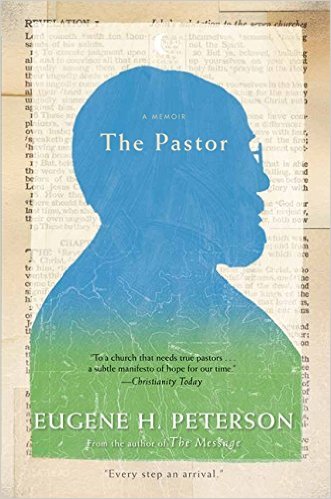
In Eugene Peterson’s memoir The Pastor he recounts the death and funeral of his mother after having buried countless church members throughout his life. As he stood before the gathered people his emotions came to a precipice and he could no longer contain himself. He writes:

“While I was reading the scriptures, tears erupted. I tried to hold them back, then gave in. I remember thinking, ‘All these people get to grieve, now it’s my turn,’ and let it come, sobbing uncontrollably. After thirty seconds or so, I recovered my composure and finished what I was doing. After the benediction, I didn’t want to see anyone and slipped into a room just off the chancel. My daughter, Karen, came in and sat beside me, without words, putting her hand on my thigh. And then a man I didn’t know came in, put his arm across my shoulder, spoke for three of four minutes in preacher clichés, and prayed. After he left I said, ‘Oh Karen, I hope I have never done that to anyone.’” (Peterson, Eugene. The Pastor: A Memoir. New York: HarperCollins, 2011. 294)

8T655xLGc

Across the great scope of Christianity, many churches will celebrate All Saints Day this Sunday. In the United Methodist Church we will use this particular opportunity in worship to remember the Saints of the church as well as all Christians both past and present. It is a time set apart to reflect on the many people who have shaped our lives, the grief we still feel regarding their deaths, and the hope of the promised resurrection.

All Saints is not a time for “preacher clichés.” It is not a time for churches to claim that God “just wanted another angel in heaven.” It is not a time for us to seek out those who are grieving and tell them how they are supposed to grieve (or worse: telling them they are supposed to be done grieving).

All Saints is a time for tears. Just like when Eugene Peterson’s wept over the death of his mother, and just like when Jesus wept over the death of Lazarus, it is good for us to grieve those who have died. This Sunday is a moment in the life of the church where we do well to let our emotions get the best of us and offer up our losses and sadness. Because it is in our grief that we really begin to appreciate those who have died and the ways they continue to shape our lives.

This week, as we prepare for All Saints Day, let us take time to reflect and pray for the people who have died in our lives. Let us thank God for their witness to God’s grace. And let us strive to sit alongside those who are grieving and bless them with our presence more than our words.

51ltEQZuJVL._SX329_BO1,204,203,200_

Devotional – Hebrews 7.23-24


Devotional:

Hebrews 7.23-24

Furthermore, the former priests were many in number, because they were prevented by death from continuing in office; but he holds his priesthood permanently, because he continues forever.
Weekly Devotional Image

Full disclosure: There is temptation in ministry. There is the temptation to believe that you are the only one with the ability to save others. There is the temptation of power to control every single little element in the life of the church. And there is the temptation of becoming more important than the Lord you serve.

It happens a lot.

After weeks of a particular strong sermon series, a pastor’s ego can swell from all the compliments she hears. During the reception following a wedding, a pastor’s pride can cast a huge shadow over the guests. The habits of worship can lead to a pastor pointing to himself far more than he points to the cross. Temptation affects pastors just as much as everyone else.

Yet, pastors/priests/ministers come and go. I can remember hearing a couple of the ushers from my home church arguing about a particular pastor’s sermon and their frustration with how much longer he would remain “in charge of the church.” For weeks they spent time during every worship service venting their frustrations and they began to compare him to all of the “better pastors from the past.” They would say things like “he used to do it this way,” and “he made me feel better when I left church,” and “he used to tell the best stories.” This went on and on until one of the ushers could no longer stand to hear all of this take place during church and said, “We’re not supposed to be here for the pastor; we’re supposed to be here for Jesus.”

9.6.IsJesusSeniorPastorOfChurch_464334126

The writer of Hebrews rightly shows the difference between priests and Jesus. Ministers/Priests/Pastors are many in number because we eventually come to the end of our time, but Jesus holds his priesthood permanently and continues forever. This one line from Hebrews is a sobering reminder for all who have been called to the ministry to remember that we are called to point to the Lord who reigns forever and ever. We can do a lot of wonderful and marvelous things for the churches we serve, but we are only as good as we are willing to remember the one from whom all blessings flow.

Similarly, this passage from Hebrews is a reminder to everyone in the church about who is really “in charge.” If we are serious about the commitments and covenants we have made as Christians we will remember that Jesus is the King of kings and Lord of lords. We will listen to the words of our pastors but will always remember the distinction between their words and God’s Word. And we will remember that even minister are broken by the powers of temptation and are in need of God’s divine grace.

Devotional – Job 38.4

Devotional:

Job 38.4

“Where were you when I laid the foundation of the earth? Tell me, if you have understanding.”
Weekly Devotional Image

The grains of sand fell through my hand while I was sitting on the beach. My Boy Scout troop had set up camp the night before and a few of us had woken up to catch the sunrise. We could hear our fellow scouts still rustling in the warmth of their sleeping bags, but we were content to sit in the sand and listen to the water.

The boy next to me was absent-mindedly running his fingers through the sand when he looked up and said to no one in particular: “How many grains of sand are in my hand? And in this little spot where I’m sitting, how many grains of sand could there possibly be? Do we even have a number to count that high? And what about all the beaches in the world… and all the sand under the oceans… all those grains of sand… And yet, there are more stars in the sky at night than there are grains of sand on the whole earth…”

4e5e532e25bc1DSC01828_large_medium (1)

The rest of us sat there in amazement at such a simple and profound reflection and immediately felt tiny and insignificant in the grand scheme of the cosmos. If we felt like the world revolved around us, we were all changed by our friends’ comment, and I have never forgotten the way it made me feel.

After Job has been through all his trials and tribulations, after Job challenges the Lord, God finally answers Job by saying: “Where were you when I laid the foundation of the earth? Tell me, if you have understanding.” As if Job had heard our discussion about the grains of sand, he was immediately put in his place in relation to God. Instead of believing that he was the center of the universe, Job was humbled by God’s declaration.

Sometimes it is good for us to be humbled. After a particular season of life where we believe that people should worship the ground we walk on, we do well to be knocked down a peg or two. It can be incredibly life giving to realize that we are no greater than anyone else. And it can do wonders to remember what we are in the grand scheme of things: a grain of sand. Because when we remember our place, our eyes can be opened to the people around us instead of only focusing on ourselves.

This week let us remember to not think too highly of ourselves. If we catch ourselves deep in the clutches of vanity and vainglory let us remember the story of the grains of sand, let us remember God’s declaration to Job, and let us remember to be humble.


Devotional – Amos 5.14

Devotional:

Amos 5.14

Seek good and not evil, that you may live; and so the Lord, the God of hosts, will be with you, just as you have said.

Weekly Devotional Image

A few weeks ago I found myself sitting in a sanctuary filled with pastors and lay people for a class on spiritual disciplines. Our teacher led us through a lecture about the means of grace and the many ways that we can find communion with God through spiritual disciplines. We heard about the value of reading scripture, praying for God’s intercession, and listening to the silence. All in all it was a very informative class, and I believe that many of us left with a renewed spirit and dedication to living prayerful lives. However, in addition to all the wonderful comments during the class, I overheard the instructor talking with someone on the way out and what he said stopped me in my tracks.

A woman stood with the instructor and asked for his advice regarding the fact that God’s love was absent from her life. She claimed to have committed herself to the spiritual discipline of Morning Prayer, but God’s presence was still lacking. The instructor stood there with a serious look on his face and simply asked, “Are you doing all the good you can in your life?”

That question is one that cuts straight to the heart. Though I was unable to pick up on the rest of the conversation, I can imagine that the instructor was trying to make the point that, as we read in Amos 5, if we seek the good, God will be with us. We can pray and commit ourselves to spiritual disciplines, but unless those disciplines are bearing fruit in our lives then they might need to be reconsidered.

telling-your-story-to-motivate-donors-and-advocates-for-your-cause-32-638

During the time of John Wesley, many Christians were consumed by a faith of the mind. They relied heavily on reason and experience to determine their understanding of God and were content to let God be something they pondered rather than someone to whom they could give their life. Frustrated with the way the church was moving, Wesley pushed for holiness of heart and life whereby spiritual practices and thoughts would become manifest in daily life by doing the good. A wonderful quote often attributed to Wesley shows his commitment to the good: “Do all the good you can. By all the means you can. In all the ways you can. In all the places you can. At all the times you can. To all the people you can. As long as ever you can.”

In our lives, how often do we strive for the good? If God’s presence feels absent, if we want to experience God’s love here and now, then one of the best things we can do is seek the good and discover God’s presence along the way.

Devotional – Hebrews 1.1-2

Devotional:

Hebrews 1.1-2

Long ago God spoke to our ancestors in many and various ways by the prophets, but in these last days he has spoken to us by a Son, whom he appointed heir of all things, through whom he also created the worlds.

Weekly Devotional Image

When I was growing up in the church I loved to ask questions. I thought the beauty of what we were doing as Christians was the fact that it was never a one-sided conversation; the moments following worship or bible studies when I had the freedom to wonder are still some of my fondest memories. As Kurt Vonnegut once said, “People don’t come to church for preachments, of course, but to daydream about God.”

I remember in particular one meeting in a youth room filled with old soft couches that just consumed those who sat on/in them. We were going around the room sharing our experiences of prayer and what we got out of it. One of my friends made a comment about how important it was for his family to pray before every meal remembering that God had really blessed them. Another friend shyly admitted that the only time she ever prayed was at church or in youth group because she didn’t know how to pray by herself. But one of my friends sat on his own couch with his arms crossed around his chest in frustration. When it came time for him to share he said, “I don’t understand prayer. We’re told to ask God to help us, but I never hear God say anything back. We learn about all these stories in the bible when God speaks to the people, so why doesn’t God speak to us like that anymore?”

All the eyes in the room immediately darted to our leader in anticipation of his answer. He calmly smiled and said, “God spoke his truest and best Word in Jesus. If we are waiting to hear God speak in our lives, all we have to do is open our bibles because God is still speaking to us through Jesus.”

word-became-flesh

That memory has stuck with me over the years because of how profound it actually was. Many of us expect prayer to be like a phone conversation with one of our friends, and then become immediately disappointed when God does not speak back. However, that leader was right: God spoke God’s fullest Word in Jesus Christ (as the incarnate Word). God can still speak to us today through our friends, or even in the still small silence, but God decisively speaks in our world through the stories of Jesus in scripture.

So, instead of reading scripture like a collection of stories from long ago, can you imagine how life giving it could be if we read it like Jesus was speaking to us here and now? The beauty of the bible takes on a whole new dimension when we stop limiting Jesus to the past, and start hearing him speak in the present.

Devotional – Mark 9.47

Devotional:

Mark 9.47

And if your eye cause you to stumble, tear it out; it is better for you to enter the kingdom of God with one eye than to have two eyes and be thrown into hell.
Weekly Devotional Image

I was sitting in a classroom at James Madison University when one of my peers raised her hand to ask a question. The lecture had been focused on the reliability of the New Testament writers/witnesses and a debate had erupted over whether or not to take the bible literally. I sat patiently near the front of the class watching the comments fling back and forth like a ping pong match between the students and our professor when the girl finally raised her hand.

She said, “I just want everyone to know that I take the bible literally because Jesus is my savior.” The rest of us stared at her and then slowly turned to watch our professor’s rebuttal. “Really? You take the entire bible literally all the time?” he asked rhetorically. The silence was palpable. He continued, “Well then, let me ask you this: Are you a sinner?”

With an obvious look on her face, she said, “Of course I am, but Jesus died on the cross to save me from my sins.” The professor responded, “Yes yes, but do you sin, even though Jesus died for the world?” “Duh,” she said, “everyone sins, and that why we need to let Jesus into our hearts.”

The professor then sighed and brought the point home, “So you say you’re a sinner, but I notice that you have two hands, two legs, and two eyes… Jesus told his disciples that if their hands or feet cause them to sin, they should cut one of them off, and if their eyes cause them to sin they should pluck one out. So you see, I’m having a hard time understanding how you take the bible literally, affirm that you’re a sinner, and still have both your hands, both your feet, and both your eyes all at the same time.”

I don’t remember the girl’s name, but I will never forget the way she looked as she slumped back down into her chair thinking about what our professor had said.

Image processed by CodeCarvings Piczard ### FREE Community Edition ### on 2015-05-18 22:39:16Z | http://piczard.com | http://codecarvings.com &

The bible is full of different literary forms that give it life. There are epic poems that retell the great story of the past in order to teach a lesson to the present. There are long genealogies that connect different characters throughout the centuries. There are parables of everyday situations that are meant to leave us scratching our heads in wonder. There are metaphors used (just like we do) to convey meaning in a way that is memorable and effective. There are proverbs, psalms, and poems that contain wisdom beyond their literal words.

The bible is not a historical narrative to be analyzed and redacted like a modern textbook. It is not a perfect collection of rules to live life. The bible is not a text to be read literally all the time in every situation; otherwise we would all be stumbling around with missing appendages.

The great beauty of scripture is that it opens up the strange new world of what it means to be in relationship with God and with our fellow human beings. The greatest moments in our lives cannot be conveyed in simple words to be taken literally, but are in fact so profound that we must use differing literary forms to even begin conveying what our experience was like. The bible is full of wonder and that’s why we keep coming back to it every day and every week to learn more about who we are, and whose we are.

This week, let us open up our bibles to discover the strange new world of God’s kingdom, and start letting it become incarnate in the way we live.

Devotional – Mark 9.37

Devotional:

Mark 9.37

“Whoever welcomes one such child in my name welcomes me, and whoever welcomes me welcomes not me but the one who sent me.”

Weekly Devotional Image

I just finished welcoming all of the preschoolers into St. John’s for the first day of school. Many of the students and their parents were eagerly waiting in the parking lot holding their cameras in anticipation of some precious photographs. When I finally opened the door, tears immediately began to fall (though mostly from the adults) as everyone approached the building.

From my vantage point I had the privilege of witnessing some profoundly beautiful moments as children reached up to their mothers and fathers for a final hug and kiss before the day began. I saw all the new and perfectly coordinated outfits that you would expect for the first day. I experienced God’s holiness in the children reconnecting with their friends as they walked down the hallway toward their classrooms.

As much as I enjoyed watching the children and their parents this morning, what I really enjoyed was watching the preschool teachers. From the moment they arrived early this morning, they had permanent smiles stretched across their faces in anticipation of the new school year. They expressed a deep and profound love for all the children returning, and they welcomed them with open and joyful arms.

995085_833137600095889_2723574813095297781_n

From my office I can hear all the students laughing and playing in the preschool and I know they are going to have another incredible year. Yet, I can’t help but ponder about this beautiful morning in connection with the way we all interact with one another. Jesus once said “whoever welcomes one such child in my name welcomes me, and whoever welcomes me welcomes not me but the one who sent me.” When I saw the preschool teachers welcoming their students, I experienced God’s presence and love in the preschool.

Why is this feeling so unique and rare? Why do we only feel this kind of excitement and love on the first day of school? If we can experience God’s love by welcoming the people in our lives like the way we welcome children, then why don’t we do that all the time?

This week, as we continue to wrestle with what it means to be disciples of Jesus Christ, let us strive to welcome all people in our lives the way the preschool teachers welcomed their students. Let us reject our false assumptions about those who are different from us. And let us remember that when we rejoice in love, we are making God’s kingdom incarnate here on earth.

12002989_878596355550013_2054279923538527080_n

Devotional – James 3.5


Devotional:

James 3.5

So also the tongue is a small member, yet it boasts of great exploits. How great a forest is set ablaze by a small fire!

Weekly Devotional Image

On Sunday morning, during the Sunday school hour, I asked the group if they could remember a mean comment someone had made in the past. I was trying to prepare us for a discussion on the fact that in Mark 7 Jesus basically calls the Syrophoenician woman a dog and what it means to wrestle with the text. I myself can remember of number of negative comments from my childhood, moments when I was made fun of by fellow students, or a harsh criticism from a former Scout Master. But one of the women from the Sunday school class shared that, out of all the experiences she had as a teacher, she will never forget the one boy who waited till the end of the year to tell her that she was mean.

What is it about words that make them so powerful? How strange is it that one of the greatest tools of humanity can both give life and destroy life? The expression “sticks and stones may break my bones, but names will never hurt me” is a worthy thing to teach young children so as to not let comments destroy us, but the expression isn’t really true; names can hurt, and they can stay with us for years and years.

iStock_000025235303_Medium

Just ask a preacher about the power a comment can make right before or after a worship service. Just ask a teacher about the power a comment can make on an end of the year evaluation. Just ask a student about the power a comment can make during the first few weeks of a new school year. Just reflect on your own life and soon enough you will surely remember a time when the power of words was almost unbearable.

The tongue is a small thing, yet it has great power. James reminds us that even the greatest fires were started with a tiny spark. In all of our actions as Christians, the many ways we demonstrate Christ’s love in the world, the way we use our words might be the most powerful.

This week, let us reflect on the times that we have experienced the harsh reality of the power of words. How have we continued to carry those comments around, and how have we let them reshape our lives? Similarly, let us pray for God to give us the strength to use our words wisely toward others so that we might build people up, rather than break them down.

powerof-words