Think of the Children! – Sermon on Psalm 78.1-8

Psalm 78.1-8

Give ear, O my people, to my teaching; incline your ears to the words of my mouth. I will open in my mouth a parable; I will utter dark sayings from of old, things that we have heard and known, that our ancestors have told us. We will not hide them from their children; we will tell to the coming generation the glorious deeds of the Lord, and his might, and the wonders that he has done. He established a decree in Jacob, and appointed a law in Israel, which he commanded our ancestors to teach their children; that the next generation might know them, the children yet unborn, and rise up and tell them to their children, so that they should se this hope in God and not forget the works of God, but keep his commandments; and that they should not be like their ancestors, a stubborn and rebellious generation, a generation whose heart was not steadfast, whose spirit was not faithful to God.

kids-in-church

I love when scripture is straight-forward. With the amount of passages in both the Old and New Testaments that remain ambiguous, it is remarkably refreshing to encounter a text that is so simple with its claims and expectations.

Listen up! Open your ears to what I’m about to say regarding the mighty acts of God. I will remember for us the forgotten sayings from the past, we will not hide them from the children, we will share with them all the wonders of God. The Lord commanded our ancestors to teach our children, so that they would indeed teach their children, so that none of us would forget what God has done. Above all, let us not fall back into the rhythms of our distant ancestors, a stubborn and rebellious generation, a generation whose heart was not steadfast, nor was their spirit faithful to God.

What follows our reading from this morning is a record of history in song. The psalmist sets up his challenge: to remember the mighty acts of God for the future generations; and then declares the history of God with God’s creation. The tradition, the narrative, is so strong that the psalmist will not depart from it, since his purpose is to instruct rather than to entertain. That old old story has become so important to him, that he will tell it to the best of his ability for the sake of God’s people.

As I read the words to Psalm 78 this week, I couldn’t help but wonder about what we are teaching our children. If our desire to instruct the future generations regarding the mighty deeds of God is as strong as this Psalm claims, then how are we living that out today in our faith and in our church?

3rnvk6

On Tuesday morning, with the words from scripture percolating in my heart and soul, I made my way down to the Preschool to welcome our children into the building. I’ll admit that opening the door for our students is one of the things that I look forward to most during the week. The children are always so excited about entering the classrooms for the activities and learning that will enrich them. Whereas many parents have to drag their high-school students out of bed, banging pots and pans, even dumping water on them to wake them up, the Preschool students see school as something worth celebrating and waking up for!

It brings me so much joy to see their smiling faces every morning, to hear them shout “Pastor Taylor!” and run over to give me a hug as if they thought that they had lost me forever, to see them walking with their parents or guardians hand in hand hopeful for the day ahead. When I look at them in the morning I can’t help but think about the future generations of the church, and our community. In the basement of our building, we have the privilege of shaping, molding, and nurturing those who will one day take care of us.

Anyway, when the children arrived on Tuesday morning they came in with their normal excitement and made their way to their respective classes. I usually try to sneak back down around snack time for the selfish purpose of receiving some carrots with ranch dressing, or pretzel sticks, and I often ask each of the children what they had been learning about that morning.

“Pastor Taylor, I learned about the letter “G.” Goofy, Girl, Grass, and Grapes!”

“Pastor Taylor, I learned that spiders have eight legs and make a web to catch their food!”

“Pastor Taylor, I learned that we stole the land away from the Indians and forced them to move across the country!”

On Tuesday morning, every one of those children looked at me when I walked in, and shouted, “Pastor Taylor, we learned how to vote!” The teachers had set up a voting booth in the yellow room, and each child had the opportunity to vote on their snack for the day: Pringles Chips, or Oreo Cookies (obviously Oreos were victorious). Every child had the opportunity to go behind the curtain, place their vote in secrecy, and then received an “I Voted!” sticker.

10629408_721542274588756_4548535686040301173_o

Downstairs in the basement we work on educating the future generation on the important things: Letters, Shapes, and Numbers; Animals, Plants, and Weather; Hygiene, Responsibility, and even Civic Duty. However, sometimes we get so caught up in the education of our youth, that we lose sight of what God has called us to do. Because right now I know that every child from our Preschool can tell you why we vote, and how we vote, but I know that only a few of them can tell you who Jesus is, and what he came to do. What does it say about our culture when more people now recognize the McDonald’s Golden Arches than they recognize the cross of Jesus Christ? What does it say that we train our children regarding voting procedures, but we do not teach them how to pray?

I have very fond memories of growing up in church. I loved the change in the liturgical seasons, and the different colors around the altar. I loved getting invited up to the front of the church once a month to receive communion. I loved getting to hear the choir sing with passion on a regular basis. I loved church because it was fun.

Yet, I can’t really remember what I learned. I know that when I was much younger, we, the kids, were only allowed to stay in the sanctuary until the “children’s sermon” and then we were escorted out of the sanctuary to the classrooms to work on arts and crafts as if whatever was happening in worship was for adult audiences only; Aldersgate UMC Rated PG-13

I remember learning about the big stories, the ones that everyone knows: Noah and the Ark, David and Goliath, Jesus and his disciples. But there are so many things about church that I never learned. 

My grandmother remembers her mother placing a coin in her hand every Sunday so that she would place it in the offering plate. From a young age she was habituated into the practice of giving back to God out of the abundance that she had. But by the time my mother came around this was not something that was instilled in her, and therefore it was not instilled in me. I have no idea whether or not my parents ever gave money to the church because it was not something we ever talked about.

What I do remember is a story that one of my pastors told about receiving a letter from a young boy in the congregation. The boy had been mowing lawns in the community and his parents had talked to him about the importance of tithing so that boy collected 10% of his lawn-mowing earnings, and placed them in the offering plate inside of a ziplock bag. The way my pastor told the story was so powerful that it got many of the adults crying. Look at the faith of this young boy and his willingness to give back to God!

Photo of a Collection Plate

But when I think about that now, I don’t see it as something special, in fact I see it as something rather ordinary. The fact that it was something so deeply celebrated as a rarity is another testament to the fact that we have neglected to tell the story of God’s mighty acts to the coming generation. They recently did a study at my home church and they discovered that only 25% of the people who attend worship give money to the church. That means that 3/4 people in the pews let the offering plate pass right over them. What are we instilling in the future generations that allows them to witness the incredible acts of God in the world today? How are we sharing the story with others so that we remember who we are and whose we are?

Instead, we hope and expect that others will just figure it out on their own and that they will know to give 10%, that they will know how and when to pray for their enemies, that they will place their hope in the resurrection in the midst of death. We so desperately want to privatize everything in our lives that we don’t want to talk about our prayers, we don’t want to talk about how much we give to church, and we don’t walk to talk about when and how we doubt.

When I was in seminary we were required to take a class on preaching. For weeks we gathered in the basement of the Divinity School listening to our professor lecture on the importance of proclaiming the Word, and then we were asked to preach in front of our peers on assigned texts so that they could critique our style and form. One day however, our preaching class went on a field trip to one of the local funeral homes in Durham, NC. The point of the visit was to help prepare us for the sermons that we would be preaching at funerals, offer advice on how to interact with funeral home directors, and talk about the theology behind death.

We walked through the facility from the basement where they did the embalming to the chapel where they held smaller services. And when we passed through one of the rooms, I noticed that a coffin had been prepared and opened for a viewing that would happen that afternoon. I stopped to pay my respect and offer up a brief prayer when I saw one of my friends frozen in place with her gaze locked on the casket. At 27 years old, she had never seen a dead body. Even with all the training and reading, the practice and focus, she was completely shocked by the sight, and I had to physically help her out of the room to continue the tour. I can remember her muttering under her breath as if she was unaware that she was actually speaking “death is so real.” I learned later that she had never been to a funeral and seeing that embodiment of death for the first time came as a frightening and almost overwhelming dose of reality.

What does it say when we keep our young people from experiencing death through funerals? Are we so afraid of death that it blinds us from the hope of the resurrection? Are we so concerned about how it might affect the coming generation that we neglect to instill in them the story about how God conquered death through Christ on the cross?

Of course, this isn’t just about teaching children the stories. It’s about all of us, whether we’re nine or ninety. We gather here in this space to remember, over and over, the great acts of God in the world. We move from creation, to redemption, back and forth, to remind one another what God did for us, and what God continues to do through us.

The psalmist, so long ago, believed in retelling the story to help shape the people of God. The psalmist believed that in going back to their origins, by remembering who they are and whose they are, they would always find the living God. When we retell the story we become a people of habit and pattern, we become shaped by the Word to be Christ’s body in the world today. 

We tell the story to open our eyes to how God has provided us with so many blessings that we respond by giving back to God our tithes and offerings. We tell the story so that we can open our hearts to the ways that we can love God and love our neighbors as ourselves. We tell the story so that we can open our souls to the great cosmic victory over death and remember that we have the hope of the resurrection.

If we want the coming generations to be steeped in the Word of the Lord, if we want them to remember the glorious deeds of God, and his might, and the wonders that he has done, if we want them to be a people of hope, then its up to us to share the story with them.

Amen.

Sinners and Saints – Sermon on Psalm 34.1-8

Psalm 34.1-8

I will bless the Lord at all times; his praise shall continually be in my mouth. My soul makes its boast in the Lord; let the humble hear and be glad. O magnify the Lord with me, and let us exalt his name together. I sought the Lord, and he answered me, and delivered me from all my fears. Look to him, and be radiant; so your faces shall never be ashamed. This poor soul cried, and was heard by the Lord, and was saved from every trouble. The angel of the Lord encamps around those who fear him, and delivers them. O taste and see that the Lord is good; happy are those to take refuge in him.

All-Saints-Day-candles

Tomorrow will be my 6th funeral. Betty Lancaster, Georgeanna Driver, Brandy Garletts, Russ Wisely, Dick Markley, and now Chris Harris. I can remember the way my heart raced when I got the phone calls when each of them passed, I can still see their families in tears during the funeral, and I can still remember the sensation of the dirt in my hand when I dropped it on the caskets at the cemeteries. Without a doubt, preaching and presiding over funerals is one of the greatest privileges, and most difficult challenges, that I have as a pastor.

I am invited into one of the most sensitive aspects of a family’s life when I find out that someone has died. Those moments in the car on my way to a home or hospital, are filled with prayerful silence as I ask God to use me as a vessel of his grace and peace with a family who is in the midst of grief. You never know what to say, because there is nothing to say. You sit and listen, you provide the loving comfort of presence, and you pray for everyone you can think of.

Today is All Saints’; a day for us to remember those who have gone on to glory over the last year from our church, and from all of our families and friends. It is a hallowed time where we reflect on the ways that our friends and families shaped us into who we are today. It is that precious day when we give thanks to God for putting them in our lives, and then welcoming them back into his eternal arms. All Saints’, like funerals, is a time for us to speak truths about the lives of those close to us, with the hope of the promised resurrection.

green-funerals-green-resting-place

No matter what, funerals are always difficult. Funerals are a remarkably sensitive time for families and you have to be very careful about what you say, and how you say it. Yet even with the fear and trembling that comes with proclaiming someone’s life and death, I do look forward to sharing stories that help to reveal the character of the person’s life that we are remembering.

For instance:

The first time I met Brandy Garletts was early in my time here at the church. She was older and had been moved to a rehabilitation center when I went to visit her. I spent way too much time worrying about what I would say to this stranger for the first time, what her impression of me would be, and how could I speak words of hope in her situation. When I made my way to the facility, after finally finding her room, she motioned for me to sit across from her to lean in closer. Before I could even open my mouth to begin speaking all the prepared thoughts that I had, Brandy asked me a question that I was completely unprepared for: “Are you a registered voter?

There I was sitting across from an incredibly sweet woman, someone that many people from our church have admired and looked up to, prepared to talk about God, faith, and grace, and she wanted to find out if I was a democrat or a republican.

Brandy was a fiercely strong woman and fought for what she believed in. Asking me about my political ideology was indicative of the life she lived; always looking for new opportunities to make the world better for others.

Or I could tell you about a story that Russ Wisely shared with me in my office: “Many years ago,” he began, “we had another young pastor. Fletcher Swink had just graduated from Duke Divinity School and was sent to Staunton for his first appointment, just like you. In the beginning everything was great. Fletcher provided strong leadership, the church was growing, and we started to build the property that we are now sitting in. However, one day, Fletcher called me because he had a problem and had no idea what to do. He had performed a wedding for a young couple in Staunton, his very first, and only after signing the marriage certificate did he realize that he had not filled out the proper paperwork to legally marry people in the state of Virginia. He was at a loss for what to do, so I told him to come with me to the courthouse; I knew the judge and figured we might be able to work something out. When we brought the matter to the judge he looked at me and he asked ‘Russ, what do you think we can do?’ and I told him that we could sign the paperwork and just change the date to have happened before the wedding, to which he replied, ‘sounds like a good idea to me.

I sat there in my office stunned. Here was this older man telling me a story about how he had manipulated the legal system just to cover for a young pastor who had made a mistake. Was he telling me this story to make sure that I didn’t make any mistakes? Was he trying to scare me about the responsibilities of leading the church? I sat there in my chair, unsure of how the story would conclude. Russ then looked at me right in the eyes to finish, “That happened nearly 60 years ago. I helped Fletcher because it was important. I want you to know, young man, that I am here to help you as well. If you need anything I want you to call me.” And with that he stood up and prepared to leave my office. Only then did I realize that I never said a word. 

Russ Wisley sacrificed for others and was willing to work behind the scenes to make things happen. Whether here at church or in the community, Russ would help anyone he could, because he believed in the importance of supporting others.

What has struck me most about the lives we have celebrated over the last year, the people who we are remembering today, is that they understood the words from Psalm 34; their lives were a reflection of God’s goodness and they lived as saints for others to follow.

I will bless the Lord at all times; his praise shall continually be in my mouth.” Saints are those who can speak and live in such a way as to point to the Lord in all that they do. They give thanks to the Lord their God for the blessings they have received and give back to others from their abundance. Saints recognize the presence of God and do whatever they can to share that experience with others because they know how life-giving it can be.

O magnify the Lord with me, and let us exalt his name together.” Saints do what they can to benefit the greater community and not just their own lives. They are not content with having a “personal relationship with Jesus Christ,” but see the great gift that the community of faith can be. They worship together to praise the Lord of hosts, and exalt his name. At church they sing from the depth of their being, and greet others in Christian love. At home they pray fervently for their lives, for their friends and family, for their enemies, and for their church. They strive to magnify the Lord in all that they do so that others can know how life-giving it can be.

I sought the Lord, and he answered me, and delivered me from all my fears.” Saints understand that God has continued to seek them out throughout the years, and take the time to respond to God’s great calling. Instead of remaining complacent with their faith journeys, they seek out the God of Abraham, Isaac, and Jacob with the knowledge that in doing so, the Lord will answer. Instead of just hoping for good things to happen because they live good lives, they take leaps of faith to encounter the living God who will deliver them from fear. Saints believe that going to the Lord reorients all expectations and priorities and they encourage others to go to the Lord because they know how life-giving it can be.

Look to him, and be radiant; so your faces shall never be ashamed. This poor soul cried, and was heard by the Lord, and was saved from every trouble.” Saints know that life is not always easy, and that there will be times of suffering. To follow the commands of God, to live by the beatitudes, implies a willingness to see the world turned upside down where the first will be last and the last will be first. They do not let their sufferings get the best of them, but instead they remember that suffering produces endurance, endurance produces character, character produces hope, and hope does not disappoint. They encourage others to not give in to the suffering in their lives but to firmly place their hope in Jesus Christ because they know how life-giving it can be.

Our saints have lived lives worthy of emulation. The more I learned about their discipleship as I prepared for their funerals, the more I wanted to live like them. I was struck over and over again by how deeply rooted they were in their faith, and how much they worked to live like Jesus. However, that’s not to say that our saints have been perfect; even Jesus’ family tree is filled with broken and battered branches.

On All Saint’s Sunday, we remember the saints, and let us be sure to remember all of them. Not just the wonderful and psalm-like moments from their lives, but the bruised and blemished moments as well. Not just the saints from our church family that have died, but all the saints who have witnessed to God’s love for us.

Who do you think of when you hear the word “saint”? Do you picture Mother Teresa, Augustine, or John Wesley? Do you think about people who lived perfectly pure lives? Or do you think about the people in your life who have simply encouraged you in your faith?

SinnerSaint-2

Those who we remember today were both sinners and saints. There were times that they fell short of God’s expectations, there were times that they did not practice what they preached. There were moments that they neglected to praise and and magnify the Lord. But God has a crafty way of turning sinners into saints.

God almighty, maker of heaven and earth, has done, and will continue to do, some incredible things through the sinners in our midst. You might remember those that have died for all the negative, bad, and embarrassing things that they did, but God saw them in their sinfulness and saw potential. God has used our saints to change our lives for the better by shaping us into the disciples we are today.

The pulpit is a wonderful vantage point. From where I stand I can look out on the gathered body of Christ and take in the view in one fell swoop:

When I look out from here I see a church full of sinners. I see the brokenness that many of you have shared with me, but have refused to share with anyone else. I see the fights, frustrations, and failures that haunt so many of you on a regular basis. I look out and see the doubts that cloud your faith, the temptations that draw you away from God, and the selfishness that drives you away from one another.

But at the same time, when I look out from here I see a church full of saints. I see the body of Christ praising the Lord through prayer and song. I see the humble souls that are thankful for the blessing of life. I see the love, life, and vitality that invigorates so many of you toward wholeness. I look out and see the radiant faces that shine with God’s glory. I see a church that is full of people willing and excited to work for God’s kingdom.

So, like the psalmist says, let us come to the God’s table; see and taste how the Lord is good. Remember all of those who have gone before us to a table such as this, to take refuge in the Lord.

Let us also give thanks to the Lord for putting the saints we remember into our lives. For helping to shape and mold them out of their sinfulness and into saintliness. For their desire to share the Good News with us so that we might know what grace is really all about.

And let us hope and pray that God would continue to give us the strength to be saints for others in spite of our sinfulness. So that one day, God willing, the church will get together to worship the Lord and give thanks for us after we die.

Amen.

Devotional – 1 Thessalonians 2.9

Devotional:

1 Thessalonians 2.9

You remember our labor and toil, brothers and sisters; we worked night and day, so that we might not burden any of you while we proclaimed to you the gospel of God.

Weekly Devotional Image

All Saints’ Day is a strange celebration in the worship life of church. As United Methodists, we will gather together next Sunday to remember those who have gone on to glory; we will honor their lives, deaths, and promised resurrections. For a young pastor the celebration of All Saints is one that I look forward to in order to help the still grieving families mourn appropriately, but it is also a sacred day of privileged preaching that cannot be taken lightly.

I have been a pastor for 1 year and 4 months. It has been a tremendously rewarding experience thus far, and I continually feel that I am exactly where God has called me to be, and doing what God has called me to do. Throughout the first year, no one died in our church community. (They tell you in seminary to prepare yourself for a funeral your first week in the church; but for me that did not happen) We celebrated some incredibly special moments together in worship: baptisms, professions of faith, weddings, confirmation, the Eucharist. But we did not gather together for a funeral. While so many of my clergy colleagues felt fatigued under the tidal wave of death that was striking their local churches, I felt guilty for making it through a year without having to do a funeral.

all-saints-usa

Over the last few months, however, we have lost 6 church members in quick succession. While sitting with families in the deep and dark moments of planning a funeral after the loss of a loved one, I was also worried about someone that had just entered the hospital, or received a bleak diagnosis. Death, it seemed, had caught up with us.

Church is often made out to be a place of sacred happiness where people can discover an element of joy and grace that they might not otherwise find. Yet at the same time, the church is one of the last arenas of reality. It used to be that people feared having a quick death. They did so because they feared dying without having the time to be reconciled with their enemies, who were often members of their family, the church and God. Today we fear death. They feared God.

All Saints is a time for us to remember the great promise that God made with us when Jesus was resurrected from the dead: that we are not alone and that Christ has defeated death. This does not mean that we will not die, but it means that death is not the end.

As we prepare for All Saints’ Sunday, let us remember the “labor and toil” of those who have gone on to glory, those who “worked night and day, so that we might not be burdened while we learned about the gospel of God.” Let us remember our own finitude and give thanks to God for not abandoning us. And let us praise the Lord who defeated death so that we might have life.

The Tent Peg of Doom – Sermon on Judges 4.4-9

Judges 4.4-9

At that time Deborah, a prophetess, wife of Lappidoth, was judging Israel. She used to sit under the palm of Deborah between Ramah and Behtel in the hill country of Ephraim; and the Israelites came up to her for judgment. She sent and summoned Barak son of Abinoam from Kedesh in Naphtali, and said to him, “The Lord, the God of Israel, commands you, ‘Go, take position at Mount Tabor, brining ten thousand from the tribe of Naphtali and the tribe of Zebulun. I will draw out Sisera, the general of Jabin’s army, to meet you by the Wadi Kishon with his chariots and his troops; and I will give him into your hand.’” Barak said to her, “If you go with me, I will go; but if you will not go with me, I will not go.” And she said, “I will surely go with you; nevertheless, the road on which you are going will not lead to your glory, for the Lord will sell Sisera into the hand of a woman.” Then Deborah got up and went with Barak to Kedesh.

Jael and Sisera

Today marks the second part of our Sermon Series on Women of Faith. Throughout the last year or so I have been excited to hear questions in, and outside of, church regarding the role women play in both the Old and New Testaments. This series is focused on exploring some of the great women of faith from the Bible, particularly those who are not regularly mentioned from the pulpit. So, here we are, may God bless our time together as we explore two more women with dynamic and powerful faith.

Deborah was a judge over Israel. She had a wide range of responsibilities with her position; deciding controversies, announcing verdicts, and implementing judgments. For her to have been given, and honored with, this responsibility is exceptionally rare for a woman in the Old Testament. Moreover, she is remembered as one of the finest rulers: she is sought out for her counsel, she is referred to as a prophetess and mother of Israel, she boldly proclaims the Word of the Lord, and there are no controversies surrounding her rule.

The Israelites are once again in bondage in their own land, and they beg God to deliver them from oppression. For the past 20 years the people have suffered under the vicious hand of Jabin and his general Sisera. The Lord then moved Deborah to call upon Barak, an Israelite general, to go to war with 10,000 men against the mighty Sisera. Barak, however, is reluctant to do so, even with the promise of the Lord’s presence, he knows the kind of weaponry and army that Sisera has, and feels that this might be a suicide mission. Barak refuses to go to war unless Deborah goes with him. 

One of the great generals of God’s people is afraid to follow the Lord’s command unless a woman goes with him.

So Deborah agrees to travel with Barak but warns him that the battle will not bring him glory, because the Lord will deliver the evil Sisera into the hands of a woman.

Thats where out scripture reading ends for the day, but of course that is not the end of the story. If you keep reading Judges 4 you learn that Barak summoned the 10,000 warriors and traveled to Mount Tabor. When Sisera learned of Barak’s movement he called out all his chariots of iron and all of his troops to go to war. The battle ensues and the Lord threw Sisera and all his army into a panic before the Israelites. Sisera retreated from the battle, but the entirety of his army fell at the hand of Barak and the Israelites.

Sisera fled to a nearby village and was met by a woman named Jael outside of her tent. She implored him to come inside where she would hide him and take care of him. In the tent she covered him with a rug and offered him milk to drink. After he fell asleep she took a tent peg in one hand and a hammer in the other, went softly to Sisera, and drove the tent peg into his temple, until it went down into the ground and he died. Only later did Barak arrive in the village surprised to discover that Sisera had been killed, still stuck to the ground by the tent peg.

It would seem to me, therefore, that the message from our scripture today is to be very careful about accepting invitations into the tents of strange women, particularly if they have extra tent pegs lying around.

I offer this in the name of the Father, the Son, and the Holy Spirit. Amen…


Just kidding.

What a crazy and awesome story. It plays out like a movie; Barak is told that he will receive no glory but he heads into battle anyway. Deborah promises him that the Lord will deliver Sisera into the hands of a woman, and we assume that means the Lord will hand the evil general over to Deborah.

The scene then shifts from the giant battlefield to the interior of a small tent with the candles burning in the corner. Perhaps still nursing his wounds from the battle Jael offers Sisera comfort and safety. Under the warmth of the carpet, filled with the cool milk from the caring woman, Sisera drifted off to sleep.

When suddenly Jael drives the tent peg through his skull leaving his lifeless body stuck to the ground like a tent in a wind storm.

So what are we to make of these dynamic women of faith, both Deborah and Jael? What do they teach us about our faith today?

we_can_do_it___remastered_by_thedrifterwithin-d56rqh1

Women are powerful.

The story begins with Deborah and Barak, the female is obviously stronger than the male. As I mentioned before, the assumption of leadership by a woman is extraordinary during this time and something that we should not overlook. Deborah is a priestess and a judge over God’s people, she contained insight, perspective, and knowledge far beyond the average person, and held an awareness of the movements of God’s spirit. Though it is not written in scripture, she appears to be a woman of prayer, regularly in communion with the divine, someone who let her faith lead her, rather than the other way around.

Deborah was not the domestic type of woman that so many women are made out to be today. Yes she was married, but she committed herself to God’s people, to helping, guiding, leading, and shaping them. She was not relegated to a sphere of domicile power, but was intimately involved in the lives of others, respected for her wisdom, and sought after for judgment. It is no small thing that when she tells Barak to fight for God’s people, he was unwilling to do so without her. Women are powerful, and therefore deserve more respect than is often given. 

Without Deborah, Barak would never have had the confidence and courage to lead the army into battle. This is not the same thing as “behind every great man is an even greater woman.” Deborah was a great woman. Her role was not to make men look better, or stay hidden at home to take care of other responsibilities, she was a profound individual full of power and glory, one who stands as an example for how we should view women today.

In ministry women are still facing challenges to be taken seriously and respected in their vocation. In saddens me to hear stories from my female peers who are often neglected and ignored because they are women. Too often I hear about church attendance declining significantly on the Sundays that the female pastor is slated to preach, or funeral directors refusing to believe that a female pastor has been called to proclaim someone’s life, death, and resurrection, or men making inappropriate comments to women in the ministry.

In particular I can remember receiving a page from one of my female colleagues at Duke University Hospital that a patient wanted a different pastor to visit. The patient was an older woman who had recently arrived and when I entered her room I wanted to find out why she needed a different chaplain. Had my friend said something inappropriate? Did she offend the woman laying in the hospital bed? The patient’s response was simple and sweeping: “Women are not meant to be pastors!

Deborah stands in stark contrast to the negative perspectives of women in ministry, and outside of service in the church. Women can be, and are, just as powerful as men. They can live and lead like Deborah with power, respect, and wisdom. We just need to have our eyes opened to the ways that God would have us see one another, neither male nor female, but made one in Jesus Christ.

In addition to the call to see women in a new light, the stories of Deborah and Jael remind us that having faith is complicated. We cannot compress what we believe into a tweet or an announcement on the marquee in front of church. The Good News cannot be compartmentalized onto a bumper sticker or a tee-shirt logo. Our faith is dynamic, organic, and complicated.

Jael striking Sisera dead with a tent peg is a frightening end to an otherwise typical story in the Old Testament. It had astounded faithful people for centuries; even John Wesley expressed his ethical qualms about Jael’s murderous actions in Judges 4 and wondered if this was divinely inspired, or written by someone who was subject to mistake.

However, God’s ways are sometimes like that; they are beyond explanation and justification. Considering the calls to love our neighbor and turn the other cheek, this story from Judges 4 seems contradictory compared with Christ’s commands in the New Testament. Yet we affirm this as God’s Word, that even in this story we receive an element of God’s ways with God’s people.

God, in scripture and in life, works in ways that surprise us. God delivers the people from the murderous Sisera with a tent peg from a deceitful woman. God calls a young shepherd to defeat the mighty Goliath and lead his people, only to fall to the temptation of lust in Bathsheba. God saved the two spies who entered Jericho through a harlot named Rahab who hid them on her roof. And God chose to save all of us through a carpenter who was nailed to the cross.

We affirm many things about God through worship. But one of the things that we neglect to mention, is that God is strange. God’s ways are not our ways. We cannot, and should not, presume to know why God does what God does. 

1010170_10200106510816517_20363525_n

A year and a half ago, I thought I was supposed to be an associate pastor at one of the larger churches in the Virginia Conference. After going straight from college to seminary and then into the ministry I believed it might be a good thing for me to follow under the leadership of a seasoned senior pastor who could help me learn the most fruitful ways of doing church. Knowing that I was going to propose to Lindsey, and hoping she would say yes, I figured that working in a larger area would give her a greater opportunity for finding a job in social work. I had it all planned out in my head, exactly how I would follow God’s call on my life.

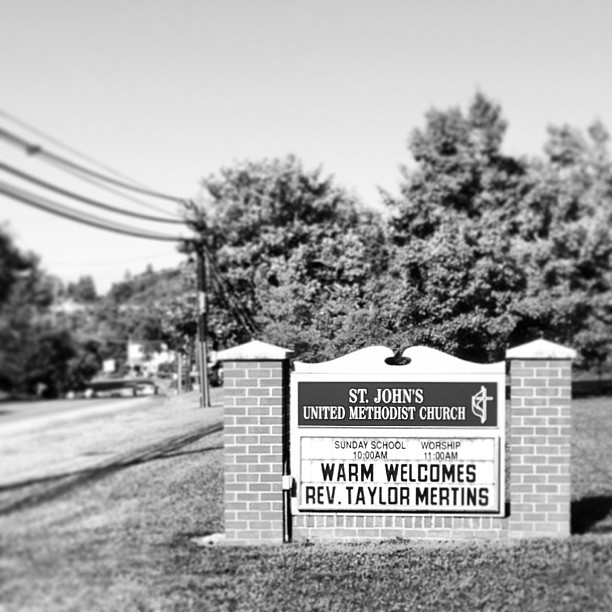
And then I received a phone call: “Taylor, we’re taking your name off the associate list. We believe that your gifts and graces fit best with serving as the pastor of St. John’s United Methodist Church in Staunton, Virginia. The bishop has appointed you, and we are praying for your ministry.”

As a 25 year old coming straight out of seminary, I never imagined that this would be the church that I was serving. I thought that I had it all figured out.

But God’s ways are not my ways. Our God loves to surprise us and save us in ways that we cannot imagine. I’m still trying to work out why God chose to send me here, but every day that I serve as the pastor of this church is a constant reminder that I am exactly where I am supposed to be. Because whether you know it or not, you have saved me in ways that I cannot even begin to describe.

Women are powerful and being faithful is complicated. Deborah and Jael remind us that the ways of the world are not the ways of God. That we are called to a new perspective on how to view one another: male-female, black-white, gay-straight, young-old, we are all God’s children full of value and worth. That God works in ways that are unexplainable and bizarre, calling people like you and me to serve our community side-by-side.

I’ll admit that its frightening and disconcerting, but sometimes God needs a tent peg to jolt, shock, and knock some sense into us.

Amen.

Hairs, Prayers, and Bears (Oh My!) – Sermon on 2 Kings 2.23-25

Strange Stories from Scripture Part 2

2 Kings 2.23-25

He went up from there to Bethel; and while he was going up on the way, some small boys came out of the city and jeered at him, saying, “Go away, baldhead! Go away, baldhead!” When he turned around and saw them, he cursed them in the name of the Lord. Then two she-bears came out of the woods and mauled forty-two of the boys. From there he went on to Mount Carmel, and then returned to Samaria.

091812_elisha

This morning we continue with the second part of our sermon series on Strange Stories from Scripture. As I mentioned last week, the drive for our sermon series comes from the wealth of scriptural treasure begging to be preached, in addition to my desire to not fall into a rut of preaching the same, favorite, and familiar texts over and over. Last week we talked about the fate of a young man named Eutychus who fell asleep during church. Today we are exploring the story of Elisha and the she-bears.


And while he was going up on the way, some small boys came out of the city and jeered at him, saying, “Go away, baldhead! Go away, baldhead!”

In my opinion, this is one of the most troubling passages in all of scripture. I can look into both the Old and New Testaments and find scriptures that challenge my faith, passages that require me to pray for understanding and discernment, there are even passages that I would rather ignore than affirm from a place such as this, but there are few stories as dramatic and frightening as the one we have read this morning.

While Elisha was on his way to Bethel, sweating under the heat of the sun, some young boys came out from the city ahead of him and began to make fun of him. “Get outta here baldy! We don’t want you and your shiny head around us!” Perhaps he tried to ignore them at first, but when the taunting became so distracting and loud, Elisha turned around to face the crowd of young boys and cursed them in the name of the Lord. As if on cue, two mama bears came barreling out of the woods and mauled 42 of the boys. From there Elisha continued on his journey to Mount Carmel, and then he returned to Samaria.

pucktoon64

Before we can even begin to address what happened on the road we need to go back, we need to get a larger picture of the story.

Elisha followed the reign of the prophet Elijah. Elijah is remembered for bringing a widow’s son back to life, for finding God in the sheer silence, and for confronting idol worshippers. Elijah was a favorite prophet for the New Testament writers who often drew the connection between the prophetic life of Elijah and the messianic life of Christ.

At the end of Elijah’s time Elisha followed him to the Jordan and watched him ascend on a whirlwind into heaven after having received a share of Elijah’s spirit. Elisha took up Elijah’s ministry, he literally took Elijah’s mantle with him, and continued to be a messenger and example of God’s Word for the people.

The story of Elisha and the she bears is one of the first things that took place during Elisha’s time as a prophet. As a young and novice messenger, he is making his way to Bethel and other parts of the land to bring the people back to their Lord.

What do you make of this passage? Is it one that you, like me, would rather ignore and pass over? Does it challenge your understanding of God and the role of the prophets? 

For centuries theologians, scholars, pastors, and Christian-disciples have attempted to make sense of this story; they have worked hard to explain what is really going on.

I could begin by telling you that there is more at work in this story than appears on the surface. In Hebrew, the designation for the “small boys” is more akin to “young men” and more particularly young men who do not want the prophet coming to their town to tell them what they have done wrong.

I could continue by showing you that, though Elisha was bald, he was in fact probably only 25 or 26 when this transpired; he was my age when he was taunted for being bald and cursed the young men!

Similarly the point can be made that the harmless teasing was in fact very troubling. They were not merely making fun of his shiny head but were denying his prophetic ability. After taking up his former prophet’s mantle, Elisha was being accosted; in so doing the crowd of young men was not only attacking a young prophet but denouncing the Lord as well.

Moreover I could share with you the simple fact that Elisha did not call out the she bears, he just pronounced judgment on the demonstrators and God decided the form of response. And even when the bears came out of the woods they did not kill 42 of the young men, they simply mauled them. Perhaps God was using the bears in a way that none of the young men would perish, but so that they would all be punished.

Yet, even with all these new details, the story still troubles me.

As I prepared for the sermon this week I consulted numerous commentaries on 2 Kings and I was shocked to discover some of the reflections regarding this passage.

One commentary claimed that Elisha was not the kind of man to summon bears from the woods. The “irreverence, lawlessness, and hoodlumism of youth are sure to result in moral disaster.” The bears function as symbols of the punishment that overtakes vicious behavior. It went on to state that the boys in the story are the prototype for thousands of youth today. Only if they are educated at home, in school, and in church will they be able to avoid the punishment of the Lord that will surely come in one form or another. (The Interpreters Bible, vol. 3)

Another commentary made the same point, but in a shorter and more direct way: Rich and poor, high and low, young and old, ALL must be punished for their transgressions… (Word Biblical Commentary, vol. 12)

I went on to consult numerous sermons on the passage and was frightened to discover that most of them, few that they are, articulate a theology that the kids got what they deserved. They might have all ended by saying, “our children, your children, will wind up like those boys because we have failed to train them as polite young people. We need to bring our children to church, and encourage them to bring their friends, so that we can shape their future to avoid the bears of God’s wrath.”

Breathe.

I am now going to do what many of my professors warned me about in seminary, I am going to preach against this text.

Whereas many scholars, pastors, and Christians believe that the children are at fault, (I agree, they are) I believe that Elisha is just as at fault for his quick curse of the bullying boys.

In 2007 Duke University did a study and found that 85% of seminary graduates leave the ministry within five years and 90% flee before retirement. Many of these pastors that run away from the ministry never return to church. (Read more here: Keeping Your Pastor)

With the rise in expectations of pastoral ministry, coupled with dying churches and lowered pay, its no wonder that many pastors abandon their flock. When many churches are running on financial fumes, while also expecting their pastors to continually go above and beyond their call, the result is a collection of pastors who are burned out and have lost sight of the Lord and their calling.

ynk22

I imagine the Elisha felt a lot like ministers in the first few years of their appointments. After all, Elisha found himself following in the steps of the renown and powerful prophet Elijah who no doubt cast a great shadow for the young prophet. Most of the people would be evaluating this young man based on the actions of his predecessors.

This wasn’t something that Elisha inherited but was called into. He could have remained a farmer, tending to the plows with the oxen, but instead he was called out of his life into something new, strange, and at times, terrible.

As a bright-eyed and bushy-tailed prophet, Elisha had everything to prove. And here in 2 Kings 2 Elisha find himself at the beginning of his ministry filled with passion for the Lord when a crowd of youngsters attack him for that very call.

I think that Elisha’s pride got the better of him when he was walking to Bethel. Unlike the Son of Man who would one day tell his disciples to turn the other cheek and love those who persecute you, Elisha immediately cursed the youngsters and they were mauled.

If this story is about what it means to be a prophet who speaks the Word of the Lord, then I would argue that the biggest take away is that we must be very careful with our prayers. God listens to our prayers and He answers them, sometimes in ways that we do not want and sometimes in ways that we do not expect. Be careful what you pray for.

When I arrived at this church I felt very much like what I imagine Elisha felt like at the beginning of his prophetic ministry. I was following in the footsteps of countless pastors who have shaped and nurtured this congregation into what it is today. I recognize that I will always live in the shadow of the likes of Fletcher Swink, Zig Volskis, and Patricia Meadows.

I sat in my office the week before my first sermon and thought about everything I had to live up to. I stewed over what my reputation would be at this place. I over-analyzed every word and sentence for that sermon, fearing how I might be received. 

I stood in this pulpit over a year ago, afraid of how all of you would respond. And, if I’m being honest, I stand here this morning still consumed by thoughts of what you think about these words, my delivery, and the connections with scripture.

Being a pastor is, at times, terrifying. Many weeks pass when I feel like I did not get enough done. There have been a number of Saturday nights that I lay awake in bed rehearsing in my head what I will be saying on Sunday. I have had many tough conversations with families, couples, and individuals about the sins in their lives. There have been countless visits when I wonder if I have actually helped at all.

And its when I reflect on all of these elements of ministry, that I realize how difficult it must have been to be Elisha. I begin to understand why he was so quick to curse those young men who spoke against his calling.

And the more I think about it, the more I see connections not only between Elisha and pastors, but also between Elisha and all of us.

How quick are we to curse those who speak against us? How inclined are we to forget our discipleship the minute our calling is called into question?

I know of an older gentleman who had not exchanged a word with one of his sons in years because of a foolish argument they had in the past. I know a woman who refuses to shop at certain stores in our town because of the color of some of the employees. I know neighbors that never wave or acknowledge one another because one of them went to Virginia Tech and the other went to UVA.

In today’s world it is too easy to put a tremendous amount of pressure on ourselves to shine brightly in the darkness. We set goals for ourselves that are lofty and unreachable. We expect greatness from our lives and the lives around us on a daily basis.

When we get caught up in the expectations of the world that we place on ourselves, we fall into the trap of quickly cursing others around us. When we fail, we jump to blame someone else. When we miss the mark we can come up with a list of excuses faster than we can come up with better solutions.

Being a pastor is hard, but being a disciple is harder. We are called to walk in the world as prophets, seeing this created place through God’s eyes. We have the unenviable task of reaching out to the last and the least and the lost. We have been baptized into a new order where the world has been turned upside down.

When we are accosted for out faith, when we are judged for our Christian allegiance, it will manifest itself in different forms. 

Elisha was made fun of for being bald.

You might be attacked for praying in public, for wearing a cross around your neck. You might be made fun of for offering up your gifts and tithes to a place like the church. You might be judged for praying to a God who often responds in silence.

But nevertheless, we are not called to respond to these threats by cursing on enemies. We have been commanded to love them.

What a crazy and wonderful thing it is to be a disciple of Jesus Christ. Amen.

Devotional – 1 Peter 5.6

Devotional:

1 Peter 5.6

Humble yourselves therefore under the mighty hand of God, so that he may exalt you in due time. 

Weekly Devotional Image

I got the phone call on Thursday afternoon letting me know that Mrs. Betty Lancaster had passed away. Sitting on my couch at the parsonage I realized that I have been at St. John’s for nearly a year and this phone call meant that I was going to preside over my first funeral. I got to the Lancaster’s room at Brightview Baldwin Park as quickly as I could and I sat with the grieving family as they accepted the fact that Betty was gone.

Betty Lancaster

Betty Lancaster

Over the weekend I met with the family on different occasions learning more about the kind of life Betty lived in order that I might do justice to her life during the funeral service on Monday afternoon. The family shared with me particular stories about her life; her love to travel, her expertise in the kitchen, and her dedication to instilling important family values. I heard about how she and Ray met on a Greyhound bus on their way to Radford/Blacksburg, and how their marriage of 63 years began in a service station here in Staunton when a clerk from the court met with them to preside over their martial vows.

I made phone calls to a few of Betty’s friends that still live in the community who confirmed the family’s belief that she was one incredible woman, ready to do whatever it took for others. The more I learned about her life, the more I wished I had been able to spend more time with her myself. 

But the one thing that stuck out among all the other details was a simple comment that Ray made as soon as I made it to his room after Betty died. Sitting in his chair, barely looking up from his lap, he softly said, “To us, Betty was always a star, but she never went in for all the glitz and the glamour.

submission-to-God-500x333

Humility is a lost art in our current culture. With the need and the drive to outshine everyone else (whether for employment, college applications, or just selfish desire) we no longer appreciate the importance of remaining modest. Life, at times, seems like one giant competition where we have to make sure that we come in first place. However, the kingdom of God is not like the world we live in. Instead of cutthroat competition dominating everything we do, we are called to humble ourselves under the mighty hand of God, so that he may exalt us in due time. In life we will have opportunities to shine for God, but we must remember that when we do our best, we do so for the kingdom of God and not ourselves.

The call of discipleship today is to live like Betty Lancaster did, which is to say we are called to live like Christ did; ready to listen, prepared to love, and humble in all that we do.

Getting Stoned With Stephen – Sermon on Acts 7.54-60

Acts 7.54-60

When they heard these things, they became enraged and ground their teeth at Stephen. But filled with the Holy Spirit, he gazed into heaven and saw the glory of God and Jesus standing at the right hand of God. “Look,” he said, “I see the heavens opened and the Son of Man standing at the right hand of God!” But they covered their ears, and with a loud shout all rushed together against him. Then they dragged him out of the city and began to stone him; and the witnesses laid their coats at the feet of a young man named Saul. When they were stoning Stephen, he prayed, “Lord Jesus, receive my spirit.” Then he knelt down and cried out in a loud voice, “Lord, do not hold this sin against them.” When he had said this, he died.

the-stoning-of-stephen

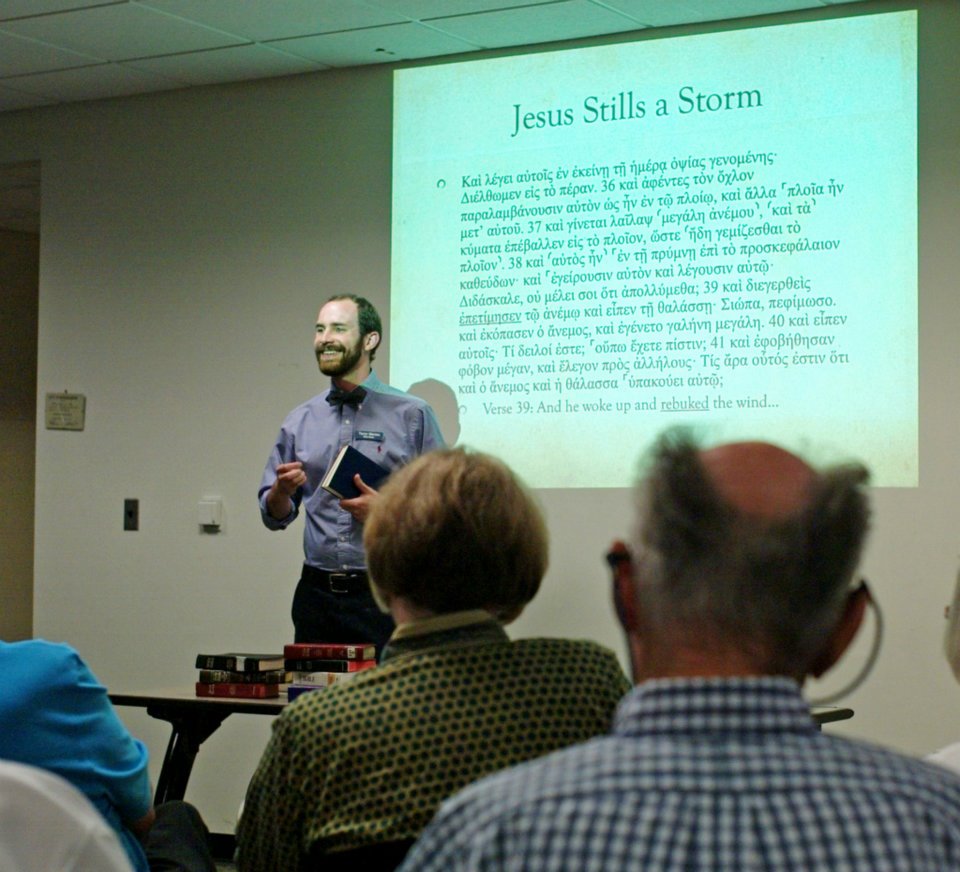
I was standing in front of a packed lecture hall, talking about Jesus according to the gospels, when I began to notice that the crowd was turning against me. For the previous three weeks I had stood in the front of that same room, a brilliantly bright powerpoint displayed on the screen behind me, making my way through the original Greek text of the gospel according to St. Mark. Each week we focused on a different element of Mark’s writing, comparing his gospel with the others, and generally reflecting on how this gospel still speaks fresh and new words into our lives.

It had seemed as if everyone was on board with what I was talking about, until the conversation moved to the cost of discipleship. I recognize now that I probably went to far, but at the time I felt the truth was worth exploring.

531711_3548371078945_1217125254_n

This is what I said: “In the gospels, particularly Mark, Jesus makes it very clear that following him, taking up our own crosses, being a disciple, will cost us our very lives.” Many people in attendance nodded. But then I continued, “Most of us here have no idea what that means. We sit in the comfort of our homes here in Michigan, sure we hear about all the bad things happening in the world, and even the bad things happening down the road in Detroit, but our lives will never be taken for our faith. We exist in such comfort with our faith that we can no longer even imagine what it would mean to give our lives for Christ, the cost of discipleship for us doesn’t cost very much at all.” “Well excuse me young man,” one of the women began, “but I go into downtown Detroit every week to serve food and give away clothing. My life is on the line for Christ every seven days. Don’t lecture me about the cost of discipleship.” This is when I should have stopped, apologized, and moved on, but I couldn’t help myself. So I asked her, “Do you go downtown every week because you believe thats the most and the best you can do as a disciple? Or do you go downtown with food and clothing every week because you feel guilty?


The early church had a problem. While the disciples were increasing in number, an argument developed over the distribution of food. Like us modern Methodists, a major conflict erupted not over proper theology, or reverence, but instead who was getting the appropriate amount of food. The twelve got together and asked for seven leaders to come forward in order to help with the organization of the early church, and to faithfully distribute the food among all the people. Stephen, described as a man full of faith and the Holy Spirit, was one of those chosen seven. 

In a short amount of time Stephen began to do great wonders and produce signs among the people. Once he stepped into the limelight of the early church, he rested under the microscope of many leaders and elders of the synagogues who argued with him. The leaders instigated some others to raise charges of heresy against Stephen and he soon found himself standing before the high-priest in order to defend his words and actions.

What followed is one of the most concise and deliberate retellings of the entire salvation story of God with God’s people. Stephen’s speech contains remembrances of Abraham, Isaac, Jacob, Joseph, Moses, and the prophets. He weaves the story in and out of the major moments; the beginning of the covenant, the flight to Egypt, Moses’ calling, the delivery from slavery to the Promised Land, the commandments being given on Sinai. In just a few short paragraphs Stephen perfectly encompassed the Old Testament for the high priest.

Though very descriptive, Stephen committed no blasphemy in his speech. He fairly repeated that which we have detailed for us in the scriptures, but before he finished speaking he had one final message to deliver: “You stiff-necked people, uncircumcised in heart and ears, you are forever opposing the Holy Spirit, just as your ancestors used to do. Which of the prophets did your ancestors not persecute? They killed those who foretold the coming of the Righteous One, and now you have become his betrayers and murderers. You are the ones that have received the law as ordained by angels, and yet you have not kept it.

It was only after hearing these words that the people became enraged and ground their teeth at Stephen. While they began to torment him, he looked up and saw the glory of God and Jesus standing along the right side, and he declared this triumphantly to the people. But instead of listening, instead of looking up to see what he could see, they covered their own ears and with a loud shout rushed forward to grab him and take him out of the city. While they stoned him, he prayed, “Lord Jesus, receive my spirit.” And with his final breath he cried out in a loud voice, “Lord, do not hold this sin against them.” When he had said this, he died.

saint-stephen-the-martyr-23

Stephen’s speech to the high priest and those gathered sealed his doom. Did he speak the kind of blasphemy against Moses and God like he was accused of? Nope. But Stephen went too far when he claimed that Jesus was at the right hand of the Lord, ready to rule. Stephen merely affirmed the same thing we claim every week when we stand and affirm the Apostles’ Creed, yet when he did it, it cost him his life. 

Some scholars and theologians claim that the climax of this episode in the book of Acts is Stephen’s death, when in fact the defining moment is the exaltation of Christ. Surrounded by his accusers and killers, Stephen continues to assert that Jesus is sitting at the right hand of God, that he is the long awaited Messiah already changing the world.

Jesus is there with Stephen at the final moments of his life, and how fitting considering the fact that Stephen utters the same words that Christ did at his own death. While the stones were flying through the air, Stephen’s prayer was not for deliverance, but a declaration of trust. Not, “Lord, save me!” but “Lord, receive my spirit.” His prayer is one that looks forward, not backward. His prayer was for his enemies, and not himself.

At his death, Stephen did what all of us are called to do in every moment of our lives: he acted like Jesus. He was serene while everyone else was going crazy; he was forgiving while the crowds were vindictive; he prayed while the people acted as if God was not among them; he loved when he saw nothing but hate; he trusted the Lord when everything was claiming the contrary; he kept on hoping when there seemed nothing left to keep hope alive. All of this to tell the truth to the high priest and the crowd. All of this to die for what he believed in. All of this as the cost for his own discipleship.

What happened to Stephen is paradigmatic for what the church was like. Thousands upon thousands of Christians have given their lives in order to speak the truth of God’s reign in the world.

In the United States we have “freedom of religion.” This was instituted during the foundation of our nation and has secured the right to practice religion, regardless of orientation or denomination. For Christians, the freedom of religion means that we are free to exercise our faith in whatever ways necessary so long as we do so within certain limits, as long as we do not become fanatical. We can pray as a family at public restaurants so long as it is not too loud to disrupt the other patrons. We can teach our children to turn the other cheek and love their enemies so long as we are still willing to let them serve in the military. We can talk about controversial issues in church so long as we limit those conversations to this building.

Yet the story that we read today, the remembrance of Stephen’s final moments, reminds us practitioners of polite, civil, and calculated religion that once there were Christians who readily and joyfully parted with possessions, family, friends, even life itself to remain faithful.

Some might call Stephen fanatical and crazy (after all he was willing to give his live for his faith) but he is presented as a very rational person who died for the same faith by which he lived.

When I stood in front of that crowded lecture hall, talking to the Methodists of Birmingham, Michigan, I could sense their desire to be affirmed in their faith. They wanted me to believe that they were willing to give their lives for Jesus, but the truth is, most of them, and most of us here, will never be in a situation like Stephen’s. Christianity has become so complacent and accepted within our culture that we no longer feel the need to be radical and controversial when considering the ways of the world versus the ways of God.

Our faith used to be a movement. The early church used to be attacked, arrested, and silenced for their dedication to the Word. The first methodists used to be ridiculed for their methodical dedications to spiritual disciplines, feeding the poor, and befriending the outcasts.

What would it take for someone to ridicule you in your faith? I’m not saying that we are all called to stand trial for our God and give our lives like Stephen, but instead we need to ask ourselves if we are living up to the potential of faith that God sees in us.

Not all of us can be Stephens, but we can all be Christians. We can all speak the truth of what God has done for us. We can reclaim our commitment to changing the world for the kingdom of God. We can discover our faith in God by opening our eyes to the kind of faith that he has in us. How far would you go to demonstrate your faith in the world? What would it take to start ruffling people’s feathers here in Staunton by living as Christ’s body?

Speaking the truth can be the most difficult thing in the world, but at the same time it can also be the most faithful thing in the world. Perhaps you know someone who has, for too long, relied on alcohol to fill an emptiness in their lives but you’re too afraid to saying anything. Maybe you know someone who treats their spouse horribly and you’re unsure how you can help the situation. Perhaps you’ve seen someone embarrass or harass their children in public. Or maybe you need to be honest with yourself about something you need to change in your own life.

Stephen was willing to speak the harsh truth to a people who desperately needed to hear it. Stephen was prepared to give his own life for a man he barely knew that died on a cross and was raised again. How far are you willing to go? Amen.


Devotional – 1 Peter 2.21

1 Peter 2.21

For to this you have been called, because Christ also suffered for you, leaving you an example, so that you should follow in his steps.

Weekly Devotional Image

The argument broke out during a discussion on the Philosophy of Religion with a few of my peers in college. “Dying for someone is the ultimate sacrifice!” someone yelled. “Don’t be such a martyr!” someone ironically interjected. The conversation started politely enough; I made mention of a passage from Ayn Rand’s The Fountainhead and was curious what others thought about it: “I could die for you. But I couldn’t, and wouldn’t, live for you.” Before too long an argument had erupted regarding the necessity of physical sacrifice for others. A few of my friends adamantly believed that our ultimate call was to give our life for others so that we completely mirrored Christ’s life in our lives.

10330-i-could-die-for-you-but-i-couldnt-and-wouldnt-live

However, one young woman was unconvinced. She stayed quiet for much of the fight but eventually, with a calm and collected voice, she said, “I think dying for someone else is easy. Not that Christ’s death was easy; but his death is not our death. Christ died for the salvation of the world, so that we would not have to. I think the far greater challenge is to live for one another. Living for someone else requires us to love the way Christ did. It would be so easy to sacrifice my own life for someone else. But to live for someone that I despise? Thats what Christianity is all about.”

living-life-to-the-fullest

“For to this you have been called, because Christ also suffered for you, leaving you an example, so that you should follow in his steps.” For those of us living in the comfort of Christianity in the United States, our faith will probably never require us to give our lives. Christianity has become such an accepted reality that faith rarely frustrates or disrupts our society. However, we have been called to so much more than just sacrificing ourselves for others in death. The call of Christ on our lives is to sacrifice ourselves for others in the way we live. Just like the young woman proposed during our argument, to love someone that we despise is precisely what being a Christian is all about.

In this Easter season, a time of new faith, new beginnings, and new realities I wonder how we are all sacrificing ourselves for others? Today might be the best day to ask ourselves whether or not we are really following in the steps of Jesus.

Believing Is Seeing – Good Friday Homily on Mark 15.33-39

Mark 15.33-39

When it was noon, darkness came over the whole land until three in the afternoon. At three o’clock Jesus cried out with a loud voice, “Eloi, Eloi, lema sabachthani?” which means, “My God, my God, why have you forsaken me?” When some of the bystanders heard it, they said, “Listen, he is calling for Elijah.” And someone ran, filled a sponge with sour wine, put it on a stick, and gave it to him to drink, saying, “Wait, let us see whether Elijah will come to take him down.” Then Jesus gave a loud cry and breathed his last. And the curtain of the temple was torn in two, from top to bottom. Now when the centurion, who stood facing him, saw that in this way he breathed his last, he said, “Truly this man was God’s Son!”

CrucifixionBaloghWeb

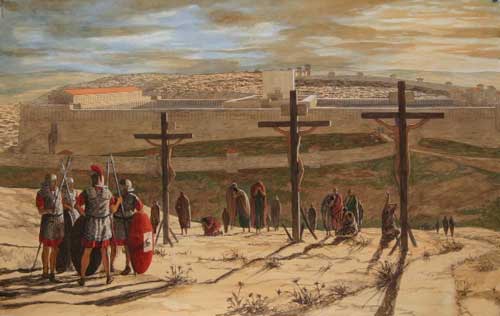
This is a day unlike any other. In the entire history of the world there has been nothing quite like what we remember today, and there will never be anything quite like it in the future. Millions upon millions of people have been killed unjustly and prematurely; but only this death has to do with the salvation of the world.

Look around at those who have gathered together with you tonight. Most people, of course, are not here. They are out doing what they do on any ordinary Friday night – dancing, drinking, eating, driving, laughing, loving. It has always been like this…

When Jesus was marched up to the place called Golgotha, which means the skull, most people did not even notice. Crucifixion was such a common activity that people were conditioned to avert their gaze from the bodies hanging on crosses. Many people were preoccupied with their own problems, which might help to explain why Jesus was so abandoned by his closest friends.

So, on this strange night, a night unlike any other, we gather together to remember the death of a man who was, and is, God in the flesh.

dogcollar

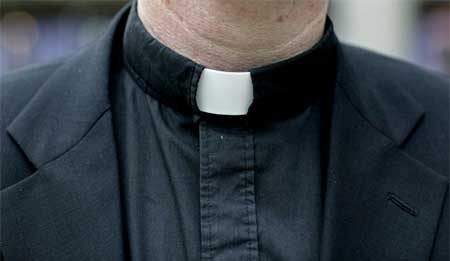
All week long I have been wearing my clerical collar. I know this might seem like a fairly Catholic thing to do, but it is traditional for all clergy to wear such things. For years I have been warned by other pastors about the dangers of wearing this collar: “No matter wear you go, people will assume that they can talk to you about all their problems.” “You can never prepare yourself for all the glares you will receive.” “It is a relic of the past, if you want to connect to people of today, ditch the collar and find something contemporary.” For me, I simply wanted to wear it this week to mark the occasion of Holy Week, and on another level I wanted to wear something that would force me to act like a Christian in public. You can’t get away with cutting in line at the grocery store when you’re dressed like this.

So I initially chose to wear it this week to honor this special time in the life of the church, but it slowly became an experiment here in Staunton. After hearing all of the stories about what this collar can bring in terms of interactions in the community, I was excited to see what might happen. I had plenty to do this week, but whenever I had the chance, I would go somewhere publicly; I worked on a sermon at a coffee shop, played drums for the Stonewall Brigade band, went to Walmart, the Staunton mall, Food Lion, I walked up and down Beverley street. I went everywhere that I could think of.

I was anxious about all the conversations and judgments people might make of my appearance, but I went out anyway. And you’ll never believe what happened… nothing.

I walked around this whole town and I received absolutely no response about my appearance. No one asked me about it, no one pointed and whispered, no one even looked at it. Now I know I’m not the best looking guy, but I’m used to people tat least taking a glance my way occasionally; its something we all do out of habit. But for the last few days I have felt largely invisible.

IMG_1279

So I decided to take it one step forward… Today, at noon, I arrived at church to begin carrying our cross all around Staunton. The cross that the confirmands so diligently decorated and created dug into my shoulders as I departed from the church and walked toward downtown. I walked from the church to Beverley Street, went up both hills on either side, and eventually made my way back toward the north end of town. I walked for two hours, and you know what happened? Nothing. 

Now, of course, walking with a 8 ft long cross will gather attention, I noticed a handful of people driving and walking who began to stare at the object on my back, but the moment I smiled, made eye contact, or waved, they diverted their attention to something else. Two couples actually switched what side of the road they were walking down in order to avoid my trajectory. For two hours I walked in silence and contemplation, every greeting I uttered was met with a blank stare, and just like with the clergy collar, I felt invisible this afternoon.

That was until I was standing next to a man waiting at the light by the library. I noticed that he kept looking at my cross, back to the ground, back to the cross, and back to the ground. Finally I heard him mutter, but loud enough for me to hear, “Jesus H. Christ.” To which I replied, “Actually its Taylor C. Mertins, but thanks for the compliment.” He did not think it was as funny as I did.

While walking across the lawn to put the cross back in the sanctuary I began to wonder if this is what Jesus felt like when he carried his cross. I wonder if what was most tragic was not the fact that he died, but that he died without anyone really caring or noticing. How strange that God chose to save us in this way, in the death of his Son abandoned by his friends on a cross.

Today, as it was in the time that Jesus died, many of us believe that we need not look at the cross at all. Here in our sanctuary all we have is this tiny cross on the altar. Many of us are far more familiar with the idea that, “God so loved the world, that everyone who believes in him may not perish but have eternal life.” In that verse we are told not to look, but merely to believe.

We so desperately want to skip over the suffering of Friday and jump straight to the glory of Sunday. Thats why more people attend church on Mother’s Day than Maundy Thursday and Good Friday combined. The cross is a harsh message. We want to divert our attention away from it. We want to hear good news. We want to laugh in church. We want to walk out feeling better about ourselves and the world. 

Yet, to ignore Christ’s death on the cross is to be tempted to believe that we are no longer in danger. But my friends, even Christ’s death does not mean we get to escape death, but only that even in death we will not be abandoned by God.

Looking on the cross and believing God are inseparable. Perhaps we have grown so accustomed to seeing the Christian cross that we now largely ignore it. Or we really know what the cross means so when we see it we, like the contemporaries of Christ, avert our gaze. But, Christ died on the cross. He hung up there for hours. He cried out to God. He suffered. He died.

This good Friday we are called to open our eyes to what Christ did, to look on the cross and live, to realize that believing is seeing.

How very strange of God to save us in this way, and how much stranger that we are to look on Jesus’ death if we are to have life.

Amen

creative stuff 020 - Copy


Devotional – Psalm 36.7-9

Psalm 36.7-9

How precious is your steadfast love, O God! All people may take refuge in the shadow of your wings. They feast on the abundance of your house, and you give them drink from the river of your delights. For with you is the fountain of life; in your light we see light.

Weekly Devotional Image

There is something tremendously powerful about baptizing and confirming youth who are old enough to make decisions and act on their own. Over the last two months it has been my distinct privilege to walk alongside some of my younger brothers and sisters in the faith as we made our way through differing confirmation classes. Every week I was surprised, astonished, and impressed with their willingness to participate and ask deep and meaningful questions.

Adult-Confirmation-Web-Image

Yesterday morning I stood before the congregation at St. John’s and confirmed seven youth. I called them individually to kneel before our church and invited their families to lay hands on the particular confirmand. As I placed a cross necklace over their head, and placed my hands on their shoulders, I confirmed each one of them in the love and grace of God the Father, Son, and Holy Spirit. It was a tremendously powerful experience and I noticed a number of people crying throughout the sanctuary as each youth was called forward.

As we surrounded the confirmands I felt, as the psalmist writes, that each youth was “taking refuge in the shadow of God’s wings.” Over the last few months they have feasted on God’s Word in God’s house learning about what it means to be disciples of Jesus Christ. It is my hope and prayer that they have truly come to know and see the light that comes from God.

Holy Week is a strange time in the life of Christians. Over the next few days we will be encouraged to remember Jesus’ final week as he made his way closer and closer to the tomb. On this Monday of Holy Week I hope that you can find yourselves held within the warm embrace and care of God’s wings. As you re-experience the depth of Jesus’ death, and the glory of the resurrection, I encourage you to feast on God’s Word, let it nourish your souls, and believe in the Good News of Jesus Christ.

Holy Week is our time to reconfirm our faith in the God who walked the streets of Jerusalem in preparation for death and life after death. These next days are an opportunity for us to rediscover the mighty acts of God in the world. This week encompasses our need to see and hear the story of God becoming like us to save us.

May God be with each of us as we feast with Jesus on Thursday, weep with him on Friday, and wait for him on Sunday.