The Cross in Creation – Karl Barth and Genesis 1.1-2

Genesis 1.1-2

In the beginning when God created the heavens and earth, the earth was a formless void and darkness covered the face of the deep, while a wind from God swept over the face of the waters.

barth-bw

While I was in seminary I spent one of my summers helping Bryson City UMC in Bryson City, North Carolina. Bryson City is surround by the Great Smokey Mountains and is easily one of the most beautiful places I’ve ever been in my entire life. It was an incredible experience that directly shaped the way I do ministry today.

During my time at the church I was invited to participate in a weekly lectionary group with local clergy. Every Monday morning the pastors and priests of Bryson City would get together to talk about the scripture readings for the following Sunday. We met at the large Baptist Church, ordered breakfast to be delivered, and then we would take turns reading from the bible and shared what we thought we would preach about on Sunday.

Week after week I heard from clergy of all different denominations (Presbyterian, Baptists, Catholic, Methodist, etc.) as they wrestled with God’s Word and how to proclaim it from very different pulpits to very different people.

On one hot morning in the middle of July I found myself surrounded by those familiar pastors and priests as we read the texts aloud. The lectionary always had four prepared readings for each Sunday on a three-year cycle: a reading from the Old Testament, the Psalms, an Epistle, and a Gospel. I don’t remember what the other readings were that morning, but I do remember that I was asked to read Genesis 1: In the beginning when God created the heavens and the earth…

When I finished, as was our custom, we waited for individuals to speak up about what they planned to do with the test during worship. Silence filled the room. So I decided to ask the obvious question, “I anyone planning to preach on Genesis 1?” The silence remained. I remember thinking to myself, “How strange is this? We’re talking about the first lines of scripture in the bible and no one is preaching on it in Bryson City this week.” It was obvious that most of the clergy wanted to move on to a different reading, but I felt compelled to ask another question: “Have any of you every preaching on Genesis 1?” One by one they confirmed my suspicion; not one of those pastors, priests, ministers, or preachers had ever proclaimed a sermon on the beginning of creation.

While they moved on to a different reading and a different conversation, I silently began calculating from my chair: In that room we had over 100 years of preaching represented. Over 100 years of preaching, more than 5,200 sermons, and not one of them had ever preached from Genesis 1.

Why do we ignore Genesis 1? What is it about the text that makes us afraid to bring it up in worship or in bible study?

On some level I think it is good to be afraid of God’s Word; that fear reminds us that God is God and we are not. But Genesis 1 is not something to be ignored or forgotten.

557046

Of all the writing I’ve read on Genesis 1, it is Karl Barth’s exegesis of the text that gives me hope for its return to the pulpits and congregations of our churches.

Barth, unlike so many modern theologians and pastors, rejects the fear and presumption that there is dissonance between creation as recorded in scripture and the scientific method. Instead of attempting to rationalize the theory of the Big Bang with the details of Genesis 1, and instead of struggling to line up Darwin’s Theory of Natural Selection with the order of creation in scripture, Barth rejoices in the knowledge that the earth was in a hopeless situation of chaos and utter darkness and God chose to transform reality through the Word. The “how?” and “why?” of creation is simply answered with “Word” and “love.”

Writing and reflecting from this vantage point gives Barth the ability to freely respond to the words contained in Genesis 1 with a freshness that is often lost in the church today; his exegesis of Genesis 1 is a worthy read for clergy and laity alike.

In §41.2 “Creation As The External Basis Of The Covenant” (III.1 The Doctrine of Creation in Church Dogmatics) Barth begins his exegesis with the very first words of God from the Word of God.

The first word in the Hebrew Bible is bereshith, which roughly translates to “start” or “beginning.” In English we render this as “In the beginning…” but for Barth the distinction is important. To begin with “beginning” tells us “that this history, and with it the existence and being of the world, had a beginning, i.e., that unlike God Himself it was not without a beginning, but that with this beginning it also looks to an end.”[1] There is no other word that can quite compare with the one that inaugurates God’s holy scripture. From the beginning of all things God created a beginning to have an end. The Lord did not create the world like a watchmaker and then step back to see how it would run. God was intimately involved in the creative act knowing full and well that there was a necessary end, or conclusion, to the creative act. Unlike an author who begins a story without knowing how it will come to close, God created from beginning with an ending.

For years I’ve read the creation account from Genesis 1 and thought of it just like that: an account of creation. The words were there on the page, though they hardly jumped out at me. Like those pastors in Bryson City, Genesis 1 is one of those chapters in the bible that I have not so subtly avoided because of the difficulty of rationalizing it with modern science. And yet Barth writes about the first two verses of scripture with such conviction that it challenges me to re-engage with the text and see the beauty of what God did, and is doing.

Verse 2 (the earth was a formless void…) has been similarly read with haste and overlooked for the richness it holds. Everything else, which is to say everything neutral or against God’s will, ceased to exist when time began with God’s action and accomplishment. The whole of creation was worked into being and order by God in time. In God’s freedom to create was the earth brought into meaning through God’s action and through God’s word to create.

1101620420_400

The challenge of verse 2 has vexed theologians and Christians alike for centuries regarding the chaos, whether or not God created it, and if God willed a reality of chaos into existence. This, I think, has factored into the disappearance of Genesis 1 from pulpits because we are unsure of how to speak about evil in the world, and whether or not God ordained it.

The question of God’s role in the creative act resulting in, or presupposing evil, is usually limited to two answers: God either did create the darkness and evil, or God did not.

Barth totally rejects this dualistic presumption.

Instead, Barth begins by confronting what is actually stated: “In verse 2 there is absolutely nothing as God willed and created and ordained it according to verse 1 and the continuation. There is only “chaos.” … that which is absolutely without basis or future, utter darkness… According to this phrase the situation in which the earth finds itself is the very opposite of promising. It is quite hopeless.”[2]

For Barth the question over evil and whether or not the violent and chaotic state of the world is self-originated or willed by God pales in comparison to the fact the earth was in a hopeless situation of utter darkness and God chose to transform reality through the Word. Verse 2 therefore posits a world in which the Word of God had not been uttered. The “nothingness” of creation is utterly destroyed and rendered impossible by the possibility of God in the creative act.

The ugliness of the existence prior to the Word of God did exist almost like a shadow of the actual creative act of God. And because it was like a shadow, in the freedom of humanity we can look back and return to that past and bring forth the shadow of verse 2. In so doing, by rejecting the Word of God, the past defies its own nature and becomes present and future. However, God totally and utterly rejected and rejects the shadow and speaks forth the Word to shine in the darkness.

The temptation of humanity to return to the shadow is ever present. Whenever we deny mercy to God’s creatures, we are retreating to the moment precisely before the Word of God. It is in our broken and sinful nature that we reject God’s Word and substitute our own. The shadow of darkness is around us whenever we encounter death and destruction. But no shadow can compare with the one of the cross: “This – this moment of darkness in which His own creative Word, His only begotten Son, will cry on the cross of Calvary: ‘My God, my God, why has thou forsaken me?’ – will be ‘the small moment’ of His wrath in which all that is indicated in Genesis 1.2 will become real. For all the analogy to other kinds of darkness, there is no other moment such as this.”[3]

In the death of Jesus Christ, in the shadow of the cross, humanity encounters the true and total darkness prior to God’s Word. But it is through Jesus Christ (as the Word) that God will reconcile creation to God’s self. In the one incarnate creature, at that particular moment and time in the cosmos, the Word will again become the Light over all creation. The brilliance of the empty tomb shines like the first light hovering over the darkness in Genesis 1.2.

The “old things” of creation prior to the Word have radically passed away in a dynamic and divine act of the Lord speaking the Word and through the death and resurrection of Jesus Christ.

The first two verses of scriptures contain the fullness of all God’s scripture. In beginning we see the ending. In the darkness we see the cross. In the light we see the empty tomb and resurrection. What Barth does with scripture is like what a Jazz musician does with the form of a tune; Barth improvises over the lines and draws connections to melodies that we have scarcely imagined.

To reclaim the brilliance of Genesis 1, to jump into the strange new world of the bible like Barth, will give us the strength to encounter creation and believe that it is worthy to be preached and proclaimed. But more than anything, it will give us the vision to see creation and declare, like the Lord, “it is good.”


[1] Barth, Karl. Church Dogmatics III.1 (Peabody, Massachusets: Hendrickson Publishers), 99.

[2] Ibid., 104.

[3] Ibid., 110.

Devotional – Luke 9.57

Devotional:

Luke 9.57

As they were going along the road, someone said to him, “I will follow you wherever you go.”

Weekly Devotional Image             It sounds easy. Jesus is walking along the road with his disciples and someone says, “I will follow you wherever you go.” In a sense, this is the same declaration we make each and every Sunday that we gather for worship; we want to follow Jesus wherever he goes. But do we really?

If we assume that Jesus is revealed to us in the sanctuary then it makes sense that we will follow him there. Sunday morning worship is a comfortable arena where we can feel good about our Christian identities; we can sing together from the hymnal, we can pray for the world to be a better place, and we can hear a sermon that makes us laugh and reminds us that God is love. But what about the end of the service? Are we willing to follow Jesus wherever he goes between worship services?

If Jesus walked into a Hillary Clinton rally to demand more honesty from our politicians, would we follow him? If Jesus wandered into a Donald Trump rally to demand an end to racism and bigotry, would we follow him? If Jesus marched against the NRA to boldly request better gun control laws, would we follow him? If Jesus made his way into the Pulse Nightclub in Orlando to spend time with a marginalized community, would we follow him? If Jesus asked us to take up our own cross and follow him to Calvary, would we follow him?

To follow Jesus is a radical thing. It means putting the needs of others before our own. It means seeking out the last, least, and lost in addition to the people who make us comfortable. It means we need to strive for mercy instead of sacrifice, communion instead of correctness, and Kingdom instead of nation. It means following him into the places of life that we would otherwise avoid.

maxresdefault

Many of us have grown comfortable with our Christianity because it does not ask much of us. So long as we can be present for an hour on Sundays, we believe we are covering our spiritual bases. In turn, the church has become another civic organization and no longer the life-giving arena of grace, mercy, and love.

And honestly, this makes sense. Throughout the gospel narratives Jesus’s followers and disciples continued to grow in number until he set his face toward Jerusalem. The closer he came to the cross, the more the people started to fall away. As the expectations and costs increased, the level of commitment dwindled.

At the end, while he was hanging on the cross with only a few faithful disciples remaining, it was a thief who wanted to follow Jesus wherever he went. And Jesus said, “Truly I tell you, today you will be with me in Paradise.”

Following Jesus comes with a cost, but the reward is beyond all measure.

Earthquake! – Easter Sermon

Matthew 28.1-10

After the Sabbath, as the first day of the week was dawning, Mary Magdalene and the other Mary went to see the tomb. And suddenly there was a great earthquake; for an angel of the Lord, descending from heaven, came and rolled back the stone and sat on it. His appearance was like lightning, and his clothing white as snow. For fear of him the guards shook and became like dead men. But the angel said to the women, “Do not be afraid; I know that you are looking for Jesus who was crucified. He is not here; for he has been raised, as he said. Come, see the place where he lay. Then go quickly and tell his disciples, ‘He has been raised from the dead, and indeed he is going ahead of you to Galilee; there you will see him.’ This is my message for you.” So they left the tomb quickly with fear and great joy, and ran to tell his disciples. Suddenly Jesus met them and said, “Greetings!” And they came to him, took hold of his feet, and worshiped him. Then Jesus said to them, “Do not be afraid; go and tell my brothers to go to Galilee; there they will see me.”

lightburst-easter-still-600x338


It was dark but I felt invincible. I was seventeen years old, with a fresh driver’s license in my wallet, and we were driving to the church in the middle of the night on Easter Eve. My friend, Will, and I had come up with a plan on how to make this particular Easter one that no one would ever forget. We were young and dumb.

For as long as I could remember, the church always set up a tomb on the front lawn of the church during holy week. It was the size of a small shed and it stood out like an oppressive eye sore to remind everyone what Easter was really about. From Good Friday through Saturday, volunteers would stand guard by the tomb wearing Roman centurion costumes and would try to look stern while also waving at people that drove by. It was the church’s attempt to reexamine the greatest moment in the history of the world, but after years of seeing the same men stand by the same tomb, it had lost its impact.

On Easter Sunday, someone was always tasked with getting over to the church before anyone else to roll back the stone on the front of the tomb. That way, while people were scrambling to find parking spots before the service started, they could remember how the stone was rolled away when the women and first disciples discovered Jesus’ resurrection on the first Easter.

But for Will and I, it was time to up the stakes and make it an Easter worth celebrating. We were tired of the same resurrection stories, we were tired of people entering and leaving much the same on Sunday, and we were tired of the familiarity that had become Easter.

So we snuck out in the middle of the night, much to the later frustration of our parents, and we drove over to the church. Under the cover of darkness we rolled back the stone that covered the entrance to the tomb, and we carried it across the church lawn to the main sanctuary entrance. There is a slanted roof above the main doors that everyone can see, and we decided it was the perfect place for the stone. Of course, we hadn’t planned on how difficult it would be to lift the wood framed faux stone that was as tall as us on to the roof, so we had to back my car up under the gutters and toss the stone up onto the shingles.

It was perfect, and I can still remember how quickly we peeled out of the parking lot with proud looks on our faces. We were going to recapture the power of Easter for our church.

Much like Christmas Eve, I couldn’t sleep. I was so excited to see the faces of all the people in worship when they noticed the stone on the roof, I couldn’t wait to hear our pastor make a comment about God’s cosmic power to roll back stones, even onto the church roof, during his sermon, but mostly I was excited to see people excited.

I arrived with my family in our perfectly coordinated outfits with a lot of expectation. I could not keep back a permanent grin on my face the whole way to the church, and when we got to the parking lot I couldn’t believe what I saw.

Nothing.

Sure enough the stone was still on the roof of the entrance, it was in clear sight for everyone to see, but not a single person had noticed it. They were all walking in and talking like it was like every other Sunday.

Even worse, during the time before the service started, I moved around the sanctuary to eavesdrop on all the conversations and not a single person mentioned the miracle on the roof. I don’t remember a word for the sermon that year because I sat disappointed in my pew with my arms across my chest.

The joy of my expectation had been replaced with frustration at the lack of reaction from the congregation.

When the service ended, my family got in line with everyone else to shake the pastor’s hand. We slowly made our way forward until I lazily offered my hand and the pastor grabbed it and pulled me close.

He said, “I was praying in the sanctuary this morning, and I heard God speak to me.”

“Oh, really?” I said dismissively.

“Oh yes, and he told me to tell you that whoever put the stone on the roof better have it back down by tomorrow morning. Happy Easter!”

Have we become so content with Easter that it no longer shakes us? Are we so entitled that we have accepted the gift of eternal life without recognizing how transformative it is? Does Easter still shock us the way that it should?

The women got up early and made their way to the tomb. They were expecting it to contain Jesus’ dead body, they were still grieving over the death of their friend, but they knew what they had to do. And suddenly there was a great earthquake! An angel of the Lord descended from heaven and rolled back the stone and sat on it. His appearance was frightening and he scared the Roman guards to such a degree that they became like dead men.

But then the angel said to the women, “Do not be afraid! I know you’re looking for Jesus, but he has been raised! Go tell his disciples the good news.” So the women made haste with great fear and joy to share the gospel and suddenly Jesus met them on the road and said, “Greetings!” The women ran to Jesus and knelt to worship at his feet, but he said, “Don’t be afraid; go and tell my brothers to go to Galilee; there they will see me.”

resurrection-Easter-edit[1]

This is shocking stuff. Jesus, dead on the cross, was placed in a grave, and three days later he rose. An angel appeared with an earthquake to roll back the stone at the tomb and proclaim God’s love through the resurrection of his Son. And at the end, the women respond in fear, joy, and worship.

Easter is an earthquake the shook the entire world, and more than that, it shook time itself. No more would God’s created beings be limited to the confines of earthly life, no more would the grace of God be limited to a particular time and place, no more would death have a sting.

This great gift of resurrection, the gift of Easter, shakes the very foundations of existence.

But does it still shake us?

We like Easter to be easy on the senses and on our consciences. Many of us like to dress up in our best clothes, and wear the right colors, and have an Easter egg hunt. Some of us are like the church of my youth who experienced Easter like any other holiday. Others are like the first disciples who were ready to get back to their lives after their Lord died, but then he showed up on Sunday and shook the world.

On Friday I came to church at about noon to take up our sanctuary cross and drag it through Staunton. This has been my holy week tradition since becoming a pastor and it always yields interesting results. The first year I carried the cross I was largely ignored; no one spoke to me or even acknowledged my presence. Last year was totally the opposite, people honked at me and waved their hands; I even had a few people yell curse words toward my direction.

This year however, I was met with reverence and ignorance. During the first hour or so I lost track of how many people rolled down their windows to shout “Amen!” or “God Bless!” When I walked up and down Beverley Street many people placed their hands into the posture of prayer, or bowed their heads, and even some people made the sign of the cross across their body. It was powerful for me to experience how much the cross was interrupting their lives. I witnessed God’s power made manifest in the cross on my shoulder as it met people and reminded them how far God was willing to go to transform the world.

But as I was getting ready to turn and start heading back, I saw a young family standing on a corner and I figured that I should keep walking. The husband and wife were cautiously sipping on their to-go coffees while their 8-year-old son was jumping to avoid cracks in the sidewalk. As I got closer they all started to notice the strange man carrying a cross on his shoulder, and they remained silent as I passed by.

I was only a few feet away when I heard the son exclaim: “Mom! That guy is carrying a giant ‘X’!”

“No honey,” The mother said, “That’s a cross.”

While I continued up the hill I couldn’t help but laugh at the episode I had just experienced. But then my laughter turned to sorrow, for I realized that young boy had no idea what Christ did for him. He had no knowledge of Christ’s magnificent sacrifice on the cross to open up the gates of heaven. He had no understanding of the earth-quaking good news of Easter.

Every year Easter interrupts ous sensibilities and behaviors. On this day we feel the earth shake beneath out feet because God has conquered death. We are jostled to and fro by the empty tomb because it radically reshapes the way we live.

The resurrection is about power and grace. In it we see how God took something like the cross, a sign of death to the world, and made it into the means of celebration. On Easter, God transformed the tomb in the same way that he did on Christmas in a virgin’ womb; God made a way where they was no way. On Easter, God changed the world.

So come and taste the goodness of God in the bread and the cup. Listen for salvation in our songs and prayers. Witness the power of resurrection in the people in the pews next to you. Hear the Good News, the best news. Hear it and let is shake your lives. He lives! Hallelujah!

Abstract-Art-Painting-Paul-Bennett-After-Night

The Shadow of the Cross – Good Friday Homily on Luke 23.32-46

Luke 23.32-46

Two others also, who were criminals, were led away to be put to death with him. When they came to the place that is called The Skull, they crucified Jesus there with the criminals, one of his right and one on his left. Then Jesus said, “Father, forgive them; for they do not know what they are doing.” And they cast lots to divide his clothing. And the people stood by, watching; but the leaders scoffed at him, saying, “He saved others; let him save himself if he is the Messiah of God, his chosen one!” The soldiers also mocked him, coming up and offering him sour wine, and saying, “If you are the King of the Jews, save yourself!” There was also an inscription over him, “This is the King of the Jews.” One of the criminals who were hanged there kept deriding him and saying, “Are you not the Messiah? Save yourself and us!” But the other rebuked him, saying, “Do you not fear God, since you are under the same sentence of condemnation? And we indeed have been condemned justly, for we are getting what we deserve for our deeds, but this man has done nothing wrong.” Then he said, “Jesus, remember me when you come into your kingdom.” He replied, “Truly I tell you, today you will be with me in Paradise.” It was now about noon, and darkness came over the whole land until three in the afternoon, while the sun’s light failed; and the curtain of the temple was torn in two. Then Jesus, crying with a loud voice, said, “Father, into your hands I commend my spirit.” Having said this, he breathed his last.

8812217-good-friday

Religious people aren’t supposed to fail, or suffer, or get arrested. They’re not supposed to hang out with vagrants, and criminals, and failures. Religious people are supposed to live good lives, surrounded by good people, doing good things. They’re supposed to have life all figured out, to be content, and to be filled with joy.

Jesus was beaten, dirtied, and was marched to his death with two criminals. While they walked along the way, the few disciples who had yet to abandon him must’ve lost all their hope; their Messiah was carrying a cross to the place called The Skull where he was to be crucified. Yet while the crowds screamed and threw their complaints into the air, Jesus calmly forged ahead with his eyes on the ground and the cross digging into his shoulder.

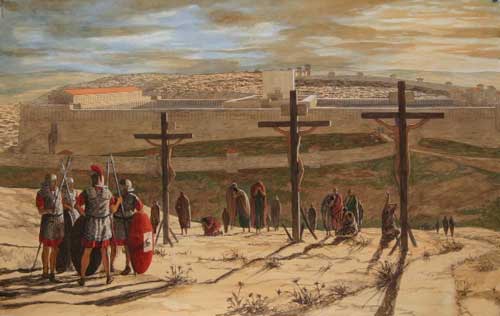
When they arrived on the hill, the guards nailed Jesus and the two thieves to their crosses and hung them in the air. The crowds must have grown larger the closer they came to the place and they hurled insults at the man in the air, ridiculing him for all that he had said and done. With the chaos erupting around him, Jesus bowed his head to speak with his Father: “Forgive them, for they don’t know what they’re doing.” 

In the entirety of the Christian year, Ash Wednesday and Good Friday are the least attended services. Christmas Eve and Easter are big days in the life of the church because we celebrate the incarnation and Jesus’ resurrection from the dead. But Ash Wednesday and Good Friday are all about death; “You are dust and to dust you shall return,” “Father, into your hands I commend my spirit.”

We don’t want to talk about death, we don’t want to talk about our own suffering, we don’t want to “bring other people down.

One of the things that surprises me most about funerals is our inability to confront death. When I preside over services of death and resurrection I am tasked with talking about, and affirming, the one thing that most people are afraid of: death being real. The juxtaposition between a funeral and the reception afterwards is sometimes nauseating.

Here in the sanctuary we speak the truth about death, we begin the process of grieving, we talk about what the person did with their lives and we acknowledge the void we now feel. But then I go to a reception and everyone wants to talk about everything else: March Madness brackets, the latest movies, new restaurants, and children’s activities. I’m not saying that we need to wallow in the sadness of death, but it is clear that we want to avoid death because it stinks.

goodfriday

By the time Jesus made it to the cross, the disciples had all cleared out. They had abandoned him for the same reasons that we avoid death today, it is too frightening, too heavy, and too sad.

The people began to mock the messiah in the tree: “he saved others; let him save himself if he really is the Messiah!” The soldiers taunted him with sour wine and scream out: “If you are the King of the Jews, save yourself.” And above his head they hung a sign containing his conviction: “This is the King of the Jews.”

Verbal attacks kept pouring in from the ground, but the scene now moves to the air. One of the criminals rebuked Jesus: “If you are the Messiah, save yourself and us!” But the other criminal spoke up, “we are getting what we deserve, but this man has done nothing wrong. Jesus please remember me when you come into your kingdom.

Jesus replied, “Truly I tell you, today you will be with me in paradise.

For the next three hours darkness came over the whole land and the temple curtain was town in two. Then Jesus, crying out with a loud voice, said, “Father, into your hands I commend my spirit.And he died.

For a long time I always inserted myself into the story as the forgiven criminal. I believed that even at the end I would’ve understood what Jesus was doing. As I grew older I started seeing myself as one of the disciples who abandoned the Lord and was nowhere to be found. I recognized that my faith isn’t as strong as I would like it to be, and that I would’ve been more concerned with my safety than with Jesus on the cross. But now, now I see myself as one of the bystanders who was there on Palm Sunday screaming “Hosanna” and then quickly began to scream “crucify!” a few days laters.

We sinners are lousy and fall short of God’s glory. We avoid people who are not like us, we want to shy away from common criminals, we want our lives to be perfect, and organized, and clean, and comfortable. And more often than not we enjoy witnessing the suffering of others.

But there is no shade in the shadow of the cross.

It is vitally important for us to remember that Jesus Christ was executed as a criminal among criminals! His death was made real on a cross because it warned the people about crimes agains the state and it added shame, pain, and public ridicule.

From the cross Jesus had no anger, only peace. He did not save himself, instead he saved a criminal. He did not thrash about with frustration, instead he was filled with serenity. He did not doubt God’s presence, he only trusted and kept faith.

Death is messy and ugly. I have been in enough hospitals, and stood over enough caskets to know how frightening death can be. Jesus’ death was likewise ugly. It was filled with shame and embarrassment. How did this prophetic Messiah go from the crowds cheering his name to being killed on a cross? How did he go from having faithful disciples to spending his finals moments with two criminals?

Jesus’ crucifixion was dirty and shameful. Yet, the hardest thing to comprehend is his willingness to forgive. More than the physical suffering and his literal death, his forgiving spirit is what stops us in our tracks when we read these words from so long ago.

From the cross Jesus announces forgiveness – this is the heart of the Gospel, it is the crux of the story, and it is what we are called to do if we are to follow him.

Last year I asked us to look at the cross and live. I implored us to give thanks to God for dying in Christ on our behalf to save us. I handed out crosses so that we might ponder the kind of divine love that was made real for us. I asked us to look at the cross and live.

This year I want to ask us to look at the cross and forgive. If Jesus was willing to use some of his final breaths to forgive the crowds for betraying him and bringing him to the cross, why are we so unwilling to forgive? If Jesus was so filled with love, shouldn’t we do the same?

Being a Christian is messy, ugly, and frightening if we are willing to follow Jesus. If we really want to be like him, then we have to start by forgiving others, and forgiving ourselves.

Amen.

unnamed

Marked and Cleansed – Ash Wednesday Homily on Psalm 51.1-12

Psalm 51.1-12

Have mercy on me, O God, according to your steadfast love; according to your abundant mercy blot out my transgressions. Wash me thoroughly from my iniquity, and cleanse me from my sin. For I know my transgressions, and my sin is ever before me. Against you, you alone, have I sinned, and done what is evil in your sight, so that you are justified in your sentence and blameless when you pass judgment. Indeed, I was born guilty, a sinner when my mother conceived me. You desire truth in the inward being; therefore teach me wisdom in my secret heart. Purge me with hyssop, and I shall be clean; wash me, and I shall be whiter than snow. Let me hear joy and gladness; let the bones that you have crushed rejoice. Hide your face from my sins, and blot out my iniquities. Create in me a clean heart, O God, and put a new and right spirit within me. Do not cast me away from your presence, and do not take your holy spirit from me. Restore me to the joy or your salvation, and sustain in me a willing spirit.

ash-wed-sq-300x300

How would someone know that you’re a Christian? I think this is a very important question for us to ask ourselves on a regular basis. During a normal day, how would anyone know that we affirm Jesus as Lord, that we pray to God the Father, that we believe the Spirit is with us in all things? Maybe you wear a cross around your neck, though even that symbol has become so innocuous to the general culture around us. Maybe you bring your bible with you to work or public places and you are not afraid to spend some time reading from the good book in front of other people. I personally like to wear my clerical collar when I’m out in town because it helps to show others who I am, and frankly it forces me to act like a Christian in public.

When I became a pastor I was so excited to wear my collar for the first time, to walk around Staunton, and let it speak for itself. I imagined the conversations that would begin at one of our local coffee shops: “Sir, would you please pray for my wife, she just received some tough medical news.” … “Do you mind if I pull up a chair and ask some questions? I’ve always wanted to ask a pastor about the miracles from the gospels.” … “I’m new in town, would you be able to help me find a church community?” However, after being here for some time, I can share that most of the time no one notices. I’ve gone to a local bar with the expectation that people would hide their beer bottles behind their backs, but they just keep talking like normal. I’ve been shopping at the grocery store and prepared myself for random questions, but people just keep scanning the aisles on their own. I’ve sat down at a coffee shop with my collar on, and bible open, and almost no one has made mention of my vocation.

That was the case until last week.

I was sitting at a table alone working on a sermon when two women came in, ordered coffee, and sat at the table next to me. I’m not ashamed to admit that I often eavesdrop on the conversations around me. It’s not that I intend to, or have a problem with it, but most of the time the place is quiet enough that its impossible not to hear what people are talking about. I went to grab my headphones, in order to drown out their conversation, but I heard something that peeked my interest: “Being a pastor must be the easiest job in the world

I decided then that the sermon could wait, this conversation was too good to miss.

One of them continued, “Seriously! They get paid to act like the rest of us. I mean, how hard is it to write a sermon every week and visit old people? Being a Christian is so much harder than being a pastor. It must be the easiest job in the world.

Without thinking about what I was doing, I stood up, walked over to their table, and said, “You’re absolutely right. Being a Christian is harder than being a pastor. The church has expectations about the way you are supposed to behave, and I get paid to behave appropriately, I am a professional Christian. The only difference is this, everyone knows I’m a Christian, what about you?” I then packed up my things and left.

Today, above all days, is an opportunity for us to be marked and cleansed. In a short while, each of us will be invited forward to have a cross of ashes placed on our foreheads, a sign for us to carry around for the rest of the day. Today, wherever you go, people will know who you really are. 

IMG_1957

Do you know where the ashes come from? We save some of the palm branches from Palm Sunday, and we burn them down into ashes. The same palms that some of us waved last spring to welcome Jesus in Jerusalem have been placed in the fire, and will now adorn our heads. This is done as a reminder that our shouts of “hosanna!” can quickly turn to “crucify!” I can go from being a well behaved Christian, minding my own business at a coffee shop, to walking over to strangers and letting my passive aggressive side get the better of me. We use these ashes to mark and cleanse ourselves for the coming season of lent.

All of us are sinners, the young and the old, the weak and the strong, we all fall short of God’s glory. This season of lent is an opportunity to turn back to God and reorient our perspectives about the way the world truly works. For the coming weeks our prayers should be for wisdom, for God to purge from us all wrong desires and failures. This is the time for us to be bold in our faithfulness as we enter the community around us. Lent is the time for God to create in us clean hearts, to put new and right spirits within us. We begin here with the ashes, remembering our finitude, so that God might restore us to the joy of salvation, and sustain us with a willing spirit to be faithful in the world.

How would someone know you’re a Christian? Today, everyone will know just by looking at your foreheads. But, the ashes will eventually fade away; the cross will disappear. The challenge for us is to act like it’s still there, to live full lives of discipleship so that everyone might know who we are, and whose we are. Amen.

Believing Is Seeing – Good Friday Homily on Mark 15.33-39

Mark 15.33-39

When it was noon, darkness came over the whole land until three in the afternoon. At three o’clock Jesus cried out with a loud voice, “Eloi, Eloi, lema sabachthani?” which means, “My God, my God, why have you forsaken me?” When some of the bystanders heard it, they said, “Listen, he is calling for Elijah.” And someone ran, filled a sponge with sour wine, put it on a stick, and gave it to him to drink, saying, “Wait, let us see whether Elijah will come to take him down.” Then Jesus gave a loud cry and breathed his last. And the curtain of the temple was torn in two, from top to bottom. Now when the centurion, who stood facing him, saw that in this way he breathed his last, he said, “Truly this man was God’s Son!”

CrucifixionBaloghWeb

This is a day unlike any other. In the entire history of the world there has been nothing quite like what we remember today, and there will never be anything quite like it in the future. Millions upon millions of people have been killed unjustly and prematurely; but only this death has to do with the salvation of the world.

Look around at those who have gathered together with you tonight. Most people, of course, are not here. They are out doing what they do on any ordinary Friday night – dancing, drinking, eating, driving, laughing, loving. It has always been like this…

When Jesus was marched up to the place called Golgotha, which means the skull, most people did not even notice. Crucifixion was such a common activity that people were conditioned to avert their gaze from the bodies hanging on crosses. Many people were preoccupied with their own problems, which might help to explain why Jesus was so abandoned by his closest friends.

So, on this strange night, a night unlike any other, we gather together to remember the death of a man who was, and is, God in the flesh.

dogcollar

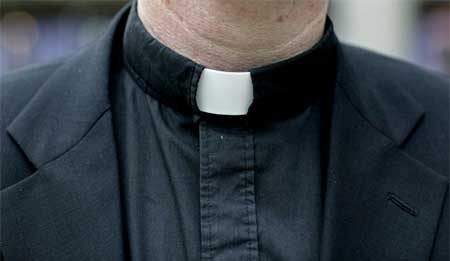
All week long I have been wearing my clerical collar. I know this might seem like a fairly Catholic thing to do, but it is traditional for all clergy to wear such things. For years I have been warned by other pastors about the dangers of wearing this collar: “No matter wear you go, people will assume that they can talk to you about all their problems.” “You can never prepare yourself for all the glares you will receive.” “It is a relic of the past, if you want to connect to people of today, ditch the collar and find something contemporary.” For me, I simply wanted to wear it this week to mark the occasion of Holy Week, and on another level I wanted to wear something that would force me to act like a Christian in public. You can’t get away with cutting in line at the grocery store when you’re dressed like this.

So I initially chose to wear it this week to honor this special time in the life of the church, but it slowly became an experiment here in Staunton. After hearing all of the stories about what this collar can bring in terms of interactions in the community, I was excited to see what might happen. I had plenty to do this week, but whenever I had the chance, I would go somewhere publicly; I worked on a sermon at a coffee shop, played drums for the Stonewall Brigade band, went to Walmart, the Staunton mall, Food Lion, I walked up and down Beverley street. I went everywhere that I could think of.

I was anxious about all the conversations and judgments people might make of my appearance, but I went out anyway. And you’ll never believe what happened… nothing.

I walked around this whole town and I received absolutely no response about my appearance. No one asked me about it, no one pointed and whispered, no one even looked at it. Now I know I’m not the best looking guy, but I’m used to people tat least taking a glance my way occasionally; its something we all do out of habit. But for the last few days I have felt largely invisible.

IMG_1279

So I decided to take it one step forward… Today, at noon, I arrived at church to begin carrying our cross all around Staunton. The cross that the confirmands so diligently decorated and created dug into my shoulders as I departed from the church and walked toward downtown. I walked from the church to Beverley Street, went up both hills on either side, and eventually made my way back toward the north end of town. I walked for two hours, and you know what happened? Nothing. 

Now, of course, walking with a 8 ft long cross will gather attention, I noticed a handful of people driving and walking who began to stare at the object on my back, but the moment I smiled, made eye contact, or waved, they diverted their attention to something else. Two couples actually switched what side of the road they were walking down in order to avoid my trajectory. For two hours I walked in silence and contemplation, every greeting I uttered was met with a blank stare, and just like with the clergy collar, I felt invisible this afternoon.

That was until I was standing next to a man waiting at the light by the library. I noticed that he kept looking at my cross, back to the ground, back to the cross, and back to the ground. Finally I heard him mutter, but loud enough for me to hear, “Jesus H. Christ.” To which I replied, “Actually its Taylor C. Mertins, but thanks for the compliment.” He did not think it was as funny as I did.

While walking across the lawn to put the cross back in the sanctuary I began to wonder if this is what Jesus felt like when he carried his cross. I wonder if what was most tragic was not the fact that he died, but that he died without anyone really caring or noticing. How strange that God chose to save us in this way, in the death of his Son abandoned by his friends on a cross.

Today, as it was in the time that Jesus died, many of us believe that we need not look at the cross at all. Here in our sanctuary all we have is this tiny cross on the altar. Many of us are far more familiar with the idea that, “God so loved the world, that everyone who believes in him may not perish but have eternal life.” In that verse we are told not to look, but merely to believe.

We so desperately want to skip over the suffering of Friday and jump straight to the glory of Sunday. Thats why more people attend church on Mother’s Day than Maundy Thursday and Good Friday combined. The cross is a harsh message. We want to divert our attention away from it. We want to hear good news. We want to laugh in church. We want to walk out feeling better about ourselves and the world. 

Yet, to ignore Christ’s death on the cross is to be tempted to believe that we are no longer in danger. But my friends, even Christ’s death does not mean we get to escape death, but only that even in death we will not be abandoned by God.

Looking on the cross and believing God are inseparable. Perhaps we have grown so accustomed to seeing the Christian cross that we now largely ignore it. Or we really know what the cross means so when we see it we, like the contemporaries of Christ, avert our gaze. But, Christ died on the cross. He hung up there for hours. He cried out to God. He suffered. He died.

This good Friday we are called to open our eyes to what Christ did, to look on the cross and live, to realize that believing is seeing.

How very strange of God to save us in this way, and how much stranger that we are to look on Jesus’ death if we are to have life.

Amen

creative stuff 020 - Copy


Who Is This? – Sermon on Matthew 21.1-11

Matthew 21.1-11

When they had come near Jerusalem and had reached Bethphage, at the Mount of Olives, Jesus sent two disciples, saying to them, “Go into the village ahead of you, and immediately you will find a donkey tied, and a colt with her; untie them and bring them to me. If anyone says anything to you, just say this, ‘The Lord needs them.’ And he will send them immediately.” This took place to fulfill what had been spoken though the prophet, saying, “Tell the daughter of Zion, Look, your king is coming to you, humble, and mounted on a donkey, and on a colt, the foal of a donkey.” The disciples went and did as Jesus had directed them; they brought the donkey and the colt, and put their cloaks on them, and he sat on them. A very large crowd spread their cloaks on the road, and other cut branches from the trees and spread them on the road. The crowds that went ahead of him and that followed were shouting, “Hosanna to the Son of David! Blessed is the one who comes in the name of the Lord! Hosanna in the highest heaven!” When he entered Jerusalem, the whole city was in turmoil, asking, “Who is this?” The crowds were saying, “This is the prophet Jesus from Nazareth in Galilee.”

Christ's Entry into Jerusalem by Hippolyte Flandrin c. 1842

When Jesus tells you to do something, you do it. Sometimes it takes us a long time to figure this out, but for the disciples it must have been second nature. Two disciples were told to enter the next village and there they would find the necessary transportation; a donkey and a colt. “If anyone asks what you are doing, don’t worry about it, just tell them, ‘The Lord needs them.’

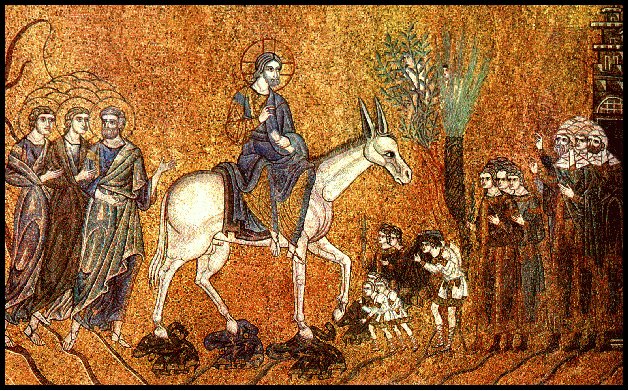
So the disciples went into the village, found the animals, and brought them back to Jesus. The rest of the disciples took off their cloaks and placed them on the donkey for Jesus to sit on. As they approached Jerusalem crowds of people took off their own cloaks, gathered palms from the fields, and placed them on the road for Jesus’ donkey to trample on. The people were shouting “Hosanna (Save us now!) to the Son of David! Blessed is the one who comes in the name of the Lord! Hosanna in the highest heaven!

Finally, when he entered Jerusalem, the whole city was in turmoil, asking, “Who is this?” The crowds were saying, “This is the prophet Jesus from Nazareth in Galilee.”

Hosanna_988

This story opens up for us Jesus’ royal status in a public setting. Rather than entering the holy city with an army wielding swords and shields, this king of kings entered Jerusalem humbly and gently on the back of a donkey. This was, of course, to fulfill what had been spoken through the prophet, “Tell the daughter of Zion, Look, your king is coming to you, humble, and mounted on a donkey.” Yet, you have to wonder, what did the crowds make of this prophet entering Jerusalem the way he did?

Matthew tells us that the crowds rejoiced to such a degree that they took off their clothes to place them on the road. They were so enamored by this coming prophet that they took it upon themselves to adorn the dirty roads with their cloaks as a symbol of royalty. They shouted “Hosanna Hosanna” while waving the palms branches just as we did this morning. But, at the end of the scripture, the whole city of Jerusalem is apparently in turmoil, as if an earthquake had happened, and they begin to ask, “Who is this?

The irony that follows our particular story is tragic. Within a week’s time the crowds that were shouting “Hosanna!” began to shout “Crucify!” The disciples that were so willing to find the donkey and use their own clothing as a saddle, would fall asleep on their Lord in the garden of Gethsemane. The people who walked before Jesus announcing his triumphant entry in the holy city, would follow behind him as he dragged his own cross to the top of calvary. In Jesus’ last pilgrimage to Jerusalem, the son of David reenters David’s city, but the only throne he will find is on a cross.

Is is frighteningly easy for us to think that by celebrating Palm Sunday we are acknowledging Jesus as a king in the way that Jerusalem failed to do! We need to be constantly reminded of how easy our shouts of “Hosanna” can change to “Crucify.”

Over the course of Lent this year, our confirmation class has been gathering together every week after church to learn more and more about this thing we call discipleship. Every time we gathered we shared a meal, just like Jesus would have with his disciples, and then we jumped right into the lesson. We focused on how Jesus is the vine, and we are the branches; to follow Christ we need to bear fruit in our lives.

The weekly lesson always had activities paired with them in order to flesh out what we had been talking about. When we looked at God the Father we discussed creation, sin, and redemption. We cut out pictures from magazines that reminded us of sin and discussed ways to avoid the temptations of our lives. When we focused on the Holy Spirit we all took turns wearing blind folds and walked around the church property helping to guide one another the way that the Spirit guides us. When we talked about Paul we wrote letters to our church about things we do well, and things that we need to change. I gave the youth old dinner plates and a permanent marker, inviting them to write down any negative memories, disappointments, or frustrations, and then we took the plates into the parking lot and smashed them into a hundred pieces. The following week we used those broken pieces to adorn our cross that now stands here in the sanctuary.

IMG_1279

One of my favorite actives from confirmation this year occurred when we talked about God the Son, Jesus Christ. I invited each of the confirmands to take 10 minutes to walk around our church building and look for Jesus. They were told to find words, phrases, or pictures that reminded them of their Lord and then write it down. Once we gathered back together, we shared what we had found and then I asked them the same question that the people in Jerusalem asked after Jesus entered on the back of a donkey: “Who is Jesus?”

The room was silent. Even though they had walked around the building and shared their discoveries with one another, they were reluctant to even attempt to answer the question.

As I stood there before our confirmands, uncomfortably waiting in the silence, I realized how difficult that question is: Who is Jesus?

I have often heard people remark that the youth are the future of the church. Logically speaking, this is true. One day we will return to dust and those who are younger than us will remain. But they are also very much the church right now. So, young people, listen to me very carefully: Confirmation is just like taking those first steps into Jerusalem. All of the adults here are looking at you to save them and the church. But, be careful, because their cries of hosanna can change to crucify before you even realize it.

We all do it. We look at the promise of youth, thanking God for their lives and imaginations, but as soon as they step too far we are ready to chastise them. So, as an example, here are some of the things that our confirmands wrote to our church:

Dear St John’s… I love the way that you greet everyone when they enter church. I love how our church feels like one big family. I love the way you care about me.

All wonderful and positive affirmations about what we do. Hosanna indeed.

But each letter also had to include things that we could change, ways that we could be better:

I wish we had younger people in church on Sundays. I think that we need actually start doing something for those in need. Maybe we can start a garden and give all of the produce away. I think we should start clapping for the choir after they sing a really wonderful song, rather than just sit in silence.

Not terribly offensive, but certainly different. I imagine that these young minds have countless suggestions of how we can do church differently, how we can embody the will of God in what we do, how we can make the Word incarnate in our lives. But, if it makes us uncomfortable, if it pushes us too far, how are we going to react? Will we still look at them with “hosannas” on our mind, or will we dismiss these new innovative ideas just as Jesus was dismissed by the crowds?

So, to the more mature gathered here at St. John’s this morning: I encourage you to look on these bright young confirmands with hope and respect. Do not jump to conclusions about their ideas simply because they are young and inexperienced, they could be closer to the will of God than any of us. Their answer to the question, “Who is Jesus?” might be completely different than yours, but if you ask them, they can show you a side of our Lord that you’ve never known.

And to the confirmands I say this: Remember that Jesus entered Jerusalem in a humble way, without a sword, vulnerable to whatever his enemies wished to do to him. As Albus Dumbledore once said, “the truth is a beautiful and terrible thing, and should therefore be treated with caution.” We want to hear your ideas, we want to see the world and the church through new perspectives, but be humble in the way you share what you see with us. Be kind in your sharing, and we will return that kindness in our hearing. Their answer to the question, “Who is Jesus?” might be completely different than yours, but if you ask them, they can show you a side of our Lord that you’ve never known.

entry-into-jerusalem-12th-century-mosaic2

Today, Jesus’ triumphant entry into Jerusalem is a cautionary tale reminding us of how quickly our opinion can sway; how quickly we can be divided; how quickly we can forget that we are one body in Jesus Christ. Young or old, experienced or recent to the faith, we are in this church together. We join together for worship week after week learning to speak and act and think and live and love as Christians.

This message isn’t just for our confirmation class; its for each and every single one of us gathered here today. We have a choice, we can choose to follow our own path, ignore the needs of those who bother us, and learn to take care of ourselves alone. We can move with the crowds and let our shouts from “hosanna” quickly change to “crucify” whenever we so choose. Or, we can march up to Calvary with our Lord carrying our own crosses. We can work together to bear fruit in God’s kingdom on earth. We can love the unlovable because God loves us.

“Who is this?” the crowds asked. Who is this strange man entering into the holy city to turn the world upside down? Who is this prophet who knows our innermost desires and listens to us when we feel alone? Who is this king who sits on the throne of a cross? Who is this priest that shares his bread and wine, body and blood, with and for us? Who is this incarnate God who died for the sins of the World? Who is this man that healed the sick, fed the hungry, and clothed the naked? Who is this teacher that shares all of his parables with us? Who is this Lord that humbles himself to be just like us? Who is this Savior that is completely unlike us?

If someone asked you, “Who is this?” how would you respond?

Amen.


Clean Hearts – Homily for Ash Wednesday on Psalm 51.1-12

Psalm 51.1-12

Have mercy on me, O God, according to your steadfast love; according to your abundant mercy blot out my transgressions. Wash me thoroughly from my iniquity, and cleanse me from my sin. For I know my transgressions, and my sin is ever before me. Against you, you alone, have I sinned, and done what is evil in your sight, so that you are justified in your sentence and blameless when you pass judgment. Indeed, I was born guilty, a sinner when my mother conceived me. You desire truth in the inward being; therefore teach me wisdom in my secret heart. Purge me with hyssop, and I shall be clean; wash me, and I shall be whiter than snow. Let me hear joy and gladness; let the bones that you have crushed rejoice. Hide your face from my sins, and lot out all my iniquities. Create in me a clean heart, O God, and put a new and right spirit within me. Do not cast me away from your presence, and do not take your holy spirit from me. Restore to me the joy of your salvation, and sustain in me a willing spirit.

Ash_Wednesday

You are dust, and to dust you shall return.

For the last thousand years, these words have been traditionally used for this particular day. A priest or pastor will place a finger in the ashes, making the sign of the cross on a forehead, while whispering the words “You are dust, and to dust you shall return.”

These are frightening words. We have gathered today to be reminded of our own finitude, to mark the beginning of our forty day observance of Lent, to engage in a period of prayer and fasting. This is a solemn event in the life of our liturgical church, for today we are being asked to think about our own mortality.

When I was in seminary one of my professors told me that the hardest thing about being a pastor is that I have to remind people that they are dying when everything and everyone else tries to claim the contrary. I have been given the unenviable task of proclaiming the true and deep message of Ash Wednesday; we are dust, and to dust we shall return.

Most of us tempted to believe that we are invincible and that life will never catch up with us. We are tempted to believe that death isn’t real. Countless commercials and products are advertised with the sole purpose of prolonging our inevitable end. Even here in church, we spend so much time talking about the joy and hope of God in the resurrection from the dead, that we fail to spend adequate time reminding ourselves of our own finality.

Today, as we take our first steps into Lent with the ashes on our foreheads, we are like the psalmist who cried out, “Have mercy on me, O God, according to your steadfast love… wash me thoroughly from my iniquity, and cleanse me from my sin.” This is a time for us to deeply reflect on the ways that we can be better, the relationships to reconcile, and the new habits to cultivate. Lent is less about giving something up, and more about reorienting yourself back to God in order to use this life that has been given to you. Our desire is for God to create in us clean hearts and to put a new and right spirit within us. We have been given the greatest gift, the gift of life. The question we need to ask ourselves is this, “What are we doing with that great gift?”

In our narthex there is a plaque hanging on the wall in honor of Zig Volskis, a beloved former pastor of St. John’s. On the plaque you will find these words: “So teach us to count our days that we may gain a wise heart” (Psalm 90.12). Life is a fleeting and precious thing, one that we should not take for granted. Let us all learn to count our days, to reflect on our many blessings, rejoice in the gift of life and let our lives be fruitful for those around us.

Death is a frightening thing. Contemplating our finitude and celebrating it in worship is by far one of the strangest things we do as a church. But in the end, we do it so that we may gain wiser hearts, so that God might sustain us in the midst of our sinful lives, and above all so that we can appreciate the sacrifice of Christ on the cross and the glory of the resurrection. Let God use this Lenten season to help create in us clean hearts.

ash-wednesday-1-590x421

My friends, you are dust, and to dust you shall return. For the next forty days we will rest in the shadow of the cross, but remember this, the glory of the resurrection outshines everything, even death. 

Amen.