Ready To Die – Sermon on 2 Samuel 1.17-27

2 Samuel 1.17-27

David intoned this lamentation over Saul and his son Jonathan. (He ordered that the Song of the Bow be taught to the people of Judah; it is written in the Book of Jashar.) He said: Your glory, O Israel, lies slain upon your high places! How the mighty have fallen! Tell it not in Gath, proclaim it not in the streets of Ashkelon; or the daughters of the Philistines will rejoice, the daughters of the uncircumcised will exult. You mountains of Gilboa, let there be no dew or rain upon you, nor bounteous fields! For there the shield of the mighty was defiled, the shield of Saul, anointed with oil no more. From the blood of the slain, from the fat of the mighty, the bow of Jonathan did not turn back, nor the sword of Saul return empty. Saul and Jonathan, beloved and lovely! In life and in death they were not divided; they were swifter than eagles, they were stronger than lions. O daughters of Israel, weep over Saul, who clothed you in crimson, in luxury, who put ornaments of gold on your apparel. How the mighty have fallen in the midst of battle! Jonathan lies slain upon you high places. I am distressed for you, my brother Jonathan; greatly beloved were you to me; your love to me was wonderful, passing the love of women. How the mighty have fallen, the weapons of war perished!

maassen_resurrection_sml

Funerals are strange, difficult, and at times, beautiful. I usually receive the phone call from someone in the family, or from a funeral home, that someone has died and they were hoping that I would preside over the service. No matter who the person is, I am immediately filled with sadness knowing that someone, anyone, is now gone. Regardless of my personal connection to the individual, there is a sense of loss that comes with death and not even I can avoid it.

But then I have to get to work. I have to take that grief and hold it for a moment while I help others properly grieve their loss. I have to balance the proper amount of mourning with hope, sadness with peace, and death with resurrection.

When I receive that first phone call I have to start taking care of the logistics: Where will the funeral take place and when? Do they want someone to play the organ? Are they hoping for a particular soloist? Does anyone from the family want to speak on behalf of the dead? And only after the plans are made can we begin talking about the person, making sure that I know everything I can in order to properly proclaim their life, death, and resurrection.

Most of the time funerals take place in the middle of the day in the middle of the week. Friends and family have to take time off from work, or take their children out of school, in order to attend the service. Yet, funerals are not meant for immediate friends and family alone. The entire community of faith is called to witness to the life of those who have died so that we can continue to live out their witness regardless of how well we knew them, or not.

So, this morning, as I mentioned before, we are doing something a little different. A few weeks ago one of our church members named Dick Dickerson passed away. He had only been coming for a few years, but he was a staple in worship. He always sat in the back of the church on the right side, he flirted with every female that crossed his path, and he was incredibly sweet.

When I found out that his family would be having a private service in Kentucky at a later date I knew that we still needed to do something here in order to say goodbye. I knew that we needed to praise God for putting Dick in our lives. And I knew that we were going to have our own little funeral for him on a Sunday morning.
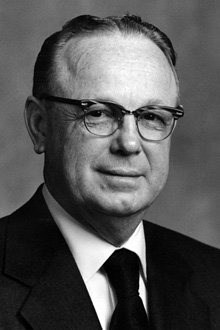
Dick Dickerson

Dick Dickerson

Dick Dickerson called me “honey.” I know that this might’ve bothered other young pastors, but to me it was endearing and precious. I would walk over to visit Dick next door at Brightview/Baldwin Park and the moment I entered his room he would always say something like “Come on honey and sit down with me.” For months I cherished this identification, it made me feel special that Dick felt so connected to me. It was only later that I learned he called most of the people in his life “honey”!

My wife Lindsey would stop by to say hello before a church service started and he would hug her while calling her “honey,” Grace Daughtrey would smile and politely nod her head as he greeted her with a “good morning honey,” and even Marshall Kirby would start to blush when Dick would refer to his Sunday driver as “honey.”

Dick Dickerson was a man of profound love, who deeply appreciated all that God had given him from the very beginning till the very end.

Dick grew up in Kentucky with a family in the midst of financial struggles. Living through the depression was, as he put it, one of the hardest things to witness. But at some point there was a family in the community who saw Dick’s potential, and they brought him under their wing and helped to provide for his education. He always maintained a connection with his biological family, but in his quasi-adoptive family he saw the Christian commitment to loving others, something that would affect the rest of his life.

Dick was a man of stories, stories that shaped his life and the lives of others. When he served as a quartermaster in Patton’s army during World War II he used to offer whisky to his fellow soldiers so long as they affirmed the beliefs of the Republican party. He told me that at the beginning of the war most of his friends were Democrats, but by the time they got home (and enjoyed the whisky) they had become staunch conservatives!

He, unlike others who served in World War 2, was ready and willing to share reflections on his experiences precisely because he did not want anyone to have to experience what he did. He often told a story about an evening that took place in the middle of the war on Christmas Eve when he found himself resting for the night in a bombed out church building. He could remember the wax dripping from the candles, the hole in the roof letting in the tiniest of snowflakes, and all the soldiers huddling together for warmth.

He asked a question of the men that night that he only later attributed to the Holy Spirit. He asked if the men wanted to pray for anything. One soldier prayed for his family back home, another prayed for warmer weather, but one of the youngest said something that would stay with Dick the rest of his life: “I seem to remember Jesus saying something about praying for our enemies, so tonight I would like to pray for the men we’re fighting against. I pray that God would be with them as He is with us.” Dick said that while other men might have grown angry or dismissed the prayer, all of the men joined together in that tiny church on Christmas eve, and prayed for their enemies.

Prayer was at the heart of Dick Dickerson’ life. He spent most of his free time going through a list of people that he lifted up to the Lord and regularly invited me to join him in his prayers. He once told me that prayer was the only thing that got him through the war, and that prayer was the only thing that kept him together once he returned home.

Dick lived a wonderful and blessed life. He married his sweetheart Mildred, had two children, and eventually began working for Madison College in Harrisonburg. Dr. Dickerson, as he was known to his students, made himself available to everyone all all times because he saw the value in other people. Whether in the classroom or at home, you knew that he would make time for you no matter what.

I spent a lot of time with Dick over the last two years, we talked about a great number of things, but the one thing we talked about the most was death. In fact during our very first and our very last conversations he said the same thing to me: “Honey, I’m ready to die.

In the beginning of 2 Samuel we have a song that David wrote in memory of Saul and Jonathan. After giving their lives for the Lord and the people, David called the nation to weep for their loss: “O how the mighty have fallen.” In life David and Saul were seemingly opposed, but in the experience their death David wept and mourned.

ProgramPage_MightyFallen

Many of us take the people in our lives for granted. We grow so accustom to their presence and persistence, that we rarely think about what life would be like without them. It is only when someone is truly gone that we can really appreciate what they always meant to us. It happened to David after Saul died. It happened to the disciples during those three days before Jesus rose again. And it has happened to me with nearly every person that I have buried while I have served this church.

But friends, resurrection comes into its fullest meaning when we lose someone we love.

Can you imagine the exultation the disciples experienced when they saw their Lord again after he broke free from the chains of death? Can you picture the joy on their faces when they were able to sit again with their teacher and friend? Can you imagine how David would have felt if he knew that one day someone from his family tree would eventually hang in a tree for the sins of the world so that we could all rise again in the resurrection?

Dick Dickerson was ready to die because he trusted the Lord. His trust was evident in our many conversations, and in is interactions with others, but it was most present while he prayed at this altar.

Dick rarely missed a communion Sunday. Even while his bone cancer was spreading throughout his body, he would make the long and slow journey to the front of this sanctuary to pray on his knees to the Lord. After feasting on the body and the blood, Dick would lay all the worries of his life out for the Lord, he would pray for God’s forgiveness over his sins, and he would thank the Almighty for surrounding him at every moment throughout his blessed life.

Are we ready to die? Every death in this church community is a constant reminder that the bell will toll for us all, and that tomorrow is never guaranteed. Are we ready to die? What kind of faith would it take to be ready to give our lives over to the Lord?

Dick Dickerson certainly had that kind of faith, a faith born out of prayer, presence, and praise, a kind of faith shaped by World War 2, and a kind of faith made real through the witness of Christ’s church.

lord__s_supper_by_bclary-d37hhzp

As we prepare to take steps toward this altar, to feast at Christ’s table, we do well to remember all who have gone before us to eat and pray. We remember Dick Dickerson and his willingness to lift us up. We remember the saints before us, in our midst, and those who will come after and discover God’s grace in a moment like this. And we remember that Jesus came to die so that we would all live, so that death would be defeated, so that the resurrection would be offered to us all.

So, thanks be to God for the great gift at this table and for the life of Dick Dickerson, a man who lived by faith, prayed with every fiber of his being, and was ready to die. Amen.

Lost and Found – Easter Sermon on Luke 24.13-35

Luke 24.13-35

Now on that same day two of them were going to a village called Emmaus, about seven miles from Jerusalem, and talking with each other about all these things that had happened. While they were talking and discussing, Jesus himself came near and went with them, but their eyes kept them from recognizing him. And he said to them, “What are you discussing with each other while you walk along?” They stood still, looking sad. Then one of them, whose name was Cleopas, answered him, “Are you the only stranger in Jerusalem who does not know the things that have taken place there in these days?” He asked them, “What things?” They replied, “The things about Jesus of Nazareth, who was a prophet mighty in deed and word before God and all the people, and how our chief priests and leaders handed him over to be condemned to death and crucified him. But we had hoped that he was the one to redeem Israel. Yes, and besides all this, it is now the third day since these things took place. Moreover, some women of our group astounded us. They were at the tomb early this morning, and when they did not find his body there, they came back and told us that they had indeed seen a vision of angels who said that he was alive. Some of those who were with us went to the tomb and found it just as the women had said; but they did not see him.” Then he said to the, “Oh, how foolish you are, and how slow of heart to believe all that the prophets have declared! Was it not necessary that the Messiah should suffer these things and then enter into his glory?” Then beginning with Moses and all the prophets, he interpreted to them the things about himself in all the scriptures. As they came near the village to which they were going, he walked ahead as if he were going on. But they urged him strongly, saying, “Stay with us, because it is almost evening and the day is now nearly over.” So he went in to stay with them. When he was at the table with them, he took bread, blessed and broke it, and gave it to them. Then their eyes were opened, and they recognized him; and he vanished from their sight. They said to each other, “Were not our hearts burning within us while he was talking to us on the road, while he was opening the scriptures to us?” That same hour they got up and return to Jerusalem; and they found the eleven and their companions gathered together. They were saying, “The Lord has risen indeed, and he has appeared to Simon!” Then they told what had happened on the road, and how he had been made known to them in the breaking of the bread.

the-road-to-emmaus-daniel-bonnell

I have been a Christian for as long as I can remember.

I was baptized at 19 days old and church has been there for me my entire life. As a child I loved hearing the incredible stories from scripture: Jesus walking on water, David defeating Goliath, Moses moving through the Red Sea. Church was an exciting place that was unlike anything else I did. In worship I learned how to listen, I learned what it meant to sing my faith, and I found tremendous joy in receiving communion.

Of course, as I grew older, the perfect glow of church began to fade away. We would learn about the importance of love and forgiveness during church, and then I would see a man screaming at his wife in the parking lot after worship. We learned about God’s kingdom as a rich and diverse new reality, but I only saw privileged white people in church. We heard about how important it was to keep the faith, but I started to have doubts about what scripture revealed.

Like most Christians, I have had my doubts. I have been kept awake late at night wondering about the divine, praying for God’s presence to be made known in my life and in the lives of others, and hoping for something to cleanse my unease.

Yet, it is almost always in the midst of a question, at the precise moment that I feel most lost, that God shows up and finds me.

The two disciples on the road were filled with doubt. We don’t know anything about the two who were walking to Emmaus; they weren’t famous, and they weren’t part of the 12 – they were just common, ordinary disciples like you and me.

I can’t even begin to imagine what it must have felt like to be walking on that road on that day so long ago. They had followed Jesus throughout Galilee and heard him proclaim the Good News, they had seen him heal the sick and feed the hungry, but just days previous they saw him betrayed, arrested, and murdered.

They might have known where they we walking, but I bet they felt lost. They had put all their hope and faith in a man who was buried in a tomb and now his body was missing. They thought the world was going to change, but the dirt under their feet felt even worse than before.

Suddenly, Jesus found them on the road and he went with them. Yet, they did not recognize the Lord in their midst. “What are you two talking about?” he asked. To which one of them replied, “Have you been living under a rock? How could you not have heard about the things that have taken place in Jerusalem?”

Jesus asked, “What things?

Immediately they began to explain all that they had seen and heard. “Jesus of Nazareth, a mighty prophet, was betrayed and sent to his death. We had hoped that he was the one who would save us. And now three days have passed and some of the women from our group went to his tomb and they say his body was missing and angels appeared, but no one has seen him.”

Jesus then began interpreting the scriptures to the men on the road, from Moses through the prophets, he showed how what had come to pass was part of God’s great cosmic plan. And yet, they still did not recognize him.

Later, as they came near Emmaus, Jesus kept walking on but the men invited him to stay. When they sat down at a table to eat, Jesus took bread, blessed it, broke it, and gave it to them. With the bread in their hands their eyes were opened and they finally understood who had been with them the whole time and he vanished.

All of the sudden everything started to make sense, the encounter on the road, the strange question, the interpretation of scripture, and even the holy meal. “Were not our hearts burning within us while we were together with the Lord?” Immediately they went back to Jerusalem to declare the good news: “The Lord has risen indeed!

resurrection-2

On Friday at noon I took the cross from our sanctuary, placed it on my shoulders and started walking around Staunton. When I did the same thing last year and I was largely ignored. For hours I walked through our community and most people averted their gaze, they tried to pretend that there was no cross for them to see.

This year, the opposite happened. People would honk their horns as they passed, they would roll their windows down and give me a thumbs-up. I saw familiar faces throughout my journey and felt glad for the sense of community that I experienced.

I carried the cross around because I want to bring the Lord to people outside of church. If we continue to falsely assume that we can only experience God’s grace in a place such as this, it will never grow and give life to other people.

Anyway, I was bearing my cross through Staunton and I was walking along the sidewalk on Beverly Street when I was stopped. In front of me stood an older woman with a large shawl draped around her shoulders and she kept staring at the cross. For a period of time that felt uncomfortably long we just stared at one another without saying anything until I saw her lip quiver and she asked a question that I was not expecting: “What will happen to me when I die?

I stood there with the cross digging into my shoulder and I felt the spirit of God fall upon us in that holy moment. Instead of giving some densely theological answer, and instead of evading the depth of her question I told her what I believed: “When we die God will take care of us. I don’t know what it will feel like or what we’ll experience, but the God that has been revealed to me will take care of us.

What kind of faith do you have?” she asked.

I explained that I am a pastor in the United Methodist Church, but above all I am a disciple of Jesus Christ.

Tell me about him,” she said.

So I did. I started with Christmas and the story of God coming in the form of flesh as a baby to be in the world with us. Jesus grew and called people to know that they were loved regardless of their life circumstances. This Messiah went out and found the people who were ignored by the rest of the world and he gave them value. He preached, healed, and he loved. And then Jesus was betrayed, arrested and killed on a cross for everyone to see, and three days later he was raised from the dead. The beauty of what Jesus did is that he died so that we might live. Jesus died for you, and for me, so that we might live.

Tears began to well up in her eyes, she reached forward to hug me, thank me, and before I knew it she was gone.

I can’t tell you anything about her other than our brief interaction, but to me it felt like she was lost and then Jesus found her in the cross and in the story. Whatever she had going on in her life suddenly fell away and she felt valued and loved by the one who came to live and die for us.

Jesus came to the disciples on the road, and not the other way around. They were lost in their thoughts and doubts and were incapable of recognizing Jesus in their midst. Only through the scriptures, and through the bread and wine did Jesus reveal himself to them, he demonstrated what his life had been all about: his resurrection means our resurrection.

Those of us here in church on Easter Sunday are in the same position as those two disciples on the road. Jesus has come to us here in this place through the reading of scripture, and in a few moments we will encounter the risen Christ through the bread and cup at the table.

I don’t know what you’ve got going on in your life. Most of us are pretty good about shielding away and hiding our doubts and insufficiencies. We turn on the smiles when we need to, and we know what we have to do to keep afloat. I don’t know what you might be wrestling with right now, or even if you’re wrestling with anything at all. But I do know this: If you took the time to come to a church on Easter, you believe in something more than yourself, even if its very faint.

road_emmaus

My faith is not perfect, and there are days that I struggle. I’ll be driving in my car on the way home from the hospital after praying with a family before a desperate surgery, or I’ll be standing above a casket with dirt still clinging to my fingers after saying goodbye to a faithful friend, or I’ll be reading the news online and be bombarded with never-ending negativity. There are many days that feel as if I’m walking to Emmaus all on my own with questions in my head just like those two disciples so long ago. But that’s when Jesus shows up.

Jesus isn’t looking for people with perfect faith and blind trust. God does not want puppets that he can string along. If Jesus is looking for anyone, it’s the people who are walking toward their own Emmaus. He’s looking for people like you and me who have questions.

Faith is an exciting thing not because it provides all the answers to our questions, but because it encourages us to ask questions in the first place. 

Jesus’ resurrection from the dead is not something that can be explained from a pulpit or from a book, it defies all logic and rationality, it exceeds our expectations, and often leaves us scratching our heads. But that’s the point. It is beyond anything we could ever imagine. Only the Lord who gives us life could have come up with something so incredible to change the world.

The resurrection is real, Christ appeared to the two on the road and revealed himself through the wonders of God’s word and holy table. God died in Christ on a cross and defeated death so that we might live with him in the kingdom; Christ died so that we might live.

The Lord is risen. God is on the move in the world seeking out those who are lost. God loves showing up in the words of scripture, in the bread and wine of communion, in chance encounters on the road, and in a variety of places to help find those of us who are lost.

Do we feel our hearts burning within us while we praise the living God? Do we feel the blessed holiness that comes with receiving this meal broken and shed for us? Are we ready to be found by the living God while we make our way to Emmaus?

The good news of Easter is that Christ’s resurrection has made our resurrection possible. But until that day when we feast with him at his heavenly banquet, I think the good news can be found when we feel lost on the old roads of life and Jesus finds us. Amen.

The Advent of Samuel – Sermon on 1 Samuel 3.1-10

1 Samuel 3.1-10

Now the boy Samuel was ministering to the Lord under Eli. The word of the Lord was rare in those days; visions were not widespread. At that time Eli, whose eyesight had begun to grow dim so that he could not see, was lying down in his room; the lamp of God had not yet gone out, and Samuel was lying down in the temple of the Lord, where the ark of God was. Then the Lord called, “Samuel! Samuel!” and he said, “Here I am!” and ran to Eli, and said, “Here I am, for you called me.” But he said, “I did not call; lie down again.” So he went and lay down. The Lord called again, “Samuel!” Samuel got up and went to Eli and said, “Here I am, for you called me.” But he said, “I did not call, my son; lie down again.” Now Samuel did not yet know the Lord, and the word of the Lord had not yet been revealed to him. The Lord called Samuel again, a third time. And he got up and went to Eli, and said, “Here I am, for you called me.” Then Eli perceived that the Lord was calling the boy. Therefore Eli said to Samuel, “Go, lie down; and if he calls you, you shall say, ‘Speak, Lord, for your servant is listening.’” So Samuel went and lay down in his place. Now the Lord came and stood there, calling as before, “Samuel! Samuel!” And Samuel said, “Speak, for your servant is listening.”

speak-for-your-servant-is-listening-christian-wallpaper-hd_1366x768

Today we continue with our Advent Sermon Series on “New Beginnings.” These few weeks of Advent are integral to the life of our church in the sense that we are preparing our hearts, minds, and souls, for the coming of God in Christ on Christmas day. Last week we looked at Abram and his call to go to a new and strange land, a call for a new beginning. Today we continue by looking at the Advent of Samuel.

Chapel time is the best. Every week our little preschoolers gather here in the sanctuary to a hear a story from the bible and how it can relate to their lives right now.

The first week I had them gather in the choir loft with the lights turned off. We talked about the beginning of creation and how God spoke the world into existence. I then encouraged the kids to scream, “Let there be light!” as loud as possible, and only when the volume was sufficiently over the top, I cut the lights on in the whole room. Another week we made chicken noodle soup together and talked about Esau selling his birthright to Jacob for a cup of stew. Another week, I had the kids do push-ups and sit-ups in the center aisle to build up their strength for a wrestling match. One by one they came forward and wrestled with me, just like Jacob wrestled with God on the banks of the Jabbok river.

10382573_702829629793354_3200154595278601519_o

On the Tuesday before Thanksgiving, I gathered with the children in the basement in preparation for their Thanksgiving feast. Chapel time that week was going to be all about communion. The kids made their way into the yellow room, and I sat down with them on the floor next to a table with the bread and the cup.

“Good morning my friends! Over the last few weeks you have been learning about the first Thanksgiving with the pilgrims and the Native Americans, about how they shared their food and ate with one another. We remember that great meal this week as many of us will sit around a table with our families and friends to share what we were thankful for. But a long time ago, way before the pilgrims landed at Plymouth Rock, there was another very special meal.”

“Jesus had been with his friends for a few years and this was going to be his last night with them. I’m pretty sure that they spent time that night talking about what they were thankful for, especially for Jesus. And when they were done talking, Jesus took a loaf of bread and gave to his friends to eat, and then he took a cup and shared it with his friends to drink. He said that he was giving himself for them, so that they would always know how loved they were.

1896866_732324416843875_2384499606542351705_n

At the moment I couldn’t believe how well the kids were paying attention. Usually someone gets distracted, and therefore distracts the rest of the kids, but that morning they were all listening and hanging on every word.

I then asked the children to pray with me over the bread and the cup and I shared communion with them. I tried very carefully to limit the amount of times I called the cup Jesus’ blood, but of course I let it slip and one of the kids shouted: “Are we really drinking blood!?” “Well, yeah, but its also grape juice” “Oh man I love grape juice!” One by one they came forward with their hands outstretched to take a piece of the bread and then dip it in the cup and then received it. For every child that came forward I looked at them in their eyes and whispered, “God loves you.”

10402584_732324513510532_5495924664254756371_n

After we finished the kids made their way to the red room to begin their feast when I discovered that Debbie, our Preschool Director, was crying. Worried that I had done something wrong I went forward to comfort her and was shocked when she shared why she was so upset: “Taylor, that was beautiful. You have no idea how precious it was so see those children line up for communion. This might be as close as some of them will ever get to understanding that God loves them.

This might be as close as some of them will ever get to understanding that God loves them.

Years from now I can imagine one of our Preschool students entering college. Though fully endowed with the knowledge of scripture and the willingness of this church to be there for him, he never enters our doors after he leaves the Preschool. High School is tough for him as wrestles with understanding his identity. Try as he might his grades are never good enough, his friends are never close enough, and no matter what he does he feels empty. Without having a true sense of direction, he applies to college and leaves home without looking back with the hope that this new beginning will be better than high school.

Sadly, it is not. College life is filled with even more people, and he feels less and less important. He falls through the cracks of campus life and spends most of his time alone in his dorm room. He still has the bible that we gave him so long ago, but it remains unopened on his shelf. One night, however, one of his roommates invites him to a campus ministry service. Reluctantly he attends, and is underwhelmed by the service.

The music is okay, and the message is all about spreading the Word of the Lord, whatever that means. He sits and listens attentively but he knows that he will never come back. But before the service ends, the pastor brings out the bread and wine and starts talking about communion. Immediately the boy is brought back to that morning sitting on the floor of the yellow room listening to a young bearded pastor talking about communion. While his mind is flooded with memories from the past he makes his way up to the make-shift altar and stretches out his hands to receive the body and blood of Christ while the pastor whispers, “God loves you.

I can imagine that even after that incredible service the knowledge of God’s love didn’t stick. The boy meets his wife in college, gets married, graduates, and moves to a new city for work. Yet, even after his family grows through the arrival of a few children, even while he is secure in his work, he still feels like something is missing.

He tries different things to find fulfillment in his life: he joins a civic organization, he volunteers at a local soup kitchen, he even helps a boy scout troop. But nothing seems to fill the void he feels in his life.

One day, however, a neighbor invites him to the community Methodist church. He laughs while responding about how he went to Preschool at a United Methodist Church but the neighbor insists that he comes to worship.

The man sits with his family in church, stands when he’s supposed to, sings when he supposed to, he even prays when he’s supposed to. He listens attentively to the announcements and the sermon, but most of it feels lifeless and repetitive. The pastor then moves to the table and invites the congregation to partake in this beautiful and precious meal that Christ has offered us without price. She says: “This table is the one true place where we can find fulfillment because in the bread and wine we see what Jesus gave for us on the cross, we see his truest and deepest act of grace. We are living in a time when the word of the Lord is rare, but at this table you can find what you’re missing, because here you discover the glory of God.

With tears in his eyes, the man walks forward. He remembers that day so long ago sitting on the cold floor in the basement of our preschool, he remembers that night in college when he walked up toward the altar. The emotional wave is almost overwhelming and as he stretches out his hands the pastor whispers, “God loves you” and for the first time, he believes it.

god-loves-you

People have heard the call of God in many different ways. Samuel heard it while he was sleeping in the temple and it took him three times to recognize that God was the one calling his name.

The word of the Lord was rare in those days, and it took an incredible act of faith to recognize that God was planning to do something incredible. Samuel did not identify his call when he first heard it, it had to be repeated and it had to be interpreted for him by the old priest Eli. 

Only when Samuel was able to respond with: “Speak, for your servant is listening” would he embark on a new beginning to be a prophet of the Lord. Part of the incredible beauty in this nighttime calling is the fact that God does not give up on Samuel. Though he clearly misses the location of his communication, God continues to call to him in an intimate and loving way.

One of the hardest things in the world to accept is that God loves us. In our heart of hearts we know, more than anyone around us, what we have done wrong and how we have fallen short of God’s glory. We see the mirrored reflection of our brokenness and we see someone unworthy of God’s love. Sometimes it takes more than a simple affirmation, it takes more than just a preacher babbling from a pulpit, it takes more than a bumper sticker or a billboard to remind us that God loves us. We need to hear it over and over and over again because it is true and remarkable.

I believe we are living in a time, just like Samuel, when the word of God is rare. We attempt to fill the emptiness in our lives with superficial commodities, we assume that money, power, and importance can make us feel whole. We foolishly hope that we can root our identity in a culture that ignores the outcast, in a country that neglects to embrace the democracy that we so worship, in a socioeconomic system that punishes the poor while rewarding the wealthy.

Now, more than ever, do we need to recapture that spirit of wonder and joy that a young man felt in the fuzzy hours of the morning when he heard his name being called in the temple. We need to discover the truest new beginning that comes when we remember that our identity is rooted in God. We need to let our discipleship be a living witness to others so that they can feel God’s love through people like us.

It was during another time when the word of God was rare, a time when governments oppressed the people they claimed to fight for, when a poverty stricken couple was forced to travel to a strange town for a census decreed by the emperor. In Bethlehem, when visions of God’s glory were not widespread, Mary and Joseph huddled together for warmth, believing the world had abandoned them to an awful fate. In the depth of their loneliness and fear, God came in the flesh to remind them that they were loved.

This table, where we gather, might be the closest you ever come to knowing that God loves you. When you feast on the great gift that was first given on Christmas, you are just like that child from our preschool, just like that questioning college student, just like that empty parent, and just like Mary and Joseph in the manger. This is where God makes all things new.

So if you remembering anything from today let it be this: God loves you. God loves you. God loves you.

Amen.
Devotional – Psalm 25.7

Devotional:

Psalm 25.7

Do not remember the sins of my youth or my transgressions; according to your steadfast love remember me, for your goodness’ sake, O Lord! 

Weekly Devotional Image

When I was in seminary Will Willimon used to talk a lot about how strange it was to serve communion to the parishioners of his church when he truly knew what was going on in their lives. He told a story once about how he was asked by the police to help settle a domestic dispute between some of his parishioners. Apparently the couple would have a big brawl and fight every spring and the police were used to the annual fight and debauchery. Will did his best to bring about a calm solution but he was shocked to discover the couple sitting in the pews the following morning, as if nothing happened.

Since the beginning of the church broken families, miserable relationships, and struggling sinners have gathered at the table and received the body and blood of Christ. What became important for Will was the understanding that he was not the one to judge their pasts, but that Christ “invites to his table all who love him, who earnestly repent of their sin, and seek to live in peace with one another.”

bread-and-wine

Some of the most precious conversations I have on a regular basis are with people who have not been to church in a very long time, or they have never entered a church at all; everything is new, exciting, and mysterious. I remember in particular a Sunday evening during college when a number of my friends, including non-church goers, came to support me when I preached at a local church. They listened carefully to the sermon, struggled to sing along with the songs, but when it was time for communion they sat there stunned. I motioned for them to go up to the front, if they felt comfortable, but they looked at me as if they were unworthy. In their faces I could tell that even though they did not fully grasp the significance of the table, they held a respect for it and were worried that the sins of their youth negated their invitation to receive the body and blood. In my life there have been few moments as wonderful as when I was able to look at my friends and tell them that they were invited, that God loved them no matter what they had done, and that God goodness knows no bounds.

It is an incredible thing that God does not judge us by the sins of our youth or the transgressions of our pasts, but remembers us according to God’s steadfast love. As we prepare to take steps into a new week, let us give thanks to the God whose love is beyond all things, to the God who remembers us for who we truly are, to the God whose table is always open.

Strange Stories from Scripture: Bored To Death (Almost) – Sermon on Acts 20.7-12

Acts 20.7-12

On the first day of the week, when we met to break bread, Paul was holding a discussion with them; since he intended to leave the next day, he continued speaking until midnight. There were many lamps in the room upstairs where we were meeting. A young man named Eutychus, who was sitting in the window, began to sink off into a deep sleep while Paul talked still longer. Overcome by sleep, he fell to the ground three floors below and was picked up dead. But Paul went down, and bending over him took him in his arms, and said, “Do not be alarmed, for his life is in him.” Then Paul went upstairs, and after he had broken bread and eaten, he continued to converse with them until dawn; then he left. Meanwhile they had taken the boy away alive and were not a little comforted.

SAMSUNG

This morning marks the beginning of our three part sermon series on Strange Stories from Scripture. Part of our series was born out of the immense treasure that is begging to be discovered from God’s Word in addition to the fact that it is too easy to fall into a rut with preaching the same and familiar texts over and over. Today we are talking about the fate of a young man who was bored to death (almost).


A young man named Eutychus, who was sitting in the window, began to sink off into a deep sleep while Paul talked longer. Overcome by sleep, he fell to the ground three floors below and was picked up dead.

When I have the opportunity to attend different church services, a very rare occurrence since becoming a pastor, I usually sit toward the front on the right hand side. I am of the persuasion that sitting toward the front helps the worshipper with their ability to participate fully in the service. Yet, I know that others have very different opinions on where they should sit for worship.

When I was in North Carolina, I worshipped for a long time at Duke Memorial United Methodist Church. I, like many of you, sat in nearly the exact same spot every Sunday. I grew accustomed to seeing the same heads in front of me, and the voices surrounding me during the hymns, to the degree that where I sat played a pivotal role in my worship experience. 

One Sunday morning I was surprised to discover a Duke undergraduate student sitting in my spot. I can vividly recall the wave of emotions I felt seeing someone encroaching on my sanctuary territory, but I eventually gave in and sat down next to the young man. He had all the markings of a polite and proper gentleman: his outfit had been perfectly ironed, not a wrinkle in sight, his hair was parted to the side, and he sat with precise posture. I attempted to introduce myself before the service started by I was interrupted by the beginning notes of the organ prelude.

As we made our way through the service, offering up our prayers to God, singing hymns, and reading scripture I took little notice of the young man to my left and genuinely enjoyed our morning service. However, about midway through the sermon I began to notice a sudden change in my neighbor’s disposition. Out of the corner of my eye I witnessed him participating in the age old “my-head-keeps-drooping-down-while-I’m-trying-to-stay-awake.

mr-bean-asleep

While our pastor weaved through the beauties of scripture, this young man was doing everything he could think of to stay awake: he scratched his eyes, stretched his back, and even slapped his own cheek. However, nothing was helping. His head would continue to fall down only to be slingshotted back into position every minute or so.

At this point I was so distracted by the young man that I became worried for him. What if the pastor notices him sleeping and calls him out during the sermon? What if he begins to snore and everyone starts to look at us? What if he actually fell asleep and his head crashed on the pew in front of us? So I did what any good Christian would do…

Hey bud,” I whispered while tapping on his shoulder. He quickly woke up and abruptly turned to stare at me. “If you put your hands like this (hands in the form of prayer) you can rest your head between them on the pew in front of us, you can catch some Zs and everyone will think you’re praying. If you start to snore I’ll nudge you.” With a smile he slapped me on the back and declared, a little too loudly, “thanks Bro!” and promptly fell back asleep.

Falling asleep in church can have dire consequences. What happened to Eutychus that night should be a fair warning for us about what happens when we fall asleep. Paul had come into town and would be leaving the next day. This night time gathering was the last and best opportunity for him to share the Word of the Lord with the people. It happened on the first day of the week, Sunday, when the people joined together to break bread.

This is the first reference to breaking bread as a community since the day of Pentecost in Acts 2; the budding Christian community has begun to sustain one another through the presence of God as experienced through the bread and the cup.

Paul had limited time to discuss the Good News with the church so he continued to speak until midnight. There were many lamps in the room upstairs helping to illuminate the space as Paul conveyed the depth and wonder of God with the people. A young man named Eutychus, which means “lucky,” was sitting in the window while Paul preached from the front of the room. Before too long his eyes began to feel heavy, the warmth of the lamps inviting him to rest his eyes, when he sank into a deep sleep as Paul continued to speak.

44_Ac_20_02_RG

Eutychus fell three stories from the window and was picked up dead. Paul immediately went down, bent over the young man and took him into his arms and said, “Do not be alarmed, for his life is in him.” And then Paul went back to the room upstairs and after breaking bread with his brothers and sisters, he continued to speak with them until dawn. Meanwhile the people had taken the boy away alive and were greatly comforted.

Oftentimes when we talk about the church during the time of Acts, and when we talk about our responsibility to be the church for the world, we compartmentalize the message of faith to going out of our comfort zones, opening our doors, and appealing to unbelievers. Yet this story is a sobering reminder that Christians are called to persevere through many trials, requiring the task of worship to comfort weary travelers on the journey of faith. Paul takes the time to gather with God’s people, break bread, proclaim the Word, and encourage them in faith.

Preaching is that opportunity to teach and enable disciples to discern between true and false gospels, authentic tradition, and how God’s Word continues to speak living and life-giving words into our lives today.

Even if we have the most wonderful and dedicated lives of service, we are weak without the revealed Word of God resonating deep into our souls. Watered-down, inarticulate and unexamined beliefs lead to weak disciples.

What do you want from a sermon?

preach-word

Do you want to be affirmed in your faith? Listen to words about scripture that leave you patting your back for having done a good job? Do you want to be challenged to live a better life through the proclamation of a sermon? What is it that you hope for from someone like me when I stand in the pulpit. Do you want to be kept awake? Do you want something to think about until next Sunday?

Preaching at its finest is, as Paul understood it, that remarkable time when God’s Word becomes incarnate again in our lives. We take the time to sit and listen to the incredible ways that God’s speech speaks something new and fresh in our lives. Preaching is about encouragement, challenge, love, hope, faith, recollection, and dedication. On that evening in Troas the preacher for the day went on a bit too long and it resulted in a young man falling to his apparent death from a window. What can I do to keep you awake to the faith that God has in you?

What do you want to discover in the breaking of bread?

Hands breaking open a baguette --- Image by © Beau Lark/Corbis

Paul was with the gathered church to proclaim the Word and break bread. When we gather together on the first Sunday of the month for communion, what do you want to find? Do you want to walk up to the front feeling unworthy of the gift with your head hung low? Are you hopeful for a feeling of complete joy as you dip the bread into the cup to partake in this heavenly meal?

Communion is that remarkable time when the divine and human come into contact. We come to the table to feast on Christ’s body and blood remembering what Christ did for us and for his disciples that last incredible evening. We partake of this spiritual food that sustains us for our journeys of faith. We break bread and in so doing we join together with all the saints that came before us and will follow after us.

Why do you come to church?

worship

This perhaps is the most important question for us to answer as a worshipping community. Why do we get together to do this week after week? Are we here to check up on old friends, hoping to hear about all the new and wonderful things going on in the community? Do we do church because it is what our parents did and they taught us to do the same thing?

When we hear words proclaimed in this place, when we break bread and gather at the table, God is made known to us. Much like the time when Jesus walked on the road to Emmaus with his disciples, they did not know that he was with them. It was only after he interpreted the scriptures and broke bread with them that their eyes were opened to his presence among them. We gather as Christ’s body to proclaim his Word and feast at his table so that God might become known among us. 

The church today has found itself in a strange place. Unlike the past when preachers and pastors had to worry about maintaining perfect, articulate, and sound theology (fearful of sounding heretic), today one of the greatest challenges facing the church is the ethos of boredom.   Instead of being caught up in the fear of making someone upset or angry because of something in a sermon, the contemporary church faces the incredible task on fighting against boredom, and in particular, being bored to death, at least spiritually.

In the last few weeks I have had a number of Christians from other churches in our community come to meet with me in order to vent their complaints about other pastors. “He doesn’t preach from the Bible!” “She moves too much when she preaches!” “His sermons no longer mean anything to me!” When doing church becomes boring we risk losing people, not just the young, to the temptation of falling asleep to the incredible glories of God.

If we come to church expecting it to be more like a funeral, a boring drab of an excuse to remember and anticipate God’s acts in the world, then it will remain as such. But that crazy night so long ago when Paul went on preaching until the late hours of the night, the gathered people might’ve expected their worship to turn into a funeral, yet Paul confidently broke bread, ate, continued to proclaim, and the boy was presented as alive.

The words and acts of the discipled life rehabilitates the church and the community. It brings us back to life, and transforms us from a fearful little group of people who keep our faith to ourselves to a incredible group of prophets who are able to confront the world’s ways and declare the words that Paul shouted, “there is life!”

There is life in our worship! We have encountered the living God who breathes and moves through us. We sing the hymns of our faith with resounding voices to declare the ways of God. We pray the words of our hopes, our joys, and our concerns by lifting them up to the Lord. We are called to feast at the table like all the apostles and disciples before us to be filled with the grace of God.

Is church boring you to death, or is it offering you life?

Amen.

My Cup Runneth Over – Sermon on Psalm 23

Psalm 23

The Lord is my shepherd, I shall not want. He makes me lie down in green pastures; he leads me beside still waters; he restores my soul. He leads me in right paths for his name’s sake. Even though I walk through the darkest valley, I fear no evil; for you are with me; your rod and your staff – they comfort me. You prepare a table before me in the presence of my enemies; you anoint my head with oil; my cup overflows. Surely goodness and mercy shall follow me all the days of my life, and I shall dwell in the house of the Lord my whole life long.

mycuprunnethoverwater

The 23rd Psalm. Many of you know that I am far more eager to preach on the lesser-known texts of scripture, than I am to preach on those that are remarkably familiar. I decided months ago that after my wedding and honeymoon, Psalm 23 would be the first text I preached on, precisely because it was familiar. All things considered, I have been very busy the last few weeks, and I thought that it would be easy to prepare a sermon on this beloved text; I was so wrong.

When we proclaim one of the best known texts from the Bible, there is an incredible amount of baggage that comes with it. If I wanted to preach on something from Obadiah or Nehemiah, I could say a whole lot about whatever I wanted because so many of us are unfamiliar with the texts, myself included.

psalm23-lg

But when you hear Psalm 23 read aloud, many of us immediately have a memory or a determined understanding of what the text means. Its familiarity makes it challenging to proclaim because we’ve all heard it before; The Lord is my shepherd, I shall not want…

What is it about this psalm that makes it so beloved? Perhaps many of us were taught to memorize the psalm when we were younger. Maybe some of us can remember our mothers and grandmothers whispering it by their bedside before they went to sleep. Is it the simplicity, the ease for memorization? It the use of this psalm in contemporary pop-culture? Besides the Lord’s prayer and John 3.16, this is perhaps the best known of all the Christian scriptures.

I believe what makes this psalm so compelling is not so much its brevity, but instead its realism. This is no happy-go-lucky, “everything is awesome,” kind of passage. Rather, it faithfully faces the dark realities of what life is really like, while at the same time calls us to honestly remember the delights of life. It has become so popular and beloved that many of us can recite it from memory, but have lost touch with what the passage is saying. Every verse contains a wealth of theological treasure waiting to be uncovered and enjoyed.

Good

The Lord is my shepherd, I shall not want. We of course remember immediately that Christ is the good shepherd, as our wonderful stained glass window portrays. God in Christ is the guardian of the church. The great I AM shepherded the Israelites through the wilderness, delivering them from slavery and captivity to the promised land. The Lord was the shepherd to the prophets who proclaimed the Word to the lost Israelites. God helped shepherd Christ throughout Galilee, even to the cross. Our Father was the shepherd to the disciples as they spread the gospel throughout the world. The great shepherd is now with us, guiding and keeping watch over all that we do as we witness to God’s love in the world.

God guards the flock as a whole, the sheep have been brought into the fold. Each of us are one of God’s sheep; we are safer if we stay connected with one another. If the church begins to stampede in one direction, some will be inevitably lost. If the church divides into factions, we will be like a panicking flock of sheep. We listen for the great shepherd who leads us.

He makes me lie down in green pastures; he leads me beside still waters; he restores my soul. In our modern lives we seem to have lost the power to relax; we no longer know what it means to observe sabbath time in our lives. We succumb to the power of stress that overcomes us regularly, and lose the energy to live vibrant and fulfilling lives. So, God, father of all mercy, bids us to relax, to observe some sort of sabbath in our lives, and to find rest. However, notice that rest is not a end in itself, God restores our souls through rest so that we can continue on our faithful journeys. Life is filled with movement, following the paths of righteousness.

He leads me in rights paths for his name’s sake. Even though I walk through the darkest valley, I fear no evil; for you are with me; your rod and your staff – they comfort me. God leads us, as the shepherd, on the right paths. So much of the vital moments and decisions in our lives do not come from our choosing; we do not determine the time of our birth, the kind of parents that we will have, the culture in which we find ourselves, the opportunities that “come our way.” At times life is beyond our control, and that is a good thing! To so desperately seek control of our lives will eventually end in disappointment. In order for God to be the shepherd of our lives, we have to let him into our hearts to shepherd us and guide us on the paths of righteousness. We need to let God be in control. It is only when we let go that we can faithfully proclaim, “even though I walk through the valley of the shadow of death, I will fear no evil.” It is only when we let go that we can know that God is with us.

You prepare a table before me in the presence of my enemies; you anoint my head with oil. Like any good shepherd, God has brought his flock back home to safety, brought us to his table, just like the table that has been prepared for us here. Some of our truest enemies might be with us here in church this morning, but God has prepared the table for you so that you can feast with friend and foe. 

lord__s_supper_by_bclary-d37hhzp

And so now we come to an incredible collection of words that encompass God’s goodness in our lives: my cup runneth over

How often do we take time to look back and reflect on what God has done for us? How much time do we spend in prayer thanking God for all that he has done? Can we faithfully declare “my cup runneth over…”?

10256438_10203577672981569_6139148774861837965_o

Today, of course, is Mother’s Day. I am blessed and privileged to have a mother who has cared for, and loved me, every day of my life. A mother who is still so accustomed to attending swim meets, baseball games, and band concerts, that she will drive two and a half hours to attend church with us here at St. John’s. A mother who participated in my life and activities, but gave me the freedom to grow and experience life independently. A mother who sacrificed her own needs again and again because she loved me. My cup runneth over. 

Some of you might not have had a mother like mine, some of you may have lost your mother, some of you might have grown up without a mother, but look around you. The call of the Christian is to be motherly to all that have gathered here. Though your mother might not have been like mine, I know that each of you have mothers in Christ that are here with us today. Our cups runneth over.

980415_10201896436508405_1440994831162466171_o

On April 27th I stood at the front of Aldersgate UMC in Alexandria, VA, waiting for Lindsey Rickerson to walk down the aisle with her father. I cannot tell you how nervous I was. I know that I was leaning from side to side, standing before all of my family and friends, my nerves attempting to get the better of me, but the moment Lindsey appeared at the back of the sanctuary I felt God’s presence surround me with a sense of calm I have rarely experienced. I covenanted with God and Lindsey to love, honor, and keep her with all that I am for the rest of my life. I am blessed to be her husband. Lindsey has changed my life for the better on numerous occasions, she challenges me to be a better man, and lives out God’s call on her life every single day. My cup runneth over. 

Some of you might not have a spouse like mine, some of you may have lost yours, or never felt called to be married in the first place, but today and for all days I get the joy of sharing Lindsey with you. We are all called to love one another in such a tremendously wonderful way that people like Lindsey can be and live for those that have gathered as the body of Christ. Our cups runneth over.

1610046_10152482968867577_1866027851814592445_n

After the wedding, while Lindsey and I celebrated at the reception. I had countless staff members continually refill my glass to the degree that I literally learned what it meant for my cup to runneth over. I looked around the reception hall and saw joyful faces that conveyed endless memories of how much my life has been shaped by others. In that room I witnessed God’s incredible goodness manifest in the lives of so many that I have been blessed to call my friends. My cup runneth over.

Some of you might not have the opportunity to sit in a room surrounded by droves of friends and family to congratulate you on the newest development in your life. You might feel lonely and isolated in your current life situations. But look around the sanctuary. Being one in Christ means that we discover our newest and greatest friendships here at church. Christian friendship and fellowship is what made the church so appealing in the beginning, and it rests at the very fabric for what it means to be the church today. I look out from this pulpit and I see the friendships that will sustain all of us through the coming years. Our cups runneth over.

The 23rd psalm is filled with such vivid and realistic imagery, applicable for our daily living. The great shepherd tends to his sheep, keeping them close and protecting them from harm. Our God compels us to find rest so that we can continue on our journeys of faith. The Lord invites us to this his table so that we might feast on heavenly food and meet the divine. But today, the Lord asks us to look on our lives and remember our blessings.

10172672_10104460766255513_8430566301283982547_n

Because our blessings are everywhere; from the tiniest details of a perfect sunset, to a incredible wedding and the joining together of two people. God has blessed our lives over and over again. We have the choice to reflect on his goodness, or remain in our suffering. Today we remember what God has done, we remember our mothers, and the call of the church to be motherly toward everyone, we give thanks to the Lord our God for shaping us through those we call our friends.

It’s only when we look at our lives and faithfully say, “my cup runneth over” that we can begin to proclaim the final verse of psalm 23: “Surely goodness and mercy shall follow me all the days of my life, and I shall dwell in the house of the Lord forever and ever.” Amen.

A Place At The Table – Maundy Thursday Homily on 1 Corinthians 11.23-26

1 Corinthians 11.23-26

For I received from the Lord what I also handed on to you, that the Lord Jesus on the night when he was betrayed took a loaf of bread, and when he had given thanks, he broke it and said, “This is my body that is for you. Do this is remembrance of me.” In the same way he took the cup also, after supper, saying, “This cup is the new covenant in my blood. Do this, as often as you drink it, in remembrance of me.” For as often as you eat this bread and drink the cup, you proclaim the Lord’s death until he comes.

BouveretLastSupper

After the worship service ended, a number of us were standing around and enjoying the fellowship when I overheard a grandson talking with his grandfather. The young boy looked puzzled about something when his grandfather finally inquired as to what had happened. “So let me get this straight, when we have communion, everybody is invited?” the boy asked. “Of course” answered the grandfather. “And did the pastor really say that when we do this we are eating Jesus’ body and drinking his blood?” The grandfather heisted for a moment but then confirmed the question. The boy stood silently for a moment, when all of the sudden a huge smile broke out on his face and he declared, “being a Christian is awesome!

body-and-blood-mark-jennings

That, my friends, is sound sacramental theology.

How strange is it, when you take a step back, that for the last two thousand years Christians have been regularly gathering around Christ’s table to partake in his body and blood. We are invited up to the altar to consume Christ just as Christ offered himself to the disciples in their last meal together, and as he offered himself on the cross. This really is an awesome thing that we do, because in doing so we remember and act into the life of Christ, committing ourselves to discipleship here and now.

For years I worshipped with a family that could’ve come from a Norman Rockwell painting. They always sat together in church, the kids dutifully listened to the sermons, and they were regarded with respect by nearly everyone in the community. Everything about the family made them seem perfect, particularly when it came to their first born son. Having cerebral palsy meant he was pushed in his chair into the sanctuary every Sunday morning. His parents were responsible for feeding him, clothing him, and changing him. And though he sometimes gathered stares from others in the congregation, to the family, he was just like everyone else.

I used to love seeing them enter church, I loved how they involved all of their children in everything they did, regardless of differences. It wasn’t until years later that I learned why they started attending our church.

They were a military family, and were moved every few years. This meant that whenever they arrived in a new place they had to lay the foundations for new relationships and social connections. After every move they would begin by finding a local church and would start participating in its ministries. They had been attending their church for sometime, creating new bonds with fellow parishioners, when the church had a communion service for the first time in a while. The family, like all the others, gathered in the center aisle and made their way toward the altar. Each child went forward and received the body and blood, but when the father pushed his eldest son forward in his wheel chair the pastor refused to serve the young man communion. “If he cannot understand what this means, I will not serve him,” was the response from the minister. That was enough for the family to never reenter that church ever again.

mixing-chairs-at-dining-table

On Jesus’ final evening with his disciples they gathered in the upper room and shared bread and wine, Jesus’ body and blood. Ironically, this sacramental meal which was intended to celebrate the unity of Christians with their Lord and one another has become the source of such division within the church.

Just imagine for a moment, that final evening the disciples had with one another; they had  come so far together. From their humble beginnings, called from their fishing boats and families in Galilee, these ragtag disciples had followed their Lord all the way to Jerusalem. They were the least likely candidates for the kind of mission that God would accomplish in the world, yet they were the ones called and invited to a new life with Christ. Around that table sat fishermen and  tax collectors, men who had abandoned everything they knew for a life of uncertainty following the light of the world. Even Judas, the one who would betray him in a number of hours was invited to the table and was given the body and the blood.

There is a place at this table for you. 

It does not matter where you’re from, who you are, what you’ve done. It does not matter how strong or weak your faith is. It does not matter whether you understand what happens here or not. Surely the disciples did not understand that first time, or they would not have abandoned their Lord the next day as he mounted the hard wood of the cross. I stand on this side of the table, and not even I completely understand what happens in the Eucharist.

It is truly an awesome thing to share this meal because it is mysterious. Somehow, in gathering together, the Holy Spirit is poured down upon us and these gifts of bread and wine so that they become for us the body and blood of Christ.

But even more mysterious than what happens here at the table, is the fact that people like you and me are invited to it. That regardless of our failures and short-comings, in spite of our desertion of Jesus at different times in our lives, and precisely because of our lack of faith, Jesus meets us here at the table.

I have to agree with my young friend from church; being a Christian is awesome


Questions: I Believe; Help My Unbelief! – Sermon on Mark 9.14-24 & Ephesians 2.8-9

Mark 9.14-24

When they came to the disciples, they saw a great crowd around them, and some scribes arguing with them. When the whole crowd saw him, they were immediately overcome with awe, and they ran forward to greet him. He asked them, “What are you arguing about with them?” Someone from the crowd answered him, “Teacher, I brought you my son; he has a spirit that makes him unable to speak; and whenever it seizes him, it dashes him down; and he foams and grinds his teeth and becomes rigid; and I asked your disciples to cast it out, but they could not do so.” He answered them, “You faithless generation, how much longer must I be among you? How much longer must I put up with you? Bring him to me.” And they brought the boy to him. When the spirit saw him, immediately it convulsed the boy, and he fell on the ground and rolled about foaming at the mouth. Jesus asked the father, “How long has this been happening to him?” And he said, “From childhood. It has often cast him into the fire and into the water, to destroy him; but if you are able to do anything, have pity on us and help us.” Jesus said to him, “If you are able! — All things can be done for the one who believes.” Immediately the father of the child cried out, “I believe; help my unbelief!”

Ephesians 2.8-9

For by grace you have been saved through faith, and this is not your own doing; it is the gift of God – not the result of works, so that no one may boast.

xlba-00052

Today we begin the first part of our sermon series on “Questions.” After requesting responses from all of you regarding your questions about God, Faith, and the Church, we have come to the time where I attempt to faithfully respond to those questions. Today we are talking about faith, being saved, and doubt. So, here we go…

In 1962 one of the greatest theological minds of the 20th century visited the United States on a lecture tour. Karl Barth was a product of Western Theology who actively spoke against the Nazi regime rejecting their un-Christian allegiance to Adolf Hitler. His writing and influence spread throughout the world to a degree beyond his expectation.

So during the early 1960’s Barth found himself in his later years, touring around the American landscape lecturing to young, and old, Christians about the importance of God being God.

Karl Barth is my theological hero – his books line my shelves and I believe he put forth a remarkable understanding of scripture.

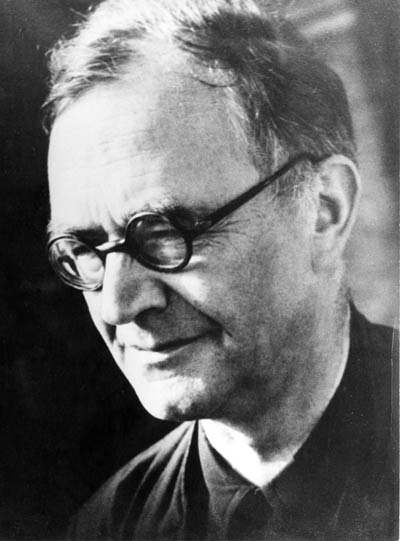
Karl Barth

Karl Barth

However, Barth is remarkably difficult to understand and was very longwinded in his writing. He was once approached by a young theologian declaring, “Professor Barth, you’re my hero! I’ve read everything you’ve ever written!” To which Barth replied, “Son, I haven’t even read everything I’ve written.”

Karl Barth, intellectual and as difficult to understand as any theologian I’ve ever read, lectured at Princeton, the University of Chicago, and Union Theological Seminary. After one such lecture, no doubt filled with theologisms beyond the capacity of comprehension, a young man bravely decided to ask a question.

Now, at the time, evangelical theology was beginning to take off in the United States. Churches pushed for “personal relationships with Jesus Christ.” Altar calls were all the rage. And everyone wanted to know when you got saved.

The young man, with his hand shaking in the air, waited to ask his question. I imagine that Barth was getting tired of answering the foolish questions from the audience but decided to offer one final answer. “Son, what is your question?”

“Well professor Barth, I was wondering, when were you saved?”

The young man, obviously caught up with the personal stories of individuals who accepted Jesus Christ in their hearts, moments where folk learned that they were saved, wanted to know when Barth had discovered this momentous occasion in his own life.

After responding to questions about the ineffability of God, the diminishing role of the third member of the Trinity, and the self unveiling to humanity of the God who cannot be discovered by humanity simply through its own intuition, Barth was finally asked a question with a simple answer.

“Hmm, when was I saved? Oh yes, thats easy, it was… 2,000 years ago on the cross.”

“How will I know when I’m saved?” A question I have heard time and time again. When will I know, with assurance, that heaven is my everlasting reward? How will I be able to tell that I have been saved and what happens if I ever have doubts later on, will I still go to heaven?

In many churches, being “saved” is equated with a moment when an individual accepts Jesus Christ as their “personal Lord and Savior.” We look at it as a check-off list, an accomplishment to be met in order to go to heaven. A time when they let their old self die, in order to be clothed in Christ forevermore. This often takes form in an altar call, that moment after the sermon when a preacher stands right where I am, calling out to the congregation, calling out for those who feel the call of God on their lives to come forward during the final hymn to give their lives to Jesus Christ. Sometimes it takes place in baptism, when water is used to cleanse a child or an adult from their broken ways and save them. Sometimes it takes place in the bread and wine of communion, nourishing someone’s faith in a way previously unexperienced.

In many places, being “saved” like this is worth celebrating as a rebirth, a reawakening of the soul, a definitive shift in the life of a Christian. Some of my friends celebrate their “saved” birthday every year with a cake and presents. And even though some of those people are dear to me, and even though I can trace back to a moment in my life where I committed my life to Christ, I still wonder about what it really means to be saved.

This is what I do know: The saving of anyone is something which is not within our power, but only of God. No one can be saved – by virtue of what he/she can do. Everyone can be saved — by virtue of what God can do.

After coming down from the transfiguration on the mountaintop, Jesus met back up with the disciples only to be surprised to see them arguing with scribes. Upon arrival the crowd surrounded him overcome with awe. Someone from the group stepped forward, “Teacher, I brought you my son; he has a spirit that makes him unable to speak, it makes him seize up and crash to the ground. I asked your disciples to cast it out, but they were unable.” Jesus then responded to everyone present, “You faithless generation, how much longer must I be among you? How much longer must I put up with you? Bring the boy to me.”

So the crowd brought the boy forward but he immediately began to convulse when in the presence of the Lord and he rolled on the floor foaming at the mouth. Jesus asked the father, “How long has this been happening to him?” “Its been happening since childhood,” the father responded, “but if you are able to do anything, have pity on us and help us.”

Jesus then responded, “If you are able! — All things can be done for the one who believes.” Immediately the father of the child cried out, “I believe; help my unbelief!”

unbelief

I believe; help my unbelief! The father’s reply demonstrates for us the nature of faith. It seems so paradoxical and contradictory, yet, how often has that father’s cry been the prayer on our lips? The father has shown a bit of faith by approaching Jesus in the first place, yet the move stemmed from desperation rather than confidence; “if you can do anything” shows his doubt and his faith at the same moment. The father holds his disbelief and faith in tandem with one another.

Haven’t we all had moments where, like the father, we can hold both our faith and disbelief at the same time? Periods in our life where we know that God loves us, yet our doubts begin to percolate at the same time. Perhaps confronted with a disappointment we call out to God  begging to know his ways, wondering if he’s even listening at all, yet we still call out to God. Like the father we take our burdens to God, we have enough faith to go that far, faith the size of a mustard seed, but then we struggle and limp along unsure of what God can do.

Prayer does not work like magic. Prayer is not a manipulation of God to get what we want. God does not simply grant all of our requests when we kneel and bow before him. That puts far too much power on our side of the equation. Like “knowing” we are saved because “we” have accepted Christ, it puts the burden on us to accomplish something that we cannot do on our own. If salvation can be decided on our acceptance of Christ as Lord, then God would never have had to come in the form of flesh, die on the cross, and then be raised from the dead. Prayer is more like wrestling alone in the middle of the night with a God who refuses to let go.

God is the one who saves us through Jesus Christ, God is the one who healed that father’s son through Jesus Christ. Prayer and accepting Christ is not magic, yet we are always called to pray, like that father, for more faith. We pray for more faith as trust in God’s love, grace, and power so that God in Christ can work his healing power and presence through Christ in our lives.

The story of the man bringing his son to Christ is powerful for all of us gathered here, because like that father we are fallen people incapable to saving ourselves and our loved ones. This story offers us a great glimpse of God’s glory: All things are possible to those who believe. But even greater than that is the fact that beyond our faith or prayers, God is the source of healing and salvation in our lives. Jesus is the one who calls us to brings our burdens to him, we are not left alone to try and save ourselves.

So, how do we know when we are saved? What does it mean to be saved? Are we allowed to doubt?

I like Barth’s answer to that young man, “I was saved 2,000 years ago on the cross.” I like his answer because its true and it puts the power of salvation back on God’s side of the equation. We cannot save ourselves by virtue of our own devices, but it is only God who can save us. Yet, there is something remarkably powerful about accepting Christ at the same time. Barth’s response is appropriate, but it still misses a fundamental element of what it means to follow Christ.

If being “saved” can be compartmentalized to that moment on a cross 2,000 years ago, then there is little need for us to follow Jesus in the present. Without a commitment to change our lives in accordance with the kingdom, discipleship falls to pieces. When we come to know Jesus Christ in our hearts, when we have that moment, whether its at the altar during one of our favorite hymns, or in the water of baptism, perhaps in the wine and bread of communion, its not so much they we are accepting God, but more the fact that for the first time we are realizing that God has had us the whole time. 

Faith, at its purest and deepest form, is not about “letting God into your heart” but discovering that God has been there the whole time. Being saved is not about making a choice to become a Christian, but a willingness to let God be the Lord of our lives, and not the other way around. Doubts are not something to be feared and dismissed, but to be embraced and wrestled with. Even after John Wesley felt the assurance of God’s love in his life when his heart was strangely warmed, his doubts crept back in within days.

Faith is that great dance between us and God, faith is knowing and unknowing, faith is being able to cry out “I believe; help my unbelief!”

Thats exactly why we need elements of worship such as baptism and communion. We need patterns and practices that remind us of that great event where Christ died and was risen, that incredible moment where we were saved, but we also need food and habits for our faith journeys. We need to know that we have been saved by grace through faith, not by our own doing, but by the gift of God. Yet at the same time we have to hold the mystery of salvation like the father did, we have to recognize that we continually need Christ to be the one from whom all blessings flow, we need Christ to hear our prayers and grow our faith, we need Christ to be our Lord, not just in the past but in every moment of our lives. You have been saved, and are continuing to be saved everyday.

I believe; help my unbelief!” is our confession of faith in the God who continues to breathe new life and new faith into all of us.

In a few moments we will celebrate the two great sacraments of our church. Hattie Myles Markham will be brought forth to the water to be baptized in the name of the Father, and the Son, and the Holy Spirit. She will be incorporated into God’s kingdom through the redemptive power of the trinity. And likewise all of us will then be invited to feast at Christ’s table letting the bread and the wine nourish our souls.

Here we find the gospel, in baptism and communion we find the good news of God in the world. No matter what you do, God will never love you any more, and no matter what you do God will never love you any less. God so loved the world that he gave his only son so that everyone who believes in him might not perish but have eternal life. Nothing can ever separate you from the love of God in Jesus Christ. Jesus Christ mounted the hard wood of the cross to save you and me from having to try and save ourselves. Salvation is here. Thanks be to God.

Amen.

In Those Days… – Christmas Eve Sermon on Luke 2.1-20

Luke 2.1-20

In those days a decree went out from Emperor Augustus that all the world should be registered. This was the first registration and was taken while Quirinius was governor of Syria. All went to their own towns to be registered. Joseph also went from the town of Nazareth in Galilee to Judea, to the city of David called Bethlehem, because he was descended from the house and family of David. He went to be registered with Mary, to whom he was engaged and who was expecting a child. And she gave birth to her firstborn son and wrapped him in bands of cloth, and laid him in the manger, because there was no place from them in the inn. In that region there were shepherds living in the fields, keeping watch over their flock by night. Then an angel of the Lord stood before them, and the glory of the Lord stood before them, and they were terrified. But the angel said to them, “Do not be afraid; for see – I am bringing you good news of great joy for all the people: to you is born this day in the city of David a Savior, who is the Messiah, the Lord. This will be a sign for you: you will find a child wrapped in bands of cloth and lying in a manger.” And suddenly there was with the angel a multitude of the heavenly host, praising God and saying, “Glory to God in the highest heaven, and on earth peace among those whom he favors!” When the angels had left them and gone into heaven, the shepherds said to one another, “Let us go now to Bethlehem and see this thing that has taken place, which the Lord has made known to us.” So they went with haste and found Mary and Joseph, and the child lying in the manger. When they saw this, they made known what had been told them about this child; and all who heard it were amazed at what the shepherds told them. But Mary treasured all these words and pondered them in her heart. The shepherds returned, glorifying and praising God for all they had heard and seen, as it had been told them.


Do not be afraid; for see — I am bringing you good news of great joy for all the people: to you is born this day in the city of David a Savior, who is the Messiah, the Lord.

lord-jesus-christ

In those days Augustus ruled over everything. The emperor of the powerful Roman empire had true and frightening power. His authority was known from the British Isles to Asia and into Africa. His very name meant wealth, rule, and power. His face and title was printed on currency, his decrees spread throughout the lands, and he was known by all. So, in those days, in the days of Augustus, our story begins.

And then one night in a tiny and seemingly obsolete town, part of Rome’s conquest, a baby was born. It was a tucked away village of little consequence to which the mother and her soon-to-be husband were traveling, not by choice, but because Augustus wanted the world to be registered. Both of them were poor, and when they arrived in the town no one took notice of their coming, no one offered to help them find a place to stay, no one even spoke to them. They went looking for space at the Inn, but there was no room, so the only place they could find to stay was a stable; that was where their child was born, a child named Jesus.

We learn then that within the region there were shepherds living in the fields who were confronted by an angel of the Lord. The angel brought great tidings of this new child’s birth, calling him a Savior, the Messiah, the Lord. And so these unnamed shepherds traveled into the city of Bethlehem to meet this child face to face, coming into contact with the incarnate God almighty. They shared their story with anyone who would listen and continuously glorified and praised God for all they had seen.

In those days, when everyone knew and feared the power of Augustus, a baby was born. And somehow, that tiny child born in the most unlikely of places and circumstances transformed the world forever. Augustus is only remembered in history books and lecture halls, whereas that baby grew into the man that embodied hope for the world from the day he was born to this very night. Augustus had all the power and money and influence to do whatever he wanted, yet Rome still fell. But of God’s kingdom there will be no end. Why? Because the power of Christ lives on, his light and love reaches into our very hearts and changes us into something new, different, and wonderful.

This story has been told for millennia. Gatherings of the faithful have taken place over and over again to remember this particular story, this radical moment that changed the fate of the world forever. It has been dramatized in countless films, books, songs, and plays. We, whether we come to church or not, hear this story as children and again and again as we grow older.

When you think of the manger, what do you see? Do you picture the animals lying silently with adoring eyes at the baby comfortably resting in the hay? Do you envision the wise men bringing their gifts of gold, frankincense, and myrrh? Do you imagine the warmth and the glow from the angelic presence as the incarnate God was brought into the world?

I know this might not be the Christmas message you want to hear, but Luke would have us imagine a very different scene.

Nativity

The story, as was read for us, is remarkably simple. Besides the appearance of the angels in the fields there is no great miracle or display of God’s power. The manger scene is quite stark, empty, and even frightening. Mary and Joseph were completely alone after traveling to Bethlehem while Mary was pregnant. They had to retreat to a stable at the back of, or underneath, the house (perhaps even in a small cave). When Jesus was finally born he was placed inside of a feeding trough, not the comfortable and clean version we often seen depicted on the mantle. There is a bare and frightening emptiness at Jesus’ birth, while two adults crouched in a cave feeling more alone than ever before.

Luke keeps the story clean of any decorations that would remove it from the lowly, the poor, and the marginalized — the people just like Mary and Joseph.

Sadly, in many Christmas celebrations we have not resisted the temptation to run to Matthew’s gospel where the royal visitors arrived with their gifts, or imagine a soft glow coming from the manger straw, and with the air filled with cherubs and angels. Luke has a glow in the story, but it is shining somewhere else.

angelandshepherdsloop

So where does the story move? To shepherds who are living in the fields in order to watch over their flock at night. Shepherding was a despised occupation during the time of Jesus’ life. They were a homeless group of ragtag sheep watchers, worse off than even Mary and Joseph in their difficult manger. And for whatever reason the angel of the Lord appears to them in the wilderness — Not Augustus in his palace in Rome, not the chief scribes and the temple priest in Jerusalem, but the lowly shepherds in a field.

“Do not be afraid,” The angel bellowed. “for see – I am bringing you good news of great joy for all the people: to you is born this day in the city of David a Savior, who is the Messiah, the Lord. This will be a sign for you: you will find a child wrapped in bands of cloth and lying in the manger.” And without warning a multitude of the heavenly host appeared praising God and singing, “Glory to God in the highest heaven, and on earth peace among those whom he favors!”

And so the homeless shepherds traveled to Bethlehem to see this Savior, Messiah, and Lord waiting for them in a feeding trough born to an unwed couple.

So you see, Mary and Joseph were left alone that night — it was from the shepherds that they learned of the angel and the heavenly host. The two new parents, busy with the chores of childbirth in the most inhospitable of places under the most difficult of circumstances, did not get to experience heaven’s visit but instead heard about it from a group of homeless and wandering sheep watchers.

This is an unusual story, but it is precisely because of its strangeness, that it has made all the difference.

“I am bringing good news of great joy for all the people: for you is born this day in the city of David a Savior, who is the Messiah, the Lord.”

For whom is the child born? Not Augustus with all of his power, not the priests and the scribes who ruled the religious practices, not the super elite and fabulously powerful, but for those shepherds in the field, for all of you. For YOU this child has been born.

In that tiny dark manger God was born of the flesh in the baby Jesus. God became incarnate, took on our humanness. Jesus was both human and divine. Born into two worlds, from above and below, Jesus came as a new being in order to reconcile the world back to God. Though he carried the glories of God with him everywhere that he would eventually travel, he never ceased to care for our most basic needs: food, water, relationships. Wherever he went he ate with his friends and the marginalized, all of the shepherd types within the community, nurtured relationships so that all would come to know more about the love of God.

He knew that we could not truly live by earthly things alone… Do you have a Christmas tree at home filled with presents underneath but you cannot find pure joy in your life? Have you raised the perfect family with 2.5 children, a dog, a cat, and a white picket fence, but you feel like something is missing in your life? Do you find yourself searching for meaning, and even when you fill your life with all of the things that the world tells us we need, you never feel completely satisfied? Christ knows our emptiness, God came in the form of flesh to bear our emptiness, so that he could help fill us in a way that we never could on our own.

Haven’t we all had a Bethlehem moment in our lives? A time where it felt that no one knew us, no one understood what we were going through, no one reached out to help us? A period where we carried the weight of the world on our shoulders unable to share the burden with anyone else. A moment where it felt as if the darkness was too powerful for any light to shine forth. In many different ways, we have all traveled to our own Bethlehem.

How perfect is it then, that Bethlehem means “town of bread”? From a tiny manger, from an unwed couple, from the town of bread comes the incarnate God who is the bread of life. It is in this meal he came to bring us the bread of life that can and will sustain us in all things.

00029400_h

Because at this table, at Christ’s holy banquet, we are all invited into that tiny unlit manger, into the darkness and loneliness that Mary and Joseph must have felt. We are incorporated into this story because Jesus has welcomed us in. We are there, but more importantly Jesus is with us here. Christ is with us in all of our brokenness, in all the failed attempts to live perfect lives, in our fears and our frustrations, he is here because God came to be like us to help transform us.

That is Christmas! That is hope! That is grace!

That is the story worth telling over and over again, because the greatest thing to ever be, came to be with us.

Amen.


The Lord Is With You – Sermon on Luke 1.26-38

In the sixth month the angel Gabriel was sent by God to a town in Galilee called Nazareth, to a virgin engaged to a man whose name was Joseph, of the house of David. The virgin’s name was Mary. And he came to her and said, “Greetings, favored one! The Lord is with you.”But she was much perplexed by his words and pondered what sort of greeting this might be. The angel said to her, “Do not be afraid, Mary, for you have found favor with God. And now, you will conceive in your womb and bear a son, and you will name him Jesus. He will be great, and will be called the Son of the Most High, and the Lord God will give to him the throne of his ancestor David. He will reign over the house of Jacob forever, and of his kingdom there will be no end.” Mary said to the angel, “How can this be, since I am a virgin?” The angel said to her, “The Holy Spirit will come upon you, and the power of the Most High will overshadow you; therefore the child to be born will be holy; he will be called Son of God. And now, your relative Elizabeth in her old age has also conceived a son; and this is the sixth month for her who was said to be barren. For nothing will be impossible with God.” Then Mary said, “Here am I, the servant of the Lord; let it be with me according to your word.” Then the angel departed from her.

Luke-Chapter-1-The-Annunciation-to-Mary

Greetings, favored one! The Lord is with you.

In the sixth month, that is to say in the sixth month of Elizabeth’s pregnancy (from the scripture last week), the angel Gabriel was sent to another Israelite. Just as he had come to bring good news to Zechariah, Gabriel was now on a mission to find a young woman. And so it came to pass that Gabriel was sent by God to a town in Galilee called Nazareth, to a virgin engaged to a man whose name was Joseph, of the house of David. The virgin’s name was Mary.

This is a new episode in the gospel of Christ according to Luke, yet it is very clear how closely this story parallels the story of Zechariah in the Temple. Both interactions with the divine messenger are stories of God’s grace and power. Grace in that what is soon to take place will illumine God’s favor toward the world, and power in that God can work through the unable — an old childless couple, and an unmarried virgin. Both Elizabeth and Mary will become mothers because God is able, and they will have sons for our sake because God is righteous and gracious.

Gabriel said to her, “Greetings, favored one! The Lord is with you.” But Mary was much perplexed by his words and pondered what sort of greeting this might be. And the angel continued, “Do not be afraid, Mary, for you have found favor with God.”

Do you remember the story from last week? Do you remember how Zechariah was struck with fear when confronted by the angel in the most obvious of places, the innermost holy place of the Temple? Do you remember how his unbelief regarding the good news from Gabriel resulted in his becoming mute until the birth of John the baptist?

archangel-gabriel-struck-zechariah-mute-1824

Instead of a priest, one who should have been most familiar with the ways of God in the world and the stories from the past, Gabriel appears to a young unmarried virgin named Mary who does not respond in the same way.

Zechariah was overwhelmed with doubt and fear whereas Mary responded with awe and perplexity. Zechariah wanted to see a sign, wanted proof of the tidings brought by the angel, wanted to have his unbelief changed. Mary responds with curiosity. The messages from God speak into one’s insufficiencies, and brings good news of heavenly grace that must be trusted before its ways are known. There is great power in this story between the way Zechariah reacted, and the way Mary responded.

“And now Mary, you will conceive in your womb and bear a son, and you will name him Jesus. He will be great, and will be called the Son of the Most High, and the Lord God will give to him the throne of his ancestor David. He will reign over the house of Jacob forever, and of his kingdom there will be no end.”

This is good news. This is the kind of message that everyone had been waiting for. A new gift from God was going to come into the world through a young woman to be called the Son of the Most High. A new gracious leader is coming to take back the throne of David. The kingdom that God had always wanted for us is coming! And nothing will be able to stop God in all his majesty because this new kingdom will have no end!

“How can this be, since I am still a virgin?” Mary wondered. There is a difference here between doubt and curiosity. She believes the words from Gabriel, she understands that she will be bringing a child into the world. She is already preparing herself for God’s will in her life, but her curiosity regarding the fundamentals of God’s purposes come forth.

“The Holy Spirit will come upon you, and the power from the Most High will overshadow you; therefore the child to be born will be holy; he will be called Son of God. And even now, your relative Elizabeth in her old age has also conceived a son; and this is the sixth month for her who was said to be barren. For nothing will be impossible with God!

9

After explaining the elements of her coming conception, Gabriel ends his description with a final word of assurance. Gabriel recalls for Mary, and all of us, the creed behind all creeds, the very words spoken to Abraham and Sarah when they doubted the word that they were going to have a child in their old age: For with God nothing will be impossible.

And with perfect clarity, with willing submissiveness to God’s plans in the world, and with hope and joy, Mary responds to the calling of God: Here am I, the servant of the Lord; let it be with me according to your word. And then Gabriel departed from her.

How many times have you heard this story? Even for the so-called “unchurched” most people have heard, even just a sampling, of this story. The amount of art, Christmas decorations, and portrayals of Mary’s meeting with Gabriel are far and wide. This story is the source of great hope, frightening church schisms, and definitive reality shifts. Just as the prophet Isaiah told the Israelites, “Behold a virgin shall conceive a son and he will be called Immanuel,” the virgin Mary was met in the middle of the night by an angel to discover that she was to be the vessel of the Lord.

However, like the story of Zechariah in the temple, Mary’s midnight meeting has been told so many times that it is often difficult to discover something new and fresh when we approach the story. This week as I made my way through the first chapters of Luke, engaged in numerous conversations, and pondered over the heart of Advent, I began to wonder: Why Mary?

Why Mary? If God wanted to come into the world in a big way, with pomp and circumstance; If God wanted to come in the form of flesh to dwell among us as a king with power, he certainly could’ve picked a better mother. Why on earth did he choose her?

I’ve always had a hard time understanding what it is about Mary that made her highly favored in the eyes of the Lord. Remember Gabriel’s first words: “Greetings, favored one!” Really? How could she possibly be favored? Immediately following this episode she would presently go on a long and difficult journey to small town, not because she wanted to, but because the foreign rulers of her homeland forced her to go. She would be ridiculed, and judged, and even threatened for carrying a child conceived outside of normal circumstances, particularly before being married. She would give birth to this “son of the Most High” in one of the lowliest places, a stable. And after Bethlehem? Long years of obscurity and poverty with the world continually churning with its disapproval of the Jews, with the power from on high weighing down the life of the people. Her baby from Bethlehem would go on to become one of the most hated men in all of Israel and his life would increase in danger until the very end. The humble, marginalized, poor, and weak loved him, while the powerful and wealthy regarded him with hatred. Mary’s baby boy would be murdered on a cross, betrayed by the very people he came to serve. She would come to cradle her lifeless son’s body in her arms just as she did that first night in the manger. That was the favor of God?

Why Mary? Why an unwed, impoverished, and teenage girl?

Throughout the gospels Mary is portrayed as thoughtful, obedient, believing, worshipful and devoted to Jewish law. To us, and to all who knew her, she is the ideal Christian. However, none of these qualities are offered as reasons for God choosing her, God’s reasoning is tucked away from our view. We can guess, and we can come to our own conclusions, but the truth of God’s choice is known only to God in his eternal plan.

If Mary had wanted a perfect life on unbroken happiness, ease and pleasure in all things, then she certainly didn’t get it. If she had tried to measure up the favor of the Lord by the expectations of the world, then it would seem that the promise and salutation of the angel was only an illusion.

But the truth, and I mean real truth, is always deeper than it appears on the surface. 

The world would tell us, that God’s favor is to be found in ease, pleasure, and prosperity. God’s favor can be seen in a Christmas tree covered in perfect ornamentation with a plethora or present piled underneath. How many televangelists and “christian” writers make their millions and claim that God’s favor is with them, that God wanted them to be wealthy and powerful? Their messages always contain some sort of theologically problematic promise: If only you pray more, if you only read your bible more, if you only put more money in the offering plate, then God will make you healthy, happy, holy, and wealthy.

That is not the gospel.

It is a terrifying paradox, but, it is the lives which have been given something great to do and to bear, even though they may have been bruised and battered in the process, which have truly known the favor of God.

If God had wanted our discipleship to be easy then he would not have come into the world through the difficult situation of an unwed virgin. If God had wanted our faith to be easy then we would have no need for church, repentance, and forgiveness.

With Mary, and frankly with every single one of us, it comes down to obedience. Purely and humbly Mary put herself into the hands of God. She sacrificed so that God’s will could be done in the world. “Let it be with me according to your word.”

As the story continues, Mary meets with her relative Elizabeth, and when John leapt in his mother’s womb while in the presence of Jesus in Mary’s, she responds by praising God. She praises God even though the child in her womb will certainly make her life more difficult. And when we read the Magnificat it seems like Mary is continuing to praise God for the wrong reasons. Rather than celebrating God’s gifts to the proud, the powerful, and the rich, she offers joy that God has turned such values upside down.

I believe that we, myself included, are so often caught up with what the world defines as greatness, what the world defines as favor, that we lose sight of God’s kingdom right in front of us. We would all do well to join in with Mary’s song and magnify the Lord who lifts up the lowly and vulnerable in love. We would do well to open our eyes and ears to what God is doing in the world, what God wants to do through us, and respond with a resonating, “Here I am, let it be with me according to your word.

So, how is it with your soul? Where have you felt God tugging you in your life? Is there a pull or a nudge that has happened, perhaps you don’t know why, but you know that something is there? Have you seen a place in your life that you want to change but you’re unsure of whether or not you really can? Is God calling you to do something in your life and you, like Mary, are perplexed at how it would even be possible?

My guess is, we all have something. Whether large or small, grand or simple, God is always calling us to something new. To fix a broken relationship, to reach out to those marginalized in our own community, to shine a great light when it feels like the darkness is taking over.

As we prepare to make our way to Christ’s table let us all remember that with God nothing is impossible. An old childless couple can be given new life, a virgin can bear a child who came to save us, we can all be forgiven for the wrongs we have committed, death can be defeated, life after life after death is available through the grace of God, lives can be transformed, love can be discovered, and faith can be rekindled. Nothing will be impossible with God.

Amen.