Devotional – Mark 1.7

Devotional:

Mark 1.7

He proclaimed, “The one who is more powerful than I is coming after me; I am not worthy to stoop down and untie the thong of his sandals.”

Weekly Devotional Image

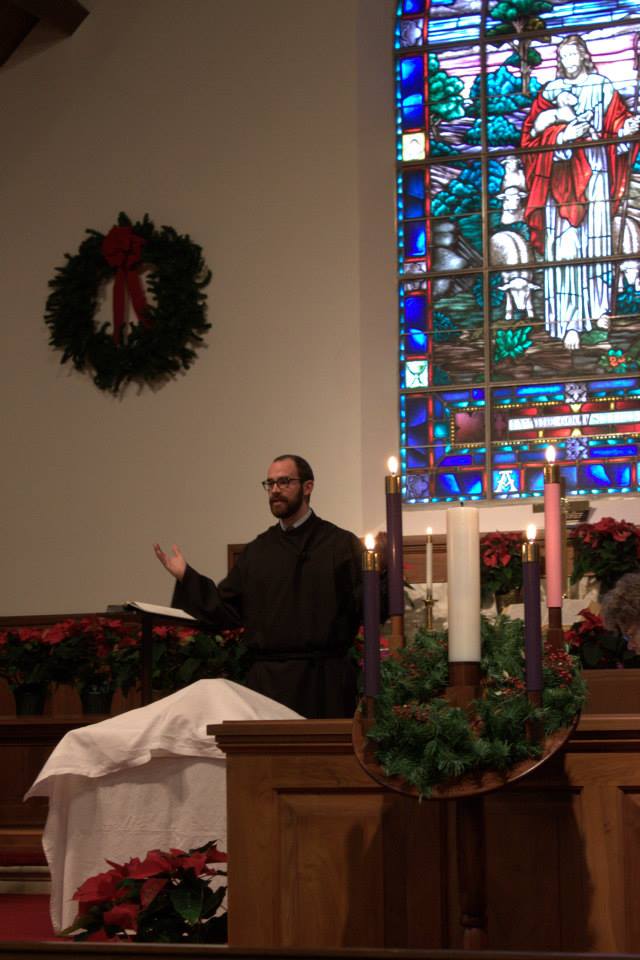
I was in the middle of a short homily when I started worrying about whether or not the water would be too cold for the baptism. You never can tell how a child will react to the living water; some laugh as if it is tickling them while it trickles down their hair, some scream in fear as the cold water seeps into their clothing, and others remain stupefied by a grown man wearing a long white dress pouring water onto their head. I stood in front of the local community hoping that this baptism would go smoothly, rather than be remembered for the blood curdling cries during the sacrament.

I had picked the beginning of Mark’s gospel for my baptismal homily; John baptizing Jesus in the Jordan. I love the text because it is concise and too the point while remaining profoundly theological. I shared with gathered body John’s ability to bring in the crowds for the repentance of their sins out in the wilderness when Sawyer began to squirm around in his mother’s arms. Without really thinking about what I was doing, I walked over to the family in their pews, reached for Sawyer, picked him up, and continued preaching. For a few moments I continued with whatever I was saying but it felt as if everyone had disappeared and Sawyer and I were the only ones remaining in the sanctuary. I was unsure why I had felt God push me to pick him up, but as I held him close I felt the words of John come alive for me: “I am not worthy to stoop down and untie the thong of his sandals.” Here I was holding a precious baby boy, who kept smiling as he stared at the hair growing on my face and I was struck by his preciousness. When I baptized him with the living water I felt unworthy to do what I was doing, and then became profoundly thankful for God’s presence in that beautiful moment.

10505419_827338247305732_338805337312225694_n

Through the waters of baptism Sawyer, and all of us, experienced a new beginning. Like the event of John baptizing Jesus in the Jordan, everything would be different from that moment forward. We covenanted to raise Sawyer in the faith, to pray fervently for him, and to be abundantly present for him in times of need. The church is at its best when we make good on the promises we make to the children we baptize, something I look forward to participating in during Sawyer’s life.

In this season of Advent we are reminded of the new beginning that took place in Bethlehem in a manger. Moreover, in our baptisms we had the privilege of being incorporated into God’s cosmic story to be God’s children. While we prepare for Christmas, I encourage all of you to be thankful for your baptisms, and remember that God came in the form of a baby, just like Sawyer, to dwell among us.


The Advent of Abram – Sermon on Genesis 12.1-9

Genesis 12.1-9

Now the Lord said to Abram, “Go from your country and your kindred and your father’s house to the land that I will show you. I will make of you a great nation, and I will bless you, and make your name great, so that you will be a blessing. I will bless those who bless you, and the one who curses you I will curse; and in you all the families of earth shall be blessed.” So Abram went, as the Lord had told him; and Lot went with him. Abram was seventy-five years old when he departed from Haran. Abrams took his wife Sarai and his brother’s son Lot, and all the possessions that they had gathered, and the persons whom they had acquired in Haran; and they set forth to go to the land of Canaan. When they had come to the land of Canaan, Abram passed through the land to the place at Shechem, to the oak of Moreh. At that time the Canaanites were in the land. Then the Lord apprised to Abram, and said, “To your offspring I will give this land.” So he built there an altar to the Lord, who had appeared to him. From there he moved on to the hill country on the east of Bethel, and pitched his tent, with Bethel on the west and Ai on the east; and there he built an altar to the Lord and invoked the name of the Lord. And Abram journeyed on by stages toward the Negeb.

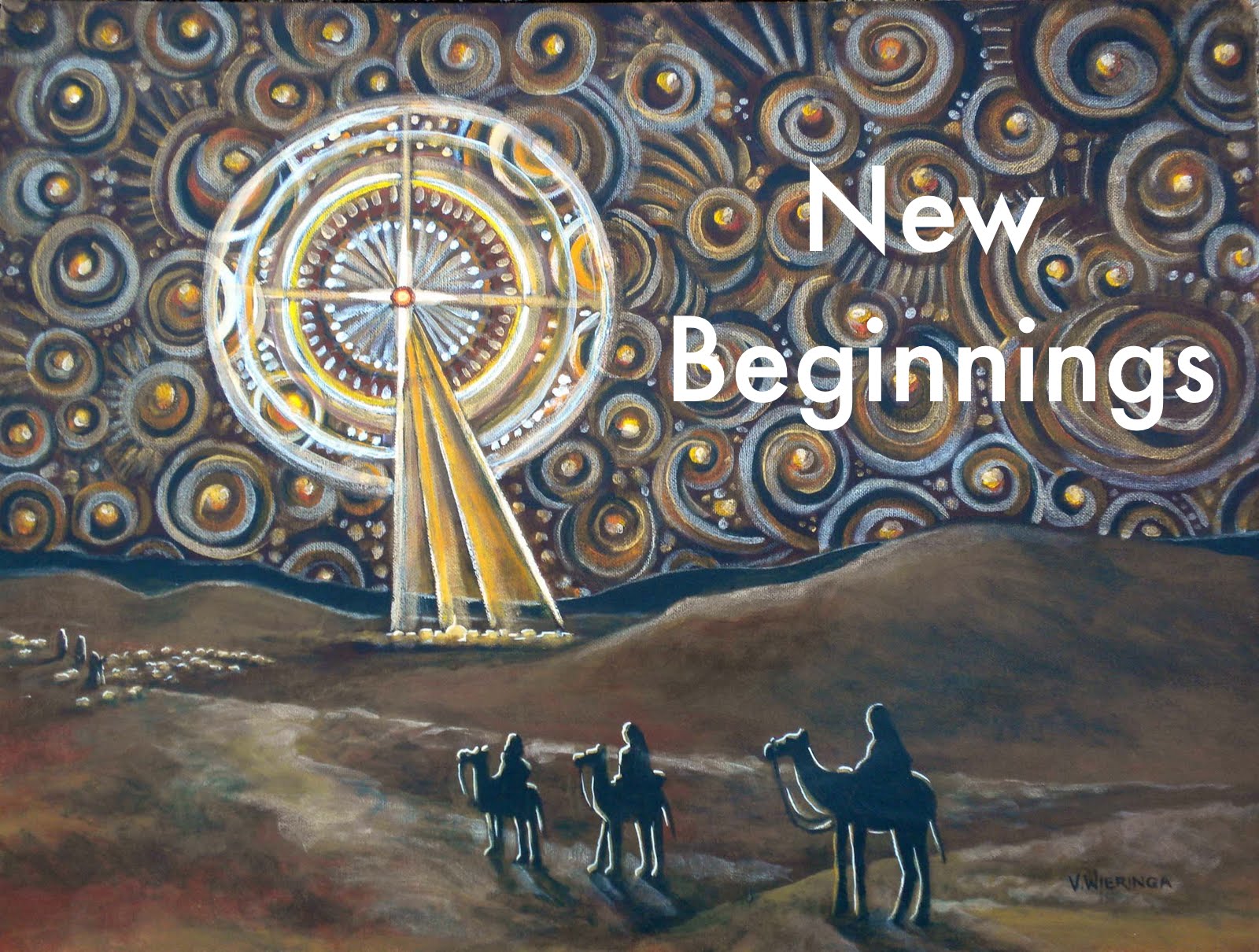
advent art

Today we begin our Advent Sermon Series on “New Beginnings.” Advent comes from the latin adventus which means “coming.” These few weeks are integral to the life of our church in the sense that we are preparing our hearts, minds, and souls, for the coming of God in Christ on Christmas day. This season lends itself to new beginnings, not just in our church, but in each of our lives. This morning we begin with the Advent of Abram.

Wow,” he exclaimed a little too loudly as he began gripping deeply into my shoulder. I found myself staring at one of the groomsmen from the bridal party. We had spent the better part of an hour attempting to line everything up for the wedding during the rehearsal and were now at the Mill Street Grill for the rehearsal dinner.

Wedding rehearsals are crazy; a conflation of friends and family gather together in a church they have never seen, and listen to a pastor they have never met, telling them where to stand and what to do. In no other aspect of ministry is the metaphor of a shepherd and his sheep more appropriate than when I plead with the groomsmen to pay attention and start acting appropriately. Things would go so smoothly if the groomsmen would act like the bridesmaids.

10635731_10101905692618667_3865158961821357384_n

Anyway, I was staring at the groomsmen when he began to lay on the compliments about how well the rehearsal went and how impressed he was with my disposition. “I can’t believe you’re a pastor! I mean, dude, you’re younger than me! And the way you pray, it sounds like you’re actually talking to God, and for real that was awesome.” I will admit that people are rather honest with me, particularly when the rehearsal dinner has an open bar.

A little later another young person from the bridal party came forward to introduce herself and began opening up about her faith. “It has been a long time since I was in a church, but hearing you speak and seeing how serious you are about all this has reignited my faith; If I lived around here, I would want to worship at St. John’s.”

Still later another young man from the wedding walked over and began speaking to me through jovial chuckles and slaps on my back. “Now man I have got to ask, that good looking girl with the blue eyes, are you two together? Cause if not I would love to get her number.” To which I replied, “Till death do us part” and I walked away.

Conversations as a pastor are often one sided: people bring their own sets of questions and baggage about the church and they are looking for me to confirm their suspicions. “Are you really allowed to be married?” “I never knew pastors could be so young” “What do you think about the Catholic church?” are all frequent elements of dialogue.

However, toward the end of the night, after the last call had been made from the bar, yet another groomsmen came forward. At this point I was getting tired of the same trivial conversations about how I knew the bride, what it takes to become a pastor, and how long had I felt called to the ministry. I am sure that I sighed as he came forward, but his question was unlike any of the others…

“How long have you been serving here?” “It’s been about a year and a half” “Is it still everything you thought it would be?” 

Many-of-God’s-finest-men-in-the-Bible-were-Polygamists-Abraham

To follow a call from God may be a costly matter, particularly when it leads to a lonely road. Abram was tasked with following the call of God to leave everything based on God’s Word.

One day, an ordinary day, the Lord told Abram to go from his country and his family to the land that God had prepared with the promise that God would make of him a great nation, he would be blessed, and his name would become so great that he would be a blessing. So Abram went.

The simplicity of “so Abram went” is one of the most deceptive phrases in all of scripture. The extraordinary nature of those three words are lost in Genesis 12 if we gloss over it too quickly. Abram was free from indecision, self-doubt, or stubbornness. His willingness to go is the opposite of what took place in the garden of Eden, and demonstrates a radical dependence on the providence of God.

Abram must turn his back on what had been the familiar and the friendly to go out toward the unwelcome and the unknown. His life would be forever changed in his decision to respond to God’s simple push, something that changed the history of humankind.

The call of Abram is not unlike the many callings that God places in each of our lives. It might not come in the definitive and spoken Word as if from the wind, but there are subtle moves and pushes that God does in order to bring about his will on earth. Many people prefer to stay where they are and as they are rather than to try hard to arrive at something different. Once they reach a level of comfort in their lives, they become content with keeping their eyes trained on the dirt instead of gazing up into the stars.

People of apathy appear throughout the bible, people who might have made their lives significant but never wanted to put their effort in to change. The likes of Esau, Jonah, and Solomon grew complacent with their blessings, and stopped dreaming about the future. Their failure was not generally aiming at anything bad as it was in the fact that they did not aim strongly enough at anything!

Abram could have been apathetic, but instead he responded enthusiastically. He took his wife, his brother’s son, and all his possessions and set forth toward the land of Canaan. When he arrived, God made it clear that this would be the place of his offspring, and Abram made an altar to praise the Lord.

Abram might have accepted the divine message with the momentary enthusiasm of a man who is proud to feel that he has been singled out for something special, but quickly cools when he finds where he must go.

Is is still everything you thought it would be?” As soon as I was asked images from the past year and a half floated through my mind – the baptisms, the deaths, the weddings. The tears spilt in my office, the dreaded phone calls from the hospitals, the shaking hands gripped in prayer. The kids laughing in the Preschool, the palms outstretched for communion, the knocks on the door that carried the weight of the world.

Has my enthusiasm cooled? Is this call to ministry everything I thought it would be? I always dreamed about the sermons that would get people to shout AMEN! from the pews. I dreamt about the people who I would help bring to the light of Christ, people whose lives would be radically transformed through God’s Word from this church. I dreamt about all the positive affirmations I would receive from people at the back of the sanctuary following worship.

The more time I have spent following this call from God, the more that I have realized how similar it is to Abram’s journey. Responding to God is not about the results, packed pews, lots of money in the offering plate, and people lining up to commit their lives to Christ. Responding to the call is about walking the lonely path, standing up for what is right, and calling all of us, including myself, to live better and holier lives. 

Moreover, the call is not just for pastors, but for all of us as Christians. God is not looking for people to say all the right things at the right times, people who will proudly place money in the offering plates, people who have perfect posture in prayer. God is looking for disciples who are willing to say “yes” when the world says “no”, people who fight against injustice, and go into the unknown like Abram.

God tells Abram that he will be blessed in responding to the call. The bible makes it very clear that a person can know and recognize their blessedness not when they have managed to get rid of all the dangers and risks and burdens, but when they have been given great and gallant strength to bear them.

The collective group can only move forward when an individual breaks the path ahead. On every level of life there must be a pioneer. Joseph had to dream dreams that went beyond what his brothers wanted, Moses had to stand before the Lord and plead for the forgiveness of God’s people, and Jesus had to push his friends further and farther than they ever wanted to go.

Only when people are brave enough to rise above the crowd, only when they set out on new beginnings, do they follow the roads of freedom for their souls.

The past week has been filled with frightening examples of our need to start standing up against the crowd mentality of our culture:

kSicf3v

We need a new beginning when it comes to the foolishness of sitting around a family table to give thanks, to then punch one another in the face while wrestling for Black Friday deals. 

We need a new beginning when it comes to a nation flocking to Facebook to express their opinions about what is going on in Ferguson, when they neglect to create real and meaningful relationships with those around them. 

We need a new beginning when it comes to our denomination meeting for a day of “holy conferencing” about homosexuality when we keep talking about it as an “issue” instead of it being about people. 

We need new beginnings all around us, and its up to people like you and me to listen like Abram and start walking down the strange new road.

Wherever Abram went he built an altar to the Lord. While responding to the call of God he recognized the importance of worshipping the Maker in whom we live for the true blessings of life. Having a new beginning implies understanding that worship is important for the cultivation of one’s soul. We gather here in this place week after week to hear the Word of God and respond to it in our lives, we gather to feast on the Word so that we can encourage our brothers and sisters in Christ to take radical steps of faith into new beginnings just like Abram.

Abram left it all for a new beginning in a new place. He traveled as the Lord commanded and wound up in the hill country on the east of Bethel. Many years later a young virgin named Mary and a man named Joseph traveled to Bethlehem for a new beginning in a new place. They traveled as the Lord commanded and wound up in a village without space at the inn, but brought a child into the world who changed everything.

Is it still everything you thought it would be?” the man asked. I thought for a long time before I responded, reflecting on all that has happened to our precious church over the last year and a half. “No, its not everything I thought it would be. It is so much harder. But thats why its worth it.”

Amen.

Life After Christmas – Sermon on Matthew 2.13-23

Matthew 2.13-23

Now after they had left, an angel of the Lord appeared to Joseph in a dream and said, “Get up, take the child and his mother, and flee to Egypt, and remain there until I tell you; for Herod is about to search for the child to destroy him.” Then Joseph got up, took the child and his mother by night, and went to Egypt, and remained there until the death of Herod. This was to fulfill what had been spoken by the Lord though the prophet, “Out of Egypt I have called my son.” When Herod saw that he had been tricked by the wise men, he was infuriated, and he sent and killed all the children in and around Bethlehem who were two years old or under, according to the time that he had learned from the wise men. Then was fulfilled what had been spoken through the prophet Jeremiah: “A voice was heard in Ramah, wailing and loud lamentation, Rachel weeping for her children; she refused to be consoled, because they are no more.” When Herod died, an angel of the Lord suddenly appeared in a dream to Joseph in Egypt and said, “Get up, take the child and his mother, and go to the land of Israel, for those who were seeking the child’s life are dead.” Then Joseph got up, took the child and his mother, and went to the land of Israel. But when he heard that Archelaus was ruling over Judea in place of his father Herod, he was afraid to go there. And after being warned in a dream, he went away to the district of Galilee. There he made his home in a town called Nazareth, so that what had been spoken through the prophets might be fulfilled, “He will be called a Nazorean.”
22.86

A voice was heard in Ramah, wailing and loud lamentation, Rachel weeping for her children; she refused to be consoled, because they are no more.

After the magi had spent time with the baby Jesus, presenting him with gifts of gold, frankincense, and myrrh, they left. The new parents were now alone with their relatively unexplained child, forced to fend for themselves with this baby Messiah. Christmas had come and gone in that tiny village of Bethlehem and life after Christmas was starting to settle in.

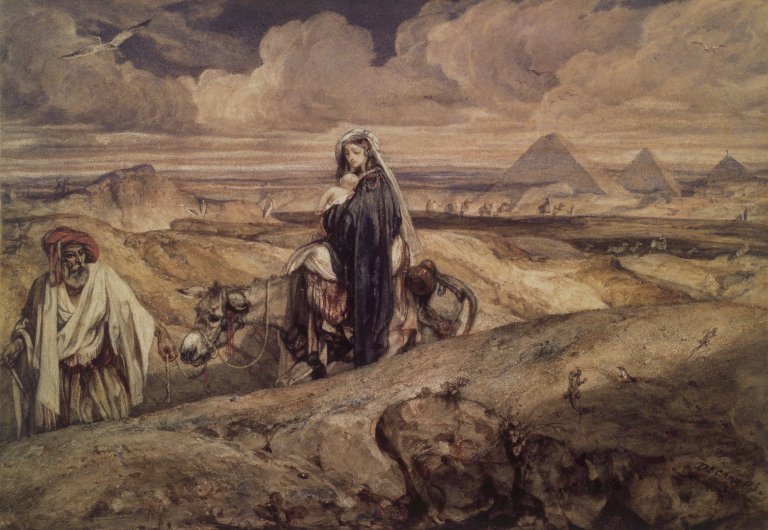
One night an angel of the Lord appeared to Joseph in a dream and called him to take Mary and Jesus and flee to Egypt, because Herod was after the child. And so, following the commands of the Lord yet again, Joseph took his family and went to the land that God had called him to travel to. There he waited until Herod died.

The wise men, on their way to meet and greet the baby Jesus had shared the news of this newborn king with Herod, who asked to learn of his location and identity after they found him. Because of a dream telling them not to return, they withheld the information regarding the baby Messiah to which Herod was infuriated. He gathered together hordes of soldiers and commanded them to travel to Bethlehem in order to kill any child under the age of two in and around the village.

Later, after the death of Herod, Joseph brought his family back to the land that had been promised to his ancestors, but traveled to the area of Galilee and settled in Nazareth, which would become the boyhood home of Jesus.

When I was 17 years old, I spent a lot of time at my home church. If I wasn’t practicing drums with the worship band, then I was at a boy scout meeting, or helping with youth group, or immersed in a bible study, or running the sound system for worship services, funerals, and weddings. Every Christmas Eve the church would hold multiple services and I would sign up for multiple shifts in order to have the sound system function properly for one of the highest attended services of the year. When I was 17 I was blessed, and I mean that ironically, to run the system for the 3pm and the 11pm services.

400x400_1266205978139-AldersgateAlter

The 3 o’clock service went as well as could have been expected. It was the family friendly service with a cacophony of children all running around and climbing over their pews while their parents attempted to listen to the sermon and not lose their place while singing the hymns. The sermon was spot on about the depth of Christmas and the graceful coming of God into the world in the form of a baby in a manger.

The 11 o’clock service was the complete opposite.

Instead of families with young children, the sanctuary was filled with older adults sitting scattered throughout the dozens of pews. Instead of children climbing over pews and dropping pencils everywhere, there was a profound silence within the worshipping body; a completely different sense of reverence. The sermon was the same, though it felt a little dull with the patterns of repetition throughout the afternoon and evening, however, you could feel a sense of wonder and awe flowing throughout the people that night, as they gathered together to celebrate God’s coming into the world.

By the time I was able to leave, it was already past midnight and I was exhausted. All I wanted to do was drive home, get in my bed, wake up, and open presents. As I drove back to my house I made my way down the George Washington Parkway with the Potomac River on my right thankful for the end of another Christmas Eve.

Right after I turned off the parkway to head up my street I saw flashing red and blue lights underneath the bridge that went over the road I had just drove on. I’m not sure why, (maybe it was the eagle scout in me) but I immediately pulled my car over and ran down to the road to see if I could help.

DSC08174

The details of what I saw there on the road that night will stay with me for the rest of my life, and there were things that I should never describe from the pulpit. Suffice it to say that, before I arrived, a terribly sad man had been standing on the edge of the bridge for sometime. The drop was nothing to speak of, maybe 13 feet, so he just kept standing there, waiting. He waited until he saw a large SUV coming toward the bridge, and when he felt that it was just the right moment, he jumped.

The SUV was carrying a family on their way home from an 11 o’clock mass from one of the Catholic churches in Old Town Alexandria, a family excited for the prospect of heading home after a wonderful service to get the milk and cookies ready for santa, a family ready to go to bed in order to wake up for Christmas morning, a family whose lives would be forever changed.

I don’t know how long I stood there, but one of the police officers made his way over to me, put his hand on my shoulder and said, “Go home, and try to forget ever seeing this.”

Life after Christmas can be one of the best, and one of the worst, times of the year. Its that strange time that often never meets our expectations. After weeks of preparation, hanging all the lights, decorating the house, wrapping all the presents, planning the meals, sending all the Christmas cards, Christmas comes and goes. We wake up and before we know it the holiday has arrived and departed. And for all the prep that we do, our expectations can almost never be met perfectly. We never receive all the gifts we want, we never have the perfect interaction with our family without fights and arguments, we never get to experience God and faith exactly the way we expect and hope for.

Life after Christmas can be a real shock if we’re not ready for it. We build up this wonderful holiday moment through the songs on the radio, through the worship services of Advent, and even with the sales promotions at all of our favorite stores.

Its no wonder therefore why there are more incidents of hospitalizations for depression, and attempts at suicide during the next few weeks, than any other time during the year. For all the joy that we muster together on Christmas Eve, life after Christmas can hit hard and low.

Life after Christmas for Jesus was filled with trial and tribulation as well. In the wake of his birth in one of the most inhospitable of places, Jesus, Mary, and Joseph had to flee to Egypt in order to avoid the wrath of Herod. It is curious that we receive little detail regarding Herod’s desire to kill all of the children in Bethlehem, only that he was infuriated by the deception of the wise men. It would seem that Herod feared for the loss of his position of power and control and he then decided to eradicate any remnant of this supposed “Messiah king” that could usurp his power.

If we only read this story on the surface, hearing about the new family’s retreat to Egypt, their patient waiting for Herod’s death, and their inevitable return, then we will be stuck with the devastating imagery of Rachel weeping for the children, the imagery of Herod killing innocents babies in Jerusalem, and a family’s terrifying experience of fear and isolation. But the story contains so much more.

In Matthew’s gospel, Jesus comes to be understood as the new Moses. He will deliver a sermon on the mount with his commands for the ways we are to live our lives, just as Moses stood on the mountaintop to deliver the ten commandments to the wandering Hebrews. It is important for Jesus to be understood through a Mosaic lens because he will also deliver the people out of slavery – not slavery in Egypt to foreign pharaohs, but out of slavery to sin and death.

Here, in this story, we get the beginnings of Jesus’ connections with Moses.

During the time of Moses’ birth, the Pharaoh in Egypt had all of the young males murdered in order to maintain the reigns over the Hebrew slaves. It was during this child massacre that Moses was saved by his mother. In a similar way, Jesus was saved from Herod’s massacre of the children because of the warning from God. Just as Moses would come to lead the Hebrew slaves out of Egypt toward the Promised Land, Jesus would eventually return to Galilee from Egypt in order to begin his ministry.

I wonder what it must have felt like for Mary and Joseph to raise that baby under such circumstances; to be told to leave all that was familiar, to enter a foreign land, because a ruler wanted to see your baby murdered. I wonder what could’ve sustained them through the days, weeks, months, and years of unknowing, the periods of fear and isolation.

I wonder what it must still feel like for that family that hit the man on their way home from church. What kind of emotional roller coaster does Christmas bring for them each year? What sustains them through that time of year when joy is so intertwined with fear?

Christmas, for us, is the reflection of that great event where God came to be with us. That time of year where we attempt to set aside all of our disappointments from the past, and look forward to that new beginning that we can hopefully emulate in our own lives.

Why is life after Christmas less ecstatic than the weeks leading up to it? Why do we let ourselves fall into states of sadness and the blues when we were just singing Joy to the World, and Angels We Have Heard On High? What is it about this time that makes it so much harder to get out of bed every morning, and get back into the routines of life?

opt-the-day-after-christmas from Life Magazine Jamie Wyeth

Life after Christmas is almost never easy; not for us now, not for that family driving home, and it certainly wasn’t easy for Jesus, Mary, and Joseph. As we continue to step forward into this uncertain time let us not hold fast to the decorations, and the pomp and circumstance, and the presents, and the meals, and all the other elements that make Christmas what it appears to be, but instead let us hold fast to the hymns we sang together as a church, let us hold fast to the fact that Christ is the light of the world that shines in the darkness, let us hold fast to the faith that we have in Jesus Christ as the Lord of all.

When you really get down to it, Christmas isn’t just a day, or even a time of year that we celebrate. As a faithful community, Christmas happens every single time we gather together. Every worship service, every bible study, every quilt for a cause, every Men’s club meeting, every UMW gathering, every youth activity, every thing we do reimagines the Christmas message for us. To be the church, to be the body of Christ for the world, means that we are continuously celebrating the fact that the greatest thing that ever came to be, came to be with us.

The fact that God humbled himself to be like us, for us, and with us, surmounts everything else in the world. For all the disappointments that we might face, for all of the ways we have fallen short of God’s glory, nothing will ever compare to the love of God in Jesus Christ manifested in a man’s life who changed the world.

It is okay to feel hurt and sad during life after Christmas. It is okay to feel the emotional tide that comes and goes while we rest in the awkward time after celebration. But we must never forget that though death, and suffering, and fear are real, they do not have the final word. God’s glory and grace surpasses all things. God’s love for you is eternal, it extends beyond all things, and is present in the ways that we love one another. Jesus, our Moses, came to deliver us from the bonds of the world, to help transform the way we live, and to share with us life eternal.

And so, If we take seriously the faith that we confess in Christ, then life after Christmas should really be the most wonderful time of the year.

Amen.


In Those Days… – Christmas Eve Sermon on Luke 2.1-20

Luke 2.1-20

In those days a decree went out from Emperor Augustus that all the world should be registered. This was the first registration and was taken while Quirinius was governor of Syria. All went to their own towns to be registered. Joseph also went from the town of Nazareth in Galilee to Judea, to the city of David called Bethlehem, because he was descended from the house and family of David. He went to be registered with Mary, to whom he was engaged and who was expecting a child. And she gave birth to her firstborn son and wrapped him in bands of cloth, and laid him in the manger, because there was no place from them in the inn. In that region there were shepherds living in the fields, keeping watch over their flock by night. Then an angel of the Lord stood before them, and the glory of the Lord stood before them, and they were terrified. But the angel said to them, “Do not be afraid; for see – I am bringing you good news of great joy for all the people: to you is born this day in the city of David a Savior, who is the Messiah, the Lord. This will be a sign for you: you will find a child wrapped in bands of cloth and lying in a manger.” And suddenly there was with the angel a multitude of the heavenly host, praising God and saying, “Glory to God in the highest heaven, and on earth peace among those whom he favors!” When the angels had left them and gone into heaven, the shepherds said to one another, “Let us go now to Bethlehem and see this thing that has taken place, which the Lord has made known to us.” So they went with haste and found Mary and Joseph, and the child lying in the manger. When they saw this, they made known what had been told them about this child; and all who heard it were amazed at what the shepherds told them. But Mary treasured all these words and pondered them in her heart. The shepherds returned, glorifying and praising God for all they had heard and seen, as it had been told them.


Do not be afraid; for see — I am bringing you good news of great joy for all the people: to you is born this day in the city of David a Savior, who is the Messiah, the Lord.

lord-jesus-christ

In those days Augustus ruled over everything. The emperor of the powerful Roman empire had true and frightening power. His authority was known from the British Isles to Asia and into Africa. His very name meant wealth, rule, and power. His face and title was printed on currency, his decrees spread throughout the lands, and he was known by all. So, in those days, in the days of Augustus, our story begins.

And then one night in a tiny and seemingly obsolete town, part of Rome’s conquest, a baby was born. It was a tucked away village of little consequence to which the mother and her soon-to-be husband were traveling, not by choice, but because Augustus wanted the world to be registered. Both of them were poor, and when they arrived in the town no one took notice of their coming, no one offered to help them find a place to stay, no one even spoke to them. They went looking for space at the Inn, but there was no room, so the only place they could find to stay was a stable; that was where their child was born, a child named Jesus.

We learn then that within the region there were shepherds living in the fields who were confronted by an angel of the Lord. The angel brought great tidings of this new child’s birth, calling him a Savior, the Messiah, the Lord. And so these unnamed shepherds traveled into the city of Bethlehem to meet this child face to face, coming into contact with the incarnate God almighty. They shared their story with anyone who would listen and continuously glorified and praised God for all they had seen.

In those days, when everyone knew and feared the power of Augustus, a baby was born. And somehow, that tiny child born in the most unlikely of places and circumstances transformed the world forever. Augustus is only remembered in history books and lecture halls, whereas that baby grew into the man that embodied hope for the world from the day he was born to this very night. Augustus had all the power and money and influence to do whatever he wanted, yet Rome still fell. But of God’s kingdom there will be no end. Why? Because the power of Christ lives on, his light and love reaches into our very hearts and changes us into something new, different, and wonderful.

This story has been told for millennia. Gatherings of the faithful have taken place over and over again to remember this particular story, this radical moment that changed the fate of the world forever. It has been dramatized in countless films, books, songs, and plays. We, whether we come to church or not, hear this story as children and again and again as we grow older.

When you think of the manger, what do you see? Do you picture the animals lying silently with adoring eyes at the baby comfortably resting in the hay? Do you envision the wise men bringing their gifts of gold, frankincense, and myrrh? Do you imagine the warmth and the glow from the angelic presence as the incarnate God was brought into the world?

I know this might not be the Christmas message you want to hear, but Luke would have us imagine a very different scene.

Nativity

The story, as was read for us, is remarkably simple. Besides the appearance of the angels in the fields there is no great miracle or display of God’s power. The manger scene is quite stark, empty, and even frightening. Mary and Joseph were completely alone after traveling to Bethlehem while Mary was pregnant. They had to retreat to a stable at the back of, or underneath, the house (perhaps even in a small cave). When Jesus was finally born he was placed inside of a feeding trough, not the comfortable and clean version we often seen depicted on the mantle. There is a bare and frightening emptiness at Jesus’ birth, while two adults crouched in a cave feeling more alone than ever before.

Luke keeps the story clean of any decorations that would remove it from the lowly, the poor, and the marginalized — the people just like Mary and Joseph.

Sadly, in many Christmas celebrations we have not resisted the temptation to run to Matthew’s gospel where the royal visitors arrived with their gifts, or imagine a soft glow coming from the manger straw, and with the air filled with cherubs and angels. Luke has a glow in the story, but it is shining somewhere else.

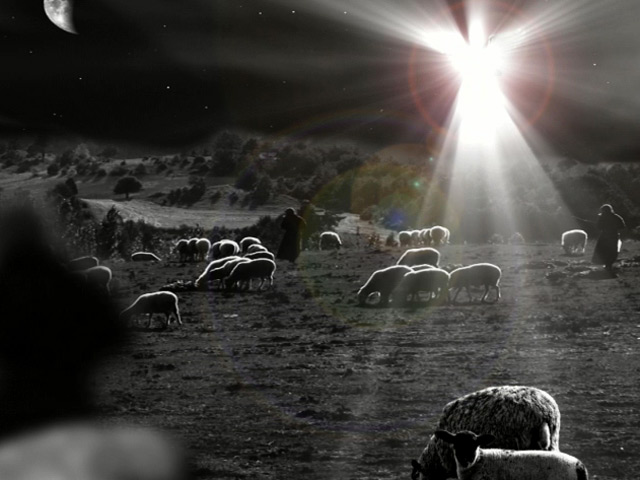
angelandshepherdsloop

So where does the story move? To shepherds who are living in the fields in order to watch over their flock at night. Shepherding was a despised occupation during the time of Jesus’ life. They were a homeless group of ragtag sheep watchers, worse off than even Mary and Joseph in their difficult manger. And for whatever reason the angel of the Lord appears to them in the wilderness — Not Augustus in his palace in Rome, not the chief scribes and the temple priest in Jerusalem, but the lowly shepherds in a field.

“Do not be afraid,” The angel bellowed. “for see – I am bringing you good news of great joy for all the people: to you is born this day in the city of David a Savior, who is the Messiah, the Lord. This will be a sign for you: you will find a child wrapped in bands of cloth and lying in the manger.” And without warning a multitude of the heavenly host appeared praising God and singing, “Glory to God in the highest heaven, and on earth peace among those whom he favors!”

And so the homeless shepherds traveled to Bethlehem to see this Savior, Messiah, and Lord waiting for them in a feeding trough born to an unwed couple.

So you see, Mary and Joseph were left alone that night — it was from the shepherds that they learned of the angel and the heavenly host. The two new parents, busy with the chores of childbirth in the most inhospitable of places under the most difficult of circumstances, did not get to experience heaven’s visit but instead heard about it from a group of homeless and wandering sheep watchers.

This is an unusual story, but it is precisely because of its strangeness, that it has made all the difference.

“I am bringing good news of great joy for all the people: for you is born this day in the city of David a Savior, who is the Messiah, the Lord.”

For whom is the child born? Not Augustus with all of his power, not the priests and the scribes who ruled the religious practices, not the super elite and fabulously powerful, but for those shepherds in the field, for all of you. For YOU this child has been born.

In that tiny dark manger God was born of the flesh in the baby Jesus. God became incarnate, took on our humanness. Jesus was both human and divine. Born into two worlds, from above and below, Jesus came as a new being in order to reconcile the world back to God. Though he carried the glories of God with him everywhere that he would eventually travel, he never ceased to care for our most basic needs: food, water, relationships. Wherever he went he ate with his friends and the marginalized, all of the shepherd types within the community, nurtured relationships so that all would come to know more about the love of God.

He knew that we could not truly live by earthly things alone… Do you have a Christmas tree at home filled with presents underneath but you cannot find pure joy in your life? Have you raised the perfect family with 2.5 children, a dog, a cat, and a white picket fence, but you feel like something is missing in your life? Do you find yourself searching for meaning, and even when you fill your life with all of the things that the world tells us we need, you never feel completely satisfied? Christ knows our emptiness, God came in the form of flesh to bear our emptiness, so that he could help fill us in a way that we never could on our own.

Haven’t we all had a Bethlehem moment in our lives? A time where it felt that no one knew us, no one understood what we were going through, no one reached out to help us? A period where we carried the weight of the world on our shoulders unable to share the burden with anyone else. A moment where it felt as if the darkness was too powerful for any light to shine forth. In many different ways, we have all traveled to our own Bethlehem.

How perfect is it then, that Bethlehem means “town of bread”? From a tiny manger, from an unwed couple, from the town of bread comes the incarnate God who is the bread of life. It is in this meal he came to bring us the bread of life that can and will sustain us in all things.

00029400_h

Because at this table, at Christ’s holy banquet, we are all invited into that tiny unlit manger, into the darkness and loneliness that Mary and Joseph must have felt. We are incorporated into this story because Jesus has welcomed us in. We are there, but more importantly Jesus is with us here. Christ is with us in all of our brokenness, in all the failed attempts to live perfect lives, in our fears and our frustrations, he is here because God came to be like us to help transform us.

That is Christmas! That is hope! That is grace!

That is the story worth telling over and over again, because the greatest thing to ever be, came to be with us.

Amen.


Weekly Devotional – 12/23/13

Devotional:

Psalm 96.1-4

O sing to the Lord a new song; sing to the Lord, all the earth. Sing to the Lord, bless his name; tell of his salvation from day to day. Declare his glory among the nations, his marvelous works among all the peoples. For great is the Lord, and greatly to be praised. he is to be revered above all gods.

1535751_10202812940587494_483312224_n

I love being a pastor. I love getting to spend time each week contemplating the Word of the Lord, reading from numerous texts, spending time in prayer, and working on a sermon for Sunday. I love getting to go out into the community to visit those who are sick, alone, afraid, or no longer able to attend church. I love representing St. John’s within Staunton through various organizations and events. I love the fact that people feel comfortable enough to spend time with me and share their stories. I love getting to participate in the life of this faith community as a pastor who serves the church and its people. But one of the things that I love most about being a pastor, is the fact that our church has a Preschool.

Every morning (while the school is in session) I make my way down to the classrooms and I try to greet every child and parent that comes in. I visit each room during the day and help the children with their letters, build giant block fortresses, and ask them questions about whatever I can think of. Most of the children “know” who I am, and they call me Pastor, but I believe they think thats my first name. Some of them are often confused by this adult who comes in to play with their toys regularly, and perhaps they see me as a giant kid (which I am).

Last week the Preschool children put on a pageant for their parents and families in our sanctuary. I was blessed to be offered to the role of narrator and I dressed up as a shepherd for my role (the kids were in costume as the various animals from the manger scene). After they had remembered for us the Christmas story, and performed a number of Christmas themed songs, they went to the social hall in order to change out of costume and wait for the parents to join them for a reception. My job was to talk for 5-10 minutes to all the adults so the teachers would have enough time to get everything ready.

Now, bear in mind, that many of the people in attendance that night do not attend any church. Their children are affiliated with a Preschool from a United Methodist Church, but that night might be the only time of the year that they step forth into a sanctuary.

So, I gave a very brief sermon about the meaning of Christmas and the importance for everyone in the room to love their children; not just with presents, but with real and tangible love; caring about what they’re interested in, supporting them throughout their lives, and taking the time to show them they are loved. When it was clear that I had expended my theological and homiletical thoughts, I did what any good Methodist would do, and I picked up my hymnal.

I encouraged everyone to stand and join together with Hymn 246 “Joy to the World” and those people belted their hearts out! I couldn’t believe it. Here I was standing with a bunch of random adults, most of whom do not attend church, and they were singing Joy to the World in harmony and with gusto!

The psalmist writes, “Sing to the Lord a new song; sing to the Lord, all the earth.” For many of us, Christmas Eve is that one day where we get to sing some of our favorite hymns in church: Hark! the Herald Angels Sing, Angels We Have Heard on High, Silent Night, O Come All Ye Faithful, Joy to the World, etc.

Whether church attending or not, whether filled with faith or doubt, whether excited for Christmas or afraid, there is something about singing that allows the truth depth of our souls to break forth into the world. Wherever you are on your faith journey this year, I hope the words and the tunes of your favorite Christmas songs can help to reignite the flame of faith in all of our hearts.

“He rules the world with truth and grace, and makes the nations prove the glories of his righteousness, and wonders of his love, and wonders of his love, and wonders, wonders of his love!”

Merry Christmas!


0070=70

Weekly Devotional – 12/16/13

Devotional:

Psalm 80.19:

Restore us, O Lord God of hosts; let your face shine, that we may be saved. 


I used to love making fun of my pastors who complained about how much busier they became during advent. It’s not as if they had more on their plates than any other month during the year, but they nevertheless felt overwhelmed by this particular liturgical season.

I now regret making jokes at their expense.

I’m not sure how its possible, because we are not doing more than the ordinary during this time, but I am busier than I have been since I started working at St. John’s in June. I like to think that my newfound busyness stems from the different holiday concerts and Christmas pageants or the shifts for selling Christmas trees or the added time spent decorating the house… but I think it really comes from somewhere else.

country-church-christmas

This season carries with it tremendous joy but also remarkable sadness. Advent helps to prepare us for the coming of the Lord, but often times we fail to prepare ourselves for the onslaught of emotions and old memories that are triggered by this time of anticipation. In the last few weeks I have noticed more tears and tissues in the pews that are the result of the welling up of suppressed emotions that this season breaks forth. For as much as we can be excited about opening gifts together under the tree with a fire roaring in the fire place, for many of us Christmas embodies tremendous pain that is often difficult to ignore.

At the end of the 80th psalm, the psalmist writes, “Restore us, O Lord God of hosts; let your face shine, that we may be saved.” I believe that this psalm is one that we need during this season, perhaps more than any other. We need to feel restored in our lives during this time when old and difficult memories flood our perspective. We need to be reminded of God’s glory that outshines all of the darkness in our lives. We need to sing those familiar hymns, let the tears flow, and remember that God came in the form of our brokenness to dwell and walk with us.

So, as we all make it through this last week of advent, preparing for the great coming of our Lord on Christmas, let us all take the time to live into the brokenness in our lives. Do not ignore the pain that this season often brings. Let it be. But remember that it does not have the final word. God has triumphantly declared that He will make all things new, that we are not defined by our pasts, but instead by the love that God has for each and every single one of us.

Weekly Devotional – 12/9/13

Devotional:

Psalm 146.5-10

Happy are those whose help is the God of Jacob, whose hope is in the Lord their God, who made heaven and earth, the sea, and all that is in them; who keeps faith forever; who executes justice for the oppressed; who gives food to the hungry. The Lord sets the prisoners free; the Lord opens the eyes of the blind. The Lord lifts up those who are bowed down; the Lord loves the righteous. The Lord watches over the strangers; he upholds the orphan and the widow, but the way of the wicked he brings to ruin. The Lord will reign forever, your God, O Zion, for all generations. Praise the Lord!


I love to ask questions. For years I have always been “that guy” at dinner or at a party who can orchestrate the direction of the conversation just by asking a few well placed questions. Depending on the season, or company present, some of my favorite questions include: How did you two meet? What was your favorite halloween costume as a child? What was the last best book you read? All of these questions are geared toward opening up a conversation for all people to respond accordingly. It allows for everyone present to reflect on something and then share it with everyone present. My favorite question to ask during Advent has always been: What was the best Christmas present you ever received?

stxmco001christmas_tree_and_presents1

Its a perfect question. Everyone loves to take a few moments to go through the catalogue in their memory banks of all the presents they received as children, you can detect a positive change in the atmosphere because the memories elicit such joy, and the discussion will continue from that first question toward a full and fruitful conversation.

What was the best Christmas present you ever received? What memories do you have of gathering around the Christmas tree with your family preparing to rip apart the wrapping paper?

I love to ask that question, but recently I’ve begun to wonder whether I should be asking it at all. The celebration of Christmas (according to the ways of the world) has so trumped the theological convictions of Advent that Santa Claus has become frighteningly synonymous with Jesus Christ. Moreover, practices like “The Elf on the Shelf” have led children (and some adults) to grossly misunderstand the depth and breadth of God’s prevenient grace in the world.

When I read from the 146th Psalm I wonder if instead of asking everyone about their favorite present, I should instead ask: “When was the last time you gave food to the hungry?” Or “How are you keeping your faith?”

I know those questions are tougher to swallow, even for me, but I believe they really get at the heart of the Christmas message. How are we living out our faith, particularly during this season of giving? How are we reaching out to those in our community who need to feel the love of Christmas more than anyone else?

So, as we all gather in the shops to find the perfect present, and even as we sit around our perfectly lit and decorated Christmas trees, let us remember the true depth of Christmas. Let us recall that Christ came not to be served but to serve. Let us ask ourselves the difficult and life-changing questions in order that we might live fruitful lives in God’s kingdom.