Words Are Important

In anticipation of the United Methodist Church’s upcoming Called Special General Conference on Human Sexuality, I am leading a Sunday school class for my church on the theology behind the conference. We met for our first of three classes on Sunday and my plan was to give a brief overview of some important words and then jump into the few passages in scripture that deal with homosexuality. However, when I started detailing what the UMC’s Book of Discipline says and then defining the different parts of the LGBTQIA acronym, it became abundantly clear that we wouldn’t have time to even open our bibles.

homosexuality-and-church-main_article_image

It grieves me deeply that we (the church) often talks about great swaths of people with the most over-generalized terms, understandings, and words. I had wrongly assumed that I wouldn’t need to spend time defining anything when in fact the overwhelming majority of our time on Sunday was focused solely on definitions.

Problematically, for the UMC, when we talk about homosexuality we use that word as a catch-all for anyone who is part of the LGBTQIA community. And so, when the Book of Discipline says, “The United Methodist Church does not condone the practice of homosexuality and considers this practice incompatible with Christian teaching.” (Paragraph 161F) many churches take it a step further to declare the incompatibility of anyone within the LGBTQIA community.

And yet, the experience of a lesbian is inherently different than someone who is transgender or intersex or asexual.

Considering the amount of time that was necessary to unpack the language on Sunday, I wanted to make some of what I taught available to a wider audience. Below you can find the paragraphs in the Book of Discipline that address human sexuality (though mostly just homosexuality), in addition to the standard definition for all the the parts of LGBTQIA.

  1. The UMC’s current positions on human sexuality:
    1. “We affirm that sexuality is God’s good gift to all persons. We call everyone to responsible stewardship of this sacred gift. Although all person are sexual beings whether or not they are married, sexual relations are affirmed only with the covenant of monogamous, heterosexual marriage…” (Paragraph 161F)
    2. “We affirm that all persons are individuals of sacred worth, created in the image of God. All persons need the ministry of the Church in their struggles for human fulfillment, as well as the spiritual and emotional care of a fellowship that enables reconciling relationships with God, with others, and with self. The United Methodist Church does not condone the practice of homosexuality and considers this practice incompatible with Christian teaching. We affirm that God’s grace is available to all. We will seek to live together in Christian community, welcoming, forgiving, and loving one another, as Christ has loved and accepted us. We implore families and church not to reject or condemn lesbian and gay member and friends. We commit ourselves in be in ministry for and with all persons. (Paragraph 161F)
    3. “Fidelity in marriage and celibacy in singleness” (clergy expectations) (Paragraph 304)
    4. “A bishop, clergy member, or a local pastor may be tried when charged with the following offense: practices declared by the UMC to be incompatible with Christian teaching, including but not limited to: being a self-avowed practicing homosexual; or conducting ceremonies which celebrate homosexual unions; or performing same-sex wedding ceremonies.” (Paragraph 2702)
  1. LGBTQIA
    1. What’s the difference between Gender and Sex?
      1. Gender is a SOCIAL CONSTRUCT used to classify a person as a man, woman, or some other identity. 
      2. Sex is a MEDICALLY CONSTRUCTED categorization. Sex is often assigned based on the appearance of the genitalia either in ultrasound images or at birth.
    2. L – Lesbian
      1. A woman whose primary sexual and effectual orientation is toward people of the same gender.
    3. G – Gay
      1. A sexual and affectional orientation toward people of the same gender.
    4. B – Bisexual
      1. A person whose primary sexual and affectional orientation is toward people of the same and other genders, or towards people regardless of their gender.
    5. T – Transgender
      1. Adjective used most often as an umbrella term, and frequently abbreviated as “trans.” It describes a wide range of identities and experiences of people whose gender identity and/or expression differs from conventional expectations based on their assigned sex at birth. Not all trans people undergo medical transition. This term is also used for those who express a gender outside of the man/woman binary and/or having no gender or multiple genders. 
    6. Q – Queer OR Questioning
      1. Historically queer has been used as a slur against people whose gender, expression, or sexuality do not conform to dominate expectations. However some have reclaimed the word and identify as such.
      2. Questioning refers to the process of exploring one’s own gender identity, gender expression, and/or sexual orientation. 
    7. I – Intersex
      1. Adjective used to describe the experience of NATURALLY developing primary or secondary sex characteristics that do not fit neatly into society’s definition of male or female. It is an umbrella term that covers a lot of people. Many visibly intersex people are mutilated in infancy and early childhood by doctors to make the individual’s sex characteristics conform to what society’s idea of what normal bodies are supposed to look like. Intersex people are relatively common. Hermaphrodite is an outdated and inaccurate term used to described intersex people.
    8. A – Asexual
      1. A sexual orientation generally characterized by not feeling sexual attraction or a desire for partnered sexuality. It is different from celibacy in that celibacy is an abstention from sex, whereas asexual can and do have sex they just do not feel sexual desires.

All You Need Is…

1 Corinthians 13.1-13

If I speak in the tongues of mortals and of angels, but do not have love, I am a noisy gong or a clanging cymbal. And if I have prophetic powers, and understand all mysteries and all knowledge, and if I have all faith, so as to remove mountains, but do not have love, I am nothing. If I give away all my possessions, and if I hand over my body so that I may boast, but do not have love, I gain nothing. Love is patient; love is kind; love is not envious or boastful or arrogant or rude. It does not insist on its own way; it is not irritable or resentful; it does not rejoice in wrongdoing, but rejoices in the truth. It bears all things, believes all things, hopes all things, endures all things. Love never ends. But as for prophecies, they will come to an end; as for tongues, they will cease; as for knowledge, it will come to an end. For we know only in part, and we prophesy only in part; but when the complete comes, the partial will come to an end. When I was a child, I spoke like a child, I thought like a child, I reasoned like a child; when I became an adult, I put an end to childish ways. For now we see in a mirror, dimly, but then we will see face to face. Now I know only in part; then I will know fully, even as I have been fully known. And now faith, hope, and love abide, these three; and the greatest of these is love. 

Most of the time, I have no idea what I’m doing. I can put in the hours of preparation, I can fall to my knees in prayer, but a lot of being a pastor is like fumbling around in the darkness.

My first wedding took place a few months after I arrived at my first church. I had done my due diligence with the couple, took them through the wringer of premarital counseling, I even walked them through the ceremony step by step, but when the actual moment arrived, I felt woefully unprepared.

I knew the expectation was that the bride was supposed to be kept away from the husband until that magical moment she she appeared by the door at the back of the sanctuary when the photographer knew to take a picture of the very-soon-to-be-husband crying as he took in his very-soon-to-be-wife in her wedding dress. So I sequestered the bride and the bridesmaids in a Sunday school room on the other side of the building, and I waited with the groomsmen in the narthex and greeted all of the friends and family on their way in.

When it felt like enough people had arrived and it was time to get things started, I pulled one of the groomsmen to the side and I said, “I’m going to go check on the girls so we can get this show on the road.”

I walked through the empty hallways until I could hear the girls laughing with gleeful expectation, and they told me they needed about 5 more minutes and then they’d be ready to go.

But when I made it back to the narthex, the groomsmen were missing.

Well, they weren’t missing missing. But they certainly weren’t where they were supposed to be. In fact they were already in the sanctuary, standing up at the altar, staring at the narthex doorway, waiting for the bridesmaids and the bride. 

And not only were the groomsmen looking back in anticipation, but so was every single person in the sanctuary.

Now, to be abundantly clear, five minutes might not sound like a long time, but it can feel like an eternity when the expectations are all caught up in the hopes and dreams of a wedding service.

For the first minute people politely smiled and waited patiently. But by minute two, the beads of sweat started appearing on foreheads, and by minute three, groups of people started fanning themselves.

I, trying my best to ease the tension, started walking down the aisle as slowly as I possibly could to make it appear as if this were all part of the plan. But even when I made it to the groom I knew there was still too much time, so I knelt down on the floor and started praying for the girls to hurry up. Because of the architecture of the sanctuary I strained to listen and eventually I heard their high heels scuffling across the floor in the hallway behind us, and finally, FINALLY, they stood in the back and we could get on with everything.

But, as it would have to happen, the first bridesmaid walked in the frame and seeing all of the eyes peering down on her, particularly with the added fear about a potential missing bride situation, she just froze in silence.

I subtly motioned for her to come forward, and then I eventually just started waving my hands out of frustration. And when she did start to move she walked down the aisle even slower than I did.

The poor pianist was running out of music to play.

Eventually the bride stepped onto the carpet, being escorted by her father and everyone stood in joy and excitement. The ceremony could truly begin, and after welcoming everyone into the space I said to the father, “Who gives this woman to be married to this man?”

And he forgot what to say.

corinthian-series

We bring all sorts of cultural expectations with us into the big moments of our faith. Whether or not we’ve attended a lot of weddings, or funerals, or baptisms we certainly know what they’re supposed to look like because we’ve seen them in plenty of movies.

Many of us can remember any number of rom-coms in which the minister says something like, “If anyone should see why these two should not be lawfully married, speak now or forever hold your peace.”

Many of us can call to mind a great number of scenes in which an entire group of people are covered in black from head to tow, while standing in the rain, watching casket being lowered into the ground.

And many of us can immediately picture the Corleone family flanking the priest by the baptismal font for the infamous baptism scene in the Godfather.

For what it’s worth, I’ve done plenty of weddings, and funerals, and baptisms and to my knowledge none of them have been interrupted by a would-be lover stepping in at the last second, I’ve never been to a perfectly monochromatic funeral service, let alone a burial in the rain, none of the them have resulted in a mafia style massacre.

But those types of things make for great dramatic moments that keep us on the edge of our seats.

And, in the same way we bring our expectations into those moments, we do that with scripture as well. By my estimation this is done more with 1 Corinthians 13 than any other text in the Bible. I probably don’t even need to read the actual words before many of us will immediately think about big white dresses, and rented tuxedos. 

Love is patient, love is kind.

Can you smell the floral bouquets, and hear the nervous pitter pattered footsteps of the ring bearer and flower girl waiting to walk down the aisle?

The majority of us have heard these words before, and we think we know what they mean. They are so familiar that we can scarcely imagine them meaning anything else.

But their familiarity is also their downfall.

I’ve done a lot of weddings, and I have held fast to one rule in all of them – I will preach on any text from the entirety of the Bible during a wedding ceremony, but I refuse to preach on 1 Corinthians 13. 

It’s all about love, and marriage has to be about more than love. Love, whatever it may be, is not nearly enough to sustain two people through the crucible that marriage is. No love is strong enough when we are stripped of all of our defense and all of our disguises. Love doesn’t help us when all of our imperfections and insecurities are laid bare for the other to see.

So instead, I’ll preach a sermon in which the honesty about the difficulty of marriage will leave people squirming. Not because I get satisfaction out of it (well maybe I do), but because I don’t want people entering into marriage thinking its easier than it really is.

The other reason I refuse to preach on this text, much to the chagrin of some couples, is that it doesn’t really have anything to do with marriage in the first place, of even with love we feel toward other people.

1 Corinthians 13 is about God.

love

The Corinthian Christians were abusing their freedom in Christ – they refused to share in common the kinds of things that were normative in the church, certain individuals were not participating in the joy of the community and still yet others were jockeying for positions of respect at the expense of the poor and the marginalized.

The differences within the body of Christ were apparently too difficult to overcome.

The church, since the earliest gatherings, has always been full of differing theological opinions, programs, organizations, missions, and ministries. And for most of the time, there has been plenty of room for this kind of diversity to exist peacefully.

But tensions always rise.

It happened in Corinth.

It’s happening in the United Methodist Church right now.

And it will continue to happen in the future.

Fights about space, or time, or money, or personalities, or even political proclivities infuse the church and lead to the kind of divisions that have haunted the church for centuries.

Social and cultural concerns press in upon the church and lead some to insist that its either my way, or no way. Which completely neglects to even consider that Jesus is the way!

When these things happen, Christians seem to have this incredible and blinding power of masking our self-interest with self-righteousness.

I’m right.

You’re wrong.

And this church ain’t big enough for the two of us.

Over and over and over again. 

And in the midst of this infighting, whether in Corinth, or now, or somewhere in the future, we Christians forget that there are most important things than being right or even being powerful!

Whenever we think we have gained everything by standing on principle, or dominating others, or simply being “right”, we have already lost it all.

If we want to be faithful, if we want to follow Jesus as the way, rather than believing we know the way, then this text stings in a way than it doesn’t when its read aloud at weddings. Because the passion of love and intimacy that we might reserve for those who exchange rings implies a willingness to not only know someone else deeply and truly, but also to be known by someone else deeply and truly.

And for us, this takes place between us and God.

This text isn’t about our love for each other, or even our love for God, but God’s love for us.

God is the love that holds up a mirror to who we are and reveals to us the stranger that we are to ourselves.

We, in and of ourselves, are not capable of the kind of love described for us by Paul. We are not patient, nor are we kind. We certainly aren’t free of envy or boasting. Not with our friends, not with our families, not with our spouses, and not even with our church.

The sentimentality of a patient and kindly love expressed at weddings ignores the active, tough, resilient, and long-suffering love that God has for us!

But whenever we come across this text, at a wedding or on a Sunday morning, it is always whittled down to another thing we are supposed to do. In the Bible, the Law is always a list of you must do this, or you must not do this. And it shows up in our lives all the time – all of the shoulds, musts, oughts, that we constantly hear in the back of our minds. 

And, like the expectations we bring to the Bible, when we encounter this call to love, it does not result in a kind of joyful and carefree freedom, instead it bears down upon us like the weight of the world.

Simply because we know we can’t do it. 

The Law and the call to love shines a painful light on all of our failures, all of our fractures, all of our fears. And so when we read this passage about love, the result is that we just kind of wind up feeling worse about ourselves.

But, and it’s a big but, Paul’s talk about love isn’t meant to be the Law. It’s not supposed to be a call to executing the loving order that’s detailed over these thirteen verses. It’s not meant to be a club that we swing around at other people for nothing loving us enough.

In fact, it’s supposed to the opposite of the Law…

It’s the gospel.

As a friend of mine wrote this week: It’s the Law that says, “Be loving.”

But the Gospel says, “You are loved.”

This often used marriage scripture isn’t about what we do, or even how we treat each other. It’s about how Jesus does these things when we cannot.

If God is love, then so is Jesus.

Jesus is patient; Jesus is kind; Jesus is not envious or boastful or arrogant or rude. Jesus does not insist on his own way; Jesus is not irritable or resentful; Jesus does not rejoice in wrong doing, but rejoices in the truth. 

Jesus bears all things, believes all things, hopes all things, endures all things. 

Jesus never ends.

So, we can go and love the people around us. We can even love the people we hate. The world could certainly use a little more love. But there is a big difference between “be love” and “be loved.”

The former is the Law.

And the latter is the Gospel. Amen.

You’ve Got To Set Yourself On Fire

strangely-warmed-spreaker-header

This week on the Strangely Warmed podcast I speak with Josh Munnikhuysen about the readings for the 5th Sunday After Epiphany [C] (Isaiah 6.1-13, Psalm 138, 1 Corinthians 15.1-11, Luke 5.1-11). Our conversation covers a range of topics including fishing with Jesus, deserted island scriptures, prophetic imagination, transformation by fire, the call to confusion, theological reset buttons, the intimacy of creation, resurrection lenses, spiritual hangovers, and leaving everything behind. If you would like to listen to the episode or subscribe to the podcast you can do so here: You’ve Got To Set Yourself On Fire

Screen Shot 2019-02-04 at 9.13.27 AM

Age Is Just A Number

Devotional:

Jeremiah 1.6-7

Then I said, “Ah, Lord God! Truly I do not know how to speak, for I am only a boy.” But the Lord said to me, “Do not say, ‘I am only a boy’; for you shall go to all to whom I send you, and you shall speak whatever I command you.”

Weekly Devotional Image

I was out in my front yard when the two young men wheeled up with their too tight helmets and their too long black skinny ties.

Mormons.

I had seen them around the neighborhood on a number of occasions but always in passing and they never seemed to notice me. But now here we were, standing on the sidewalk when the taller of the two introduced himself and immediately began with, “Excuse me, but do you know Jesus?”

Do I know Jesus?

For a moment I thought about lying, I thought about pretending I had never ever heard of the man, just to see what kind of lecture I was going to receive.

But I was tired, and in no mood to be evangelized. So I simply said, “I sure do, and I tell people about him every Sunday, I’m a pastor.”

The two monochromatically dressed missionaries stared at me in disbelief until the smaller one said, “Gee, I thought pastors had to be old.”

age-is-mind-over-matter_e2853032-2e24-11e6-ae51-029221314c47

It has amazed me how much my age in relation to my vocation is brought up on a regular basis. And, to be perfectly honest, I don’t even look very young. I’m losing my hair and I have a fairly sizable beard. 

And yet, there is this strange expectation that to be involved in the duties of pastoral ministry requires a look of weathering!

When called called Jeremiah to his vocation of being a prophet, Jeremiah promptly responded with doubts about his usefulness precisely because of his age. And God hears none of it: “This isn’t about you or your age or your experience; it’s about what I’m going to do through you!”

Throughout my varied experiences in varied churches there is this limiting belief that God can only call certain kinds of people to certain kinds of tasks. Churches want extraverted people leading worship, but they also wanted introverted people to visit them in the hospital. They want young ministers to help bring in young families, but they want old pastors who can work from experience.

In the church, almost more than anywhere else, age is nothing but a number. Time and time again throughout the Bible God calls upon people regardless of their age, or their experience, or even their talents simply because God is the one who will work through them. 

Do you feel unqualified for something that’s happening in church? Do you believe your abilities might be best suited elsewhere? Has God called you to something that you think is impossible?

These are important questions, but like Jeremiah, we do well to remember that it’s not really about us; it’s about what God can do through us. 

The Dead Faith Of The Living

strangely-warmed-spreaker-header

This week on the Strangely Warmed podcast I speak with Josh Munnikhuysen about the readings for the 4th Sunday After Epiphany [C] (Jeremiah 1.4-10, Psalm 71.1-6, 1 Corinthians 13.1-13, Luke 4.21-30). Our conversation covers a range of topics including profanity from the pulpit, awesome responsibilities, building and destroying, the watching world, fidelity, wedding sermons, playing drums in church, wearing the jersey of the other team, and prophetic humility. If you would like to listen to the episode or subscribe to the podcast you can do so here: The Dead Faith Of The Living

Screen Shot 2019-01-27 at 9.32.50 PM.png

Joy!

Nehemiah 8.1-3, 5-6, 8-10

All the people gathered together into the square before the Water Gate. They told the scribe Ezra to bring the book of the law of Moses, which the Lord had given to Israel. Accordingly, the priest Ezra brought the law before the assembly, both men and women and all who could hear with understanding. This was on the first day of the seventh month. He read from it facing the square before the Water Gate from early morning until midday, in the presence of the men and the women and those who could understand; and the ears of all the people were attentive to the book of the law. And Ezra opened the book in the sight of all the people, for he was standing above all the people; and when he opened it, all the people stood up. Then Ezra blessed the Lord, the great God, and all the people answered, “Amen, Amen,” lifting up their hands. Then they bowed their heads and worshiped the Lord with their faces to the ground. So they read from the book, from the law of God, with interpretation. They gave the sense, so that the people understood the reading. And Nehemiah, who was the governor, and Ezra the priest and the scribe, and the Levites who taught the people said to all the people, “This day is holy to the Lord your God; do not mourn or weep.” For all the people wept when they heard the words of the law. Then he said to them, “Go your way, eat the fat and drink sweet wine and send portions of them to those for whom nothing is prepared, for this day is holy to our Lord; and do not be grieved, for the joy of the Lord is your strength.” 

One of the blessings, and curses, of being a pastor is that you pay particularly close attention when you experience a worship experience outside of the church you serve. If any of you were to participate in another’s churches liturgy on a Sunday morning, say you were on vacation or something, you might notice a different wording to a familiar tune, or a changed phrase in the apostle’s creed, or you might sit through a boring sermon all while thinking about how good you have it here with me every week.

But for me, it’s hard to even pay attention to what’s happening because all I can think about is why is it happening in the first place.

I was sitting in a large cathedral one Sunday morning, it was so large in fact that the preacher had to pause after every sentence to allow the echo of his voice to make it through the hall before stepping on the last word of his last sentence. We stood to sing the hymns. I got distracted by the abundance of stained glass windows during one of the longer scripture readings.

But then, all of the sudden, everyone stood up around me. 

No one announced that we should do it. There wasn’t even as asterisk in the bulletin noting that this was a proper time to rise. 

And so I stood and just looked at all the people around me and tried to figure out what it the world was going on.

Someone came walking down from the altar carrying the Bible, as if the service was ending thirty minutes too soon, and as she walked toward the middle of the aisle, everyone in the front turned around to watch her.

And then she stopped dead in her tracks in the absolute middle of the church.

The preacher then stepped down from the pulpit and slowly made his way to the middle of the cathedral, and when everyone was appropriately facing the center the center of the church, the Bible was opened, and he read from the gospel.

And when the text ended, the Bible was carried back to the front, everyone turned around, and we sat down for the rest of the service.

Only later, when I asked the pastor what it was all about, did I learn the justification for the liturgical turn: In that cathedral, the gospel is read from the heart of the sanctuary.

I was sitting in a small chapel one evening for a special worship service, and I was the only white person in the room. I remembered being particularly grateful for the fan that was handed to me on my way in because the longer the service ran, the hotter the room felt. 

The only way to describe the preacher was that he was on fire. He never once looked down at any notes, and he preached one of the best sermons I’ve ever heard. He would occasionally reference a lyric from a hymn and the piano player would start tapping on the keys and the whole room would break out in song, until the preacher raised his hand to keep on preaching.

At some point he said something like, “Jesus is either the Lord of all or he is not the Lord at all.” And the woman sitting next to me stood up like a bolt of lightning and shouted, “Preacher! Say that again!”

And so he did, “Jesus is either the Lord of all or he is not the Lord at all!”

should-we-raise-our-hands-in-worship-xubtoy7c-e1c9413b566e43662e678d3e3660146f

From the high vaulted ceiling of a cathedral to the struggling hum of a beat up air conditioner hanging of a window in a chapel, there are many many many ways to worship. And how we worship, though important, pales in comparison to the One whom we worship.

The Bible, this holy and beloved book, is full of stuff. It’s got sermons and prayers – hymns and homilies – laws and genealogies. It’s even got prescriptions about how worship is supposed to take place, but it is relatively rare that we get a picture in the Bible about how worship actually happens.

The people of God who gathered to hear Ezra read were away from their homeland for a very long time – a whole generation. They might have heard about the law of Moses or of David the shepherd turned King while they were in exile in Babylon, they might’ve even recognized the names of the places read aloud from the text, but here, in this little moment, they are home. They are in the place that the story promised and promises.

And worship was something all of the people of God did together. There’s a lot of “all” in this passage, eight times in fact. Men, and women, and children are beckoned to come and hear the Word of the Lord. And the scope is even bigger than that because when the reading ends, they are sent on their way to bring food and drink to those they encounter on the way.

The allness of the worship is remarkable. And it speaks a radically countercultural word to the types of individualism we often experience in culture of the day. While doing things on our own, even things like spiritual disciplines, are important, there is no substitute for gathering together to worship.

As someone once said, there are many things we can do on our own, but being a Christian is not one of them.

We call this, the things we do on Sunday morning, the liturgy. But liturgy is about far more than what happens in worship. The word liturgy literally means work of the people. But if it feels like work, then we’re doing it wrong.

Liturgy is like the play of a child. (And the play of adults, but children are always better at playing than adults). Like play, the spontaneous and engrossing and transformative practice, has no real purpose or end goal and yet it is full of meaning and power.

joy-of-the-lord

Without play, without liturgy, we cease to be the beautiful creatures that God intends us to be. 

Without play, worship becomes another notch on the endless list of things we’re supposed to do as Christians.

Without play, everything we do in this room rings out like a hollow gong or a clanging cymbal.

Worship, at its best, is a reflection of the playful dance that takes place within the trinity, and within all of us.

And so, of course, we could copy the ancient people of God. We could stuff as many people in this space as possible. We could all stand together in solidarity when the book is opened and we could bow to the floor and worship God with our faces on the floor. We could get someone like me to interpret the words so that, to use the passage of Nehemiah, you all would understand the readings. And then we could send everyone home with the call and the charge to eat the fat and drink the sweet wine in joy while sharing that joy with others. 

But that’s already kind of what we do anyway. We worship the way we worship because it is the way that we discover something true.

In that Episcopal cathedral, they stood with attention and respect and silence when the Bible was brought into the middle of the sanctuary because it was the way they affirmed the truth of the Word of God. It was a physical embodiment of the recognition that the Holy Word of scripture demands attention and focus because it contains all that is needed to guide and shape one’ss life.

In the Black church, it is common to see members stand when the preacher says something that rings true with them. It is part of the call and response heritage and practice of the black church. You’re likely to hear the “mmmhmm” and “Say that preacher!” and “Amen!” Because those are the things people say when they know they have heard the truth.

In many ways, the ways we worship today, are the new ways of standing tall or laying on the ground before the Word of the Lord.

Because God is not just the object of our worship; God is also the subject of our worship – the living and Holy One we encounter, and who encounters us, in worship.

It’s kind of strange, reading a passage like this one, to see how far we moved in our own worship. We still prioritize the reading of the Word, but in some churches the worship is far more likely to kill someone (out of boredom) than it is to give new life. In some churches people are wearing fine suits and long dresses which is kind of crazy – we should be wearing hard hats and the ushers should be carrying first-aid kits. The God of Israel is here with us, and we never quite know what God is going to do with us!

When something is true whether it’s inside the church or out, it grabs a hold of us in a way that we can barely understand. I could regale you with stories I’ve heard over the years of people whose lives have been radically, and I use that word specifically, transformed because of the truth encounter in Jesus Christ.

Like the racist woman who fell out of her pew in repentant tears when she heard about Jesus’ interaction with the woman at the well.

Like the adulterous husband who stood during the middle of a hymn and begged for forgiveness and the courage to admit the truth.

Like the young adult who rejoiced when she heard the liturgist read those words from Genesis “Let us go create them in our image” as she felt peace about her identity for the very first time.

I could go on and on and on.

It can hit us like a ton of bricks falling from the ceiling, or like a gentle breeze flowing through the window, it can happen in one moment or take an entire lifetime, but when we encounter the truth, it grabs a hold of us and it refuses to let go. 

One of the many things that’s right with the church, is that God’s Word in the midst of a community can change our lives better than just about anything else. Scripture read in community gives us a lens by which we can look at the world round us, and at our own lives, through God’s eyes.

Being the church together is the regular discipline of showing up and being prepared for the unpredictable movements of the Spirit shaking the floorboards and the rafters of our lives.

And, being the church is, or at the very least should be, fun! In the scripture read for us today the people who heard the Word responded with the merriment of eating fat and drinking the sweet wine – Life in God should produce a gladness in our hearts, particularly while we are listening together for the Word that continues to speak to us even today.

This day is holy to the Lord your God – do not mourn or weep. And as you go from this place, eat the fat and drink from the sweet wine of life, and send portions of those great things to those for whom nothing is prepared, for this day is holy! 

And do not be grieved, for the joy of the Lord is your strength! Amen. 

Approaching Spiritual Doom

Psalm 19.14

Let the words of my mouth and the meditation of my heart be acceptable to you, O Lord, my rock and my redeemer. 

Weekly Devotional Image

I’ve been doing some thinking, which is a dangerous thing these days…

Things are pretty messed up right now. People are lobbing destructive claims about other people in their communities simply because of the color of their skin or their political affiliation. Kids are afraid to go to school because of the violence they might experience. Great sums of people are making their way through life day after day without any hope of a better future.

We, as a people, are so obsessed with financial gains and economic prosperity that we’ve allowed capitalism to become our religion. We worship our bank accounts. And the evils of capitalism, of which there are many, are as real as the evils of militarism and the evils of racism.

We, as a people, spend more money on national defense each and every year than we do on all of the programs of social uplift combined. This is surely a sign of our imminent spiritual doom.

We, as a people, perpetuate a culture in which 1 out of ever 3 black men can expect to go to prison at some point in their lives. The price that we must pay for the continued oppression of black bodies in this country is the price of our own destruction.

We, as a people, enable gross injustices each and every day: racial, economic, gendered, and social injustices. And they cannot be solved without a radical redistribution of political and economic power.

Something has to change.

How are you feeling right now having read those words? Do you agree? Do you disagree? Are you clenching your fists in anger about the problems we have and are planning to go out and do something about them? Or are you clenching your fists in anger because you feel like I’ve criticized our country and culture?

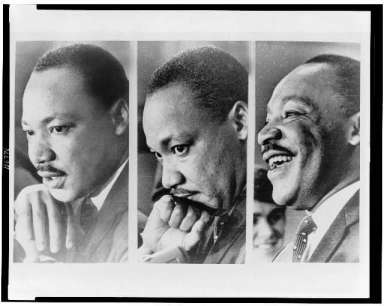
Most of what I just wrote did not come from me, but from another preacher, one who was responsible for many of us not having to go to work yesterday: Martin Luther King Jr. And it was because he was willing to say that like what I wrote that he was murdered.

bl-martin-luther-king-jr

When we think about Dr. King or even when we learned about him in school, he is often white-washed and whittled down to the “I Have A Dream Speech.” But Dr. King’s life and witness was about a whole lot more than one quote, or one speech, or even one issue. 

All of what we do as a church was handed down to us by those who came before us. The same was true for Dr. King. His life was a testament and witness to the power of Jesus’ resurrection from the dead which gave him the confidence to say and believe that God could make the impossible possible.

He, more than most, prayed for his words and his meditations to be worthy of the One who hung on the hard wood of the cross for people like us.

When we remember Dr. King, just as we remember Jesus, we celebrate their convictions and challenges, and we give thanks for their joy. But we must not forget the scars they bore for us! 

Dr. King was repeatedly beaten and arrested and eventually murdered.

Jesus was berated, arrested, and eventually murdered.

One of the hardest prayers to pray is one that’s even harder to live out. Because if we really want our words and meditations to be acceptable in the sight of the Lord they might lead us toward the valley of the shadow of death. But what is resurrection if not a promise that death is not the end?

On The Perils Of Preaching At Home

strangely-warmed-spreaker-header

This week on the Strangely Warmed podcast I speak with Todd Littleton about the readings for 3rd Sunday After Epiphany (Nehemiah 8.1-3, 5-6, 8-10, Psalm 19, 1 Corinthians 12.12-31a, Luke 4.14-21). Todd is the pastor of Snow Hill Baptist Church in Tuttle, Oklahoma and he is the host of the Patheological Podcast. Our conversation covers a range of topics including reading from other preachers, the cyclical nature of history, getting rid of pew bibles, communal interpretation, clapping in church, God’s perfect speech, the most important question in church, first sermons, and helping people cry. If you would like to listen to the episode, or subscribe to the podcast, you can do so here: On The Perils Of Preaching At Home 

screen shot 2019-01-21 at 4.32.14 pm

Rage Against Explanation

Isaiah 62.1-5

For Zion’s sake I will not keep silent, and for Jerusalem’s sake I will not rest, until her vindication shines out like the dawn, and her salvation like a burning torch. The nations shall see your vindication, and all the kings your glory; and you shall be called by a new name, that the mouth of the Lord will give. You shall be a crown of beauty in the hand of the Lord, and a royal diadem in the hand of your God. You shall not more be termed Forsaken, and your land shall no more be termed Desolate; but you shall be called My Delight Is In Her, and your land Married; for the Lord delights in you, and your land shall be married. For as a young man marries a young woman, so shall your builder marry you, and as the bridegroom rejoices over the bride, so shall your God rejoice over you.

I saw him walk by the window before I heard the knock on the door. We get a lot of foot traffic by the main office, and every once in a while someone will stop by the entrance to talk with the preacher. A few have asked for directions. Others have wanted information about the church. Most need some financial assistance.

I stood in the doorway and extended my hand and offered for the guy to come in, take a seat, and enjoy the warmth of our building on a particularly cold day.

He told me about his life, the ups the downs, the children and the wives, the bottles and the sobriety. He’s currently employed by the federal government but, like many, he’s not getting paid right now. 

And then he asked, “Why is God doing this?”

On Thursday three white Chicago police officers were acquitted on charges that they had conspired and lied to protect a white police office who fired 16 deadly bullets into a black teenager named Laquan McDonald. The officers claimed that the young man had swung a knife at them repeatedly, and even though there was no evidence of the fact on the videos presented to the court, the police officers were released with no penalties.

A pastor who was present in the courtroom was interviewed immediately after the verdict was released and said to anyone with ears to hear: “How could God let this happen?”

I was getting my oil changed this week when a woman in the waiting room leaned over and asked what I did for a living. And I told her the truth. She asked if I was being serious. She told me about how she grew up in the church, how the people in that church were salt of the earth, how they made her into who she is. I asked where she went to church now. She said she doesn’t. And, she remarked matter-of-factly, that church she grew up in closed a few years ago. 

Thinking the conversation had come to a conclusion I made open up a book but she left this lingering question hanging in the air: “Why would God let a church die?”

All of us, in some way or another, are looking for answers. 

The people Israel were utterly devastated by Babylon – they were conquered, humiliated, and carted away as strangers to be planted in a strange land. An entire generation would pass before they could return to the land God had promised them. Most of them only knew about it from the fairly tales their parents would tell them.

It’s not hard to imagine that the people of God, far from home, were asking themselves, “How long will this God of ours remain silent? It’s all good and nice to hear about what God did for Abraham, and Moses, and David, but when is God going to do something for us?!”

gettyimages-4879608591-800x533

These kind of questions appear again and again in the Old Testament – frankly they are the kind of questions that just about everyone in this room have asked at one point or another, and if not yet, we will one day.

And so it is in the midst of utter hopelessness, with no sign other that the words of aging relatives, that the words of the prophet arrive like electricity: “I can’t keep quiet!”

For the sake of God’s people I will not remain silent! God has given me something to say!

So much of what happens in the church today, whether is a sermon or a program, really boils down to this: “What are we gonna do about it?” 

We confront a particular issue and we wrestle with a particular response.

Sermons or programs end with a “lettuce” moment. 

Let us now go into the community to fix all the wrongs we encounter, let us challenge the powers that be, let us make the world a better place.

And yet Isaiah doesn’t tell God’s people what to do. Isaiah begins by demanding that God needs to do something about the situation, that God needs to make good on God’s promises!

Part of the power of this book, the Bible, the Holy Scriptures, is the good news it has to offer toward people who desperately near to hear good news. But the other part of its power is found in its ability to name the realities that people are facing all the time.

We’ve been talking about what’s right with the church this month, and I can think of no better way to put it than this: the church tells the truth; the truth about us, about the world, and about God.

Nothing in this collection of words makes any sense unless we are people of faith who believe that it’s true.

It’s as simple as that.

truthianm

However, there is a tension, the same kind of tension we wrestled with in Advent between the already and not yet. Isaiah announces and reminds God’s people about God’s promises. God has not, and God will not, abandon God’s people. But that strikes an uncomfortable chord when we consider how messed up this world is. What good is the promise of God in the middle of our pain?

I get asked many questions. There’s something about this office that carries with it the implication that I get to see behind the curtain and have the answers to the questions that confound us. But, to be abundantly clear – there is no good answer to the question of suffering in the world.

There is no good explanation for why horrible things happen, at least from the perspective of God.

For instance: if I have to hear another pastor preach over the funeral for a young person’s untimely death with the words, “God just wanted another little angel in heaven.” I will throw my bible across the sanctuary and tries as hard as I can to hit the preacher right in the face.

There are of course “bad things” that we experience and can point to the powers and principalities and personalities in the world and throw are charges against them. 

Like yesterday, during a peaceful indigenous peoples’ march in DC, a group of young white men surrounded and belittled an elderly Native American man while he was chanting and playing a traditional drum.

We can point to the powers and principalities that have rewarded that type of bullying and discriminatory behavior that resulted in the scene from yesterday. We can call to question the behaviors and practices and motives and ideologies that lead to something like that. 

But even still, there are indiscriminately horrible things that happen to people in this world that are beyond explanation.

How, then, are we to respond? Should we sit around twiddling our fingers in our own exile? Should we sit back and wait while things fall apart all around us? Should we offer trite and cliches responses to suffering because we don’t know what else to say?

Perhaps one of the greatest responses to this suffering world is what David Bentley Hart calls “rage against explanation.” We, as Christians, rage against the desire and the drive to explain everything as if God allowed something to happen or willed something to happen.

It’s the people who try to fill in the void created by tragedies with explanations of God’s plan that make God into a vindictive monster instead of the one who knows the truth of our suffering.

atmtightly-clasped-hands-in-monochrome-640.jpg__640x360_q85_crop_subsampling-2

I can remember being in the hospital one night while I was working as the on-call chaplain at Duke. The beeper attached to my belt felt like a shackle that I dragged around the building; I fretted over every notice and whether or not I would be called into a room filled with people looking for any explanation.

And so when the beeper went off, I made a mental note of the room number, and started trudging toward the other side of the facility.

When I got right outside the room, the doctor pulled me aside and said that the patient had been asking to speak with a professional pastor (which of course I wasn’t), and when I asked for more details the doctor just shrugged his shoulders and went back to making his rounds.

I walked into the room and the woman looked me up and down, and then rolled away from me toward the window.

At that point of the night I had already been in too many rooms and sat with too many families, so I just sat down in the chair and stared out the window with her. 

I have no idea how long we sat there in silence together, but eventually I pulled out the tiny bible I had in my pocket, and I turned to a random psalm:

“How long, O Lord? Will you forget me forever? How long will you hide your face from me? How long must I bear pain in my soul, and have sorrow in my heart all day long? How long shall my enemy be exalted over me? Consider and answer me, O Lord my God! Give light to my eyes, or I will sleep the sleep of death, and my enemy will say, “I have prevailed”; my foes will rejoice because I am shaken. But I trusted in your steadfast love; my heart shall rejoice in your salvation. I will sing to the Lord, because he has dealt bountifully with me.”

To which she rolled back over with a slight smile on her face and said, “It’s nice to know that someone knows how I feel.”

God is God and we are not. God thoughts are not our thoughts nor are God’s ways our ways. But once we begin to grasp even the smallest bit of God’s greatness, and majesty, and other-ness, then the news of Isaiah’s proclamation is even more bewildering and awesome – God rejoices over us.

There is no good explanation for why certain things happen. We can’t make sense of the senseless tragedies that happen all around us. 

But this is also not the end.

The Israelites eventually returned to a broken and abandoned community after their years in exile – they never quite experienced the promise they had imagined. But then, the time came, with God’s definitive act in the world, the incarnation. Jesus of Nazareth, fully God and fully human, came from the far country of God’s divinity to dwell among us, and then the ultimate price was paid such that the promise would come to fruition – not just for an individual, or even a nation, but for the entirety of the cosmos.

In scripture and in life, God does not speak to us of why things happen. Instead, God speaks about how things can be. God speaks to us not in explanations, but in promises!

Promises that we can scarcely imagine or even fathom.

What Isaiah announced to the people called Israel, God has revealed to us in the person of Jesus Christ. We who were once far off, removed by our own exile, have been brought near by the blood of the lamb who was slain for the world.

So we can rage all we want at the powers and principalities and personalities that are responsible for so much of the suffering in the world, but we can also rage against explanation as we walk hand in hand with those who are in the midst of darkness. Amen. 

A Wedding Sermon From A Prison Cell

Devotional:

John 2.1-2

On the third day there was a wedding in Cana of Galilee, and the mother of Jesus was there. Jesus and his disciples had also been invited to the wedding. 

Weekly Devotional Image

Dietrich Bonhoeffer was an outspoken pastor and was decisively opposed to the reign of Adolf Hitler and Germany’s complicity in providing the power and leverage Hitler used to decimate parts of Europe. Bonhoeffer’s theological convictions against Hitler eventually got him locked up in prison, though he befriended enough of the guards that he was able to write and receive letters from his family.

In May 1943, while held in prison, Bonhoeffer wrote a sermon for his niece Renate and long time friend Eberhard Bethge’s wedding. The sermon is beautiful and appropriately faithful: 

“Certainly you two, of all people, have every reason to look back with special thankfulness on your lives up to now. The beautiful things and the joys of life have been showered on you, you have succeeded in everything, and you have been surrounded by love and friendship. Your ways have, for the most part, been smoothed before you took them, and you have always been able to count on the support of your families and friends. Everyone has wished you well, and now it has been given to you to find each other and to reach the goal of your desires. You yourselves know that no one can create and assume such a life from his/her own strength, but that what is given to one is withheld from another; and that is what we call God’s guidance. So today, however much you rejoice that you have reached your goal, you will be just as thankful that God’s will and God’s way have brought you here; and however confidently you accept responsibility for your action today, you may and will put it today with equal confidence into God’s hands.

“As God today adds God’s ‘Yes’ to your ‘Yes’ , as God confirms your will with God’s will, and as God allows you, and approves of, your triumph and rejoicing and pride, God makes you at the same time instruments of God’s will and purpose both for yourselves and for others. In God’s unfathomable condescension God does ass God’s ‘Yes’ to yours; but by doing so, God creates out of your love something quite new.”

prison-jail-cell-bars-inmate-corrections-stock-generic-1536208655

I had returned to the words of Bonhoeffer’s sermon many times (particular while preparing my own weddings sermons!) but every time I read it, I can’t help but imagine the pain of the writer knowing that he could not be there to celebrate the union of two people who meant so much to him.

According to the John’s gospel, one of Jesus’ first miracles took place at the wedding in Cana of Galilee when Jesus turned water into wine. In that poignantly beautiful moment God’s abundant grace was poured out upon the celebration of two people brought together in marriage, and yet we receive no details about the two brought together! It’s as if the gospel writer wants us to see that though marriage is important, the one doing the marrying is actually God almighty!

Or, to use Bonhoeffer’s language, when God adds God’s “Yes” to our “Yes” we become instruments of the Lord for both ourselves and for others. So, for as much as I wonder about Bonhoeffer’s disappointment from missing out on the festivities, I am reminded, through his words, that God is the focus of the covenant of marriage; it doesn’t matter if we are there to celebrate or not, because God surely is.