The people said to Joshua, “The Lord our God we will serve, and him we will obey.”
On the evening of December 9th, 1968, Eduard Thurneysen had a telephone conversation with Karl Barth. Later that night, Barth died in his sleep.
Thurneysen explained later that most of their conversation covered the world situation at the time and that Barth’s final words were these:
“Indeed, the world is dark. Still, let us not lose heart! Never! There is still someone who reigns, not just in Moscow or in Washington or in Peking, but from above, from heaven. God is in command. That’s why I am not afraid. Let us stay confident even in the darkest moments! Let us not allow our hope to sink, hope for all human beings, for all the nations of the world! God does not let us fall, not a single one of us and not all of us together! Someone reigns!” (Barth In Conversation, Volume III.)
Karl Barth was never one to shrink away from speaking truth to power. He was removed from his teaching position in Germany for refusing to pledge allegiance to Hitler before the second World War, he ridiculed the United States for his criminal justice system in the 1960’s, and wrote against the Vietnam War in his final years.
And today, oddly enough, it brings me great comfort that with some of his final breaths Barth remembered that, even in the darkest moments, the One who chose to come and dwell among us still reigns. His final words are an ever-ringing reminder that, as Christians, we know how the story ends which frees us to serve and obey the Lord.
The Gospel is something that comes to us from outsideof us. We are saved by God in Christ not because we deserve it (just turn on the TV or scroll through Twitter for a few minutes – we’re clearly a people who have no idea what we’re doing), but because God chooses to do so in God’s infinite freedom. In the end, that’s exactly what the Gospel is – it is our salvation granted by the only One who could – The judged Judge has come to stand in our place.
God reigns not from a White House, or from a Parliament, or from a Situation Room, but from the hard wood of the cross.
God reigns not by merit and demerit, but by grace and mercy.
God reigns not through threats and accusations, but through forgiveness and reconciliation.
Which is all to say, Christians, in light of the life, death, and resurrection of Jesus Christ, see the world differently. We rebel against the insidious power of despair and we seek out ways to be for and serve the last, least, lost, little, and dead. We know and believe that someone reigns. That someone is the One who came to take away the sins of the world.
The crew from Crackers & Grape Juice has started putting together a bi-monthly newsletter with exclusive essays and sermons from some of our favorite theologians. My humble contribution is a playlist. You can sign up for the newsletter here: CGJ+ and you can check out my playlist for Election Day below…
Sufjan Stevens – America
The Strokes – Bad Decisions
Kevin Morby & Waxahatchee – Farewell Transmission
“America” is the lead single from Sufjan Stevens’ most recent album The Ascension. It is a 12.5 minute protest song against the sickness of American culture and it crescendos into a rather cathartic reflection on disillusionment and the loss of faith in the nation. It contains all of the classic Sufjan-esque elements that have made his career what it is from pulsing synths to layered recorders to an ear worm of a chorus.
On the morning of the presidential election in 2016, I drove to my local polling station (a Seventh Day Adventist Church) and after depositing my vote into the machine I looked up to see a mural of Jesus laughing his ass off; it was perfect. Stanley Hauerwas reminds us that we get the politicians we deserve and that, in spite of our best and even worst attempts, democracy is a highly coercive way to do things – particularly when 50.1% of people get to tell 49.9% of people what to do. “Bad Decisions” from The Strokes reminds me of this problem.
Kevin Morby and Katie Crutchfield’s (Waxahatchee) cover of Jason Molina’s “Farewell Transmission” is a haunting and holy tribute to a great songwriter who died at the age of 39 from alcohol abuse-related organ failure. My favorite lyric comes about midway through the song, and I think the words are particularly fitting for the time we find ourselves in: “The real truth about it is no one get it right / The real truth about it is we’re all supposed to try.”
This week on the Strangely Warmed podcast I speak with Sara Keeling about the readings for the 23rd Sunday After Pentecost [A] (Joshua 24.1-3a, 14-25, Psalm 78.1-7, 1 Thessalonians 4.13-18, Matthew 25.1-13). Sara serves as the lead pastor at Good Shepherd UMC in Dale City, VA. Our conversation covers a range of topics including Podcast lies, Hamilton hype, new covenants, idolatry, political identities, strange lands, wisdom from Narnia, unknowing our knowing, death and dying, foolish bridesmaids, and Robert Farrar Capon. If you would like to listen to the episode or subscribe to the podcast you can do so here: Deadly Serious
When Jesus saw the crowds, he went up the mountain; and after he sat down, his disciples came to him. Then he began to speak, and taught them, saying: “Blessed are the poor in spirit, for theirs is the kingdom of heaven. Blessed are those who mourn, for they will be comforted. Blessed are the meek, for they will inherit the earth. Blessed are those who hunger and thirst for righteousness, for they will be filled. Blessed are the merciful, for they will receive mercy. Blessed are the pure in heart, for they will see God. Blessed are the peacemakers, for they will be called children of God. Blessed are those who are persecuted for righteousness’ sake, for theirs is the kingdom of heaven. Blessed are you when people revile you and persecute you and utter all kings of evil against you falsely on my account. Rejoice and be glad, for your reward is great in heaven, for in the same way they persecuted the prophets who were before you.”
The day after the 2016 presidential election:
Thousands of angry citizens in California gather to protest against the election of Donald Trump. Though initially peaceful, the protest eventually turns violent as the crowds begin attacking the police and lighting dumpsters on fire. As tear gas is fired into the crowd, a chant starts to rise, “Kill Trump, Kill Trump, Kill Trump!”
Meanwhile, a woman walks into a Wal-mart in the Midwest while wearing her religious hijab. She goes up and down the aisles picking out her items when another woman walks up, grabs her by the shoulder while pointing at her hijab and says, “That would look a lot better around your neck! This is our country now!”
Meanwhile, a man is driving through a suburb of Chicago when a crowd of young men surrounds his car, pulls him from the vehicle, and drags him through the streets. They attack him because he has a Trump sticker on his bumper, and in the videos taken by on-lookers you can hear the young men shouting, “You voted for Trump, and now you’re going to pay for it!”
Meanwhile, white students at a Junior High School in Michigan form a human wall to block minority students from entering the building. There are shouts of “go back to your country” and “we’re going to make America great again.”
Presidential elections tend to bring out the worst in us.
Or, to use Paul’s language, it’s times like these that we are reminded “There is no one who is righteous, not even one; there is no one who has understanding, there is no one who seeks God. All have turned aside, together they have become worthless; there is no one who shows kindness, there is not even one.”
Time after time, it seems this is our fate. We, that is Christians, are content to gather, whether online or in-person, with people of differing political persuasions so long as we never address those differences and then, after an election, we hope things will tone down and we can get back to living life.
And yet, as Christians, we are already living in the time after time. God in Christ made, and still makes, time for us and has quite literally changed time forever.
It’s just that sometimes we don’t act like its true.
Today Christians across the globe are gathering for All Saints. All Saints is a day set apart, a different time, in remembrance of the dead – it is an opportunity for the church to offer witness to the ways in which God moved through the saints of our lives.
It is a radical moment in terms of the liturgical calendar, rivaled only by the radical words of Jesus from Matthew’s Gospel.
The so-called beatitudes have always been a source of comfort and hope for the people called church. Though, at times, we have inverted them to be descriptions of how we’re supposed to behave. We lift them up over the heads of dozing Christians and explain that if they want to join the community of saints, this is how you have to live.
But what Jesus describes in his Sermon on the Mount, both in the beatitudes and in the descriptions of behavior following, like turning the other cheek and praying for one’s enemies, they don’t describe what “works.”
Seeking righteousness in a world full of self-righteousness, and praying for the person persecuting you, tends to lead to more self-righteousness and more harm.
Jesus’ Sermon on the Mount isn’t a to-do list to make the world a better place. Instead, it is a description of who God is.
The poor, the mourners, the meek, the merciful, they are blessed not because they’ve earned it or deserve it, but simply because it is God’s good pleasure to do so.
To put it simply, the idea behind this crazy thing called church is that we might worship the Lord as well as learn what it means to exist as a beatific community in exile where the mourning, the meek, and the merciful are blessed.
The people called church are in the world, but not of the world.
The people called church are constituted and bound not by political documents, but by the Lord of heaven and earth.
The people called church are a community that has learned that to live in a manner described by the Sermon on the Mount requires learning to trust others to help us live accordingly.
To put it even simpler terms: the object of Jesus’ words to the crowds that day, and to us today, is to create dependence – it is to force us to need one another.
But, most of us don’t want to need anyone else. We’ve been spoon fed a narrative of self-determination since birth and we can’t stand the idea of having to rely on others.
And this is why the beatitudes will never make sense to those outside the people called church. Jesus’ words are only intelligible, and therefore advisable, in light of the cross and the empty tomb.
Otherwise, they are garbage.
But in the church, we are reminded over and over again that we are dependent on one another and the Lord, and that we are kidding ourselves if we think we can make it through this thing called life on our own.
The church is at her best when we can speak and hear the truth about the condition of our condition, that we are sinners in need of grace, that we are all in need of help and mercy, and that we all need one another far more than we think we do.
But that is not how we are used to hearing about Jesus’ Sermon on the Mount. If we hear about it at all, it is usually a brief reflection about how there are merely suggestions for how we should live or they are only meant for the super faithful among us, the Mother Teresas and the Mister Rogerses.
In short, we’re told the Beatitudes describe the saints.
The challenge for us, unlike most sermons proclaimed and received today, is that we cannot divorce this message from the messenger. Because, unlike preachers today (myself included), Jesus did not just say these words about some group of people sometime in the future; he, in himself, is the inauguration of the new time.
Jesus is the Messiah of the beginning and the end. Through his death and resurrection he has made it possible for us to live according to these confounding words not by our own effort, but by the Spirit moving through us.
And, saints (that is: all disciples) are not those who are the super best Christians of all. Saints are simply those who have already died in baptism to be raised into a new life where the impossibility of Jesus’ words not only become possible, but become real.
Which is just another way of saying, we’re all in this crazy thing called church together.
Presidential elections may bring out the worst in us, but they also remind us of who we are: sinners in need of grace. Contrary to how the talking heads might want us to think, the world does not hinge on our elections. God has been God a whole lot longer than we’ve been picking and choosing leaders, and God will be God long after we cast our final votes.
As Christians, we believe that Jesus is Lord – that means we believe that God is God regardless of who sits behind the desk in the Oval Office. And, pertinently, it means we believe God is calling us to live according the words of Jesus’ Sermon on the Mount which includes praying for our enemies.
Can you imagine? Christians praying for the people they disagree with?
Sadly, that’s at the heart of what it means to follow the Lord and it has been so absent during this election cycle, and the one before it, and the one before that one, and so on. Instead of praying for and loving our enemies, voters have been intimidated, people have been attacked, and families and churches have been divided.
And, perhaps we’d like to blame our politicians for this tumultuous season. But the problem goes far deeper than those running, and selected, for office.
The problem is us.
Rather than seeing one another as brothers and sisters in Christ, we’ve viewed each other through the names on our bumper stickers.
Rather than listening to and praying for those of different opinions, we’ve just shouted louder into the fray.
Rather than confessing Jesus as Lord and living accordingly, we’ve fallen prey to believing that what happens on Tuesday is more important than what happens on Sunday.
Our election of leaders will always pale in comparison to God’s election of us, precisely because we do not deserve it. We’ve been elected to salvation through Christ in spite of copious amounts of evidence to the contrary.
And Jesus calls us to a life of humility in which we pray for those whom we hate.
Jesus constitutes a people who are his body on earth to be for the last, least, lost, little, and dead.
Jesus, high in the air with the nails in his hands and feet, says, “Forgive them Father, for they do not know what they are doing.”
And, if we’re honest, we have no idea what we’re doing.
We don’t know how to be Christian in America, we don’t know how to hold our Christian identities and political identities in tandem, and we do not know how to love the people we hate.
But we do know this: Jesus is Lord – and he won’t give up on us.
So today, in spite of the world spinning as it does with fightings and fears within and without, we give thanks to the Lord our God who makes a way where there is no way, who has created a new community of love in his only begotten Son, and who elected us to salvation. Amen.
Then Jesus said to the crowds and to his disciples, “The scribes and the Pharisees sit on Moses’ seat; therefore, do whatever they teach you and follow it; but do not do as they do, for they do not practice what they teach. They tie up heavy burdens, hard to bear, and lay them on the shoulders of others; but they themselves are unwilling to lift a finger to move them. They do all their deeds to be seen by others; for they make their phylacteries broad and their fringes long. They love to have the place of honor at banquets and the best seats in the synagogues, and to be greeted with respect in the marketplaces, and to have people call them rabbi. But you are not to be called rabbi, for you have one teacher, and you are all students. And call no one your father on earth, for you have one Father — the one in heaven. Nor are you to be called instructors, for you have one instructor, the Messiah. The greatest among you will be your servant. All who exalt themselves will be humbled, and all who humble themselves will be exalted.
Jesus wasn’t a very good politician.
At least, he did not seem to understand that there are some things you don’t do or say if you want to create more followers and supporters.
Perhaps things would’ve been better for the Lord had he been a little more careful with his words, or if he had hired the right campaign manager, or, at the very least, if he had a better social media presence.
But speaking directly, without equivocation, seemed to be Jesus’ favorite thing to do.
At times he told the crowds that they would have to hate their mothers and brothers and fathers and sisters if they wanted to follow him. He waxed lyrical about how his way of running things included going the extra mile, turning the other cheek, and even praying for one’s enemies.
But now he sets his sights on the opposition.
Listen – You see all these people in positions of power? The religious elites and the judges and the leaders? The sit in place of authority so you can listen to them all you want, but don’t you dare do what they do. Look at how they place undue burdens on the last, least, lost, little, and dead all while they refuse to lift a finger for anyone. All they care about is being seen by others, that’s why they dress the way they do and smile the way they do. Have you ever noticed how they pick the places of honor for themselves while in public? Don’t be like those fools! You already have one teacher. Don’t bow down to worship those who desire your allegiance. You already have a Messiah. The greatest among you will be your servant. And all who seek to exalt themselves will be brought low, and all who humble themselves will be exalted.
That Jesus could speak so radically and truthfully to power is a profound indication that he was not hoping to win over the so-called undecideds.
Jesus, our Lord, held offices of power from the people called Israel – Prophet, Priest, King.
The notable things about prophets, priests, and kings is that no one become those thing by winning an election, or by getting enough people on their side, or by convincing folk that they’re the lesser of two evils.
The authority from which Jesus speaks in this passage (an authority that those around him were constantly questioning) comes from simply being who he is, and not from climbing up all the different rungs on all the political ladders.
If Jesus sounds like anything here, he sounds like a revolutionary – calling out those in the places of power for abusing their power.
However, rather than taking the traditional route of revolutionary revolts by equipping the masses to overthrow their overlords, he puts everyone in their place – form the top to the bottom and from the bottom to the top.
And this is who Jesus is – he is truth and he speaks truth.
The uncomfortable truth from truth is this: in the end, no one will be more humbled than Jesus and no one will be more exalted than Jesus.
So we can take the Lord’s words and we can string them around however we want to knock people down for being too high, or bring people up who have been to low. But ultimately these words are not about us, they’re about Jesus.
Jesus is the greatest among us having been humbled by our rejection, only to be exalted in the resurrection.
And this is how the Lord rules – not from the politics of parliament, not from overtures in the Oval Office, but from the Cross.
Jesus, unlike us, never had the benefit of reading How To Win Friends And Influence People, he didn’t take classes at the local junior college on proper public speaking, he didn’t submit an op-ed to the Jerusalem Times about the need for new leadership.
Jesus is different.
He doesn’t work in the art of persuasive discourse, nor does he roll out all the relevant statistics about policy initiatives, he doesn’t even rely on simple and easily explainable stories to demonstrate why he should be the Messiah.
Instead, Jesus is who he is and he trusts that those in the know will see and hear him because he is truth incarnate.
Oddly enough, compared with how we so often assume power is supposed to work these days, Jesus never really tells the crowds what they, or we, want to hear.
Instead of promising to defeat all of our enemies, Jesus tells us to pray for them,
Instead of offering us health and wealth, Jesus tells us that if we lose our lives we will gain them.
Instead of pointing to a day in the future when things will finally be fixed, Jesus tells us the Kingdom of God is already here in him.
This weeks sees yet another presidential election in the United States. When all is said and done we, as a country, will have spent more than 10 billion dollars during this particular election cycle.
That’s billion with a b.
Which is a 50% increase over the election in 2016 and there’s no sign that our political spending will be slowing down any time soon.
And with all of that money, we’ve been told again and again and again that this is the more important election in history. It’s all we can see and read on Twitter and Facebook, it’s all the talking heads will talk about on TV, and we’ve even been told to use those words to insure that as many people as people head to the polls this week because, after all, this is apparently the most important election in history.
Its notable that, strangely enough, every election becomes the most important election in history – it is an absolute truth in the US, and one we repeat to ourselves every election cycle.
And when scores of people gather at their voting locations this week, and all the early votes are tallied, we will be told that this is America at its best – elections remind us that we are in charge of our own destinies.
And yet, for Christians, we cannot forget that the only democratic moment in the Gospels is when the people choose Barabbas instead of Jesus.
But, of course, we’re taught from infancy that voting is at the heart of what it means to be who we are in this country. I mean, at my last church we had a preschool in which voting was part of the educational curriculum!
Picking and choosing leaders is what makes our democracy democratic.
And for as much as that’s true, it overlooks how frighteningly coercive our voting can be. Lest we forget, democratic voting makes it possible for 50.1% of people to tell the other 49.9% of people what to do.
That’s not to say that democracy is inherently evil, or bad, or that we should get rid of it. I, for one, am grateful to be a Christian in this country where my Christian identity is not persecuted simply for me being me. But, it’s worth taking the time to reflect on how willing we are, as Christians, to worship our democracy when it results in what we’ve seen the last few months and, more likely than not, we will continue to see over the next few months.
Now, lest we walk away from this service today thinking it has more to do with politics than with faith – let me be clear: It is all too easy to blame politicians for the coercive nature of politics, for the increasingly vitriolic behavior we feel toward those of different political persuasions. But the problem is far deeper and widespread.
The problem, quite simply, is us.
Or, to put it another way, we get the politicians we deserve.
They are us and we are them.
Which brings us back to Jesus.
We did not elect Jesus to be our leader.
We did not elect Jesus to be the second person of the Trinity.
We did not elect Jesus to be the Lamb of God who takes away the sins of the world.
There was never a time when the church got together to take a majority vote about whether or not there should be a group of people called church who gather together to worship Jesus. Notably, in the beginning, we decided the best way to choose our leaders was by casting lots!
And, sure, the church today votes on all sorts of stuff but, when we do make decisions, we tend to use the methodology for deciding the future based of a governmental system more than from the revealed Word of God in the strange new world of the Bible.
Jesus’ authority, the power from which he was able to speak to truth to power, comes not from the people, but from God. Elections will always be with us, but they are no substitute for the hard work of the church – we are a people constituted and bound by the Lord who is and speaks the truth.
At her very best, the church is the place for Truth.
And part of the truth we affirm, much to the chagrin of just about everyone, is that Jesus will still be Lord no matter who is elected this week. Jesus still reigns from the right hand of God regardless of who sits behind the desk in the Oval Office. Jesus is still Lord of the living and dead which includes people who identify as red, blue, or purple.
Another part of the truth we affirm, much to the chagrin of just about everyone, is that the greatest among us will be our servant – those who exalt themselves will be humbled, and those who humble themselves will be exhausted. We can confess all of that as Good News because it means the ways of the world are not the ways of God.
In a world drunk on meritocracy, the Lord offers an alternative politic.
The Kingdom of God is run not on earning and deserving, but on grace and mercy.
That’s what Jesus’ election is all about – it’s not us choosing him, but him choosing us.
Jesus is Lord and we are not.
Lord, importantly, is not a democratic title. We confess Jesus as Lord because he is the One to whom we owe our fullest and truest allegiance.
And this, the lordship of Christ, is a fundamental challenge to the status-quo.
It means that our assumptions about power and prestige are all messed up.
It forces us to reckon with a world of our own design rather than the Kingdom wrought on earth in the incarnation.
It compels us to open our eyes and ears to the people we would otherwise ignore.
But it really is Good News, because the most important election in history isn’t happening this week. It already happened a long time ago.
“’Trump says all the things we’ve always wanted to say.’ Really? Then what does it say about us as Americans if Trump’s outer monologue is our inner monologue?”
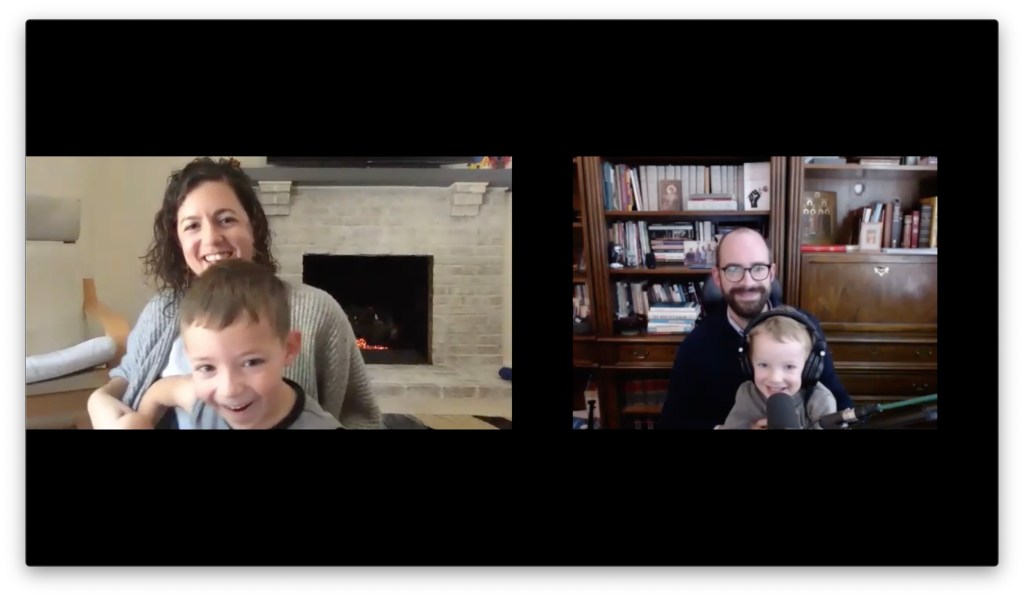
The Crackers & Grape Juice crew got together (online) last week and we were fortunate to have a conversation with Gretchen Purser about the changes that have happened to the Republican Party throughout her career and how it has reshaped the way she understands her faith.
Gretchen spent 20 years in politics, raised ~1 billion dollars for the Republican Party, worked for the Christian Coalition, and retired from politics in 2009.
If you would like to listen to the episode, or subscribe to the podcast, you can do so here: Not My Party
There are times when I don’t know what, or even how, to pray. I am therefore grateful for the saints of the past and present who make their prayers available as prayers we can pray. The following is one such prayer from Stanley Hauerwas…
Lord Jesus Christ, we live in a world without lords. We have presidents, but they rule with our consent – or at least this is the story we tell ourselves. We believe that just as we claim to govern, so we govern our own lives. We are not set up to use “Lord” language. So, do you mind if we call you “Mr. President,” Jesus? That, we confess, sounds strange. You did not and do not act like you are running for office. Driving money changers out of the temple seems a bit beyond the pale. What is worse, at the wedding at Cana you were a bit short with your mother, and it is even more troubling that you never married and spent most of your time with a bunch of guys. We worry a bit if you ever came to terms with your sexuality. When all is said and done, we do not think you are going to be elected for president.
So, what are we going to do with you, Lord Jesus Christ? We confess that we do not have the slightest idea. All we can do is pray that you will destroy our presumption that we are our own lords. We fear such destruction, sensing that it may have something to do with death, and as Yoder tells us, in the life and death of Jesus we find a reality and the possibility of all that your teachings say. It is possible to live that way if you are willing to die that way. Is that really part of what it means to call you Lord? I guess this means we have to get serious when we haven’t the slightest idea of what it might mean to get serious.
O give thanks to the Lord, for he is good; for his steadfast love endures forever.
On Sunday countless churches across the world (at least those who follow the Revised Common Lectionary) were treated to the Gospel reading when Jesus reminds those with ears to hear that the greatest commandment is to love God and neighbor.
Jesus does so in the Gospel of Matthew as a response to a lawyer who was seeking to trap him in his words. And Jesus, being Jesus, not only responds with an answer that left everyone speechless (“No one dared ask him another question”) but he stole his answer from other parts of the Bible.
Which is to say, Jesus’ pronouncement about loving God and neighbor isn’t unique to Jesus.
“You shall love the Lord your God with all your heart, with all your soul, and with all your might,” come straight from Deuteronomy 6:5. And “You shall love your neighbor as yourself,” is from Leviticus 19:18.
The more you read the scriptures, the more you enter the strange new world of the Bible, the more you realize that it is indeed strange because it is constantly repeating and re-interpreting itself. Karl Barth put it this way: “The Old Testament does not end in the New Testament but continues in it, just as the New Testament is already present in the Old Testament.”
The whole of the revealed Word of God is a living and confounding witness to the repetition of God with God’s people.
A few days ago, after putting the finishing touches on my sermon about Jesus’ treatise on love, I came across an image that I haven’t been able to get out of my head. Some enterprising Christians took the time to diagram out all the chapters in the Bible (from Genesis 1 to Revelation 22) and draw connections backwards and forwards between all the cross-references. In the end, they produced an image with 63,779 connections throughout the entirety of the scriptures and, in God’s strange and wonderful way of doing things, the image came out looking like a rainbow.
How perfect.
The sign of the first rainbow in Genesis after the flood was and is a sign for us of the covenant God has made with God’s creation. And now, seeing another rainbow connecting scriptures, we are reminded of God’s promise to dwell among us, to redeem us, and to love us in spite of us.
The Bible is complex and diverse. It is not something to be consumed just like any other book from front to back. It is a mine that never stops producing incredible gems.
The Bible also contains just about every kind of literary genre from poetry to pose to genealogies to aphorisms and on and on. It can remind us of the same things over and over again or it can smack us in the head with a new insight for the very first time.
The Bible is alive and ever new even though the canon was finished a long time ago. That it is alive and ever new is indicative of the Spirit’s power to bring forth light on something previously shadowed.
This week on the Strangely Warmed podcast I speak with Sara Keeling about the readings for the 22nd Sunday After Pentecost [A] (Joshua 3.7-17, Psalm 107.1-7, 1 Thessalonians 2.9-13, Matthew 23.1-12). Sara serves as the lead pastor at Good Shepherd UMC in Dale City, VA. Our conversation covers a range of topics including The Overstory, connected characters, divine deliverance, All Saints all the time, the God who gathers, theological wandering, rules and regulations, and sitting at the reject table. If you would like to listen to the episode or subscribe to the podcast you can do so here: Preaching Isn’t Public Speaking
When the Pharisees heard that he had silenced the Sadducees, they gathered together, and one of them, a lawyer, asked him a question to test him. “Teacher, which commandment in the law is the greatest?” He said to him, “‘You shall love the Lord your God with all your heart, and with all your soul, and with all your mind.’ This is the greatest and first commandment. And a second is like it: ‘You shall love your neighbor as yourself.’ On these two commandments hang all the law and the prophets.” Now while the Pharisees were gathered together, Jesus asked them this question: “What do you think of the Messiah? Whose son is he?” They said to him, “The son of David.” He said to them, “How is it then that David by the Spirit calls him Lord, saying, ‘The Lord said to my Lord, “Sit at my right hand, until I put your enemies under your feet”’? If David thus calls him Lord, how can he be his son?” No one was able to give him an answer, nor from that day did anyone dare to ask him any more questions.
He liked to mow his lawn early in the morning while it was still cool. It was a welcome reprieve from his busy life to just drive back and forth with his riding lawn mower week after week. And, one morning, after finishing the lawn, the man maneuvered the mower back toward the garage when out of nowhere BAM he was tackled off of the mower and onto the ground.
The man and his assailant rolled down the driveway and grappled until they came to a stop, and that’s when the fighting really began.
Hours later the formerly mowing man was resting in the hospital with five broken ribs wondering what in the world had led to all of this.
The man, as it turns out, was Rand Paul, the junior Republican Senator from the state of Kentucky. And for months the media speculated as to why the scuffle took place. In our heightened political atmosphere, with tensions running rampant, there was immense suspicion that the attacker was an avid opponent of Ran Paul’s political proclivities who felt the only the only recourse for their disagreements was violence.
It was a frightening moment for lawmakers across the country as they each wondered if it could happen to them too.
Months later, when the assailant was finally brought before a judge, the truth came out: The attacker was Rand Paul’s neighbor, and he was tied of Rand Paul’s lawn clippings getting blown into his yard.
While a great sum of people assumed that Rand Paul’s political leanings were to blame for the attack, while the media continued to postulate theories about a “national political scandal,” it was all about a neighbor squabble.
Love your neighbor as yourself.
Every week the Christian church is compelled and downright forced to rediscover the strange new world of the Bible.
Whether it’s a church in Northern Virginia streaming its worship to the likes of Facebook and YouTube, or a house church meeting in a dingy basement, or the greatest of cathedrals with giant stained glass windows, we are all invited into the scriptures to learn more about who we are and whose we are.
And it is, indeed, a strange new world that Matthew describes for us today. Therefore, our task, the church’s task, is not the make the Gospel intelligible in the light of the world we live in – we don’t start with the world and then do what we can to accommodate God’s Word to it. Rather, we allow the strange new world of the Bible to reveal how the world we live in has already been transformed through the new creation wrought in Jesus Christ.
This is no easy task.
For, many of us are too familiar with certain scriptures such that we no longer consider them strange.After all, what could be strange about a church preaching love?
And yet, when we read about this little moment containing Jesus pronouncement of love, we do not see how it is meant to turn the world, our world, upside down.
Throughout most of the church’s history, it has been all too easy to remake and reimagine Jesus in our own image. It’s why, today, any of us can drive through our neighborhoods and see what appears to be a presidential election sign in someone’s front yard but then upon closer inspection we discover it says “Jesus 2020,” and its not altogether clear whether a Republican or a Democrat lives in the house.
That this happens is indicative of the fact that all of us, at times, are guilty of picking and choosing our own verses from the strange new world of the Bible in order to project a version of Jesus that makes him into our image rather than the other way around.
And, most of the time, ideological divides notwithstanding, the Jesus we tend to choose is a harmless, gently suggestive, long-haired hippy; a Jesus we can imagine playing Kumbaya around the fire; a Jesus who just wants us to all get along.
That Jesus is the same kind of “quivering mass of availability” (as Stanley Hauerwas puts it) that many of my fellows pastors and I have become. We’ve leaned so far into our inherent people pleasing sensibilities that we try so hard to be all things to all people and we neglect to offer the Words of Jesus to the people we serve.
But Matthew’s Gospel, particularly here in these string of passages leading up to the crucifixion, presents the Lord who knows that, sometimes, there are things worth getting worked up about, things worth arguing over, things that call for a louder voice and a deeper conviction.
Listen – Having silenced the scribes and the Sadducees, the Pharisees picked a lawyer to trap Jesus in his words, again. “Teacher, which of the commandments is the greatest?”
“Um” Jesus says, “Have you all not been reading the scriptures and going to synagogue? You know the answer: You shall love the Lord your God with all your heart, soul, mind, and strength. It’s in Deuteronomy. Go look it up.”
The lawyer nods his head in approval but Jesus keeps going, “But there’s another one just like it. This one’s from Leviticus: You shall love you neighbor as yourself. On these two commandments hang all the law and the prophets.”
And after hearing that, no one dared to ask him another question.
“Love God and love neighbor – that’s it,” Jesus seems to say. And that line of thinking and proclamation easily leads to a Hallmark version of the church where all we ever do is meekly suggest that a little kindness every once in a while wouldn’t hurt anybody.
It’s why pastors, including myself, have used the story of Rand Paul and his driveway throw-down as a way to convince congregations to be nicer to their neighbors.
And yet, according to Matthew’s Gospel, all of the things leading up to this exchange, the flipping of the tables in the temple, and the belittling of the biblical literacy of the scribes and the Pharisees, and the mic-dropping at the end of a brief discourse on tax avoidance, are all part of how Jesus loves.
Jesus, our Lord, chooses this moment, after all the conflict and controversy, to patiently explain that the most important thing of all, the great of all the laws and commandments, is to love God and neighbor.
Which begs the question, “Do we really know what that kind of love looks like?”
More often than not, the love we preach about in church is used as an excuse to do whatever is necessary to keep as many people happy as possible – the path of least resistance has become our way of loving God and neighbor.
When truth-telling would be far too uncomfortable, we practice silence and call it love.
When showing up to call into question the powers and principalities of this life requires too much of us, we remain content to stay home and we call it love.
When confronting our neighbors in their sinfulness feels too difficult, we build up higher fences and call it love.
Love, then, becomes the codeword for letting people get away with just about anything and everything.
However, the earliest Christians, those who truly put their lives on the line for their faith, were not persecuted for what they believed (Jesus is Lord) but for what they refused to believe (Caesar is Lord). The church, today and always, is distinguished not only by what we stand for, but also by what we condemn.
We can stand and call for love until we’re blue in the face, but what good is love if nothing ever changes?
A pastor named Carlyle Marney used to reject his fellow pastors for degenerating into a preaching style that came off as self-help therapy. He would say, “You preachers are always saying, ‘Bless, bless, bless’ when you ought to be saying, ‘Damn! Damn! Damn!’”
Consider: “God loves you just the way you are,” is an all too common refrain in the church these days and I am guilty of it as well. There are people who need to be told those words for a great number of reasons. But there are also an equal number of people who need to be reminded, myself included, that remaining as we are only makes a mockery of what God in Christ did for us.
Here’s an example: A beloved hymn of the church is Just As I Am (the hymn we used earlier in the service)
“Just as I am without one plea” sounds an awful lot like God loves us just the way we are. Except, the very next words are, “But that thy blood was shed for me.”
Christ’s blood was shed for us precisely because of who we are! The rest of the hymn goes on to talk about the poor, the wretched, the blind and fighting and fears within and without. Those words aren’t describing other people – they’re describing us! The ones for whom Christ died!
The cross and resurrection rectify us, the make right what was wrong, they change us. That means we cannot remain as we were or as we are. We, all of us, the good and the bad, are being worked on by God in ways both seen and unseen.
But that doesn’t sound like the kind of love we so often talk about in church. We’re content to hear the call to do a nice thing every once in a while, or the need to spread a little kindness, or a host of other lovely opportunities.
And yet love, at least according to the strange new world of the Bible, doesn’t look like what happens on Valentine’s Day, or even suggestions from a local civic organization.
Instead, love looks like the cross.
And that kind of love is dangerous.
The Jesus we encounter in the strange new world of the Bible understands that to love God with heart, soul, mind, and strength, and to love your neighbor as yourself is demanding and risky.
Following the path of love, at least for Jesus, means jumping into debates, it means calling into question the powers and principalities, it means not letting the world continue on in its backwards and broken ways.
And that kind of love got Jesus killed.
Of course, we are not the Lord, thanks be to God. In the end God does what we wouldn’t and couldn’t. And that’s the whole point.
We are called to a love that we regularly fail to do.
To know what it means to love God and neighbor, as Jesus defines it, requires us to take seriously the way Jesus loved. His love is seen in his willingness to eat with the outcast, to reach out to the untouchable, to embrace the powerless, to confront the demonic, to outmaneuver the manipulative, and to correct the clueless.
And we can only know what it means to love God because of God’s love for us. This Godly love can be, at times, harsh and dreadful, because to be loved by God is to know ourselves truthfully.
It is to know that we don’t deserve God’s love.
In this remarkably delicate situation we find ourselves in, days away from a presidential election in the midst of a pandemic that has wrought horrific economic and cultural unrest, we hear these enduring words from scripture about loving God and neighbor and it should give us pause. Not just a pause to consider whether or not we actually love God and neighbor, but also to consider how bewildering it is to be loved by God and neighbor when we don’t deserve it.
Because when we begin to witness the condition of our condition, that we are loved in spite of all evidence to the contrary, that’s when things begin to change.
And, God is love.
Contrary to all of its complications, love is the heart of the life of the church and every single disciple of Jesus. And yet, the presumption that love is just something we do, or that its easy or natural, does a disservice to the One who died in the name of love. To love rightly, that is faithfully, is to recognize the hard demands of love made manifest in Christ who, from the hard wood of the cross, still pronounced a word of love and forgiveness over a world hellbent on hatred and retribution.
Love, the kind of love that God has for us and that we are called to have for God and neighbor is way more strange than we often make it out to be. But without it, we would be lost. Amen.









 think and let think