Ephesians 4.1-16
I, therefore, the prisoner in the Lord, beg you to lead a life worthy of the calling to which you have been called, with all humility and gentleness, with patience, bearing with one another in love, making every effort to maintain the unity of the Spirit in the bond of peace. There is one body and one Spirit, just as you were called to the one hope of your calling, one Lord, one faith, one baptism, one God and Father of all, who is above all and through all and in all. But each of us was given grace according to the measure of Christ’s gift. There it is said, “When he ascended on high he made captivity itself a captive; he gave gifts to his people.” (When it says, “He ascended,” what does it mean but that he also descended into the lower parts of the earth? He who descended is the same one who ascended far above all the heavens, so that he might fill all things.) The gifts he gave were that some would be apostles, some prophets, some evangelists, some pastors and teachers, to equip the saints for the work of ministry, for building up the body of Christ, until all of us come to the unity of the faith and of the knowledge of the Son of God, to maturity, to the measure of the full stature of Christ. We must no longer be children, tossed to and fro and blown about by every wind of doctrine, by people’s trickery, by their craftiness in deceitful scheming. But speaking the truth in love, we must grow up in every way into him who is the head, into Christ, from whom the whole body, joined and knit together by every ligament with which it is equipped, as each part is working properly, promotes the body’s growth in building itself up in love.
The prevailing wisdom is that, when a newish preacher arrives in town, he or she should avoid controversial topics at all costs. At least, in the beginning.
You don’t want to burn any bridges before they have a chance to be built in the first place.
But some things can’t be ignored – some topics demand our attention whether we want them to or not.
I don’t know if you know this, but the church is on the brink of schism.
On either side people, lay and clergy alike, keep flinging their disappointments and their differing theologies at one another and it really truly seems as if there is no future in which we stay united.
One pastor put it this way: “I have spent twenty of the best years of my life serving the church in which I have grown closer to more people than I can count… But for the sake of a high and holy cause, I can let all of those friends go. I can no longer live for myself, nor for the present age alone, but only for God for eternity. I have prayed and I have waited, and I must either submit myself to the ways things are, or to leave. I have chosen the latter.”
Another said this: “It is not just for the great number of Methodists across the world that we plead, not even the millions we have yet to reach, but simply for the church herself. We wish to speak the truth in love. Treating people the way we have is simply wrong, cruel, and unjust in all parts and principles because we have denied freedoms, numbed the mind, and killed the soul. How we have belated particular individuals must cease now and forever.”
And still yet another said this: “It matters not how we treat people – this is the way it has been and it is the way it shall continue. The matters of individual liberties belong to Caesar, and not to the church – otherwise God would have intervened.”
Have you heard people talk like that about the church? Or perhaps you’ve read an article in the newspaper about our irreconcilable differences?
Great and powerful leaders in the church are looking through the legalities of separation because it seems like we can no longer hold onto a common cause.
And, lest we grow apathetic about the possibility of ecclesial schism, lives are at stake.
If you don’t know what I’m referring to, you should. So, let me try to break it down a little bit. There is a sizable portion of the church that believes in the institution of slavery is a right given by God Almighty while the other side of the church believes that slavery and the ownership of human beings runs counter to the Good News of the Gospel.
So, friends in Christ, what should we do?
Or, to put it another way, which church should we align ourselves with?
Oh, I seem to have misplaced the notes for my sermon… I think I grabbed the one from 1844 instead of the one for 2021…
You see, the quotes I just read from different pastors were not shared on various social media accounts over the last few years – they didn’t come from the bitterness of recent denominational meetings in which theological dueling has become a favorite pastime. No, all of those are real quotes from pastors in 1844 when the Methodist Church was fighting about whether or not to stay together. And the matter at hand then, the decisive claim that actually split the church until 1939, was slavery.

I beg you to lead lives worthy of the calling to which you’ve been called.
We don’t know all the details that required the writing of the epistle to the Ephesians, but it’s clear that not all of those who were part of the gathering, the ecclesia, were getting along.
There’s a good chance that it had something to do with Gentile Christians making claims about what the faith really looked like now that they were part of the covenant whereas Jewish Christians were holding on to the faith that had first grabbed hold of them.
Or, it could’ve been a little more like the church in Corinth that was constantly bickering about the nuts and bolts of community meals and how the unified church broke into different factions led by different leaders.
Or, maybe they were arguing about who was and who wasn’t compatible with Christian teaching.
We’re not entirely sure but, taking a step back for a moment, it doesn’t really make that much sense. How could a community founded on radical inclusion descend into rampant division? Why would a people who are commanded to love their neighbors have so much trouble actually doing it? What happened such that brothers and sisters in Christ had to be told to bear with one another in love?
Strange, isn’t it?
What we do know about the church in Ephesus is that Paul felt compelled to write this letter, a letter we refer to as Holy Scripture, and Christians like us have been gathering together to proclaim these words for centuries.
I beg you to live with humility and gentleness, with patience, and bearing with one another in love, making every effort to maintain the the unity of the Spirit in the bond of peace.
Wow.
Who would’ve imagined that a scripture text could ever have so much to say to our current context…
And here’s the rub: Paul can exhort us all he wants to be worthy of the Gospel, he can list off in rapid fire detail all of the practical habits that define what the church can be. But, at the end of the day, we will never be worthy of the Gospel.
Never ever.
At least, not on our own.
We’re fickle and selfish little creatures, we humans. It doesn’t matter whether its the first century, or the 19th century, or today, we are consumed by, and addicted to, dividing ourselves into who is in and who is out, who is right and who is wrong.
And yet, the church touts itself as a bastion of inclusiveness: open hearts, open minds, open doors. Ever heard of it?
Is the Gospel really for all?
I mean, what about those real sinners (let you imaginations run wild)? How would we feel if they started showing up on Sunday mornings?
We might bristle at the thought, but making the outsiders into insiders was exactly Jesus’ cup of tea. Which, when you think about it, is actually really Good News because the Gospel is the most inclusive thing around: At the right time Christ died for the ungodly.
To be clear: that includes each and every one of us.
And that’s the difference that makes all the difference.
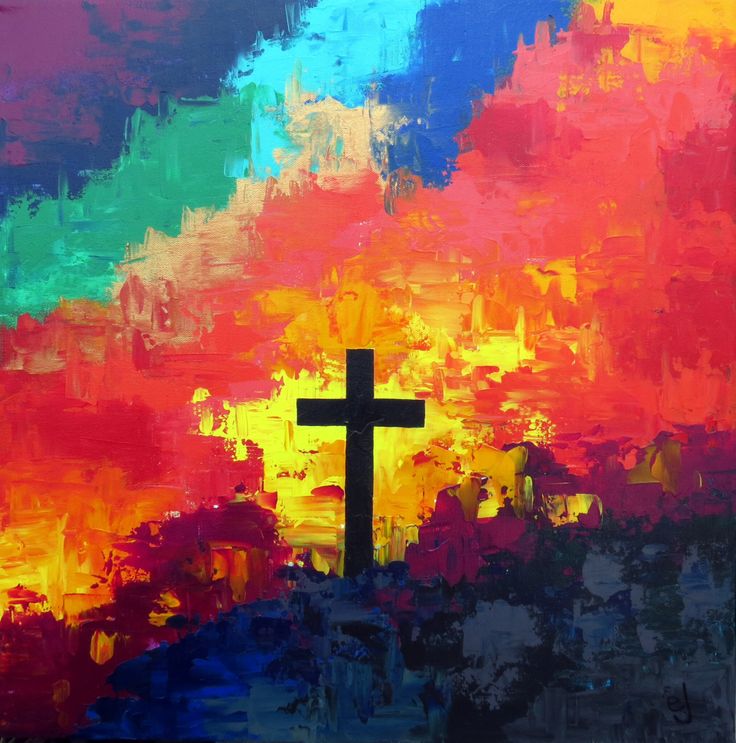
Consider the seven ones that Paul rattles off: There is one body and one Spirit, just as you were called to the one hope of your calling, one Lord, one faith, one baptism, one God and Father of all, who is above all and through all and in all.
We who we far off and we who were near have been brought together by the life, death, and resurrection of Jesus Christ.
Christ is the reason, and the only reason, we can be one.
Warring cultures divided by heritage, and traditions, and moral codes, and even ethical expectations have collided into a new order, a community we call the church.
Paul’s prayer from last Sunday’s passage transforms today into a call to preserve the peace made possible in Christ. Paul literally begs us to see that even our myriad differences, great though they may be, they pale in comparison to the vast gulf between God and us. And yet God chose us!
Think about that for a moment. God, knowing full and well that we are a bunch of dirty rotten scoundrels, that we will regularly look out for our own interests instead of those in need, that, when push comes to shove, given the choice between life and death, we would choose to nail God to a cross, God still chooses to be for us!
In Christ, we encounter the incomparable new reality of God which both humbles us and exalts us, which knocks us down and builds us up, and that is our peace.
You see, peace, at least peace as defined by the Gospel, comes when we recognize our universal incompetence and our total need for someone to do for us that which we cannot do on our own.
God has claimed us. And, as Karl Barth put it, unity is the consequence of belonging to God.
However, there is a difference between the now and the not yet. Our sin-sick souls are stuck in this terrifying cycle of division and antipathy. But, as Christians, we are called to look beyond and, in so doing, reframe the now.
There are walls of division that threaten to divide the church, to literally break up the body of Christ. They existed in Ephesus, they were there in 1844, and they’re still around today.
Paul, across the ages, pleads with us to live lives worthy of the calling to which we’ve been called, something we can’t actually do on our own, but that doesn’t mean we shouldn’t try.
And, notably, the strange new world of the Bible reminds us again and again that if the steps to a better church or a better life are easy, then they are completely bogus.
The most challenging things in life, namely change, require communities of people willing to sustain us through something as difficult as transformation.
Faith is always a journey.

Paul likens it to the way a body grows – it happens, in time, and it can be painful. And we can try all we want to resist it, but God is going to get what God wants.
It is therefore in the knowledge of the hope that is beyond our current circumstances that we find our peace. Peace is upon the mountain. We have not yet reached the mountain. But we can lift our eyes to the hills, from whence our help comes.
I don’t know about you, but I’ve always been particularly struck by this little moment in the Gospel right before Jesus’ crucifixion. Abandoned by his followers, betrayed by his disciples, condemned by the religious elites, Jesus carries his own instrument of death to the place called the skull, and what does he say?
“Father, forgive them, for they do not know what they are doing.”
The truth is, we still don’t know what we’re doing.
The United Methodist Church, the body of Christ for the world, is at war with itself over who can marry who and who can do what I do. But we’re also on the brink of schism in our community over politics, and education, and a variety of other subjects.
It’s terrifying how content we are to cut off our hands and our feet.
We still identify who is in and who is out based on categories that make absolutely no sense in the Kingdom of God. We view one another through names on bumper stickers, and through ill-advised Facebook posts, and through late-night ramblings on twitter.
And today scripture grabs us by the collar and says, “Listen! God has made us beautifully different! Unity isn’t uniformity! We bring together all of our differences and that what makes the one body we call church so amazing. So stop acting like children for God’s sake, literally. You move about with every new headline, and you give into to such shameful divisions. Listen! Speak the truth in love. IN LOVE! You don’t deserve to be part of the body of Christ. No one does. And yet God chose you anyway! We are not what we can be without you, and neither can we be who God is calling us to be if we keep cutting off our arms and our legs!”
At the end of the day, whether we like to admit it or not, what we really want is to be told that we are right and they, whoever the they are, are wrong.
But again, the Gospel tells us something different – the Gospel tells us we’re all wrong! That’s why the Gospel is more inclusive than anything in existence! We don’t stand on our accomplishments or on our righteousness – none of us are righteous, no not one.
The only thing we stand on is the grace and love of God freely given to us in Christ Jesus.
Or, in other words, we’re stuck with each other because God has decided to be stuck with us. So be it. Amen.





 think and let think