Acts 2.42-47
They devoted themselves to the apostles’ teaching and fellowship, to the breaking of bread and the prayers. Awe came upon everyone, because many wonders and signs were being done by the apostles. All who believed were together and had all things in common; they would sell their possessions and goods and distribute the proceeds to all, as any had need. Day by day, as they spent much time together in the temple, they broke bread at home and ate their food with glad and generous hearts, praising God and having the goodwill of all the people. And day by day the Lord added to their number those who were being saved.
On Thursday President Donald Trump signed an executive order titled “Promoting Free Speech and Religious Liberty.” This brought to fruition one of his many campaign promises that he would give “our churches their voices back.”
The order was designed to dismantle the Johnson Amendment that bans tax-exempt organizations, like churches, from endorsing political candidates and activities or they run the risk of losing their tax-exempt status. To be clear: fully repealing the Johnson Amendment would require congressional action, but the order certainly takes a step in that direction.
Basically, churches and other tax-exempt organizations are now on a path that will potentially lead to a time where preachers like me can stand in pulpits like this and tell you how we think you should vote according to the Lord. It means we, as a church, can give money from our tithes and offerings to specific political individuals or campaigns if we believe they match our religious convictions. And we can do all this without fear or retribution from the federal government.
Freedom.
On Thursday, the same day the executive order regarding religious liberty was signed into action, the House voted to approve legislation to repeal and replace major parts of the Affordable Care Act, another one of President Trump’s campaign promises. It still faces an uphill battle in the Senate, but the people who represent us in the House approved it.
In the wake of the vote, people on either side of the issue have been going ballistic. Some are thrilled that the bill would eliminate tax penalties for people who go without health insurance. Some are terrified that it would roll back state by state expansions of Medicaid, which covers millions of low-income Americans (40% of which are children).
Freedom.
So here we are, days after the executive order and the House vote, and I can’t help but imagine how many pastors are standing up in places like this one this morning, with a new found sense of freedom to speak either for or against what our government is doing. I can already imagine what a lot of the posts on Facebook and Twitter are going to look like this afternoon from either side of the political spectrum.
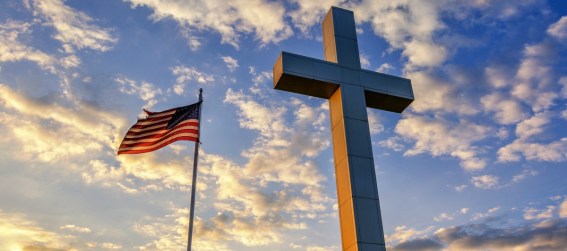
In the early days of the church the disciples devoted themselves to the apostles’ teaching, to fellowship, to the breaking of bread, and to the prayers. And during this time awe came upon everyone, because many wonders and signs were being done by the apostles’, perhaps most spectacular was the fact that the Lord was adding to their number those who were being saved. And what makes that spectacular? All who believed were together and had all things in common; they would sell their possessions and goods and distribute the proceeds to all, as any had need.
Who signs up for something like that? Come join our group, we’d love to have you! And once you start participating all you have to do is sell everything you have so that we can take care of everyone. We believe in recognizing the inherent blessings of God in our lives and we don’t really believe in personal property. So join us on Sundays at 11am and don’t forget to sell your stuff!
That sounds a whole lot more like Communism than Capitalism.
Where’s the freedom in that?
And here’s the point: Religious figures on the right and left have come out in droves about what the government has done as of recent, as is their right, but inherent in their declarations is a grave sin: idolatry.
Today we worship our government the way we once worshipped the Lord. We follow the never-ending political news-cycle like we once checked in on our brothers and sisters in faith. We read and repost articles about votes in the house and senate and executive orders like we once shared the story of Jesus Christ.
And I am guilty of this sin too; hence the great number of sermons as of recent that have revolved around the current political climate.
This story about the budding church sounds so weird and bizarre because we are so far removed from it. Instead of looking like this idyllic church community we’ve been co-opted by the assumption that our government is supposed to be the church, or at least it’s supposed to act like the church. Therefore we support political candidates who agree with our personal beliefs regarding issues like abortion rather than attempt to be present for women who wrestle with the fear of having an unplanned child. We spend more time talking about how our government should vet political refugees than pooling our resources together to bring them out of their war torn areas. We verbally attack people on the Internet for being politically opposed to our position instead of realizing that we often sit shoulder to shoulder with them in our church pews and that we have far more in common than we think we do.
Christians in America have played this political game for so long that we can almost no longer differentiate between America and God, something that scripture and Jesus call idolatry.
The church does not exist to serve our political aspirations, nor does the government exist to serve the needs of the church. The church does not represent a particular partisan agenda to be made manifest on Capitol Hill.
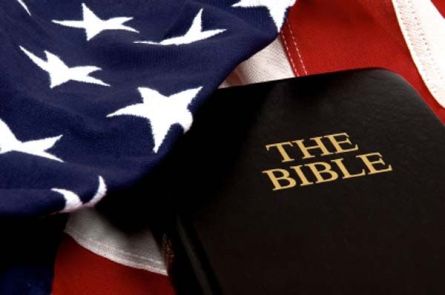
The church itself is a politic. We do well to remember that we are a politic and that there are many ways for the church to be political. But the way to be the church is not synonymous with pursuing democratically elected representatives who can therefore represent our personal political opinions. As one of my former professors recently noted, “There’s only one instance of democratic voting in the gospels, and the people chose Barabbas.”
Gathering with others around the body and the blood of Christ is one way for Christians to be political, and it is the original way. For it is in gathering around a table such as this one, particularly with people who do not necessarily agree with us politically, we live and lean into the strange mystery that we call the kingdom of God. For us, this table is an ever-present reminder that we are not the authors of our salvation and neither is our government.
Here in America we greatly celebrate our freedom, and in particular our freedom of speech. But honestly, we are mostly only concerned with our freedom to say what we want. And the moment we hear someone speak from the other perspective we either cover our ears in anger, or we rush against them with vitriol.
For far too long we’ve limited our imagination of the church to being the mechanism by which we can develop strategies that can, to put it in political terms, Make America Great Again. But that is not the task nor is it the mission of the church. The task of the church is to be a community of character that can survive as a witness to the truth.
All of this is not meant to be a critique of the policies of the political right or the political left. Nor is in meant to be an endorsement of policies representing either side of the political spectrum. No, this is about our captivity to the presumption that our politics determine our lives more than the living God.
And that is why we worship, it is why we gather together to tell the stories of scripture and break bread and say the prayers. This is why we still do what they started doing back during the time of Acts. We gather together in witness to what the risen Christ is doing in and through our community. And in so doing we respond to the risen Christ by doing strange things like freely giving of our income to bless others who are in need, like giving of our time to work down at the Trinity Kitchen so provide food to those who are in need, like showing up in a different community every summer to help with modest home repairs for those who are in need, like breaking bread with people we disagree with to create meaningful relationships for those who are in need.
We’ve come a long way throughout the centuries as the strange community we call the church. You can tell how far we’ve come, or to put it another way how far we’ve moved, by how much we bristle when we read about selling our possessions and distributing the needs to all as any have need. That doesn’t match with what the world has told us life is all about.
Instead we’re captivated by a narrative that tells us to earn all we can and save all we can, that freedom is more important than faithfulness, and that the world is ruled by politics.
No. God rules the word. Faithfulness is more important than freedom. It is better to give all that we can rather than to gain all that we can.
And so we worship. We listen to the stories of scriptures, we enter the strange new world of the bible, and we learn to speak the truth. Worship id where we begin. In worship we develop an imagination capable of forming us into the people God is calling us to be, a people who can live into the difficult reality of Acts 2, who can be political, even more political than our government, by recognizing who we are and whose we are.
As Christians, we know that Jesus is Lord and therefore we do not need executive orders to grant us freedom to speak truth. We know that Jesus is Lord and therefore we believe in taking care of our brothers and sisters regardless of whether or not our government does. We know that Jesus is Lord and therefore we are not captivated by political policies geared toward keeping us “safe.” After all, we worship a crucified God and we seek to be in fellowship with the One who mounted the hard wood of the cross.
Being a Christian is not about freedom, denying responsibility, or being safe. Following Jesus is all about challenging the presumptions of the world with the truth of the lordship of Christ that often puts us in a place of danger. Because, as Christians, we believe in loving the Lord our God with all our heart, soul, mind, and strength and loving our neighbor as ourselves, which is not the same thing as being a Democrat or a Republican. We believe in serving the needs of those on the margins, which means helping those who cannot help themselves.
We believe the greatest freedom we’ve ever received did not come with the Declaration of Independence but through a poor Jewish rabbi who was murdered by the state.
And as Christians, we know that we can act politically: we can vote, we can march, we can lobby all we want. But we also believe that gathering together to do this thing we call church is the most political thing we could ever do. Amen.




 think and let think