The Problem With Families Today – Sermon on Mark 3.20-30

Mark 3.20-30

And the crowd came together again, so that they could not even eat. When his family heard it, they went out to restrain him, for people were saying, “He has gone out of his mind.” And the scribes who came down from Jerusalem said, “He has Beelzebul, and by the ruler of the demons he casts out demons.” And he called them to him, and spoke to them in parables, “How can Satan cast out Satan? If a kingdom id divided against itself, that kingdom cannot stand. And if a house is divided against itself, that house will not be able to stand. And if Satan has risen up against himself and is divided, he cannot stand, but his end has come. But no one can enter a strong man’s house and plunder his property without first tying up the strong man; then indeed the house can be plundered. Truly I tell you, people will be forgiven for their sins and whatever blasphemies they utter; but whoever blasphemes against the Holy Spirit can never have forgiveness, but is guilty of an eternal sin” – for they had said, “He has an unclean spirit.”

process

What a strange story. Jesus has been going around healing people and listening to their stories, he has called the twelve disciples together and announced what their ministry will be, and now so many people have gathered together to see this incredible man, that they couldn’t even eat. And what happens? His family catches wind of the crowds gathering and they go out to stop Jesus because they thought he was going out of his mind.

But then the scribes from Jerusalem arrive and accuse him of having a demon. Does this passage sound bizarre to you? Beelzebub? Satan? Demons?

Jesus hears the accusations and then responds in parables, furthering the confusion of the crowds and modern readers: “How can Satan cast out Satan? If a kingdom is divided against itself, that kingdom cannot stand. If someone entered the house of a rich man, they would not be able to steal anything unless the man was first tied up. Truly, people will be forgiven their sins and doubts, but anyone who ignores what the Holy Spirit is doing will be guilty of an eternal sin.”

What? I don’t know about you, but when I come across passages like this I am often left scratching my head about what Jesus is saying. I read words like Beelzebub and Satan and I can’t help myself from questioning the text. I read about Jesus’ family appearing to restrain him and I can’t help but agree with them; maybe Jesus has lost his mind.

Who can blame them for trying to get him under control? If not out of fear for his life, at least to remove their own embarrassment for what he was doing and saying. We all have a need to uphold our reputations amidst the crowds of life and if a family member starts going out and proclaiming strange things, it might reflect poorly on us.

A few summers ago I had the opportunity to attend the Detroit Annual Conference session in Michigan. For a few days, clergy and lay representatives gathered together to worship the Lord, pray for the renewal of the church, and vote on pertinent matters affecting the denomination.

When I arrived the assembly was debating whether or not secretaries should be allowed to keep handguns in the church offices to protect themselves. Later that afternoon they argued about the bishop sending a letter to the President Obama about whether or not unmanned drones should be allowed to fly over the Upper Peninsula.

When the evening rolled around, I was invited by a colleague to attend the “Young Adult” gathering. I thought that sounded splendid after spending what felt like eternity with a bunch of blue-haired Methodists, so I quickly made my way to the basement of a nearby building. I assumed the designation “Young Adult” meant that I would be spending time with people in their mid-twenties to early-thirties, but it was just a bunch of high-schoolers and myself. Nevertheless I had a wonderful time with the group as we talked and prayed together for the future of the church.

That night I had one of the most powerful conversations of my life with a 16 year old boy named Sam. After introducing ourselves to one another, Sam informed me that this was his 8th Annual Conference in a row. He came for the first time when he was 8 years old and had come back every summer. I immediately thought he was crazy! Annual Conference, for me, can be a life-giving endeavor while at the same time a constant reminder of the brokenness of our church. But he wasn’t crazy. He was faithful.

I saw in his eyes a sincerity about the value of conferencing so I asked him to explain what it meant to him. He said, “Going to church every week has done a lot to help me grow in faith, but being around the same people all the time just kind of felt boring. But when I come here, I encounter thousands of Methodist from all over Michigan who have given their lives to Jesus, I sing with the faithful remnant and our voices echo like the angels in heaven, I discover that I am part of something so much bigger than myself.”

I was stunned. While I felt apathetic and cynical about Annual Conference, this young man had discovered, and grabbed hold of, what it could be.

Our conversation continued and he told me that about a year prior he started wrestling with a call to ordained ministry. How perfect – here I was a young seminarian responding to the call of God on my life and I had the opportunity to share this moment with a faithful and clearly gifted young man.

But I’ll never become a pastor.” He said.

“What are you talking about?” I nearly shouted. “In just a few minutes you have articulated a deeper faith than many Christians I know. You have all the potential in the world to be a gifted pastor. Are you worried about how much it will cost? The conference can help you out. Are you worried about how much work it will take? God will give you the strength to make it through.”

No” he sighed. “I’m gay.

I’m gay and I’m open about it. I am not ashamed of who I am and how God made me. But I also know that if I’m openly gay I can never become a pastor in the United Methodist Church.

I was speechless. This young man felt so committed to the church that he had attended Annual Conference eight years in a row, and yet he knew that same church believed there was something wrong with him. I didn’t know what to say in return. How could he be sitting with me in the midst of all this denominational stuff knowing what the denomination believed?

In reaction to my silence he continued, “When I told my family, they disowned me, told me I was wrong and that I had lost my mind. But my church… they welcomed me just as I am. My church has become my new family. But that same church says I can never become a pastor and that who I am is incompatible with Christian teaching.

racism_sexism_homophobia

The story of Jesus with the crowds is a strange one. We hear about demons and Beelzebub and Satan and we immediately wonder what it means. But Satan does not necessarily mean a person with horns and a bifurcated tail, but the name does represent a demonic power that attempts to divide us from the Lord. Satan is anything that separates us from doing what is right, and good, and true.

The powers of Satan, demonic powers that capture our attention cause us to hurt ourselves, others, and our relationship with God.

There is the demonic power of Racism – which tells us to believe and act as if one group’s pigmentation or cultural values are superior to another.

There is the demonic power of Patriarchy – which tells us that men should dominate women.

There is the demonic power of Materialism – which tells us that the accumulation of wealth and goods will bring us everything we need to be happy.

And there is the demonic power of Homophobia – which tells us that anything outside of male-female relationships is an abomination.

Whether or not we believe that Satan is a real person acting in our midst is not as important as recognizing our captivity to powers of evil signified by Satan, powers that continue to affect our lives everyday.

Regrettably, churches are often the focal arena where these powers take hold: hostility, fear, and anger boil over between groups debating the value of human beings. Yet, through the story of Jesus with the crowds, we learn that the powers of Satan must be recognized and confronted if we are to truly experience the incredible love of God.

Jesus’s family tried to stop him. Just like a racist white mother tries to stop her daughter from going on a date with a black man. Just like a homophobic father berates his son for holding hands with another boy. Just like a liberal college student chastises his parents for being too conservative. Jesus’ family tried to stop him. Sam’s family tried to stop him too.

Living out our faith means discovering a new solidarity with ALL of God’s people; all of humanity. Jesus bids us to cry with those who are suffering and rejoice with those who feel free to live their lives as they are. Jesus asks us to look on the people around us who are different from us and love them because they are different from us.

peace-love-no-violence-no-homophobia-no-sexism-no-racism

Whether we admit it or not, we are products of our families and culture. We might believe in the idea of equality, but we grow hesitant because we were cultured into things like racism, and homophobia, and materialism, and sexism. We were taught by the people around us, not because they were evil, but because they were caught captive to the same evil powers that are desperately seeking our allegiances.

The problem with families today is that we don’t challenge ourselves enough to be better. Jesus was not against his family, but he saw them as a challenge to the kind of community and kingdom he was preparing. Today we still face the challenge of how our families prevent us from seeing one another the way God see us: equal.

Wrestling with the powers of the world is difficult. The story of Jesus being accused of having a demon is not easy to handle. Learning about a young man who loves the church in spite of it’s declaration about his identity is sad.

But they also remind us of the great possibilities for hope, love, and recreation in God’s kingdom. They help us to see the moments where we can become better, opportunities for us to dig deeper in our faith, and occasions to say “Yes” to the wonder of God’s kingdom while saying “No” to the backwards values of the past.

Jesus Christ, Lord of lords and King of kings, came into the world to turn it upside down, to show us the way the truth and the life, and to create a new family where ALL are welcome. And all means ALL. Amen.

no-homophobia

Lost and Found – Easter Sermon on Luke 24.13-35

Luke 24.13-35

Now on that same day two of them were going to a village called Emmaus, about seven miles from Jerusalem, and talking with each other about all these things that had happened. While they were talking and discussing, Jesus himself came near and went with them, but their eyes kept them from recognizing him. And he said to them, “What are you discussing with each other while you walk along?” They stood still, looking sad. Then one of them, whose name was Cleopas, answered him, “Are you the only stranger in Jerusalem who does not know the things that have taken place there in these days?” He asked them, “What things?” They replied, “The things about Jesus of Nazareth, who was a prophet mighty in deed and word before God and all the people, and how our chief priests and leaders handed him over to be condemned to death and crucified him. But we had hoped that he was the one to redeem Israel. Yes, and besides all this, it is now the third day since these things took place. Moreover, some women of our group astounded us. They were at the tomb early this morning, and when they did not find his body there, they came back and told us that they had indeed seen a vision of angels who said that he was alive. Some of those who were with us went to the tomb and found it just as the women had said; but they did not see him.” Then he said to the, “Oh, how foolish you are, and how slow of heart to believe all that the prophets have declared! Was it not necessary that the Messiah should suffer these things and then enter into his glory?” Then beginning with Moses and all the prophets, he interpreted to them the things about himself in all the scriptures. As they came near the village to which they were going, he walked ahead as if he were going on. But they urged him strongly, saying, “Stay with us, because it is almost evening and the day is now nearly over.” So he went in to stay with them. When he was at the table with them, he took bread, blessed and broke it, and gave it to them. Then their eyes were opened, and they recognized him; and he vanished from their sight. They said to each other, “Were not our hearts burning within us while he was talking to us on the road, while he was opening the scriptures to us?” That same hour they got up and return to Jerusalem; and they found the eleven and their companions gathered together. They were saying, “The Lord has risen indeed, and he has appeared to Simon!” Then they told what had happened on the road, and how he had been made known to them in the breaking of the bread.

the-road-to-emmaus-daniel-bonnell

I have been a Christian for as long as I can remember.

I was baptized at 19 days old and church has been there for me my entire life. As a child I loved hearing the incredible stories from scripture: Jesus walking on water, David defeating Goliath, Moses moving through the Red Sea. Church was an exciting place that was unlike anything else I did. In worship I learned how to listen, I learned what it meant to sing my faith, and I found tremendous joy in receiving communion.

Of course, as I grew older, the perfect glow of church began to fade away. We would learn about the importance of love and forgiveness during church, and then I would see a man screaming at his wife in the parking lot after worship. We learned about God’s kingdom as a rich and diverse new reality, but I only saw privileged white people in church. We heard about how important it was to keep the faith, but I started to have doubts about what scripture revealed.

Like most Christians, I have had my doubts. I have been kept awake late at night wondering about the divine, praying for God’s presence to be made known in my life and in the lives of others, and hoping for something to cleanse my unease.

Yet, it is almost always in the midst of a question, at the precise moment that I feel most lost, that God shows up and finds me.

The two disciples on the road were filled with doubt. We don’t know anything about the two who were walking to Emmaus; they weren’t famous, and they weren’t part of the 12 – they were just common, ordinary disciples like you and me.

I can’t even begin to imagine what it must have felt like to be walking on that road on that day so long ago. They had followed Jesus throughout Galilee and heard him proclaim the Good News, they had seen him heal the sick and feed the hungry, but just days previous they saw him betrayed, arrested, and murdered.

They might have known where they we walking, but I bet they felt lost. They had put all their hope and faith in a man who was buried in a tomb and now his body was missing. They thought the world was going to change, but the dirt under their feet felt even worse than before.

Suddenly, Jesus found them on the road and he went with them. Yet, they did not recognize the Lord in their midst. “What are you two talking about?” he asked. To which one of them replied, “Have you been living under a rock? How could you not have heard about the things that have taken place in Jerusalem?”

Jesus asked, “What things?

Immediately they began to explain all that they had seen and heard. “Jesus of Nazareth, a mighty prophet, was betrayed and sent to his death. We had hoped that he was the one who would save us. And now three days have passed and some of the women from our group went to his tomb and they say his body was missing and angels appeared, but no one has seen him.”

Jesus then began interpreting the scriptures to the men on the road, from Moses through the prophets, he showed how what had come to pass was part of God’s great cosmic plan. And yet, they still did not recognize him.

Later, as they came near Emmaus, Jesus kept walking on but the men invited him to stay. When they sat down at a table to eat, Jesus took bread, blessed it, broke it, and gave it to them. With the bread in their hands their eyes were opened and they finally understood who had been with them the whole time and he vanished.

All of the sudden everything started to make sense, the encounter on the road, the strange question, the interpretation of scripture, and even the holy meal. “Were not our hearts burning within us while we were together with the Lord?” Immediately they went back to Jerusalem to declare the good news: “The Lord has risen indeed!

resurrection-2

On Friday at noon I took the cross from our sanctuary, placed it on my shoulders and started walking around Staunton. When I did the same thing last year and I was largely ignored. For hours I walked through our community and most people averted their gaze, they tried to pretend that there was no cross for them to see.

This year, the opposite happened. People would honk their horns as they passed, they would roll their windows down and give me a thumbs-up. I saw familiar faces throughout my journey and felt glad for the sense of community that I experienced.

I carried the cross around because I want to bring the Lord to people outside of church. If we continue to falsely assume that we can only experience God’s grace in a place such as this, it will never grow and give life to other people.

Anyway, I was bearing my cross through Staunton and I was walking along the sidewalk on Beverly Street when I was stopped. In front of me stood an older woman with a large shawl draped around her shoulders and she kept staring at the cross. For a period of time that felt uncomfortably long we just stared at one another without saying anything until I saw her lip quiver and she asked a question that I was not expecting: “What will happen to me when I die?

I stood there with the cross digging into my shoulder and I felt the spirit of God fall upon us in that holy moment. Instead of giving some densely theological answer, and instead of evading the depth of her question I told her what I believed: “When we die God will take care of us. I don’t know what it will feel like or what we’ll experience, but the God that has been revealed to me will take care of us.

What kind of faith do you have?” she asked.

I explained that I am a pastor in the United Methodist Church, but above all I am a disciple of Jesus Christ.

Tell me about him,” she said.

So I did. I started with Christmas and the story of God coming in the form of flesh as a baby to be in the world with us. Jesus grew and called people to know that they were loved regardless of their life circumstances. This Messiah went out and found the people who were ignored by the rest of the world and he gave them value. He preached, healed, and he loved. And then Jesus was betrayed, arrested and killed on a cross for everyone to see, and three days later he was raised from the dead. The beauty of what Jesus did is that he died so that we might live. Jesus died for you, and for me, so that we might live.

Tears began to well up in her eyes, she reached forward to hug me, thank me, and before I knew it she was gone.

I can’t tell you anything about her other than our brief interaction, but to me it felt like she was lost and then Jesus found her in the cross and in the story. Whatever she had going on in her life suddenly fell away and she felt valued and loved by the one who came to live and die for us.

Jesus came to the disciples on the road, and not the other way around. They were lost in their thoughts and doubts and were incapable of recognizing Jesus in their midst. Only through the scriptures, and through the bread and wine did Jesus reveal himself to them, he demonstrated what his life had been all about: his resurrection means our resurrection.

Those of us here in church on Easter Sunday are in the same position as those two disciples on the road. Jesus has come to us here in this place through the reading of scripture, and in a few moments we will encounter the risen Christ through the bread and cup at the table.

I don’t know what you’ve got going on in your life. Most of us are pretty good about shielding away and hiding our doubts and insufficiencies. We turn on the smiles when we need to, and we know what we have to do to keep afloat. I don’t know what you might be wrestling with right now, or even if you’re wrestling with anything at all. But I do know this: If you took the time to come to a church on Easter, you believe in something more than yourself, even if its very faint.

road_emmaus

My faith is not perfect, and there are days that I struggle. I’ll be driving in my car on the way home from the hospital after praying with a family before a desperate surgery, or I’ll be standing above a casket with dirt still clinging to my fingers after saying goodbye to a faithful friend, or I’ll be reading the news online and be bombarded with never-ending negativity. There are many days that feel as if I’m walking to Emmaus all on my own with questions in my head just like those two disciples so long ago. But that’s when Jesus shows up.

Jesus isn’t looking for people with perfect faith and blind trust. God does not want puppets that he can string along. If Jesus is looking for anyone, it’s the people who are walking toward their own Emmaus. He’s looking for people like you and me who have questions.

Faith is an exciting thing not because it provides all the answers to our questions, but because it encourages us to ask questions in the first place. 

Jesus’ resurrection from the dead is not something that can be explained from a pulpit or from a book, it defies all logic and rationality, it exceeds our expectations, and often leaves us scratching our heads. But that’s the point. It is beyond anything we could ever imagine. Only the Lord who gives us life could have come up with something so incredible to change the world.

The resurrection is real, Christ appeared to the two on the road and revealed himself through the wonders of God’s word and holy table. God died in Christ on a cross and defeated death so that we might live with him in the kingdom; Christ died so that we might live.

The Lord is risen. God is on the move in the world seeking out those who are lost. God loves showing up in the words of scripture, in the bread and wine of communion, in chance encounters on the road, and in a variety of places to help find those of us who are lost.

Do we feel our hearts burning within us while we praise the living God? Do we feel the blessed holiness that comes with receiving this meal broken and shed for us? Are we ready to be found by the living God while we make our way to Emmaus?

The good news of Easter is that Christ’s resurrection has made our resurrection possible. But until that day when we feast with him at his heavenly banquet, I think the good news can be found when we feel lost on the old roads of life and Jesus finds us. Amen.

Palms Beneath My Feet – Sermon on Mark 11.1-11

Mark 11.1-11

When they were approaching Jerusalem, at Bethphage and Bethany, near the Mount of Olives, he sent two of his disciples and said to them, “Go into the village ahead of you, and immediately as you enter it, you will find tied there a colt that has never been ridden; untie it and bring it. If anyone says to you, ‘Why are you doing this?’ just say this, ‘The Lord needs it and will send it back immediately.’ “ They went away and found a colt tied near a door, outside in the street. As they were untying it, some of the bystanders said to them, “What are you doing, untying the colt?” They told them what Jesus had said; and they allowed them to take it. Then they brought the colt to Jesus and threw their cloaks on it; and he sat on it. Many people spread their cloaks on the road, and others spread leafy branches that they had cut in the fields. Then those who went ahead and those who followed were shouting, “Hosanna! Blessed is the one who comes in the name of the Lord! Blessed is the coming kingdom of our ancestor David! Hosanna in the highest heaven!” Then he entered Jerusalem and went into the temple; and when he had looked around at everything, as it was already late, he went out to Bethany with the twelve.

palm-sunday-2

Weekly Chapel Time requires a willing and humble spirit. What we do here on Sunday mornings carries an air of sophisticated and focused liturgy. But when I bring the Preschoolers in during the week… there are no rules. When we worship together most of us have fairly decent attention spans, but the 2, 3, and 4 year-olds need to be consistently bombarded with images and ideas in order to stay focused.

I’ll freely admit that I treat our preschoolers the same way that I treat our worshippers (I’ll let you decide whether or not that is a good thing) because we are all working toward the same goal: a greater awareness of God’s love and mercy in the world.

Anyway, this week, in preparation for Palm Sunday, we gathered the children in the sanctuary for their lesson. They sat in the pews up here in the choir loft, with their little legs dangling in the air, excited and nervous to keep learning about this guy named Jesus. I love quizzing them on previous stories because they are fascinated by scripture. For instance: If I could get all of us to be as excited about Zacchaeus, the wee-little man, climbing up a sycamore tree, just imagine how faithful we would become.

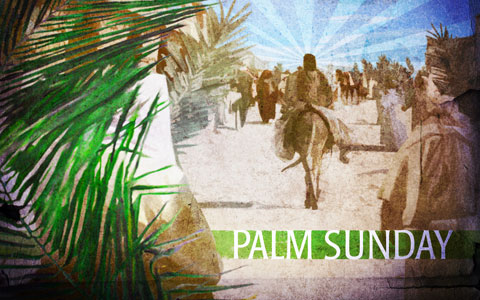
I shared with the children that Jesus needed to get to a strange place called Jerusalem to do something incredible for his friends. They gathered together outside the city and Jesus sent two men to find a donkey for him to ride on. The closer the came to the gates, more and more people gathered palms from the surrounding area and waved them in the air, and placed them on the ground all while shouting “Hosanna!” which means “save us!”

I then had all the children line up with their own palm branches in the center aisle and we were going to recreate the story. I found a young boy to be Jesus and when I asked who they thought the donkey should be they all emphatically yelled, “You Pastor Taylor!” I’m not sure how I felt about them so quickly identifying me with that particular animal, but I let it go.

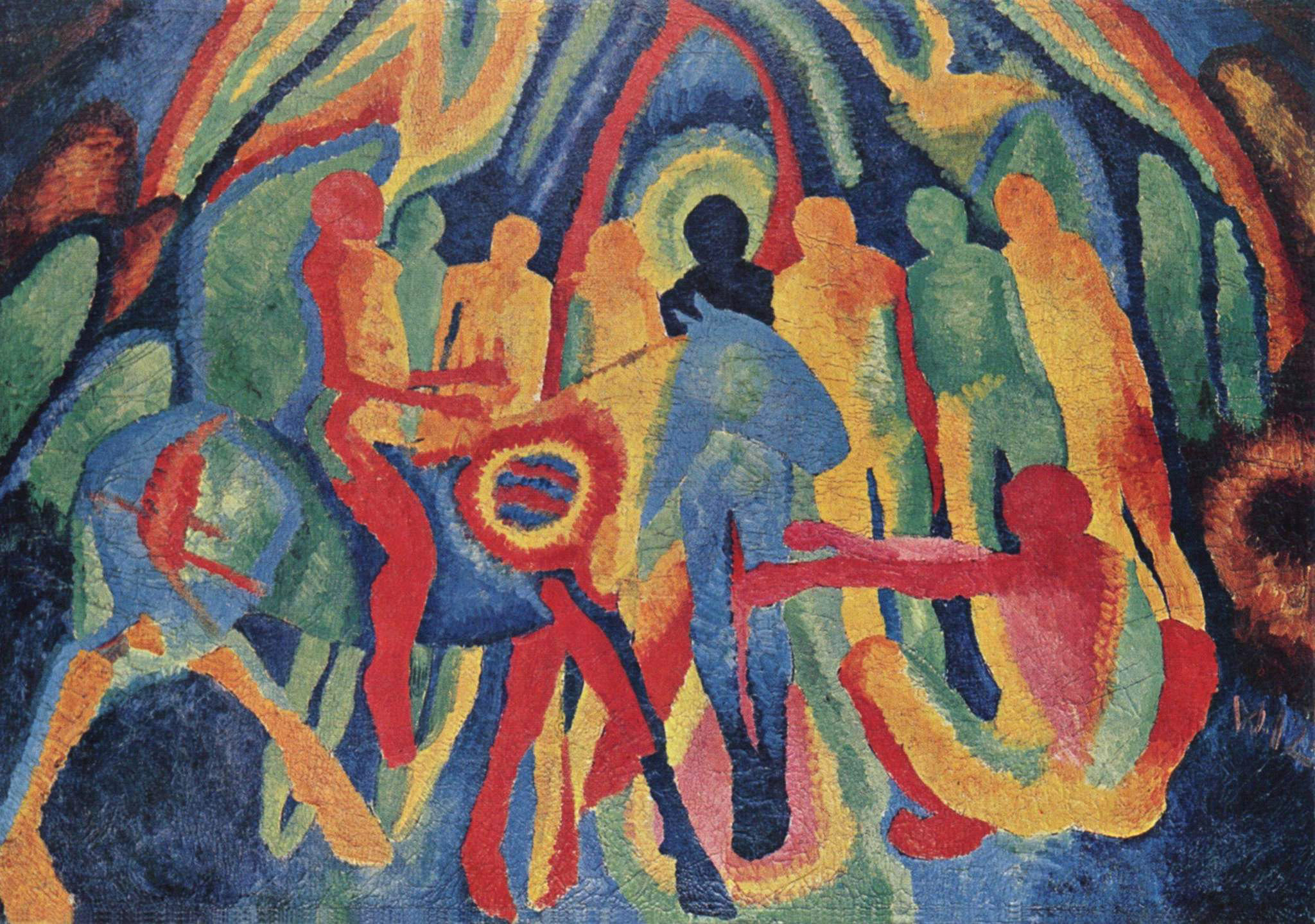
So there I was on my hands and knees with a child saddled across my back making our way into Jerusalem. I had instructed all the children to either wave their palms or place them on the ground and shout “save us!” to the boy on my back. The entire journey down the center aisle took longer than I thought because I did not want to drop the Jesus on my back, but as I walked forward and saw the palms beneath my feet I was struck by the Holy Spirit.

The children continued to scream and beg for their salvation, the Jesus on my back kept kicking into my rib cage to make me go faster, but all I could think about was what the donkey must have experienced when he carried Jesus into Jerusalem, what it must have been like to deliver the Lord to his death.

The following is an imaginative retelling of the story from the donkey’s perspective…

Palm-Sunday

With palms beneath my feet, Jesus, there are so many things I wish I could tell you. Carrying you while the crowds scream on our sides, I wish I could share all the things I have seen and heard. This might be the only chance I’ll get, and it already feels too late.

I was there Jesus. I was there in the manger when you were born. Your parents had come into the tiny room and your mother looked like she was about to burst. I was but a young foal back then, but I remember. They were so afraid and alone when they cuddled together holding you close. While they were filled with fear, I was filled with joy. I knew from the moment I saw you that you were special, that you were the Son of God. The other animals could feel it too, and while your family fell into the familiar rhythm of sleep, we gathered around you to share our warmth. I watched you sleep all night and I could feel that our lives were connected, and I knew that I would see you again one day.

You left from Bethlehem but as the years passed I heard stories about your life. I would be in the marketplace, or moving about the village and rumors would fall upon my ears.

When you were a child they said that you stood apart. Other children would spend their days running around and getting into mischief, but you would sit in the synagogue and teach the elders. Your command of the scriptures spread before you even started your ministry. I would watch the people while they talked about you and they were filled with such hope. Words like “messiah, lord, and savior” were used to describe you and I could tell that the Lord was among us.

Then it came to pass that you were baptized by your cousin John in the Jordan river. Witnesses said they saw the sky open up and they heard the voice of God. While others denied the claims, I knew it was true, I could feel that your ministry was about to begin and that everything would change.

You traveled throughout Galilee proclaiming the year of the Lord’s favor. You healed the sick, gave sight to the blind, and restored the outcasts to their families. Everywhere you went stories about your love and mercy traveled ahead and the crowds grew larger and larger. You fed the multitudes by the sea, you walked on water, and you brought Lazarus back from the dead. You spoke of mustard seeds, prodigal sons, and good samaritans. You ate with sinners, worked on the sabbath, and argued with the Pharisees. Some say that even just a few weeks ago you were on the mountaintop when Moses and Elijah appeared and you were transfigured.

This morning I was tied up near the door when two of your disciples came close. One of them spoke to my owner and said, “The Lord needs him” and they brought me to you. I knew the time had come when we would be reunited, but the joy I expected to feel has been mixed with trepidation.

Jesus, how I wish you could hear me, how I wish I could tell you all I have seen and heard. We departed early this morning and the crowds gathered around us. It feels as if the closer we get to Jerusalem the people grow louder and more eager to cry out. Do they know what they mean when they say, “Hosanna! Blessed is the one who comes in the name of the Lord! Blessed is the coming kingdom of our ancestor David! Hosanna in the highest heaven!”?

I’m beginning to worry Jesus. I don’t think they know who you really are. The people sound more like an angry mob waiting for you to overthrow the Romans than a faithful group waiting for the kingdom of God. They want another Moses to lead them out of physical bondage, they want another David who can lead them into battle, they want another Solomon to build a giant temple.

a_liturgyofthepalms-large

These people have suffered but they believe in you. Did you see them take off their cloaks and place them in the road? I have been walking over garments for hours. Did you see them rush into the fields for palm branches to wave them in the air and create a royal pathway? The palms beneath my feet are a sign of how much these people believe in you.

What are you going to do Jesus? I can hear people murmuring about your coming mission, some are saying that you are going to the temple and you are going to overthrow the tables. Some are saying that you are going to lead the rebellion and kill the chief priests and scribes. Some are saying that you are going to destroy the temple and then build a new one.

Jesus I’m afraid for your life! These people don’t know who you really are and what you’ve come to do. They shout “Hosanna, Hosanna!” but I fear their shouts will soon turn to “Crucify, Crucify!” They are only concerned about themselves. Even your disciples on either side of us, I can smell their fear.

Jesus, I was there when you were born. I felt God’s presence in you and I knew you would save the world. But please Jesus, let me take you away from this place. Jerusalem can only bring about your death. We still have a chance to turn around and head home.

Or is it too late? 

The crowds are starting to thin Jesus. The people are beginning to head home. We are stepping through the gate and the palms are no longer beneath my feet. I want to believe in you and what you are doing. I want to believe this is God’s will. But I’m so afraid.

Jesus, I am an old donkey and I don’t know how much further I can carry you.

It’s just us now and the sun is beginning to set.

What will happen? What are you going to do?

If this is the last time I will see you, I wish I could talk to you. I wish I could warn you about what is to come. I wish I could stop you.

You swing your legs around and are standing right before me. Your eyes contain the same hope they did the day you were born in the humble manger. As you pet my old matted fur I can feel all the people you have already touched and healed. I can feel the sick children and parents, I can feel the blind and the lame, the last, least and lost.

What a privilege it was to carry you today my Lord. I knew that we would meet again, I only wish I could do something to warn you.

You’re now leaning in close to whisper in my ear. Is this goodbye? Is this the end?

You said, “No my old friend. I know exactly what I am doing. And this is only the beginning.” Amen.

Devotional – Psalm 118.22

Devotional:

Psalm 118.22

The stone that the builders rejected has become the chief cornerstone. 

Weekly Devotional Image

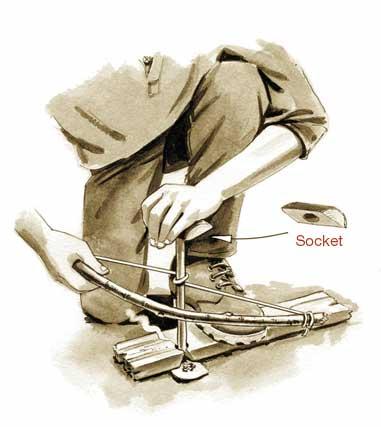
We were in the middle of the woods during a Boy Scout camping trip. Our leaders were known for coming up with activities that would help us to grow our wilderness skills, but this particular challenge was driving me crazy. Scattered throughout the clearing were areas with dry wood, tinder, and two stakes connected by a string holding up a water balloon. The challenge was to create a fire under the dangling water balloon using the natural elements until the balloon would pop and put out the fire.

The leaders separated us into groups of four and sent us to our different areas. I don’t remember everyone from my group but there was one boy who was known more for his love of books than his love of the great outdoors. Without intending to I basically ignored his presence while trying to organize the other two boys to begin working on our fire. We collected the tinder in a pile and tried rubbing sticks together. We went searching for some rocks that would hopefully create a spark when we slammed them together. Throughout the wooded area audible frustrations could be heard from each group as they struggled in vain to pop their balloon.

We must have worked for thirty minutes before I noticed the book-boy offering me a piece of advice. He was remarkably shy and I could barely make our what he was trying to say, though I could tell that he was serious. He quickly took off one of his hiking boots, removed a shoe-lace, curved a long stick, and created a make-shift bow. He then demonstrated that if we wrapped another stick around the string, we could move the bow like a saw and it would spin the stick for us with an incredible amount of friction. We quickly went to work and within 10 minutes we were the only group with a fire at all, and a few moments later the balloon popped and put out the fire that we had struggled to ignite. After congratulating ourselves I made a point to thank the boy for his idea and asked where it came from. He said, “I read about it in the Wilderness book that we were all supposed to read before this weekend.”

startafirewithabowdrill

The palmist writes about a stone that builders rejected becoming the chief cornerstone. Those who are familiar with the New Testament will quickly identify Jesus as someone rejected by the elders who then became the foundation for the church. Yet, this is not something that can be applied to Jesus alone. I quickly rejected the help from a boy in the woods because I made a ridiculous assumption about his inability to help. In him I saw little value worth assessing. However, without his help we would probably still be in the woods trying to pop our balloon. God can, and does, use some of the least likely people to change the world. Everyone has value and worth, we need only a new perspective to realize it.

In the remaining days of Lent let us open our eyes to value in people around us. Instead of making quick and unjustified assumptions, let us take a moment to reflect and remember that those who we reject are often the ones who are here to save us.

Devotional – Psalm 107.1

Devotional:

Psalm 107.1

O give thanks to the Lord, for he is good; his steadfast love endures forever. 

Weekly Devotional Image

“I’m post-racial” he said. “I am color blind to racial differences and I have no prejudices.” At the time we were discussing racial inequality in Durham, North Carolina (a still very pertinent topic) and the man claimed that if more people could see the world the way he did, everything would be fixed. He proudly claimed his lack of prejudice for anyone with ears to hear but I had a hard time taking him seriously. I did not know him well enough to begin arguing against his so called “prejudice free lifestyle” so I decided to let him him wax lyrical about himself. However, while he continued to go on and on, a friend muttered next to me under his breath, “Show me someone without prejudice, and I’ll show you a liar.”

One of the hardest tasks of following Jesus Christ is to try to live without prejudices precisely because many of us aren’t aware of how deeply rooted our prejudices are. We may think that we are “color blind” or that we relate to people who are different from us in religion, sexual orientation, or political persuasions, but in many circumstances our involuntary thoughts, uncensored words, and knee-jerk reactions often demonstrate that our prejudices are still there.

If we’re driving in our cars and we see two women holding hands walking down the side-walk, what are our first thoughts? If we are at a restaurant and we witness a black woman and a white man kissing one another across the table, how do we immediately respond? If we’re flipping through news channels and come across a political campaign of a different perspective, how do we initially react?

diversity-hands1-400x266-copy

Strangers, anyone who is unlike us, stir up fear and discomfort. They break down our sense of security and well being by simply being “different.” We can puff ourselves up all we want with claims of living with a post-whatever lifestyle, but most of us, if we’re honest, are prejudice in ways big and small, seen and unseen.

As Christians, we give thanks to the Lord for he is good. Only when we learn to fully believe that God loves each of us unconditionally and see others as equally loved can we begin to behave according to God’s goodness. The great variety in the world is a sign of God’s immense wonder and beauty. Living with a non-judgmental frame of mind is exceptionally difficult, but it is worth working toward.

This week, while we continue to journey through the season of Lent, let us admit our own prejudices. When we have those knee-jerk reactions toward those who are different from us, let us immediately go to the Lord in prayer and ask for Him to create in us clean hearts so that we might become people of love rather than prejudice.

Back to the Basics – Sermon on Mark 8.22-26

Mark 8.22-26

They came to Bethsaida. Some people brought a blind man to him and begged him to touch him. He took the blind man by the hand and led him out of the village; and when he had put saliva on is eyes and laid his hands on him, he asked him, “Can you see anything?” And the man looked up and said, “I can see people, but they look like trees, walking.” Then Jesus laid his hands on his eyes again; and he looked intently and his sight was restored, and he saw everything clearly. Then he sent him away to his home, saying, “Do not even go into the village.”

bokeh-lights-sunset-city-hd-wallpaper

I was shivering at the front of our sanctuary with ashes all over my fingers. Whether at 7 am or 7 pm the services were virtually the same: it was cold and dark outside, those who came huddled together for warmth, I preached the same homily, used the same ashes, and said the same words as I marked each person: you are dust, and to dust you shall return. Ash Wednesday is one of those profound moments in the regular rhythms of church life where we admit something the world tries to claim the contrary: nobody makes it out of life alive.

I began both services with a brief introduction about the importance of Ash Wednesday, and the history behind it. We all prayed together. I read a selection from Psalm 51 about God creating in us clean hearts. I preached about living out our faith in the world as marked and cleansed people, and challenged each of us to act like the cross was still on our foreheads, even when the ashes faded away. I then prayed and blessed the ashes and invited everyone to come forward. There is something profoundly frightening and intimate about having people coming up to have ashes placed on their skin. We participate in an ancient ritual that is so contrary to the ways of the world. It is a privilege to come so close to the holy presence of God with each person who stood before me; looking them in the eye, holding their shoulder, touching their skin.

Before I offered a benediction for the services I invited everyone into a time of silence. While I prayed I was struck by the Spirit in a way that I had previously not encountered. I started thinking and praying for the people who were not in the sanctuary for the service. And I don’t mean for those of you who enjoyed Ash Wednesday from the warmth of your homes. I prayed for the people who came to our last Ash Wednesday service, but not this one. Because some of the people I held in my hands one year ago, I have buried in the months since. The words: “you are dust, and to dust you shall return,” take on a truly deeper meaning when the people go from worshiping in the pews, to resting in a casket at the front.

They brought the blind man to Jesus. Perhaps they wanted to see a public demonstration of his power and so they found someone for him to cure. Or they knew the struggles and sufferings of a friend and believed that Christ was the one to heal him. Whatever the case, the crowds begged Jesus to touch the blind man.

Jesus then took the man by the hand, and led him away from the crowds and out of the village. He spit into the man’s eyes, and laid his hands upon him. “What do you see?” Jesus asked. The man looked up and said to the Messiah, “I can see people, but they look like trees walking.” Then Jesus laid his hands on the man a second time. Suddenly, the man’s vision broke through and his sight was restored and he saw everything clearly. Jesus sent him back to his home, commanding him to not even stop in the village.

healing_of_the_blind_man_jekel

Is it strange that it takes Jesus two tries to get the healing right? Throughout the gospel accounts Jesus is the main man when it comes to healing and he gets it done right away. Paralyzed? Jesus says “take up your mat and walk!” Tied up with chains outside of the village because you’re possessed by demons? Jesus commands the demons out and sends you home. Your son is epileptic? Jesus says “all things are possible for the one who believes” and makes it so. But here in Mark 8 we have a strange story, a story that can only be found here in this gospel. Jesus is asked to heal a blind man, he uses his own spit for the first part, but it doesn’t work all the way, so he has to touch the blind man a second time.

I don’t know about you, but I love this story. I love how grounded it is in the material and physical world. I love the way that Jesus ignores the crowd and brings the man outside of the village. I actually love that it takes Jesus two tries to get it right because it says so much about our relationships with God. In fact, I love this passage so much, that I used it as the New Testament reading for Lindsey’s and my wedding. If I remember the wedding sermon correctly Jason, our pastor, said this about the choice: “The walking trees do-over miracle of Jesus with the blind man is a text that only a pastor would use at his wedding.

Yet, even with its strangeness and bizarre imagery, I love this passage. I think it works well for weddings; You only really see the person you’re marrying, after you marry them. Dating and being engaged is like seeing the other as a blurred image, but in the vows and covenant of marriage the other comes into focus, and we see what our lives truly become together.

Moreover, I think this text works well for the beginning of Lent, as it reminds us that sometimes it takes two tries to get this whole discipleship-thing figured out. In fact, it often takes more than two tries to get it right.

The story with Jesus and the unnamed blind man is a reminder about what our relationship with God is like. Before we become Christians, we see and experience the world with extremely limited vision. We believe that we are the center of the universe, that our primary purpose is to love ourselves and serve our needs no matter the cost. But then a strange thing happens. Maybe it occurred when you were invited to worship for the first time, or maybe it happened on a mission trip, or maybe it happened in the middle of the night after awaking from a strange dream; whatever the experience was, God became real for you for the first time.

vision-hack-see-clearly-without-your-glasses-contacts.w654

Some might say that as soon as that event takes place, you begin to understand God and see the world with clear vision. This story however, would claim the contrary. When we initially experience God’s wonder its like seeing people as trees walking. We are given a glimpse of what the world looks like turned upside down, we begin to grasp and understand what loving God and neighbor is all about. But our vision of discipleship is still dim and incomplete.

Frankly, this distorted and obscure vision of faith is where most Christians are located, myself included. We think we understand everything that God is doing and we think we are seeing things clearly, but its not the case. How many of us can rattle off all the words to the creeds and to the Lord’s Prayer, how many of us have the hymns memorized and can sing without looking down, how many of us really know and read our bibles, yet our vision is still dim?

Lent is the time for us to turn back toward God and see things clearly. We need to see God as God is. Not just the God of our liturgical creeds and hymnals, but the Lord of our hearts and homes, of our hopes, our prayers, and our needs. We desperately need a real picture of what faith looks like. Because faith cannot just be showing up to church once a week for an hour of worship. Faith is about giving your entire life over toward loving God and others 24/7, 365.

While I was praying after our Ash Wednesday services I realized that I don’t really know any of you. At least not to the degree that we are called to know and love God in our lives. While applying the ashes to some of your foreheads I saw what you allow me to see, I saw some of your celebrations, some of your failures, some of your hopes, some of your sins. I can strive to know you as deeply and as fully as I can, but I will only see you as a blurry tree depending on what you open up.

Yet, while preparing for funerals, I start to see a clearer picture of the person. It’s like God has touched me a second time and I finally begin to understand the kind of life that someone lived. Part of it comes from the vulnerability and honesty that families and friends are willing to share, but part of it comes from my willingness to finally ask questions that I never felt brave enough to ask while they were alive.

For all of us, our discipleship and relationship with God is often perpetually caught in this state of blurred trees. We show up to church, we pray, we read our bibles, but without a sure foundation of the basics of faith, our vision will always be limited. 

basics

That’s why, throughout the season of lent, we will take time each Sunday to return to some of the basics of faith. We might come to the table once a month to partake of Jesus’ body and blood, but do we really believe and know what we are doing? We might talk about being saved and affirming Jesus Christ as Lord, but what does salvation really look like, and why do we call Jesus our Lord? We might see the other people in our pews as brothers and sisters in Christ, but why is our relationship with them limited to Sundays mornings or church activities?

It is my hope that over the next few weeks all of us will receive that second touch from the Lord; by returning back to the basics we will begin to see faithful things and then to see all things clearly: God, ourselves, and others.

But that’s where we’re going. For today I was to focus on this: Our lives are gifts. We are privileged to be surrounded by such beautiful and unique people in our lives. From our co-workers, to fellow students, to friends, and family, and even strangers, we are blessed people. Yet, do we really know any of them? Do we really see them as they truly are? I promise that for all the perfect exteriors you might encounter, there are at least a few who, on the inside, are looking for someone like you to see the real them.

If we take this two part healing seriously than it’s up to us to initiate the second touch for the people around us. We could wait for them to show up and open up, but most of the time it will never happen. Instead we are given the chance to ask deep and important questions of the people in our lives. Questions like: How is it with your soul? What are you doing right now that is saving your life? Do you feel loved?

When you find someone and bravely ask them questions, you are like the crowds bringing the blind man to Jesus; you go into the world as Christ’s body, and by learning more about the other, you discover what it means to see things clearly. 

We begin our challenge here at the Lord’s Table. After we are invited to feast and confess our sins, we will exchange signs of Christ’s peace with one another. This is the chance for us to begin opening our eyes to the truth around us; We are a church of broken people, and when we love on each other and gather at God’s table, we start putting all the pieces back together. Amen.

Devotional – Mark 8.31-32

Devotional:

Mark 8.31-32

Then he began to teach them that the Son of Man must undergo great suffering, and be rejected by the elders, the chief priests, and the scribes, and be killed, and after three days rise again. He said all this quite openly. And Peter took him aside and began to rebuke him.

Weekly Devotional Image What character from the bible do you identify with the most?

I love asking that question. Whether in the middle of painting a house surrounded by middle-schoolers on a mission trip, or in the midst of a counseling session with a member from the community, identifying with people from the bible can be eye-opening. For instance: Middle-school age boys almost always say they identify with David (during the fight with Goliath) probably because of their current physical changes and the pressures of school and social developments. Middle-school girls often identify with Esther probably because they want to establish their independence and unique responsibilities for taking care of others.

bibleheroeswJesus

The question was first asked of me during a Clinical Pastoral Education session. Our group leader wanted us to begin understanding our own limitations and strengths when it came to meeting people in the midst of suffering, so we began with acknowledging our perceived biblical counterparts. At the time I was getting used to seeing the world through a scripturally shaped imagination and had already paired up my group members with people from the bible. I was therefore thrilled when some of them identified with the characters I had imagined for them. When it came time for me to answer, I responded without hesitation: “Peter”

Ever since I was a kid I have been fascinated by the stories involving Peter from the New Testament. I loved imagining Peter mending the nets on the boats to then being brought to his knees in humble reverence for the Lord in his midst. I loved picturing him jumping off the boat to meet Jesus walking on the water. I loved his willingness to speak up and act first while the other disciples remained quiet in the background.

As I have grown older my identification with Peter has taken truer form when I spent time with the more embarrassing stories of his life. I truly fear that if I was placed under the same kind of pressure I would deny Jesus three times. I wonder how similarly I would have responded if I had been on top of the mountain during the transfiguration. And I am ashamed knowing that if Jesus had explained the need for his death prior to resurrection, I probably would have pulled him aside to rebuke him for making such claims.

I identify most with Peter. I see myself in him when I read from the New Testament and therefore have learned how to respond to God’s grace in my life in a way so as to not make the same mistakes that Peter once did.

Who do you identify with in scripture? Are you going through something in your life right now that aligns with a particular story from the bible? How can you use the living Word to help shape and mold the direction your life is heading?

Devotional: Mark 1.4

Devotional:

Mark 1.4

John the baptizer appeared in the wilderness, proclaiming a baptism of repentance for the forgiveness of sins. 

5a41c986c792a4cfdb6fa2be67b9c637

I had been waiting at the garage for longer than I had hoped. I had neglected to take the car in for an inspection during the month of November, and I was running the risk of receiving a ticket for my negligence. I was prepared to speak with my hypothetical police officer about the numerous demands on clergy during Advent, but every time I made the list of excuses in my head, the more pitiful they became. Only after Christmas was I willing to finally bite the bullet and wait for my car to be inspected.

I thought it would be a quick in-and-out appointment, but I continued to sit in the waiting room while my car was being checked out. After thirty minutes, I saw my car coming out of the garage and was re-parked right outside the window. However, when I approached the cashier, she informed me that I still needed to wait. The time passed idly by while I made small talk with the other customers about being a pastor in town and the recent arrival of the holidays, but the repair shop neglected to call my name even while my car was parked outside with a new inspection sticker clearly placed on the front window. I tried to be as patient as possible, but when I could no longer take it I went back to the cashier and explained the situation, to which she apologized for making me wait for nothing, and handed me my keys. She explained that the paperwork had been lost in the shuffle and asked if there was anything she could do. I laughed to myself and then said, “It’s okay, I’m a pastor and I’m supposed practice what I preach, including patience.”

FamilyForgive

After church yesterday afternoon, my wife and I were enjoying lunch at a local pizza shop when she brought up the familiar topic of practicing what I preach. The sermon had been about forgiveness and the need to act on the words that we so faithfully pray in the Lord’s Prayer every week, and it was clear the Lindsey wanted to explore the topic further. She spoke in a way that halted and haunted me: “Taylor, you kept talking about our need to forgive. Is there anyone that you need to forgive? Or better yet, do you think there’s anyone out there who might be wrestling with whether or not to forgive you?”

John appeared proclaiming a baptism of repentance for the forgiveness of sins. It is too easy, particularly from my side of the pulpit, to neglect the need to repent for my faults, and forgive others around me. It is even harder to open my eyes to the fact that there might be people who have not forgiven me for something I have done. As we take our first steps into 2015, let it be the year we actually practice what we preach. Let us strive to be people of patience, forgiveness, and repentance. Let us be brave with our love, and seek to be truly reconciled with everyone around us.

Faith Hall of Fame – Hebrews 11.32-40

Hebrews 11.32-40

And what more should I say? For time would fail me to tell of Gideon, Barak, Samson, Jephthah, of David and Samuel and the prophets — who through faith conquered kingdoms, administered justice, obtained promises, shut the mouths of lions, quenched raging fire, escaped the edge of the sword, won strength out of weakness, became mighty in war, put foreign armies to flight. Women received their dead by resurrection. Others were tortured, refusing to accept release, in order to obtain a better resurrection. Others suffered mocking and flogging, and even chains and imprisonment. They were stoned to death, they were sawn in two, they were killed by the sword; they went about in skins of sheep and goats, destitute, persecuted, tormented — of whom the world was not worthy. They wandered in deserts and mountains, and in caves and holes in the ground. Yet all these, though they were commended for their faith, did not receive what was promised, since God had provided something better so they would not, apart from us, be made perfect.

1357372800

Today we conclude our Advent Sermon Series on “New Beginnings.” This is the final Sunday leading up to Christmas day, and over the last few weeks we have prepared our hearts and minds for the coming of God in Christ. We began with Abram being called into a strange land. Next we looked at Samuel being called by name in the temple. Last week we explored Paul’s conversion on the road to Damascus. This morning we conclude by looking at the Faith Hall of Fame from Hebrews 11.

_

And what more should I say? For time would fail me to tell of Fletcher Swink, Sam Stanley, Zig Volskis, Patricia Meadows, and the other pastors — who through faith endured frustrating congregations, proclaimed God’s presence, fought for justice, became mighty in honor, and brought people to the Lord.

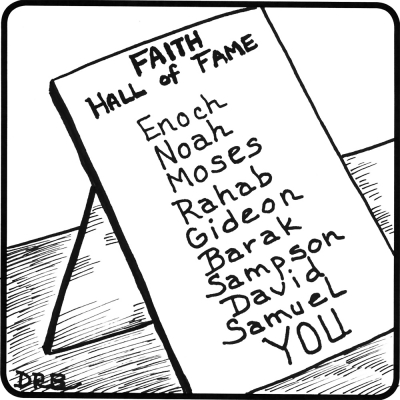
Hebrews 11 contains what I call the “Faith Hall of Fame.” The entire chapter is devoted to the great leaders and prophets from the Old Testament and their willingness to stand up for God even when it meant certain doom. They so fervently believed that God was with them, that they were willing to embark on new beginnings when others refused to obey.

The closest thing we have to a Faith Hall of Fame here at St. John’s can be found in our parlor next to the narthex. Inside you will discover a picture of every pastor that has had the good fortune to serve this church since 1954. From Fletcher Swink to yours truly, every pastor has been framed and dated, hung with care, and honored with a spot on the wall.

Have you ever taken the time to look through the pictures? It was one of the first things I did when I was newly appointed, and frankly the room terrifies me. Whenever I sit in the parlor with a group of people, I feel the heavy gaze of the pastors, they look down from their Faith Hall of Fame, and I can’t help but wonder what they think of me.

Marshall Kirby begged me my first week to give him a picture so that he could put me up with everyone else. I hesitated. For weeks he bugged me about getting the picture, about having it be just the right size and tint to blend in with the others. But I continued to put it off. I kept making excuses about how busy I was, or about the priorities I needed to focus on, but the truth is, I didn’t feel worthy of going on the wall. I had been here for such a short amount of time and felt that I hadn’t done anything that earned me a spot in the Hall of Fame.

When I’m in the parlor, when I experience the St. John’s Hall of Fame, I think about all the things they must have gone through to bring this church to where it is. I think about Fletcher Swink starting the church down the road at the Auto Parts store. I imagine that it required a tremendous amount of faith to believe that God had call him from Durham, NC to Staunton, VA to start a new church; to make something of nothing. How many nights did he pray for God to send him people, how many afternoons did he spend worrying about the new building project, how often did he confront frustrated parishioners about his sermons?

When I’m in the parlor, when I experience the St. John’s Hall of Fame, I think about Patricia Meadows being appointed as the first female pastor. I wonder about how hard she had to work to gain the trust of the people, what lengths she had to go to to reignite the flame of faith. I imagine the deep prayers she offered to God about sending new sheep to her flock, the lonely days of sermon preparation, and the terrifying moments of standing by the graveside with friends and family from the church. How often did she wrestle with her call when she felt persecuted, how many days did she spend praying for the people of our community when they were no longer able to offer their own prayers, how did she feel standing up against the injustices around her?

I wonder about all the pastors of this church, and what they went through for God’s kingdom. What was it that set them apart? What did they do that helped to grow and nurture faith in this community?

Last week I was standing in the parlor, admiring the past, when I realized how similar our Faith Hall of Fame is to the one listed in Hebrews 11.

faith

The people of Israel’s past were not of special value. Gideon was hesitant and timid when he was called by God; Barak had to be shamed by Deborah into fighting for the Lord; Jephthah is remembered mostly for his rash oath; Samson was weak of mind and conscience.

Similarly, there is nothing particularly special about those who have served our church. Though undoubtedly unique, they contained no special powers that set them apart from other clergy. Each of them had strengths and weaknesses that became manifest while they served the church.

Our pastors, and the heroes from Israel’s past, were set apart because they did all things “through faith.” They worked knowing that the real significance of what they had done would never be seen in their own time, but something that would come much later. They suffered through persecution and injustice because they believed in God’s goodness even when the world claimed the contrary.

We remember the ways our pastors have suffered: Angry emails/letters about inappropriate sermons, knowing glances and whispers from the committee members in the parking lot (where the real meetings happen). Shouts and finger pointing during counseling sessions. Years of loneliness serving a church full of people who cannot see the pastor as anything other than pastor. Doubts when preparing funerals for people in the community.

We read about all the ways the faithful of Israel suffered: torture, mocking, flogging, chains and imprisonment. Stoned to death, sawn in two, killed by the sword, wandered about in the skins of sheep and goats, destitute, persecuted, and tormented.

This is what evil does to the good. It attacks at the core of our being, shakes our faith, and  encourages us to doubt. Yet, reading these words and remembering our church’s past should bring us courage and hope. We see in them the willingness of people to go and risk it all for God. Pastors who remained brave and faithful when others tried to break them down. Prophets who spoke the truth when others sought to kill them. We see in them the true courage that faith can develop. 

It only takes a moment to see this tremendous faith in the world today, people standing up against injustice when the world argues the contrary. Consider the droves of people standing with their hands up and holding signs that say “Black Lives Matter” in response to Ferguson. Consider the droves of people standing shoulder to shoulder with the LGBTQ community during Pride marches in response to fanatical attacks against sexuality.

pic_related_120114_SM_Black-Lives-Matter-G_1

We remember and read and see the ways people suffer for God’s kingdom and we commend them for their willingness to go and be grace for the world. God sends into our confused and cruel humanity his messengers and prophets. God sends them into the midst of the wolves so that we might not be left to our evil ways, that we may see in them hope for tomorrow, and in response turn back to the God of mercy.

Yet all these, though they are commended for their faith, did not receive what was promised, since God had provided something better so they would not, apart from us, be made perfect. Whether Gideon, Barak, Fletcher Swink, or Zig Volskis, their completion depends on us. Their faith rested in God who would fulfill his promises. They served the Lord as an anchor cast into the days ahead; faith is built on hope for the future.

Abraham’s faith would have been in vain if his descendants never made it to the Land of Promise. Samuel’s faith would have been in vain if he had not responded to God calling him by name in the temple. Paul’s faith would have been in vain if the resurrected Christ had not appeared to him on the road to Damascus.

Apart from us they cannot be made perfect. The completion of those from the Faith Hall of Fame depends on us. We can fulfill their faith even today by going out and being Christ’s body for the world.

We remember the past of scripture, and the past of our church, but we are not to idealize it. We cannot be blind to the mistakes of those who came before us, or allow the past to fasten its dead hand upon us, binding us down to fruitless ideas, ancient prejudices, and old failures. We look back so that we can look forward. Just because “thats the way we’ve always done it” does not mean “thats the way we must do it now.”

Yet too often we forget how indebted we are to the past. We neglect to remember how faithful Abram, Samuel, and Paul were. We brush aside all the pastors who worked with every fiber of their being to bring about God’s kingdom here on earth. Every good thing that we have and enjoy was consecrated by the sacrifices of the past. We have faith because the people of the past passed it along to us. So today, we in our turn cast our anchors into the future. Without those who are to come after us, without the youth of our church and without the children of our preschool, we shall not be made perfect.

We are who we are because of the past. We will become what God intends for us because of the legacy we pass on to the future. Our new beginning comes when we cast our hope into the future of God’s kingdom, when we stand up for something new and different that breaks from the past, when we take steps in faith knowing that God is with us.

God is with us. In a few days we will gather again to celebrate Christ being born into the world to be God with us. We will look to that lowly manger and remember that God came to dwell among us and encourage us to be brave people of faith who remember the past and cast our hope into the future. Our purpose does not depend on our own power, but on the strength of love that comes from the Lord and in community with one another.

I still feel uncomfortable whenever I’m in the parlor. Sets of eyes follow me from the past, and I see in them everything they went through to bring our church to where it is. I believe in their hope cast into the future. In all of you I see the seeds that they planted long ago that are blossoming into true discipleship today.

I see my picture on the wall and feel unworthy. But that’s when I remember that it’s not about me and it’s not about what I do. It’s about what God does through me. It’s about what God does through you. Amen.

Devotional – 1 Thessalonians 5.20-21

Devotional:

1 Thessalonians 5.20-21

Do not despise the words of the prophets, but test everything; hold fast to what is good. 

Weekly Devotional Image

“But that’s the way we’ve always done it.” This is perhaps one of the most common phrases used throughout regular church life. Whenever someone has a new idea or a suggestion, a vision for the future, or even just a simple dream, it is not uncommon for someone to say “But that’s the way we’ve always done it.” After all, the church has been doing some of the same things for centuries: we break bread with one another and partake in communion, we celebrate Advent and Easter, we pray the Lord’s Prayer together. However, one of the things that makes the church truly vibrant is our willingness to experiment, to test everything, and seek new ways to interact with God’s grace.

1500783_745594572119178_99851182_o

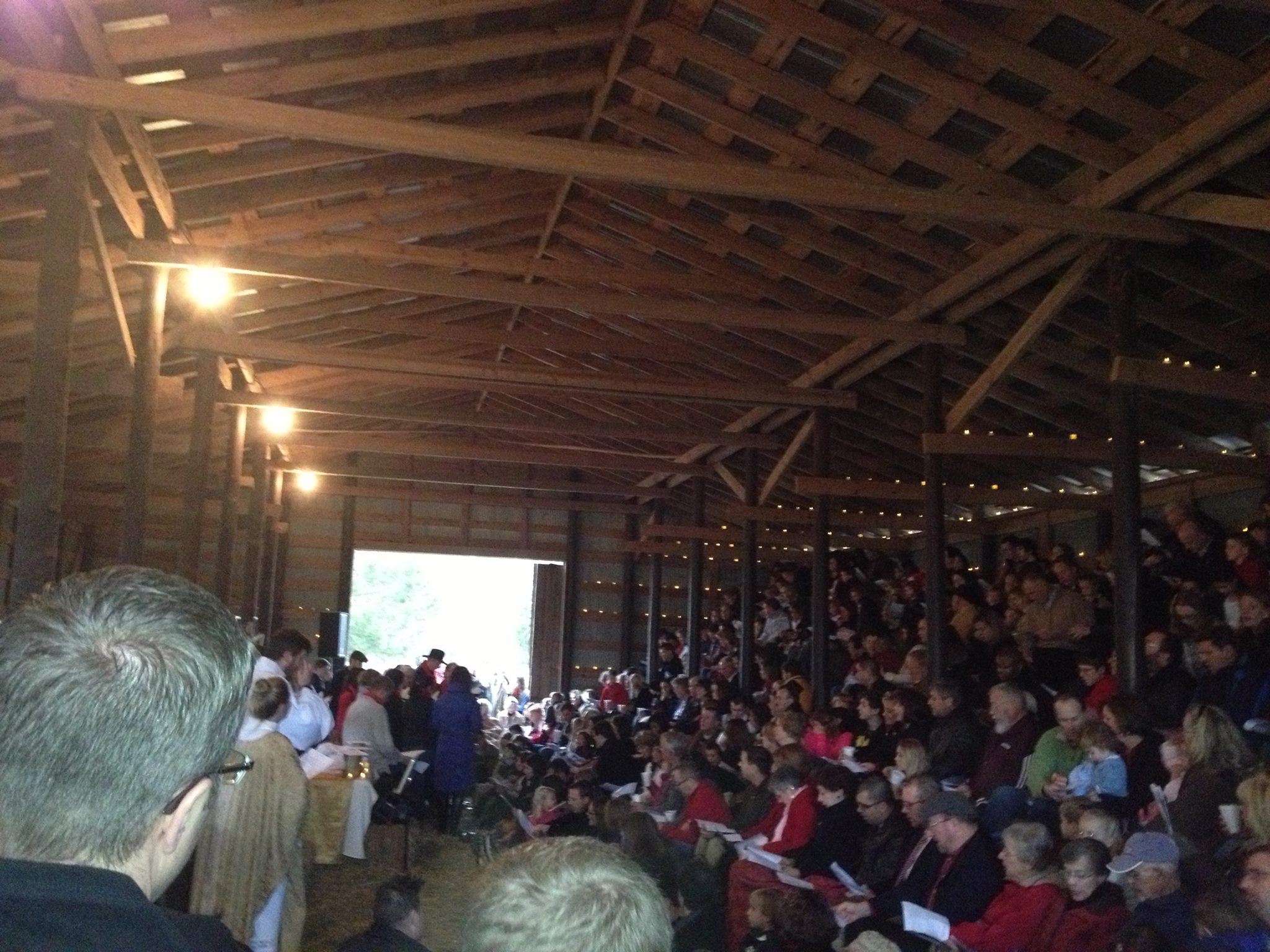
There is a church outside of Durham, North Carolina that celebrates Christmas Eve in a local barn. While other Christians are sitting in the warmth of their sanctuaries, listening to the beautiful message of a baby being born into the world, this church stands together in the frigid cold, singing hymns through chattering teeth, while the stench of animals wafts throughout the barn. I can imagine the first time someone brought up the idea for barn-worship, only to be met with “but we’ve always had Christmas Eve in the sanctuary!” Somehow or another the vision became a reality and it is now integral to the life of the community. The barn-yard service has given a new dimension and depth to the Christmas message to people who had become numb to the repetitious practices of the past. Through the willingness of someone to test the system, to propose a radically new idea, the message of God’s love in Jesus Christ has been spread to a group of people who otherwise might’ve have missed the Good News.

There is a church in Virginia that has a bluegrass band come to the sanctuary to play their Christmas Eve music. After years of hearing the same hymns from the organ, the pastor proposed a new musical style to relight the flame of faith. Though some were enraged by this new idea, it brought in an entirely new set of people who previously saw the church as a lifeless congregation. The bluegrass service is now one of the most highly attended during the year primarily because of the new musical genre. Through the willingness of someone to test the system, to propose a radically new idea, the message of God’s love in Jesus Christ has been spread to a group of people who otherwise might’ve have missed the Good News.

Paul encouraged the church in Thessalonica to “test everything” by what was good for the people. If something in your life has become flat and lifeless, let it go and seek something new. The beauty of church comes from our willingness to experience God’s wonder in a myriad of different ways.

This advent season, I encourage you to “test” and explore your faith in vibrant ways. Seek out opportunities to catch a new glimpse of God’s glory from the people around you. And remember to hold fast to the good so that others might see the Good News through you.