Devotional – 2 Corinthians 4.5

Devotional:

2 Corinthians 4.5

For we do not proclaim ourselves; we proclaim Jesus Christ as Lord and ourselves as your slaves for Jesus’ sake. 

Weekly Devotional Image

Have you ever listened to someone discuss a topic only to realize that you learned more about the speaker than you did about the subject?

There were many times in college that I would leave a lecture knowing more about my professor’s interpretation of an event than I did the actual event. Similarly, there have been church services that taught me more about what the pastor was doing in his/her life than what I should be doing to live out God’s Word in mine. The temptation, for all of us, is to point at ourselves rather than the subject at hand.

Brian Williams, the anchor for NBC’s Nightly News, recently fell into controversy regarding comments he made about his experiences during the US invasion of Iraq. Williams stated that he was on an helicopter that was hit by an RPG and forced to land. However, reports have subsequently come to light that call his memory into question; a flight engineer who was on board one of three helicopters that were hit, reported that William’s helicopter arrived at the scene nearly an hour later to interview the crew members about the attack.

1343751252634_2x1_overlay_590_295

In the days that followed William’s false report, he has been scrutinized by a number of media outlets and veterans about his claims. He has taken a leave from his regular Nightly News  broadcast, and executives from NBC have announced there would be an internal investigation into William’s reports on Iraq and other issues. Moreover, debates are taking place regarding whether or not he will be replaced in relation to his newscast.

When we share information with our friends and family about issues facing the world, there is a strong temptation to point at our relation to the subject rather than the subject itself. Instead of talking about the issue of poverty we talk about how we have interacted with people begging on the streets. Instead of talking about what we can do to help our education system, we share stories about what we experienced in school. Instead of talking about what Jesus did for us, we talk about the many ways we are living out our Christianity on a regular basis.

Paul wrote to the church in Corinth as a reminder about who was truly at the center of the church: “We do not proclaim ourselves; we proclaim Jesus Christ as Lord and ourselves as your slaves for Jesus’ sake.” As Christians, we are called to the same proclamation.

When we feel the temptation to point to ourselves and what we have done, Paul helps us to remember to point to Jesus. We can certainly celebrate our accomplishments in our faith journeys, but we are called to serve one another as slaves for Jesus’ sake.

This week, let us point away from ourselves to Christ, and seek new ways to serve those around us.

Stuck With God’s Love – Sermon on Romans 8.31-39

Romans 8.31-39

What then are we to say about these things? If God is for us, who is against us? He who did not withhold his own Son, but gave him up for all of us, will he not with him also give us everything else? Who will bring any charge against God’s elect? It is God who justifies. Who is to condemn? It is Christ Jesus, who died, yes, who was raised, who is at the right hand of God, who indeed intercedes for us. Who will separate us from the love of Christ? Will hardship, or distress, or persecution, or famine, or nakedness, or peril, or sword? As it is written, “For your sake we are being killed all day long; we are accounted as sheep to be slaughtered.” No, in all these thing we are more than conquerors through him who loved us. For I am convinced that neither death, nor life, nor angels, nor rulers, nor things present, nor things to come, nor powers, nor height, nor depth, nor anything else in all creation, will be able to separate us from the love of God in Christ Jesus our Lord.

10556522_260783347449301_8976828776060006461_n

I sat in the back of a room filled with sweaty and smelly teenagers. Between the superabundance of Axe Body Spray, the overly-exaggerated expressions of trying to outshine everyone else, and the constant hum of giggling, sighing, and hair flipping, I finally realized what I had gotten myself into: A middle school mission trip to Raleigh County, West Virginia.

We left immediately following worship last Sunday; after talking about Jesus’ parable of the weeds and the wheat I changed out of my robe, rushed home to grab my bags and eat lunch, to return to our parking lot to disembark for West Virginia. Standing by my car I was less than thrilled to discover that our youth were limited in their enthusiasm for our week of service and prayer. Then again, who could blame them? We were about to leave the comforts of Staunton, our families and friends, to sleep on the floors of an old elementary school, preparing all of our own meals, leaving for the bulk of the day to serve the needs of the community, and then to gather every evening in a room full of hormone wrestling middle schoolers.

Untitled

Jesus is our demonstration” was the theme for our week. The first night we read about Jesus’ final evening with his disciples when he knelt on the floor and washed their feet. While our youth were nervously creating new friendships with the 60 other youth in attendance, we discussed what it meant for Jesus to do something like that for his friends.  As we learned about the conditions of the first century, how dirty the disciples’ feet must have been, I scanned the room to see how the information was being received. Honestly, most of them weren’t paying attention. It was our first night, many of us had been traveling all day to get there, and the idea of washing someone else’s feet can be terrifying to a middle schooler.

The evening concluded with individual church time as we further elaborated on the ideas we had discussed that evening. When it became clear that the evening’s theological reflections were not completely cemented in our minds, I decided to change the subject and ask a question of everyone from our group: What are you most excited about and what are you most nervous about this week… Our kids were all excited about serving God and neighbor, but almost every person in that room expressed reservations about mixing together with the other churches; our group was much smaller than the others and our kids were mostly introverted. In their responses I heard, beneath their words, a fear that even with their desire to help, God might not be with them. So, before heading to bed we prayed together for the coming week and for our ability to be in ministry with others.

If God is for us, who is against us? 

That first night, it really felt as if God was not with us. In the boys’ room the smells and sounds were already becoming nauseously palpable when I finally had to shout, with vigor and volume, that it was now time for bed. I learned in the morning that the girls’ room was just as bad if not worse; between the gossiping and giggling our females were unable to sleep through most of the night.

However, throughout the first real day of work that question of God’s presence quickly moved from our limited perspective, to the reality of the people we were serving. Where was God in all of this? As the boys helped organize a Salvation Army Thrift Store and the girls sat with underprivileged children attempting to help them read, we all experienced moments of wondering about the goodness of God. I saw youth stand in silent and frightening awe before a warehouse filled with trash unlike they had ever seen before, I saw youth watching the people who filled the Thrift Store the moment it opened to examine the new items that had come in during the weekend. Were these people really blessed by the grace of God?

10498465_260247174169585_6070330076264503799_o

Who will separate us from the love of Christ? Will hardship, or distress, or persecution, or famine, or nakedness, or peril, or sword?

As the week continued and we spent more time with people in the local community it became harder and harder to see God’s love in their lives. My group, ironically named Mountain Mamas after a line the John Denver song about West Virginia, served a man named Robert whose house was situated in an abandoned neighborhood surrounded by houses that were being taken over by the local vegetation. The first two days we were unable to spend time with him as he had many errands to run but he nevertheless trusted our youth to paint his interior walls and ceiling. Would any of you trust a group of 12, 13, and 14 year olds to paint the inside of your house?

Robert had fallen on both hardship and distress. After years of a seemingly decent marriage his wife had abandoned him to live a life of solitude in a house paradoxically filled with pictures of his entire family. When we finished the ceiling in his kitchen, and began to paint the walls of his living room, Robert was finally able to spend some time with our group as we worked in his house. He often quietly observed from the corner letting the kids do their own thing, but at certain moments he would remove himself from the work space and retreat to his yard.

On one such occasion, toward the end of the week when I felt that I could leave the youth with the paint cans unsupervised, an act of immense trust, I followed Robert outside. I discovered him standing in the front yard looking at the patchy grass between his feet unaware of my presence. “Robert, is everything okay?” I asked. He slowly looked up from the ground and I saw tears welling up in his eyes as his lip began to quiver. “You all don’t know how much this means to me,” he began, “I feel like I’ve been given another chance. It hasn’t always made sense to me, but it seems like I had to fall to the very deepest pit before I could see the light again. You all have given me hope, a new claim on life, and I am so thankful.

When he felt abandoned, when the hardship and distress had brought him to the lowest time of his life, God sent us to serve Robert. God sent a bunch of crazy young Christians to Raleigh County, West Virginia so that we, like Paul, could triumphantly declare a resounding NO. In all these things, in the tremendous valleys of life, when we feel abandoned and alone, we are more than conquerors through Him who loved us. For a few brief moments, we got to be Christ’s body for Robert reminding him of his worth, his value, and his importance.

Paul wrote to the church in Rome to remind them that God is for us. Whatever happens to us that we might imagine as God’s rejection – trials or tribulation, persecution or hunger, hardship or distress – have lost their power to mean that, because God is for us.

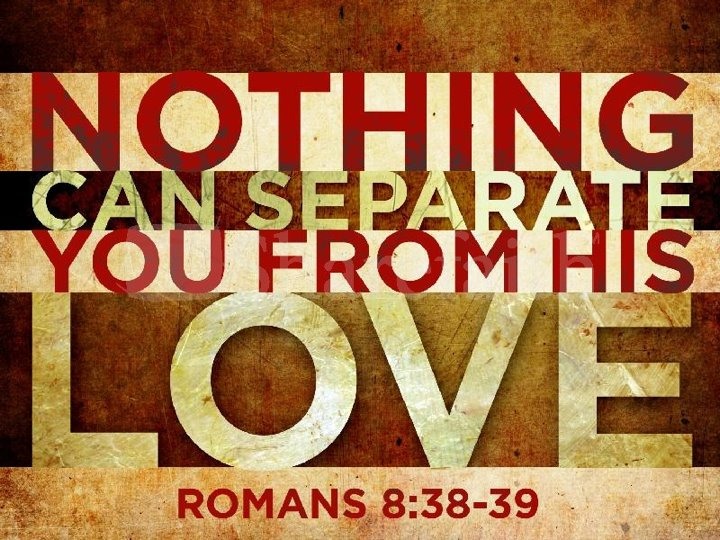
nothing can seperate you from His love

Suffering and destitution are not God’s last Word. God raised Christ from the dead reminding us forever and ever that death is not the end, we are not abandoned by the God who breathed life into us. God’s care for people like us is shown in the power he gives, through his love and grace, to overcome all dangers, all feelings of loss, and all loneliness.

It was our privilege to be Christ’s body for Robert this week. I am incredibly thankful for the opportunity we had to serve his needs, to serve the needs of the children in the reading program, and remind all of them of their worth.

However, a strange thing happened during our trip. Even in the midst of helping love on the last, the least, and the lost, I discovered that some from our group were wrestling with some of these things in their own lives. Every evening while we gathered as a church group I was given glimpses of the struggles and valleys in the lives of our people. They might not have the same physical struggles as the people we served, but it was clear that they were unsure of God’s love in their lives.

For I am convinced that neither death, nor life, nor angels, nor rulers, nor things present, nor things to come, nor powers, nor height, nor depth, nor anything else in all creation will be able to separate us from the love of God in Christ Jesus our Lord.

On our last evening together our church group gathered in a small conference room, sitting in a circle on the floor with the lights dimmed while contemporary Christian music lightly played in the background. A chair was placed in the middle of the circle with a basin of water waiting near the legs. One at a time I invited every member of our group to sit in the chair and we took turns washing one another’s feet. Truly I tell you, there are few things in life as humbling and life-giving as washing, and having your feet washed, by a brother or sister in faith. One by one every member in our group sat in the chair and after their feet were washed we surrounded them and placed our hands on them and prayed for them.

Almighty God, thank you for the gift of Chris in our lives. It has been a tremendous joy to see the way you have moved through him this week as he lead and guided us. For the many ways that he serves you as a father, a husband, a teacher, and a friend with give you thanks.

Great God thank you for your wonderful disciple Luke. We praise your name for this young man that you have shaped. His faith is so real and tangible that it gives me hope for your kingdom. He is a blessing to my life and I give you thanks for sending him here this week.

Father of mercy, thank you for your loving servant Tucker. He has so selflessly served the needs of others this week from scrubbing the floor of Robert’s house to befriending some of the outcasts from other churches. He lives out his faith in wonderful and amazing ways. This week could not have been as incredible without him and we are so thankful for all that you are doing through him.

God of grace thank you for Courtney. As she has served the needs of this community we have seen you at work through her. We are blessed by her honesty and willingness to address the truth of our lives. She works hard for the needs of others and so faithfully lives out the call to love you and her neighbor. What a blessing she is to me and my life, thank you for calling her to lead the life that she has faithfully followed.

Most merciful God thank you for the gift of Willow. As a young woman she has so captivated our hearts this week through her commitment to your kingdom. She is so full of light and vibrancy that she changes every life she touches. Our lives would be so dim and lifeless without her and it has been a joy to watch you work through her this week. Thank you for sending Willow into our lives.

Great God thank you for Grace. She is so clearly not a weed but a wheat of faith. Firmly rooted in your love and mercy she has been your Son’s body this week for others and for us. She is a constant reminder of the way you love us, because she places other people’s needs in front of her own. What a joy it is to call her my friend. We are so thankful for all that you have done and will continue to do through her.

It was through tears, through the water of foot washing, and through the faith of prayer that we told everyone in our group what Paul was trying to tell the people in Rome: You are magnificent and God loves you.

Do you know how magnificent you are? Have you ever been able to see yourself the way God sees you? Nothing can separate us from God’s love. Not our doubts, not our failures, not our shortcomings, not our sins, not our disappointments; we are stuck with God’s love. 

You are wonderful and unique, full of grace and glory. God has done, is doing, and will continue to do marvelous things through you. My friends I am convinced that neither death, nor life, nor angels, nor rulers, nor things present, nor things to come, nor powers, nor height, nor depth, nor anything else in all creation will be able to separate us from the love of God in Christ Jesus our Lord.

You are loved, you are wonderful, and you are magnificent.

Amen.

Devotional – Psalm 119.135

Devotional:

Psalm 119.135

Make your face shine upon your servant, and teach me your statutes. 

Weekly Devotional Image

St. Augustine once wrote, “There are three types of life: the contemplative, the active, and the contemplative-active. People can live the life of faith in any of these but everyone must make time both to seek the truth through contemplation and perform the actions that charity demands” (City of God, 19.19) I would slightly change Augustine’s language to say that there are three types of life for Christians: the prayerful, the server, and the prayerful-server. It is a tremendous element of our faith that we get to be in communion with God not only through our prayer, but also in our service of others.

St. Augustine

St. Augustine

Even with this threefold understanding of faithful living there is a temptation to elevate one over the other without seeking a balance of both. No one should be so totally committed to prayer that they neglect the needs of the community and no one should be so absorbed in serving others that he/she gives up praying to the Lord.

Both serving and prayer are intimately connected in the life of discipleship. Throughout my years of faith I have met delightful prayer-warriors that are committed to bring their joy and concerns to the Lord but as soon as they are asked to serve those in need they quickly receded into the shadows. Likewise I have had the pleasure of going on a number of mission trips with young and old Christians alike who worked tremendously hard for the kingdom but as soon as they were asked to pray about their experience they also quickly receded into the shadows.

It is a difficult challenge to keep both types of life together in such a way that we can be prayerful-servers. A balance of the two allows us to avoid burnout, on the one hand, and self-indulgence on the other. It is through the love and commitment of prayerful-servers that the kingdom of God becomes real and experiential for Christians.

When the psalmist calls for God to shine upon the servant and teach the statues they are calling for God to help them with their life of prayer (face shining) and service (teach me your statutes). It is a difficult challenge, but one worthy of our focus.

As the St. John’s mission team spends this week in Raleigh County, West Virginia it is my hope and prayer that we can balance both of these callings in all that we do. Moreover I hope that we can continue to keep both of these in tandem when we return back to Staunton.

As you embark on a new week I ask you to consider whether you are more attracted to a life of prayer, or a life of service. What could you to do to start living as a prayerful-server?

Ten Things I Learned My First Year of Ministry

I recently celebrated the completion of my first year of ministry for St. John’s UMC in Staunton, VA.  Throughout my first year I experienced numerous mountaintop experiences as well as deep spiritual valleys. I baptized infants and adults into the body of Christ, I presided over the table and shared the body and blood with the people of God, I brought couples into holy matrimony, and I gave witness to the life and death of faithful Christians. I have learned a lot and am continuing to grow. Below are 10 of the biggest lessons I learned from my first year in ministry.

stained-glass-569x379

1. Every Church Is Different 

I was blessed to grow up (theologically) under the tutelage of great mentors in Dennis Perry and Jason Micheli. Until I left for college I worshipped at Aldersgate UMC for the majority of my life and had very little experience outside of my home church. I learned very quickly throughout seminary, and particularly while serving at St. John’s, that all churches are different. What I preached at Aldersgate would never work at St. John’s and vice versa. Every church has its own context and collective narrative that must be learned before the rhythm of worship and preaching can begin to be fruitful for both the pastor and the congregation. It takes time, but it is time well spent to learn the story of the people.


2. Being New Can Go A Long Way

When I was commissioned last summer I became the youngest pastor in the Virginia Annual Conference and would become the youngest pastor to serve at St. John’s since 1955. The church had grown accustomed to their pastors retiring from this appointment and were excited to receive a new and fresh-from-seminary pastor. Being new has gone a long way. I have been given certain freedoms to explore different ways of worship, teaching, and discipleship purely because I am still new to this. The laity have been particularly forgiving of my preaching because, I hope, they recognize that I am continuing to learn our collective narrative every Sunday from the pulpit. The atmosphere in church has been exciting over the last year which has encouraged our members to invite others to worship, something that all churches need in order to share the Good News.


3. It Can Be Lonely

Jason Micheli has previously written about the loneliness he experienced in his first church because there were very few people around his age. In a similar way  my wife and I have had a difficult time in Staunton meet and making new friends outside of church. Part of this stems from the fact that there are simply not very many young people in Staunton. However it is challenging to make friends outside of the church when some people immediately put up a wall when they learn that I am a pastor. It is remarkably important to maintain friendships that began in, and before, seminary but it is challenging when the geographic divide makes it difficult to stay in touch. All pastors need community; their church and people outside of it.


4. Committee Meetings Are Hard

Seminary cannot prepare you for committee meetings. I was never asked to serve on a committee before I became a pastor so I had to quickly learn the functions of each and their patterns of serving the church without any prior experience. Though the Book of Discipline outlines the roles of the committees, every church lives out these responsibilities in different ways. There have been many nights where I come home thrilled about the direction of the church I serve, and other nights where I have felt defeated by what had taken place during a committee meeting. It is so important to remember that all of this, doing church and being the body of Christ for the world, it about God and not myself.


5. It’s Important To Be Involved In The Community

When I met with the SPRC for the first time I asked what they wanted most from their pastor. The collective response was that they wanted a pastor who would be known in the community. I made a concerted effort to make that come true during my first year. For example: I have been quick to introduce myself to people in town as the pastor of St. John’s, I joined the Stonewall Brigade Band (performing continuously since 1855!) and play drums with them every Monday night as we perform free concerts in Gypsy Hill Park, and I sent hand written letters to the immediate community surrounding the church introducing myself and asking if there was anything I could do for them. The church is not just the people who gather on Sunday mornings; we are intricately connected with the people in the community. It is therefore important to establish a presence within the community outside of the church.


6. My Vision Is Not The Same Thing As The Church’s Vision

I have come up with a lot of new ideas over the last year and a number of them have become very fruitful for our church. Recently however, I have begun to realize that my vision is not necessarily synonymous with the church’s vision. The people of St. John’s have been doing church a lot longer than I have; they have an established wisdom about what can and can’t work for our faith community. It has been good for me to lead with a passionate vision, but then at other times it has been even better for me to take a step back and let the lay leadership’s vision guide us.


7. Workaholism Is Just One Step Away

Every church has many needs from the pastor: visiting the shut-ins, preparing and leading worship on a weekly basis, ordering the church, etc. Though many might assume that being a pastor is a one-hour-a-week job, it is so much more than that. As someone who is regularly at the church facility there are a number of other jobs that I never imagined would be regular parts of my ministry. I have been a plumber, carpenter, Preschool teacher, preacher, mower, snow-shoveler, counselor, teacher, accountant, therapist, etc. For pastors there is a temptation to let the needs of the church dictate every aspect of your life. It is vitally important to maintain a regular sabbath and share the responsibilities of church with the body of Christ.


8. Less And Less People Know Their Bibles

I often take for granted how much scripture is known by the people of church. There are, of course, the prayer warriors and bible study leaders who know their bibles better than I do, but over the last year there have been a number of experiences that had demonstrated a staggering amount of biblical illiteracy. For example: One Sunday I casually mentioned Jacob wrestling with the angel on the banks of the Jabbok river with a bible study class when they all looked up at me and one of them said, “that’s definitely not in the bible.” Or after preaching about the last supper and then going through the entire communion liturgy a longtime church member said, “I never knew that what we do with communion comes from the Jesus’ last supper!” As the greater church looks to the future of the Christian faith we need to be particularly careful about how we return to a love of the bible and nurture scripturally shaped imaginations.


9. Reading Makes For Better Preaching

Soon after arriving in Staunton I had more free time on my hands than I had initially anticipated. I was able to make all my visits, have the sermon written by Wednesday and take care of my other responsibilities which freed me for having time to read from both the bible and theological works. By the time the fall rolled around I found myself incredibly busy and lost the time to read outside of what I needed on a weekly basis; my preaching suffered during this time. I relied too heavily on commentaries and personal anecdotes because my own faith walk was suffering under the weight of weekly ministry. Only when I had come to a realization of the way my work was affecting my faith was I able to re-focus and re-prioritize in such a way that I found time to feed my soul outside of my regular responsibilities. We become better writers and better preachers by actively reading and responding to God’s Word beyond the weekly sermon or lesson in our lives.


10. I Have The Best Job In The World

A professor of mine from seminary once said, “If you can do anything else outside of ministry then stop right now. Ministry can be one of the least rewarding vocations: spiritually, monetarily, and socially. But if you can’t do anything else, which is to say if you feel so called to ministry that you can’t do anything else, then it will be the most rewarding thing you’ll ever do.” For some this was a big wake up call and a few eventually dropped out of school, but for me it only refueled my fire. And he was right. Ministry is the greatest job in the world. Where else could I spend my time deep in God’s Word? What job would give me the ability to preside over something as precious as the water dripping on a child’s head in baptism or offering the gift of bread and wine to the weary travelers of faith? It is a privilege to serve God’s kingdom as the pastor of St. John’s UMC and more rewarding than I could have ever imagined.


(Originally written for the Tamed Cynic blog)

Devotional – Genesis 28.16-17

Devotional:

Genesis 28.16-17

Then Jacob woke from his sleep and said, “Surely the Lord is in this place – and I did not know it!” And he was afraid, and said, “How awesome is this place! This is none other than the house of God, and this is the gate of heaven.” 

Weekly Devotional Image

Next Sunday, after worship, a group from St. John’s will be leaving for Raleigh County, West Virginia for a week of mission work. Mission trips were foundational for my own faith development and I am excited to share a new experience with some of the youth from our church. Part of our time will be spent doing physical work for people in need, but a large portion of our trip will be dedicated to nurturing and fostering relationships with the children of the community. It is my hope and prayer that the youth will have their eyes opened to the ways we are called to serve our brothers and sisters.

One of the problems that faces many mission trips is the idea that, as the “missionaries,” we will be bringing Jesus to these people. I have seen it happen far too often when a group of privileged Christians make the false assumption that the people they are serving are devoid of God and it is their fundamental responsibility to bring God along as if God was something that they had packed in their suitcases.

genesis-28-16

The truth that we often fail to recognize is that God is already in that place! We are called not to bring God along with us, but instead to open our eyes to the way that God is already working in the world. When a mission trip has gone incredibly well, when the proper theology has been outlined for the participants, they come home with a different perspective about their faith; they come home having been helped by the people they served rather than the other way around. God is not something that we can compartmentalize, ship around, open at will, and exchange in a consumeristic program. If that is our idea of mission than we have failed the God we serve because we have wrongly believed that we get to decide where God goes and who gets to experience God’s majesty. God is already in that place! God has gone on ahead of us (just like Jesus went ahead of the disciples to Galilee) and will be made known to us as we serve others.

Jacob, after running away from his angry brother Esau, assumed that he had left everything behind. In a way, he believed that he could not only run away from his family and responsibilities, but that he could escape the God of his father and grandfather. How blessed was he to awake from his dream and discover the truth of God’s grace! “Surely the Lord is in this place – and I did not know it! How awesome is this place!”

As we prepare to take steps into a new week let us wake up from the dream that we get to control God and discover the truth, like Jacob did, that God is already in this place! God has been working through the family and friends around you for longer than you can imagine.

Wherever you go this week be assured that the Lord is with you.

On Real Religion – Sermon on Micah 6.1-8

Micah 6.1-8

Hear what the Lord says: Rise, plead your case before the mountains, and let the hills hear your voice. Hear, you mountains, the controversy of the Lord, and you enduring foundations of the earth; for the Lord has a controversy with his people, and he will contend with Israel. “O my people, what have I done to you? In what have I wearied you? Answer me! For I brought you up from the land of Egypt, and redeemed you from the house of slavery; and I sent you Moses, Aaron, and Miriam. O my people, remember now what King Balak of Moab devised, what Balaam son of Beor answered him, and what happened from Shittim to Gilgal, that you may know the saving acts of the Lord.” “With what shall I come before the Lord, and bow myself before God on high? Shall I come before him with burnt offerings, with calves a year old? Will the Lord be pleased with thousands of rams, with ten thousands of rivers of oil? Shall I give my firstborn for my transgression, the fruit of my body for the sin of my soul?” He has told you, O mortal, what is good; and what does the Lord require of you but to do justice, and to love kindness, and to walk humbly with your God?
4944299081_d37e065a78_z

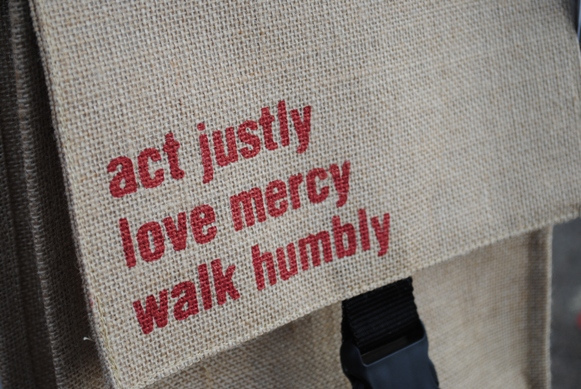
What does the Lord require of you but to do justice, and to love kindness, and to walk humbly with your God?

Pastor, preacher, reverend; titles that I’m still not used to. After only having served this church for seven months, it never ceases to amaze me how many people in the community already identify me through my vocation. I will be sitting at the Bistro downtown ready to order dinner with Lindsey when the waitress begins by asking, “What can I get for you reverend?” Or when I’m sitting behind my computer at Coffee On The Corner my coffee is accompanied with a “here you go preacher.”

Its my own fault really. I love to tell people what I do. Whenever I meet someone new in town, I’m always eager to share with them my excitement at having been appointed to St. John’s.

This past week, I was visiting one of my favorite shops downtown (that will remain nameless) when I was greeted with the familiar title: Pastor. The owner and I have a fairly decent relationship and our conversation flows smoothly whenever we’re together. As he was ringing me up, we exchanged the regular pleasantries, talking about the cold weather and other such things, until he asked me about the church. I told him about how remarkably forgiving many of the congregants are regarding my sermons, and how thankful I am for their willingness to join me in this adventure we call “church.” Thats when the conversation got serious.

“Well, I’m happy you’re enjoying it,” He said, “But church is just not the thing for me.”

Aside: I almost never ask anyone about church, and yet, people always bring up their attendance, or lack their of, in conversations.

By his tone and inflection, it was clear that he wanted to say more about the subject, so I inquired as to why church is not the thing for him.

“I used to go all the time,” he began. “I’ve popped around between different denominations, I was even an elder for a little while, but about ten years ago I lost faith in the church. We were doing all the right things, we had hundreds of people in worship every Sunday but we never did anything for the community. Everything the church did was so inwardly focused. Debates about the wallpaper, the type of bread for communion, and timing for Sunday services dominated all of our conversations. Whenever I tried to raise a need within the community that the church could meet it was brushed aside as being insignificant. Finally, at a council meeting, I could no longer contain myself. After years of watching this “perfect church” ignore the desperate needs of the people outside the building, I stood up in the front of the leadership and declared, “I think when Jesus said, ‘Feed my sheep,’ he really meant to feed his sheep.” I have not been to a church since.”


In the sixth chapter of Micah, the prophet relays God’s controversy with his people. “O my people, what have I done to you? In what way have I wearied you? Answer me! For I brought you up from the land of Egypt, and redeemed you from the house of slavery, and I sent you Moses, Aaron, and Miriam. O my people, remember now what King Balak of Moab devised, what Balaam son of Beor answered him, and what happened from Shittim to Gilgal, that you may know the saving acts of the Lord.”

At that time in Israel’s history, the people had grown weary and bored with their God. They were just going through the motions when it came to worshipping the good God who had been at the center of their very lives for so long.

How could they have become bored with God? He had delivered the people from their oppressors, raised up mighty leaders, sent truthful prophets, and brought all the people to a full awareness of his righteousness. Yet, they had forsaken him. They lived immersed in the love of God, yet were blind to much, if not most, of it.

Micah then describes “real religion” as opposed to the ways to Israelites were behaving: “With what shall I come before the Lord, and bow myself before God on high? Shall I come before him with burnt offerings, with calves a year old? Will the Lord be pleased with thousands of rams, with ten thousands of rivers of oil? Shall I give my firstborn for my transgression, the fruit of my body for the sin of my soul? He has told you, O mortal, what is good. and what does the Lord require of you but to do justice, and to love kindness, and to walk humbly with your God?

Micah presents the simple essentials of real religion in a verse that has taken its place among the most favored of scripture. What does the Lord require of you but to do justice, love kindness, and to walk humbly with your God? Real religion is predicated on the lived reality of discipleship that changes everything.

God made it known to the Israelites the proper and good response to their Lord. The people are required to practice justice, to seek equality between themselves and others; to love kindness, to maintain a loyal commitment to God and others; and to walk humbly with their God, to live transformed lives conformed to the image of God. Real religion is a journey of faith working by love leading to holiness of heart and life.

So, where are we with God? Have we grown tired and weary of the God we have come to worship? Are we attending church, practicing our faith, and loving others out of obligation or excitement? What do we think the Lord requires of us?

Is our relationship with God determined by our attendance at church, coming to worship at 11am every Sunday, singing a couple hymns, hearing scripture read aloud, and listening to a 15 minute sermon? Are we simply going through the motions of faith, or does our faith shape the way we act outside of this building?

During the time of Micah, God no longer wanted the sacrifice of animals, burnt offerings, and rivers of oil. Instead he wanted what he already showed to be good: justice, kindness, and humility.

And when we read that list of what God does not want, it makes the threefold expectation seem easy. The real demands of God however, are both moral and spiritual, and the proper worship of God is a life obedient to them. Without justice, kindness, and humility, any of our practices in church can wound our faith. Instead of creating worthy habits for life, we appear to be bargaining with God to take something less than he actually wants of us. If our faith can be compartmentalized into one hour a week, if our faith is limited to church worship alone, than we desperately need to hear Micah’s word.

Like the ancient Israelites, we live and die immersed in the love of God. Yet, how often are we blind to much, if not most, of it?

Micah begged the people to exhibit true faith, true worship, and true morality that will come to completion in true behavior. What we believe shapes how we behave. 

However, proper morality is not a substitute for religion. Its not just about “being a good person.” Outward conduct is essential for the life of faith, but it always depends on the inward character that is shaped by the gathering community of faith.

Justice, kindness, and humility might sound easy and comfortable to those who have never tried them, but the overwhelming truth is that these three practices are far more costly than thousands of rams, ten thousands of rivers of oil, or a more contemporary allusion might be that truly practicing justice, kindness, and humility will always be harder than giving numerous possessions away in order to somehow appease God.

If this church takes seriously our commitment to forming disciples of Jesus Christ for the transformation of the world, then we need learn to translate mercy into our regular daily deeds through a close, nurturing, and personal journey of faith with God. The Lord demands our lives, our love, our trust, and our loyalty.

When driving around Staunton, it is nearly impossible to miss the cacophony of churches scratched across the landscape. In my life, I have never lived in a place with so many steeples. In fact, during one of my first weeks here someone told me that Staunton has more churches per capita than anywhere in the United States. I have no idea how to confirm whether or not this is true, but I wouldn’t be surprised if it is.

In my short time here I have created relationships with some of the other clergy in town; I’ve gone out to lunch, initiated a lectionary based breakfast group, and shared numerous cups of coffee. Do you know what the first question is almost every time I meet a different pastor? “How many people do you have in worship?”

This week, while reading over Micah, I realized that getting asked about worship attendance is close to what the Israelites must have felt when someone asked, “how many rams did you sacrifice this week, how many river of oil did you present to God?”

Really? Of all the things that we could possibly talk about, the first question is always about church attendance. I wonder why we aren’t talking about ways that we can practice justice, love kindness, and walk humbly with God.

Why are we all so consumed with the numbers instead of planning ways to serve our community? And I’ll admit that I am certainly guilty of this practice. When I am asked about worship, I proudly respond about the growth of our church and the warm and inviting atmosphere that one encounters when walking through the door. But I have to be reminded too, I have to ask myself, ‘What does the Lord require?’ Does God want us to grow this church and fill it to the brim to the point where we no longer know who we are worshipping with? Or is God calling us to do justice, to love kindness, and walk humbly? Not that they are mutually exclusive, but until our focus is more on living our faith, rather than filling our building, our building will never be filled.

So, how can we practice justice as individuals and as a church? We can open our eyes to the needs of our community. We can seek out the last, least, and lost, to give them the one true gift worth sharing: love. We can stand up against the small and large injustices that occur everyday, whether its an unfair judgement in the work place, or racist comments, or belittling words between spouses. We can practice justice by living out our faith in the world.

How can we love kindness as individuals and as a church? We can initiate relationships with strangers knowing that God has done the same for us. We can show our love to our families and friends by making the extra phone call to just say “Hi.” We can truly greet one another when we gather in worship, not just the same people we talk with every week, but particularly those who are still strangers to us. We can show our loving kindness but living out our faith in the world.

How can we walk humbly with our God? We can recognize that God is not only concerned with our religious rituals, but calls for us to live out faith beyond these walls. We can admit that we have, and will continue to, fall short of God’s glory. We can find salvation and redemption through our faith in God, and God’s faith in us. We can come forward to the table and receive the bread and wine humbly, knowing that we have done nothing to deserve it. We can walk humbly with our God by living out our faith in the world.

What does the Lord require of us? To do justice, to love kindness, and to walk humbly with God.

Amen.

Weekly Devotional – 1/27/14

Devotional:

Psalm 15.1-4

O Lord, who may abide in your tent? Who may dwell on your holy hill? Those who walk blamelessly, and do what is right, and speak the truth from their heart; who do not slander with their tongue, and do no evil to their friends, nor take up a reproach against their neighbors; in whose eyes the wicked are despised, but who honor those who fear the Lord; who stand by their oath even to their hurt.


“Being a Christian must be so easy,” a friend of mine once said, “You can do whatever you want, just so long as you confess right before you die, you’ll still go to heaven.”

Responding to those kind of comments has always been difficult for me. Yes, we do believe that God’s forgiveness will always come because nothing can ever separate us from the love of God in Jesus Christ. Yes,  you could live your whole life in ignorance of God’s love and mercy, only to discover it in your last days and God would still be there waiting to receive you. However, upon later reflection, I wish I could have responded to that particular comment in the way that Augustine did in the fourth century:

703“Some delude themselves because of God’s mercy. They say: “I still have a little time left to live how I like. Why shouldn’t I live how I like as much as I like and then turn to God later? After all, God has promised to pardon me.” I respond, “True, but he has not promised that you are going to be alive tomorrow.” – St. Augustine, Sermon 339

When Christianity is compartmentalized into “what happens to me after I die?” then all respect and concern for the present is lost. In Psalm 15 we learn about what it means to be welcomed to God’s holy hill, to abide in God’s tent; our faithfulness is far less concerned with our ability to accept God in our last days, than it is about living a life of service and holiness.

A professor of mine once said, “The question should not be, ‘If I die tonight, what will happen to me?’ but instead, ‘If I live for another day, what will I do with it? How will I love God and my neighbor?’”

So, let us all seek to live holy lives in the present. Let us not put off for tomorrow what we can, and should, do today. Let us look at our own lives and ask “am I walking blamelessly, doing what is right, and speaking the truth?”


Weekly Devotional – 12/9/13

Devotional:

Psalm 146.5-10

Happy are those whose help is the God of Jacob, whose hope is in the Lord their God, who made heaven and earth, the sea, and all that is in them; who keeps faith forever; who executes justice for the oppressed; who gives food to the hungry. The Lord sets the prisoners free; the Lord opens the eyes of the blind. The Lord lifts up those who are bowed down; the Lord loves the righteous. The Lord watches over the strangers; he upholds the orphan and the widow, but the way of the wicked he brings to ruin. The Lord will reign forever, your God, O Zion, for all generations. Praise the Lord!


I love to ask questions. For years I have always been “that guy” at dinner or at a party who can orchestrate the direction of the conversation just by asking a few well placed questions. Depending on the season, or company present, some of my favorite questions include: How did you two meet? What was your favorite halloween costume as a child? What was the last best book you read? All of these questions are geared toward opening up a conversation for all people to respond accordingly. It allows for everyone present to reflect on something and then share it with everyone present. My favorite question to ask during Advent has always been: What was the best Christmas present you ever received?

stxmco001christmas_tree_and_presents1

Its a perfect question. Everyone loves to take a few moments to go through the catalogue in their memory banks of all the presents they received as children, you can detect a positive change in the atmosphere because the memories elicit such joy, and the discussion will continue from that first question toward a full and fruitful conversation.

What was the best Christmas present you ever received? What memories do you have of gathering around the Christmas tree with your family preparing to rip apart the wrapping paper?

I love to ask that question, but recently I’ve begun to wonder whether I should be asking it at all. The celebration of Christmas (according to the ways of the world) has so trumped the theological convictions of Advent that Santa Claus has become frighteningly synonymous with Jesus Christ. Moreover, practices like “The Elf on the Shelf” have led children (and some adults) to grossly misunderstand the depth and breadth of God’s prevenient grace in the world.

When I read from the 146th Psalm I wonder if instead of asking everyone about their favorite present, I should instead ask: “When was the last time you gave food to the hungry?” Or “How are you keeping your faith?”

I know those questions are tougher to swallow, even for me, but I believe they really get at the heart of the Christmas message. How are we living out our faith, particularly during this season of giving? How are we reaching out to those in our community who need to feel the love of Christmas more than anyone else?

So, as we all gather in the shops to find the perfect present, and even as we sit around our perfectly lit and decorated Christmas trees, let us remember the true depth of Christmas. Let us recall that Christ came not to be served but to serve. Let us ask ourselves the difficult and life-changing questions in order that we might live fruitful lives in God’s kingdom.