Stuck With God’s Love – Sermon on Romans 8.31-39

Romans 8.31-39

What then are we to say about these things? If God is for us, who is against us? He who did not withhold his own Son, but gave him up for all of us, will he not with him also give us everything else? Who will bring any charge against God’s elect? It is God who justifies. Who is to condemn? It is Christ Jesus, who died, yes, who was raised, who is at the right hand of God, who indeed intercedes for us. Who will separate us from the love of Christ? Will hardship, or distress, or persecution, or famine, or nakedness, or peril, or sword? As it is written, “For your sake we are being killed all day long; we are accounted as sheep to be slaughtered.” No, in all these thing we are more than conquerors through him who loved us. For I am convinced that neither death, nor life, nor angels, nor rulers, nor things present, nor things to come, nor powers, nor height, nor depth, nor anything else in all creation, will be able to separate us from the love of God in Christ Jesus our Lord.

10556522_260783347449301_8976828776060006461_n

I sat in the back of a room filled with sweaty and smelly teenagers. Between the superabundance of Axe Body Spray, the overly-exaggerated expressions of trying to outshine everyone else, and the constant hum of giggling, sighing, and hair flipping, I finally realized what I had gotten myself into: A middle school mission trip to Raleigh County, West Virginia.

We left immediately following worship last Sunday; after talking about Jesus’ parable of the weeds and the wheat I changed out of my robe, rushed home to grab my bags and eat lunch, to return to our parking lot to disembark for West Virginia. Standing by my car I was less than thrilled to discover that our youth were limited in their enthusiasm for our week of service and prayer. Then again, who could blame them? We were about to leave the comforts of Staunton, our families and friends, to sleep on the floors of an old elementary school, preparing all of our own meals, leaving for the bulk of the day to serve the needs of the community, and then to gather every evening in a room full of hormone wrestling middle schoolers.

Untitled

Jesus is our demonstration” was the theme for our week. The first night we read about Jesus’ final evening with his disciples when he knelt on the floor and washed their feet. While our youth were nervously creating new friendships with the 60 other youth in attendance, we discussed what it meant for Jesus to do something like that for his friends.  As we learned about the conditions of the first century, how dirty the disciples’ feet must have been, I scanned the room to see how the information was being received. Honestly, most of them weren’t paying attention. It was our first night, many of us had been traveling all day to get there, and the idea of washing someone else’s feet can be terrifying to a middle schooler.

The evening concluded with individual church time as we further elaborated on the ideas we had discussed that evening. When it became clear that the evening’s theological reflections were not completely cemented in our minds, I decided to change the subject and ask a question of everyone from our group: What are you most excited about and what are you most nervous about this week… Our kids were all excited about serving God and neighbor, but almost every person in that room expressed reservations about mixing together with the other churches; our group was much smaller than the others and our kids were mostly introverted. In their responses I heard, beneath their words, a fear that even with their desire to help, God might not be with them. So, before heading to bed we prayed together for the coming week and for our ability to be in ministry with others.

If God is for us, who is against us? 

That first night, it really felt as if God was not with us. In the boys’ room the smells and sounds were already becoming nauseously palpable when I finally had to shout, with vigor and volume, that it was now time for bed. I learned in the morning that the girls’ room was just as bad if not worse; between the gossiping and giggling our females were unable to sleep through most of the night.

However, throughout the first real day of work that question of God’s presence quickly moved from our limited perspective, to the reality of the people we were serving. Where was God in all of this? As the boys helped organize a Salvation Army Thrift Store and the girls sat with underprivileged children attempting to help them read, we all experienced moments of wondering about the goodness of God. I saw youth stand in silent and frightening awe before a warehouse filled with trash unlike they had ever seen before, I saw youth watching the people who filled the Thrift Store the moment it opened to examine the new items that had come in during the weekend. Were these people really blessed by the grace of God?

10498465_260247174169585_6070330076264503799_o

Who will separate us from the love of Christ? Will hardship, or distress, or persecution, or famine, or nakedness, or peril, or sword?

As the week continued and we spent more time with people in the local community it became harder and harder to see God’s love in their lives. My group, ironically named Mountain Mamas after a line the John Denver song about West Virginia, served a man named Robert whose house was situated in an abandoned neighborhood surrounded by houses that were being taken over by the local vegetation. The first two days we were unable to spend time with him as he had many errands to run but he nevertheless trusted our youth to paint his interior walls and ceiling. Would any of you trust a group of 12, 13, and 14 year olds to paint the inside of your house?

Robert had fallen on both hardship and distress. After years of a seemingly decent marriage his wife had abandoned him to live a life of solitude in a house paradoxically filled with pictures of his entire family. When we finished the ceiling in his kitchen, and began to paint the walls of his living room, Robert was finally able to spend some time with our group as we worked in his house. He often quietly observed from the corner letting the kids do their own thing, but at certain moments he would remove himself from the work space and retreat to his yard.

On one such occasion, toward the end of the week when I felt that I could leave the youth with the paint cans unsupervised, an act of immense trust, I followed Robert outside. I discovered him standing in the front yard looking at the patchy grass between his feet unaware of my presence. “Robert, is everything okay?” I asked. He slowly looked up from the ground and I saw tears welling up in his eyes as his lip began to quiver. “You all don’t know how much this means to me,” he began, “I feel like I’ve been given another chance. It hasn’t always made sense to me, but it seems like I had to fall to the very deepest pit before I could see the light again. You all have given me hope, a new claim on life, and I am so thankful.

When he felt abandoned, when the hardship and distress had brought him to the lowest time of his life, God sent us to serve Robert. God sent a bunch of crazy young Christians to Raleigh County, West Virginia so that we, like Paul, could triumphantly declare a resounding NO. In all these things, in the tremendous valleys of life, when we feel abandoned and alone, we are more than conquerors through Him who loved us. For a few brief moments, we got to be Christ’s body for Robert reminding him of his worth, his value, and his importance.

Paul wrote to the church in Rome to remind them that God is for us. Whatever happens to us that we might imagine as God’s rejection – trials or tribulation, persecution or hunger, hardship or distress – have lost their power to mean that, because God is for us.
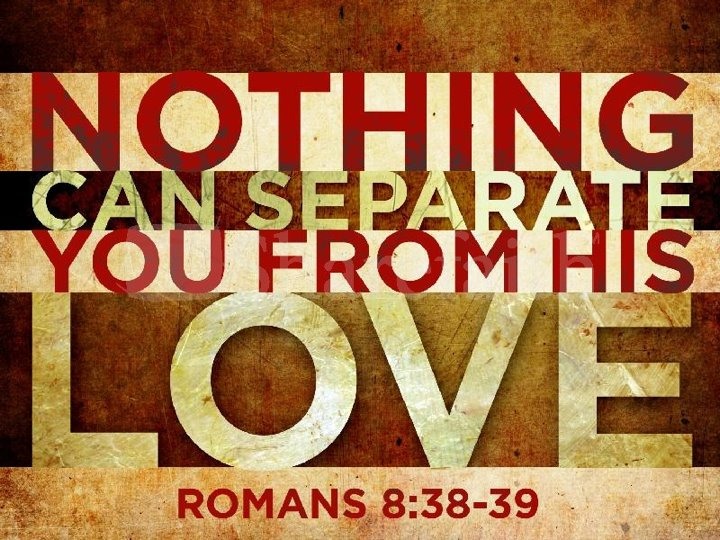
nothing can seperate you from His love

Suffering and destitution are not God’s last Word. God raised Christ from the dead reminding us forever and ever that death is not the end, we are not abandoned by the God who breathed life into us. God’s care for people like us is shown in the power he gives, through his love and grace, to overcome all dangers, all feelings of loss, and all loneliness.

It was our privilege to be Christ’s body for Robert this week. I am incredibly thankful for the opportunity we had to serve his needs, to serve the needs of the children in the reading program, and remind all of them of their worth.

However, a strange thing happened during our trip. Even in the midst of helping love on the last, the least, and the lost, I discovered that some from our group were wrestling with some of these things in their own lives. Every evening while we gathered as a church group I was given glimpses of the struggles and valleys in the lives of our people. They might not have the same physical struggles as the people we served, but it was clear that they were unsure of God’s love in their lives.

For I am convinced that neither death, nor life, nor angels, nor rulers, nor things present, nor things to come, nor powers, nor height, nor depth, nor anything else in all creation will be able to separate us from the love of God in Christ Jesus our Lord.

On our last evening together our church group gathered in a small conference room, sitting in a circle on the floor with the lights dimmed while contemporary Christian music lightly played in the background. A chair was placed in the middle of the circle with a basin of water waiting near the legs. One at a time I invited every member of our group to sit in the chair and we took turns washing one another’s feet. Truly I tell you, there are few things in life as humbling and life-giving as washing, and having your feet washed, by a brother or sister in faith. One by one every member in our group sat in the chair and after their feet were washed we surrounded them and placed our hands on them and prayed for them.

Almighty God, thank you for the gift of Chris in our lives. It has been a tremendous joy to see the way you have moved through him this week as he lead and guided us. For the many ways that he serves you as a father, a husband, a teacher, and a friend with give you thanks.

Great God thank you for your wonderful disciple Luke. We praise your name for this young man that you have shaped. His faith is so real and tangible that it gives me hope for your kingdom. He is a blessing to my life and I give you thanks for sending him here this week.

Father of mercy, thank you for your loving servant Tucker. He has so selflessly served the needs of others this week from scrubbing the floor of Robert’s house to befriending some of the outcasts from other churches. He lives out his faith in wonderful and amazing ways. This week could not have been as incredible without him and we are so thankful for all that you are doing through him.

God of grace thank you for Courtney. As she has served the needs of this community we have seen you at work through her. We are blessed by her honesty and willingness to address the truth of our lives. She works hard for the needs of others and so faithfully lives out the call to love you and her neighbor. What a blessing she is to me and my life, thank you for calling her to lead the life that she has faithfully followed.

Most merciful God thank you for the gift of Willow. As a young woman she has so captivated our hearts this week through her commitment to your kingdom. She is so full of light and vibrancy that she changes every life she touches. Our lives would be so dim and lifeless without her and it has been a joy to watch you work through her this week. Thank you for sending Willow into our lives.

Great God thank you for Grace. She is so clearly not a weed but a wheat of faith. Firmly rooted in your love and mercy she has been your Son’s body this week for others and for us. She is a constant reminder of the way you love us, because she places other people’s needs in front of her own. What a joy it is to call her my friend. We are so thankful for all that you have done and will continue to do through her.

It was through tears, through the water of foot washing, and through the faith of prayer that we told everyone in our group what Paul was trying to tell the people in Rome: You are magnificent and God loves you.

Do you know how magnificent you are? Have you ever been able to see yourself the way God sees you? Nothing can separate us from God’s love. Not our doubts, not our failures, not our shortcomings, not our sins, not our disappointments; we are stuck with God’s love. 

You are wonderful and unique, full of grace and glory. God has done, is doing, and will continue to do marvelous things through you. My friends I am convinced that neither death, nor life, nor angels, nor rulers, nor things present, nor things to come, nor powers, nor height, nor depth, nor anything else in all creation will be able to separate us from the love of God in Christ Jesus our Lord.

You are loved, you are wonderful, and you are magnificent.

Amen.

God’s Garden – Sermon on Matthew 13.24-30, 36-43

Matthew 13.24-30, 36-43

He put before them another parable: “The kingdom of heaven may be compared to come one who sowed good seed in his field; but while everybody was asleep, an enemy came and sowed weeds among the wheat, and then went away. So when the plants came up and bore grain, then the weeds appeared as well. And the slaves of the householder came and said to him, ‘Master, did you not sow good seed in your field? Where, then, did these weeds come from?’ He answered, ‘An enemy has done this.’ The slaves said to him, ‘Then do you want us to go and gather them?’ But he replied, ‘No; for in gathering the weeds you would uproot the wheat along with them. Let both of them grow together until the harvest; and at harvest time I will tell the reapers, Collect the weeds first and bind them in bundles to be burned, but gather the wheat into my barn.’” Then he left the crowds and went into the house. And his disciples approached him, saying, “Explain to us the parable of the weeds of the field.” He answered, “The one who sows the good seed is the Son of Man; the field is the world, and the good seed are the children of the kingdom; the weeds are the children of the evil one, and the enemy who sowed them is the devil; the harvest is the end of the age, and the reapers are angels. Just as the weeds are collected and burned with fire, so it will be at the end of the age. The Son of Man will send his angels, and they will collect out of his kingdom all causes of sin and all evildoers, and they will throw them into the furnace of fire, where there will be weeping and gnashing of teeth. Then the righteous will shine like the sun in the kingdom of their Father. Let anyone with ears listen!

wheat180708_03

The best sermons reflect their scripture. If you preach on a Psalm then the sermon should be poetic and prayerful. If you preach on a genealogy then sermon should be historic and cover the breadth and trajectory of time. If you preach on a narrative, then the sermon should contain stories to help enlighten the scriptural narrative. And if you preach on a parable, then the sermon should leave people scratching their heads on their way out of church.

Jesus put before his disciples yet another parable: The kingdom of heaven is like a gardener who planted good seeds in his field. However, while others were sleeping someone else came and planted weeds among the wheat. So when the plants began to grow the weeds appeared with the wheat.

The workers of the garden were confused and worried, “Master, what kind of seeds did you plant? Where did all these weeds come from? Would you like us to go out and remove the weeds from the field?” But the gardener replied, “No; if you remove all of the weeds you would uproot the wheat along with them. Instead, let both of them grow together until the harvest.

Parables are strange things. They are often found on the lips of Jesus, told in such a way that a point of a lesson can be illustrated from the narrative. For those of us familiar with Jesus’ parables we might think of the Prodigal Son or the Good Samaritan or The Mustard Seed. In the parables, Jesus uses a simple and memorable story to convey a deeper and important theological point. He refers to common and everyday things that can find connection with the crowds as he shares with them the beauty and mystery of God.

Though told with a simple style, parables often left the disciples scratching their heads while Jesus addressed the crowds. In our scripture today it was only when they retired to the house that the disciples were finally given the opportunity to ask Jesus what this parable was all about.

The gardener is the Son of Man; the field is the world, and the good seeds are the children of God; the weeds are the children of the evil one, and the enemy who planted them is the devil; the harvest is the end of the age, and the reapers are angels.

The beauty of the parable, its mysterious quality, has been explained and presented to the disciples succinctly and clearly. 

wheat

This morning we are going to do things a little differently. Instead of just standing up here proclaiming the Word, instead of just sitting our there absorbing the Word, we are going to live it out in our worship. 

Let us pretend that this sanctuary is God’s Garden and all of us are the crops. At first we are planted by the Son of Man and are nurtured in this place to grow into disciples of Christ. Whereas a true garden needs sunlight and water, we are sustained through the Word of God and through the Bread and Wine of communion. As we make it through the weeks, months, and years we continue to grow into our faith and become the beautiful wheat of the field. So, as you are able, would you please demonstrate this growth by standing up.

As any good gardener I am now going to inspect our crops… It is clear that we have some incredible wheat this morning!

Leah Pack! I see your growth and am reminded of your dedication to our lectionary bible study, feeding those who are in need at the free clinic, and your willingness to visit those from our church community.

Marshall Kirby! I see your stature and it is definitely clear that you are strong in your faith! I am reminded of your willingness to serve the needs of our church through your leadership with the men’s club, your stupendous diction while reading the scriptures for worship, and your chiseled muscles from years of Christmas tree sales.

Grace Daughtrey! Though still young and maturing into a wonderful wheat it is clear that you are full of faith. I see you standing and I am reminded of your challenging questions during confirmation, your desire to serve our church by carrying in the light of Christ for worship, and the future of our church as you blossom into a remarkable Christian.

Brothers and sisters we have a garden full of God’s wheat, full of faith and trust! To God be the glory! (You may be seated)

But you know, the more I think about it, maybe I wasn’t looking at God’s crops close enough…

Leah Pack, for as strong as your faith looks on the outside I know that you become frustrated with others in the community who do not live out the tough calls of our faith, I know that sometimes you wish you could ignore certain parts of the bible. Leah I’m sorry to say this, but when I look closer it seems that you appear more like a weed than a wheat (Remove Leah from the pew and bring her to the front).

Marshall Kirby, who could argue with your faith? But I know that sometimes you listen to the voices of the world more than the voice of God and you might be too weedy for our garden. (Remove Marshall and bring him to the front)

And Grace, sweet sweet Grace, still so young in your faith, I know that there are times when you would rather sleep than come to church. I’m not sure we can let you stay in our garden (remove Grace and bring her to the front).

I quickly see two things for us to learn from the pruning of God’s Garden:

Before too long I’m sure that we would be able to find a sin in every person sitting in the pews this morning, and eventually we would have to remove all of the weeds. We might have good days, even months, or perhaps years where we can fully live into our discipleship of Jesus Christ, loving God and neighbor, serving the needs of the community, but all of us eventually fall short of His glory. We look at someone and we lust for what they have, we lie to protect ourselves, we love our possessions more than God; whatever the sin is we quickly move from being one of God’s wheat to one of God’s weeds.

God’s Garden is imperfect. Even with all of the proper nurturing, good preaching, splendid teaching, and holy eating, it will never be enough to prevent us from sinning. We can have mountaintop experiences here at church but before long we are tempted to fall back into the familiar rhythms of evil. On the outside we want to look like God’s perfect crop of wheat, fully matured, and ready to be harvested for the kingdom, but in reality, when we look inwardly, we see that all of us at some point or another appear more like one of the weeds in God’s Garden.

The other element of this Garden that strikes at our hearts this morning is that we are not the ones who are called to judge. Lets pretend for just a moment, if we can, that Leah, Marshall, and Grace truly were weeds within this community of faith. Can you imagine what would happen to us if we uprooted them? 

Leah has taught so many over the years about the way God has interacted with God’s creation. If we removed Leah, all of her students in the ways of faith, myself included, would begin to wonder what this thing called faith was all about. At some point many of the people connected to Leah’s life would stop coming to church at all when they realized that she was the one who embodied the love of God for them and their lives. Without Leah being here, they would miss getting to experience God’s grace.

Marshall lives out his discipleship everyday. He it absolutely committed to following Christ here at St. John’s and in the community. Even with his big and tough exterior, he is one of the sweetest men I have ever met. If we removed Marshall, our community would suffer. All of us that have been encouraged by Marshall over the years would lose our sense of identity when he is no longer able to affirm our worth. Without Marshall being here, many of us would miss getting to witness God’s grace.

Grace sees the world the way that God wants us to see one another. Without judgments, without preconceptions, without fear, Grace loves the people around her with a pure heart. Even though Grace is very much a part of the church right now, she also embodies for many of us the hope of the church in the future. If we removed Grace, our vision would suffer. All of us that have been touched by her singing, or her discipleship, or even just her smiles, would no longer see the joy of worship and faith. Grace gives us the hope for committing ourselves to the ways of God. Without Grace being here, we would fail to enjoy God’s grace.

church

I’m sure that God’s Garden would suffer if any of them were removed, and I am sure that God’s Garden would wither and disappear if any of us were removed. We are not the gardener, that role can only belong to the triune God. When we look out on the abundance of produce in this church we are called to see one another the way God sees us, as the great grains of discipleship.

In Jesus’ parable of the wheat and the weeds there is a tremendous emphasis on patience: let them both grow together until the harvest. Our church is made up of sinners and saints, weeds and wheat, and God has called us to grow in faith with one another. As we make our way through the years of communal living, we must be patient with one another.

On the surface level, Jesus’ parable can sound frightening and even disconcerting. The idea of the weeds being gathered at the harvest to be thrown in the fire scares me. But when I look out on God’s Garden here in our church, I am reminded that this is a story all about grace. In the strange world of the parable, in the strange world of being a Christian today, God prohibits our separation and calls us to live in love.

In the strange world of faith it may even be possible for weeds to become wheat.

Thanks be to God that Jesus Christ is the risen Lord who sows the good seed that becomes the church. Thanks be to God that we are nurtured and fed by the Word and the Spirit growing everyday in our fruitfulness for the kingdom and one another. Thanks be to God that we have been raised in faith, surrounded by such a wonderful community of witnesses, and rooted in the deep and rich soil of God’s grace.

Be patient with one another. Do not judge by outward appearance, or inward behavior. Look around at God’s Garden this morning and see the good seed that is growing, see the wheat of faith, see your fellow disciples that will one day shine like the sun in the kingdom of their Father!

Amen.

Red With Envy – Sermon on Genesis 25.29-34

Genesis 25.29-34

Once when Jacob was cooking a stew, Esau came in from the field, and he was famished. Esau said to Jacob, “Let me eat some of that red stuff, for I am famished!” (Therefore he was called Edom.) Jacob said, “First sell me your birthright.” Esau said, “I am about to die; of what use is a birthright to me?” Jacob said, “Swear to me first.” So he swore to him, and sold his birthright to Jacob. Then Jacob gave Esau bread and lentil stew, and he ate and drank, and rose and went his way. Thus Esau despised his birthright.

rh-jacobandesau_dsc_0091

There was a man who lived a perfect life. For years he did his very best to maintain the commandments of God, love his family, tithe to his local United Methodist Church, serve on the Trustees Committee, and volunteer as a coach for local little league sports. Everyone knew him, and everyone liked him. He was charismatic and hardworking, personality traits that would come to reward him when he started his own business.

He was a shrewd business man who seemed to be able to predict the rise and fall of the stock market, quickly amassing a vast sum of money that he would then reinvest in the right companies. Yet, even with his vast wealth, he never overdid it with his community. He was humble and thrifty, fitting in with everyone else even though he was wealthier than anyone he knew.

As his life progressed he found success in nearly every direction. His company continued to expand and produce wealth, his family was the ideal example of love and compassion, and he had a strong relationship with his church. Near the end of his days God appeared to him one morning in his office. The Lord said, “Do not be afraid! You have lived a wonderful and virtuous life. I don’t usually do this, but I’m going to make an exception for you; when you die you can bring a briefcase of whatever you want to heaven. So think about it while you still can, and I’ll see you soon.”

During the final weeks of the man’s life he thought deeply about what to bring with him to heaven, and when the time came he was confident with his decision.

Standing on the clouds of heaven, right beside the pearly gates the man was thrilled to see St. Peter ready to greet him and let him into paradise. “Welcome” St. Peter began, “we have been waiting for you. But if I’m being honest I can’t wait to see what you brought to heaven! God doesn’t make a deal like that with just anyone and we have been so curious to see what you brought!” The man smiled and proudly passed his briefcase over to St. Peter. As he opened the case he discovered six perfectly polished gold bars that glowed in the light of heaven.

“Interesting choice,” St. Peter said, “but we’ve already got plenty of pavement here.”

1019greed

Greed. Our current economic downturn is often attributed the vice of greed, having grown out of control. For many of us, we’re not exactly sure how this actually happened, but we are ready to believe that we are suffering because some became too greedy. Greed has no limits or shame; while CEOs make millions and millions in bonuses, regular people are stuck in debt, unsure of the future, starving for work, and afraid of the consequences of others’ greed.

Greed is seductive and always waiting in the recesses of our minds. It is something that tempts all of us, whether we like to admit it or not. Just like the hypothetical virtuous man who lived an incredible life, he failed to appreciate the goodness of God’s kingdom when he brought gold bars to heaven. We so desperately cling to the materialism of our world that we are unable to imagine a life without greed.

Have you ever heard a sermon about greed? The fact that we do not hear about this particular topic seems strange considering how prominent the temptation of greed is considered to be one of the greatest threats for Christians.

Jesus says you cannot serve God and wealth (Matthew 6.24). Paul suggests that the love of money is the root of all evil leading some to walk away from the faith (1 Timothy 6.10). James is very blunt about the folly of greed: “Those conflicts and disputes among you, where do they come from? Do they not come from your cravings that are at war within you? You want something and do not have it; so you commit murder. And you covet something and cannot obtain it; so you engage in disputes and conflicts” (James 4.1-2)

blessed_are_the_rich_time_cover_2006

Time and time again scripture frustrates our conceptions about the world: If we are Christian and wealthy or if we desire to have wealth, we have a problem. 

Greed, however, is not limited to monetary gain alone. Greed sits at the root of most of our sins. We become greedy for wealth, power, position, place, people, and programs. We want more than our fair share. We desire the most for the least effort.

Jacob and Esau were born in conflict with one another.

The first born was red and covered with hair so they named him Esau, which means Red. The second born came out with his hand gripping Esau’s heel so they named him Jacob, which means heel-grabber. Esau would grow to become a mighty warrior, skillful hunter, and a man of the field whereas Jacob was a quiet man, living in tents. Isaac loved Esau and Rebekah loved Jacob.

So it came to pass one day that while Jacob was cooking a meal, Esau came in from the field completely famished. “Let me have some of that red stuff, because I am starving!” Esau said to Jacob. So Jacob replied, “Sure, I’d be happy to, but first sell me your birthright.” “Are you serious, I am about to die from hunger; what good is my birthright to me now?” “Swear to it” said Jacob. And so Esau swore to his younger brother and traded his birthright for some bread and lentil stew. When Esau finished eating he rose and went away and began to despise his birthright.

Who is the greedy one from our scripture? 

Esau’s greed is evident and obvious. Rather than trust in the Lord’s provision, Esau’s vision was limited to the present and he wanted immediate gratification for his desires. In order to satisfy his appetite, Esau’s greed became so powerful that he was willing to give away his future for the present moment. 

We are a generation of busy people, consistently fighting a battle to determine what to give up and what to continue. When our plates become too full with responsibilities we plan to remove that which is unnecessary and no longer life-giving. So many people give up the important things of life to pursue something that is meaningless because we are consumed by our present needs rather than steadfast in our trust of the Lord. Many of us are tempted to ignore our baptismal identifies when we see someone in need, we are tempted to disown our family, friends, and children when they do something wrong. We are often tempted to sell out for something less than what we are truly worth.

Esau’s greed is obvious because it is so similar with our greed. Forgetting the long-term cost, we are quick to serve our sinful desires and natures right here and right now. What do I have to do to make more money as soon as possible? What do I have to do to get that girl at school to like me? We are captivated by the fast sprint rather than the patient marathon.

Pastors love to chastise Esau for so quickly releasing his birthright, and use him as an example for what not to do. But what about Jacob? Jacob who used crooked and deceitful ways to steal his brother’s birthright. He was no doubt the promised one, but that doesn’t necessarily forgive him for taking advantage of his brother’s need.

Jacob’s greed is subtle and relentless. Instead of offering his brother some food out of kindness he is always looking out for number one. Later in the story, after Esau threatens to kill his brother, Jacob is willing to give away all his animals, wives, and children just so that he might save his own neck. Jacob was blinded by the greed of power, to draw to himself everything he could by whatever means necessary, even letting his brother starve.

We are a generation of individualists who are taught from infancy the importance of a capitalistic world view. When we see ourselves at the bottom of the food chain we are willing to do whatever it takes to amass power. So many people will go against their values, morals, and ethics in an instant, purely to make our lives a little better. Many of us are tempted to forget who we are and whose we are because we have forgotten the true meaning behind “the first will be last and the last will be first.”

Jacob’s greed is apparent when we realize how similar it is with our own. Consumed with our lives alone, we ignore the needs of others when they prevent us from getting what we want. Why would I give my money to the church when I am the one who earned it? Why should I be responsible for helping to poor when they should be the ones helping themselves? We are captivated by our solitary vision of the world rather than seeing the world through the eyes of Christ.

Years ago I was preparing to help lead a team of youth on a mission trip to Guatemala. We would be serving the needs of the indigenous Mayans in the highlands for a week by building stones, playing with children, and planting trees. In order to go on the trip, as a youth, you had to regularly participate in youth group and fundraising. Throughout the year there were numerous opportunities to plug into the regular programming and this requirement helped to foster strong bonds and fellowship before we left the country.

There was a man at the church whose daughter wanted to attend the trip but had not participated in any of the youth activities, nor was she part of the fundraising. Her father believed that these requirements were frivolous and he was going to beat the system.

One morning he arrived at church and walked straight to the pastor’s office with a smile on his face. He held up a substantial check that he was willing to give to the church with the following stipulations: I will give this money if it directly goes to the mission trip to Guatemala, and if it guarantees my daughter a space on the trip.

Greed. I’m sure that the man felt he was doing a great thing for the church and indeed for the kingdom of God, after all here he was willing to give of his own money to help others in need. Yet, don’t you see how similar he was to Jacob and Esau? Rather than encouraging his daughter to give of her time through participation in youth group and fundraising he, like Esau, wanted immediate results for the minimal effort. Yet at the same time he was willing to challenge the church and, like Jacob, was willing to have his needs met at any cost while foregoing the need of others.

Greed is mighty and powerful. It seduces us and tells us that we are the most important beings in the universe. It fuels our desire for gratification in ways that are even beyond our imaginations.

Yesterday I arrived at our church to do some pre-marital counseling only to discover the church had been broken into and my office door had been kicked in. With a knot in my stomach I walked into my office: all of the drawers had been opened, most of my paperwork examined and scattered. Thankfully nothing seemed to be missing which furthered the mystery of the break-in. I don’t know who did it. I don’t know what they were looking for. But I’m sure that they were fueled by greed.

Jesus, thanks be to God, calls us to a different life. Less is more. We are not the center of the universe, God is. We have more than we will ever need because God’s love and grace abound and our cups runneth over.

In order to break free from the slavery of greed we begin by acknowledging it in our lives, in whatever forms it presents itself. It’s easy to point out the greed in others, but now we have the challenge of looking inward at our greed. We may succeed in our fight against greed only when we learn to trust God for our needs, when we see the world the way that God sees us, and when we are prepared to give our lives for others because Christ gave his for us.

Amen.

Take Up Your (Cross) Collar – Sermon on Matthew 11.25-30

Matthew 11.25-30

At that time Jesus said, “I thank you, Father, Lord of heaven and earth, because you have hidden these things from the wise and the intelligent and have revealed them to infants; yes, Father, for such is your gracious will. All things have been handed over to me by my Father; and no one knows the Son except the Father, and no one knows the Father except the Son and anyone whom the Son chooses to reveal him. Come to me, all you that are weary and are carrying heavy burdens, and I will give you rest. Take my yoke upon you, and learn from me; for I am gentle and humble in heart, and you will find rest for your souls. For my yoke is easy, and my burden is light.”

Yoke_Is_Easy

I wonder what the disciples thought when Jesus said, “my yoke is easy, and my burden is light.

Bartholomew probably nodded along in agreement, James and John might have clapped in approval, but there’s a chance that Peter said what I think whenever I come across this passage: “Is he serious?

I mean, in reality, it would seem that what Jesus is talking about here is rather ironic. My yoke is easy and the burden is light? Coming from the one who said: take up your cross and follow me, those who wish to save their life must lose it, sell all of your possessions and give to the poor, let the dead bury the dead, is it easier for camel to go through the eye of a needle than for a rich person to enter heaven… it seems a little paradoxical for him to claim that is yoke his easy and the burden is light. 

When we take a step back and look at the greater picture of this address, Jesus’ invitation is not to the work burdened, nor the sin-burdened, but to the law burdened, to those who felt the heavy weight of religiosity. At a time when law observance was followed by some to a ridiculous degree, Jesus triumphantly invited the weary to come to him for rest.

The promise for the weary is not, however, a rest from inactivity. What Christ offers to the tired is not a vacation from the law but a less burdensome way of fulfilling it. At particular points during his ministry Jesus’ interpretation of the law was more lenient (observing the Sabbath) and at other times more stringent (divorce, acts of mercy, forgiveness). The main thrust being that the weighted matters of the law can be simplified by justice, mercy, and faithfulness.

Compared to the other law followers of his time, Jesus is offering a lesser burden of religious existence. Yet, I can’t help but feel that there is something inherently wrong with the idea that Jesus’ yoke is easy and the burden is light.


It brings me more joy than I can describe to know that I have been serving as the pastor of St. John’s for more than a year. I have only begun to scratch the surface of our collective story, the way we have all come to know God in our lives, and I look forward to our continued journeys of faith.

Years ago a good friend of mine had just finished his first year in ministry, like me, when the “honeymoon” period came to an abrupt end. They say that the “honeymoon” period can last anywhere from 6-18 months; the church body becomes so excited with a new pastor that they are willing to look past the old problems to envision a new reality of faith. However, as with all things, the honeymoon eventually comes to an end. Honeymoons can end by a simple mistake from the pulpit, a forgotten phone call to a parishioner in need, or simply when the new shiny toy looses its luster. For my friend, the honeymoon came to a screeching halt during a church council meeting.

After serving for an entire year it appeared as if things were finally getting better for the church; they had new visitors attending worship, new programs had taken off, and they even had a few youth present during church gatherings. Some of the lay people had come to describe this new young pastor as the shot in the arm that the church had desperately needed. He was their little Messiah, inaugurating a new age and time for the church when it could return to its former glory.

The church council meeting took place in the damp church basement that smelled of mold and burnt coffee one evening shortly after his one year anniversary. The leadership of the church sat appropriately in the stiff folding chairs and exchanged pleasantries about the comings and goings of town until the real business came to the floor: The much needed update to the curtains in the fellowship hall. He describes the moment as a eternity of debating what color would best accent the needs of the hall where peoples’ feeling were hurt over the color-coordination. And then they talked about replacing the organ, and the sanctuary windows. They talked about the only two children in worship, just two, who were deemed disruptive to the older folk. And when they were done complaining about the children, they started to complain about my friend…

presbytery-580x491-300x253

The shut-in list was passed around the table until it arrived in his lap when someone said, “the only explanation must be that you don’t have this list. Our last pastor made sure that each of them were visited one a week.” “Thats wonderful” my friend replied, “Who visits them?” “The pastor does!” they all agreed in unison.

My friend looked down at the list and read the names of the faithful church members who could no longer attend. While he sat there in silence reading over the list one of the older women spoke up, “this is the way we’ve always done it, and we’ve always been successful

“Successful at what?” he said. “There are 36 names on this list. That means there were 4 more people on this list than there were in church last Sunday. I don’t think you’ve been successful at all.”

And thus the honeymoon came to an abrupt conclusion. 


My friend was young, brash, and foolish, and he was wrong. It is part of the pastor’s vocation to visit the shut-ins, to maintain a connection between the people and their church. But he was also right about something; the call of discipleship rest on all of us, not just the pastor.

Once, while I was working on a sermon, I got a call letting me know that a beloved woman from the church I was serving had just been admitted to the local hospital after having a stroke. I remember leaving my my computer and bible open on my desk, and driving straight to the hospital. I sat by her bed and held her hand as she talked to me about everything that had happened to her, her inability to move some of her fingers, her fears about being able to return to the normalcy of life, but the thing that stuck with me most was the last thing she said before I left.

“Thank you for coming to see me,” she said. “I miss my church. I’m so sorry that I haven’t had a chance to come hear you preach, but I’ve been too sick to leave the house and my hearing has gotten so bad. I miss the people. I’ve received a lot of cards that have helped to cheer me up. But you know what? No one has come to visit me. And the only reason you’re here is because I’m in the hospital.

I am a professional Christian. I have it easy. I am paid by you to live out my faith, order the church, preside over the sacraments, proclaim the Word of the Lord, and serve the needs of the community. I attend our committee meetings to help with the ordering of the church, I pray over the waters of baptism and the bread and wine of communion, I preach sermons from this pulpit every week, and when someone has a need I leave what I’m doing to be with them. Going to visit someone in the hospital is what I am called to do. However, one of the hardest things to accept and live into, is our shared commitment to take care of one another.

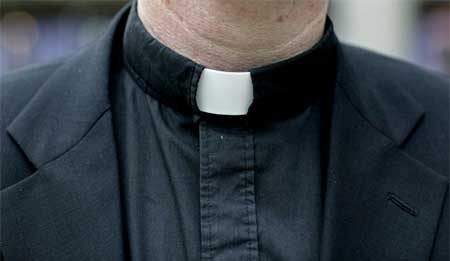
I went to see that woman in the hospital because I knew it was what I was supposed to do. I went because I am a pastor, but more importantly I went because I am a Christian. When I wear my clergy collar it is a constant reminder that I am called to act, think, live, and behave like a Christian. This collar has become my yoke. It sits uncomfortably around my neck as a constant reminder of who I am and whose I am. Im not proud to admit it but, sometimes, I need to wear it in order to live out my faith. Without this yoke around my neck it becomes too easy to fade into the crowd and forget my obligation to make God’s kingdom alive in the world. I am weak enough that I need to have something like this to help me remain faithful.

dogcollar

And so I wonder… I ask myself: Did I go see her because it was the right thing to do? Or did I go see her because that’s what you expect me to do?

When you wear something like this around your neck you begin to act differently. It is an inescapable demarkation that I have given my life to Christ to live a radically transformed life that often feels burdensome and heavy, unlike the easy yoke of today’s scripture.

Jesus calls the weary to come to him because his yoke is easy. A good yoke is one that is carefully shaped so that there will be a minimum of chafing for the animal. Jesus’ yoke therefore is one that is supposed to be kind to our shoulders, enabling us to carry the load more easily. But I will be the first to tell you, sometimes the weight feels unbearable.

Take my yoke upon you and learn from me.” In our discipleship we are not merely called to listen to Jesus’ words and reflect on them. In other words, our faith in not one that is limited to the mind. From Christ we are to learn not only to think, but to do. We gather in this place every Sunday to learn by listening and then living out God’s Word in the world. The yoke of discipleship, much like this collar, is not one that Jesus imposes on us, but one that he wore and continues to wear alongside us. 

When the weight of discipleship begins to feel too heavy for me, I call for Christ’s help with the load. I cannot do this on my own for I am a wretched man, full of sin and devoid of glory. Only through Christ’s love and grace am I able to take up my cross, which is to say I am able to take up my collar, and live as a Christian fully and deeply. 

Imagine what it would look like if we all started acting like Jesus here and everywhere. The burden of wearing a collar like this in the world is mine to bear. But think, if you can, how differently you would act if you wore one around your neck. That’s why I have placed 100 collars in our sanctuary this morning. Take one home with you, leave it in a place where you will see it regularly, and when you do, ask yourself, “how would I behave today if that yoke was hanging around my neck?”

Christ is on the other side of your yoke, helping you to carry this burden of being his body for the world; it is not easy being Christian. The cost of discipleship is one that will cost us our very lives. And just as Christ is helping to carry your yoke, so also are we called to help one another.

When we hear about the sufferings within our community we have been given the great privilege to help carry those who are in their deepest valleys while at the same time recognize that we need to be helped through our sufferings as well.

I count myself blessed to serve the needs of this church, to wear this collar that comes at a price, to take Christ’s yoke upon my shoulders because it is through God’s love, Christ’s mercy, and the Spirit’s presence through people like you that the yoke becomes easy and the burden is light.

Let us all put Christ’s yoke upon our shoulders, let us take up our collars to live as Christ’s body for the world, serving the needs of others while lifting up one another in faith.

Amen.

Go and Lo – Sermon on Matthew 28.16-20

Matthew 28.16-20

Now the eleven disciples went to Galilee, to the mountain to which Jesus had directed them. When they saw him, they worshiped him; but some doubted. And Jesus came and said to them, “All authority in heaven and on earth has been given to me. Go therefore and make disciples of all nations, baptizing them in the name of the Father and of the Son and of the Holy Spirit, and teaching them to obey everything that I have commanded you. And remember, I am with you always, to the end of the age.

with-you-always---web

I disliked the orthodontist. Every month I would see the appointment on the calendar and I dreaded moving closer and closer to the date. I often thought of excuses that could get me out of going, but I would inevitably have to return at some point to have my braces examined, shifted, and adjusted. Going to the orthodontist was dreadful because I knew, no matter what, I would walk out with my mouth hurting. Going to the dentist was fine, you get you teeth checked and cleaned, but the orthodontist… he was going to put pliers into my mouth and adjust all the little metal bits that were stretching all over my teeth.

When I think back on the orthodontist, it wasn’t so much the pain that I dreaded, but the entire experience. I can vividly recall the frighteningly exaggerated images of people smiling with dreadful teeth in a “before” image alongside of the perfectly straight and whitened smile in the “after” picture. I remember the orthodontist doing magic tricks in the waiting room in order to calm down the terrified children that only went to further their anxieties. But most of all, I remember the poster on the wall by the chair I sat in every month.

When it was my turn to take the seat, I would be propped back and told to wait for a few moments. From that position I could only see one thing, month after month, mocking me from the wall: The popular poem “Footprints

I am sure that many of you are familiar with the poem; the text is often set above an image of a beach or a sunset. But in case you’ve never been lucky enough to experience the poem I will share it with you now…

footprints-in-the-sand

Footprints-

One night a man had a dream. He dreamed he was walking along the beach with the Lord. Across the sky flashed scenes from his life. For each scene, he noticed two sets of footprints in the sand; one belonging to him, and the other to the Lord. When the last scene of his life flashed before him, he looked back at the footprints in the sand. He noticed that many times along the path of his life there was only one set of footprints. He also noticed that it happened at the very lowest and saddest times in his life. This really bothered him and he questioned the Lord about it, “Lord, you said that once I decided to follow you, you’d walk with me all the way. But I have noticed that during the most troublesome times of my life, there is only one set of footprints. I don’t understand why, when I needed you most, you would leave me.” The Lord replied, “My precious, precious child. I love you and I would never leave you. During your times of trial and suffering, when you saw only one set of footprints, it was then that I carried you.”

I disliked the orthodontist, but I loathed this poem. Month after month it sneered down from the wall as if it was mocking me and challenging me to accept my fate. What kind of twisted orthodontist places a poem about being carried through suffering on the wall by the chair with knobs, pliers, and wires with a bright light hanging above as if to interrogate you? But there was the poem. Even when I closed my eyes I could still see the text, the badly cropped image of the footprints in the sand, never leaving me alone.

As I grew older I continued to resent the poem, perhaps because of my mental association of the words with the orthodontist, but I also came to dismiss the poem in light of its cliche and trite claims. To me, it always sounded like the type of thing that an incompetent and bored pastor would offer a grieving family in the wake of a loss.

I can’t stand the poem. But what drives me craziest about it, is the fact that its true. Even with its overly simplistic explanation, with its trite metaphorical conclusions, with its cliche affirmations, it is absolutely true. In the midst of our sufferings it can be very difficult to experience God’s presence, but when we look back, when we reflect on the troublesome moments of life, we can see that it was God who carried us through. “My precious, precious child. I love you and I would never leave you. During your times of trial and suffering, when you saw only one set of footprints, it was then that I carried you.”

Make-Disciples

The end of the gospel according to Matthew. Mark ends abruptly with the women running from the tomb say nothing to anyone because they were afraid. Luke ends with the people constantly praising in the temple for all they had seen and witnessed. John ends saying the gospel could not contain everything that Christ said and did. But Matthew’s gospel ends with the promise of the never-failing presence of Christ. 

The eleven disciples went to Galilee, as they had been told to do, and there on the mountain the saw the risen Christ and they worshipped him, though some doubted. And Jesus told his friends, “All authority in heaven and on earth has been given to me. Go therefore and make disciples of all nations, baptizing them in the name of the Father and of the Son and of the Holy Spirit, and teaching them to obey everything that I have commanded you. And lo, I am with you always, to the end of the age.”

Even though they were in the presence in the resurrected Christ, even though many of them worshipped him, some doubted. There will always be those who question what they worship. Faith is never as perfect and clear as we like it to be; our ways our cloudy and the ways of God are a great and deep mystery. With worship and reverence, doubt is almost always waiting in the shadows, prepared to creep in at our most vulnerable moments.

However, doubt is not the opposite of faith. Show me a person without doubt and I will show you their lack of faith. Doubt helps fuel our faith because it encourages us to question and ponder. Doubt cannot be overcome with arguments, logic, speech, sermons, and reason; the best bible studies and preaching cannot erase our most fundamental doubts. Instead, we need to bring our doubts out of the shadowy recesses of our minds, and venture with them toward God in prayer.

And while some doubted, Jesus gave them their final commandment: Go therefore and make disciples. The church that is not going out, the church that is not on the move sharing the story, is not the trinitarian and believing church that Christ is talking to. We were not told to build a nice and beautiful church in the Shenandoah valley, show up for an hour on Sunday mornings, remember the same story over and over, surround ourselves with people who look, act, and talk just like us, and then return home until the following week. We have been told to GO! Share this incredible story with people who have ears to hear and eyes to see.

We often treat this building/sanctuary like our home. We find comfort here. I cannot tell you how many times I have heard some of you say, “When I sit in these pews, when I see the Good Shepherd stained glass, it feels like I’m home.” But my friends, if we hear anything that God is saying today it is this: home is on the go, home is where we meet God in others outside of this place. 

55896

Even when you feel like God is gone, when you feel lonely and abandoned by your Creator, God is still there. There are always days of faith, and days of doubt; days of peace, and days of war; days of joy, and days of sorrow. The end of Matthew reminds us that Jesus is still Emmanuel, “God with us.” Even when we share the story with someone and feel as if we have failed to convey the gospel, we are not alone. God is with us, even to the end of the age. We have been baptized into the Father, Son, and Holy Spirit, we have been brought into the protection and possession of God, we are incorporated into the church and have been surrounded by a new family that has vowed to keep us close, raise us in faith, and nurture us in love.

The disciples’ journey to share the good news with the nations was not an easy adventure. The books of Acts reminds us again and again how often the disciples were harassed, ignored, and persecuted. I am sure that, at the ends of their lives, many of them wondered why God had abandoned them at their worst moments. Perhaps some of them were fortunate enough to hear those familiar words: “My precious, precious child. I love you and I would never leave you. During your times of trial and suffering, when you saw only one set of footprints, it was then that I carried you.”

Many years ago a man named Samuel Morrison spent 25 years of his life as a Christian missionary in Africa. Maybe, while a younger man, he had heard the words that we read today: Go therefore and make disciples of all nations, baptizing them in the name of the Father, Son, and Spirit and teaching them to obey everything that I have commanded you. Maybe he felt the call of God to do exactly that and left behind the familiarity of home to be Christ’s body for the world.

After 25 years of giving it his all, it was time to return home. There had been days of great success where Samuel had brought many to the knowledge and love of God, but there were also days of great suffering and fruitlessness. When it came time to go home, he boarded his ship and bid farewell to his missionary field of Africa.

And so it came to pass that Teddy Roosevelt was on the same ship with Samuel Morrison returning from a three-week hunting adventure in Africa. Whether they knew about one another’s presence or not, they both sailed across the Atlantic back to the United States.

When the boat arrived in New York City, Samuel was thrilled to discover countless individuals who had gathered at the port with banners and signs echoing cries of “welcome home!” He even noticed a band playing on the dock in celebration of a successful voyage. Samuel’s spirits were high and he truly felt the love of God in his soul.

However, when Samuel made his way down the steps off of the ship, he was disappointed to discover that the crowds, and the signs, and the band were all for Teddy Roosevelt. Thousands had gathered to welcome home a man who had been hunting and killing animals for three weeks; Samuel Morrison had spent 25 years sharing the Word of God, and no one was waiting for him.

He weaved his way in and out of the crowd, disappearing into the shadows, and was quickly lost in the multitudes. Samuel Morrison felt abandoned by God. He found himself walking through the empty streets and alleys of New York praying and disappointed in God. “Why God? Why have you left me alone? Where are you now? I did what you called me to do. I left everything behind to follow your Son and this is what happens when I return home? I gave 25 years of my life for your kingdom! Where are you!?”

Silence. Samuel Morrison walked in silence after screaming out to the Lord and demanding to know what had happened. He continued to walk alone until he heard a small voice, as light as the wind: “I am right here my Son, and you are not home yet.

Amen.

How Did You Two Meet? – Pentecost Sermon on Acts 2.1-13

Acts 2.1-13

When the day of Pentecost had come, they were all together in one place. And suddenly from heaven there came a sound like a rush of a violent wind, and it filled the entire house where they were sitting. Divided tongues, as of fire, appeared among them, and a tongue rested on each of them. All of them were filled with the Holy Spirit and began to speak in other languages, as the Spirit gave them ability. Now there were devout Jews from every nation under heaven living in Jerusalem. And at this sound the crowd gathered and was bewildered, because each one heard them speaking in the native language of each. Amazed and astonished, they asked, “Are not all these who are speaking Galileans? And how is it that we hear, each of us, in our own native language? Parthians, Medes, Elamites, and residents of Mesopotamia, Judea and Cappadocia, Pntus and Asia, Phyrgia and Pamphylia, Egypt and the parts of Libya belonging to Cyrene, and visitors from Rome, both Jews and proselytes, Cretans and Arabs – in our own languages we hear them speaking about God’s deeds of power.” All were amazed and perplexed, saying to one another, “What does this mean?” But others sneered and said, “They are filled with new wine.”

Acts 2:1-4. When the day of Pentecost came. Pastel & pen. 26 May 2012.

I had spent an entire week with countless young Christians from all over the world at a monastery in Burgundy, France. For most weeks during the summer, Taize attracts upwards of 5,000 young Christians dedicated to exploring their faith through prayer, service, and singing. Waking up in a tent every morning, I would trudge across the dew filled grass passing neon tents filled with 20-somethings snoring away as the sun came up over the horizon. Each little campsite held clues as to the nationality of the residents: the occasional German flag, a water bottle covered in French writing, an abandoned tee-shirt with a hispanic wrestler flexing on the front, I even saw a cricket bat one morning. As the crowds made their way to the sanctuary, it was impossible to eavesdrop or understand what anyone was talking about because no one was speaking English.

Just past the interior door to the incredibly large sanctuary, there were buckets filled with hymnals organized by language. On our first morning I was surprised to discover that there were more “English” hymnals left in the buckets than any others, because Americans were part of the minority of the gathered body.

Taize Altar

Taize Altar

We sat on the floor surrounded by other young people who were still half asleep fumbling through our hymnals before the service began. Suddenly, up at the front of the massive building, a simply lit sign displayed three numbers “312” and as if we were being controlled by a single operator we all flipped our pages to the corresponding hymn. Without any musical accompaniment, without any choral direction, the hymn began. I, of course, sang the hymn in English as the words were displayed on the page, but when I made my way to the end of the song, everyone continued singing. We were not told how many times to repeat the hymn, but it went on and on until in ended naturally at the same moment. It was unlike anything I had ever experienced. When I had finally caught on to the rhythm of our singing, I closed my eyes and began to hear all of the other voices singing faithfully in their native tongue. Without a doubt, that moment as I sat on the floor of a enormous sanctuary in France, was the closest I have ever been to experiencing the day of Pentecost in my own life.


The community of faith had recently witnessed Jesus’ ascension into heaven and then retreated to the upper room in Jerusalem to devote themselves to patience and prayer. For ten days they waited, as they had been told to do, waiting for something to happen. We are given very little in Acts about what they did those ten days but we do know that rather than taking matters into their own hands, instead of getting organized and venturing forth with pamphlets about “what God can do for YOU”, they waited for God to make the next move.

The day of Pentecost, what we celebrate and remember today here in church, was the first big thing to happen to the disciples after Jesus had left them. Like the start of any life or story, the beginning has major ramifications for how the rest will turn out. Just as with Jesus’ birth in the manger in Bethlehem to a virgin, so too the details surrounding the birth of the church would come to define the rest of the story for Jesus’ followers.

CELPentecost[1]

As the morning broke, while the disciples were all together in one place, an eruption of sounds and a wind from heaven filled the entire house. Things were coming loose and breaking open, new realities were taking shape, and the life of discipleship was changed forever. The wind swirled around the gathered people, the same wind which on the very first morning swept across the dark waters and brought order out of chaos. The wind of Genesis was again bringing something new to life.

Divided tongues, as of fire, appeared among them and each of them were filled with the Holy Spirit and began to speak in other languages, as the Spirit gave them ability. What a strange and profound moment this must have been! After days of waiting in prayer God had showed up and quickly put things into action. Though the Spirit brought order out of chaos in Genesis, this must have felt like the opposite. I imagine the disciples running about within the house exclaiming great things in languages they themselves had never heard before. Something this incredible and inexplicable could not be contained to one house alone, and a crowd quickly gathered and was bewildered by the indescribable moment.

Jews from all over had gathered in Jerusalem when this took place and they began to hear these nobody disciples speaking in the native languages of all the people. Amazed by this, they questioned how it was possible, and quickly decided to blame it on an excessive use of alcohol.

The crowd’s demand for an answer was a cue for one of the disciples to stand and speak. And who, among the disciples, could have imagined that Peter would have been the one to do so? Peter is the first, the very first to lift up his voice and proclaim proudly and faithfully the word that he was unable to when Jesus had been arrested. The man who had been so quick to deny Christ three times, is the one who stepped forward to share the glory of God’s kingdom with all who questioned this miracle.

Peter preached a sermon, he shared the story of God in Christ, all by the power of the Spirit: “listen to what I have to say: Jesus of Nazareth, a man attested to you by God with deeds of power, winds, and signs that God did through him among you, and you yourselves know — this man, who was handed over to be crucified and killed, was raised by God, having been freed from death because it was impossible for him to be held in its power…” Peter told the story that he had witnessed and thus helped give birth to the church that we now participate in today.


I have been here at St. John’s for almost a year. The last twelve months have been filled with changes, excitement, new life, and joy. I give glory to God for sending me to a place with such faithful people who have helped me to see God in new and wonderful ways, while also allowing me to do the same. 

I knew that, upon arrival, one of the most important things I could do would be to learn the collective story of the church. I have met with many of you to learn about your lives and your stories in such a way that I could learn about our community that gathers here for worship. When I meet with couples I almost always ask the same question: How did you two meet? I ask this question because how two people met says a considerable amount about their relationship, and most people love to tell that particular story.

I can tell you with joy this morning, that many of you met in wonderful and joyful ways. I have had the privilege to hear about a couple who met on a Greyhound bus traveling to Radford, VA over 65 years ago. We have a couple who met at a brewery when the young woman complimented the young man on his beard. Or there’s the couple who met in a spousal grief group after having both been divorced. We even have a couple who met here in church and the boy asked his brother to the get the number of the girl so he could ask her out later.

I love asking how a couple met because people can tell the story with all the important details. They can remember the outfits they were wearing, the weather outside, and the other people who were present. They can describe with vivid clarity that first smile they saw, or the way their fingers felt when they wove them together for the first time. And frankly, I love asking the question because it is hilarious to watch men and women argue about the details of a meeting from their own perspectives.

(Photo Credit: Jill Nicole Photography)

(Photo Credit: Jill Nicole Photography)

But sometimes I think about the gospel story and I wonder how that connects us. I freely admit that when I ask couples about how they met I am not expecting anyone to start talking about Moses or Abraham or the Holy Spirit. But the Gospel story is one that we should know just as well. Many of you have been attending church for your whole lives, and even those of you who have recently started to attend, have heard the story of God in Christ week in and week out. The story that we find in scripture is inescapable because it is ours. 

I ask people about who they met because it teaches me about whom they are. It helps to reveal parts and aspects of personality that would otherwise remain hidden, it sheds light on what brings people joy and how they connect with others. But in the same way, the Gospel is who we are. It is as much a part of our personalities and joy and interconnected as the story about how we met our spouses.

When Peter stood in front of the crowd on the day of Pentecost he told the story of God in the world through Jesus, his friend and Lord. With confidence and bravery he proclaimed the same story that we tell here in church every week. We should know the story that Peter shared, we should be able to tell it with the same clarity and detail and faithfulness. Imagine how powerful the gospel story would be, if you knew it and believed it and experienced it in the same way you met your spouse.

The gospel is something worth sharing. I don’t mean in the sense that you should start knocking on people’s doors to ask: “Have you heard about our Lord and Savior Jesus Christ?” But I want to question our willingness to keep telling this wonderful and life-giving story.

After all, how would anyone know whether or not you’re a Christian?

Maybe you wear a cross around your neck, or you pray before your meals at restaurants, or you tell people about what fun activities are going on at your church… But seriously, how would anyone know if you’re a Christian?

We can tell the story of God’s interaction in the world through ways that are both faithful and fruitful. Like those first disciples the Holy Spirit has been poured on to us in such a way that we are now filled with the Spirit and have been given gifts. The disciples were given the power to speak in numerous languages in order to convey the gospel to the multitudes. Today we have been given the power to meet people where they are in order to be Christ’s body for the world.

Imagine the next time someone started to tell you about a recent tragedy, you responded by asking to pray for them. Or the next time you hear about a family thats having a difficult time adjusting to a new life in Staunton, you invite them over for dinner out of kindness rather than expectation. Or the next time you believe that someone has been treated unjustly, you speak up for them rather than expect someone else to do it. And when you’re asked why you have done these things, answer truthfully and confidently: “I am a disciple of Jesus.”

The Spirit that empowered those disciples still empowers us. Like the cacophony of languages that were all singing to the Lord at Taize, we are called to raise our voices, to go public with the good news. As we see with the way Peter proclaimed the story on behalf of the church, we also have something to say, we need only the courage to stand up, open our mouths, and begin.

Amen.

Let God Speak – Sermon on Genesis 1.1-5

Genesis 1.1-5

In the beginning when God created the heavens and the earth, the earth was a formless void and darkness covered the face of the deep, while a wind from God swept over the face of the waters. Then God said, “Let there be light”; and there was light. And God saw that the light was good; and God separated the light from the darkness. God called the light Day, and the darkness he called Night. And there was evening and there was morning, the first day.

The20Creation23123

I was sitting in a room full of pastors and priests when I made a promise to myself: Before I finish my first year of ministry I will preach on Genesis 1. Today is the day that I make good on that promise.

I had been helping a church in Bryson City, North Carolina when I was invited to participate in a weekly lectionary group. Every Monday morning the clergy people of Bryson City would get together to talk about the readings for the following Sunday. We met at the large local Baptist Church, ordered breakfast to be delivered, and then we would take turns reading the scriptures and share what we thought we would preach about.

Without a doubt, this was one of the most profoundly rewarding experiences of my life. Week after week I heard from clergy of all different denominations (Presbyterian, Baptist, Catholic, Methodist, etc.) as they wrestled with God’s Word and how to proclaim it from very different pulpits to very different people.

0f0f0f-uzz5pn

It came to pass that one hot morning in the middle of July I found myself surrounded by pastors as we read the texts out loud. The lectionary always has four prepared readings for each Sunday on a three year cycle: a reading from the Old Testament, the Psalms, an Epistle, and a Gospel. I don’t remember what the other readings were that morning, but I do remember that I was asked to read Genesis 1. In the beginning God created the heavens and the earth…

When I finished, as was our custom, we waited for individuals to speak up about what they planned to do with the text during worship. Silence filled the room. So I decided to ask the obvious question, “Is anyone preaching on Genesis 1 this week?” The silence remained. I remember thinking “How strange is this? We’re talking about the first lines of scripture in the bible and no one is preaching on it in Bryson City this week.” It was clear that some of the clergy wanted to move on to a different reading but I felt compelled to ask another question, “Have any of you ever preached on Genesis 1?” One by one they confirmed my suspicion; not one of those pastors, priests, ministers, or preachers had ever delivered a sermon on the beginning of Genesis.

Now I know that they quickly propelled the conversation in another direction but I silently began calculating from my chair. In that room we had over 100 years of preaching represented. Over 100 years of preaching, more than 5,200 sermons, and not one of them had ever proclaimed the beauty of God’s creation from Genesis.

So I made a promise to myself that very morning: Before I finish my first year of ministry I will preach on Genesis 1.

Why do you think they chose to ignore Genesis 1? What makes this text so unappealing to proclaim in church?

557046

The main thrust of the text is contained within these first words: In the beginning God. Here we discover our faith in the foundation of all life, that God and God’s creation are bound together in a distinctive and delicate way. This profoundly simple yet unimaginable claim is the bedrock for everything that follows throughout the rest of the Bible. God and his creation are connected powerfully together for all time.

How does God bind creation together? The text is clear: In the beginning the earth was formless and darkness covered the face of the deep while a wind from God swept over the face of the waters. Then God said, “Let there be light”; and there was light. And God saw that the light was good; and God separated the light from the darkness. God called the light Day, and the darkness he called Night. And there was evening and there was morning, the first day.

Notice: with this description of creation we need to see that this text is NOT a scientific description, but instead a theological affirmation. It has been urged for centuries that Genesis 1 is a historically analytical account of what “actually happened.” But that kind of scientific, descriptive, and forever definitive reporting is foreign to the text and to the world of the Bible.

God’s Word is not a textbook. The bonding of creation cannot be explained or analyzed. It can only be affirmed and confessed.

Many who have struggled with their faith want to know the answer to “how?” But, when reading from Genesis, we discover that the convictions expressed in the scripture did not come from sight, recordings, and measurements. Whoever wrote about the creation in Genesis 1 was not standing by when God created. Our Lord is not an object to be perceived and measured like other objects in the world. It is by faith that we affirm this creation, not because we saw it and observed it and measured it, but that our lives and relationships with God affirm that goodness and interconnectedness of our lives with the God who created life.

Perhaps the pastors reluctance toward preaching this text was born out of the fear that comes with reconciling Genesis 1 with scientific claims about the beginning of the universe. Maybe they ignored this text because they were unsure how to explain the way God created. However, the job of preaching is not to explain, but to proclaim

At the heart of Genesis 1 is mystery, and sometimes mysteries cannot be explained. Yet, in proclaiming the mystery, in faithfully acknowledging the text, we can have our eyes and ears opened to the great question not of “how?”, but of “why did God create?”

The words ‘create’ and ‘make’ are used prevalently here in Genesis 1. God created the heavens and the earth, God made the dome and separated the waters, God created the creatures in the water and the birds of every kind, God made the wild animals of earth, God created humankind in the image of God, etc. The actions are important but the dominant mode of creation takes place in speech. God spoke creation into existence. The way of God with his world is the way of language. God speaks something new that never was before. God is the author and orator of life.

God speaking life into existence cannot be explained by the ways of the world, yet we are all here because God spoke life into all of us. Genesis 1 makes the great and wonderful theological claim that a new word has been spoken that transforms reality. The word of the Lord that shaped creation is an action which alters reality forever.

God created all things through God’s word, and his creation did not stop with the creation of humankind. God continues to speak new words into existence every single moment. Every infant child is a word spoken by God, every new blooming flower, every river that flows, every sun rise and sunset are caught up in God’s continued commitment to speak to us, through us, and for us.

God is always speaking something new and fresh into the world, we need only stop and listen to let God speak.

5613583932_e7cb9a3bbc1

276 years ago yesterday, John Wesley’s life was changed forever. Wesley spent most of his young life believing that nothing could save him from God’s wrath other than strict obedience and keeping all of God’s commandments constantly. He read voraciously, served unconditionally, loved immeasurably, and somehow he never felt or experienced God’s love in his own life. He traveled to the British colony of Georgia to serve the needs of the Anglican church and wrote about his experience later saying that after two years of spreading Christianity he still was no closer to discovering the love of God. He wrote: “Why that I went to America to convert others, was never myself converted to God?”

When Wesley returned to England he was no closer to finding what he had been searching for. He continued to fill his life to the brim with service and preaching to the point that he shut out any other influence.

However, on May 24th, 1738 Wesley unwillingly attend a Moravian society meeting in the evening when Martin Luther’s preface to the letter of Romans was being read. While the reader was describing the change which God works in the heart through faith in Christ, John Wesley felt his heart strangely warmed. He experienced for the first time a trust in Christ, Christ alone for salvation. An assurance was given to Wesley that Christ had taken away his sins and saved him from death.

Wesley had a difficult time explaining exactly was happened to him that day; it was beyond his ability to describe in such a way that it could be measured and known. But to him, it was as real as life could get. From that moment everything changed in his life and his commitment to the love of God in the world was the seed that blossomed into what we now call the United Methodist Church.

9373

When I was in Boy Scouts I had the opportunity to hike throughout northern New Mexico at a place called Philmont. Toward the end of our 100 mile hiking adventure we gathered one evening in a white pine forrest near the top of Mount Phillips. We spread apart to spend time in silence to reflect on our time in the wilderness. As I sat there with the wind blowing the grass I was overwhelmed by the sheer beauty and wonder of God’s creation. I had already witnessed perfect sunsets and flowing rivers, but for whatever reason that night was the first time that I began to witness the depth of God’s love through his creation. 

Like Wesley, I believe that I was opened to the wonder of God because I had finally stopped trying to fill my life with so many other distractions. It was only when I stopped to let God speak, that I heard God’s calling of creation.

We can fill our lives with distractions and information. We can read all the magazines and books that explain how God created the world, whether in seven literal days or in seven ages of time. We can listen to pastors and preachers explain away the creation of life with simple metaphors and memorable one liners. But the truth of God’s creation can only be discovered in letting God speak.

Creation was not a one time, one moment, event. Creation continues to take place every moment of every day. God’s word is alive and filling all things with glory around us.

In the beginning, God. Can you think of anything more comforting than the fact that God has been at the beginning of all things? Not just the creation of life, but God was there when you came into being, God sits at the very beginning of each and every one of us. At the inception of every relationship, every idea, every belief, every smile, and every laugh God is there.

God is, and because God is, we are.

It took me a long time to learn to let God speak. And frankly, I’m still not very good at it. But until I began to try to quiet myself, to learn to listen, God’s Word was limited to words on paper. Creation came alive for me when I stopped long enough to realize that God’s love for us, in creation, is beyond my ability to fully grasp, comprehend, or explain. There is an immeasurable beauty in standing before something that you cannot fully know. There is wonder in letting God speak something new and fresh into your life. There is peace that comes in hearing the Word become incarnate in the way we live.

Genesis 1 is powerful and beautiful. It is strange and unknowable. It conveys the depth of God’s love in a way that we can never explain. It refuses to be compartmentalized, rationalized, and sterilized. Instead, its delightfully mysterious, curious, and glorious.

In the beginning God spoke life into creation, and God continues to do so every moment.

Amen.


Getting Stoned With Stephen – Sermon on Acts 7.54-60

Acts 7.54-60

When they heard these things, they became enraged and ground their teeth at Stephen. But filled with the Holy Spirit, he gazed into heaven and saw the glory of God and Jesus standing at the right hand of God. “Look,” he said, “I see the heavens opened and the Son of Man standing at the right hand of God!” But they covered their ears, and with a loud shout all rushed together against him. Then they dragged him out of the city and began to stone him; and the witnesses laid their coats at the feet of a young man named Saul. When they were stoning Stephen, he prayed, “Lord Jesus, receive my spirit.” Then he knelt down and cried out in a loud voice, “Lord, do not hold this sin against them.” When he had said this, he died.

the-stoning-of-stephen

I was standing in front of a packed lecture hall, talking about Jesus according to the gospels, when I began to notice that the crowd was turning against me. For the previous three weeks I had stood in the front of that same room, a brilliantly bright powerpoint displayed on the screen behind me, making my way through the original Greek text of the gospel according to St. Mark. Each week we focused on a different element of Mark’s writing, comparing his gospel with the others, and generally reflecting on how this gospel still speaks fresh and new words into our lives.

It had seemed as if everyone was on board with what I was talking about, until the conversation moved to the cost of discipleship. I recognize now that I probably went to far, but at the time I felt the truth was worth exploring.

531711_3548371078945_1217125254_n

This is what I said: “In the gospels, particularly Mark, Jesus makes it very clear that following him, taking up our own crosses, being a disciple, will cost us our very lives.” Many people in attendance nodded. But then I continued, “Most of us here have no idea what that means. We sit in the comfort of our homes here in Michigan, sure we hear about all the bad things happening in the world, and even the bad things happening down the road in Detroit, but our lives will never be taken for our faith. We exist in such comfort with our faith that we can no longer even imagine what it would mean to give our lives for Christ, the cost of discipleship for us doesn’t cost very much at all.” “Well excuse me young man,” one of the women began, “but I go into downtown Detroit every week to serve food and give away clothing. My life is on the line for Christ every seven days. Don’t lecture me about the cost of discipleship.” This is when I should have stopped, apologized, and moved on, but I couldn’t help myself. So I asked her, “Do you go downtown every week because you believe thats the most and the best you can do as a disciple? Or do you go downtown with food and clothing every week because you feel guilty?


The early church had a problem. While the disciples were increasing in number, an argument developed over the distribution of food. Like us modern Methodists, a major conflict erupted not over proper theology, or reverence, but instead who was getting the appropriate amount of food. The twelve got together and asked for seven leaders to come forward in order to help with the organization of the early church, and to faithfully distribute the food among all the people. Stephen, described as a man full of faith and the Holy Spirit, was one of those chosen seven. 

In a short amount of time Stephen began to do great wonders and produce signs among the people. Once he stepped into the limelight of the early church, he rested under the microscope of many leaders and elders of the synagogues who argued with him. The leaders instigated some others to raise charges of heresy against Stephen and he soon found himself standing before the high-priest in order to defend his words and actions.

What followed is one of the most concise and deliberate retellings of the entire salvation story of God with God’s people. Stephen’s speech contains remembrances of Abraham, Isaac, Jacob, Joseph, Moses, and the prophets. He weaves the story in and out of the major moments; the beginning of the covenant, the flight to Egypt, Moses’ calling, the delivery from slavery to the Promised Land, the commandments being given on Sinai. In just a few short paragraphs Stephen perfectly encompassed the Old Testament for the high priest.

Though very descriptive, Stephen committed no blasphemy in his speech. He fairly repeated that which we have detailed for us in the scriptures, but before he finished speaking he had one final message to deliver: “You stiff-necked people, uncircumcised in heart and ears, you are forever opposing the Holy Spirit, just as your ancestors used to do. Which of the prophets did your ancestors not persecute? They killed those who foretold the coming of the Righteous One, and now you have become his betrayers and murderers. You are the ones that have received the law as ordained by angels, and yet you have not kept it.

It was only after hearing these words that the people became enraged and ground their teeth at Stephen. While they began to torment him, he looked up and saw the glory of God and Jesus standing along the right side, and he declared this triumphantly to the people. But instead of listening, instead of looking up to see what he could see, they covered their own ears and with a loud shout rushed forward to grab him and take him out of the city. While they stoned him, he prayed, “Lord Jesus, receive my spirit.” And with his final breath he cried out in a loud voice, “Lord, do not hold this sin against them.” When he had said this, he died.

saint-stephen-the-martyr-23

Stephen’s speech to the high priest and those gathered sealed his doom. Did he speak the kind of blasphemy against Moses and God like he was accused of? Nope. But Stephen went too far when he claimed that Jesus was at the right hand of the Lord, ready to rule. Stephen merely affirmed the same thing we claim every week when we stand and affirm the Apostles’ Creed, yet when he did it, it cost him his life. 

Some scholars and theologians claim that the climax of this episode in the book of Acts is Stephen’s death, when in fact the defining moment is the exaltation of Christ. Surrounded by his accusers and killers, Stephen continues to assert that Jesus is sitting at the right hand of God, that he is the long awaited Messiah already changing the world.

Jesus is there with Stephen at the final moments of his life, and how fitting considering the fact that Stephen utters the same words that Christ did at his own death. While the stones were flying through the air, Stephen’s prayer was not for deliverance, but a declaration of trust. Not, “Lord, save me!” but “Lord, receive my spirit.” His prayer is one that looks forward, not backward. His prayer was for his enemies, and not himself.

At his death, Stephen did what all of us are called to do in every moment of our lives: he acted like Jesus. He was serene while everyone else was going crazy; he was forgiving while the crowds were vindictive; he prayed while the people acted as if God was not among them; he loved when he saw nothing but hate; he trusted the Lord when everything was claiming the contrary; he kept on hoping when there seemed nothing left to keep hope alive. All of this to tell the truth to the high priest and the crowd. All of this to die for what he believed in. All of this as the cost for his own discipleship.

What happened to Stephen is paradigmatic for what the church was like. Thousands upon thousands of Christians have given their lives in order to speak the truth of God’s reign in the world.

In the United States we have “freedom of religion.” This was instituted during the foundation of our nation and has secured the right to practice religion, regardless of orientation or denomination. For Christians, the freedom of religion means that we are free to exercise our faith in whatever ways necessary so long as we do so within certain limits, as long as we do not become fanatical. We can pray as a family at public restaurants so long as it is not too loud to disrupt the other patrons. We can teach our children to turn the other cheek and love their enemies so long as we are still willing to let them serve in the military. We can talk about controversial issues in church so long as we limit those conversations to this building.

Yet the story that we read today, the remembrance of Stephen’s final moments, reminds us practitioners of polite, civil, and calculated religion that once there were Christians who readily and joyfully parted with possessions, family, friends, even life itself to remain faithful.

Some might call Stephen fanatical and crazy (after all he was willing to give his live for his faith) but he is presented as a very rational person who died for the same faith by which he lived.

When I stood in front of that crowded lecture hall, talking to the Methodists of Birmingham, Michigan, I could sense their desire to be affirmed in their faith. They wanted me to believe that they were willing to give their lives for Jesus, but the truth is, most of them, and most of us here, will never be in a situation like Stephen’s. Christianity has become so complacent and accepted within our culture that we no longer feel the need to be radical and controversial when considering the ways of the world versus the ways of God.

Our faith used to be a movement. The early church used to be attacked, arrested, and silenced for their dedication to the Word. The first methodists used to be ridiculed for their methodical dedications to spiritual disciplines, feeding the poor, and befriending the outcasts.

What would it take for someone to ridicule you in your faith? I’m not saying that we are all called to stand trial for our God and give our lives like Stephen, but instead we need to ask ourselves if we are living up to the potential of faith that God sees in us.

Not all of us can be Stephens, but we can all be Christians. We can all speak the truth of what God has done for us. We can reclaim our commitment to changing the world for the kingdom of God. We can discover our faith in God by opening our eyes to the kind of faith that he has in us. How far would you go to demonstrate your faith in the world? What would it take to start ruffling people’s feathers here in Staunton by living as Christ’s body?

Speaking the truth can be the most difficult thing in the world, but at the same time it can also be the most faithful thing in the world. Perhaps you know someone who has, for too long, relied on alcohol to fill an emptiness in their lives but you’re too afraid to saying anything. Maybe you know someone who treats their spouse horribly and you’re unsure how you can help the situation. Perhaps you’ve seen someone embarrass or harass their children in public. Or maybe you need to be honest with yourself about something you need to change in your own life.

Stephen was willing to speak the harsh truth to a people who desperately needed to hear it. Stephen was prepared to give his own life for a man he barely knew that died on a cross and was raised again. How far are you willing to go? Amen.


My Cup Runneth Over – Sermon on Psalm 23

Psalm 23

The Lord is my shepherd, I shall not want. He makes me lie down in green pastures; he leads me beside still waters; he restores my soul. He leads me in right paths for his name’s sake. Even though I walk through the darkest valley, I fear no evil; for you are with me; your rod and your staff – they comfort me. You prepare a table before me in the presence of my enemies; you anoint my head with oil; my cup overflows. Surely goodness and mercy shall follow me all the days of my life, and I shall dwell in the house of the Lord my whole life long.

mycuprunnethoverwater

The 23rd Psalm. Many of you know that I am far more eager to preach on the lesser-known texts of scripture, than I am to preach on those that are remarkably familiar. I decided months ago that after my wedding and honeymoon, Psalm 23 would be the first text I preached on, precisely because it was familiar. All things considered, I have been very busy the last few weeks, and I thought that it would be easy to prepare a sermon on this beloved text; I was so wrong.

When we proclaim one of the best known texts from the Bible, there is an incredible amount of baggage that comes with it. If I wanted to preach on something from Obadiah or Nehemiah, I could say a whole lot about whatever I wanted because so many of us are unfamiliar with the texts, myself included.

psalm23-lg

But when you hear Psalm 23 read aloud, many of us immediately have a memory or a determined understanding of what the text means. Its familiarity makes it challenging to proclaim because we’ve all heard it before; The Lord is my shepherd, I shall not want…

What is it about this psalm that makes it so beloved? Perhaps many of us were taught to memorize the psalm when we were younger. Maybe some of us can remember our mothers and grandmothers whispering it by their bedside before they went to sleep. Is it the simplicity, the ease for memorization? It the use of this psalm in contemporary pop-culture? Besides the Lord’s prayer and John 3.16, this is perhaps the best known of all the Christian scriptures.

I believe what makes this psalm so compelling is not so much its brevity, but instead its realism. This is no happy-go-lucky, “everything is awesome,” kind of passage. Rather, it faithfully faces the dark realities of what life is really like, while at the same time calls us to honestly remember the delights of life. It has become so popular and beloved that many of us can recite it from memory, but have lost touch with what the passage is saying. Every verse contains a wealth of theological treasure waiting to be uncovered and enjoyed.

Good

The Lord is my shepherd, I shall not want. We of course remember immediately that Christ is the good shepherd, as our wonderful stained glass window portrays. God in Christ is the guardian of the church. The great I AM shepherded the Israelites through the wilderness, delivering them from slavery and captivity to the promised land. The Lord was the shepherd to the prophets who proclaimed the Word to the lost Israelites. God helped shepherd Christ throughout Galilee, even to the cross. Our Father was the shepherd to the disciples as they spread the gospel throughout the world. The great shepherd is now with us, guiding and keeping watch over all that we do as we witness to God’s love in the world.

God guards the flock as a whole, the sheep have been brought into the fold. Each of us are one of God’s sheep; we are safer if we stay connected with one another. If the church begins to stampede in one direction, some will be inevitably lost. If the church divides into factions, we will be like a panicking flock of sheep. We listen for the great shepherd who leads us.

He makes me lie down in green pastures; he leads me beside still waters; he restores my soul. In our modern lives we seem to have lost the power to relax; we no longer know what it means to observe sabbath time in our lives. We succumb to the power of stress that overcomes us regularly, and lose the energy to live vibrant and fulfilling lives. So, God, father of all mercy, bids us to relax, to observe some sort of sabbath in our lives, and to find rest. However, notice that rest is not a end in itself, God restores our souls through rest so that we can continue on our faithful journeys. Life is filled with movement, following the paths of righteousness.

He leads me in rights paths for his name’s sake. Even though I walk through the darkest valley, I fear no evil; for you are with me; your rod and your staff – they comfort me. God leads us, as the shepherd, on the right paths. So much of the vital moments and decisions in our lives do not come from our choosing; we do not determine the time of our birth, the kind of parents that we will have, the culture in which we find ourselves, the opportunities that “come our way.” At times life is beyond our control, and that is a good thing! To so desperately seek control of our lives will eventually end in disappointment. In order for God to be the shepherd of our lives, we have to let him into our hearts to shepherd us and guide us on the paths of righteousness. We need to let God be in control. It is only when we let go that we can faithfully proclaim, “even though I walk through the valley of the shadow of death, I will fear no evil.” It is only when we let go that we can know that God is with us.

You prepare a table before me in the presence of my enemies; you anoint my head with oil. Like any good shepherd, God has brought his flock back home to safety, brought us to his table, just like the table that has been prepared for us here. Some of our truest enemies might be with us here in church this morning, but God has prepared the table for you so that you can feast with friend and foe. 

lord__s_supper_by_bclary-d37hhzp

And so now we come to an incredible collection of words that encompass God’s goodness in our lives: my cup runneth over

How often do we take time to look back and reflect on what God has done for us? How much time do we spend in prayer thanking God for all that he has done? Can we faithfully declare “my cup runneth over…”?

10256438_10203577672981569_6139148774861837965_o

Today, of course, is Mother’s Day. I am blessed and privileged to have a mother who has cared for, and loved me, every day of my life. A mother who is still so accustomed to attending swim meets, baseball games, and band concerts, that she will drive two and a half hours to attend church with us here at St. John’s. A mother who participated in my life and activities, but gave me the freedom to grow and experience life independently. A mother who sacrificed her own needs again and again because she loved me. My cup runneth over. 

Some of you might not have had a mother like mine, some of you may have lost your mother, some of you might have grown up without a mother, but look around you. The call of the Christian is to be motherly to all that have gathered here. Though your mother might not have been like mine, I know that each of you have mothers in Christ that are here with us today. Our cups runneth over.

980415_10201896436508405_1440994831162466171_o

On April 27th I stood at the front of Aldersgate UMC in Alexandria, VA, waiting for Lindsey Rickerson to walk down the aisle with her father. I cannot tell you how nervous I was. I know that I was leaning from side to side, standing before all of my family and friends, my nerves attempting to get the better of me, but the moment Lindsey appeared at the back of the sanctuary I felt God’s presence surround me with a sense of calm I have rarely experienced. I covenanted with God and Lindsey to love, honor, and keep her with all that I am for the rest of my life. I am blessed to be her husband. Lindsey has changed my life for the better on numerous occasions, she challenges me to be a better man, and lives out God’s call on her life every single day. My cup runneth over. 

Some of you might not have a spouse like mine, some of you may have lost yours, or never felt called to be married in the first place, but today and for all days I get the joy of sharing Lindsey with you. We are all called to love one another in such a tremendously wonderful way that people like Lindsey can be and live for those that have gathered as the body of Christ. Our cups runneth over.

1610046_10152482968867577_1866027851814592445_n

After the wedding, while Lindsey and I celebrated at the reception. I had countless staff members continually refill my glass to the degree that I literally learned what it meant for my cup to runneth over. I looked around the reception hall and saw joyful faces that conveyed endless memories of how much my life has been shaped by others. In that room I witnessed God’s incredible goodness manifest in the lives of so many that I have been blessed to call my friends. My cup runneth over.

Some of you might not have the opportunity to sit in a room surrounded by droves of friends and family to congratulate you on the newest development in your life. You might feel lonely and isolated in your current life situations. But look around the sanctuary. Being one in Christ means that we discover our newest and greatest friendships here at church. Christian friendship and fellowship is what made the church so appealing in the beginning, and it rests at the very fabric for what it means to be the church today. I look out from this pulpit and I see the friendships that will sustain all of us through the coming years. Our cups runneth over.

The 23rd psalm is filled with such vivid and realistic imagery, applicable for our daily living. The great shepherd tends to his sheep, keeping them close and protecting them from harm. Our God compels us to find rest so that we can continue on our journeys of faith. The Lord invites us to this his table so that we might feast on heavenly food and meet the divine. But today, the Lord asks us to look on our lives and remember our blessings.

10172672_10104460766255513_8430566301283982547_n

Because our blessings are everywhere; from the tiniest details of a perfect sunset, to a incredible wedding and the joining together of two people. God has blessed our lives over and over again. We have the choice to reflect on his goodness, or remain in our suffering. Today we remember what God has done, we remember our mothers, and the call of the church to be motherly toward everyone, we give thanks to the Lord our God for shaping us through those we call our friends.

It’s only when we look at our lives and faithfully say, “my cup runneth over” that we can begin to proclaim the final verse of psalm 23: “Surely goodness and mercy shall follow me all the days of my life, and I shall dwell in the house of the Lord forever and ever.” Amen.

Holy Perspective – Sermon on 1 Samuel 16.1-3

1 Samuel 16.1-13
The Lord said to Samuel, “How long will you grieve over Saul? I have rejected him from being king over Israel. Fill your horn with oil and set out; I will send you to Jesse the Bethlehemite, for I have provided for myself a king among his sons.” Samuel said, “How can I go? If Saul hears of it, he will kill me.” And the Lord said, “Take a heifer with you, and say, ‘I have come to sacrifice to the Lord.’ Invite Jesse to the sacrifice, and I will show you what you shall do; and you shall anoint for me the one whom I name to you.” Samuel did what the Lord commanded, and came to Bethlehem. The elders of the city came to meet him trembling, and said, “Do you come peaceably?” He said, “Peaceably; I have come to sacrifice to the Lord; sanctify yourselves and come with me to the sacrifice.” And he sanctified Jesse and his sons and invited them to the sacrifice. When they came, he looked on Eliab and thought, “Surely the Lord’s anointed is now before the Lord.” But the Lord said to Samuel, “Do not look on his appearance or on the height of his stature, because I have rejected him; for the Lord does not see as mortals see; they look on the outward appearance, but the Lord look on the heart.” Then Jesse called Abinadab, and made him pass before Samuel. He said, “Neither has the Lord chosen this one.” Then Jesse made Shammah pass by. And he said, “Neither has the Lord chosen this one” Jesse made seven of his sons pass before Samuel, and Samuel said to Jesse, “The Lord has not chosen any of these.” Samuel said to Jesse, “Are all your sons here?” And he said, “There remains yet the youngest, but he is keeping the sheep.” And Samuel said to Jesse, “Send and bring him; for we will not sit down until he comes here.” He sent and brought him in. Now he was ruddy, and had beautiful eyes, and was handsome. The Lord said, “Rise and anoint him; for this is the one.” Then Samuel took the horn of oil, and anointed him in the presence of his brothers; and the spirit of the Lord came mightily upon David from that day forward. Samuel then set out and went to Ramah.

tumblr_mepr3lSwsV1qhmhdfo1_500

One of the things I enjoy most about meeting with couples, and talking about weddings, is the invitation I offer for them to pick a particular scripture for their weddings. Now, I always have backups prepared just in case they are unable to come to a consensus or if they are just unfamiliar with God’s Word. But most of the time, they are willing to look around for something.

Many couples will choose the oft-mentioned 1 Corinthians 13 passage: Love is patient; love is kind; love is not envious or boastful or arrogant or rude. It does not insist on its own way; it is not irritable or resentful; it does not rejoice in wrongdoing, but rejoices in truth. It bears all things, believes all things, hopes all things, endures all things.

f6eedeff4528177d8b277fa10ab88ccf

Others will pick something along the lines of the regularly misinterpreted Ephesians 5 passage: Wives be subject to your husbands as you are to the Lord. Or that great passage from Ruth: “Where you go I will go, where you stay I will stay, your people will be my people, your God my God. Where you die I will die.”

The scripture that a couple chooses for their wedding can be quite revealing. It helps to demonstrate where their priorities are, what they expect out of marriage, and frankly, what they want to hear the pastor talk about.

So, you can imagine my surprise, when a couple recently asked me to use the scripture from today for their wedding. Preparing to enter wedded bliss, they didn’t want to hear about love, or marriage, but instead they wanted to hear about Samuel anointing David…

David & Samuel

The people of Israel had demanded a king from their God. For too long they had wandered about without leadership and they cried out for a leader they could follow. Reluctant to provide a human and fallible leader for a people that were supposed to be following their Lord, Saul eventually became king.

Handsomer and taller than any other man in the land, it quickly became clear that Saul was not the right one to rule the nation. He listened to his own heart rather than the Lord, and God eventually rejected him.

Thats where our story begins today. Samuel was sent to see Jesse the Bethlehemite, for the Lord has provided a king among his sons. The prophet took a heifer with him to cover his true actions from the vengeful Saul who might’ve killed him upon discovery.

After arriving, the elders met Samuel with fear and trembling. Turbulent events had always come in the wake of Samuel’s life and the people were responding appropriately. Great men and women always seem to stir up trouble wherever they travel. (It might be worth rediscovering this today in our own faith lives; too often has it been supposed that the role of church is to give all of us peace of mind. Truly I tell you, the greatest churches and sermons are those that challenge us to be better and do more than we already are)

So Samuel begin to evaluate all of Jesse’s sons; first Eliab, then Abinadab, than Shammah, and eventually all of Jesse’s sons had stood before the prophet. But the Lord spoke to Samuel and said, “Do not look on his appearance or on the height of his statue, because I have rejected him; for the Lord does not see as mortals see; they look on the outward appearance, but the Lord looks on the heart.”

Samuel was caught up with outward appearances. It’s like whenever I go to Alexandria to visit my grandmother, there is always a bowl of skittles out on her coffee table. I love skittles. On the outside the skittles always look delicious, the problem is that I don’t know whether they were put out that day, or six months ago. If you’ve never experienced it, trust me, you would rather have fresh skittles. The point being, you cannot tell how they will taste from the surface.

Anyway, the Lord had promised Samuel that one of Jesse’s sons would be the king, yet the Lord had passed over each one. “Are all of your sons here?” Samuel asked Jesse. “Well, there remains the youngest, but he is keeping the sheep.” David was beckoned away from his shepherding duties and brought before the prophet. He was ruddy and had beautiful eyes. The Lord commanded Samuel to anoint this boy, for he was the one. So Samuel took the horn of oil, anointed David in the presence of his brothers, and the spirit of the Lord came mightily upon David from that day forward.

I prepared for the wedding like I have for all the others, I had counseling sessions with the couple, I talked about the major issues that most couples confront once joining together, but the whole time 1 Samuel 16 hung in the back of my head. What was I going to do with the text during the ceremony? How in the world could I proclaim love and wedded bliss in the midst of David being anointed by Samuel.

I was at a shop here in Staunton when I saw a bumper sticker that illuminated the text for me. The bumper sticker said, “Marriage: betting someone half your stuff that you’ll love them forever.” In reading that, I realized what the world sees in marriage is not what God sees. We, myself included, look on marriage and all things with mortal eyes, but the Lord looks on the heart.

All of the sudden 1 Samuel 16 became the perfect wedding scripture! The Lord does not look on our cooly color coordinated outfits, not our perfect hair, not the precise flower arrangements, God looks on the heart. God does not concern himself with the pomp and circumstance of weddings but instead looks at the intentionality of the two being brought together. God does not get caught up with the minor details of all the rights words and ceremony, but cares about the love within two people sharing a life together.

On the outside, marriage looks like it can be sustained by love alone, it appears like a gamble of half of your things, it seems to be a simple agreement to live together. When we look at marital relationships through mortals eyes, we are limited to the surface appearance and we forget to look on the heart.

Marriage is a beautiful and strange thing. Like Samuel pouring oil over David’s head, it can become uncomfortable and weird. At its best, marriage is loving someone knowing that they will not be the same person tomorrow. Its entering into a dance that will evolve over the years with different tempos and time signatures. Marriage is about the inward heart and disposition of two people coming together to share this remarkable thing we call life.

The Lord looks on the heart. This, after all, was a perfect wedding scripture. As I stood before the happy couple, presiding over their marital vows I could tell that their intentions were clear, they were not caught up in all the outside elements, but were committing to their marital covenant together.

In as much as this text fit perfectly for the couple, I believe that it stands as a light in the darkness for churches and Christians today. The Lord looks on the heart – How sad is it then that most human judgments about people are almost always superficial? Those who are physically attractive have many easy advantages in life, while others, by their very appearance, seem to be severely regarded by others.

David was noted by Samuel as being handsome, with beautiful eyes, but he was still one of the least likely candidates to be anointed by the Lord. While his brothers were older and more mature, David was still young and off in the fields tending the sheep. Rather incredibly, while God anointed David to become king, he would have to mature and go through many trials and tribulations before his role would come to fruition. He would have to battle against the mighty Goliath, avoid Saul’s spear in the royal court, and flee for his life hiding in caves before he could event mount the throne of Israel.

In many ways, God ordains each of us, anoints all of our heads, for certain tasks and graces in the world. Some may have occurred already, and many more lie ahead of each of you in your futures.

God does not call the attractive and the strong to bring about his will on earth, he is not caught up with our outward appearance and physical requirements. God is concerned, above all, with our hearts, with our intentions, with our hopes.

logo

This past week, the Christian organization World Vision made national news. World Vision is a humanitarian agency dedicated to working with children, families, and their communities worldwide to reach their full potential by tackling the causes of poverty and injustice. Like many other similarly focused organizations, it can operate primarily under the radar and achieve a lot of good in the world. That was, until this past week.

In a public statement issued on Monday, the organization announced that it would begin hiring Gay Christians in legal same sex marriages. Prior to the announcement World Vision required all of its employees to maintain heterosexual practices within marriage to be considered for employment. The new policy was described as symbolic not of compromise, but of Christian unity, with the hope that it would inspire unity among other Christians as well.

After a remarkable amount of public outrage by evangelical Christians, and a significant amounts of threats regarding withdrawal of funding for the organization, World Vision reversed its decision to hire Gay christians in same sex marriages.

In only 48 hours, one of the most open, vulnerable, and incredible acts by a Christian group, devoted to helping sponsor children in need, was reversed. The mission of World Vision, the good that they do in the world, was immediately overshadowed by their hiring policy.

I don’t know what to think about all of this. I don’t know if any of the decisions have been right or wrong. What I do know is that a significant number of people who were being helped and saved by an organization were almost put in jeopardy because an agency aspired for greater Christian unity. It would seem to me, that regardless of opinion, the majority of the response was far more focused on the outward appearance of an organization, rather than their heart and intentionality.

I want to be clear that I’m not trying to say that one side was right, or that one side was wrong, but merely question how far we fallen from the idea that God looks on the heart. Every week we gather in this place to affirm our faith in the God who loves us when we don’t love back, that God listens when we run out of words, and that he desires us to be one in the Spirit when it seems as if we cannot agree on anything.

The Lord said to Samuel, and I believe the Lord is still saying to all of us: “Do not look on appearances or on height, do not look on political ideologies or past deeds, do not judge others lest ye be judged; for the Lord does not see as mortals see; they look on outward appearance, but the Lord looks on the heart.”

How do you look at others in your life? Are you caught up with outward appearances, judging others before you have an opportunity to really learn their story? Do you see the world through mortals eyes, or do you look at the world the way that God looks at us?

This is a tough Word for us to hear today. God called Samuel to look on David through God’s eyes, with holy perspective. We, in the same way, are called to radically love one another, sacrifice for the body of Christ, and be one in the Spirit with holy perspective. It is not easy, and we cannot do it on our own.

So, may God bless us enough to open our eyes to see the world, and one another, the way that God sees us. Amen.


Open My Eyes That I May See