The Story (Chapter 2) – Sermon on Romans 12.1-8

Romans 12.1-8

I appeal to you therefore, brothers and sisters, by the mercies of God, to present your bodies as a living sacrifice, holy and acceptable to God, which is your spiritual worship. Do not be conformed to this world, but be transformed by the renewing of your minds, so that you may discern what is the will of God – what is good and acceptable and perfect. For by the grace given to me I say to everyone among you not to think of yourselves more highly than you ought to think, but to think with sober judgment, each according to the measure of faith that God has assigned. For as in one body we have many members, and not all the members have the same function, so we, who are many, are one body in Christ, and individually we are members of one another. We have gifts that differ according to the grace given to us: prophecy, in proportion to faith; ministry, in ministering; the teacher, in teaching; the exhorted, in exhortation; the giver, in generosity; the leader, in diligence; the compassionate, in cheerfulness.

Do-not-conform-daily-devotional-by-pocket-fuel-Romans-12

Years ago there was a young man, fresh out of seminary, ready to begin serving his very first church. He had taken all the appropriate classes in school, learned from the right professors, and had been prayed over by the bishop. With eager anticipation he had packed his bags and headed out to begin his first appointment to John Wesley UMC somewhere in Georgia. The young man was so anxious and filled with joy that he could hardly contain himself when he arrived that first day, so before he unpacked any of his belongings, he drove by the new church.

He got in the car and went to the listed address, but he saw no church. When he turned around he drove to the address again and realized why he had missed it the first time; there was one of the oldest and most decrepit looking trees he had ever seen stretching all over the ground with roots exposed and the sign (plus the building) were mostly covered by its long branches. The young pastor sat in his car looking at the tree and he couldn’t believe a church would let something so ugly block the beauty of the building.

Before he knew it, he had gone back to the parsonage to unpack his chainsaw, and promptly cut down the tree that was blocking the church. With sweat on his brow, he took a step back and admired his work: the sign and building were now completely visible from the road, and he thought that perhaps a few extra people might be in church on Sunday morning.

A few days later, as the young pastor sat in the study of the parsonage preparing his first sermon, the local District Superintendent called: “I hope you haven’t finished unpacking yet,” he said, “because you’re being reappointed.

You see, the church was named John Wesley UMC for a reason. John Wesley himself had planted that tree more than 200 years ago while he was in that community. The gathered people decided to build a church right where the tree had been planted in honor of the man who started a revolution, and that young pastor had chopped it down.

renew-your-mind

Stories are remarkably important. They contain and convey everything about who we were, who we are, and who we can be. Stories held within a community help to shape the ways we interact with one another, and how we obtain the collective memories of the past. We tell stories to make people laugh, to teach lessons, and remember the important elements of life.

Today, we live in a world of competing narratives. Every television station, and every website, are vying for out allegiance and attention. We are consistently bombarded with information attempting to tell us who we are, what we need, and where we are going.

We live during a time when more people recognize the golden arches of McDonald’s than they do the cross of Jesus Christ. We live during a time when people spend more time arguing about where they can see the best fireworks on the Fourth of July than they worry about children in their community who have no food to eat. We live during a time when we would rather store up our treasures on earth, than give our gifts to the church.

Right now the world is telling us what is important, and our ears have a difficult time discerning between the world, and the Lord.

The apostle Paul wrote about the world to the church in Rome and convicted their hearts: Do not be conformed to this world, but be transformed by the renewing of your minds. Do not listen to the people who try to define you and limit your abilities. Do not diminish God’s ability to radically transform your life and the world around you. Read your bibles. Pray your prayers. Listen to the wisdom of the past. Open your eyes to the beauty of the future. Do not think you are better than anyone else, but give God thanks for placing you within your community.

We are all different and this is worth celebrating! God’s has blessed each of us with unique gifts worthy of use for the kingdom. Some are made for teaching, or preaching, others have the gift of prayer and presence, others have been blessed with financial resources, and still yet others have been given the gift of patience in discernment. Whatever your gift, use it for the kingdom so that we might bear fruit in the world.

Do not conform to this world but be transformed by the renewing of your minds. When we gather together for worship we are retelling God’s great story so that our lives can be transformed. When we are in this place we reject conformity to the world’s expectations. When we proclaim the Word of God, our minds are being renewed again and again.

A few weekends ago thousands of Methodists throughout Virginia gathered together in Roanoke to discern God’s will for our denomination. We prayed over pertinent matters and voted accordingly, we honored those who had gone on to glory over the last year, and we ordained new pastors for the work of ministry. Annual Conference is a time of celebration, but it also a time of facts.

According to the ways of the world, the church is floundering. People are no longer regularly attending worship, tithing is starting to disappear, and many church buildings are being closed each year. Christianity has lost its status in the political arena, we are becoming biblically illiterate, and young people are largely absent from worship.

At Annual Conference this year we discussed a number of statistics affecting the church, but one really stood out to me:

The average person in a United Methodist Church invites someone to worship once every 38 years.

The world tells us that we are nearly defeated. That we’ve got to start pulling out all the stops to get people into our buildings. We have to be willing to do whatever it takes to get people sitting in the pews. We need to cut down the trees that are blocking the church building from the street. We need to abandon the past in order to embrace the future.

I say thanks be to God that we don’t have to conform to the ways of the world but get to be transformed by the renewing of our minds! While others might shrink and wail in fear regarding those types of statistics, imagine what would happen if we embraced them and saw them as an opportunity for transformation? How would our church start to look if we began creating our own vitality through a life-giving invitation to discover the Lord in community? What would it take to embrace the trees and traditions of church to reclaim the story that has already changed the world?

do-not-conform-redfish-donotconform-margherita-anna-mulas

For those of you with remarkably gifted memories, you will no doubt have noticed that everything we have done in worship today, from the opening greeting to the selection of hymns, from the scripture reading to the words of this sermon, is an almost exact replica of what we did two years ago during my first Sunday at St. John’s.

It brings me nothing but joy to look out from this pulpit and to see how much we have changed in our short time together. Our worship attendance has grown. Our weekly offering has grown. Our commitment to spiritual disciplines has grown. Our willingness to sacrifice for God’s kingdom has grown. Our faith and trust in the Lord has grown. St. John’s, through its prayers and practices, has begun to positively affect those kinds of statistics that frighten the world.

But we can do more.

We can do more because the words of worship today are just as relevant as they were two years ago. With a continued commitment to prayer our church can grow in its vitality. With a consistent connection to the Word our church can grow in its faith. With a calm composure compared to the world our church can grow in effectiveness.

When we retell the story we are transformed by the renewing of our minds. We don’t have worship just to catch up with our friends from the community, checking in on the events of life. Church isn’t just about making sure that we give one hour a week to God. Church is about transformation in our lives and in the lives of others.

When was the last time we invited someone to church? Has it been 38 years? And, as someone put it this week, if we don’t have anyone to invite to church, we are not spending time with the right people.

When was the last time we prayed about the money we give to church? Have we grown content with the same offering each week, or do we really recognize how much God has given to us, and how much more we can give back to God?

When was last time we felt transformed by the renewing of our minds? Are we so consumed by the ways of the world that we no longer trust the Lord?

The stories of scripture, from Genesis to Revelation, help to shape the way we live. They are more than just facts and histories, they are the living Word of God’s actions with God’s people. The stories speak greater truths than any news program or TV bulletin, they convey more than any tweet could ever contain, and they provide transformation for the disciples of Jesus Christ.

If we neglect to embrace the stories for the power they contain, then we are cutting down the great trees of tradition in our midst.

As we embark on our third year together I have some goals for our church, both personal and communal:

1) We grow in faithfulness by giving time everyday to God in prayer. This does not mean that we have to start every morning with our hands twisted together and our heads bowed low, but that at least once a day we take a moment to thank God for our blessings. We can do it before a meal, or in our cars on our way to work. How we pray is not as important as praying in the first place. So, we grow in faithfulness by giving time everyday to God in prayer.

2) We grow in attendance by inviting people to discover the love of God. This does not mean that we need to start knocking on doors and trying to convince people to come to St. John’s, but that we open our eyes to what God has done for us and embrace a culture of sharing that kind of love with others. We can do it by inviting our friends to try worship out with us on Sunday morning, or talking with them about what God has shared with us through this place. So, we grow in attendance by inviting people to discover the love of God.

3) We grow in stability by offering our gifts and talents to the Lord. This does not mean that we need to start a capital campaign or initiate a pledge drive, but that we see our lives as gifts and give back so that others can be blessed as well. We can do it by giving more when the offering plate comes around on Sunday morning, or by offering some of our God given talents for the betterment of this church in the kingdom. So, we grow in stability by offering our gifts and talents to the Lord.

According to the ways of the world the church is in a difficult place. We are told that we don’t have enough time to pray every day, we are reminded of the discomfort that comes with trying to invite others to worship, and we are bombarded with the fear about giving money and gifts back to God. But I’m not worried about any of that, and I’m not worried about anything because my hope is not in me, my hope is not in the ways of the world, but my hope is built on nothing less than Jesus Christ.

Christ is the solid rock upon which this church stands, comforting, nurturing, and sustaining us in all we do.

We can believe in the future of our church, we can share the story of the Lord, we can pray with every fiber of our being, we can invite others to experience God’s love, and we can give with glad and generous hearts because our faith is in almighty God!

The Lord is reminding us today, and everyday, “Do not be conformed to this world, but be transformed by the renewing of your minds.” Amen.

Ready To Die – Sermon on 2 Samuel 1.17-27

2 Samuel 1.17-27

David intoned this lamentation over Saul and his son Jonathan. (He ordered that the Song of the Bow be taught to the people of Judah; it is written in the Book of Jashar.) He said: Your glory, O Israel, lies slain upon your high places! How the mighty have fallen! Tell it not in Gath, proclaim it not in the streets of Ashkelon; or the daughters of the Philistines will rejoice, the daughters of the uncircumcised will exult. You mountains of Gilboa, let there be no dew or rain upon you, nor bounteous fields! For there the shield of the mighty was defiled, the shield of Saul, anointed with oil no more. From the blood of the slain, from the fat of the mighty, the bow of Jonathan did not turn back, nor the sword of Saul return empty. Saul and Jonathan, beloved and lovely! In life and in death they were not divided; they were swifter than eagles, they were stronger than lions. O daughters of Israel, weep over Saul, who clothed you in crimson, in luxury, who put ornaments of gold on your apparel. How the mighty have fallen in the midst of battle! Jonathan lies slain upon you high places. I am distressed for you, my brother Jonathan; greatly beloved were you to me; your love to me was wonderful, passing the love of women. How the mighty have fallen, the weapons of war perished!

maassen_resurrection_sml

Funerals are strange, difficult, and at times, beautiful. I usually receive the phone call from someone in the family, or from a funeral home, that someone has died and they were hoping that I would preside over the service. No matter who the person is, I am immediately filled with sadness knowing that someone, anyone, is now gone. Regardless of my personal connection to the individual, there is a sense of loss that comes with death and not even I can avoid it.

But then I have to get to work. I have to take that grief and hold it for a moment while I help others properly grieve their loss. I have to balance the proper amount of mourning with hope, sadness with peace, and death with resurrection.

When I receive that first phone call I have to start taking care of the logistics: Where will the funeral take place and when? Do they want someone to play the organ? Are they hoping for a particular soloist? Does anyone from the family want to speak on behalf of the dead? And only after the plans are made can we begin talking about the person, making sure that I know everything I can in order to properly proclaim their life, death, and resurrection.

Most of the time funerals take place in the middle of the day in the middle of the week. Friends and family have to take time off from work, or take their children out of school, in order to attend the service. Yet, funerals are not meant for immediate friends and family alone. The entire community of faith is called to witness to the life of those who have died so that we can continue to live out their witness regardless of how well we knew them, or not.

So, this morning, as I mentioned before, we are doing something a little different. A few weeks ago one of our church members named Dick Dickerson passed away. He had only been coming for a few years, but he was a staple in worship. He always sat in the back of the church on the right side, he flirted with every female that crossed his path, and he was incredibly sweet.

When I found out that his family would be having a private service in Kentucky at a later date I knew that we still needed to do something here in order to say goodbye. I knew that we needed to praise God for putting Dick in our lives. And I knew that we were going to have our own little funeral for him on a Sunday morning.

Dick Dickerson

Dick Dickerson

Dick Dickerson called me “honey.” I know that this might’ve bothered other young pastors, but to me it was endearing and precious. I would walk over to visit Dick next door at Brightview/Baldwin Park and the moment I entered his room he would always say something like “Come on honey and sit down with me.” For months I cherished this identification, it made me feel special that Dick felt so connected to me. It was only later that I learned he called most of the people in his life “honey”!

My wife Lindsey would stop by to say hello before a church service started and he would hug her while calling her “honey,” Grace Daughtrey would smile and politely nod her head as he greeted her with a “good morning honey,” and even Marshall Kirby would start to blush when Dick would refer to his Sunday driver as “honey.”

Dick Dickerson was a man of profound love, who deeply appreciated all that God had given him from the very beginning till the very end.

Dick grew up in Kentucky with a family in the midst of financial struggles. Living through the depression was, as he put it, one of the hardest things to witness. But at some point there was a family in the community who saw Dick’s potential, and they brought him under their wing and helped to provide for his education. He always maintained a connection with his biological family, but in his quasi-adoptive family he saw the Christian commitment to loving others, something that would affect the rest of his life.

Dick was a man of stories, stories that shaped his life and the lives of others. When he served as a quartermaster in Patton’s army during World War II he used to offer whisky to his fellow soldiers so long as they affirmed the beliefs of the Republican party. He told me that at the beginning of the war most of his friends were Democrats, but by the time they got home (and enjoyed the whisky) they had become staunch conservatives!

He, unlike others who served in World War 2, was ready and willing to share reflections on his experiences precisely because he did not want anyone to have to experience what he did. He often told a story about an evening that took place in the middle of the war on Christmas Eve when he found himself resting for the night in a bombed out church building. He could remember the wax dripping from the candles, the hole in the roof letting in the tiniest of snowflakes, and all the soldiers huddling together for warmth.

He asked a question of the men that night that he only later attributed to the Holy Spirit. He asked if the men wanted to pray for anything. One soldier prayed for his family back home, another prayed for warmer weather, but one of the youngest said something that would stay with Dick the rest of his life: “I seem to remember Jesus saying something about praying for our enemies, so tonight I would like to pray for the men we’re fighting against. I pray that God would be with them as He is with us.” Dick said that while other men might have grown angry or dismissed the prayer, all of the men joined together in that tiny church on Christmas eve, and prayed for their enemies.

Prayer was at the heart of Dick Dickerson’ life. He spent most of his free time going through a list of people that he lifted up to the Lord and regularly invited me to join him in his prayers. He once told me that prayer was the only thing that got him through the war, and that prayer was the only thing that kept him together once he returned home.

Dick lived a wonderful and blessed life. He married his sweetheart Mildred, had two children, and eventually began working for Madison College in Harrisonburg. Dr. Dickerson, as he was known to his students, made himself available to everyone all all times because he saw the value in other people. Whether in the classroom or at home, you knew that he would make time for you no matter what.

I spent a lot of time with Dick over the last two years, we talked about a great number of things, but the one thing we talked about the most was death. In fact during our very first and our very last conversations he said the same thing to me: “Honey, I’m ready to die.

In the beginning of 2 Samuel we have a song that David wrote in memory of Saul and Jonathan. After giving their lives for the Lord and the people, David called the nation to weep for their loss: “O how the mighty have fallen.” In life David and Saul were seemingly opposed, but in the experience their death David wept and mourned.

ProgramPage_MightyFallen

Many of us take the people in our lives for granted. We grow so accustom to their presence and persistence, that we rarely think about what life would be like without them. It is only when someone is truly gone that we can really appreciate what they always meant to us. It happened to David after Saul died. It happened to the disciples during those three days before Jesus rose again. And it has happened to me with nearly every person that I have buried while I have served this church.

But friends, resurrection comes into its fullest meaning when we lose someone we love.

Can you imagine the exultation the disciples experienced when they saw their Lord again after he broke free from the chains of death? Can you picture the joy on their faces when they were able to sit again with their teacher and friend? Can you imagine how David would have felt if he knew that one day someone from his family tree would eventually hang in a tree for the sins of the world so that we could all rise again in the resurrection?

Dick Dickerson was ready to die because he trusted the Lord. His trust was evident in our many conversations, and in is interactions with others, but it was most present while he prayed at this altar.

Dick rarely missed a communion Sunday. Even while his bone cancer was spreading throughout his body, he would make the long and slow journey to the front of this sanctuary to pray on his knees to the Lord. After feasting on the body and the blood, Dick would lay all the worries of his life out for the Lord, he would pray for God’s forgiveness over his sins, and he would thank the Almighty for surrounding him at every moment throughout his blessed life.

Are we ready to die? Every death in this church community is a constant reminder that the bell will toll for us all, and that tomorrow is never guaranteed. Are we ready to die? What kind of faith would it take to be ready to give our lives over to the Lord?

Dick Dickerson certainly had that kind of faith, a faith born out of prayer, presence, and praise, a kind of faith shaped by World War 2, and a kind of faith made real through the witness of Christ’s church.

lord__s_supper_by_bclary-d37hhzp

As we prepare to take steps toward this altar, to feast at Christ’s table, we do well to remember all who have gone before us to eat and pray. We remember Dick Dickerson and his willingness to lift us up. We remember the saints before us, in our midst, and those who will come after and discover God’s grace in a moment like this. And we remember that Jesus came to die so that we would all live, so that death would be defeated, so that the resurrection would be offered to us all.

So, thanks be to God for the great gift at this table and for the life of Dick Dickerson, a man who lived by faith, prayed with every fiber of his being, and was ready to die. Amen.

10 Things I Learned From My Second Year Of Ministry

Last year my friend, peer, colleague, and theological-hero Jason Micheli (The Tamed Cynic) asked me to write a post on ten things I learned my first year of ministry. Next week marks the beginning of my third year as a United Methodist pastor so I decided to write another post on ten things I learned during year two.

10872995_835432513146512_7937253830158410370_o

1.       The Church Is Huge

How do you measure the size of a church? Is the church as large as the Sunday worship attendance? The membership role? Throughout the last two years I have realized that the church is almost always larger than I think it is. I’ll be out somewhere with my wife when a stranger will ask if I am the pastor of St. John’s. Between our preschool and missional involvement, the community of faith (also known as the church) has connections with people all over the place. It is always important for me to remember that I have been called to serve the needs of the community, which is usually larger than I think it is.

2.       Praying Is As Important As Breathing

The Bishop for the Virginia Annual Conference, Young Jin Cho, is known for saying “No spiritual vitality, no vital congregations.” And he’s right. Prayer, and other spiritual disciples, are immensely important for the work of ministry and the local church. I strive to begin every morning in the sanctuary with time dedicated to prayer. If I neglect this discipline it has a negative impact on the rest of my day. Like feeling short of breath, I am not as active nor am I as attuned to the Spirit’s work in my midst. Regular prayer is as important to discipleship as breathing is to living.

3.       Collaboration > Competition

There are a lot of churches in the community I serve (I can see four different steeples from my front yard). I have heard on a number of occasions that there are more churches in Staunton per capita than anywhere in the United States. I have no way to confirm whether or not this is true, but just driving around town leads me to believe that it could be true. Over the last two years I have had the privilege of working with other pastors to help live into the kingdom of God here on earth. When we work in collaboration, and stop seeing each other as competition, we participate in Jesus final prayer: “I in them and you in me, that they may become completely one, so that the world may know that you have sent me and have loved them even as you have loved me.” (John 17.23) If the church wants to thrive, then we need to realize that we are all in this together, regardless of our denominational affiliations.

4.       Weddings Are Hard

Compared to some of my colleagues I have done a high number of weddings during my short time in ministry. At the age of 27 I meet a lot of people who are nearing their wedding and I am often asked to officiate. I love celebrating the covenant of marriage, but it can be very hard. What an average person experiences during a wedding is a beautiful thing, but it requires a tremendous amount of planning and work to go well. Not only do I have to take the time to meet with the couple ahead of time for premarital counseling, but I want to make sure that I give them all that I can to make their day worthy of God’s blessing. The metaphor of a shepherd with sheep finds its fullest meaning during weddings when I feel like I am primarily a people-mover. Weddings are great, but they can be hard.

5.       Funerals Are Harder

I once heard a pastor say, “I would take a funeral over a wedding any day.” That comment confused me when I heard it for the first time, and still confuses me to this day. During my first year of ministry no one passed away within the community of faith, and I therefore was not required to preside over a funeral. During my second year of ministry I had 14 funerals. Most of the people had lived long and full lives, but that does not diminish the amount of grief that our community has experienced over the last year. It is such a privilege to be invited into the midst of such uncertainty in people’s lives, but it is also incredibly difficult. I spend a tremendous amount of time preparing for every funeral because I believe in the incredible importance of celebrating every life, death, and resurrection.

6.       Trust Happens

Over the last two years I have lost track of how many times I have heard someone say, “You’re the first person I’ve ever shared that with.” It happens on a regular basis that an individual will come to my office, share a vulnerable story, and then slowly realize that they had never shared that with anyone. Regardless of what I say of Sunday mornings, or even how I pray, people trust the office of pastor. There is an acceptance of confidentiality and a comfort of confession that takes place in my office that I am rarely prepared for. Trust happens all the time and it is at the heart of what it means to be in relationship with others.

7.       Change Happens

11070416_10203768021631999_8256385505868925548_n

Just because something worked the first year, it doesn’t mean that it will work the second. And just because something failed the first year, it doesn’t mean that it won’t succeed during the second. For example: During my first Good Friday I carried a cross on my shoulder through the greater Staunton community and received almost no response. People avoided me on the streets, averted their eyes, and acted as if I was invisible. This year I did the same thing on Good Friday and people would not stop talking to me! People wanted to know what I was doing, offered to pray with me, and I even shared the story of Jesus with a woman who started crying when she saw me on the street. Change happens in ministry and that is a good thing! If doing church was just about maintaining the status quo year after year, we would cease to be fruitful for God’s kingdom.

8.       I Am My Own Worst Enemy

I know of few vocations where someone has to produce something on such a regular basis and is met with immediate feedback. In two years I have written and preached more than 104 sermons. Every Sunday, within 30 minutes of preaching, everyone lines up to shake my hand and tell me what they thought. I have discovered that the sermons I worried about the most are the ones that were the most life-giving to the congregation, and the sermons I was most confident about meant very little to the gathered body. I am my own harshest critic when it comes to ministerial responsibilities and I have to constantly remind myself of who I am, and whose I am. If I put too much weight on my inner-monologue, I neglect to remember that I am working for the kingdom, and not for myself.

9.       Numbers Are Important [And Dangerous]

Every week churches in United Methodism are required to log their statistical data and send it along to the conference. Though I actively worry about how the measuring of statistical data is negatively affecting God’s church, it is important because numbers represent people. Whether we like to admit it or not, Jesus commanded his disciples to “go and make disciples.” If we are serious about being disciples of Jesus Christ, then we have to be willing to go outside of our comfort zones to welcome people into our church and help to grow the kingdom. However, even though numbers are important, they are also dangerous. I have caught myself, on a number of Sunday mornings, counting the number of heads in worship before the opening hymn. And sometimes I let that number have too much of an impact of what takes place after the opening hymn (both positively and negatively). Doing ministry is about living in the tension between growing the vineyard, and nurturing the vines. Numbers are important, but they are also dangerous.

10.   I Still Have The Best Job In The World

Stanley Hauerwas once said that “doing ministry is like being nibbled to death by ducks.” There are days in ministry that affirm his comment, but most of the time it is the greatest job in the world. Where else could I spend time deep in God’s Word? What job would give me the opportunity to preside over something as precious as the water dripping on a child’s head in baptism or breaking off a piece of bread for a faithful disciple? What vocation would bring me to the brink of life and death on such a regular basis? It is a privilege to serve God’s kingdom as the pastor of St. John’s and more rewarding than I could have ever imagined.

Stranger In A Strange Land – Sermon on Ezekiel 17.22-24

Ezekiel 17.22-24

Thus says the Lord God: I myself will take a sprig from the lofty top of a cedar; I will set it out. I will break off a tender one from the topmost of its young twigs; I myself will plant it on a high and lofty mountain. On the mountain height of Israel I will plant it, in order that it may produce boughs and bear fruit, and become a noble cedar. Under it every kind of bird will live; in the shade of its branches will nest winged creatures of every kind. All the trees of the field shall know that I am the Lord. I bring low the high tree, I make high the low tree; I dry up the green tree and make the dry tree flourish. I the Lord have spoken; I will accomplish it.

stranger-in-a-strange-land

During my first year of college I felt like a stranger in a strange land. I grew up in a family that believed in sitting together for dinner every night. I was raised in a church that took the baptismal vows seriously and helped me pursue my vision of ministry. I had friends that supported my belief systems, and wanted me to be happy. I was strongly rooted in my home, and when I left I felt like I was wandering around without a map.

In the beginning, college was completely unlike home. Instead of eating with my family, I was lucky to eat a meal in the dining hall with anyone. Instead of a supportive church, I tried out a number of campus ministries that made it clear that if I wasn’t converting my heathen classmates I had no business being a part of their group. Instead of friends that loved me, I had surface level connections that were based on a system of consumerism more than genuine friendship.

The things I had grown to love (the comforts, the familiarity, and the rhythms) were gone and I felt like a stranger in a strange land.

Imagine, if you can, the prophet Ezekiel sitting by the river among the exiles. They had been taken from their homeland, uprooted, and planted in a new place. Families were separated, homes were lost, and they no longer knew how to worship their Lord. But the Lord continued to call prophets to proclaim the truth, even in the midst of the unknown.

Ezekiel, a prophet to the exiles, declared what the Lord had said. The Lord will take a branch from the full top of a cedar tree and will set it apart. Then the Lord will break off one of the most tender pieces of the young twigs and plant in on a high and grand mountain. The Lord will plant this piece so that it would produce boughs and bear fruit and become a noble tree unlike any other. Under it, in the protection of its shade, every kind of bird will live and find comfort.

All the rest of the trees will know what the Lord has done. Because the Lord brings low the high tree, and makes the low tree grow. The Lord dries up the green tree, and helps the dry tree flourish. The Lord has spoken, and he will do it.

The message is beautiful and hopeful. The poetic language of God’s creation helps us to imagine a mighty cedar giving life and shade to all who are in need. We can almost smell the scent of the cedar wafting through the air as we hear the words. We are reminded of God’s great power in upsetting normal expectations.

But when we remember who the words were for, when we remember the exiles in captivity, the passage becomes all the more powerful.

The remaining faithful had been carried off into captivity in Babylon. Their suffering was great and their questions were many. “Why has the Lord abandoned us?” “When will we return to the great city of Jerusalem?” “Where is the Lord in the midst of our suffering?”

The foundations of their religion were laid waste by a rampaging army. Those who survived would have witnessed the destruction of the temple, they would have smelled the burnt scrolls in the air, they would have heard the screams of fear and suffering.

The new home of Babylon brought subjection, and powerlessness. The people were small in number, weak in strength, and limited in faith.

They were strangers in a strange land.

Yet, in all of the great stories from scripture, a small people, of little account and worth, are the ones chosen by God to do something incredible. Though insignificant by the world’s standards, they were extraordinary in the eyes of God.

In the midst of the unknown, while their fear was real and palpable, Ezekiel shared this tender message from the Lord. I, the Lord your God, am the one who turns things upside down. I will have the final say about what it going on in your lives. You see the powers around you and you believe they have prevailed, but I will make things new, I will plant the seed that gives shade to the tired, strength to the weak, and life to the dead.

Today we are celebrating our graduates, those who have mastered their present set of educational expectations and are moving on to new horizons.

We have graduates from high school that will be entering the new area of the university. We have graduates with Bachelor’s and Master’s degrees that will be entering the new area of the so-called “working world.”

In a few minutes they will stand before the congregation and we will pray for God’s blessing on them in all that they do. But before we send them off, we need to help open their eyes to the truth.

Soon, and very soon, you will feel like strangers in a strange land. No matter how confident you feel taking the next steps in your life, there will be things that happen that shake the very foundation of what you know and believe. You will encounter new and strange ideas. You will miss your friends, and your family, and hopefully your church.

Moments will come that you will ask the same kinds of questions that the exiles did in Babylon: “Why has the Lord abandoned me?” “When will things get back to normal?” “Where is God in the midst of all this?

So, this message from the Lord through Ezekiel is meant for you as much as it was meant for them. God’s message of love and presence and growth is directed to you in a time of new beginnings and uncertainty. Whether you are about to start at a new school or a new job, let these words be comforting and full of life.

The Lord God almighty took a sprig, a tiny and powerless little thing, and planted him in a place called Bethlehem. He grew up as the son of a carpenter and was ignored by most people until he started to give shade to all the birds of the air, when he started inviting the multitudes into the kingdom of God. Through his words and actions Jesus Christ gave hope to the hopeless, strength to the weak, and life to the dead. Through him the people began to know and experience the love of God and the world was turned upside down.

Ezekiel17.24-660x371

Doesn’t all of this sound familiar? The Lord will plant a new tree… just like the sower who goes into the field… just like a tiny mustard seed become the greatest of all the plants. The Lord will make high the low tree and make low the high tree… just like the first shall be last and the last shall be first… just like the poor being welcomed into the kingdom of God and the religious elite were left scratching their heads.

This kind of inversion has been part of God’s great cosmic plan all along and we are still being swept up in it. The Lord calls on the strangers in a strange land to give hope for the world. The Lord uses the weak and least of these to show how the great tree of life in Jesus Christ gives shade and comfort to all of God’s children.

To those who are about to embark on something new: take heart and know that the Lord is with you. Even when you feel lost and alone, you are not. We, the gathered people, are praying for you and will continue to so long as we have life. But more importantly the Lord has faith in you to do incredible things, to help continually turn the world upside down.

To those who remain: look upon these graduates with hope. Because just as the Lord planted Jesus Christ to be a source of hope, the Lord is about to do the same thing with all of them. He will scatter them like seeds in the earth, he will nurture them through the power of his Spirit, and they will stretch out their arms to the world and will be a source of light in the darkness. Wherever they are planted, they will bear fruit for the world.

During my first year of college I felt like a stranger in a strange land. I wanted to cry out to the Lord like one of the lost exiles in Babylon. I felt abandoned, I felt alone, and I felt afraid. Weeks passed and nothing changed, my relationships started to suffer, and I started putting in the minimal amount of effort necessary in my classes. But it was also when I really learned how to pray.

I didn’t read about it in some book about faith, but I read about it in the book of faith. I looked for the times that Jesus prayed. It helped put things in perspective about what I was going through. It didn’t change my circumstances, but it changed me.

Because true prayer is not about asking God to fix something. True prayer is the gutsy willingness to let God be God in your life. So I gave it over, I prayed less like myself and more like Jesus, I prayed for God’s will to be done in my life instead of for my life to get better. But it did.

When we really pray, its not important what we say, but that we let God have time to speak. Prayer is far more about listening than it is about speaking. Prayer is not listing what we want, but a risk of being exposed to what God wants.

Prayer really changes things, and sometimes what prayer changes is us.

prayer-changes-me

So, whether we are about to embark on a new experience in a new place or we are still spreading our roots here in Staunton; whether we are confident in our faith, or filled to the brim with doubt; whether we feel surrounded by discipled witnesses, or feel completely alone. We are all strangers in a strange land.

As Christians we are called to see the world through the resurrection which means we will never feel comfortable where we are. We love our enemies and turn the other cheek. We offer a tenth of our income and pray for the weak. We listen for the Lord and lift up the meek. Being Christian is about living in the tension between what the world explains and what the Lord proclaims.

But with prayer, by taking time to be holy, we start to see the world turned upside down, we experience the beauty of God’s kingdom, and we find rest in the shade of God’s great cedar tree: Jesus Christ. So let us pray:

O Lord, let your will be done, nothing more, nothing less, nothing else.

O Lord, let your will be done, nothing more, nothing less, nothing else.

O Lord, let your will be done, nothing more, nothing less, nothing else.

Amen.

The Problem With Families Today – Sermon on Mark 3.20-30

Mark 3.20-30

And the crowd came together again, so that they could not even eat. When his family heard it, they went out to restrain him, for people were saying, “He has gone out of his mind.” And the scribes who came down from Jerusalem said, “He has Beelzebul, and by the ruler of the demons he casts out demons.” And he called them to him, and spoke to them in parables, “How can Satan cast out Satan? If a kingdom id divided against itself, that kingdom cannot stand. And if a house is divided against itself, that house will not be able to stand. And if Satan has risen up against himself and is divided, he cannot stand, but his end has come. But no one can enter a strong man’s house and plunder his property without first tying up the strong man; then indeed the house can be plundered. Truly I tell you, people will be forgiven for their sins and whatever blasphemies they utter; but whoever blasphemes against the Holy Spirit can never have forgiveness, but is guilty of an eternal sin” – for they had said, “He has an unclean spirit.”

process

What a strange story. Jesus has been going around healing people and listening to their stories, he has called the twelve disciples together and announced what their ministry will be, and now so many people have gathered together to see this incredible man, that they couldn’t even eat. And what happens? His family catches wind of the crowds gathering and they go out to stop Jesus because they thought he was going out of his mind.

But then the scribes from Jerusalem arrive and accuse him of having a demon. Does this passage sound bizarre to you? Beelzebub? Satan? Demons?

Jesus hears the accusations and then responds in parables, furthering the confusion of the crowds and modern readers: “How can Satan cast out Satan? If a kingdom is divided against itself, that kingdom cannot stand. If someone entered the house of a rich man, they would not be able to steal anything unless the man was first tied up. Truly, people will be forgiven their sins and doubts, but anyone who ignores what the Holy Spirit is doing will be guilty of an eternal sin.”

What? I don’t know about you, but when I come across passages like this I am often left scratching my head about what Jesus is saying. I read words like Beelzebub and Satan and I can’t help myself from questioning the text. I read about Jesus’ family appearing to restrain him and I can’t help but agree with them; maybe Jesus has lost his mind.

Who can blame them for trying to get him under control? If not out of fear for his life, at least to remove their own embarrassment for what he was doing and saying. We all have a need to uphold our reputations amidst the crowds of life and if a family member starts going out and proclaiming strange things, it might reflect poorly on us.

A few summers ago I had the opportunity to attend the Detroit Annual Conference session in Michigan. For a few days, clergy and lay representatives gathered together to worship the Lord, pray for the renewal of the church, and vote on pertinent matters affecting the denomination.

When I arrived the assembly was debating whether or not secretaries should be allowed to keep handguns in the church offices to protect themselves. Later that afternoon they argued about the bishop sending a letter to the President Obama about whether or not unmanned drones should be allowed to fly over the Upper Peninsula.

When the evening rolled around, I was invited by a colleague to attend the “Young Adult” gathering. I thought that sounded splendid after spending what felt like eternity with a bunch of blue-haired Methodists, so I quickly made my way to the basement of a nearby building. I assumed the designation “Young Adult” meant that I would be spending time with people in their mid-twenties to early-thirties, but it was just a bunch of high-schoolers and myself. Nevertheless I had a wonderful time with the group as we talked and prayed together for the future of the church.

That night I had one of the most powerful conversations of my life with a 16 year old boy named Sam. After introducing ourselves to one another, Sam informed me that this was his 8th Annual Conference in a row. He came for the first time when he was 8 years old and had come back every summer. I immediately thought he was crazy! Annual Conference, for me, can be a life-giving endeavor while at the same time a constant reminder of the brokenness of our church. But he wasn’t crazy. He was faithful.

I saw in his eyes a sincerity about the value of conferencing so I asked him to explain what it meant to him. He said, “Going to church every week has done a lot to help me grow in faith, but being around the same people all the time just kind of felt boring. But when I come here, I encounter thousands of Methodist from all over Michigan who have given their lives to Jesus, I sing with the faithful remnant and our voices echo like the angels in heaven, I discover that I am part of something so much bigger than myself.”

I was stunned. While I felt apathetic and cynical about Annual Conference, this young man had discovered, and grabbed hold of, what it could be.

Our conversation continued and he told me that about a year prior he started wrestling with a call to ordained ministry. How perfect – here I was a young seminarian responding to the call of God on my life and I had the opportunity to share this moment with a faithful and clearly gifted young man.

But I’ll never become a pastor.” He said.

“What are you talking about?” I nearly shouted. “In just a few minutes you have articulated a deeper faith than many Christians I know. You have all the potential in the world to be a gifted pastor. Are you worried about how much it will cost? The conference can help you out. Are you worried about how much work it will take? God will give you the strength to make it through.”

No” he sighed. “I’m gay.

I’m gay and I’m open about it. I am not ashamed of who I am and how God made me. But I also know that if I’m openly gay I can never become a pastor in the United Methodist Church.

I was speechless. This young man felt so committed to the church that he had attended Annual Conference eight years in a row, and yet he knew that same church believed there was something wrong with him. I didn’t know what to say in return. How could he be sitting with me in the midst of all this denominational stuff knowing what the denomination believed?

In reaction to my silence he continued, “When I told my family, they disowned me, told me I was wrong and that I had lost my mind. But my church… they welcomed me just as I am. My church has become my new family. But that same church says I can never become a pastor and that who I am is incompatible with Christian teaching.

racism_sexism_homophobia

The story of Jesus with the crowds is a strange one. We hear about demons and Beelzebub and Satan and we immediately wonder what it means. But Satan does not necessarily mean a person with horns and a bifurcated tail, but the name does represent a demonic power that attempts to divide us from the Lord. Satan is anything that separates us from doing what is right, and good, and true.

The powers of Satan, demonic powers that capture our attention cause us to hurt ourselves, others, and our relationship with God.

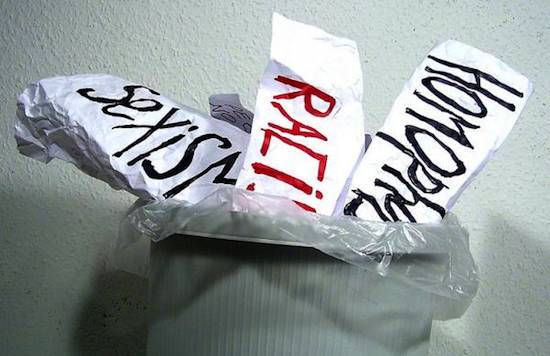
There is the demonic power of Racism – which tells us to believe and act as if one group’s pigmentation or cultural values are superior to another.

There is the demonic power of Patriarchy – which tells us that men should dominate women.

There is the demonic power of Materialism – which tells us that the accumulation of wealth and goods will bring us everything we need to be happy.

And there is the demonic power of Homophobia – which tells us that anything outside of male-female relationships is an abomination.

Whether or not we believe that Satan is a real person acting in our midst is not as important as recognizing our captivity to powers of evil signified by Satan, powers that continue to affect our lives everyday.

Regrettably, churches are often the focal arena where these powers take hold: hostility, fear, and anger boil over between groups debating the value of human beings. Yet, through the story of Jesus with the crowds, we learn that the powers of Satan must be recognized and confronted if we are to truly experience the incredible love of God.

Jesus’s family tried to stop him. Just like a racist white mother tries to stop her daughter from going on a date with a black man. Just like a homophobic father berates his son for holding hands with another boy. Just like a liberal college student chastises his parents for being too conservative. Jesus’ family tried to stop him. Sam’s family tried to stop him too.

Living out our faith means discovering a new solidarity with ALL of God’s people; all of humanity. Jesus bids us to cry with those who are suffering and rejoice with those who feel free to live their lives as they are. Jesus asks us to look on the people around us who are different from us and love them because they are different from us.

peace-love-no-violence-no-homophobia-no-sexism-no-racism

Whether we admit it or not, we are products of our families and culture. We might believe in the idea of equality, but we grow hesitant because we were cultured into things like racism, and homophobia, and materialism, and sexism. We were taught by the people around us, not because they were evil, but because they were caught captive to the same evil powers that are desperately seeking our allegiances.

The problem with families today is that we don’t challenge ourselves enough to be better. Jesus was not against his family, but he saw them as a challenge to the kind of community and kingdom he was preparing. Today we still face the challenge of how our families prevent us from seeing one another the way God see us: equal.

Wrestling with the powers of the world is difficult. The story of Jesus being accused of having a demon is not easy to handle. Learning about a young man who loves the church in spite of it’s declaration about his identity is sad.

But they also remind us of the great possibilities for hope, love, and recreation in God’s kingdom. They help us to see the moments where we can become better, opportunities for us to dig deeper in our faith, and occasions to say “Yes” to the wonder of God’s kingdom while saying “No” to the backwards values of the past.

Jesus Christ, Lord of lords and King of kings, came into the world to turn it upside down, to show us the way the truth and the life, and to create a new family where ALL are welcome. And all means ALL. Amen.

no-homophobia

Confronting Conflict – Sermon on Isaiah 6.1-8

Isaiah 6.1-8

In the year that King Uzziah died, I saw the Lord sitting on a throne, high and lofty; and the hem of his robe filled the temple. Seraphs were in attendance above him; each had six wings: with two they covered their faces, and with two they covered their feet, and with two they flew. And one called to another and said: “Holy, holy, holy is the Lord of hosts; the whole earth is full of his glory.” The pivots on the thresholds shook at the voices of those who called, and the house filled with smoke. And I said: “Woe is me! I am lost, for I am a man of unclean lips, and I live among a people of unclean lips; yet my eyes have seen the King, the Lord of hosts!” Then one of the seraphs flew to me, holding a live coal that had been taken from the altar with a pair of tongs. Then seraph touched my mouth with it and said: “Now that this has touched your lips, your guilt has departed and your sin is blotted out.” Then I heard the voice of the Lord saying, “Whom shall I send, and who will go for us?” And I said, “Here am I; send me!”

6292687510_a9b81d37f4_z

Tell me about your last fight.” So began one of my recent premarital counseling sessions. The couple danced around the question for a few moments, claiming they couldn’t remember the last time they had a fight, but when I started to ask more specific questions the answers started pouring out. Their conflict could be boiled down to a lack of communication, and when I sat there with them I saw them begin to share things with one another for the very first time. Before we went on, I couldn’t help myself from asking, “Why haven’t you talked about this stuff before?”

The woman sat in my office with her head hung low. It took her a few minutes to muster the courage to begin telling her story, and when she started it came out like the floodgates were opening. She felt invisible to her husband, no matter what she did, he would brush it off and continue to focus on the task before him. She was afraid that she had done something wrong and didn’t know where else to turn so she came to me. We talked together about her situation, but I couldn’t help myself from wondering, “Why hasn’t she told her husband how he makes her feel?

We were sitting on the edge of a property in West Virginia after nearly a week on our mission trip. The young boy was from a different church, but I could tell something had sent him over the edge. His tears fell slowly and deliberately as he confided in me about his struggles. He could not longer stand being treated like an infant or a child. He had important ideas and things to share but everyone brushed him aside instead of treating him with worth. Rather than being supported in his discipled journey, he felt like he was all alone and he was worried. I listened, but I also knew that when the end of the trip arrived he would be going home to a different community and a different church so I asked, “Is there someone from home that you can share all of this with?” And he said, “I don’t know, I’m afraid.

In each of your bulletins you will find a piece of paper about the size of an index card and I would like you to hold it in your hand. We’re going to have some time for silence, and during that time I want everyone to write down the name of one person that you are currently in conflict with.

Maybe your mother-in-law has been driving you crazy with her relentless need to tell you how to raise your family. Perhaps your boss continues to heed your advice, but then takes all the credit when things go right. Maybe your son has made some poor choices and you can’t remember the last time you had a decent conversation about anything. Perhaps one of your best friends is letting their backwards political opinions isolate them from what it means to be a decent human being. Maybe your pastor has been preaching all sorts of sermons that you definitely do not agree with.

So take a moment, and write down a name. No one will see it but you. When you’ve finished, I want you to hold the card in your hand for the rest of the sermon.

In the year King Uzziah died, Isaiah saw the Lord sitting on a throne. God encountered the soon-to-be prophet in the midst of something important. Uzziah was an arrogant ruler, and his arrogance led to his death. Even though his reign brought economic prosperity, he neglected to respect the temple and the worship of God. It was at this particular time, in the wake of Uzziah’s death that Isaiah was called to speak.

The call is frightening. The Lord is high and lofty with the hem of his robe filling up the entirety of the temple. Seraphs, winged creatures, were flying above the Lord, each with six wings. One of them called out to another and declared, “Holy, holy, holy, is the Lord of hosts; the whole earth is full of his glory!

Everything around Isaiah began to shake and tremble and the room filled with smoke. Only then does Isaiah muster up the courage to say anything at all, “Woe is me! I am lost, for I am a man of unclean lips, and I live among a people of unclean lips; yet my eyes have seen the King, the Lord of hosts!

Isaiah was confronted with the utter and radical holiness of the Lord. With wind spinning, floors shaking, and voices trembling, Isaiah is struck with the realization of his own unworthiness and the unworthiness of his people. Have you ever felt unworthy when confronted by something greater than yourself?

When I saw my wife Lindsey walking down the aisle at my home church to meet me at the altar for the covenant of marriage, I felt completely unworthy. When I held Archer and Abram Pattie in my arms above the baptismal font and brought them into the fold of God’s kingdom, I felt completely unworthy. Every month when I serve communion here at the front of the church, I am met with eyes of Christians who have lived far more faithfully than I ever will, and I feel completely unworthy.

God’s majesty, whether through the beauty of creation, a call vision, or the people in our lives often leaves us feeling pretty feeble. When we discover the divine we can only feel that much more mortal. When we encounter the infinite, we are reminded of our finitude. When we meet the living God, we can’t help but wonder about the lives that he gave to us.

God’s call is frightening. God calls the young and old, men and women, to abandon their former and sinful ways to live fully in Christ. God called a young prophet to speak harsh truths to a community that had grown far too complacent. God continues to call all of his children to be prophetic with our words and our actions.

The call is frightening and scary enough. But when we respond, when we answer the call, the real trouble begins.

hereami2

Then one of the seraphs flying high above the Lord came down to Isaiah with a live coal that had been taken from the altar with a pair of tongs. The seraph touched his mouth with the burning coal and said, “Now that this has touched your lips, your guilt has departed and your sin is blotted out.” Then Isaiah heard the voice of the Lord saying, “Whom shall I send, and who will go for us?” and Isaiah said, “Here am I; send me!

Isaiah was dramatically changed through his encounter. The flaming coal not only cleansed him, but it also gave the him the power to speak on behalf of the Lord. In a matter of moments he went from crying out, “Woe is me! I am lost” to “Here am I; send me!

This whole story about Isaiah’s call is a lot like what we do in worship. We come together to praise the almighty God, we pray and confess our unworthiness, and then seek forgiveness. We pray for God to give us the grace and strength to hear the Word with faith so that we can respond accordingly.

How we worship matters because it shapes us into the disciples we are called to be. Every Sunday is like Isaiah’s call. We meet the Lord in the words from scriptures, prayers, hymns, and our brothers and sisters. Through that encounter we are called to live out our faith as soon as we depart in a way that will make God’s kingdom reign. All of these things that we do on a weekly basis, they are done to attune us to the voice of God who speaks into our lives.

Isaiah’s call, this dramatic and overpowering moment in the temple, reminds us that when we encounter the living God, there is not way to know God without being changed. Like a coal coming from the altar to our lips, we are tasked with speaking words like fire. Like a frightened prophet we are given the power to cry out “Here am I; send me!

The prophet was called to speak during a particular time, to sinners in the midst of sin. If we hear something from God’s Word today it should be a similar call. We should not be afraid to names the sins of our time, just as Isaiah did when he confronted the people’s political arrogance, spiritual pride, and economic injustice.

Abraham had to confront the Lord who promised to make his descendants more numerous than the stars. Jacob had to confront his twin brother Esau who sought to kill him for stealing his blessing. David had to confront King Saul who was jealous of the Lord’s favor. Isaiah had to confront a people who neglected to thank God for being the source of all their blessings. Jesus had to confront a religious elite who no longer practiced what they preached. Peter had to confront the gentiles and welcome them into the fold of the church. Paul had to confront his own sinfulness and call others to do the same.

Christians, for centuries, have been called by God to confront the conflict in their lives. To be faithful is to meet the outcasts where they are and show them love. To be a disciple means a willingness to forgive people when they have done something wrong. To follow Jesus means having the courage to ask for forgiveness when we have done something wrong.

What situation are you in right now that God is calling you to confront? I believe the holy Lord of hosts is personally addressing each and every one of us in the scripture today. Who do we need to call out? Where are the conflicts in our lives?

In each of our hands we have a name that represents a conflict in our life. Some of them can be confronted with a phone call or a conversation. Some of them can be confronted with our willingness to forgive a wrong that was done toward us. Some of them can be confronted with the simplest of gestures.

It might not go well. If we take the first step to confront one of our conflicts, it might blow up in our faces. But the longer we let these names stay on paper, the longer the conflict will keep us from fully living out our identities as disciples. The longer we let the conflict simmer, the longer we will be people of unclean lips living amidst unclean lips. The longer the conflicts remain, the harder it will be to hear the living God speaking into our lives.

The voice of the Lord is saying to all of us, “Whom shall we send, who will go for us to confront the conflict?” Our answer should be the same as Isaiah’s, “Here am I, send me!” Amen.

00021958_h

We Are The Church – Pentecost Sermon on Acts 2.43-47

This Pentecost we celebrated the outpouring of the Holy Spirit by handing over our worship service to the youth. The following sermon was proclaimed by Clinton Fitzgerald & Danielle Hammer.

Acts 2.43-47

Awe came upon everyone, because many wonders and signs were being done by the apostles. All who believed were together and had all things in common; they would sell their possessions and goods and distribute the proceeds to all, as any had need. Day by day, as they spent much time together in the temple, they broke bread at home and ate their food with glad and generous hearts, praising God and having the goodwill of all the people. And day by day the Lord added to their number those who were being saved.

Pentecost-2015

Clinton: Would you please pray with us?

Danielle: May the words of our mouths, and the meditations of our hearts, be acceptable in thy sight, O Lord, our Rock and our Redeemer. Amen.

Clinton: Honestly, preaching a sermon on Youth Sunday, on Pentecost, is really intimidating. For years, I have sat in this sanctuary and listened to countless people describe what it means to be faithful in the world, and now I am one of those people. What does it even mean to preach in the first place? Why do we gather in a place such as this week after week? We spend so much time talking about what the church should be doing, that we rarely talk about what the church is in the first place.

Danielle: Yet here we are. For one reason or another God has called us to be here in this place on this day. We have faith that regardless of what we say, the Lord will use our words in spite of ourselves to share something life-giving with everyone in worship. Which makes preaching all the more strange: Clinton and I are here to tell you what God is saying to us this day. We are both far more used to being the ones sitting in the pews, than being the ones standing in the pulpit, but we’re going to preach anyway.

Clinton: When Taylor asked us to preach, we suspected that he had something up his sleeve, but if you want to know the truth… he’s just lazy and wanted to spend this Sunday listening from the pews.

Danielle: We’re not even really sure if he’s cut-out for this whole “being a pastor thing.” We’ve heard him preach a lot of sermons and offer a lot of prayers… we keep praying for him to get better, but he kinda just does the same thing every week. The poor guy always looks so nervous while he rocks back and forth from one foot to the other while he’s preaching.

Clinton: And have you noticed that he never really knows what to do with his hands? They kind of wander all over the pulpit, and sometimes it looks like the pulpit is the only thing holding him up at all. But hopefully, with enough prayer, we can make him into a good pastor one day.

Danielle: Emphasis on “hopefully”

Clinton: Anyway, we’re not here to bash Taylor. Even if it is fun to make fun of him.

Danielle: We are here to proclaim what it means to be the church, what it means to celebrate Pentecost, and explore how we can be better disciples in the world. In preparation for this sermon, Taylor began polling certain people within the church about why they come to church.

Clinton: Many of the adults had wonderful responses to his question. They described how much they love coming to a sanctuary on Sunday mornings that has such beautiful stained glass windows. Others said that the minute they saw the exposed wood in the sanctuary they knew they would worship here for the rest of their lives.

Danielle: Some of the adults went on and on about how much they loved knowing that we sing traditional hymns in a traditional service. They described how the words of the old hymns reconnect them with the Lord and so long as the church used the hymnal, it would be the church for them. Others shared reflections about how St. John’s has always put an emphasis on prayer in worship. They attend and support this church because they believe in the importance of communing with the Lord.

Descent-of-the-Holy-Spirit-at-Pentecost

Clinton: Pretty good responses. But did you notice something missing? Taylor didn’t even notice until he started asking the youth what we love about St. John’s. The adults all described physical and worshipful aspects of our church whereas the youth focused primarily on the people. Now, don’t get us wrong, we like the way this church looks, and we like the things we do in worship. But we love this church because of you.

Danielle: In Sunday School last week, this is how some of us described our love for St. John’s: I love coming to this place because it is God’s house. Sometimes we don’t take the time to pray in our own lives, but the people here encourage me to be a better Christian during the week when we’re apart. I love the fellowship with others. When we read the bible on our own we often have questions that we can’t answer on our own, but here, in this community, I know I have people that can help me.

Clinton: I love this church because the people give me strength. I have a hard time standing up for what is right, but when I’m here I learn that God gives me all the strength I need to be faithful. All of the people here are so nice, how could I not love it? They notice me, they care about me, they ask me questions about what’s going on in my life, they make me feel important and significant. I love the people and how they care about me.

Danielle: What is the church? The church is the body of Christ for the world, which means we are the church! We could have the most beautiful building in the world, we could have the best music in the world every Sunday, but without people, this church would be nothing. Shepherds are nothing without their sheep, and churches are nothing without their people.

Clinton: Personally speaking, St. John’s has played a pivotal role in my life, from the moment I was baptized till right now. I have seen how we support each other through trials and tribulations. Our church is one that, rather than raising our voices or becoming defensive, sits back and listens in the midst of questions and challenges. We leave room for God’s light to shine through us so that we may be more compassionate Christians.

Danielle: While the world continues to spin with competing narratives and organizations vying for our attention, this church with it’s love, support, and community continues to amaze us. In Acts chapter 2, when we learn about the birth of the church, there are no descriptions about the size of sanctuaries, they don’t talk about the order of worship for Sunday mornings, they don’t list out what hymns should be used at what time. It’s all about the people, God’s people, spending time together.

be-the-church-650

Clinton: Awe came upon everyone, because many wonders and signs were being done by the apostles. Every Sunday we confront the same kind of wonders and signs the first apostles’ witnessed. We see friends and family who have carried us through the hard moments. We see people who have left their failures of the past to discover new lives in Christ.

Danielle: All who believed were together and had all things in common. We share our life experiences at St. John’s. Whether talking in the narthex or on the front lawn or during the passing of the peace, we share what we can with one another. They would sell their possessions and goods and distribute the proceeds to all, as any had need. When we pass the plates for the offering, we are redistributing our goods so that those who are in need will receive.

Clinton: Day by day, as they spent time together in the temple, they broke bread at home and ate their food with glad and generous hearts. Throughout our lives we have seen this church change with new people coming, and old friends going on to be with the Lord. When we spend our time together, when we break bread and feast during communion, we are living into the reality of what it means to be the church today.

Danielle: And day by day, the Lord added to their number those who were being saved. You might not know it, or even believe it, but each of you have contributed to our mission to be God’s church. Whether this is the first time you’ve entered our doors, or you’ve been coming here your whole life, when we are together, we are the church. Through our relationships with the people in the pews next to us, we become Christ’s body for the world.

Clinton: Danielle and I are who we are because of the tremendous witness this church has been to Christ’s love. We love this building and we love Sunday mornings, but what we really love are the people. We give God thanks for putting you in our lives, and putting us in yours.

Danielle: It is truly a blessing to be standing here before all of you proclaiming God’s Word this day. But it is an even greater privilege to know that we are the church together. We offer this to you in the name of the Father, the Son, and the Holy Spirit, One God now and forever. Amen.

The Problem With Kids Today – Sermon on John 10.11-18

John 10.11-18

“I am the good shepherd. The good shepherd lays down his life for the sheep. The hired hand, who is not the shepherd and does not own the sheep, sees the wolf coming and leaves the sheep and runs away – and the wolf snatches them and scatters them. The hired hand runs away because a hired hand does not care for the sheep. I am the good shepherd. I know my own and my own know me, just as the Father knows me and I know the Father. And I lay down my life for the sheep. I have other sheep that do not belong to this fold. I must bring them also, and they will listen to my voice. So there will be one flock, one shepherd. For this reason the Father loves me, because I lay down my life in order to take it up again. No one takes it from me, but I lay it down of my own accord. I have power to lay it down, and I have power to take it up again. I have received this command from my Father.”

IMG_0088

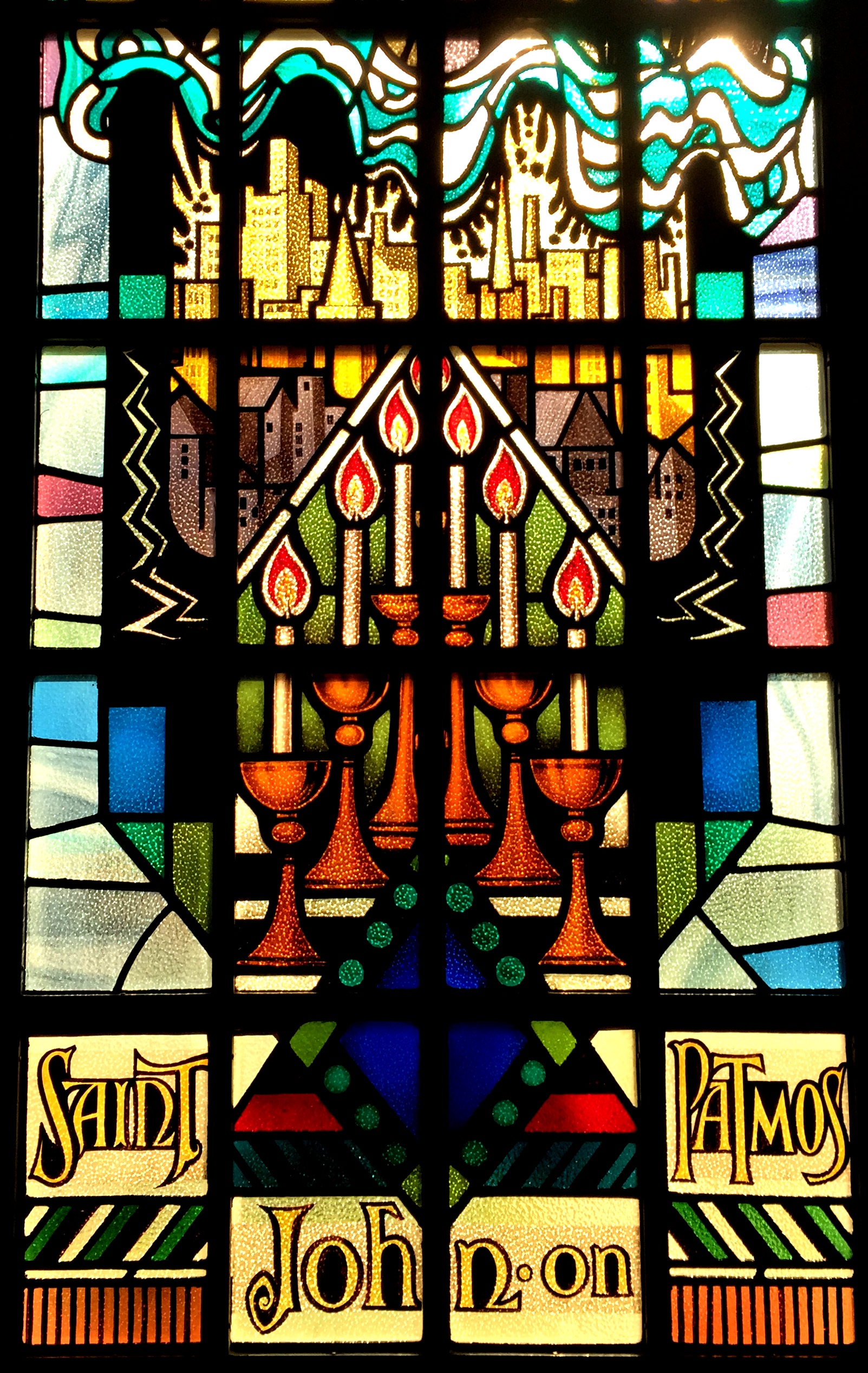
Happy Preschool Sunday! This morning we conclude our sermon series on our stained glass. These sermons were born out of a desire to recapture the importance of our windows and how the continue to speak into our lives. We began with The Methodists to my right: Susanna Wesley, John Wesley, and Francis Asbury. Last week we looked at The Johns: John the Evangelist, John the Presbyter, and John on Patmos. We now finish with the window behind me above the altar: Jesus as the Good Shepherd.

pg-iamshepherd-570x194

Why St. John’s?” I asked. We were sitting in the living room and going over our respective histories when I finally turned to one of my favorite questions: “Why St. John’s?” With the overwhelming abundance of churches in our community what made you choose this one?

Her answer was familiar and sounded similar to the other responses I had heard: It was where all our friends were going; it was the closest church to our neighborhood; it just made sense; it was a place our kids felt welcome. But then her answer took on a life of it’s own in a way I didn’t expect.

“But we haven’t always been here,” she said. “There was a time that we no longer wanted to come to St. John’s.” Of course my curiosity was caught and I wanted to know all the details behind their departure, but as if she was reading my mind she continued, “The ‘why’ is not important. What is important is how we came back.

“We were invited back for a particular Sunday, and though it hurt me to enter the doors of the sanctuary, I reluctantly sat down in one of the back pews. Before I knew it my mind was  flooded with all of the friendships that we cultivated in the sanctuary, all the children I had vowed to raise in the faith during their baptisms, all of the good sermons and all of the bad. But at the same time my mind was flooded with all the old arguments, the disagreements, and the frustrations.”

“But then something happened. I looked up and I saw the Good Shepherd window and everything felt right. It was like all of my worry started to slowly dissipate, and I knew that I had to come back. This was my home, because this is where I discover how the Good Shepherd watches over me.”

People and situations had driven her away. The old arguments were enough for her to leave the church behind. But miraculously enough it wasn’t people that brought her back, there were no justifications or rationalizations that would have changed her opinion. It was this window. It was Jesus as the Good Shepherd that brought her back, and it is the Good Shepherd who watches over all of us.

More often than not, the Good Shepherd stained glass window is the first thing that people notice when they enter our sanctuary. Its colors and vibrancy draw our attention and captivate us even when the sermons make us want to sleep.

It shows Jesus at his finest: leading, nurturing, and loving. The sheep are at peace knowing their shepherd is there to guide them through life. Even the abundance of blue helps to convey the deep sense of calm that comes with Jesus’s presence.

Whenever our eyes fall upon this window we are called to remember how much the Good Shepherd loves us. It shows how comforting it is to know that the Lord will hold us, and protect us, when necessary. The window exemplifies the power of the one who gave all that he had for his friends and for strangers.

Yet, even for as much as this window conveys the faith, it also muddies the waters. During the time of Jesus’ life the role of a shepherd was anything but picturesque. Shepherds were often the outcasts of society and were ignored by the masses. Jesus saying, “I am the good shepherd” would have bewildered the religious elite and the powerful. It had a certain edge to it.

This week I gathered all of our preschoolers into the choir loft to teach them about Jesus as the Good Shepherd. Like we all do, they noticed how beautiful Jesus looks in the image and how he cares for the sheep. “The sheep is like a baby” one of the kids yelled out. I remember thinking: “Yes yes, thats all good and true, but there is so much more to what it means to shepherd.”

I-am-Series_Shepherd

When describing himself as the good shepherd Jesus uses the hired hand as a comparison. The hired hand is someone who is only concerned with monetary gains, expends the minimum amount of work necessary, and will not risk life or limb for the sake of others. The hired hand is like the person who is so selfish that they ignore the needs of others.

Jesus, however, lays down his life for the sheep and promises to never let them, us, go. His voice will always draw us back because we belong to him. 

I love our preschoolers and this time of the year is always bittersweet for me. We are preparing for the end of year program, and our eldest class will be heading off to kindergarten in the fall. I spend enough time with them in the basement that I know the ins and outs of their little personalities, I know who to separate during chapel time for optimal focus, I know what jokes they will laugh at, and I know what to do and what to say to stop them from crying. I love them and I believe that I would be willing to lay my life down for them. I would do whatever it takes to protect them because each of them is a child of God.

But then I wonder if I would do the same thing for the adults in my life… I mean I love all of you too, but there’s just something about the desire to protect children that makes us stronger and braver than we normally are. For some reasons we value them as being more important than those who are older, and we prioritize their needs over others. We would do things for children that we would never do for others.

The problem with kids today, is that they are better than us.

After we looked at the window this week, I brought the preschoolers outside to demonstrate what it means to be a shepherd. I gathered a group in the middle of the yard, and I pulled four kids out to be the shepherds. I explained that I would be a wolf trying to get at the sheep in the middle, and the shepherds had to do whatever they could to protect the sheep.

It worked brilliantly. Every time I rushed forward the shepherds converged on me and pushed me back, and when I tried to run around and juke them they rearranged and protected their friends; no matter what I did, the little shepherds were going to do whatever they could to protect the sheep.

But that’s when I noticed something remarkable: The group of sheep in the middle had been holding hands the entire time. Now let me be clear, I did not instruct them to hold hands or to watch out for each other, but they did it on their own. Even more remarkable is the fact that the older kids placed the younger ones in the middle to protect them even more while they held hands. It was easily one of the most beautiful things I have ever seen.

The problem with kids today, is that they are better than us.

In our little preschool rooms, and in our community, kids are the ones who are acting more like Jesus than the adults. While we complain and groan about those who are different than us, people who do not look, think, and talk like us, kids are going out to meet them where they are. Jesus sought out the lost, the ones who needed to be rescued, the ones who are forgotten in our society. In our preschool rooms the children do whatever they can to involve everyone and show them they are loved.

11209625_10203918612636680_1355383082406316117_n

If you want to know what Jesus was really like, spend just 5 minutes with one of our preschoolers. During snack time they are willing to give up their food for the person who mentions they are still hungry. When they are playing with different objects in different stations they will include everyone in the activity no matter what. When they work on art projects they pay one another the nicest compliments regardless of how well the finger painting actually turns out. And when we were outside this week, the shepherds took care of the sheep while the sheep took care of one another.

The problem with kids today, is that they are better than us. 

We should start looking to them more often about what it means to be faithful, than expecting them to learn everything from us.

We all hunger to know and be known. Many of us (adults) create virtual communities on the internet because forming real and authentic connections is hard work. It requires face to face intimacy, a willingness to listen, and vulnerability all at the same time in a way that a phone and computer screen can never allow. Kids don’t have the benefit of social networking to create friendships, they have to do it the old fashioned way, and they’re better at it than we are.

God’s community is open and inclusive. Jesus not only cares for the sheep but gathers them into the flock. Those who are curious about what it means to be a disciple are invited into Jesus’ community no matter what: the door is always wide open to the outcasts: You know, the people whose lives are messy, whose families are not the perfect “husband-wife-2.5-children” scenario, who live in fear between paychecks, and who wonder if anyone knows how they really feel.

Today Jesus is still welcoming and inviting people who are often excluded based on the standards of our time. Kids don’t have the benefit of immediately recognizing someone’s socio-economic status, they aren’t concerned with where their parents went to college or even if they didn’t, they aren’t worried about the color of their skin or the shape of their bodies: they just want to love and be loved. 

So how can we create an authentic and life-giving community? We begin by following the example of our kids…

Imagine, if you can, what it would look like if we stopped excluding people based on our warped standards: wealth, status, race, sexual orientation, and physical condition. What if we started treating people with respects regardless of who they were and what they had done? What do you think would happen if we really started to take care of one another without judgment or expectation of reciprocation?

It wouldn’t be easy, but it would be more like the kingdom than the way we are living right now. Amen.

The Johns – Sermon on John 15.9-11, 1 John 2.15-17, and Revelation 21.1-5

John 15.9-11

As the Father has loved me, so I have loved you; abide in my love. If you keep my commandments, you will abide in my love, just as I have kept my Father’s commandments and abide in his love. I have said these things to you so that my joy may be in you, and that your joy may be complete.

1 John 2.15-17

Do not love the world or the things in the world. The love of the Father is not in those who love the world; for all that is in the world – the desire of the flesh, the desire of the eyes, the pride in riches – comes not from the Father but from the world. And the world and its desire are passing away, but those who do the will of God live forever.

Revelation 21.1-5

Then I saw a new heaven and a new earth; for the first heaven and the first earth had passed away, and the sea was no more. And I saw the holy city, the new Jerusalem, coming down out of heaven from God, prepared as a bride adorned for her husband. And I heard a loud voice from the throne saying, “See, the home of God is among mortals. He will dwell with them; they will be his peoples, and God himself will be with them; he will wipe away every tear from their eyes. Death will be no more; mourning and crying and pain will be no more, for the first things have passed away.” And the one who was seated on the throne said, “See, I am making all things new.” Also he said, “Write this, for these words are trustworthy and true.”

IMG_0058

“Taylor, the bishop is appointing you to St. John’s United Methodist Church in Staunton, Virginia. We believe the church fits with your gifts and graces and we are excited to see what the Holy Spirit can do through you there.” Those were the words used to let me know where I would be spending the next few years of my life. I remember how I felt with the phone next to my ear and Lindsey by my side when I found out that I would be coming here to serve this church.

Obviously, for the next few days all I could think about was the church and the community. What would you all be like? Would we enjoy living here? What would we do for fun? How would you respond to me as your pastor?

Of course I Googled the church, searched the church name in the local newspaper databases, and even looked up the address of the parsonage. And for as many things as I could discover, more questions began to develop to the point where I had to just stop and accept that this is where I was going.

However, one question remained in the back of my mind during the months leading up to my first Sunday. I was fine letting everything else go, I was content with the unknown, except for one thing: Why St. John’s?

Now I don’t mean why this church out of all the churches in the Virginia conference, though I have wondered about that at times. What I mean is this: Why is the church named St. John’s?

Do any of you know? Church naming often carries an interesting history. Like when a group of people from a Baptist church grow frustrated with another group and decide to leave and start a new church with the ironic name of Harmony Baptist.

Or like what we have here in town with 1st Presbyterian, 2nd Presbyterian, 3rd Presbyterian, etc. I would love to know the story behind that.

Anyway, why are we called St. John’s?

The story goes that a long time ago there was a particularly advantageous District Superintendent who dreamed of 4 new churches in the Staunton District. The population was booming in the valley and he believed it was time for the Methodist Church to start breaking ground and forming church homes for new people. He wanted 4 new churches and he wanted them to be named after the gospels: Matthew, Mark, Luke, and John. Though only two of them ever came to fruition: Mark and John.

Now, is that really how we got our name? I have no idea, but thats the story everyone seems to tell.

I want to know if thats the story we want to tell. That the name of this blessed house of the Lord got its name from some guy in the past who wanted to leave his mark in Staunton. Or do we want to take ownership of our name, and live into the reality of what it means to be St. John’s?

Our name is part of who we are, it is a part of our very identity, for better or worse. If we were First UMC I would expect that we were the first to break ground in Staunton, that we would be leading the community in what it means to love one another. If we were Harmony UMC I would expect a church full of people who agreed on everything all the time, no matter what. If we were Wesley UMC I would expect that John Wesley would be fundamental to our mission and work in the kingdom.

But if we call ourselves St. John’s, then who are we?

IMG_0063

On the right side of our sanctuary we have three stained glass windows that I call The Johns. We have John the Evangelist, John of Patmos, and John the Presbyter. Do they represent three different and distinct men? Are they in fact all the same person, just being shown throughout the different decades?

Early Christian tradition held that John was one of the original 12 disciples who actually lived a long life and was not killed for his faith like the others. It is believed that he was responsible for writing the gospel according to John, the letters 1-3 John, and the final book of the New Testament Revelation. Of course modern scholars debate as to the particular authorship and whether or not one man was responsible for all of these different writings.

What is important for us is the fact that we affirm all of the writing as canon and life-giving, that Christians for centuries have come to discover the living God in the words attributed to John, and that we will continue to live into our discipleship through them.

Our first window displays the young John as the Evangelist. Today when we hear the word evangelism we tend to picture people converting others to follow Christ, but in its most simple meaning, an evangelist is someone who shares the Good News, and in this case, it came through a written account of Jesus life and ministry.

We see a young John holding a chalice and the image of an eagle. The chalice serves to emphasize the importance of the sacrament, and the pouring out of Jesus blood for us. Throughout the gospel of John, Jesus’ atoning sacrifice is a particular focus and theme. Reflecting on Jesus life later, John could remember everything through the lens of the resurrection, and we see the importance of Jesus’ life here in the chalice.

The other detail, the eagle, is very interesting. In Revelation, a book we will talk about shortly, there is a brief section where John describes four winged creatures from his dream. Each of them have come to represent a specific gospel and it’s respective author: Matthew is a man with wings, or an angel; Mark is a lion; Luke is an ox; and John is the eagle.

Whenever our eyes fall to this window we are called to remember the Father’s love in Christ Jesus. Like the winged eagle flying high in the sky we look up to the kind of love that Jesus exemplified and strive to live accordingly. The great sacrifice was made so that our joy could be complete in and with one another as we look on eternity without flinching as we journey toward the goal of communing with the Lord.

John the Evangelist wrote what he did to remember for us what his master taught him: As the Father has loved me, so I have loved you; abide in my love.

Our second window, the one to the right, contains John as the Presbyter. Presbyter comes from the greek word presbuteros which means “elder.” As John grew older and continued to play an integral role in the formation of the early church, it became necessary for him to write letters concerning the faith.

In the window we see a mature John with a quill and parchment. Like we still do today, whenever we encounter the struggles of fellow disciples, we strive to help them through their trials and tribulations. For John, having lived with Christ and experienced the true power of the resurrection, he devoted himself to the early Christians and helped them to understand the importance of love.

He wrote things like: “Do not love the world or the things in the world.” Only a man speaking from a life of wisdom could make such a statement. The desires of flesh and the prides in riches only serve to destroy us because they wither away. All of the false things that we put our faith and hope in are passing away, but the love of God endures forever and ever.

Whenever we glance to this window of John as the Presbyter, we are called to remember the value of wisdom and what it means to grow together. Being Christian is not something that can be done in isolation, but instead can only be fruitful and life-giving if we disciple as a community. John wrote letters to encourage and remind the faithful what it means to be faithful. As disciples we have the responsibility to build one another up for kingdom work.

John the Presbyter wrote to Christian communities about what faithful living was all about: those who do the will of God live forever.

The third window, in the middle, contains John on Patmos. After a life of faith, John was exiled away to Patmos, a small Greek island in the Aegean Sea where he wrote about his visions. The book of Revelation contains fantastic imagery of the way God has, is, and will move  in the world. Our final John is older with a fiery city at his feet, and the new Jerusalem above his head with the lamb.

The Lord gave John certain visions and told him to write them down because they were trustworthy and true. Our window displays the height of the revelation when God will make all things new. A holy city, the new Jerusalem, will come down from heaven. This is where God will dwell with the people, God will wipe away all of our tears. Death will be no more; mourning and crying and pain will be no more. The first things will pass away because God will make all things new.

In our window we see the former things, the earthly passions of the world at the bottom passing away. But God has not, and will not, abandon us to our own devices. The new city at the top will reign and the kingdom will be forever. 

Whenever our eyes fall upon this window we remember that the Lord is with us now and forever. That even in our death we will come closer to the new heaven and the new earth that the Lord has promised. In the midst of our grief and suffering now we can still give thanks to the Lord for that day when he will make all things new. This window calls us to trust the Lord just like John did throughout his life.

John on Patmos wrote down the visions the Lord had provided so that others would come to know what the future holds: The Lord will dwell with us and make all things new. 

St Johns logo

Who are we? A group of Christians who get together week after week to rediscover what it means to follow Christ? A ragtag collection of disciples who need to find a little more light in our lives?

If we want to live into our name, then we need a better story than being named by a District Superintendent. If we want to be the St. John’s that God is calling us to be, then we need to reclaim what that name means for us.

We are St. John’s. That very name carries with it the history of what our church has done for this community. Wherever I go in Staunton I love to tell people that I serve as the pastor here at St. John’s because our name is immediately met with recognition; “My children went to Preschool there!” “My wife and I were married in that sanctuary.” “We buy our Christmas tree from your church every year.”

But we are also more than what we do. Our identity is firmly rooted in the name of John and we should be proud of it. We were named after a man who was called to follow Jesus, remembered the Messiah’s life for other communities, wrote to churches about faithful wisdom, and caught glimpses of future glory. 

Likewise, we are a community of faith that believes in following the Lord, in sharing God’s story with other people, in teaching those younger in the faith about what it means to love, in celebrating the coming day when God will make all things new.

St. John’s; what a perfect name. Amen.

Devotional – Acts 10.44

Devotional

Acts 10.44

While Peter was still speaking, the Holy Spirit fell upon all who heard the word. 

Weekly Devotional Image

It happens all the time. I’ll be preaching from the pulpit, or leading a bible study, or praying for a family when someone responds later by quoting back something I said, only I never said it. The sermon will be about the importance of loving our neighbors, and someone will bring  up our “obviously similar” political persuasions while we shake hands after the service. The bible study will move through the book of James and the challenge of being wealthy and Christian, and someone will later thank me for my comments about “sinful multi-national corporations.” I’ll be in a hospital room praying with a family for God’s will to be done, when someone will later attribute the cure to my wishing for a miracle.

In ministry, and in life, something happens between our lips and another person’s ears that we can never prepare for or predict. For as much time as pastors put into their sermons/bible studies/prayers it is a remarkable thing that we often lose control over what we say. The exact moment the words leave our lips they wrench themselves free from our dominion and take on a life of their own. The consequences of this lack of control can be both destructive and life-giving.

Occasionally someone will hear something in the sermon/lesson/prayer (that was never said) and it leads to a divisive and frightening argument. The narthex conversations following worship can be nerve-racking because you never know what to expect. But, more often than not, people hear something in the sermon/lesson/prayer (that was never said) and it gives greater glory to God than I could ever do with my own words. People will open up and confess they believed the words were meant for them alone and they experienced God’s abundant presence speaking into their lives.

let-go-let-god-blog

Preaching is meant to be a conversation. The pastor stands at the front speaking words about the reality of God and they pick up subtle clues regarding responses: the occasional head nod and the rare audible “amen.” But they also deeply rely on the comments made after the service regarding the proclamation. Just as the Spirit fell upon all who heard the word from Peter, the Spirit shows up in worship, in bible studies, and in hospital rooms reigniting words, rearranging them, and helping them to sink deeply into people’s lives.

It is hard to relinquish control over something as precious as a sermon, but then again the sermon never belongs to me in the first place; it belongs to God.

This week let us take time to really listen to the people in our lives and engage in conversation with them. Let us give thanks to God for providing the power of the Holy Spirit to actually make something out of our words in spite of us. And let us have the courage to be honest with all the pastors in our lives about what they say and what it means to us.