An Example – Sermon on Luke 12.32-34

Luke 12.32-34

Do not be afraid, little flock, for it is your Father’s good pleasure to give you the kingdom. Sell your possessions, and give alms. Make purses for yourselves that do not wear out, an unfailing treasure in heaven, where no thief comes near and no moth destroys. For where your treasure is, there your heart will be also.

bible-verse-luke-1234-where-your-treasure-is-there-your-heart-will-be-also-2014-for-slideshow


Meanwhile, when the crowds gathered by the thousands to hear him talk, so many in fact that they began to trample on one another, Jesus rose to speak. He warned his disciples against hypocrisy – live honest lives. He instructed them to confess fearlessly – all who earnestly repent will be forgiven. He shared the parable of the rich fool – you can’t take your money to heaven. And then he gave them some final instructions:

“Do not be afraid little sheep! For it is God’s good pleasure to give you the kingdom. Sell your possessions, and give away your money, use your gifts to bless others here and now. For where your treasure it, there your heart will be also.”

Sometimes Christians drive me crazy. You know, the super pious ones who are forever wearing their faith on their sleeves; the ones who stand on the street corners of life blasting off about some passage or another; the ones who come knocking on your door and try to sell you on the gift of eternal life instead of the fires of hell.

Have you ever met or encountered a Christian like that? I can’t help but feel like they are the kinds of Christians that are giving the rest of us Christians a bad name. Jesus never instructed his disciples to act like the people from Westboro Baptist church who are forever picketing the funerals of people whom they believe did not live up to Christ’s expectations. Jesus never called his disciples to be racist or bigoted toward peoples of different nationalities, or race, or creed, or sexual orientation. Jesus never implored the disciples to use fear mongering to convince people to come to church or otherwise be threatened with the fires of eternal punishment. Yet, if you turn on the news, or get online, those are the kinds of Christians we hear about the most; the ones who give the rest of us Christians a bad name.

Like Hillary Clinton proudly claiming to be a Methodist over and over again, and how much her Methodism has shaped her politics. But we know that she has gone back and forth on a number of issues and made untruthful claims when the bible is pretty clear: you shall not bear false witness.

Or like Donald Trump who, when asked about his faith said that he’s never needed to pray for forgiveness and when asked about his favorite scripture was said, “An eye for an eye and a tooth for a tooth.” Except the scripture he was talking about actually goes like this: “You have heard an eye for an eye and a tooth for a tooth. But I say to you, ‘Do not resist an evildoer. But if anyone strikes you on the right cheek, turn the other also.’”

Just once I would like a good Christian to be featured for all to see; someone who has absorbed the Word throughout his or her life and has lived accordingly; someone who believes the good news is so good, that is worth sharing not to fill the pews, but to fill hearts; someone who could stand like an earthly example for the rest of us to catch a glimpse of the ways Jesus calls us to behave.

tumblr_naz1buY4JX1svej5no1_1280

This winter I was asked to be a guest preacher at Augusta Street UMC just down the road. We had a midweek and midday service and I decided to preach about how good it is when we dwell together in unity. The service was well received and we gathered in the social hall after worship for a light lunch. I walked around for a couple minutes until I found an empty chair next to Wilford Kirby who was deeply engrossed in a conversation with someone else.

Elsewhere in the room, United Methodists from all of the churches in our town were sitting with their friends from their churches. Like cliques in a high school, the Central folk were at one table, the Cherryvale folk at another, and so on. But Wilford refused to be subject to this paradigm. He was sitting with the preacher from Augusta Street, though I don’t think he knew that he was the preacher. Because I eavesdropped on the end of their conversation, and the last thing Wilford said to the preacher was: “You should come try out our church on Sundays.”

Anyway, I sat with Wilford and he was quick to make a couple comments about their church facility in comparison with ours, offered a few critiques on how my sermon could have been better, and continued to eat his soup and sandwiches. I had other things to get done that afternoon, so after I finished eating I excused myself and told Wilford that I’d see him in church on Sunday and left.

Not fifteen minutes later was my phone ringing. When I answered all I heard was: “Wilford fell, broke some ribs, on his way to the hospital.”

I immediately turned my car toward the direction of Augusta health and beat the ambulance to the Emergency Department. But because they needed to do some x-rays and have him checked out I wasn’t able to get back, and he didn’t want me to anyway.

The next day I showed up at his house and banged on his door until he slowly made his way to the front of the house and let me in. I should have been a little more compassionate and patient regarding the fact that he was walking around with a few broken ribs, but I wanted to know what happened. I wanted to make sure he was okay. I wanted to pray for him.

And as we sat down in his basement, before I could even open my mouth, he asked me how I was doing, and then went through the list of everyone he had been praying for and wanted updates since he had been out of the loop for a whole day.

Wilford Kirby is the kind of Christian that makes the rest of us Christians look better.

Wilford Kirby is an example to us all about what it means to follow Christ in this life.

Luke, in this passage about our treasures and our hearts, calls for us to put first things first. The things of the Lord are to be the most urgent and pressing priority in every Christian’s life. We are not to be afraid nor are we to succumb to the worldly distractions of wealth that constantly distract us from God’s love and care. There are no wallets, or stock portfolios, or bonds that will not wear out in time. God promises not to fill us with earthly wealth and material possessions, but instead surprises us with the gift of the kingdom.

Receiving this gift, the kingdom, makes us rich beyond our ability to comprehend. But being rich toward God is not about putting sizable sums in the offering plate during worship. What Jesus rejoices in, is our reorientation toward the whole of life as an abundant gift from a generous God – a gift that can be given away with abandon.

Wilford Kirby has given his life to the kingdom, because the kingdom was first given to him.

12347609_912278878848427_5975116725585975318_n

He has easily attended more worship services than anyone in this church over the last three years, including me (and I’m the pastor!). On Sunday mornings Wilford is the first layperson to enter the sanctuary making sure our heat is pumping in the winter, and the AC is on during the summer. He checks the lights for optimum worship participation, and he checks through the bulletins to make sure everything will go smoothly.

Every winter he sits out in his truck for hours on end waiting for people to come take a peek at our Christmas trees and offer them his assistance. Even though we have a giant sign advertising the times the lot will be open, Wilford believes in being present for the kind of people who ignore signs like those.

He is here an hour before our special services throughout the year like Ash Wednesday, and Good Friday, and Christmas Eve just in case anyone arrives extra early.

He is almost always the first person to show up in my office to find out how someone from our church is doing and how he can be praying for him or her.

For years he has mowed the lawn of our church and took care of the property as a volunteer. He never complained; he never sought recognition; he never wanted praise. I cannot tell you how many times I’ve been sitting in the comfort of my air-conditioned office day-dreaming about God when I’d see Wilford come flying past my window on the lawn mower with a smile hidden underneath his dust-mask.

Wilford has been here for every funeral since I arrived. Even for people he never knew. Yet he always stands in the back greeting people as they walk in, not because he was asked to, not because he was told to, be because he believes it’s the right thing to do.

For where your treasure is, there your heart will be also.

            The greatest treasure that Wilford Kirby has offered this church has been his very life, and he has given it with abandon.

But why? Wilford could be spending his precious time working with other civic organizations trying to make the world better. He could be spending his afternoons on the golf course or relaxing in the comfort of his home. He could use his life to do any number of things, but instead he has given it to this church.

My suspicion is that Wilford has given his life to the church because he knows and has experienced how the kingdom was given to him, and he wants to share that gift with others. He trusts that the Lord will provide. He humbly obeys the commands to love even the unlovable. He has seen first-hand how the kingdom of God can become manifest in other peoples’ lives. He put his treasure in this place because his heart has always been here. He wants other people to be blessed in the ways that he has been blessed. So he shows up. He prays. He cares. He loves. And he is an example to us all.

But that’s not to say that Wilford is perfect; he’s not. There are plenty of Sunday mornings when I finish a service and walk down the center aisle only to see Wilford standing in the back with his arm outstretched and his finger pulling me in as if to say, “Let me offer a suggestion.” Or there have been plenty of times that I’ve heard his footsteps walking down the hallway and I know from the texture of his tempo that he’s coming not to congratulate me on something but to complain about something that has happened in the church. But the thing is, even when Wilford is frustrated or upset it is because he believes our church can be better. He believes that we are part of the kingdom and we can’t be just like any other church. He expects excellence precisely because that’s what God expects from all of us.

Being rich toward God involves a generosity of spirit that opens our perceptions toward God’s generosity. Wilford knows how blessed he is, for the kind of life that he has had, and therefore he knows no other way to live than the way that he does.

Theses words from Jesus first meant for the crowd, and now meant for us, decisively interrupt our lives in this place and on this day calling us to focus not on the demands of the overly scheduled life, but on the Lord who comes in surprising ways to offer comfort, assurance, and love. Through these words we hear Jesus telling us that the time is now to start living a new life, not dictated by the past, but defined by God’s belief in our future. God uses people like us, people like Wilford, to make the kingdom manifest so that lasting joy will come to God’s little flock we call the church.

At this table, where Wilford has come time and time again, we receive the body and blood of Jesus Christ. In this profound moment we are offered the kingdom again even though we do not deserve it. We come forward with hands outstretched remembering this incredible gift that has been given without cost. And by receiving this gift, we cannot help ourselves but live transformed lives.

So come and see that the Lord is good. Feast at this table where heaven and earth are bound together. Join together with Wilford Kirby as he walks to the front to receive the gift of the kingdom once again. And let it change your life like it has changed his. Amen.

Lost

Luke 15.1-7

Now all the tax collectors and sinners were coming near to listen to him. And the Pharisees and the scribes were grumbling and saying, “This fellow welcomes sinners and eats with them.” So he told them this parable: “Which one of you, having a hundred sheep and losing one of them, does not leave the ninety-nine in the wilderness and go after the one that is lost until he finds it? When he has found it, he lays it on his shoulders and rejoices. And when he comes home, he calls together his friends and neighbors, saying to them, ‘Rejoice with me, for I have found my sheep that was lost.’ Just so, I tell you, there will be more joy in heaven over one sinner who repents than over ninety-nine righteous persons who need no repentance.


Today marks the conclusion of our Sermon Series on The Power of the Parables. A favorite rhetorical device of Jesus’, a parable is a story that illustrates a lesson or principle usually without needing explanation. They are simple and life-sized with familiar characters and they are supposed to drive us crazy.

Over the centuries the parables have become so watered down through the church that they no longer carry the same weight and punch they once did. The familiar parables are beloved to us: The Feast, The Mustard Seed, The Prodigal Son, The Good Samaritan, The Lost Sheep. But during the time of Jesus they were frustrating and confusing. During this month we have attempted to recover this sense of strangeness and re-encounter the power of the parables.

IMG_1610

Now all the rich and broken were gathering around Jesus to listen to him. And those with power were frustrated and saying, “This guy hangs out with the nobodies, and he eats with them.” So he told them one of his parables.

“Which one of you, having a hundred children to watch during a summer camp, and losing just one of them in a museum, does not leave the ninety-nine in the lobby and go after the one that is lost until you find the kid? And when you find her, you offer her your hand and rejoice. And then when you bring the little girl back down to the lobby you call for everyone to join together to rejoice over the one who was lost. Truly I tell you, there will be more joy in heaven over one who returns, than over ninety-nine who need nothing.”

On Monday morning, after traveling to Raleigh, North Carolina immediately after church last Sunday, we woke up at 6:30 am to get the day started. We spent time preparing our breakfasts and lunches, the adults drank our coffee while the youth rubbed their eyes, we spent intentional time with God in prayer, and then we were sent off in groups to our different work sites. I was in charge of a group of 8 youth from here in Staunton and Chapel Hill, NC and we were tasked with working alongside Helping Hands, an organization that provides a camp atmosphere for underprivileged children.

While driving through Raleigh to our assigned location, we wondered aloud about what kind of work we would be doing with the kids. Perhaps we would sit down and help them with their reading comprehension, or we would gather with them inside of a gym and talk about Jesus, or any number of activities. Instead, we were asked to make sure they stayed outside in the oppressive heat, within a strict set of boundaries so that they would not wander into the road. My 7 youth had to keep track of 30 children running all over the place, and who wanted nothing more than to go exactly outside the area they were supposed to stay in.

After a few hours of running around and participating in what could only be describing as shepherding sheep, we took the kids to the Museum of Science downtown. The hope was for them to glean a little bit of information from the exhibits, but more so for them to experience air-conditioning for at least a few minutes.

However, upon arriving, the shepherding metaphor became that much more relevant. With the totality of the museum at our disposal, I had to do my best to keep an eye on our kids while they were keeping their eyes on a whole bunch of other kids. We walked and walked, we talked about things like dinosaur bones and bumblebees, we saw fish swim back and forth in a replicated ecosystem, and we even played with North Carolina Clay. At some point, while on the second floor, I was walking our group through a fictionalized version of a dark aquarium tunnel with dead dinosaurs swimming above us. Most of the kids were “ooing” and “ahhing” and as we approached the end I stood and counted off all the heads as they passed.

When I counted the last head, fear percolated through every fiber of my being; someone was missing. I begged our youth to step-up and watch over all the kids while I went back for the one that was missing, I broke the protocol of leaving church youth with summer camp youth all by themselves, but I did not know what else to do. And I went looking for the lost sheep.

I retraced our steps through the tunnel, making sure to look in every shadowed area until I found who was missing. And standing right at the entrance to the tunnel, with tears in her eyes, and her knees shaking back and forth, was a girl named Miracle.

Miracle was afraid: afraid of the strange dinosaurs floating above her head, afraid of the other whispering adults who were pointing at her while she stood by the entrance, and afraid of the fact that she was left there all alone. Before I even had a chance to do something, she reached out for my hand and immediately began to calm down. She was lost, but was now found.

img_0569

Now all the elite and prideful people were gathering around Jesus to listen to him. And those with all the influence were frustrated and saying, “This guy hangs out with people who no longer matter, and he eats with them.” So he told them one of his parables.

“Which one of you, having an entire Nursing and Rehab center filled with residents near the end of life who are completely alone, does not do everything in your power to go after them until they rediscover themselves? And when you find that opportunity, you grab them by the hand to celebrate their joy. Truly I tell you, there will be more joy in heaven over one aged person smiling in joy than over ministering over countless people in the height of life who need nothing.”

After working with Helping Hands for the first three days, we were then assigned to the Hillcrest Nursing Center. Those same youth and I traveled to the facility to help lead the activity center where residents could play bingo, exercise, and respond to trivia questions. It was quite a shock to the youth having to go from keeping track of little kids running all over the place to sitting in a room full of people with remarkably limited responses.

We tried pulling out the bingo cards and reading out the letters and numbers. I even encouraged the youth to dance around the room to get the residents involved, but most of them just stared off into space. We tried leading them through an exercise routine to the music of Michael Jackson, but most of them just stared off into space.

IMG_1604

We felt pretty worthless. Having traveled all this way to help the community of Raleigh, it was hard for the youth to feel so unsuccessful with those near the end of life. But then I saw a hymnal and I started flipping through the pages until I found “Amazing Grace.”

“Amazing grace! How sweet the sound that saved a wretch like me! I once was lost but now am found; was blind, but now I see.”

All eyes in the room, though previously locked onto the walls and the floor, had all turned to the center of the room where I stood with the hymnal in my hands.

“’Twas grace that taught my heart to fear, and grace my fears relieved; how precious did that grace appear the hour I first believed.”

The youth moved closer to me and started singing and humming along with the familiar tune that they have heard so many time before.

“Through many dangers, toils, and snares, I have already come; ‘tis grace hath brought me safe thus far, and grace will lead me home.”

The residents started perking up in their wheelchairs even the ones who had nothing to do with what we had done earlier, and some of them even started to mouth the words with us.

“The Lord has promised good to me, his word my hope secures; he will my shield and portion be, as long as life endures.”

The aides and employees who were wandering the halls started gathering in the door way to watch what was happening, and a few of them even opened up their hands and prayerfully joined in one voice.

“Yea, when this flesh and heart shall fail, and mortal life shall cease, I shall possess, within the veil, a life of hope a peace.”

            Everyone in the room was singing or humming along, every resident who was previously lost to the recesses of their mind were found by the time we all joined together for that final verse.

“When we’ve been there ten thousand years, bright shining as the sun, we’ve no less days to sing God’s praise, than when we’d first begun.”

It was abundantly clear that for many of the residents this was the first time they had participated in anything for a very long time. From the tears welling up in the eyes of the employees while watching the people they served each and every day we were caught up in the Holy Spirit bring us all together. From the smiles and wrinkles on individual faces the Lord was making good on the promises of grace to lead us home even when we are lost to our minds.

From there we continued to flip through the hymnal and joined together. Softly and Tenderly, Stand By Me, I Love to Tell the Story, O Come O Come Emmanuel, and we ended with Victory in Jesus.

In a manner of minutes we had gone from a room full of people lost to the weight of time and loneliness, to a people united together through the joy of song. With the finals words of Victory in Jesus, with fingers snapping and hands clapping, the Lord brought all of us home.

The power of this parable is in its effective portrayal of God’s love; the Lord is the one who leaves everything behind to come find us when we’re lost.

We like to think of ourselves as Jesus in the parable, going after our friends who are lost and bringing them home. When in fact, it is God who works through us to go after the lost sheep. God is the one who pushes us to find a little girl who has disappeared in a museum. God is the one who fills our lungs and sings through us in a nursing home to call people back into the faithful community. God is the one who will never rest until we are found. Amen.

Asphalt Assumptions

Luke 10.25-30a

Just then a lawyer stood up to test Jesus. “Teacher,” he said, “what must I do to inherit eternal life?” He said to him, “What is written in the law? What do you read there?” He answered, “You shall love the Lord your God with all your heart, and with all your soul, and with all your strength, and with all your mind; and your neighbor as yourself.” And he said to him, “You have given the right answer; do this, and you will live.” But wanting to justify himself, he asked Jesus, “And who is my neighbor?” Jesus replied, “A man was going down from Jerusalem to Jericho…

parables

Today marks part 4 of our Sermon Series on The Power of the Parables. A favorite rhetorical device of Jesus’, a parable is a story that illustrates a lesson or principle usually without explanation. They are simple and life-sized with familiar characters and they are supposed to drive us crazy.

Over the centuries the parables have become so watered down through the church that they no longer carry the same weight and punch that they once did. The familiar parables are beloved to us, The Feast, The Mustard Seed, The Prodigal Son, The Good Samaritan, but during the time of Jesus they were frustrating and confusing. During this month we are attempting to recover this sense of strangeness and re-encounter the power of the parables.

Who-Is-My-Neighbor

I drove into the church parking lot on July 5th, parked the car, and walked into the sanctuary. The light of the sun was streaming through the stained glass windows and everything looked picturesque. It was perfectly quiet so I knelt down on the ground and prayed as I do everything morning. “O Lord, help me to follow your Son in all that I do that I might worthily magnify your name” or something like that.

And then I got up and walked to my office to get working; checked my email, made a few phone calls, and opened up my bible. The phone rang while I was in the middle of reading from the gospel of Luke and I knew it was Ashley calling from the main office. “What?” I answered. “Um…” she said, “Did you see the woman in a bathing suit lying down in one of the parking spaces outside?”

And that’s how it all began.

A man was going down from Jerusalem to Jericho and fell into the hands of robbers, who stripped him, beat him, and went away, leaving him half dead.

From the safety of her office we peered through the blinds and assessed the situation. All the way in the furthest spot away from the building, the one closet to the road, was a young woman on her back, wearing a bathing suit, and she looked pretty rough.

“You’re a pastor. Aren’t you supposed to do something?” Ashley said while elbowing me in the ribs.

“Of course I’m supposed to do something,” I said proudly as I started for the door without really knowing what that something was.

Now by chance a priest was going down the road; and when he saw him, he passed by on the other side. So likewise a Levite, when he came to the place and saw him, passed by on the other side. But a Samaritan while traveling came near him; and when he saw him, he was moved with pity.

It took awhile to walk across the lawn and the parking lot, and with each step I took I noticed another car driving down the road. Car after car came blazing by while the woman was curled up on the asphalt, and not one of them so much as slowed down to check on her. I prayed that someone would stop to take care of her, so that I wouldn’t have to, but God wasn’t listening.

She rolled onto her side as I got close and looked at me right in the eye. She smelled like the basement of a fraternity house after rush weekend, her bathing suit had small little rips in different places, and she looked utterly bewildered. For a time neither of us spoke, and then I remembered that I’m a Christian so I said, “Can I help you?”

“I could use a ride,” she said with a hiccup and twinkle in her eye.

“What happened to you?” I asked before realizing that it sounded remarkably judgmental.

“I’m not sure. The last thing I remember is being at the park for the Fourth of July, partying, having a lot to drink, and then I woke up in someone’s yard over there,” she said while casually pointing toward the north end of town.

“I tried to walk home,” she continued, “but I lost my phone, and my wallet, and I think I’m still a little messed up, so I decided to take a nap here in this nice parking lot.”

“Okay” I said, “I’ll drive you home.”

The Samaritan went to him and bandaged his wounds, having poured oil and wine on them. Then he put him on his own animal, brought him to an inn, and took care of him.

I grabbed her by the hand and helped her up from the ground. As she struggled to steady herself I offered my arm as we walked over to the car.

The great gulf of the lawn and the parking lot from where I found her, to where I parked the car, felt ridiculous. With every two steps we took forward, she began to lean backward and we had to stop and get resettled.

At one point she stopped altogether and looked up in the air. “You should have been there yesterday,” she said dreamily. “The lights and the colors were just like incredible.” Between maintaining her balance and trying to get us to the car, I didn’t have time to notice all the cars that were slowing down to see a bathing suit clad young woman tripping over her own feet in the arms of a young and balding pastor. But I did glance over my shoulder at one point and could feel the eyeballs of everyone in their cars silently judging me from afar.

I got her buckled in and asked her to guide me back to her house on the other side of town. It was eerily quiet as we reversed out of the parking lot and I decided to turn on the radio to NPR to fill the void. However, after only listening for a few moments she asked where the voices were coming from so I thought it better to turn it off completely.

As we passed by the post office on Augusta Street she cautioned me against driving too quickly for fear that the government might lock us up forever: “You know they’re always watching and listening to everything!” she said.

While we drove around the corner near the library she acted as if she was on a roller coaster going around a sharp turn. She threw her hands up in the air and shouted, “Wooooooooh I love this part of the ride!”

And when we circled around the park she let forth a burp that smelled of stale beer, hotdogs, and regret.

“So, are you like a pastor or something?” she asked abruptly during a moment of clarity and while I was trying to focus on the road. I explained that I was and that she was in the parking lot of the church I serve when I found her. “Well you don’t look like no pastor.” I laughed and began explaining how God doesn’t really care about what we wear to work so long as we work for the Lord, but she wasn’t listening to me. Instead she was humming to herself a tune that sounded vaguely familiar until I realized it was the Star Spangled Banner.

We had a time finding her house as we went up and down streets and she either could not read the street signs or refused to open her eyes to read them at all. The Christian adventure and experience I found myself in was leading me to really wonder about this whole following Jesus thing when we finally pulled up in front of her house.

The next day he took out two denarii, gave them to the innkeeper, and said, “Take care of him; and when I come back, I will repay you what more you spend.”

We sat the in the car for a minute or two while she looked out the window at her house with a strange and detached look on her face. Between the smell and the sight of her in the car, I was ready to be rid of her, but was unsure of how to bring our episode to its conclusion. Finally she reached out her hand toward the handle and I blurted out, “Are you sure you’re going to be okay?”

I asked the question with the smallest scrape of Christian compassion, more out of fear than love, and when she did not immediately respond I started to wonder whether or not I had any money in my wallet to offer, or if I needed to walk her to the door to explain to someone what happened.

But then she said, “Honey, this happens to me all the time. Thanks for the ride.” And with that she fell out of the car, picked her self up, and staggered across the lawn and up to the front door. Only after I saw her struggle to find her keys, which she didn’t have, and saw someone open the door and usher her in, did I feel comfortable leaving and driving back to church.

Which of these three, do you think, was a neighbor to the man who fell into the hands of the robbers?” He said, “The one who showed him mercy.” Jesus said to him, “Go and do likewise.”

a0f33af0-d4b1-4a95-a737-cb28bf477ebf

For the rest of the day I felt pretty good about myself. After all, I had showed the party-girl mercy and even drove her home. I was the Good Samaritan.

But as the days have passed, and as I have looked out across the front lawn of this church, I’ve thought more and more about my experience. I’ve wondered about the kind of situation she was in that led to her drinking and partying so much that she had no recollection of how she wound up in a stranger’s lawn on the north end of town. What could have driven her to the point of blacking out?

I’ve found myself wondering if she’s doing any better, or if she’s making the same kind of bad decisions. Does she have a family that cares about what she’s doing and where she’s going?

I’ve hoped that she has learned from her mistakes and won’t wind up in the same kind of situation again. How frightening of an experience will it take her to change?

I’ve thought about all the cars that passed her on the morning of July 5th. And I wonder if she was passed out in the parking lot at another church, would I have stopped to help her?

I might’ve been a Samaritan to the woman in the parking lot, but I certainly wasn’t a very good one. I judged her for the kind of behavior that brought her to lie down at this church. I avoided asking personal questions for fear of getting too connected and having to do more than I already did. I didn’t even invite her to come to church one Sunday to experience God’s love at St. John’s.

The Good Samaritan… It’s easier to preach than to practice. So be careful with the whole, “Go and do likewise.” Amen.

Offensive Grace

Luke 15.11-32

Then Jesus said, “There was a man who had two sons. The younger of them said to his father, ‘Father, give me the share of the property that will belong to me.’ So he divided his property between them. A few days later the younger son gathered all he had and traveled to a distant country, and there he squandered his property is dissolute living. When he had spent everything, a severe famine took place throughout that country, and he began to be in need. So he went and hired himself out to one of the citizens of that country, who sent him to his fields to feed the pigs. He would gladly have filled himself with the pods that the pigs were eating; and no one gave him anything. But when he came to himself he said, “How many of my father’s hired hands have bread enough and to spare, but here I am dying of hunger! I will get up and go to my father, and I will say to him, “Father, I have sinned against heaven and before you; I am no longer worthy to be called your son; treat me like one of your hired hands.”’ So he set off and went to his father. But while he was still far off, his father saw him and was filled with compassion; he ran and put his arms around him and kissed him. Then the son said to him, ‘Father, I have sinned against heaven and before you; I am no longer worthy to be called your son.’ But the father said to his slaves, ‘Quickly, bring out a robe – the best one – and put it on him; put a ring on his finger and sandals on his feet. And get the fatted calf and kill it, and let us eat and celebrate; for this son of mine was dead and is alive again; he was lost and is found!’ And they began to celebrate. Now his elder son was in the field; and when he came and approached the house, he heard music and dancing. He called one of the slaves and asked what was going on. He replied, ‘Your brother has come, and your father has killed the fatted calf, because he has got him back safe and sound.’ Then he became angry and refused to go in. His father came out and began to plead with him. But he answered his father, ‘Listen! For all these years I have been working like a slave for you, and I have never disobeyed your command; yet you have never given me even a young goat so that I might celebrate with my friends. But when this son of yours came back, who has devoured your property with prostitutes, you killed the fatted calf for him!’ Then the father said to him, ‘Son, you are always with me, and all that is mine is yours. But we had to celebrate and rejoice, because this brother of yours was dead and has come to life; he was lost and has been found.’”

Prodigal-Widescreen

Today marks the third part of our July Sermon Series on The Power of the Parables. A favorite rhetorical device of Jesus’, a parable is a story that illustrates a lesson or principle usually without explanation. They are simple and life-sized with familiar characters and they are supposed to drive us crazy.

Over the centuries the parables have become so watered down through the church that they no longer carry the same weight and punch that they once did. The familiar parables are beloved to us, The Feast, The Mustard Seed, The Prodigal Son, The Good Samaritan, but during the time of Jesus they were frustrating and confusing. During this month we are attempting to recover this sense of strangeness and re-encounter the power of the parables.

parables

There was a man in Staunton who had two sons. For years the family enjoyed the small town feel of the community, rejoiced in running into friends at grocery stores and the park, and celebrated the goodness of God in church every Sunday. They were always the family that every other family envied; whenever they were seen in town the sons were so well behaved, the husband and wife were always holding hands, and everything looked perfect.

   But within the safety of their home, far removed from public few, things were not as they seemed.

The father loved his sons, but he could tell that the younger resented him for being raised in a town such as this. The father knew his younger son enough to know that whenever he harshly reacted to a comment at the dinner table, or stormed out of the house, it was out of a desire to depart and start over somewhere else. But he remained patient with his son and always tried to love him the only way he knew how.

One day, while the father was sitting in his study, the younger son walked in with his fists clenched tightly by his side. The father listened as the son listed off his chief complaints and demanded his inheritance early. As the frustrations percolated, and the son kept talking about how suffocated he felt, the father was already pulling out the checkbook and signing his name. He said, “Son, I love you and I’ve known this day was coming for a long time. Just remember that you will always be welcome here.” And with that the son grabbed the check from his father’s fingers and walked out of the house, and out of his father’s life.

For a long time the father heard nothing from or about his younger son. Life continued as usual in Staunton: babies were born, older folks went on to their heavenly reward, time passed, and the father kept living his life. Little by little news would seep into dinnertime conversations from the mother or the older son about the one who was missing. Rumor had it that he had set up in Richmond and was spending money left and right on all sorts of things, including some that could not be mentioned out loud. But the father gave it no thought. The money was his son’s to do with as he pleased.

But as time passed, the rumors became fact, and the father knew his son was in trouble. The money had run out and he was working odd jobs to get by. The mother no longer even had an address to send him letters because he was either moving from house to house or living on the streets.

The days became weeks, the weeks became months, and the father eventually heard nothing about his younger son. No letters arrived in the mail, no text messages were sent, and the son even stopped updating his Facebook account. As far as the father knew, his son was gone.

And then it came to pass one afternoon, while sitting in the same study where he had given the son his inheritance, the father glanced out the window and saw a figure walking up the road. From his vantage point the father thought it might be his son, but the person was too frail, and slumped over with what looked like shame. But sure enough, the closer he came to the house, the more it looked like his son. Before he knew it the father was running out the front door and he tackled his son to the ground on the front yard. He simply could not contain himself and he began covering his younger son with kisses and the tears were flowing out his eyes.

Only then did the father hear his son say, “Dad, I’m so sorry, and I am no longer worthy to be called you son.

But the father wasn’t listening. Instead he was yelling up to the house describing preparations for the party he was about to throw. Go to the grocery store. Invite all the neighbors. Get the music ready. We are going to party tonight!

Hours later in the midst of a rather crazy party the father noticed the older son standing in the corner with what looked like an angry expression on his face. The father was filled with such merriment on the return of his one son that he walked over to the other with a smile on his face and asked what was the matter.

The father listened as his older son started listing off the complaints. But it was what he said at the end that hit him the hardest, “Dad, I’m glad that he’s home just as you are. But did you really have to throw this party? I’ve been living with you all this time while he was gone wasting his life away and you never even let me invite my friends over and now look at all this!”

And the father put his arm around the older son and said, “I love you and all that is mine is yours. But we had to party tonight because this brother of yours was dead and has come to life; he was lost and has been found!”

00033230_h

We call this the parable of the Prodigal Son. It is easily the most familiar of all of Jesus’ parables, and has been embraced by faithful and secular alike for its powerful message. We like the idea of a reconciled relationship and we sigh in affirmation whenever we hear about the wayward son returning home. But, as the church has so embraced the clichés of the story, we’ve missed out on the offensive grace that it dramatically conveys.

We call it the parable of the Prodigal Son, but we should probably call it the Parable of the Loving Father. The father is the main character of the parable and the one that Jesus identifies with. He tells this parable in response to an attack against his character for eating with sinners. He, Jesus, is the one who welcomes everyone to the table in celebration regardless of circumstances. And for as much as we enjoy hearing this story, we should really be offended by it.

The older brother has every right to be angry. I would be if one of my siblings ran off and my father treated them the way the one does in the parable. It’s fine to welcome a wayward child home. Sure, give him some clothes and some food. Let him rest at home until he can get back on his feet. But it is simply bad parenting to throw a party in the wake of so many mistakes. For years we have emphasized the moment where the prodigal son “came to himself” and we have identified with a particular moment in our lives when we turned back. But in so doing we have neglected to confront the utter strangeness and offensiveness of the father’s love.

Reading and imagining the story from the father’s perspective frustrates our understanding of justice, fairness, and grace. We want people to be punished for their mistakes, we want them to grovel when they’ve wronged us, we want payment for our suffering.

We don’t want to welcome the prodigal home. We want to be rid of the people who drive us crazy. We don’t want to waste our time on someone who might disappear again. We want to honor the good people who have been with us. We don’t want parties for sinners. We want celebrations for saints.

And then Jesus tells this story about the Loving Father and everything gets flipped upside down.

The power of this parable is not the good and warm and fuzzy feelings we have when we hear it, but in God’s love being so strong that it can offend us. God’s forgiveness and mercy is so powerful that it is beyond our ability to understand. God truly loves the unlovable, forgives the unforgivable, and welcomes us whenever we stray away.

God’s love is weird. And we would do well to remember that. Not to belittle God’s love into a line on a Hallmark card, but to be offended by how God could love the people we hate. Not to limit God’s love to the people in the pews next to us, but get angry that God even loves the people who sleep in on Sunday mornings. Not to assume that God only loves Christians, but to be offended by the truth: For God so loved the world that he gave his only begotten Son.

The parable of the Loving Father will forever frustrate and offend our sensibilities precisely because God’s grace is offered to all, and all really means all.


Responding:

We are going to try something a little weird. I want us to take a moment to think about someone that absolutely drives us crazy. It might be a neighbor who is forever frustrating our understanding of decency. Or maybe it is someone in our family that always takes everything too far. Or maybe it is one of the candidates running for president this year. Just think of someone who you can’t stand. Picture them in your mind. And then I want you to think about them walking into our sanctuary right now and pummeling them with loves and kisses. I want you to imagine grabbing them by the hand and dancing around the sanctuary in the midst of the greatest party you’ve ever attended.

Because in a moment we are going to put on some music, and we are going to dance like we’ve never danced before. We are going to break out of our pews and boogey up and down the church. And it is going to be weird and uncomfortable, it is going to upend our ideas of what church should be like, because sometimes God’s grace should be offensive.

God, Stanley Hauerwas, and the Fourth of July

Today our nation celebrates the Fourth of July. Untold sums of people will adorn themselves in red, white, and blue to celebrate the freedoms we hold so dear. It is one of those rare days that entire communities, though regularly separated over things like race and socioeconomic status, will join together to remember how our country got started.

As a Christian, and particularly as a pastor, I often wonder about the celebration of the Fourth of July and what it says about the church. Stanley Hauerwas, the Christian ethicist, has wrestled with it as well. This is what he has to say about this holiday in his sermon titled, “God and the Fourth of July” from his book Disrupting Time: Sermons, Prayers, and Sundries.

Hauerwas

“For Christians, the Fourth of July is not our day. It is not “not our day” because Christians must oppose nationalism, though we should. It is not “not our day” because America is an imperial power whose use of the military is increasingly indiscriminate and disproportionate, though as Christians committed to peace that is a development we must oppose. The fourth is not a problem for us because of what we are against; it is a problem because our desires have been formed by our Lord. We are simply so consumed by the consummation of Christ with his bride, the church, that we find celebrations like the Fourth of July distracting.

“But, the bands and the fireworks are so undeniably entertaining. I am not suggesting we should avoid such entertainment. No, I will not tell you that. However, I will point out that if such entertainment seems more compelling that the celebration of this meal we are about to share together then we have a problem. For in this Eucharist God gives to us the very body and blood of his Son so that our desires will become part of God’s desire of his world. This is the end of all sacrifice, particularly the sacrifices made in the name of nations, so that we can rest in the presence of one another without fear, envy, and violence. In this meal, the beauty of our Lord blazes across the sky, rendering pale all other celebrations. So, come and taste the goodness and the beauty of our God, and, in so consuming, may we be a people who may even be able to enjoy the Fourth without being consumed by it.” – Stanley Hauerwas

bible-american-flag1

As Christians, what are we celebrating when we celebrate our freedom? Is it our freedom from the monarchic rule of England almost 250 years ago? Or are we be celebrating our freedom from the destructive powers of sin? Are we celebrating our freedom to drink beer, have a BBQ, and blow stuff up? Or are we celebrating our freedom from the shadow of death?

Partying with Jesus

Luke 14.15-24

One of the dinner guests, on hearing this, said to him, “Blessed is anyone who will eat bread in the kingdom of God!” Then Jesus said to him, “Someone gave a great dinner and invited many. At the time for the dinner he sent his slave to say to those who had been invited, ‘Come; for everything is ready now.’ But they all alike began to make excuses. The first said to him, ‘I have bought a piece of land, and I must go out and see it; please accept my regrets.’ Another said, ‘I have bought five yoke of oxen, and I am going to try them out; please accept my regrets.’ Another said, ‘I have just been married, and therefore I cannot come.’ So the slave returned and reported this to his master. Then the owner of the house became angry and said to his slave, ‘Go out at once into the streets and lanes of the town and bring in the poor, the crippled, the blind, and the lame.’ And the slave said, ‘Sir, what you ordered has been done, and there is still room.’ Then the master said to the slave, ‘Go out into the roads and lanes, and compel people to come in, so that my house may be filled. For I tell you, none of those who were invited will taste my dinner.’”

parables

Today marks the beginning of our July Sermon Series on The Power of the Parables. A favorite rhetorical device of Jesus’, a parable is a story that illustrates a lesson or principle usually without explanation. They are simple and life-sized with familiar characters and they are supposed to drive us crazy.

Over the centuries the parables have become so watered down through the church that they no longer carry the same weight and punch that they once did. The familiar parables are beloved to us, The Feast, The Mustard Seed, The Prodigal Son, The Good Samaritan, but during the time of Jesus they were frustrating and confusing. Over the next month we will do our best to recover this sense of strangeness and encounter the power of the parables.


I really didn’t want to go. I’m not one to feel anxious but the entire car ride was white knuckled and nauseating. As we went around the block until we could find an available parking space I came up with even more excuses to why we shouldn’t go into the party but I kept my mouth shut. While walking up the front steps my knees began to wobble but Lindsey put her hand in mine and confidently opened the front door and walked right in.

I really didn’t want to do.

Days before Lindsey had casually mentioned that we were invited to an engagement party for someone she knew from work. We were dating at the time so I was willing to do pretty much anything to keep her interested in me so I agreed to attend. The days passed and finally I decided to learn a little more about this couple before we showed up for their party. I assumed that the bride-to-be was a fellow coworker with Lindsey, that they had spent countless hours together learning about one another, but I was wrong.

She met the woman through work because she was a customer who happened to strike up a conversation one time and casually invited Lindsey to attend her engagement party. They had barely spent 30 minutes together and we were now supposed to join her and her husband-to-be for a celebration of their impending wedding.

“We can’t go,” I declared. “We don’t know them at all! If this was just a casual double date or even a dinner party I would entertain the thought of going, but we absolutely, positively, cannot go to a stranger’s engagement party!”

            Lindsey replied, “Oh yes we can, and yes we will!”

The moment Lindsey and I walked through the doorway we were engulfed into a living room filled to the brim with party-goers. Like the proverbial record scratching through a speaker system, most people turned to look at us and when no one recognized who we were they all went back to their prior conversations. To me, it was a nightmare.

Lindsey, on the other hand, was lapping it all up. She thrives on this kind of unexpected atmosphere and quickly began floating through the house to find the happy couple. I remained transfixed just on the inside of the front door watching her disappear into a large community filled with joy. It was only when she completely disappeared from view that it really hit me how even though I was in a room full of people, I felt absolutely alone.

Jesus was surrounded by a group of people at a party when someone shouted out, “Blessed is anyone who will eat bread in the kingdom of God!” Then Jesus said to him, “A man decided to have a party and invited many. He sent out his people to those who had been invited to announce that everything was ready, but each of them started to make excuses. One of them said, ‘Sorry, I just moved and I’ve got so much to take care of at the new house; please accept my regrets.’ Another said ‘I just bought a new car and I really want to give it a test spin; please accept my regrets.’ Another said, “We just got home from the honeymoon, and therefore we cannot come.’ So they returned to the party with bad news about the impending lack of attendance. The man throwing the party became frustrated and sent them back out into the streets to bring in the poor, the crippled, the blind and the lame.”

I wandered around the party, looking for an opportunity to jump into a conversation with anyone about anything. Lindsey was invited, but I felt compelled to attend and was trying to make the best of it. I literally knew no one in the house and was hoping to find a place to stay put until Lindsey returned. In the den I encountered a group of good looking young couples who were talking about their strong financial portfolios, so I kept walking right passed them. In the backyard, sitting around a fire, there was another group of friends talking about the virtues of libertarianism, so I kept walking right passed them. In the dining room I experienced an air of exclusivism as the group insisted on telling one inside joke after another, and I decided to start the loop all over again. These were not my people.

caleb050315 (1)

The crowded house felt like a never-ending loop of diversity and strangeness whereby I found no one like me. Everyone seemed so different and unlikely paired up in conversations and I continued to mingle about without ever opening my mouth.

In the kitchen I saw an opportunity for a small reprieve: a glass of water. My hope was that the act of walking into the space for a glass would give me a brief moment of purpose. With a glass in my hand, I turned away from the sink and was immediately met with an outstretched hand from a middle-aged man with a wide smile.

The servants returned from rounding up the poor, the crippled, the blind, and the lame, and still there was room at the party. The host had enough and he sent them back out once more and ordered them to compel people to come in, so that the party might be full.

The wide smile said, “My name’s Mark. Who are you?”

I returned the smile and attempted to introduce myself without giving away the strangeness of my attending a party to which I did not belong. He asked me about my work, I told him I was a student. I asked him about his work and he told me that he was in sales. We talked for about five minutes before he asked the question I dreaded: “So how do you know the happy couple?

I briefly thought about lying and making up some intricate story of our long time friendship, but after walking around without conversation for so long I decided to stick to the truth. I explained that I had no idea who they were, that they could be standing with us in the kitchen and I wouldn’t even know which two people we were celebrating. I confessed my discomfort in walking around a house without knowing a soul inside, and laid it all out.

The man looked back at me the whole time with a puzzled look on his face and then he said, “Well, I’m the father of the bride. And in my opinion it’s better to have a house full of strangers to celebrate than a house with no one at all. So I’m happy you’re here.

Parables are a strange breed. They are heard in a number of ways, even by the same person at different times. They defy explanation and demand proclamation. They should leave us scratching our heads just likes the first disciples, they should jolt us, and they should shock us.

At times we can identify with the party host. We have all spent time preparing for a celebration, filling out all the invitations, only to have people make excuses for not attending. We have known the embarrassment of putting all our energy into something and not having nearly enough people show up for the event.

At times we can identify with the people who have excuses. We’ve all received invitations to something we don’t want to attend, or something that has grown so familiar that it no longer holds the luster it once did. We have known the ease of creating an excuse in the midst of a moment and the hope that enough other people will show up to distract from our lack of attendance.

And at times we can identify with the people compelled to attend. We have found ourselves in an environment we did not deserve to be a part of. We know the strangeness of being surrounded by people who do not look like us, nor think like us, nor speak like us. We have known the joy that comes with being caught up in something bigger than ourselves, and the thrill that comes with being welcomed into a strange and new community.

That’s the power of a parable: it can strike us differently every time we hear it. A new detail will emerge that we’ve never seen before, or we will identify with a character we’ve never thought about before. The power of a parable is its ability to convey a deep and profound truth about Jesus without succumbing to the desire of explanation. We know what it means without anyone telling us what it means, even if it upsets our expectations about what the kingdom will look like. The power of a parable is its ability to show us that God’s kingdom is strange, unexpected, and beautiful.

A man was sitting in church one Sunday when he felt compelled to invite others to attend the following week. Whenever he brought the subject up with coworkers and friends they quickly and politely made excuses for not being able to attend. He couldn’t believe it; he was inviting them to discover God’s grace, not go to an office party. And as Sunday loomed closer, he began inviting complete strangers to join him in worship. He would rather have a church filled with oddballs and strangers discovering the grace of God, than no one at all.

A mother becomes distraught when all of the kids she invited to her son’s birthday party made excuses for not coming. She can’t bear to picture her son’s face while she places a birthday cake down at a table surrounded by empty chairs. So she gets onto Facebook and makes a plea for anyone, anyone, to come to her son’s birthday party. She would rather have a house full of strangers to celebrate her son, than for him to sit at that table all by himself.

A father rejoices when his daughter meets the man of her dreams and they plan to get married. In order to properly celebrate he sends out all the invitations he can afford to fill his house to the brim. And in the middle of the party he meets a complete stranger in the kitchen and believes that it’s better to have a house full of strangers to celebrate than a house with no one at all.

Partying with Jesus is a strange, unexpected, and beautiful thing; precisely because Jesus loved filling places with people who by all other accounts did not belong together. He was the original melting pot for diversity. He compelled his disciples to go out into the streets to share the good news. He knew that what he had to offer would radically transform the lives of the people who received it.

All of us are here, not because we received an invitation in the mail, but because someone once compelled us to come. They believed that bringing us in to this party was worth it because it would transform our very lives. And now we are compelled again to come to the party and to the table. Here we will feast and rejoice with the bread and the cup and Jesus is the one who looks at us in the middle of the party and says, “I’m happy you’re here.” Amen.


lord__s_supper_by_bclary-d37hhzp

On Reading Sermons Online

I preach from a manuscript in the pulpit every Sunday. During the week I carefully craft the words that will be proclaimed and I humbly pray that the Lord will show up through, and even in spite of, my sermons. Personally, preaching from a manuscript allows me to articulate how I believe the Lord continues to speak through scripture without going off on tangents in the middle of the proclamation. Because I use manuscripts, I have a copy of every sermon I’ve ever preached from the first one as a teenager at Aldersgate UMC in Alexandria, VA to the one I preached at St. John’s UMC in Staunton, VA last Sunday.

By my cursory calculations I have preached over 200 times including Sunday sermons, special occasions, funerals, and weddings. Each of these sermons contain, on average, 2,000 words, which added together, comes to about 400,000 words on God’s holy Word. With the exception of funerals, all of these sermons are available to read online at any time via www.ThinkandLetThink.com

And the sad thing is, more people read my sermons online than come to worship on Sundays.

onlinesermons

I spent some time today going over the data points and statistics for the blog and I realized that on any given day nearly twice as many people read my sermon from Sunday than were in attendance in worship. Moreover, if the number of people who read the blog every week attended church on Sunday, I would be leading one of the larger churches in the entire Virginia Conference of the UMC.

I want to be clear that I am humbled by this kind of readership and I hope what I have posted has been fruitful for the people who view this blog. But I also want to be clear about another thing: reading a sermon online is not a substitute for gathering in worship.

Throughout the last century, the American Protestant Church has elevated the role of the sermon to the highest of worship elements. Just look at any bulletin on Sunday morning and the whole service usually builds up to the proclamation, and then people are sent home. More than prayers, and hymns, and God forbid the Eucharist, the sermon has come to define what it means to worship.

On one hand, sermons are important. They are the moment in worship whereby the Word of the Lord is proclaimed in a new and exciting way and becomes incarnate in the way that we live out what we hear. But the sermon is unintelligible without the rest of the service. The prayers and the hymns and the silences are what lend light to the words striving to resonate with God’s Word. What we preachers offer from the pulpit mean little, if not nothing, without the other parts of the worship experience.

Additionally, the sermon should not be the pinnacle of worship, but instead one of the integral parts that make the totality of worship life giving and fruitful. To equate all of worship with a sermon prevents the Holy Spirit from moving among the people in such a way that they can respond to God’s great word. To equate all of worship with a sermon implies that our words about God are more important than God’s Word about us. To equate all of worship with a sermon makes the preacher the focus of the worship rather than almighty God.

I am grateful that thousands of people have read this blog over the last few years. I am hopeful that the words found here have given life and meaning to the people who read them. But more than that, I hope these words have inspired people to gather with other Christians at least once a week. What we do, and who we are, is made incarnational in the practice of worship, not by reading sermons online.

Startup Stock Photos

Yes!

Psalm 16

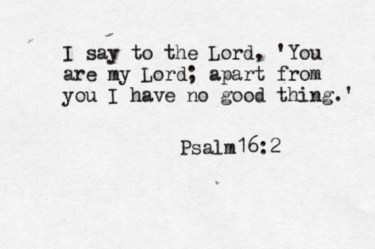
Protect me, O God, for in you I take refuge. I say to the Lord, “You are my Lord; I have no good apart from you.” As for the holy ones in the land, they are the noble, in whom is all my delight. Those who choose another god multiply their sorrows; their drink offerings of blood I will not pour out or take their names upon my lips. The Lord is my chosen portion and my cup; you hold my lot. The boundary lines have fallen for me in pleasant places; I have a goodly heritage. I bless the Lord who gives me counsel; in the night also my heart instructs me. I keep the Lord always before me; because he is at my right hand, I shall not be moved. Therefore my heart is glad, and my soul rejoices; my body also rests secure. For you do not give me up to Sheol, or let your faithful one see the pit. You show me the path of life. In your presence there is fullness of joy; in your right hand are pleasures forevermore.

Romans 12.2

Do not be conformed to this world, but be transformed by the renewing of your minds, so that you may discern what is the will of God – what is good and acceptable and perfect.

Screen Shot 2016-06-20 at 3.19.17 PM


Years ago there was a young man, fresh out of seminary, ready to start serving at his first appointment. He had taken all of the right classes, learned from gifted professors, and even volunteered in the local community. After he finished packing his bags, he loaded up the car and made his way to John Wesley UMC. The novice pastor was anxious and excited about what the church would be like, so before he unpacked any of his belongings he drove out to the church property.

He found the location on the map, went to the listed address, but there was no church to be found. So he turned around and drove to the spot once again only to discover that the church was blocked by the oldest and most decrepit looking tree he had ever seen. The roots were stretching all over the property and the leaves blocked the building and the marquee from being visible on the road.

He couldn’t believe it! No wonder he had heard that church attendance had decreased over the last few years! The young pastor was convinced that if only people could see the church from the road, it would grow and grow and grow.

So, before unpacking any of his important belongings, before even working on his first sermon, the young pastor unpacked his chainsaw and went back to the church. It took him most of the afternoon, but by the time he was finished the tree was gone, the sign and church were visible from the road, and he just knew that the church pews would be filled to the brim on Sunday.

A few days later, as he sat in the study of his parsonage crafting the words for his first message, the local District Superintendent called: “I hope you haven’t finished unpacking yet,” he said, “because you being reappointed.”

You see, the church was called John Wesley UMC for a reason: nearly two hundred years earlier a man named John Wesley had planted that tree while he was in the community. The gathered people decided to build a church right where the tree had been planted in honor of the man who planted the seeds that started our church, and that young pastor had chopped it down.

Apart

I keep the Lord always before me; because he is at my right hand, I shall not be moved,” says the Psalmist. What kind of faith would we have to have to be able to faithfully affirm these words? “The Lord is my chosen portion and my cup; you hold my lot. The boundary lines have fallen for me in pleasant places… You show me the path of life.” Who do you imagine speaking when you hear these words? Perhaps you picture one the great prophets from the Old Testament like Elijah, and Isaiah, and Jeremiah speaking about their faith, or maybe you immediately connect these words with a saint from your life, or perhaps you recall one of the wonderful pastors who served this church in the past.

I want to be able to faithfully proclaim these words, I want my life to reflect the kind of trust and assurance present in the psalm, I want to say “yes” to God over and over, but the problem is, I usually say “no.”

That, in a sense, is the great story of scripture. God offers us a path, he offers us a way, he offers us a “yes” and we respond by saying “no.” I have given you everything you will ever need here in the Garden of Eden; your lives will be perfect forever so long as you don’t eat from the tree of knowledge of Good and Evil. “No thanks God, we know what we’re doing and we’d rather try the fruit.”

I will deliver you out of the bondage of slavery in Egypt and bring you to the Promised Land. Follow my servant Moses, adhere to my commands, and everything will be wonderful. “No thanks God, we’d rather go back to Egypt, at least we had food there.”

I will make of you a great nation, you will grow in prosperity, but you must not worship any other gods instead of me. Listen to the prophets, give heed to my Word, and you will have life. “No thanks God, it’s easier to worship a golden calf and ask for prosperity than it is to live a life according to your law.”

Take up your cross and follow me, give of yourself to those who are suffering, pray for your enemies, worship the Lord, believe in the Good News. “No thanks Jesus, we’d rather hang you on a cross than start living our lives for other people.”

In scripture, whenever people stubbornly say “no” to the will of God, God declares, “Yes.” Like a parent with a child, it happens over and over. And this paradoxical relationship between God and God’s people bleeds out from scripture into our lives even today. God starts calling us to live a new kind of life through the words of a friend, through a profound experience, and maybe even through a sermon and we think “No thanks Lord, I know better.”

God calls us to sacrifice our time and money, to gather regularly for worship and be transformed, to believe in the power of grace and mercy, and we say, “No thanks God. I’ve got better things to do.”

God says to a young pastor, “I am calling you to comfort the afflicted, and afflict the comfortable. Preach the Good News. Serve the last, least, and lost. Plant seeds of faith. Remember the tradition that brought you here.” And he says, “No thanks God. I know what I’m doing, and I’m gonna chop down that tree.”

The truest and most faithful words we can ever pray, are words that we pray every week in church: “Thy will be done.” Those words are at the very heart of what it means to be Christian: submitting ourselves to the will of the Lord. And even though they are the truest and most faithful words we can ever pray, and even though we say them every week, they are the hardest to live by.

9a3fe6cd2bab9347a651e8f1ed86951c

Today marks the beginning of our 4th year together in ministry. And, I have to admit, I didn’t want to come here. I was utterly convinced that I needed to be an associate pastor at a different church right after seminary. I even contacted all the churches in Virginia hiring associates that year and had scheduled interviews. But then the Lord decided this is where I was supposed to be. I knew what I wanted, I knew where I thought I should be, and I was pretty nervous about coming here. Even though I continued to pray, “thy will be done,” I was really saying “my will be done.”

And, I’ve come to find out, that some of you didn’t want me to come here. Members of the staff-parish relations committee wanted a younger pastor to come to St. John’s, but one with experience. They wanted some new and fresh energy, but definitely not someone right out of seminary. And one of you told me that they first time I walked into the church, all you could think was, “he’s a baby.” But God sent me to you. You knew what you wanted, you knew what kind of pastor the church needed, and then I showed up. Even though many of you were praying, “thy will be done,” you were really saying, “my will be done.”

It happens with pastors being appointed to churches, it happens when we start wrestling with a call to a different career, it happens when children enter the picture and new priorities erupt, it happens when someone proposes a new way forward. My will be done versus thy will be done.

In the great battle of “No” and “Yes” in scripture, the final movement came in the cross and the tomb. God’s people continually rebelled against God’s love time and time again, even to the point of delivering God’s son to the cross. But after the three days of silence that followed the crucifixion, God declared the final and triumphant “Yes” in the resurrection of his Son, Jesus Christ.

Because of the good news of the resurrection, the final “Yes” to every “No” we’ve ever offered, we are reminded of God’s unwavering faithfulness in every circumstance. Even when we push back against the will of God, the Lord’s love remains. We say that in baptism we have died with Christ and therefore we have already seen the worst. Since we have also been raised with him in his resurrection from the dead, we can live in confidence that God has already saved us from all that might destroy us, even death. Because of the resurrection, because of Easter, we can be people who actually pray those hard and beautiful words, “thy will be done,” and mean it.

Last week I gathered with thousands of other United Methodists from across the Virginia Conference for the Service of Ordering Ministry. For the last three years I have worked on demonstrating my effectiveness in ministry, which culminated in being ordained as a full elder. I made my way up to the front of the arena with my two pastoral mentors and Lindsey with Elijah, I knelt before the bishop and the conference, and I was ordained. While each ordinand knelt they were invited to choose a particular section of scripture to be displayed on the screens for everyone to see. I chose Romans 12.2: “Do not be conformed to this world, but be transformed by the renewing of your minds, so that you may discern what is the will of God – what is good and acceptable and perfect.”

Those words were the first we ever shared together in worship 3 years ago, and they have come to define the ministry to which all of us are called. And as I felt the bishop’s hands upon my head, I thought about those words from Romans and I was overwhelmed by the Spirit’s persistent reminder, through YOUR faithfulness, I have seen the path of life. I felt convicted by the deep and profound truth that this is not a one-way relationship whereby I teach you, or I pray for you, or that I share God with you. Thanks be to God that we are in this beautiful and messy thing called church together.

Every week WE gather in this place to be transformed by the renewing of OUR minds. Through OUR worship we have worked to discern what is the will of God – what is good and acceptable and perfect.

            We are becoming the kind of people who can faithfully say, “the Lord is our chosen portion and our cup.” The communal Christian experiencing here, is about choosing Jesus again and again and again. It is about coming back to the Lord knowing that he will welcome us. It is about hearing God’s triumphant “Yes!” even when we want to say “No!”

And right now, the world wants us to believe that we have every reason to say “No.” Annual Conference is a reminder of the death that is possible in the church, we hear about all the churches closing this year, we learn about the lack of new and younger generations attending church, and we are reminded of the most frightening statistic of all: The average United Methodist invites someone to church once every 38 years.

But that doesn’t have to be our story. Desiring our will to be done is what got the church to this point in the first place. Can you imagine what would happen if we actually lived by the words “thy will be done”?

The time has come for us to declare “yes!” to the will of God. “Yes Lord, we know that through you all things are possible.” “Yes Lord, crucify our hearts so that they might be resurrected to your glory.” “Yes Lord, convict our souls to invite someone we know to experience your love here at St. John’s!” “Yes Lord, remind of our baptisms and of who we really are.” “Yes Lord, fill us with your Spirit till all shall see Christ living in us.” “Yes Lord, give us the grace and strength to take up our crosses and follow you.” “Yes Lord, let thy will be done!” Amen.

From Diapers to Diplomas

Psalm 46

God is our refuge and strength, a very present help in trouble. Therefore we will not fear, though the earth should change, though the mountains shake in the heart of the sea; though its waters roar and foam, though the mountains tremble with its tumult. There is a river whose streams make glad the city of God, the holy habitation of the Most High. God is in the midst of the city; it shall not be moved; God will help it when the morning dawns. The nations are in an uproar, the kingdoms totter; he utters his voice, the earth melts. The Lord of hosts is with us; the God of Jacob is our refuge. Come, behold the works of the Lord; see what desolations he has brought on the earth. He makes wars cease to the end of the earth; he breaks the bow, and shatters the spear; he burns the shields with fire. “Be still, and know that I am God! I am exalted among the nations, I am exalted in the earth.” The Lord of hosts is with us; the God of Jacob is our refuge.

graduation-sunday


Kurt Vonnegut Jr. once said that true terror is waking up one day and realizing your High School senior class is running the country. It’s a great quote, and one often used this time of year during graduation speeches. In fact, ten years ago, it was used by one of my friends at the beginning of her address during my graduation from High School: True terror is waking up one day and realizing your High School senior class is running the country.

Time can be terrifying. We, as human beings, are deeply rooted in time and when it feels like its going too fast, it leaves us shaking. It shakes us because we can wake up and wonder where it all went. I feel like I just graduated from High School; I can still remember the uncomfortable polyester graduation gown that created a frightening amount of static electricity. I can still picture the girls wearing too high high heels and attempting to walk across the stage without toppling over, and I can still remember the beginning of the speech and how true those words are.

We change all the time. It’s at the heart of what it means to be human. We’re born, we grow in size and knowledge, we move, we develop, we transform, we graduate from preschool to kindergarten, and then all the sudden we graduate from high school, and then with the blink of an eye our generation is running the country.

Things change, our lives change, our situations change, and when they do, it feels like the earth shakes under our feet.

Upon graduating from preschool we move on to Kindergarten. After a number of years with the same classmates and the familiarity of one school and one program, we have to move on to a new location, with longer hours, with a whole new set of expectations. I can still faintly remember my first day in kindergarten and wondering where to sit, and if anyone was going to sit with me. And the change that takes place for the parents is even more severe!

During the final months of Preschool here at St. John’s, we ask the parents to wait in the parking lot so that the children can get used to walking to their own classroom by themselves. This is one way of preparing them for Kindergarten. And honestly, on that first day, the children bound up and down the hallway without a care in the world, and it is the parents in the parking lot who are undergoing an existential crisis.

I’ve seen tears well up in the eyes of fathers, and mothers nervously pacing back and forth while their children enter into a new realm of being. I imagine they felt like the world was shaking under their feet and they needed something solid to hold on to.

After graduating from high school we go off to college and enter a whole new strange world. We often pack our belongings and start living with a stranger and won’t be home until the first break at Thanksgiving. For the student it is a time of great excitement and opportunity, whereas for the parents it can be downright terrifying. Will they be okay? Will they get enough food to eat? Are they going to be able to make new friends? Who is going to wake them up for class in the morning? Who is going to do their laundry? It shakes the parents to their core to watch their beloved child go from diapers to diploma in a blink of an eye.

Every graduation leads to a time of change and fear; Preschool to Elementary School, High School to College, Singleness to Marriage, Health to Death. We enter these periods of unknown, and that’s what makes us really afraid.

13434733_10154269000690536_1434707530486525089_n

When these changes occurs, when we graduate from one thing to another, we often respond in one of two ways; they either push us closer to God, or farther away.

A young couple has a baby and once the new domestic rhythm is established they realize they have no idea what it means to raise a child to be a decent human being so they start going to church it hopes of answers and direction. Or a recent graduate enters a university and is invited to a worship service filled with people who genuinely care about her well-being and she discovers who she is and whose she is. Or a recent widower listens while the church proclaims his deceased wife’s promised resurrection during the funeral and it gives him the strength to discover God’s love in church.

But change can also push us away. We convince ourselves that we can raise a child without the help of a larger community, we believe there is no place for the church in our lives while we are in college, or we grow cynical toward the words proclaimed when someone we love dies.

The church is bold to proclaim the words of the psalmist, the enduring truth, that even though the earth should change, even though the mountains shake and the seas tremble, even though kindergarten can be overwhelming (for children and parents), though the unknown of college stands like an undefined horizon, even though people die and we grieve till the end of our days, there is a river whose streams make glad the city of God. This city cannot be moved, because God dwells in the city forever.

God is the solid rock upon which we can stand when the world shakes underneath our feet. When we are filled with sorrow and doubt, God is the source of joy and light. While people push us to and fro with differing opinions, God speaks the truth in love. As we receive our identities in the hurtful comments of friends and foes, God tells us that we are beloved.

There is a great comfort that comes in knowledge that even though our lives will change, God will stay the same. That is the great story of scripture; God remains steadfast even when we fall away. In the wilderness journey of Exodus, while the people chose to worship idols and other gods, the Lord remained with them. After David fell into the clutches of sin, God was with him. After the exile, God called the people back to their homes and back to lives of faithfulness. Even after delivering Jesus Christ to the cross to die, God’s arms remained open to all of God’s children.

God stays the same.

psalm-46-1

A few months ago I asked one of our youth who just graduated from high school to share what kind of difference St. John’s has made in her life. Danielle was baptized in this sanctuary, was enrolled in our preschool, and has been in worship nearly every Sunday for 18 years. That kind of commitment to the church shaped her into the remarkably wonderful young woman she is today, and it gives me hope for the role of the church in all of our lives.

This is what she had to say:

“Since I was born, I have been coming to St. John’s UMC. It has always been there for me. Even when I was a small child, and unable to truly comprehend the grace of God, I still had a strong and living faith because of the church. As I grew up, I made many friendships at St. John’s that mean a great deal to me. And honestly, “friendship” doesn’t even do justice to what it has really been like. I grew up with these people, and they took the time to raise me in the faith. Without this church I never would have found God and the power of God’s word. I am blessed because I have a church that loved me the way God calls us to love. Moreover, this church has helped me not only find God, but find myself as well. No matter where I might end up in the future, I will always cherish the memories, family, spiritual growth, and prosperity that I experienced at St. John’s.”

I believe Danielle was able to craft those words because of God working through you. Danielle feels blessed because this church loves her the same way God calls all of us to love: without judgment or assumption, without malice or prejudice. From diapers to diploma, you and the other great saints of this church have nurtured her. You have shown her what it means for God to be our strength and refuge, a very present help in trouble.

When someone from the church died she could have fallen to the temptation of fear and trembling. But you showed up for the funerals, you rejoiced in the promise of salvation, you embodied the hope we have in the Lord who is with us.

When she moved from school to school, while life changed around her each and every day, this place was like the river whose streams mad glad the city of God. Here in this church she learned about the God of creation who brought forth order out of chaos, who called Abraham into a covenanted relationship, who wrestled with Jacob on the banks of the Jabbok river, who delivered the people out of slavery in Egypt, who called prophets and priests to bring the people back, who became incarnate in Jesus Christ and dwelt among us, who died on a cross, who was raised three days later.

Throughout Danielle’s life this church has said every Sunday, “Come, behold the works of the Lord!” Her eyes have been opened to the way God moves in the world, she found her identity as a child of God; she experienced God’s magnificent power and might.

Change can be a terrifying thing. But the God of Abraham, Isaac, and Jacob, the God of Jesus Christ, is our refuge and strength. Because we can do all things through Christ who strengthens us, therefore we will not fear even though our lives change. This church’s work propels a river whose streams make glad the city of God. Through our worship and our work, through our prayers and our presence, through our faith and our fellowship, we remember that God is in the midst of our lives. God will help when a new day dawns. The nation might be in an uproar, kingdoms will totter, but the Lord of hosts is with us.

So come, behold the works of the Lord. God makes wars cease, and peace reign. God makes the weak mighty, and brings down the principalities. God breaks the bonds of slavery, and opens up the doors to freedom. God brings hope to the poor and calls upon the wealthy to serve. God comforts the afflicted and afflicts the comfortable.

Be still and know that God is with us. From diapers to diplomas and even to death, God is with us. Amen.

A Letter To My Son

Galatians 1.1-10

Paul an apostle – sent neither by human commission nor from human authorities, but through Jesus Christ and God the Father, who raised him from the dead – and all the members of God’s family who are with me, To the churches of Galatia: Grace to you and peace from God our Father and the Lord Jesus Christ, who gave himself for our sins to set us free from the present evil age, according to the will of our God and Father, to whom be the glory forever and ever. Amen. I am astonished that you are so quickly deserting the one who called you in the grace of Christ and are turning to a different gospel – not that there is another gospel, but there are some who are confusing you and want to pervert the gospel of Christ. But even if we or an angel from heaven should proclaim to you a gospel contrary to what we proclaimed to you, let that one be accursed! As we have said before, so now I repeat, if anyone proclaims to you a gospel contrary to what you received, let that one be accursed! Am I now seeking human approval, or God’s approval? Or am I trying to please people? If I were still pleasing people, I would not be a servant of Christ.

Galatians_692

Months ago, while I was planning all of our worship services for the year ahead, I read this text from Galatians for the last Sunday of May and I thought it was perfect. I knew that Lindsey was pregnant and that, if the timing worked out, this would be the first Sunday and opportunity to preach after the birth of our son. All of you would have listened to other preachers for four weeks, and then I would be standing up here proclaiming God’s faithful Word from Galatians.

The text is so fitting for today because Paul, having worked with the Galatian churches for some time, has been absent from the community and catches wind about their lack of faithfulness. Perhaps after the community listened to a group of different preachers for four Sundays in a row, Paul felt inclined to write to them about the true gospel.

Now, keep in mind, most of Paul’s letters are filled with elevated language complimenting the community from the conception. Galatians begins in a very different way. Far from kind and pastoral, Paul’s tone is irritated and cranky. Paul whips through the customary pleasantries and gets right to the point: “I am astonished that you are so quickly deserting the one who called you in the grace of Christ and are turning to a different gospel!”

So, here we are. I’ve been gone for about a month. I tried to keep away from my phone and email, I even attempted to avoid driving near the church on Sunday mornings, but I’ve heard through the grapevine about what’s really taken place. Our District Superintendent had the nerve to break four of his ribs shortly before preaching and called upon Larry Kreamer to fill in as best he good. Chris Markham had the nerve to get up here in the pulpit and preach about Mary Magdalene, calling all of us to recognize how quickly we lift proverbial stones to cast at one another, in particular toward people of a different sexual identity. Rick Maryman had the nerve to boldly call the church to remember the role of the Holy Spirit and never lose sight of the importance of Pentecost. And then Eric Fitzgerald stood up here last week and talked about how God’s ways are not our ways, and that there really is a time for everything; whether we recognize it or not.

I can’t believe it! I’ve only been gone four weeks and you all have fallen away from the gospel. You’ve listened to those who would rather distort the gospel of Jesus Christ and who offered something contrary to what has been offered previously! I knew I needed to pray for you in my absence but I didn’t know I needed to pray that much!

Of course, I am only joking. I am grateful for the witness and willingness of our gifted laity who faithfully proclaimed the gospel over the last four Sundays. It brings me a sense of peace that words cannot describe to know that, unlike the Galatians, all of you have held fast to the Good News and have continued to be servants of Jesus Christ.

For the sermon today, I decided to write a letter in the vein of Paul. Though instead of writing it to a wayward church in Galatia, I wrote it to my son Elijah. This passage is one that is easy to avoid, after all we’re reading a letter meant for somebody else’s church. We can write it off as a personal matter between Paul and the Galatians – except for the fact that this is God’s Word for us. Similarly, it is my hope that in the words I have written for my son, you will hear God speaking to you as well.

Transformed


Dear Elijah,

You are loved beyond your ability to comprehend. You mother and I eagerly awaited your arrival, we prepared by purchasing everything we thought we could possibly need, we read books on how to raise a child, we sought out advice from friends, family, and at times even strangers. You are the first grandson in the family, and in your short month of life, your grandparents have become completely obsessed with you.

And more than the family, there is an entire community who knows nothing about you other than your existence, and yet you are loved. Preschoolers from the church have bombarded me with questions about you, and what you look like, and how you’re sleeping, and a slew of other inquiries. Members from the church have flooded my email inbox wanting to know if we need anything to take care of you. And for as long as we’ve known that you were joining our family, the entire community has lifted you up in prayer.

You are loved beyond your ability to comprehend. But more than this church, and even more than your parents, God loves you with reckless abandon.

Over the years you will come to know more about God’s unending love through the stories of scripture that will be shared in worship. You will hear about God’s creative majesty in the foundation of the world, God’s calling of the people Israel to a new beginning, God’s persistence when the people fell away from the path, and even God’s grace made manifest in a manger.

In time you will experience the power and might of Jesus Christ. God in the flesh, born in a humble abode, who walked the roads of life with friends and strangers, healed the sick, fed the hungry, clothed the naked, broke the law, fulfilled the scriptures, died on a cross, and rose from the grave.

Elijah, the church will strive to share with you the radical message of Jesus Christ in such a way that it transforms your life forever. The people in the pews will gather you in, proclaim God’s Word, respond to it, and send you forth week after week to be Christ’s body for the world. No small task.

SeraPetrasPhotography_EWM-23

And Elijah, you will live and move and have your being in a world that few of us can even imagine…

As you become the person God is calling you to be, you will live in a world where the church is no longer the status quo for everyone. Christianity as Christendom has fallen away. You will be judged for your strange faith, rather than commended as many of us once were.

You will live in a world where homosexuality is normative. You will encounter couples that have otherwise been called incompatible with Christian teaching, but for you they will be perfectly compatible with Christian teaching. You will interact with people from such a wide plethora of diversity that you will want the world to be the mosaic it is, rather than hoping for birds of a feather to flock together.

Sadly, you will never know what it means to live into the mystery of life and faith. There will always be an answer for every one of your questions at just the click of a button. You will have to work harder to experience the profound wonder of God’s presence because you will rarely have to struggle for clarity.

And, I’m sad to say, you will never know of a life prior to September 11th. You will grow up in a world cowering in fear to the seemingly endless threat of international and domestic terrorism. You will be raised with the words Jesus gave to his disciples about striving for peace, while countless men and women are called to give their lives for the freedoms we hold so dear. Son, the world we live in is broken; we often succumb to the power of sin that pushes us to believe that violence and power control our destinies, and that death carries a strong sting.

Elijah, in time you will struggle and wrestle between the call of competing narratives and gospels that vie for your allegiance. Even though your mother and I, and your friends, and the church will do everything we can to hold fast to the gospel that was shared with us, at some point you will fall away. Whether through doubt, disillusionment, or some other reason, there will come a time when you will grow frustrated with this thing called church.

Elijah, it might happen when you start to understand the pressure that is constantly placed on churches to increase attendance, to raise the budget, to fill the pews, to do whatever it takes to improve the market share. You will see how many of us care more about being nice, or funny, or unassuming, that we make the church more about us than about God.

And on the other side, you will meet people who subvert the gospel to mean whatever they want it to mean; people who will use scripture like a weapon to attack others for their way of life and it will leave you feeling frustrated.

But Elijah, I want you to try to remember one thing: Jesus is Lord, and everything else is secondary.

Wherever you are led throughout your life, wherever the Spirit calls you to go, you will encounter Christians at both ends of the spectrum. Christians who will do whatever it takes, even at the expense of watering down the gospel, to make it as appealing as possible. And Christians who will take up the bible like a sword to mow down their enemies.

But Jesus, the one in whom we live and move and have our being, was not concerned seeking the approval of his fellow human beings. He did not belittle the immense and profound qualities of God’s love to being something easy and trite. Jesus pushed his followers into uncomfortable arenas of love and respect in order to transform the world.

And at the same time Jesus, the one in whom we live and move and have our being, was not concerned with attacking people for their differences and ostracizing them from the community. He did not use scripture to condemn the world. Instead, Jesus went out to the people that most of us would rather ignore and he told them that they deserved to be loved just as much as anyone else.

Elijah, God’s love in Jesus Christ is a mystery. Thanks be to God that there is not an easy and simple answer to that question of faith. Unlike almost everything else you will experience, it cannot be explained at the click of a button. Instead, you can only know the love of God through the table at which the church gathers, through the breaking of bread and the sharing of the cup. Only when God invites you to the table will you begin to enter the light from the darkness. Only in the sharing of communion will the competing narratives and false gospels begin to fade away. Only when you experience this little bit of heaven on earth, will you begin to rejoice in the mystery that is the grace of Jesus Christ.

Elijah, I love you. Your family loves you. The church loves you. But more importantly, God loves you.

-Dad


Amen.