This week on the Strangely Warmed podcast I speak with Todd Littleton about the readings for the 5th Sunday of Easter [B] (Acts 8.26-40, Psalm 22.25-31, 1 John 4.7-21, John 15.1-8). Todd is the pastor of Snow Hill Baptist Church in Tuttle, Oklahoma. Our conversation covers a range of topics including vine time, different perspectives, the vocation of reading, God’s agency, Christotelism, the grammar of love, faithful fruit, the three Bs, and longterm obedience. If you would like to listen to the episode or subscribe to the podcast you can do so here: The Heavenly Buffet
I am the good shepherd. The good shepherd lays down his life for the sheep. The hired hand, who is not the shepherd and does not own the sheep, sees the wolf coming and leaves the sheep and runs away — and the wolf snatches them and scatters them. The hired hand runs away because a hired hand does not care for the sheep. I am the good shepherd. I know my own and my own know me, just as the Father knows me and I know the Father. And I lay down my life for the sheep. I have other sheep that do not belong to this fold. I must bring them also, and they will life to my voice. So there will be one flock, one shepherd. For this reason the Father loves me, because I lay down my life in order to take it up again. No one takes it from me, but I lay it down of my own accord. I have power to lay it down, and I have power to take it up again. I have received this command from my Father.
I was on vacation with my extended family and decided that, as a pastor, I should still probably go to church on Sunday morning. I googled “nearby United Methodist Churches,” picked the one with the least bad website, and announced my intention to the family. When Sunday morning arrived, the only takers I had for church were my sister, my son, and myself.
So we loaded into the car and left everyone to sleep in on Sunday morning as we prepared to worship the Lord in glory and splendor.
The church was beautiful, situated right in the middle of town (a town that will remain unnamed for reasons soon to be proclaimed), and when we pulled into the parking lot we were immediately greeted by a cheerful older couple dressed in their Sunday best.
Our little trio ascended the stairs leading into the sanctuary and were immediately bombarded by two things: an oppressive wave of heat wafting from the chancel area, and a slew of congregants who could sense fresh blood in the water.
Regarding the former: the AC had apparently died and the design of the sanctuary trapped the summer heat inside and we were to be treated to a sauna-like atmosphere for the service.
Regarding the latter: I couldn’t blame the church folk. Here we were looking like a new little family in town and they were all so happy to see people they’d never seen before.
And in that briefest of moments I had a choice. Well, I had a few. I could’ve grabbed my son and sister and made for the nearest exit so that we could find a church that had their air conditioning running. But seeing as I am a pastor, I felt that a tad impolite. Which brings me to the main choice I had: To share, or not to share, my vocation.
There’s something that happens when a pastor attends another church – people become, as my grandmother says, beside themselves. They want to pull out all the stops, and find you the best pew in the house, and they want to be their very best.
Why?
I’m not sure.
It’s not as if, as a pastor, I would ever come back on another Sunday. I have a job that requires me to be in a particular place at a particular time nearly every Sunday of my adult life.
Nevertheless, I had to choose. And, seeing as I was on vacation, I decided to truly rest, and allow the congregation to rest, and when the first person stepped forward to shake my hand, he sure enough asked what I did for a living. I opened my mouth to say something about being a librarian, or construction worker, or being a mid-tier manager at a sufficiently boring data company when my son, all of three years old at the time, stepped right in front of me and yelled, “I’m Elijah and this is my dad. He’s a pastor!”
And so it began.
15 minutes later, having received a tour that included a forgotten church library, three sets of bathrooms, and a hallway filled with more pamphlets than I’ve ever seen in one place at one time, I found myself sitting in what I was assured to be the best pew in the sanctuary, next to my sister and son and the three of us were completely drenched in sweat.
We stood for the appropriate hymns, we bowed for the requisite prayers, and finally we sat back for the sermon.
I love listening to other people preach. It is so much of what I do after all, and I don’t get to hear a lot of preaching, so I settled in to hear what God had to say through this particular preacher.
The text was John 10 – I am the good shepherd.
The preacher wax eloquently about John’s gospel in general, and the importance of the various I am statements (I am the bread of life, I am the light of the world, I am the way, the truth, and the life). The preacher made various allusions to Exodus 3 when Moses encountered God as the burning bush who declared I Am Who I Am.
It was all well and good, until it wasn’t.
The preacher was wrapping up the homiletical insights and ended with this: “Jesus is the good shepherd who watches out for the sheep. All of you out there are the sheep. You don’t know what to do and what not to do which is why you need Jesus. But I am neither shepherd nor sheep. I, as the pastor, am the sheep dog. Now I know that John doesn’t mentioned the sheep dog but I’m sure that he just forgot to write that part down. As the sheep dog my primary responsibility is to keep all of you in line. I will nip at your legs to make sure you know what you can and can’t do, where you can and you can’t go. So let me do my job.”
In the name of the Father, Son, and Holy Spirit, Amen?
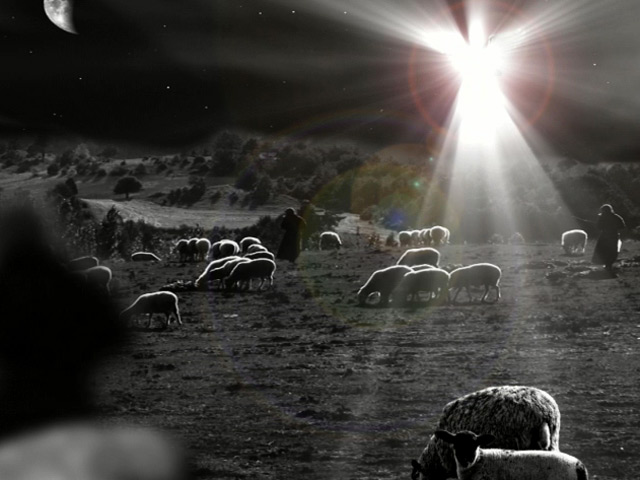
The church universal has traditionally observed this, the 4th Sunday of Easter, as Good Shepherd Sunday. In all three years of the lectionary cycle, four different texts assigned for each Sunday, today is all about shepherds and sheep from both the Old and New Testaments.
Which, when you think about it, is kind of the perfect “life after Easter” message – Jesus returns to us, Jesus finds us, and Jesus will never let us go.
We are given an assurance from the Good Shepherd, just on the other side of rejection and resurrection, that we are loved, that we are cared for, that we matter not based on what we do or do not do, but on what Jesus does for us.
Which, to be clear, is rather counter to what I heard on vacation.
Consider the sheep: The sheep cannot do much of anything for themselves or their situations. The only thing sheep can do, really, is follow. And even that can be a trying endeavor. And when a sheep is lost, it is, for all practical purposes, a dead sheep. The only hope a lost sheep has is being found by the shepherd.
Jesus, as the Good Shepherd, tell us exactly what he will do, how far he will go, to save a bunch of dumb sheep who can’t do anything for themselves.
Jesus, to put it simply, does it all.
Jesus gets all the good verbs in scripture and yet, in Christian preaching, he often feels like an after-thought. But Jesus, even here, warns us about that possible proclamation! The hired hand, who is not the shepherd and does not own the sheep, sees the wolf coming and leaves the sheep and runs away! Jesus is rebuking religious leaders then, and now, who neglect the people of God.
Do you see? Discipleship is all about the admission of our condition – we’re sheep; we are dead in our sins. It is all about coming to grips with the fact that we have no power to save ourselves or to convince anyone that we are worth saving.
Consider – More than 18 million children in the US live in food insecure homes.
For the first time since the 1960’s life expectancy in the US has gone down.
And, while people celebrated (or lamented) the conviction of Derek Chauvin, the police officer who murdered George Floyd last year, a police officer in Columbus, Ohio shot and killed a 16 year old girl named Ma’Khia Bryant.
I could go on and on.
We truly are sheep without a hope in the world unless we have a shepherd who is willing to do for us that which we cannot do on our own.
Thankfully, that’s exactly what we get in Christ Jesus.
God in Christ finds us in the desert of death, not in the garden of progress. God meets us right smack dab in the middle of our sins, not in the triumph of our accomplishments.
The life of faith is predicated on recognizing how lost we are, how our lives really are out of our hands, how if we will ever really live again it will entirely be the gift of some gracious shepherd who delights in putting us on his shoulders and carries us home.
We can call the Good Shepherd a good shepherd because while the hired hands run away at the first sign of danger, or puts all sorts of unhelpful (and unattainable) expectations on us, Jesus remains steadfast. And (!) Jesus does not merely care for the sheep within reach, but also gathers the whole flock together!
For all of the talk in the church today about inclusion (open hearts, minds, doors), the most inclusive claim of the Gospel is that Jesus came to save sinners, which includes each and every single one of us!
And that’s the most important part of whatever this thing is that we call church – its about proclaiming God’s grace imputed to sinners through the work of Jesus Christ. If that’s not the beginning, middle, and end of everything we do, then we’re not really doing anything.
But, instead of making that profound proclamation, we are far more likely to be consumed by sheep dogs nipping at our legs both inside, and outside, the church. We hear it from pastors, politicians, pundits, and everyone in between. Things like: You need to work on your racism, sexism, classism, ageism, ethnocentrism, stop using styrofoam, go vegan, gluten free, eat locally, thinking globally, don’t drink so much, practice mindfulness, inclusiveness, keep the sabbath, live simply, practice diversity, on and on and on.
And, all of things are good and fine, we probably should start doing that stuff – but they are not where we begin. If those things are anything, they are a response to what God has already done.
A Bishop, from another denomination (thankfully), used to be in charge of recruiting for a seminary. He would seek out those who felt called to lead the church and he would end every single interview the same way, with a role play. He would say, “Pretend I’m not someone from the seminary, but that everything else about my life is true – I’m a 50 something, over-educated, occasionally kind, straight white male. Now, tell me why I should go to church…”
Every single person, throughout the years, would mention something about the value of community. But the Bishop would say, “I attend AA and I have all the community support I need.” Then the candidates would mention something about outreach. But the Bishop would say, “I’m a member of Rotary and I already help the needy.” Then the candidates would make a point to emphasize the beauty of the music at church. But the Bishop would say, “I have season tickets to the local symphony.”
He recruited for years and not a single candidate ever mentioned anything, specifically, about Jesus.
The church is not in the business of societal rearrangement, we are not the paragons of community service, and we certainly don’t hoard all of the musical prodigies. Church may have those gifts, but if we’re serious about being the church then we really only have one thing to offer at all: God’s grace in Jesus.
For the church today, the main thing is to keep the main thing, the main thing. We might think the main thing is convincing other people to adopt our positions on social issues. We might think the main thing is making sure that everyone falls asleep at night with a full belly. We might think the main thing is putting on the greatest performance in the world every single Sunday. But those are not the main thing.
The main thing is Jesus Christ and him crucified. The main thing is Jesus Christ, God in the flesh, born to dwell among us. The main thing is Jesus Christ, the Good Shepherd, who never ever stops tending to the sheep.
Friends, the only thing we’ve got that other group don’t, is Jesus Christ and him crucified, the Good Shepherd who lays down his life for the sheep; for us!
People can get everything they need, except Jesus, from other places and other people. And they might even be better at that stuff than we are.
But we’re in the Jesus business. That is: we are here to proclaim the Good News, frankly the best news, that God has seen fit to rectify all that we’ve wronged, that we are love in spite of all the reasons we shouldn’t be loved, and that, and the end of all things, we know how the story ends because we know Jesus Christ. Amen.
This week on the Strangely Warmed podcast I speak with Teer Hardy about the readings for the 4th Sunday of Easter [B] (Acts 4.5-12, Psalm 23, 1 John 3.16-24, John 10.11-18). Teer serves as one of the pastors at Mt. Olivet UMC in Arlington, VA. Our conversation covers a range of topics including correct pronunciations, Sabbath as Resistance, a book announcement (!), upsetting the status quo, universalism, eating with enemies, bad shepherds, and sermon sharing. If you would like to listen to the episode or subscribe to the podcast you can do so here: The Jesus Problem
While they were talking about this, Jesus himself stood among them and said to them, “Peace be with you.” They were startled and terrified, and thought that they were seeing a ghost. He said to them, “Why are you frightened, and why do doubts arise in your hearts? Look at my hands and my feet; see that it is I myself. Touch me and see; for a ghost does not have flesh and bones as you see that I have.” And when he had said this, he showed them his hands and his feet. While in their joy they were disbelieving and still wondering, he said to them, “Have you anything here to eat?” They gave him a piece of broiled fish, and he took it and ate it in their presence. Then he said to them, “These are my words that I spoke to you while I was still with you — that everything written about me in the law of Moses, the prophets, and the psalms must be fulfilled.” Then he opened their minds to understand the scriptures, and he said to them, “Thus it is written, that the Messiah is to suffer and to rise from the dead on the third day, and that repentance and forgiveness of sins is to be proclaimed in his name to all nations, beginning from Jerusalem. You are witnesses of these things.”
The women go to the cemetery in the darkness. Lo and behold – Jesus’ tomb is empty! The women have a chance encounter with a man in white and they leave afraid. So afraid, in fact, that they say nothing to anyone.
But then they do, otherwise we wouldn’t be doing what we’re doing right now. They go back to the other disciples with declarations of resurrection, “He is risen! The story isn’t over! This is just the beginning! Everything has been made new!”
And how do the disciples respond? “Ya’ll are crazy – That’s not possible.”
None of the disciples expected the resurrection, despite Jesus telling them it would happen on three separate occasions, despite all the parables that hinge on death being the prerequisite to new life, despite Jesus doing all sorts of things that ran counter to what the world believed possible.
And even when Jesus appears to them, making a way through locked doors, they couldn’t really believe it. All of the post-resurrection appearances, the moments we might call life after Easter, are mixed with fear, doubt, hope, and, of all things, food. And still, they don’t know what to believe.
It’s easy to pick on the disciples – It’s even fun to call out their faithlessness because it often makes us feel better about ourselves. But we can’t really blame the disciples for feeling and experiencing what they felt and experienced.
All of it is rather unbelievable.
Jesus forgives his crucifiers from the cross.
Jesus reaches out to sinners and outcasts for no reason other than the fact that they are sinners and outcasts.
Jesus speaks truth to power knowing full and well what the consequences will be.
Jesus invites gobs of people to join in a revolution of the heart where the needs of others are more important than anything else.
And we killed him for it.
But then he came back.
And not only did he come back, he came back to those who denied him, who betrayed him, and who abandoned him.
The disciples are talking about the craziness they’ve heard from the women who went to the tomb and all of the sudden Jesus himself stands among them. “Peace my friends!” They are terrified, they think it must be a ghost. Jesus says, “What’s wrong with all of you? Look at me. I am flesh and bone.” The disciples come out from hiding behind tables and chairs to take a closer inspection and then Jesus says, “While you’re at it, have you got anything to eat? I’m starving.” And one of the disciples hands Jesus a piece of broiled fish, and Jesus scarfs it down in one bite.
Years ago, a church received a rather large donation from an anonymous source and the community of faith began debating what to do with the money. There were suggestions of adding a new stained glass window behind the altar. Someone mentioned that the roof was looking worse for the wear and it might be time to go ahead and replace yet. The youth wanted new bean bags chairs.
They argued and argued until the oldest woman in the room, seen as a grandmother by just about everyone else – a pillar of the church, slowly rose to her feet and said, “Give me the money. I know what to do with it.”
The next day she took the money to the local homeless shelter and told them to spend the money on feeding the hungry.
The following Sunday she stood among her church family and announced what she had done with the money. At first there was disgruntled shuffling among the pews, a few murmured slights, when finally a man shouted at her: “How could you do that? We could’ve used that money! And you gave it away to other people! You don’t even know if they believe in Jesus!”
To which the woman calmly replied, “Maybe they don’t believe in Jesus, but I do. I do.”
Robert Farrar Capon said that, “Food is the daily sacrament of unnecessary goodness, ordained for a continual remembrance that the world will always be more delicious than it is useful.”
In the gospel stories Jesus is forever sharing meals with other people and, on a few notable occasions, he makes more wine and more food available for others just to keep the celebration going.
And it was Jesus’ table fellowship that most confounded his critics. Whether it was a lunch time sandwich over at Zacchaeus’ house or sharing food with crowds undeserving, Jesus’ willingness to eat and share food with others was a foretaste of both what we experience now and will enjoy at the Supper of the Lamb.
Perhaps that’s why we Methodists are so good at hosting meals – we always make more food than anyone can eat and we send people home with food to last for days!
Why do we share food? Why do we give ourselves over to music that moves us? Why do we spend our time painting, or reading, or daydreaming? We do those things because they’re fun. Pure and simple.
But it’s about more than that too. Half of all the most remarkable things we do in this life, the simple delights of rejoicing in the wonder of creation, they are hidden in the world that longs to come to fruition.
Let me put it this way: For all of the loveliness this world has to offer, it is all temporary and finite. The food is consumed. The bottle sits empty. The record spins at the end without a needle in the groove. On and on.
We, to use the language of scripture, are strangers in a strange land, we live in a time of impermanence. But God has given us good appetites not to consume what the world offers and then toss it away. God has given us appetites to taste goodness and hunger to make it better.
And that’s why we share recipes with friends and family, it’s why we give away books that we love, it’s why we talk forever and ever about movies and TV shows and YouTube videos – we delight in delighting others.
Whenever we love the things we’ve been given, whether it’s broiled fish or a hardback book or a vinyl album or a perfectly knit sweater or tomatoes from the garden, when we love those things for what they are, we catch glimpses and tastes and feelings of what is to come.
The breads and the pastries, the cheeses and the wines, and the singing and the dancing will go into the Supper of the Lamb because we do!
Jesus, just on the other side of resurrection appears to his friends and promptly ingests a fish stick. We could easily brush this aside as a random detail included by Luke, but it is not random – it is a signpost of the delight of resurrection! It is an ever ringing reminder of the goodness God has given to us right now, and will continue to give to us forever and ever.
But even if the reference to seafood on Easter isn’t enough – Jesus compares the Kingdom of Heaven to a whole lot of things, and most of those things have to do with food! Mustard seeds, and grain of wheat, fig trees, leavened bread! He hands over bread and wine on his final evening and says they are body and blood!
Resurrection, believe it or not, is forever inextricably tied up with our food and love of it. It is quite literally by the death of corn, cabbage, and collards that we have lived until today.
Think of bread! It is the great sacrament of life only possible by death.
Unless a seed dies, there is no wheat.
Without wheat being ground and pulverized there is no flour.
Unless carbohydrates are destroyed by yeast there is no rising.
Without the murder of yeast by fire and heat there is no bread.
And without the consumption of bread by the likes of you and me, there is no you and me.
Out of death, life! Resurrection!
The God we worship is the God of transportation and transformation – God is forever delivering people from one place to another, and working in the world to help guide us from who we are to who we can be.
The things of life can do that – there truly are meals, movies, and musicals that change us after consuming them. They can do so because we are in the time called Life After Easter.
Despite the protests of fearful and cynical individuals who decry that we are who we are, and that things are doomed to stay the same, and that it doesn’t do any good to do any good because nothing ever changes – that’s not the proclamation of the Gospel!
We are indeed a sinful people. We do terrible things and terrible things are done to us. Just this week saw yet another innocent black man die at the hands of the police and people all across the country have tribalized themselves, again, putting up walls of division rather than avenues of connection.
We are a people sick and tired – whether we’re sick and tired in our boring and monotonous lives, or we’re sick and tired of all the horrendous things that keep happening no matter how hard we declare that other people need to change.
But life after Easter makes all sorts of things possible that would otherwise be impossible.
We have been treed from the terrible tyranny of sin and death, they no longer have control over us and what we do, even though we keep insisting that they are the most important things in the world. It’s why we retreat to the comfort of our own domains while rejoicing in calls out the specks in other peoples’ eyes. It’s why we implore others to pull themselves up by their bootstraps even when they don’t have any boots to begin with. It’s why we keeping viewing people through the lens of sin rather than the lens of grace.
But here’s the Good News, the really good news of life after Easter – If God can raise a crucified Jesus from the grave, then never again can we be so sure of what is and isn’t possible.
Jesus was dead and forsaken in a tomb, but God refused to leave him there.
In the time called life after Easter, we don’t believe in dejection – we believe in resurrection.
In the time called life after Easter, we aren’t defined by what we’ve failed to do – we are defined by what Jesus has done.
In the time called life after Easter, we can’t stay shackled to the way things were or are- God has set us free for the way things can be. Amen.
When it was evening on that day, the first day of the week, and the doors of the house where the disciples had met were locked for fear of the Jews, Jesus came and stood among them and said, “Peace be with you.” After he said this, he showed them his hands and his side. Then the disciples rejoiced when they saw the Lord. Jesus said to them again, “Peace be with you. As the Father has sent me, so I send you.” When he had said this, he breathed on them and said to them, “Receive the Holy Spirit. If you forgive the sins of any, they are forgiven; if you retain the sins of any, they are retained.”
He boarded the plain, a well dressed 6 foot 8, and hoped for an emergency exit row in which he could stretch out his already too long legs. He was a pastor and professor of theology, and was returning from a conference on the other side of the country and was looking forward to going home.
He loaded his carryon above his head, sighed at the normal sized seat, and reluctantly squeezed himself in. And, of course, on this small plane with only two seat on each side, a man equally as large lumbered down the aisle and sat down right next to him.
The two men fumbled over one another and conversation, as it always does on planes, began awkwardly.
The second man began, “So, what do you do for a living?”
“I’m a preacher.” And just as soon as the words were out of his mouth, his seat partner declared, a little too loudly, “I’m not a believer!”
“That’s fine,” he replied, “Frankly, it doesn’t make much of a difference – Jesus has already gone and done it all for you whether you like it or not.”
The preacher kept his mouth shut after that, and thought about catching some Zs as they made their way to cruising altitude, but the other man started talking. First it was just the usual flying next to a stranger chit chat, but then it turned serious, the man started talking about Vietnam.
He’d been an infantryman, fought in all the awful battles, and now tried to pretend like it never happened.
The man went on and on, talked the entire flight from coast to coast, describing all the terrible things he did for his country and how, when he came back, his country didn’t want him to talk about it. Eventually, he said, “I’ve had a terrible time living with it, living with myself.”
And then the preacher leaned over and said, “Have you confessed all the sins that have been troubling you?”
“What do you mean confessed?! I ain’t confessing!”
“Sure you are, it’s what you’ve been doing the whole flight. And I’ve been commanded by Jesus, that whenever I hear a confession like yours, to hand over the goods and speak a particular word. So, if you have any more burdening you, nows the time to hand them over.”
The man said, “I’m done. That’s the lot of em.”
And suddenly he grabbed the preacher, grabbed him hard like he was about to fall out of the plan and said, “But, I told you – I’m not a believer. I don’t have any faith in me.”
The preacher unbuckled his seat belt and stood up over the man in the sear and declared, “Well, that’s no matter. Jesus says it’s what inside of us that’s wrong with the world. Nobody really has faith inside them – faith alone saves us because it comes from outside of us, from one creature to another. And I’m going to speak faith into you.”
The fasten seat belt sign binged from above and the closest steward came over and ordered the preacher to sit down. But he ignored the command, and instead he placed his hands on the man next to him and said, “In the name of Jesus Christ, I declare the entire forgiveness of all your sins!”
“But, you can’t do that,” the man whispered.
“Oh yes I did, and I must, and I’ll keep doing it over and over again.”
And he did. Only this time he said it louder, loud enough for the whole plane to hear, and the man became a puddle of tears and wept all over himself like a child.
The steward and everyone else on the plane were silent, reverent even, knowing that something strange and holy was happening.
After the plane landed, the man leaned over the preacher and asked to be absolved one more time, as if he couldn’t get enough of the good news, so that preacher did it one more time and the man started to laugh.
He said, “Hell, if what you said it true, then it’s the best news I’ve ever heard. I just can’t believe it. It’s too good to be true. It would take a miracle for me to believe something so crazy good.”
And the preacher laughed too, and said, “Yep, it takes a miracle for all of us. It takes a miracle for every last one of us.”
I’ve told that story from this pulpit before. It bears repeating, like all good stories, because it’s just so good.
Notice, the preacher didn’t just sit back and merely listen to the other man. He didn’t fill the voids of silence with trite drivel like, “I feel your pain,” or, “I know what you’re going through.” The preacher didn’t minimize the badness with talk of duty and responsibility. He didn’t deflect away or even change the subject.
Instead he offered absolution.
He gave the man the Gospel.
On the evening of the first Easter, the disciples were hiding and cowering behind locked doors in the upper room.
For years Jesus had prepared them for this most momentous occasion and it, apparently, didn’t make a beans worth of a difference.
They betrayed him.
They abandoned him.
They denied him.
Consider these would-be disciples. Terrified and alone. Apparently they didn’t really believe Jesus would do all that he said he would do. I mean, he only predicted his passion and resurrection three different times. He only told them parables about the upturning of the cosmos ever chance he got. He only promised that this is exactly what would happen.
And yet, today, whenever we think of the disciples, if we do at all, we usually imagine them as the paragons of morality, faith, and virtue. We see them as those who were willing to leave it all behind to follow Jesus. But here, in this story, they’ve left everything, namely Jesus, behind just to shake in terror.
The disciples are not the perfect Christians we often imagine them to be.
They are, in fact, just like us.
Sinners without a hope in the world, unless the hope of the world comes back from the dead.
And it’s to these fools, these faithless so-called followers, that the risen Christ first appeared on Easter evening!
And not only just Jesus encounter them, he made his way throughout locked doors to find them! He breathed upon them. He commissioned them to get out and to share the Good News.
You and me and everybody else, we are constantly falling short of Jesus’ hopes and expectations. We lock our doors, we turn our gaze away, we put up walls of separation, and Jesus keeps showing up! Walking through our doors, redirecting our attention, and toppling down our walls.
This story of Jesus appear to the disciples falls of the 2nd Sunday of Easter every single year, if we follow the lectionary. It’s like God wants to remind us over and over again right here, just on the other side of the resurrection, that Jesus ain’t done with us yet and we’ve got a job to do.
Jesus is going to get through whatever barriers and locked doors and walls we’ve erected.
Jesus is going to keep showing up to offer us words of grace even when we know we don’t deserve them.
Jesus is going to appear to the sinners and the doubters and everyone in between because that’s what Jesus does.
The beauty of the gospel is that Jesus never ever shied away from sinners and doubters. Even though, in the church, we often ostracize those very people to the margins of the community. Jesus does his best work, frankly his only work, with the kind of people hiding in the upper room.
Listen – Jesus rewrote and reknit the fabric of reality and then told a bunch of losers to spread the word.
I don’t know about you, but that gives me hope. For, it means that even on my worst days, Jesus is still for me. It means that even in the midst of my sins and my questions, Jesus has a word to share. It means that nothing, not life, death, nor angels, rulers, things present, things to come, powers, nor anything else in all creation will ever be able to separate me, you, and anyone else from the love of God in Christ Jesus our Lord.
The world is going down the drain, but we’ve got a Savior who works at the bottom of the drain and he’s the only one who can do anything about it.
And what is the anything our savior does?
He forgives!
He forgives the abandoning, denying, and betraying disciples.
He forgives you.
Life after Easter is defined and made possible by Christ’s rather reckless forgiveness. It is reckless because it runs counter to how we believe the world is supposed to work – namely an eye for an eye. The problem with “an eye for an eye” is that it leaves everyone blind.
Jesus, however, offers a bewildering alternative – a life of mercy, peace, and forgiveness.
Whenever we read about life after Easter, those days between the empty tomb and the Ascension, we tend to focus on the disciples and their reactions. Which means we usually do so at the expense of sitting in the strange news that Jesus is raised from the dead only to return to the people who deserve him the least.
Jesus chooses the unworthy ragtag group of would-be disciples that he’d been dragging around for three years as the people through whom he would changed the world.
On Easter, Jesus returns not to the powers that be, but to people like you and me.
And notice: Jesus’ response to the sins of his followers isn’t to berate them, or judge them, or even damn them. He offers them peace, and commands them to do the same for others.
When you think about it, it’s rather confounding how God keeps coming back to us.
Stuck in captivity in Egypt? God shows up in a burning bush.
Lost in exile? God brings the people home.
Dead in sins? God sets us free.
The preacher from the airplane absolution walked through the airport with his seat partner after their holy experience. And right before they made for an awkward goodbye, the preacher handed his card over to the man and said, “You’re likely not going to believe your forgiveness tomorrow or the next day or even next week. When you stop having faith in it, call me and I’ll bear witness to you all over again and I’ll keep doing it until you do trust it.”
The next day the man called the preacher, and he kept calling the preacher every day thereafter just to hear the Gospel. In fact, he called the preacher once a day until the day he died. When later asked why he kept answering the phone, the preacher said, “I wanted the last words he heard in this life to be the first words he would hear from Jesus in the next.”
Hear the Good News: Christ died for us while we were yet sinners, and that proves God’s love toward us. In the name of Jesus Christ you are forgiven.
Believe it or not, it’s true, and Jesus is going to keep showing up to remind you. Amen.
This week on the Strangely Warmed podcast I speak with Drew Colby about the readings for the 2nd Sunday of Easter [B] (Acts 4.32-35, Psalm 133, 1 John 1.1-2.2, John 20.19-31). Drew is the lead pastor of Grace UMC in Manassas, VA. Our conversation covers a range of topics including hymnody, getting burned, newlywed Christianity, radical belief, first things, faith failures, reconciliation, the condition of our condition, and doubting Tommy. If you would like to listen to the episode or subscribe to the podcast you can do so here: The First And Last Word
When the sabbath was over, Mary Magdalene, and Mary the mother of James, and Salome brought spices, so that they might go and anoint him. And very early on the first day of the week, when the sun had risen, they went to the tomb. They had been saying to one another, “Who will roll away the stone for us from the entrance to the tomb?” When they looked up, they saw that the stone, which was very large, had already been rolled back. As they entered the tomb, they saw a young man, dressed in a white robe, sitting on the right side; and they were alarmed. But he said to them, “Do not be alarmed; you are looking for Jesus of Nazareth, who was crucified. He has been raised; he is not here. Look, there is the place they laid him. But go, tell his disciples and Peter that he is going ahead of you to Galilee; there you will see him, just as he told you.” So they went out and fled from the tomb, for terror and amazement had seized them; and they said nothing to anyone, for they were afraid.
There is something a little terrible about preaching to an empty sanctuary on Easter Sunday. It’s just me and the camera. It’s empty as a tomb.
Over the years I have written plenty of sermons, most of them alone in the corner of a coffee shop. But offering a sermon in an empty room? I never thought it possible, but I’ve been doing it for more than a year.
And yet, isn’t this also the triumph of the resurrection? Jesus is not a prisoner in this sanctuary. We can’t keep him still anywhere. He is out and about and on his way to Galilee with other things to do. Thanks be to God.
He is risen!
He is risen indeed!
It happened on a Sunday.
The Gospel is reluctant to give us too many details about the whole thing: We don’t read of the grief the women undoubtedly felt as they went to anoint Jesus’ body. We don’t learn of the disciples’ next plans now that their Master is dead and forsaken in a tomb. We don’t really receive much of anything save for the fact that the women go to the tomb without knowing how they will roll away the stone.
And yet, when they arrive, the stone is not where it’s supposed to be. They peak their heads inside and discover a young man dressed in white.
He says, “Don’t be afraid. I know you’re looking for Jesus, but he ain’t here. He was dead, but now he is resurrected. Look over there, that’s where they laid his body. But now, go, tell the disciples that Jesus is going on ahead of you to Galilee, you will see him there.”
And this is how the story ends: The women run from the tomb as fast as they can and they say nothing to anyone because they are afraid.
Easter.
It really doesn’t get better than this for the church. Out of death, life!
And fear.
I think we all know something of fear this year, perhaps more than any other year. Many of us are still waiting for the chance to get a vaccine, many of us haven’t seen those we love in more than a year, and still yet many of us know someone, or a family, or a friend who suffered tremendously or even died because of the coronavirus.
However, the God of scripture is the God who brings life out of death.
That’s the heart of the Christian proclamation and, for some reason, it’s not what we often hear from the church, particularly on Easter. Instead we’re more likely to hear about how “Easter teaches us that the world needs more love in it,” or “Easter is the symbol of the necessity of transformation,” or “Easter is about the enduring symbols of ultimate truth.”
Notice: in each of those Easter claims, they’re entirely about us, how we respond, and what we do next.
If that’s all Easter has to offer then we should leave it all behind.
Thankfully, the New Testament says something very different.
He is not here. He is Risen.
God is the One doing the things that get done.
The disciples, even the women, they do nothing to contribute to the resurrection. They are merely witnesses. And, when they do respond, they run away in fear.
And perhaps fear is the proper way to respond to the proclamation of Easter because it was, and always will be, entirely unexpected.
The women go to the tomb in the morning for the same reasons that many of us go to cemeteries – we want to connect, somehow, to those who are no longer among the living; we want to seek closure; we want to pay our respects.
But nobody, now or then, goes to a cemetery expecting someone to raise from the dead.
All of the other Easter stuff, the connections to spring and daffodils and butterflies emerging from cocoons, the eggs and the candy, they’re all good and fine, but they don’t have anything to do with the resurrection of the dead.
Hearing about the need to love one another or finding ultimate truth, doesn’t send a group of people running from a tomb, it doesn’t set the faithless disciples on a course to reshape entire societies, it doesn’t result in a faith that is still turning the world upside down.
Let me put it plainly – What happened on Easter was so unexpected and so earth-shattering that it ignited a tiny band of mediocre fishermen and other marginalized people, all of whom were discredited by the world, because they followed a man who had been publicly executed by the highest authorities of church and state.
Maybe it was enough to simply hear Jesus’ teachings, or eat some of the miraculous loaves and fishes to set them on fire. But I doubt it. It’s not good news to work so hard for things to change, and to love your enemies, and to pray for those who persecute you, unless the One who shared those words was, in fact, God in the flesh who died and rose again.
The resurrection is what makes everything in the life of faith intelligible.
The earliest disciples, those hiding away in the upper room after the crucifixion and those walking to the tomb that first Easter morning had not a hope in the world. Their entire worldview was nailed to a cross. But then on Easter he came back.
No wonder they were afraid.
Today, Easter, is the high point of the Christian year and yet it is always challenging. It is challenging because it was unexpected and there are no good analogies from human experience that can adequately convey it.
Easter, to put it another way, cannot be explained.
But that’s the heart of Easter: it is unprecedented, unlooked-for, and unimaginable.
Some of us have no doubt seen or experienced what we might call miracles – we know someone who kicked a bad habit, or perhaps we’re aware of an unexplainable change in a medical diagnosis, or something happened that cannot be mere coincidence. But none of us have ever experienced someone dead in the grave for three days resurrected, let alone God in the flesh.
But someone did.
All of our faith, this whole thing we call church, is predicated on a handful of people from long ago who saw and experienced something so unexpected that it radically re-narrated everything in existence.
And all it took were three words: He is risen!
I know that it cannot be proved, I know it isn’t possible as we understand possibility. But I also know that this is a message that explains everything that happened afterward. He is risen! That is truly a piece of such Good News that it would shakes the foundations of the world from then until now.
Hear the Good News: The battle is over. Even though the the ugly forces of sin and death insist on rearing their heads, it is only because they haven’t heard about the forfeit. We live in the in-between, the already-but-not-yet. The old is past; behold it has all become new.
The story of Easter, the thing that terrified the women, is the fact that the greatest enemies ever faced, sin and death themselves, are defeated in Jesus Christ. Ultimately, they have no power over us.
No matter what we encounter in this life here and now, there is one thing that will always hold true – the unexpected victory of Jesus. He is risen.
Easter then, is and isn’t about us. It’s not about trying to get us to live better lives here and now, even though we probably should. It isn’t about making a commitment to making the world a better place, even though it wouldn’t hurt.
Easter is about what God does for us.
In just about every other part of our lives, there are expectations.
And yet, Jesus is all about the unexpected.
Jesus doesn’t wait on the cross until we right all of our wrongs.
Jesus doesn’t hide behind the stone in the tomb until there’s enough do-goodery in the world.
Instead, the proclamation of Easter is we don’t have to do anything, because the everything we’ve always needed is already done.
If Easter becomes anything less bizarre and unexpected than that, then faith is turned into standing on your tiptoes to see something that isn’t going to happen.
We can’t make Easter happen – we can’t raise Jesus, or ourselves, from the dead.
It happens in spite of us entirely, which is exactly what makes the Good News so good.
The promise of Easter for people like you and me is wild beyond all imagining. It is the gift of life in the midst of death. It is a way out simply by remaining in. It is everything for nothing! Hallelujah.
My God, my God, why have you forsaken me? Why are you so far from helping me, from the words of my groaning? O my God, I cry by day, but you do not answer; and by night, but find no rest. Yet you are holy, enthroned on the praises of Israel. In you our ancestors trusted; they trusted and you delivered them. To you they cried, and were saved; in you they trusted, and were not put to shame.
Mark 15.25-39
It was nine o’clock in the morning when they crucified him. The inscription of the charge against him read, “The King of the Jews.” And with him they crucified two bandits, one on his right and one on his left. Those who passed by derided him, shaking their heads and saying, “Aa! You who would destroy the temple and built it in three days, save yourself, and come down from the cross!” In the same way the chief priests, along with the scribes, were also mocking him among themselves and saying, “He saved others; he cannot save himself. Let the Messiah, the King of Israel, come down from the cross now, so that we may see and believe.” Those who were crucified with him also taunted him. When it was noon, darkness came over the whole land until three in the afternoon. At three o’clock Jesus cried out with a loud voice, “Eloi, Eloi, lama sabachthani?” which means, “My God, my God, why have you forsaken me?” When some of the bystanders heard it, they said, “Listen, he is calling for Elijah.” And someone ran, filled a sponge with sour wine, put it on a stick, and gave it to him to drink saying, “Wait, let us see whether Elijah will come to take him down.” Then Jesus gave a loud cry and breathed his last. And the curtain of the temple was torn in two, from top to bottom. Now when the centurion, who stood facing him, saw that in this way he breathed his last, he said, “Truly this man was God’s Son!”
It was early in the morning when they crucified Jesus.
The night before he was breaking bread with his friends and sharing wine. He was washing feet and talking about the command to love.
But then he was betrayed and one by one his disciples deserted him and denied him.
He went on trial before the powers and principalities, accused of crimes uncommitted, and ultimately sentenced to death.
He was paraded through the city to mocking crowds. His weakness was such that someone was commanded to help him carry his cross, his instrument of death, all the way to Golgotha.
And in the early morning light, they crucified him.
Nailed his hands and feet to the wood, and lifted him high for all eyes to see.
One by one they came to see this “King of the Jews” and the mocked him.
“You said you would destroy the temple and build it in three days! Good luck doing all that from up there!”
“You’ve saved others, let’s see if you can save yourself.”
“Come down from that cross you soon-to-be-dead-king, and we will believe you.”
Even those who were themselves hanging on crosses next to him lifted up their own taunts.
When it was noon, darkness came over the whole land and it lasted for three hours. And then, around three o’clock, Jesus cried out with a loud voice: “Eloi, Eloi, lama sabachthani?” and he died.
“My God, my God, why have you forsaken me?”
I have thought about those words for a long time.
I can remember sitting in a dimly lit sanctuary as a teenager hearing those words proclaimed from a rather portly-looking Jesus in a dramatic re-enactment.
I can remember coming across them in college and wondering why in the world Matthew and Mark decided to include them in their versions of the Gospel.
I have read all sorts of commentaries and listened to all sorts of sermons just on this one sentence and, frankly, not one of them have left me satisfied.
I have been unsatisfied with so many thoughts on these words because they so often try to avoid what it is that Jesus said – they try to avoid the words that we, for millennia, have proclaimed in faith.
When I was in seminary, we debated this verse in a class. My professor wanted us to explain to him why Jesus used these words as his last. And so we competed with one another – “Well, surely Jesus meant to quote the entirety of Psalm 22nd but died before he could finish.” “Naturally, Jesus intended his disciples to understand that he didn’t really mean what he said.” And on and on we went.
That is, until my professor slammed his hands on the podium and declared, “This is one of the most important verses in the Bible! You cannot explain it away. Look at the words! Jesus has taken on our sin and he is abandoned!”
There is no good way to talk about this text. This is not a passage that leaves us walking with our heads held high. This is the depth of our depravity held high for all eyes to see.
This is, to put it bluntly, our sin.
In order for us to come to grips with the Cross of Christ, we are called to consider the gravity of sin. And I don’t just mean the little choices we make every day that we shouldn’t, or the things we avoid doing that we should do. I mean them plus all of the horrific examples that you only need a moment to scroll through Twitter to find.
“None is righteous. No, not one.” St. Paul says.
And he’s right.
Had we been there in Jerusalem all those years ago, we, like the crowds, would’ve started the week with “Hosanna” and ended it with “Crucify!”
Even his most faithful disciples abandoned him in the end.
“My God, My God, why have you forsaken me?”
Why did he say it?
The moment of Jesus’ death is total hideousness. In that moment Jesus experienced separation for the Father for the first and only time.
Paul puts it this way: He became sin who knew known sin.
The condemnation that we deserved was absorbed by Jesus in totality.
Consider the strange new world of the Bible – God looked upon us and our sin and what did God do? God did not remain above and far removed from our struggle. Instead, God chose to come right down into the muck and mire of our existence. God looked upon us and our sins and God entered into our very condition, birthed as a baby to a virgin in a manger.
That baby grew to proclaim the Good News for a world drowning in bad news. He healed the sick. He fed the hungry. He befriended the lonely. And when he entered the Holy City we nailed him to a cross.
And in so doing, God removed the condemnation we rightly deserved.
This will no doubt cause us to wince, or simply to dismiss it because, surely, we don’t deserve condemnation. Maybe someone else like those people we saw on TV or the people who voted for the other candidate or for the person who keeps insisting on posting such reprehensible things, but definitely not us.
But we, all of us, are sinners without a hope in the world unless (unless!) we have something that can save us.
Something had to be done about Sin otherwise we would be doomed.
Something had to be done to get us from where we were to where we could be.
And that something is actually a someone – his name is Jesus.
In the Cross, justice is served. But it is also an injustice. It is an injustice because Jesus paid the price for the sins of the world.
All of our versions of justice in this life can certainly make things better and, at the very least, bring comfort to those wronged. But it will never be true justice because the specter of sin raises its ugly head over and over again.
But divine justice is altogether different.
We do not deserve God’s love, and yet God’s reigning attribute is love for us.
There is victory that begins on the cross (and comes to fruition in the empty tomb) in which the old word of Sin and Death is destroyed. That is our proclamation. It is, to put it simply, the Good News.
And yet, we sit in the shadow of the cross.
It’s why we put crosses in our sanctuaries and hang them up in our living rooms and even tattoo them on our skin – not just as a symbol of our faith, but a reminder about what we did and what has been done for us.
We lift high the cross because the Gospels remind us over and over again the bitterest of ironies – the only person who can touch us and heal and forgives and make us whole is dead. Forsaken and shut up in a tomb. Our only hope is that God won’t leave him there. Amen.
This week on the Strangely Warmed podcast I speak with Dane Womack about the readings for Palm Sunday [B] (Psalm 118.1-2, 19-29, Mark 11.1-11). Dane serves at First UMC in Paragould, Arkansas. Our conversation covers a range of topics including church costumes, rejected stones, hosannas on repeat, political parodies, stretched imaginations, simple obedience, and meta-narratives. If you would like to listen to the episode or subscribe to the podcast you can do so here: A Hoped For Hope
Many are the afflictions of the righteous, but the Lord rescues them from them all. He keeps all their bones; not one of them will be broken. Evil brings death to the wicked, and those who hate the righteous will be condemned. The Lord redeems the life of his servants; none of those who take refuge in him will be condemned.
John 19.31-37
Since it was the day of Preparation, the Jews did not want the bodies left on the cross during the sabbath, especially because that sabbath was a day of great solemnity. So they asked Pilate to have the legs of the crucified men broken and the bodies removed. Then the soldiers came and broke the legs of the first and of the other who had been crucified with him. But when they came to Jesus and saw that he was already dead, they did not break his legs. Instead, one of the soldiers pierced his side with a spear, and at once blood and water came out. (He who saw this has testified so that you also may believe. His testimony is true, and he knows that he tells the truth.) These things occurred so that the scripture might be fulfilled, “None of his bones shall be broken.” And again another passage of scripture says, “They will look on the one whom they have pierced.”
I stood before the gathered church and began, “The Lord be with you.”
“And also with you.”
“Lift up your hearts.”
“We lift them up to the Lord.”
“Let us give thanks to the Lord our God.”
“It is right to give our thanks and praise.”
Countless times had I uttered the words. Innumerable Sundays marked by the words recalling the mighty acts of God’s salvation.
“On the night in which he gave himself up for us, he took bread, gave thanks to you, broke the bread, gave it to his friends and said: ‘Take, eat; this is my body which is given for you. Do this in remembrance of me.’ When the supper was over, he took the cup, gave thanks to you, gave it to his friends, and said: ‘Drink from this, all of you; this is my blood of the new covenant, poured out for you and for many for the forgiveness of sins. Do this, as often as you drink it, in remembrance of me.’”
I prayed for the Holy Spirit to be poured out on all of us, and on the gifts of the bread and the cup, that they might be the body and blood of Christ for us, and they we might be for the world the body of Christ, redeemed by his blood.
I broke the bread.
I lifted the cup.
I invited the people of God to feast.
One by one they came with hands outstretched recognizing the gift being given. One by one they received the bread, they dipped it in the cup, and they put God in their mouths.
Until the final person in line stepped forward.
He was probably 12 years old, I had never seen him before, and his parents were nowhere to be found.
He said, “Can I ask you a question?”
“Of course,” I replied.
“Did you really say that we get to eat his body and drink his blood?”
“That’s the idea.”
“Wow,” he said, “Church is way more rad than I thought it would be.”
And with that he feasted on the Lord.
Sometimes it takes a 12 year-old boy’s question to knock us out of our comfort with familiarity. How many times had I presided over the meal without thinking about what it might sound like to someone unfamiliar with church? How many times had I shared the bread and the cup with people who saw it merely as a routine? How many times had I myself feasted on the Lord without thinking about actually feasting on the Lord?
There’s a physicality to all of this. And by this I mean the church.
We stand, we sing, we bring our hands together. We eat, we breathe, we laugh, we cry.
It is good and right for us to experience the physicality of it all because God’s love has a physicality to it. It is not as obscure or as intangible as we might think.
God’s love can be felt, and seen, and tasted, and heard, and (probably even) smelled.
Throughout the strange new world of the Bible, God’s love for God’s people shows up as manna, a voice, through blood, a pillar of smoke, a raging fire.
And in its fullest expression, God’s love shows up as an actual person: Jesus.
Jesus is the Lord made flesh – God emptied God’s self, took the form of a slave being born in human likeness. And being found in human form, he humbled himself and became obedient to the point of death, even death on a cross, as Paul puts it in the letter to the church in Philippi.
And yet, more often than not, church becomes some sort of ethereal, spiritual, or merely mystical manifestation. We spend time thinking about how, whatever we do in here, it connects with us only in ways that are intangible.
But Jesus is the Lord made fleshand skin and bone.
Christianity, despite claims to the contrary, is inherently materialistic because God becomes material in Jesus.
God, to put it bluntly, becomes us.
We find Jesus in our scripture today on the other side of crucifixion. Arrested in the Garden of Gethsemane, put on trial before Pilate and the religious authorities, stripped, beaten, marched to Golgotha, nailed to the cross, left to die.
And then John tells us that, because it was the day of Preparation, that is the day before Passover, the Jews did not want the bodies left on the crosses during the sabbath. In Deuteronomy the people of God are specifically commanded to not allow a corpse to remain all night upon a tree (Deuteronomy 21.23) and the conflation with the day of Preparation made the hanging bodies even worse. Therefore they asked Pilate to have the legs of the crucified men broken and their bodies removed.
Crucifixion was an explicitly horrific way to die. Not only were individuals hung for all to see, a reminder about what happens when you challenge the powers that be, but they eventually died because they could no longer support their bodies enough to breathe. Breaking legs was, strangely, an act of kindness that would bring death faster rather than letting it run its natural course.
The soldiers then came to break the legs of the crucified men but when they saw that Jesus was already dead, they did not break his legs. Instead, one of the soldiers took a spear and ran it through Jesus’ rib cage and blood and water came spilling out.
Strange. The synoptic Gospels (Matthew, Mark, and Luke) don’t include these details shortly after Jesus’ death. And yet John lifts them up for those who wish to follow Jesus.
These things occurred so that the scripture might be fulfilled, “None of his bones shall be broken.” And again another passage of scripture says, “They will look on the one whom they have pierced.”
In some way, John wants us to see that all of it, even the very death of Jesus and the treatment of his dead body, is part of God’s great salvific narrative. There are connections drawn from the cross back to the book of Exodus and to the Prayer Book of God’s people, the Psalms.
Jesus suffered and died on a cross because the cross is the way Rome made an example of those who asked too many questions, pushed too many buttons, and instilled too many fears.
And yet, if we were asked why Jesus suffered an died on a cross, we’re likely to say something like, “He died to make us right with God” or “It was Jesus’ way of forgiving us” or “He died so we could go heaven.”
Which, to be clear, aren’t necessarily wrong. The cross is a moment of reconciliation, Jesus does forgive all of us from the cross, and it is part and parcel with what salvation means.
But one of the things we often gloss over, something John really wants us to see and remember, is that Jesus died on the day of Preparation for Passover.
And Passover isn’t about being right with God. The Lord didn’t look upon the misdeeds of the Hebrews in Egypt and say, “Okay, time to let bygones be bygones. I will wash away your sin.”
No.
God says, “I’m getting you out of Egypt! Let’s go!”
Passover is about freedom.
Back in Egypt God’s people were given specific instructions to follow in terms of their Exodus, their deliverance from oppression, and the connections with Jesus’ life and death are rampant:
Jesus is without sin and innocent of the charges lobbed again him, just like the Passover lamb is supposed to be perfect and without blemish.
Jesus is beaten to the point of death and pierced in the side, just like the Passover lamb is supposed to be bled before being hung to roast.
Jesus was hung high and though beaten his bones were not broken, just like the Passover lamb’s bones were to remain intact.
Perhaps we’ve always seen the connections, maybe John’s words are already obvious to us, but in case our vision has been on something else, the Bible is begging us to see that the cross is our exodus – it is our delivery out of captivity into something new.
The Psalms and the Exodus story contain these particular details about unbroken bones not as throwaway lines about God’s strange obsession with anatomy and rule-following, but because the transfiguration of the cosmos is something physical and tangible. They help us to see how even the crucifixion of Jesus Christ is part of the great sweeping narrative of how far God was willing to go for God’s people.
How far God was willing to go for you and for me.
“Many are the afflictions of the righteous, but the Lord rescues them from them all. He keeps all their bones; not one of them will be broken.”
We are, to use the language of the Psalm, rescued by the Lord on the cross, it is our exodus from death to resurrection. In the end of all things, in the resurrection of the dead, God keeps our bones and, as Ezekiel so vividly conveys it, will reknit us to be who we will be in the New Heaven and in the New Earth.
John the Baptist proclaims toward the beginning of the Gospel that Jesus was the Lamb of God. And John the Evangelist takes that proclamation to its beautiful conclusion: Jesus is the Lamb of God who takes away the sins of the world.
This story, as strange and tangible and difficult as it is, is like God saying to us, “You want to know what I’m like? You want to know what I’m up to? Look no further than the One hanging on the cross! You cannot break my bones! I am the Passover Lamb who comes to bring you the exodus you need more than you know!”
In many ways, even though it’s perplexing, this is an easy text to preach. For, all of us are all well aware of the innocent suffering that takes place in this world.
A man walked into three massage parlors in Atlanta this week and murdered eight people because, as the law enforcement put it, he was having a bad day.
We just hit the one year no in-person worship because of the Coronavirus, a virus that has now been contracted by more than 121 million people across the globe, and is responsible for more than half a million deaths just here in the United States.
It doesn’t take that long to scroll through the likes of Twitter and Facebook, or to turn on the evening news so see exactly why God had to send his Son into the world.
Jesus is the only hope we have.
And when he came to teach about the kingdom of God, and to feed the hungry and clothe the naked and lift up the last, least, lost, little, and dead, how did we respond? We hung him in a tree to die.
But that’s not the end of the story.
God did not leave God’s people in chains in Egypt, and God does not leave us stuck under the terrible tyranny of sin and death.
Jesus Christ, with bones unbroken, is our Passover Lamb and reminds us that God is in the business of deliverance.
Because Jesus did what Jesus did, because he mounted the hard wood of the cross, offered a decree of forgiveness, died, and was resurrected, we are no longer bound or defined by our mistakes or our sins or our shames.
Jesus became sin who knew no sin, nailed them all to the cross, and left them there forever.
The Good News of Jesus Christ is that we have already been forgiven, and we’ve been set free.
What was done to us does not define us.
What we’ve done, and failed to do, is no longer kept in a ledger of God’s design.
Our scars and our wounds and our sins and our shames may be real, but so is our rescue.
Jesus doesn’t say, “This is my body and this is my blood” so that we’ll stay stuck exactly where we are doing to the same things over and over again.
Jesus says, “This is my body and this is my blood” so that all of us will walk in the light of grace knowing that just as God broke the chains in Egypt, our chains to sin and death are broken right here and right now.
Which is all just another way of saying, “Church is way more rad than we often think it is.” Amen.










 think and let think