Devotional – Revelation 1.8

Devotional:

Revelation 1.8

“I am the Alpha and the Omega,” says the Lord God, who is and who was and who is to come, the Almighty.

Weekly Devotional Image

Services of Death and Resurrection are sacred moments in the life of the church. For a brief time we gather together in our grief, we praise God for the life of a friend or family member, and then we proclaim the hope of the resurrection. Dozens of people will fill the pews, some of who have not entered a church in years, and sing those beautiful hymns like “In the Garden” and “Blessed Assurance.”

As a pastor, it is a humbling thing to be tasked with leading the services and preaching a faithful word about God’s love and the life of the dead. I try to find the right stories and scriptures that shed light on the individual and pray for God to speak through my words so that they resonate with God’s Word. I try to lead the service in such a way that we can experience tears and laughter. And I try to ensure that the experience is one of profound holiness.

Yesterday, after concluding a Service of Death and Resurrection for a long-time member of St. John’s UMC, I gathered in the social hall with friends and family for a reception. Like a high school reunion, I saw groups of people gathered together to share stories and offer condolences. I spent some time wandering about the room in order to check on the members of the immediate family when someone stuck out his hand and asked to speak with me. I had never met the man before but he explained his connection to the man that had died and he thanked me for my words. He described his fear of funerals because they always remind him that death will come for him one day as well. But then he said, “However, my favorite thing about funerals is the fact that I learn so much more about a person I thought I knew so well.”

revelation1-8-web

Funerals do teach us so much more about the people we love. We hear from friends and family members willing to offer witness to the particular life and often we hear a pastor who is able to share a new vision of the life of someone close to us. It is in our willingness to listen that we discover something new.

Whenever I perform a funeral I am re-struck by the scripture: “I am the Alpha and the Omega.” I have said it before groups of people more times than I can count, but each time it reinforces the fact that I still have so much more to learn about God. Every day is a new opportunity to open up scripture, pray deeply to the divine, and discover the Lord’s work in other people. Similarly, it brings me great comfort to know that God is the beginning and the end, that our lives are gifts from God and that death is not the end.

This week, let us take time to learn more about the people in our lives and to learn more about the God of life. Maybe it means picking up the phone and calling a dear friend, or opening up our bibles to read a familiar passage. Maybe it means praying for the people in our local and global community, or listening for God’s still soft voice in the words of a hymn. Whatever we do, let us do so with the hope of learning more about one another and our Lord who is the beginning and the end.

This Is Not The End

Mark 13.1-8

As he came out of the temple, one of his disciples said to him, “Look, Teacher, what large stones and what large buildings!” Then Jesus asked him, “Do you see these great buildings? Not one stone will be left here upon another; all will be thrown down.” When he was sitting on the Mount of Olives opposite the temple, Peter, James, John, and Andrew asked him privately, “Tell us, when will this be, and what will be the sign that all these things are about to be accomplished?” Then Jesus began to say to them, “Beware that no one leads you astray. Many will come in my name and say, ‘I am he!’ and they will lead many astray. When you hear of wars and rumors of wars, do not be alarmed; this must take place, but the end is still to come. For nation will rise against nation, and kingdom against kingdom; there will be earthquakes in various places; there will be famines. This is but the beginning of the birth pangs.

511238384_640


The temple in Jerusalem was something to behold. It captivated the hearts and imaginations of countless Israelites throughout the centuries and was the pivotal focus of their faith. During times of strife and warfare the Hebrews would pray for the foundation of the temple. When uncertainties remained in the air, the temple was the place to offer sacrifices. It stood as a beacon to all with eyes to see regarding the power and the glory of the Lord.

It is no wonder therefore why the disciples couldn’t help but marvel at the giant stones when they were walking with Jesus. After spending a considerable amount of time ministering to the last, least, and lost in Galilee, Jesus triumphantly entered Jerusalem on the back of a donkey and brought his friends to the temple.

“Look Lord! Look at the large stones and large buildings!” Like the dwarfing power of a modern skyscraper the temple kept the disciples’ eyes in the sky. But then Jesus said, “See these buildings? Not one stone will be left here upon another; all will be thrown down.

I can almost imagine the disciples rubbing their hands together in anticipation; “Finally Jesus is getting ready for the revolution! He keeps talking about the first being last and the last being first, now is the time to strike!”

Later, when Jesus was sitting on the Mount of Olives opposite the temple, the inner circle of disciples gathered close and asked Jesus privately, “Tell us, when is it going to happen? What will be the sign that all these things are about to be accomplished?”

Then Jesus began to teach them, “Beware that no one leads you astray with empty promises about the end. Many will come in my name declaring change and messianic power, and they will lead people astray. When you hear about wars and destruction, do not be alarmed; this must take place, the end is still to come. There will be earthquakes. There will be famines. This is just the first part of the birth pangs, the beginning of the end.

this-is-not-the-end

We call this an apocalypse. Commonly understood to mean the destruction of the world, it conveys much more than that. An apocalypse is a revelation from God; it is a vision of a timeless reality. It is the past, the present, and the future. Jesus’ friends saw the temple as the end-all-be-all of faithful living, and he quickly brushed it aside to say that even bricks and mortar will fall away. Don’t put your faith in the buildings and in the structure but in the Lord who reigns forever.

But then Jesus takes the time to warn his friends about the coming days, things that we are still experiencing even now. Watch out for the deceivers who claim to know when the end of the world is coming, beware of the preacher who proclaims words in Jesus name that don’t match what Jesus said, keep guard when you encounter the Christian as sales-rep and instead look for the Christian as servant.

Jesus’ words are tough to swallow in our comfortable contemporary condition. We would rather hear about the miracles or the ethical teachings of Jesus. But today we hear about the devastation, the destruction, and the death that will come before the end. When you look out at the world and it looks like the very fabric of life is unraveling, the end is still to come. When you feel lost and alone deep in your soul, unsure of your future and welfare, the end is still to come. When you lose a loved one to death, and you feel like you can’t go on, the end is still to come.

Only a Messiah like ours would dare to proclaim the end as the beginning, the fear as the new birth.

Francine Christophe is an 83-year-old French writer and poet who survived the Holocaust. She was recently interviewed for a documentary about what it means to be human and this is what she said:

“My name is Francine Christophe. I was born on August 18th, 1933. 1933 was the year when Hitler took power… When I was 11 years old in the Bergen-Belsen camp, an amazing thing happened. Let me remind you, as the children of prisoners of war, we were privileged. We were permitted to bring something from France. A little bag, with two or three small items. One woman brought chocolate, another some sugar, a third, a handful of rice. My mom had packed two little pieces of chocolate. She said to me, “We’ll keep this for a day when I see you’ve collapsed completely, and really need help. I’ll give you this chocolate, and you’ll feel better.

“One of the women imprisoned with us was pregnant. You couldn’t tell, she was so skinny… But the day came, and she went into labor. She went to the camp hospital with my mom, the barracks chief. Before they left, my mom said, “Remember that chocolate I was saving for you?” “Yes, Mama.” “How do you feel?” “Fine, Mama. I’ll be okay.” “Well, then, if it’s alright with you, I’d like to bring your chocolate to this lady, our friend Helene. Giving birth here will be hard. She may die. If I give her the chocolate, it may help her.” “Yes, Mama. Go ahead.”

“Helene gave birth to the baby. A tiny, little, feeble thing. She ate the chocolate. She did not die. She came back to the barracks. The baby never cried. Never! She didn’t even wail. 6 months later, the camp was liberated. They unwrapped the baby’s rags, and the baby screamed. That was when she was born. We took her back to France. A puny little thing, for 6 months.

“A few years ago, my daughter asked me, “Mama, if you deportees had had psychologists or psychiatrists when you returned, maybe if would have been easier for you.” I replied, “Undoubtedly, but we didn’t have them. No one thought of mental illness. But you gave me a good idea. We’ll have a lecture on that topic.” I organized a lecture on the theme: “If the survivors of concentration camps had had counseling in 1945, what would have happened?”

“The lecture drew a crowd. Elderly survivors, historians, and many psychologists, psychiatrists, psychotherapists… Very interesting. Many ideas emerged. It was excellent. Then, a woman took the podium and said, “I live in Marseille, where I am a psychiatrist. Before I deliver my talk, I have something for Francine Christophe.” In other words, me. She reached into her pocket, and pulled out a piece of chocolate. She gave it to me and she said, “I am the baby.”

I can’t imagine the fear of being pregnant while in one of the concentration camps. New birth and new life is supposed to be filled with such hope and promise, but to be pregnant in one of the camps was basically a death sentence.

Francine Christophe’s story is a powerful reminder of the power of new life in the midst of chaos and calamity. We see the truth and depth of Jesus’ words, “the end is not yet.

Today, faithfulness and religious observance is either a fanatical or apathetic endeavor. Turn on the news and you will quickly hear about the destructive powers of ISIS, the greed of the Church, or the failure of Christian politicians. The world quickly identifies the people who claim to speak on behalf of Jesus who then rapidly lead disciples away from the truth. They care more about the color of Starbucks coffee cups than they do about children going hungry. They preach intolerance instead of love, they emphasize death over resurrection, and they support destruction above new life.

On the other side, countless churches contain only the blandness of discipleship. Week after week the pews are filled with less and less people as the sermons are filled with more and more trite clichés about living a better life. Cultural Christians might take the time to attend worship and offer up a few dollars and change when the plate comes around but their once deeply rooted faithfulness has been replaced with apathy for all things religious. They have a bible displayed at their homes but it is covered in dust, they go to church simply because that’s what you’re supposed to do, and they only pray when they don’t know what else to do.

Against the fanatical religious leaders of today, Jesus warns us to “beware that no one leads us astray.” Hold fast to the love that has been revealed to you in scripture and in the church, remember who you are and whose you are.

            And against the apathetic churches of today, Jesus announces an electrifying message: the end is not yet!

This kind of scripture might terrify us to the core; we might see the world falling apart and immediately identify what we witness with what Jesus warned his disciples about. From our comfortable vantage point, these verses are more horrifying than hopeful. But for those for whom the present is a terrifying reality, it is a truly hopeful word.

For a pregnant woman in the middle of a concentration camp, “this is not the end” rings true in a young woman with a gift of chocolate.

For a grieving family preparing to gather for a funeral, “this is not the end” takes on a whole new meaning when they hear about the glory of the promised resurrection.

For a city in France that is still mourning the loss of so many innocent lives, “this is not the end” becomes powerful through the global community responding in love and prayer.

For a church that sees fewer and fewer people in the pews each week, “this is not the end” resonates in the commitment to spread the Good News of Jesus Christ.

No matter what you are going through in your life right now, hear Jesus’ hopeful words and know that they are meant for you, “this is not the end.” Amen.


151114-paris-peace-sign.jpg.CROP.promovar-mediumlarge

Softly and Tenderly

Revelation 21.1-6

Then I saw a new heaven and a new earth; for the first heaven and the first earth had passed away, and the sea was no more. And I saw the holy city, the new Jerusalem, coming down out of heaven from God, prepared as a bride adorned for her husband. And I heard a loud voice from the throne saying, “See the home of God is among mortals. He will dwell with them; they will be his peoples, and God himself will be with them; he will wipe every tear from their eyes. Death will be no more; mourning and crying and pain will be no more, for the first things have passed away.” And the one who was seated on the throne said, “See, I am making all things new.” Also he said, “Write this, for these words are trustworthy and true.” Then he said to me, “It is done! I am the Alpha and the Omega, the beginning and the end. To the thirsty I will give water as a gift from the spring of the water of life.”

8T655xLGc


Revelation is full of some of the most bizarre imagery in all of Christianity. Pick up the bible; flip all the way to the end, and what you find sounds like the stuff that some people will scream out from the street corners of life. In Revelation we read about beasts and dragons and lambs, we catch a glimpse of the bowls of God’s wrath, and the destruction of the world.

It is an often-ignored book of the bible, and for good reason. Revelation has been responsible for countless deaths throughout the centuries, as zealous Christians believed they were seeing the images of the book before their eyes and acted accordingly. It rests at the foundation for some of the strangest modern Christian literature. And it accounts for the never-ending amount of fundamentalist preachers who claim to know the exact day of calamity that will bring about the end of the existence.

Growing up in the church, I can barely remember ever hearing about Revelation. On Sunday mornings we were more inclined to hear about the miracles of Jesus in the gospels, or the great narratives of Genesis, than we were to hear about visions of God’s power and destruction. Even today as a pastor, I am ashamed to admit that after leading worship for two and a half years, I have only preached on Revelation once, and frankly it was to talk about the writer of Revelation more than the text itself.

Yet, if regular worship ignores the power of Revelation, funerals are the place where it is most needed.

It is no accident that the text we read this morning has been used and associated with Christian burials for nearly as long as the church has existed. When faithful disciples gather for services of death and resurrection, Revelation 21.1-6 needs to be read precisely because of what it proclaims. This handful of verses offers evocative and moving images of comfort to those of us who live past our friends and family who die, and for those of us who live in troubled times.

John of Patmos, the writer of Revelation, saw a map of the future; a description of what God will do in time. From his vantage point John witnessed a new heaven and a new earth. All that we have come to know had passed away from recognition, and even the sea was no more. But there in the sky John saw the holy city, the new Jerusalem, coming down from heaven adorned like a bride for her husband. Like the wonderful moment of a bride walking down the aisle in church, with all of the joy and expectation of a new and beautiful future, God’s city came to rest with God’s creation.

And then John heard a loud and booming voice declare, “See God’s home is now with mortals. God will live with them and He will wipe away every tear from their eyes. Death will cease to exist; mourning and crying and pain will be no more. The first things have passed away and God’s divine reality will reign forever.

9aa35fafafa0e744cf31748e6494bbea

And the one seated on the throne said, “See, I am making all things new! Write this down because it is trustworthy and true. It is done! I am the Alpha and Omega, the beginning and the end. To the thirsty I will give water as a gift from the spring of the water of life.”

John’s words are a consolation, a vision of hope for a people in distress. These words have brought comfort to countless Christians throughout the centuries, from the earliest disciples persecuted for their faith to those who still live in fear because of what they believe. And at funerals, they help to remind each of us about God’s love in the past, present, and future.

It was freezing outside as we all gathered around the grave. We had gone through the funeral service in the sanctuary, we had praised God in spite of loss, we had remembered the saint’s life that were now about to bury in the ground, and we had somberly marched into the cemetery with our heads hung low.

There is a strange thing that happens between the sanctuary service and the graveside. The finality of death takes on an entirely new and deeper meaning as you witness a casket or urn prepared to be lowered into the earth. Gone are the familiar smells and sights of the sanctuary only to be replaced with the sounds of nature and the smell of dirt.

We stood there and patiently waited for the family to gather as close as possible, and then every eye turned to me. When we mourn the dead, we become helpless and rely on someone to guide us through the right words and actions, hoping that the pastor will be true to the life and death of our beloved while declaring the hope of the resurrection.

Every person shivered in the wind. I offered prayers and scriptures reflective of the person’s life, I made time for silence so that we could all properly reflect on what we were doing, and then I walked over the casket. I reached down to the ground, and like I had countless times before, I grabbed the loose soil and dropped it onto the wood. And then with my hands resting on the casket I began to sing, “Softly and tenderly Jesus is calling. Calling for you and for me. Earnestly tenderly Jesus is calling, calling O Sinner come home. Come home, come home, ye who are weary come home. Earnestly tenderly Jesus is calling, calling O sinner come home.

4.2.7

4.2.7

The beauty of Revelation 21 is in the discovery that God will dwell with us, and the home of God will be with us. The hope of the text is the fact that God will call for all of us to come home at one point or another. The bell will toll for us all, but death has lost its sting because of the gift and grace of Jesus Christ.

Since becoming a pastor, I have had to bury a lot of saints, those faithful servants of God’s kingdom who witnessed in their lives to the love of God. While I have sat with numerous friends and families as we mourned the dead I have been brought back to this passage in Revelation that describes the beautiful future in store for us. And though we weep here and now on earth, we wait for that glorious day when death will be no more, when mourning and crying and pain will be no more and we live and with the One who reigns forever.

Today we honor the saints who have come before us, whose examples we wish to follow. God has gathered us in this place to remember what the saints did with their lives, and give thanks for their witness. The saints of faith are our brothers and sisters who risked in all for the sake of Christ.

Today we remember those from this church who have died in the last year, and we join in mourning with all of their friends and families. We remember George Harris, Howard Cassidy, Ray Lancaster, John Taylor, Sam Folkes, Jerry Pangburn, Jo Anne Berg, Dick Dickerson, Lucy Wisely, Frances Pack, Frank Rankin, and Steve Wisely. Some of us have the privilege to recall the life lessons they shared with us, we can remember admiring them for their faith, and we can even picture where they used to worship in this sanctuary.

To hear their names while hearing the words of God from Revelation is to join in solidarity with the saints of our lives and be strengthened by their witness; we too can be saints if our lives become examples of God’s love and compassion toward others.

Being a saint is not something that just happens when we die, but is a worthy goal in the here and now. Instead of lazily watching the days of life pass by, we can embrace God’s call on our lives to start bringing about glimpses of God’s kingdom on earth. This vision of the new heaven is available to us because God continues to make all things new, even us.

11406602_393570677503900_1541668082175042099_o

So where do we begin? We begin by looking to the place where God dwells with mortals: worship. We start our saintly lives by mirroring the saints who have come before us. We give thanks for their witness remembering that they modeled their lives after Christ and we start doing the same.

We look for the living saints in the pews next to us. We ask for their prayers to give us the grace to be better Christians, we seek them out for advice, and we rely on their teachings. We begin seeing the pews not as walls of division, but instead as avenues of connection.

And then we come to the table and feast from the bread and the cup being strengthened for the work of ministry in the world. We start seeing this table as the connection between past, present, and future, as we remember all who have feasted before us and that this is a foretaste of God’s heavenly kingdom.

We can start living like saints because we belong to a communion of saints. We can start living like saints because Jesus gave his life to destroy the powers of death. We can start living like saints because God makes all things new. Amen.

Ready To Die – Sermon on 2 Samuel 1.17-27

2 Samuel 1.17-27

David intoned this lamentation over Saul and his son Jonathan. (He ordered that the Song of the Bow be taught to the people of Judah; it is written in the Book of Jashar.) He said: Your glory, O Israel, lies slain upon your high places! How the mighty have fallen! Tell it not in Gath, proclaim it not in the streets of Ashkelon; or the daughters of the Philistines will rejoice, the daughters of the uncircumcised will exult. You mountains of Gilboa, let there be no dew or rain upon you, nor bounteous fields! For there the shield of the mighty was defiled, the shield of Saul, anointed with oil no more. From the blood of the slain, from the fat of the mighty, the bow of Jonathan did not turn back, nor the sword of Saul return empty. Saul and Jonathan, beloved and lovely! In life and in death they were not divided; they were swifter than eagles, they were stronger than lions. O daughters of Israel, weep over Saul, who clothed you in crimson, in luxury, who put ornaments of gold on your apparel. How the mighty have fallen in the midst of battle! Jonathan lies slain upon you high places. I am distressed for you, my brother Jonathan; greatly beloved were you to me; your love to me was wonderful, passing the love of women. How the mighty have fallen, the weapons of war perished!

maassen_resurrection_sml

Funerals are strange, difficult, and at times, beautiful. I usually receive the phone call from someone in the family, or from a funeral home, that someone has died and they were hoping that I would preside over the service. No matter who the person is, I am immediately filled with sadness knowing that someone, anyone, is now gone. Regardless of my personal connection to the individual, there is a sense of loss that comes with death and not even I can avoid it.

But then I have to get to work. I have to take that grief and hold it for a moment while I help others properly grieve their loss. I have to balance the proper amount of mourning with hope, sadness with peace, and death with resurrection.

When I receive that first phone call I have to start taking care of the logistics: Where will the funeral take place and when? Do they want someone to play the organ? Are they hoping for a particular soloist? Does anyone from the family want to speak on behalf of the dead? And only after the plans are made can we begin talking about the person, making sure that I know everything I can in order to properly proclaim their life, death, and resurrection.

Most of the time funerals take place in the middle of the day in the middle of the week. Friends and family have to take time off from work, or take their children out of school, in order to attend the service. Yet, funerals are not meant for immediate friends and family alone. The entire community of faith is called to witness to the life of those who have died so that we can continue to live out their witness regardless of how well we knew them, or not.

So, this morning, as I mentioned before, we are doing something a little different. A few weeks ago one of our church members named Dick Dickerson passed away. He had only been coming for a few years, but he was a staple in worship. He always sat in the back of the church on the right side, he flirted with every female that crossed his path, and he was incredibly sweet.

When I found out that his family would be having a private service in Kentucky at a later date I knew that we still needed to do something here in order to say goodbye. I knew that we needed to praise God for putting Dick in our lives. And I knew that we were going to have our own little funeral for him on a Sunday morning.

Dick Dickerson

Dick Dickerson

Dick Dickerson called me “honey.” I know that this might’ve bothered other young pastors, but to me it was endearing and precious. I would walk over to visit Dick next door at Brightview/Baldwin Park and the moment I entered his room he would always say something like “Come on honey and sit down with me.” For months I cherished this identification, it made me feel special that Dick felt so connected to me. It was only later that I learned he called most of the people in his life “honey”!

My wife Lindsey would stop by to say hello before a church service started and he would hug her while calling her “honey,” Grace Daughtrey would smile and politely nod her head as he greeted her with a “good morning honey,” and even Marshall Kirby would start to blush when Dick would refer to his Sunday driver as “honey.”

Dick Dickerson was a man of profound love, who deeply appreciated all that God had given him from the very beginning till the very end.

Dick grew up in Kentucky with a family in the midst of financial struggles. Living through the depression was, as he put it, one of the hardest things to witness. But at some point there was a family in the community who saw Dick’s potential, and they brought him under their wing and helped to provide for his education. He always maintained a connection with his biological family, but in his quasi-adoptive family he saw the Christian commitment to loving others, something that would affect the rest of his life.

Dick was a man of stories, stories that shaped his life and the lives of others. When he served as a quartermaster in Patton’s army during World War II he used to offer whisky to his fellow soldiers so long as they affirmed the beliefs of the Republican party. He told me that at the beginning of the war most of his friends were Democrats, but by the time they got home (and enjoyed the whisky) they had become staunch conservatives!

He, unlike others who served in World War 2, was ready and willing to share reflections on his experiences precisely because he did not want anyone to have to experience what he did. He often told a story about an evening that took place in the middle of the war on Christmas Eve when he found himself resting for the night in a bombed out church building. He could remember the wax dripping from the candles, the hole in the roof letting in the tiniest of snowflakes, and all the soldiers huddling together for warmth.

He asked a question of the men that night that he only later attributed to the Holy Spirit. He asked if the men wanted to pray for anything. One soldier prayed for his family back home, another prayed for warmer weather, but one of the youngest said something that would stay with Dick the rest of his life: “I seem to remember Jesus saying something about praying for our enemies, so tonight I would like to pray for the men we’re fighting against. I pray that God would be with them as He is with us.” Dick said that while other men might have grown angry or dismissed the prayer, all of the men joined together in that tiny church on Christmas eve, and prayed for their enemies.

Prayer was at the heart of Dick Dickerson’ life. He spent most of his free time going through a list of people that he lifted up to the Lord and regularly invited me to join him in his prayers. He once told me that prayer was the only thing that got him through the war, and that prayer was the only thing that kept him together once he returned home.

Dick lived a wonderful and blessed life. He married his sweetheart Mildred, had two children, and eventually began working for Madison College in Harrisonburg. Dr. Dickerson, as he was known to his students, made himself available to everyone all all times because he saw the value in other people. Whether in the classroom or at home, you knew that he would make time for you no matter what.

I spent a lot of time with Dick over the last two years, we talked about a great number of things, but the one thing we talked about the most was death. In fact during our very first and our very last conversations he said the same thing to me: “Honey, I’m ready to die.

In the beginning of 2 Samuel we have a song that David wrote in memory of Saul and Jonathan. After giving their lives for the Lord and the people, David called the nation to weep for their loss: “O how the mighty have fallen.” In life David and Saul were seemingly opposed, but in the experience their death David wept and mourned.

ProgramPage_MightyFallen

Many of us take the people in our lives for granted. We grow so accustom to their presence and persistence, that we rarely think about what life would be like without them. It is only when someone is truly gone that we can really appreciate what they always meant to us. It happened to David after Saul died. It happened to the disciples during those three days before Jesus rose again. And it has happened to me with nearly every person that I have buried while I have served this church.

But friends, resurrection comes into its fullest meaning when we lose someone we love.

Can you imagine the exultation the disciples experienced when they saw their Lord again after he broke free from the chains of death? Can you picture the joy on their faces when they were able to sit again with their teacher and friend? Can you imagine how David would have felt if he knew that one day someone from his family tree would eventually hang in a tree for the sins of the world so that we could all rise again in the resurrection?

Dick Dickerson was ready to die because he trusted the Lord. His trust was evident in our many conversations, and in is interactions with others, but it was most present while he prayed at this altar.

Dick rarely missed a communion Sunday. Even while his bone cancer was spreading throughout his body, he would make the long and slow journey to the front of this sanctuary to pray on his knees to the Lord. After feasting on the body and the blood, Dick would lay all the worries of his life out for the Lord, he would pray for God’s forgiveness over his sins, and he would thank the Almighty for surrounding him at every moment throughout his blessed life.

Are we ready to die? Every death in this church community is a constant reminder that the bell will toll for us all, and that tomorrow is never guaranteed. Are we ready to die? What kind of faith would it take to be ready to give our lives over to the Lord?

Dick Dickerson certainly had that kind of faith, a faith born out of prayer, presence, and praise, a kind of faith shaped by World War 2, and a kind of faith made real through the witness of Christ’s church.

lord__s_supper_by_bclary-d37hhzp

As we prepare to take steps toward this altar, to feast at Christ’s table, we do well to remember all who have gone before us to eat and pray. We remember Dick Dickerson and his willingness to lift us up. We remember the saints before us, in our midst, and those who will come after and discover God’s grace in a moment like this. And we remember that Jesus came to die so that we would all live, so that death would be defeated, so that the resurrection would be offered to us all.

So, thanks be to God for the great gift at this table and for the life of Dick Dickerson, a man who lived by faith, prayed with every fiber of his being, and was ready to die. Amen.

Lost and Found – Easter Sermon on Luke 24.13-35

Luke 24.13-35

Now on that same day two of them were going to a village called Emmaus, about seven miles from Jerusalem, and talking with each other about all these things that had happened. While they were talking and discussing, Jesus himself came near and went with them, but their eyes kept them from recognizing him. And he said to them, “What are you discussing with each other while you walk along?” They stood still, looking sad. Then one of them, whose name was Cleopas, answered him, “Are you the only stranger in Jerusalem who does not know the things that have taken place there in these days?” He asked them, “What things?” They replied, “The things about Jesus of Nazareth, who was a prophet mighty in deed and word before God and all the people, and how our chief priests and leaders handed him over to be condemned to death and crucified him. But we had hoped that he was the one to redeem Israel. Yes, and besides all this, it is now the third day since these things took place. Moreover, some women of our group astounded us. They were at the tomb early this morning, and when they did not find his body there, they came back and told us that they had indeed seen a vision of angels who said that he was alive. Some of those who were with us went to the tomb and found it just as the women had said; but they did not see him.” Then he said to the, “Oh, how foolish you are, and how slow of heart to believe all that the prophets have declared! Was it not necessary that the Messiah should suffer these things and then enter into his glory?” Then beginning with Moses and all the prophets, he interpreted to them the things about himself in all the scriptures. As they came near the village to which they were going, he walked ahead as if he were going on. But they urged him strongly, saying, “Stay with us, because it is almost evening and the day is now nearly over.” So he went in to stay with them. When he was at the table with them, he took bread, blessed and broke it, and gave it to them. Then their eyes were opened, and they recognized him; and he vanished from their sight. They said to each other, “Were not our hearts burning within us while he was talking to us on the road, while he was opening the scriptures to us?” That same hour they got up and return to Jerusalem; and they found the eleven and their companions gathered together. They were saying, “The Lord has risen indeed, and he has appeared to Simon!” Then they told what had happened on the road, and how he had been made known to them in the breaking of the bread.

the-road-to-emmaus-daniel-bonnell

I have been a Christian for as long as I can remember.

I was baptized at 19 days old and church has been there for me my entire life. As a child I loved hearing the incredible stories from scripture: Jesus walking on water, David defeating Goliath, Moses moving through the Red Sea. Church was an exciting place that was unlike anything else I did. In worship I learned how to listen, I learned what it meant to sing my faith, and I found tremendous joy in receiving communion.

Of course, as I grew older, the perfect glow of church began to fade away. We would learn about the importance of love and forgiveness during church, and then I would see a man screaming at his wife in the parking lot after worship. We learned about God’s kingdom as a rich and diverse new reality, but I only saw privileged white people in church. We heard about how important it was to keep the faith, but I started to have doubts about what scripture revealed.

Like most Christians, I have had my doubts. I have been kept awake late at night wondering about the divine, praying for God’s presence to be made known in my life and in the lives of others, and hoping for something to cleanse my unease.

Yet, it is almost always in the midst of a question, at the precise moment that I feel most lost, that God shows up and finds me.

The two disciples on the road were filled with doubt. We don’t know anything about the two who were walking to Emmaus; they weren’t famous, and they weren’t part of the 12 – they were just common, ordinary disciples like you and me.

I can’t even begin to imagine what it must have felt like to be walking on that road on that day so long ago. They had followed Jesus throughout Galilee and heard him proclaim the Good News, they had seen him heal the sick and feed the hungry, but just days previous they saw him betrayed, arrested, and murdered.

They might have known where they we walking, but I bet they felt lost. They had put all their hope and faith in a man who was buried in a tomb and now his body was missing. They thought the world was going to change, but the dirt under their feet felt even worse than before.

Suddenly, Jesus found them on the road and he went with them. Yet, they did not recognize the Lord in their midst. “What are you two talking about?” he asked. To which one of them replied, “Have you been living under a rock? How could you not have heard about the things that have taken place in Jerusalem?”

Jesus asked, “What things?

Immediately they began to explain all that they had seen and heard. “Jesus of Nazareth, a mighty prophet, was betrayed and sent to his death. We had hoped that he was the one who would save us. And now three days have passed and some of the women from our group went to his tomb and they say his body was missing and angels appeared, but no one has seen him.”

Jesus then began interpreting the scriptures to the men on the road, from Moses through the prophets, he showed how what had come to pass was part of God’s great cosmic plan. And yet, they still did not recognize him.

Later, as they came near Emmaus, Jesus kept walking on but the men invited him to stay. When they sat down at a table to eat, Jesus took bread, blessed it, broke it, and gave it to them. With the bread in their hands their eyes were opened and they finally understood who had been with them the whole time and he vanished.

All of the sudden everything started to make sense, the encounter on the road, the strange question, the interpretation of scripture, and even the holy meal. “Were not our hearts burning within us while we were together with the Lord?” Immediately they went back to Jerusalem to declare the good news: “The Lord has risen indeed!

resurrection-2

On Friday at noon I took the cross from our sanctuary, placed it on my shoulders and started walking around Staunton. When I did the same thing last year and I was largely ignored. For hours I walked through our community and most people averted their gaze, they tried to pretend that there was no cross for them to see.

This year, the opposite happened. People would honk their horns as they passed, they would roll their windows down and give me a thumbs-up. I saw familiar faces throughout my journey and felt glad for the sense of community that I experienced.

I carried the cross around because I want to bring the Lord to people outside of church. If we continue to falsely assume that we can only experience God’s grace in a place such as this, it will never grow and give life to other people.

Anyway, I was bearing my cross through Staunton and I was walking along the sidewalk on Beverly Street when I was stopped. In front of me stood an older woman with a large shawl draped around her shoulders and she kept staring at the cross. For a period of time that felt uncomfortably long we just stared at one another without saying anything until I saw her lip quiver and she asked a question that I was not expecting: “What will happen to me when I die?

I stood there with the cross digging into my shoulder and I felt the spirit of God fall upon us in that holy moment. Instead of giving some densely theological answer, and instead of evading the depth of her question I told her what I believed: “When we die God will take care of us. I don’t know what it will feel like or what we’ll experience, but the God that has been revealed to me will take care of us.

What kind of faith do you have?” she asked.

I explained that I am a pastor in the United Methodist Church, but above all I am a disciple of Jesus Christ.

Tell me about him,” she said.

So I did. I started with Christmas and the story of God coming in the form of flesh as a baby to be in the world with us. Jesus grew and called people to know that they were loved regardless of their life circumstances. This Messiah went out and found the people who were ignored by the rest of the world and he gave them value. He preached, healed, and he loved. And then Jesus was betrayed, arrested and killed on a cross for everyone to see, and three days later he was raised from the dead. The beauty of what Jesus did is that he died so that we might live. Jesus died for you, and for me, so that we might live.

Tears began to well up in her eyes, she reached forward to hug me, thank me, and before I knew it she was gone.

I can’t tell you anything about her other than our brief interaction, but to me it felt like she was lost and then Jesus found her in the cross and in the story. Whatever she had going on in her life suddenly fell away and she felt valued and loved by the one who came to live and die for us.

Jesus came to the disciples on the road, and not the other way around. They were lost in their thoughts and doubts and were incapable of recognizing Jesus in their midst. Only through the scriptures, and through the bread and wine did Jesus reveal himself to them, he demonstrated what his life had been all about: his resurrection means our resurrection.

Those of us here in church on Easter Sunday are in the same position as those two disciples on the road. Jesus has come to us here in this place through the reading of scripture, and in a few moments we will encounter the risen Christ through the bread and cup at the table.

I don’t know what you’ve got going on in your life. Most of us are pretty good about shielding away and hiding our doubts and insufficiencies. We turn on the smiles when we need to, and we know what we have to do to keep afloat. I don’t know what you might be wrestling with right now, or even if you’re wrestling with anything at all. But I do know this: If you took the time to come to a church on Easter, you believe in something more than yourself, even if its very faint.

road_emmaus

My faith is not perfect, and there are days that I struggle. I’ll be driving in my car on the way home from the hospital after praying with a family before a desperate surgery, or I’ll be standing above a casket with dirt still clinging to my fingers after saying goodbye to a faithful friend, or I’ll be reading the news online and be bombarded with never-ending negativity. There are many days that feel as if I’m walking to Emmaus all on my own with questions in my head just like those two disciples so long ago. But that’s when Jesus shows up.

Jesus isn’t looking for people with perfect faith and blind trust. God does not want puppets that he can string along. If Jesus is looking for anyone, it’s the people who are walking toward their own Emmaus. He’s looking for people like you and me who have questions.

Faith is an exciting thing not because it provides all the answers to our questions, but because it encourages us to ask questions in the first place. 

Jesus’ resurrection from the dead is not something that can be explained from a pulpit or from a book, it defies all logic and rationality, it exceeds our expectations, and often leaves us scratching our heads. But that’s the point. It is beyond anything we could ever imagine. Only the Lord who gives us life could have come up with something so incredible to change the world.

The resurrection is real, Christ appeared to the two on the road and revealed himself through the wonders of God’s word and holy table. God died in Christ on a cross and defeated death so that we might live with him in the kingdom; Christ died so that we might live.

The Lord is risen. God is on the move in the world seeking out those who are lost. God loves showing up in the words of scripture, in the bread and wine of communion, in chance encounters on the road, and in a variety of places to help find those of us who are lost.

Do we feel our hearts burning within us while we praise the living God? Do we feel the blessed holiness that comes with receiving this meal broken and shed for us? Are we ready to be found by the living God while we make our way to Emmaus?

The good news of Easter is that Christ’s resurrection has made our resurrection possible. But until that day when we feast with him at his heavenly banquet, I think the good news can be found when we feel lost on the old roads of life and Jesus finds us. Amen.

Devotional – 1 Corinthians 15.3-4

Devotional:

1 Corinthians 15.3-4

For I handed on to you as of first importance what I in turn had received: that Christ died for our sins in accordance with the scriptures, and that he was buried, and that he was raised on the third day in accordance with the scriptures. 

Weekly Devotional Image

Worship had come to a conclusion and people were lining up on their way out of the sanctuary. While I shake hands with those who have come to worship the living God, I attempt to  really connect with them as they leave but I also listen to the conversations going on in the line a few people away. Yesterday I overheard a man saying to the person behind him, “I just don’t understand why we need to have services in the middle of holy week. Can’t we just show up for Easter?” With every fiber of my being I resisted the temptation to explain, in detail, the importance of Maundy Thursday and Good Friday when he came to shake my hand; without them, the resurrection loses it’s meaning.

A similar episode occurred last week when I was teaching our Preschoolers about Palm Sunday. I told the story about Jesus entering Jerusalem on the back of the donkey because he was preparing himself for the beauty and wonder of Easter. I was in the middle of a sentence when one of our 4 year olds shouted out, “I love Easter Pastor Taylor!” I said, “I do too, it’s my favorite day in the entire year.” She replied, “I love Easter because the bunny is going to bring me lots of candy and toys!”

400px_JesusBunny_xlarge

Chocolate, games, and Easter eggs are all important for the celebration of Easter in the way they fill us with joy and excitement, but they are not fundamental to the story. Paul wrote to the church in Corinth about what he handed on to them. As a new and budding Christian community they were tasked with hearing, remembering, and retelling the fundamental aspects of Christ’s incredible gift: Jesus died for our sins, he was buried, and then he was raised on the third day.

If Easter is just another Sunday that we come to church to hear a message, if Easter is just about searching the yard for plastic eggs and having a meal with our families, then we are not properly handing on what we have received.

God came in the form of Jesus to dwell among us, fully God and fully human. Jesus ministered to those in need throughout Galilee and proclaimed the year of the Lord’s favor. He went to the places where people needed to feel loved and he gave everything he had to serve others rather than himself. When the time came he made his way to Jerusalem and spent a final night with his friends feasting on bread and wine and washing their feet. That night he was betrayed, arrested, and sent to his death. He carried his cross with a crown of thorns adorned on his head and was hung in the air next to two thieves. Jesus died. But three days later he rose again and the the world was changed forever.

The story of Easter is one that was handed to us, and now we have the privilege to hand it to others. This week, this final week of lent, let us all remember to tell the whole story, to live through Jesus’ final days, so that we might live with him forever in the resurrection.

6a00d8341bf67c53ef016764ba8953970b-800wi

Crucified Faith – Lenten Homily on John 14.1-7

John 14.1- 7

“Do not let your hearts be troubled. Believe in God, believe also in me. In my Father’s house there are many dwelling places. If it were not so, would I have told you that I go to prepare a place for you? And if I go and prepare a place for you, I will come again and will take you to myself, so that where I am, there you may be also. And you know the way to the place where I am going.” Thomas said to him, “Lord, we do not know where you are going. How can we know the way?” Jesus said to him, “I am the way, and the truth, and the life. No one comes to the Father except through me. If you know me, you will know my Father also. From now on you do know him and have seen him.”

image

Jesus is the way, and the truth, and the life.

I know a lot of people who want the greatest amount of reward for the least amount of effort. They have a faulty perception about how much they deserve based on how much they work.

Its like the guy who lets his grass grow and grow until you can barely see his porch because he only wants to have to mow it once. Or like the woman I recently saw at Food Lion who was using every single finger and both elbows to carry all of her bags to the car instead of making multiple trips. Or like the foolish pastor (cough *Me* cough) who believes that so long as he picks a scripture and prays about it, that God will give him a sermon to preach that will having people jumping and shouting “Amen!”

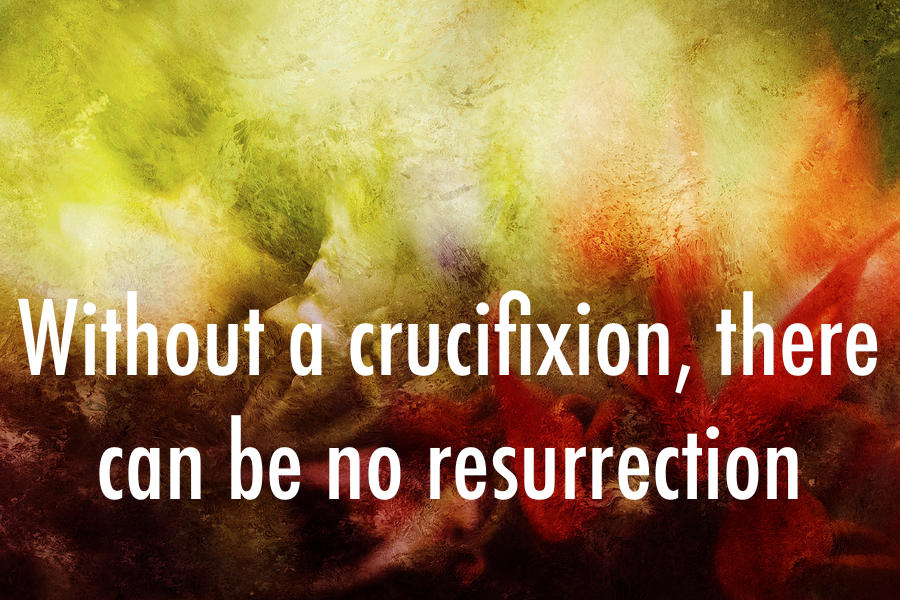
Sadly, I have come across a number of people (even myself at times) who want God without Jesus. We believe on some level that so long as we show up to church, and live a decent life, that we are doing all that the Lord would have us to do. We want salvation without suffering. We want love without expectations. We want resurrection without crucifixion.

Jesus is the way, and the truth, and the life. No one comes to the Father except through him.

way

The disciples are confused. Jesus tells them that he will go and prepare a place for them because there are many rooms in his Father’s house and they know where he is going. Then Thomas asks the question that all the other disciples are thinking: “Lord, we do not know where you are going. How can we know the way?” Jesus responds with hopeful and frightening words: I am the way.

The destiny in store for Jesus is likewise laid up for his friends, and for us. Those who want to save their life will lose it. If we want to experience the presence of God here and now, we can only do so by following the way, by following Jesus.

Sam Wells, the former dean of Duke Chapel, was appointed to a new church, and wanted to experience every single aspect of its mission. For the first few months he spent a couple of days each week going through the ins and outs of the church as if he was not the pastor; He toured the preschool like a prospective parent with a three-year old; He went to weekly prayer services and sat in the back like a stranger might if they randomly walked in off the street; He stood in line at the food pantry and patiently waited for his turn to receive some food.

One of the last things he needed to experience was the homeless shelter. He had heard that it was frequently attended because they gave out the best food and had the nicest provisions and he wanted to see it with his own eyes and taste it with his own tongue. So, for a few days before the experience, he stopped showering and shaving, he found some of his oldest and rattiest clothes, and prepared to spend a night with others in the basement of the building.

He began by waiting outside in line with everyone else. He tried to keep a low profile, but most of the people spotted his costume immediately. For whatever reason they welcomed him into their little group anyway and spent most of the night talking and learning about one another. He asked about their pasts and what had led them to where they were, most of them had normal lives until some unforeseen circumstance sent them out to the streets.

However, before the night ended one of the men shared an important perspective with the pastor. “We don’t come here for the food or for the warmth,” he said, “we come here because this is the only place where we can be with other people like us. Sure the food and shelter is nice, but the community is what we really need.

I don’t think Sam would necessarily put it this way, but I believe he encountered the living God in those homeless men and women precisely because he was acting like Jesus. I don’t think Sam actively went out with the hope that he could walk around like Jesus, but in meeting the people where they were he followed the way that Christ set up for us.

Sometimes the hardest part of being a Christian is recognizing that we cannot have resurrection without crucifixion. More often than not we need to crucify a part of our lives before we can meet and encounter the living God.

Maybe we need to crucify our false assumptions about the poor and how they wind up living on the streets. Perhaps we need to crucify our ridiculous prejudices toward people who are of a different sexual orientation. Maybe we need to crucify our faulty self-perceptions. Perhaps we need to crucify our selfish desires to crave our passions. Maybe we need to crucify a program in our church that is no longer giving life to anyone involved. Perhaps we need to crucify our willingness to hold on to a grudge from the distant past. Maybe we need to crucify our love and obsession with money.

Jesus is the way and we have been given the precious opportunity to follow him, even to the cross. If we want to encounter the living God, we can only do so by crucifying our brokenness and seeking out ways to be resurrected here and now. Amen.

Forgiving the Dust – Sermon on Genesis 3.19 & Matthew 6.9-15

Genesis 3.19

By the sweat of your face you shall eat bread until you return to the ground, for out of it you were taken; you are dust, and to dust you shall return.

Matthew 6.9-15

“Pray then this way: Our Father in heaven, hallowed be your name. Your kingdom come. Your will be done, on earth as it is in heaven. Give us this day our daily bread. And forgive our debts, as we also have forgiven our debtors. And do not bring us to the time of trial, but rescue us from the evil one.” For if you forgive others their trespasses, your heavenly father will also forgive you; but if you do not forgive others, neither will your Father forgive your trespasses.

xlba-00052

This morning marks the beginning of our two part Sermon Series on Questions. After polling the gathered body about the types of questions you all have about God, Faith, and the Church this series was created. We begin by looking at two of the most prevalent questions: What does it mean to forgive? Should the dead be cremated or buried?

Strange things are done for funerals. There are people who insist on placing the favorite objects or tokens from the deceased into the casket in order to bring comfort to the dead, after they’re dead. Others take the ashes of their loved ones to have them placed under high pressure and temperature and have them formed into diamonds to be worn on a finger or necklace. In some communities the location of the burial spot has less to do with geology and availability as it does regarding the direction of the grave.

In Western North Carolina almost every cemetery is organized so that the gravestone, and therefore the bodies, are facing east. While I helped a church in Bryson City, North Carolina it was not uncommon to hear stories about families standing at the graveside, deeply grieving in their loss, when a distant cousin or uncle would pull out a trusty compass and declare that they had the body facing the wrong direction. Whether built in a valley or up on a hill, EVERY grave had to face east. Part of this comes from biblical reasons, but I always heard that it was done so that when Jesus comes back with the sunrise, he wants to see smiling faces, and not rear-ends.

Because I work for the church, I have the privilege to be with people at the paramount of their suffering and help guide them through their grief and pain. Whereas most of the world refuses to talk about death and what comes with it, I relish in the opportunity to declare that even though death is real, it has been defeated. We tend to treat death as an unspeakable subject, when it is at the very heart of what it means to be human.

Even with the sorrow that death brings, I must also admit that comedy often comes along with it.

I could tell you about all the truly scandalous things I have learned about the departed when I meet with a family to plan the funeral. We share stories about the person’s life, what they were passionate about, what set them a part from others. But at some point, and it almost always happens, the friends and families begin to share stories that should not be repeated. I sit there with my pen and paper in hand, fighting the urge to write down every perfect bit of gossip I hear, until someone usually realizes who they are talking to and they politely request that I neglect to mention those parts during the sermon.

I could tell you about how nobody knew what to do with the ashes of my grandfather’s brother after he passed so they just kept him around for awhile. And when my great-grandmother died, my grandfather asked the funeral home if he could spend a few moments alone with her after the viewing. Feigning some sort of important spiritual and prayerful goodbye, he quickly walked up once the room was empty, took a gallon size zip-lox bag containing uncle Preston, and  carefully hid him in the casket with my great-grandmother.

I could tell you about how the first time I met Dick Dickerson, he shared with me all sorts of stories regarding his wife Mildred and he kept motioning over toward the kitchen. I thought that this was a sweet and precious habit that was born out of their relationship, and that Dick was habituated into remembering her being in the kitchen, but when I asked him about it, he laughed out loud and told me that he was keeping her ashes in a bag above the sink.

It is important to remember that it okay to laugh after death. That first laugh or smile often comes with a feeling of guilt, but, if I can be so bold as to speak for the people I have buried, they would be happy to know that we are happy.

Strange things are done for funerals. Sometimes they bring the best out in people; a prodigal son returns home to bury his father; a wayward daughter reconnects with her family. But other times, they bring out the worst.

There were two brothers who fiercely loved their mother. Raised by her alone after losing their father at a young age, they worshipped her and were so very thankful for all that she had given them. The time came for them to start their own families, but they never neglected to remember their wonderful mother. It came as a shock to the local community when she passed away rather abruptly, but the wake of her death was truly felt between her sons.

They met with the pastor to go over funeral arrangements when the fight began…

The older son wanted his mother to be cremated. He claimed it was what she desired and had shared the detail with him on a number of occasions.

The younger son wanted his mother to be buried. He respected her wishes, but he was utterly convinced that the bible said you have to be buried in the ground.

burial_vs_cremation

By the time I arrived in the community, no one could even remember what they wound up doing with the mother, but ever since that fight, the brothers had refused to speak to one another.

Both of them had good points when it came to taking care of their mother’s body- we should respect the wishes of the person, while at the same time remain faithful to scripture.

Some believe that we should only bury bodies. Their arguments are based on the concept that out bodies were made in the image of God and will be resurrected when Christ returns. Most of the key people people in both the Old and New Testaments were buried, including the one who was crucified on a cross. It allows us to properly mourn their loss, and even create a place, such as cemeteries, for us to visit and pay our respects to those who helped to shape and mold us. Moreover they claim that burning a body, cremating it, prevents it from being newly constituted in the resurrection.

Some believe that we should only cremate bodies. Their arguments are based on the concept that nothing is impossible with God, that God can most certainly recreate a body for the resurrection. All flesh eventually decays and returns to the earth becoming just like the dust from which we were created. If God can only resurrect those whose bodies are buried, then anyone who has perished under less than ideal circumstances would be withheld from the resurrection. They also argue that cremation can be less expensive than burial and therefore helps families to thrive and serve God and neighbor. They choose to keep the ashes in an urn or scatter them in such a way that it is done in a fruitful and honorable manner.

Bottom line: we are dust, and to dust we shall return. When we die, whether we are cremated or buried in the ground, we are gone. Our bodies remain and eventually return to the dust from which God brought us into being. Nothing is impossible for God. When the time comes for the bodily resurrection, nothing, and I mean nothing, can stop God from forming us into our new bodies, bodies that will not look like the ones we had here on earth, bodies that are brilliant and beyond our imagination. What becomes important for us is the need to be present with the friends and families for those who have died, and be loving in the way that we see to their needs, whatever they are, in order to help them grieve and mourn.

I never had a chance to talk with the brothers about their argument before the funeral. This happened long in the past. I never had a moment for a surprise intervention or reconciliation. I wish I had the opportunity because this is what I would share with them:

“One of the bravest and strangest things we do as Christians is pray the Lord’s Prayer. Asked by his disciples about the way to pray, Jesus taught his friends to say the words that each of us say every Sunday in church. We collectively pray to OUR father, not MY father, or Jesus’ Father, but OUR father. We request that our limited daily means be met, we yearn for the bread that gives us life. And then we pray for God to forgive us just as we forgive those around us. We pray this to God because we are not strong enough to do it on our own and we need the Spirit to move in us and strengthen us for the terrifically difficult work of forgiveness.

6a00d8341c019953ef019aff52e6fa970b

You two lost your mother, you lost the rock that so much of your lives were founded upon. The one who was always there for you, cared for you, and nurtured you was gone and you wanted to do everything you could for her funeral to be perfect. Yet, you let your own opinions get the better of you, and you let your selfishness blind you from the kind of love your mother made manifest here among us. Your mother is gone, I know you might not be ready to hear it, the grief might still be too difficult to bear, but she is gone. She is now with OUR heavenly father. 

What are you two going to do with the lives she gave you, what are you going to do with the lives that God gave you? Will you continue to bear grudges against each other, refuse to speak and commune, ignore the needs of your respective brother? Will you let an argument about funeral practices divide you from the only family you have left?

Forgiveness is the hardest thing in the world; to see the other and look past everything that have done to hurt you and belittle you, and act on love rather than hate. We don’t forgive because God told us to, and we don’t forgive because its what your mother would have wanted, we forgive because its the last thing worth working for. Without forgiveness we are nothing.

God’s love knows no bounds. Neither should ours. Look at each other and stop seeing the old arguments and disagreements, look at each other forgive.”

Strange things are done for funerals and they can bring out the best, or the worst, in us. It is my prayer that funerals might bring out the best in us. Instead of limiting them to a simple worship service to praise God, think about how we could truly recognize the gift of the one who has gone, and strive to live better and braver lives. Let us see those tense and vulnerable moments, like funerals, as opportunities to forgive and start anew with the people in our lives.

Forgiveness is a difficult thing. It is irrational, draining, and frightening. It requires bravery rarely seen, faith rarely developed, and hope rarely witnessed. Yet, if Christ was willing to forgive those who hung him on the cross, if God is willing to forgive us all our trespasses, just imagine how many things we can forgive in our lives, even the dust.

Amen.

Devotional – 1 Thessalonians 2.9

Devotional:

1 Thessalonians 2.9

You remember our labor and toil, brothers and sisters; we worked night and day, so that we might not burden any of you while we proclaimed to you the gospel of God.

Weekly Devotional Image

All Saints’ Day is a strange celebration in the worship life of church. As United Methodists, we will gather together next Sunday to remember those who have gone on to glory; we will honor their lives, deaths, and promised resurrections. For a young pastor the celebration of All Saints is one that I look forward to in order to help the still grieving families mourn appropriately, but it is also a sacred day of privileged preaching that cannot be taken lightly.

I have been a pastor for 1 year and 4 months. It has been a tremendously rewarding experience thus far, and I continually feel that I am exactly where God has called me to be, and doing what God has called me to do. Throughout the first year, no one died in our church community. (They tell you in seminary to prepare yourself for a funeral your first week in the church; but for me that did not happen) We celebrated some incredibly special moments together in worship: baptisms, professions of faith, weddings, confirmation, the Eucharist. But we did not gather together for a funeral. While so many of my clergy colleagues felt fatigued under the tidal wave of death that was striking their local churches, I felt guilty for making it through a year without having to do a funeral.

all-saints-usa

Over the last few months, however, we have lost 6 church members in quick succession. While sitting with families in the deep and dark moments of planning a funeral after the loss of a loved one, I was also worried about someone that had just entered the hospital, or received a bleak diagnosis. Death, it seemed, had caught up with us.

Church is often made out to be a place of sacred happiness where people can discover an element of joy and grace that they might not otherwise find. Yet at the same time, the church is one of the last arenas of reality. It used to be that people feared having a quick death. They did so because they feared dying without having the time to be reconciled with their enemies, who were often members of their family, the church and God. Today we fear death. They feared God.

All Saints is a time for us to remember the great promise that God made with us when Jesus was resurrected from the dead: that we are not alone and that Christ has defeated death. This does not mean that we will not die, but it means that death is not the end.

As we prepare for All Saints’ Sunday, let us remember the “labor and toil” of those who have gone on to glory, those who “worked night and day, so that we might not be burdened while we learned about the gospel of God.” Let us remember our own finitude and give thanks to God for not abandoning us. And let us praise the Lord who defeated death so that we might have life.

Devotional – Romans 6.8

Devotional:

Romans 6.8

But if we have died with Christ, we believe that we will also live with him.

Weekly Devotional Image

Starting Friday afternoon, I will gather with thousands of United Methodists from all over the Virginia Conference. This is our annual meeting to discuss current challenges facing the church, celebrate the ordination of new pastors, and grow in our faith and love of God. Holy Conferencing sits at the foundation of what it means to be part of the UMC and traces back to the time of John Wesley.

To be perfectly honest, Annual Conference has its ups and downs. There is nothing quite like the Service of Ordination that will take place on Saturday evening; ordinands will kneel before the Bishop and take the vows of serving our church will all that they have and we will sing those great and familiar hymns as we pray over these new ministers and their churches. The episcopal address, made by our Bishop, seeks to encourage the lay and clergy leaders of our conference while at the same time faithfully address the concerns and challenges of the future.

2014ACLogo

But there will come a time when the Annual Conference will descend into petty arguments, oversimplified generalizations, and frustrated ramblings. We will be asked to vote on resolutions regarding a wide-variety of issues facing the church including the possibility of changing the language regarding homosexuality in our Book of Discipline. The roller-coaster of Annual Conference will move up and down and many of us will have our faith restored in the church, only to have it completely erased after a few arguments break out.

As I reflect back on the previous Annual Conferences I have attended, and prepare for this coming weekend, I wonder if our Holy Conferencing is more about us, or more about Jesus. We need to ask ourselves why we gather in the first place: Are we here to pat ourselves on the back and congratulate one another on a productive year in ministry? Or are we here to learn more about God, nourish ourselves through worship, and find renewed energy to be Christ’s body for the world as we return to our churches?

Sometimes, things must be crucified in order for resurrection to take place. We have to be prepared to let something die and end so that we can find new life and discover new opportunities for our great church to be what God has called us to be. Paul wrote to the church in Rome, “But if we have died with Christ, we believe that we will also live with him.” Annual Conference is a perfect opportunity to remember that all of this (the church, ministry, serving the community) is not about me but its about God. If we let our old selves die and put on Christ we will be able to faithfully participate in a weekend dedicated to the renewal of our church. However, if we continue to talk and act as if Jesus isn’t in the room with us we will fail to grow and be fruitful for the world around us.

So, as you prepare to enter a new week I challenge you to confront the areas of your life where Christ is not at the forefront of your being. How are you still holding onto the old self? How can you let a part of your life be crucified so that something new and beautiful and wonderful can be resurrected?