Think of the Children! – Sermon on Psalm 78.1-8

Psalm 78.1-8

Give ear, O my people, to my teaching; incline your ears to the words of my mouth. I will open in my mouth a parable; I will utter dark sayings from of old, things that we have heard and known, that our ancestors have told us. We will not hide them from their children; we will tell to the coming generation the glorious deeds of the Lord, and his might, and the wonders that he has done. He established a decree in Jacob, and appointed a law in Israel, which he commanded our ancestors to teach their children; that the next generation might know them, the children yet unborn, and rise up and tell them to their children, so that they should se this hope in God and not forget the works of God, but keep his commandments; and that they should not be like their ancestors, a stubborn and rebellious generation, a generation whose heart was not steadfast, whose spirit was not faithful to God.

kids-in-church

I love when scripture is straight-forward. With the amount of passages in both the Old and New Testaments that remain ambiguous, it is remarkably refreshing to encounter a text that is so simple with its claims and expectations.

Listen up! Open your ears to what I’m about to say regarding the mighty acts of God. I will remember for us the forgotten sayings from the past, we will not hide them from the children, we will share with them all the wonders of God. The Lord commanded our ancestors to teach our children, so that they would indeed teach their children, so that none of us would forget what God has done. Above all, let us not fall back into the rhythms of our distant ancestors, a stubborn and rebellious generation, a generation whose heart was not steadfast, nor was their spirit faithful to God.

What follows our reading from this morning is a record of history in song. The psalmist sets up his challenge: to remember the mighty acts of God for the future generations; and then declares the history of God with God’s creation. The tradition, the narrative, is so strong that the psalmist will not depart from it, since his purpose is to instruct rather than to entertain. That old old story has become so important to him, that he will tell it to the best of his ability for the sake of God’s people.

As I read the words to Psalm 78 this week, I couldn’t help but wonder about what we are teaching our children. If our desire to instruct the future generations regarding the mighty deeds of God is as strong as this Psalm claims, then how are we living that out today in our faith and in our church?

3rnvk6

On Tuesday morning, with the words from scripture percolating in my heart and soul, I made my way down to the Preschool to welcome our children into the building. I’ll admit that opening the door for our students is one of the things that I look forward to most during the week. The children are always so excited about entering the classrooms for the activities and learning that will enrich them. Whereas many parents have to drag their high-school students out of bed, banging pots and pans, even dumping water on them to wake them up, the Preschool students see school as something worth celebrating and waking up for!

It brings me so much joy to see their smiling faces every morning, to hear them shout “Pastor Taylor!” and run over to give me a hug as if they thought that they had lost me forever, to see them walking with their parents or guardians hand in hand hopeful for the day ahead. When I look at them in the morning I can’t help but think about the future generations of the church, and our community. In the basement of our building, we have the privilege of shaping, molding, and nurturing those who will one day take care of us.

Anyway, when the children arrived on Tuesday morning they came in with their normal excitement and made their way to their respective classes. I usually try to sneak back down around snack time for the selfish purpose of receiving some carrots with ranch dressing, or pretzel sticks, and I often ask each of the children what they had been learning about that morning.

“Pastor Taylor, I learned about the letter “G.” Goofy, Girl, Grass, and Grapes!”

“Pastor Taylor, I learned that spiders have eight legs and make a web to catch their food!”

“Pastor Taylor, I learned that we stole the land away from the Indians and forced them to move across the country!”

On Tuesday morning, every one of those children looked at me when I walked in, and shouted, “Pastor Taylor, we learned how to vote!” The teachers had set up a voting booth in the yellow room, and each child had the opportunity to vote on their snack for the day: Pringles Chips, or Oreo Cookies (obviously Oreos were victorious). Every child had the opportunity to go behind the curtain, place their vote in secrecy, and then received an “I Voted!” sticker.

10629408_721542274588756_4548535686040301173_o

Downstairs in the basement we work on educating the future generation on the important things: Letters, Shapes, and Numbers; Animals, Plants, and Weather; Hygiene, Responsibility, and even Civic Duty. However, sometimes we get so caught up in the education of our youth, that we lose sight of what God has called us to do. Because right now I know that every child from our Preschool can tell you why we vote, and how we vote, but I know that only a few of them can tell you who Jesus is, and what he came to do. What does it say about our culture when more people now recognize the McDonald’s Golden Arches than they recognize the cross of Jesus Christ? What does it say that we train our children regarding voting procedures, but we do not teach them how to pray?

I have very fond memories of growing up in church. I loved the change in the liturgical seasons, and the different colors around the altar. I loved getting invited up to the front of the church once a month to receive communion. I loved getting to hear the choir sing with passion on a regular basis. I loved church because it was fun.

Yet, I can’t really remember what I learned. I know that when I was much younger, we, the kids, were only allowed to stay in the sanctuary until the “children’s sermon” and then we were escorted out of the sanctuary to the classrooms to work on arts and crafts as if whatever was happening in worship was for adult audiences only; Aldersgate UMC Rated PG-13

I remember learning about the big stories, the ones that everyone knows: Noah and the Ark, David and Goliath, Jesus and his disciples. But there are so many things about church that I never learned. 

My grandmother remembers her mother placing a coin in her hand every Sunday so that she would place it in the offering plate. From a young age she was habituated into the practice of giving back to God out of the abundance that she had. But by the time my mother came around this was not something that was instilled in her, and therefore it was not instilled in me. I have no idea whether or not my parents ever gave money to the church because it was not something we ever talked about.

What I do remember is a story that one of my pastors told about receiving a letter from a young boy in the congregation. The boy had been mowing lawns in the community and his parents had talked to him about the importance of tithing so that boy collected 10% of his lawn-mowing earnings, and placed them in the offering plate inside of a ziplock bag. The way my pastor told the story was so powerful that it got many of the adults crying. Look at the faith of this young boy and his willingness to give back to God!

Photo of a Collection Plate

But when I think about that now, I don’t see it as something special, in fact I see it as something rather ordinary. The fact that it was something so deeply celebrated as a rarity is another testament to the fact that we have neglected to tell the story of God’s mighty acts to the coming generation. They recently did a study at my home church and they discovered that only 25% of the people who attend worship give money to the church. That means that 3/4 people in the pews let the offering plate pass right over them. What are we instilling in the future generations that allows them to witness the incredible acts of God in the world today? How are we sharing the story with others so that we remember who we are and whose we are?

Instead, we hope and expect that others will just figure it out on their own and that they will know to give 10%, that they will know how and when to pray for their enemies, that they will place their hope in the resurrection in the midst of death. We so desperately want to privatize everything in our lives that we don’t want to talk about our prayers, we don’t want to talk about how much we give to church, and we don’t walk to talk about when and how we doubt.

When I was in seminary we were required to take a class on preaching. For weeks we gathered in the basement of the Divinity School listening to our professor lecture on the importance of proclaiming the Word, and then we were asked to preach in front of our peers on assigned texts so that they could critique our style and form. One day however, our preaching class went on a field trip to one of the local funeral homes in Durham, NC. The point of the visit was to help prepare us for the sermons that we would be preaching at funerals, offer advice on how to interact with funeral home directors, and talk about the theology behind death.

We walked through the facility from the basement where they did the embalming to the chapel where they held smaller services. And when we passed through one of the rooms, I noticed that a coffin had been prepared and opened for a viewing that would happen that afternoon. I stopped to pay my respect and offer up a brief prayer when I saw one of my friends frozen in place with her gaze locked on the casket. At 27 years old, she had never seen a dead body. Even with all the training and reading, the practice and focus, she was completely shocked by the sight, and I had to physically help her out of the room to continue the tour. I can remember her muttering under her breath as if she was unaware that she was actually speaking “death is so real.” I learned later that she had never been to a funeral and seeing that embodiment of death for the first time came as a frightening and almost overwhelming dose of reality.

What does it say when we keep our young people from experiencing death through funerals? Are we so afraid of death that it blinds us from the hope of the resurrection? Are we so concerned about how it might affect the coming generation that we neglect to instill in them the story about how God conquered death through Christ on the cross?

Of course, this isn’t just about teaching children the stories. It’s about all of us, whether we’re nine or ninety. We gather here in this space to remember, over and over, the great acts of God in the world. We move from creation, to redemption, back and forth, to remind one another what God did for us, and what God continues to do through us.

The psalmist, so long ago, believed in retelling the story to help shape the people of God. The psalmist believed that in going back to their origins, by remembering who they are and whose they are, they would always find the living God. When we retell the story we become a people of habit and pattern, we become shaped by the Word to be Christ’s body in the world today. 

We tell the story to open our eyes to how God has provided us with so many blessings that we respond by giving back to God our tithes and offerings. We tell the story so that we can open our hearts to the ways that we can love God and love our neighbors as ourselves. We tell the story so that we can open our souls to the great cosmic victory over death and remember that we have the hope of the resurrection.

If we want the coming generations to be steeped in the Word of the Lord, if we want them to remember the glorious deeds of God, and his might, and the wonders that he has done, if we want them to be a people of hope, then its up to us to share the story with them.

Amen.

Sinners and Saints – Sermon on Psalm 34.1-8

Psalm 34.1-8

I will bless the Lord at all times; his praise shall continually be in my mouth. My soul makes its boast in the Lord; let the humble hear and be glad. O magnify the Lord with me, and let us exalt his name together. I sought the Lord, and he answered me, and delivered me from all my fears. Look to him, and be radiant; so your faces shall never be ashamed. This poor soul cried, and was heard by the Lord, and was saved from every trouble. The angel of the Lord encamps around those who fear him, and delivers them. O taste and see that the Lord is good; happy are those to take refuge in him.

All-Saints-Day-candles

Tomorrow will be my 6th funeral. Betty Lancaster, Georgeanna Driver, Brandy Garletts, Russ Wisely, Dick Markley, and now Chris Harris. I can remember the way my heart raced when I got the phone calls when each of them passed, I can still see their families in tears during the funeral, and I can still remember the sensation of the dirt in my hand when I dropped it on the caskets at the cemeteries. Without a doubt, preaching and presiding over funerals is one of the greatest privileges, and most difficult challenges, that I have as a pastor.

I am invited into one of the most sensitive aspects of a family’s life when I find out that someone has died. Those moments in the car on my way to a home or hospital, are filled with prayerful silence as I ask God to use me as a vessel of his grace and peace with a family who is in the midst of grief. You never know what to say, because there is nothing to say. You sit and listen, you provide the loving comfort of presence, and you pray for everyone you can think of.

Today is All Saints’; a day for us to remember those who have gone on to glory over the last year from our church, and from all of our families and friends. It is a hallowed time where we reflect on the ways that our friends and families shaped us into who we are today. It is that precious day when we give thanks to God for putting them in our lives, and then welcoming them back into his eternal arms. All Saints’, like funerals, is a time for us to speak truths about the lives of those close to us, with the hope of the promised resurrection.

green-funerals-green-resting-place

No matter what, funerals are always difficult. Funerals are a remarkably sensitive time for families and you have to be very careful about what you say, and how you say it. Yet even with the fear and trembling that comes with proclaiming someone’s life and death, I do look forward to sharing stories that help to reveal the character of the person’s life that we are remembering.

For instance:

The first time I met Brandy Garletts was early in my time here at the church. She was older and had been moved to a rehabilitation center when I went to visit her. I spent way too much time worrying about what I would say to this stranger for the first time, what her impression of me would be, and how could I speak words of hope in her situation. When I made my way to the facility, after finally finding her room, she motioned for me to sit across from her to lean in closer. Before I could even open my mouth to begin speaking all the prepared thoughts that I had, Brandy asked me a question that I was completely unprepared for: “Are you a registered voter?

There I was sitting across from an incredibly sweet woman, someone that many people from our church have admired and looked up to, prepared to talk about God, faith, and grace, and she wanted to find out if I was a democrat or a republican.

Brandy was a fiercely strong woman and fought for what she believed in. Asking me about my political ideology was indicative of the life she lived; always looking for new opportunities to make the world better for others.

Or I could tell you about a story that Russ Wisely shared with me in my office: “Many years ago,” he began, “we had another young pastor. Fletcher Swink had just graduated from Duke Divinity School and was sent to Staunton for his first appointment, just like you. In the beginning everything was great. Fletcher provided strong leadership, the church was growing, and we started to build the property that we are now sitting in. However, one day, Fletcher called me because he had a problem and had no idea what to do. He had performed a wedding for a young couple in Staunton, his very first, and only after signing the marriage certificate did he realize that he had not filled out the proper paperwork to legally marry people in the state of Virginia. He was at a loss for what to do, so I told him to come with me to the courthouse; I knew the judge and figured we might be able to work something out. When we brought the matter to the judge he looked at me and he asked ‘Russ, what do you think we can do?’ and I told him that we could sign the paperwork and just change the date to have happened before the wedding, to which he replied, ‘sounds like a good idea to me.

I sat there in my office stunned. Here was this older man telling me a story about how he had manipulated the legal system just to cover for a young pastor who had made a mistake. Was he telling me this story to make sure that I didn’t make any mistakes? Was he trying to scare me about the responsibilities of leading the church? I sat there in my chair, unsure of how the story would conclude. Russ then looked at me right in the eyes to finish, “That happened nearly 60 years ago. I helped Fletcher because it was important. I want you to know, young man, that I am here to help you as well. If you need anything I want you to call me.” And with that he stood up and prepared to leave my office. Only then did I realize that I never said a word. 

Russ Wisley sacrificed for others and was willing to work behind the scenes to make things happen. Whether here at church or in the community, Russ would help anyone he could, because he believed in the importance of supporting others.

What has struck me most about the lives we have celebrated over the last year, the people who we are remembering today, is that they understood the words from Psalm 34; their lives were a reflection of God’s goodness and they lived as saints for others to follow.

I will bless the Lord at all times; his praise shall continually be in my mouth.” Saints are those who can speak and live in such a way as to point to the Lord in all that they do. They give thanks to the Lord their God for the blessings they have received and give back to others from their abundance. Saints recognize the presence of God and do whatever they can to share that experience with others because they know how life-giving it can be.

O magnify the Lord with me, and let us exalt his name together.” Saints do what they can to benefit the greater community and not just their own lives. They are not content with having a “personal relationship with Jesus Christ,” but see the great gift that the community of faith can be. They worship together to praise the Lord of hosts, and exalt his name. At church they sing from the depth of their being, and greet others in Christian love. At home they pray fervently for their lives, for their friends and family, for their enemies, and for their church. They strive to magnify the Lord in all that they do so that others can know how life-giving it can be.

I sought the Lord, and he answered me, and delivered me from all my fears.” Saints understand that God has continued to seek them out throughout the years, and take the time to respond to God’s great calling. Instead of remaining complacent with their faith journeys, they seek out the God of Abraham, Isaac, and Jacob with the knowledge that in doing so, the Lord will answer. Instead of just hoping for good things to happen because they live good lives, they take leaps of faith to encounter the living God who will deliver them from fear. Saints believe that going to the Lord reorients all expectations and priorities and they encourage others to go to the Lord because they know how life-giving it can be.

Look to him, and be radiant; so your faces shall never be ashamed. This poor soul cried, and was heard by the Lord, and was saved from every trouble.” Saints know that life is not always easy, and that there will be times of suffering. To follow the commands of God, to live by the beatitudes, implies a willingness to see the world turned upside down where the first will be last and the last will be first. They do not let their sufferings get the best of them, but instead they remember that suffering produces endurance, endurance produces character, character produces hope, and hope does not disappoint. They encourage others to not give in to the suffering in their lives but to firmly place their hope in Jesus Christ because they know how life-giving it can be.

Our saints have lived lives worthy of emulation. The more I learned about their discipleship as I prepared for their funerals, the more I wanted to live like them. I was struck over and over again by how deeply rooted they were in their faith, and how much they worked to live like Jesus. However, that’s not to say that our saints have been perfect; even Jesus’ family tree is filled with broken and battered branches.

On All Saint’s Sunday, we remember the saints, and let us be sure to remember all of them. Not just the wonderful and psalm-like moments from their lives, but the bruised and blemished moments as well. Not just the saints from our church family that have died, but all the saints who have witnessed to God’s love for us.

Who do you think of when you hear the word “saint”? Do you picture Mother Teresa, Augustine, or John Wesley? Do you think about people who lived perfectly pure lives? Or do you think about the people in your life who have simply encouraged you in your faith?

SinnerSaint-2

Those who we remember today were both sinners and saints. There were times that they fell short of God’s expectations, there were times that they did not practice what they preached. There were moments that they neglected to praise and and magnify the Lord. But God has a crafty way of turning sinners into saints.

God almighty, maker of heaven and earth, has done, and will continue to do, some incredible things through the sinners in our midst. You might remember those that have died for all the negative, bad, and embarrassing things that they did, but God saw them in their sinfulness and saw potential. God has used our saints to change our lives for the better by shaping us into the disciples we are today.

The pulpit is a wonderful vantage point. From where I stand I can look out on the gathered body of Christ and take in the view in one fell swoop:

When I look out from here I see a church full of sinners. I see the brokenness that many of you have shared with me, but have refused to share with anyone else. I see the fights, frustrations, and failures that haunt so many of you on a regular basis. I look out and see the doubts that cloud your faith, the temptations that draw you away from God, and the selfishness that drives you away from one another.

But at the same time, when I look out from here I see a church full of saints. I see the body of Christ praising the Lord through prayer and song. I see the humble souls that are thankful for the blessing of life. I see the love, life, and vitality that invigorates so many of you toward wholeness. I look out and see the radiant faces that shine with God’s glory. I see a church that is full of people willing and excited to work for God’s kingdom.

So, like the psalmist says, let us come to the God’s table; see and taste how the Lord is good. Remember all of those who have gone before us to a table such as this, to take refuge in the Lord.

Let us also give thanks to the Lord for putting the saints we remember into our lives. For helping to shape and mold them out of their sinfulness and into saintliness. For their desire to share the Good News with us so that we might know what grace is really all about.

And let us hope and pray that God would continue to give us the strength to be saints for others in spite of our sinfulness. So that one day, God willing, the church will get together to worship the Lord and give thanks for us after we die.

Amen.

Why Do We Pray? – Sermon on Psalm 19.7-14

Psalm 19.7-14

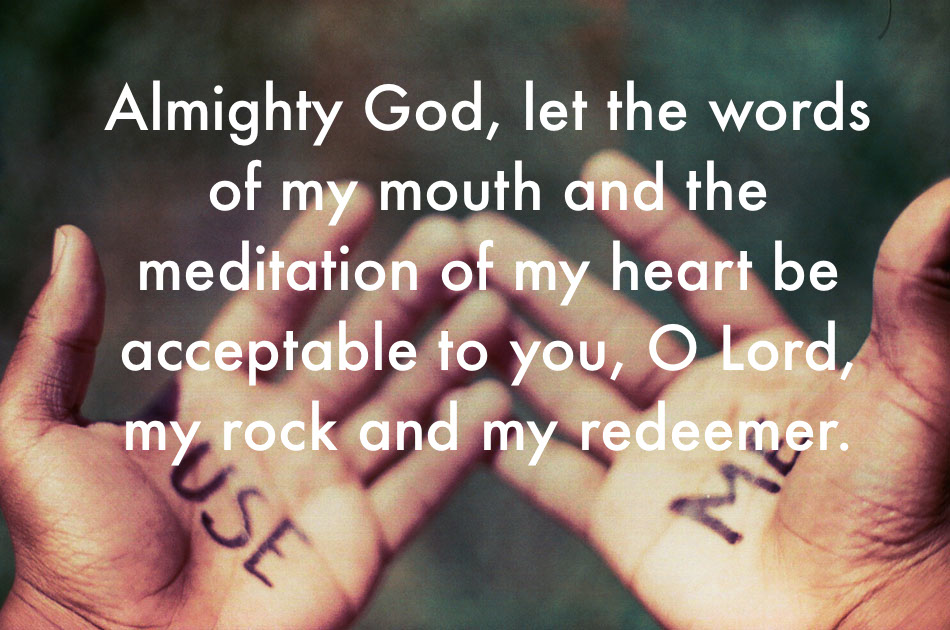
The law of the Lord is perfect, reviving the soul; the decrees of the Lord are sure, making wise the simple; the precepts of the Lord are right, rejoicing the heart; the commandment of the Lord is clear, enlightening the eyes; the fear of the Lord is pure, enduring forever; the ordinances of the Lord are true and righteous altogether. More to be desired are they than gold, even much fine gold; sweeter also than honey, and drippings of the honeycomb. Moreover by them is your servant warned; in keeping them there is great reward. But who can detect their errors? Clear me from hidden faults. Keep back your servant also from the insolent; do not let them have dominion over me. Then I shall be blameless, and innocent of great transgressions. Let the words of my mouth and the meditation of my heart be acceptable to you, O Lord, my rock and my redeemer.

use-me

There were two men. The first lived his life perfectly and blamelessly; everything was coordinated and examined. He never wasted a moment and did his utmost to plan for every contingency and minor catastrophe. If he could live his life in consistent repetition, he believed he could achieve perfection. Every morning he awoke to eat the same breakfast and spend precisely 15 minutes reading from his bible, offering up the same lifeless prayer. He wasn’t sure that he actually believed in God, but he wanted to be safe. He took the same roads to work, ordered the same lunch, used the same pencil brand. Everything was accounted for. He made his money, invested in the right companies, provided for his family. On the surface he had everything you could want. Except he did not have life.

The second man lived a life of apparent chaos as he tried desperately to cling to something solid as the world continued to spin around him. Every morning was a new and exciting, though sometimes terrifying, adventure. He would often oversleep leading him to rush off to work without his breakfast or morning coffee. He was a faithful Christian, he somehow was able to make it to church every week, his bible was often found in different places throughout his house with ear marks and underlined passages in the Old and New Testament. He believed deeply that God was a living and loving presence in his life and looked forward to his moments of silence during the day when he felt he could best commune with the divine. Speaking with God was not about rhythm or repetition, but a life-giving and humbling experience. He made his money, tried to invest, but believed that spending time with his family would be more rewarding than a large portfolio. On the surface he was missing some of the things that make up the American dream. But he had life.

It has taken me a long time to learn how to pray; and I’m still not satisfied with my prayer life. I go through waves of devoting time everyday to sitting in silence and talking with God, and then there are days when I have realized that I felt too busy to pray. I have spent weeks praying prayers that have been written in books, and I have spent months praying extemporaneous prayers from my heart and soul. I have experimented with numerous spiritual disciplines, and I’m not sure that I have found the one that is just for me, perhaps I never will.

Prayer is one of those things in the life of Christian discipleship that we expect, but rarely talk about. Whenever we get together as a church, before an activity begins, all eyes fall on me to lead us in prayer so that we can start. Sometimes those prayers feel life-giving, but oftentimes they feel like an expectation. When I am asked to pray before a meal, there are times that I feel truly genuine in expressing my thankfulness to the Lord, but there are also times when I feel that I am just going through the motions.

prayer

There was a long period in my life where I felt like the first man. I would wake up early and ride my bike to Duke Divinity School just so that I could be there for Morning Prayer with the Anglicans and Episcopalians. I even started to lead the daily worship service. But there was a time when in meant very little to me. It became so routine that I stopped listening to the words, and felt that it was more important for me to be there in body, than it was for me to be there in heart and soul.

Last week I asked us to examine a simple, yet profound, question: What is the point of Church? Why do we spend time each week gathering in this place? I attempted to proclaim God’s Word in such a way that we could begin to move away from a maintenance model of Church, to a missional model where we live as Christ’s body for the world.

Today I would like to ask an equally simple, yet profound, question: Why do we pray and read scripture? Why do we take the time to halt the busyness of our lives to read God’s Word and commune with him?

The psalmist writes that the law of the Lord is perfect, it revives the soul, it makes us wise, it allows us to rejoice in our hearts. The commandments are clear, they open our eyes. The fear of the Lord is pure and endures forever. The ordinances of the Almighty are true and righteous. The psalmist even goes on to claim that the Word of the Lord is to be desired more than gold and sweeter than honey.

You could give me a biscuit with honey on it right now, and I would tell you that is the sweetest thing in the world. Yet, as I have grown older, as I have spent more time deep in God’s Word, its sweetness has been revealed to me. In a conversation with someone during bible study, or deep in prayer about someone’s life and suffering, a new vision and understanding is presented to me out of God’s Word. It truly is a sweet gift, one that speaks to us, even today, from God.

The difference between the two men, is that the first saw his responsibility to prayer and scripture as simply that – a responsibility. He sets aside the time to read and pray, but the words on paper and the words on his lips are lifeless. He believes the first part of the psalm but expects that so long as he maintains his regular practice it will be enough. The second man, however, recognizes that he can do more, that speaking with God can be different and casual and faithful.

Psalm 19 begins to answer our question: Why do we pray and read scripture? It refreshes our souls.

When we spend time reflecting on God’s Word and going to him with our thoughts, desires, hopes, and fears we honor the living Lord who refreshes our souls for a new day. It simplifies the way we envision the world, and reminds us who we are following and why. It humbles us and rewards us.

However, even with the benefits and warnings in scripture, we cannot completely avoid hidden sins and mistakes nor can we control others around us and prevent them from doing the same.

God’s Word operates as a warning about the transgressions of life. It has not only the green light of “allowed”, and the red light of “forbidden,” but also the yellow light of “caution.” Ordinary and humble people do not normally go plowing through the red lights of life. Deliberate and precise sins come with practice and committed degeneracy. But we are all constantly taking chances with the yellow lights of behavior.

That is why the end of the psalm is so important: Who can detect all of their own errors? Who can look at their life and faithfully say I was wrong? Great God, cleanse me from my hidden faults, keep me from those who would do harm to my soul.

The greatest test of our faith is found in our willingness to seek forgiveness from our sins, particularly those no one knows about except us. When we have committed a wrong against someone, and everyone else knows about it, I believe we are more inclined to seek forgiveness. But when we do something wrong in secret, when we sin while no one is watching, I believe we are less inclined to ask for forgiveness, because it is entirely on us. God’s word and a life of prayer are therefore the ways by which we might have the strength to admit our faults, as we read about so many who have sinned before us, and seek forgiveness as we commune with the Lord in prayer. Reading and praying are as essential for us as are eating and breathing – they all give us life.

If you want to become a United Methodist Pastor, there are a number of requirements you have to meet. One of the most stressful is planning a full worship service, leading it, preaching, and having the entire thing videotaped. I was still in seminary when I asked my home church if I could “take over” for one Sunday in order to film the service and send it off to the people who would determine whether I should become a pastor or not.

I fretted about the service, overanalyzed the bulletin, worried about the hymns I selected, stressed about the scripture, and never felt the sermon was good enough. After all the weeks of planning and communication I showed up at my home church Sunday morning, and prepared to put it all on the line. I remember standing in the back, and giving my father the “thumbs up” to start recording when Jason, my friend and pastor, walked ahead of me to address the congregation.

“For those of you that don’t know,” he began “we have one of our very own here this morning to lead us through worship. Taylor is applying to be considered for an appointment in the United Methodist Church and everything we do this morning is being filmed. You and I all know that he is not really that funny, but if you could try to laugh at his jokes, I’m sure that it will help him out with the Board of Ordained Ministry.

The service was oriented around a reading from the end of James about sharing our sufferings with one another. The role of disciples in the church is to rejoice with one another at times of happiness, and weep together during times of sorrow. We are called to love one another through the good times and the bad, but we can only begin to find healing and reconciliation if we share our struggles.

When I was finally able to offer the benediction at the end of the service I breathed out a huge sigh of relief, a sigh that was so loud that you can hear it in the recording! I had made it through the whole thing without tripping and embarrassing myself, without stuttering through the scripture reading, and I even got a few laughs during the sermon though I could never tell whether they were genuine or not…

I made my way out of the sanctuary proud of the service and hopeful that it was good enough for the Board that would be viewing it. But while my mind was caught up in my own selfish reflections about the service, I saw a member of the church, someone I knew very well, crying in her pew.

She shared with me that her daughter had been suffering with bulimia through the last six months and she had refused to share it with anyone. She was embarrassed that she had failed as a mother and she felt as if she was carrying the whole world on her shoulders. She said that after hearing the scripture read, and the words of the sermon, she prayed in her pew, and she realized (for the first time) that the church was the place that she could share her burden. And while others were preparing to leave she reached out to the stranger in her pew and asked if she could share with him her struggles and pray together. With tears flowing down her face she said that this was the best she had felt in months.

prayer-bible

The Word of the Lord is greater than gold and sweeter than honey. In the moments of our reading and praying we are opened up to the strange new world of the bible and of faithful living that can change everything.

We pray and read to cleanse our souls and to give us life. It is not something that has to be strictly observed with militaristic expression, but instead something that we believe can change our lives.

The final line of the Psalm 19 is a beloved and permanent aspect of worship; they are the words I pray before preaching every single Sunday. If our words and thoughts are acceptable in the Lord’s sight we are on the path toward renewed spirits and discipled living. When those words become our truest prayer and hope then we are speaking and thinking as if Jesus was at our elbow which, after all, is the whole point of prayer.

Amen.

Devotional – Psalm 25.7

Devotional:

Psalm 25.7

Do not remember the sins of my youth or my transgressions; according to your steadfast love remember me, for your goodness’ sake, O Lord! 

Weekly Devotional Image

When I was in seminary Will Willimon used to talk a lot about how strange it was to serve communion to the parishioners of his church when he truly knew what was going on in their lives. He told a story once about how he was asked by the police to help settle a domestic dispute between some of his parishioners. Apparently the couple would have a big brawl and fight every spring and the police were used to the annual fight and debauchery. Will did his best to bring about a calm solution but he was shocked to discover the couple sitting in the pews the following morning, as if nothing happened.

Since the beginning of the church broken families, miserable relationships, and struggling sinners have gathered at the table and received the body and blood of Christ. What became important for Will was the understanding that he was not the one to judge their pasts, but that Christ “invites to his table all who love him, who earnestly repent of their sin, and seek to live in peace with one another.”

bread-and-wine

Some of the most precious conversations I have on a regular basis are with people who have not been to church in a very long time, or they have never entered a church at all; everything is new, exciting, and mysterious. I remember in particular a Sunday evening during college when a number of my friends, including non-church goers, came to support me when I preached at a local church. They listened carefully to the sermon, struggled to sing along with the songs, but when it was time for communion they sat there stunned. I motioned for them to go up to the front, if they felt comfortable, but they looked at me as if they were unworthy. In their faces I could tell that even though they did not fully grasp the significance of the table, they held a respect for it and were worried that the sins of their youth negated their invitation to receive the body and blood. In my life there have been few moments as wonderful as when I was able to look at my friends and tell them that they were invited, that God loved them no matter what they had done, and that God goodness knows no bounds.

It is an incredible thing that God does not judge us by the sins of our youth or the transgressions of our pasts, but remembers us according to God’s steadfast love. As we prepare to take steps into a new week, let us give thanks to the God whose love is beyond all things, to the God who remembers us for who we truly are, to the God whose table is always open.

Devotional – Psalm 133.1

Devotional:

Psalm 133.1

How very good and pleasant it is when kindred live together in unity!

Weekly Devotional Image

I prayed all week for the weather to cooperate. We had been planning the Community Cook-Out for weeks and the weather forecast kept pointing toward tremendous amounts of rain to fall during the scheduled event. As a church we had already procured a considerable amount of food, dedicated volunteers, and three bouncy houses. Yet, as the days passed and we came closer to the celebration, I became worried that it would not take place at all.

10556430_266797316847904_6460753775368326310_n

After many prayers, Saturday came and the weather wound up being perfect for the Cook-Out! The clouds provided a cool atmosphere for the children to play on the bouncy houses and allowed for us to celebrate on the lawn without having to worry about too much sunshine or rain. When people began to arrive for the event I prayed and thanked God for providing such a wonderful day for our community and was thrilled for our church to serve the folk of our neighborhood.

I spent most of the afternoon grilling more hamburgers and hot-dogs than I could possibly count. Every time I thought I could take a break, more people arrived and lined up for food! From my vantage point I was given a clear line of sight of everyone and all of the activities that were taking place: children (and adults) playing on the bouncy houses, families sitting at tables while enjoying food and fellowship, young people lining up to have their faces painted, frisbees and footballs being thrown through the air, and conversations taking place between people who had never met. While standing behind the grill I was overcome with a sense of wonder at how our church was living out its call to participate in God’s kingdom by being the body of Christ for the world.

10304431_10204425795911698_6731480664290185266_n

The psalmist wrote “how very good and pleasant it is when kindred live together in unity!” During our Cook-Out we had different people from all over the community present to join together in fellowship: parents and families from the pre-school, neighbors who attend different church, friends who do not attend church at all, and people from St. John’s. As we enjoyed the afternoon together I was given a glimpse of how wonderful and joyous it can be when a neighborhood lives in unity; I experienced Christ’s presence through the conversations and outpouring of love between strangers.

This week let us all seek opportunities to live together in unity. Let us look for those around us who are still strangers and do whatever we can to foster new friendships.

How can you live out Psalm 133 this week?

Devotional – Psalm 119.135

Devotional:

Psalm 119.135

Make your face shine upon your servant, and teach me your statutes. 

Weekly Devotional Image

St. Augustine once wrote, “There are three types of life: the contemplative, the active, and the contemplative-active. People can live the life of faith in any of these but everyone must make time both to seek the truth through contemplation and perform the actions that charity demands” (City of God, 19.19) I would slightly change Augustine’s language to say that there are three types of life for Christians: the prayerful, the server, and the prayerful-server. It is a tremendous element of our faith that we get to be in communion with God not only through our prayer, but also in our service of others.

St. Augustine

St. Augustine

Even with this threefold understanding of faithful living there is a temptation to elevate one over the other without seeking a balance of both. No one should be so totally committed to prayer that they neglect the needs of the community and no one should be so absorbed in serving others that he/she gives up praying to the Lord.

Both serving and prayer are intimately connected in the life of discipleship. Throughout my years of faith I have met delightful prayer-warriors that are committed to bring their joy and concerns to the Lord but as soon as they are asked to serve those in need they quickly receded into the shadows. Likewise I have had the pleasure of going on a number of mission trips with young and old Christians alike who worked tremendously hard for the kingdom but as soon as they were asked to pray about their experience they also quickly receded into the shadows.

It is a difficult challenge to keep both types of life together in such a way that we can be prayerful-servers. A balance of the two allows us to avoid burnout, on the one hand, and self-indulgence on the other. It is through the love and commitment of prayerful-servers that the kingdom of God becomes real and experiential for Christians.

When the psalmist calls for God to shine upon the servant and teach the statues they are calling for God to help them with their life of prayer (face shining) and service (teach me your statutes). It is a difficult challenge, but one worthy of our focus.

As the St. John’s mission team spends this week in Raleigh County, West Virginia it is my hope and prayer that we can balance both of these callings in all that we do. Moreover I hope that we can continue to keep both of these in tandem when we return back to Staunton.

As you embark on a new week I ask you to consider whether you are more attracted to a life of prayer, or a life of service. What could you to do to start living as a prayerful-server?

On Regretting My Vote

Psalm 13.1-2

How long, O Lord? Will you forget me forever? How long will you hide your face from me? How long must I bear pain in my soul, and have sorrow in my heart all day long? How long shall my enemy be exalted over me? 

psalm-13

Annual Conference always elicits an assortment of emotions for me. At one moment I can feel renewed spiritually and theologically as I listen to some of the great preachers from our conference/denomination as they proclaim the Word of the Lord. At other moments I can feel socially fulfilled as I rekindle friendships with other clergy and laity from Virginia. And still at other times I can feel elated and jovial as I did recently when I witnessed our bishop dancing to Pharrell’s “Happy” after we voted to support “Imagine No Malaria.”

However, at other times I can feel deflated and frustrated with our church. Traditionally Annual Conference has been a time of Holy Conferencing when the leaders of the church gather together to have their faith reignited for the kingdom of God. In the beginning of our denomination’s history annual conferences were held to maintain the theological convictions of our connection as the circuit riders were spread other a vast geographical area. It also served to maintain the relationships with fellow disciples as well as a dynamic and life-giving relationship with God. As the decades passed, annual conferences began to focus more on the polity of our church while still providing avenues for spiritual growth. In our contemporary period annual conference is a time when we hear about the focus of the denomination, recommit ourselves to spiritual disciplines, and vote on resolutions that have been put forth for our consideration.

After spending Saturday afternoon deeply entrenched in the reports from various agencies within the church (Report from the Common Table, Report of the Site Selection Committee, etc.) it was time to begin our holy conferencing around the resolutions. We were running behind schedule, as is typical at Annual Conference, and only began speaking about the resolutions at 4:30 pm (thirty minutes before a recess for dinner until the Service for the Ordering of Ministry at 7:30 pm).

It has been no secret that Resolution 1 was one of the most anticipated conversations to take place this year (as was also made evident via the conference hashtag #vaumc14 where many people were anxiously awaiting the resolutions). Resolution 1 was as follows:


Resolution 1: “Change Book of Discipline Reference to Homosexuality”

Whereas, as stated in the opening sentence of ¶161F in The Book of Discipline of The United Methodist Church, “We affirm that all persons are individuals of sacred worth, created in the image of God.” Whereas we declare that the following statement found later in ¶161F in the Book of Discipline “The United Methodist Church does not condone the practice of homosexuality and considers this practice incompatible with Christian teaching” is inconsistent with the first statement. Whereas medical science has established that homosexuality is a state of being and not a choice and therefore homosexuals are part of God’s creation. [See Amicus Brief filed by American Medical Association, American Psychological Association, American Academy of Pediatrics and other related organizations, Hollingsworth vs Perry.] Whereas Scripture is not referring to the loving, consensual, victimless relationships we speak of today. Whereas the words used by Paul as applied to homosexuality are the result of translations and interpretations, these passages are therefore open to alternative interpretations. Whereas Christian marriage is offered to sinners, even when the sin is extreme, but we do not offer it to homosexuals who are living out their lives in love as created by God. Whereas the General Conference has failed to explain why a loving, monogamous relationship is inconsistent with Christian teaching. Whereas the current policies, laws, doctrine and practices of the United Methodist church as documented in the Book of Discipline relating to homosexual relationships creates a double standard thereby promoting discrimination and creating the circumstances that lead to the very behaviors among homosexuals that are abhorred in the Bible, both of which are in direct conflict with Jesus’ teachings. [“Judge not lest you be judged” (Matthew 7:1); “Let the one without sin among you cast the first stone” (John 8:7); “Love the Lord your God with all your heart and with all your soul and with all your mind. This is the first and greatest commandment. And the second is like it: Love your neighbor as yourself. All the Law and the Prophets hang on these two commandments.”(Matthew 22: 37-40); and many other references.] Therefore, be it resolved that the Virginia Annual Conference petition the 2016 General Conference of The United Methodist Church to expunge the sentence “The United Methodist Church does not condone the practice of homosexuality and considers this practice incompatible with Christian teaching” and the attendant references to and penalties for homosexuality detailed in ¶¶341.6, 2702.1 and 304.4 from the Book of Discipline and all people be accepted into The United Methodist Church to truly embrace “Open Hearts. Open Minds. Open Doors.” as Christ would have us live.


When it came time to hear the resolution, a representative stood before the Annual Conference and explained their position in a way that accurately reflected the above written resolution. As is commonly practiced, the bishop then inquired if anyone would like to speak for or against the resolution. In response a leading elder from our conference offered a motion suspending conversation on Resolution 1 indefinitely so that we, as a conference, could gather in small groups over the next year to begin having conversations about how to move forward regarding this “issue.” Two people then spoke in favor of the motion, and two spoke against it.

When the bishop called for us to vote on suspending the conversation, I raised my hand.

As I sat there listening to the murmuring of the crowds while various lay leaders and clergy spoke into the microphones I was overwhelmed by the vitriolic responses from the people both for and against the resolution. It frightened me to see and hear Christian disciples speak so harshly against one another publicly and privately as we gathered to be the body of Christ for the world. When it came time to vote on whether to suspend the conversation or not, I believed that the right and true and faithful thing to do was vote to have the conversation stop. In so voting, I was implicitly hoping and praying that over the next year we, as a church, can faithfully respond to this resolution in such a way that it represents the will of God, not just to be decided by the people gathered at conference (who, in my opinion, disproportionately represent the church).

However, over the last two days I have begun to regret the vote I cast. While reading from the lectionary texts this morning I was struck by the first two verses of Psalm 13: “How long, O Lord? Will you forget me forever? How long will you hide your face from me? How long must I bear pain in my soul, and have sorrow in my heart all day long? How long shall my enemy be exalted over me?” It seems to me that, as a church, we have been having a conversation about homosexuality for a very long time. People have raised their opinion for the continued language in our Book of Discipline, and others have spoken against it. Moreover, Annual Conference is supposed to be the time that we gather for holy conferencing to experience the will of God and attempt to make it incarnate in the way we live our lives. I have begun to regret my vote because I now believe that I participated in a continual and perpetual denial of the value of the LGBTQ community by putting the language of homosexuality from our Book of Discipline on the back-burner.

This week the Presbyterian Church (USA) voted to allow gay marriages. While we methodists continue to ignore the need to address the growing concern of the LGBTQ community, debating whether or not we can officially (which is to say “by Discipline”) regard homosexuals as fully Christian or not, the Presbyterians have moved to grant homosexuals the theological and sanctifying grace we understand as marriage. We have continued to ignore the issue over and over again to the point that we are now more aligned with the Southern Baptists than we are with the Presbyterian and Episcopalian traditions from which we came (more on this at: http://tamedcynic.org/are-methodists-really-mainline-anymore/).

I regret my vote. I believe the time is now for the UMC to faithfully and finally address the language regarding homosexuality in our Book of Discipline. But, as a conference, we voted to push the decision back, yet again.

It is my prayer that the Holy Spirit abides in us over the coming year as we continue to have holy conferences. And it is my deepest and sincerest prayer that soon, we, along with the LGBTQ community, will no longer have to cry out like the Psalmist: “How long, O Lord?”


Devotional – Psalm 18.1-2

Devotional:

Psalm 18.1-2

Protect me, O God, for in you I take refuge. I say to the Lord, “You are my Lord; I have no good apart from you.”

Weekly Devotional Image

5 days. In 5 days I will be waiting at the altar of my home church, watching a beautiful bride walk down the center aisle to stand next to me as we enter holy matrimony. It has been more than a year since I asked for her Father’s blessing and placed a ring on her finger; I cannot believe the wedding weekend is so close. Words do not do justice to the love and joy that Lindsey has blessed me with, and I am so excited for us to stand before God, our families, and our friends, as we covenant together.

741111_4136006929474_543179185_o

Our journey to the wedding has been filled with both wonder and trials. At first, Lindsey did not like me nearly as much as I liked her. My planned and executed dates were met with platonic affection. As I began to back away, she stepped forward and the tables had turned. Our relationship began out of a willingness to be honest with one another and find harmony in our time spent together.

We dated throughout our time in Durham, North Carolina surrounded by friends who helped to cultivate and nourish our relationship. We were spoiled rotten by our peers from work and school who went our of their way to include us and make us better than we were.

431201_673719668650_364622628_n

When we moved to Staunton we lost the familiarity of seminary/work in addition to our social network of friends. For months Lindsey and I had to live into a community that was very different than what we left. Lindsey had to find work, and I had to adjust to the work of St. John’s. Learning and appreciating the culture of our new home has been difficult, but with the wedding so close in sight I can say, without a doubt, that we are exactly where we are supposed to be.

1012326_10151692266377840_921328894_n

From the very beginning of our relationship we have tried to keep God at the center of our focus. Some of our first conversations were about how God has revealed himself in our lives and we have strived to keep that at the forefront of our minds. As I prepare to join Lindsey in wedded life I believe that I am only where I am because God is my Lord, and I recognize that the good in my life has come from Him.

This week I encourage each of you to take a look at your lives. When have you had your trials and tribulations? When has God been revealed to you? Do you take refuge in the Lord? Do you see the goodness of your life as a gift from God?

If we are an Easter people, a people of resurrection, then God can make all things new. No matter where you are, may God bless you as he has blessed us.


Devotional – Psalm 118.26

Devotional:

Psalm 118.26

Blessed is the one who comes in the name of the Lord. We bless you from the house of the Lord. 

Weekly Devotional Image

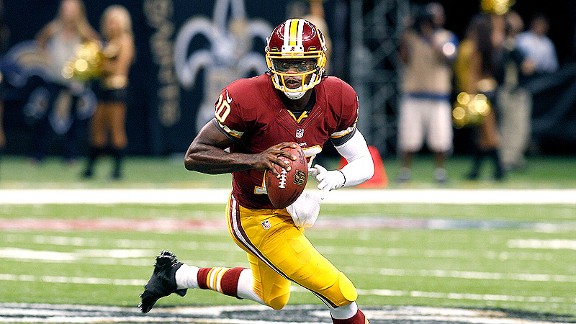
When Robert Griffin III came to Washington DC he was greeted as the new messiah of the Washington Redskins. For too long had the Redskins failed to procure a franchise quarterback, a leader that could take them to the playoffs and eventually the Superbowl. Finally, it seemed, the organization had made a bold move for a young quarterback who contained all of the qualities necessary for returning the Redskins to their former glory.

nfl_a_griffin_gb1_576

His first season behind center was remarkable. RGIII was named Offensive Player of the Week numerous times, he set records for the highest passer rating by a rookie quarterback and highest touchdown to interception ration, and he led to the team to the playoffs  after winning the NFC East Division.

After sustaining an injury toward the end of the season, many fans and sports pundits speculated whether or not RGIII would be able to compete in the same fashion during the following season. This past year, the Redskins returned to form posting an embarrassing 3-13 season, the worst record for the team since 1994. Many people, of course, blamed RGIII’s limited mobility, improper coaching decisions, and lack of enthusiasm from other players for the disappointing season.

Within a year RGIII went from being the hailed messiah, to a questionable concern. Favor and optimism was quickly replaced with skepticism and doubt. Of course some of the die-hard fans remained committed to this young quarterback, but a large portion of fan favor was quickly turned in the opposite direction from one season to another.

jesus.donkey

The crowds yelled “Blessed is the one who comes in the name of the Lord,” when Jesus enter Jerusalem on the back of a donkey. This man was their Messiah, the one they had been waiting for. They were so enthralled by this Son of Man that they pulled palm branches from the fields and placed them on the road as a sign of worship, devotion, and adoration. Incredibly, those shouts of “Hosanna! (Save us!)” changed to shouts of “crucify him!” within a week. The incredible favor of the crowds changed from dedication to destruction.

Our favor and devotion for the many messianic figures in our lives can change on a dime. How often have RGIIIs and others been hailed and rejected within such a short period of time? Yet, for us, our Messiah, the one who died for the sins of the world never gave up on us when we gave up on him. He rode on the back of the donkey knowing good and well what would take place by the end of the week, mounted the hard wood of the cross with the shouts of “crucify!” ringing in his ears, and loved us nonetheless.

Today, as we begin to approach Palm Sunday and Holy Week, I encourage you to consider the people in your life that you once supported and then gave up on. I’m not just talking about public figures such as RGIII or politicians, but also people close to your heart. Who have you given up on? Perhaps in these final weeks of Lent it is time to reach out to those who have fallen out of our favor. Maybe today is the day that you can reconcile a broken relationship and truly live into God’s love here and now.


Devotional – Psalm 130.1-2

Devotional:

Psalm 130.1-2
Out of the depths I cry to you, O Lord. Lord, hear my voice! Let your ears be attentive to the voice of my supplications!

Weekly Devotional Image

The church service went as well as could be expected. The small gymnasium was perfect for the contemporary service setting and most of the chairs were occupied. Like a lot of contemporary services, it began with a succession of three or four songs all focused on praising the glory of God; some of the lyrics included phrases such as: “Your love never fails,” “He’s been so good, so so good to me, Jesus,” and “you are amazing God!” Immediately following the collection of praise songs, there was a time of welcome, a brief reading from scripture, and then a focused sermon with images and themes being displayed on two screens hung from the ceiling.

I don’t remember much about the sermon except for the refrain: “God loves you no matter what!” The preacher’s perfectly executed contemporary outfit (Black Tee-Shirt with Blue Jeans) was matched with a consistently dynamic smile throughout the message. I wanted some of whatever he was having.

4050-rote worship.630w.tn.jpg

After another dose of positive and uplifting music to close out the service, we were all dismissed to re-enter the world. I stood in the back watching the people neatly file out of the gymnasium, observing sporadic examples of fellowship between people. In the corner I noticed an older woman, clearly frustrated with something, and trying to vent her frustrations to those around her. When it became clear that no one was listening to her, I walked over to ask if something was wrong. “I can’t stand services like this!” she nearly shouted, “Its just too happy!” And with that she threw her complimentary coffee in the trash, and left the building.

Have you ever felt that way in worship? Have you noticed the abundance of smiling faces in worship, discovered the overwhelmingly uplifting nature of some hymns, all brought together with a happy and positive sermon delivered with three primary points? Have you ever felt suffocated by the amount of joy that some worship services attempt to produce?

Christian discipleship is not a blindly happy-go-lucky journey. There should be more time and focus in worship devoted to the suffering that is present in each of our lives (however small or large). The psalmist writes, “Out of the depth I cry to you, O Lord. Lord, hear my voice!” Sometimes, the most appropriate form of worship is clenching your fists and shouting out those same words.

So, do not be conformed to the ways of so many churches that appear to say that happiness is a requirement for discipleship. If you are deep in one of the valleys of life right now, I encourage you to cry out to God. If you are on one of the mountaintops of life right now, open your eyes to the needs of those around you, and make God’s presence known through your actions.