We Are Not David

1 Samuel 17.32-49

David said to Saul, “Let no one’s heart fail because of him; your servant will go and fight with this Philistine.” Saul said to David, “You are not able to go against this Philistine to fight with him; for you are just a boy, and he has been a warrior from his youth.” But David said to Saul, “Your servant used to keep sheep for his father; and whenever a lion or a bear came, and took a lamb from the flock, I went after it and struck it down, rescuing the lamb from its mouth; and if it turned against me, I would catch it by the jaw, strike it down, and kill it. Your servant has killed both lions and bears; and this uncircumcised Philistine shall be like one of them, since he has defied the armies of the living God.” David said, “The Lord, who saved me from the paw of the lion and from the paw of the bear, will save me from the hand of this Philistine.” So Saul said to David, “Go, and may the Lord be with you!” Saul clothed David with his armor; he put a bronze helmet on his head and clothed him with a coat of mail. David strapped Saul’s sword over the armor, and he tried to walk in vain, for he was not used to them. Then David said to Saul, “I cannot walk with these; for I am not used to them.” So David removed them. Then he took his staff in his hand, and chose five smooth stones from the wadi, and put them in his shepherd’s bag, in the pouch; his sling was in his hand, and he drew near to the Philistine. The Philistine came on and drew near to David, with his shield-bearer in front of him. When the Philistine looked and saw David, he disdained him, for he was only a youth, ruddy and handsome in appearance. The Philistine said to David, “Am I a dog, that you come to me with sticks?” And the Philistine cursed David by his gods. The Philistine said to David, “Come to me, and I will give your flesh to the birds of the air and to the wild animals of the field.” But David said to the Philistine, “You come to me with sword and spear and javelin; but I come to you in the name of the Lord of hosts, the God of the armies of Israel, whom you have defied. This very day the Lord will deliver you into my hand, and I will strike you down and cut off your head; and I will give the dead bodies of the Philistine army this very day to the birds of the air and to the wild animals of the earth, so that all the earth may know that there is a God in Israel, and that all this assembly may know that the Lord does not save by sword and spear; for the battle is the Lord’s and he will give into our hand.” When the Philistine drew nearer to meet David, David ran quickly toward the battle line to meet the Philistine. David put his hand in his bag, took out a stone, slung it, and struck the Philistine on his forehead; the stone sank into his forehead, and he fell face down on the ground.”

This story, right smack dab in the middle of 1 Samuel, might be the most well-known and retold story in the bible. It is simple, direct, playful, and full of enough action to please any audience.

While all the armies of Israel tremble before the giant Goliath, a little boy named David takes runs quickly, slings a stone, and strikes Goliath in the forehead.

Goliath is dead.

            Israel triumphs.

            Then end.

But the writer, the teller of the tale, fills it with far more details than that.

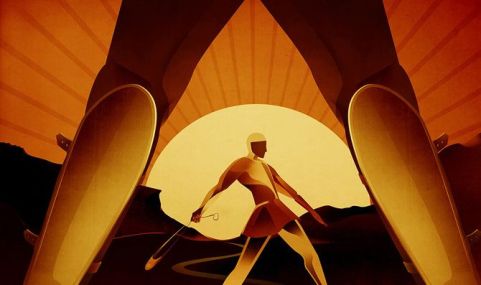
The Philistines gathered their armies for battle, a terrible sight to imagine for the fledgling Hebrew people. And there came from the camp a champion named Goliath, who was about ten feet tall, with a helmet of bronze, and his armor weighed 150 pounds.

Goliath is huge. It is abundantly clear that there is no one else like him. And he demands the Israelites send out a champion to fight, the winner will bring the great victory to their entire people.

And up pops David. Goliath demanded a worthy warrior, and he got a little shepherd boy. David was only at the battlefield bringing his older brothers something to eat. The king, Saul, is paralyzed with fear, and David offers to fight the giant Goliath.

Saul is incredulous, “You are you to fight this Goliath? You’re nothing but a little boy!” And thus God pops into the story for the first time when David responds: “The Lord who saved me from the lion and the bear will save me from the Philistine.”

David has nothing but a sling, a few rocks, and hope in the Lord. Saul tries to give him armor and weapons, but they only hold him back, so David rejects the tools of the trade and places his trust in the Lord.

With God’s help, David took the shepherd’s sling and one smooth stone and brought Goliath to the point of death.

david-and-goliath

This little story is, I am convinced, the beloved story of all middle school age boys. I have yet to encounter a 13-year-old boy who did not believe this was the most important story in the bible. Perhaps middle school boys love this story because it is the beginning of bullying and they feel like they have to stand up against their own Goliaths every day. Or maybe it’s simply the fact that girls often hit puberty faster and therefore tower over their male counterparts to the point that they appear like mighty Goliaths.

But, if we’re honest, it’s not just a story for boys with BO and zits and cracking voices. This is the paradigm for so many beloved stories. It is THE underdog story.

            David defeating Goliath.

            Rocky. Remember the Titans. Rudy. The Karate Kid. Hoosiers. The Mighty Ducks. Slumbog Millionaire. Tin Cup. Cool Runnings. Revenge of the Nerds. I could go on and on and on. And those are just the movies!

We are beyond fascinated with underdog stories, with the Davids who defeat their Goliaths. We love rooting for the hero who appears to have no chance of winning. Maybe there is something in our humanity that bends toward the least likely victor who triumphs over evil.

And when this story is preached, when someone like me ascends to the promenade of the pulpit, the sermon is almost always about encountering our own giants. Preachers like me will look out at people like you and say things like: “We all face our own Goliaths. For some of us it’s depression, or debt, or directionlessness. And, like David, we just have to have faith that God will be with us, and that we will win.”

There are so many sermons exactly like that… So many, in fact, that when I went looking for a sermon with a different angle, I couldn’t find one. And then I grabbed the texts books from seminary and the countless commentaries I have organized around my office, and all of them had the same thing to say: When we face our Goliaths, God will give us the strength to persevere.

But here’s the thing: We are not David.

Most of us here today are not even like the Israelites cowering on the corner of the battlefield wondering about their future. Most of us have never experienced a moment of fragility such that everything would be decided in a single stroke, by the least likely of people. Most of us don’t know what it’s like to put our whole trust and faith into something we don’t know.

If we’re anyone in this story, we’re Goliath.

Now, I know, this isn’t good news. We don’t go to the movies to root for the bad guy! We don’t like coming to church and hearing about how bad we are! But, and this is hard, when we encounter the strangeness of this story, when we start identifying ourselves with particular characters, we have to be honest with ourselves.

            We are not David.

A foreign country full of might and power is about to change the stage for the entire world. The Philistines have the army, they’re got the right weapons and armor, they even have a Goliath.
david-and-goliath (1)

The Israelites have nothing. They are a ragtag group of would-be followers of Yahweh with a king who can’t even must the courage to walk out onto the battlefield, with no hope except for the hopeless shepherd boy David.

We are like the Philistines. Most people in the world either fear us, or want to be like us. We hold all the cards, we’ve got the greatest military, and we hold a promise for anyone of a better life. We not only stand like a beacon on a hill for everyone else to see, we WANT to be the beacon that everyone else can see!

It’s been a strange week in our country. While I was spending time last weekend at Annual Conference with all of the other Methodist pastors and lay leaders in Virginia, the first images, videos, and sounds were released from the detention centers near the border with Mexico. Hundreds of children could be seen in cages made of metal with scattered bottles of water, bags of chips, and metallic blankets thrown randomly about.

But the audio clips somehow made it worse.

Recordings came to the surface of children screaming for their parents, some of whom were forcibly taken away while breast feeding, others were told that they were going to get a nice warm bath and never returned.

As more and more reporting came out, and more and more churches spoke out, the administration eventually ended their policy of separating families as a deterrent for illegal immigration.

180617-cbp-mcallen-texas-01

            And we still think we’re David.

But we are not David. We are Goliath. We look down at those who flee from absolute terror and say, “Come to us, and we will break your families into oblivion, we will treat you like the animals we think you are.”

And just as every Goliath does, we need our David. We need our defeater. We need to be struck dead in the forehead about our frivolity and foolishness. We need to be taken down a peg or two. We need the mirror that shows us who we truly are. For as much as we like to think we are not like the politicians who pursued a policy of family separation, this is very much who we are.

And, to be clear, this isn’t about who sits in the oval office, or what political animal is ruling the country; it’s about recognizing who we really are in the story, and not passing responsibility on to somebody else.

So we need a David. But we don’t need THE David, we don’t need the handsome shepherd boy of Jesse. No, we need the new David. We need Jesus.

            We need Jesus to smack us across the head not with smooth stones from the wadi but with the hard wood of the cross. We need to be brought low to the ground before we can be raised high. We need to be defeated in order to be redeemed.

The story of David and Goliath is so beloved because we inherently love seeing good win-out. We love it when the tables are unexpectedly turned. We love believing in impossible possibilities.

And there are times when we will feel like David. We will experience things like depression, and debt, and directionlessness, and they will feel like mighty Goliaths blocking out the sun. And, at those moments, we do need to keep hope in the Lord that we will prevail, not because of our own doing, but because God is with us.

But one of the things we never talk about, at least anymore, is how much we are actually like Goliath – the ways we Lord ourselves over others whether it’s a different race, or gender, or age, or sexuality, or socio-economic status – the ways we dismiss those at the border, or in another country, or in another community – the ways we demean those we deem unworthy.

So, for as much as the story of David and Goliath is a reminder of God’s presence in the midst of our Goliaths, it is also a story about what happens to Goliath, what happens to us! God will not leave us to break down the oppressed and reject the weak. God delivers to us a little shepherd boy, born among the animals, to bring us down from the towers of power we have constructed for ourselves.

Jesus, thanks be to God, runs out to the battlefield of our lives and says, “No more!” Jesus grabs us by the collar and delivers the truth, the hard truth, “You are Goliath! But you don’t have to be.”

There is a way, a better way, the way.

The Lord does not save by sword and spear, the Lord does not redeem the world with giants and Goliaths.

The Lord sustains with water and Word, the Lord redeems us through a shepherd named Jesus.

And in God’s kingdom, even Goliaths get saved. Amen.

Evil Defeats Itself

strangely-warmed-spreaker-header

This week on the Strangely Warmed podcast I speak with Jason Byassee about the readings for the 5th Sunday After Pentecost (1 Samuel 17.32-49, Psalm 9.9-20, 2 Corinthians 6.1-13, Mark 4.35-41). Jason is an Associate Professor of Homiletics at Vancouver School of Theology and is one of the co-writers of Faithful and Fractured. Our conversation covers a range of topics including Canadian Christianity, middle school bible stories, being int he wrong place at the right time, diving for the weird, the perspectives of the psalmists, political sweater models, knowing the unknown, and Paul as a golden retriever. If you would like to listen to the episode or subscribe to the podcast you can do so here: Evil Defeats Itself

jb

https://www.spreaker.com/user/crackersandgrapejuice/5th-sunday-b


Can You Just Not?

strangely-warmed-spreaker-header

This week on the Strangely Warmed podcast I speak with Adam Baker about the readings for the 4th Sunday After Pentecost (1 Samuel 15.34-16.13, Psalm 20, 2 Corinthians 5.6-10, 14-17, Mark 4.26-34). Adam serves as the associate pastor at Wesley Memorial UMC in Wilmington, North Carolina. Our conversation covers a range of topics including the challenge of drinking less coffee, going from the pew to the pulpit, showing up and shutting up, knowing your woundedness, ironic scriptures, the confounding nature of the divine, heilsgeschichte, and the safety of chaos. If you would like to listen to the episode or subscribe to the podcast you can do so here: Can You Just Not?

a

The Elephant (and Donkey) in the Room

1 Samuel 8.4-11, 16-20

Then all the elders of Israel gathered together and came to Samuel at Ramah, and said to him, “You are old and your sons do not follow in your ways; appoint for us, then, a king to govern us, like other nations.” But the thing displeased Samuel when they said, “Give us a king to govern us.” Samuel prayed to the Lord, and the Lord said to Samuel, “Listen to the voice of the people in all that they say to you; for they have not rejected you, but they have rejected me from being king over them. Just as they have done to me, from the day I brought them up out of Egypt to this day, forsaking me and serving other gods, so also they are doing to you. Now then, listen to their voice; only – you shall solemnly warn them, and show them the ways of the king who shall reign over them.” So Samuel reported all the words of the Lord to the people who were asking him for a king. He said, “These will be the ways of the king who will reign over you: he will take your sons and appoint them to his chariots and to be his horsemen, and to run before his chariots; He will take your male and female slaves, and the best of your cattle and donkeys, and put them to work. He will take one-tenth of your flocks, and you shall be his slaves. And in that day you will cry out because of your king, whom you have chosen for yourselves; but the Lord will not answer you in that day.” But the people refused to listen to the voice of Samuel; they said “No! but we are determined to have a king over us, so that we also may be like other nations, and that our king may govern us and go out before us and fight our battles.”

I hadn’t even been a pastor for a week when I got my first visitor to my office. There were still boxes upon boxes of books stacked in the corner, and I could barely see over the mound of paperwork on my desk when the older gentleman gently knocked on the door. With only one Sunday under my belt everyone looked familiar and unknown at the same time.

So as he offered his hand and introduced himself I tried to remember if he was one of mine, if he had been in church for my first Sunday, but then he answered my question. He said, “I’m your local state representative, and as one of our community’s leaders I want to welcome you to this place we call home.”

I was flabbergasted. What a kind and thoughtful thing to do! He could have been doing a great number of other things, but he took the time to find me, in my office, and welcome me to the community.

We talked for a few minutes about where I went to school and where I was from, before he announced that he needed to get back to his office. I thanked him for the incredibly wonderful gesture, and just before he walked down the hall he said something I’ll never forget. With a casual grin he looked over his shoulder and said, “I always appreciate my pastors putting in a good word for me from their pulpits when needed.”

And with that he walked away.

Everything is political. We could say that everything has always been political, and though that’s probably true, it hasn’t always been this political.

cb1

I challenge any of you to get online, open a newspaper, or turn on the television without learning something about a vote (or lack of vote) in Congress, or a radical tweet from the president, or any number of other issues. Politics have become the totality of our news.

Since last Sunday one of our former Presidents, Bill Clinton, was interviewed about his affair with Monica Lewinsky and he publicly stated that he doesn’t believe he owes her an apology. The most powerful man in the world, who had a physically intimate relationship with one of his subordinates, who then lied about it to the American public, doesn’t think he owes her an apology. This revelation was all that the news outlets could talk about for hours.

Since last Sunday, our current president hosted a “patriotism” event at the white house, after publicly lambasting the Philadelphia Eagles, and the entire NFL, for not respecting our nation’s flag. And during the event, while the band and a choir of dozens performed God Bless America, our president clearly didn’t know the words to the song. This revelation was all that the news outlets could talk about for hours.

Since last Sunday, I’ve driven in my car all over Woodbridge and I have heard two different political pundits, representing both sides of the spectrum, say the exact same thing: “The 2018 midterms will be the most important election in history.” Which, for what it’s worth, is what they said about the 2016 election, the 2012 election, the 2008 election…

Everything is political. And because everything is political we continue to dig our political trenches deeper and deeper, and we’ve let it completely infect the church.

            The Elephant (and Donkey) in the room is the fact that we’ve let the elephant and the donkey into the room, the church.

Now, you might be thinking, what’s so wrong with letting animals into the church? Aren’t they part of God’s good creation? Wasn’t our Lord born in a manger surrounded by farm animals?

The problem with having elephants and donkeys in the church is that at any moment they can go on a rampage through the circus tent of church life just like they used to do every election cycle, and they now do two to three times a week.

And, to make it all the worse, we knew exactly what would happen when we let them in.

donkey

“Give us a king to govern us so we can be like everyone else!” the people of Israel declared. And the Lord warns them, “I’ll give you a king if you want a king, but know this – the king will send your young sons and daughters off to war, the king will take a tenth of everything you own and keep some and share the rest with the wealthy and the powerful, you will become slaves to the political regimes of your own design. And when you begin to see what you have done, when you cry out to me because of your king, who you yourselves chose, I will not answer.”

Our desire to root ourselves in our politics and elections is no new phenomenon. The people of God, having finally placed roots in the Promised Land are no longer content with the guidance of would-be judges and they demand action from the Lord. Give us a king so we can be just like everybody else!

And since the days of Samuel there have been generally two responses to the infection of politics in faithful living. The people of God are either tempted to avoid politics altogether – there is talk of spirituality and prayer and personal relationship with Jesus; we proudly proclaim that pulpit proclamations and personal political proclivities have nothing to do with one another.

Or, we are tempted to shout out in resistance to whatever comes from the towers of power. During the Davidic kingdoms it came from the Temple and today it often come down from Capitol Hill. We forge ahead to wage battle against those with whom we disagree. We not only point out the elephants and donkeys in the room, but we also rage against them with every fiber of our being.

We complain about politics, whether our party, whichever one it might be, is in power or not. We hold our elected leaders to standards that we ourselves do not adhere to. And when they disappoint us we act as if no one could have predicted this.

            But we get the politicians we deserve.

And it is all too tempting to blame those who represent us for all of our current problems – looking for scapegoats is part of our nature. But that blame game isn’t good enough, because the truth of the matter is that they, politicians, are not the problem – the problem is us.

We forget the intense emotions of all sides of the political spectrum are remarkably similar even though they are rooted in completely different value systems. Much of who we are politically is not based on what we want the world to look like, or deep-rooted convictions, it’s a reaction to what we fear.

The Israelites were afraid that without a king they would not be like all of the other nations, that they would not hold the might and power they so desperately craved, that they would fall back in the chains of slavery they had in Egypt. The deep fears about their present reality convicted them to demand a king from God. And God, as a loving God, listens and ultimately gives them what they want! But not before warning them of the result of their desire.

The Lord provides vivid and frightening details about what their future holds in store, and it not only affect them but their children and their children’s children, it will affect the land given to them, it will affect every part of their lives.

And how do they respond?

No! We are determined to have a king over us so we can be like everybody else!

Friends, we are not like everybody else. Contrary to what we might read in the papers, or see on the television, or scroll through on the internet, we are a counter-cultural movement. Our values rarely harmonize with those surrounding us in the world run and consumed by politics.

We are not a red church, and neither are we a blue church.

            We are not a church of elephants, or a church of donkeys.

            We are purple church, and we worship the Lamb.

We did not elect Jesus, we did not listen to him make speeches with empty promises before we decided he could be ours, we did not choose him.

Honestly, I doubt we would’ve picked him if we had a choice. He does not represent economic power, of militaristic might, or the promise of jobs. And yet Jesus is his own politics.

Politics, rightly understood, is not the fight for a more democratic world, or the protection of freedoms, or the implementation of strategies to make America work. Politics, in following Jesus, hinge on our willingness to create and cultivate a community where we can tell the truth.

We who follow Jesus are people of truth. We do not turn blind eyes to what happens outside of these walls, and neither do we ignore the elephant and donkey that all too often dominate our conversations within these walls.

And let me be clear, this is a tension. It is a difficult situation because the elephant and donkey have become too strong and loud and powerful to be easily removed from the church. We are, to a degree, stuck with them. And because they are here and not going anywhere, we will argue. The pettiness of the conversations online, on the radio, and on television will continue to infect what we do, and think, and say, and believe.

But, after all, we Christians are a people who love our enemies. Perhaps the invasion of the political animals in this place will give us the opportunity to actually follow Jesus and love the people we hate and who hate us.

The truth is we are not like everybody else.

            We are Jesus people.

I’ve told the story before, but when the last presidential election cycle came around, I was feeling fairly apathetic. With more than a year of bickering, political trenches growing deeper and wider, I didn’t even want to vote. I thought perhaps the Christian thing to do would be to not vote. But when Election Day came, I found myself driving to my voting station at a local church.

I meandered through the line until they sent me to my machine were I pushed a few buttons and it was over. And as I looked up above the machine, at the room full of people fuming with frustrations, I saw hanging above us a picture of Jesus. And not just a normal picture of Jesus by the sea, or sitting at the table with his friends; it was a picture of Jesus laughing.

            Jesus was laughing at our foolishness in thinking that we can govern ourselves, in thinking that our freedom to choose would result in a better world, in thinking that maybe we would get it right this time.

Now Jesus’ laughter at our political pandering is not to say that politics are inherently wrong or evil. Jesus is not calling us to dismantle our current system of government, nor is Jesus calling us to retreat from the world into caves of our own making. Our democratic system has certainly provided a number of blessings to those who call this nation home.

But when the bonds of the names on our bumper stickers and the color of our political parties become more determinative than the bonds that are forge in the waters of baptism, we have fallen prey to the elephant and donkey in the room.

We are Jesus people, we believe that telling the truth is more determinative than just about anything else. And to confess Jesus as Lord is a truth that will profoundly challenge the status quo of animals running loose in the sanctuary.

We believe that God resurrected a first century Jew from the dead in order to turn the world upside down in the beginning of a revolution of reality.

We believe that by following Jesus our lives will become more difficult because we will love our enemies as much as we love our friends.

We believe that Jesus is Lord, he is our king, and that we did not elect Him – He elected us. Amen.

Expecting The Unexpected

1 Samuel 3.1-10

Now the boy Samuel was ministering to the Lord under Eli. The word of the Lord was rare in those days; visions were not widespread. At that time Eli, whose eyesight had begun to grow dim so that he could not see, was lying down in his room; the lamp of God had not yet gone out, and Samuel was lying down in the temple of the Lord, where the ark of God was. Then the Lord called, “Samuel! Samuel!” and he said, “Here I am!” and ran to Eli, and said, “Here I am, for you called me.” But he said, “I did not call; lie down again.” So he went and lay down. The Lord called again, “Samuel!” Samuel got up and went to Eli, and said, “Here I am, for you called me.” But he said, “I did not call, my son; lie down again.” Now Samuel did not yet know the Lord, and the word of the Lord had not yet been revealed to him. The Lord called Samuel again, a third time. And he got up and went to Eli, and said, “Here I am, for you called me.” Then Eli perceived that the Lord was calling the boy. Therefore Eli said to Samuel, “Go, lie down; and if he calls you, you shall say, ‘Speak, Lord, for your servant is listening.’” So Samuel went and lay down in his place. Now the Lord came and stood there, calling as before, “Samuel! Samuel!” And Samuel said, “Speak, for your servant is listening.”

Words are important.

What we say often shapes what we believe and, perhaps even more importantly, it shapes how we behave.

Take the common words we all offer together after the scripture is read in worship: The Word of God for the People of God… Thanks be to God. We say those words week after week, and if you’re like me, you don’t really think about what we’re saying.

But those words are really important, and they say a lot about what we think theologically.

Now the Lord came and stood there, calling as before, “Samuel! Samuel!” And Samuel said, “Speak, for your servant is listening.” The Word of God for the people of God… Thanks be to God.

For God so loved the world that he gave his only begotten son that whosoever believe in him may not perish but have eternal life. The Word of God for the people of God… Thanks be to God.

The Lord is my shepherd, I shall not want. He maketh me to lie down in green pastures, he leadeth me beside still waters, he restoreth my soul. The Word of God for the people of God… Thanks be to God.

thanks-be-to-god

But what about those difficult text from the bible? What are we supposed to do, or say, or believe about the scriptures that make us uncomfortable? Should we be thankful for something that makes us squirm?

But Jael took a tent peg, and took a hammer in her hand, and went softly to him and drove the tent peg through his skull, until it went down into the ground and he died. (Judges 4) The Word of God for the people of God… Thanks be to God?

No one whose testicles are crushed or whose penis is cut off shall be admitted to the assembly of the Lord (Deuteronomy 23). The Word of God for the people of God… Thanks be to God?

Let a woman learn in silence with full submission (Timothy 2). The Word of God for the people of God… Thanks be to God?

What are we communicating to young people, or those individuals who are new to the faith, when we say we are thankful for God’s Word when perhaps we’re not?

Additionally, words mean different things to different people based on a variety of different contexts. What you can say to one individual, and how it is received, is not the same as what you could say to someone else.

I have a long habit of adapting words to particular contexts and individuals. For instance, during vacation bible school, when dozens of young children are in our building, I’m not breaking out the bible stories about tent pegs being driven through skulls, or rules about genitalia, or verses about women’s subordination. Those kids, like the scriptural story today tells us, are like Samuel and they do not yet know the Lord.

Similarly, if I’m teaching a Sunday School class to seasoned Christians, I’m not going to just talk about how nice it is that God loves us. It’s true, but that kind of simple affirmation alone doesn’t challenge us to be any better than we were before we heard it.

The church is supposed to be a supple and open avenue to God’s ways in the world such that we can delight and rejoice when God moves outside of our expectations and reaches people where they are rather than assuming that they’ll figure it all out on their own.

That’s one of the reasons that we keep coming back to do this strange and wonderful thing we call worship. For Samuel it took God’s calling in the night three times, and the wisdom of a mentor, to help him know that God was encountering him. For some of us, it takes a lifetime of Sundays before we hear it.

Of all the stories in the bible, this one, this nighttime calling, might have the most ominous beginning: The Lord’s Word was rare at that time. This meant there were few prophets, decent sermons were all but gone, and the Lord seemed to be nothing more than an idea. And yet it is precisely at this time when the Word was rare that God intrudes and upends expectations.

When we have communion we, like many Christians, are invited to the table, we confess our sins, share signs of peace, and then share the bread and the cup together. While you all line up in the center aisle and make your way toward the altar, I will adapt the words I use as I offer the body of Christ. For some of you, well seasoned in your faith, I can say the words that have been said for centuries: “The body of Christ, given for you.” But for others, saying something like this only produces more questions, and so I will adapt the words, and instead I might say something like, “The gift of God for you” or “This is Jesus” or “God loves you.”

gwb69HQ2Th65lhyMqck8_Communion-JT-Blog-Image

A few months ago we had a fairly typical Sunday service, the sermon was around a B- quality, the hymns fit well with the theme of worship, and then we moved to the table. We said and did what we always do, and then we feasted. I offered the body of Christ to all who came forward and there was a young girl who I’d never seen before, and when I tore off the bread I said to her, “God loves you.” And then I kept serving everyone else.

When our service ended, the young girl’s mother shook my hand on her way out of church and then she said words I’ll never forget, “That’s the first time my daughter’s ever had communion. Thank you.”

And I couldn’t help but think, “What if that was the first time she ever heard that God loves her?”

Years from now I can imagine that girl graduating high school and entering college. Though fully endowed with a message of faith and love here in this place one Sunday, she never steps foot in a church after that day for one reason or another. High School is tough for her as she wrestles with her identity and wondering if life is about more than what she has experienced. The good grades never feel good enough, the friendships never feel close enough, and no matter what she tries it always seems like something is missing.

So without really knowing why, she applies to some university, and leaves home without looking back with the hope that this new chapter will be better than high school.

Sadly, it’s not. College life for her is filled with even more people, and she feels less and less connected. She falls through the cracks of campus life and spends far too much time alone in her dorm. She still believes that life must get better but she’s not seeing any indication of it. One night, however, her roommate invites her to a campus ministry service. She reluctantly attends, and is truly underwhelmed by the experience.

The music is okay, and the message is all about spreading the Gospel, whatever that means. She sits and listens attentively but she knows that she’ll never come back. But right before the service ends, the pastor brings out a loaf of bread and a cup of wine and starts talking about communion. Immediately, the girl is brought back to that morning when she walked down the aisle in this church when she heard a bearded man wearing a long black dress talking about communion. While her mind is flooded with memories from the past she makes her way up to the make-shift altar and stretches out her hands to receive the body and blood of Jesus while the pastors whispers just loud enough for her to hear: “God loves you.”

But, sadly, I can imagine that even after that profound moment of the past catching up with her future present, the knowledge of God’s love doesn’t stick. The girl continues through school and eventually meets her husband. They get married shortly after graduation, and move to a new city for work. Years pass, and even though all of the things on the outside look perfect – she has a few children, a steady job, and a home – she still feels like something is missing.

She tries to find fulfillment in her life: She joins young professional groups, she volunteers at the local soup kitchen when she has time, she even helps start a community garden. But nothing seems to fill the void she feels.

One day, however, a neighbor invites her and her family to the local United Methodist Church. She laughs while responding about how her mother dragged her to a UMC one Sunday morning when she was a kid but the neighbor is persistent and she eventually agrees to go to worship.

The woman sits with her family in church on Sunday morning. She stands when she is supposed to, sings when everyone else does, she even bows her head and mutters some version of a prayer under her breath. She listens to the sermon, but most of it feels lifeless and too repetitive. And then the pastor moves to the table and invites the congregation to partake in this beautiful and precious meal that Christ offers without price. The pastor says, “This table is the one true place we can find who we are and whose we are, because in the bread and cup we discover grace. We are living in a time when the Word of the Lord is rare – but at this table you can hear God calling, because here you find the God whose finding you.”

With tears welling up in here eyes, tears she cannot explain, the woman walks forward. She remembers that day long ago at Cokesbury UMC, she remembers the night in college when she walked up toward the altar. The emotional wave is almost overwhelming and as she stretches out her hands the pastor whispers just loud enough for her to hear, “God loves you.” And for the first time she believes it.

God_At_Work

One of the hardest things in the world to accept is the fact that God loves us. In our heart of hearts we, more than anyone else, know what we have done and what we have left undone. We see the mirrored reflection of our brokenness and we believe that we are unworthy of the love of God we so often hear about in church.

Sometimes, in fact most of the time, it takes more than a simple affirmation from the pulpit, it takes more than hearing it whispered during communion, it takes more than a bumper sticker or a billboard for the message to sink deep in every fiber of our being. We need to hear those words over and over and over again but they are true and remarkable and difficult.

When the Word of the Lord was rare during Eli and Samuel’s life, no one was expecting God to do something like call upon a young boy in the temple. The call completely disrupted his life not with peace, but with a call to disturb to the peace.

Why a kid? God does not call the equipped, God equips the called. God bypassed the expected and seasoned possibility of Eli, and went instead for the untrained and immature Samuel.

God does whatever God wants. But this story, this calling, is also about more than that. God loves upsetting our expectations.

God loves loving us, even when we do not love ourselves. Amen.

Flashing Forth Flames of Fire

Psalm 29

Ascribe to the Lord, O heavenly beings, ascribe to the Lord glory and strength. Ascribe to the Lord the glory of his name; worship the Lord in holy splendor. The voice of the Lord is over the waters; the God of glory thunders, the Lord, over mighty waters. The voice of the Lord is powerful; the voice of the Lord is full of majesty. The voice of the Lord breaks the cedars; the Lord breaks the cedars of Lebanon. He makes Lebanon skip like a calf, and Sirion like a young wild ox. The voice of the Lord flashes forth flames of fire. The voice of the Lord shakes the wilderness; the Lord shakes the wilderness of Kadesh. The voice of the Lord causes the oaks to whirl, and strips the forest bare; and in his temple all say, “Glory!” The Lord sits enthroned over the flood; the Lord sits enthroned as king forever. May the Lord give strength to his people! May the Lord bless his people with peace!

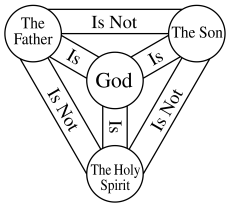
Imagine, if you can, that I was a middle student and I came to your office one day and asked you to explain the Trinity. What would you say?

I was sitting at a table surrounded by pastors and lay people from the Virginia Conference of the United Methodist Church and they were evaluating whether or not I had been effective in my first three years of ministry. This was one of the last requirements to be fully ordained, and get to wear a stole like this one.

So I was sitting there at the table having already fielded an hour’s worth of theological questions when I was asked to explain the nature of the Trinity to a hypothetical middle schooler.

What would you say?

The three most popular analogies for the Trinity are as follows:

The Trinity is like an egg. At one moment it is three distinct things – a shell, a yolk, and an egg white. Without all three it ceases to be an egg. However this fails to justice to the Trinity because it cannot be divided into parts, but the egg can.

Another analogy is that the Trinity is like water. Water, depending on external temperature, can be a gas, a liquid, or a solid. And regardless of what state it is in, the chemical composition remains the same. However, this too fails to do justice to the Trinity because water can change into gas, or vice versa, but the Father does not become the Son or the Spirit.

Finally, there’s the analogy of the shamrock. St. Patrick was once said to have picked up a shamrock and say, just as there are three leaves, but there is one plant – so it is with the Trinity. However, this falls apart with the fact that the shamrocks have different parts and that is not true for the Trinity.

Pretend I’m a middle schooler and I wanted to know about the Trinity. What would you say?

835551271

Today is Trinity Sunday. It always falls on the Sunday immediately following Pentecost and it is a time for us to confront our three-in-one God. It continues us throughout the period we call Ordinary Time until Advent. Many churches use this day as a teaching moment to help illuminate church doctrine about what it means to be Trinitarian. They might break out some water, or eggs, or shamrocks and do what they can to help all in attendance to understand what we believe just a little bit better.

            But here’s the thing – For as much as our God is a present and revealing God, our God is also incomprehensibly and uncontainably complex.

Ascribe to the Lord, O heavenly beings! The voice of the Lord thunders, it breaks the cedars, the Lord shakes the wilderness, the Lord flashes forth like flames of fire!

The psalmist conveys to us images of the divine that have far more to do with destruction and devastation than with eggs, water, and shamrocks. Here we discover a God who causes the oaks to whirl, and strips the forest bare, such that all the people in God’s temple say, “Glory!”

Most of us have come of age in a world where the God of scripture has been conveyed to us through analogy after analogy, where professional Christians like me have endeavored to bring people like you closer to the divine, when the truth of the matter is that we cannot describe God, and God is the One who encounters us.

Our God cannot be contained by metaphors and analogies for middle school students – our God is as overwhelming as a windstorm leaving a forest bare, as frightening as a voice that can shake the wilderness, and as bewildering as flames of fire flashing forth.

262433.p

The church, the Bible, the Trinity, they are all confusing, and we can blame it on God. God reveals God’s self in ways we cannot imagine or rationalize, and choose to be God for us as Father, Son, and Spirit in such a way that it is beyond our ability to comprehend or describe.

And so, with all this confounding confusion, what can we say about our God?

Perhaps, we can say that God is whoever raised Jesus from the dead having first raised Israel out of Egypt. We can say this because God chose to reveal God’s self to us in the person and incarnation of Jesus of Nazareth. And Jesus, like God, is anything but simple.

In Jesus, God got physical, explicit, and peculiar. God came close to us, too close for comfort for many. Jesus is God in action. Jesus is God refusing to remain an abstract idea removed to a far off place. Jesus is God breaking forth from the shackles of God’s own divinity.

But, lest we fall into a day-dream version of God in Jesus through the lens of sentimentality… God is still the God of the psalm flashing forth flames of fire.

I once heard that God is at least as nice as Jesus, but the same holds true that Jesus is at least as frightening as God.

            And then we’re left with another question: Who is God’s peace for?

After describing the destructive power of the Lord, the psalm ends with a call for God to give strength to God’s people and for them to be blessed with peace. What about those who are not part of God’s people? What does this peace actually look like? Does God take sides?

The answers to those questions are as confusing an as ambiguous as the Trinity itself.

Shield-Trinity-Scutum-Fidei-English.svg

The Lord blesses the sons and daughters of Abraham but they live in a time of famine.

            They are rescued by Joseph only to become slave in Egypt.

            Led by Moses they escape bondage to wander in the wilderness for forty years.

            Joshua delivers them to the Promised Land but they are never really at peace.

            There are wars after wars and the so-called “chosen people” lose just as often as they win. They are taken into exile, or forced to wait for loved ones to return home. And when they are reconciled, if ever, peace is the last thing on their minds.

We can read these stories over and over again in the Old Testament, we can encounter those elected and rejected by God, but we don’t have to look far to know that it is true – we war among ourselves all the time; father against son, mother against daughter, brother against brother, sister against sister. And then we still ask, “Are we going to encounter the God of earthquakes, flames of fire, and whirling winds – Is God on our side?” Or, perhaps better put, “When will the Lord finally bless us with peace?”

Psalm 29, the doctrine of the Trinity, they both raise more questions than they provide answers. People like you and me have been struggling with these words and ideas for centuries, we’ve been tugged between the tension and ambiguity of God’s nature in the world and in our very lives.

We worship a God who blesses, but we live in a world where bad things happen to good people nonetheless. There is no easy and satisfying answer to the question of whether or not God takes sides, just as there is no easy and simple analogy for the Trinity.

We may never be able to avoid the confusing nature of faith completely. So much of what we do is based on a premise of mystery – we just happen to live in a world hell-bent on having an answer for everything.

If all this talk of trinitarianism and God’s frightening power seems a bit overwhelming, you are not alone. There are plenty of churches and communities that make this easier on the brain with simple analogies and ignorant assumptions. But there is no way for us to do justice to the marvelous complexity, the community in unity of the divine, without believing in the three-in-one God. We cannot worship God in faith without struggling and wrestling with the question of God’s preferences.

John Wesley, the founder of the Methodist movement struggled with his knowledge of God. He read all the right books and went to the right school, and even became a priest in the Church of England without believing in the faith he preached. He struggled and struggled to the point that when he asked one of his mentors what to do about leading a church without faith his mentor said, “preach until you get it.”

And it was 280 years ago this week that John Wesley wrote something rather remarkable in his diary: “In the evening I went very unwillingly to a society on Aldersgate Street, where one was reading Luther’s preface to the Epistle to the Romans. About a quarter before nine, while he was describing the change which God work in the heart through faith in Christ, I felt my heart strangely warmed. I felt I did trust in Christ, Christ alone, for salvation; and an assurance was given me that He had taken away my sins, even mine, and saved me from the law of sin and death.”

Wesley had spent most of his life looking for God, when in the end God was the one who found him and warmed his heart. That moment changed everything, that society meeting on Aldersgate is largely responsible for the existence of the United Methodist Church today.

God comes to us, all of us, at any time and at any place, as Father-Son-Spirit. For some God flashes forth like flames of fire, and for others God’s flame is found in the warmth of our hearts. God finds us and, contrary to what we might want, God doesn’t answer all of our questions. Yet when God encounters we discover an assurance that this God is with us.

When the far-off One who has been brought near is us, when the wall that has been destroyed is the wall we build in a vain attempt to keep God out of our lives and off our backs, that’s when we start to know the Trinity.

Faith, however, will always remain a mystery. We will find ourselves confused by the God who finds us. Because, in the end, it may simply be too frightening to think about God’s peace, whatever that is. It might be too overwhelming to think that God is not on our side, or worse: God might be on their side.

So on this Trinity Sunday, as we leave scratching our heads, we do so with the hope that God will bless us with true peace – not as we know peace or wish to know peace; a peace that is always defined on our terms. No, this Trinity Sunday, we pray for the peace, the perfect peace, that is known and shared within the Trinity – Father, Son, and Spirit.

            And, we may be so bold so pray, that God might warm our hearts in the process. Amen.

Mercy Precedes Judgment

strangely-warmed-spreaker-header

This week on the Strangely Warmed podcast I speak with Mikang Kim about the readings for the Trinity Sunday – Year B (Isaiah 6.1-8, Psalm 29, Romans 8.12-17, John 3.1-17). Mikang serves as the pastor of Epworth UMC on the Eastern Shore of Virginia. Our conversation covers a range of topics including Licensing School, Jacob’s ladder, instagram, strangers in a strange land, visitation as proclamation, the keys of heaven, the chaos of God, and the intimacy of the Trinity. If you would like to listen to the episode or subscribe to the podcast you can do so here: Mercy Precedes Judgment

mk

The Future Present

Romans 8.22-27

We know that the whole creation has been groaning in labor pains until now; and not only the creation, but we ourselves, who have the first fruits of the Spirit, groan inwardly while we wait for adoption, the redemption of our bodies. For in hope we were saved. Now hope that is seen is not hope. For who hopes for what is seen? But if we hope for what we do not see, we wait for it with patience. Likewise the Spirit helps us in our weakness; for we do not know how to pray as we ought, but that very Spirit intercedes with sighs too deep for words. And God, who searches the heart, knows what is the mind of the Spirit, because the Spirit intercedes for the saints according to the will of God.

All of creation groans.

            How can we put those words into images?

On Monday 60 Palestinians were shot and killed and another 2,700 others were injured during protests at the border with Israel. Some of those killed were individuals from aid agencies who were providing medical care to the protestors. Some of those killed and injured were children.

On Friday morning a 17 year old walked into a high school in Texas and shot and killed nine students and one teacher.

We know that the whole creation has been groaning in labor pains until now; and not only the creation, but we ourselves groan inwardly, while we wait for redemption.

Perhaps the best we can muster in a world like ours, in a time like ours, is a groan, a sigh, and dim hope. We live, as many have noted, in a time of perpetual amnesia – because we know so much about the world, and we know how broken it still is, we are bombarded with story after story to such a degree that we can barely remember what happened a year ago, a month ago, or even a week ago. Our televisions and newspapers and timelines are filled with such tragic stories and we just move from one to the next.

If we find ourselves moaning and groaning, sighing and crying, then we are on the right track. We hope for a better tomorrow, for a world that does not look like this one. We yearn for what has been promised in faith, but do not yet see.

            All of creation groans.

Paul is right to name and claim our salvation – but we are saved in the hope of redemption. We live in the light of God’s good promise, however, we do not live in the fulfillment of that promise.

We are still waiting.

Like pilgrims in the midst of a great journey, or a woman anticipating her baby’s due date, we are not yet at the goal.

And Paul tells us that while we wait, we do so with patience.

The great missionary of the 1st century loves to do this type of thing, which is to say Paul liked navigating the confusing contours of now and not yet. Paul danced between the present time and the time when all things would be conquered by God.

Most of us are not like Paul. Rather than enduring the days at hand with patience, we want to see change here and now. We are not the backseat Christians who willingly accept the status quo. No, when we see and feel the groans of the world we want it to stop. Now.

There are plenty of Christians in the world who rest on opposite sides of this spectrum. Some sit back and wait, without a care or concern for how things currently are, because one day (whenever that might be) God will fix everything. And for as much as that is true, they are like those who see a building on fire and instead of reaching for a bucket of water they say, “It must be God’s will.”

And then on the far other side there are those who are in denial of present sufferings and are utterly convinced that if they only prayed harder God would make them healthy and wealthy. They might receive a horrible diagnosis, or lose their employment, but they believe that God is waiting for them to pray the right prayer before God drops the perfect cure of the more lucrative career.

But us other Christians, those who find ourselves in the middle, we know that it is no comfort to deny present suffering, nor is it comforting to focus all of our energy on the hope that God will fix everything in a jiffy. We know that reflections on the future must be, at times, postponed. It is not the future that commands our attention but the present.

And here in lies the crux of it all, we focus our focus on the present, not as a denial of the future, but precisely because we know that we don’t know what the future holds.

We know, whether we like to admit it or not, that all things in this world will perish; we’ve all seen it happen too many times, but the cross of Jesus Christ stands in the midst of this lonely and broken world and it is the sign of our hope. Easter boldly proclaims that at the end of our possibilities God creates a new beginning – Pentecost shows us how we take the first steps.

Today of course is Pentecost, fifty days after Easter. The disciples spent forty days with the risen Jesus, learning about the kingdom of God, before Jesus ascended to the right hand of God. But then they had ten days of waiting.

Descent-of-the-Holy-Spirit-at-Pentecost

Imagine if you can, though we certainly can’t, what it must’ve been like to not only encounter the risen Jesus, but to lose him again, and to wait. What were those conversations like in the ten-day waiting period? What plans were made in case nothing happened? Were they patient in their hope?

Acts tells us that on the day of Pentecost, fifty days after Passover, all the disciples were in one place and suddenly from heaven there came a sound like a rush of a violent wind, and it filled the entire place where they were sitting. Divided tongues, as of fire, appeared among them, and a tongue rested on each of them. All of them were filled with the Holy Spirit and began to speak in other languages as the Spirit gave them ability.

They immediately went forth from that place proclaiming the good news to all with ears to hear, and on that day the Lord added 3,000 to the growing faith, and they all devoted themselves to the apostles’ teaching and fellowship, to the breaking of bread and the prayers.

Many of us, if not most of us, would like to see the Spirit manifest like those first disciples did on the day of Pentecost. We want signs of power and majesty, we want this sanctuary windswept and on fire for the Lord. But, like the readers of Romans, we may not receive the signs we so desperately desire.

Hope that is seen is a limited kind of hope, for if we can see what we want, it is certain to be limited to what we are now able to behold. Do you think those disciples were yearning for the Spirit to give them the strength to speak in other languages? Do you think they prayed night after night for the Spirit to fall upon them like a blazing fire? Do you think this is what they hoped for?

CELPentecost[1]

They had no idea what they were in for! There’s no way they could’ve possibly imagined what would happen ten days after Jesus ascended into heaven. There’s no way they could’ve known the Spirit would arrive in such a dramatic way. There’s no way they could have predicted that the rest of their lives would be spent in an illegal community based on the worship of a crucified God.

Something greater was in store for all of the first disciples, greater things were yet to come – and the same holds true for us.

Paul is completely convinced, though he was not there on the day of Pentecost and did not receive the Spirit in the same way, that the Holy Spirit helps us in our weakness. For we do not really know how to pray as we should and the Spirit intercedes with sighs too deep for words.

There is something majestically powerful in being reminded that even when we cannot find the right words, the Spirit is with us in our sighs. Because how in the world could we possibly pray, in the right way, for those living in Israel and Palestine? What kind of words could we offer to parents who discovered that their children were murdered by a gunman in their school?

IMG_3958

            There are no words except for the deep groaning of the cosmos that can come close to what needs to be said in prayer.

And yet, we have hope. Not a blind foolish hope, but a deeply rooted hope in the one of came to live, die, and rise again. We have a hope, like the early disciples, that what we see and hear and experience now is not the end. And, at the same time, the Spirit is with us to give us the strength to not only yearn for a better world, but also actually do something about it.

That’s the thing about hope – it is meaningless unless it prompts us toward transformation. Hope that remains in the heart and mind alone is nothing more than a clanging cymbal. But our hope, a hope for a world that we cannot yet even imagine, is like a fire – it warms the soul and lights our path.

When the Holy Spirit was first poured out on all the disciples it was like a fire and it spread in wild and unpredictable ways. Those first followers of Jesus, though persecuted and often killed for their faith, are responsible for us having heard the Word at all. They were so on fire in their hope that they went beyond what they could see and hope for, knowing that with patience, the world would begin to change.

In 1969, Mister Roger’s Neighborhood had only been a national show for year. And on one fairly typical episode Mr. Rogers entered the screen as usual, but instead of putting on his infamous sweater, he mentioned something about how hot it was outside and decided to soak his feet in a tiny swimming pool. While resting and relaxing, a black policeman name Officer Clemmons walked by and Mr. Rogers invited him to share the small pool. Officer Clemmons quickly accepted, rolled up his pants, and placed his very brown feet in the same water as Mr. Roger’s very white feet.

Today, in 2018, this might seem insignificant, but in 1969 it was everything. In the late sixties public pools became the battleground of segregation to such a degree that it was illegal in some places for black bodies and white bodies to be in the water at the same time, if at all. There are horrible images of the summers in the 60s in which white pool managers would pour acid into pools when people protested by swimming with other races.

But for one episode of Mr. Rogers Neighborhood, the country was shown a glimpse of the future, a future of hope, one that few people could possibly imagine at the time.

Early-MRN-Clemmons-and-Rogers-1-2.jpg

John Wesley, the pioneer of renewal that led to the birth of our church, once said that if you light yourself on fire, people will travel miles to watch you burn. Our hopefulness, our yearning for a new day and a new way, should be like a fire that people can’t help but watch.

Mr. Rogers had a fire that was as simple and yet profound as soaking his feet in a swimming pool, but it was exactly his hopefulness that resulted in people tuning in each and every week for decades.

We talk a lot about how we, as Christians, are citizens of a different kingdom – but sometimes we don’t take the next step to imagine what the kingdom looks like. God’s kingdom is one ruled by hope. A hope for things not yet seen, a hope for a time we cannot even imagine, a world in which the fire of Pentecost is present in everyone we encounter.

The Holy Spirit with its bravado and bombastic arrival is always pointing from death to new life, it is always praying with us and through us even when we do not know what to say, and it is always redeeming us for a new day and a new way. Amen.

Rebelling Against King Jesus

strangely-warmed-spreaker-header

This week on the Strangely Warmed podcast I speak with Alex Joyner about the readings for the Day of Pentecost – Year B (Acts 2.1-21, Psalm 104.24-35b, Romans 8.22-27, John 15.26-17, 16.4b-15). Alex is the District Superintendent for the Eastern Shore in the Virginia Conference, and he regularly blogs on his website Heartlands. Our conversation covers a range of topics including bad puns, living off the map (literally), church birthdays, faithful diversity, the connections between Babel and Pentecost, the impermanence of land, giving voice to the voiceless, and the community in the Trinity. If you would like to listen to the episode or subscribe to the podcast you can do so here: Rebelling Against King Jesus

aj

The Whole Truth

1 John 5.9-13

If we receive human testimony, the testimony of God is greater; for this is the testimony of God that he has testified to his Son. Those who believe in the Son of God have the testimony in their hearts. Those who do not believe in God have made him a liar by not believing in the testimony that God has given concerning his Son. And this is the testimony: God gave us eternal life, and this life is in his Son. Whoever has the Son has life; whoever does not have the Son of God does not have life. I write these things to you who believe in the name of the Son of God, so that you may know that you have eternal life.

We all sat uncomfortably in the sanctuary on a Sunday evening listening to our youth director wax lyrical about the importance of witnessing. I can remember shifting around in the wooden pew while struggling to figure out what in the world she was talking about.

Witnessing? When I heard the word my mind immediately jumped to the “DUM DUM BUM BUM BUM BUM BUM” found at the beginning of every Law & Order episode. Witnessing, to me, sounded like what you did when you saw something terrible happen.

So we listened and listened until she announced that it was time for us to share our testimonies. And testimony was another word that, to me, sounded more relevant in a courtroom than in a sanctuary. But she slowly pulled out a microphone plugged into the sound system, backed away, and waited for one of us to testify.

In many churches, testimony occupies a powerful place in worship. Preachers and lay people will tell others about how God has changed their lives.

But for a privileged group of young high school students, our time of testimony sounded a little more like this:

“A few weeks ago, I was really worried about passing a test that I didn’t study for, so I asked for God to help, and like, I actually passed.”

“I remember really wanting a new baseball bat when I was younger, and I guess God had something to do with it when I opened one on Christmas morning.”

One by one we listened to these rather trite and cliché renditions of all that God had done for us. And after each person finished, the microphone stood there before us waiting for the next witness.

microphone-web

The last person to go was a girl in my grade who usually remained totally silent during youth group. She participated with the minimal amount of effort, and kept coming back every week even though it looked like she hated it. She slowly made her way forward and then very quietly said into the microphone: “I don’t really know what to say, except that I don’t really have any friends. But being here, with you, talking about God, it makes me feel like maybe I could have friends.”

To this day, I can remember seeing the solitary tear running down her cheek, and I can remember the silence in the sanctuary after having actually experienced a testimony.

Testimonies, at least as they are experienced in church, are those times when we are given the opportunity to name and claim what God has done for us. And, of course, some will always experience God through a good grade, or a wonderful sunny afternoon, or a perfect Christmas present. But real testimonies, the whole truth that points to God’s wonder in the world, are based on the location and experience of marginality. Proclaiming the truth as we see it functions as a catharsis and healing for those sharing, and those receiving. In testimony we share our burdens together.

I knew relatively nothing about that girl in my youth group prior to that night. We had gone to elementary school, and middle school, and even high school together, but it was only on the other side of her three-sentence witness that I actually took the time to get to know her.

I learned about her struggles at school and the bullying she experienced. I learned about medical problems, and high anxiety. I learned all sorts of things because she took the first step in proclaiming the whole truth of her life.

In greek, the word for witness is MARTYRIA, its where we get the word for martyr. Christians bearing witness to their faith have often suffered for doing so. Because they are willing to point toward God as the source of their being, they have been punished and even killed. And so, today, we say things like “There’s a war on Christianity!” In other places in the world this is undoubtedly true, but here in America it is not. So much of what Christianity has become is made to feel normative for the rest of our culture. Few of us, if any of us, will ever be persecuted for our faith.

That’s not the kind of witness, the kind of testimony, that John talks about. The witness John talks about is the kind that could change everything about everything.

It requires a vulnerability that leaves most of us frightened.

Today is Mother’s Day, which to be honest, is one of my least favorite Sundays in the year. Don’t get me wrong though, I love mothers. I love my mom, I love my mother in law, I love my wife who is the mother of our son. But many of us forget that motherhood is not normative for all women. Just as Christianity is not normative for everybody in Woodbridge.

I can’t tell you the number of women who have told me about the pain they’ve experienced in churches on Mother’s Day. Women without husbands or children are implicitly, and even sometimes explicitly, made to feel less than whole because of not being a mother… in church! And, because it can be so uncomfortable, they usually don’t tell anyone about how it makes them feel. Instead, this is just a Sunday they avoid church.

It is difficult for them to bear witness to how they have been made to feel, it is hard to testify to the truth of their experience, because it is often disregarded. In a world and culture ruled by heterosexual white males, anything other than that paradigm is often made to feel less than worthy.

download (1)

That is why testimony, true testimony, comes from the margins of life, from those often made to feel less than. That is where the true power of God’s grace is made manifest. It is good and right for us to listen to those from the periphery of life (basically to people unlike me!), because they are connected with God in a way that is closer to the incarnation than we often realize.

The testimony of God is Jesus Christ. In order for God to bear witness, in order for the divine to speak the whole truth about reality, God became flesh in Jesus Christ. It is the incarnation that is the testimony of God.

God bears witness; God tells the whole truth. In the people Israel God spoke toward the wonder of a people banding together for a different way of life. From the covenant with Abraham to the declarations of Moses to the anointing of David – God witnessed to the whole truth of divine power.

And the history of God’s witness culminates in the testimony of and to the Son – Jesus the Christ. All along the way God places the divine witness alongside human witness, it is why we still stand and share our stories of God even today. This is only possible because of God’s willingness to be humbled and made low.

Sometimes we drop the word “incarnation” without confronting its stark and bewildering truth – God is humbled to the point of joining humanity – the Son journeys to us from the far country and becomes one of us. There is nothing quite so profound and disturbing as knowing that God, all mighty and all powerful, saw fit to take on flesh and dwell among us.

The whole truth of the incarnation, the testimony of God, is made manifest in Jesus who drank the same dirty water, and walked the same dusty roads, and slept in the same fragile places as human witnesses. God came to the margins of reality, and lived among the margins in order to draw attention to the truth of the cosmos.

This is no message about being a better person, or tapping yourself on the shoulder for any number of good deeds. No, John beckons us through the sands of time to ponder the difficult truth of Jesus – Our God joined the condition of his creations – God became a creature.

And like all testimonies – all truths that encourage us to reconsider the world around us – it can be accepted or rejected. But God will not hold back, God does not withhold God’s self from dwelling among us, God does not withhold difficult and challenging words about the nature of reality, God does not refuse to speak to us.

God testifies! We know the story of God, we know God, because we know Jesus. Jesus is God’s witness in the flesh. Jesus, in fact, is the greatest witness in the midst of all other witnesses. And yet, in Jesus’ greatness we also discover the lowliness and the humiliation of God. We discover the great divine paradox that strength is found in weakness.

Jesus, the incarnation, the divine testimony, chose to drink our dirty water, and walk our dusty roads, and sleep in the same fragile places as us. Jesus chose to live and minister at the margins of life. The Son of God entered the far country of our existence – faced our greatest fears and experienced our greatest losses.

            Jesus suffered and died.

            And the Son of God brought to us eternal life.

The whole truth of God’s testimony is that God gives us eternal life through Jesus Christ. It is that simple, yet truly profound witness that gives us the power and the courage to speak our whole truth regardless of the consequences. It is what empowers a teenage girl to enter into the truth of her own suffering and express a yearning for friendship. It is what gives voice to too many women who are made to feel voiceless. It is present in all who speak from the margins of life, because in Jesus we discover that this life is not the end!

And it is this, the whole truth, which might be the most important thing you will ever hear; more important than any earthly human testimony. All of scripture, all of John’s words, all of Jesus’ life are offered to us so that we might know we have eternal life.

Because when we know, deep in our bones, that we have eternal life, we can begin to speak the whole truth into this world here and now, and everything can change.

When the young mother met the new preacher, she was skeptical, but she was a good Christian so she kept going to church every week. However, after a couple weeks of pretty terrible sermons, she decided to assemble her children on the porch on Sunday afternoons for their own services. It would begin with the singing of a psalm, and then she would come up with a sermon that connected with the text, and they would conclude with another psalm.

Word about the services began to spread through the local community and people started asking if they could attend. This went on for weeks until over two hundred were regularly gathering in her side yard, while the Sunday morning service at the local church dwindled to nearly nothing.

The woman’s name was Susanna Wesley, the mother of John and Charles Wesley, and this happened in the early 1700s.

At the time women we largely forbidden from speaking in churches, or leading services, or even from reading. And nevertheless, she persisted. It was because of her rigorous commitment to education, and theology, that our church exists today.

gender-equality_650x400_71452489946

Sometimes we forget that Jesus’ disciples made a great deal of trouble when they redefined what it meant to be a community of faith by including women – it upset the tradition of the time and it’s what got them persecuted. In fact, the first churches recorded in the New Testament met in homes, often overseen by women.

And so, it is in the great irony of this world, that women are often treated as less than whole, whether in the 1700s or today, and yet without them none of us, and none of this, would be here.

The whole truth of God’s grace is that power will always be found at the margins of life: God choses the low to bring down the mighty. God chooses the ordinary to make manifest the extraordinary. God came to us in Jesus, and everything about everything changed forever. Amen.