Devotional – 1 Timothy 2.1-2

Devotional:

1 Timothy 2.1-2

First of all, then, I urge that supplications, prayers, intercessions, and thanksgivings be made for everyone, for kings and all who are in high positions, so that we may lead a quiet and peaceable life in all godliness and dignity.
Weekly Devotional Image

Two weeks ago I preached a sermon on the separation of church and state. As a congregation we looked at a few passages that addressed the tension between the state and the church and I proclaimed that perhaps now is the time for Christians to reclaim those things that make us seem strange in the eyes of the state (like refusing to bow and worship our country and politicians as if they were gods, or gathering together on a day set apart to hold ourselves accountable to honesty, truthfulness, and peace, or sitting before a table of ordinary bread and wine that become the extraordinary gift of body and blood).

After worship I invited everyone to join us for a time of further conversation on the topic so that it would feel less like a lecture and more like a dialogue. I used guided questions to help get the conversation rolling, and one particular question got everyone fired up: “Should Christians vote in the upcoming presidential election?”

Immediately individuals asserted that not only should we vote, but that we have to vote. As a right given to us through the constitution we must line up at the polls and decide who should be running the country. I tired to get the gathered group to think harder on the subject by asking if it would be more faithful not to vote, and therefore actively embody the fact that Jesus is Lord and that it doesn’t matter to us who wins the election; they didn’t buy it.

screen-shot-2015-06-19-at-3-11-31-pm

The conversation moved on from there to an assortment of other subjects, and when it was clear that we had exhausted the topic, we prayed together and prepared to leave. However, one person approached me as we were cleaning up and said, “I think the most faithful thing we could do is actually pray for our politicians, and in particular for the one we don’t want to wind up in the White House.”

Paul wrote to Timothy and urged him to remember to pray for everyone, including the kings and people in powerful positions. This was, and is, a call to pray for people who do not reflect the same kind of values and beliefs that we might hold. This was, and is, a call to pray for both Republicans and Democrats, for Hillary Clinton and Donald Trump.

To be faithful during this particularly tumultuous political season requires prayerful discernment, and it also requires us to actually pray for our politicians.

Devotional – Philemon 1.3

Philemon 1.3

Grace to you and peace from God our Father and the Lord Jesus Christ.
Weekly Devotional Image

The beginning of Paul’s letter to Philemon contains an address that I use in nearly every communication I have with the church I serve. “Grace to you and peace from God our Father and the Lord Jesus Christ” are the words I use to begin worship on Sundays and the words I use to address all of my devotionals and epistle articles. There is something familiar and comforting about using the same words over and over regardless of how the community and the world has changed from week to week; no matter what we have going on in our lives, we are still greeted by the peace and grace of God when we communicate as a church.

The habit of using Paul’s words has shaped the way I interact with the people of St. John’s and the larger community. By beginning with these words I am transported back to almost all of Paul’s letter to individuals and communities, I am connected with the great tradition of the church, and I am reminded that I am called to point to Christ’s witness (and not my own).

The words are good and right and true, but it has been the habit of using them that has had a profound effect on the way I understand what it means to be a disciple.

Every Sunday at St. John’s we have a habit of standing together to affirm our faith using The Apostles’ Creed. The familiar words are printed in the bulletin and we all face the altar to proclaim what we truly believe. And yesterday, as individuals were lining up to leave the sanctuary, one of our youth pulled me aside to ask a question: “Why do we say we believe in the holy catholic church if we are the United Methodist Church?” In the moment I explained that the word “catholic” in the context of the Apostles’ Creed does not refer to the Catholic Church as a denomination but the “universal” church. And even though I answered him, his question stuck with me the rest of the afternoon.

How many times have we used the Apostles’ Creed in church without really thinking about what we say? Has the habit of using those words become so familiar that they no longer bear fruit in our lives? What other things do we take for granted in our worship and in our discipleship?

Habits are a good thing in their ability to shape our behavior. However, we have to be cautious against letting our habits become rote. The words we use in church and in our daily living have the power to transform us because what we believe shapes how we behave. So, we join together with the countless disciples of the past to say, “I believe in God the Father Almighty, maker of heaven and earth; and in Jesus Christ his only Son our Lord: who was conceived by the Holy Spirit, born of the Virgin Mary, suffered under Pontius Pilate, was crucified, dead, and buried; the third day he rose from the dead; he ascended into heaven, and sitteth at the right hand of God the Father Almighty; from thence he shall come to judge the quick and the dead. I believe in the Holy Spirit, the holy catholic church, the communion of saints, the forgiveness of sins, the resurrection of the body, and the life everlasting. Amen.”

0e4453898_1440084142_sermons-series-desktop-the-apostles-creed-3

Devotional – Luke 11.1

Devotional:

Luke 11.1

He was praying in a certain place, and after he had finished, one of his disciples said to him, “Lord, teach us to pray, as John taught his disciples.”

Weekly Devotional Image

Back in October I preached a sermon series on why we do what we do. One Sunday we explored why we give our gifts to the church, another Sunday we explored why we worship the way we do, and on the final Sunday we talked about why we pray.

Of course, we usually pray because we want something from God; we cry out to God in the midst of suffering for healing, when we are lost we call out for direction, and when we are afraid we ask for peace. We know why we pray, and Jesus answered the question of “How to pray?” by giving the disciples the Lord’s Prayer.

But I often wonder if we are praying for the right things.

Cash-Envelopes

To conclude the sermon back in October I asked everyone in worship to open their bulletins and pull out the envelope and blank piece of paper that had been placed inside. I said, “I would like each of us to take out the paper and write down a true prayer to God. It has been my experience that when I pray out loud I don’t take the necessary time to really contemplate what I am asking for. But if we slow down enough to write down our prayer, it might encourage us to pray like Jesus. So write out your prayer, and then place it in the envelope and seal it. Then I would like each of us to write our name and address on the front and place it in the offering plate later in the service. No one will see this prayer but you and God. And we will mail them back to you in a number of months. God answers our prayers, sometimes in different ways than we can imagine. My hope is that we will all take the time to earnestly pray to God, and in the months ahead we will begin to have our eyes opened to the ways God is moving in our lives.”

That was nine months ago, and today the envelopes are being sent back out.

We currently live in a culture so steeped in instant gratification that we expect God to answer our prayers immediately. However, God’s time is not the same thing as our time. It is my belief that God has, in some way, shape, or form, answered our prayers over the last nine months and perhaps we can only see that now looking back. So keep your eye out for your mailbox this week, rejoice in the prayer that you once offered, and give thanks for the way God has responded.

The Kingdom of Chaos

Mark 4.30-32

He also said, “With what can we compare the kingdom of God, or what parable will we use for it? It is like a mustard seed, which, when sown upon the ground, is the smallest of all the seeds on earth; yet when it is sown it grows up and becomes the greatest of all the shrubs, and puts forth large branches, so that the birds of the air can make nests in its shade.”

parables

Today marks the second part of our July Sermon Series on The Power of the Parables. A favorite rhetorical device of Jesus’, a parable is a story that illustrates a lesson or principle usually without explanation. They are simple and life-sized with familiar characters and they are supposed to drive us crazy.

Over the centuries the parables have become so watered down through the church that they no longer carry the same weight and punch that they once did. The familiar parables are beloved to us, The Feast, The Mustard Seed, The Prodigal Son, The Good Samaritan, but during the time of Jesus they were frustrating and confusing. During this month we will do our best to recover this sense of strangeness and encounter the power of the parables.


The stories that Jesus tells about the kingdom of God are down to earth, literally. The kingdom is not some esoteric arena in the great by-and-by, but as close as a wedding feast, or a fishing net, or even a mustard bush.

A mustard bush is a strange thing. It develops from the smallest of seeds and grows like a weed choking out everything else. It is the kind of plant that farmers fear. The seeds are so tiny that if they get caught up in a group of others being sowed in a field, it can destroy the planned crop and replace it with mustard bushes.

One of the main points of Jesus’ parables is the fact that they are common stories that nearly everyone can appreciate or picture. But are we, today, familiar with a mustard seed or a mustard bush? I went out on Wednesday to a couple local plant nurseries, and I went to a couple hardware stores, and I found nothing. Not one bag of mustard seeds. Not one single mustard plant.

For the first century Jews and Gentiles this parable was as familiar as could be. Jewish law made it illegal to plant a mustard seed in a garden because they knew it would grow and grow and eventually take over the entire space. But for us today, we only know the mustard we buy in grocery stories. So, perhaps we need a new parable. Maybe we need a new comparison to what the kingdom of God is like. One that still holds true to the reality of a mustard seed but also resonates with our understanding of the world.

Jesus also said, “With what can we compare the kingdom of God, or what parable will we use for it? It is like one of those computer viruses that we receive in an email attachment from our grandmother. At first it seems harmless “Click here to learn the secret to weight-loss” or “Click here to see a video of a monkey playing a piano” and then before we know what hit us it spreads and spreads through our entire computer corrupting every file before sending the same email out to everyone in our address book.

Jesus also said, “With what can we compare the kingdom of God, or what parable will we use for it? It is like the flu, we try to stop it from spreading by receiving flu shots and preventing people from visiting others in the hospital, but once it takes hold it spreads through everything we touch until it reaches the next person and the next person and the next person.

Jesus also said, “With what can we compare the kingdom of God, or what parable will we use for it? It is like a video posted on the Internet of a black man being shot by a police officer during a routine traffic stop. At first we try to scroll past because we know it is too graphic, too awful, too real, but we can’t help ourselves from watching. The longer we watch the more people we think about that need to see the video, we start to think about how the whole world needs to see this injustice so that justice might rain down like water. So we send it out for everyone to see until something changes.

If Jesus showed up in church today and shared any of those parables with us, how would we respond? I’d tell him that he is crazy, that he has no idea how no idea how the church is supposed to work, and that his vision of the kingdom does not match with mine.

Jesus’ parable of the mustard seed is one that confuses and creates frustration precisely because our version of the kingdom is different than the kingdom inaugurated in the life, death, and resurrection of Jesus Christ.

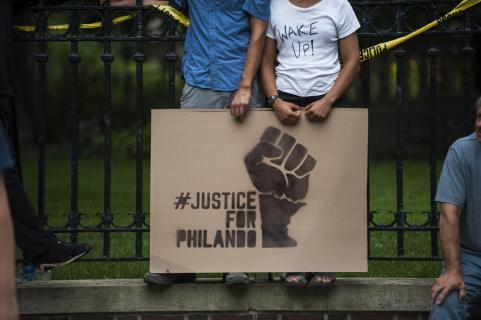
ST. PAUL, MN - JULY 07: A couple hold a sign protesting the killing of Philando Castile outside the Governor's Mansion on July 7, 2016 in St. Paul, Minnesota. Castile was shot and killed the previous night by a police officer in Falcon Heights, MN. (Photo by Stephen Maturen/Getty Images)

The kingdom of God strikes in ways that we almost cannot see, and certainly not in ways that we can expect. Like an idea popping up in the mind, it refuses to be stifled and it begins to spread out through our conversations and our writing. Ideas like “war is wrong” or “homophobia is wrong” or “the indiscriminate killing of black men and women” is wrong. Those ideas spread like wildfire and at some point they cease to be ideas and instead transform into revolutions. The original thought tangles in the mind and heart of the revolution and people become so moved that they are willing to die so long as that original idea will continue to spread.

More often than not, we know what we want the kingdom of God to look like and we know what we want the church to look like. We want clear lines to be drawn so that we know who is in and who is out, what is allowed and what is forbidden, what is black and what is white.

But then Jesus gives us this two-verse parable with the mustard seed – the tiniest symbol of how God is forever invading our ordinary and orderly sense of things. The mustard seed is there in plain sight but hidden by our ignorance. We overlook it in the fields, in the church, in our lives, and then it sprouts into the greatest of all the shrubs.

Since January of this year at least 123 black Americans have been shot and killed by police. This week saw a black man gunned down outside of a convenience store for selling CDs and a black man gunned down during a routine traffic stop for having a broken taillight. The saddest part of these stories is that they have become part of our common vernacular and experience of black culture. For a time we can remember the names of the individuals killed, names like Eric Garner and Michael Brown and Tamir Rice and Freddie Gray, but now the list has grown so long that the names begin to bleed together.

And how do we feel? Are we outraged? Or are we apathetic? Are we disgusted? Or are we disinterested? Are we on fire for change? Or do we want things to stay the same?

And the death of black men and women is a small fraction, or perhaps the mustard seed, of the larger picture of racial inequality in our country.

People of color make up about 30% of the total population in the U.S. but they account for 60% of those who are imprisoned. 1 out of every 3 black men can expect to go to prison at some point in their lifetime. Once convicted, black offenders receive sentences that are nearly 20% longer than white offenders for the same crime.

In preschools across the country black students account for 18% of the total number enrolled but make up 48% of preschoolers with multiple out-of-school suspensions. Preschoolers! In elementary, middle, and high schools across the country, black students are expelled at 3 times the rate of white students.

And 11am on Sunday morning is still, without a doubt, the most segregated hour in the United States.

The kingdom of God is like a mustard seed, the smallest of all the seeds, but when it is planted it grows into the grandest and largest of all the shrubs and puts forth branches so that all the birds of the air can find rest in its shade.

The kingdom of God is not like the kingdom of America where people are still persecuted because of the pigmentation of their skin, where immigrants are treated as second-class citizens, where members of the LGBTQ community are murdered because of their identity; where police are attacked in retaliation for events in other parts of the country.

On Thursday evening, during a peaceful protest in Dallas, Texas, five law enforcement officers were killed and six others were injured. Snipers were set up in strategic elevated areas and sent the downtown area into chaos as bullets continued to fly back and forth. It is unclear what the exact motives of the attack might be, though it is clear that it is somehow connected with the recent shootings of black men in other parts of the country.

Black men and women are shot and killed by the police. Black communities respond in rage and protest. Police are shot and killed by individuals whose anger manifested itself into violence and destruction.

What are we to do? Turn off the television because of the unending violence? Shrug off the waves of death because at least its not happening in Staunton? Fall to our knees in prayer that we might be transformed into a people of peace?

Today we grieve and mourn all the lives lost at the hands of the destructive power of death. We lift up our fists and rail against the prejudices that result in black persecution and police assassination. We demand answers from the Lord for why things like this continue to happen.

People take part in a rally on April 29, 2015 at Union Square in New York, held in solidarity with demonstrators in Baltimore, Maryland demanding justice for an African-American man who died of severe spinal injuries sustained in police custody. AFP PHOTO/Eduardo Munoz Alvarez (Photo credit should read EDUARDO MUNOZ ALVAREZ/AFP/Getty Images)

That’s the power of a parable like the mustard seed; it strikes us as something true whenever we hear it. A detail will emerge that we’ve never thought about and we realize that Jesus is still speaking to us through the story. The power of a parable is its ability to convey a deep and profound truth about Jesus in the midst of our lives today. The power of a parable is its ability to show us that God’s kingdom is strange, unexpected, and beautiful.

The kingdom of God, like the mustard seed, like a viral video, like a revolution, invades the cultivated soil of our certainties and creates something new. Hidden in plain sight, like words of a prayer, the seeds of faith grow in unexpected ways until what we thought we knew is transformed by our invasive and surprising God.

Our lives should transformed by the mustard seed quality of the kingdom of God when it stretches and reaches into every part of our existence and challenges us to be better. Not to pass the buck on to someone else, not to become apathetic to the tragedies of our time, but to be caught up in a revolution of the heart.

The power of the parable of the mustard seed is in the tiniest of seeds leading to a radical change. The mustard seed germinates and stretches out to grab hold of everything in its path. Oh that today the Lord would plant that mustard seed in our hearts, that the kingdom of God might grow and dwell among us, reaching out to everyone in our midst, that we might all believe that black lives matter, that we might believe that violence will only ever beget more violence.

We need that mustard seed. We need it planted deep into the soil of our souls, we need it to be cultivated, and we need it to grow with reckless abandon. We need a revolution of the heart, here and everywhere. Amen.

10 Things I Learned From My Third Year Of Ministry

10 Things I Learned From My Third Year Of Ministry

Screen Shot 2016-06-20 at 3.19.17 PM

  1. The Holy Spirit Moves in Mysterious Ways

At the end of last summer our youth leaders resigned from their position and we were in need of new leadership. After putting out the job description in a number of places, and receiving zero responses, I decided to take over the position for a limited basis. We restarted the youth group as a discipleship adventure whereby we would meet every Wednesday night from 7-8pm for communion, fellowship, and bible study. Each week I planned out activities for the bible study, and prayed over bread and grape juice, but the youth taught me more about God than I ever taught them. Throughout the year they wrestled with topics like being Christian and political, violence, bigotry, and identify; and not because I brought the subjects up, but because they initiated the dialogue. I often make the false assumption that I am bringing God to other people as a pastor, but the youth reminded me that the Holy Spirit moves in mysterious ways. I never anticipated leading the youth at St. John’s UMC, but now I can see that it has been one of the most rewarding parts of my ministry.


  1. Time = Trust

After 3 years in ministry, I am starting to feel the trust that has formed because of the amount of time we’ve had together. Of course I felt trusted from the beginning, but we are now at a place in our relationship as church and pastor whereby we can move in new and exciting ways because of our history. At first it was a hard sell for the church to participate in something like a free community cookout, but because we have seen the fruit that comes from providing food and fellowship for the community, the church is now pushing for the event to grow. Similarly, the church has a preschool that went underappreciated for too many years. Because I have taken the time to work with the preschool, and share stories about it in worship, the church now believes in the importance of connecting with the preschoolers and their families. The trust within the church has grown because of the good time we have spent growing together in faithfulness.


  1. The Job Is Big

The list of things I’ve had to do under the auspices of being a pastor gets longer every week. In seminary they prepare pastors for the work of preaching, teaching, praying, and visiting, but they are a fraction of what I actually do. On any given day I am: an office manager answering phones and responding to emails; a property manager changing light bulbs, working on the plumbing, tinkering with the boiler, and climbing up into the attic for the HVAC system; a sound technician addressing the speakers and microphones in the sanctuary; a babysitter watching over children from the preschool and the greater community; a spiritual guru answering questions about faith from strangers and friends alike; a social media ninja overseeing our Facebook, Twitter, and YouTube accounts; a webmaster maintaining the church website and internet presence; an animal control specialist removing birds that got into the social hall through the chimney; and an assortment of other jobs. To be a pastor is to wear many hats with many responsibilities.


  1. It’s Hard to Let Go

My wife gave birth to our first child at the end of April and I was able to take 4 weeks of paternity leave to be at home with them. Those 4 weeks were an absolute blessing to be there to comfort both of them during those difficult first weeks, and it also allowed me to bond with my son in a way that I will always cherish. However, taking that time off from the pulpit was really hard. After preaching nearly every Sunday for three years I grew accustomed to knowing the people of the church and how to faithfully proclaim God’s Word to them. In taking a month off, I had to trust that the Lord would provide even in my absence. I am thankful for the time away not only because of what it meant for my family, but also because it reminded me of the truth about the church; it belongs to God and not to me.


  1. If You Build It They Might Come

Just because you create a new program, or offer a new class, it does not necessarily mean that people will come. We’ve had a number of new things develop and become successful at St. John’s including a weekly lectionary bible study, weekly youth meeting, and occasional fellowship events. But for every successful venture we’ve developed, there have been an equal number of opportunities for discipleship that failed. I attempted to lead a weekly evening bible study on the book of James, and by the third week no one came. I tried to start a monthly gathering for fellowship on the first Sundays of the month and by the third month I was the only one in the fellowship hall. There is a temptation to take these kinds of failures too personally, so it is good to reflect on the times that even Jesus’ or Paul’s or Peter’s ministries were not successful. When we put our effort into something that doesn’t bear fruit, we do well to cut it off and let the vine remain strong instead of draining away its resources.


  1. A Phone Call Can Make All The Difference

I once heard a professor say that 90% of the church will show up for church on Sunday, so working on worship and sermon preparation should demand 90% of a pastor’s time. Though this is true on one level, it also neglects to account for those who either can no long come to church, or haven’t for some time. On a whim last fall I decided to go through the entire church directory and call every person that was not in church the previous Sunday. A number of people were simply out of town, or had not been to the church in a number of years, but every single person was grateful for the phone call nonetheless. I did not call in order to guilt the people into coming back to church, or with some other ulterior motive, but simply to say “hello” and the response has been incredible. For those who have fallen captive to loneliness they were reminded that the church still cares about them, and for those on the edge of regular church attendance they were reminded that the church knows them and wants to stay connected. All it takes is lifting up a phone and dialing a number and it can make all the difference.


  1. People Remember

It amazes me how people can remember a phrase from a sermon or a prayer from a year ago and demonstrate how it has developed into fruit in their daily lives. I’ll be sitting in a lectionary bible study and one of the people in the room will quote a sermon I offered on the text from three years ago. Or I will be sitting with a family in my office planning for a funeral and one of the family members will ask me to preach on a text they once heard me mention from the pulpit. Or I will be in the midst of concluding a chapel time lesson with the preschoolers when one of them will connect the message to a different lesson from earlier in the year (we were talking about the power of communion and I was holding the loaf of bread when one of our four-year-olds shouted out, “so Jesus was born in the house of bread (Bethlehem) and then he gives us the bread of life? Cool!”). Seeing and experiencing how people remember what I have said in the past is remarkably affirming, but it is also indicative of the power of our words.

12304502_10204993990640458_5137127778263361305_o (1)


  1. Thankfulness Breeds Generosity

For a long time the church I serve was in a difficult financial situation. They had not paid their apportionments in full for the better part of two decades and they regularly struggled making sure they had enough to keep the church open from month to month. As a congregation they became accustomed to hearing about the financial disparities and the need for them to sacrifice for the greater church. When I arrived we attempted to look at our financial situation from a completely different perspective and instead of talking about sacrifice, we talked about generosity. Little by little, as the church saw the tangible fruit from our ministries developing throughout the year, our offering started to increase which in turn allowed us to focus on more opportunities for ministry and not just keeping the church open from month to month. It took some time, but we were able to move from a maintenance model of the church to a missional model for the church. Last fall, after it was clear that we would be able to pay our apportionments in full for the third year in a row, I hand wrote a letter to everyone who gave to the church during the previous year. It took a long time, but I wanted everyone to know how thankful the church was for each person’s continued generosity and commitment to building God’s kingdom. What I never anticipated was the fact that our weekly offering grew almost immediately after the letters went out. I believe that knowing how our gifts have been used for God’s kingdom, and that the church is grateful for those gifts, has reshaped our church’s identity from scarcity to generosity.


  1. Though We May Not Think Alike…

John Wesley once famously said, “Though we may not think alike, may we not love alike? Without all doubt we may.” At the heart of Methodism is a commitment to think and let think. Which is to say, we are a church of differing opinions and somehow we can continue to do the work of the church because we are united in our love. This kind of commitment to radical love amidst disagreements has been evident in the way people have responded to my preaching. Over the last year I have been able to speak toward a variety of subjects that we are clearly divided over. I have addressed homosexuality, the pervasiveness of violence, divorce, and other subjects. I have made jokes about Bernie Sanders, Hillary Clinton, and Donald Trump. I have tried to comfort the afflicted and afflict the comfortable. And people keep showing up to church. Even though they let me know that might not agree with anything I said on a particular Sunday, they will be sitting in one of the pews the following week. Though we may not think alike, we are still loving alike in this strange and beautiful thing we call the church.


  1. I Still Have The Best Job In The World

Ordained ministry is an odd and wondrous calling. There are days that feel like I am carrying the weight of the world on my shoulders and I become frighteningly anxious over the future of the church. I will pull out my phone and learn about another person’s death, or I will receive an email about a divorce that is about to be finalized, or someone will show up at my office looking for any sense of hope in an otherwise hopeless situation. But most of the time, it is the greatest job in the world. Where else could I spend time deep in God’s Word reflecting on how the Lord continues to speak to us today? What job would give me the opportunity to preside over something as precious as the water dripping on a child’s head in baptism or breaking off a piece of bread for a faithful disciple? What vocation would bring me to the brink of life and death on such a regular basis? It is a privilege to serve God’s kingdom as the pastor of St. John’s and more rewarding than I could have ever imagined.

Yes!

Psalm 16

Protect me, O God, for in you I take refuge. I say to the Lord, “You are my Lord; I have no good apart from you.” As for the holy ones in the land, they are the noble, in whom is all my delight. Those who choose another god multiply their sorrows; their drink offerings of blood I will not pour out or take their names upon my lips. The Lord is my chosen portion and my cup; you hold my lot. The boundary lines have fallen for me in pleasant places; I have a goodly heritage. I bless the Lord who gives me counsel; in the night also my heart instructs me. I keep the Lord always before me; because he is at my right hand, I shall not be moved. Therefore my heart is glad, and my soul rejoices; my body also rests secure. For you do not give me up to Sheol, or let your faithful one see the pit. You show me the path of life. In your presence there is fullness of joy; in your right hand are pleasures forevermore.

Romans 12.2

Do not be conformed to this world, but be transformed by the renewing of your minds, so that you may discern what is the will of God – what is good and acceptable and perfect.

Screen Shot 2016-06-20 at 3.19.17 PM


Years ago there was a young man, fresh out of seminary, ready to start serving at his first appointment. He had taken all of the right classes, learned from gifted professors, and even volunteered in the local community. After he finished packing his bags, he loaded up the car and made his way to John Wesley UMC. The novice pastor was anxious and excited about what the church would be like, so before he unpacked any of his belongings he drove out to the church property.

He found the location on the map, went to the listed address, but there was no church to be found. So he turned around and drove to the spot once again only to discover that the church was blocked by the oldest and most decrepit looking tree he had ever seen. The roots were stretching all over the property and the leaves blocked the building and the marquee from being visible on the road.

He couldn’t believe it! No wonder he had heard that church attendance had decreased over the last few years! The young pastor was convinced that if only people could see the church from the road, it would grow and grow and grow.

So, before unpacking any of his important belongings, before even working on his first sermon, the young pastor unpacked his chainsaw and went back to the church. It took him most of the afternoon, but by the time he was finished the tree was gone, the sign and church were visible from the road, and he just knew that the church pews would be filled to the brim on Sunday.

A few days later, as he sat in the study of his parsonage crafting the words for his first message, the local District Superintendent called: “I hope you haven’t finished unpacking yet,” he said, “because you being reappointed.”

You see, the church was called John Wesley UMC for a reason: nearly two hundred years earlier a man named John Wesley had planted that tree while he was in the community. The gathered people decided to build a church right where the tree had been planted in honor of the man who planted the seeds that started our church, and that young pastor had chopped it down.
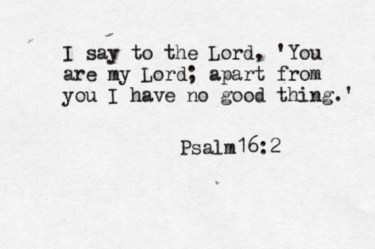
Apart

I keep the Lord always before me; because he is at my right hand, I shall not be moved,” says the Psalmist. What kind of faith would we have to have to be able to faithfully affirm these words? “The Lord is my chosen portion and my cup; you hold my lot. The boundary lines have fallen for me in pleasant places… You show me the path of life.” Who do you imagine speaking when you hear these words? Perhaps you picture one the great prophets from the Old Testament like Elijah, and Isaiah, and Jeremiah speaking about their faith, or maybe you immediately connect these words with a saint from your life, or perhaps you recall one of the wonderful pastors who served this church in the past.

I want to be able to faithfully proclaim these words, I want my life to reflect the kind of trust and assurance present in the psalm, I want to say “yes” to God over and over, but the problem is, I usually say “no.”

That, in a sense, is the great story of scripture. God offers us a path, he offers us a way, he offers us a “yes” and we respond by saying “no.” I have given you everything you will ever need here in the Garden of Eden; your lives will be perfect forever so long as you don’t eat from the tree of knowledge of Good and Evil. “No thanks God, we know what we’re doing and we’d rather try the fruit.”

I will deliver you out of the bondage of slavery in Egypt and bring you to the Promised Land. Follow my servant Moses, adhere to my commands, and everything will be wonderful. “No thanks God, we’d rather go back to Egypt, at least we had food there.”

I will make of you a great nation, you will grow in prosperity, but you must not worship any other gods instead of me. Listen to the prophets, give heed to my Word, and you will have life. “No thanks God, it’s easier to worship a golden calf and ask for prosperity than it is to live a life according to your law.”

Take up your cross and follow me, give of yourself to those who are suffering, pray for your enemies, worship the Lord, believe in the Good News. “No thanks Jesus, we’d rather hang you on a cross than start living our lives for other people.”

In scripture, whenever people stubbornly say “no” to the will of God, God declares, “Yes.” Like a parent with a child, it happens over and over. And this paradoxical relationship between God and God’s people bleeds out from scripture into our lives even today. God starts calling us to live a new kind of life through the words of a friend, through a profound experience, and maybe even through a sermon and we think “No thanks Lord, I know better.”

God calls us to sacrifice our time and money, to gather regularly for worship and be transformed, to believe in the power of grace and mercy, and we say, “No thanks God. I’ve got better things to do.”

God says to a young pastor, “I am calling you to comfort the afflicted, and afflict the comfortable. Preach the Good News. Serve the last, least, and lost. Plant seeds of faith. Remember the tradition that brought you here.” And he says, “No thanks God. I know what I’m doing, and I’m gonna chop down that tree.”

The truest and most faithful words we can ever pray, are words that we pray every week in church: “Thy will be done.” Those words are at the very heart of what it means to be Christian: submitting ourselves to the will of the Lord. And even though they are the truest and most faithful words we can ever pray, and even though we say them every week, they are the hardest to live by.

9a3fe6cd2bab9347a651e8f1ed86951c

Today marks the beginning of our 4th year together in ministry. And, I have to admit, I didn’t want to come here. I was utterly convinced that I needed to be an associate pastor at a different church right after seminary. I even contacted all the churches in Virginia hiring associates that year and had scheduled interviews. But then the Lord decided this is where I was supposed to be. I knew what I wanted, I knew where I thought I should be, and I was pretty nervous about coming here. Even though I continued to pray, “thy will be done,” I was really saying “my will be done.”

And, I’ve come to find out, that some of you didn’t want me to come here. Members of the staff-parish relations committee wanted a younger pastor to come to St. John’s, but one with experience. They wanted some new and fresh energy, but definitely not someone right out of seminary. And one of you told me that they first time I walked into the church, all you could think was, “he’s a baby.” But God sent me to you. You knew what you wanted, you knew what kind of pastor the church needed, and then I showed up. Even though many of you were praying, “thy will be done,” you were really saying, “my will be done.”

It happens with pastors being appointed to churches, it happens when we start wrestling with a call to a different career, it happens when children enter the picture and new priorities erupt, it happens when someone proposes a new way forward. My will be done versus thy will be done.

In the great battle of “No” and “Yes” in scripture, the final movement came in the cross and the tomb. God’s people continually rebelled against God’s love time and time again, even to the point of delivering God’s son to the cross. But after the three days of silence that followed the crucifixion, God declared the final and triumphant “Yes” in the resurrection of his Son, Jesus Christ.

Because of the good news of the resurrection, the final “Yes” to every “No” we’ve ever offered, we are reminded of God’s unwavering faithfulness in every circumstance. Even when we push back against the will of God, the Lord’s love remains. We say that in baptism we have died with Christ and therefore we have already seen the worst. Since we have also been raised with him in his resurrection from the dead, we can live in confidence that God has already saved us from all that might destroy us, even death. Because of the resurrection, because of Easter, we can be people who actually pray those hard and beautiful words, “thy will be done,” and mean it.

Last week I gathered with thousands of other United Methodists from across the Virginia Conference for the Service of Ordering Ministry. For the last three years I have worked on demonstrating my effectiveness in ministry, which culminated in being ordained as a full elder. I made my way up to the front of the arena with my two pastoral mentors and Lindsey with Elijah, I knelt before the bishop and the conference, and I was ordained. While each ordinand knelt they were invited to choose a particular section of scripture to be displayed on the screens for everyone to see. I chose Romans 12.2: “Do not be conformed to this world, but be transformed by the renewing of your minds, so that you may discern what is the will of God – what is good and acceptable and perfect.”

Those words were the first we ever shared together in worship 3 years ago, and they have come to define the ministry to which all of us are called. And as I felt the bishop’s hands upon my head, I thought about those words from Romans and I was overwhelmed by the Spirit’s persistent reminder, through YOUR faithfulness, I have seen the path of life. I felt convicted by the deep and profound truth that this is not a one-way relationship whereby I teach you, or I pray for you, or that I share God with you. Thanks be to God that we are in this beautiful and messy thing called church together.

Every week WE gather in this place to be transformed by the renewing of OUR minds. Through OUR worship we have worked to discern what is the will of God – what is good and acceptable and perfect.

            We are becoming the kind of people who can faithfully say, “the Lord is our chosen portion and our cup.” The communal Christian experiencing here, is about choosing Jesus again and again and again. It is about coming back to the Lord knowing that he will welcome us. It is about hearing God’s triumphant “Yes!” even when we want to say “No!”

And right now, the world wants us to believe that we have every reason to say “No.” Annual Conference is a reminder of the death that is possible in the church, we hear about all the churches closing this year, we learn about the lack of new and younger generations attending church, and we are reminded of the most frightening statistic of all: The average United Methodist invites someone to church once every 38 years.

But that doesn’t have to be our story. Desiring our will to be done is what got the church to this point in the first place. Can you imagine what would happen if we actually lived by the words “thy will be done”?

The time has come for us to declare “yes!” to the will of God. “Yes Lord, we know that through you all things are possible.” “Yes Lord, crucify our hearts so that they might be resurrected to your glory.” “Yes Lord, convict our souls to invite someone we know to experience your love here at St. John’s!” “Yes Lord, remind of our baptisms and of who we really are.” “Yes Lord, fill us with your Spirit till all shall see Christ living in us.” “Yes Lord, give us the grace and strength to take up our crosses and follow you.” “Yes Lord, let thy will be done!” Amen.

The Good, The Bad, and The Ugly (of Annual Conference)

Every year the Virginia Annual Conference of the United Methodist Church meets for holy conferencing. This is an event whereby lay and clergy representatives from the entire conference meet to discuss pertinent matters facing the denomination in our particular geographic locality. Additionally, the Conference has a memorial service for clergy and lay representatives who have died in the previous year, we learn about campaigns and initiatives like “Imagine No Malaria”, we celebrate the licensing, commissioning, and ordination of clergy, and we worship together.

Every Annual Conference is filled with moments of holiness in addition to sinfulness. We are a church of broken people; therefore we fall prey to our own desires and forget to pray for God’s will to be done. At times, our “holy conferencing” brings out the best in us and the worst in us. Below are three categories of experiences I had from last weekend. And let’s go backwards…

2016AClogocolornoflame

The Ugly

After joining together in one voice to proclaim the powerful and dynamic hymn “And Are We Yet Alive” (The traditional first hymn to be used since nearly the beginning of the Methodist movement), we jumped right into the business of Annual Conference: The presentation of the Rules Committee. This makes complete sense of course, we need to re-establish the rules of conference every year before we get to the important stuff, but this year we spent the first 45 minutes of our time as a denomination arguing about the color of our name badges.

Depending on one’s conference relationship, there are areas that are forbidden from being voted upon. For instance: last year I was a provisional elder which meant that I could not vote during the clergy session, or on constitutional amendments. But now that I am “an elder in full connection” I am granted to the right to vote in the clergy session and on constitutional amendments. In order to streamline who can vote on what, different name badge colors were distributed. And this resulted in chaotic responses in the forms of Robert’s Rules of Order. Specific representatives (both lay and clergy) were livid not about their name badge color, but that the conference did not trust them to know what they could and could not vote on. (even though it took ten minutes for the clergy to figure out where they had to sit in order to vote during the clergy session [something we do EVERY year]).

During the name badge debate I was sitting next to a couple that were attending Annual Conference for the very first time. I witnessed them shaking their heads in astonishment and disbelief for most of the 45 minutes and when all was said in done I heard them say, “No wonder people complain about coming to this every year.” What does it say about our church to new people when we can go from a beautiful hymn to an argument about name badge colors in the blink of an eye? What does it say about the future of our denomination when our first priority becomes the color of our name-tags?

Later during the conference a motion was made from the floor to propose a resolution regarding the recent tragedy in Orlando, Florida. The resolution called for all churches in the conference to be in prayer for the victims and their families from the shooting, to pray for the greater LGBTQI community, and to pray for our Muslim brothers and sisters so that they might not be lumped into the violent identity of the shooter. While the majority of the conference voted in favor of the resolution, there were a decisive number of people who vehemently opposed it. We might not think alike about the LGBTQI community or the Muslim community, but the least we can do is pray for them in the midst of such a horrific tragedy. So what does it say about our commitment to loving others the way Jesus commanded while some of us would rather remain silent?

Finally, our conference had the good fortune of hearing the proclaimed Word from Rev. Eun Pa Hong who is the senior pastor of Bupyeong Methodist Church in Incheon, Korea. Rev. Hong is one of the most dynamic leaders in Korean Methodism and under his leadership for the past 35 years his church has grown to include 5,500 people most Sundays. Rev. Hong spoke in his native tongue and was translated into English while he preached. And while I walked around later in the day, I overheard delegates complaining about having to listen to someone speak in Korean. What does it say about our church, when some cannot stand to witness the diversity that makes us who we are? What does it say about our future when we’ve forgotten the most beautiful part of the Pentecost story?


The Bad

The church continues to decline: Lack of new professions of faith, lowering numbers of baptisms, and more churches closing. Or to put it the way I heard someone else reflect on it: “Annual Conference is all about death.” The report of the Conference Statistician offers bleak prospects for the future and causes anxiety for those with eyes to see and ears to hear. At the same time we were reminded over and over again about the power of fear, and how is has limited us as a denomination without offering hope for new vitality. The frightening statistic that the average United Methodist invites someone to church once every 38 years was mentioned on more than one occasion without any examples of how this statistic is being combatted.

Moreover, fears about the recent General Conference were made apparent through muffled conversations, uncomfortable responses to the General Conference report, and the apathy toward institutional change. More than ever, Annual Conference focused one what we have to fear, than what we have to be hopeful about; it felt more like crucifixion, and less like resurrection.


The Good

There is nothing quite like singing together in one voice with thousands of other United Methodists. As Garrison Keillor has noted, singing is part of our DNA. And so, when at the beginning of Annual Conference, thousands of us joined together with those faithful words: “And are we yet alive, and see each others face? Glory and thanks to Jesus give for his almighty grace!” you can’t help but feel the Spirit’s presence. When we mourned the loss of life over the last year, when we sat in profound silence in memory of the victims in Orlando, when we watched as new pastors were licensed, commissioned, and ordained, we felt the Spirit’s presence. Worship is always part of the “good” of Annual Conference. In worship we remember that God is God and we are not. In sermons and prayers and hymns we hear God saying, “Yes!” even though our hearts say “No.” In worship we let our baggage and preconceived notions start to fall away and we truly become Christ’s body redeemed by his blood.

Additionally, we celebrated the fruits that came from our commitment to “Imagine No Malaria,” we rejoiced in new faith communities that are planting seeds of faith across Virginia, and we recognized the 20th anniversary of the Order of the Deacon. All of these events witnessed to our commitment to serve the needs of others and the ways that we are making God’s kingdom manifest here on earth.

On Thursday night, before Annual Conference officially began, a group of United Methodists gathered for Pub Theology led by the minds behind the podcastCrackers & Grape Juice.” We met for an informal conversation about theology, toxic Christianity, and the future of the denomination. During that gathering a number of young people made it clear that they believe in the future of the United Methodist Church even while some of us remain anxious. In their willingness to articulate how their local churches helped nurture them in the faith, their witness blessed us all. Later we heard from voices largely missed at Annual Conference and all of us were reminded about the strange and beautiful diversity of this thing we call “the church.” As I was leaving, a young man told me (with a smile on his face), “This is what Wesley must have felt like when he gathered with his friends.” It doesn’t get a whole lot better than that.

On Saturday evening I was privileged to join an Ordination class of some of the most gifted pastors and deacons I have ever met. We submitted ourselves to the yoke of a stole over our shoulders and covenanted to serve the church with all of our hearts, souls, and minds. I witnessed countless people rise when names were read before the conference and I was reminded about the great communal effort required in identifying effective clergy. In the ordination service I saw the bright future for our church; not in our bureaucratic commitments to Roberts Rules of Order, not in our debates about nametag colors, not in our frightening statistics, but in the local church where the heart of God is revealed each and every day.

I have hope for the future of the United Methodist Church because the new clergy leaders believe in the power of the gospel to radically transform the world. They recognize that the local church is where disciples are formed (not Annual Conference). They see the bread and the cup of communion as our spiritual food necessary for the journey of faith. They have given their lives over to this strange and wondrous calling and will bear fruit for years to come.

But most of all, I have hope for the church because it does not belong to us. It belongs to God. The more we remember that we serve the risen Lord, the more we learn to pray for God’s will and not our own, the more our church will become what God is calling us to be: the body of Christ.


The-Good-The-Bad-The-Ugly

Devotional – Luke 9.57

Devotional:

Luke 9.57

As they were going along the road, someone said to him, “I will follow you wherever you go.”

Weekly Devotional Image             It sounds easy. Jesus is walking along the road with his disciples and someone says, “I will follow you wherever you go.” In a sense, this is the same declaration we make each and every Sunday that we gather for worship; we want to follow Jesus wherever he goes. But do we really?

If we assume that Jesus is revealed to us in the sanctuary then it makes sense that we will follow him there. Sunday morning worship is a comfortable arena where we can feel good about our Christian identities; we can sing together from the hymnal, we can pray for the world to be a better place, and we can hear a sermon that makes us laugh and reminds us that God is love. But what about the end of the service? Are we willing to follow Jesus wherever he goes between worship services?

If Jesus walked into a Hillary Clinton rally to demand more honesty from our politicians, would we follow him? If Jesus wandered into a Donald Trump rally to demand an end to racism and bigotry, would we follow him? If Jesus marched against the NRA to boldly request better gun control laws, would we follow him? If Jesus made his way into the Pulse Nightclub in Orlando to spend time with a marginalized community, would we follow him? If Jesus asked us to take up our own cross and follow him to Calvary, would we follow him?

To follow Jesus is a radical thing. It means putting the needs of others before our own. It means seeking out the last, least, and lost in addition to the people who make us comfortable. It means we need to strive for mercy instead of sacrifice, communion instead of correctness, and Kingdom instead of nation. It means following him into the places of life that we would otherwise avoid.

maxresdefault

Many of us have grown comfortable with our Christianity because it does not ask much of us. So long as we can be present for an hour on Sundays, we believe we are covering our spiritual bases. In turn, the church has become another civic organization and no longer the life-giving arena of grace, mercy, and love.

And honestly, this makes sense. Throughout the gospel narratives Jesus’s followers and disciples continued to grow in number until he set his face toward Jerusalem. The closer he came to the cross, the more the people started to fall away. As the expectations and costs increased, the level of commitment dwindled.

At the end, while he was hanging on the cross with only a few faithful disciples remaining, it was a thief who wanted to follow Jesus wherever he went. And Jesus said, “Truly I tell you, today you will be with me in Paradise.”

Following Jesus comes with a cost, but the reward is beyond all measure.

Devotional – Galatians 3.28

Devotional:

Galatians 3.28

There is no longer Jew or Greek, there is no longer slave or free, there is no longer male and female; for all of you are one in Christ Jesus.

Weekly Devotional Image

Yesterday, while countless Christians were gathering across the country to worship the Lord, reports were coming in about the horrific and tragic attack in Orlando, Florida. While Christians were sitting in the pews with their families listening to sermons about things like love and grace and mercy, families in other places were frantically calling their children hoping they were not at the club the night before. While untold sums of people continue to believe that arming the nation will prevent further attacks and loss of life, Christ speaks from scripture: “Those who live by the sword will die by the sword.”

While the nation mourned throughout the day at the news became clearer, flocks of people flew to social media in order to call for prayer. While people stretched for miles in line to donate blood, members of the LGBTQ community were prevented from offering their arms. While media outlets were quick to blame the rise of Islamic terrorism, people changed their profile pictures in solidarity with a battered community. While 50 children of God were murdered for nothing more than their sexual identity and physical location, the UMC still believes that the practice of homosexuality is incompatible with Christian teaching.

While Christian communities wrestled with how to respond to this tragedy, politicians and public figures quickly deleted online comments like “you reap what you sow” implying the victims got what they deserved. While the world watched the most powerful nation in the world fall to its knees in sadness, many Americans have grown numb to the seemingly endless onslaught of gun violence across the land. While emergency responders and police returned home to hug their children, details about the victims were made available to the public.

While we weep and mourn the loss of life, we remember the words from Paul: There is no longer Jew or Greek, there is no longer slave or free, there is no longer male and female. Or, to take it further, there is no longer gay or straight; for all of us are one in Christ Jesus. As Christians it is our responsibility to be Christ’s hands and feet for the world, we are called to stop seeing events like the one in Orlando as a call to arms, but a firm commitment to peace. There is no greater time than now to start seeing the LGBTQ community as our brothers and sisters.

screenshot_2016-06-12_at_12-2

From Diapers to Diplomas

Psalm 46

God is our refuge and strength, a very present help in trouble. Therefore we will not fear, though the earth should change, though the mountains shake in the heart of the sea; though its waters roar and foam, though the mountains tremble with its tumult. There is a river whose streams make glad the city of God, the holy habitation of the Most High. God is in the midst of the city; it shall not be moved; God will help it when the morning dawns. The nations are in an uproar, the kingdoms totter; he utters his voice, the earth melts. The Lord of hosts is with us; the God of Jacob is our refuge. Come, behold the works of the Lord; see what desolations he has brought on the earth. He makes wars cease to the end of the earth; he breaks the bow, and shatters the spear; he burns the shields with fire. “Be still, and know that I am God! I am exalted among the nations, I am exalted in the earth.” The Lord of hosts is with us; the God of Jacob is our refuge.

graduation-sunday


Kurt Vonnegut Jr. once said that true terror is waking up one day and realizing your High School senior class is running the country. It’s a great quote, and one often used this time of year during graduation speeches. In fact, ten years ago, it was used by one of my friends at the beginning of her address during my graduation from High School: True terror is waking up one day and realizing your High School senior class is running the country.

Time can be terrifying. We, as human beings, are deeply rooted in time and when it feels like its going too fast, it leaves us shaking. It shakes us because we can wake up and wonder where it all went. I feel like I just graduated from High School; I can still remember the uncomfortable polyester graduation gown that created a frightening amount of static electricity. I can still picture the girls wearing too high high heels and attempting to walk across the stage without toppling over, and I can still remember the beginning of the speech and how true those words are.

We change all the time. It’s at the heart of what it means to be human. We’re born, we grow in size and knowledge, we move, we develop, we transform, we graduate from preschool to kindergarten, and then all the sudden we graduate from high school, and then with the blink of an eye our generation is running the country.

Things change, our lives change, our situations change, and when they do, it feels like the earth shakes under our feet.

Upon graduating from preschool we move on to Kindergarten. After a number of years with the same classmates and the familiarity of one school and one program, we have to move on to a new location, with longer hours, with a whole new set of expectations. I can still faintly remember my first day in kindergarten and wondering where to sit, and if anyone was going to sit with me. And the change that takes place for the parents is even more severe!

During the final months of Preschool here at St. John’s, we ask the parents to wait in the parking lot so that the children can get used to walking to their own classroom by themselves. This is one way of preparing them for Kindergarten. And honestly, on that first day, the children bound up and down the hallway without a care in the world, and it is the parents in the parking lot who are undergoing an existential crisis.

I’ve seen tears well up in the eyes of fathers, and mothers nervously pacing back and forth while their children enter into a new realm of being. I imagine they felt like the world was shaking under their feet and they needed something solid to hold on to.

After graduating from high school we go off to college and enter a whole new strange world. We often pack our belongings and start living with a stranger and won’t be home until the first break at Thanksgiving. For the student it is a time of great excitement and opportunity, whereas for the parents it can be downright terrifying. Will they be okay? Will they get enough food to eat? Are they going to be able to make new friends? Who is going to wake them up for class in the morning? Who is going to do their laundry? It shakes the parents to their core to watch their beloved child go from diapers to diploma in a blink of an eye.

Every graduation leads to a time of change and fear; Preschool to Elementary School, High School to College, Singleness to Marriage, Health to Death. We enter these periods of unknown, and that’s what makes us really afraid.

13434733_10154269000690536_1434707530486525089_n

When these changes occurs, when we graduate from one thing to another, we often respond in one of two ways; they either push us closer to God, or farther away.

A young couple has a baby and once the new domestic rhythm is established they realize they have no idea what it means to raise a child to be a decent human being so they start going to church it hopes of answers and direction. Or a recent graduate enters a university and is invited to a worship service filled with people who genuinely care about her well-being and she discovers who she is and whose she is. Or a recent widower listens while the church proclaims his deceased wife’s promised resurrection during the funeral and it gives him the strength to discover God’s love in church.

But change can also push us away. We convince ourselves that we can raise a child without the help of a larger community, we believe there is no place for the church in our lives while we are in college, or we grow cynical toward the words proclaimed when someone we love dies.

The church is bold to proclaim the words of the psalmist, the enduring truth, that even though the earth should change, even though the mountains shake and the seas tremble, even though kindergarten can be overwhelming (for children and parents), though the unknown of college stands like an undefined horizon, even though people die and we grieve till the end of our days, there is a river whose streams make glad the city of God. This city cannot be moved, because God dwells in the city forever.

God is the solid rock upon which we can stand when the world shakes underneath our feet. When we are filled with sorrow and doubt, God is the source of joy and light. While people push us to and fro with differing opinions, God speaks the truth in love. As we receive our identities in the hurtful comments of friends and foes, God tells us that we are beloved.

There is a great comfort that comes in knowledge that even though our lives will change, God will stay the same. That is the great story of scripture; God remains steadfast even when we fall away. In the wilderness journey of Exodus, while the people chose to worship idols and other gods, the Lord remained with them. After David fell into the clutches of sin, God was with him. After the exile, God called the people back to their homes and back to lives of faithfulness. Even after delivering Jesus Christ to the cross to die, God’s arms remained open to all of God’s children.

God stays the same.

psalm-46-1

A few months ago I asked one of our youth who just graduated from high school to share what kind of difference St. John’s has made in her life. Danielle was baptized in this sanctuary, was enrolled in our preschool, and has been in worship nearly every Sunday for 18 years. That kind of commitment to the church shaped her into the remarkably wonderful young woman she is today, and it gives me hope for the role of the church in all of our lives.

This is what she had to say:

“Since I was born, I have been coming to St. John’s UMC. It has always been there for me. Even when I was a small child, and unable to truly comprehend the grace of God, I still had a strong and living faith because of the church. As I grew up, I made many friendships at St. John’s that mean a great deal to me. And honestly, “friendship” doesn’t even do justice to what it has really been like. I grew up with these people, and they took the time to raise me in the faith. Without this church I never would have found God and the power of God’s word. I am blessed because I have a church that loved me the way God calls us to love. Moreover, this church has helped me not only find God, but find myself as well. No matter where I might end up in the future, I will always cherish the memories, family, spiritual growth, and prosperity that I experienced at St. John’s.”

I believe Danielle was able to craft those words because of God working through you. Danielle feels blessed because this church loves her the same way God calls all of us to love: without judgment or assumption, without malice or prejudice. From diapers to diploma, you and the other great saints of this church have nurtured her. You have shown her what it means for God to be our strength and refuge, a very present help in trouble.

When someone from the church died she could have fallen to the temptation of fear and trembling. But you showed up for the funerals, you rejoiced in the promise of salvation, you embodied the hope we have in the Lord who is with us.

When she moved from school to school, while life changed around her each and every day, this place was like the river whose streams mad glad the city of God. Here in this church she learned about the God of creation who brought forth order out of chaos, who called Abraham into a covenanted relationship, who wrestled with Jacob on the banks of the Jabbok river, who delivered the people out of slavery in Egypt, who called prophets and priests to bring the people back, who became incarnate in Jesus Christ and dwelt among us, who died on a cross, who was raised three days later.

Throughout Danielle’s life this church has said every Sunday, “Come, behold the works of the Lord!” Her eyes have been opened to the way God moves in the world, she found her identity as a child of God; she experienced God’s magnificent power and might.

Change can be a terrifying thing. But the God of Abraham, Isaac, and Jacob, the God of Jesus Christ, is our refuge and strength. Because we can do all things through Christ who strengthens us, therefore we will not fear even though our lives change. This church’s work propels a river whose streams make glad the city of God. Through our worship and our work, through our prayers and our presence, through our faith and our fellowship, we remember that God is in the midst of our lives. God will help when a new day dawns. The nation might be in an uproar, kingdoms will totter, but the Lord of hosts is with us.

So come, behold the works of the Lord. God makes wars cease, and peace reign. God makes the weak mighty, and brings down the principalities. God breaks the bonds of slavery, and opens up the doors to freedom. God brings hope to the poor and calls upon the wealthy to serve. God comforts the afflicted and afflicts the comfortable.

Be still and know that God is with us. From diapers to diplomas and even to death, God is with us. Amen.