On Regretting My Vote

Psalm 13.1-2

How long, O Lord? Will you forget me forever? How long will you hide your face from me? How long must I bear pain in my soul, and have sorrow in my heart all day long? How long shall my enemy be exalted over me? 

psalm-13

Annual Conference always elicits an assortment of emotions for me. At one moment I can feel renewed spiritually and theologically as I listen to some of the great preachers from our conference/denomination as they proclaim the Word of the Lord. At other moments I can feel socially fulfilled as I rekindle friendships with other clergy and laity from Virginia. And still at other times I can feel elated and jovial as I did recently when I witnessed our bishop dancing to Pharrell’s “Happy” after we voted to support “Imagine No Malaria.”

However, at other times I can feel deflated and frustrated with our church. Traditionally Annual Conference has been a time of Holy Conferencing when the leaders of the church gather together to have their faith reignited for the kingdom of God. In the beginning of our denomination’s history annual conferences were held to maintain the theological convictions of our connection as the circuit riders were spread other a vast geographical area. It also served to maintain the relationships with fellow disciples as well as a dynamic and life-giving relationship with God. As the decades passed, annual conferences began to focus more on the polity of our church while still providing avenues for spiritual growth. In our contemporary period annual conference is a time when we hear about the focus of the denomination, recommit ourselves to spiritual disciplines, and vote on resolutions that have been put forth for our consideration.

After spending Saturday afternoon deeply entrenched in the reports from various agencies within the church (Report from the Common Table, Report of the Site Selection Committee, etc.) it was time to begin our holy conferencing around the resolutions. We were running behind schedule, as is typical at Annual Conference, and only began speaking about the resolutions at 4:30 pm (thirty minutes before a recess for dinner until the Service for the Ordering of Ministry at 7:30 pm).

It has been no secret that Resolution 1 was one of the most anticipated conversations to take place this year (as was also made evident via the conference hashtag #vaumc14 where many people were anxiously awaiting the resolutions). Resolution 1 was as follows:


Resolution 1: “Change Book of Discipline Reference to Homosexuality”

Whereas, as stated in the opening sentence of ¶161F in The Book of Discipline of The United Methodist Church, “We affirm that all persons are individuals of sacred worth, created in the image of God.” Whereas we declare that the following statement found later in ¶161F in the Book of Discipline “The United Methodist Church does not condone the practice of homosexuality and considers this practice incompatible with Christian teaching” is inconsistent with the first statement. Whereas medical science has established that homosexuality is a state of being and not a choice and therefore homosexuals are part of God’s creation. [See Amicus Brief filed by American Medical Association, American Psychological Association, American Academy of Pediatrics and other related organizations, Hollingsworth vs Perry.] Whereas Scripture is not referring to the loving, consensual, victimless relationships we speak of today. Whereas the words used by Paul as applied to homosexuality are the result of translations and interpretations, these passages are therefore open to alternative interpretations. Whereas Christian marriage is offered to sinners, even when the sin is extreme, but we do not offer it to homosexuals who are living out their lives in love as created by God. Whereas the General Conference has failed to explain why a loving, monogamous relationship is inconsistent with Christian teaching. Whereas the current policies, laws, doctrine and practices of the United Methodist church as documented in the Book of Discipline relating to homosexual relationships creates a double standard thereby promoting discrimination and creating the circumstances that lead to the very behaviors among homosexuals that are abhorred in the Bible, both of which are in direct conflict with Jesus’ teachings. [“Judge not lest you be judged” (Matthew 7:1); “Let the one without sin among you cast the first stone” (John 8:7); “Love the Lord your God with all your heart and with all your soul and with all your mind. This is the first and greatest commandment. And the second is like it: Love your neighbor as yourself. All the Law and the Prophets hang on these two commandments.”(Matthew 22: 37-40); and many other references.] Therefore, be it resolved that the Virginia Annual Conference petition the 2016 General Conference of The United Methodist Church to expunge the sentence “The United Methodist Church does not condone the practice of homosexuality and considers this practice incompatible with Christian teaching” and the attendant references to and penalties for homosexuality detailed in ¶¶341.6, 2702.1 and 304.4 from the Book of Discipline and all people be accepted into The United Methodist Church to truly embrace “Open Hearts. Open Minds. Open Doors.” as Christ would have us live.


When it came time to hear the resolution, a representative stood before the Annual Conference and explained their position in a way that accurately reflected the above written resolution. As is commonly practiced, the bishop then inquired if anyone would like to speak for or against the resolution. In response a leading elder from our conference offered a motion suspending conversation on Resolution 1 indefinitely so that we, as a conference, could gather in small groups over the next year to begin having conversations about how to move forward regarding this “issue.” Two people then spoke in favor of the motion, and two spoke against it.

When the bishop called for us to vote on suspending the conversation, I raised my hand.

As I sat there listening to the murmuring of the crowds while various lay leaders and clergy spoke into the microphones I was overwhelmed by the vitriolic responses from the people both for and against the resolution. It frightened me to see and hear Christian disciples speak so harshly against one another publicly and privately as we gathered to be the body of Christ for the world. When it came time to vote on whether to suspend the conversation or not, I believed that the right and true and faithful thing to do was vote to have the conversation stop. In so voting, I was implicitly hoping and praying that over the next year we, as a church, can faithfully respond to this resolution in such a way that it represents the will of God, not just to be decided by the people gathered at conference (who, in my opinion, disproportionately represent the church).

However, over the last two days I have begun to regret the vote I cast. While reading from the lectionary texts this morning I was struck by the first two verses of Psalm 13: “How long, O Lord? Will you forget me forever? How long will you hide your face from me? How long must I bear pain in my soul, and have sorrow in my heart all day long? How long shall my enemy be exalted over me?” It seems to me that, as a church, we have been having a conversation about homosexuality for a very long time. People have raised their opinion for the continued language in our Book of Discipline, and others have spoken against it. Moreover, Annual Conference is supposed to be the time that we gather for holy conferencing to experience the will of God and attempt to make it incarnate in the way we live our lives. I have begun to regret my vote because I now believe that I participated in a continual and perpetual denial of the value of the LGBTQ community by putting the language of homosexuality from our Book of Discipline on the back-burner.

This week the Presbyterian Church (USA) voted to allow gay marriages. While we methodists continue to ignore the need to address the growing concern of the LGBTQ community, debating whether or not we can officially (which is to say “by Discipline”) regard homosexuals as fully Christian or not, the Presbyterians have moved to grant homosexuals the theological and sanctifying grace we understand as marriage. We have continued to ignore the issue over and over again to the point that we are now more aligned with the Southern Baptists than we are with the Presbyterian and Episcopalian traditions from which we came (more on this at: http://tamedcynic.org/are-methodists-really-mainline-anymore/).

I regret my vote. I believe the time is now for the UMC to faithfully and finally address the language regarding homosexuality in our Book of Discipline. But, as a conference, we voted to push the decision back, yet again.

It is my prayer that the Holy Spirit abides in us over the coming year as we continue to have holy conferences. And it is my deepest and sincerest prayer that soon, we, along with the LGBTQ community, will no longer have to cry out like the Psalmist: “How long, O Lord?”


 

Devotional – Psalm 8.4-6

Devotional:

Psalm 8.4-6

What are human being that you are mindful of them, mortals that you care for them? Yet you made them a little lower than God, and crowned them with glory and honor. You have given them dominion over the works of your hands; you have put all things under their feet.

Weekly Devotional Image

I was sitting on an elevated deck looking out over the Great Smokey Mountains when I read the words: “Dominion is not the same thing as domination.” I had been placed in Bryson City, North Carolina for my first field-education placement during seminary and most of my ministry that summer took place outdoors. Whenever I met with a congregant for counseling I suggested that we take a hike around Deep Creek, we celebrated worship on Sunday mornings on the banks of the Nantahala River near the Appalachian Trail, and I was staying with a couple who lived on the ridge line of a mountain that overlooked Fontana Lake.

241741_1859435776618_6188631_o

During the summer, many of us seminarians stayed in contact through email and phone calls as we found ourselves in remarkably different ministerial settings. My best friend, Josh Luton, had been working on a sermon about the creation from Genesis for his field-placement and asked me to read through his first draft before he proclaimed the words. Right there on my computer screen I saw the words that I will never forget: “Dominion is not the same thing as domination.”

703913_4014919294792_1770045152_o

Josh’s sermon would go on to discuss how far we have fallen from the idea that we have been called to be good stewards of God’s creation, because we feel entitled to dominate that which God has given to us. Domination would imply that we have the right to control and have influence over creation. Instead God called us to have dominion over the works of his hands, “human dominion over the earth should contribute to the preservation and benefit of God’s creation. Dominion seeks to preserve and even benefit all of creation; not just humanity.”

Up until that point of my summer I had truly taken God’s creation for granted. I was constantly surrounded by the majesty and artistry of the created world, but my vision was limited by my selfish expectations. Creation is not just for us, but it is for all things. We have been called to be responsible for the remarkable gift so that all of creation benefits from our dominion, not just ourselves.

So, in the words of Josh Luton, “Let us recognize our own place within the divinely created world and let us take on the responsibility that comes with it so that we, with our Creator, may see that it is truly good.” Take a look around at God’s creation today, be thankful, be mindful, and be responsible; dominion is not the same thing as domination.

Let God Speak – Sermon on Genesis 1.1-5

Genesis 1.1-5

In the beginning when God created the heavens and the earth, the earth was a formless void and darkness covered the face of the deep, while a wind from God swept over the face of the waters. Then God said, “Let there be light”; and there was light. And God saw that the light was good; and God separated the light from the darkness. God called the light Day, and the darkness he called Night. And there was evening and there was morning, the first day.

The20Creation23123

I was sitting in a room full of pastors and priests when I made a promise to myself: Before I finish my first year of ministry I will preach on Genesis 1. Today is the day that I make good on that promise.

I had been helping a church in Bryson City, North Carolina when I was invited to participate in a weekly lectionary group. Every Monday morning the clergy people of Bryson City would get together to talk about the readings for the following Sunday. We met at the large local Baptist Church, ordered breakfast to be delivered, and then we would take turns reading the scriptures and share what we thought we would preach about.

Without a doubt, this was one of the most profoundly rewarding experiences of my life. Week after week I heard from clergy of all different denominations (Presbyterian, Baptist, Catholic, Methodist, etc.) as they wrestled with God’s Word and how to proclaim it from very different pulpits to very different people.

0f0f0f-uzz5pn

It came to pass that one hot morning in the middle of July I found myself surrounded by pastors as we read the texts out loud. The lectionary always has four prepared readings for each Sunday on a three year cycle: a reading from the Old Testament, the Psalms, an Epistle, and a Gospel. I don’t remember what the other readings were that morning, but I do remember that I was asked to read Genesis 1. In the beginning God created the heavens and the earth…

When I finished, as was our custom, we waited for individuals to speak up about what they planned to do with the text during worship. Silence filled the room. So I decided to ask the obvious question, “Is anyone preaching on Genesis 1 this week?” The silence remained. I remember thinking “How strange is this? We’re talking about the first lines of scripture in the bible and no one is preaching on it in Bryson City this week.” It was clear that some of the clergy wanted to move on to a different reading but I felt compelled to ask another question, “Have any of you ever preached on Genesis 1?” One by one they confirmed my suspicion; not one of those pastors, priests, ministers, or preachers had ever delivered a sermon on the beginning of Genesis.

Now I know that they quickly propelled the conversation in another direction but I silently began calculating from my chair. In that room we had over 100 years of preaching represented. Over 100 years of preaching, more than 5,200 sermons, and not one of them had ever proclaimed the beauty of God’s creation from Genesis.

So I made a promise to myself that very morning: Before I finish my first year of ministry I will preach on Genesis 1.

Why do you think they chose to ignore Genesis 1? What makes this text so unappealing to proclaim in church?

557046

The main thrust of the text is contained within these first words: In the beginning God. Here we discover our faith in the foundation of all life, that God and God’s creation are bound together in a distinctive and delicate way. This profoundly simple yet unimaginable claim is the bedrock for everything that follows throughout the rest of the Bible. God and his creation are connected powerfully together for all time.

How does God bind creation together? The text is clear: In the beginning the earth was formless and darkness covered the face of the deep while a wind from God swept over the face of the waters. Then God said, “Let there be light”; and there was light. And God saw that the light was good; and God separated the light from the darkness. God called the light Day, and the darkness he called Night. And there was evening and there was morning, the first day.

Notice: with this description of creation we need to see that this text is NOT a scientific description, but instead a theological affirmation. It has been urged for centuries that Genesis 1 is a historically analytical account of what “actually happened.” But that kind of scientific, descriptive, and forever definitive reporting is foreign to the text and to the world of the Bible.

God’s Word is not a textbook. The bonding of creation cannot be explained or analyzed. It can only be affirmed and confessed.

Many who have struggled with their faith want to know the answer to “how?” But, when reading from Genesis, we discover that the convictions expressed in the scripture did not come from sight, recordings, and measurements. Whoever wrote about the creation in Genesis 1 was not standing by when God created. Our Lord is not an object to be perceived and measured like other objects in the world. It is by faith that we affirm this creation, not because we saw it and observed it and measured it, but that our lives and relationships with God affirm that goodness and interconnectedness of our lives with the God who created life.

Perhaps the pastors reluctance toward preaching this text was born out of the fear that comes with reconciling Genesis 1 with scientific claims about the beginning of the universe. Maybe they ignored this text because they were unsure how to explain the way God created. However, the job of preaching is not to explain, but to proclaim

At the heart of Genesis 1 is mystery, and sometimes mysteries cannot be explained. Yet, in proclaiming the mystery, in faithfully acknowledging the text, we can have our eyes and ears opened to the great question not of “how?”, but of “why did God create?”

The words ‘create’ and ‘make’ are used prevalently here in Genesis 1. God created the heavens and the earth, God made the dome and separated the waters, God created the creatures in the water and the birds of every kind, God made the wild animals of earth, God created humankind in the image of God, etc. The actions are important but the dominant mode of creation takes place in speech. God spoke creation into existence. The way of God with his world is the way of language. God speaks something new that never was before. God is the author and orator of life.

God speaking life into existence cannot be explained by the ways of the world, yet we are all here because God spoke life into all of us. Genesis 1 makes the great and wonderful theological claim that a new word has been spoken that transforms reality. The word of the Lord that shaped creation is an action which alters reality forever.

God created all things through God’s word, and his creation did not stop with the creation of humankind. God continues to speak new words into existence every single moment. Every infant child is a word spoken by God, every new blooming flower, every river that flows, every sun rise and sunset are caught up in God’s continued commitment to speak to us, through us, and for us.

God is always speaking something new and fresh into the world, we need only stop and listen to let God speak.

5613583932_e7cb9a3bbc1

276 years ago yesterday, John Wesley’s life was changed forever. Wesley spent most of his young life believing that nothing could save him from God’s wrath other than strict obedience and keeping all of God’s commandments constantly. He read voraciously, served unconditionally, loved immeasurably, and somehow he never felt or experienced God’s love in his own life. He traveled to the British colony of Georgia to serve the needs of the Anglican church and wrote about his experience later saying that after two years of spreading Christianity he still was no closer to discovering the love of God. He wrote: “Why that I went to America to convert others, was never myself converted to God?”

When Wesley returned to England he was no closer to finding what he had been searching for. He continued to fill his life to the brim with service and preaching to the point that he shut out any other influence.

However, on May 24th, 1738 Wesley unwillingly attend a Moravian society meeting in the evening when Martin Luther’s preface to the letter of Romans was being read. While the reader was describing the change which God works in the heart through faith in Christ, John Wesley felt his heart strangely warmed. He experienced for the first time a trust in Christ, Christ alone for salvation. An assurance was given to Wesley that Christ had taken away his sins and saved him from death.

Wesley had a difficult time explaining exactly was happened to him that day; it was beyond his ability to describe in such a way that it could be measured and known. But to him, it was as real as life could get. From that moment everything changed in his life and his commitment to the love of God in the world was the seed that blossomed into what we now call the United Methodist Church.

9373

When I was in Boy Scouts I had the opportunity to hike throughout northern New Mexico at a place called Philmont. Toward the end of our 100 mile hiking adventure we gathered one evening in a white pine forrest near the top of Mount Phillips. We spread apart to spend time in silence to reflect on our time in the wilderness. As I sat there with the wind blowing the grass I was overwhelmed by the sheer beauty and wonder of God’s creation. I had already witnessed perfect sunsets and flowing rivers, but for whatever reason that night was the first time that I began to witness the depth of God’s love through his creation. 

Like Wesley, I believe that I was opened to the wonder of God because I had finally stopped trying to fill my life with so many other distractions. It was only when I stopped to let God speak, that I heard God’s calling of creation.

We can fill our lives with distractions and information. We can read all the magazines and books that explain how God created the world, whether in seven literal days or in seven ages of time. We can listen to pastors and preachers explain away the creation of life with simple metaphors and memorable one liners. But the truth of God’s creation can only be discovered in letting God speak.

Creation was not a one time, one moment, event. Creation continues to take place every moment of every day. God’s word is alive and filling all things with glory around us.

In the beginning, God. Can you think of anything more comforting than the fact that God has been at the beginning of all things? Not just the creation of life, but God was there when you came into being, God sits at the very beginning of each and every one of us. At the inception of every relationship, every idea, every belief, every smile, and every laugh God is there.

God is, and because God is, we are.

It took me a long time to learn to let God speak. And frankly, I’m still not very good at it. But until I began to try to quiet myself, to learn to listen, God’s Word was limited to words on paper. Creation came alive for me when I stopped long enough to realize that God’s love for us, in creation, is beyond my ability to fully grasp, comprehend, or explain. There is an immeasurable beauty in standing before something that you cannot fully know. There is wonder in letting God speak something new and fresh into your life. There is peace that comes in hearing the Word become incarnate in the way we live.

Genesis 1 is powerful and beautiful. It is strange and unknowable. It conveys the depth of God’s love in a way that we can never explain. It refuses to be compartmentalized, rationalized, and sterilized. Instead, its delightfully mysterious, curious, and glorious.

In the beginning God spoke life into creation, and God continues to do so every moment.

Amen.


My Cup Runneth Over – Sermon on Psalm 23

Psalm 23

The Lord is my shepherd, I shall not want. He makes me lie down in green pastures; he leads me beside still waters; he restores my soul. He leads me in right paths for his name’s sake. Even though I walk through the darkest valley, I fear no evil; for you are with me; your rod and your staff – they comfort me. You prepare a table before me in the presence of my enemies; you anoint my head with oil; my cup overflows. Surely goodness and mercy shall follow me all the days of my life, and I shall dwell in the house of the Lord my whole life long.

mycuprunnethoverwater

The 23rd Psalm. Many of you know that I am far more eager to preach on the lesser-known texts of scripture, than I am to preach on those that are remarkably familiar. I decided months ago that after my wedding and honeymoon, Psalm 23 would be the first text I preached on, precisely because it was familiar. All things considered, I have been very busy the last few weeks, and I thought that it would be easy to prepare a sermon on this beloved text; I was so wrong.

When we proclaim one of the best known texts from the Bible, there is an incredible amount of baggage that comes with it. If I wanted to preach on something from Obadiah or Nehemiah, I could say a whole lot about whatever I wanted because so many of us are unfamiliar with the texts, myself included.

psalm23-lg

But when you hear Psalm 23 read aloud, many of us immediately have a memory or a determined understanding of what the text means. Its familiarity makes it challenging to proclaim because we’ve all heard it before; The Lord is my shepherd, I shall not want…

What is it about this psalm that makes it so beloved? Perhaps many of us were taught to memorize the psalm when we were younger. Maybe some of us can remember our mothers and grandmothers whispering it by their bedside before they went to sleep. Is it the simplicity, the ease for memorization? It the use of this psalm in contemporary pop-culture? Besides the Lord’s prayer and John 3.16, this is perhaps the best known of all the Christian scriptures.

I believe what makes this psalm so compelling is not so much its brevity, but instead its realism. This is no happy-go-lucky, “everything is awesome,” kind of passage. Rather, it faithfully faces the dark realities of what life is really like, while at the same time calls us to honestly remember the delights of life. It has become so popular and beloved that many of us can recite it from memory, but have lost touch with what the passage is saying. Every verse contains a wealth of theological treasure waiting to be uncovered and enjoyed.

Good

The Lord is my shepherd, I shall not want. We of course remember immediately that Christ is the good shepherd, as our wonderful stained glass window portrays. God in Christ is the guardian of the church. The great I AM shepherded the Israelites through the wilderness, delivering them from slavery and captivity to the promised land. The Lord was the shepherd to the prophets who proclaimed the Word to the lost Israelites. God helped shepherd Christ throughout Galilee, even to the cross. Our Father was the shepherd to the disciples as they spread the gospel throughout the world. The great shepherd is now with us, guiding and keeping watch over all that we do as we witness to God’s love in the world.

God guards the flock as a whole, the sheep have been brought into the fold. Each of us are one of God’s sheep; we are safer if we stay connected with one another. If the church begins to stampede in one direction, some will be inevitably lost. If the church divides into factions, we will be like a panicking flock of sheep. We listen for the great shepherd who leads us.

He makes me lie down in green pastures; he leads me beside still waters; he restores my soul. In our modern lives we seem to have lost the power to relax; we no longer know what it means to observe sabbath time in our lives. We succumb to the power of stress that overcomes us regularly, and lose the energy to live vibrant and fulfilling lives. So, God, father of all mercy, bids us to relax, to observe some sort of sabbath in our lives, and to find rest. However, notice that rest is not a end in itself, God restores our souls through rest so that we can continue on our faithful journeys. Life is filled with movement, following the paths of righteousness.

He leads me in rights paths for his name’s sake. Even though I walk through the darkest valley, I fear no evil; for you are with me; your rod and your staff – they comfort me. God leads us, as the shepherd, on the right paths. So much of the vital moments and decisions in our lives do not come from our choosing; we do not determine the time of our birth, the kind of parents that we will have, the culture in which we find ourselves, the opportunities that “come our way.” At times life is beyond our control, and that is a good thing! To so desperately seek control of our lives will eventually end in disappointment. In order for God to be the shepherd of our lives, we have to let him into our hearts to shepherd us and guide us on the paths of righteousness. We need to let God be in control. It is only when we let go that we can faithfully proclaim, “even though I walk through the valley of the shadow of death, I will fear no evil.” It is only when we let go that we can know that God is with us.

You prepare a table before me in the presence of my enemies; you anoint my head with oil. Like any good shepherd, God has brought his flock back home to safety, brought us to his table, just like the table that has been prepared for us here. Some of our truest enemies might be with us here in church this morning, but God has prepared the table for you so that you can feast with friend and foe. 

lord__s_supper_by_bclary-d37hhzp

And so now we come to an incredible collection of words that encompass God’s goodness in our lives: my cup runneth over

How often do we take time to look back and reflect on what God has done for us? How much time do we spend in prayer thanking God for all that he has done? Can we faithfully declare “my cup runneth over…”?

10256438_10203577672981569_6139148774861837965_o

Today, of course, is Mother’s Day. I am blessed and privileged to have a mother who has cared for, and loved me, every day of my life. A mother who is still so accustomed to attending swim meets, baseball games, and band concerts, that she will drive two and a half hours to attend church with us here at St. John’s. A mother who participated in my life and activities, but gave me the freedom to grow and experience life independently. A mother who sacrificed her own needs again and again because she loved me. My cup runneth over. 

Some of you might not have had a mother like mine, some of you may have lost your mother, some of you might have grown up without a mother, but look around you. The call of the Christian is to be motherly to all that have gathered here. Though your mother might not have been like mine, I know that each of you have mothers in Christ that are here with us today. Our cups runneth over.

980415_10201896436508405_1440994831162466171_o

On April 27th I stood at the front of Aldersgate UMC in Alexandria, VA, waiting for Lindsey Rickerson to walk down the aisle with her father. I cannot tell you how nervous I was. I know that I was leaning from side to side, standing before all of my family and friends, my nerves attempting to get the better of me, but the moment Lindsey appeared at the back of the sanctuary I felt God’s presence surround me with a sense of calm I have rarely experienced. I covenanted with God and Lindsey to love, honor, and keep her with all that I am for the rest of my life. I am blessed to be her husband. Lindsey has changed my life for the better on numerous occasions, she challenges me to be a better man, and lives out God’s call on her life every single day. My cup runneth over. 

Some of you might not have a spouse like mine, some of you may have lost yours, or never felt called to be married in the first place, but today and for all days I get the joy of sharing Lindsey with you. We are all called to love one another in such a tremendously wonderful way that people like Lindsey can be and live for those that have gathered as the body of Christ. Our cups runneth over.

1610046_10152482968867577_1866027851814592445_n

After the wedding, while Lindsey and I celebrated at the reception. I had countless staff members continually refill my glass to the degree that I literally learned what it meant for my cup to runneth over. I looked around the reception hall and saw joyful faces that conveyed endless memories of how much my life has been shaped by others. In that room I witnessed God’s incredible goodness manifest in the lives of so many that I have been blessed to call my friends. My cup runneth over.

Some of you might not have the opportunity to sit in a room surrounded by droves of friends and family to congratulate you on the newest development in your life. You might feel lonely and isolated in your current life situations. But look around the sanctuary. Being one in Christ means that we discover our newest and greatest friendships here at church. Christian friendship and fellowship is what made the church so appealing in the beginning, and it rests at the very fabric for what it means to be the church today. I look out from this pulpit and I see the friendships that will sustain all of us through the coming years. Our cups runneth over.

The 23rd psalm is filled with such vivid and realistic imagery, applicable for our daily living. The great shepherd tends to his sheep, keeping them close and protecting them from harm. Our God compels us to find rest so that we can continue on our journeys of faith. The Lord invites us to this his table so that we might feast on heavenly food and meet the divine. But today, the Lord asks us to look on our lives and remember our blessings.

10172672_10104460766255513_8430566301283982547_n

Because our blessings are everywhere; from the tiniest details of a perfect sunset, to a incredible wedding and the joining together of two people. God has blessed our lives over and over again. We have the choice to reflect on his goodness, or remain in our suffering. Today we remember what God has done, we remember our mothers, and the call of the church to be motherly toward everyone, we give thanks to the Lord our God for shaping us through those we call our friends.

It’s only when we look at our lives and faithfully say, “my cup runneth over” that we can begin to proclaim the final verse of psalm 23: “Surely goodness and mercy shall follow me all the days of my life, and I shall dwell in the house of the Lord forever and ever.” Amen.

Devotional – Psalm 31.3-5

Psalm 31.3-5

You are indeed my rock and my fortress; for your name’s sake lead me and guide me, take me out of the net that is hidden for me, for you are my refuge. Into your hand I commit my spirit; you have redeemed me, O Lord, faithful God. 

Weekly Devotional Image

I love making scripture jokes. This is not to say that I believe scripture is a joke, I just love to drop lines from the Bible in daily conversation in such a way that it will make people smile, chuckle, and (rarely) laugh. While in seminary this became commonplace among my friends and we always tried to out-do one another.

For example: I would ask what time a lecture was supposed to start and someone would reply “about that day or hour no one knows, neither the angels in heaven, nor the Son, but only the Father” (Mark 13.32)

normal_LaughingJesus

Behind every joke was a knowledge of scripture that allowed one of us to use verses whenever we needed to. We did not sit around in the library memorizing specific verses to use as we saw fit, but instead we so steeped ourselves in God’s Word that they naturally became a part of our regular conversations.

Becoming a Christian is like learning a new language. In order for us to learn the language of faith we must become immersed in the cultural practices of lived Christianity. Over the last century scripture has been relegated to the private sphere of our lives, resulting in the biblical illiteracy so very apparent in churches today. To rediscover the vibrancy of faith, we have to return to the beauty of the Word as it becomes our new language; not just by memorization, but by appreciation.

512ifkGrOGL

Jesus knew his scripture. If you read through the 4 gospel accounts it becomes very apparent that Jesus used phrases and images from the prophets and the psalms in his daily life. Moreover, while hanging on the cross Jesus cried out, “Into your hands I commend my spirit” using the same words from Psalm 31. If we are to be a holy people, then recovering the beauty of scripture for our lives rests at the heart of the future of the church.

Perhaps using scripture in ironic and joking ways is not the best way for learning the language of faith, but its a start. Let us all learn to take the time to value scripture, let it soak into the fabric of our lives, and become incarnate in the way that we live out God’s Word in the world.


Devotional – Psalm 18.1-2

Devotional:

Psalm 18.1-2

Protect me, O God, for in you I take refuge. I say to the Lord, “You are my Lord; I have no good apart from you.”

Weekly Devotional Image

5 days. In 5 days I will be waiting at the altar of my home church, watching a beautiful bride walk down the center aisle to stand next to me as we enter holy matrimony. It has been more than a year since I asked for her Father’s blessing and placed a ring on her finger; I cannot believe the wedding weekend is so close. Words do not do justice to the love and joy that Lindsey has blessed me with, and I am so excited for us to stand before God, our families, and our friends, as we covenant together.

741111_4136006929474_543179185_o

Our journey to the wedding has been filled with both wonder and trials. At first, Lindsey did not like me nearly as much as I liked her. My planned and executed dates were met with platonic affection. As I began to back away, she stepped forward and the tables had turned. Our relationship began out of a willingness to be honest with one another and find harmony in our time spent together.

We dated throughout our time in Durham, North Carolina surrounded by friends who helped to cultivate and nourish our relationship. We were spoiled rotten by our peers from work and school who went our of their way to include us and make us better than we were.

431201_673719668650_364622628_n

When we moved to Staunton we lost the familiarity of seminary/work in addition to our social network of friends. For months Lindsey and I had to live into a community that was very different than what we left. Lindsey had to find work, and I had to adjust to the work of St. John’s. Learning and appreciating the culture of our new home has been difficult, but with the wedding so close in sight I can say, without a doubt, that we are exactly where we are supposed to be.

1012326_10151692266377840_921328894_n

From the very beginning of our relationship we have tried to keep God at the center of our focus. Some of our first conversations were about how God has revealed himself in our lives and we have strived to keep that at the forefront of our minds. As I prepare to join Lindsey in wedded life I believe that I am only where I am because God is my Lord, and I recognize that the good in my life has come from Him.

This week I encourage each of you to take a look at your lives. When have you had your trials and tribulations? When has God been revealed to you? Do you take refuge in the Lord? Do you see the goodness of your life as a gift from God?

If we are an Easter people, a people of resurrection, then God can make all things new. No matter where you are, may God bless you as he has blessed us.


Devotional – Psalm 36.7-9

Psalm 36.7-9

How precious is your steadfast love, O God! All people may take refuge in the shadow of your wings. They feast on the abundance of your house, and you give them drink from the river of your delights. For with you is the fountain of life; in your light we see light.

Weekly Devotional Image

There is something tremendously powerful about baptizing and confirming youth who are old enough to make decisions and act on their own. Over the last two months it has been my distinct privilege to walk alongside some of my younger brothers and sisters in the faith as we made our way through differing confirmation classes. Every week I was surprised, astonished, and impressed with their willingness to participate and ask deep and meaningful questions.

Adult-Confirmation-Web-Image

Yesterday morning I stood before the congregation at St. John’s and confirmed seven youth. I called them individually to kneel before our church and invited their families to lay hands on the particular confirmand. As I placed a cross necklace over their head, and placed my hands on their shoulders, I confirmed each one of them in the love and grace of God the Father, Son, and Holy Spirit. It was a tremendously powerful experience and I noticed a number of people crying throughout the sanctuary as each youth was called forward.

As we surrounded the confirmands I felt, as the psalmist writes, that each youth was “taking refuge in the shadow of God’s wings.” Over the last few months they have feasted on God’s Word in God’s house learning about what it means to be disciples of Jesus Christ. It is my hope and prayer that they have truly come to know and see the light that comes from God.

Holy Week is a strange time in the life of Christians. Over the next few days we will be encouraged to remember Jesus’ final week as he made his way closer and closer to the tomb. On this Monday of Holy Week I hope that you can find yourselves held within the warm embrace and care of God’s wings. As you re-experience the depth of Jesus’ death, and the glory of the resurrection, I encourage you to feast on God’s Word, let it nourish your souls, and believe in the Good News of Jesus Christ.

Holy Week is our time to reconfirm our faith in the God who walked the streets of Jerusalem in preparation for death and life after death. These next days are an opportunity for us to rediscover the mighty acts of God in the world. This week encompasses our need to see and hear the story of God becoming like us to save us.

May God be with each of us as we feast with Jesus on Thursday, weep with him on Friday, and wait for him on Sunday.

Devotional – Psalm 118.26

Devotional:

Psalm 118.26

Blessed is the one who comes in the name of the Lord. We bless you from the house of the Lord. 

Weekly Devotional Image

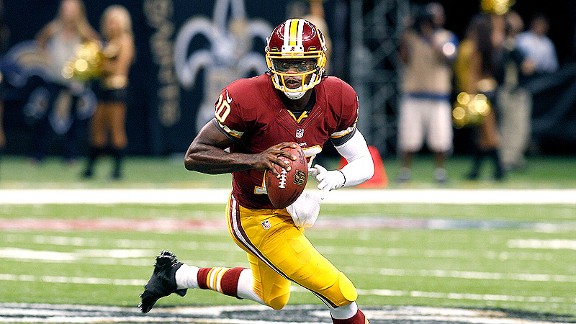
When Robert Griffin III came to Washington DC he was greeted as the new messiah of the Washington Redskins. For too long had the Redskins failed to procure a franchise quarterback, a leader that could take them to the playoffs and eventually the Superbowl. Finally, it seemed, the organization had made a bold move for a young quarterback who contained all of the qualities necessary for returning the Redskins to their former glory.

nfl_a_griffin_gb1_576

His first season behind center was remarkable. RGIII was named Offensive Player of the Week numerous times, he set records for the highest passer rating by a rookie quarterback and highest touchdown to interception ration, and he led to the team to the playoffs  after winning the NFC East Division.

After sustaining an injury toward the end of the season, many fans and sports pundits speculated whether or not RGIII would be able to compete in the same fashion during the following season. This past year, the Redskins returned to form posting an embarrassing 3-13 season, the worst record for the team since 1994. Many people, of course, blamed RGIII’s limited mobility, improper coaching decisions, and lack of enthusiasm from other players for the disappointing season.

Within a year RGIII went from being the hailed messiah, to a questionable concern. Favor and optimism was quickly replaced with skepticism and doubt. Of course some of the die-hard fans remained committed to this young quarterback, but a large portion of fan favor was quickly turned in the opposite direction from one season to another.

jesus.donkey

The crowds yelled “Blessed is the one who comes in the name of the Lord,” when Jesus enter Jerusalem on the back of a donkey. This man was their Messiah, the one they had been waiting for. They were so enthralled by this Son of Man that they pulled palm branches from the fields and placed them on the road as a sign of worship, devotion, and adoration. Incredibly, those shouts of “Hosanna! (Save us!)” changed to shouts of “crucify him!” within a week. The incredible favor of the crowds changed from dedication to destruction.

Our favor and devotion for the many messianic figures in our lives can change on a dime. How often have RGIIIs and others been hailed and rejected within such a short period of time? Yet, for us, our Messiah, the one who died for the sins of the world never gave up on us when we gave up on him. He rode on the back of the donkey knowing good and well what would take place by the end of the week, mounted the hard wood of the cross with the shouts of “crucify!” ringing in his ears, and loved us nonetheless.

Today, as we begin to approach Palm Sunday and Holy Week, I encourage you to consider the people in your life that you once supported and then gave up on. I’m not just talking about public figures such as RGIII or politicians, but also people close to your heart. Who have you given up on? Perhaps in these final weeks of Lent it is time to reach out to those who have fallen out of our favor. Maybe today is the day that you can reconcile a broken relationship and truly live into God’s love here and now.


Holy Perspective – Sermon on 1 Samuel 16.1-3

1 Samuel 16.1-13
The Lord said to Samuel, “How long will you grieve over Saul? I have rejected him from being king over Israel. Fill your horn with oil and set out; I will send you to Jesse the Bethlehemite, for I have provided for myself a king among his sons.” Samuel said, “How can I go? If Saul hears of it, he will kill me.” And the Lord said, “Take a heifer with you, and say, ‘I have come to sacrifice to the Lord.’ Invite Jesse to the sacrifice, and I will show you what you shall do; and you shall anoint for me the one whom I name to you.” Samuel did what the Lord commanded, and came to Bethlehem. The elders of the city came to meet him trembling, and said, “Do you come peaceably?” He said, “Peaceably; I have come to sacrifice to the Lord; sanctify yourselves and come with me to the sacrifice.” And he sanctified Jesse and his sons and invited them to the sacrifice. When they came, he looked on Eliab and thought, “Surely the Lord’s anointed is now before the Lord.” But the Lord said to Samuel, “Do not look on his appearance or on the height of his stature, because I have rejected him; for the Lord does not see as mortals see; they look on the outward appearance, but the Lord look on the heart.” Then Jesse called Abinadab, and made him pass before Samuel. He said, “Neither has the Lord chosen this one.” Then Jesse made Shammah pass by. And he said, “Neither has the Lord chosen this one” Jesse made seven of his sons pass before Samuel, and Samuel said to Jesse, “The Lord has not chosen any of these.” Samuel said to Jesse, “Are all your sons here?” And he said, “There remains yet the youngest, but he is keeping the sheep.” And Samuel said to Jesse, “Send and bring him; for we will not sit down until he comes here.” He sent and brought him in. Now he was ruddy, and had beautiful eyes, and was handsome. The Lord said, “Rise and anoint him; for this is the one.” Then Samuel took the horn of oil, and anointed him in the presence of his brothers; and the spirit of the Lord came mightily upon David from that day forward. Samuel then set out and went to Ramah.

tumblr_mepr3lSwsV1qhmhdfo1_500

One of the things I enjoy most about meeting with couples, and talking about weddings, is the invitation I offer for them to pick a particular scripture for their weddings. Now, I always have backups prepared just in case they are unable to come to a consensus or if they are just unfamiliar with God’s Word. But most of the time, they are willing to look around for something.

Many couples will choose the oft-mentioned 1 Corinthians 13 passage: Love is patient; love is kind; love is not envious or boastful or arrogant or rude. It does not insist on its own way; it is not irritable or resentful; it does not rejoice in wrongdoing, but rejoices in truth. It bears all things, believes all things, hopes all things, endures all things.

f6eedeff4528177d8b277fa10ab88ccf

Others will pick something along the lines of the regularly misinterpreted Ephesians 5 passage: Wives be subject to your husbands as you are to the Lord. Or that great passage from Ruth: “Where you go I will go, where you stay I will stay, your people will be my people, your God my God. Where you die I will die.”

The scripture that a couple chooses for their wedding can be quite revealing. It helps to demonstrate where their priorities are, what they expect out of marriage, and frankly, what they want to hear the pastor talk about.

So, you can imagine my surprise, when a couple recently asked me to use the scripture from today for their wedding. Preparing to enter wedded bliss, they didn’t want to hear about love, or marriage, but instead they wanted to hear about Samuel anointing David…

David & Samuel

The people of Israel had demanded a king from their God. For too long they had wandered about without leadership and they cried out for a leader they could follow. Reluctant to provide a human and fallible leader for a people that were supposed to be following their Lord, Saul eventually became king.

Handsomer and taller than any other man in the land, it quickly became clear that Saul was not the right one to rule the nation. He listened to his own heart rather than the Lord, and God eventually rejected him.

Thats where our story begins today. Samuel was sent to see Jesse the Bethlehemite, for the Lord has provided a king among his sons. The prophet took a heifer with him to cover his true actions from the vengeful Saul who might’ve killed him upon discovery.

After arriving, the elders met Samuel with fear and trembling. Turbulent events had always come in the wake of Samuel’s life and the people were responding appropriately. Great men and women always seem to stir up trouble wherever they travel. (It might be worth rediscovering this today in our own faith lives; too often has it been supposed that the role of church is to give all of us peace of mind. Truly I tell you, the greatest churches and sermons are those that challenge us to be better and do more than we already are)

So Samuel begin to evaluate all of Jesse’s sons; first Eliab, then Abinadab, than Shammah, and eventually all of Jesse’s sons had stood before the prophet. But the Lord spoke to Samuel and said, “Do not look on his appearance or on the height of his statue, because I have rejected him; for the Lord does not see as mortals see; they look on the outward appearance, but the Lord looks on the heart.”

Samuel was caught up with outward appearances. It’s like whenever I go to Alexandria to visit my grandmother, there is always a bowl of skittles out on her coffee table. I love skittles. On the outside the skittles always look delicious, the problem is that I don’t know whether they were put out that day, or six months ago. If you’ve never experienced it, trust me, you would rather have fresh skittles. The point being, you cannot tell how they will taste from the surface.

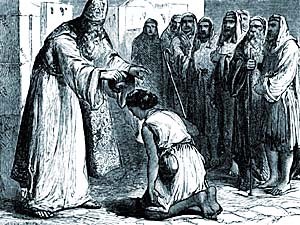
Anyway, the Lord had promised Samuel that one of Jesse’s sons would be the king, yet the Lord had passed over each one. “Are all of your sons here?” Samuel asked Jesse. “Well, there remains the youngest, but he is keeping the sheep.” David was beckoned away from his shepherding duties and brought before the prophet. He was ruddy and had beautiful eyes. The Lord commanded Samuel to anoint this boy, for he was the one. So Samuel took the horn of oil, anointed David in the presence of his brothers, and the spirit of the Lord came mightily upon David from that day forward.

I prepared for the wedding like I have for all the others, I had counseling sessions with the couple, I talked about the major issues that most couples confront once joining together, but the whole time 1 Samuel 16 hung in the back of my head. What was I going to do with the text during the ceremony? How in the world could I proclaim love and wedded bliss in the midst of David being anointed by Samuel.

I was at a shop here in Staunton when I saw a bumper sticker that illuminated the text for me. The bumper sticker said, “Marriage: betting someone half your stuff that you’ll love them forever.” In reading that, I realized what the world sees in marriage is not what God sees. We, myself included, look on marriage and all things with mortal eyes, but the Lord looks on the heart.

All of the sudden 1 Samuel 16 became the perfect wedding scripture! The Lord does not look on our cooly color coordinated outfits, not our perfect hair, not the precise flower arrangements, God looks on the heart. God does not concern himself with the pomp and circumstance of weddings but instead looks at the intentionality of the two being brought together. God does not get caught up with the minor details of all the rights words and ceremony, but cares about the love within two people sharing a life together.

On the outside, marriage looks like it can be sustained by love alone, it appears like a gamble of half of your things, it seems to be a simple agreement to live together. When we look at marital relationships through mortals eyes, we are limited to the surface appearance and we forget to look on the heart.

Marriage is a beautiful and strange thing. Like Samuel pouring oil over David’s head, it can become uncomfortable and weird. At its best, marriage is loving someone knowing that they will not be the same person tomorrow. Its entering into a dance that will evolve over the years with different tempos and time signatures. Marriage is about the inward heart and disposition of two people coming together to share this remarkable thing we call life.

The Lord looks on the heart. This, after all, was a perfect wedding scripture. As I stood before the happy couple, presiding over their marital vows I could tell that their intentions were clear, they were not caught up in all the outside elements, but were committing to their marital covenant together.

In as much as this text fit perfectly for the couple, I believe that it stands as a light in the darkness for churches and Christians today. The Lord looks on the heart – How sad is it then that most human judgments about people are almost always superficial? Those who are physically attractive have many easy advantages in life, while others, by their very appearance, seem to be severely regarded by others.

David was noted by Samuel as being handsome, with beautiful eyes, but he was still one of the least likely candidates to be anointed by the Lord. While his brothers were older and more mature, David was still young and off in the fields tending the sheep. Rather incredibly, while God anointed David to become king, he would have to mature and go through many trials and tribulations before his role would come to fruition. He would have to battle against the mighty Goliath, avoid Saul’s spear in the royal court, and flee for his life hiding in caves before he could event mount the throne of Israel.

In many ways, God ordains each of us, anoints all of our heads, for certain tasks and graces in the world. Some may have occurred already, and many more lie ahead of each of you in your futures.

God does not call the attractive and the strong to bring about his will on earth, he is not caught up with our outward appearance and physical requirements. God is concerned, above all, with our hearts, with our intentions, with our hopes.

logo

This past week, the Christian organization World Vision made national news. World Vision is a humanitarian agency dedicated to working with children, families, and their communities worldwide to reach their full potential by tackling the causes of poverty and injustice. Like many other similarly focused organizations, it can operate primarily under the radar and achieve a lot of good in the world. That was, until this past week.

In a public statement issued on Monday, the organization announced that it would begin hiring Gay Christians in legal same sex marriages. Prior to the announcement World Vision required all of its employees to maintain heterosexual practices within marriage to be considered for employment. The new policy was described as symbolic not of compromise, but of Christian unity, with the hope that it would inspire unity among other Christians as well.

After a remarkable amount of public outrage by evangelical Christians, and a significant amounts of threats regarding withdrawal of funding for the organization, World Vision reversed its decision to hire Gay christians in same sex marriages.

In only 48 hours, one of the most open, vulnerable, and incredible acts by a Christian group, devoted to helping sponsor children in need, was reversed. The mission of World Vision, the good that they do in the world, was immediately overshadowed by their hiring policy.

I don’t know what to think about all of this. I don’t know if any of the decisions have been right or wrong. What I do know is that a significant number of people who were being helped and saved by an organization were almost put in jeopardy because an agency aspired for greater Christian unity. It would seem to me, that regardless of opinion, the majority of the response was far more focused on the outward appearance of an organization, rather than their heart and intentionality.

I want to be clear that I’m not trying to say that one side was right, or that one side was wrong, but merely question how far we fallen from the idea that God looks on the heart. Every week we gather in this place to affirm our faith in the God who loves us when we don’t love back, that God listens when we run out of words, and that he desires us to be one in the Spirit when it seems as if we cannot agree on anything.

The Lord said to Samuel, and I believe the Lord is still saying to all of us: “Do not look on appearances or on height, do not look on political ideologies or past deeds, do not judge others lest ye be judged; for the Lord does not see as mortals see; they look on outward appearance, but the Lord looks on the heart.”

How do you look at others in your life? Are you caught up with outward appearances, judging others before you have an opportunity to really learn their story? Do you see the world through mortals eyes, or do you look at the world the way that God looks at us?

This is a tough Word for us to hear today. God called Samuel to look on David through God’s eyes, with holy perspective. We, in the same way, are called to radically love one another, sacrifice for the body of Christ, and be one in the Spirit with holy perspective. It is not easy, and we cannot do it on our own.

So, may God bless us enough to open our eyes to see the world, and one another, the way that God sees us. Amen.


Open My Eyes That I May See

Devotional – Psalm 130.1-2

Devotional:

Psalm 130.1-2
Out of the depths I cry to you, O Lord. Lord, hear my voice! Let your ears be attentive to the voice of my supplications!

Weekly Devotional Image

The church service went as well as could be expected. The small gymnasium was perfect for the contemporary service setting and most of the chairs were occupied. Like a lot of contemporary services, it began with a succession of three or four songs all focused on praising the glory of God; some of the lyrics included phrases such as: “Your love never fails,” “He’s been so good, so so good to me, Jesus,” and “you are amazing God!” Immediately following the collection of praise songs, there was a time of welcome, a brief reading from scripture, and then a focused sermon with images and themes being displayed on two screens hung from the ceiling.

I don’t remember much about the sermon except for the refrain: “God loves you no matter what!” The preacher’s perfectly executed contemporary outfit (Black Tee-Shirt with Blue Jeans) was matched with a consistently dynamic smile throughout the message. I wanted some of whatever he was having.

4050-rote worship.630w.tn.jpg

After another dose of positive and uplifting music to close out the service, we were all dismissed to re-enter the world. I stood in the back watching the people neatly file out of the gymnasium, observing sporadic examples of fellowship between people. In the corner I noticed an older woman, clearly frustrated with something, and trying to vent her frustrations to those around her. When it became clear that no one was listening to her, I walked over to ask if something was wrong. “I can’t stand services like this!” she nearly shouted, “Its just too happy!” And with that she threw her complimentary coffee in the trash, and left the building.

Have you ever felt that way in worship? Have you noticed the abundance of smiling faces in worship, discovered the overwhelmingly uplifting nature of some hymns, all brought together with a happy and positive sermon delivered with three primary points? Have you ever felt suffocated by the amount of joy that some worship services attempt to produce?

Christian discipleship is not a blindly happy-go-lucky journey. There should be more time and focus in worship devoted to the suffering that is present in each of our lives (however small or large). The psalmist writes, “Out of the depth I cry to you, O Lord. Lord, hear my voice!” Sometimes, the most appropriate form of worship is clenching your fists and shouting out those same words.

So, do not be conformed to the ways of so many churches that appear to say that happiness is a requirement for discipleship. If you are deep in one of the valleys of life right now, I encourage you to cry out to God. If you are on one of the mountaintops of life right now, open your eyes to the needs of those around you, and make God’s presence known through your actions.