Do Not Listen To Preachers (Including Me)

Jeremiah 23.23-29

Am I a God near by, says the Lord, and not a God far off? Who can hide in secret places so that I cannot see them? Says the Lord. Do I not fill heaven and earth? Says the Lord. I have heard what the prophets have said who prophesy in my name, saying, “I have dreamed, I have dreamed!” How long? Will the hearts of the prophets ever turn back – those who prophesy lies, and who prophesy the deceit of their own heart? They plan to make my people forget my name by their dreams that they tell one another, just as their ancestors forgot my name for Baal. Let the prophet who has a dream tell the dream, but let the one who has my word speak my word faithfully. What has straw in common with wheat? Says the Lord. Is not my word like fire, says the Lord, and like a hammer that breaks a rock in pieces?

Pastor Holding Bible ca. 2000


A young preacher stands in the pulpit after a long week of parish ministry. The visits have all been made. A new budget for the coming year is finished and ready for approval. Plans for the Community Cook-Out came to fruition as people from all over the community gathered together.

The young preacher stands in the pulpit and looks out at the congregation. He sees couples that he has counseled; children that he has baptized; families that are struggling; individuals whose husbands or wives he has buried; and he even sees people he has never seen before. He looks over the bulletin one last time just to make sure that everything is listed the way it is supposed to be, and then he begins by saying, “This morning the sermon will be short and sweet”

“Hallelujah!” Someone shouts out from a pew.

“Is that for the short, or for the sweet?” says the preacher.

The congregation laughs.

The preacher sighs.

The art of preaching is a strange thing, but an even stranger thing when we consider that what we want from a sermon is something short and sweet. Some of you have been quick to say that you want a sermon that leaves you feeling good on your way out from the sanctuary. Others have said that you want a sermon that gives you something to think about during the week, or one that helps to remind you that God is love, or that Jesus wants the world to be a better place, etc.

I would classify myself as a short and sweet preacher. I fundamentally believe that if you cannot say what you’re trying to say in 15 minutes then you’re never going to say it. Additionally, I love pleasing all of you. I live for those moments in the receiving line following worship when some of you offer praise for what you heard through the sermon. I know I’m supposed to be humble, but it feels pretty good to be congratulated and praised for preaching.

In the last few years we’ve had an abundance of sweet sermons; times when I wanted all of you to leave with just one thought: “God loves you.” I’ve done my best to make you laugh and smile when thinking about the abundant glory of God’s grace. I’ve tried to cheer you up during times of domestic and international strife. I’ve worked to make this place as appealing as possible for as many people as possible.

And that is why you should not listen to preachers, including me.

“Am I close to you?” says the Lord. “Or am I far away? Who thinks they can hide in secret places so I cannot see them? I am the Lord! Do I not fill up heaven and earth? I have heard what those prophets have said who prophesy in my name saying ‘I have dreamed, I have dreamed! How long will they continue like this?”

The prophet Jeremiah lived during a time filled with false prophets, people who would ascend to places like this in front of a gathered people and make claims on behalf of the Lord. They would spout off about their visions of what the Lord was doing, and the more they said, the further they moved away from God.

God warns us against listening to false prophets, about succumbing to their visions, and about what happens when we trust them more than the Word.

False-Prophets-Media-Header-960x350

It would be easy today to make this whole sermon about the false prophets of our contemporary experience. We’ve got plenty of false prophets who use their skill to sell us on what they believe the future should hold. In fact this whole sermon could just be a warning against listening to the likes of Donald Trump and Hillary Clinton.

What kind of dreams are they selling?

“I have dreamed of a future where everyone can, and should go to college for free. Where healthcare will be free for everyone. We need to remember what made us great and start taking from the wealthy and giving it to the poor. It’s not about progress; it’s about fairness. We need to make America fair again.”

“I have dreamed of a wall unlike any other wall. This wall will fix all of our problems. It will bring wealth back to our country. We need to bomb the Middle East into oblivion to assert ourselves as the top of the world. We need to make America great again.”

Politicians have always been false prophets making promises that cannot be kept; selling a vision of the future that rarely comes to fruition. And we know this is true. That’s why we’ve grown so jaded by our political seasons and apathetic about whatever will happen.

But there are more false prophets out there than just politicians, and one of them is talking to you right now.

Through the prophet Jeremiah, God warns us against listening to people like me, people who march up to the front of the gathered church and strive to proclaim God’s faithful word. For whenever we hear a preacher go on and on about the beauty and majesty of God’s Word, whenever the Lord is watered down to a spirit of love, whenever we hear more about the preacher’s dreams than God’s will, we need to be reminded that the Word of the Lord is like fire, and like a hammer that breaks a rock into pieces.

Since we’ve been together in this strange thing called church, I’ve preached over 150 sermons. I’ve preached from Genesis to Revelation. I’ve mentioned the patriarchs and the prophets. I’ve proclaimed the possibilities of the psalms. I’ve proudly preached on the power of parables. I’ve done different series on “Why We Do What We Do” and “The Basics” and “New Beginnings” and “Strange Stories from Scripture.” I’ve even dressed up and preached not one, but TWO sermons from the perspective of a donkey.

And for what?

Has the preaching in this place challenged you to be a better disciple? And maybe not just from me, but have you ever left this church really feeling convicted by what you heard and wanted to live differently? Or has your experience been like most, and you leave feeling pretty good on Sunday afternoon?

We preachers are tempted by the practices of false prophecy. We like to be liked. We want to fill pews with people to boost our egos. We need to hear praise from lay people on their way out the door. We yearn for success. We, after years of sermon preparation and proclamation, fall prey to hearing our own voice so deeply that we no longer hear others, nor do we hear the Lord.

For the last three years I’ve had a dream about the future of this church. I have dreamed of Sunday mornings where so many people fill the pews of this sanctuary that I cannot know everyone’s names. I have imagined crowds gathered around the baptismal font in anticipation of bringing a new person into the life of our church. I have pictured people having to park on the front lawn because there are not enough spaces left in our parking lot.

IMG_1691

And because I had this dream, I preached and worked toward things like our Community Cook-Out. I implored our Church Council to use enough money to give away the food and the games and the fellowship all for free. I sent out hundreds and hundreds of post-cards to all of our neighbors so that they might join us on the front lawn.

I have dreamed, and I want the dream to become real. So I work week after week on ideas and programs and sermons that will draw people into this sanctuary on Sunday mornings until that dream becomes reality.

A couple weeks ago I was standing in our narthex right before our opening hymn. Most of you were sitting in the pews; our liturgist had gone through the pertinent announcements and necessary welcome. Rick was playing something melodic on the organ as we prepared our hearts and minds for worship when I stepped onto the carpet with our acolyte.

Without thinking much about it, I started to count the back of all your heads. I started with the front left and made my way toward the back, then my eyes moved to the front right and all the way toward the back. My lips must have been moving because our acolyte looked at me and said, “What are you doing?”

“I’m counting…” I said while trying to not lose track of the number.

And then he asked, “Why?”

Why?

In his question, in the simple raise of an eyebrow at my action, my heart caught on fire, it burned like a blaze, and I felt it crumble into ashes.

For how long have I deceived my own heart? For how long have I been so consumed by the number of people in our pews that I have forgotten the call to share the Good News? For how long have I proclaimed a God of love who is so loving that he does not expect us to live changed and transformed lives? For how long have all of us listened to false prophets who preached their own dream instead of speaking the Word of the Lord faithfully?

In his question I heard the Lord convict my heart because I have been caught up in church growth not for the sake of the kingdom, but for my own affirmation. I have wanted the front lawn to be packed with people from the community not for the sake of the kingdom, but for the pews to be filled in worship. I have preached sermons to make us feel better not for the sake of the kingdom, but for all of you to come back the next Sunday.

Sermons are a good and strange thing. After all they are the means by which the Word of the Lord is interpreted for our lives on a weekly basis. But they cannot be blindly accepted without challenge. For to only ever hear about God’s grace does a disservice to the Lord who is always calling us to live more like Christ. And, on the other hand, to only ever hear about how sinful we are neglects to reveal the light of Christ that shines in the darkness.

God cares more about spreading the Good News than about filling up the pews.

And sometimes that Good News is that we need to be better than we were when we arrived, that we are called to a life of discipleship that pins us against the world, that the Lord expects great things from us. The Good News is that God has not abandoned us to our sinful desires and devices, that God believes we can be better even if we don’t, and that we can transform the world but we first must transform ourselves.

We need good preachers, men and women who are willing to lay down their egos at the altar and faithfully proclaim God’s Word. And we need good lay people who are willing to crucify their fears and speak the truth in love toward the preachers who have fallen into the trap of false prophecy.

So, may the Word of the Lord be like a hammer that breaks our lives into pieces! Let it shatter our false identities and insecurities, let it break down all our preconceived notions and assumptions, and let it burn and blaze forever and ever. Amen.

The Cross in Creation – Karl Barth and Genesis 1.1-2

Genesis 1.1-2

In the beginning when God created the heavens and earth, the earth was a formless void and darkness covered the face of the deep, while a wind from God swept over the face of the waters.

barth-bw

While I was in seminary I spent one of my summers helping Bryson City UMC in Bryson City, North Carolina. Bryson City is surround by the Great Smokey Mountains and is easily one of the most beautiful places I’ve ever been in my entire life. It was an incredible experience that directly shaped the way I do ministry today.

During my time at the church I was invited to participate in a weekly lectionary group with local clergy. Every Monday morning the pastors and priests of Bryson City would get together to talk about the scripture readings for the following Sunday. We met at the large Baptist Church, ordered breakfast to be delivered, and then we would take turns reading from the bible and shared what we thought we would preach about on Sunday.

Week after week I heard from clergy of all different denominations (Presbyterian, Baptists, Catholic, Methodist, etc.) as they wrestled with God’s Word and how to proclaim it from very different pulpits to very different people.

On one hot morning in the middle of July I found myself surrounded by those familiar pastors and priests as we read the texts aloud. The lectionary always had four prepared readings for each Sunday on a three-year cycle: a reading from the Old Testament, the Psalms, an Epistle, and a Gospel. I don’t remember what the other readings were that morning, but I do remember that I was asked to read Genesis 1: In the beginning when God created the heavens and the earth…

When I finished, as was our custom, we waited for individuals to speak up about what they planned to do with the test during worship. Silence filled the room. So I decided to ask the obvious question, “I anyone planning to preach on Genesis 1?” The silence remained. I remember thinking to myself, “How strange is this? We’re talking about the first lines of scripture in the bible and no one is preaching on it in Bryson City this week.” It was obvious that most of the clergy wanted to move on to a different reading, but I felt compelled to ask another question: “Have any of you every preaching on Genesis 1?” One by one they confirmed my suspicion; not one of those pastors, priests, ministers, or preachers had ever proclaimed a sermon on the beginning of creation.

While they moved on to a different reading and a different conversation, I silently began calculating from my chair: In that room we had over 100 years of preaching represented. Over 100 years of preaching, more than 5,200 sermons, and not one of them had ever preached from Genesis 1.

Why do we ignore Genesis 1? What is it about the text that makes us afraid to bring it up in worship or in bible study?

On some level I think it is good to be afraid of God’s Word; that fear reminds us that God is God and we are not. But Genesis 1 is not something to be ignored or forgotten.

557046

Of all the writing I’ve read on Genesis 1, it is Karl Barth’s exegesis of the text that gives me hope for its return to the pulpits and congregations of our churches.

Barth, unlike so many modern theologians and pastors, rejects the fear and presumption that there is dissonance between creation as recorded in scripture and the scientific method. Instead of attempting to rationalize the theory of the Big Bang with the details of Genesis 1, and instead of struggling to line up Darwin’s Theory of Natural Selection with the order of creation in scripture, Barth rejoices in the knowledge that the earth was in a hopeless situation of chaos and utter darkness and God chose to transform reality through the Word. The “how?” and “why?” of creation is simply answered with “Word” and “love.”

Writing and reflecting from this vantage point gives Barth the ability to freely respond to the words contained in Genesis 1 with a freshness that is often lost in the church today; his exegesis of Genesis 1 is a worthy read for clergy and laity alike.

In §41.2 “Creation As The External Basis Of The Covenant” (III.1 The Doctrine of Creation in Church Dogmatics) Barth begins his exegesis with the very first words of God from the Word of God.

The first word in the Hebrew Bible is bereshith, which roughly translates to “start” or “beginning.” In English we render this as “In the beginning…” but for Barth the distinction is important. To begin with “beginning” tells us “that this history, and with it the existence and being of the world, had a beginning, i.e., that unlike God Himself it was not without a beginning, but that with this beginning it also looks to an end.”[1] There is no other word that can quite compare with the one that inaugurates God’s holy scripture. From the beginning of all things God created a beginning to have an end. The Lord did not create the world like a watchmaker and then step back to see how it would run. God was intimately involved in the creative act knowing full and well that there was a necessary end, or conclusion, to the creative act. Unlike an author who begins a story without knowing how it will come to close, God created from beginning with an ending.

For years I’ve read the creation account from Genesis 1 and thought of it just like that: an account of creation. The words were there on the page, though they hardly jumped out at me. Like those pastors in Bryson City, Genesis 1 is one of those chapters in the bible that I have not so subtly avoided because of the difficulty of rationalizing it with modern science. And yet Barth writes about the first two verses of scripture with such conviction that it challenges me to re-engage with the text and see the beauty of what God did, and is doing.

Verse 2 (the earth was a formless void…) has been similarly read with haste and overlooked for the richness it holds. Everything else, which is to say everything neutral or against God’s will, ceased to exist when time began with God’s action and accomplishment. The whole of creation was worked into being and order by God in time. In God’s freedom to create was the earth brought into meaning through God’s action and through God’s word to create.

1101620420_400

The challenge of verse 2 has vexed theologians and Christians alike for centuries regarding the chaos, whether or not God created it, and if God willed a reality of chaos into existence. This, I think, has factored into the disappearance of Genesis 1 from pulpits because we are unsure of how to speak about evil in the world, and whether or not God ordained it.

The question of God’s role in the creative act resulting in, or presupposing evil, is usually limited to two answers: God either did create the darkness and evil, or God did not.

Barth totally rejects this dualistic presumption.

Instead, Barth begins by confronting what is actually stated: “In verse 2 there is absolutely nothing as God willed and created and ordained it according to verse 1 and the continuation. There is only “chaos.” … that which is absolutely without basis or future, utter darkness… According to this phrase the situation in which the earth finds itself is the very opposite of promising. It is quite hopeless.”[2]

For Barth the question over evil and whether or not the violent and chaotic state of the world is self-originated or willed by God pales in comparison to the fact the earth was in a hopeless situation of utter darkness and God chose to transform reality through the Word. Verse 2 therefore posits a world in which the Word of God had not been uttered. The “nothingness” of creation is utterly destroyed and rendered impossible by the possibility of God in the creative act.

The ugliness of the existence prior to the Word of God did exist almost like a shadow of the actual creative act of God. And because it was like a shadow, in the freedom of humanity we can look back and return to that past and bring forth the shadow of verse 2. In so doing, by rejecting the Word of God, the past defies its own nature and becomes present and future. However, God totally and utterly rejected and rejects the shadow and speaks forth the Word to shine in the darkness.

The temptation of humanity to return to the shadow is ever present. Whenever we deny mercy to God’s creatures, we are retreating to the moment precisely before the Word of God. It is in our broken and sinful nature that we reject God’s Word and substitute our own. The shadow of darkness is around us whenever we encounter death and destruction. But no shadow can compare with the one of the cross: “This – this moment of darkness in which His own creative Word, His only begotten Son, will cry on the cross of Calvary: ‘My God, my God, why has thou forsaken me?’ – will be ‘the small moment’ of His wrath in which all that is indicated in Genesis 1.2 will become real. For all the analogy to other kinds of darkness, there is no other moment such as this.”[3]

In the death of Jesus Christ, in the shadow of the cross, humanity encounters the true and total darkness prior to God’s Word. But it is through Jesus Christ (as the Word) that God will reconcile creation to God’s self. In the one incarnate creature, at that particular moment and time in the cosmos, the Word will again become the Light over all creation. The brilliance of the empty tomb shines like the first light hovering over the darkness in Genesis 1.2.

The “old things” of creation prior to the Word have radically passed away in a dynamic and divine act of the Lord speaking the Word and through the death and resurrection of Jesus Christ.

The first two verses of scriptures contain the fullness of all God’s scripture. In beginning we see the ending. In the darkness we see the cross. In the light we see the empty tomb and resurrection. What Barth does with scripture is like what a Jazz musician does with the form of a tune; Barth improvises over the lines and draws connections to melodies that we have scarcely imagined.

To reclaim the brilliance of Genesis 1, to jump into the strange new world of the bible like Barth, will give us the strength to encounter creation and believe that it is worthy to be preached and proclaimed. But more than anything, it will give us the vision to see creation and declare, like the Lord, “it is good.”


[1] Barth, Karl. Church Dogmatics III.1 (Peabody, Massachusets: Hendrickson Publishers), 99.

[2] Ibid., 104.

[3] Ibid., 110.

On Why Christians Should Not Read The Bible

A reflection on Stanley Hauerwas’ Unleashing the Scripture:

I was 9 years old and sitting in one of the front pews at Aldersgate UMC in Alexandria, Virginia when I was called up to the altar and given a red hardback copy of the New Revised Stand Version of the Bible. I can remember feeling the thin pages in my fingers while I flipped between the Old and New Testaments and ignored whatever the preacher was preaching about. I knew it was the same bible as the one sitting on the back of the pew in front of me, but there was something different about it being my bible. From that point forward, whenever I grew tired or distracted by whatever was going on in the pulpit, I always knew I could open up the book in front of me and enter the strange new world of the bible.

I still have that bible that was given to me almost 20 years ago; it sits on one of my shelves next to the never-ending row of different translations that I have accumulated over the years. I had it with me in college when I grew frustrated with different campus ministries, I had it with me in seminary while I was helping multiple churches, and I still have it now while pastoring a church. For years I came to rely on that bible’s words to reveal something to me about the nature of God, particularly when I felt like worship was not making the cut.

This is why, according to Stanley Hauerwas in Unleashing the Scripture, we need to take the bible away from North American Christians.

Hauerwas

Most American Christians believe they have a right and obligation to regularly read from the bible. Ask almost anyone in the church I serve and they will tell you about how important it is for them to start their mornings by reading scripture. As Protestants we celebrate the great availability of the Bible and regularly call for individuals to read it on a daily basis. But through the privatization of scripture we have transformed our understanding of the bible into it being treated like any other book, rather than the living Word of God.

The scriptures we affirm as the holy and living Word of the Lord cannot be properly understood outside of the church community that gathers around the Word every week. Or, to put it another way, to read scripture in isolation without the community of faith assumes that the text of scripture makes sense separate from a Church that gives it sense.

Reading in isolation, or believing that having a personal relationship with Jesus Christ revealed through scripture alone (sola scriptura) is enough, has led to some of the most profound abuses of scripture through a practice called proof-texting (Cherry-picking particular verses to make a singular argument).

Inductive-PF

The collection of both the Old and New Testaments contain a remarkable number of stories and teaching that make it difficult to treat as a whole. Whenever someone makes the comment, “The Bible says…” I am always thinking of another place in the Bible that says something contrary to the first point. The bible is a strange and beautiful thing that cannot be limited to a handful of verses.

However, this is exactly what many Christians do when they want to argue a very specific position. For instance, there are passages in both the Old and New Testaments that advocate for the subjugation or lower status of women (ex. 1 Corinthians 11.8-9), but these verses can only be properly understood in the light of scripture as a whole and within the worshipping community. Because only in a worshipping community can the scriptures be read, debated, and proclaimed. Only in a worshipping community can a differing opinion be brought forth and used to consider the first scripture at hand. Only in a worshipping community that gathers at the table are we forced to confront the deep and profound truth that we (men and women) have been created in God’s image, that we (men and women) are invited to partake without cost, and we (men and women) are offered the body and the blood of the Lord.

Similarly, proof-texting has been used to advocate for the horrific treatment of members of the LGBTQ community by reading verses from the likes of Leviticus and the letters of Paul without confronting the fact that Jesus never says anything about homosexuality in the four gospels. It is only in the community of faith that we are challenged to read the scriptures that go against our opinion and then, through the power of the Holy Spirit, are we able to take steps forward in faith.

The temptation to read our bibles in isolation results in the Scripture being broken up as separate texts, commandments, and opinions. The Church, as the body of Christ, is the corrective to this temptation and is the place where scripture lives and becomes incarnate in the way we live.

It is good and right for us to have our own bibles and to read from them from time to time. I’ll admit that to call for the Bible to be taken away from individuals who wish to read the Word of God is an absurd proposition. Yet, in the Church’s current situation, the overwhelming opinion that every person has the “right” to interpret scripture has led to the fractured and divisive nature of the Church.

Instead, we are most faithful when we turn in our bibles together in the midst of worship, when we pray for the Lord to speak to us once again through the Word, and when we wrestle with what God is saying as a community.

On How To Read Barth or: Why The Tamed Cynic Is Wrong

Back in February of 2013, Jason Micheli (The Tamed Cynic) proposed an invitation to read Karl Barth’s writings over the following two years. Throughout this time Jason periodically reflected on what he read for the whole world to read on his blog. I like Jason a lot. I’ve written about him here on the blog, I’ve used him as an example in a number of sermons and devotionals, and I genuinely believe he is one of the most faithful followers of Jesus I’ve ever known. Because I like Jason, and I grew up listening to his sermons, I like Karl Barth.

barth-bw

Barth is most well known for his writings in the theologically shattering Epistle to the Romans and his dialectical approach in his Church Dogmatics. Reading his work over the last few years has profoundly shaped the way I understand what is means to be a Christian and how to read scripture.

When Jason invited me to start reading Barth from afar I was already familiar with The Epistle to the Romans, I had read sections from Church Dogmatics, and had read a number of his sermons from other compilations (Deliverance to the Captives and The Early Preaching of Karl Barth). Though relatively familiar with Barth’s style and larger project, I was excited to read Jason’s “Tips for Reading Karl Barth”:

  1. Barth is the opposite of the social media, fast food age. Read slow. Barth’s thought frequently unfolds in long clauses and sentences that double back almost like music. It’s better to focus on a page or a long paragraph and understand it than try to read everything I’ve scheduled in the given week.
  2. Barth uses the term “being” a lot. IT’s a freighted philosophical term that would be better translated for you as “character.”
  3. Whenever Barth speaks of the “Word of God” he’s usually referring to Jesus NOT scripture. This will be obvious in the next sections.
  4. The footnotes. Skip over them. You can read them if you want but don’t let them slow you down or intimidate you.


Jason’s “tips” are on point when the daunting task of reading Barth is open on the table. Barth’s Church Dogmatics is divided into fourteen volumes and takes up the entirety of one of my bookshelves. I fully agree with his first three “tips” but I respectfully and wholeheartedly disagree with the fourth: “The footnotes. Skip over them.”

If theology is like jazz, then Barth’s footnotes are his greatest improvisational work over the larger melody.

1101620420_400

Reading Barth is challenging and requires patience. There are times when you will come to the end of a long paragraph and have no recollection of what you just read. There are times that you are sure you know what he is driving at only to have him turn the whole topic upside down and address it from a different angle. But it is in his footnotes (or excurses) that he exegetes the biblical texts that brought him to the conclusions in the rest of the text. The excurses are where Barth does the true work of theology.

For example, in part III.1 The Doctrine of Creation, Barth makes the claim that “Creation is the external basis of the Covenant.” He breaks down arguments for the watchmaker analogy as if God created the Earth like a watch and is not sitting back and watching the hands go round and round and instead posits that God, as the divine creator, created freely in love and is forever bound with creation. This is all good and true, but it is the long excurses on Genesis 1 that the brilliance of Barth’s theology comes to light.

In it he goes through the scripture with a fine-toothed comb and provides reflections on each day of the creation story. He looks at the presence of light and darkness: “The best analogy to the relationship between light and darkness is that which exists between the elected and the rejected in the history of the Bible: between Jacob and Esau; between David and Saul; between Judas and the other apostles. But even this analogy is improper and defective. For even the rejected, even Satan and the demons, are the creation of God.”

He spends a great amount of space analyzing the power of created water and its relevance throughout the entirety of scripture: “The Old Testament ranks a sea voyage with desert-wandering, captivity and sickness as one of the forms of extreme human misery; of the misery from which it is the gracious and mighty will of God, which we cannot extol too highly, to redeem us. It is thus the more note-worthy that the most striking Messianic deeds of Jesus are His walking on the sea in royal freedom, and His commanding the waves and storm to be still by His Word.”

All of this and much more can only be found in the places that Jason suggested skipping over. The more I have read Barth, the more I am convinced that the most important parts to read are his footnotes where he dives deeply into the strange new world of the bible.

Therefore, over the next few weeks, I will be posting reflections on some of my favorite excurses from Church Dogmatics including Barth’s thoughts on Creation, the Tower of Babel, and the Doctrine of Election.

Jason’s proposal to read Barth was a great challenge, and I am grateful for his “tips”, but the ripe fruits of Barth’s work should not be skipped over.

249525.501

Yes!

Psalm 16

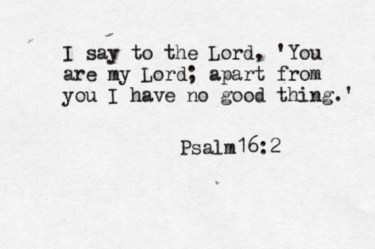
Protect me, O God, for in you I take refuge. I say to the Lord, “You are my Lord; I have no good apart from you.” As for the holy ones in the land, they are the noble, in whom is all my delight. Those who choose another god multiply their sorrows; their drink offerings of blood I will not pour out or take their names upon my lips. The Lord is my chosen portion and my cup; you hold my lot. The boundary lines have fallen for me in pleasant places; I have a goodly heritage. I bless the Lord who gives me counsel; in the night also my heart instructs me. I keep the Lord always before me; because he is at my right hand, I shall not be moved. Therefore my heart is glad, and my soul rejoices; my body also rests secure. For you do not give me up to Sheol, or let your faithful one see the pit. You show me the path of life. In your presence there is fullness of joy; in your right hand are pleasures forevermore.

Romans 12.2

Do not be conformed to this world, but be transformed by the renewing of your minds, so that you may discern what is the will of God – what is good and acceptable and perfect.

Screen Shot 2016-06-20 at 3.19.17 PM


Years ago there was a young man, fresh out of seminary, ready to start serving at his first appointment. He had taken all of the right classes, learned from gifted professors, and even volunteered in the local community. After he finished packing his bags, he loaded up the car and made his way to John Wesley UMC. The novice pastor was anxious and excited about what the church would be like, so before he unpacked any of his belongings he drove out to the church property.

He found the location on the map, went to the listed address, but there was no church to be found. So he turned around and drove to the spot once again only to discover that the church was blocked by the oldest and most decrepit looking tree he had ever seen. The roots were stretching all over the property and the leaves blocked the building and the marquee from being visible on the road.

He couldn’t believe it! No wonder he had heard that church attendance had decreased over the last few years! The young pastor was convinced that if only people could see the church from the road, it would grow and grow and grow.

So, before unpacking any of his important belongings, before even working on his first sermon, the young pastor unpacked his chainsaw and went back to the church. It took him most of the afternoon, but by the time he was finished the tree was gone, the sign and church were visible from the road, and he just knew that the church pews would be filled to the brim on Sunday.

A few days later, as he sat in the study of his parsonage crafting the words for his first message, the local District Superintendent called: “I hope you haven’t finished unpacking yet,” he said, “because you being reappointed.”

You see, the church was called John Wesley UMC for a reason: nearly two hundred years earlier a man named John Wesley had planted that tree while he was in the community. The gathered people decided to build a church right where the tree had been planted in honor of the man who planted the seeds that started our church, and that young pastor had chopped it down.

Apart

I keep the Lord always before me; because he is at my right hand, I shall not be moved,” says the Psalmist. What kind of faith would we have to have to be able to faithfully affirm these words? “The Lord is my chosen portion and my cup; you hold my lot. The boundary lines have fallen for me in pleasant places… You show me the path of life.” Who do you imagine speaking when you hear these words? Perhaps you picture one the great prophets from the Old Testament like Elijah, and Isaiah, and Jeremiah speaking about their faith, or maybe you immediately connect these words with a saint from your life, or perhaps you recall one of the wonderful pastors who served this church in the past.

I want to be able to faithfully proclaim these words, I want my life to reflect the kind of trust and assurance present in the psalm, I want to say “yes” to God over and over, but the problem is, I usually say “no.”

That, in a sense, is the great story of scripture. God offers us a path, he offers us a way, he offers us a “yes” and we respond by saying “no.” I have given you everything you will ever need here in the Garden of Eden; your lives will be perfect forever so long as you don’t eat from the tree of knowledge of Good and Evil. “No thanks God, we know what we’re doing and we’d rather try the fruit.”

I will deliver you out of the bondage of slavery in Egypt and bring you to the Promised Land. Follow my servant Moses, adhere to my commands, and everything will be wonderful. “No thanks God, we’d rather go back to Egypt, at least we had food there.”

I will make of you a great nation, you will grow in prosperity, but you must not worship any other gods instead of me. Listen to the prophets, give heed to my Word, and you will have life. “No thanks God, it’s easier to worship a golden calf and ask for prosperity than it is to live a life according to your law.”

Take up your cross and follow me, give of yourself to those who are suffering, pray for your enemies, worship the Lord, believe in the Good News. “No thanks Jesus, we’d rather hang you on a cross than start living our lives for other people.”

In scripture, whenever people stubbornly say “no” to the will of God, God declares, “Yes.” Like a parent with a child, it happens over and over. And this paradoxical relationship between God and God’s people bleeds out from scripture into our lives even today. God starts calling us to live a new kind of life through the words of a friend, through a profound experience, and maybe even through a sermon and we think “No thanks Lord, I know better.”

God calls us to sacrifice our time and money, to gather regularly for worship and be transformed, to believe in the power of grace and mercy, and we say, “No thanks God. I’ve got better things to do.”

God says to a young pastor, “I am calling you to comfort the afflicted, and afflict the comfortable. Preach the Good News. Serve the last, least, and lost. Plant seeds of faith. Remember the tradition that brought you here.” And he says, “No thanks God. I know what I’m doing, and I’m gonna chop down that tree.”

The truest and most faithful words we can ever pray, are words that we pray every week in church: “Thy will be done.” Those words are at the very heart of what it means to be Christian: submitting ourselves to the will of the Lord. And even though they are the truest and most faithful words we can ever pray, and even though we say them every week, they are the hardest to live by.

9a3fe6cd2bab9347a651e8f1ed86951c

Today marks the beginning of our 4th year together in ministry. And, I have to admit, I didn’t want to come here. I was utterly convinced that I needed to be an associate pastor at a different church right after seminary. I even contacted all the churches in Virginia hiring associates that year and had scheduled interviews. But then the Lord decided this is where I was supposed to be. I knew what I wanted, I knew where I thought I should be, and I was pretty nervous about coming here. Even though I continued to pray, “thy will be done,” I was really saying “my will be done.”

And, I’ve come to find out, that some of you didn’t want me to come here. Members of the staff-parish relations committee wanted a younger pastor to come to St. John’s, but one with experience. They wanted some new and fresh energy, but definitely not someone right out of seminary. And one of you told me that they first time I walked into the church, all you could think was, “he’s a baby.” But God sent me to you. You knew what you wanted, you knew what kind of pastor the church needed, and then I showed up. Even though many of you were praying, “thy will be done,” you were really saying, “my will be done.”

It happens with pastors being appointed to churches, it happens when we start wrestling with a call to a different career, it happens when children enter the picture and new priorities erupt, it happens when someone proposes a new way forward. My will be done versus thy will be done.

In the great battle of “No” and “Yes” in scripture, the final movement came in the cross and the tomb. God’s people continually rebelled against God’s love time and time again, even to the point of delivering God’s son to the cross. But after the three days of silence that followed the crucifixion, God declared the final and triumphant “Yes” in the resurrection of his Son, Jesus Christ.

Because of the good news of the resurrection, the final “Yes” to every “No” we’ve ever offered, we are reminded of God’s unwavering faithfulness in every circumstance. Even when we push back against the will of God, the Lord’s love remains. We say that in baptism we have died with Christ and therefore we have already seen the worst. Since we have also been raised with him in his resurrection from the dead, we can live in confidence that God has already saved us from all that might destroy us, even death. Because of the resurrection, because of Easter, we can be people who actually pray those hard and beautiful words, “thy will be done,” and mean it.

Last week I gathered with thousands of other United Methodists from across the Virginia Conference for the Service of Ordering Ministry. For the last three years I have worked on demonstrating my effectiveness in ministry, which culminated in being ordained as a full elder. I made my way up to the front of the arena with my two pastoral mentors and Lindsey with Elijah, I knelt before the bishop and the conference, and I was ordained. While each ordinand knelt they were invited to choose a particular section of scripture to be displayed on the screens for everyone to see. I chose Romans 12.2: “Do not be conformed to this world, but be transformed by the renewing of your minds, so that you may discern what is the will of God – what is good and acceptable and perfect.”

Those words were the first we ever shared together in worship 3 years ago, and they have come to define the ministry to which all of us are called. And as I felt the bishop’s hands upon my head, I thought about those words from Romans and I was overwhelmed by the Spirit’s persistent reminder, through YOUR faithfulness, I have seen the path of life. I felt convicted by the deep and profound truth that this is not a one-way relationship whereby I teach you, or I pray for you, or that I share God with you. Thanks be to God that we are in this beautiful and messy thing called church together.

Every week WE gather in this place to be transformed by the renewing of OUR minds. Through OUR worship we have worked to discern what is the will of God – what is good and acceptable and perfect.

            We are becoming the kind of people who can faithfully say, “the Lord is our chosen portion and our cup.” The communal Christian experiencing here, is about choosing Jesus again and again and again. It is about coming back to the Lord knowing that he will welcome us. It is about hearing God’s triumphant “Yes!” even when we want to say “No!”

And right now, the world wants us to believe that we have every reason to say “No.” Annual Conference is a reminder of the death that is possible in the church, we hear about all the churches closing this year, we learn about the lack of new and younger generations attending church, and we are reminded of the most frightening statistic of all: The average United Methodist invites someone to church once every 38 years.

But that doesn’t have to be our story. Desiring our will to be done is what got the church to this point in the first place. Can you imagine what would happen if we actually lived by the words “thy will be done”?

The time has come for us to declare “yes!” to the will of God. “Yes Lord, we know that through you all things are possible.” “Yes Lord, crucify our hearts so that they might be resurrected to your glory.” “Yes Lord, convict our souls to invite someone we know to experience your love here at St. John’s!” “Yes Lord, remind of our baptisms and of who we really are.” “Yes Lord, fill us with your Spirit till all shall see Christ living in us.” “Yes Lord, give us the grace and strength to take up our crosses and follow you.” “Yes Lord, let thy will be done!” Amen.

From Diapers to Diplomas

Psalm 46

God is our refuge and strength, a very present help in trouble. Therefore we will not fear, though the earth should change, though the mountains shake in the heart of the sea; though its waters roar and foam, though the mountains tremble with its tumult. There is a river whose streams make glad the city of God, the holy habitation of the Most High. God is in the midst of the city; it shall not be moved; God will help it when the morning dawns. The nations are in an uproar, the kingdoms totter; he utters his voice, the earth melts. The Lord of hosts is with us; the God of Jacob is our refuge. Come, behold the works of the Lord; see what desolations he has brought on the earth. He makes wars cease to the end of the earth; he breaks the bow, and shatters the spear; he burns the shields with fire. “Be still, and know that I am God! I am exalted among the nations, I am exalted in the earth.” The Lord of hosts is with us; the God of Jacob is our refuge.

graduation-sunday


Kurt Vonnegut Jr. once said that true terror is waking up one day and realizing your High School senior class is running the country. It’s a great quote, and one often used this time of year during graduation speeches. In fact, ten years ago, it was used by one of my friends at the beginning of her address during my graduation from High School: True terror is waking up one day and realizing your High School senior class is running the country.

Time can be terrifying. We, as human beings, are deeply rooted in time and when it feels like its going too fast, it leaves us shaking. It shakes us because we can wake up and wonder where it all went. I feel like I just graduated from High School; I can still remember the uncomfortable polyester graduation gown that created a frightening amount of static electricity. I can still picture the girls wearing too high high heels and attempting to walk across the stage without toppling over, and I can still remember the beginning of the speech and how true those words are.

We change all the time. It’s at the heart of what it means to be human. We’re born, we grow in size and knowledge, we move, we develop, we transform, we graduate from preschool to kindergarten, and then all the sudden we graduate from high school, and then with the blink of an eye our generation is running the country.

Things change, our lives change, our situations change, and when they do, it feels like the earth shakes under our feet.

Upon graduating from preschool we move on to Kindergarten. After a number of years with the same classmates and the familiarity of one school and one program, we have to move on to a new location, with longer hours, with a whole new set of expectations. I can still faintly remember my first day in kindergarten and wondering where to sit, and if anyone was going to sit with me. And the change that takes place for the parents is even more severe!

During the final months of Preschool here at St. John’s, we ask the parents to wait in the parking lot so that the children can get used to walking to their own classroom by themselves. This is one way of preparing them for Kindergarten. And honestly, on that first day, the children bound up and down the hallway without a care in the world, and it is the parents in the parking lot who are undergoing an existential crisis.

I’ve seen tears well up in the eyes of fathers, and mothers nervously pacing back and forth while their children enter into a new realm of being. I imagine they felt like the world was shaking under their feet and they needed something solid to hold on to.

After graduating from high school we go off to college and enter a whole new strange world. We often pack our belongings and start living with a stranger and won’t be home until the first break at Thanksgiving. For the student it is a time of great excitement and opportunity, whereas for the parents it can be downright terrifying. Will they be okay? Will they get enough food to eat? Are they going to be able to make new friends? Who is going to wake them up for class in the morning? Who is going to do their laundry? It shakes the parents to their core to watch their beloved child go from diapers to diploma in a blink of an eye.

Every graduation leads to a time of change and fear; Preschool to Elementary School, High School to College, Singleness to Marriage, Health to Death. We enter these periods of unknown, and that’s what makes us really afraid.

13434733_10154269000690536_1434707530486525089_n

When these changes occurs, when we graduate from one thing to another, we often respond in one of two ways; they either push us closer to God, or farther away.

A young couple has a baby and once the new domestic rhythm is established they realize they have no idea what it means to raise a child to be a decent human being so they start going to church it hopes of answers and direction. Or a recent graduate enters a university and is invited to a worship service filled with people who genuinely care about her well-being and she discovers who she is and whose she is. Or a recent widower listens while the church proclaims his deceased wife’s promised resurrection during the funeral and it gives him the strength to discover God’s love in church.

But change can also push us away. We convince ourselves that we can raise a child without the help of a larger community, we believe there is no place for the church in our lives while we are in college, or we grow cynical toward the words proclaimed when someone we love dies.

The church is bold to proclaim the words of the psalmist, the enduring truth, that even though the earth should change, even though the mountains shake and the seas tremble, even though kindergarten can be overwhelming (for children and parents), though the unknown of college stands like an undefined horizon, even though people die and we grieve till the end of our days, there is a river whose streams make glad the city of God. This city cannot be moved, because God dwells in the city forever.

God is the solid rock upon which we can stand when the world shakes underneath our feet. When we are filled with sorrow and doubt, God is the source of joy and light. While people push us to and fro with differing opinions, God speaks the truth in love. As we receive our identities in the hurtful comments of friends and foes, God tells us that we are beloved.

There is a great comfort that comes in knowledge that even though our lives will change, God will stay the same. That is the great story of scripture; God remains steadfast even when we fall away. In the wilderness journey of Exodus, while the people chose to worship idols and other gods, the Lord remained with them. After David fell into the clutches of sin, God was with him. After the exile, God called the people back to their homes and back to lives of faithfulness. Even after delivering Jesus Christ to the cross to die, God’s arms remained open to all of God’s children.

God stays the same.

psalm-46-1

A few months ago I asked one of our youth who just graduated from high school to share what kind of difference St. John’s has made in her life. Danielle was baptized in this sanctuary, was enrolled in our preschool, and has been in worship nearly every Sunday for 18 years. That kind of commitment to the church shaped her into the remarkably wonderful young woman she is today, and it gives me hope for the role of the church in all of our lives.

This is what she had to say:

“Since I was born, I have been coming to St. John’s UMC. It has always been there for me. Even when I was a small child, and unable to truly comprehend the grace of God, I still had a strong and living faith because of the church. As I grew up, I made many friendships at St. John’s that mean a great deal to me. And honestly, “friendship” doesn’t even do justice to what it has really been like. I grew up with these people, and they took the time to raise me in the faith. Without this church I never would have found God and the power of God’s word. I am blessed because I have a church that loved me the way God calls us to love. Moreover, this church has helped me not only find God, but find myself as well. No matter where I might end up in the future, I will always cherish the memories, family, spiritual growth, and prosperity that I experienced at St. John’s.”

I believe Danielle was able to craft those words because of God working through you. Danielle feels blessed because this church loves her the same way God calls all of us to love: without judgment or assumption, without malice or prejudice. From diapers to diploma, you and the other great saints of this church have nurtured her. You have shown her what it means for God to be our strength and refuge, a very present help in trouble.

When someone from the church died she could have fallen to the temptation of fear and trembling. But you showed up for the funerals, you rejoiced in the promise of salvation, you embodied the hope we have in the Lord who is with us.

When she moved from school to school, while life changed around her each and every day, this place was like the river whose streams mad glad the city of God. Here in this church she learned about the God of creation who brought forth order out of chaos, who called Abraham into a covenanted relationship, who wrestled with Jacob on the banks of the Jabbok river, who delivered the people out of slavery in Egypt, who called prophets and priests to bring the people back, who became incarnate in Jesus Christ and dwelt among us, who died on a cross, who was raised three days later.

Throughout Danielle’s life this church has said every Sunday, “Come, behold the works of the Lord!” Her eyes have been opened to the way God moves in the world, she found her identity as a child of God; she experienced God’s magnificent power and might.

Change can be a terrifying thing. But the God of Abraham, Isaac, and Jacob, the God of Jesus Christ, is our refuge and strength. Because we can do all things through Christ who strengthens us, therefore we will not fear even though our lives change. This church’s work propels a river whose streams make glad the city of God. Through our worship and our work, through our prayers and our presence, through our faith and our fellowship, we remember that God is in the midst of our lives. God will help when a new day dawns. The nation might be in an uproar, kingdoms will totter, but the Lord of hosts is with us.

So come, behold the works of the Lord. God makes wars cease, and peace reign. God makes the weak mighty, and brings down the principalities. God breaks the bonds of slavery, and opens up the doors to freedom. God brings hope to the poor and calls upon the wealthy to serve. God comforts the afflicted and afflicts the comfortable.

Be still and know that God is with us. From diapers to diplomas and even to death, God is with us. Amen.

Devotional – Psalm 5.1

Devotional:

Psalm 5.1

Give ear to my words, O Lord; give heed to my sighing.
Weekly Devotional Image

To breathe is to live. And yet, how often do we actually think about our breathing? Unless we’ve been sick with pneumonia, or have climbed to a high elevation, breathing in and out is something we all take for granted. All day, everyday, we take about 26,000 breaths. It happens naturally without our having to really do anything to make it happen. Yet without it, we cannot live.

A few weeks ago I was in the hospital room when my son took in his first breath. Like the rush of a mighty wind, he filled his lungs for the very first time, his skin began to change color, and the remarkable rhythm of his breathing began. I held my breath waiting for him to breathe knowing full and well how necessary it is for life. And yet, during the last 6 weeks, I have grown accustomed to his breath, and am no longer bending over to place my ear near his mouth in the middle of the night.

We all know that we cannot live without breath. Just ask anyone who has been with someone at the moment of death and they will tell you about the profound change that occurs when someone’s breathing comes to a conclusion. But in addition to breath being a necessity for life, it is also a necessity for prayer.

page_breathe

Every breath is a prayer. As the psalmist cries out, “Give ear to my words, O Lord; give heed to my sighing.” When we sigh, when we breathe, when we fill our lungs with air, we are participating in the great and cosmic birth of creation over and over again. In the beginning of scripture we learn about God breathing life into the first human and for every one of us that has ever lived since, we have received that same gift at the beginning of our lives.

If we are in a time in our lives when we do not know what to pray, if we are at a loss for words, there is comfort in knowing that every breath is a prayer. To breathe is to remember the paradox of our existence; we’ve been created in the image of God with immense beauty, power, and strength while at the same time our lives are incredibly vulnerable and fragile. Our lives hinge on our breath.

So too, our spiritual lives hinge on our breathing in and out, over and over again, remembering that every breath is a gift from God.

Devotional – Psalm 96.9

Psalm 96.9

Worship the Lord in holy splendor; tremble before him, all the earth.

Weekly Devotional Image

When was the last time you were really nervous? Can you remember being called to the front of the class as a child and the anxiety that poured on you like a wave when it was your turn to speak? Was it at your wedding when you saw your spouse standing next to you at the altar? Was it the moment you found out that you were going to become a parent for the first time? Was it the time you were called into your boss’ office and didn’t know whether you’d still have a job at the end of the meeting? At the heart of my vocation is a call to stand before the gathered congregation and proclaim words about the Lord. And, even after doing this for a number of years, I am thankful for a large pulpit that covers up my nervous ticks when I’m preaching.

This Sunday, my best friend (and the best man at my wedding) will be in town with his family and will worship at St. John’s. We became fast friends while in seminary and he is, without a doubt, one of the greatest preachers I’ve had the pleasure of hearing. And to be perfectly honest, I am really nervous about leading worship and preaching in front of him on Sunday. Perhaps its because I know how gifted he is, or because we are so close that I really respect his opinion, or maybe it’s the conflation of having not preached for a month because of the birth of my son. Whatever the reason, I am nervous about Sunday.

Sera Petras Photography_Lindsey + Taylor_w-431

However, nerves can be a gift. If you’re anything like me, being nervous often brings out some of my best work. When the deadline approaches, and my anxiety jumps up a few notches, my focus becomes clearer and I am more articulate. As I am placed in a situation that makes me nervous I respond from the heart, rather than stewing about it for a prolonged period of time and answering from my mind.

Sometimes we need to feel nervous before the Lord. Not necessarily every Sunday in worship, or every time we open our bibles, but we do need to have experiences when we “tremble before him.” We often sugarcoat church and worship to make it as appealing as possible with messages about how loved we are. And, even though those types of Christian experiences are important, we also need to have them balanced with conviction. We need close friends who can challenge us to be better than we are. We need churches that challenge our sense of the status quo and push us to be more like Jesus. We need experiences of God that leave us trembling so that we remember that God is God, and we are not.

Devotional – Psalm 148.1

Devotional:

Psalm 148.1

Praise the Lord! Praise the Lord from the heavens; praise him in the heights!

Weekly Devotional Image

I met Rev. Alan Combs for the first time at Annual Conference when I was in college. I was a lay representative for my home church and was preparing to start applying to seminary so I spent time wandering around the display areas to learn more about the United Methodist affiliated seminaries. I was standing in front of the Duke Divinity School display when Alan walked over and introduced himself. He was wearing a black clergy shirt with a white collar, he had a ponytail and a goatee, and he had a Chrome messenger bag slung over his shoulder. To put it simply: he looked cool.

Alan

Rev. Alan Combs

Years later I was sitting in a classroom while Alan was leading us through the art of Wesleyan preaching. The room was filled with novice pastors and Alan was trying to steer us in the right direction to avoid falling into common preaching ditches. I remember still thinking he looked cool, but his dedication to the vocation and to the church quickly overshadowed his physical appearance.

Alan guided us through some of Wesley’s sermon, he had us break into groups to talk about our own preaching styles, and he asked for us to share examples of how we plan and prepare sermons. But at the end of the class he offered some advice that has stayed with me ever since: Avoid “lettuce” sermons. There is a strong temptation to take text, pray over it, and then offer a sermon with a conclusion that starts with “let us…” For Alan, the desire to transform every bit of God’s Word into an applicable life lesson only perpetuates the worship focus on the people worshipping rather than on God. The people sitting in the pews have been conditioned to ask, “What is in this for me?” and if we use “lettuce” sermons, we will continue to spend time wrapped up in our own little worlds.

The entirety of Psalm 148 is a faithful reminder, like Alan’s advice, that it is good and right for us to take the focus off of ourselves. The psalm calls all who hear it to praise the Lord with actions that draw our focus toward all that the Lord has done instead of our little bubbles. It is a powerful proclamation that God is God and we are not. It cautions us against believing that the bible is about us, and forces us to confront the fact the bible is actually about God.

The powerful gift of scripture is the fact that it can speak into our lives. We can pick up our bibles to read, or be sitting in a pew during worship, and believe that those words were meant for us to hear. But our desire to make scripture into our own guidebook (in addition to the many ways we twist God’s Word around to fit our own agendas) is reason enough for us to remember to praise the Lord, and not ourselves.

Devotional – Psalm 23

Devotional:

Psalm 23.1

The Lord is my shepherd, I shall not want.
Weekly Devotional Image

I’ve done a lot of funerals. In my short time as a pastor I have presided over more services of death and resurrection than baptisms and weddings combined. And every funeral, much like every baptism and wedding, is contextual and different. Some families come in with a service already planned out in their minds with specific hymns and scriptural texts, and some families come in with their eyes glossed over and have no idea what they want the funeral to look like. I’ve read scripture from the recently deceased’s bible, I’ve been handed a tear stained eulogy to read aloud because the emotional strain was too high, and I’ve even been asked to sing a solo during a service. But one thing that has united every single funeral I’ve participated in has been the reading of Psalm 23.

Unlike other readings during funeral services, we print out the entirety of the 23rd Psalm in bold in the bulletins. When the time comes, I ask everyone gathered together to read the beloved words out loud and as we take a collective breath we begin, “The Lord is my shepherd, I shall not want…” An amazing thing happens when this psalm is read out loud in the context of grief and loss. You can audibly hear the anxiety in the air as the first words are read aloud; people read at different tempos and take breaths at different moments. But as the psalm progresses, so do the voices. It is as if the entire congregation, through the psalm, is able to take a collective breath of fresh air and release a profound sigh of comfort. The 23rd Psalm is a beautiful reminder of the powerful presence of the Lord in the midst of death, and encourages those of us who remain to live as faithfully as the person we have gathered to remember.

This week, no matter what we have going on, let us take a moment to faithfully proclaim the words to the 23rd Psalm with the knowledge that even after we’re gone, people will use these words to mark our Services of Death and Resurrection:


Psalm 23

The Lord is my shepherd, I shall not want. He makes me lie down in green pastures; he leads me beside still waters; he restores my soul. He leads me in right paths for his name’s sake. Even through I walk through the darkest valley, I fear no evil; for you are with me; your rod and your staff – they comfort me. You prepare a table before me in the presence of my enemies; you anoint my head with oil; my cup overflows. Surely goodness and mercy shall follow me all the days of my life, and I shall dwell in the house of the Lord forever.


h6bg5t5