Devotional – Psalm 51.1

Devotional:

Psalm 51.1

Have mercy on me, O God, according to your steadfast love; according to your abundant mercy blot out my transgressions.

Weekly Devotional Image

When I am asked to preside over a wedding, I take full advantage of the opportunity to share the beauty of God’s love. During pre-marital counseling I encourage couples to find a bible verse that relates to their relationship, we discuss what it looks like to pray for our spouse, and we use God’s love as a lens by which we view the love we have for our partner. During the actual wedding ceremony I am unashamedly open about God’s love being at the center of this relationship, and that only with God’s power can all couples live in harmony and peace with one another.

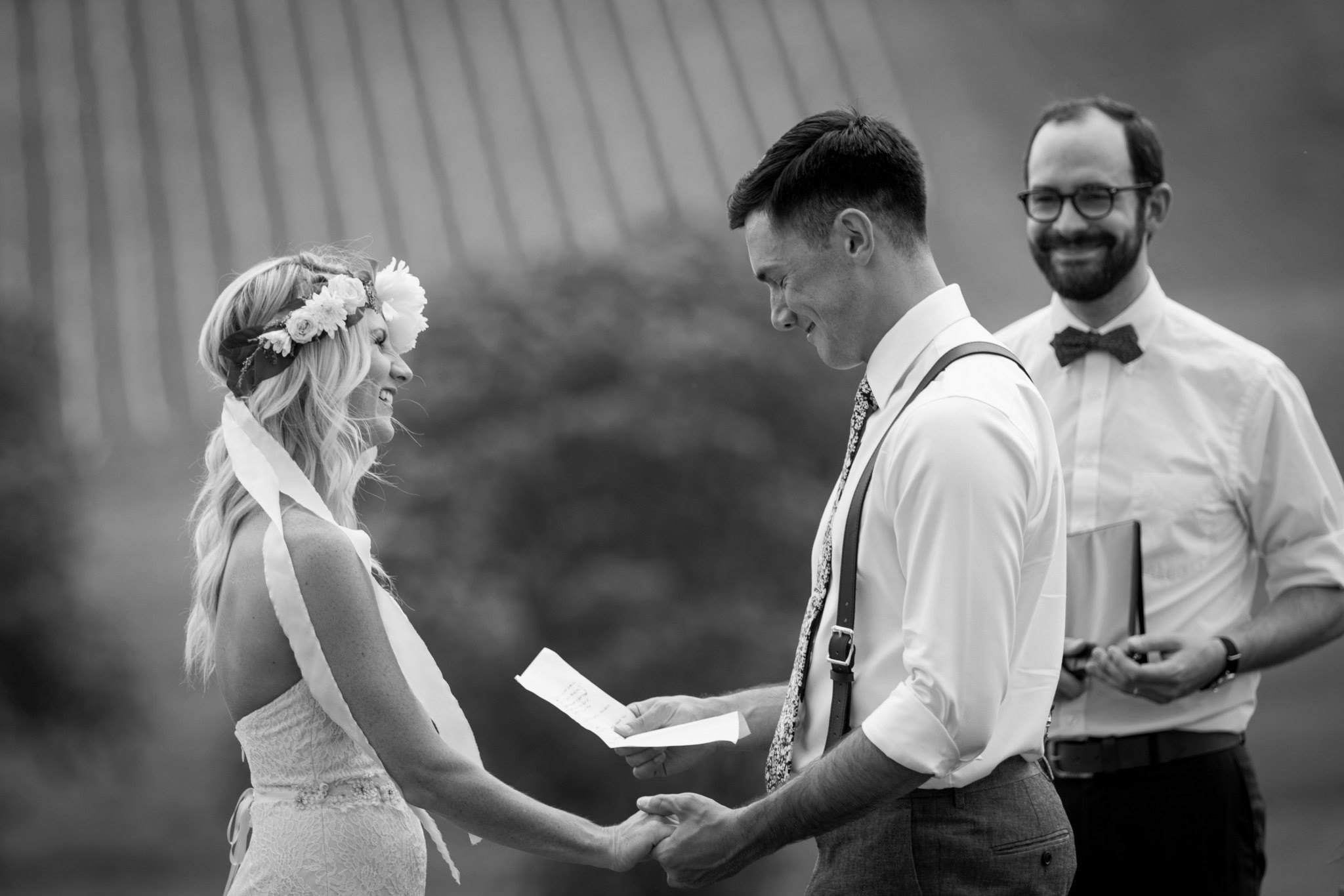
This past Saturday I stood before a gathered community outside under the hot sun for a wedding. With sweat beading on my forehead I shared reflections on the joy of marriage and how God plays an integral role in all of our relationships. I used stories from the couple’s history in order to make the homily approachable, and I even included a number of lines from famous movies because the groom is a self-avowed movie buff. (For example: “Enjoy this time because life moves pretty fast, and if you don’t stop to look around once in a while, you could miss it” –Ferries Bueller’s Day Off)

11781683_10153086252896267_3300763643978016391_n

Following the ceremony I was mingling among the wedding guests when a young woman approached me and said, “I wish my pastor was like you.” Startled by the compliment, I asked her to explain and she described how her pastor “never connects the scripture with regular life” and that she leaves church feeling like she “listened to a lecture.” Our conversation continued for a few minutes, and before we went our separate ways she asked where I was a pastor and told me that she would be joining the church for worship sometime soon.

As I stood there taking in the complimentary conversation, feeling affirmed in my words, and hopeful about a new person coming to church, I was struck with the sensation that I had lost my focus. I let myself get puffed up by her kinds words and I recognized that I selfishly wanted her and her family to start attending the church I serve. I like the idea that she wanted to come to the church because of me. It only took a few words to stroke my ego to such a degree that I forgot my place in the kingdom.

So before she had a chance to walk away and disappear into the crowd I asked her to do me a favor and I said, “Before you come to St. John’s, I think you need to pray for the pastor you have. Maybe God wants you to help him grow and learn what it means to serve your church rather than leaving to just try something different.”

The psalmist calls for God to “blot out my transgressions.” In our daily prayers we thank God for our blessings, and we ask God to intervene in our lives and in the lives of others, but rarely do we pray for God to make us clean, to rid us of our selfishness and false pride. This week, let us take time to be honest about our sinfulness, pray for God to transform us, and begin taking steps into a new way of life.

Devotional – Ephesians 3.16

Ephesians 3.16

I pray that, according to the riches of his glory, he may grant that you may be strengthened in your inner being with power through his Spirit.

Weekly Devotional Image

Pre-marital counseling is the best. It is one of the few places where I am actually allowed to ask the questions I have racing in my head: What was your last fight about? How do you feel about your soon-to-be in-laws? Why do you deserve to marry each other? Similarly, it is one of the few places I feel comfortable being completely candid about the church’s role in marriage and how the covenant is not just between the couple, but it also incorporates the gathered body and the Lord.

At some point during the pre-marital counseling, I challenge each couple to go back to scripture and pick a passage that reflects their relationship for the wedding ceremony. My one caveat is that (unless they can demonstrate how necessarily important it is to them) they are not allowed to pick the part in 1st Corinthians about love being patient and kind, nor are they allowed to pick the part from Ephesians about wives being subject to their husbands. So it is with those few directions that couple have been forced to go back to their bibles and find something indicative of their relationship.

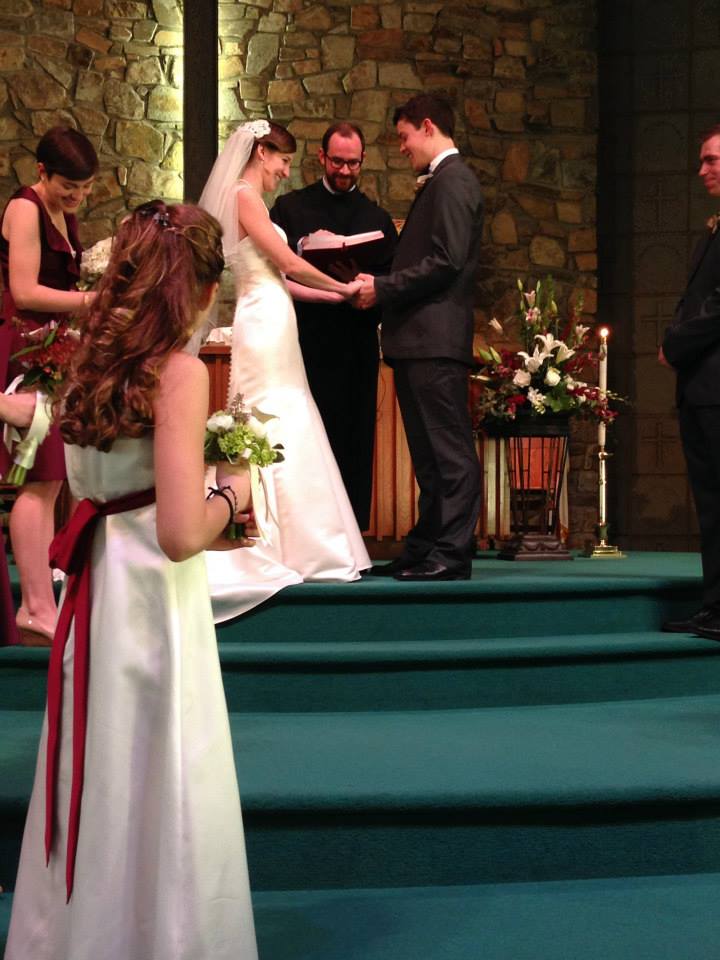
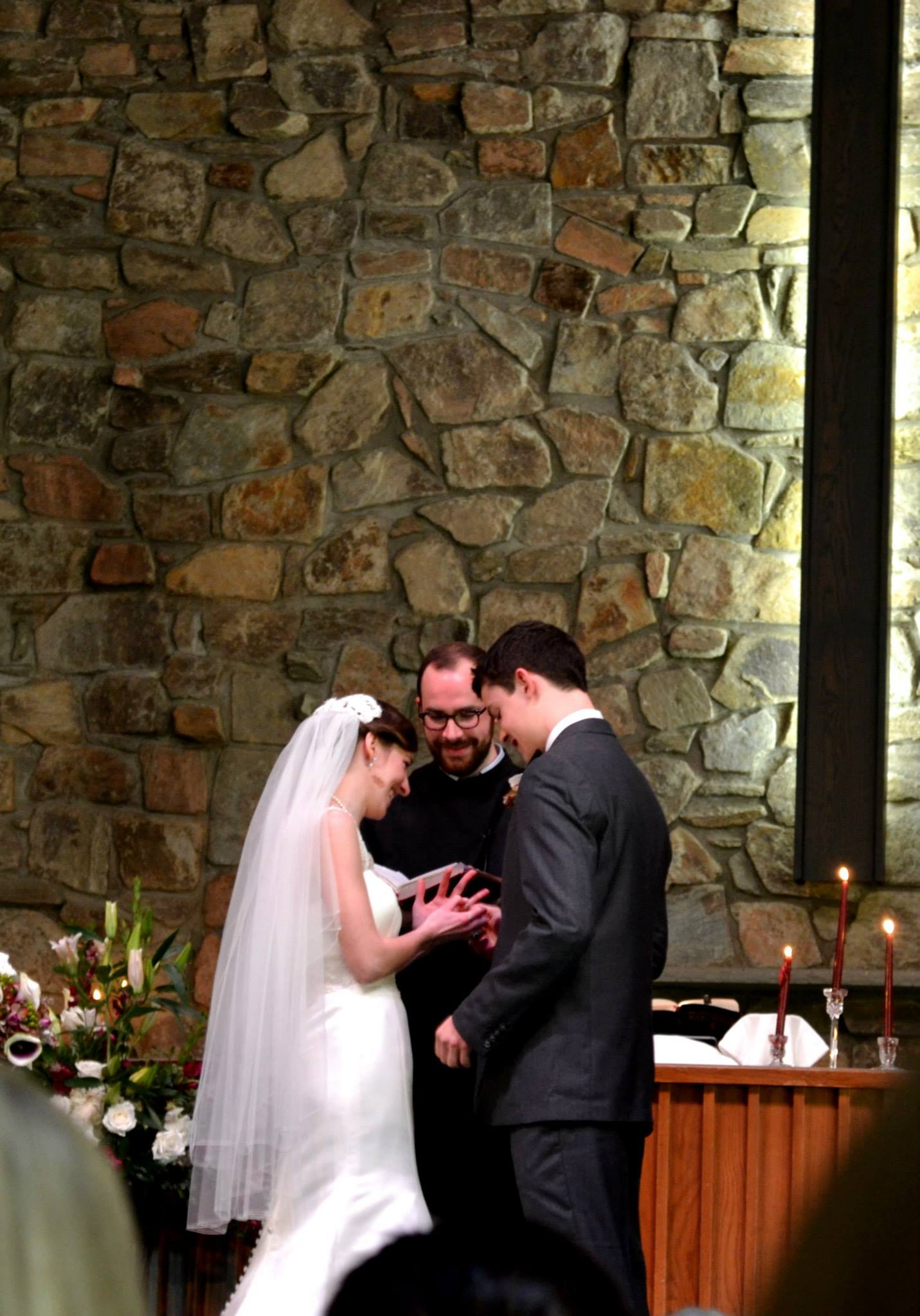
A few months ago I had the privilege of bringing together Chris and Chelsea Frumkin into the joy of marriage. I challenged them to pick their scripture and they quickly replied with Ephesians 3.16: “I pray that, according to the riches of his glory, he may grant that you may be strengthened in your inner being with power through his Spirit.” This verse had a particularly special meaning to the couple, because Chris has Ephesians 3.16 etched into the inside of Chelsea’s engagement ring.

11221675_10204258142484714_1762300626060138752_o

What a dynamic and perfect scripture for a wedding ceremony! When we stood together before their family, friends, and the Lord I made mention of the fact that their relationship had led to such a beautiful wedding precisely because they had prayed for one another. As a couple they were not content with the status quo. Instead, they consistently went to the Lord to discover renewed strength in their relationship.

The longer I spend time in ministry, the more I realize that scripture no longer holds the great value that it once did. Instead of a people defined by the Word of the Lord, many of us are content with knowing a handful of verses that make us smile, or would be worthy of a print that we could hang on our wall or Facebook page.

As we prepare to take steps into a new week, let us reflect on the great gift that scripture is for us: What stories from the bible have shaped who we are? Is reading the bible a priority in our lives, or a last resort? If we had to pick a verse that defined our character, what would it be and why?

monkimage

What’s Love Got To Do With It? – Sermon on Matthew 22.34-40

Matthew 22.34-40

When the Pharisees heard that he had silenced the Sadducees, they gathered together, and one of them, a lawyer, asked him a question to test him. “Teacher, which commandment in the law is the greatest?” He said to him, “You shall love the Lord your God with all your heart, and with all your soul, and with all your mind. This is the greatest and first commandment. And a second is like it: You shall love your neighbor as yourself. On these two commandments hang all the law and the prophets.”

1304770_orig

Teacher, which commandment in the law is the greatest?

What a great question. The bible is full of teachings, so many in fact that a number of passages contradict. It details the history of God with God’s people from the beginning of creation, through the patriarchs, politicians, and prophets. The law is complex and detailed at times with provisions for how to treat one another, and behave faithfully. Are we to live by all of the commandments equally or is there one that stands alone? “Teacher, which commandment in the law is the greatest?

Jesus is asked about the greatest commandment, the one that stands alone as a beacon under which all the other laws pale in comparison. The lawyer is looking for a solitary answer, yet Jesus refuses to name only one; for Christ the love of God and neighbor are inseparable.

Jesus said to the lawyer, “You shall love the Lord your God with all your heart, and with all your soul, and with all your mind. This is the greatest and first commandment. And a second is like it: You shall love your neighbor as yourself. On these two commandments hang all the law and the prophets.”

What I want to know is this: What does it actually mean to love God and neighbor?

A number of years ago I was flying back from Guatemala after a week-long mission trip when I had one of the strangest encounters with love. In order to save money the church had purchased tickets from all over the aircraft and none of us were sitting together. Frankly, after a week of building stoves in the remote highlands of Guatemala I was perfectly fine sitting away from everyone; we smelled, we were irritable, and we were tired. When I boarded the plane all I could think about was the thrill of falling asleep and waking up back at home. My seat was located toward the front of the coach section on the left side, the middle of three seats. I arrived before my seat-mates, and when it was clear that they were a married couple, with me in the middle, I offered to move to the aisle so that they could sit next to one another. Big mistake.

Don’t get me wrong, they were remarkably kind and in good spirits. They had been vacationing together in Guatemala at a resort and were full of joy and happiness. I think they were in their early sixties, and though they had been probably married for a few decades, they looked like the trip had helped them to fall in love all over again.

From what I remember our conversation was pleasant, they told me about their resort, I told them about the stoves we built, they talked about the exquisite food, I told them about my Peanut-Butter and Jelly sandwiches. They asked me about my calling to ministry, and I asked them about their family. Without a doubt the funniest moment occurred when the steward came by and asked what we would like to drink; I was prepared to ask for a ginger ale but they insisted on purchasing me a glass of wine. When I told them that I was not yet old enough to drink alcoholic beverages they giggled and and exclaimed, “well sweetie, we won’t tell anyone,” right in front of the steward. Needless to say: I did not have a glass of wine.

Anyway, when the inflight movie started up on the headsets in front of us, I was dismayed to discover that the entire plane would be watching the romantic comedy “P.S. I Love You.” Now even if you’ve never heard of the movie, thats fine, suffice it to say that it is a romantic comedy with apathetic acting and a very limited narrative; within the first five minutes you know exactly how the movie will end. I decided to rest my eyes and catch some Zs but the couple next to me were hooked. With their headphones plunged deep into their ear canals they kept asking each other questions out loud, “Wait was he her husband?!” “Oh poor thing, what will she do now?!” “Do you think he’s right for her?!” Try as I might, I was unable to fall asleep. When the movie finally ended I muttered a quick prayer to God, thanking him for delivering me from the captivity of the couple sitting next to me, but that’s when the kissing began.

I’m not talking about your simple peck on the lips of affection, but full-on “sitting in the back seat of a car at a drive in movie” kind of kissing. All I can remember is forcing myself as far away as possible in my seat in order to clear myself from being hit by a wayward arm or leg. It was awful. I tried listening to music, I tried reading from a book, but there was nothing that could distract me from the love fest happening to my left. Suddenly however the husband stopped kissing his wife, pulled her away from his face and said with completely sincerity, “PS I Love You honey” and they commenced kissing to an even higher degree.

How are we supposed to love God and neighbor? Are we called to be filled with the Romantic-Comedy-kiss-your-spouse-on-an-airplane kind of love?

Love, in my opinion, is one of the most over-used and underwhelming words that we use on a regular basis. We teach our children to be careful with their hearts and affection unless they are in love. We wait to value a romantic relationship as something with a future only when we love and feel loved by the other. Even in our preschool I witness our children hugging one another and talking about love as if it is a prerequisite for friendship.

DO-YOU-LOVE-YOUR-NEIGHBORS

In the church, sadly, the call to love God and neighbor has become so routined in Christianity that we have become numb to it, or only view it superficially. When we hear that we are called to love our neighbor as ourselves, we don’t ask what it means to love, we just want to know who are neighbors are supposed to be!

In a time when the word “love” is greatly abused, it is important to remember that the fundamental component of biblical love is not affection, but commitment. Warm feelings of love and gratitude may fill our souls as we consider all that God has done for us, but it is not a warm and fuzzy feeling that Christ demands of us. Instead, love for God and neighbor is a stubborn and unwavering commitment. We do not have to feel affection for our neighbor, nor for God; to love our neighbors is to imitate God by taking their needs seriously.

It is true that God loves us in an affectionate and sweet way. He has called us by name and breathed life into us. But most of God’s love for us can be summarized as putting up with us in spite of all our faults and shortcomings. God has stayed with us when we no longer deserved his presence.

Pre-marital counseling is a privilege in my profession. I must admit that in the beginning I was afraid of pre-martial counseling sessions, but now I really enjoy them. I used sit with couples without having been married myself, but now with 6 months of married life experience, I am an expert! There is something indescribably precious about getting to meet with a couple before their wedding to talk about the deep realities of life-long commitment. When we gather together, it is a time of holiness and vulnerability that, I hope, will help them in the days, weeks, months, and years to come.

I also greatly enjoy those counseling sessions because I get to ask questions that would otherwise be completely inappropriate in any other circumstance. If I’m feeling particularly gung-ho I begin with the zinger: “tell me about your last fight.” Couples upon stare back at me in disbelief, or claim that they have never fought. Or I begin with a standard question turned upside down: “Why in the world do you want to get married in the church?” I inform them that we could get in the car and drive down to the courthouse and they could be married that afternoon; it would be easier and cheaper. So what is it that makes you want to get married in a church?

All of the questions I ask are aimed at trying to get them to start thinking about life beyond love. Because when I ask why they want to get married, I almost always hear “because I love her” or “because I love him.”

Love is nice, but love is not enough.

At least not the kind of love that we have been habituated into through Hallmark, Romantic-Comedies, and Trashy Novels. Love, to us, often has more to do with lust and affection than it does with commitment and patience.

Love is not enough because she is not going to look that good in ten years, and nor will he. Whatever physical love you feel for each other, it will change. You think you know each other? You think that love is enough? Just wait till you wake up next to them every morning for an entire year, or he starts snoring every night, or she forgets what you asked her to do week after week.

Are we supposed to love God and neighbor the way we are called to love our spouse? Yes, but it is a type of love that we often lose sight of. It is not the way the world tells us to love, but a love that we learn from God.

For centuries Israel disobeyed the God who brought them out of Egypt, the God of their ancestors, yet God’s love remained steadfast. For centuries the church has disobeyed the Word of the Lord and let sinfulness run rampant. When we act on behalf of the Lord for our own selfish purposes, when we make a mockery of this beautiful thing called the church, when we refuse to go to God in our prayers, we neglect to love the God who loves us in spite of what we do. God has put up with people like you and me for centuries, he has be stubbornly present with us, and thats what love is all about.

LoveNeighbor

Christ calls us to be stubbornly loving with our neighbor, who, by the way, is everyone, with unwavering commitment. Christians, Jews, Muslims, Atheists, Agnostics, Catholics, and even Baptists. Blacks, Whites, Heterosexuals, Homosexuals, the rich, the poor, the strong, the weak, the elderly, and the youthful. Loving the neighbor must teach us how to love God. Jesus has radically pushed us into a way of being where we are told to love all our neighbors, even our enemies, and we can only do so when we imitate the kind of love that God has for us.

Someone this week put it this way: It is often easier to love someone than to like them.

Truly to love God is to love the neighbor; truly to love the neighbor is to love God.

You might not like what God is doing in your life right now, you might want to cry out with clenched fists in anger about God’s presence, you might feel that God has abandoned you. You don’t have to like God to love God.

You might feel like the people closest to you have ignored your needs and have stopped listening to you, you might feel like the outcasts in our community don’t deserve any of your time or energy, you might feel like your neighbor has done something to you that is beyond forgiveness. You don’t have to like your neighbor, to love your neighbor.

It sure is a strange thing to follow Christ. How bizarre is it that he has turned the world upside down and called to the first to be last and the last to be first? How weird is it that he has shattered the world’s vision to be replaced with God’s imagination?

My friends, let us be stubborn with our patience, unwavering with our commitment, and radical with our love toward God and neighbor. 

Amen.

Devotional – Psalm 18.1-2

Devotional:

Psalm 18.1-2

Protect me, O God, for in you I take refuge. I say to the Lord, “You are my Lord; I have no good apart from you.”

Weekly Devotional Image

5 days. In 5 days I will be waiting at the altar of my home church, watching a beautiful bride walk down the center aisle to stand next to me as we enter holy matrimony. It has been more than a year since I asked for her Father’s blessing and placed a ring on her finger; I cannot believe the wedding weekend is so close. Words do not do justice to the love and joy that Lindsey has blessed me with, and I am so excited for us to stand before God, our families, and our friends, as we covenant together.

741111_4136006929474_543179185_o

Our journey to the wedding has been filled with both wonder and trials. At first, Lindsey did not like me nearly as much as I liked her. My planned and executed dates were met with platonic affection. As I began to back away, she stepped forward and the tables had turned. Our relationship began out of a willingness to be honest with one another and find harmony in our time spent together.

We dated throughout our time in Durham, North Carolina surrounded by friends who helped to cultivate and nourish our relationship. We were spoiled rotten by our peers from work and school who went our of their way to include us and make us better than we were.

431201_673719668650_364622628_n

When we moved to Staunton we lost the familiarity of seminary/work in addition to our social network of friends. For months Lindsey and I had to live into a community that was very different than what we left. Lindsey had to find work, and I had to adjust to the work of St. John’s. Learning and appreciating the culture of our new home has been difficult, but with the wedding so close in sight I can say, without a doubt, that we are exactly where we are supposed to be.

1012326_10151692266377840_921328894_n

From the very beginning of our relationship we have tried to keep God at the center of our focus. Some of our first conversations were about how God has revealed himself in our lives and we have strived to keep that at the forefront of our minds. As I prepare to join Lindsey in wedded life I believe that I am only where I am because God is my Lord, and I recognize that the good in my life has come from Him.

This week I encourage each of you to take a look at your lives. When have you had your trials and tribulations? When has God been revealed to you? Do you take refuge in the Lord? Do you see the goodness of your life as a gift from God?

If we are an Easter people, a people of resurrection, then God can make all things new. No matter where you are, may God bless you as he has blessed us.


Matthew and Haley Husband – A Wedding Sermon on 1 John 4.9-12 & Ecclesiastes 4.9-12

1 John 4.9-12

God’s love was revealed among us in this way: God sent his only Son into the world so that we might live through him. In this is love, not that we loved God but that he loved us and sent his Son to be the atoning sacrifice for our sins. Beloved, since God loved us to much, we also ought to love one another. No one has ever seen God; if we love one another, God lives in us, and his love is perfected in us.

Ecclesiastes 4.9-12

Two are better than one, because they have a good reward for their toil. For if they fall, one will lift up the other; but woe to one who is alone and falls and does not have another to help. Again, if two lie together, they keep warm; but how can one keep warm alone? And though one might prevail against another, two will withstand one. A threefold cord is not quickly broken.

1498071_10151977138149016_1228625660_o

28 years. 28 years ago my parents, JT and Sarah Lynn Mertins, stood in the same position as both of you. Haley, I don’t know if you will remember all of this, but we used to watch their wedding VHS tape when we were growing up. Truly I tell you, it is a miracle that the wedding ceremony happened at all. When we would watch the tape, it appeared as if the cameraman had decided to smother vaseline all over the lens in order to achieve some sort of effect that left the viewers nauseous and confused. As my Aunt Laura made her way up the steps toward the altar she stepped on, and ripped, her dress. My uncle Bill Hanff and a friend stood over by piano the prepared to sing a wonderful rendition of “On the Wings of Love” though the pianist started the song in the wrong key and uncle Bill had to match accordingly. And then there was the hair and the dresses. There must have been enough hair spray in this church to light the whole thing on fire, but somehow, by the grace of God, our mother and father were married on this exact day, in this exact spot, 28 years ago.

Mom and Dad

Mom and Dad

And here we are now, ready for the two of you to enter into the holy state of matrimony. As I have looked back over the totality of your relationship, and all of the little steps that led you to this altar on this day, I am convinced that I will never marry a couple that I know as well as both of you for the rest of my life. So before I continue I want to show you something.

(Turn around, look out at the sanctuary. Gathered together in this room are the people who have made you, you. Family, friends, both the foolish and the fun, but more importantly, when you look out I hope you see faith. So soak up this view for a moment, you rarely get to see anything as glorious as this)

1512792_10202004244841456_869486328_n

Faith, the people gathered together today are indicative of the kind of faith-lives that both of you are living. Everyone here has faith in both of you as individuals, and also as the married couple you are about to become. They have been there for you in every aspect of your lives, and today two families are joining together as a testament to the faith that you have in each other. They say a threefold cord in not quickly broken? Well neither is a one hundred and fifty fold cord.

However, for as much as everyone gathered together in this room are responsible for your relationship, no one can take more credit than God.

When I found out that Matthew was moving to Africa for a year, I knew that the only thing that would be able to sustain your relationship was a resounding faith in the triune God. I know it wasn’t easy. Even with the notebook Matthew left behind, even with the commitment to read through the entire bible while you were apart, even with the advantages of technological communications such as Skype and email, you would not be standing here today unless you had tremendous faith in God, but more importably, you would not be standing here unless God had tremendous faith in you.

One of the things that I love most about you two is that, even with all the planning and the suits and dresses and decorations, today will not be the greatest day of your lives. Both of you strive to discover all of the joy in life and share it with one another. You earnestly love the lives that God has given to you, and you hope to share that love with everyone with ears to hear and eyes to see. Thats what it means when we say, “If we love one another, God lives in us.” The two of you have made a commitment to loving one another so that God abides and manifests himself in the world.

Matthew Logan, I have waited 23 years for a brother, and today I’m finally getting one! You are a remarkable man with compassion, faith, and hope. I have been privileged to watch you grow up, in a way, I’ve seen the way that you create and nurture friendships, I’ve seen the way that you have selflessly served others, and I have seen the many ways that you have committed yourself to my sister. Marriage will not be easy. There will be mornings that you wake up and wonder how such a beautiful woman can drive you so crazy. There will come a time when all the love that Haley can give you will not be enough, but you will never be alone. Beyond the multitudes that have gathered here today, God almighty is with you in all that you do. As a husband, literally, you have been called to love Haley with all that you are, live into the life that God is calling you toward, and to have your relationship shine as a beacon of hope and love to all the world. I have nothing but profound respect, enduring faith, and unending love for you, my brother.

Haley Lynn, precious sister of mine, you are a beautiful woman who has truly come into her own. I have been privileged to watch you mature into your truest self as you now prepare to enter into marriage with Matthew. I love how your willingness to serve others is so central for understanding who you are and what you do. Whether its helping out your students at school, or volunteering your time and energy for church, or helping your idiot brother match his clothing when we were in high school, serving and loving others is what you do. What a blessing you are to all of us, and what a blessing you will be to all the lives you touch in the future. Marriage will not be easy. There will be mornings when you wake up and wonder how such a funny man can drive you so crazy. There will come a time when all the love that Matthew can give you will not be enough, but you will never be alone. Your family, your friends, and your father in heaven are with you in all that you do. As a wife, you have been called to love Matthew with all that you are, to live into the life that God is calling you toward, and to have your relationship shine a beacon of hope and love to all the world. I have nothing but immeasurable respect, enduring hope, and unending love for you, my sister.

Matthew and Haley, God’s love was revealed to all of us through the incarnation in Jesus Christ. In his willingness to take on human flesh, God humbled himself to be just like us, in order to help transform us. God did not mount the hard wood of the cross because we loved him, but instead he came to die and live because he first loved us. Above all things, your marriage should, and will be, a testament to God’s love in the world through the redemptive acts in our Lord Jesus Christ.

In giving yourselves to each other, you are mirroring that great act of God coming to be with us.

And so, as you prepare to take these first steps into wedded life, I call both of you to hold fast to the people that love and support your relationship, hold fast to the faith and hope that you have in one another, but most importantly, hold fast to the good God whose joy knows no bounds, whose grace extends beyond our imaginations, and whose love was made known to all of us in the gift of his Son.


904040_10101659784550458_526669923_o

Weekly Devotional – 12/30/13

Devotional:

Ephesians 1.5-6

He destined us for adoption as his children through Jesus Christ, according to the good pleasure of his will, to the praise of his glorious grace that he freely bestowed on us in the Beloved. 

734230_4212788928976_1058514452_n

Haley Mertins and Matthew Husband. Two very unique and wonderful people that will be marrying one another on Saturday. I have known Matthew since High School, when he was the kicker for the football team and recognized for his humor and jovial nature. I have known Haley since the moment she was born, I watched her grow and become the woman she is today (she is my little sister after all). Almost a year ago, Matthew asked Haley to marry him, and shortly thereafter I was asked to perform the wedding ceremony. The big day is finally approaching, and on Saturday I will stand before two of my favorite people on the planet (as well as their families and friends) and I will bring them together in holy matrimony.

Over the last months Haley and Matthew have diligently planned their wedding: sending out all the invitations, planning the menu, creating a music playlist for dancing, envisioned a worship service, etc. All of that planning and preparation will comes to fruition this coming weekend as their lives will be forever connected.

1486126_10200985093660539_1903328338_o

As Haley and Matthew’s relationship has grown over the last few years, I have particularly enjoyed seeing how each of them learned to let themselves be loved by their new families; both of them have been adopted by their soon to be in-laws. Matthew has been invited on vacations with my family, is a regular at the kitchen counter for dinner, and knows (and is responsible for) numerous inside jokes. Likewise, Haley has been adopted into the Husband family through meals, celebrations, parties, and vacations. Haley and Matthew have had to train themselves to be accepted into a new family dynamic where they will love and be loved by others.

At the beginning of his letter to the church in Ephesus, Paul wrote, “[God] destined us for adoption as his children through Jesus Christ, according to the good pleasure of his will, to the praise of his glorious grace that he freely bestowed on us in the Beloved.” In many ways, the sense of adoption that Haley and Matthew have experienced is paralleled in the ways that God has adopted all of us as children through Jesus Christ. Regardless of our familial experiences and pasts, we have all been incorporated into God’s family through the redemptive life and love of Jesus Christ. Just as Haley and Matthew will be welcomed by one another’s families, God has welcomed us in to the great and cosmic love that is the body of Christ for the world.

So, wherever you are in your life, whatever situation you’re experiencing with your family, know that God loves YOU. God has welcomed you in as a child and will love you eternally. You have been grafted in to something so much larger than yourself, something that will come to define you more than anything else. As we all prepare to take our first steps into 2014, let us rejoice in the fact that we can truly call God our Father.


God of the Living – Sermon on Luke 20.27-38

Luke 20.27-38

Some Sadducees, those who say there is no resurrection, came to him and asked him a question, “Teacher, Moses wrote for us that if a man’s brother dies, leaving a wife but no children, the man shall marry the widow and raise up children for his brother. Now there were seven brothers; the first married, and died childless; then the second and the third married her, and so in the same way all seven died childless. Finally the woman also died. In the resurrection, therefore, whose wife will the woman be? For the seven had married her.” Jesus said to them, “Those who belong to this age marry and are given in marriage; but those who are considered worthy of a place in that age and in the resurrection from the dead neither marry nor are given in marriage. Indeed they cannot die anymore, because they are like angels and are children of God, being children of the resurrection. And the fact that the dead are raised Moses himself showed, in the story about the bush, where he speaks of the Lord as the God of Abraham, the God of Isaac, and the God of Jacob. Now he is God not of the dead, but of the living; for to him all of them are alive.”


The Sadducees know exactly what they’re doing. They are not standing before Jesus truly desiring an answer to their question. They are not like the student whose paper is no longer decipherable because they have used their entire eraser while trying to answer a question. They are in Jesus’ presence for the purpose of embarrassment. Their aim is to argue, frustrate, and force Jesus into a particular way of thinking. The question that formed on their lips is not genuine. They are simply attempting to bait Jesus with one of their classic “what if” questions, a question on which their minds were settled long ago.

Haven’t all of us resorted to this kind of questioning at some point? The militarist asks the pacifist, “what if someone was attempting to rob you and your family, would you fight back?” or the child asks the mother, “what if the world ended tomorrow, would you really make me do my homework tonight?” or the skeptic asks the believer, “what if there is no God, would you still pray?”

“So, Jesus, Moses wrote for us about how to handle a situation if a married man dies without producing children. The wife is to remarry one of her brothers-in-law in order to have a child. But, what if this happened, and a woman remarried 7 brothers and never had any children with them, who would she be married to in the resurrection?”

resurrection


I knew a man who had a wonderful family life. He was a pastor, occasionally moved throughout his conference, but he had established roots in certain parts of the state. He enjoyed his work, but he loved coming him to his wife and children every afternoon. It was when everything seemed perfect that tragedy struck; his wife was killed in a car accident. In the wake of her death, the children were old enough to take care of themselves and when the pastor returned to work he no longer had the energy to serve the local church and so he retired. It was not for a lack of conviction or faith, but the loss of his wife struck him so deeply that he felt it would be irresponsible to try and serve others.

Time passed. The wound from his wife’s death remained open. He mourned. But after awhile he started to find a different rhythm in this new time of his life. The seasons passed and even though he still missed her, he was taking steps toward finding joy again.

He met his second wife later in life through mutual friends. It was clear that they had a connection but neither realized how deeply they cared for one another. When they married it was a joyous celebration and they spent the following decade together.

I got to know the husband and wife in their later years, visiting with them, hearing their story, and breaking bread together. They were meant for each other, and I don’t just mean finishing each others sentences kind of thing. They were adorable in their connection, in their refusal to be separated, and in their faithfulness when the former pastor developed a brain tumor.

I was unable to attend the funeral but I received a phone call from the new widow that evening. Through the abundant tears landing on the telephone I was barely able to make out her words but I could tell that something was worse than the emotions that come with attending the funeral service for your spouse. “I just don’t know what to think, Taylor,” she said while sobbing, “Today, during the service, my step-daughter, my husband’s daughter from his first marriage, delivered part of the eulogy. She stood before that crowded church and lamented the loss of her Daddy. But before she finished, she looked up in the air and said, ‘I’m so happy that Dad is back together with Mom now.”

I was silent.

“What does that mean about me?” she continued. “What will happen when I die? Will he be waiting for me?”

How could anyone speak into that situation? What could you say to help fill the void that her husband left, while remaining faithful to the God who has faith in us.

For a few moments I waited silently on the phone unsure of what to say. But then I remembered that Jesus had been asked a similar question…


Jesus was asked a question that would’ve typically elicited a pastoral response. After all, this story comes toward the end of Luke’s gospel; Jesus has already traveled all over Galilee proclaiming the Good News, healing the sick, feeding the hungry, and pastorally caring for his flock everywhere that he traveled. His answer to the Sadducee’s question is important and vital to our lives not only as Christians but also to all people who reflect on life and death.

Jesus begins his response to the Sadducees’ loaded question rather directly: “People who belong to this age marry and are given in marriage, but to those who are considered worthy of a place in that age and in the resurrection from the dead neither marry not are given in marriage. Indeed they cannot die because they are like angels and are children of God being children of the resurrection.”

In this first part of his response Jesus pointed out the inappropriateness of their question. There is a difference between this age, and the age to come. In this present age the reality of death makes marriage and the perpetuation of life essential. In order to continue the cycle of life, new lives need to be brought into the world. However, in the age to come, in the resurrection, death will be no more, death will die, and those who are blessed enough to attain the resurrection will be as children of God. There is no marriage in the resurrection because it is no longer needed, God’s purposes for life after life after death will be so glorious and inexplicably remarkable that marriage will be no more. 

heaven

There is a difference here between what we commonly imagine about heaven and life after death regarding the immortality of the soul and the resurrection. Many would have us believe that to be Christian means that we have immortal souls, but there is an important distinction between immortality and resurrection. Immortality is based on a doctrine of human nature that denies death; resurrection is based on a doctrine of God which says that even though we die, God gives life to the dead.

In the second part of his response Jesus relies on the teaching of Moses to help undermine the question from the Sadducees. The Sadducees believed that a teaching, belief, practice, or habit was not authentic unless it could be found in the Pentateuch, the first five books of the Bible, the so-called “Mosaic Law.” They would search through those books and unless it was there, it was not relevant or viable for their faith. So Jesus draws on the teaching of Moses, particularly the incident of the burning bush, to further defend his answer.

Do you remember the story? Moses, a shepherd for his father-in-law Jethro is out in the wilderness tending the flock. In the midst of his work he is confronted by a bush that is burning, but the flames refuse to consume the bush. In this interplay between human and the divine Moses is commissioned by God to deliver God’s people, the Israelites, out of slavery in Egypt to the Promised Land. Reluctant to undertake such a task, Moses questions, “Who am I to say sent me?” And God responded, “Tell them I AM sent you, I am the God of Abraham, of Isaac, and of Jacob.”

So when Jesus responds to the Sadducees he remembers this story for them. God is not a God of the dead, but of the living. What we do in the here and now is important, and God will take care of us when our time comes. You may think of Abraham, Isaac, Jacob, and Moses as being dead, but God is their God, they are alive through him.

The Sadducees, in their strict conformity to their theological persuasion were unable to comprehend that standing before them was God in the flesh, that Jesus himself was the Word, the new law, and the new covenant. He not only brought a new teaching, but he himself was the new teaching.

Just as during the time of Jesus’ interaction with the Pharisees, there has been confusion over the implications of the resurrection throughout the history of the church. Resurrection has often been understood in one of two ways: Experientially or Eschatologically.  (bear with me here)

An experiential resurrection would allow for all of us here to achieve a newness in our lives in the here and now on earth; “we have been raised to new life in Jesus Christ.” An eschatological resurrection would mean that God will give life to our bodies after we die to live and reign in the new heaven and the new earth; “Behold I am making all things new.”

What is important for us, what Christ conveyed to that crowd of doubters, is that both of these resurrections contain truth. There is a beauty in the experiential resurrection that we discover when we find ourselves caught up in the mission of God and there is an indescribable fulfillment in the eschatological resurrection that will come when God makes all things new.

Last-Judgment-(Fra-Angelico)-774816


So I stood there silent on the other end of the phone while the new widow cried out of frustration and fear. “What does that mean about me?” she pleaded “What will happen when I die?”

I took a deep breath before speaking into her reality.

“I don’t know whether or not this will bring you peace right now, but a long time ago somebody asked Jesus a really similar question about marriage in the resurrection. I can never tell you for sure what will happen, but I can tell you what Jesus says. In the next life, in the resurrection, there will be no marriage. God will wrap us up in such a way that marriage will no longer be necessary to convey the deep sense of love and connection that it does in this realm. Your husband will not be married to anyone but we will all belong to one another. I know that right now this probably isn’t the most helpful or pastoral response, but isn’t there something beautiful about the fact that when we go on to greater glory we will all be equal before everyone?”


The way Jesus confronted the question of the Sadducees is so relevant for us today as people of grace who contemplate both life and death. What will happen to us in the resurrection? Who will be belong to? Many of these questions trouble us because we are so desperately clinging to the material world here and now. In our families, marriage, and relationships we find fulfillment and purpose. If we lose someone that we root our identity in, what happens in the age to come?

God will take care of us. God will lead us through the loss of our loved ones and hold them within his warm embrace until that time that all the saints will be reunited; not as brothers, sisters, husbands, wives, but as children of God. 

Jesus’ response to the Sadducees is the way that God responds to our questions – not with answers which flatter us, or make the world simpler than it really is, but with his life given for us, that we might more fully give our lives to him.

As we prepare to go forth into the world remember that God is with you in the mundane and in the radiant. God is with you in life and in death, in marriage and divorce, in fear and joy. God is with us in all things here now and forevermore; he is not a God of the dead but a God of the living.

Amen.


God and Relationships – Part 2

couple-holding-hands

One of my favorite theological blogs belongs to my friend and mentor Jason Micheli (www.tamedcynic.org). Recently, Jason produced a number of posts about the importance of being in relationships. In a similar vein, I have decided to post a few of my thoughts on the theological virtues of relationships.


“To say ‘I love you’ one must first be able to say the ‘I.’”

Fountainhead

So says the fictional Howard Roark to Dominique Francon in Ayn Rand’s behemoth novel The Fountainhead. Though Rand herself was staunchly opposed to all forms of religion, I believe her quote, in a way, speaks profoundly to the importance of what it means to be in relationship with another.

To use Rand’s language: To say “I love you” one must first be able to say “I.” And, perhaps, more importantly, to say “I do” in marriage, one must first be able to say “I.”

Will Willimon writes, “Most people think that the toughest part of marriage is deciding who we ought to marry, making the right choice, and preparing for the decision. We say we are deciding whether or not we are “in love” with this person. Curiously the church has traditionally cared less about our emotional attachments. What the church cares about is not who you have deep feelings for but rather whether or not you are a person who is capable of sustaining the kind of commitment that makes love possible.”

love-wedding-photo

In today’s culture people (young and old) often commit to a romantic and marital relationship before ever experiencing what it means to be an individual. Young people are maturing later and further delaying the ability to find sense in individuality and therefore seek identity in others. Yes- there must be sacrifice in all relationships, but not at the expense of losing whatever it is that makes you, you.

Before a couple can fully appreciate the depth of what it means to covenant their life to someone else, they have to know who they are in order to give themselves over.


But here’s where it gets a little complicated…


You will never fully know who you are.


As a pastor, when I stand in front of a couple leading a wedding ceremony, the question is not “Jack, do you love Jill?” Instead the question is, “Jack, will you love Jill?” There, in that precise moment, we discover that, according to the church, love is something you commit to, something you promise to do, a future activity, the result of a covenantal marriage rather than its cause.


As Stanley Hauerwas famously put it, “we always marry the wrong person.” This is to say that we never marry the right person because marriage and life changes us. There will come a time when you realize that the person you have been living with is no longer the person you married or met at the coffee shop or knew from high school.


No one can fully know what he or she is getting out of a husband or a wife. There is a lot to be said about preparing for marriage (meeting with professionals, discussing the future, etc.) but there is an element of unpredictability that must be respected. We can never prepare for marriage in totality, but we can prepare ourselves for a lifetime of commitment to someone who is always changing (ourselves included).


This is exactly why it is so important to understand what you say, when you say “I.”


You will change in ways that you cannot predict just as your partner will change. But, as Christians, we have been adopted into a new identity through water and the Spirit that sustains us throughout the many changes of our lives.


Christ is alive through us, in us, and with us.


If we hold on to that identity, love can be the result of our relationships rather than the requirement.


God and Relationships – Part 1

couple-holding-hands

One of my favorite theological blogs belongs to my friend and mentor Jason Micheli (www.tamedcynic.org). Recently, Jason produced a number of posts about the importance of being in relationships. In a similar vein, I have decided to post a few of my thoughts on the theological virtues of relationships.


(Some of the following elements were first taken from a post written by Ron Edmondson, and then re-evaluated for this post. You can check on Edmondson’s blog here: www.ronedmondson.com)


Relationships are tough, perhaps tougher now than ever before. The impact of social media and changes in our contemporary culture have affected dating, marriage, and divorce in ways that cannot be fully comprehended. Moreover, maintaining a relationship predicated on the model of discipleship of Jesus Christ is a challenge in and of itself.

One of the many blessings of what it means to be a pastor is being invited into a couple’s relationship during pre-marital counseling. A few weeks ago I shared the following thoughts with a couple preparing for marriage and I believe they are relevant for anyone engaging in a serious relationship.


You are different. You are different and thats a good thing! Both members of a relationship differ from one another physically, emotionally, psychologically, and theologically. This is not a curse against relationships but something to be celebrated. The more a couple can live into the differences that make them who they are, the better a foundation can be made for experiencing life together. God has uniquely created you to be you, and no one else.

Set your own path. Don’t let either set of families/in-laws dictate how you will go forward with your own family. Our respective histories are important but they do not define how we can be in relationship, or how we can raise a family. Try to make sure that you are in this with/for one another, do not let anyone (related or otherwise) divide you and your thoughts on family. Every couple has a number of other relationships, but care should be made to maintain the oneness that God intends to create within a relationship. Respect the advice given to you, but listen to your spouse and work together.

Prepare to be surprised. Life will not always be peachy and perfect. For the many mountain tops that you will experience, there will be a valley waiting on the other side of the horizon. No one can ever be completely prepared for the changes that might come, but we can prepare ourselves to be ready to handle and address the changes appropriately. When difficulties arise, and they will, this is a prime time to improve the strengths and dynamics of a relationship. Theologically speaking, it might feel like you are always sitting in the shadow of the cross, but the glory of the resurrection will come. Prepare to be surprised.

Model after other couples. Look around and pay attention to the people in your life in relationships that you admire. They will inevitably have stories to share and appropriate advice to give. Remember to not just simply insert their techniques and strategies into your relationships, but allow them to model what it means to be in a fruitful connection with someone else. Often times when we come to church we assume that everyone in attendance has everything together in their lives, and similarly we often make the same assumptions of people in relationships. There is always something under the surface that we cannot see. If other couples are willing to share some of that information with you, it will likely prove helpful for your own relationship.

Communicate. Evaluate your relationship with one another. However, wait for the appropriate time to do this (in the middle of a fight is not always the best time). Couples should ask themselves, “are we growing together as a couple or are we moving further apart?” Do not always assume that your partner feels exactly the same way as you do.  If you can create a habit of honestly checking in with one another about the greater trajectory of your relationship, it will help prepare you to be open with one another in a loving and life-giving way as you move forward. Communicating with one another might sound like a simple aspect of a relationship, but its importance makes it worth mentioning over and over again.

Put God first. This is perhaps one of the hardest things for a pastor to bring up with a couple because it sounds like the “preachy” thing to say. But, its important. A couple’s individual, and collective, relationship with God will help navigate the deep “valley-like” hardships of life and maintain a sense of stability when everything else feels like its crumbling. Talk about God with each other. Pray together. But also experience God in the way that only you can. Your first identity as a Christian will help so communicate who you are and whose you are. Far too many individuals in a relationship come to define themselves on the other person. You are not someone’s better (or lesser) half. You were uniquely made in the image of God and this is important to celebrate. Live into your relationship with God and it will strengthen your relationship.