But I Say…2 – Sermon on Psalm 119.33-40 & Matthew 5.43-48

Psalm 119.33-40

Teach me, O Lord, the way of your statutes, and I will observe it to the end. Give me understanding, that I may keep your law and observe it with my whole heart. Lead me in the path of your commandments, for I delight in it. Turn my heart to your decrees, and not to selfish gain. Turn my eyes from looking at vanities; give me life in your ways. Confirm to your servant your promise, which is for those who fear you. Turn away the disgrace that I dread, for your ordinances are good. See, I have longed for your precepts; in your righteousness give me life.

Matthew 5.43-48

“You have heard that it was said, ‘You shall love your neighbor and hate your enemy.’ But I say to you, Love your enemies and pray for those who persecute you, so that you may be children of your Father in heaven; for he makes his sun rise on the evil and on the good, and sends rain on the righteous and on the unrighteous. For if you love those who love you, what reward do you have? Do not even tax collectors do the same? And if you greet only your brothers and sister, what more are you doing than others? Do not even the Gentiles do the same? Be perfect, therefore, as your heavenly Father is perfect.

257760778642631661_Ag9PBVg2_c

Be perfect, therefore, as your heavenly Father is perfect.

Annual Conference is that one time of the year that all the diehard Methodists get together for a weekend of facts, faith, and fellowship. Representatives from each church gather in an effort to discuss contemporary issues facing the church, learn from various speakers, and celebrate the ordination and retirement of particular clergy.

A few summers ago, while serving a church outside of Detroit, Michigan, I was invited to attend the Detroit Annual Conference session. I listened to members of the conference debate whether or not to give more money to fight against malaria in Africa, how to address concerns over our pension system, and arguments about what it means to pray for physical healing in the church. Toward the end of the session, we came to my favorite part of every Annual Conference, The Service of Ordination. People, young and old alike, who felt the call of God on the lives to pursue a life of ministry, folk who have worked and sacrificed for years to be standing in front of all the people, were preparing to be commissioned and ordained for work in the church.

Detroit Annual Conference

Detroit Annual Conference

As the small group of adults stood shoulder to shoulder on the stage I wondered about their backgrounds, where they might be appointed, and what kind of ministerial careers they would have. Dressed in their robes, the candidates prepared to answer the traditional Wesleyan questions that thousands of Methodist clergy have had to answer over the last two centuries.

“Have you faith in Christ?”

The candidates definitively responded with a resounding “Yes!”

“Do you believe in the ordinances of the United Methodist Church?”

“Yes!”

“Are you going on to perfection?” 

Most of the responses we completely in sync, except for one woman toward the end. Instead of answering like her fellow peers, she shook her head as if to say no, while her voice said yes. 

YES

YES

Be perfect, therefore, as your heavenly father is perfect.

For that one clergy candidate, achieving perfection was something that she was clearly unsure about. I imagine that she understood her own fallibility, her sinfulness, as preventing her from ever being perfect. Moreover she probably thought that only Christ could be perfect and that it would never be possible for her.

Be perfect, therefore, as your heavenly father is perfect.


Here we are again, caught up in Jesus’ Sermon on the Mount. It was hard enough that he told his disciples to not lose their tempter, to not lust, and to renounce the right to retaliate; but now Jesus is instructing us to love those who hate and harm us. Really? Jesus is like that boss or parent that knowingly give us a list of things to do that we can never accomplish. Why does Jesus expect the impossible from those who follow him?

Using the same formula that we talked about last week, Jesus establishes the current expectations of the law and then he enhances them: “You have heard that it was said, ‘You shall love your neighbor and hate your enemy.’ But I say to you, Love you enemies and pray for those who persecute you, so that you may be the children of your Father in heaven; for he makes his sun rise on the evil and the good, and sends rain on the righteous and the unrighteous. For if you love those who love you, what reward do you have? Do not even tax collectors do the same? And if you greet only your brothers and sisters, what more are you doing than others? Do not even the Gentiles do the same? Be perfect, therefore, as your heavenly Father is perfect.”

Two important questions arise from Jesus’ declaration: Who is my enemy?; Why am I supposed to love them? 

Enemy number 1: Those who are evil. Anyone who takes advantage of the weak, anyone who promotes violence in power struggles, and anyone who exhibits evil in the world is my enemy. They are the ones who actively seek to work against God’s love and kingdom in the world. They are the people who participate in destructive tendencies toward others and are fans of violence, subjugation, and selfishness.

Enemy number 2: My friends and family. In many ways, some of our greatest enemies are those who are closest to us. Our friends and family are the ones who set expectations for what our lives are supposed to look like. They are the ones who know whether or not we are living up to our potential. They see our truest sides, they know about our weaknesses, they remember our history. When we create walls between ourselves and those who are close to us, we often do so because we are afraid of being too vulnerable with them, we fear what they can do to us.

Enemy number 3: Ourselves. I am my own worst enemy. I am the commander of my life. I am responsible for the choices and decisions I make. I know my own weaknesses better than anyone else, I hold myself to a standard that, when not met, leaves me feeling down and blue. I have more power than I should regarding the hearts, minds, and souls of so many people in my life, and if I abuse that power, I become an even greater enemy than anyone else in my life.

When we hear that Jesus calls us to love and pray for our enemies we do well to not relegate our enemies to far away and distant peoples. Our worst enemies might be sitting here with us in church this morning. We all have enemies in ways, that sometimes, we cannot even imagine. That neighbor who always trims your bushes, or that acquaintance who always takes advantage of your hospitality, or that stranger who belittles people at the supermarket are just as much our enemies as those who bring and promote terror across the world. For the Christian, the words neighbor and enemy are synonymous and are remarkably far reaching.

And Jesus tells us to love them, and to pray for them.

So, why? Why are we supposed to love those who hate and persecute us? Why does Jesus call us to love the people who often make our lives miserable?

We are not called to love them in order to change them. Thats not the point. Certainly the conversion of an enemy to a trusted friend can be the result of our discipleship and call to love, but it is not necessary, nor should it be our motivation for loving our enemies. Love is not a weapon or a tool. Genuine love has not ulterior motive; its purpose is simply to benefit the one being loved, regardless of the response. We are called to love unconditionally.

If you love someone, enemy or not, in order to change them, they will never change. Our love for others should not come with baggage but must be the same as the free and unconditional love and grace that comes to us from God.

We love others because God first loved us. Elsewhere in the world, it is normal to return love for love and hate for hate. Christians who do no more than this fade into the background of life. They cannot be the light of the world and salt of the earth.

Love your enemies and pray for those who persecute you so that you may be children of your Father in heaven. This kind of love is less about feelings and more about actions. For the early Christians to love the Roman oppressor or the face slapping persecutor was not about having “warm and fuzzy feelings” but to react in a positive way. I know that we have been trained to think of love as a feeling, particularly in the wake of Valentine’s day, but love is something you DO. That why Jesus calls his disciples to go the extra mile and turn the other cheek; physical embodiments of love for our enemies. Whatever else you can do to love your enemy, Jesus leaves it up to our imaginations as to how we can do so. Our love for others is called to be abnormal, above and beyond what the world would be satisfied with.

In addition to the embodiment, the DOING, of love, we are also called to pray for our enemies. You have heard it said that if you do this its enough, well to Jesus we can always do more, we can always be better. Loving our enemies is one thing, it is difficult and taxing, but praying for our enemies is another thing altogether.

love-your-enemies_dvd.original

Praying for our enemies requires us to seriously attempt to see them from God’s point of view. The sun rises on the evil and the good, and God sends rain on the righteous and the unrighteous. We cannot truly pray for our enemies without acknowledge our common humanity; our enemies have been created in the image of God, just as we were. And no matter how bad they are, no matter how nefarious, no matter how sinful, nothing can ever erase God’s image from their lives, nor from ours.

The call to pray for our enemies is like being a parent who can earnestly say to their child, “I love you, but I don’t like what you’re doing.” Praying for our enemies will always fall short unless we remember that God love us just as much as our enemies. Seeing them in the light of God’s love is the first step toward loving them, and praying for them.

So, is this even possible? Are we capable of loving and praying for our enemies? Can we be perfect? If we try to do it on our own, it is impossible. Only by the grace of God, only with God’s help, can we heed Jesus’ call to love and pray for our enemies. Truly I tell you, this is one of the most difficult aspects of being a Christian. We are called to an impossible life, if we try to do it on our own. Christ is not asking us to simply “like” everybody, but rather to act and pray in love toward those we like and those we do not like.

Be perfect, therefore, as your heavenly Father is perfect. 

At our Lectionary Bible Study this week, we sat in one of the Sunday school rooms and read this text out loud. As usual, many of the comments and questions were quite profound leading toward a greater understanding of the text for all of us. As we were coming to the end of our time together, Betty Hairfield offered a story regarding this idea of perfection.

Years ago, while Betty was in college, she began worshipping at a United Methodist Church because it was closer to campus than the denomination she grew up with. One day Betty was told about the question of perfection that all ministerial candidates were asked about. Like the woman who shook her head while saying “yes,” Betty kept the words close to her heart and she began to understand the depth of the question: “Are you going on to perfection?” For Betty, this was a transformative moment. If perfection is not our goal, then whats the point? Why should we continue to worship a God who loves unless we try to live better lives. That realization, that question of perfection, is what led Betty to join the United Methodist Church.

We are not called to be content with the mediocrity of discipleship but instead we are called to live radical and abnormal lives. Like the psalmist we need to pray for God’s wisdom and grace to be the kind of people who can change the world. We need to strive to be better than good, to live into the new reality that Jesus established with his life, death, and resurrection. Love and pray for those who are evil, for your friends and family, and for yourselves!

Are we going on to perfection? Yes, but only with God’s help.

Amen.

To Fear, Or Not To Fear – Sermon on Psalm 112 and Mark 6.45-51

Psalm 112

Praise the Lord! Happy are those who fear the Lord, who greatly delight in his commandments. Their descendants will be mighty in the land; the generation for the upright will be blessed. Wealth and riches are in their houses, and their righteousness endures forever. They rise in darkness as a light for the upright; they are gracious, merciful, and righteous. It is well with those who deal generously and lend, who conduct their affairs with justice. For the righteous will never be moved; they will be remembered forever. They are not afraid of evil tidings; their hearts are firm, secure in the Lord. Their hearts are steady, they will not be afraid; in the end they will look in triumph on their foes. They have distributed freely, they have given to the poor; their righteousness endures forever; their horn is exalted in honor. The wicked see it and are angry; they gnash their teeth and melt away; the desire of the wicked comes to nothing.

Mark 6.45-51

Immediately he made his disciples get into the boat and go on ahead to the other side, to Bethsaida, while he dismissed the crowd. After saying farewell to them, he went up on the mountain to pray. When evening came, the boat was out on the sea and he was alone on the land. When he saw that they were straining at the oars against an adverse wind, he came towards them early in the morning, walking on the sea. He intend to pass them by. But when they saw him walking on the sea, they thought it was a ghost and cried out; for they all saw him and were terrified. But immediately he spoke to them and said, “Take heart, it is I; do not be afraid.” Then he got into the boat with them and the wind ceased. And they were utterly astonished.


Happy are those who fear the Lord. “Take heart, it is I; do not be afraid.”

It happened in a small town in a small United Methodist Church. A single mother was struggling to raise her two boys who were the talk of the town. At 10 and 12 years of age, the two brothers were often responsible for any of the “accidents” in town. They regularly vandalized certain buildings, were known for shoplifting candy from the local 7-11, and would ding-dong-ditch any house they could find.

Yet, on Sunday morning, there they were sitting on either side of their mother in church. The boys would politely greet the minister when they walked in, sat quietly, but during the sermon they loved to make farting sounds while the preacher paused in a sermon.

They were trouble.

Now because the mother was raising the boys all alone, many of the people in the community that wanted to do something about the two boys, felt that it wasn’t their place; that mother had enough on her plate.

This type of behavior went on for some time. The boys would continue their antics, driving people crazy, until one day when the mother had had enough.

The pastor at the local United Methodist Church was a young man fresh from seminary; he thought he had it all figured out. For weeks he had wanted to call out those two boys from the pulpit in the middle of a sermon, but he thought better of it, he would look down on that poor mother and let it go.

So it came to pass that the mother called the young minister. “Preacher,” she barked into the telephone, “I want you to strike the fear of God into my boys. This has got to stop.”

“It will be my absolute pleasure,” The preacher replied.

The following Sunday, after worship, the minister invited the two young boys toward his office, leaving one to sit outside while the other sat on the hot seat in the office.

In order to achieve some sort of repentance from the boys, the preacher thought about teaching them that God is always present, and therefore sees everything. This, he hoped, would teach them to behave better.

With the first brother sitting across the office table, the preacher began his lesson. “Where is God?”

No response.

“Where is God?!”

The boy began to fidget.

“Where is God!?!”

The lack of response was beginning to irritate the pastor.

“I want you to answer me right now, where is God?!?!”

And with that the boy jumped from his seat and hightailed it out of the office, grabbed his brother, and bolted for the parking lot.

“Whats going on?” The one brother asked the other.

“We’re in real trouble this time. God’s gone missing, and they think we had something to do with it!”


The psalmist writes, “Praise the Lord! Happy are those who fear the Lord, who greatly delight in his commandments.” I have always found this verse a little strange considering the fact that whenever God shows up in the Bible, whenever God humbles himself to speak with one of his creatures, the first thing he usually says is, “Do not be afraid.”

fear

In Mark’s gospel we learn about a time when the disciples got into a boat to go to Bethsaida. After dismissing the crowd, Jesus went up on the mountain to pray, leaving his disciples alone on the boat. When Jesus came down he saw how the disciples were straining against the wind so he did what the Son of God would do, he walked on the water out toward the boat. He intended to pass them by, but when they saw him walking on the water they were utterly terrified, they thought it was a ghost and cried out. But immediately Jesus spoke to them across the water, “Take heart, it is I; do not be afraid.” Then he got into the boat with them and the wind ceased.

Yet, in Psalm 112, we hear about the blessedness of those who fear the Lord. To fear the Lord means that your heart is steady. If our hearts are fixed on evil, we shall become evil. If our hearts are fixed inwardly, we shall become ridiculously selfish. If our hearts are fixed upon things and possessions, we will become overwhelming materialist. All around us, perhaps even some of us, are failing because our minds and hearts are no longer steady, because our hearts are no longer fixed on the right thing.

So the psalmist calls out, blessed are those who fear the Lord. Fear comes to all of us, to the bravest as well as the cowardly. Fear comes to the faithful and to the faithless. Fear can be a good thing, it warns us to keep our eyes peeled for the danger that might lurk just around the corner. Fear teaches us to respect our elders, teachers, and bosses. Fear reminds us of our finitude. However, to be mindful of fear is one thing, to be constantly panic stricken is another.

A good friend of mine, raised in the church and pursuing a call to ministry, was once invited to a spiritual retreat at the cusp of high-school. For a long weekend, hundreds of young Christians would gather together in small groups to talk about the temptations of the world, how to keep the faith, and what it meant to walk with Jesus throughout their teenage years. They would also spend time as a large group worshiping, they would sing along to the contemporary Christian rock band, they would walk forward to receive communion together, and they would all reverently bow their heads to pray.

On the last night of the conference, at the final worship service, at the height of the concluding sermon, the fire alarm went off. The ushers and facilitators rushed everyone out of the building, yelling at the kids to hurry up as they struggled to find their peers. My friend was rushed through one of the hallways, forced around dark corners, until he found himself standing outside in the parking lot.

Spread throughout the area were life boats, and throngs of the young Christians were climbing aboard. My friend, unsure of what was going on, ran forward to the closest boat, grabbed hold of a rope and tried to swing himself on when the fire alarm stopped and a voice cried out over the megaphone: “Take a look around you, there are not enough spaces in the life boats for everyone. Have you accepted Jesus Christ as your personal Lord and Savior?”

Fear can be a tool, but it can also warp and manipulate us. My friend refused to enter a church for years after that incident because of the way the people at his retreat attempted to manipulate his faith through fear. That is not the kind of fear that the psalmist calls blessed.

The disciples were on the boat, the wind was against them and they were having problems crossing on to the over side. They were doing their best to follow Jesus’ commands, yet the world was not matching their expectations. They must’ve felt tired and abandoned out there all alone; why had Jesus asked them to do this? Where was he when they really needed him? Somehow, though stricken with overwhelming fear, the disciples saw Jesus walking on the water while calling out, “Take heart, it is I; do not be afraid.”

When fear was the most appropriate response to the present circumstances, Jesus triumphantly declared, “Do not be afraid.” In the many chaotic moments of our lives, when bashed by the waves of the world, Jesus continues to call out to us, “Do not be afraid.” Christ is there with us on the rocky boats of life’s circumstances, God listens to our prayers, and the Holy Spirit moves through everyone of us to help transform this world into God’s kingdom.

The disciples, the Israelites who sang Psalm 112, and all of us are not called to be motivated by fear, but instead motivated by love. The disciples did not leave everything to follow their God because he had promised them hard days and suffering, though that often comes if we take faith seriously, but instead they were offered a new way of living. Those who do not want to be afraid are those who have decided to see the world through the lens of faith, to be free from the tyranny of the world. People without fear are those who are fully open to the troubles and the needs of their fellow human beings. They, as the psalmist writes, rise in the darkness as a light for the upright, they are gracious, merciful and righteous. Their hearts are secure and firm in the Lord, they will not be afraid because they know the Lord is with them.

Fearing the Lord, as the psalmist writes, means loving the Lord. Loving God enough to realize that God wants to us to love one another, to strive for justice, to celebrate peace, to take faith seriously, but not take ourselves too seriously. Those who cannot sigh with others in the midst of suffering, and laugh a little bit about themselves are the ones who will be controlled by their fear.

There has been plenty of fear used throughout the history of the church, perhaps today more than ever. Churches have become professionals with motivation by fear. If you don’t tithe, if you don’t believe, if you don’t commit to prayer, etc. Right now, what we need more than fear is a little bit of laughter, we need some joy, we need to rediscover the happiness that the church contains for those who want to follow Jesus Christ.

I like to imagine that later in Jesus’ ministry, or perhaps after the resurrection, the disciples would be together joking about the old times. “Do you remember that time Jesus went into the temple and over turned all the tables!? How crazy was that?” “Or when he asked us to go find him a donkey to ride on into Jerusalem? What a character!” “Or what about that time we were all shaking with fear on the boat and Jesus calmed the wind like that *snap* what a night that was.”

laughing_jesus

Laughter, joy, and excitement must have been a part of the disciples journey through faith.

Thats why I started the sermon with a funny story about two young boys running out of a church. Until we can laugh together about the excitement of faith, then the fear of God will remain what many people get out of church.

Happy are those who fear the Lord, because they realize that God’s love is incredible. We fear God’s love because we recognize that we do not deserve it. We fear God for welcoming us into this journey when we have so little to contribute. We fear God for inviting us into a place to be loved, when we feel unlovable.

We have too often settled for the motivation of fear in church. Can you imagine what the church could look like if instead of gathering to hear about what we must do to change in our lives, we gathered out of joy and excitement and laughter?

Blessed are those who fear the Lord, who greatly delight in his commandments.

Let us all recover that sense of happiness and delight in our faith journeys. Let us be motivated by the good God who calls us by name to laugh, live, and love. Let us rekindle the flame of faith in our lives to be utterly astonished by the God who came to die, and live, for us.

Fear not, for God is with you.

Amen.

434035811_640

On Real Religion – Sermon on Micah 6.1-8

Micah 6.1-8

Hear what the Lord says: Rise, plead your case before the mountains, and let the hills hear your voice. Hear, you mountains, the controversy of the Lord, and you enduring foundations of the earth; for the Lord has a controversy with his people, and he will contend with Israel. “O my people, what have I done to you? In what have I wearied you? Answer me! For I brought you up from the land of Egypt, and redeemed you from the house of slavery; and I sent you Moses, Aaron, and Miriam. O my people, remember now what King Balak of Moab devised, what Balaam son of Beor answered him, and what happened from Shittim to Gilgal, that you may know the saving acts of the Lord.” “With what shall I come before the Lord, and bow myself before God on high? Shall I come before him with burnt offerings, with calves a year old? Will the Lord be pleased with thousands of rams, with ten thousands of rivers of oil? Shall I give my firstborn for my transgression, the fruit of my body for the sin of my soul?” He has told you, O mortal, what is good; and what does the Lord require of you but to do justice, and to love kindness, and to walk humbly with your God?

4944299081_d37e065a78_z

What does the Lord require of you but to do justice, and to love kindness, and to walk humbly with your God?

Pastor, preacher, reverend; titles that I’m still not used to. After only having served this church for seven months, it never ceases to amaze me how many people in the community already identify me through my vocation. I will be sitting at the Bistro downtown ready to order dinner with Lindsey when the waitress begins by asking, “What can I get for you reverend?” Or when I’m sitting behind my computer at Coffee On The Corner my coffee is accompanied with a “here you go preacher.”

Its my own fault really. I love to tell people what I do. Whenever I meet someone new in town, I’m always eager to share with them my excitement at having been appointed to St. John’s.

This past week, I was visiting one of my favorite shops downtown (that will remain nameless) when I was greeted with the familiar title: Pastor. The owner and I have a fairly decent relationship and our conversation flows smoothly whenever we’re together. As he was ringing me up, we exchanged the regular pleasantries, talking about the cold weather and other such things, until he asked me about the church. I told him about how remarkably forgiving many of the congregants are regarding my sermons, and how thankful I am for their willingness to join me in this adventure we call “church.” Thats when the conversation got serious.

“Well, I’m happy you’re enjoying it,” He said, “But church is just not the thing for me.”

Aside: I almost never ask anyone about church, and yet, people always bring up their attendance, or lack their of, in conversations.

By his tone and inflection, it was clear that he wanted to say more about the subject, so I inquired as to why church is not the thing for him.

“I used to go all the time,” he began. “I’ve popped around between different denominations, I was even an elder for a little while, but about ten years ago I lost faith in the church. We were doing all the right things, we had hundreds of people in worship every Sunday but we never did anything for the community. Everything the church did was so inwardly focused. Debates about the wallpaper, the type of bread for communion, and timing for Sunday services dominated all of our conversations. Whenever I tried to raise a need within the community that the church could meet it was brushed aside as being insignificant. Finally, at a council meeting, I could no longer contain myself. After years of watching this “perfect church” ignore the desperate needs of the people outside the building, I stood up in the front of the leadership and declared, “I think when Jesus said, ‘Feed my sheep,’ he really meant to feed his sheep.” I have not been to a church since.”


In the sixth chapter of Micah, the prophet relays God’s controversy with his people. “O my people, what have I done to you? In what way have I wearied you? Answer me! For I brought you up from the land of Egypt, and redeemed you from the house of slavery, and I sent you Moses, Aaron, and Miriam. O my people, remember now what King Balak of Moab devised, what Balaam son of Beor answered him, and what happened from Shittim to Gilgal, that you may know the saving acts of the Lord.”

At that time in Israel’s history, the people had grown weary and bored with their God. They were just going through the motions when it came to worshipping the good God who had been at the center of their very lives for so long.

How could they have become bored with God? He had delivered the people from their oppressors, raised up mighty leaders, sent truthful prophets, and brought all the people to a full awareness of his righteousness. Yet, they had forsaken him. They lived immersed in the love of God, yet were blind to much, if not most, of it.

Micah then describes “real religion” as opposed to the ways to Israelites were behaving: “With what shall I come before the Lord, and bow myself before God on high? Shall I come before him with burnt offerings, with calves a year old? Will the Lord be pleased with thousands of rams, with ten thousands of rivers of oil? Shall I give my firstborn for my transgression, the fruit of my body for the sin of my soul? He has told you, O mortal, what is good. and what does the Lord require of you but to do justice, and to love kindness, and to walk humbly with your God?

Micah presents the simple essentials of real religion in a verse that has taken its place among the most favored of scripture. What does the Lord require of you but to do justice, love kindness, and to walk humbly with your God? Real religion is predicated on the lived reality of discipleship that changes everything.

God made it known to the Israelites the proper and good response to their Lord. The people are required to practice justice, to seek equality between themselves and others; to love kindness, to maintain a loyal commitment to God and others; and to walk humbly with their God, to live transformed lives conformed to the image of God. Real religion is a journey of faith working by love leading to holiness of heart and life.

So, where are we with God? Have we grown tired and weary of the God we have come to worship? Are we attending church, practicing our faith, and loving others out of obligation or excitement? What do we think the Lord requires of us?

Is our relationship with God determined by our attendance at church, coming to worship at 11am every Sunday, singing a couple hymns, hearing scripture read aloud, and listening to a 15 minute sermon? Are we simply going through the motions of faith, or does our faith shape the way we act outside of this building?

During the time of Micah, God no longer wanted the sacrifice of animals, burnt offerings, and rivers of oil. Instead he wanted what he already showed to be good: justice, kindness, and humility.

And when we read that list of what God does not want, it makes the threefold expectation seem easy. The real demands of God however, are both moral and spiritual, and the proper worship of God is a life obedient to them. Without justice, kindness, and humility, any of our practices in church can wound our faith. Instead of creating worthy habits for life, we appear to be bargaining with God to take something less than he actually wants of us. If our faith can be compartmentalized into one hour a week, if our faith is limited to church worship alone, than we desperately need to hear Micah’s word.

Like the ancient Israelites, we live and die immersed in the love of God. Yet, how often are we blind to much, if not most, of it?

Micah begged the people to exhibit true faith, true worship, and true morality that will come to completion in true behavior. What we believe shapes how we behave. 

However, proper morality is not a substitute for religion. Its not just about “being a good person.” Outward conduct is essential for the life of faith, but it always depends on the inward character that is shaped by the gathering community of faith.

Justice, kindness, and humility might sound easy and comfortable to those who have never tried them, but the overwhelming truth is that these three practices are far more costly than thousands of rams, ten thousands of rivers of oil, or a more contemporary allusion might be that truly practicing justice, kindness, and humility will always be harder than giving numerous possessions away in order to somehow appease God.

If this church takes seriously our commitment to forming disciples of Jesus Christ for the transformation of the world, then we need learn to translate mercy into our regular daily deeds through a close, nurturing, and personal journey of faith with God. The Lord demands our lives, our love, our trust, and our loyalty.

When driving around Staunton, it is nearly impossible to miss the cacophony of churches scratched across the landscape. In my life, I have never lived in a place with so many steeples. In fact, during one of my first weeks here someone told me that Staunton has more churches per capita than anywhere in the United States. I have no idea how to confirm whether or not this is true, but I wouldn’t be surprised if it is.

In my short time here I have created relationships with some of the other clergy in town; I’ve gone out to lunch, initiated a lectionary based breakfast group, and shared numerous cups of coffee. Do you know what the first question is almost every time I meet a different pastor? “How many people do you have in worship?”

This week, while reading over Micah, I realized that getting asked about worship attendance is close to what the Israelites must have felt when someone asked, “how many rams did you sacrifice this week, how many river of oil did you present to God?”

Really? Of all the things that we could possibly talk about, the first question is always about church attendance. I wonder why we aren’t talking about ways that we can practice justice, love kindness, and walk humbly with God.

Why are we all so consumed with the numbers instead of planning ways to serve our community? And I’ll admit that I am certainly guilty of this practice. When I am asked about worship, I proudly respond about the growth of our church and the warm and inviting atmosphere that one encounters when walking through the door. But I have to be reminded too, I have to ask myself, ‘What does the Lord require?’ Does God want us to grow this church and fill it to the brim to the point where we no longer know who we are worshipping with? Or is God calling us to do justice, to love kindness, and walk humbly? Not that they are mutually exclusive, but until our focus is more on living our faith, rather than filling our building, our building will never be filled.

So, how can we practice justice as individuals and as a church? We can open our eyes to the needs of our community. We can seek out the last, least, and lost, to give them the one true gift worth sharing: love. We can stand up against the small and large injustices that occur everyday, whether its an unfair judgement in the work place, or racist comments, or belittling words between spouses. We can practice justice by living out our faith in the world.

How can we love kindness as individuals and as a church? We can initiate relationships with strangers knowing that God has done the same for us. We can show our love to our families and friends by making the extra phone call to just say “Hi.” We can truly greet one another when we gather in worship, not just the same people we talk with every week, but particularly those who are still strangers to us. We can show our loving kindness but living out our faith in the world.

How can we walk humbly with our God? We can recognize that God is not only concerned with our religious rituals, but calls for us to live out faith beyond these walls. We can admit that we have, and will continue to, fall short of God’s glory. We can find salvation and redemption through our faith in God, and God’s faith in us. We can come forward to the table and receive the bread and wine humbly, knowing that we have done nothing to deserve it. We can walk humbly with our God by living out our faith in the world.

What does the Lord require of us? To do justice, to love kindness, and to walk humbly with God.

Amen.

Matthew and Haley Husband – A Wedding Sermon on 1 John 4.9-12 & Ecclesiastes 4.9-12

1 John 4.9-12

God’s love was revealed among us in this way: God sent his only Son into the world so that we might live through him. In this is love, not that we loved God but that he loved us and sent his Son to be the atoning sacrifice for our sins. Beloved, since God loved us to much, we also ought to love one another. No one has ever seen God; if we love one another, God lives in us, and his love is perfected in us.

Ecclesiastes 4.9-12

Two are better than one, because they have a good reward for their toil. For if they fall, one will lift up the other; but woe to one who is alone and falls and does not have another to help. Again, if two lie together, they keep warm; but how can one keep warm alone? And though one might prevail against another, two will withstand one. A threefold cord is not quickly broken.

1498071_10151977138149016_1228625660_o

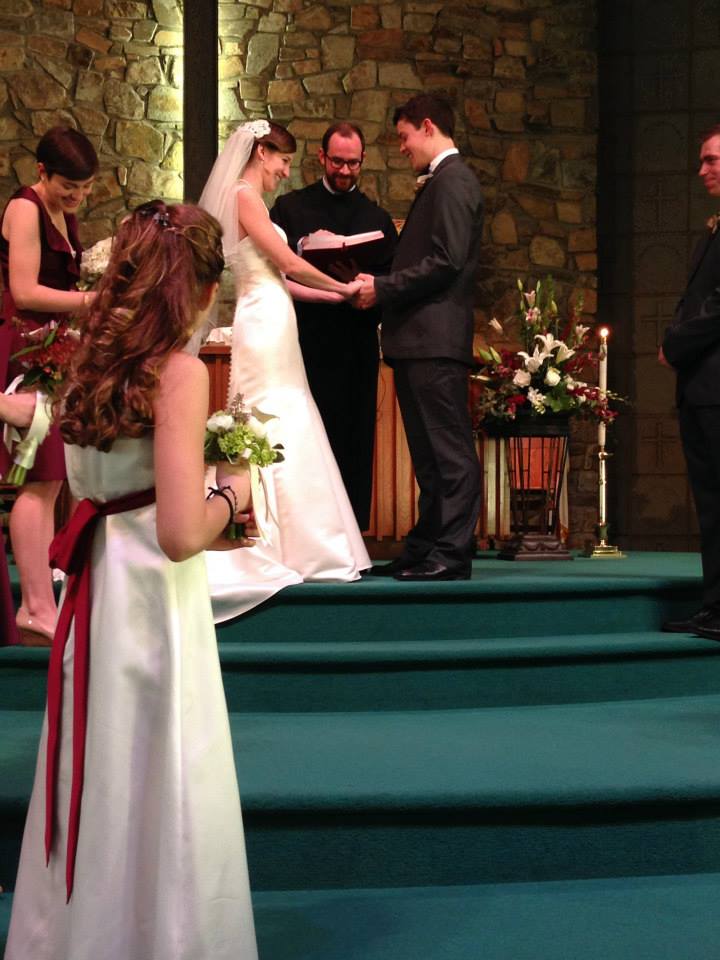
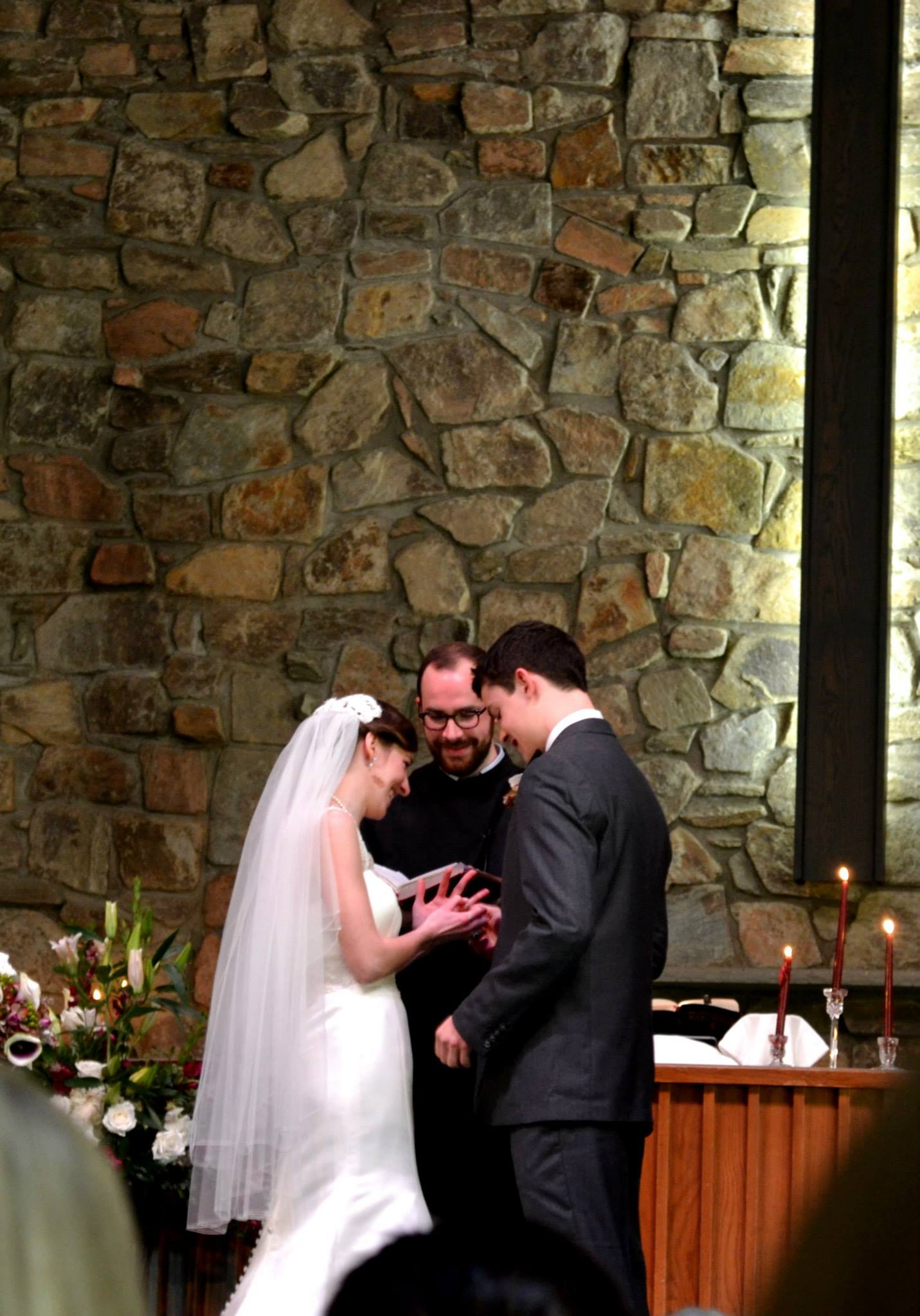
28 years. 28 years ago my parents, JT and Sarah Lynn Mertins, stood in the same position as both of you. Haley, I don’t know if you will remember all of this, but we used to watch their wedding VHS tape when we were growing up. Truly I tell you, it is a miracle that the wedding ceremony happened at all. When we would watch the tape, it appeared as if the cameraman had decided to smother vaseline all over the lens in order to achieve some sort of effect that left the viewers nauseous and confused. As my Aunt Laura made her way up the steps toward the altar she stepped on, and ripped, her dress. My uncle Bill Hanff and a friend stood over by piano the prepared to sing a wonderful rendition of “On the Wings of Love” though the pianist started the song in the wrong key and uncle Bill had to match accordingly. And then there was the hair and the dresses. There must have been enough hair spray in this church to light the whole thing on fire, but somehow, by the grace of God, our mother and father were married on this exact day, in this exact spot, 28 years ago.

Mom and Dad

Mom and Dad

And here we are now, ready for the two of you to enter into the holy state of matrimony. As I have looked back over the totality of your relationship, and all of the little steps that led you to this altar on this day, I am convinced that I will never marry a couple that I know as well as both of you for the rest of my life. So before I continue I want to show you something.

(Turn around, look out at the sanctuary. Gathered together in this room are the people who have made you, you. Family, friends, both the foolish and the fun, but more importantly, when you look out I hope you see faith. So soak up this view for a moment, you rarely get to see anything as glorious as this)

1512792_10202004244841456_869486328_n

Faith, the people gathered together today are indicative of the kind of faith-lives that both of you are living. Everyone here has faith in both of you as individuals, and also as the married couple you are about to become. They have been there for you in every aspect of your lives, and today two families are joining together as a testament to the faith that you have in each other. They say a threefold cord in not quickly broken? Well neither is a one hundred and fifty fold cord.

However, for as much as everyone gathered together in this room are responsible for your relationship, no one can take more credit than God.

When I found out that Matthew was moving to Africa for a year, I knew that the only thing that would be able to sustain your relationship was a resounding faith in the triune God. I know it wasn’t easy. Even with the notebook Matthew left behind, even with the commitment to read through the entire bible while you were apart, even with the advantages of technological communications such as Skype and email, you would not be standing here today unless you had tremendous faith in God, but more importably, you would not be standing here unless God had tremendous faith in you.

One of the things that I love most about you two is that, even with all the planning and the suits and dresses and decorations, today will not be the greatest day of your lives. Both of you strive to discover all of the joy in life and share it with one another. You earnestly love the lives that God has given to you, and you hope to share that love with everyone with ears to hear and eyes to see. Thats what it means when we say, “If we love one another, God lives in us.” The two of you have made a commitment to loving one another so that God abides and manifests himself in the world.

Matthew Logan, I have waited 23 years for a brother, and today I’m finally getting one! You are a remarkable man with compassion, faith, and hope. I have been privileged to watch you grow up, in a way, I’ve seen the way that you create and nurture friendships, I’ve seen the way that you have selflessly served others, and I have seen the many ways that you have committed yourself to my sister. Marriage will not be easy. There will be mornings that you wake up and wonder how such a beautiful woman can drive you so crazy. There will come a time when all the love that Haley can give you will not be enough, but you will never be alone. Beyond the multitudes that have gathered here today, God almighty is with you in all that you do. As a husband, literally, you have been called to love Haley with all that you are, live into the life that God is calling you toward, and to have your relationship shine as a beacon of hope and love to all the world. I have nothing but profound respect, enduring faith, and unending love for you, my brother.

Haley Lynn, precious sister of mine, you are a beautiful woman who has truly come into her own. I have been privileged to watch you mature into your truest self as you now prepare to enter into marriage with Matthew. I love how your willingness to serve others is so central for understanding who you are and what you do. Whether its helping out your students at school, or volunteering your time and energy for church, or helping your idiot brother match his clothing when we were in high school, serving and loving others is what you do. What a blessing you are to all of us, and what a blessing you will be to all the lives you touch in the future. Marriage will not be easy. There will be mornings when you wake up and wonder how such a funny man can drive you so crazy. There will come a time when all the love that Matthew can give you will not be enough, but you will never be alone. Your family, your friends, and your father in heaven are with you in all that you do. As a wife, you have been called to love Matthew with all that you are, to live into the life that God is calling you toward, and to have your relationship shine a beacon of hope and love to all the world. I have nothing but immeasurable respect, enduring hope, and unending love for you, my sister.

Matthew and Haley, God’s love was revealed to all of us through the incarnation in Jesus Christ. In his willingness to take on human flesh, God humbled himself to be just like us, in order to help transform us. God did not mount the hard wood of the cross because we loved him, but instead he came to die and live because he first loved us. Above all things, your marriage should, and will be, a testament to God’s love in the world through the redemptive acts in our Lord Jesus Christ.

In giving yourselves to each other, you are mirroring that great act of God coming to be with us.

And so, as you prepare to take these first steps into wedded life, I call both of you to hold fast to the people that love and support your relationship, hold fast to the faith and hope that you have in one another, but most importantly, hold fast to the good God whose joy knows no bounds, whose grace extends beyond our imaginations, and whose love was made known to all of us in the gift of his Son.


904040_10101659784550458_526669923_o

Life After Christmas – Sermon on Matthew 2.13-23

Matthew 2.13-23

Now after they had left, an angel of the Lord appeared to Joseph in a dream and said, “Get up, take the child and his mother, and flee to Egypt, and remain there until I tell you; for Herod is about to search for the child to destroy him.” Then Joseph got up, took the child and his mother by night, and went to Egypt, and remained there until the death of Herod. This was to fulfill what had been spoken by the Lord though the prophet, “Out of Egypt I have called my son.” When Herod saw that he had been tricked by the wise men, he was infuriated, and he sent and killed all the children in and around Bethlehem who were two years old or under, according to the time that he had learned from the wise men. Then was fulfilled what had been spoken through the prophet Jeremiah: “A voice was heard in Ramah, wailing and loud lamentation, Rachel weeping for her children; she refused to be consoled, because they are no more.” When Herod died, an angel of the Lord suddenly appeared in a dream to Joseph in Egypt and said, “Get up, take the child and his mother, and go to the land of Israel, for those who were seeking the child’s life are dead.” Then Joseph got up, took the child and his mother, and went to the land of Israel. But when he heard that Archelaus was ruling over Judea in place of his father Herod, he was afraid to go there. And after being warned in a dream, he went away to the district of Galilee. There he made his home in a town called Nazareth, so that what had been spoken through the prophets might be fulfilled, “He will be called a Nazorean.”

22.86

A voice was heard in Ramah, wailing and loud lamentation, Rachel weeping for her children; she refused to be consoled, because they are no more.

After the magi had spent time with the baby Jesus, presenting him with gifts of gold, frankincense, and myrrh, they left. The new parents were now alone with their relatively unexplained child, forced to fend for themselves with this baby Messiah. Christmas had come and gone in that tiny village of Bethlehem and life after Christmas was starting to settle in.

One night an angel of the Lord appeared to Joseph in a dream and called him to take Mary and Jesus and flee to Egypt, because Herod was after the child. And so, following the commands of the Lord yet again, Joseph took his family and went to the land that God had called him to travel to. There he waited until Herod died.

The wise men, on their way to meet and greet the baby Jesus had shared the news of this newborn king with Herod, who asked to learn of his location and identity after they found him. Because of a dream telling them not to return, they withheld the information regarding the baby Messiah to which Herod was infuriated. He gathered together hordes of soldiers and commanded them to travel to Bethlehem in order to kill any child under the age of two in and around the village.

Later, after the death of Herod, Joseph brought his family back to the land that had been promised to his ancestors, but traveled to the area of Galilee and settled in Nazareth, which would become the boyhood home of Jesus.

When I was 17 years old, I spent a lot of time at my home church. If I wasn’t practicing drums with the worship band, then I was at a boy scout meeting, or helping with youth group, or immersed in a bible study, or running the sound system for worship services, funerals, and weddings. Every Christmas Eve the church would hold multiple services and I would sign up for multiple shifts in order to have the sound system function properly for one of the highest attended services of the year. When I was 17 I was blessed, and I mean that ironically, to run the system for the 3pm and the 11pm services.

400x400_1266205978139-AldersgateAlter

The 3 o’clock service went as well as could have been expected. It was the family friendly service with a cacophony of children all running around and climbing over their pews while their parents attempted to listen to the sermon and not lose their place while singing the hymns. The sermon was spot on about the depth of Christmas and the graceful coming of God into the world in the form of a baby in a manger.

The 11 o’clock service was the complete opposite.

Instead of families with young children, the sanctuary was filled with older adults sitting scattered throughout the dozens of pews. Instead of children climbing over pews and dropping pencils everywhere, there was a profound silence within the worshipping body; a completely different sense of reverence. The sermon was the same, though it felt a little dull with the patterns of repetition throughout the afternoon and evening, however, you could feel a sense of wonder and awe flowing throughout the people that night, as they gathered together to celebrate God’s coming into the world.

By the time I was able to leave, it was already past midnight and I was exhausted. All I wanted to do was drive home, get in my bed, wake up, and open presents. As I drove back to my house I made my way down the George Washington Parkway with the Potomac River on my right thankful for the end of another Christmas Eve.

Right after I turned off the parkway to head up my street I saw flashing red and blue lights underneath the bridge that went over the road I had just drove on. I’m not sure why, (maybe it was the eagle scout in me) but I immediately pulled my car over and ran down to the road to see if I could help.

DSC08174

The details of what I saw there on the road that night will stay with me for the rest of my life, and there were things that I should never describe from the pulpit. Suffice it to say that, before I arrived, a terribly sad man had been standing on the edge of the bridge for sometime. The drop was nothing to speak of, maybe 13 feet, so he just kept standing there, waiting. He waited until he saw a large SUV coming toward the bridge, and when he felt that it was just the right moment, he jumped.

The SUV was carrying a family on their way home from an 11 o’clock mass from one of the Catholic churches in Old Town Alexandria, a family excited for the prospect of heading home after a wonderful service to get the milk and cookies ready for santa, a family ready to go to bed in order to wake up for Christmas morning, a family whose lives would be forever changed.

I don’t know how long I stood there, but one of the police officers made his way over to me, put his hand on my shoulder and said, “Go home, and try to forget ever seeing this.”

Life after Christmas can be one of the best, and one of the worst, times of the year. Its that strange time that often never meets our expectations. After weeks of preparation, hanging all the lights, decorating the house, wrapping all the presents, planning the meals, sending all the Christmas cards, Christmas comes and goes. We wake up and before we know it the holiday has arrived and departed. And for all the prep that we do, our expectations can almost never be met perfectly. We never receive all the gifts we want, we never have the perfect interaction with our family without fights and arguments, we never get to experience God and faith exactly the way we expect and hope for.

Life after Christmas can be a real shock if we’re not ready for it. We build up this wonderful holiday moment through the songs on the radio, through the worship services of Advent, and even with the sales promotions at all of our favorite stores.

Its no wonder therefore why there are more incidents of hospitalizations for depression, and attempts at suicide during the next few weeks, than any other time during the year. For all the joy that we muster together on Christmas Eve, life after Christmas can hit hard and low.

Life after Christmas for Jesus was filled with trial and tribulation as well. In the wake of his birth in one of the most inhospitable of places, Jesus, Mary, and Joseph had to flee to Egypt in order to avoid the wrath of Herod. It is curious that we receive little detail regarding Herod’s desire to kill all of the children in Bethlehem, only that he was infuriated by the deception of the wise men. It would seem that Herod feared for the loss of his position of power and control and he then decided to eradicate any remnant of this supposed “Messiah king” that could usurp his power.

If we only read this story on the surface, hearing about the new family’s retreat to Egypt, their patient waiting for Herod’s death, and their inevitable return, then we will be stuck with the devastating imagery of Rachel weeping for the children, the imagery of Herod killing innocents babies in Jerusalem, and a family’s terrifying experience of fear and isolation. But the story contains so much more.

In Matthew’s gospel, Jesus comes to be understood as the new Moses. He will deliver a sermon on the mount with his commands for the ways we are to live our lives, just as Moses stood on the mountaintop to deliver the ten commandments to the wandering Hebrews. It is important for Jesus to be understood through a Mosaic lens because he will also deliver the people out of slavery – not slavery in Egypt to foreign pharaohs, but out of slavery to sin and death.

Here, in this story, we get the beginnings of Jesus’ connections with Moses.

During the time of Moses’ birth, the Pharaoh in Egypt had all of the young males murdered in order to maintain the reigns over the Hebrew slaves. It was during this child massacre that Moses was saved by his mother. In a similar way, Jesus was saved from Herod’s massacre of the children because of the warning from God. Just as Moses would come to lead the Hebrew slaves out of Egypt toward the Promised Land, Jesus would eventually return to Galilee from Egypt in order to begin his ministry.

I wonder what it must have felt like for Mary and Joseph to raise that baby under such circumstances; to be told to leave all that was familiar, to enter a foreign land, because a ruler wanted to see your baby murdered. I wonder what could’ve sustained them through the days, weeks, months, and years of unknowing, the periods of fear and isolation.

I wonder what it must still feel like for that family that hit the man on their way home from church. What kind of emotional roller coaster does Christmas bring for them each year? What sustains them through that time of year when joy is so intertwined with fear?

Christmas, for us, is the reflection of that great event where God came to be with us. That time of year where we attempt to set aside all of our disappointments from the past, and look forward to that new beginning that we can hopefully emulate in our own lives.

Why is life after Christmas less ecstatic than the weeks leading up to it? Why do we let ourselves fall into states of sadness and the blues when we were just singing Joy to the World, and Angels We Have Heard On High? What is it about this time that makes it so much harder to get out of bed every morning, and get back into the routines of life?

opt-the-day-after-christmas from Life Magazine Jamie Wyeth

Life after Christmas is almost never easy; not for us now, not for that family driving home, and it certainly wasn’t easy for Jesus, Mary, and Joseph. As we continue to step forward into this uncertain time let us not hold fast to the decorations, and the pomp and circumstance, and the presents, and the meals, and all the other elements that make Christmas what it appears to be, but instead let us hold fast to the hymns we sang together as a church, let us hold fast to the fact that Christ is the light of the world that shines in the darkness, let us hold fast to the faith that we have in Jesus Christ as the Lord of all.

When you really get down to it, Christmas isn’t just a day, or even a time of year that we celebrate. As a faithful community, Christmas happens every single time we gather together. Every worship service, every bible study, every quilt for a cause, every Men’s club meeting, every UMW gathering, every youth activity, every thing we do reimagines the Christmas message for us. To be the church, to be the body of Christ for the world, means that we are continuously celebrating the fact that the greatest thing that ever came to be, came to be with us.

The fact that God humbled himself to be like us, for us, and with us, surmounts everything else in the world. For all the disappointments that we might face, for all of the ways we have fallen short of God’s glory, nothing will ever compare to the love of God in Jesus Christ manifested in a man’s life who changed the world.

It is okay to feel hurt and sad during life after Christmas. It is okay to feel the emotional tide that comes and goes while we rest in the awkward time after celebration. But we must never forget that though death, and suffering, and fear are real, they do not have the final word. God’s glory and grace surpasses all things. God’s love for you is eternal, it extends beyond all things, and is present in the ways that we love one another. Jesus, our Moses, came to deliver us from the bonds of the world, to help transform the way we live, and to share with us life eternal.

And so, If we take seriously the faith that we confess in Christ, then life after Christmas should really be the most wonderful time of the year.

Amen.


God and Relationships – Part 2

couple-holding-hands

One of my favorite theological blogs belongs to my friend and mentor Jason Micheli (www.tamedcynic.org). Recently, Jason produced a number of posts about the importance of being in relationships. In a similar vein, I have decided to post a few of my thoughts on the theological virtues of relationships.


“To say ‘I love you’ one must first be able to say the ‘I.’”

Fountainhead

So says the fictional Howard Roark to Dominique Francon in Ayn Rand’s behemoth novel The Fountainhead. Though Rand herself was staunchly opposed to all forms of religion, I believe her quote, in a way, speaks profoundly to the importance of what it means to be in relationship with another.

To use Rand’s language: To say “I love you” one must first be able to say “I.” And, perhaps, more importantly, to say “I do” in marriage, one must first be able to say “I.”

Will Willimon writes, “Most people think that the toughest part of marriage is deciding who we ought to marry, making the right choice, and preparing for the decision. We say we are deciding whether or not we are “in love” with this person. Curiously the church has traditionally cared less about our emotional attachments. What the church cares about is not who you have deep feelings for but rather whether or not you are a person who is capable of sustaining the kind of commitment that makes love possible.”

love-wedding-photo

In today’s culture people (young and old) often commit to a romantic and marital relationship before ever experiencing what it means to be an individual. Young people are maturing later and further delaying the ability to find sense in individuality and therefore seek identity in others. Yes- there must be sacrifice in all relationships, but not at the expense of losing whatever it is that makes you, you.

Before a couple can fully appreciate the depth of what it means to covenant their life to someone else, they have to know who they are in order to give themselves over.


But here’s where it gets a little complicated…


You will never fully know who you are.


As a pastor, when I stand in front of a couple leading a wedding ceremony, the question is not “Jack, do you love Jill?” Instead the question is, “Jack, will you love Jill?” There, in that precise moment, we discover that, according to the church, love is something you commit to, something you promise to do, a future activity, the result of a covenantal marriage rather than its cause.


As Stanley Hauerwas famously put it, “we always marry the wrong person.” This is to say that we never marry the right person because marriage and life changes us. There will come a time when you realize that the person you have been living with is no longer the person you married or met at the coffee shop or knew from high school.


No one can fully know what he or she is getting out of a husband or a wife. There is a lot to be said about preparing for marriage (meeting with professionals, discussing the future, etc.) but there is an element of unpredictability that must be respected. We can never prepare for marriage in totality, but we can prepare ourselves for a lifetime of commitment to someone who is always changing (ourselves included).


This is exactly why it is so important to understand what you say, when you say “I.”


You will change in ways that you cannot predict just as your partner will change. But, as Christians, we have been adopted into a new identity through water and the Spirit that sustains us throughout the many changes of our lives.


Christ is alive through us, in us, and with us.


If we hold on to that identity, love can be the result of our relationships rather than the requirement.


God and Relationships – Part 1

couple-holding-hands

One of my favorite theological blogs belongs to my friend and mentor Jason Micheli (www.tamedcynic.org). Recently, Jason produced a number of posts about the importance of being in relationships. In a similar vein, I have decided to post a few of my thoughts on the theological virtues of relationships.


(Some of the following elements were first taken from a post written by Ron Edmondson, and then re-evaluated for this post. You can check on Edmondson’s blog here: www.ronedmondson.com)


Relationships are tough, perhaps tougher now than ever before. The impact of social media and changes in our contemporary culture have affected dating, marriage, and divorce in ways that cannot be fully comprehended. Moreover, maintaining a relationship predicated on the model of discipleship of Jesus Christ is a challenge in and of itself.

One of the many blessings of what it means to be a pastor is being invited into a couple’s relationship during pre-marital counseling. A few weeks ago I shared the following thoughts with a couple preparing for marriage and I believe they are relevant for anyone engaging in a serious relationship.


You are different. You are different and thats a good thing! Both members of a relationship differ from one another physically, emotionally, psychologically, and theologically. This is not a curse against relationships but something to be celebrated. The more a couple can live into the differences that make them who they are, the better a foundation can be made for experiencing life together. God has uniquely created you to be you, and no one else.

Set your own path. Don’t let either set of families/in-laws dictate how you will go forward with your own family. Our respective histories are important but they do not define how we can be in relationship, or how we can raise a family. Try to make sure that you are in this with/for one another, do not let anyone (related or otherwise) divide you and your thoughts on family. Every couple has a number of other relationships, but care should be made to maintain the oneness that God intends to create within a relationship. Respect the advice given to you, but listen to your spouse and work together.

Prepare to be surprised. Life will not always be peachy and perfect. For the many mountain tops that you will experience, there will be a valley waiting on the other side of the horizon. No one can ever be completely prepared for the changes that might come, but we can prepare ourselves to be ready to handle and address the changes appropriately. When difficulties arise, and they will, this is a prime time to improve the strengths and dynamics of a relationship. Theologically speaking, it might feel like you are always sitting in the shadow of the cross, but the glory of the resurrection will come. Prepare to be surprised.

Model after other couples. Look around and pay attention to the people in your life in relationships that you admire. They will inevitably have stories to share and appropriate advice to give. Remember to not just simply insert their techniques and strategies into your relationships, but allow them to model what it means to be in a fruitful connection with someone else. Often times when we come to church we assume that everyone in attendance has everything together in their lives, and similarly we often make the same assumptions of people in relationships. There is always something under the surface that we cannot see. If other couples are willing to share some of that information with you, it will likely prove helpful for your own relationship.

Communicate. Evaluate your relationship with one another. However, wait for the appropriate time to do this (in the middle of a fight is not always the best time). Couples should ask themselves, “are we growing together as a couple or are we moving further apart?” Do not always assume that your partner feels exactly the same way as you do.  If you can create a habit of honestly checking in with one another about the greater trajectory of your relationship, it will help prepare you to be open with one another in a loving and life-giving way as you move forward. Communicating with one another might sound like a simple aspect of a relationship, but its importance makes it worth mentioning over and over again.

Put God first. This is perhaps one of the hardest things for a pastor to bring up with a couple because it sounds like the “preachy” thing to say. But, its important. A couple’s individual, and collective, relationship with God will help navigate the deep “valley-like” hardships of life and maintain a sense of stability when everything else feels like its crumbling. Talk about God with each other. Pray together. But also experience God in the way that only you can. Your first identity as a Christian will help so communicate who you are and whose you are. Far too many individuals in a relationship come to define themselves on the other person. You are not someone’s better (or lesser) half. You were uniquely made in the image of God and this is important to celebrate. Live into your relationship with God and it will strengthen your relationship.

Dietrich Bonhoeffer on Separation

As a devotional practice I have been reading through Dietrich Bonhoeffer’s Letters & Papers From Prison….

dietrich-bonhoeffer-2

In one of his letters from the Tegel prison (written on Christmas Eve 1943) Dietrich Bonhoeffer wrote to Eberhard  and Renate Bethge (Renate was Bonhoeffer’s niece and Eberhard was a student of Bonhoeffer’s at the underground seminary in Finkenwalde) regarding their imminent separation on account of the war.

As I read through Bonhoeffer’s suggestions regarding their separation I realized how applicable they are for anyone disconnected regardless of romantic affection. Considering that I have not seen any of my friends from divinity school since graduation in May, I thought Bonhoeffer’s words are particularly fruitful for anyone who is missing someone at the moment:

First: nothing can make up for the absence of someone whom we love, and it would be wrong to try and find a substitute; we must simply hold out and see it through. That sounds very hard at first, but at the same time it is a great consolation, for the gap, as long as it remains unfilled, preserves the bonds between us. It is nonsense to say that God fills the gap; he doesn’t fill it, but on the contrary, he keeps it empty and so helps us to keep alive out former communion with each other, even at the cost of pain.

Secondly: the dearer and richer our memories, the more difficult the separation. But gratitude changes the pangs of memory into tranquil joy. The beauties of the past are borne, not as a thorn in the flesh, but as a precious gift in themselves. We must take care not to wallow in our memories or hand ourselves over to them, just as we do not gaze all the time at a valuable present, but only at special times, and apart from these keep it simply as a hidden treasure that is ours for certain. In this way the past gives us lasting joy and strength.

Thirdly: times of separation are not a total loss or unprofitable for our companionship, or at any rate they need not be so. In spite of all the difficulties that they bring, they can be the means of strengthening fellowship quite remarkably.

Fourthly: I’ve learnt here especially that the facts can always be mastered, and that difficulties are magnified out of all proportion simply by fear and anxiety. From the moment we wake until we fall asleep we must commend other people wholly and unreservedly to God and leave them in his hands, and transform our anxiety for them into prayers on their behalf: With sorrow and with grief… God will not be distracted.

-Dietrich Bonhoeffer

Bonhoeffer, Dietrich. Letters & Papers From Prison (New York: Macmillan Publishing, 1972), 176-177.

Family and Faith: Family – Sermon on Ephesians 5.21-6.4

(preached at St. John’s UMC on 9/15/2013)

Ephesians 5.21-6.4:

Be subject to one another out of reverence for Christ. Wives, be subject to your husbands as you are to the Lord. For the husband is the head of the wife just as Christ is the head of the church, the body of which he is the Savior. Just as the church is subject to Christ, so also wives ought to be, in everything, to their husbands. Husbands, love your wives, just as Christ loved the church and gave himself up for her, in order to make her holy by cleansing her with the washing of water by the word, so as to present the church to himself in splendor, without a spot or wrinkle or anything of the kind – yes, so that she may be holy and without blemish. In the same way, husbands should love their wives as they do their own bodies. He who loves his wife loves himself. For no one ever hates his own body, but he nourishes and tenderly cares for it, just as Christ does for the church, because we are members of his body. “For this reason a man will leave his father and mother and be joined to his wife, and the two will become one flesh.” This is a great mystery, and I am applying it to Christ and the church. Each of you, however, should love his wife as himself, and a wife should respect her husband. Children, obey your parents in the Lord, for this is right. “Honor your father and mother” – this is the first commandment with a promise: “so that it may be well with you and you may live long on the earth.” And, fathers, do not provoke your children to anger, but bring them up in the discipline and instruction of the Lord.

Families of faith – part 2. Last week we looked at the role of God within the family; we talked about how our relationships with God extend out toward others, and we left with the challenge to encounter God through his Word and prayer. Today we are focusing on the family unit itself, and what it means to be a Christian family.

family_praying_hands

Have you ever heard of the lectionary? It is a great tool. Many churches and pastors use it to help orient and guide their worship throughout the year. It is a three-year cycle of scripture lessons that allows a community to make its way through the length of the Bible. At its best it forces us, and by us I mean me, to examine different parts of scripture and apply them on a weekly basis. However, at its worst it prevents us from encountering the most troubling verses in scripture because they are conveniently absent from the lectionary.

One of the other options is coming up with an authentic and exciting sermon series. A pastor or a church picks a topic, finds scripture to go along with the message and BOOM! God’s Word breathes new life from the pulpit. At its best it allows us, and by us I mean me, to speak toward and about specific issues within the community and really get at the heart of contemporary Christianity. However at its worst, sermon series reinforce the distancing of difficult texts from being proclaimed in church.

As I was putting together the sermon for this week I kept thinking about the scripture that Pam just read, the so-called “house-hold” code from Ephesians, and I was thankful that I wasn’t going to preach on that text. Its too difficult, filled with ancient patriarchal balderdash that has no place in the modern church. So instead I looked for easier passages, you know something nice from the psalms or proverbs, and maybe a narrative from the New Testament about a mother and her son, but the more I tried to pray and write, the further I felt from God’s Word. And, as the Holy Spirit is apt to do, I was pushed toward preaching on the Ephesians passage precisely because it is so difficult.

I remember once being at a magnificent wedding. The beautiful bride made her way elegantly down the center aisle to her sweetly crying soon to be husband. I can remember the groom, with excited anticipation, nervously rocking back and forth on his heels. The church was decorated perfectly, all the guests sitting with smiles on their faces, women crying, and men pretending not to cry; a truly wonderful wedding.

orlando-wedding-collage

And there was the pastor, standing before the bride and groom and all of us ready to give his homily. He probably said something about love: love is patient; love is kind; it bears all things, believes all things, hopes all things, endures all things (1 Corinthians 13.4, 7). And then all of the sudden he started quoting Ephesians: “Wives, be subject to your husbands as you are to the Lord. For the husband is the head of the wife just as Christ is the head of the church.”

I cringed.

He went on, waxed lyrically about the sanctity of marriage and the different roles the bride and the groom were to play and he ended with this: “John your job is to love your wife, and Sally your job is to respect your husband.”

I have a hard time with the text from Ephesians, or at least the way it has been used throughout the centuries to reinforce gender and sex divisions. It passages like this one that have kept women from being independent, from defining their own future, and even from standing in the pulpit. It puts forth a blueprint not only for marriage but also for simple for male-female interactions that defines the role of the woman versus the role of the man.

“Wives, be subject to your husbands as you are to the Lord. For the husband is the head of the wife just as Christ is the head of the church, the body of which he is the Savior. Just as the church is subject to Christ, so also wives ought to be, in everything, to their husbands.”

I have heard men use these words to continually suppress their wives and other women throughout the church in such an embarrassing way that I have always been afraid to preach from this text.

But then I realized something.

Most people skip over verse 21: “Be subject to one another out of reverence for Christ.”

There can be no doubt that Paul had the patriarchal family order as the backdrop in his letter because he knew no other. But the beginning of the passage touches on something that shines forth an incredible beauty within the family dynamic: Be subject to one another out of reverence for Christ.

The virtue of submission is not popular in our contemporary period. Our desire for freedom and individuality makes the practices of submitting to one another appear obsolete or even negative. Maintaining equality is too important to allow for people to submit themselves to each other. In a way, though, Christianity is committed to the doctrine of human equality in a deeper sense than the ways of the world. It’s not just about an equal playing field, but instead more about submissiveness on every side within a family.

The good news of mutual submission within a Christian family is inseparable from true love. Loving one another means accepting that other as a person, as a “you” and not an “it.” In marriage, in family, in church, and in life a person is never a mere object. We are created in the beautiful image of God, with our own desires and powers for being in relationship with one another, free to say yes and no.

(Photo Credit: Jill Nicole Photography)

(Photo Credit: Jill Nicole Photography)

When Paul addresses and calls the church in Ephesus to submit to one another out of reverence for Christ its all about reciprocity! – It does not merely call upon the less powerful to submit, it equally charges the more powerful to act with gentleness toward and concern for those around them.

When we read the rest of the passage in Ephesians, the description of the household codes for Christians, we need to keep the very first verse at the forefront of our minds – Be subject to one another out of reverence for Christ.

Think about your own families for just a moment, your marriages, your children, and your parents. In living out your Christian identity as a family have you given yourself to others out of love for Christ? How might all of our families look and feel different if we first address one another selflessly in order to mirror what Christ did for us.

Paul writes: Husbands, love your wives, just as Christ loved the church and gave himself up for her, in order to make her holy by cleansing her with the washing of the water by the word. Love your wives. This does not just mean, tell her she looks pretty, buy her flowers every once in awhile, let her hold the remote control for the television. It means loving your partner with self-sacrificial care, “just as Christ loved the church and gave himself for her.” The Christian family is so much more than love, its about sacrifice, trust, reliability, about laying down yourself for the other person out of submissiveness. And wives this goes for you too, Christian marriage and family requires us to enter into this kind of covenant together. This does not just mean, iron his shirts, cook dinner, or let him hold the remote control for the television. How many of us really love our families in the way that Christ loved the church, enough to mount the hard wood of the cross? Love is easy; what you do after love is the hard part.

And children! You’re part of this too. – Honor your father and mother because you are promised that it may be well with you and you may live long on the earth. You are called to submit yourselves to your parents out of reverence for Christ! But parents are also supposed to do the same toward you…

A household in which moral chaos rules, is a tragedy for a child. Adjusting to adult life is never easy. Think about this with me – Can a greater blessing come to a child than to see father and mother in penitent prayer? Realizing that Dad and Mom themselves are sinners! Mom and Dad confessing. When done appropriately penitence on the parents’ side will not rob the parent of their authority within the family. It will instead place obedience within a larger framework of Christian living. Just imagine what it would look like to you if you saw your mother and father on either side of you in the pew, praying and asking for forgiveness for the ways they have fallen short. How would you respond?

In our culture today, we need more than an “educational system” to help our children because secular education will not suffice. We can no longer rely on the school system to teach children everything they need to learn in order to more fully live in the world. Similarly, children need to have the space and freedom to speak the truth against us when we make mistakes because we are always growing and learning what it means to be Christian in the world. There must be admonition of the Lord.


Having a Christian family is only really possible when it mirrors the inclusive grace of the kind of love that is the supreme gift of the Holy Spirit in Jesus Christ.


I think what bothered me most about hearing that preacher during the wedding wasn’t that he used the passage from Ephesians, but how he interpreted it. There was a very clear separation of roles from the man and the woman – love and respect. However, Christian family life can no longer fit into the blueprint that is established in these verses (and they could never fit into them during the first century either).

Families today are no longer made up of only a husband and wife, 2.2 children, a dog and cat, and a white picket fence. Many children today grow up in families with only one mother, or just one father, or their raised by their grandparents, or they have two dads, or two moms, or they’re raised by adopted parents. There are stay-at-home dads as well as stay-at-home moms. Some couples choose not to have kids, and some are incapable. Those families exist not because of a blueprint that they are trying to match, but instead because they are born out of love and submissiveness to one another.

Calls for submission are on all sides – husband to wife and wife to husband – children to parents and parents to children. In our modern world, family life places demands upon mutual subjection greater than ever before.

Be subject to one another out of reverence for Christ. Living into the calling of a Christian family can no longer take place in the form of fitting into an ideal shape or box; Raising and being part of a family is tough. We are not commanded to have complete separate and isolated roles, but are instead invited to mirror the love and life of Christ in the way that we live and love others! Christ is the solid rock upon which we stand, the great and almighty “I AM”, the one in whom we live and move and have our being, the incarnate deity, the beginning and the end.

Be subject to one another out of reverence for Christ.

Amen.