Adventure Time!

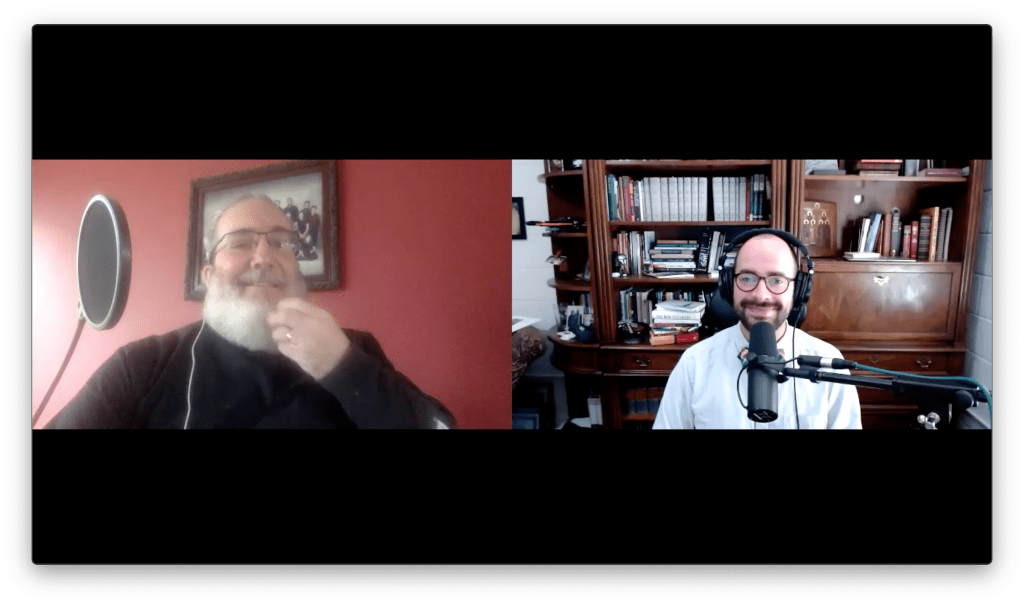
This week on the Strangely Warmed podcast I speak with Drew Colby about the readings for the 14th Sunday After Pentecost [A] (Exodus 12.1-14, Psalm 149, Romans 13.8-14, Matthew 18.15-20). Drew is the lead pastor of Grace UMC in Manassas, VA. Our conversation covers a range of topics including lead in the pipes, Rugrats, Christological readings, singing our faith, metaethics, dinner parties, the irony of solitary Christians, truth telling, and the need for grace. If you would like to listen to the episode (#200!!!) or subscribe to the podcast you can do so here: Adventure Time!

God Finds Us

This week on the Strangely Warmed podcast I speak with Jason Micheli about the readings for the 13th Sunday After Pentecost [A] (Exodus 3.1-15, Psalm 105.1-6, 23-26, 45b, Romans 12.9-21, Matthew 16.21-28). Jason is the lead pastor of Annandale UMC in Annandale, VA and one of the hosts of Crackers & Grape Juice. Our conversation covers a range of topics including middle names, Shea Serrano’s Movies (and Other Things), stinky feet, witnessed suffering, qualitative differences, hardened hearts, exhortations, wedding promises, and the loss of self. If you would like to listen to the episode or subscribe to the podcast you can do so here: God Finds Us

Be Peculiar

This week on the Strangely Warmed podcast I speak with Jason Micheli about the readings for the 12th Sunday After Pentecost [A] (Exodus 1.8-2.10, Psalm 124, Romans 12.1-8, Matthew 16.13-20). Jason is the lead pastor of Annandale UMC in Annandale, VA and one of the hosts of Crackers & Grape Juice. Our conversation covers a range of topics including reading in quarantine, managing people, personifying the powers and principalities, leading questions, preaching for the eye or the ear, participating in Christ, and making the right confession. If you would like to listen to the episode or subscribe to the podcast you can do so here: Be Peculiar

Strange

Romans 11.32

For God has imprisoned all in disobedience so that he may be merciful to all. 

Christians see the world differently than everyone else.

Or, at least, we’re supposed to.

Think of any random subject or occurrence and there’s a better than good chance that Christians, as a group, feel differently about it than those outside the church.

Money? It comes from God first so it actually doesn’t really belong to us.

Parenting? The community of faith makes a covenant to raise the baptized to the same degree that parents do.

Sex? Physical intimacy is one of God’s good gifts, but it’s only really intelligible within the covenant made manifest in marriage.

I could go on.

And because Christians see and live in the world differently than others, it will forever make us strange.

The problem comes when we’re so consumed with appearing like everyone else that it’s no longer possible to differentiate between those inside and those outside the church.

Decades ago, when most of the people now leading the church were baptized into it, it was done so under the shadow of what we call Christendom

Christendom was (notice the tense) a time in which Christians thought they knew how to identify what it meant to be Christian. Mostly, those differences were defined by the church saying what one could, or couldn’t do. But those differences were no different from what the county or the community thought was best anyway.

It was a time when it was assumed that people just went to church on Sunday mornings, that to be a good person was synonymous with being Christians, and that so long as you said the right prayers, and gave the right amount of money to church, and made sure you did more good things than bad that everything would work out in the end.

That time, Christendom, is long gone and it ain’t coming back.

Karl Barth puts it this way: “Nothing has ever happened to change the fact that Christians — even in the middle of their supposedly and perhaps even very consciously Christian environment — will always be strange and threatened creatures. No matter how much they may know themselves to be in solidarity with the world and behave as such, the way of Christians can never be the way of the world — least of all the way of a presumably Christianized world.”

And Barth is right – to be Christian, is to be different. Christians are those who worship a God who became one of us, a God who rather than beating the world into moralistic submission, suffered and died on a cross, a God who believes in us even when we don’t, or can’t, believe in God.

How strange!

In Paul’s letter to the church in Rome, right before making the great theological turn in chapter 12, he lets linger a rather confounding word: God has imprisoned all in disobedience so that he may be merciful to all.

It’s as if he’s saying, “Look, to be Christian implies a willingness to see the strangest news of all: God knit us in such a way that we might be disobedient knowing full and well that he would offer us mercy in the end.”

The implications of this one sentence are tremendous. For, it means that Christians, as a group, see one another and the world differently. Rather than seeing the whole of humanity in a binary (outsiders or insiders, good or bad) we actually see the whole of humanity as disobedient. That, given are freedom of will, we often choose to do things we know we shouldn’t and we avoid doing things we know we should.

The real kicker comes with the latter half of the sentence: And God is merciful to all! Even in all our sin, even with all our mistakes, even with the selfishness and self-righteousness, God in Christ still marches to the top of Golgotha for us anyway!

That’s strange – it also happens to be the Gospel.

The Hardest Part Of Being A Christian

This week on the Strangely Warmed podcast I speak with Matt Benton about the readings for the 10th Sunday After Pentecost [A] (Genesis 37.1-4, 12-28, Psalm 105.1-6, 16-22, 45b, Romans 10.5-15, Matthew 14.22-33). Matt is the pastor of Bethel UMC in Woodbridge, VA. Our conversation covers a range of topics including Coronatide, NOVA, the case for Karl Barth, narrative theology, dreamers of dreams, church leadership as evangelism, different righteousnesses, exegetical grammar, and God’s oddness. If you would like to listen to the episode or subscribe to the podcast you can do so here: The Hardest Part Of Being A Christian

Don’t Lie

This week on the Strangely Warmed podcast I speak with Kenneth Tanner about the readings for the 9th Sunday After Pentecost [A] (Genesis 32.22-31, Psalm 17.1-7, 15, Romans 9.1-5, Matthew 14.13-21). Ken is the pastor of Holy Redeemer in Rochester, Michigan. Our conversation covers a range of topics including Biblical character identification, new names, God’s marks, pentecostal prayers, divine time, false witness, Pauline anguish, faithful food, better education, and bigger tables. If you would like to listen to the episode or subscribe to the podcast you can do so here: Don’t Lie

Remember Who(se) You Are!

This week on the Strangely Warmed podcast I speak with Kenneth Tanner about the readings for the 8th Sunday After Pentecost [A] (Genesis 29.15-28, Psalm 105.1-11, 45b, Romans 8.26-39, Matthew 13.31-33, 44-52). Ken is the pastor of Holy Redeemer in Rochester, Michigan. Our conversation covers a range of topics including Athanasius’ On The Incarnation, keeping the Cross in Christmas, weddings beds, the canon, family trees, the importance of liturgy, the Romans Argument, buying the whole field, and baking bread. If you would like to listen to the episode or subscribe to the podcast you can do so here: Remember Who(se) You Are!

God Knows Your Internet Search History

This week on the Strangely Warmed podcast I speak with Teer Hardy about the readings for the 7th Sunday After Pentecost [A] (Genesis 28.10-19a, Psalm 139.1-12, 23-24, Romans 8.12-25, Matthew 13.24-30, 36-43). Teer serves at Mt. Olivet UMC in Arlington, VA. Our conversation covers a range of topics including Zoom meetings on the Peloton, dreaming dreams, timelessness, (un)holy spaces, God’s choices, birth pangs, losing control, doom-scrolling, parable preaching, and making the world a better place. If you would like to listen to the episode or subscribe to the podcast you can do so here: God Knows Your Internet Search History

God Works With Manure

This week on the Strangely Warmed podcast I speak with Teer Hardy about the readings for the 6th Sunday After Pentecost [A] (Genesis 25.19-34, Psalm 119.105-112, Romans 8.1-11, Matthew 13.1-9, 18-23). Teer serves at Mt. Olivet UMC in Arlington, VA. Our conversation covers a range of topics including self-care, ordinary people, church pro-tips, low hanging fruit, family problems, lamps in parenting, other gods, the Gospel in Romans, peaceful living, sowing stories, and fertilizing with the Word. If you would like to listen to the episode or subscribe to the podcast you can do so here: God Works With Manure

Yokes Over Easy

This week on the Strangely Warmed podcast I speak with Drew Colby about the readings for the 5th Sunday After Pentecost [A] (Genesis 24.34-38, 42-29, 58-67, Psalm 45.10-17, Romans 7.15-25a, Matthew 11.16-19, 25-30). Drew is the lead pastor of Grace UMC in Manassas, VA. Our conversation covers a range of topics including the paradox of doing nothing, an arranged marriage, the scandal of particularity, allegory, Pauline honesty, the goodness of our badness, having fun with Jesus, and the strange burden of Christianity. If you would like to listen to the episode or subscribe to the podcast you can do so here: Yokes Over Easy