We Are What We See

Revelation 7.9-17

After this I looked, and there was a great multitude that no one could count, from every nation, from all tribes and peoples and languages, standing before the throne and before the Lamb, robed in white, with palm branches in their hands. They cried out in a loud voice, saying, “Salvation belongs to our God who is seated on the throne, and to the Lamb!” And all the angels stood around the throne and around the elders and the four living creatures, and they fell on their faces before the throne and worshiped God, singing, “Amen! Blessing and glory and wisdom and thanksgiving and honor and power and might be to our God forever and ever! Amen.” Then one of the elders addressed me, saying, “Who are these, robed in white, and where have they come from?” I said to him, “Sir, you are the one that knows.” Then he said to me, “These are they who have come out of the great ordeal; they have washed their robes and made them white in the blood of the Lamb. For this reason they are before the throne of God, and worship him day and night within his temple, and the one who is seated on the throne will shelter them. They will hunger no more, and thirst no more; the sun will not strike them, nor any scorching heat; for the Lamb at the center of the throne will be their shepherd, and he will guide them to springs of the water of life, and God will wipe away every tear from their eyes.” 

“If Heaven exists, what would you like to hear God say when you arrive at the Pearly Gates?” 

That’s how James Lipton ended every interview on Inside The Actor’s Studio. Famous actors would sit before a large audience, answering all sorts of questions about the art and craft of movie-making, and then, at the end, each of them would mull over that last lingering query and have to say something.

George Clooney: “Welcome, c’mon in. Rosemary’s singing, Nat Cole’s on the keys, Buddy Rich is behind the kit, and they’re playing Always.”

Halle Berry: “Your Dad will be so excited to see you.”

Robert Redford: “You’re too early.”

Robin Williams: “Hahahahahahahahahaha.”

And James Lipton, himself, once answered the question this way: “James, you were wrong. I do exist. But you may come in anyway.”

It’s a great equalizer, that question. Most of us spend most of our time doing everything we can to not think about the end. And then, these superstars get real for a moment, and they open up in a way that runs counter to their entire profession.

Well, a few years back, some friends and I started recording conversations with theologians and pastors and regular ‘ol Christians for the podcast called Crackers and Grape Juice. And, because nothing original ever happens in the church, we decided to end the episodes with Lipton’s ten questions from Inside The Actor’s Studio. Some of the other questions include, “What’s your favorite sound?” And “What profession would you not like to attempt?” And “What’s your favorite curse word?”

I love that last one. There’s nothing quite like listening to a somewhat famous Christian shift around back and forth deciding whether to tell the truth, or pick a word like “shucks!”

And, like with Lipton, we end with the infamous, “What would you like to hear God say at the Pearly Gates?”

Most, of course, answer with “Well done, good and faithful servant.”

It’s nice knowing Christians can quote the Bible, but that answer is so boring.

We’ve had only a handful of really striking answers to that question, but perhaps the best of all came from Bishop Will Willimon. Will and I went to church together when I lived in Durham, he was one of my professors when I was in seminary, I’ve got a bunch of his books on the shelves in my office. 

Prior to having him on the pod, he had become quite vocal in his denouncements of modern politics in general and the Trump Administration in particular. He wrote op-eds, he rebuked the former President from the pulpit, on and on.

And then when we asked him the question, this is how he answered: “Welcome Will, it’s about time. We’re so happy to have you here. But before you get too settled, the Trump family is over here and they would like to have a word…”

In theological speak: that is a rather robust understanding of the Eschaton.

In church speak: we do well to remember that Heaven is populated entirely and only by forgiven sinners.

In normal speak: If grace really is as amazing as we sing it is, then we are going to be surprised by some of the people we discover in Heaven. 

Imagine, if you can, a sermon that doesn’t start with some sort of punchy anecdote, though I do enjoy the one I just shared. Imagine you come to church, you sit down in these pews, and someone gets up here and says: “Blessed are those of you who are poor, who are hungry, who are unemployed, who are going through marital separation, who are afraid of what tomorrow will bring, who are failing in parenting, and who are going through any ordeals.”

You might wonder if the pastor lost his or her marbles.

How could any of those people be blessed?

If a pastor started a sermon in such a radical way, there’s no telling if anyone would still be listening by the end.

But here’s the rub: In the kingdom of the world, the kingdom we think pulls all the strings, if you are poor you are treated like a curse. If your marriage is falling apart, then you are cut off from your friends. If you’re failing in your parenting, then your children go off the rails and the birthday party invitations stop coming in. If you’re going through any type of ordeal, you’re largely left to your own devices.

There’s nothing blessed about going through an ordeal.

At least, not according to the world.

But sermons, and all of worship for that matter, they are not about the kingdom of the World. If they are about anything, they are about Jesus and his kingdom.

The kingdom of God.

And yet, we are so embedded in the world’s way of existence, that we live in constant kingdom confusion.

We can only act within a world, or a kingdom, we can see. What we do in church, through our singing and our praying and our listening and our responding, it’s all about painting a picture.

I know that, at times, church can feel like a program for betterness. That, all things considered, we’re a bunch of good people getting good-er all the time. A sermon can end with a call to social action, or the announcements can pull at our hearts strings in terms of being better paragons of virtue in the community. 

But the truth is a harder pill to swallow. We are not a collection of nice people getting nicer, we’re actually a bunch of bad people who gather with other bad people so that we can cope with our inability to be good.

Therefore the church, properly considered, exists to open our eyes, that we might see, glimpses of truth, Thou hast for me.

The church is not the world and the world is not the church. The world will always tell us that the most important things are first, best, found, big, and alive. But the church stands as a stark contrast with the reminder that Jesus comes for the last, least, lost, little, and dead. Which, whether we like it or not, eventually includes each and everyone of us.

Jesus can say, in his sermon on the mount, blessed are the poor, and those who mourn, and those who thirst not because he is describing a program for what makes the world a better place. Instead, Jesus uses such striking language to push our vision to the limits so that we might see something so new, so different from everything else have ever seen, and begin to realize that we cannot rely on our older images of what is and what is not.

Put another way: The strange new world of the Bible doesn’t tell us what we’re supposed to do. Instead, it paints a picture of who God is. 

After this I looked, and there was a great multitude that no one could count, from every nation, from all tribes and peoples and languages, standing before the throne and before the Lamb, robed in white, with palm branches in their hands. They cried out in a loud voice, saying, “Salvation belongs to our God who is seated on the throne, and to the Lamb!”

John the Revelator sees what we, more often than not, cannot.

The great multitude in the Eschaton, from every nation, tribe, people, and language. They sing and the worship together forever and ever. But, oddly, John does not know who they are. And the elder has to answer his question, and ours: they are those who have gone through the great ordeal. 

John catches a glimpse of what Jesus’ promises. In the last days, it is by Jesus’ life, death, and resurrection that we shall rejoice at the Supper of the Lamb. No amount of suffering can stop God from getting what God wants. Each and every one of us will experience ordeals in this life because we live on this side of the end. But, in the same way, there is no amount of good works or repentance that can earn us anything in the resurrection of the dead. In the kingdom of heaven it is by the blood of the Lamb that the sins of the world are taken away. 

Contrary to the often-used joke about St. Peter’s manning the gates to Heaven, there is no bouncer checking the IDs of our goodness before we are swept up into the party. Actually, there might be a bouncer. But if there is a bouncer, his name is Jesus, and he has torn town all the barriers that would ever prevent us from getting in.

Here’s the promise, the promise of God and the promise of scripture and the promise of faith – we will hunger no more, we will thirst no more, the sun will not strike us nor any scorching heat; for the Lamb will be our shepherd.

This is our comfort and our hope. And there is good reason for us to hear this promise today. It is good for us today because some of us are hungry right now. We hunger for literal food and we hunger for righteousness. Some of us are thirsty for clean water to drink just as others thirst for the waters of baptism that remind us who we are and whose we are.

On and on John speaks of his vision into our lives realities here and now.

But what does the vision mean? We can’t help ourselves from such a question, earthly creatures that we are. I long for the days when images and visions are enough on their own without us having to probe for every little meaning. But, perhaps today, we can at least answer the question with this: 

John’s vision reminds us that not all is as it should be right now.

There’s a sentiment we sometimes share with one another, particularly when we don’t know what else to say: “There’s nothing to be afraid of.”

And, though its true, we often offer it as a denial of the truth of the world. There are plenty of things to frighten us. We know the depths of pain and the banality of evil. We sit in a sanctuary that is decorated with a cross!

We, therefore, tell the truth of what is happening among the powers and principalities in the world not as denial of their presence, but as a reminder that though they exist, they don’t get the final word.

God gets the first, and the last word. And that word is Jesus.

All of the multitudes gathered in John’s vision are there only because of the last word. We now see what John’s sees because it gives us the strength to live in a world such as ours. 

Consider: The robes are made clean by the blood of the Lamb. We can’t make ourselves clean. We all do things we know we shouldn’t, and we all avoid doing things we know we should do.

As the old prayer book put it, we are miserable offenders.

We can absolutely try to make the world less of a mess for ourselves and others, we can even come with ideas on how to make it more bearable. But any programs for progress or better strategies for better behavior will fail to do what we really need. It those things worked, we would’ve fixed all the worlds problems by now and no one would ever go through an ordeal. 

What we really need is a Savior – we need someone to save us. And that’s exactly what God does for us in Christ Jesus.

Salvation is a gift offered by the only one who can give it: God in Christ. When we know that this gift is given, that it cannot be taken away, it starts to change everything else. Living in the light of grace compels us to be graceful toward ourselves and others.

John helps us to see that, in the end, when all is said and done, when the forces that sometimes cause us to suffer and weep and mourn are vanquished, the once crucified Lamb shall reign at the center of the throne. Every tear will be wiped away not because we have made it so, but because we worship God who reigns above and below. 

Believing is seeing. Amen. 
The Business of Forgiveness

There’s a lot of talk about acceptance/tolerance in the church today. We ask people to be more understanding of others, we create curricula of theological teachings that are so watered down so as to say not much of anything, and we assume that being Christians is the same thing as being nice.

But how would you like to be the one tolerated

Tolerance is always a position for those who are in power. And the kind of power we have in the church is best exemplified in the One whose arms were outstretched on the hard wood of the cross. Put another way: We Christians do well to remember that we worship the crucified God.

Tolerance, therefore, is not something we should be in the business of. If the church is in the business of anything, it is the Jesus business.

And the Jesus business is run by forgiveness.

Hymn 560 in the United Methodist Hymnal is titled “Help Us Accept Each Other.” It is a catchy little tune of self-congratulation that is indicative of a church that no longer has anything left to say. If Jesus came so that we would merely accept each other, then there’s no good reason for him to die on a cross. You only kill someone when their very being in the world threatens to upend everything you think you know about the world. 

Jesus died on a cross because his existence in the world called into question the powers and principalities that produce a vision of tolerance rather than an ethic of sacrificial love. 

At the heart of Christianity is the proclamation that Jesus loves us even though Jesus shouldn’t love us. We all do things we shouldn’t do and we all avoid doing things we should do. 

The “church of acceptance” leads to the fundamentally unchristian sentiment of “Love The Sinner, Hate The Sin.” We all know we’re supposed to love sinners, that’s what Jesus did. And yet, Jesus does not call us, his followers, to love sinners, but to love our neighbors.

The distinction is important. “Loving sinners” places us in the position of power in regard to others whereas “loving neighbors” reminds us that we, ourselves, are also sinners.

In the lexicon of the church this is made manifest whenever we gather at the table and hear: “Christ died for us while we were yet sinners, and that proves God’s love toward us. In the name of Jesus Christ, you are forgiven.”

While we were yet sinners. Not before and not after. But right smack dab in the midst of our sins, God in Christ loves us and forgives us.

That’s rather staggering. It’s staggering because we simply don’t deserve it.

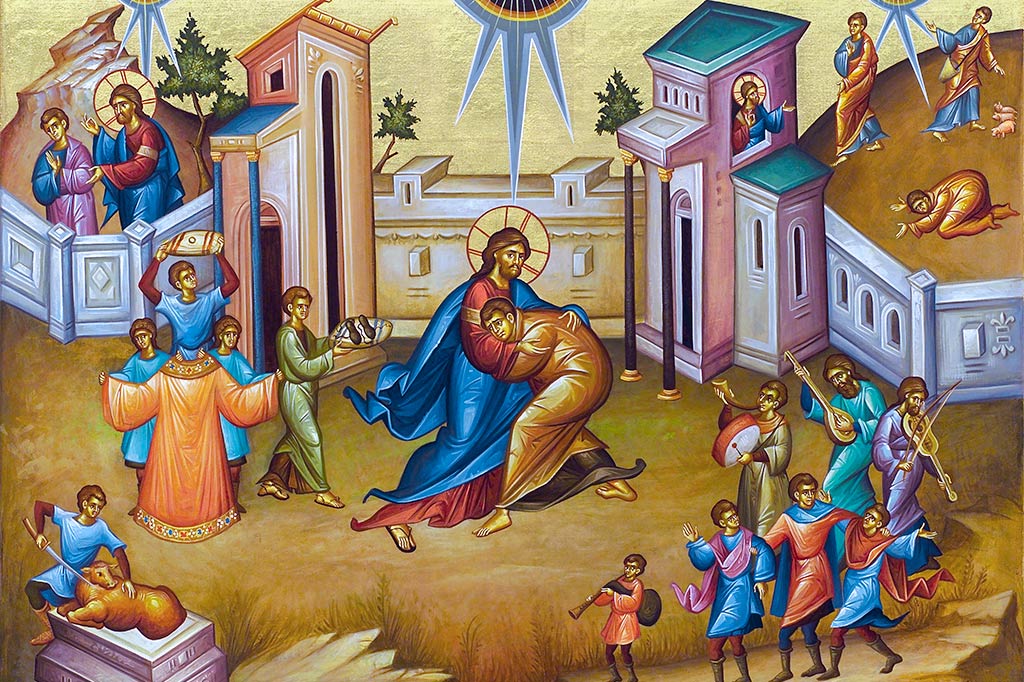
Consider the parables: More often than not they end with someone throwing our the ledger book, or offering mercy before an apology, or being invited to a banquet they have no business attending.

Or consider Jesus’ life: He pronounces forgiveness from the cross, reconciles with the abandoning disciples in the upper room, chooses the murderous Paul to be the CEO (chief evangelist officer) of the first century. 

Jesus knows the prejudices we’re ashamed of (and the ones we’re proud of), Jesus knows the golden calves we worship instead of Him, Jesus knows our self-centeredness, and Jesus still says, “I forgive you.”

Jesus has seen all the emails we craft out of anger but are too afraid to send, Jesus witnesses the manifold ways we lie to our families and friends, Jesus is aware of our internet search histories, and Jesus still says, “I forgive you.”

Jesus is there with us in the comments we leave on Facebook, Jesus hears us when we scream in the car hoping no one else can hear us, Jesus knows about the biggest mistake we’ve ever made, and Jesus still says, “I forgive you.”

Perhaps, then, we should change the words to the aforementioned tepid tune in the church:

Help us forgive each other as Christ forgives us; 

Teach us as sister, brother, each person to embrace. 

Be present, Lord, among us, and bring us to believe

We are ourselves forgiven and meant to love and live.

We Are The Songs We Sing

Revelation 5.11-14

Then I looked, and I heard the voice of many angels surrounding the throne and the living creatures and the elders; they numbered myriads of myriads and thousands of thousands, singing with full voice, “Worthy is the Lamb that was slaughtered to receive power and wealth and wisdom and might and honor and glory and blessing!” Then I heard every living creature in heaven and on earth and under the earth and in the sea and all that is in them, singing, “To the one seated on the throne and to the Lamb be blessing and honor and glory and might forever and ever!” And the four living creatures said, “Amen!” And the elders fell down and worshiped.

“Were you crying during the first hymn?”

She asked me with a raised eyebrow out on the front lawn two weeks ago.

We worshiped the Lord with glory and splendor. The lilies surrounded the altar, the pews were packed, Easter! And then a stranger walked up and wanted to know whether or not I cried.

The truth? I did cry. In fact, I cried a lot. So much so I had to take my glasses off for fear that the tears would smudge my lenses and I wouldn’t be able to read the sermon.

But I couldn’t tell from her tone what she was trying to get at with her question. Had I been too emotional for her liking? Was she embarrassed to see such a handsome pastor blubbering up at the front?

I smiled and considered how I might respond. And then she interjected with a whisper, “It’s okay, I did too.”

John the Revelator sees a vision, and what a vision it is. Myriads of thousands, singing with a full voice, “Worthy is the Lamb!” 

John shares his sights with a dispirited and anxiety ridden church. Easter has come and gone. The tomb is empty, the Lord is risen, but what happens next? The people called church run afoul of the powers and the principalities because they now know where real power can be found. They are persecuted, forsaken, punished.

And what does God have to say and show to the people called church?

A song.

A song that spreads wider and wider until the entirety of the cosmos sings praise to the One who is, who was, and who is to come.

Most of Revelation is music. As a book it is quoted among our hymnody and liturgy more than any other part of scripture. And for good reason. It is filled with such wild and wondrous images, it literally talks of music and singing over and over again. 

And, if you spend enough time among the people called Methodist, you start to think in hymns/music.

Listen to this: My sin, oh the bliss, of this glorious thought. My sin, not in part but the whole, is nailed to the cross, and I bear it no more, praise the Lord, praise the Lord, O my soul.

That’s the faith we sing, in one verse.

And so it has been since the beginning. The earliest disciples devoted themselves to the breaking of bread, the singing of songs, and the sharing of scripture.

We are the songs we sing.

The Gospel lection for today, the one that is meant to be paired with our text from Revelation, finds Jesus broiling up some fish along the sea with Peter. The infamous tripartite questioning, “Do you love me?”

Peter is questioned three times, just as Peter denied Jesus three times. Do you love me?

In some sense, it doesn’t matter how Peter answers because Jesus loves Peter whether or not the love is returned. Its grace, all of it. Jesus will remain steadfast whether Peter does or not. Whether we do or not.

Love, in the Christian context, means to be possessed by something else. We love only in the sense that we are beckoned, compelled, drawn to the Lamb who was slaughtered and is therefore the one worthy to receiving power, wealth, wisdom, might, honor, glory, and blessing.

It is a strange love. 

Like the cross, the love of God is both a reminder of what God does and what we do to God.

That is, the cross is our salvation and is also a proclamation of our complicity in the death of Christ.

Love, therefore, is our freedom, and also a declaration about our unworthiness of that very freedom.

And yet God loves us anyway.

To respond to God’s love means, oddly enough, doing exactly what we’re doing right now – gathering week after week with people we love, people who drive us crazy, and even people we hate because God in Christ calls us his friends.

To respond to God’s love means, oddly enough, even when we’ve sung these songs ten thousand times and feasted on the bread and cup ten thousand more, that we are still overwhelmed by the God who is love and loves us.

Revelation, and in particular this bit in chapter 5, is all about worship. We come to the altar of God to be met by the One who makes a way where there is no way. We worship the only way we know how – we sing, we read, we preach, we offer, we receive. This is worship and it is who we are.

We come to this place in this way with the conviction that we are in the presence of God. Every week there is an air of excitement, or at least there should be, in which we gather here thinking to ourselves, “I wonder what God is going to do next?”

And yet, to those outside, what we do here is indeed very strange.

They see people singing unpopular songs, someone who reads from an old dusty book, someone else making remarks about the book that may or may not interest those listening, and then everyone stands up to eat and drink really small portions of bread and juice.

Worship IS strange and worship changes things. And sometimes the thing that worship changes is us.

A prayer is offered that strikes us to the center of our hearts and we know that we can never be what we once were. A sermon is delivered and we receive it as if it was written for me and me alone. And still yet other times its less clear what it is that happens, but we leave not the same as we arrived.

And sometimes we are changed in spite of worship.

C.S. came up with the idea for his remarkable book The Screwtape Letters during what he described as “one very boring sermon.”

I myself learned of the beauty of the Bible because I grew disinterested in parts of worship when I was a child, and I reached for the old book attached to the pew ahead of me to pass the time.

More than a few of you have shared stories about sermons you heard that brought you not to the throne of God, but to the realization that you needed to join a different church!

At its best, and I mean at its very best, worship reminds us, and begs us to realize, that we, even us, we are included in the myriads of the thousands in John’s vision. Worship tells us over and over again that there is nothing we can do for good or ill that can stop God from getting what God wants. 

Worship gives us Jesus.

There’s a story of an old seminary professor who used to interview candidates for the ministry, and in all the interviews he did over the years he would always as the same question, “Why should I join your church?”

Candidates would wax lyrical about the value of community, and the professor would say, “I’m in AA and I have all the community support I need.”

Then the candidates would mention something about outreach. And the professor would say, “I’m a member of Rotary and I already help the needy.”

And then the candidates would make a point to emphasize the beauty of the music at church. And the professor would say, “I have season tickets to the local symphony.”

For years and years he recruited for the seminary and not a single candidate ever mentioned anything specially about Jesus

The church is not in the business of societal rearrangement, we are not paragons of community service, and we certainly don’t hoard all the musical prodigies. We may have some of those gifts, to be sure, but if we’re serious about really being the church then we only have one thing to offer at all: The Lamb of God who takes away the sins of the world.

We don’t have to have impeccable fellowship gatherings, or world transforming service opportunities, or even perfectly pitched singers because what we do here is already the difference that makes all the difference in the world. And that difference has a name: Jesus.

Here’s the shortest version of the longest story: Jesus the one whom we tried to push out of our world by hanging him on a cross, shall reign, and shall gather every living creature in, the last, least, lost, little, and dead, and even we ourselves will rejoice with the myriads. We will sup at the meal that goes on without end and we shall worship with song and voice.

Singing is who we are and what we do. And we’ve been doing it since the beginning. Moses, Miriam, Deborah, David, Mary, the Angels, Jesus, Paul, all of them sing in the strange new world of the Bible. 

John Wesley was transfigured by the singing chorus of a group of Moravians. His brother Charles wrote the songs that we, and a whole bunch of other churches, sing all the time. 

And that is why we sing even now. We sing when we are up and when we are down, when all is well and when all is hell. We sing.

The last word in worship is “Amen.”  Every living creature in heaven and earth sings, “To the one seated on the throne and to the Lamb be blessing and honor and glory and might forever and ever!” And we all say, “Amen!”

Amen means “Yes.” It is our decisive declaration about who we are, what we are doing, and what is being done to us.

We respond to God’s great Amen with our own.

A few years ago I was in Raleigh, NC for a week-long mission trip with a group of youth from the church I was serving. We were tasked with helping out at the Hillcrest Nursing Center. Every morning we traveled to the facility in order to help in the activity center where residents could play bingo, exercise, and generally enjoy one another’s company. And yet, when we arrived, we discovered that the Activity Center was, perhaps, misnamed. 

The residents sat in abject silence day after day.

We pulled out the bingo cards, but we didn’t get any takers. The youth put together a workout routine to a Michael Jackson song, that receive not even a toe tap. No matter what we did, it was as if we weren’t even there.

I remember one of the employees saying, “Don’t worry about it. The residents are always like this.”

And then, one morning, one of the girls found a dusty hymnal in the corner, she flipped to a familiar hymn, and started humming the melody.

It was Amazing Grace.

Without giving it much thought, all of our youth surrounded her and started singing together:

Amazing Grace! How sweet the sound that saved a wretch like me! I once was lost but now am found; was blind but now I see.

All the eyes in the room, previously locked onto the walls and the floor, turned toward the center where the youth stood surrounding the hymnal.

’Twas grace that taught my heart to fear, and grace my fears relieved; how precious did that grace appear the hour I first believed.

The residents started perking up in their wheel chairs, and some of them started mouthing the words.

Through many dangers, toils, and snares, I have already come; ’tis grace hath brought me safe thus far, and grace will lead me home.

Aides and employees started gathering in the doorways, witnessing this strange and wondrous sight, and more than a few of them joined in:

The Lord has promised good to me, his word my hope secures; he will my shield and portion be, as long as life endures.

Everyone in the room was now singing or humming along, even residents who were labeled as non-communicative were making a joyful noise:

Yea, when this flesh and heart shall fail, and mortal life shall cease, I shall possess, within the veil, a life of hope and peace.

With tears streaming and voices ringing, we all joined for the final verse:

When we’ve been there ten thousand years, bright singing as the sun, we’ve no less days to sing God’s praise, than when we’d first begun.

We are the songs we sing. Amen. 

The Methodist Blues

Garrison Keillor, of Lake Wobegon fame, once opined in song about what it means to be part of the people called Methodists:

I’ve been going to church every Sunday morn,

Still don’t know if I’ve been reborn,

I’m sixty years old, is there something I’ve missed?

Or is it just that I’m Methodist?

I’ve got the Methodist blues.

The organ is soupy and the pastor is bland

Leave afterward and I shake his hand

Sometimes I’d like to shake my fist

That’s what it’s like to be Methodist.

I’ve got the Methodist blues.

The sound system’s bad, there’s a buzz in the speaker,

The budget is busted, the collection is meager,

This great big debt load we been carryin’

Maybe we oughta be Unitarian.

People gossip about who did what,

The ladies circle is a pain in the butt.

Want to slap their face or at least their wrist,

But I can’t cause I’m a Methodist.

I’ve got the Methodist blues.

We’re not big on shows and dances,

Mixed drinks or big romances,

I’ve been hugged but never French kissed,

That’s because I’m a Methodist.

I’ve got the Methodist blues.

Everybody wants to sit in the back pews,

Want the sermon to reflect their views,

Some of these Christians, they are the rudest.

What do you say we try being Buddhist?

The same ten people always volunteer,

Half of them old, the others just weird,

How do we ever manage to persist?

We do it by being Methodist!

I’ve got the Methodist blues.

People offer to help then they don’t remember,

It can make you almost lose your temper,

Sit and steam and clench your fist,

But you can’t hit them, you’re a Methodist.

I’ve got the Methodist blues.

Everyone’s afraid of change.

Don’t like anything new or strange.

Or we get our underwear in a twist,

That’s how it is with a Methodist.

I’ve got the Methodist blues. 

We were founded by John Wesley,

Not Chuck Berry or Elvis Presley,

We’re not so hip but we persist,

We go on being Methodist.

What does it mean to be Methodist? We’re currently in the midst of a confirmation class at church in which we attempt to answer that very question each Sunday with and for our confirmands. Ask the average Methodist on a Sunday morning what it means to be Methodist and you might hear something about John Wesley, or holiness of heart and life, or prevenient grace. But you’re just as likely to hear about casseroles, singing hymns, and being the via media between Baptists and Catholics.

The longer I serve as a pastor in the United Methodist Church the more I am convinced that, like with marriage, you can only figure it out along the way. One day you’ll be singing a hymn between the pews and realize, “Oh yeah, I do believe this!” Or you’ll walk down to receive the bread and cup and be overwhelmed by what Christ did, does, and will do. Or you’ll sit in the silence of a prayer and receive an assurance that, to use Wesley’s words, “Christ has taken away my sins, even mine, and saved me from the law of sin and death.”

Every denomination carries its own blues. We Methodists even sing about them at the start of every annual conference: “What troubles have we seen / What conflicts have we passed / Fightings without, and fears within / Since we assembled last.”

But that is only part of the song we sing. For it ends thusly:

But out of all the Lord

Hath brought us by His love;

And still He doth His help afford,

And hides our life above.

Then let us make our boast

Of His redeeming power,

Which saves us to the uttermost,

Till we can sin no more.

Let us take up the cross 

Till we the crown obtain;

And gladly reckon all things loss,

So we may Jesus gain. 

Let us therefore boast and rejoice even in our blues, knowing that Jesus is the difference who makes all the difference. 

Flipped-Turned Upside Down

Acts 9.1-4

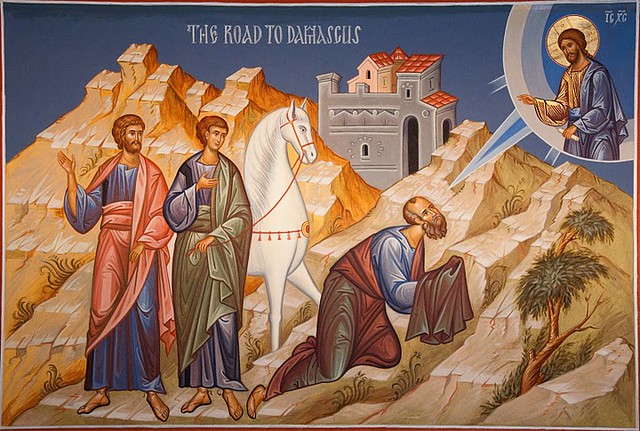
Meanwhile Saul, still breathing threats and murder against the disciples of the Lord, went to the high priest and asked him for letters to the synagogues at Damascus, so that if he found any who belonged to the Way, men or women, he might bring them bound to Jerusalem. Now as he was going along and approaching Damascus, suddenly a light from heaven flashed around him. He fell to the ground and heard a voice saying to him, “Saul, Saul, why do you persecute me?”

When I was in seminary I made myself available to friends who were serving churches if they ever needed someone to preach on a Sunday morning. I wish I could say the offer was purely altruistic, but it was mostly born out of a desire to get some experience before serving my own church one day. It was always exciting to arrive on a Sunday morning, to a church full of strangers, and stand up to preach the Word.

But it usually went poorly.

On one occasion I forgot to take up an offering and the congregation was more than happy to not pass around the plates. I preached at one church that had no bathrooms and I was encouraged to “use a tree out back” so I bounced back and forth behind the pulpit until the end of the service and quickly drove to the nearest gas station. And there was one particular Sunday when I got lost on my way to the church, and by the time I arrived they had already gone through two hymns and I was told they figured someone would show up to preach eventually.

But perhaps the most indelible memory took place one Sunday after worship during which a man in a handsome business suit approached me in the narthex and declared, “That Paul sure was in a heap of trouble. It’s a good thing Jesus was there to set him straight!” 

The conversion of Saul, the so-called Damascus Road Experience, has penetrated the thoughts and imaginations of Christians for centuries. It’s one thing to question Jesus’ decision to enlist the help of a bunch of (not even very good) fishermen to spread the Good News, it’s another thing entirely to consider the Lord choosing Saul, the persecutor of the faith, to become the chief evangelist for the faith.

I cherish that narthex comment about Paul because, up to that point, I always thought of Paul being good and fine until Jesus showed up to complicate his life. Which, to be fair, isn’t necessarily wrong. He had power and prestige, he even had a calling in his life, and then everything got flipped-turned upside down. It’s also true in our lives that things seem to be well and good until the Lord encounters us and we cannot remain the same.

But, as that man so wonderfully put it, Paul was in a heap of trouble until the Lord changed him. Things might have felt and looked good in life, but what kind of life is it to spend all of your time persecuting others? Jesus said, “I have come to give life, and to give it abundantly.” Whatever Paul’s life was before Damascus, it could not compare at all to what it was after.

And so it is with us. 

For some the Lord uses a bright wake up call to the life of faith. For others we know no other way because we’ve been part of the church for as long as we can remember. And for others it’s somewhere in between. But the Lord gets what the Lord wants. God is in the business of transformation. We, all of us, were in a heap of trouble until the Lord came to set us free. And now, like Paul, we live in the world turned upside down.

A Strange New World

Luke 24.1-12

But on the first day of the week, at early dawn, they came to the tomb, taking the spices that they had prepared. They found the stone rolled away from the tomb, but when they went in, they did not find the body. While they were perplexed about this, suddenly two men in dazzling clothes stood beside them. The women were terrified and bowed their faces to the ground, but the men said to them, “Why do you look for the living among the dead? He is not here, but has risen. Remember how he told you, while he was still in Galilee, that the Son of Man must be handed over to sinners, and be crucified, and on the third day rise again.” Then they remembered his words, and returning from the tomb, they told all this to the eleven and to all the rest. Now it was Mary Magdalene, Joanna, Mary the mother of James, and the other women with them who told this to the apostles. But these words seemed to them an idle tale, and they did not believe them. But Peter got up and ran to the tomb; stooping and looking in, he saw the linen cloths by themselves; then he went home, amazed at what happened. 

Here we are for the strange and bewildering day we call Easter. All of the Bible, all of the church, all of Christianity hinges on this day: Easter, resurrection, out of death into life. If this story were not in scripture, we would’ve thrown our Bibles away a long time ago. 

If the Bible does not tell us this story, it tells us nothing.

Easter is the one day when all the hopes of the past are made manifest in the present. Some of you are here because you can’t imagine being anywhere else. Some of you are here because you desperately want and need to hear Good News amidst a world drowning in bad news. Some of you were dragged here against your will.

So, no matter who you are or even why you’re here, hear the Good News: He is risen! Hallelujah! 

No one saw the resurrection of Jesus.

There’s plenty of art and films and even songs that attempt to describe the event that we are here to celebrate, but the strange new world of the Bible tells us, in all four gospels, that no one saw it. Not Peter, not Mary Magdalene, not anyone.

Jesus was already gone from the tomb when the stone was rolled away.

And perhaps, oddly enough, that’s a good thing. For the resurrection is beyond our ability to understand or comprehend – it comes to us from an entirely different sphere of reality.

It breaks all the rules.

The women wake up on the third day knowing full and well what to expect. They travel to the tomb with spices to anoint Jesus’ body for burial. They’ve run out of tears since Friday, perhaps they even travel in silence, the real and terrible sound of grief. But when they arrive the stone is moved and the body is gone.

And behold two men in dazzling clothes appear and the women fall to the ground in fear and reverence. “Why do you look for the living among the dead?” They say, “He is not here, he is risen!”

Their rebuke reverberates through the centuries. To this day we still look for new life in all the wrong places, hoping to gain control over something that is fundamentally out of our control.

We still set our minds on earthly things, we seek the living among the dead, but we rarely notice it. We cling to various things in life because life is so uncertain – tomorrow is never promised. So we hold desperately to those things we think give us life. Our jobs, spouses, children, on and on. But things largely stay the same.

So we flip through the never-ending abyss of Netflix searching for a momentary reprieve in a life of monotony, we listen to podcasts at 1.5x speed because we don’t feel like we have enough time between all of our timely events, all while we go from day to day knowing not what we are doing or why we are evening doing it. 

We know longer no what it means to be surprised.

And then BAM Easter!

Easter is the great disruption, the exodus for the rest of us, the beginning of a strange new world.

Kurt Vonnegut said that most good stories occur when a character gets unstuck in time. Our lives, therefore, only really become interesting when the time of our lives is disrupted and unstuck from its normalcy.

The women in Luke’s gospel travel to the tomb with predictable expectations – the dead stay dead. They knew that everything was out of their control, until they heard the announcement that Christians have been shouting throughout the centuries: He’s not here, he’s risen!

No wonder the story ends so strangely – the women just go home, amazed. Easter sets them, and us, on a course from which we leave provoked, unsettled, disoriented. Life will not, and cannot, be the same. But how can we possibly respond to the most unexpected thing in the world?

The tomb was empty, the body was gone. He is risen.

This is the proclamation of Easter and yet, proclaiming the resurrection is so difficult and so challenging because the resurrection cannot be made into a metaphor; it cannot be reduced into a charming story.

Easter is not the celebration of spring, it is not new life shooting up from the soil. It is not a quaint little tale of how love is stronger than death. It is, instead, something completely unlooked for, something without any precedent, and something that leaves us truly amazed. 

Easter proclaims that God is the Lord of disruption. It is among the roads of life, the traveling among the dead while looking for the dead, that Jesus shows up, becomes time itself for us, takes our time, and transforms the cosmos.

All these centuries later, with our sanctuaries and our lilies and our songs and our sermons, it can all feel like Easter is just one more thing that happens to Jesus. But that’s not right. Easter is the happening of Jesus to all things. Jesus doesn’t change on Easter – everything is changed because of him.

Any attempt, therefore, to find a way to make Easter relevant or new or relatable is a fool’s errand because Easter is unlike anything else and the best we can ever hope to do is point toward it. 

The proclamation of Holy Week, the entry into the city, the meal on Thursday, the cross on Friday, the empty tomb on Sunday, they run counter to just about everything else in life – they don’t give us ways to be better human beings, they aren’t commandments about how to make the world more bearable. They are not about what we do, but are instead about what is done to us. And that what has a name: Jesus Christ. 

The amazing part of Easter is that we don’t have to do anything for it to happen.

Jesus does for us what Jesus does whether we deserve it or not. God in the flesh comes to dwell among us and we return the favor by nailing Jesus to the cross. And, three days later, God gives him back to us.

You see – Jesus doesn’t wait behind the stone until his disciples have just the right amount of faith before breaking forth.

Jesus doesn’t tell them that he will be raised only when they’ve evangelized the right number of people.

Jesus doesn’t even given them a to do list to do before Easter happens.

We, the good and righteous folk that we are, we’re in church on Easter after all, we might’ve thought the story was over – that the shadow of the cross was the final word.

But in the strange new world made possible by God, only Jesus gets the final word because he, himself, is the Word incarnate.

On Easter God took the cross, a sign of death to the world, and made it the means of life. 

The promise of the resurrection is that nothing can ever separate us from God’s love, not even death. Jesus’ pronouncement from the cross, “Father forgive them for they do not know what they’re doing” frees us from all of our sins, past, present, and future. Easter means that one day we too will rise to join in the feast at the supper of the Lamb.

Can you imagine anything more wonderful than this?

The first disciples were amazed by what they saw and heard that first Easter morning.

We still are. 

The promise of the resurrection for people like you and me is wild beyond all imagining. It is the gift of life in the midst of death, it is a way out simply by remaining in, it is everything for nothing.

It is, to put it simply, amazing. 

Nothing more, nothing less, and nothing else.

He is risen! He is risen indeed! Hallelujah! Amen. 

The Divine Ellipsis

This week on the Strangely Warmed podcast I speak with Drew Colby about the readings for the Resurrection of the Lord [C] (Isaiah 65.17-25, Psalm 118.1-2, 14-24, 1 Corinthians 15.19-26, John 20.1-18). Drew is the lead pastor of Grace UMC in Manassas, VA. Our conversation covers a range of topics including McDonalds, Easter songs, champagne, ecclesial delight, the super psalm, good verbs, lectionary podcasts, Adam’s helpless race, commandment keeping, the destruction of death, All Things Beautiful, skepticism, and brevity. If you would like to listen to the episode or subscribe to the podcast you can do so here: The Divine Ellipsis

Jesus Saves

Psalm 118.1-2, 19-29

O give thanks to the Lord, for he is good; his steadfast love endures forever! Let Israel say, “His steadfast love endures forever.” Open to me the gates of righteousness, that I may enter through them and give thanks to the Lord. This is the gate of the Lord; the righteous shall enter through it. I thank you that you have answered me and have become my salvation. The stone that the builders rejected has become the chief cornerstone. This is the Lord’s doing; it is marvelous in our eyes. This is the day that the Lord has made; let us rejoice and be glad in it. Save us, we beseech you, O Lord! O Lord, we beseech you, give us success! Blessed is the one who comes in the name of the Lord. We bless you from the house of the Lord. The Lord is God, and he has given us light. Bind the festal procession with branches, up to the horns of the altar. You are my God, and I will give thanks to you; you are my God, I will extol you. O give thanks to the Lord, for he is good, for his steadfast love endures forever. 

Every pastor has a favorite Palm Sunday story.

Like the year when the palm branches were delivered way too early and dried out so much that when the gathered congregation shook them over their heads in worship, palm branch particles went flying in every direction resulting in sneezing and coughing fits among the people of God.

Or the time when the pastor thought it would be a great idea to dress up like a donkey and preach the sermon from the perspective of the animal that carried Jesus into Jerusalem, to which the pastor received perhaps the greatest Sunday morning comment of all time: “You know, you’re not the first donkey we’ve had in that pulpit.”

Only they used a different word for donkey.

Or the time when the children of the church processed in waving their palm branches and lifting up their hosannas only to begin smacking one another in the face with their aforementioned palms until a nearby parent had to jump in to break up the melee and mutter, a little too loudly, “Lord, save me from these kids!”

And I think the reason preachers like me like to tell a cute or funny little story about Palm Sunday is because the actual story of Jesus’ triumphal entry into Jerusalem is rather confounding.

Put another way: Palm Sunday is perhaps the strangest Sunday of the year.

For, it begins in celebration and ends in catastrophe. It starts with “Hosanna” but it finishes with “Crucify.” It begins with life and it ends with death.

At they are approaching Jerusalem Jesus sends two of his disciples to procure a colt for his entry into the holy city. He rides in a cartoonish way, with his feet nearly dragging on the ground on either side of the animal, and the people of Jerusalem comes out in droves to see the would-be Messiah. They are overcome with reverence, so much so that they begin to take their own clothing, and spread it on on the road only to be trampled upon by the colt. They make a royal carpet as they worship the King of kings.

They take leafy branches from the fields and they wave them to and fro and they shout, “Hosanna! Blessed is the one who comes in the name of the Lord! Blessed is the coming kingdom of our ancestor David! Hosanna in the highest heaven!”

Hosanna. I’ve always loved that word. It’s such a churchy word. It makes me think of my own childhood and parading around the sanctuary. It makes me things of the musical masterpiece Jesus Christ Superstar and the crowds singing, “Hey sanna Hosanna, sanna sanna Hey, sanna ho sanna hey sanna.”

Hosanna is a wonderful word. And, every Palm Sunday, we reach into the vault of churchy words, we dust off this old familiar declaration, and we proudly put it on display. We shout it in our hymns, we put the word on the lips of our children, we hear it read in the scriptures. And then, at the conclusion of worship, we wrap it up and place it back into the church vault with our other special words only to come back one year from now.

We are familiar with this word. It conjures memories and songs. Churches everywhere will join us in our shouts of Hosanna today.

But do we know what it means?

Save us.

It is a declaratory pleading. It is an emphatic demand.

Save us. Now!

Saved?

That’s a word you don’t hear much in churches like ours. We’re Methodists. We sing and we eat and we sing some more. We try to love each other. Really, we do. 

Love, peace, grace, mercy, forgiveness. Those are our words.

But saved?

How many got saved on Sunday? We don’t talk like that. 

We might make fun of those other types of church that talk in such a way. 

I remember someone once asking me if I was saved, and I said something like, I suppose so, and he said he’d been saved no less than 9 times.

Hosanna! Save us!

Really? 

Well, perhaps we should go look in the Bible for this word, where else does it appear besides Jesus’ triumphal entry into the city that will kill him?

There’s a woman, suffering from a hemorrhage for 7 years. She’s among the crowd one day and she says to herself, “If I but touch the hem of his garment I will be saved.” 

Well, in our Bible’s it says, “made well.” 

But it’s the same word for saved. The same word the crowds cry out as Jesus’ enters Jerusalem. 

And she suffers from more than just her bleeding. She’s isolated, outcast, thrown away by the likes of her family and her friends. She is a nobody with no hope in the world. Until the hope of the world walks past one day and she reaches out. She’s got nothing until she gets saved.

Jesus saves.

There’s a blind beggar sitting by the roadside. Like the woman he is unseen by all because of his inability to see. Forgotten and abandoned. And when the Lord walks by he shouts out, “Son of David have mercy on me.” The disciples are quick to shut him up. The Lord has more important things to do than to waste his time on you.

But the Lord comes anyway and says, “What do you want me to do?” 

I want to see. 

And Jesus says, “You faith has saved you.”

He has nothing to show for anything. He’s desperate. And in a moments notice, he is in the parade of the faith. Dancing and shouting for joy. 

Jesus saves.

There’s a rich man, well to do, Mr. Z they call him behind his back. While his fellows get poorer and poorer he gets wealthier and wealthier. He’s a tax collector. One day he climbs a tree to see Jesus. And the Lord calls him down and says, “Got any plans for lunch?”

They go to Zacchaeus’ house and the crowds are incensed. How dare the Lord go to eat with that sinner! What do they talk about over lunch? We don’t know. We only know that as they leave the house the tax collector is changed. He says, “I will give back everything that I have taken with interest.” 

“Salvation” Jesus says, “has come to this house.”

Jesus saves.

It’s no wonder the crowds grew and grew and grew. It’s no wonder the strange new world of the Bible talks of people leaves their plows in the field and their bread in the oven when the Messiah shows up. 

Because the Messiah is the one who saves.

And there’s no such things as being a little bit saved, or partially saved. It means a total and complete salvation. 

So when they wave their palm branches, when they place their cloaks on the road, they scream for salvation from the only one who can bring it.

Hosanna! Save us Jesus!

Save us, from what?

Jerusalem is occupied, the Roman garrison enters the holy city on the other side. Pontius Pilate comes riding in on a war course while Jesus enters on a donkey. The people of God, therefore, are living as strangers in a strange land in the very land God had promised. Their way of life is fracturing, their faith is under scrutiny, they have no bright hope for tomorrow. 

And here comes the Messiah! The one who makes everything right! He’s saved others and now he’s going to save us. He’s going to give us our city back. He’s going to bring back our way of life. He’s the new king!

The crowds grow and grow, and the shouts of Hosanna echo through the city streets, until they see the cross.

It is strange and not so strange to know that those same people who shouted Hosanna at the beginning of the week were shouting crucify by the end.

It’s all too easy for us to cast Jesus into role of our own choosing.

It’s all too easy for us to put words, our words, into Jesus’ mouth.

We would still like to see him parade around into the madness of our circumstances to champion our hopes and dreams, to disrupt and frustrate the plans of our enemies.

But Jesus doesn’t come to bring us more of the same.

Jesus comes to save us.

He doesn’t enter the holy city to establish yet another political machine that result in one group lording it over everyone else.

He doesn’t pass out swords and shields to storm the temple walls.

He doesn’t even offer programs of personal morality that will make the world a better place.

One of the craziest parts of Palm Sunday is that, according to the strange new world of the Bible, Jesus doesn’t say anything.

He merely rides into the city that will kill him.

But it’s Palm Sunday. We don’t want to have to think about Friday yet. We like the images and the sounds of our children waving palm branches high in the air. But there is no jumping from today to Easter Sunday.

Put another way, we do well to remember there is no resurrection without crucifixion.

It’s in our hymns and in our creeds and even in our prayers, but we try to stay away from the crucifixion as much as possible. And for good reason – it is the sign of our total and utmost depravity. But it’s also the heart of God. 

God, the creator of the cosmos, lays aside almightiness to come and dwell among us in the muck and mire of life, to be one of us.

God becomes vulnerable for us.

And how do we return the favor?

Crucify, Crucify!

Why? Because we want salvation on our own terms. We want to take matters into our own hands. We want to save ourselves. 

We don’t want to be saved in our sins, we’d rather lord it over other sinners who are worse than us. The only problem with that is, according to the kingdom of God, none of us is righteous, no, not one. 

You see, we crucified Jesus not because he was God, but because he was God and then failed to come up to our standards in doing so. It’s not that we weren’t looking for the Messiah; it’s just that he wasn’t the one we were looking for.

We’re fine with being saved only so long as it fits neatly into our expectations of what it means to be saved. 

The crowds wave their branches and they shout their hosannas. Save us Jesus, save us! And, by the end of the week, that’s exactly what he does, whether we deserve it or not, whether we like it or not.

Jesus saves.

O give thanks to the Lord, for he is good, for his steadfast love endures forever.

Even on the cross.

Jesus saves. Amen. 

Beauty Will Not Save The World

John 12.1-8

Six days before the Passover Jesus came to Bethany, the home of Lazarus, whom he had raised from the dead. There they gave a dinner for him. Martha served, and Lazarus was one of those at the table with him. Mary took a pound of costly perfume made of pure nard, anointed Jesus’ feet, and wiped them with her hair. The house was filled with the fragrance of the perfume. But Judas Iscariot, one of his disciples (the one who was about to betray him), said, “Why was this perfume not sold for three hundred denarii and the money given to the poor?” (He said this not because he cared about the poor, but because he was a thief; he kept the common purse and used to steal what was put into it.) Jesus said, “Leave her alone. She bought it so that she might keep it for the day of my burial. You always have the poor with you, but you do not always have me.”

Lent is such a strange time in the life of the church. 

Yes, during Advent we re-await the baby born King in Bethlehem, which is bizarre in its own right. The author of the cosmos condescends to dwell among us through the least likely of people in the least likely of places.

But Lent? During Lent we hear about sin and shame – the need to lament and repent. We sing songs about death and crucifixion, we gaze inwardly at our wanton disregard for the good, the true, and the beautiful. 

But Lent, contrary to how we might convey it or even embody it, isn’t really about sin and it definitely isn’t about punishment. It is a time set a part to behold God, so that we might see ourselves and all in things in light of God’s devotion to us. 

In other words, Lent is a strange time of good news because in confronting the truth we are able to do away with falsehoods and trivialities. Looking at the cross, and our complicity in it, gives us the space to admit that nothing is as it should be. 

Just here in our local community we’ve seen, over the last week, an entire apartment complex being forced to vacate into a market where there are no available rentals, a student fired a gun inside a middle school bathroom, and a campsite for homeless people caught fire.

Each of these incidents, sadly, can be attributed to our own sinfulness and selfishness. When we care more about our wealth, our freedom, and our clean streets, than the wellbeing of others, we only further prove that we have behaved badly.

And it’s not even just the headlines that we can read in the paper. Lent, oddly, forces us to come to grips with the fact that even Beauty is not as it should be. 

Beauty cannot save the world, at least not in the ways we want it to be saved. 

Our cultural achievements, our aesthetic sophistications, our programs of spectacular morality cannot deliver us from the evil at work without or within us. 

It’s notable how often the strange new world of the Bible and the tradition of the church warns us about the dangers of beauty; beauty tricks us into believing that all is well when, in fact, all is hell.

Beauty is fleeting and finite, and no matter how hard we try and how much effort we put into things, they cannot save the world.

On Tuesday there was a benefit concert that featured the music of Ed Sheehan, Camila Cabello, and other artists that raised over 21 million dollars for Ukrainian refugees. It was a two-hour live streamed collection of performances during which the myriad array of musicians pleaded for an end to the war in Ukraine waged by Russia. 

21 million dollars is no small feat.

But you know what happened in Ukraine? Nothing.

The bombs kept falling. Cities continued to crumble. And families fled out of fear for their lives.

In Jesus’ prelude to his Passion, on the eve of Palm Sunday, he arrives in Bethany and goes to the home of Lazarus. Mary and Martha decide to throw a little dinner party for the Lord and while their kicking back over appetizers, Mary bends down to the floor with a pound of Chanel No.5, pours it out on Jesus feet, and then she wipes them with her hair.

Judas, of course, jumps up from his seat and puts her in her place, “Woman, what’s wrong with you? That perfume is worth $50,000, why didn’t you see it and give the proceeds to the poor?”

Jesus, ever calm, responds to his soon-to-be-betrayer, “Leave her alone. She bought it for my burial. There will always be poor people, but I won’t be here forever.”

Its Lent which means, hopefully, we’re all in a space to admit that we agree with Judas. We know we’re not supposed to identify with him, he is after all the one who gives up his Lord, but he has a point. It’s such a waste to pour out the perfume on Jesus feet when it could’ve been used to make the world a better place.

And Jesus’ words are downright offensive, “You will always have the poor with you, but you will not always have me.”

C’mon Jesus! Don’t you know being a Christian is about transforming the world? What a waste! Think about what we could’ve done with all that cash!

It’s embarrassing to hear the Lord speak in such a way.

And perhaps embarrassing isn’t the right word. It’s threatening to hear Jesus talk in such a way. His proclamation here to Judas threatens to upend everything we think we know. 

Our world is built on the assumption that whatever ails us can be fixed by us. And that’s not necessarily a bad thing. It is good and right for us to dig deep into our wallets and purses to help those in need. We do have an obligation to love our neighbors and our enemies as ourselves. We need to believe in a better world. We need hope.

But we aren’t the hope of the world. If we were then we would not longer need newspapers to tell us what’s wrong in the world because there wouldn’t be anything wrong in the world. 

Remember: some of the most horrific events in human history were done in the name of progress.

Transcendent hope, real hope for things not yet seen, can’t come from us, it has to be done to us. And that kind of hope has a name: Jesus.

The extravagant gift of the perfume poured out by Mary reveals to us that, unlike Judas, she knows that Jesus in the only hope in the world that we’ve got. She, therefore, can do something wild and reckless because she’s recognizes the wonder of the cosmos sitting at her table. She knows that true gifts, like the perfume and the incarnate One, cannot be controlled.

And, though we can’t help ourselves but agree with Judas, we also know (in some way, shape, or form) that Mary is right. We all encounter extravagant gifts that can disappear just as soon as they arrive.

A choir works for hours and hours only to stand up, sing for 4 minutes, and then it’s gone never to be heard again, at least not in that way.

A teacher does the same thing with every lesson just as a preacher does with every sermon.

Flowers are given in honor, love, memory, and respect only to die and wither shortly thereafter.

People like you and me put our money into offering plates week after week.

Even Jesus raises Lazarus from the dead, only for Lazarus to die again in the future.

Why?

Well, love is a strange thing. As is hope. But without them, we are nothing.

Judas rebukes Mary for her waste because she could’ve help the poor. And yet, Judas lacks the vision to see that Mary is helping the poor. She pours out the extravagant perfume on the poorest of all: God in the flesh who condescends to dwell among us. She gives value and worth to the very people that Judas is advocating for.

But Judas has his mind stuck on earthly things – he believes that the only real and important changes can come out of his own goodness and charity. 

Mary, however, has her mind on the divine, she perceives, somehow, that the One sitting at the table is the only One who can ever really make something of our nothing.

Does this mean that we are no bear responsibility for the last, least, lost, little, and dead? On the contrary, this dinner party disagreement is a profound declaration about the role of the church in the world. The world is an absolute mess and yet the church is a constant witness to the value and the worth of those the world throws away like trash. 

Lazarus was dead, wrapped up in a tomb. And Jesus brings him back.

The 5,000 have nothing to show for their faithfulness except the hunger in their bellies and Jesus feeds them.

The 12 disciples abandon, deny, and betray Jesus and he still breaks bread with them and returns to them on Easter.

Wherever the world sees failure and brokenness, Jesus sees value and beauty.

And beauty is a fickle thing. It is often fleeting and wasted. And it will not save the world. But it might make the world a little more bearable. 

Only the world that cannot save itself will be saved by God. And only the beauty that cannot save the world is worth saving at all.

Do you see? In God’s weird and wondrous way, Jesus himself is the nard purchased at a great price, to lavish upon the dying world. As Christ’s body in the world we are called to be symbols of broken beauty for a world that cannot and will not save itself.

We have hope because we know Jesus Christ and him crucified. Hope measures the distance between the now and the not yet. Hope is only intelligible amidst hopelessness. Were it up to us alone the world would never ever change. But it’s not up to us – Jesus is the hope of the world.

The anointing of Jesus’ feet is a reminder that, by the end of the week, those feet will be nailed to the cross. Jesus comes into a world that does not request him, nor even want him, because when push comes to shove we’d rather take matters into our own hands.

Or, put another way, when Jesus arrives with proclamations of grace and mercy and forgiveness, with announcements about a new age called the kingdom of God, we nail him to the cross. 

Things are not as they should be. 

No matter how hard we try there will always be more to do. But here’s the Good News: the one thing that needs to be done is already finished in the life, death, and resurrection of our Lord. Though we are unworthy, Christ makes us worthy. Though we have sinned, Christ offers pardon. Though we feel empty, Christ proclaims that we are enough.

We are freed from the burden of being God. We, like Mary, can do wild and reckless things because Christ is the hope of the world, not us. 

There is nothing beautiful about the cross. It is a sign of torture and death. And yet, for God, it is our salvation. Beauty will not save the world, but God does. Amen.

To The End

John 13.1

Now before the festival of the Passover, Jesus knew that his hour had come to depart from this world and go to the Father. Having loved his own who were in the world, he loved them to the end.

The synoptics (Matthew, Mark, and Luke) treat us to the scene of Jesus’ final evening with his friends as they sit around a table sharing bread and wine.

John, however, takes the scene a little bit further.

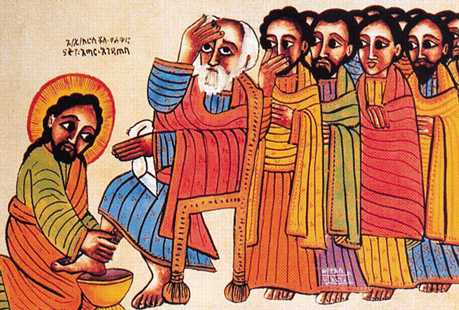
While eating at the table, Jesus gets up, takes off his outer robe, and ties a towel around himself. He begins washing all of the disciples’ feet and wipes them off with the towel around his waist.

Peter, of course, objects to the humble (read: humiliating) act of his Lord, but Jesus hits him hard with, “You do not know what I am doing, but later you will understand.”

Only after every disciple’s feet are washed does Jesus arise, and begins to teach:

“Listen, you call me Teacher and Lord which is good and fine because that is who I am. But check this out: If I, your Lord and Teacher, am willing to get down on the floor to wash your feet, you also ought to wash one another’s feet. This is what the Kingdom of God is all about – the first being last and the last being first. Things are getting flipped upside down right here and right now. And I do and say all of this knowing that one of you will betray me, it is to fulfill the scripture, ‘The one who ate my bread, has lifted his heel against me.’” Shortly thereafter, Judas leaves and sets in motion the world turned upside down. In mere hours the guards will arrive in the garden, Jesus will be arrested, put on trial, sentenced, beaten, and left to die on the cross.

The foot washing has always been a little strange and a little weird to the people called church. For one, as mentioned, the other Gospels don’t include it, and for another, it reveals the heart of God in a way that feels uncomfortable.

Not only does Jesus, God in the flesh, get down on his knees to wash the dirty feet of the disciples, one of whom will shortly betray him, another will deny him, and the rest will leave him hanging to die on a cross, but then Jesus has the gall to command us to do the same for one another.

And yet, in a way, more than being told what we are supposed to do, the whole message of this final moment is, again, about what Jesus does for us.

In the foot washing, Jesus repeats in himself the great lengths to which God was willing to go for a people undeserving – how far God was willing to go to wash us clean from our transgressions.

This moment, one that might make us cringe or, at the very least, furrow our brows, it reveals to the disciples and to us that the Lord, the Alpha and Omega, the Beginning and the End, is about to suffer and die just to rid us of the stench and dirt of sin and death that latches onto us.

And, notably, this is the final act of Jesus toward his disciples before Easter and, as John so wonderfully notes, Jesus loved his disciples to the end. Including Judas.

Do you see what this means? Even the worst stinker in the world, even the one who betrays his Lord to death, is someone for whom Christ died. While we were yet sinners, Christ died for us.

Jesus, bewilderingly, loves us to the end, loves us so much that he was willing to take our sin upon himself, mount the hard wood of the cross, and leave them there forever. Thanks be to God.