Devotional – John 14.18-19

Devotional:

John 14.18-19

“I will not leave you orphaned; I am coming to you. In a little while the world will no longer see me, but you will see me; because I live, you also will live. 

Weekly Devotional Image

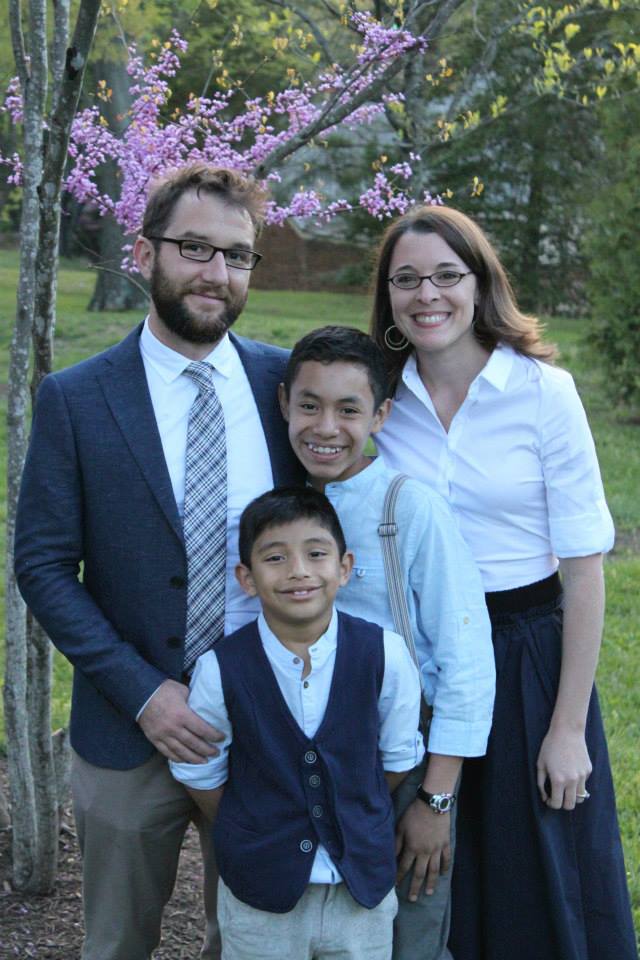
Two of my favorite people in the world made the choice to adopt two Guatemalan boys and raise them as their own. I don’t know a lot about the conversations and planning that took place before both of the adoptions, but I do know that they would tell you it was the best decision they ever made. Gabriel and Alexander are two of the finest young men that I have the privilege of calling my friends; Jason and Ali (their parents) are responsible for their strong and dynamic character. Whenever I travel home to Alexandria I make a point of stopping by their house just to catch up with the boys and have my mind blown by how much they have grown and changed.

10310117_10152423618803879_7313295905510655067_n

When Jason and Ali first brought each of the boys home they had to make the deliberate effort to spend as much time as possible with the boys. Though only children, the parents could sense that they were afraid of being let go and sent somewhere else. Without the mental faculty to fully grasp the depth of their adoption, they could experience the fear of being abandoned. For many nights Ali and Jason would stay with their boys in their rooms just so they would know that they were loved, that they were known, and that they would never be abandoned. I love those two boys more than I can describe. I love their parents more than I can describe. (Jason presided over Lindsey’s and my wedding ceremony; Gabriel was our ring-bearer; Alexander did the Old Testament reading)

Millions.Front

Before Jesus’ crucifixion and resurrection he assured his disciples that he would not leave them orphaned. Even though he knew he would have to leave them, the Holy Spirit would be poured out to never leave them. Much like Jason and Ali staying with their boys night after night, God in Christ has not left us to be orphaned. Our Father is with us so that we can know we are loved, that we are known, and that we will not be abandoned.

The call of all Christians is to combat the plague of loneliness in the world. It is through many of our actions that God’s love is manifest in the world so that people may know what it means to come within God’s loving embrace. Do you know someone who feels abandoned right now? Have you noticed anyone retreating into their own isolation? Our challenge today is to reach out to those who feel orphaned and help them to see God’s presence in their lives.

My Cup Runneth Over – Sermon on Psalm 23

Psalm 23

The Lord is my shepherd, I shall not want. He makes me lie down in green pastures; he leads me beside still waters; he restores my soul. He leads me in right paths for his name’s sake. Even though I walk through the darkest valley, I fear no evil; for you are with me; your rod and your staff – they comfort me. You prepare a table before me in the presence of my enemies; you anoint my head with oil; my cup overflows. Surely goodness and mercy shall follow me all the days of my life, and I shall dwell in the house of the Lord my whole life long.

mycuprunnethoverwater

The 23rd Psalm. Many of you know that I am far more eager to preach on the lesser-known texts of scripture, than I am to preach on those that are remarkably familiar. I decided months ago that after my wedding and honeymoon, Psalm 23 would be the first text I preached on, precisely because it was familiar. All things considered, I have been very busy the last few weeks, and I thought that it would be easy to prepare a sermon on this beloved text; I was so wrong.

When we proclaim one of the best known texts from the Bible, there is an incredible amount of baggage that comes with it. If I wanted to preach on something from Obadiah or Nehemiah, I could say a whole lot about whatever I wanted because so many of us are unfamiliar with the texts, myself included.

psalm23-lg

But when you hear Psalm 23 read aloud, many of us immediately have a memory or a determined understanding of what the text means. Its familiarity makes it challenging to proclaim because we’ve all heard it before; The Lord is my shepherd, I shall not want…

What is it about this psalm that makes it so beloved? Perhaps many of us were taught to memorize the psalm when we were younger. Maybe some of us can remember our mothers and grandmothers whispering it by their bedside before they went to sleep. Is it the simplicity, the ease for memorization? It the use of this psalm in contemporary pop-culture? Besides the Lord’s prayer and John 3.16, this is perhaps the best known of all the Christian scriptures.

I believe what makes this psalm so compelling is not so much its brevity, but instead its realism. This is no happy-go-lucky, “everything is awesome,” kind of passage. Rather, it faithfully faces the dark realities of what life is really like, while at the same time calls us to honestly remember the delights of life. It has become so popular and beloved that many of us can recite it from memory, but have lost touch with what the passage is saying. Every verse contains a wealth of theological treasure waiting to be uncovered and enjoyed.

Good

The Lord is my shepherd, I shall not want. We of course remember immediately that Christ is the good shepherd, as our wonderful stained glass window portrays. God in Christ is the guardian of the church. The great I AM shepherded the Israelites through the wilderness, delivering them from slavery and captivity to the promised land. The Lord was the shepherd to the prophets who proclaimed the Word to the lost Israelites. God helped shepherd Christ throughout Galilee, even to the cross. Our Father was the shepherd to the disciples as they spread the gospel throughout the world. The great shepherd is now with us, guiding and keeping watch over all that we do as we witness to God’s love in the world.

God guards the flock as a whole, the sheep have been brought into the fold. Each of us are one of God’s sheep; we are safer if we stay connected with one another. If the church begins to stampede in one direction, some will be inevitably lost. If the church divides into factions, we will be like a panicking flock of sheep. We listen for the great shepherd who leads us.

He makes me lie down in green pastures; he leads me beside still waters; he restores my soul. In our modern lives we seem to have lost the power to relax; we no longer know what it means to observe sabbath time in our lives. We succumb to the power of stress that overcomes us regularly, and lose the energy to live vibrant and fulfilling lives. So, God, father of all mercy, bids us to relax, to observe some sort of sabbath in our lives, and to find rest. However, notice that rest is not a end in itself, God restores our souls through rest so that we can continue on our faithful journeys. Life is filled with movement, following the paths of righteousness.

He leads me in rights paths for his name’s sake. Even though I walk through the darkest valley, I fear no evil; for you are with me; your rod and your staff – they comfort me. God leads us, as the shepherd, on the right paths. So much of the vital moments and decisions in our lives do not come from our choosing; we do not determine the time of our birth, the kind of parents that we will have, the culture in which we find ourselves, the opportunities that “come our way.” At times life is beyond our control, and that is a good thing! To so desperately seek control of our lives will eventually end in disappointment. In order for God to be the shepherd of our lives, we have to let him into our hearts to shepherd us and guide us on the paths of righteousness. We need to let God be in control. It is only when we let go that we can faithfully proclaim, “even though I walk through the valley of the shadow of death, I will fear no evil.” It is only when we let go that we can know that God is with us.

You prepare a table before me in the presence of my enemies; you anoint my head with oil. Like any good shepherd, God has brought his flock back home to safety, brought us to his table, just like the table that has been prepared for us here. Some of our truest enemies might be with us here in church this morning, but God has prepared the table for you so that you can feast with friend and foe. 

lord__s_supper_by_bclary-d37hhzp

And so now we come to an incredible collection of words that encompass God’s goodness in our lives: my cup runneth over

How often do we take time to look back and reflect on what God has done for us? How much time do we spend in prayer thanking God for all that he has done? Can we faithfully declare “my cup runneth over…”?

10256438_10203577672981569_6139148774861837965_o

Today, of course, is Mother’s Day. I am blessed and privileged to have a mother who has cared for, and loved me, every day of my life. A mother who is still so accustomed to attending swim meets, baseball games, and band concerts, that she will drive two and a half hours to attend church with us here at St. John’s. A mother who participated in my life and activities, but gave me the freedom to grow and experience life independently. A mother who sacrificed her own needs again and again because she loved me. My cup runneth over. 

Some of you might not have had a mother like mine, some of you may have lost your mother, some of you might have grown up without a mother, but look around you. The call of the Christian is to be motherly to all that have gathered here. Though your mother might not have been like mine, I know that each of you have mothers in Christ that are here with us today. Our cups runneth over.

980415_10201896436508405_1440994831162466171_o

On April 27th I stood at the front of Aldersgate UMC in Alexandria, VA, waiting for Lindsey Rickerson to walk down the aisle with her father. I cannot tell you how nervous I was. I know that I was leaning from side to side, standing before all of my family and friends, my nerves attempting to get the better of me, but the moment Lindsey appeared at the back of the sanctuary I felt God’s presence surround me with a sense of calm I have rarely experienced. I covenanted with God and Lindsey to love, honor, and keep her with all that I am for the rest of my life. I am blessed to be her husband. Lindsey has changed my life for the better on numerous occasions, she challenges me to be a better man, and lives out God’s call on her life every single day. My cup runneth over. 

Some of you might not have a spouse like mine, some of you may have lost yours, or never felt called to be married in the first place, but today and for all days I get the joy of sharing Lindsey with you. We are all called to love one another in such a tremendously wonderful way that people like Lindsey can be and live for those that have gathered as the body of Christ. Our cups runneth over.

1610046_10152482968867577_1866027851814592445_n

After the wedding, while Lindsey and I celebrated at the reception. I had countless staff members continually refill my glass to the degree that I literally learned what it meant for my cup to runneth over. I looked around the reception hall and saw joyful faces that conveyed endless memories of how much my life has been shaped by others. In that room I witnessed God’s incredible goodness manifest in the lives of so many that I have been blessed to call my friends. My cup runneth over.

Some of you might not have the opportunity to sit in a room surrounded by droves of friends and family to congratulate you on the newest development in your life. You might feel lonely and isolated in your current life situations. But look around the sanctuary. Being one in Christ means that we discover our newest and greatest friendships here at church. Christian friendship and fellowship is what made the church so appealing in the beginning, and it rests at the very fabric for what it means to be the church today. I look out from this pulpit and I see the friendships that will sustain all of us through the coming years. Our cups runneth over.

The 23rd psalm is filled with such vivid and realistic imagery, applicable for our daily living. The great shepherd tends to his sheep, keeping them close and protecting them from harm. Our God compels us to find rest so that we can continue on our journeys of faith. The Lord invites us to this his table so that we might feast on heavenly food and meet the divine. But today, the Lord asks us to look on our lives and remember our blessings.

10172672_10104460766255513_8430566301283982547_n

Because our blessings are everywhere; from the tiniest details of a perfect sunset, to a incredible wedding and the joining together of two people. God has blessed our lives over and over again. We have the choice to reflect on his goodness, or remain in our suffering. Today we remember what God has done, we remember our mothers, and the call of the church to be motherly toward everyone, we give thanks to the Lord our God for shaping us through those we call our friends.

It’s only when we look at our lives and faithfully say, “my cup runneth over” that we can begin to proclaim the final verse of psalm 23: “Surely goodness and mercy shall follow me all the days of my life, and I shall dwell in the house of the Lord forever and ever.” Amen.

Devotional – Psalm 31.3-5

Psalm 31.3-5

You are indeed my rock and my fortress; for your name’s sake lead me and guide me, take me out of the net that is hidden for me, for you are my refuge. Into your hand I commit my spirit; you have redeemed me, O Lord, faithful God. 

Weekly Devotional Image

I love making scripture jokes. This is not to say that I believe scripture is a joke, I just love to drop lines from the Bible in daily conversation in such a way that it will make people smile, chuckle, and (rarely) laugh. While in seminary this became commonplace among my friends and we always tried to out-do one another.

For example: I would ask what time a lecture was supposed to start and someone would reply “about that day or hour no one knows, neither the angels in heaven, nor the Son, but only the Father” (Mark 13.32)

normal_LaughingJesus

Behind every joke was a knowledge of scripture that allowed one of us to use verses whenever we needed to. We did not sit around in the library memorizing specific verses to use as we saw fit, but instead we so steeped ourselves in God’s Word that they naturally became a part of our regular conversations.

Becoming a Christian is like learning a new language. In order for us to learn the language of faith we must become immersed in the cultural practices of lived Christianity. Over the last century scripture has been relegated to the private sphere of our lives, resulting in the biblical illiteracy so very apparent in churches today. To rediscover the vibrancy of faith, we have to return to the beauty of the Word as it becomes our new language; not just by memorization, but by appreciation.

512ifkGrOGL

Jesus knew his scripture. If you read through the 4 gospel accounts it becomes very apparent that Jesus used phrases and images from the prophets and the psalms in his daily life. Moreover, while hanging on the cross Jesus cried out, “Into your hands I commend my spirit” using the same words from Psalm 31. If we are to be a holy people, then recovering the beauty of scripture for our lives rests at the heart of the future of the church.

Perhaps using scripture in ironic and joking ways is not the best way for learning the language of faith, but its a start. Let us all learn to take the time to value scripture, let it soak into the fabric of our lives, and become incarnate in the way that we live out God’s Word in the world.


Devotional – Psalm 18.1-2

Devotional:

Psalm 18.1-2

Protect me, O God, for in you I take refuge. I say to the Lord, “You are my Lord; I have no good apart from you.”

Weekly Devotional Image

5 days. In 5 days I will be waiting at the altar of my home church, watching a beautiful bride walk down the center aisle to stand next to me as we enter holy matrimony. It has been more than a year since I asked for her Father’s blessing and placed a ring on her finger; I cannot believe the wedding weekend is so close. Words do not do justice to the love and joy that Lindsey has blessed me with, and I am so excited for us to stand before God, our families, and our friends, as we covenant together.

741111_4136006929474_543179185_o

Our journey to the wedding has been filled with both wonder and trials. At first, Lindsey did not like me nearly as much as I liked her. My planned and executed dates were met with platonic affection. As I began to back away, she stepped forward and the tables had turned. Our relationship began out of a willingness to be honest with one another and find harmony in our time spent together.

We dated throughout our time in Durham, North Carolina surrounded by friends who helped to cultivate and nourish our relationship. We were spoiled rotten by our peers from work and school who went our of their way to include us and make us better than we were.

431201_673719668650_364622628_n

When we moved to Staunton we lost the familiarity of seminary/work in addition to our social network of friends. For months Lindsey and I had to live into a community that was very different than what we left. Lindsey had to find work, and I had to adjust to the work of St. John’s. Learning and appreciating the culture of our new home has been difficult, but with the wedding so close in sight I can say, without a doubt, that we are exactly where we are supposed to be.

1012326_10151692266377840_921328894_n

From the very beginning of our relationship we have tried to keep God at the center of our focus. Some of our first conversations were about how God has revealed himself in our lives and we have strived to keep that at the forefront of our minds. As I prepare to join Lindsey in wedded life I believe that I am only where I am because God is my Lord, and I recognize that the good in my life has come from Him.

This week I encourage each of you to take a look at your lives. When have you had your trials and tribulations? When has God been revealed to you? Do you take refuge in the Lord? Do you see the goodness of your life as a gift from God?

If we are an Easter people, a people of resurrection, then God can make all things new. No matter where you are, may God bless you as he has blessed us.


The End Has No End – Easter Sermon on Mark 16.1-8

Mark 16.1-8

When the sabbath was over, Mary Magdalene, and Mary the mother of James, and Salome brought spices, so that they might go and anoint him. And very early on the first day of the week, when the sun had risen, they went to the tomb. They had been saying to one another, “Who will roll away the stone for us from the entrance to the tomb?” When they looked up, they saw that the stone, which was very large, had already been rolled back. As they entered the tomb, they saw a young man, dressed in a white robe, sitting on the right side; and they were alarmed. But he said to them, “Do not be alarmed; you are looking for Jesus of Nazareth, who was crucified. He has been raised; he is not here. Look, there is the place where they laid him. But go, tell his disciples and Peter that he is going ahead of you to Galilee; there you will see him, just as he told you.” So they went out and fled from the tomb, for terror and amazement had seized them; and they said nothing to anyone, for they were afraid.

resurrection-bonnie-bruno

In the cool of the morning, when everything seems perfect and still, the three women made their way to the tomb. They were carrying spices to anoint his body and as they walked the sun began to rise and the dew held gently to the plants and flowers along the path. I imagine the women, still in shock from the crucifixion, walking silently in a single file line, all caught up in their own thoughts; “Why did he have to die?” “Where have all the other disciples gone?” “I’ve seen him save so many others, but why not himself?

At some point, however, a conversation began between them, “Who will roll away the stone for us at the entrance to the tomb?” Yet, when they arrived, the large stone had already been rolled back. Perhaps with fear already beginning to brew within their hearts, they entered the tomb to discover a young man, dressed in white, sitting off to the side; and they were afraid. The stood shaking before the young man when he said, “Do not be afraid; you are looking for Jesus of Nazareth, who was crucified. He has been raised; he is not here. Look there is the place where they laid him. But go, tell his disciples and Peter that he is going ahead of you to Galilee; there you will see him, just as he told you.” Immediately the women went out and fled from the tomb, running for their lives, because fear and amazement had seized them; and they said nothing to anyone, for they were afraid.

women-arriving-at-the-tomb_he_qi_1999

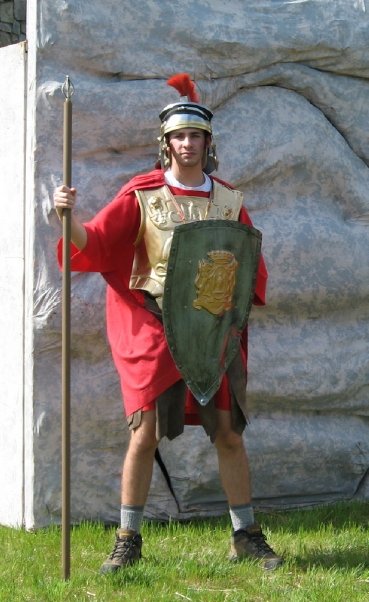
Easter is, without a doubt, my favorite day of the year. Growing up I used to look forward to the Easter Egg hunts, the gathering for a meal at my grandmother’s house, and singing those great hymns in church. At home, Easter was a big deal. The church was always immaculately decorated with lilies and flowers of all colors, the women wore their favorite spring dresses, and the men even dared to wear ties with splashes of color. During the week leading up to Easter a large tomb would be placed on the church’s front lawn so that from Good Friday to Easter Sunday two men dressed as Roman Centurions would guard the tomb as people drove by. I remember with great joy the year I was finally tall enough to wear one of the costumes and stand out front.
169_1010929804499_155_n

One year, the pastor called me before Easter and asked for my help with the Sunrise service. “Taylor, we are going to have our sunrise service on the lawn. I want you to get here before anyone else, dressed as the angel in the tomb. There will be a fog machine in there and when I say the words “He is Risen” I want you to turn it on, so that when the time comes you will exit the tomb and tell all of the people gathered that Christ has risen and gone on to Galilee before them and so on.”

I was so excited. I arrived at the tomb while it was still dark outside, clothed in white with angel’s wings attached to my back. I knelt down in the tomb and waited. I could hear people gathering outside, exchanging pleasant Easter greetings as the sun began to rise. When the sermon started I patiently waited by the Fog machine, and when I heard the words, “He is Risen” I turned it on.

The only problem was, I turned it on too early. The tomb, being small and closed, filled with smoke rather rapidly. I tried as hard as I could but I began to cough and feel claustrophobic. I can only imagine what it looked like to the people outside: a make-shift tomb that coughed and had smoke billow out from the sides.

Without the help of light I could no longer see anything as I was covered with the thick smoke, when finally the pastor knocked on the tomb and I came out. Instead of a glorious angel glowing in white robes proclaiming the resurrection of the Lord, I tumbled out of the tomb, slipped in the mud, coughed a number of times, forgot my lines, made up something about the glories of God our king, and then quickly jogged off the lawn toward the church building. I was so nervous that in ruining the sunrise service, everyone would have laughed at me and the spectacle I had made, but the truth is, they all just stared at me with bewilderment and fear.

The story of Easter is one that we tell year after year. For centuries this story among all the others is the one that has so captivated the hearts, minds, and souls of Christians. Whether proclaimed from an elegant pulpit, or with the fumbling of an angel covered in smoke, this is a message that can both excite and terrify. The beauty of the story is in the details that open our eyes to the magnificence of God’s resurrected Son, and what it means for us.

We begin with the women who show how love does not end with death. Whereas the other disciples had abandoned the great mission to serve their Lord, these three women loved Jesus beyond the end. They marched to the location of the tomb with heavy hearts, but hearts that still loved the one that had died.

They question how they can enter the tomb with the stone still blocking the entrance. Their question is not answered by earthly means, no one gathers at the entrance to roll the stone away for them. But God had an answer; God always has an answer to the impossible. When they arrive, the stone has been rolled away.

7028203zoomed

Inside they are frightened to discover a young man dressed in white who uttered three of the most powerful words to have ever been spoken: “He is risen!” Everything that followed after this proclamation, the church of Acts, the growth of Christianity throughout the centuries, even all of you gathered here this morning bear witness to the power and transformation of the resurrection itself.

Without the resurrection, all of this is meaningless. If Jesus did not break forth from the grave, if he did not return in the flesh to share bread with his friends, if he does not appear with us through the Holy Spirit than he would have died like any other human. The resurrection changed, and changes, everything.

Christ broke out of the tomb, he destroyed the chains of death, and turned the world upside down. We cannot limit what God can do, not even in death. The women’s fear is therefore perhaps the most appropriate response to this immeasurably Good News.

The tomb was empty and the body gone. This is completely contrary to what the women expected, and anticipated. The resurrection is something totally and utterly new, something all-together without precedent, something that stuns and shocks and stupefies with its inexplicable power.

The angel tells the women, “look, there is the place where they laid him. But go, tell his disciples and Peter that he going ahead of you to Galilee; there you will see him, just as he told you.” Jesus has gone before his friends and disciples to the familiar Galilee of ordinary life. For centuries people have met God in the routine of life, our God is one on the move continually searching and waiting for us. God cannot be confined to the tomb of our limited expectations, but breaks forth in an exciting and dynamic way, out there on the move, reaching the hearts and minds of countless people. Our lives have been illumined by the triune God who lived and died and lived again.

So the women went out and fled from the tomb, for terror and amazement had seized them; and they said nothing to anyone, for they were afraid. What a very strange way to end the Gospel. The news of God’s great resurrection caused the women to run away as fast as they could from the scene in fear. Many people have debated about whether or not this is the true ending, because it doesn’t feel like one. Maybe the last page of Mark’s gospel was accidentally ripped out, or he died before he could finish it. Maybe this is just an unfinished story.

However, I believe there is something profoundly wonderful about this conclusion of the story, precisely because it has no end. The Gospel of Jesus Christ, the Son of God, is always unfinished. There is an unwritten page left for each of us to write, to record the many glorious and joyful things that Jesus has done for and through us. 

2b8baa26a479d6fd19ef0caaa3e988a1

I love this ending because the end has no end! Like the women at the tomb, the young man in white has called us to look on the places where we have buried those whom we love and recognize that the end has no end. We await our joyful reunion with all who have gone on to glory because Christ’s resurrection has become our promised resurrection. God’s story is not over because we have now become characters in the narrative. We take up where Mark’s gospel stops.

Can you imagine anything more wonderful than this? Can you imagine anything more perfect or beautiful than the resurrection of the dead? Can you imagine what joy springs forth from this immeasurably gracious gift? Actually we can scarcely begin to imagine it, for it does not come from our imaginations, but from God almighty.

My friends, today we are gripped with joy and fear. God has exceeded all of our expectations by raising his Son from the dead. God has opened up a new realm of understanding, God has defeated death, God has made himself available to you and me, God has not left us to wander through life alone but is with us in everything that we do.

At this table we get a heavenly foretaste of whats to come. Here at the table we meet God and one another through the bread and the wine. This fellowship is but the beginning of our eternal relationship and participation with God. This table is where heaven and earth meet. This table is where we discover the depth of the resurrection, here we see Christ’s sacrifice and recognize that it has been done for us.

Easter isn’t perfect. For some, it creates more questions than it provides answers. For the women at the tomb it was scary and astonishing. For the church folk gathered together when I bumbled out of the fake tomb it was strange and bizarre. Easter can both excite and terrify. After all, we’re talking about the incarnate God being resurrected from the dead. Easter is all about shattering our expectations of how the world works. Easter is the incredible moment where everything changed forever. Easter is the event the opened up an entirely new realm of possibilities for God’s creation. Easter is about God making all things new.

Where are you in your life right now? Are you looking for a little more clarity about what your world is supposed to look like? Has life lost the wonderful spark that used to bring a smile to your face everyday? Are you afraid of what tomorrow might bring?

Then let the resurrection shine brilliantly in your life today. Open your eyes to the incredible wonders of God’s actions in the world. Hear the story of Christ’s resurrection and believe that this has been made possible for you, no matter who you are, no matter what you’ve done, and no matter what you will do.

Jesus came alive so that we could come alive. Don’t let Easter just be a day that you look forward to, let it be something you experience right now.

What we read today is the end of Mark’s gospel, but the resurrection means that the end has no end. That is the Good News.

He is risen! Hallelujah!


Believing Is Seeing – Good Friday Homily on Mark 15.33-39

Mark 15.33-39

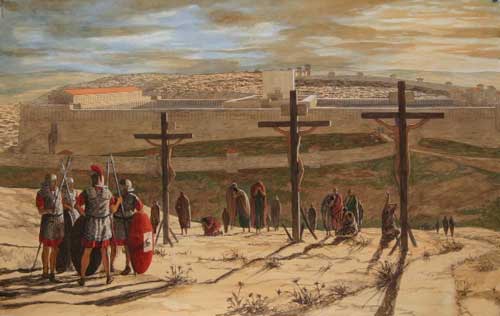
When it was noon, darkness came over the whole land until three in the afternoon. At three o’clock Jesus cried out with a loud voice, “Eloi, Eloi, lema sabachthani?” which means, “My God, my God, why have you forsaken me?” When some of the bystanders heard it, they said, “Listen, he is calling for Elijah.” And someone ran, filled a sponge with sour wine, put it on a stick, and gave it to him to drink, saying, “Wait, let us see whether Elijah will come to take him down.” Then Jesus gave a loud cry and breathed his last. And the curtain of the temple was torn in two, from top to bottom. Now when the centurion, who stood facing him, saw that in this way he breathed his last, he said, “Truly this man was God’s Son!”

CrucifixionBaloghWeb

This is a day unlike any other. In the entire history of the world there has been nothing quite like what we remember today, and there will never be anything quite like it in the future. Millions upon millions of people have been killed unjustly and prematurely; but only this death has to do with the salvation of the world.

Look around at those who have gathered together with you tonight. Most people, of course, are not here. They are out doing what they do on any ordinary Friday night – dancing, drinking, eating, driving, laughing, loving. It has always been like this…

When Jesus was marched up to the place called Golgotha, which means the skull, most people did not even notice. Crucifixion was such a common activity that people were conditioned to avert their gaze from the bodies hanging on crosses. Many people were preoccupied with their own problems, which might help to explain why Jesus was so abandoned by his closest friends.

So, on this strange night, a night unlike any other, we gather together to remember the death of a man who was, and is, God in the flesh.

dogcollar

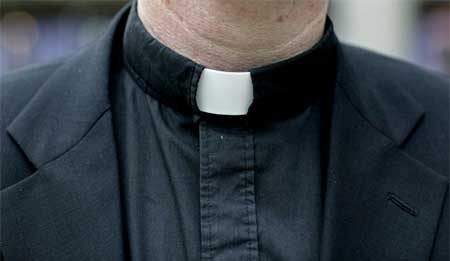
All week long I have been wearing my clerical collar. I know this might seem like a fairly Catholic thing to do, but it is traditional for all clergy to wear such things. For years I have been warned by other pastors about the dangers of wearing this collar: “No matter wear you go, people will assume that they can talk to you about all their problems.” “You can never prepare yourself for all the glares you will receive.” “It is a relic of the past, if you want to connect to people of today, ditch the collar and find something contemporary.” For me, I simply wanted to wear it this week to mark the occasion of Holy Week, and on another level I wanted to wear something that would force me to act like a Christian in public. You can’t get away with cutting in line at the grocery store when you’re dressed like this.

So I initially chose to wear it this week to honor this special time in the life of the church, but it slowly became an experiment here in Staunton. After hearing all of the stories about what this collar can bring in terms of interactions in the community, I was excited to see what might happen. I had plenty to do this week, but whenever I had the chance, I would go somewhere publicly; I worked on a sermon at a coffee shop, played drums for the Stonewall Brigade band, went to Walmart, the Staunton mall, Food Lion, I walked up and down Beverley street. I went everywhere that I could think of.

I was anxious about all the conversations and judgments people might make of my appearance, but I went out anyway. And you’ll never believe what happened… nothing.

I walked around this whole town and I received absolutely no response about my appearance. No one asked me about it, no one pointed and whispered, no one even looked at it. Now I know I’m not the best looking guy, but I’m used to people tat least taking a glance my way occasionally; its something we all do out of habit. But for the last few days I have felt largely invisible.

IMG_1279

So I decided to take it one step forward… Today, at noon, I arrived at church to begin carrying our cross all around Staunton. The cross that the confirmands so diligently decorated and created dug into my shoulders as I departed from the church and walked toward downtown. I walked from the church to Beverley Street, went up both hills on either side, and eventually made my way back toward the north end of town. I walked for two hours, and you know what happened? Nothing. 

Now, of course, walking with a 8 ft long cross will gather attention, I noticed a handful of people driving and walking who began to stare at the object on my back, but the moment I smiled, made eye contact, or waved, they diverted their attention to something else. Two couples actually switched what side of the road they were walking down in order to avoid my trajectory. For two hours I walked in silence and contemplation, every greeting I uttered was met with a blank stare, and just like with the clergy collar, I felt invisible this afternoon.

That was until I was standing next to a man waiting at the light by the library. I noticed that he kept looking at my cross, back to the ground, back to the cross, and back to the ground. Finally I heard him mutter, but loud enough for me to hear, “Jesus H. Christ.” To which I replied, “Actually its Taylor C. Mertins, but thanks for the compliment.” He did not think it was as funny as I did.

While walking across the lawn to put the cross back in the sanctuary I began to wonder if this is what Jesus felt like when he carried his cross. I wonder if what was most tragic was not the fact that he died, but that he died without anyone really caring or noticing. How strange that God chose to save us in this way, in the death of his Son abandoned by his friends on a cross.

Today, as it was in the time that Jesus died, many of us believe that we need not look at the cross at all. Here in our sanctuary all we have is this tiny cross on the altar. Many of us are far more familiar with the idea that, “God so loved the world, that everyone who believes in him may not perish but have eternal life.” In that verse we are told not to look, but merely to believe.

We so desperately want to skip over the suffering of Friday and jump straight to the glory of Sunday. Thats why more people attend church on Mother’s Day than Maundy Thursday and Good Friday combined. The cross is a harsh message. We want to divert our attention away from it. We want to hear good news. We want to laugh in church. We want to walk out feeling better about ourselves and the world. 

Yet, to ignore Christ’s death on the cross is to be tempted to believe that we are no longer in danger. But my friends, even Christ’s death does not mean we get to escape death, but only that even in death we will not be abandoned by God.

Looking on the cross and believing God are inseparable. Perhaps we have grown so accustomed to seeing the Christian cross that we now largely ignore it. Or we really know what the cross means so when we see it we, like the contemporaries of Christ, avert our gaze. But, Christ died on the cross. He hung up there for hours. He cried out to God. He suffered. He died.

This good Friday we are called to open our eyes to what Christ did, to look on the cross and live, to realize that believing is seeing.

How very strange of God to save us in this way, and how much stranger that we are to look on Jesus’ death if we are to have life.

Amen

creative stuff 020 - Copy


A Place At The Table – Maundy Thursday Homily on 1 Corinthians 11.23-26

1 Corinthians 11.23-26

For I received from the Lord what I also handed on to you, that the Lord Jesus on the night when he was betrayed took a loaf of bread, and when he had given thanks, he broke it and said, “This is my body that is for you. Do this is remembrance of me.” In the same way he took the cup also, after supper, saying, “This cup is the new covenant in my blood. Do this, as often as you drink it, in remembrance of me.” For as often as you eat this bread and drink the cup, you proclaim the Lord’s death until he comes.

BouveretLastSupper

After the worship service ended, a number of us were standing around and enjoying the fellowship when I overheard a grandson talking with his grandfather. The young boy looked puzzled about something when his grandfather finally inquired as to what had happened. “So let me get this straight, when we have communion, everybody is invited?” the boy asked. “Of course” answered the grandfather. “And did the pastor really say that when we do this we are eating Jesus’ body and drinking his blood?” The grandfather heisted for a moment but then confirmed the question. The boy stood silently for a moment, when all of the sudden a huge smile broke out on his face and he declared, “being a Christian is awesome!

body-and-blood-mark-jennings

That, my friends, is sound sacramental theology.

How strange is it, when you take a step back, that for the last two thousand years Christians have been regularly gathering around Christ’s table to partake in his body and blood. We are invited up to the altar to consume Christ just as Christ offered himself to the disciples in their last meal together, and as he offered himself on the cross. This really is an awesome thing that we do, because in doing so we remember and act into the life of Christ, committing ourselves to discipleship here and now.

For years I worshipped with a family that could’ve come from a Norman Rockwell painting. They always sat together in church, the kids dutifully listened to the sermons, and they were regarded with respect by nearly everyone in the community. Everything about the family made them seem perfect, particularly when it came to their first born son. Having cerebral palsy meant he was pushed in his chair into the sanctuary every Sunday morning. His parents were responsible for feeding him, clothing him, and changing him. And though he sometimes gathered stares from others in the congregation, to the family, he was just like everyone else.

I used to love seeing them enter church, I loved how they involved all of their children in everything they did, regardless of differences. It wasn’t until years later that I learned why they started attending our church.

They were a military family, and were moved every few years. This meant that whenever they arrived in a new place they had to lay the foundations for new relationships and social connections. After every move they would begin by finding a local church and would start participating in its ministries. They had been attending their church for sometime, creating new bonds with fellow parishioners, when the church had a communion service for the first time in a while. The family, like all the others, gathered in the center aisle and made their way toward the altar. Each child went forward and received the body and blood, but when the father pushed his eldest son forward in his wheel chair the pastor refused to serve the young man communion. “If he cannot understand what this means, I will not serve him,” was the response from the minister. That was enough for the family to never reenter that church ever again.

mixing-chairs-at-dining-table

On Jesus’ final evening with his disciples they gathered in the upper room and shared bread and wine, Jesus’ body and blood. Ironically, this sacramental meal which was intended to celebrate the unity of Christians with their Lord and one another has become the source of such division within the church.

Just imagine for a moment, that final evening the disciples had with one another; they had  come so far together. From their humble beginnings, called from their fishing boats and families in Galilee, these ragtag disciples had followed their Lord all the way to Jerusalem. They were the least likely candidates for the kind of mission that God would accomplish in the world, yet they were the ones called and invited to a new life with Christ. Around that table sat fishermen and  tax collectors, men who had abandoned everything they knew for a life of uncertainty following the light of the world. Even Judas, the one who would betray him in a number of hours was invited to the table and was given the body and the blood.

There is a place at this table for you. 

It does not matter where you’re from, who you are, what you’ve done. It does not matter how strong or weak your faith is. It does not matter whether you understand what happens here or not. Surely the disciples did not understand that first time, or they would not have abandoned their Lord the next day as he mounted the hard wood of the cross. I stand on this side of the table, and not even I completely understand what happens in the Eucharist.

It is truly an awesome thing to share this meal because it is mysterious. Somehow, in gathering together, the Holy Spirit is poured down upon us and these gifts of bread and wine so that they become for us the body and blood of Christ.

But even more mysterious than what happens here at the table, is the fact that people like you and me are invited to it. That regardless of our failures and short-comings, in spite of our desertion of Jesus at different times in our lives, and precisely because of our lack of faith, Jesus meets us here at the table.

I have to agree with my young friend from church; being a Christian is awesome


Who Is This? – Sermon on Matthew 21.1-11

Matthew 21.1-11

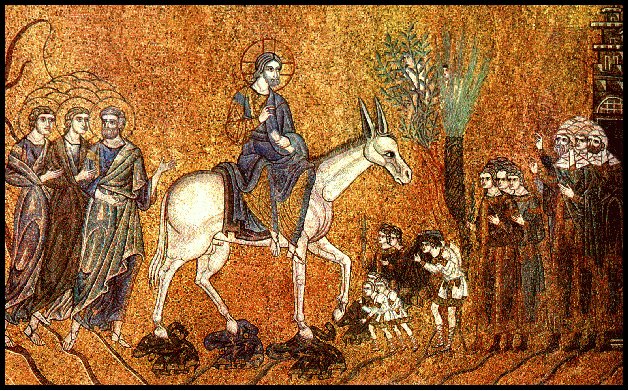
When they had come near Jerusalem and had reached Bethphage, at the Mount of Olives, Jesus sent two disciples, saying to them, “Go into the village ahead of you, and immediately you will find a donkey tied, and a colt with her; untie them and bring them to me. If anyone says anything to you, just say this, ‘The Lord needs them.’ And he will send them immediately.” This took place to fulfill what had been spoken though the prophet, saying, “Tell the daughter of Zion, Look, your king is coming to you, humble, and mounted on a donkey, and on a colt, the foal of a donkey.” The disciples went and did as Jesus had directed them; they brought the donkey and the colt, and put their cloaks on them, and he sat on them. A very large crowd spread their cloaks on the road, and other cut branches from the trees and spread them on the road. The crowds that went ahead of him and that followed were shouting, “Hosanna to the Son of David! Blessed is the one who comes in the name of the Lord! Hosanna in the highest heaven!” When he entered Jerusalem, the whole city was in turmoil, asking, “Who is this?” The crowds were saying, “This is the prophet Jesus from Nazareth in Galilee.”

Christ's Entry into Jerusalem by Hippolyte Flandrin c. 1842

When Jesus tells you to do something, you do it. Sometimes it takes us a long time to figure this out, but for the disciples it must have been second nature. Two disciples were told to enter the next village and there they would find the necessary transportation; a donkey and a colt. “If anyone asks what you are doing, don’t worry about it, just tell them, ‘The Lord needs them.’

So the disciples went into the village, found the animals, and brought them back to Jesus. The rest of the disciples took off their cloaks and placed them on the donkey for Jesus to sit on. As they approached Jerusalem crowds of people took off their own cloaks, gathered palms from the fields, and placed them on the road for Jesus’ donkey to trample on. The people were shouting “Hosanna (Save us now!) to the Son of David! Blessed is the one who comes in the name of the Lord! Hosanna in the highest heaven!

Finally, when he entered Jerusalem, the whole city was in turmoil, asking, “Who is this?” The crowds were saying, “This is the prophet Jesus from Nazareth in Galilee.”

Hosanna_988

This story opens up for us Jesus’ royal status in a public setting. Rather than entering the holy city with an army wielding swords and shields, this king of kings entered Jerusalem humbly and gently on the back of a donkey. This was, of course, to fulfill what had been spoken through the prophet, “Tell the daughter of Zion, Look, your king is coming to you, humble, and mounted on a donkey.” Yet, you have to wonder, what did the crowds make of this prophet entering Jerusalem the way he did?

Matthew tells us that the crowds rejoiced to such a degree that they took off their clothes to place them on the road. They were so enamored by this coming prophet that they took it upon themselves to adorn the dirty roads with their cloaks as a symbol of royalty. They shouted “Hosanna Hosanna” while waving the palms branches just as we did this morning. But, at the end of the scripture, the whole city of Jerusalem is apparently in turmoil, as if an earthquake had happened, and they begin to ask, “Who is this?

The irony that follows our particular story is tragic. Within a week’s time the crowds that were shouting “Hosanna!” began to shout “Crucify!” The disciples that were so willing to find the donkey and use their own clothing as a saddle, would fall asleep on their Lord in the garden of Gethsemane. The people who walked before Jesus announcing his triumphant entry in the holy city, would follow behind him as he dragged his own cross to the top of calvary. In Jesus’ last pilgrimage to Jerusalem, the son of David reenters David’s city, but the only throne he will find is on a cross.

Is is frighteningly easy for us to think that by celebrating Palm Sunday we are acknowledging Jesus as a king in the way that Jerusalem failed to do! We need to be constantly reminded of how easy our shouts of “Hosanna” can change to “Crucify.”

Over the course of Lent this year, our confirmation class has been gathering together every week after church to learn more and more about this thing we call discipleship. Every time we gathered we shared a meal, just like Jesus would have with his disciples, and then we jumped right into the lesson. We focused on how Jesus is the vine, and we are the branches; to follow Christ we need to bear fruit in our lives.

The weekly lesson always had activities paired with them in order to flesh out what we had been talking about. When we looked at God the Father we discussed creation, sin, and redemption. We cut out pictures from magazines that reminded us of sin and discussed ways to avoid the temptations of our lives. When we focused on the Holy Spirit we all took turns wearing blind folds and walked around the church property helping to guide one another the way that the Spirit guides us. When we talked about Paul we wrote letters to our church about things we do well, and things that we need to change. I gave the youth old dinner plates and a permanent marker, inviting them to write down any negative memories, disappointments, or frustrations, and then we took the plates into the parking lot and smashed them into a hundred pieces. The following week we used those broken pieces to adorn our cross that now stands here in the sanctuary.

IMG_1279

One of my favorite actives from confirmation this year occurred when we talked about God the Son, Jesus Christ. I invited each of the confirmands to take 10 minutes to walk around our church building and look for Jesus. They were told to find words, phrases, or pictures that reminded them of their Lord and then write it down. Once we gathered back together, we shared what we had found and then I asked them the same question that the people in Jerusalem asked after Jesus entered on the back of a donkey: “Who is Jesus?”

The room was silent. Even though they had walked around the building and shared their discoveries with one another, they were reluctant to even attempt to answer the question.

As I stood there before our confirmands, uncomfortably waiting in the silence, I realized how difficult that question is: Who is Jesus?

I have often heard people remark that the youth are the future of the church. Logically speaking, this is true. One day we will return to dust and those who are younger than us will remain. But they are also very much the church right now. So, young people, listen to me very carefully: Confirmation is just like taking those first steps into Jerusalem. All of the adults here are looking at you to save them and the church. But, be careful, because their cries of hosanna can change to crucify before you even realize it.

We all do it. We look at the promise of youth, thanking God for their lives and imaginations, but as soon as they step too far we are ready to chastise them. So, as an example, here are some of the things that our confirmands wrote to our church:

Dear St John’s… I love the way that you greet everyone when they enter church. I love how our church feels like one big family. I love the way you care about me.

All wonderful and positive affirmations about what we do. Hosanna indeed.

But each letter also had to include things that we could change, ways that we could be better:

I wish we had younger people in church on Sundays. I think that we need actually start doing something for those in need. Maybe we can start a garden and give all of the produce away. I think we should start clapping for the choir after they sing a really wonderful song, rather than just sit in silence.

Not terribly offensive, but certainly different. I imagine that these young minds have countless suggestions of how we can do church differently, how we can embody the will of God in what we do, how we can make the Word incarnate in our lives. But, if it makes us uncomfortable, if it pushes us too far, how are we going to react? Will we still look at them with “hosannas” on our mind, or will we dismiss these new innovative ideas just as Jesus was dismissed by the crowds?

So, to the more mature gathered here at St. John’s this morning: I encourage you to look on these bright young confirmands with hope and respect. Do not jump to conclusions about their ideas simply because they are young and inexperienced, they could be closer to the will of God than any of us. Their answer to the question, “Who is Jesus?” might be completely different than yours, but if you ask them, they can show you a side of our Lord that you’ve never known.

And to the confirmands I say this: Remember that Jesus entered Jerusalem in a humble way, without a sword, vulnerable to whatever his enemies wished to do to him. As Albus Dumbledore once said, “the truth is a beautiful and terrible thing, and should therefore be treated with caution.” We want to hear your ideas, we want to see the world and the church through new perspectives, but be humble in the way you share what you see with us. Be kind in your sharing, and we will return that kindness in our hearing. Their answer to the question, “Who is Jesus?” might be completely different than yours, but if you ask them, they can show you a side of our Lord that you’ve never known.

entry-into-jerusalem-12th-century-mosaic2

Today, Jesus’ triumphant entry into Jerusalem is a cautionary tale reminding us of how quickly our opinion can sway; how quickly we can be divided; how quickly we can forget that we are one body in Jesus Christ. Young or old, experienced or recent to the faith, we are in this church together. We join together for worship week after week learning to speak and act and think and live and love as Christians.

This message isn’t just for our confirmation class; its for each and every single one of us gathered here today. We have a choice, we can choose to follow our own path, ignore the needs of those who bother us, and learn to take care of ourselves alone. We can move with the crowds and let our shouts from “hosanna” quickly change to “crucify” whenever we so choose. Or, we can march up to Calvary with our Lord carrying our own crosses. We can work together to bear fruit in God’s kingdom on earth. We can love the unlovable because God loves us.

“Who is this?” the crowds asked. Who is this strange man entering into the holy city to turn the world upside down? Who is this prophet who knows our innermost desires and listens to us when we feel alone? Who is this king who sits on the throne of a cross? Who is this priest that shares his bread and wine, body and blood, with and for us? Who is this incarnate God who died for the sins of the World? Who is this man that healed the sick, fed the hungry, and clothed the naked? Who is this teacher that shares all of his parables with us? Who is this Lord that humbles himself to be just like us? Who is this Savior that is completely unlike us?

If someone asked you, “Who is this?” how would you respond?

Amen.


Just Like Me – Lenten Reflection on Mark 14.32-36

Mark 14.32-36

They went to a place called Gethsemane, and he said to his disciples, “Sit here while I pray.” He took Peter and James and John, and began to be distressed and agitated. And he said to them, “I am deeply grieved, even to death; remain here, and keep awake.” And going a little farther, he threw himself on the ground and prayed that, if it were possible, the hour might pass from him. He said, “Abba, Father, for you all things are possible; remove this cup from me; yet not what I want, but what you want.”

christ-in-gethsemane-p

I’ve always been fascinated by the story of Jesus in the garden of Gethsemane, and I love this little detail about how the disciples are so tired that they fall asleep. One of the problems with reading small bits of scripture in worship is that we fail to pay attention to what happens immediately before a particular narrative. Now I know that we here are all good United Methodists, and therefore we would not know what it was like to stay up all night drinking wine with our Lord. But I can imagine that they must have been very tired after that celebration. After all this was to be Jesus’ last evening with his closest friends and companions. They shared wine and bread together and eventually made their way to the garden.

Upon arrival Jesus begged his disciples to keep awake with him. But they didn’t. So Jesus went off to the side, threw himself on the ground, and cried out to God, “For you all things are possible, remove this cup from me, don’t let me die tomorrow. But in the end it’s not about what I want, its about what you want.” Thats the story of Jesus in the garden.

I graduated from Duke last May, I haven’t even been in the ministry for an entire year. But while I was at Duke, I took a class on the Greek Exegesis of the Gospel according to Mark. My professor, Joel Marcus, knows more about the gospel of Mark than Mark knew about Mark. Throughout the course of the semester we translated the entire gospel from Greek into English, we would dissect every verse looking at the grammar and discussed the depth of the Word of God.

On one such occasion we found ourselves translating the story of Jesus in the garden. We discussed certain grammatical options when my professor finally asked a question, (He could never remember my name, Taylor, so instead he often called me Tinker) “Tinker, why does Jesus pray for the cup to be passed from him. This is a very troubling verse. On the eve of his execution he calls out to God to save him from death. So, Tinker, why does Jesus pray for the cup to pass from him?”

One of the saddest things about seminary is that everything became a competition; I tried to explain why Jesus prayed this, “Im sure he knew what he was doing, he prayed this for our benefit in the future, so that we would know about prayer.” “No Tinker,” one of my peers interrupted, “Jesus did this to help us recall the Psalmists words of prayer to be delivered from the pit, Jesus wanted us to understand his command over the Old Testament Scriptures…” This went on and on. We showed off in front of our professor explaining and rationalizing why Jesus said what he said. Our answers got better and better, we began to yell at one another across the room when all of the sudden my professor slammed his hands on the table. He said, “I am so sick and tired of hearing young seminarians like you, try to explain away what Jesus said. This verse in Mark is one of my favorites. Do you know why? Because in this scripture Jesus is just like me.” Then it was silent. Though we still had thirty minutes left in class, my professor packed his belongings and walked out of the room.

For days it was all I could think about, and even now I think about it all the time. That in the garden, in this precious moment we have recorded, we see Jesus just like us. You can bet that if I was in the garden and I knew what was going to happen to me I would’ve shouted out, “Please God don’t let it happen!” If I found myself hanging on the cross I would’ve shouted out, “My God, my God, why have you forsaken me?” Jesus is just like me.

10259904_489659981160333_3090239055232866872_n

If Jesus was to restart his ministry today in Staunton, VA He would not walk up and down Beverley St. with a three piece pinstripe suit and italian leather shoes. He would be wearing worn out Carhartts, dirty and used. He would be wearing a plaid shirt and hiking boots. He would walk up and down our streets seeking out the last and the least and the lost. Jesus is just like you.

We don’t come to worship to pretend to be someone we’re not. We come together just like this to learn exactly who we are and whose we are. We are just like Jesus praying in the garden of Gethsemane.

But at the same time, Jesus is completely unlike me. My prayer would have stopped with, “God take this cup from me.” But thats not where Jesus’ prayer ended. Jesus continued on to say, “not what I want, but what you want.” For as many ways as Jesus can be just like us, he is completely unlike us because he knew the Father’s will and marched up to the top Calvary to hang and die on a cross for you and me.

So I wonder; what are your prayers like? Are they like mine: O God please deliver me from this and that… Or are your prayers like Jesus’? “God I know I’m in a tough spot right now, I know that you can fix me and heal me, you can make my son or daughter well, but, in the end its not about what I want, its about what you want.” You know that great part of the Lord’s prayer? Thy Will Be Done. Many of us say it everyday. Do we really want God’s will?

Its not about what I want, its about what you want.


Devotional – Psalm 118.26

Devotional:

Psalm 118.26

Blessed is the one who comes in the name of the Lord. We bless you from the house of the Lord. 

Weekly Devotional Image

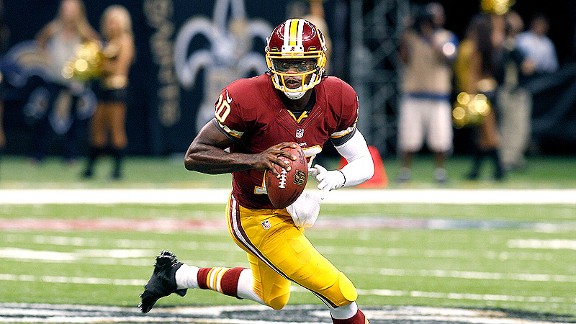
When Robert Griffin III came to Washington DC he was greeted as the new messiah of the Washington Redskins. For too long had the Redskins failed to procure a franchise quarterback, a leader that could take them to the playoffs and eventually the Superbowl. Finally, it seemed, the organization had made a bold move for a young quarterback who contained all of the qualities necessary for returning the Redskins to their former glory.

nfl_a_griffin_gb1_576

His first season behind center was remarkable. RGIII was named Offensive Player of the Week numerous times, he set records for the highest passer rating by a rookie quarterback and highest touchdown to interception ration, and he led to the team to the playoffs  after winning the NFC East Division.

After sustaining an injury toward the end of the season, many fans and sports pundits speculated whether or not RGIII would be able to compete in the same fashion during the following season. This past year, the Redskins returned to form posting an embarrassing 3-13 season, the worst record for the team since 1994. Many people, of course, blamed RGIII’s limited mobility, improper coaching decisions, and lack of enthusiasm from other players for the disappointing season.

Within a year RGIII went from being the hailed messiah, to a questionable concern. Favor and optimism was quickly replaced with skepticism and doubt. Of course some of the die-hard fans remained committed to this young quarterback, but a large portion of fan favor was quickly turned in the opposite direction from one season to another.

jesus.donkey

The crowds yelled “Blessed is the one who comes in the name of the Lord,” when Jesus enter Jerusalem on the back of a donkey. This man was their Messiah, the one they had been waiting for. They were so enthralled by this Son of Man that they pulled palm branches from the fields and placed them on the road as a sign of worship, devotion, and adoration. Incredibly, those shouts of “Hosanna! (Save us!)” changed to shouts of “crucify him!” within a week. The incredible favor of the crowds changed from dedication to destruction.

Our favor and devotion for the many messianic figures in our lives can change on a dime. How often have RGIIIs and others been hailed and rejected within such a short period of time? Yet, for us, our Messiah, the one who died for the sins of the world never gave up on us when we gave up on him. He rode on the back of the donkey knowing good and well what would take place by the end of the week, mounted the hard wood of the cross with the shouts of “crucify!” ringing in his ears, and loved us nonetheless.

Today, as we begin to approach Palm Sunday and Holy Week, I encourage you to consider the people in your life that you once supported and then gave up on. I’m not just talking about public figures such as RGIII or politicians, but also people close to your heart. Who have you given up on? Perhaps in these final weeks of Lent it is time to reach out to those who have fallen out of our favor. Maybe today is the day that you can reconcile a broken relationship and truly live into God’s love here and now.