The End Has No End – Easter Sermon on Mark 16.1-8

Mark 16.1-8

When the sabbath was over, Mary Magdalene, and Mary the mother of James, and Salome brought spices, so that they might go and anoint him. And very early on the first day of the week, when the sun had risen, they went to the tomb. They had been saying to one another, “Who will roll away the stone for us from the entrance to the tomb?” When they looked up, they saw that the stone, which was very large, had already been rolled back. As they entered the tomb, they saw a young man, dressed in a white robe, sitting on the right side; and they were alarmed. But he said to them, “Do not be alarmed; you are looking for Jesus of Nazareth, who was crucified. He has been raised; he is not here. Look, there is the place where they laid him. But go, tell his disciples and Peter that he is going ahead of you to Galilee; there you will see him, just as he told you.” So they went out and fled from the tomb, for terror and amazement had seized them; and they said nothing to anyone, for they were afraid.

resurrection-bonnie-bruno

In the cool of the morning, when everything seems perfect and still, the three women made their way to the tomb. They were carrying spices to anoint his body and as they walked the sun began to rise and the dew held gently to the plants and flowers along the path. I imagine the women, still in shock from the crucifixion, walking silently in a single file line, all caught up in their own thoughts; “Why did he have to die?” “Where have all the other disciples gone?” “I’ve seen him save so many others, but why not himself?

At some point, however, a conversation began between them, “Who will roll away the stone for us at the entrance to the tomb?” Yet, when they arrived, the large stone had already been rolled back. Perhaps with fear already beginning to brew within their hearts, they entered the tomb to discover a young man, dressed in white, sitting off to the side; and they were afraid. The stood shaking before the young man when he said, “Do not be afraid; you are looking for Jesus of Nazareth, who was crucified. He has been raised; he is not here. Look there is the place where they laid him. But go, tell his disciples and Peter that he is going ahead of you to Galilee; there you will see him, just as he told you.” Immediately the women went out and fled from the tomb, running for their lives, because fear and amazement had seized them; and they said nothing to anyone, for they were afraid.

women-arriving-at-the-tomb_he_qi_1999

Easter is, without a doubt, my favorite day of the year. Growing up I used to look forward to the Easter Egg hunts, the gathering for a meal at my grandmother’s house, and singing those great hymns in church. At home, Easter was a big deal. The church was always immaculately decorated with lilies and flowers of all colors, the women wore their favorite spring dresses, and the men even dared to wear ties with splashes of color. During the week leading up to Easter a large tomb would be placed on the church’s front lawn so that from Good Friday to Easter Sunday two men dressed as Roman Centurions would guard the tomb as people drove by. I remember with great joy the year I was finally tall enough to wear one of the costumes and stand out front.

169_1010929804499_155_n

One year, the pastor called me before Easter and asked for my help with the Sunrise service. “Taylor, we are going to have our sunrise service on the lawn. I want you to get here before anyone else, dressed as the angel in the tomb. There will be a fog machine in there and when I say the words “He is Risen” I want you to turn it on, so that when the time comes you will exit the tomb and tell all of the people gathered that Christ has risen and gone on to Galilee before them and so on.”

I was so excited. I arrived at the tomb while it was still dark outside, clothed in white with angel’s wings attached to my back. I knelt down in the tomb and waited. I could hear people gathering outside, exchanging pleasant Easter greetings as the sun began to rise. When the sermon started I patiently waited by the Fog machine, and when I heard the words, “He is Risen” I turned it on.

The only problem was, I turned it on too early. The tomb, being small and closed, filled with smoke rather rapidly. I tried as hard as I could but I began to cough and feel claustrophobic. I can only imagine what it looked like to the people outside: a make-shift tomb that coughed and had smoke billow out from the sides.

Without the help of light I could no longer see anything as I was covered with the thick smoke, when finally the pastor knocked on the tomb and I came out. Instead of a glorious angel glowing in white robes proclaiming the resurrection of the Lord, I tumbled out of the tomb, slipped in the mud, coughed a number of times, forgot my lines, made up something about the glories of God our king, and then quickly jogged off the lawn toward the church building. I was so nervous that in ruining the sunrise service, everyone would have laughed at me and the spectacle I had made, but the truth is, they all just stared at me with bewilderment and fear.

The story of Easter is one that we tell year after year. For centuries this story among all the others is the one that has so captivated the hearts, minds, and souls of Christians. Whether proclaimed from an elegant pulpit, or with the fumbling of an angel covered in smoke, this is a message that can both excite and terrify. The beauty of the story is in the details that open our eyes to the magnificence of God’s resurrected Son, and what it means for us.

We begin with the women who show how love does not end with death. Whereas the other disciples had abandoned the great mission to serve their Lord, these three women loved Jesus beyond the end. They marched to the location of the tomb with heavy hearts, but hearts that still loved the one that had died.

They question how they can enter the tomb with the stone still blocking the entrance. Their question is not answered by earthly means, no one gathers at the entrance to roll the stone away for them. But God had an answer; God always has an answer to the impossible. When they arrive, the stone has been rolled away.

7028203zoomed

Inside they are frightened to discover a young man dressed in white who uttered three of the most powerful words to have ever been spoken: “He is risen!” Everything that followed after this proclamation, the church of Acts, the growth of Christianity throughout the centuries, even all of you gathered here this morning bear witness to the power and transformation of the resurrection itself.

Without the resurrection, all of this is meaningless. If Jesus did not break forth from the grave, if he did not return in the flesh to share bread with his friends, if he does not appear with us through the Holy Spirit than he would have died like any other human. The resurrection changed, and changes, everything.

Christ broke out of the tomb, he destroyed the chains of death, and turned the world upside down. We cannot limit what God can do, not even in death. The women’s fear is therefore perhaps the most appropriate response to this immeasurably Good News.

The tomb was empty and the body gone. This is completely contrary to what the women expected, and anticipated. The resurrection is something totally and utterly new, something all-together without precedent, something that stuns and shocks and stupefies with its inexplicable power.

The angel tells the women, “look, there is the place where they laid him. But go, tell his disciples and Peter that he going ahead of you to Galilee; there you will see him, just as he told you.” Jesus has gone before his friends and disciples to the familiar Galilee of ordinary life. For centuries people have met God in the routine of life, our God is one on the move continually searching and waiting for us. God cannot be confined to the tomb of our limited expectations, but breaks forth in an exciting and dynamic way, out there on the move, reaching the hearts and minds of countless people. Our lives have been illumined by the triune God who lived and died and lived again.

So the women went out and fled from the tomb, for terror and amazement had seized them; and they said nothing to anyone, for they were afraid. What a very strange way to end the Gospel. The news of God’s great resurrection caused the women to run away as fast as they could from the scene in fear. Many people have debated about whether or not this is the true ending, because it doesn’t feel like one. Maybe the last page of Mark’s gospel was accidentally ripped out, or he died before he could finish it. Maybe this is just an unfinished story.

However, I believe there is something profoundly wonderful about this conclusion of the story, precisely because it has no end. The Gospel of Jesus Christ, the Son of God, is always unfinished. There is an unwritten page left for each of us to write, to record the many glorious and joyful things that Jesus has done for and through us. 

2b8baa26a479d6fd19ef0caaa3e988a1

I love this ending because the end has no end! Like the women at the tomb, the young man in white has called us to look on the places where we have buried those whom we love and recognize that the end has no end. We await our joyful reunion with all who have gone on to glory because Christ’s resurrection has become our promised resurrection. God’s story is not over because we have now become characters in the narrative. We take up where Mark’s gospel stops.

Can you imagine anything more wonderful than this? Can you imagine anything more perfect or beautiful than the resurrection of the dead? Can you imagine what joy springs forth from this immeasurably gracious gift? Actually we can scarcely begin to imagine it, for it does not come from our imaginations, but from God almighty.

My friends, today we are gripped with joy and fear. God has exceeded all of our expectations by raising his Son from the dead. God has opened up a new realm of understanding, God has defeated death, God has made himself available to you and me, God has not left us to wander through life alone but is with us in everything that we do.

At this table we get a heavenly foretaste of whats to come. Here at the table we meet God and one another through the bread and the wine. This fellowship is but the beginning of our eternal relationship and participation with God. This table is where heaven and earth meet. This table is where we discover the depth of the resurrection, here we see Christ’s sacrifice and recognize that it has been done for us.

Easter isn’t perfect. For some, it creates more questions than it provides answers. For the women at the tomb it was scary and astonishing. For the church folk gathered together when I bumbled out of the fake tomb it was strange and bizarre. Easter can both excite and terrify. After all, we’re talking about the incarnate God being resurrected from the dead. Easter is all about shattering our expectations of how the world works. Easter is the incredible moment where everything changed forever. Easter is the event the opened up an entirely new realm of possibilities for God’s creation. Easter is about God making all things new.

Where are you in your life right now? Are you looking for a little more clarity about what your world is supposed to look like? Has life lost the wonderful spark that used to bring a smile to your face everyday? Are you afraid of what tomorrow might bring?

Then let the resurrection shine brilliantly in your life today. Open your eyes to the incredible wonders of God’s actions in the world. Hear the story of Christ’s resurrection and believe that this has been made possible for you, no matter who you are, no matter what you’ve done, and no matter what you will do.

Jesus came alive so that we could come alive. Don’t let Easter just be a day that you look forward to, let it be something you experience right now.

What we read today is the end of Mark’s gospel, but the resurrection means that the end has no end. That is the Good News.

He is risen! Hallelujah!


A Place At The Table – Maundy Thursday Homily on 1 Corinthians 11.23-26

1 Corinthians 11.23-26

For I received from the Lord what I also handed on to you, that the Lord Jesus on the night when he was betrayed took a loaf of bread, and when he had given thanks, he broke it and said, “This is my body that is for you. Do this is remembrance of me.” In the same way he took the cup also, after supper, saying, “This cup is the new covenant in my blood. Do this, as often as you drink it, in remembrance of me.” For as often as you eat this bread and drink the cup, you proclaim the Lord’s death until he comes.

BouveretLastSupper

After the worship service ended, a number of us were standing around and enjoying the fellowship when I overheard a grandson talking with his grandfather. The young boy looked puzzled about something when his grandfather finally inquired as to what had happened. “So let me get this straight, when we have communion, everybody is invited?” the boy asked. “Of course” answered the grandfather. “And did the pastor really say that when we do this we are eating Jesus’ body and drinking his blood?” The grandfather heisted for a moment but then confirmed the question. The boy stood silently for a moment, when all of the sudden a huge smile broke out on his face and he declared, “being a Christian is awesome!

body-and-blood-mark-jennings

That, my friends, is sound sacramental theology.

How strange is it, when you take a step back, that for the last two thousand years Christians have been regularly gathering around Christ’s table to partake in his body and blood. We are invited up to the altar to consume Christ just as Christ offered himself to the disciples in their last meal together, and as he offered himself on the cross. This really is an awesome thing that we do, because in doing so we remember and act into the life of Christ, committing ourselves to discipleship here and now.

For years I worshipped with a family that could’ve come from a Norman Rockwell painting. They always sat together in church, the kids dutifully listened to the sermons, and they were regarded with respect by nearly everyone in the community. Everything about the family made them seem perfect, particularly when it came to their first born son. Having cerebral palsy meant he was pushed in his chair into the sanctuary every Sunday morning. His parents were responsible for feeding him, clothing him, and changing him. And though he sometimes gathered stares from others in the congregation, to the family, he was just like everyone else.

I used to love seeing them enter church, I loved how they involved all of their children in everything they did, regardless of differences. It wasn’t until years later that I learned why they started attending our church.

They were a military family, and were moved every few years. This meant that whenever they arrived in a new place they had to lay the foundations for new relationships and social connections. After every move they would begin by finding a local church and would start participating in its ministries. They had been attending their church for sometime, creating new bonds with fellow parishioners, when the church had a communion service for the first time in a while. The family, like all the others, gathered in the center aisle and made their way toward the altar. Each child went forward and received the body and blood, but when the father pushed his eldest son forward in his wheel chair the pastor refused to serve the young man communion. “If he cannot understand what this means, I will not serve him,” was the response from the minister. That was enough for the family to never reenter that church ever again.

mixing-chairs-at-dining-table

On Jesus’ final evening with his disciples they gathered in the upper room and shared bread and wine, Jesus’ body and blood. Ironically, this sacramental meal which was intended to celebrate the unity of Christians with their Lord and one another has become the source of such division within the church.

Just imagine for a moment, that final evening the disciples had with one another; they had  come so far together. From their humble beginnings, called from their fishing boats and families in Galilee, these ragtag disciples had followed their Lord all the way to Jerusalem. They were the least likely candidates for the kind of mission that God would accomplish in the world, yet they were the ones called and invited to a new life with Christ. Around that table sat fishermen and  tax collectors, men who had abandoned everything they knew for a life of uncertainty following the light of the world. Even Judas, the one who would betray him in a number of hours was invited to the table and was given the body and the blood.

There is a place at this table for you. 

It does not matter where you’re from, who you are, what you’ve done. It does not matter how strong or weak your faith is. It does not matter whether you understand what happens here or not. Surely the disciples did not understand that first time, or they would not have abandoned their Lord the next day as he mounted the hard wood of the cross. I stand on this side of the table, and not even I completely understand what happens in the Eucharist.

It is truly an awesome thing to share this meal because it is mysterious. Somehow, in gathering together, the Holy Spirit is poured down upon us and these gifts of bread and wine so that they become for us the body and blood of Christ.

But even more mysterious than what happens here at the table, is the fact that people like you and me are invited to it. That regardless of our failures and short-comings, in spite of our desertion of Jesus at different times in our lives, and precisely because of our lack of faith, Jesus meets us here at the table.

I have to agree with my young friend from church; being a Christian is awesome


Just Like Me – Lenten Reflection on Mark 14.32-36

Mark 14.32-36

They went to a place called Gethsemane, and he said to his disciples, “Sit here while I pray.” He took Peter and James and John, and began to be distressed and agitated. And he said to them, “I am deeply grieved, even to death; remain here, and keep awake.” And going a little farther, he threw himself on the ground and prayed that, if it were possible, the hour might pass from him. He said, “Abba, Father, for you all things are possible; remove this cup from me; yet not what I want, but what you want.”

christ-in-gethsemane-p

I’ve always been fascinated by the story of Jesus in the garden of Gethsemane, and I love this little detail about how the disciples are so tired that they fall asleep. One of the problems with reading small bits of scripture in worship is that we fail to pay attention to what happens immediately before a particular narrative. Now I know that we here are all good United Methodists, and therefore we would not know what it was like to stay up all night drinking wine with our Lord. But I can imagine that they must have been very tired after that celebration. After all this was to be Jesus’ last evening with his closest friends and companions. They shared wine and bread together and eventually made their way to the garden.

Upon arrival Jesus begged his disciples to keep awake with him. But they didn’t. So Jesus went off to the side, threw himself on the ground, and cried out to God, “For you all things are possible, remove this cup from me, don’t let me die tomorrow. But in the end it’s not about what I want, its about what you want.” Thats the story of Jesus in the garden.

I graduated from Duke last May, I haven’t even been in the ministry for an entire year. But while I was at Duke, I took a class on the Greek Exegesis of the Gospel according to Mark. My professor, Joel Marcus, knows more about the gospel of Mark than Mark knew about Mark. Throughout the course of the semester we translated the entire gospel from Greek into English, we would dissect every verse looking at the grammar and discussed the depth of the Word of God.

On one such occasion we found ourselves translating the story of Jesus in the garden. We discussed certain grammatical options when my professor finally asked a question, (He could never remember my name, Taylor, so instead he often called me Tinker) “Tinker, why does Jesus pray for the cup to be passed from him. This is a very troubling verse. On the eve of his execution he calls out to God to save him from death. So, Tinker, why does Jesus pray for the cup to pass from him?”

One of the saddest things about seminary is that everything became a competition; I tried to explain why Jesus prayed this, “Im sure he knew what he was doing, he prayed this for our benefit in the future, so that we would know about prayer.” “No Tinker,” one of my peers interrupted, “Jesus did this to help us recall the Psalmists words of prayer to be delivered from the pit, Jesus wanted us to understand his command over the Old Testament Scriptures…” This went on and on. We showed off in front of our professor explaining and rationalizing why Jesus said what he said. Our answers got better and better, we began to yell at one another across the room when all of the sudden my professor slammed his hands on the table. He said, “I am so sick and tired of hearing young seminarians like you, try to explain away what Jesus said. This verse in Mark is one of my favorites. Do you know why? Because in this scripture Jesus is just like me.” Then it was silent. Though we still had thirty minutes left in class, my professor packed his belongings and walked out of the room.

For days it was all I could think about, and even now I think about it all the time. That in the garden, in this precious moment we have recorded, we see Jesus just like us. You can bet that if I was in the garden and I knew what was going to happen to me I would’ve shouted out, “Please God don’t let it happen!” If I found myself hanging on the cross I would’ve shouted out, “My God, my God, why have you forsaken me?” Jesus is just like me.

10259904_489659981160333_3090239055232866872_n

If Jesus was to restart his ministry today in Staunton, VA He would not walk up and down Beverley St. with a three piece pinstripe suit and italian leather shoes. He would be wearing worn out Carhartts, dirty and used. He would be wearing a plaid shirt and hiking boots. He would walk up and down our streets seeking out the last and the least and the lost. Jesus is just like you.

We don’t come to worship to pretend to be someone we’re not. We come together just like this to learn exactly who we are and whose we are. We are just like Jesus praying in the garden of Gethsemane.

But at the same time, Jesus is completely unlike me. My prayer would have stopped with, “God take this cup from me.” But thats not where Jesus’ prayer ended. Jesus continued on to say, “not what I want, but what you want.” For as many ways as Jesus can be just like us, he is completely unlike us because he knew the Father’s will and marched up to the top Calvary to hang and die on a cross for you and me.

So I wonder; what are your prayers like? Are they like mine: O God please deliver me from this and that… Or are your prayers like Jesus’? “God I know I’m in a tough spot right now, I know that you can fix me and heal me, you can make my son or daughter well, but, in the end its not about what I want, its about what you want.” You know that great part of the Lord’s prayer? Thy Will Be Done. Many of us say it everyday. Do we really want God’s will?

Its not about what I want, its about what you want.


Devotional – Ephesians 5.10-14

Devotional:

Ephesians 5.10-14

Try to find out what is pleasing to the Lord. Take no part in the unfruitful works of darkness, but instead expose them. For it is shameful even to mention what such people do secretly; but everything exposed by the light becomes visible, for everything that becomes visible is light. Therefore it says, “Sleeper, awake! Rise from the dead, and Christ will shine on you.”

Weekly Devotional Image

As I sat here this morning typing the devotional scripture out on my computer, 5006 customers lost power in Staunton, including St. John’s UMC; a particularly fitting moment for reflection on a scripture that discusses visibility, light, and darkness! Everything in my office, the hallway, and the entire church shut off except for my laptop computer (on battery power). Though light was coming in the window, the only thing illuminated within the office was God’s Word staring back at me on the screen: “everything exposed by the light becomes visible, for everything that becomes visible is light.”

the-cross

Instead of staying in my office to write out some narratival reflection on light and darkness, I made my way down the halls to the other part of the building in order to check on our secretary, our teachers, and students in the Pre-School. 

The 4 year-olds thought the power outage was the funniest thing in the world (thats because they think anything can become the funniest thing in the world) and I was greeted with a uproar of laughter when I opened the door to their room. Sensing that my presence was not needed, I went across the hallway to the 2 year-old room; they were having a very different experience. 

The room was silent and dark with the students all huddled together with their teacher in the middle of the room. Because the blinds were drawn, a very limited amount of light was streaming through and it was clear that some of the kids were on the verge of fear. “Pastor Taylor,” one of them began, “Is there a storm outside?” 

Darkness can be a frightening thing. Even though those students had been outside only minutes before, walking in with their parents, the darkness that entered the room brought forth a sense of fear for them. Darkness can envelop us. Darkness can pierce through the deepest core of our souls, because darkness is the unknown.

In Paul’s letter to the church in Ephesus, he cautioned the gathered body to expose the darkness, and do what is pleasing to the Lord. For you, the darkness might not be as obvious as it was to the 2 year-olds this morning, your darkness might be entirely different and difficult to discover, but the darkness is something that waits for each of us. The unknown can instill in us a sense of fear, often appearing insurmountable; the loss of a job or loved one, the inability to communicate with your children, the loss of independence as you grow older, falling short of parental expectations, etc. 

But friends, Christ’s light shines in the darkness. When the power came back on in the building, the lights in the Pre-School shined brilliantly, bringing a sense of calm back to the students. In the same way, Christ’s light brings brilliance to our lives, reminding us of who we are and whose we are.

So, as you go forth into the world today, I encourage you to try and discover what is pleasing to the Lord, pray for God to deliver from any darkness in your life, and know that Christ’s light shines on, and through, you.

Devotional – Psalm 95.6-7

Devotional:

Psalm 95.6-7

O come, let us worship and bow down, let us kneel before the Lord, our Maker! For he is our God, and we are the people of his pasture, and the sheep of his hand. O that today you would listen to his voice!

Weekly Devotional Image

“Have any of you ever worked on a farm?” my CPE (Clinical Pastoral Education) supervisor once asked during a reflection session. My group had been gathering every Monday for the past few months to talk about different interactions with patients from Duke University Hospital, and what it meant to be pastorally present in suffering. At the end of a particularly laborious day, our supervisor asked his question about farm life. Most us us had grown up in the suburbs, and therefore had limited experience of farm life. So as we shook our heads in response to his question, he continued on. “Well, when working on a farm you often get the chance to interact with a variety of animals. The cows have to be milked regularly, the chickens’ eggs have to be collected, and, at some point, you’d have to deal with the sheep.”

herd

“Sheep are by far the dumbest animals I’ve ever seen. They are pathetically dependent on a shepherd to watch over them. They are have no sense of direction, often wandering off into oblivion. They are defenseless, prone to becoming a easy snack for any predator. And they are just plain dumb.” (At this point in the conversation, the rest of us were waiting for him to make his point after having rambled about the idiocy of sheep) “And that why I love the fact the we are the sheep, and Jesus is our shepherd. We can be so dumb sometimes, and we so desperately need our Shepherd to help us figure out whats going on.

The psalmist writes, “We are the people of his pasture, and the sheep of his hand. O that today you would listen to his voice!” In many ways, the analogy of discipleship to wandering like a directionless sheep is fitting. How often to we stray from the path that we know is right? How often do we succumb to the temptations (predators) around us in our daily living? And the psalmist tells us exactly what to do when we find ourselves acting like the sheep that we are: Listen to his voice.

As I have mentioned before, Lent is a great time for us to re-evaluate where we are with our God. Are we prone to wandering off like a defenseless sheep in our lives, or are we listening for the voice of our great Shepherd who watches over his flock? Today, let us all recognize our foolish ways that drive us away from God, reorient ourselves back to the great “I AM,” and above all, listen to his voice through prayer, reading scripture, and reconciling our relationships with those around us. 

Mountains and Valleys – Sermon on Mark 9.2-8

Mark 9.2-8

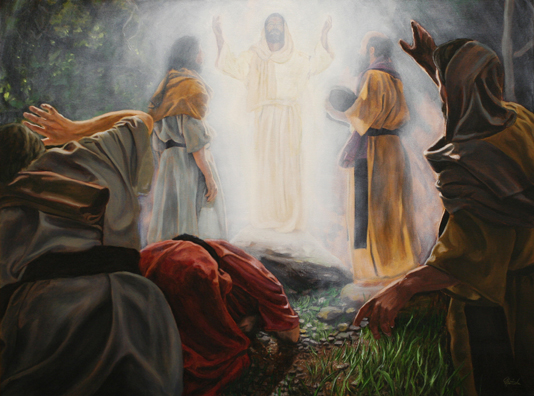
Six days later, Jesus took with him Peter and James and John, and led them up a high mountain apart, by themselves. And he was transfigured before them, and his clothes became dazzling white, such as no one on earth could bleach them. And there appeared to them Elijah with Moses, who were talking with Jesus. Then Peter said to Jesus, “Rabbi, it is good for us to be here; let us make three dwellings, one for you, one for Moses, and one for Elijah.” He did not know what to say, for they were terrified. Then a cloud overshadowed them, and from the cloud there came a voice. “This is my Son, the Beloved; listen to him!” Suddenly when they looked around, they saw no one with them any more, but only Jesus.

the-transfiguration

And he was transfigured before them, and his clothes became dazzling white, such as no one on earth could bleach them.

Six days later. An innocuous beginning to our scripture today. In order to properly experience the depth of the transfiguration, we have to go back six days in the life of Jesus and his disciples. Before hiking the mountain with the inner circle of Peter, James, and John, Jesus asked the disciples about his identity. “Who do people say that I am?” “Well Jesus, some call you John the Baptist, and others call you Elijah or one of the prophets.” “Okay, but who do you say that I am?” Peter answered, “You are the Christ, the Messiah.

Jesus then immediately taught his disciples about his impending death, and predicted his resurrection for the first time; “The Son of Man must undergo great suffering, and be rejected by the elders, the chief priests, and the scribes, and be killed, and after three days rise again.” Peter, the great representative for the rest of the disciples, the great representative for all of us, pulled Jesus aside and began to rebuke him for making such claims: “the messiah cannot be rejected by the elders and be killed Jesus, thats not what a messiah is supposed to do.”

Jesus quickly stopped Peter in his tracks, “Get behind me Satan! For you are setting your mind not on divine things but on human things.”

And so, six days later, perhaps when the disciples needed a reinforcement of faith after such a strange episode, the inner circle was invited by Jesus to the top of a mountain. I can imagine their wavering faith as they slowly walked along the path, unable to comprehend the new understanding of what it meant for their Lord to be the Messiah.

In the cool of the morning, with the dew still hanging in the air, Jesus was transfigured before the disciples. His clothes became dazzling white beyond human comprehension. And there, on either side of Jesus appeared Elijah and Moses. Then Peter said aloud, perhaps while cowering in fear, “Rabbi, it is good for us to be here; let us make three dwellings, one for you, one for Moses, and one for Elijah.” Suddenly, a cloud overshadowed them, and from the cloud there came a great voice: “This is my Son, the Beloved; listen to him!” And when they looked around, they saw no one with them anymore, but only Jesus.

4, Example 2a, The Saviour's Transfiguration, an early-15th century icon from the Tretyakov Gallery, attributed to Theophanes the Greek

Today, we celebrate Transfiguration Sunday. In the life of Jesus the Transfiguration was a defining moment that would come to determine the course of his mission to the world. From this point forward the trajectory of Jesus and his disciples was set toward Jerusalem. For the modern church, Transfiguration Sunday is celebrated immediately before Ash Wednesday and the beginning of Lent. Just as the Transfiguration trained the disciples’ eyes to the coming death and resurrection of Jesus, so too we are training ourselves to make our way through the coming forty days of Lent preparing for the celebration of Easter.

What do you think of this story? It has forever been a favorite of mine for many reasons. What does the appearance of Elijah and Moses mean for the disciples and Jesus? What must it have felt like to be there with Peter, James, and John to have witnessed Jesus transfigured before them? How powerful and enveloping was the cloud and God’s voice declaring Jesus as his Beloved? A whole sermon series could be devoted to these 7 verses. However, today we are going to focus on Peter’s peculiar request to build three dwellings on top of the mountain.

Peter is both frightened and ignorant. Within the last week he had made the stunning confession of Jesus as the Christ and then he was connected with the likes of Satan and commanded to move behind Jesus. Like many Christians, Peter was willing to go wherever Christ called him, though that didn’t necessarily mean he understood everything that was going on. This event had to have been remarkable for the three disciples present. In a brilliant fashion Jesus was validated as the Son of God. In spite of the shock regarding his own suffering and approaching death, this transfiguration confirmed him as the Lord’s anointed, the beloved Son.

Perfectly timed as a reinforcement for the disciples’ faith, particularly in the wake of Peter’s movement between perfection and ignorance, Peter responds to this glorious moment with the desire to build three dwellings. Behind his words was the need to prolong the experience. Who among us would not want to stay up there on the mountaintop with the transfigured Jesus flanked by Moses and Elijah? This was a moment high worth; the true, embodied, and illuminated understanding of Jesus. It was an experience that any of us would have liked to make permanent. However, life is not made up of mountaintops alone, for every glorious mountain there is a equally draining valley. It was good for Peter to experience the transfiguration, but it was NOT good for him to try and prolong the experience. Life must continue to move on.

A few months ago I was blessed with the opportunity to preside over my first wedding. Brian and Sarah are a delightful couple and I was thrilled with the invitation to join them together in marriage. The wedding went off without a hitch, well thats not exactly true, I had to remind the nervous father of the bride to stand with her until he gave her away, and then I had to direct him to sick back down after he had finished. Nevertheless, when it came time for the homily, I stood before Brian and Sarah, remarking about the sanctity of marriage and the role that God plays in all of our unions. I ended the homily with something I tell all couples preparing for marriage:

1175334_605087304526_1820722616_n

“From this point forward your individual stories are coming together. I want to tell you something that most will try to claim the contrary. Today will NOT be the happiest day of your lives. If you limit the joy of what you can experience in marriage to this one particular Saturday afternoon, it will cease to be organic and life-giving but instead repetitive and dull. You have an incredible story in front of you, one that has yet to be written, you are traveling as strangers into a strange land. There will be countless mountains and valleys and so much of your horizon is still beautifully unwritten.

Like Peter, many of us want to desperately hold on to those “transfigured” moments of our lives. We want to experience events where we get a little slice of heaven, but as soon as they fall in our laps we are often unwilling to let them go. The excitement of Christmas is often replaced by the anxiety and dull atmosphere of January. The beauty of a newborn baby is quickly rivaled by the long nights of crying and wailing. The joy of summer break from school flies by too quickly and before we know it we are sitting in a new classroom surrounded by unfamiliar faces. Life is made up of both mountains and valleys. Neither one can, nor should, last forever.

shenandoah-blue-ridge_2014_600x450

Transfigured moments are all around us, particularly here in worship. Worship is supposed to be a shining hour, high and lifted up, an event where the glory of God the Father, Son, and Spirit shines radiantly throughout our space. Like the disciples gathered on the mountain, worship is supposed to surround us like a cloud when Jesus and his revelation of God are made known to each of us. Worship, when done well, produces a glow unlike anything else on earth. Worship, beauty, joy, love; all of these are those wonderful transfigured moments that surround us daily. A life that has no transfigured hours of worship is poor, no matter how rich and decadent the elements may be.

So, just think for a moment, imagine the many areas in which the mood of Peter, when he said, “Lets just stay here” blocks the possibilities of life. Life cannot just be one big wedding celebration, nor can it be replaying our favorite song over and over and over again, nor can it be a endless worship service here at St. John’s. Whether we like it or not, we cannot stay on top of the mountain forever, we have to move and go on to new experiences of life, faith, and understanding.

As the disciples grew closer and closer to their Lord, his words and proclamations became increasingly difficult to understand and follow. While making their way to the inevitable result of Jerusalem, the disciples needed to hear Jesus. The voice from the cloud echoed out, “listen to him!” and I can think of no better words for all us to hear this morning.

When I was 16, standing on the sidewalk along Ft. Hunt road in Alexandria, Virginia on a cold and dark December evening my life was forever changed. I am a product of “listening to him.” I stand before you as the pastor serving this church because I was enveloped in that strange cloud of God’s grace, without a big booming voice, without particular words, and yet I somehow knew that I could do nothing with my life other than serving the church. My life has been filled with mountaintop experiences, some of them on literal mountain tops, but there have also been deep and seemingly endless valleys.

And so, what are to make of us this Transfiguration? That day when he took the three disciples to the mountainside to pray, his countenance was modified, his clothing was aflame. Two men appeared, Moses and Elijah came. Lost in the cloud a voice, have no fear, we draw near, lost in a cloud, a sign, Son of Man turn your ear.

We are just like those disciples standing on the mountainside with Jesus. We are given glimpses of heaven regularly in our lives. We are blessed to be showered with transfigured moments if we have eyes to see and ears to hear. However, life must be made of both mountains and valleys. Like the disciples we are called to listen to Jesus when the time comes to re-enter the reality of life. We have the privilege of listening to Jesus and having his words become incarnate in the ways that we live our lives.

lord__s_supper_by_bclary-d37hhzp

If you want to truly experience a transfigured moment in your life, look no further than this table with the gifts of bread and wine. This banquet that has been prepared for you and me is an encounter with the divine, it is a little slice of heaven for us. This is our mountaintop, that incredible and glorious moment when Jesus’ true radiance shined in a way unlike anything else on earth. In this communion we are brought into union with the triune God, we are nourished with the grace of God for our journeys of faith. 

So, as we prepare to feast at Christ’s table, remember that we cannot stay on the mountain forever. We will depart from this place and enter the world filled with the body and the blood. Listen to him in the valleys of life knowing that we are always going on to something new and wonderful. Let us all strive to be transfigured and delight in God’s will, walking in his ways forever. God is with us at the wedding receptions and in the hospital waiting rooms, God is with us when we fall and love and when we lose our jobs. God is with us when we cradle new-born children for the first time and when they leave us to begin their own lives. God is with us on the highest mountains and in the deepest valleys. Listen to him.

Amen.


To Fear, Or Not To Fear – Sermon on Psalm 112 and Mark 6.45-51

Psalm 112

Praise the Lord! Happy are those who fear the Lord, who greatly delight in his commandments. Their descendants will be mighty in the land; the generation for the upright will be blessed. Wealth and riches are in their houses, and their righteousness endures forever. They rise in darkness as a light for the upright; they are gracious, merciful, and righteous. It is well with those who deal generously and lend, who conduct their affairs with justice. For the righteous will never be moved; they will be remembered forever. They are not afraid of evil tidings; their hearts are firm, secure in the Lord. Their hearts are steady, they will not be afraid; in the end they will look in triumph on their foes. They have distributed freely, they have given to the poor; their righteousness endures forever; their horn is exalted in honor. The wicked see it and are angry; they gnash their teeth and melt away; the desire of the wicked comes to nothing.

Mark 6.45-51

Immediately he made his disciples get into the boat and go on ahead to the other side, to Bethsaida, while he dismissed the crowd. After saying farewell to them, he went up on the mountain to pray. When evening came, the boat was out on the sea and he was alone on the land. When he saw that they were straining at the oars against an adverse wind, he came towards them early in the morning, walking on the sea. He intend to pass them by. But when they saw him walking on the sea, they thought it was a ghost and cried out; for they all saw him and were terrified. But immediately he spoke to them and said, “Take heart, it is I; do not be afraid.” Then he got into the boat with them and the wind ceased. And they were utterly astonished.


Happy are those who fear the Lord. “Take heart, it is I; do not be afraid.”

It happened in a small town in a small United Methodist Church. A single mother was struggling to raise her two boys who were the talk of the town. At 10 and 12 years of age, the two brothers were often responsible for any of the “accidents” in town. They regularly vandalized certain buildings, were known for shoplifting candy from the local 7-11, and would ding-dong-ditch any house they could find.

Yet, on Sunday morning, there they were sitting on either side of their mother in church. The boys would politely greet the minister when they walked in, sat quietly, but during the sermon they loved to make farting sounds while the preacher paused in a sermon.

They were trouble.

Now because the mother was raising the boys all alone, many of the people in the community that wanted to do something about the two boys, felt that it wasn’t their place; that mother had enough on her plate.

This type of behavior went on for some time. The boys would continue their antics, driving people crazy, until one day when the mother had had enough.

The pastor at the local United Methodist Church was a young man fresh from seminary; he thought he had it all figured out. For weeks he had wanted to call out those two boys from the pulpit in the middle of a sermon, but he thought better of it, he would look down on that poor mother and let it go.

So it came to pass that the mother called the young minister. “Preacher,” she barked into the telephone, “I want you to strike the fear of God into my boys. This has got to stop.”

“It will be my absolute pleasure,” The preacher replied.

The following Sunday, after worship, the minister invited the two young boys toward his office, leaving one to sit outside while the other sat on the hot seat in the office.

In order to achieve some sort of repentance from the boys, the preacher thought about teaching them that God is always present, and therefore sees everything. This, he hoped, would teach them to behave better.

With the first brother sitting across the office table, the preacher began his lesson. “Where is God?”

No response.

“Where is God?!”

The boy began to fidget.

“Where is God!?!”

The lack of response was beginning to irritate the pastor.

“I want you to answer me right now, where is God?!?!”

And with that the boy jumped from his seat and hightailed it out of the office, grabbed his brother, and bolted for the parking lot.

“Whats going on?” The one brother asked the other.

“We’re in real trouble this time. God’s gone missing, and they think we had something to do with it!”


The psalmist writes, “Praise the Lord! Happy are those who fear the Lord, who greatly delight in his commandments.” I have always found this verse a little strange considering the fact that whenever God shows up in the Bible, whenever God humbles himself to speak with one of his creatures, the first thing he usually says is, “Do not be afraid.”

fear

In Mark’s gospel we learn about a time when the disciples got into a boat to go to Bethsaida. After dismissing the crowd, Jesus went up on the mountain to pray, leaving his disciples alone on the boat. When Jesus came down he saw how the disciples were straining against the wind so he did what the Son of God would do, he walked on the water out toward the boat. He intended to pass them by, but when they saw him walking on the water they were utterly terrified, they thought it was a ghost and cried out. But immediately Jesus spoke to them across the water, “Take heart, it is I; do not be afraid.” Then he got into the boat with them and the wind ceased.

Yet, in Psalm 112, we hear about the blessedness of those who fear the Lord. To fear the Lord means that your heart is steady. If our hearts are fixed on evil, we shall become evil. If our hearts are fixed inwardly, we shall become ridiculously selfish. If our hearts are fixed upon things and possessions, we will become overwhelming materialist. All around us, perhaps even some of us, are failing because our minds and hearts are no longer steady, because our hearts are no longer fixed on the right thing.

So the psalmist calls out, blessed are those who fear the Lord. Fear comes to all of us, to the bravest as well as the cowardly. Fear comes to the faithful and to the faithless. Fear can be a good thing, it warns us to keep our eyes peeled for the danger that might lurk just around the corner. Fear teaches us to respect our elders, teachers, and bosses. Fear reminds us of our finitude. However, to be mindful of fear is one thing, to be constantly panic stricken is another.

A good friend of mine, raised in the church and pursuing a call to ministry, was once invited to a spiritual retreat at the cusp of high-school. For a long weekend, hundreds of young Christians would gather together in small groups to talk about the temptations of the world, how to keep the faith, and what it meant to walk with Jesus throughout their teenage years. They would also spend time as a large group worshiping, they would sing along to the contemporary Christian rock band, they would walk forward to receive communion together, and they would all reverently bow their heads to pray.

On the last night of the conference, at the final worship service, at the height of the concluding sermon, the fire alarm went off. The ushers and facilitators rushed everyone out of the building, yelling at the kids to hurry up as they struggled to find their peers. My friend was rushed through one of the hallways, forced around dark corners, until he found himself standing outside in the parking lot.

Spread throughout the area were life boats, and throngs of the young Christians were climbing aboard. My friend, unsure of what was going on, ran forward to the closest boat, grabbed hold of a rope and tried to swing himself on when the fire alarm stopped and a voice cried out over the megaphone: “Take a look around you, there are not enough spaces in the life boats for everyone. Have you accepted Jesus Christ as your personal Lord and Savior?”

Fear can be a tool, but it can also warp and manipulate us. My friend refused to enter a church for years after that incident because of the way the people at his retreat attempted to manipulate his faith through fear. That is not the kind of fear that the psalmist calls blessed.

The disciples were on the boat, the wind was against them and they were having problems crossing on to the over side. They were doing their best to follow Jesus’ commands, yet the world was not matching their expectations. They must’ve felt tired and abandoned out there all alone; why had Jesus asked them to do this? Where was he when they really needed him? Somehow, though stricken with overwhelming fear, the disciples saw Jesus walking on the water while calling out, “Take heart, it is I; do not be afraid.”

When fear was the most appropriate response to the present circumstances, Jesus triumphantly declared, “Do not be afraid.” In the many chaotic moments of our lives, when bashed by the waves of the world, Jesus continues to call out to us, “Do not be afraid.” Christ is there with us on the rocky boats of life’s circumstances, God listens to our prayers, and the Holy Spirit moves through everyone of us to help transform this world into God’s kingdom.

The disciples, the Israelites who sang Psalm 112, and all of us are not called to be motivated by fear, but instead motivated by love. The disciples did not leave everything to follow their God because he had promised them hard days and suffering, though that often comes if we take faith seriously, but instead they were offered a new way of living. Those who do not want to be afraid are those who have decided to see the world through the lens of faith, to be free from the tyranny of the world. People without fear are those who are fully open to the troubles and the needs of their fellow human beings. They, as the psalmist writes, rise in the darkness as a light for the upright, they are gracious, merciful and righteous. Their hearts are secure and firm in the Lord, they will not be afraid because they know the Lord is with them.

Fearing the Lord, as the psalmist writes, means loving the Lord. Loving God enough to realize that God wants to us to love one another, to strive for justice, to celebrate peace, to take faith seriously, but not take ourselves too seriously. Those who cannot sigh with others in the midst of suffering, and laugh a little bit about themselves are the ones who will be controlled by their fear.

There has been plenty of fear used throughout the history of the church, perhaps today more than ever. Churches have become professionals with motivation by fear. If you don’t tithe, if you don’t believe, if you don’t commit to prayer, etc. Right now, what we need more than fear is a little bit of laughter, we need some joy, we need to rediscover the happiness that the church contains for those who want to follow Jesus Christ.

I like to imagine that later in Jesus’ ministry, or perhaps after the resurrection, the disciples would be together joking about the old times. “Do you remember that time Jesus went into the temple and over turned all the tables!? How crazy was that?” “Or when he asked us to go find him a donkey to ride on into Jerusalem? What a character!” “Or what about that time we were all shaking with fear on the boat and Jesus calmed the wind like that *snap* what a night that was.”

laughing_jesus

Laughter, joy, and excitement must have been a part of the disciples journey through faith.

Thats why I started the sermon with a funny story about two young boys running out of a church. Until we can laugh together about the excitement of faith, then the fear of God will remain what many people get out of church.

Happy are those who fear the Lord, because they realize that God’s love is incredible. We fear God’s love because we recognize that we do not deserve it. We fear God for welcoming us into this journey when we have so little to contribute. We fear God for inviting us into a place to be loved, when we feel unlovable.

We have too often settled for the motivation of fear in church. Can you imagine what the church could look like if instead of gathering to hear about what we must do to change in our lives, we gathered out of joy and excitement and laughter?

Blessed are those who fear the Lord, who greatly delight in his commandments.

Let us all recover that sense of happiness and delight in our faith journeys. Let us be motivated by the good God who calls us by name to laugh, live, and love. Let us rekindle the flame of faith in our lives to be utterly astonished by the God who came to die, and live, for us.

Fear not, for God is with you.

Amen.

434035811_640

Weekly Devotional – 12/30/13

Devotional:

Ephesians 1.5-6

He destined us for adoption as his children through Jesus Christ, according to the good pleasure of his will, to the praise of his glorious grace that he freely bestowed on us in the Beloved. 

734230_4212788928976_1058514452_n

Haley Mertins and Matthew Husband. Two very unique and wonderful people that will be marrying one another on Saturday. I have known Matthew since High School, when he was the kicker for the football team and recognized for his humor and jovial nature. I have known Haley since the moment she was born, I watched her grow and become the woman she is today (she is my little sister after all). Almost a year ago, Matthew asked Haley to marry him, and shortly thereafter I was asked to perform the wedding ceremony. The big day is finally approaching, and on Saturday I will stand before two of my favorite people on the planet (as well as their families and friends) and I will bring them together in holy matrimony.

Over the last months Haley and Matthew have diligently planned their wedding: sending out all the invitations, planning the menu, creating a music playlist for dancing, envisioned a worship service, etc. All of that planning and preparation will comes to fruition this coming weekend as their lives will be forever connected.

1486126_10200985093660539_1903328338_o

As Haley and Matthew’s relationship has grown over the last few years, I have particularly enjoyed seeing how each of them learned to let themselves be loved by their new families; both of them have been adopted by their soon to be in-laws. Matthew has been invited on vacations with my family, is a regular at the kitchen counter for dinner, and knows (and is responsible for) numerous inside jokes. Likewise, Haley has been adopted into the Husband family through meals, celebrations, parties, and vacations. Haley and Matthew have had to train themselves to be accepted into a new family dynamic where they will love and be loved by others.

At the beginning of his letter to the church in Ephesus, Paul wrote, “[God] destined us for adoption as his children through Jesus Christ, according to the good pleasure of his will, to the praise of his glorious grace that he freely bestowed on us in the Beloved.” In many ways, the sense of adoption that Haley and Matthew have experienced is paralleled in the ways that God has adopted all of us as children through Jesus Christ. Regardless of our familial experiences and pasts, we have all been incorporated into God’s family through the redemptive life and love of Jesus Christ. Just as Haley and Matthew will be welcomed by one another’s families, God has welcomed us in to the great and cosmic love that is the body of Christ for the world.

So, wherever you are in your life, whatever situation you’re experiencing with your family, know that God loves YOU. God has welcomed you in as a child and will love you eternally. You have been grafted in to something so much larger than yourself, something that will come to define you more than anything else. As we all prepare to take our first steps into 2014, let us rejoice in the fact that we can truly call God our Father.


God and Relationships – Part 2

couple-holding-hands

One of my favorite theological blogs belongs to my friend and mentor Jason Micheli (www.tamedcynic.org). Recently, Jason produced a number of posts about the importance of being in relationships. In a similar vein, I have decided to post a few of my thoughts on the theological virtues of relationships.


“To say ‘I love you’ one must first be able to say the ‘I.’”

Fountainhead

So says the fictional Howard Roark to Dominique Francon in Ayn Rand’s behemoth novel The Fountainhead. Though Rand herself was staunchly opposed to all forms of religion, I believe her quote, in a way, speaks profoundly to the importance of what it means to be in relationship with another.

To use Rand’s language: To say “I love you” one must first be able to say “I.” And, perhaps, more importantly, to say “I do” in marriage, one must first be able to say “I.”

Will Willimon writes, “Most people think that the toughest part of marriage is deciding who we ought to marry, making the right choice, and preparing for the decision. We say we are deciding whether or not we are “in love” with this person. Curiously the church has traditionally cared less about our emotional attachments. What the church cares about is not who you have deep feelings for but rather whether or not you are a person who is capable of sustaining the kind of commitment that makes love possible.”

love-wedding-photo

In today’s culture people (young and old) often commit to a romantic and marital relationship before ever experiencing what it means to be an individual. Young people are maturing later and further delaying the ability to find sense in individuality and therefore seek identity in others. Yes- there must be sacrifice in all relationships, but not at the expense of losing whatever it is that makes you, you.

Before a couple can fully appreciate the depth of what it means to covenant their life to someone else, they have to know who they are in order to give themselves over.


But here’s where it gets a little complicated…


You will never fully know who you are.


As a pastor, when I stand in front of a couple leading a wedding ceremony, the question is not “Jack, do you love Jill?” Instead the question is, “Jack, will you love Jill?” There, in that precise moment, we discover that, according to the church, love is something you commit to, something you promise to do, a future activity, the result of a covenantal marriage rather than its cause.


As Stanley Hauerwas famously put it, “we always marry the wrong person.” This is to say that we never marry the right person because marriage and life changes us. There will come a time when you realize that the person you have been living with is no longer the person you married or met at the coffee shop or knew from high school.


No one can fully know what he or she is getting out of a husband or a wife. There is a lot to be said about preparing for marriage (meeting with professionals, discussing the future, etc.) but there is an element of unpredictability that must be respected. We can never prepare for marriage in totality, but we can prepare ourselves for a lifetime of commitment to someone who is always changing (ourselves included).


This is exactly why it is so important to understand what you say, when you say “I.”


You will change in ways that you cannot predict just as your partner will change. But, as Christians, we have been adopted into a new identity through water and the Spirit that sustains us throughout the many changes of our lives.


Christ is alive through us, in us, and with us.


If we hold on to that identity, love can be the result of our relationships rather than the requirement.


God and Relationships – Part 1

couple-holding-hands

One of my favorite theological blogs belongs to my friend and mentor Jason Micheli (www.tamedcynic.org). Recently, Jason produced a number of posts about the importance of being in relationships. In a similar vein, I have decided to post a few of my thoughts on the theological virtues of relationships.


(Some of the following elements were first taken from a post written by Ron Edmondson, and then re-evaluated for this post. You can check on Edmondson’s blog here: www.ronedmondson.com)


Relationships are tough, perhaps tougher now than ever before. The impact of social media and changes in our contemporary culture have affected dating, marriage, and divorce in ways that cannot be fully comprehended. Moreover, maintaining a relationship predicated on the model of discipleship of Jesus Christ is a challenge in and of itself.

One of the many blessings of what it means to be a pastor is being invited into a couple’s relationship during pre-marital counseling. A few weeks ago I shared the following thoughts with a couple preparing for marriage and I believe they are relevant for anyone engaging in a serious relationship.


You are different. You are different and thats a good thing! Both members of a relationship differ from one another physically, emotionally, psychologically, and theologically. This is not a curse against relationships but something to be celebrated. The more a couple can live into the differences that make them who they are, the better a foundation can be made for experiencing life together. God has uniquely created you to be you, and no one else.

Set your own path. Don’t let either set of families/in-laws dictate how you will go forward with your own family. Our respective histories are important but they do not define how we can be in relationship, or how we can raise a family. Try to make sure that you are in this with/for one another, do not let anyone (related or otherwise) divide you and your thoughts on family. Every couple has a number of other relationships, but care should be made to maintain the oneness that God intends to create within a relationship. Respect the advice given to you, but listen to your spouse and work together.

Prepare to be surprised. Life will not always be peachy and perfect. For the many mountain tops that you will experience, there will be a valley waiting on the other side of the horizon. No one can ever be completely prepared for the changes that might come, but we can prepare ourselves to be ready to handle and address the changes appropriately. When difficulties arise, and they will, this is a prime time to improve the strengths and dynamics of a relationship. Theologically speaking, it might feel like you are always sitting in the shadow of the cross, but the glory of the resurrection will come. Prepare to be surprised.

Model after other couples. Look around and pay attention to the people in your life in relationships that you admire. They will inevitably have stories to share and appropriate advice to give. Remember to not just simply insert their techniques and strategies into your relationships, but allow them to model what it means to be in a fruitful connection with someone else. Often times when we come to church we assume that everyone in attendance has everything together in their lives, and similarly we often make the same assumptions of people in relationships. There is always something under the surface that we cannot see. If other couples are willing to share some of that information with you, it will likely prove helpful for your own relationship.

Communicate. Evaluate your relationship with one another. However, wait for the appropriate time to do this (in the middle of a fight is not always the best time). Couples should ask themselves, “are we growing together as a couple or are we moving further apart?” Do not always assume that your partner feels exactly the same way as you do.  If you can create a habit of honestly checking in with one another about the greater trajectory of your relationship, it will help prepare you to be open with one another in a loving and life-giving way as you move forward. Communicating with one another might sound like a simple aspect of a relationship, but its importance makes it worth mentioning over and over again.

Put God first. This is perhaps one of the hardest things for a pastor to bring up with a couple because it sounds like the “preachy” thing to say. But, its important. A couple’s individual, and collective, relationship with God will help navigate the deep “valley-like” hardships of life and maintain a sense of stability when everything else feels like its crumbling. Talk about God with each other. Pray together. But also experience God in the way that only you can. Your first identity as a Christian will help so communicate who you are and whose you are. Far too many individuals in a relationship come to define themselves on the other person. You are not someone’s better (or lesser) half. You were uniquely made in the image of God and this is important to celebrate. Live into your relationship with God and it will strengthen your relationship.