Devotional – Genesis 15.6

Devotional:

Genesis 15.6

And he believed the Lord; and the Lord reckoned it to him as righteousness.
Weekly Devotional Image

“If you believe that God exists, and confess Jesus as Lord, you will go to heaven.” So said one of the staff members during our mission trip to Raleigh, NC last week. The youth were all assembled on the floor, they had shared their “Yea God” moments from the day, they had joined together for a few worship songs, they listened to a testimonial, and were now being offered a one-way ticket to glory. During the testimonial a few youth began to cry in response to the vulnerability of the young man sharing his story. The lights were dimmed to just the right degree. And then he hit them with the “If you just believe that God is real, and confess Jesus as Lord, you will go to heaven.”

However, there is a difference between believing that God exists, and believing God.

In a relatively recent poll, it was determined that 9 out of 10 American adults believe that God exists, and more than 40% of Americans say they go to church weekly. However, less than 20 % are actually in church on Sundays. In the US we have a considerably high number of people who believe that God, or some sort of universal spirit exists, but only a fraction of them believe God enough to gather with a regularly worshiping community.

tumblr_ny91sd9Df61s91yx0o1_1280

Believing that God exists is something that most people are willing to admit. When confronted with the totality of the universe they’ll confess that there might be someone, or something, behind the scenes. When they encounter a question without an answer, they are okay with assuming that “God” might be the answer.

But believing God is another story.

When Abraham was promised descendants more numerous than the stars, he did not simply believe that God exists in reality, but instead believed what God revealed to him. Abraham believed the promise.

When Moses discovered the burning bush, he did not simply believe that God was real, but instead believed what God revealed to him. Moses believed that God was going to deliver God’s people out of bondage.

When Jesus cried out from the cross, “Father forgive them, for they do not know what they’re doing”, he did not simply believe in the existence of God, but instead believed what God revealed to him. He believed in the power of God’s grace to forgive, even from the point of death.

We can believe God exists without much trouble or hesitation, because to believe God is real requires very little of us. But to believe God, to believe that God works in the world, that God makes good on God’s promises, that the Holy Spirit empowers us to serve and sacrifice, requires us to live radically different lives.

The Cross in Creation – Karl Barth and Genesis 1.1-2

Genesis 1.1-2

In the beginning when God created the heavens and earth, the earth was a formless void and darkness covered the face of the deep, while a wind from God swept over the face of the waters.

barth-bw

While I was in seminary I spent one of my summers helping Bryson City UMC in Bryson City, North Carolina. Bryson City is surround by the Great Smokey Mountains and is easily one of the most beautiful places I’ve ever been in my entire life. It was an incredible experience that directly shaped the way I do ministry today.

During my time at the church I was invited to participate in a weekly lectionary group with local clergy. Every Monday morning the pastors and priests of Bryson City would get together to talk about the scripture readings for the following Sunday. We met at the large Baptist Church, ordered breakfast to be delivered, and then we would take turns reading from the bible and shared what we thought we would preach about on Sunday.

Week after week I heard from clergy of all different denominations (Presbyterian, Baptists, Catholic, Methodist, etc.) as they wrestled with God’s Word and how to proclaim it from very different pulpits to very different people.

On one hot morning in the middle of July I found myself surrounded by those familiar pastors and priests as we read the texts aloud. The lectionary always had four prepared readings for each Sunday on a three-year cycle: a reading from the Old Testament, the Psalms, an Epistle, and a Gospel. I don’t remember what the other readings were that morning, but I do remember that I was asked to read Genesis 1: In the beginning when God created the heavens and the earth…

When I finished, as was our custom, we waited for individuals to speak up about what they planned to do with the test during worship. Silence filled the room. So I decided to ask the obvious question, “I anyone planning to preach on Genesis 1?” The silence remained. I remember thinking to myself, “How strange is this? We’re talking about the first lines of scripture in the bible and no one is preaching on it in Bryson City this week.” It was obvious that most of the clergy wanted to move on to a different reading, but I felt compelled to ask another question: “Have any of you every preaching on Genesis 1?” One by one they confirmed my suspicion; not one of those pastors, priests, ministers, or preachers had ever proclaimed a sermon on the beginning of creation.

While they moved on to a different reading and a different conversation, I silently began calculating from my chair: In that room we had over 100 years of preaching represented. Over 100 years of preaching, more than 5,200 sermons, and not one of them had ever preached from Genesis 1.

Why do we ignore Genesis 1? What is it about the text that makes us afraid to bring it up in worship or in bible study?

On some level I think it is good to be afraid of God’s Word; that fear reminds us that God is God and we are not. But Genesis 1 is not something to be ignored or forgotten.

557046

Of all the writing I’ve read on Genesis 1, it is Karl Barth’s exegesis of the text that gives me hope for its return to the pulpits and congregations of our churches.

Barth, unlike so many modern theologians and pastors, rejects the fear and presumption that there is dissonance between creation as recorded in scripture and the scientific method. Instead of attempting to rationalize the theory of the Big Bang with the details of Genesis 1, and instead of struggling to line up Darwin’s Theory of Natural Selection with the order of creation in scripture, Barth rejoices in the knowledge that the earth was in a hopeless situation of chaos and utter darkness and God chose to transform reality through the Word. The “how?” and “why?” of creation is simply answered with “Word” and “love.”

Writing and reflecting from this vantage point gives Barth the ability to freely respond to the words contained in Genesis 1 with a freshness that is often lost in the church today; his exegesis of Genesis 1 is a worthy read for clergy and laity alike.

In §41.2 “Creation As The External Basis Of The Covenant” (III.1 The Doctrine of Creation in Church Dogmatics) Barth begins his exegesis with the very first words of God from the Word of God.

The first word in the Hebrew Bible is bereshith, which roughly translates to “start” or “beginning.” In English we render this as “In the beginning…” but for Barth the distinction is important. To begin with “beginning” tells us “that this history, and with it the existence and being of the world, had a beginning, i.e., that unlike God Himself it was not without a beginning, but that with this beginning it also looks to an end.”[1] There is no other word that can quite compare with the one that inaugurates God’s holy scripture. From the beginning of all things God created a beginning to have an end. The Lord did not create the world like a watchmaker and then step back to see how it would run. God was intimately involved in the creative act knowing full and well that there was a necessary end, or conclusion, to the creative act. Unlike an author who begins a story without knowing how it will come to close, God created from beginning with an ending.

For years I’ve read the creation account from Genesis 1 and thought of it just like that: an account of creation. The words were there on the page, though they hardly jumped out at me. Like those pastors in Bryson City, Genesis 1 is one of those chapters in the bible that I have not so subtly avoided because of the difficulty of rationalizing it with modern science. And yet Barth writes about the first two verses of scripture with such conviction that it challenges me to re-engage with the text and see the beauty of what God did, and is doing.

Verse 2 (the earth was a formless void…) has been similarly read with haste and overlooked for the richness it holds. Everything else, which is to say everything neutral or against God’s will, ceased to exist when time began with God’s action and accomplishment. The whole of creation was worked into being and order by God in time. In God’s freedom to create was the earth brought into meaning through God’s action and through God’s word to create.

1101620420_400

The challenge of verse 2 has vexed theologians and Christians alike for centuries regarding the chaos, whether or not God created it, and if God willed a reality of chaos into existence. This, I think, has factored into the disappearance of Genesis 1 from pulpits because we are unsure of how to speak about evil in the world, and whether or not God ordained it.

The question of God’s role in the creative act resulting in, or presupposing evil, is usually limited to two answers: God either did create the darkness and evil, or God did not.

Barth totally rejects this dualistic presumption.

Instead, Barth begins by confronting what is actually stated: “In verse 2 there is absolutely nothing as God willed and created and ordained it according to verse 1 and the continuation. There is only “chaos.” … that which is absolutely without basis or future, utter darkness… According to this phrase the situation in which the earth finds itself is the very opposite of promising. It is quite hopeless.”[2]

For Barth the question over evil and whether or not the violent and chaotic state of the world is self-originated or willed by God pales in comparison to the fact the earth was in a hopeless situation of utter darkness and God chose to transform reality through the Word. Verse 2 therefore posits a world in which the Word of God had not been uttered. The “nothingness” of creation is utterly destroyed and rendered impossible by the possibility of God in the creative act.

The ugliness of the existence prior to the Word of God did exist almost like a shadow of the actual creative act of God. And because it was like a shadow, in the freedom of humanity we can look back and return to that past and bring forth the shadow of verse 2. In so doing, by rejecting the Word of God, the past defies its own nature and becomes present and future. However, God totally and utterly rejected and rejects the shadow and speaks forth the Word to shine in the darkness.

The temptation of humanity to return to the shadow is ever present. Whenever we deny mercy to God’s creatures, we are retreating to the moment precisely before the Word of God. It is in our broken and sinful nature that we reject God’s Word and substitute our own. The shadow of darkness is around us whenever we encounter death and destruction. But no shadow can compare with the one of the cross: “This – this moment of darkness in which His own creative Word, His only begotten Son, will cry on the cross of Calvary: ‘My God, my God, why has thou forsaken me?’ – will be ‘the small moment’ of His wrath in which all that is indicated in Genesis 1.2 will become real. For all the analogy to other kinds of darkness, there is no other moment such as this.”[3]

In the death of Jesus Christ, in the shadow of the cross, humanity encounters the true and total darkness prior to God’s Word. But it is through Jesus Christ (as the Word) that God will reconcile creation to God’s self. In the one incarnate creature, at that particular moment and time in the cosmos, the Word will again become the Light over all creation. The brilliance of the empty tomb shines like the first light hovering over the darkness in Genesis 1.2.

The “old things” of creation prior to the Word have radically passed away in a dynamic and divine act of the Lord speaking the Word and through the death and resurrection of Jesus Christ.

The first two verses of scriptures contain the fullness of all God’s scripture. In beginning we see the ending. In the darkness we see the cross. In the light we see the empty tomb and resurrection. What Barth does with scripture is like what a Jazz musician does with the form of a tune; Barth improvises over the lines and draws connections to melodies that we have scarcely imagined.

To reclaim the brilliance of Genesis 1, to jump into the strange new world of the bible like Barth, will give us the strength to encounter creation and believe that it is worthy to be preached and proclaimed. But more than anything, it will give us the vision to see creation and declare, like the Lord, “it is good.”


[1] Barth, Karl. Church Dogmatics III.1 (Peabody, Massachusets: Hendrickson Publishers), 99.

[2] Ibid., 104.

[3] Ibid., 110.

Forgiving the Dust – Sermon on Genesis 3.19 & Matthew 6.9-15

Genesis 3.19

By the sweat of your face you shall eat bread until you return to the ground, for out of it you were taken; you are dust, and to dust you shall return.

Matthew 6.9-15

“Pray then this way: Our Father in heaven, hallowed be your name. Your kingdom come. Your will be done, on earth as it is in heaven. Give us this day our daily bread. And forgive our debts, as we also have forgiven our debtors. And do not bring us to the time of trial, but rescue us from the evil one.” For if you forgive others their trespasses, your heavenly father will also forgive you; but if you do not forgive others, neither will your Father forgive your trespasses.

xlba-00052

This morning marks the beginning of our two part Sermon Series on Questions. After polling the gathered body about the types of questions you all have about God, Faith, and the Church this series was created. We begin by looking at two of the most prevalent questions: What does it mean to forgive? Should the dead be cremated or buried?

Strange things are done for funerals. There are people who insist on placing the favorite objects or tokens from the deceased into the casket in order to bring comfort to the dead, after they’re dead. Others take the ashes of their loved ones to have them placed under high pressure and temperature and have them formed into diamonds to be worn on a finger or necklace. In some communities the location of the burial spot has less to do with geology and availability as it does regarding the direction of the grave.

In Western North Carolina almost every cemetery is organized so that the gravestone, and therefore the bodies, are facing east. While I helped a church in Bryson City, North Carolina it was not uncommon to hear stories about families standing at the graveside, deeply grieving in their loss, when a distant cousin or uncle would pull out a trusty compass and declare that they had the body facing the wrong direction. Whether built in a valley or up on a hill, EVERY grave had to face east. Part of this comes from biblical reasons, but I always heard that it was done so that when Jesus comes back with the sunrise, he wants to see smiling faces, and not rear-ends.

Because I work for the church, I have the privilege to be with people at the paramount of their suffering and help guide them through their grief and pain. Whereas most of the world refuses to talk about death and what comes with it, I relish in the opportunity to declare that even though death is real, it has been defeated. We tend to treat death as an unspeakable subject, when it is at the very heart of what it means to be human.

Even with the sorrow that death brings, I must also admit that comedy often comes along with it.

I could tell you about all the truly scandalous things I have learned about the departed when I meet with a family to plan the funeral. We share stories about the person’s life, what they were passionate about, what set them a part from others. But at some point, and it almost always happens, the friends and families begin to share stories that should not be repeated. I sit there with my pen and paper in hand, fighting the urge to write down every perfect bit of gossip I hear, until someone usually realizes who they are talking to and they politely request that I neglect to mention those parts during the sermon.

I could tell you about how nobody knew what to do with the ashes of my grandfather’s brother after he passed so they just kept him around for awhile. And when my great-grandmother died, my grandfather asked the funeral home if he could spend a few moments alone with her after the viewing. Feigning some sort of important spiritual and prayerful goodbye, he quickly walked up once the room was empty, took a gallon size zip-lox bag containing uncle Preston, and  carefully hid him in the casket with my great-grandmother.

I could tell you about how the first time I met Dick Dickerson, he shared with me all sorts of stories regarding his wife Mildred and he kept motioning over toward the kitchen. I thought that this was a sweet and precious habit that was born out of their relationship, and that Dick was habituated into remembering her being in the kitchen, but when I asked him about it, he laughed out loud and told me that he was keeping her ashes in a bag above the sink.

It is important to remember that it okay to laugh after death. That first laugh or smile often comes with a feeling of guilt, but, if I can be so bold as to speak for the people I have buried, they would be happy to know that we are happy.

Strange things are done for funerals. Sometimes they bring the best out in people; a prodigal son returns home to bury his father; a wayward daughter reconnects with her family. But other times, they bring out the worst.

There were two brothers who fiercely loved their mother. Raised by her alone after losing their father at a young age, they worshipped her and were so very thankful for all that she had given them. The time came for them to start their own families, but they never neglected to remember their wonderful mother. It came as a shock to the local community when she passed away rather abruptly, but the wake of her death was truly felt between her sons.

They met with the pastor to go over funeral arrangements when the fight began…

The older son wanted his mother to be cremated. He claimed it was what she desired and had shared the detail with him on a number of occasions.

The younger son wanted his mother to be buried. He respected her wishes, but he was utterly convinced that the bible said you have to be buried in the ground.

burial_vs_cremation

By the time I arrived in the community, no one could even remember what they wound up doing with the mother, but ever since that fight, the brothers had refused to speak to one another.

Both of them had good points when it came to taking care of their mother’s body- we should respect the wishes of the person, while at the same time remain faithful to scripture.

Some believe that we should only bury bodies. Their arguments are based on the concept that out bodies were made in the image of God and will be resurrected when Christ returns. Most of the key people people in both the Old and New Testaments were buried, including the one who was crucified on a cross. It allows us to properly mourn their loss, and even create a place, such as cemeteries, for us to visit and pay our respects to those who helped to shape and mold us. Moreover they claim that burning a body, cremating it, prevents it from being newly constituted in the resurrection.

Some believe that we should only cremate bodies. Their arguments are based on the concept that nothing is impossible with God, that God can most certainly recreate a body for the resurrection. All flesh eventually decays and returns to the earth becoming just like the dust from which we were created. If God can only resurrect those whose bodies are buried, then anyone who has perished under less than ideal circumstances would be withheld from the resurrection. They also argue that cremation can be less expensive than burial and therefore helps families to thrive and serve God and neighbor. They choose to keep the ashes in an urn or scatter them in such a way that it is done in a fruitful and honorable manner.

Bottom line: we are dust, and to dust we shall return. When we die, whether we are cremated or buried in the ground, we are gone. Our bodies remain and eventually return to the dust from which God brought us into being. Nothing is impossible for God. When the time comes for the bodily resurrection, nothing, and I mean nothing, can stop God from forming us into our new bodies, bodies that will not look like the ones we had here on earth, bodies that are brilliant and beyond our imagination. What becomes important for us is the need to be present with the friends and families for those who have died, and be loving in the way that we see to their needs, whatever they are, in order to help them grieve and mourn.

I never had a chance to talk with the brothers about their argument before the funeral. This happened long in the past. I never had a moment for a surprise intervention or reconciliation. I wish I had the opportunity because this is what I would share with them:

“One of the bravest and strangest things we do as Christians is pray the Lord’s Prayer. Asked by his disciples about the way to pray, Jesus taught his friends to say the words that each of us say every Sunday in church. We collectively pray to OUR father, not MY father, or Jesus’ Father, but OUR father. We request that our limited daily means be met, we yearn for the bread that gives us life. And then we pray for God to forgive us just as we forgive those around us. We pray this to God because we are not strong enough to do it on our own and we need the Spirit to move in us and strengthen us for the terrifically difficult work of forgiveness.

6a00d8341c019953ef019aff52e6fa970b

You two lost your mother, you lost the rock that so much of your lives were founded upon. The one who was always there for you, cared for you, and nurtured you was gone and you wanted to do everything you could for her funeral to be perfect. Yet, you let your own opinions get the better of you, and you let your selfishness blind you from the kind of love your mother made manifest here among us. Your mother is gone, I know you might not be ready to hear it, the grief might still be too difficult to bear, but she is gone. She is now with OUR heavenly father. 

What are you two going to do with the lives she gave you, what are you going to do with the lives that God gave you? Will you continue to bear grudges against each other, refuse to speak and commune, ignore the needs of your respective brother? Will you let an argument about funeral practices divide you from the only family you have left?

Forgiveness is the hardest thing in the world; to see the other and look past everything that have done to hurt you and belittle you, and act on love rather than hate. We don’t forgive because God told us to, and we don’t forgive because its what your mother would have wanted, we forgive because its the last thing worth working for. Without forgiveness we are nothing.

God’s love knows no bounds. Neither should ours. Look at each other and stop seeing the old arguments and disagreements, look at each other forgive.”

Strange things are done for funerals and they can bring out the best, or the worst, in us. It is my prayer that funerals might bring out the best in us. Instead of limiting them to a simple worship service to praise God, think about how we could truly recognize the gift of the one who has gone, and strive to live better and braver lives. Let us see those tense and vulnerable moments, like funerals, as opportunities to forgive and start anew with the people in our lives.

Forgiveness is a difficult thing. It is irrational, draining, and frightening. It requires bravery rarely seen, faith rarely developed, and hope rarely witnessed. Yet, if Christ was willing to forgive those who hung him on the cross, if God is willing to forgive us all our trespasses, just imagine how many things we can forgive in our lives, even the dust.

Amen.

Red With Envy – Sermon on Genesis 25.29-34

Genesis 25.29-34

Once when Jacob was cooking a stew, Esau came in from the field, and he was famished. Esau said to Jacob, “Let me eat some of that red stuff, for I am famished!” (Therefore he was called Edom.) Jacob said, “First sell me your birthright.” Esau said, “I am about to die; of what use is a birthright to me?” Jacob said, “Swear to me first.” So he swore to him, and sold his birthright to Jacob. Then Jacob gave Esau bread and lentil stew, and he ate and drank, and rose and went his way. Thus Esau despised his birthright.

rh-jacobandesau_dsc_0091

There was a man who lived a perfect life. For years he did his very best to maintain the commandments of God, love his family, tithe to his local United Methodist Church, serve on the Trustees Committee, and volunteer as a coach for local little league sports. Everyone knew him, and everyone liked him. He was charismatic and hardworking, personality traits that would come to reward him when he started his own business.

He was a shrewd business man who seemed to be able to predict the rise and fall of the stock market, quickly amassing a vast sum of money that he would then reinvest in the right companies. Yet, even with his vast wealth, he never overdid it with his community. He was humble and thrifty, fitting in with everyone else even though he was wealthier than anyone he knew.

As his life progressed he found success in nearly every direction. His company continued to expand and produce wealth, his family was the ideal example of love and compassion, and he had a strong relationship with his church. Near the end of his days God appeared to him one morning in his office. The Lord said, “Do not be afraid! You have lived a wonderful and virtuous life. I don’t usually do this, but I’m going to make an exception for you; when you die you can bring a briefcase of whatever you want to heaven. So think about it while you still can, and I’ll see you soon.”

During the final weeks of the man’s life he thought deeply about what to bring with him to heaven, and when the time came he was confident with his decision.

Standing on the clouds of heaven, right beside the pearly gates the man was thrilled to see St. Peter ready to greet him and let him into paradise. “Welcome” St. Peter began, “we have been waiting for you. But if I’m being honest I can’t wait to see what you brought to heaven! God doesn’t make a deal like that with just anyone and we have been so curious to see what you brought!” The man smiled and proudly passed his briefcase over to St. Peter. As he opened the case he discovered six perfectly polished gold bars that glowed in the light of heaven.

“Interesting choice,” St. Peter said, “but we’ve already got plenty of pavement here.”

1019greed

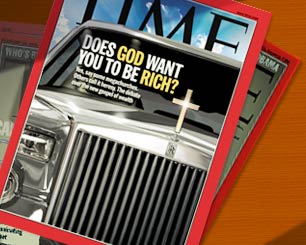
Greed. Our current economic downturn is often attributed the vice of greed, having grown out of control. For many of us, we’re not exactly sure how this actually happened, but we are ready to believe that we are suffering because some became too greedy. Greed has no limits or shame; while CEOs make millions and millions in bonuses, regular people are stuck in debt, unsure of the future, starving for work, and afraid of the consequences of others’ greed.

Greed is seductive and always waiting in the recesses of our minds. It is something that tempts all of us, whether we like to admit it or not. Just like the hypothetical virtuous man who lived an incredible life, he failed to appreciate the goodness of God’s kingdom when he brought gold bars to heaven. We so desperately cling to the materialism of our world that we are unable to imagine a life without greed.

Have you ever heard a sermon about greed? The fact that we do not hear about this particular topic seems strange considering how prominent the temptation of greed is considered to be one of the greatest threats for Christians.

Jesus says you cannot serve God and wealth (Matthew 6.24). Paul suggests that the love of money is the root of all evil leading some to walk away from the faith (1 Timothy 6.10). James is very blunt about the folly of greed: “Those conflicts and disputes among you, where do they come from? Do they not come from your cravings that are at war within you? You want something and do not have it; so you commit murder. And you covet something and cannot obtain it; so you engage in disputes and conflicts” (James 4.1-2)

blessed_are_the_rich_time_cover_2006

Time and time again scripture frustrates our conceptions about the world: If we are Christian and wealthy or if we desire to have wealth, we have a problem. 

Greed, however, is not limited to monetary gain alone. Greed sits at the root of most of our sins. We become greedy for wealth, power, position, place, people, and programs. We want more than our fair share. We desire the most for the least effort.

Jacob and Esau were born in conflict with one another.

The first born was red and covered with hair so they named him Esau, which means Red. The second born came out with his hand gripping Esau’s heel so they named him Jacob, which means heel-grabber. Esau would grow to become a mighty warrior, skillful hunter, and a man of the field whereas Jacob was a quiet man, living in tents. Isaac loved Esau and Rebekah loved Jacob.

So it came to pass one day that while Jacob was cooking a meal, Esau came in from the field completely famished. “Let me have some of that red stuff, because I am starving!” Esau said to Jacob. So Jacob replied, “Sure, I’d be happy to, but first sell me your birthright.” “Are you serious, I am about to die from hunger; what good is my birthright to me now?” “Swear to it” said Jacob. And so Esau swore to his younger brother and traded his birthright for some bread and lentil stew. When Esau finished eating he rose and went away and began to despise his birthright.

Who is the greedy one from our scripture? 

Esau’s greed is evident and obvious. Rather than trust in the Lord’s provision, Esau’s vision was limited to the present and he wanted immediate gratification for his desires. In order to satisfy his appetite, Esau’s greed became so powerful that he was willing to give away his future for the present moment. 

We are a generation of busy people, consistently fighting a battle to determine what to give up and what to continue. When our plates become too full with responsibilities we plan to remove that which is unnecessary and no longer life-giving. So many people give up the important things of life to pursue something that is meaningless because we are consumed by our present needs rather than steadfast in our trust of the Lord. Many of us are tempted to ignore our baptismal identifies when we see someone in need, we are tempted to disown our family, friends, and children when they do something wrong. We are often tempted to sell out for something less than what we are truly worth.

Esau’s greed is obvious because it is so similar with our greed. Forgetting the long-term cost, we are quick to serve our sinful desires and natures right here and right now. What do I have to do to make more money as soon as possible? What do I have to do to get that girl at school to like me? We are captivated by the fast sprint rather than the patient marathon.

Pastors love to chastise Esau for so quickly releasing his birthright, and use him as an example for what not to do. But what about Jacob? Jacob who used crooked and deceitful ways to steal his brother’s birthright. He was no doubt the promised one, but that doesn’t necessarily forgive him for taking advantage of his brother’s need.

Jacob’s greed is subtle and relentless. Instead of offering his brother some food out of kindness he is always looking out for number one. Later in the story, after Esau threatens to kill his brother, Jacob is willing to give away all his animals, wives, and children just so that he might save his own neck. Jacob was blinded by the greed of power, to draw to himself everything he could by whatever means necessary, even letting his brother starve.

We are a generation of individualists who are taught from infancy the importance of a capitalistic world view. When we see ourselves at the bottom of the food chain we are willing to do whatever it takes to amass power. So many people will go against their values, morals, and ethics in an instant, purely to make our lives a little better. Many of us are tempted to forget who we are and whose we are because we have forgotten the true meaning behind “the first will be last and the last will be first.”

Jacob’s greed is apparent when we realize how similar it is with our own. Consumed with our lives alone, we ignore the needs of others when they prevent us from getting what we want. Why would I give my money to the church when I am the one who earned it? Why should I be responsible for helping to poor when they should be the ones helping themselves? We are captivated by our solitary vision of the world rather than seeing the world through the eyes of Christ.

Years ago I was preparing to help lead a team of youth on a mission trip to Guatemala. We would be serving the needs of the indigenous Mayans in the highlands for a week by building stones, playing with children, and planting trees. In order to go on the trip, as a youth, you had to regularly participate in youth group and fundraising. Throughout the year there were numerous opportunities to plug into the regular programming and this requirement helped to foster strong bonds and fellowship before we left the country.

There was a man at the church whose daughter wanted to attend the trip but had not participated in any of the youth activities, nor was she part of the fundraising. Her father believed that these requirements were frivolous and he was going to beat the system.

One morning he arrived at church and walked straight to the pastor’s office with a smile on his face. He held up a substantial check that he was willing to give to the church with the following stipulations: I will give this money if it directly goes to the mission trip to Guatemala, and if it guarantees my daughter a space on the trip.

Greed. I’m sure that the man felt he was doing a great thing for the church and indeed for the kingdom of God, after all here he was willing to give of his own money to help others in need. Yet, don’t you see how similar he was to Jacob and Esau? Rather than encouraging his daughter to give of her time through participation in youth group and fundraising he, like Esau, wanted immediate results for the minimal effort. Yet at the same time he was willing to challenge the church and, like Jacob, was willing to have his needs met at any cost while foregoing the need of others.

Greed is mighty and powerful. It seduces us and tells us that we are the most important beings in the universe. It fuels our desire for gratification in ways that are even beyond our imaginations.

Yesterday I arrived at our church to do some pre-marital counseling only to discover the church had been broken into and my office door had been kicked in. With a knot in my stomach I walked into my office: all of the drawers had been opened, most of my paperwork examined and scattered. Thankfully nothing seemed to be missing which furthered the mystery of the break-in. I don’t know who did it. I don’t know what they were looking for. But I’m sure that they were fueled by greed.

Jesus, thanks be to God, calls us to a different life. Less is more. We are not the center of the universe, God is. We have more than we will ever need because God’s love and grace abound and our cups runneth over.

In order to break free from the slavery of greed we begin by acknowledging it in our lives, in whatever forms it presents itself. It’s easy to point out the greed in others, but now we have the challenge of looking inward at our greed. We may succeed in our fight against greed only when we learn to trust God for our needs, when we see the world the way that God sees us, and when we are prepared to give our lives for others because Christ gave his for us.

Amen.

Devotional – Genesis 28.16-17

Devotional:

Genesis 28.16-17

Then Jacob woke from his sleep and said, “Surely the Lord is in this place – and I did not know it!” And he was afraid, and said, “How awesome is this place! This is none other than the house of God, and this is the gate of heaven.” 

Weekly Devotional Image

Next Sunday, after worship, a group from St. John’s will be leaving for Raleigh County, West Virginia for a week of mission work. Mission trips were foundational for my own faith development and I am excited to share a new experience with some of the youth from our church. Part of our time will be spent doing physical work for people in need, but a large portion of our trip will be dedicated to nurturing and fostering relationships with the children of the community. It is my hope and prayer that the youth will have their eyes opened to the ways we are called to serve our brothers and sisters.

One of the problems that faces many mission trips is the idea that, as the “missionaries,” we will be bringing Jesus to these people. I have seen it happen far too often when a group of privileged Christians make the false assumption that the people they are serving are devoid of God and it is their fundamental responsibility to bring God along as if God was something that they had packed in their suitcases.

genesis-28-16

The truth that we often fail to recognize is that God is already in that place! We are called not to bring God along with us, but instead to open our eyes to the way that God is already working in the world. When a mission trip has gone incredibly well, when the proper theology has been outlined for the participants, they come home with a different perspective about their faith; they come home having been helped by the people they served rather than the other way around. God is not something that we can compartmentalize, ship around, open at will, and exchange in a consumeristic program. If that is our idea of mission than we have failed the God we serve because we have wrongly believed that we get to decide where God goes and who gets to experience God’s majesty. God is already in that place! God has gone on ahead of us (just like Jesus went ahead of the disciples to Galilee) and will be made known to us as we serve others.

Jacob, after running away from his angry brother Esau, assumed that he had left everything behind. In a way, he believed that he could not only run away from his family and responsibilities, but that he could escape the God of his father and grandfather. How blessed was he to awake from his dream and discover the truth of God’s grace! “Surely the Lord is in this place – and I did not know it! How awesome is this place!”

As we prepare to take steps into a new week let us wake up from the dream that we get to control God and discover the truth, like Jacob did, that God is already in this place! God has been working through the family and friends around you for longer than you can imagine.

Wherever you go this week be assured that the Lord is with you.

Devotional – Psalm 8.4-6

Devotional:

Psalm 8.4-6

What are human being that you are mindful of them, mortals that you care for them? Yet you made them a little lower than God, and crowned them with glory and honor. You have given them dominion over the works of your hands; you have put all things under their feet.

Weekly Devotional Image

I was sitting on an elevated deck looking out over the Great Smokey Mountains when I read the words: “Dominion is not the same thing as domination.” I had been placed in Bryson City, North Carolina for my first field-education placement during seminary and most of my ministry that summer took place outdoors. Whenever I met with a congregant for counseling I suggested that we take a hike around Deep Creek, we celebrated worship on Sunday mornings on the banks of the Nantahala River near the Appalachian Trail, and I was staying with a couple who lived on the ridge line of a mountain that overlooked Fontana Lake.

241741_1859435776618_6188631_o

During the summer, many of us seminarians stayed in contact through email and phone calls as we found ourselves in remarkably different ministerial settings. My best friend, Josh Luton, had been working on a sermon about the creation from Genesis for his field-placement and asked me to read through his first draft before he proclaimed the words. Right there on my computer screen I saw the words that I will never forget: “Dominion is not the same thing as domination.”

703913_4014919294792_1770045152_o

Josh’s sermon would go on to discuss how far we have fallen from the idea that we have been called to be good stewards of God’s creation, because we feel entitled to dominate that which God has given to us. Domination would imply that we have the right to control and have influence over creation. Instead God called us to have dominion over the works of his hands, “human dominion over the earth should contribute to the preservation and benefit of God’s creation. Dominion seeks to preserve and even benefit all of creation; not just humanity.”

Up until that point of my summer I had truly taken God’s creation for granted. I was constantly surrounded by the majesty and artistry of the created world, but my vision was limited by my selfish expectations. Creation is not just for us, but it is for all things. We have been called to be responsible for the remarkable gift so that all of creation benefits from our dominion, not just ourselves.

So, in the words of Josh Luton, “Let us recognize our own place within the divinely created world and let us take on the responsibility that comes with it so that we, with our Creator, may see that it is truly good.” Take a look around at God’s creation today, be thankful, be mindful, and be responsible; dominion is not the same thing as domination.

Let God Speak – Sermon on Genesis 1.1-5

Genesis 1.1-5

In the beginning when God created the heavens and the earth, the earth was a formless void and darkness covered the face of the deep, while a wind from God swept over the face of the waters. Then God said, “Let there be light”; and there was light. And God saw that the light was good; and God separated the light from the darkness. God called the light Day, and the darkness he called Night. And there was evening and there was morning, the first day.

The20Creation23123

I was sitting in a room full of pastors and priests when I made a promise to myself: Before I finish my first year of ministry I will preach on Genesis 1. Today is the day that I make good on that promise.

I had been helping a church in Bryson City, North Carolina when I was invited to participate in a weekly lectionary group. Every Monday morning the clergy people of Bryson City would get together to talk about the readings for the following Sunday. We met at the large local Baptist Church, ordered breakfast to be delivered, and then we would take turns reading the scriptures and share what we thought we would preach about.

Without a doubt, this was one of the most profoundly rewarding experiences of my life. Week after week I heard from clergy of all different denominations (Presbyterian, Baptist, Catholic, Methodist, etc.) as they wrestled with God’s Word and how to proclaim it from very different pulpits to very different people.

0f0f0f-uzz5pn

It came to pass that one hot morning in the middle of July I found myself surrounded by pastors as we read the texts out loud. The lectionary always has four prepared readings for each Sunday on a three year cycle: a reading from the Old Testament, the Psalms, an Epistle, and a Gospel. I don’t remember what the other readings were that morning, but I do remember that I was asked to read Genesis 1. In the beginning God created the heavens and the earth…

When I finished, as was our custom, we waited for individuals to speak up about what they planned to do with the text during worship. Silence filled the room. So I decided to ask the obvious question, “Is anyone preaching on Genesis 1 this week?” The silence remained. I remember thinking “How strange is this? We’re talking about the first lines of scripture in the bible and no one is preaching on it in Bryson City this week.” It was clear that some of the clergy wanted to move on to a different reading but I felt compelled to ask another question, “Have any of you ever preached on Genesis 1?” One by one they confirmed my suspicion; not one of those pastors, priests, ministers, or preachers had ever delivered a sermon on the beginning of Genesis.

Now I know that they quickly propelled the conversation in another direction but I silently began calculating from my chair. In that room we had over 100 years of preaching represented. Over 100 years of preaching, more than 5,200 sermons, and not one of them had ever proclaimed the beauty of God’s creation from Genesis.

So I made a promise to myself that very morning: Before I finish my first year of ministry I will preach on Genesis 1.

Why do you think they chose to ignore Genesis 1? What makes this text so unappealing to proclaim in church?

557046

The main thrust of the text is contained within these first words: In the beginning God. Here we discover our faith in the foundation of all life, that God and God’s creation are bound together in a distinctive and delicate way. This profoundly simple yet unimaginable claim is the bedrock for everything that follows throughout the rest of the Bible. God and his creation are connected powerfully together for all time.

How does God bind creation together? The text is clear: In the beginning the earth was formless and darkness covered the face of the deep while a wind from God swept over the face of the waters. Then God said, “Let there be light”; and there was light. And God saw that the light was good; and God separated the light from the darkness. God called the light Day, and the darkness he called Night. And there was evening and there was morning, the first day.

Notice: with this description of creation we need to see that this text is NOT a scientific description, but instead a theological affirmation. It has been urged for centuries that Genesis 1 is a historically analytical account of what “actually happened.” But that kind of scientific, descriptive, and forever definitive reporting is foreign to the text and to the world of the Bible.

God’s Word is not a textbook. The bonding of creation cannot be explained or analyzed. It can only be affirmed and confessed.

Many who have struggled with their faith want to know the answer to “how?” But, when reading from Genesis, we discover that the convictions expressed in the scripture did not come from sight, recordings, and measurements. Whoever wrote about the creation in Genesis 1 was not standing by when God created. Our Lord is not an object to be perceived and measured like other objects in the world. It is by faith that we affirm this creation, not because we saw it and observed it and measured it, but that our lives and relationships with God affirm that goodness and interconnectedness of our lives with the God who created life.

Perhaps the pastors reluctance toward preaching this text was born out of the fear that comes with reconciling Genesis 1 with scientific claims about the beginning of the universe. Maybe they ignored this text because they were unsure how to explain the way God created. However, the job of preaching is not to explain, but to proclaim

At the heart of Genesis 1 is mystery, and sometimes mysteries cannot be explained. Yet, in proclaiming the mystery, in faithfully acknowledging the text, we can have our eyes and ears opened to the great question not of “how?”, but of “why did God create?”

The words ‘create’ and ‘make’ are used prevalently here in Genesis 1. God created the heavens and the earth, God made the dome and separated the waters, God created the creatures in the water and the birds of every kind, God made the wild animals of earth, God created humankind in the image of God, etc. The actions are important but the dominant mode of creation takes place in speech. God spoke creation into existence. The way of God with his world is the way of language. God speaks something new that never was before. God is the author and orator of life.

God speaking life into existence cannot be explained by the ways of the world, yet we are all here because God spoke life into all of us. Genesis 1 makes the great and wonderful theological claim that a new word has been spoken that transforms reality. The word of the Lord that shaped creation is an action which alters reality forever.

God created all things through God’s word, and his creation did not stop with the creation of humankind. God continues to speak new words into existence every single moment. Every infant child is a word spoken by God, every new blooming flower, every river that flows, every sun rise and sunset are caught up in God’s continued commitment to speak to us, through us, and for us.

God is always speaking something new and fresh into the world, we need only stop and listen to let God speak.

5613583932_e7cb9a3bbc1

276 years ago yesterday, John Wesley’s life was changed forever. Wesley spent most of his young life believing that nothing could save him from God’s wrath other than strict obedience and keeping all of God’s commandments constantly. He read voraciously, served unconditionally, loved immeasurably, and somehow he never felt or experienced God’s love in his own life. He traveled to the British colony of Georgia to serve the needs of the Anglican church and wrote about his experience later saying that after two years of spreading Christianity he still was no closer to discovering the love of God. He wrote: “Why that I went to America to convert others, was never myself converted to God?”

When Wesley returned to England he was no closer to finding what he had been searching for. He continued to fill his life to the brim with service and preaching to the point that he shut out any other influence.

However, on May 24th, 1738 Wesley unwillingly attend a Moravian society meeting in the evening when Martin Luther’s preface to the letter of Romans was being read. While the reader was describing the change which God works in the heart through faith in Christ, John Wesley felt his heart strangely warmed. He experienced for the first time a trust in Christ, Christ alone for salvation. An assurance was given to Wesley that Christ had taken away his sins and saved him from death.

Wesley had a difficult time explaining exactly was happened to him that day; it was beyond his ability to describe in such a way that it could be measured and known. But to him, it was as real as life could get. From that moment everything changed in his life and his commitment to the love of God in the world was the seed that blossomed into what we now call the United Methodist Church.

9373

When I was in Boy Scouts I had the opportunity to hike throughout northern New Mexico at a place called Philmont. Toward the end of our 100 mile hiking adventure we gathered one evening in a white pine forrest near the top of Mount Phillips. We spread apart to spend time in silence to reflect on our time in the wilderness. As I sat there with the wind blowing the grass I was overwhelmed by the sheer beauty and wonder of God’s creation. I had already witnessed perfect sunsets and flowing rivers, but for whatever reason that night was the first time that I began to witness the depth of God’s love through his creation. 

Like Wesley, I believe that I was opened to the wonder of God because I had finally stopped trying to fill my life with so many other distractions. It was only when I stopped to let God speak, that I heard God’s calling of creation.

We can fill our lives with distractions and information. We can read all the magazines and books that explain how God created the world, whether in seven literal days or in seven ages of time. We can listen to pastors and preachers explain away the creation of life with simple metaphors and memorable one liners. But the truth of God’s creation can only be discovered in letting God speak.

Creation was not a one time, one moment, event. Creation continues to take place every moment of every day. God’s word is alive and filling all things with glory around us.

In the beginning, God. Can you think of anything more comforting than the fact that God has been at the beginning of all things? Not just the creation of life, but God was there when you came into being, God sits at the very beginning of each and every one of us. At the inception of every relationship, every idea, every belief, every smile, and every laugh God is there.

God is, and because God is, we are.

It took me a long time to learn to let God speak. And frankly, I’m still not very good at it. But until I began to try to quiet myself, to learn to listen, God’s Word was limited to words on paper. Creation came alive for me when I stopped long enough to realize that God’s love for us, in creation, is beyond my ability to fully grasp, comprehend, or explain. There is an immeasurable beauty in standing before something that you cannot fully know. There is wonder in letting God speak something new and fresh into your life. There is peace that comes in hearing the Word become incarnate in the way we live.

Genesis 1 is powerful and beautiful. It is strange and unknowable. It conveys the depth of God’s love in a way that we can never explain. It refuses to be compartmentalized, rationalized, and sterilized. Instead, its delightfully mysterious, curious, and glorious.

In the beginning God spoke life into creation, and God continues to do so every moment.

Amen.


The Temptation of Temptation – Sermon on Genesis 2.15-17, 3.1-7

Genesis 2.15-17, 3.1-7

The Lord God took the man and put him in the garden of Eden to till it and keep it. And the Lord God commanded the man, “You may freely eat of every tree of the garden; but of the tree of the knowledge of good and evil you shall not eat, for in the day that you eat of it you shall die.

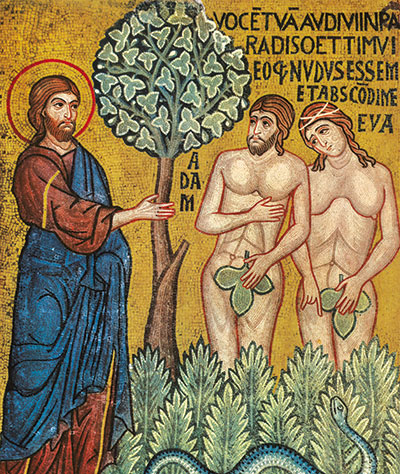
Now the serpent was more crafty than any other wild animal that the Lord God had made. He said to the woman, “Did God say, ‘You shall eat from any tree in the garden’?” The woman said to the serpent, “We may eat of the fruit of the trees in the garden; but God said, ‘You shall not eat of the fruit of the tree that is in the middle of the garden, nor shall you touch it, or you shall die.’” But the serpent said to the woman, “You will not die; for God knows that when you eat of it your eyes will be opened, and you will be like God, knowing good and evil.” So when the woman saw that the tree was good for food, and that it was a delight to the eyes, and that the tree was to be desired to make one wise, she took of its fruit and ate; and she also gave some to her husband, who was with her, and he ate. Then the eyes of both were opened, and they knew that they were naked; and they sewed fig leaves together and made loincloths for themselves.

tree_of_life

The Lord God commanded the man, “You may freely eat of every tree of the garden; but of the tree of the knowledge of good and evil you shall not eat, for in the day that you eat of it you shall die.”

In the entire range of the world’s writings, it would be immensely difficult to locate any passage so brief that has had such immense influence on human thought. I have heard this scripture preached upon countless times, I can remember learning about it in confirmation class years ago, and I can vividly remember struggling with the text as I attempted to explain it to pre-school age children during a particular Vacation Bible School. The story of Eden is so well known and discussed that even most self-affirmed “non-religious” people can even explain what took place in the Garden. 

This passage has been debated, ripped apart, examined, micromanaged, and exegeted for centuries. Generations of Christians have dwelt upon these verses unlike any others to explain the introduction of sin into the world through the one man, Adam.
07-04-012

I know a family that had it all together. The husband and wife always sat next to one another in church, fingers wrapped together as they listened to the sermons week after week. The children were all attractive, known in the community for their well-behaved manners, regular fixtures on the honor roll at school. Because of their wide interests and pursuits the family was known throughout many of the segmented areas of the community; sports, music, drama, politics, faith, etc. On the surface they were that perfect family. Others families would often hold them up on a pedestal and compare their own flawed family to this ideal one. Why can’t my children work harder like theirs? Why don’t our parents love us as much as theirs do?

What no one realized, was that underneath the exposed public appearance, the family was about to fall apart. I don’t know all the details about what happened leading up to the great schism, I don’t know who was to blame for the many rumors than began to spread around town, but I do know that it began with the husband.

He felt unfulfilled. There was a constant nagging sensation that he deserved more than what he had. Though he had that ideal wife, and the ideal children, with the ideal house, and the ideal job, he believed he deserved more.

Thats when a younger woman appeared in his life. He knew that it was wrong to flirt with her, he knew that it was wrong to lie to his wife about spending time with her, but he did it anyway. As time went on, casual get-togethers became more frequent, the conversations moved from flirting to romance, and soon they were engaged in an affair.

I don’t know if this is true, but I imagine that late at night, when laying awake in his bed he would rationalize what he had done: If she makes me happy how can it be wrong to be with her? I deserve her love. I deserve this kind of happiness in my life.

Eventually he could no longer continue to live the lie. He told his wife what he was doing, without remorse he left her and the children, and started a new life.

Europe_a_Prophecy,_copy_D,_object_1_(Bentley_1,_Erdman_i,_Keynes_i)_British_Museum

In the beginning God created the heavens and the earth. He gave meaning to existence, brought forth light and life, and populated the earth with his creations. The paramount of this creative work were our first parents, Adam and Eve, made in God’s image. They were given everything they needed: life, land, food, companionship, and purpose. At the beginning of our scripture this morning Adam and Eve were content with all they needed, but they did not have everything. 

Enter the serpent; crafty and wise. He said to Eve, “Did God tell you that you could eat from every tree in the garden?” and she replied, “Of course we may eat the fruit of the trees in the garden, but God told us not to eat the fruit of the tree in the middle of the garden, not even to touch it, because if we do we will die.” But then the serpent said, “Surely you will not die! God knows that when you eat of that tree your eyes will be opened, and you will be like God, knowing good and evil.” At that moment Eve saw the tree in a new light, she believed that it was good for food, a delight to the eyes, and that it would make her wise. So, she took the fruit from the tree and ate, gave some to Adam who also ate, and their eyes were opened. For the first time they realized they were naked and they sewed fig leaves together and made loincloths for themselves.

Real temptation is never an offer to fall, but instead it comes as an offer to rise. Notice: the question was not, “Do you wish to be like the serpent?” but instead, “Do you want to be like God?” The truest forms of temptation are indications of strength, not weakness. We are not tempted to do what we cannot do, but what is within our power. The greater our strength, the greater the temptation.

This is how the seductions of sin and temptation present themselves: Want to know a little bit more about life? Want to be a little bit greater than you are already?

The serpent of life, the deepest part of our imaginations, plays on our condition and places the seed of doubt: I know this is wrong, but if the fruit of it is good, what sense can there be in not enjoying it? The way the serpent tempted our first parents in the garden comes to us still this very day, presenting us the idea that we can know better than God.

Reinhold Niebuhr once asked, “Do we belong to God, or do we belong to the devil? We most certainly belong to God, but we are in danger of becoming the devil by imagining that we are God.” That is true temptation at its most frightening degree; you can be like God! In our pride and lust for power, we begin to define our own understanding of good and evil. We become masters of rationalization for the sins and the wrongs we commit.

Thats what happened to the man from that perfect family. Its what happens to each of us when the temptation of temptation dangles before us. We rationalize ourselves out of making the right choice. We instantly become the center of our own universe, our own god; we become the only thing we worship.

And its not just us. This has been going on throughout the entirety of human history, particularly through what has been revealed in scripture. When God told Adam and Eve not to eat from the tree of knowledge of good and evil, they reached out for the dangling fruit and consumed it. When God commanded the wandering Israelites to have no others gods before him, they created their own golden calf and began to worship themselves instead. When Jesus called Peter to follow him, Peter was quick to deny Jesus three times as he was being led to the cross. When temptation strikes, it hits us in the very core of our beings, and once it enters the realm of possibility it can be dangerous and evenly deadly.

But the fact remains that we live in a universe which God controls, not us. When God gave each of us the breath of life to exist in this world, to live, laugh, and love, he did not intend that we should take over the school and change the expectations to suit ourselves.

Temptation will confront us whether we ask for it or not, it hangs out like fruit begging to be plucked and consumed. In order to confront our temptations we are called to recognize that we live in a created world where we must accept reality and not believe that we can indulge in every single wayward fantasy. There are some things in life that we are not to have, some prizes we shall not win, and some ambitions that the grace of God will not let us gratify. When our consciences tells us, as it told Adam and Eve, that some particular temptation is not for us, we do well to not rationalize our curiosity or our appetite into an justification for reaching out to take it.

We live in a risky world full of temptations. Some of us are strong enough on our own to resist the constant bombardment of sinful choices, but most us will give into temptation when it appears before us. As Christian disciples we recognize that God means for us to grow in this difficult world, surrounded by influences clamoring for our allegiance. Our call is to not shift our responsibility onto someone or something else, but to make our own creative choices for the good.

Oscar Wilde said, “I can resist everything except temptation.” Many people act as if no one could reasonably be supposed to resist temptation. Temptation is a present element in every life and it comes to everyone. But it is possible to confront our temptation and not yield to their alluring powers. Just because a choice exists, that doesn’t give us reason for choosing the wrong one.

In my experience, one of the best ways to resist the temptation of temptation is to speak them aloud and confess them to our trusted friends or loved ones. The cost of this honesty is a remarkable amount of vulnerability. To confess our weaknesses requires a fundamentally strong trust with others.

So, confession time. One of my greatest temptations is to believe that I deserve this. That somehow I have been blessed with such an incredible community, church, and vocation because I have earned it. That the reason so many new people have been coming to church is because of ME. Now on some level this is true, I have worked hard to be where I am, but there is a remarkable temptation to believe that I have achieved this all on my own. There is a power that comes with the pulpit, a tempting power to become the center of my own universe, to preach myself, to be the shining example for all of you to follow.

The truth, however, is that I am called to proclaim Jesus Christ, and him alone. I am a flawed and weak creature, guilty of sin and falling short of God’s glory. I want all of you to know about this temptation in my life, so that in speaking it aloud I might confront it, and that by making it known all of you can help me battle against it.

For some of us, though, speaking aloud a temptation is too difficult. The amount of vulnerability required to admit a temptation is so staggering that we cannot even imagine sharing it with someone else. Thats okay. There is another way that we can begin to address our temptations. Before sharing it with someone else, we do well to admit our temptations to ourselves. 

WoodFire

In each of your bulletins you will find a blank piece of paper. I encourage you to take it out, and in the next few moments prayerfully consider the temptations in your lives; the true and deep temptations that you wrestle with. Write one of them down on that piece of paper. Admit the temptation to yourself so that you can begin to resist it. When our service ends this morning there will be a fire (in a fire pit) on the front lawn of the church. Throw your confession of temptation into the fire. Let God take that temptation from you. Let the God who was revealed in Jesus Christ, help carry your burden. Watch you paper burn in the fire knowing that God is with you in this life, walking beside you, loving you in spite of your temptations.

(Pause to write down the temptations)

My friends, here we are taking our first steps into the season of Lent. This liturgical journey is always tough. But it gives us an opportunity to confront the different sins and temptations in our lives. Over the next six weeks we can begin to reconcile our broken relationship with God, with others, and with creation. As you prepare to leave from this place, watch your temptation burn in the fire. Repent and believe the Good News of Jesus Christ. Witness the flame of the Holy Spirit consume that temptation in your life knowing that nothing will ever separate you from the love of God in Jesus Christ our Lord.

Amen.

Devotional – Genesis 12.1-4

Genesis 12.1-4

Now the Lord said to Abram, “Go from your country and your kindred and your father’s house to the land that I will show you. I will make of you a great nation, and I will bless you, and make your name great, so that you will be a blessing. I will bless those you bless you, and the one who curses you I will curse; and in you all the families of the earth shall be blessed.” So Abram went, as the Lord had told him; and Lot went with him. Abram was seventy-five years old when he departed from Haran.

Weekly Devotional Image

“When you get appointed to a church the worst thing you can do is go visit the shut-ins,” said a professor of mine in seminary (who will remain nameless). “I am sick and tired of hearing about new clergy full of vibrant passion and energy wasting it on visiting the people who have already had their faith developed. Pastors form the past were responsible for them. The best thing you can do when you get appointed to a new church is not to visit the older shut-in members, but go visit all the members under the age of thirty. Now there won’t be many younger than thirty so it shouldn’t take you very long. That’s mission.”

I was flabbergasted. Here I was sitting in the hallowed halls of Duke Divinity listening to a professor telling us to do exactly the opposite of what I imagined my first few weeks at a new appointment would look like.

I believe he was wrong. The best thing that a pastor can do when he/she enters a new appointment is to visit the shut-ins and all the members under 30. In fact the best thing a pastor can do is visit with all the people that make up the local church community. The idea that the older congregants have already had their ministry does a disservice the goodness of God’s creation and the understanding that all of us make up the body of Christ regardless of age and experience.

I love the call of Abram as described in Genesis 12. Abram is called to abandon the security of his homeland, the comfort that comes with social and family support. Abram would need to rely on the Lord for guidance because this call upon his life tested, as John Wesley said, “whether [Abram] could trust God farther than he could see him.” And notice how short his obedience is described in the passage: “So Abram went.” No indecision, no debating the outcome, no weighing the pros and cons, just go. But even more than this I love the fact the the story ends with the simple affirmation that Abram was 75 years old when he departed from Haran.

Many-of-God’s-finest-men-in-the-Bible-were-Polygamists-Abraham

If God chose to establish the covenant with a 75 year old man who dropped everything to follow in obedience, just imagine what God can do with you, whether you’re 5 or 85 years old. Christian discipleship is not dependent on our age, but instead on our willingness to hear God’s call and go.

No matter where you are on your faith journey, whether you deeply committed and active in a local church, or if you feel like you’re on the fringes of a church community, whether you’re young in the faith, or you’ve been attending church for as long as you can remember, God has a place and a call for you. It takes all of us to make up the body of Christ.

So, what is God calling you to? What might you have to drop in order to go where God needs you?