Nicodemus and Sidewalk Chalk – Sermon on John 3.1-17

John 3.1-17

Now there was a pharisee named Nicodemus, a leader of the Jews. He came to Jesus by night and said to him, “Rabbi, we know that you are a teacher who has come from God; for no one can do these signs that you do apart from the presence of God.” Jesus answered him, “Very truly, I tell you, no one can see the kingdom of God without being born from above.” Nicodemus said to him, “How can anyone be born after having grown old? Can one enter a second time into the mother’s womb and be born?” Jesus answered, “Very truly, I tell you, no one can enter the kingdom of God without being born of water and Spirit. What is born of the flesh is flesh, and what is born of the Spirit is spirit. Do not be astonished that I said to you, ‘You must be born from above.’ The wind blows where it chooses, and you hear the sound of it, but you do not know where it comes from or where it goes. So it is with everyone who is born of the Spirit.” Nicodemus said to him, “How can these things be?” Jesus answered him, “Are you a teacher of Israel, and yet you do not understand these things? Very truly, I tell you, we speak of what we know and testify to what we have seen; yet you do not receive our testimony. If I had told you about earthly things and you do not believe, how can you believe if I tell you about heavenly things? No one has ascended into heaven except the one who descended from heaven, the Son of Man. And just as Moses lifted up the serpent in the wilderness, so must the Son of Man be lifted up, that whoever believes in him may have eternal life. For God so loved the world that he gave his only Son, so that everyone who believes in him may not perish but may have eternal life. Indeed, God did not send the Son into the world to condemn the world, but in order that the world might be saved through him.
john-3-16

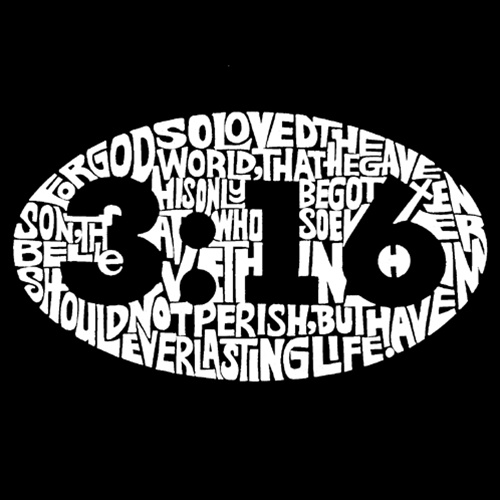
For God so loved the world that he gave his only Son, so that everyone who believes in him may not perish but have eternal life.

There was a pharisee named Nicodemus and he came to visit Jesus at night. As a leader of the Jews it was probably best to visit Jesus under the cover of darkness, and when they met together Nicodemus began to ask Jesus about all he had seen and heard. “Teacher, it is clear to us that you have come from God because no one can perform the signs that you do apart from the presence of God.” “You’re absolutely right,” Jesus replied, “No one can see the kingdom of God without being born from above.”

“Now wait a minute Jesus, how can anyone be born after having grown old? Can someone re-enter their mother’s womb and be born?” Jesus calmly answered, “Listen Nicodemus, no one can enter the kingdom of God without being born of water and Spirit. What is born of the flesh is flesh, and what is born of the Spirit is spirit. Do not be surprised that I told you that you had to be born from above. You know very well that the wind blows where it chooses, you hear the sound of it, but you do not know where it comes from or where it goes. So it is with everyone who is born of the Spirit.”

“But Jesus how can these things be?!” “Nicodemus, are you a teacher of Israel, and yet you do not understand these things? If I had told you about earthly things you would’ve believed,  but now I talk to you about heavenly things and you do not believe. No one has ascended into heaven expect the one who descended from heaven, the Son of Man. Just as Moses lifted up the serpent in the wilderness, so must the Son of Man be lifted up, that whoever believes in him may have eternal life. For God so loved the world that he gave his only Son, so that everyone who believes in him may not perish but have eternal life. Indeed, God did not send the Son into the world to condemn the world, but in order that the world might be saved through him.”

Nicodemus_Jesus

Last week we looked at one of the most well known stories from the Old Testament: Adam and Eve in the Garden. Today I could not help myself from proclaiming one of the most well known New Testament scriptures: John 3:16. In the entire biblical canon, both the Old and New Testaments, there must be few, if any, scriptures that have been so remarkably loved by so many as this text. It is simple and to the point. It opens up endless possibilities. It embodies the hope of all Christians. It is beautiful and appealing. It begins with the beginning and stretches into the far reaches of eternity. It proclaims that which is most fundamental to our faith: that God loves us. 

But the scripture today is about so much more than just that one isolated verse. I am thrilled that so many of us have memorized John 3:16, but we cannot forget about the inquisitive soon-to-be disciple named Nicodemus.

What do you make of this pharisee who came to see Jesus in the middle of the night?


On Tuesday morning, after gathering with the UMW, I made my way outside onto our back parking lot. After months of cold weather, with mounds of snow continually piling up, the Pre-School was finally able to play outside again. Now, let me be clear: I am just like those children. Having been cooped up in this church all winter I was just as, if not more, excited to run around and play outside. The children all had their plastic cars and bikes, some were running around in circles, others were using the fake gas pump to fill up the cars, (capitalism at its finest) when I saw a box of sidewalk chalk.

sidewalk-chalk

I silently made my way to the middle of the black top with the biggest piece of chalk that I could find and I began to draw. Without saying a word, or drawing attention to myself, the children began to congregate around me in a large circle. “Pastor Taylor, what are you drawing?” I heard one them mutter behind me, and I replied, “You’ll see in a moment.” As I stepped back the children moved with me, and there on the blacktop was a giant head with a wide open mouth. Why? I have no idea, but its what I drew. And without really understanding what I was doing I told the children that I was going to jump in the mouth of this mystery person made out of chalk. If I had said that to any of you, you would have thought that I lost my marbles. But with the children, they believed me, they looked into my soul, and some of them even begged me not to do it. But there I stood crouched with my hands at my side, and I jumped in. Of course I acted as if I was falling in and some of the children laughed, and when I was done, I encouraged some of them to jump in. There was a moment when the first girl stepped forward to the edge of the face. As I saw her prepare to jump in I realized she was unsure of what would happen to her. While rocking her hands back and forth I could see the sense of wonder and imagination brewing within her as she jumped right in.

Thats what Nicodemus was like. Jesus is known for having said that whoever does not receive the kingdom of God like a child shall not enter it. Nicodemus had a childlike and inquisitive faith. When confronted with the man of many wonders, Nicodemus wanted to jump right in to learn more about this new kingdom. While his contemporaries scoffed at the new teaching, Nicodemus’ imagination allowed him to see deeply into the truth of Jesus.

The other leaders of the synagogues were already muttering with irritated resentment regarding this so-called teacher who was beginning to develop a following. They disagreed with his strange ways, his strange teaching, and his strange disregard for authority. Nicodemus, however, felt there was indeed something strange about Jesus, but it could not be dismissed so easily. To Nicodemus, God was still speaking through people, and to his ears there was something in this new proclamation worth considering.

So, under the cover of night, Nicodemus went to learn more. He wanted to see for himself, he desired to hear from the man himself, to question and to learn. Instead of giving into the rumors, Nicodemus wanted to base his understanding on first hand experience. He could not settle for hearing about the man, but instead needed to jump straight into the abyss of the Son of Man.

In his willingness to question Christ we discover that Nicodemus was a great man who possessed enviable qualities. While suffocated by the surrounding culture and religions assumptions and expectations, he somehow managed to exhibit an open-mindedness that broke the chains of religious limitation. 

Moreover, Nicodemus is one of the best examples of discipleship. By the end of the gospel account Peter will have denied Jesus in a shameful panic, the rest of the disciples will have scattered or run off into hiding. For all practical purposes, the story had come to a close. But Nicodemus, this strange pharisee from our story today, openly stood forth as one of Jesus’ only remaining friends. Nicodemus dared to risk the punishment of superiors, the resentment of his peers, by paying the last loving rites to the dead body of Jesus that would have been treated as trash by anyone else.

Nicodemus is an understatedly important figure in the Gospel for us in the life of the church. He is so familiar to us, because he is just like us. He asked the kind of questions that many of us would have asked, had we been there with our Lord.

If you take a step back from the account, what Jesus was talking about sounds impossible. How can someone be born anew? Jesus simply responds to our misunderstanding and confusion; its not about being physically reborn as a child, but about being born anew in such a way that you can reorient your life. We must be born anew. Our prayer and our hope should be rooted in the desire to be recreated. Make me another kind of being from what I am. Renew a steadfast spirit within me. Create in me a clean heart. Do all this, O God, so that I can lead a different life. 

The whole point of the gospel is that God can achieve the impossible. Just as God can raise Jesus from the dead, God can achieve the impossible with you and me. And he does it! We see it happening in other peoples lives, our wayward friends who reorient their lives for the better. We have experienced it on some measure in our own lives however small or large. How does God change us? Ah, says Jesus, that is part of the great mystery. The wind comes who knows how, cleansing, refreshing, and then before we know it, its gone.

For God all things are possible. We can be born anew. We can find a new orientation for our lives no matter how young or old we may be. But even greater than this, is the promise of eternal life.

Jesus ends his conversation with Nicodemus with the, now famous, “for God so loved the world that he gave his only Son, that whoever believes in him may have eternal life.”

Martin Luther, the great protestant reformer once said, “If I were as our Lord God, and these vile people were as disobedient as they are now, I would knock the whole world to pieces!” We consistently make a mockery of God’s love by continually disobeying his commands, and by ceasing to love others as we love ourselves. How can God love us when we ruin everything he created including ourselves?

God loves us, because God is love. God loves the world; his foolish, blundering, wayward, and sin sick world. This love utterly breaks through our foolish conceptions of what love means and is; God’s love runs out to lengths that sounds incredible to our human ears because we could never return that same love.

god-god-is-love-lord-love-the-greatest-love-of-all-favim

God is like that remarkable parent who continues to love a child through all the wrong decisions and failures. Picking them up from the police station, driving them back to rehab, sitting with them night after night helping with homework, loaning them money when they fall on hard times. The only difference being that when our love for our children fails, his love for us remains steadfast.

God proves his love toward us by doing all that God can do, and giving all that God can give to help us; stretching himself even to sacrifice his only Son, and hold back nothing.

Thats what Nicodemus learned from his time with Jesus. That in the impossible mystery of God’s created order, God’s love knows no bounds, was made manifest in Christ’s death on the cross for you and for me and for the whole world.

Let us all strive to live like Nicodemus. Let our faith be inquisitive and exciting. Let us all prepare to jump into the unknown, to fearlessly step into a relationship with the triune God, and above all remember that great scripture: God so loved the world that he gave his only Son, so that everyone who believes in him may not perish but have eternal life. To God be the Glory.

Amen.


Clean Hearts – Homily for Ash Wednesday on Psalm 51.1-12

Psalm 51.1-12

Have mercy on me, O God, according to your steadfast love; according to your abundant mercy blot out my transgressions. Wash me thoroughly from my iniquity, and cleanse me from my sin. For I know my transgressions, and my sin is ever before me. Against you, you alone, have I sinned, and done what is evil in your sight, so that you are justified in your sentence and blameless when you pass judgment. Indeed, I was born guilty, a sinner when my mother conceived me. You desire truth in the inward being; therefore teach me wisdom in my secret heart. Purge me with hyssop, and I shall be clean; wash me, and I shall be whiter than snow. Let me hear joy and gladness; let the bones that you have crushed rejoice. Hide your face from my sins, and lot out all my iniquities. Create in me a clean heart, O God, and put a new and right spirit within me. Do not cast me away from your presence, and do not take your holy spirit from me. Restore to me the joy of your salvation, and sustain in me a willing spirit.

Ash_Wednesday

You are dust, and to dust you shall return.

For the last thousand years, these words have been traditionally used for this particular day. A priest or pastor will place a finger in the ashes, making the sign of the cross on a forehead, while whispering the words “You are dust, and to dust you shall return.”

These are frightening words. We have gathered today to be reminded of our own finitude, to mark the beginning of our forty day observance of Lent, to engage in a period of prayer and fasting. This is a solemn event in the life of our liturgical church, for today we are being asked to think about our own mortality.

When I was in seminary one of my professors told me that the hardest thing about being a pastor is that I have to remind people that they are dying when everything and everyone else tries to claim the contrary. I have been given the unenviable task of proclaiming the true and deep message of Ash Wednesday; we are dust, and to dust we shall return.

Most of us tempted to believe that we are invincible and that life will never catch up with us. We are tempted to believe that death isn’t real. Countless commercials and products are advertised with the sole purpose of prolonging our inevitable end. Even here in church, we spend so much time talking about the joy and hope of God in the resurrection from the dead, that we fail to spend adequate time reminding ourselves of our own finality.

Today, as we take our first steps into Lent with the ashes on our foreheads, we are like the psalmist who cried out, “Have mercy on me, O God, according to your steadfast love… wash me thoroughly from my iniquity, and cleanse me from my sin.” This is a time for us to deeply reflect on the ways that we can be better, the relationships to reconcile, and the new habits to cultivate. Lent is less about giving something up, and more about reorienting yourself back to God in order to use this life that has been given to you. Our desire is for God to create in us clean hearts and to put a new and right spirit within us. We have been given the greatest gift, the gift of life. The question we need to ask ourselves is this, “What are we doing with that great gift?”

In our narthex there is a plaque hanging on the wall in honor of Zig Volskis, a beloved former pastor of St. John’s. On the plaque you will find these words: “So teach us to count our days that we may gain a wise heart” (Psalm 90.12). Life is a fleeting and precious thing, one that we should not take for granted. Let us all learn to count our days, to reflect on our many blessings, rejoice in the gift of life and let our lives be fruitful for those around us.

Death is a frightening thing. Contemplating our finitude and celebrating it in worship is by far one of the strangest things we do as a church. But in the end, we do it so that we may gain wiser hearts, so that God might sustain us in the midst of our sinful lives, and above all so that we can appreciate the sacrifice of Christ on the cross and the glory of the resurrection. Let God use this Lenten season to help create in us clean hearts.

ash-wednesday-1-590x421

My friends, you are dust, and to dust you shall return. For the next forty days we will rest in the shadow of the cross, but remember this, the glory of the resurrection outshines everything, even death. 

Amen.


Weekly Devotional – 2/24/14

Devotional:

Psalm 2.10-12

Now therefore, O kings, be wise; be warned, O rulers of the earth. Serve the Lord with fear, with trembling kiss his feet, or he will be angry, and you will perish in the way; for his wrath is quickly kindled. Happy are all those who take refuge in him. 


I love working on my sermons in any place other than my office. When I sit at my desk I become easily distracted by the many other responsibilities that I have in ministry, and I discover that my focus is not on the words before me. So, whenever I have the opportunity, I work on my sermons at local coffee shops in and around Staunton.

One of the greatest advantages of working on a sermon at a coffee shop is that most people see me sitting with a bible and a computer and they see me as someone strange, and therefore leave me alone to work diligently. (However, sometimes this backfires because people see the bible and begin to confess to me their most recent and devastating sins…) I enjoy working on proclaiming God’s word outside of the church building because it helps to inspire and remind me of the totality of God’s grace beyond the walls of his churches.

This past week I was sitting in one of my favorite coffee shops, writing about the Sermon on the Mount, when I began to notice that two other patrons were talking about faith and Christianity. Being in a public place, I do not feel bad for overhearing their conversation, and, frankly, once it started going I couldn’t stop listening. (It was clear that the two gentlemen were talking about running for political office; one had already served, and the other was looking for advice about beginning a political campaign.) This is what I heard:

Candidate: Should I start attending church?

Politician: Well, do you believe in God?

Candidate: No.

Politician: In this town, you should start attending whether you believe or not. If people here believe that you believe, they’ll believe in you. So, yes, start attending (he then listed some of the prominent and most well-attended churches). When you give speeches you need to talk about how you feel God calling you to this office even if you don’t believe it. The religious folk will be more likely to support you if they think you’re religious.

Candidate: Okay, I think I can do that.

Politician: Good. I’m going to coach you: I’ll teach you hold to hold your hands when talking, how to dress for debates and fundraisers, and how to talk about God being on your side of this campaign.

Gods-Politics

The psalmist warns the rulers of the world: serve the Lord with fear and with trembling. Our God is not one to be messed with. To frivolously throw around the call of the Lord on one’s life is to invite chaos and tribulation. As I listened to the politicians discuss how to play into the religious sensibilities of the people of Staunton I began to wonder about all of our desires to attend church. Do we worship God so that other people will think better of us? Or do we worship because God so loves us that there is not other way to respond?

So, as we prepare to begin a new week I caution us to remain committed to the life of discipleship that we have been incorporated into. If our faith hinges on the approval and expectations of others it cannot be fruitful for our lives. Faith can only become real when our hearts are set aflame for Christ.

To Fear, Or Not To Fear – Sermon on Psalm 112 and Mark 6.45-51

Psalm 112

Praise the Lord! Happy are those who fear the Lord, who greatly delight in his commandments. Their descendants will be mighty in the land; the generation for the upright will be blessed. Wealth and riches are in their houses, and their righteousness endures forever. They rise in darkness as a light for the upright; they are gracious, merciful, and righteous. It is well with those who deal generously and lend, who conduct their affairs with justice. For the righteous will never be moved; they will be remembered forever. They are not afraid of evil tidings; their hearts are firm, secure in the Lord. Their hearts are steady, they will not be afraid; in the end they will look in triumph on their foes. They have distributed freely, they have given to the poor; their righteousness endures forever; their horn is exalted in honor. The wicked see it and are angry; they gnash their teeth and melt away; the desire of the wicked comes to nothing.

Mark 6.45-51

Immediately he made his disciples get into the boat and go on ahead to the other side, to Bethsaida, while he dismissed the crowd. After saying farewell to them, he went up on the mountain to pray. When evening came, the boat was out on the sea and he was alone on the land. When he saw that they were straining at the oars against an adverse wind, he came towards them early in the morning, walking on the sea. He intend to pass them by. But when they saw him walking on the sea, they thought it was a ghost and cried out; for they all saw him and were terrified. But immediately he spoke to them and said, “Take heart, it is I; do not be afraid.” Then he got into the boat with them and the wind ceased. And they were utterly astonished.


Happy are those who fear the Lord. “Take heart, it is I; do not be afraid.”

It happened in a small town in a small United Methodist Church. A single mother was struggling to raise her two boys who were the talk of the town. At 10 and 12 years of age, the two brothers were often responsible for any of the “accidents” in town. They regularly vandalized certain buildings, were known for shoplifting candy from the local 7-11, and would ding-dong-ditch any house they could find.

Yet, on Sunday morning, there they were sitting on either side of their mother in church. The boys would politely greet the minister when they walked in, sat quietly, but during the sermon they loved to make farting sounds while the preacher paused in a sermon.

They were trouble.

Now because the mother was raising the boys all alone, many of the people in the community that wanted to do something about the two boys, felt that it wasn’t their place; that mother had enough on her plate.

This type of behavior went on for some time. The boys would continue their antics, driving people crazy, until one day when the mother had had enough.

The pastor at the local United Methodist Church was a young man fresh from seminary; he thought he had it all figured out. For weeks he had wanted to call out those two boys from the pulpit in the middle of a sermon, but he thought better of it, he would look down on that poor mother and let it go.

So it came to pass that the mother called the young minister. “Preacher,” she barked into the telephone, “I want you to strike the fear of God into my boys. This has got to stop.”

“It will be my absolute pleasure,” The preacher replied.

The following Sunday, after worship, the minister invited the two young boys toward his office, leaving one to sit outside while the other sat on the hot seat in the office.

In order to achieve some sort of repentance from the boys, the preacher thought about teaching them that God is always present, and therefore sees everything. This, he hoped, would teach them to behave better.

With the first brother sitting across the office table, the preacher began his lesson. “Where is God?”

No response.

“Where is God?!”

The boy began to fidget.

“Where is God!?!”

The lack of response was beginning to irritate the pastor.

“I want you to answer me right now, where is God?!?!”

And with that the boy jumped from his seat and hightailed it out of the office, grabbed his brother, and bolted for the parking lot.

“Whats going on?” The one brother asked the other.

“We’re in real trouble this time. God’s gone missing, and they think we had something to do with it!”


The psalmist writes, “Praise the Lord! Happy are those who fear the Lord, who greatly delight in his commandments.” I have always found this verse a little strange considering the fact that whenever God shows up in the Bible, whenever God humbles himself to speak with one of his creatures, the first thing he usually says is, “Do not be afraid.”

fear

In Mark’s gospel we learn about a time when the disciples got into a boat to go to Bethsaida. After dismissing the crowd, Jesus went up on the mountain to pray, leaving his disciples alone on the boat. When Jesus came down he saw how the disciples were straining against the wind so he did what the Son of God would do, he walked on the water out toward the boat. He intended to pass them by, but when they saw him walking on the water they were utterly terrified, they thought it was a ghost and cried out. But immediately Jesus spoke to them across the water, “Take heart, it is I; do not be afraid.” Then he got into the boat with them and the wind ceased.

Yet, in Psalm 112, we hear about the blessedness of those who fear the Lord. To fear the Lord means that your heart is steady. If our hearts are fixed on evil, we shall become evil. If our hearts are fixed inwardly, we shall become ridiculously selfish. If our hearts are fixed upon things and possessions, we will become overwhelming materialist. All around us, perhaps even some of us, are failing because our minds and hearts are no longer steady, because our hearts are no longer fixed on the right thing.

So the psalmist calls out, blessed are those who fear the Lord. Fear comes to all of us, to the bravest as well as the cowardly. Fear comes to the faithful and to the faithless. Fear can be a good thing, it warns us to keep our eyes peeled for the danger that might lurk just around the corner. Fear teaches us to respect our elders, teachers, and bosses. Fear reminds us of our finitude. However, to be mindful of fear is one thing, to be constantly panic stricken is another.

A good friend of mine, raised in the church and pursuing a call to ministry, was once invited to a spiritual retreat at the cusp of high-school. For a long weekend, hundreds of young Christians would gather together in small groups to talk about the temptations of the world, how to keep the faith, and what it meant to walk with Jesus throughout their teenage years. They would also spend time as a large group worshiping, they would sing along to the contemporary Christian rock band, they would walk forward to receive communion together, and they would all reverently bow their heads to pray.

On the last night of the conference, at the final worship service, at the height of the concluding sermon, the fire alarm went off. The ushers and facilitators rushed everyone out of the building, yelling at the kids to hurry up as they struggled to find their peers. My friend was rushed through one of the hallways, forced around dark corners, until he found himself standing outside in the parking lot.

Spread throughout the area were life boats, and throngs of the young Christians were climbing aboard. My friend, unsure of what was going on, ran forward to the closest boat, grabbed hold of a rope and tried to swing himself on when the fire alarm stopped and a voice cried out over the megaphone: “Take a look around you, there are not enough spaces in the life boats for everyone. Have you accepted Jesus Christ as your personal Lord and Savior?”

Fear can be a tool, but it can also warp and manipulate us. My friend refused to enter a church for years after that incident because of the way the people at his retreat attempted to manipulate his faith through fear. That is not the kind of fear that the psalmist calls blessed.

The disciples were on the boat, the wind was against them and they were having problems crossing on to the over side. They were doing their best to follow Jesus’ commands, yet the world was not matching their expectations. They must’ve felt tired and abandoned out there all alone; why had Jesus asked them to do this? Where was he when they really needed him? Somehow, though stricken with overwhelming fear, the disciples saw Jesus walking on the water while calling out, “Take heart, it is I; do not be afraid.”

When fear was the most appropriate response to the present circumstances, Jesus triumphantly declared, “Do not be afraid.” In the many chaotic moments of our lives, when bashed by the waves of the world, Jesus continues to call out to us, “Do not be afraid.” Christ is there with us on the rocky boats of life’s circumstances, God listens to our prayers, and the Holy Spirit moves through everyone of us to help transform this world into God’s kingdom.

The disciples, the Israelites who sang Psalm 112, and all of us are not called to be motivated by fear, but instead motivated by love. The disciples did not leave everything to follow their God because he had promised them hard days and suffering, though that often comes if we take faith seriously, but instead they were offered a new way of living. Those who do not want to be afraid are those who have decided to see the world through the lens of faith, to be free from the tyranny of the world. People without fear are those who are fully open to the troubles and the needs of their fellow human beings. They, as the psalmist writes, rise in the darkness as a light for the upright, they are gracious, merciful and righteous. Their hearts are secure and firm in the Lord, they will not be afraid because they know the Lord is with them.

Fearing the Lord, as the psalmist writes, means loving the Lord. Loving God enough to realize that God wants to us to love one another, to strive for justice, to celebrate peace, to take faith seriously, but not take ourselves too seriously. Those who cannot sigh with others in the midst of suffering, and laugh a little bit about themselves are the ones who will be controlled by their fear.

There has been plenty of fear used throughout the history of the church, perhaps today more than ever. Churches have become professionals with motivation by fear. If you don’t tithe, if you don’t believe, if you don’t commit to prayer, etc. Right now, what we need more than fear is a little bit of laughter, we need some joy, we need to rediscover the happiness that the church contains for those who want to follow Jesus Christ.

I like to imagine that later in Jesus’ ministry, or perhaps after the resurrection, the disciples would be together joking about the old times. “Do you remember that time Jesus went into the temple and over turned all the tables!? How crazy was that?” “Or when he asked us to go find him a donkey to ride on into Jerusalem? What a character!” “Or what about that time we were all shaking with fear on the boat and Jesus calmed the wind like that *snap* what a night that was.”

laughing_jesus

Laughter, joy, and excitement must have been a part of the disciples journey through faith.

Thats why I started the sermon with a funny story about two young boys running out of a church. Until we can laugh together about the excitement of faith, then the fear of God will remain what many people get out of church.

Happy are those who fear the Lord, because they realize that God’s love is incredible. We fear God’s love because we recognize that we do not deserve it. We fear God for welcoming us into this journey when we have so little to contribute. We fear God for inviting us into a place to be loved, when we feel unlovable.

We have too often settled for the motivation of fear in church. Can you imagine what the church could look like if instead of gathering to hear about what we must do to change in our lives, we gathered out of joy and excitement and laughter?

Blessed are those who fear the Lord, who greatly delight in his commandments.

Let us all recover that sense of happiness and delight in our faith journeys. Let us be motivated by the good God who calls us by name to laugh, live, and love. Let us rekindle the flame of faith in our lives to be utterly astonished by the God who came to die, and live, for us.

Fear not, for God is with you.

Amen.

434035811_640

Weekly Devotional – 2/3/14

Devotional:

Matthew 5.14:

“You are the light of the world. A city built on a hill cannot be hid.”

image

For years this verse has served to defend the example that Christians are to make for the world to follow. “You are the light of the world,” Jesus says, “a city built on a hill cannot be hid.” Which is to say, you are shining as a light for others to see the error of their ways. Just as a city on a hill can be seen by all, so will your discipleship shine gloriously in order to transform the world.

But what if we’ve been reading it wrong? Or at least, what if there is a different way to read that verse?

Christians are almost always under the proverbial magnifying glass within the local community and at large. Just turn on the news and you will hear of scandals in Catholic and Protestant churches. The smallest bit of controversial news can take on a completely different manner once it is revealed that a Christian is part of the spectacle. Whether we recognize it or not, the world has expectations of us regarding our behavior and commitment to the gospel; we are held to a standard of excellence by those within, and those outside of, the church.

bible-magnifying-glass

In many ways the verse from Matthew could be read as, “You must be like a city on a hill, like a lamp in full view.” The desire to appear perfect as an example for all others is worthy of consideration and application, however, we need to remember that we will continue to fall short of God’s glory; we are not perfect beings. We are under the microscope of the community because of our commitment to be God’s people for the world.

So, instead of self-righteously proclaiming that we are the perfect example for the world to follow, perhaps we should instead recognize how visible we are to the world. Our faithful discipleship should be driven by our love of God, rather than wanting to the world to see how great and wonderful we are. Let us all strive to be the light of the world, not for our own glory, but for the glory of God to shine through us.


Weekly Devotional – 1/20/14

Devotional:

Psalm 27.1-2

The Lord is my light and my salvation; whom shall I fear? The Lord is the stronghold of my life; of whom shall I be afraid? When evildoers assail me to devour my flesh — my adversaries and foes — they shall stumble and fall. 

bl-martin-luther-king-jr

For the last few years I have made a point to watch one of my favorite sermons/speeches from Martin Luther King Jr. on this particular holiday. On April 3rd 1968 Dr. King delivered an address at the Church of God in Christ headquarters in Memphis Tennessee. As he makes his way eloquently through the problems facing Memphis, and addressing them as only a great preacher could do, you can feel as if you were sitting in the audience that night. He concludes with these words:


“Well, I don’t know what will happen now. We’ve got some difficult days ahead. But it really doesn’t matter with me now, because I’ve been to the mountaintop. And I don’t mind. Like anybody, I would like to have a long life; longevity has its place. But I’m not concerned about that now. I just want to do God’s will. And He’s allowed me to go up to the mountain. And I’ve looked over. And I’ve seen the Promised Land. I may not get there with you. But I want you to know tonight, that we, as a people, will get to the promised land! So I’m happy tonight. I’m not worried about anything. I’m not fearing any man! Mine eyes have seen the glory of the coming of the Lord.


The next day, Dr. Martin Luther King Jr. was shot while standing on his motel’s second floor balcony.

To be devoted to Christian faith is never easy. Maintaining faith is spite of such horrible atrocities in the world is remarkably difficult. When faith is limited to talk, its easy. Dr. King showed the world the cost of discipleship when you talk and walk the faith of Jesus Christ.

Our faith is constantly tempted by outside elements and we are called to resist those temptations by living out our faith in whatever ways we can. The psalmist writes, “The Lord is my light and my salvation; whom shall I fear?” If we take seriously the faith we affirm in Jesus Christ, if we proclaim Christ as Lord, then we really don’t have anything to fear.

So, as we all continue in our own faith journeys, let us remember the great disciples of the past, particularly Martin Luther King Jr. Let us strive to not only speak our faith, but walk it as well. Let us strive to work against injustice whenever we see it. Let us love unconditionally. Let us be the body of Christ for the world. Let us work hard to keep the faith as God has kept his faith in us.


In Those Days… – Christmas Eve Sermon on Luke 2.1-20

Luke 2.1-20

In those days a decree went out from Emperor Augustus that all the world should be registered. This was the first registration and was taken while Quirinius was governor of Syria. All went to their own towns to be registered. Joseph also went from the town of Nazareth in Galilee to Judea, to the city of David called Bethlehem, because he was descended from the house and family of David. He went to be registered with Mary, to whom he was engaged and who was expecting a child. And she gave birth to her firstborn son and wrapped him in bands of cloth, and laid him in the manger, because there was no place from them in the inn. In that region there were shepherds living in the fields, keeping watch over their flock by night. Then an angel of the Lord stood before them, and the glory of the Lord stood before them, and they were terrified. But the angel said to them, “Do not be afraid; for see – I am bringing you good news of great joy for all the people: to you is born this day in the city of David a Savior, who is the Messiah, the Lord. This will be a sign for you: you will find a child wrapped in bands of cloth and lying in a manger.” And suddenly there was with the angel a multitude of the heavenly host, praising God and saying, “Glory to God in the highest heaven, and on earth peace among those whom he favors!” When the angels had left them and gone into heaven, the shepherds said to one another, “Let us go now to Bethlehem and see this thing that has taken place, which the Lord has made known to us.” So they went with haste and found Mary and Joseph, and the child lying in the manger. When they saw this, they made known what had been told them about this child; and all who heard it were amazed at what the shepherds told them. But Mary treasured all these words and pondered them in her heart. The shepherds returned, glorifying and praising God for all they had heard and seen, as it had been told them.


Do not be afraid; for see — I am bringing you good news of great joy for all the people: to you is born this day in the city of David a Savior, who is the Messiah, the Lord.

lord-jesus-christ

In those days Augustus ruled over everything. The emperor of the powerful Roman empire had true and frightening power. His authority was known from the British Isles to Asia and into Africa. His very name meant wealth, rule, and power. His face and title was printed on currency, his decrees spread throughout the lands, and he was known by all. So, in those days, in the days of Augustus, our story begins.

And then one night in a tiny and seemingly obsolete town, part of Rome’s conquest, a baby was born. It was a tucked away village of little consequence to which the mother and her soon-to-be husband were traveling, not by choice, but because Augustus wanted the world to be registered. Both of them were poor, and when they arrived in the town no one took notice of their coming, no one offered to help them find a place to stay, no one even spoke to them. They went looking for space at the Inn, but there was no room, so the only place they could find to stay was a stable; that was where their child was born, a child named Jesus.

We learn then that within the region there were shepherds living in the fields who were confronted by an angel of the Lord. The angel brought great tidings of this new child’s birth, calling him a Savior, the Messiah, the Lord. And so these unnamed shepherds traveled into the city of Bethlehem to meet this child face to face, coming into contact with the incarnate God almighty. They shared their story with anyone who would listen and continuously glorified and praised God for all they had seen.

In those days, when everyone knew and feared the power of Augustus, a baby was born. And somehow, that tiny child born in the most unlikely of places and circumstances transformed the world forever. Augustus is only remembered in history books and lecture halls, whereas that baby grew into the man that embodied hope for the world from the day he was born to this very night. Augustus had all the power and money and influence to do whatever he wanted, yet Rome still fell. But of God’s kingdom there will be no end. Why? Because the power of Christ lives on, his light and love reaches into our very hearts and changes us into something new, different, and wonderful.

This story has been told for millennia. Gatherings of the faithful have taken place over and over again to remember this particular story, this radical moment that changed the fate of the world forever. It has been dramatized in countless films, books, songs, and plays. We, whether we come to church or not, hear this story as children and again and again as we grow older.

When you think of the manger, what do you see? Do you picture the animals lying silently with adoring eyes at the baby comfortably resting in the hay? Do you envision the wise men bringing their gifts of gold, frankincense, and myrrh? Do you imagine the warmth and the glow from the angelic presence as the incarnate God was brought into the world?

I know this might not be the Christmas message you want to hear, but Luke would have us imagine a very different scene.

Nativity

The story, as was read for us, is remarkably simple. Besides the appearance of the angels in the fields there is no great miracle or display of God’s power. The manger scene is quite stark, empty, and even frightening. Mary and Joseph were completely alone after traveling to Bethlehem while Mary was pregnant. They had to retreat to a stable at the back of, or underneath, the house (perhaps even in a small cave). When Jesus was finally born he was placed inside of a feeding trough, not the comfortable and clean version we often seen depicted on the mantle. There is a bare and frightening emptiness at Jesus’ birth, while two adults crouched in a cave feeling more alone than ever before.

Luke keeps the story clean of any decorations that would remove it from the lowly, the poor, and the marginalized — the people just like Mary and Joseph.

Sadly, in many Christmas celebrations we have not resisted the temptation to run to Matthew’s gospel where the royal visitors arrived with their gifts, or imagine a soft glow coming from the manger straw, and with the air filled with cherubs and angels. Luke has a glow in the story, but it is shining somewhere else.

angelandshepherdsloop

So where does the story move? To shepherds who are living in the fields in order to watch over their flock at night. Shepherding was a despised occupation during the time of Jesus’ life. They were a homeless group of ragtag sheep watchers, worse off than even Mary and Joseph in their difficult manger. And for whatever reason the angel of the Lord appears to them in the wilderness — Not Augustus in his palace in Rome, not the chief scribes and the temple priest in Jerusalem, but the lowly shepherds in a field.

“Do not be afraid,” The angel bellowed. “for see – I am bringing you good news of great joy for all the people: to you is born this day in the city of David a Savior, who is the Messiah, the Lord. This will be a sign for you: you will find a child wrapped in bands of cloth and lying in the manger.” And without warning a multitude of the heavenly host appeared praising God and singing, “Glory to God in the highest heaven, and on earth peace among those whom he favors!”

And so the homeless shepherds traveled to Bethlehem to see this Savior, Messiah, and Lord waiting for them in a feeding trough born to an unwed couple.

So you see, Mary and Joseph were left alone that night — it was from the shepherds that they learned of the angel and the heavenly host. The two new parents, busy with the chores of childbirth in the most inhospitable of places under the most difficult of circumstances, did not get to experience heaven’s visit but instead heard about it from a group of homeless and wandering sheep watchers.

This is an unusual story, but it is precisely because of its strangeness, that it has made all the difference.

“I am bringing good news of great joy for all the people: for you is born this day in the city of David a Savior, who is the Messiah, the Lord.”

For whom is the child born? Not Augustus with all of his power, not the priests and the scribes who ruled the religious practices, not the super elite and fabulously powerful, but for those shepherds in the field, for all of you. For YOU this child has been born.

In that tiny dark manger God was born of the flesh in the baby Jesus. God became incarnate, took on our humanness. Jesus was both human and divine. Born into two worlds, from above and below, Jesus came as a new being in order to reconcile the world back to God. Though he carried the glories of God with him everywhere that he would eventually travel, he never ceased to care for our most basic needs: food, water, relationships. Wherever he went he ate with his friends and the marginalized, all of the shepherd types within the community, nurtured relationships so that all would come to know more about the love of God.

He knew that we could not truly live by earthly things alone… Do you have a Christmas tree at home filled with presents underneath but you cannot find pure joy in your life? Have you raised the perfect family with 2.5 children, a dog, a cat, and a white picket fence, but you feel like something is missing in your life? Do you find yourself searching for meaning, and even when you fill your life with all of the things that the world tells us we need, you never feel completely satisfied? Christ knows our emptiness, God came in the form of flesh to bear our emptiness, so that he could help fill us in a way that we never could on our own.

Haven’t we all had a Bethlehem moment in our lives? A time where it felt that no one knew us, no one understood what we were going through, no one reached out to help us? A period where we carried the weight of the world on our shoulders unable to share the burden with anyone else. A moment where it felt as if the darkness was too powerful for any light to shine forth. In many different ways, we have all traveled to our own Bethlehem.

How perfect is it then, that Bethlehem means “town of bread”? From a tiny manger, from an unwed couple, from the town of bread comes the incarnate God who is the bread of life. It is in this meal he came to bring us the bread of life that can and will sustain us in all things.

00029400_h

Because at this table, at Christ’s holy banquet, we are all invited into that tiny unlit manger, into the darkness and loneliness that Mary and Joseph must have felt. We are incorporated into this story because Jesus has welcomed us in. We are there, but more importantly Jesus is with us here. Christ is with us in all of our brokenness, in all the failed attempts to live perfect lives, in our fears and our frustrations, he is here because God came to be like us to help transform us.

That is Christmas! That is hope! That is grace!

That is the story worth telling over and over again, because the greatest thing to ever be, came to be with us.

Amen.


Weekly Devotional – 12/23/13

Devotional:

Psalm 96.1-4

O sing to the Lord a new song; sing to the Lord, all the earth. Sing to the Lord, bless his name; tell of his salvation from day to day. Declare his glory among the nations, his marvelous works among all the peoples. For great is the Lord, and greatly to be praised. he is to be revered above all gods.

1535751_10202812940587494_483312224_n

I love being a pastor. I love getting to spend time each week contemplating the Word of the Lord, reading from numerous texts, spending time in prayer, and working on a sermon for Sunday. I love getting to go out into the community to visit those who are sick, alone, afraid, or no longer able to attend church. I love representing St. John’s within Staunton through various organizations and events. I love the fact that people feel comfortable enough to spend time with me and share their stories. I love getting to participate in the life of this faith community as a pastor who serves the church and its people. But one of the things that I love most about being a pastor, is the fact that our church has a Preschool.

Every morning (while the school is in session) I make my way down to the classrooms and I try to greet every child and parent that comes in. I visit each room during the day and help the children with their letters, build giant block fortresses, and ask them questions about whatever I can think of. Most of the children “know” who I am, and they call me Pastor, but I believe they think thats my first name. Some of them are often confused by this adult who comes in to play with their toys regularly, and perhaps they see me as a giant kid (which I am).

Last week the Preschool children put on a pageant for their parents and families in our sanctuary. I was blessed to be offered to the role of narrator and I dressed up as a shepherd for my role (the kids were in costume as the various animals from the manger scene). After they had remembered for us the Christmas story, and performed a number of Christmas themed songs, they went to the social hall in order to change out of costume and wait for the parents to join them for a reception. My job was to talk for 5-10 minutes to all the adults so the teachers would have enough time to get everything ready.

Now, bear in mind, that many of the people in attendance that night do not attend any church. Their children are affiliated with a Preschool from a United Methodist Church, but that night might be the only time of the year that they step forth into a sanctuary.

So, I gave a very brief sermon about the meaning of Christmas and the importance for everyone in the room to love their children; not just with presents, but with real and tangible love; caring about what they’re interested in, supporting them throughout their lives, and taking the time to show them they are loved. When it was clear that I had expended my theological and homiletical thoughts, I did what any good Methodist would do, and I picked up my hymnal.

I encouraged everyone to stand and join together with Hymn 246 “Joy to the World” and those people belted their hearts out! I couldn’t believe it. Here I was standing with a bunch of random adults, most of whom do not attend church, and they were singing Joy to the World in harmony and with gusto!

The psalmist writes, “Sing to the Lord a new song; sing to the Lord, all the earth.” For many of us, Christmas Eve is that one day where we get to sing some of our favorite hymns in church: Hark! the Herald Angels Sing, Angels We Have Heard on High, Silent Night, O Come All Ye Faithful, Joy to the World, etc.

Whether church attending or not, whether filled with faith or doubt, whether excited for Christmas or afraid, there is something about singing that allows the truth depth of our souls to break forth into the world. Wherever you are on your faith journey this year, I hope the words and the tunes of your favorite Christmas songs can help to reignite the flame of faith in all of our hearts.

“He rules the world with truth and grace, and makes the nations prove the glories of his righteousness, and wonders of his love, and wonders of his love, and wonders, wonders of his love!”

Merry Christmas!


0070=70

Weekly Devotional – 12/16/13

Devotional:

Psalm 80.19:

Restore us, O Lord God of hosts; let your face shine, that we may be saved. 


I used to love making fun of my pastors who complained about how much busier they became during advent. It’s not as if they had more on their plates than any other month during the year, but they nevertheless felt overwhelmed by this particular liturgical season.

I now regret making jokes at their expense.

I’m not sure how its possible, because we are not doing more than the ordinary during this time, but I am busier than I have been since I started working at St. John’s in June. I like to think that my newfound busyness stems from the different holiday concerts and Christmas pageants or the shifts for selling Christmas trees or the added time spent decorating the house… but I think it really comes from somewhere else.

country-church-christmas

This season carries with it tremendous joy but also remarkable sadness. Advent helps to prepare us for the coming of the Lord, but often times we fail to prepare ourselves for the onslaught of emotions and old memories that are triggered by this time of anticipation. In the last few weeks I have noticed more tears and tissues in the pews that are the result of the welling up of suppressed emotions that this season breaks forth. For as much as we can be excited about opening gifts together under the tree with a fire roaring in the fire place, for many of us Christmas embodies tremendous pain that is often difficult to ignore.

At the end of the 80th psalm, the psalmist writes, “Restore us, O Lord God of hosts; let your face shine, that we may be saved.” I believe that this psalm is one that we need during this season, perhaps more than any other. We need to feel restored in our lives during this time when old and difficult memories flood our perspective. We need to be reminded of God’s glory that outshines all of the darkness in our lives. We need to sing those familiar hymns, let the tears flow, and remember that God came in the form of our brokenness to dwell and walk with us.

So, as we all make it through this last week of advent, preparing for the great coming of our Lord on Christmas, let us all take the time to live into the brokenness in our lives. Do not ignore the pain that this season often brings. Let it be. But remember that it does not have the final word. God has triumphantly declared that He will make all things new, that we are not defined by our pasts, but instead by the love that God has for each and every single one of us.